A tech booster coming for domestic coffee industry

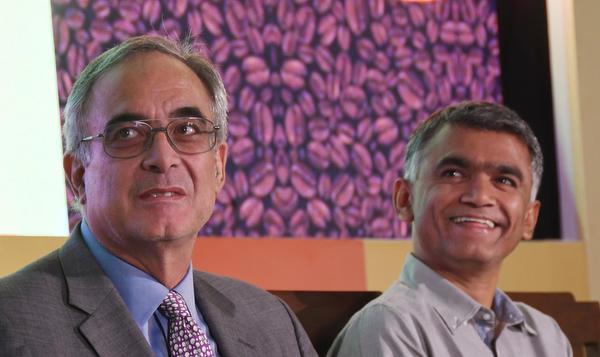
(from left) Jose Sette, ED, International Coffee Organisation; Krishna Byre Gowda, Minister for Agriculture, Government of Karnataka, at the inauguration of the India International Coffee Festival (IICF) in Bengaluru on Wednesday - Photo: SOMASHEKAR G R N
(from left) Jose Sette, ED, International Coffee Organisation; Krishna Byre Gowda, Minister for Agriculture, Government of Karnataka, at the inauguration of the India International Coffee Festival (IICF) in Bengaluru on Wednesday – Photo: SOMASHEKAR G R N

Bengaluru :

India’s coffee sector is seen getting a technology boost with the State-run Coffee Board proposing to introduce a host of initiatives ranging from blockchain to drones soon.

Coffee Board Secretary Srivatsa Krishna said the Board has partnered with Eka Analytics to introduce blockchain technologies into the coffee sector covering growers, consumers, exporters and the trade including cafes on a pilot basis.

Rainfall, soil data
Besides, the rainfall data gathered for over 100 years and soil info are being used to deliver extension and advisory services to the growers on demand through a mobile app, Krishna said at the inaugural of the 7th edition of the India International Coffee Festival.

Besides, the Board also proposes to introduce the model of Precision Agriculture Development, developed by Harvard professors Michael Kremer and Shawn Cole to the coffee sector in the country and deploy drones for crop estimation, Krishna added.

He also urged the growers to come together to promote coffee.

Krishna further said that the Board has applied for a GI tag for four coffee varieties, a move that could help position better and fetch premiums.

The four-day IICF, organised by the India Coffee Trust and the Coffee Board, is perceived to be a precursor to the International Coffee Organisation’s World Coffee Congress which India will be hosting for the first time in 2020 in Bengaluru.

India is the sixth largest producer of coffee and about 70 per cent of the country’s produce is exported to Europe and Russia among others.

Karnataka Agriculture Minister Krishna Byre Gowda, while inaugurating the festival, said the domestic market provided a big opportunity for the coffee fraternity to boost consumption.

Tax issues
Sudhir Sitapati, Executive Director-Refreshments, at Hindustan Unilever Ltd, stressed upon the need for a parity in GST between tea and coffee.

While the leaf tea attracts a GST of 5 per cent, on instant coffee it is pegged at 18 per cent.

The main objective of the festival this year is to capture the changes that are taking place in the coffee sector and to discuss issues faced by the industry and growers, said Anil Kumar Bhandari, President, India Coffee Trust.

source: http://www.thehindubusinessline.com / Business Line / Home> Economy> AgriBusiness / The Hindu Bureau / January 17th, 2018

‘Indian cuppa needs own brand for domestic, global markets’

With international prices falling due to excess production, domestic strategic brand initiative crucial.

Leading coffee growing countries like Brazil, Colombia, Vietnam and Indonesia has caused an oversupply with the prices of the commodity falling by about 30% in the global markets.

Bengaluru:

The Coffee Capital, Banga-lore, will host a four-day international coffee festival, beginning today, amidst global uncertainty over the future of the commodity. Excess coffee production from leading coffee growing countries like Brazil, Colombia, Vietnam and Indonesia has caused an oversupply with the prices of the commodity falling by about 30% in the global markets.

Indian coffee industry is at the crossroads now and the only option available for the industry is to create its own coffee brand, for the domestic and international markets, suggested Anil Kumar Bhandari, president, India Coffee Trust.

“The Ministry of Commerce should set up a special focus group for coffee, involving all stake holders in the industry, to create a profile, brand and a sophisticated communication for Indian coffee at home and outside. The government also has to sanction a fund to build a brand,’’ he said.

Prediction for climate change impact on coffee producing countries, including India, is already causing a lot of concern for coffee growers. The entire industry is worried about the rumour of Coffee Board getting restructured. The board is the only entity that holds the industry together. Also the industry hears that an Export Promotion Board is on the anvil for coffee.

Bhandari said, “India has been exporting all its surplus coffee for decades. We grow the best quality coffee, including several specialty varieties. In fact we are the only country that grows coffee under the shade of rain forests. No other country does that. Still, Indian coffee is not able to command a premium in the global markets, because we have not yet built a brand for it. So the need of the hour is to build a sophisticated campaign for our coffee and not creating another entity for exports.’’

Coffees from Central American countries, South American countries, Kenya, Ethiopia are getting premium in global markets, alth-ough none of these countries grow superior quality coffee. During last fiscal, India exported coffee worth Rs 5,600 crore, the basic price fetched at the New York Futures Exchange. “We have the potential to double the value, with the same quantity of exports, if we are able to position our coffee under specialty and premium varieties and not as bulk commodity sold at the basic price,’’ added Bhandari.

Vietnam has recently launched a five-year campaign to build its own premium coffee brand.

The country is spending some $7.5 million in this exercise.

Indonesia, with an average production of 691,000 tonnes a year, is witnessing a sudden spurt in coffee culture, followed by a mushrooming of cafes across the country. Brazil is the largest coffee producer, consumer and exporter of coffee followed by Vietnam, Indonesia and Columbia.

China is also quite bullish on coffee retailing, and it’s enthusiasm in the space is evident with every fortnight witnessing the opening of a Starbucks outlet in the country. China’s domestic coffee consumption is in the 12 to 15% range against 5 to 7% that of India.

source: http://www.asianage.com / The Asian Age / Home> Business> In Other News / by Mini Tejaswi / January 16th, 2018

‘Restart genealogical study on Kodavas’

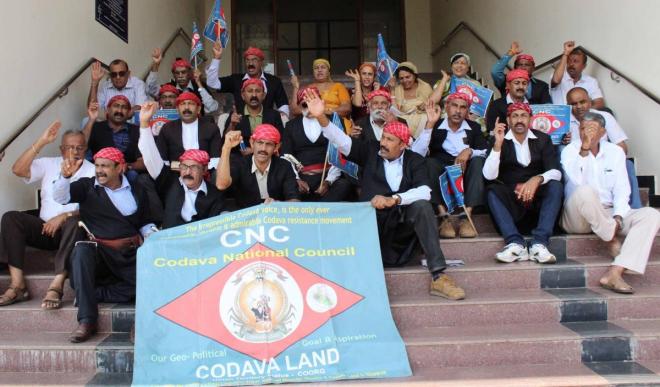
Codava National Council members stage a protest in Madikeri on Tuesday to urge the government to conduct a genealogical study of Kodavas.

Codava National Council (CNC) members staged a protest in Madikeri on Tuesday to urge the government to restart the genealogical study of Kodavas, which has been stagnant.

The report on the study should be submitted to the centre by the end of this month, the protestors demanded.

Gathering in front of the deputy commissioner’s office, the members urged the government to complete the study so that the Kodava community could be added to the list of tribes.

Council president N U Nachappa said that the demands should be considered seriously. The elected representatives should exhibit will power in fulfilling the aspirations of the Kodava community.

During Chief Minister Siddaramaiah’s visit to Kodagu recently, MLC Veena Acchaiah had submitted a memorandum to him, requesting to restart the genealogical study of Kodavas, he said, and added that the study should not become an election gimmick.

A memorandum was submitted to the deputy commissioner on the occasion.

Codava National Council leaders Katumaniyanda Umesh, Pullera Kalappa and Chambanda Janat participated in the protest.

source: http://www.deccanherald.com / Deccan Herald / Home> District / by DH News Service / Madikeri – January 16th, 2018

Warrior Women of Coorg

Veena Poonacha’s recent book on three Kodagu women chronicles a significant journey into the changing fortunes of women in India, says Geeta Seshu

“At the age of 15, my great-grandmother travelled every day to supervise the construction of our family home, sustaining herself only on curd-rice and dry fish. Though my grandmother was widowed at the age of 39, she lived alone with a pistol under her pillow and built the family fortune. My mother went back to her roots and devoted her life to education.”

Meet Dr Veena Poonacha. And meet her great-grandmother, Ponamma, her grandmother, Subamma, and her mother, Neelamma. And don’t stop here. Meet all the courageous, intrepid women of the Kodava (Coorgi) community who helped carve out a unique race of warriors in the land of a thousand hills.

Dr Veena Poonacha, Director of the Research Centre for Women’s Studies (RCWS) at Mumbai’s SNDT University, has devoted many years to a study of the status of women in Coorgi society. She has drawn inspiration from the rich lore of oral history and the amazing collection of letters and photographs from her family and clan for her book, “From the Land of a Thousand Hills: Portraits of three Kodagu women”, published in December 2002 by SPARROW, the Sound and Pictures Archives for Research on Women.

“My mother was a great storyteller. She literally fed us with stories of her mother and her grandmother and of life in the Kodava/Coorgi community. I merely retold their stories,” says Poonacha.

Indeed, the folk literature is replete with the rich cultural and social history of Coorg. Coorg, or Kodagu as it is now known, is the smallest district in Karnataka. It has beautiful forests and verdant hills that house the landowning warrior community that even now forms a significant part of the Indian army. They were free of the pernicious caste system and taboos. While paddy was the primary crop, the economy was monetised under the British and coffee was introduced in 1845. Land relations changed and traditional inheritance laws, that hitherto maintained that land devolved from one generation to another, were replaced by the colonial policy wherein ancestral property was transferred from father to son.

Consequently, gender relations underwent a major transformation. In the past, the family owned the land and was maintained by both men and women of the community. Women never lost the right to return to their maternal home. Child (pre-pubertal) marriages, prostitution and polygamy were not known. Women were educated and enjoyed a respected status in the community.

The folklore of the Kodavas celebrates the involvement of the women in cultivating the land and reaping the harvest; of their confident initiatives in love affairs and even of their bravery in dealing with clan enemies and eking out a living in inhospitable terrain inhabited by wild animals. The ballad, ‘Polladevira Aiyappa’ tells of Chiyavva of the Kelappanda Okka (clan) who encounters a tigress when she goes to the jungle to fetch wood. She kills the tigress and captures her cubs. Then, referring to the social practice of honouring a man who kills a tiger, she demands to be similarly honoured by her community.

It was not easy for Poonacha to write about her family. Though she has done extensive research on the women of Coorg, co-authored a book on domestic violence (‘Responses to domestic violence in Karnataka and Gujarat’) and written on gender and human rights, these were largely academic pursuits.

“I first thought of preparing archival material for SPARROW. But when I began working on it, the names of my grandmother and great-grandmother kept coming up,” she says. Their histories span 82 years, from the late 19th century to the mid-20th century, and end with the marriage of Neelamma in 1950. Clearly, Ponamma was a larger than life figure. She got married at the age of 13 and then set about building the family fortunes against all odds. She taught herself English and inculcated the value of education in her vast family.

Subamma, a gentler version of her mother Ponamma, struggled throughout her life. She was widowed young. But this did not prevent her from learning all the arts and excelling at playing the violin. She was a shrewd businesswoman and made wise investments that saw her family through the collapse of the banks and the crash in coffee prices in the 1930s. Though she lost her vision in later years she still fought a bitter legal battle to retain control of her marital property.

Subamma’s daughter, Neelamma, was initially not keen on marriage but wanted children. She made the first move in her relationship with her husband, Subiah, quaintly referred in the book as Willie, an English nickname. A large part of the book is devoted to the letters exchanged between Neelamma and her husband. The couple discussed women’s rights, education and their hopes for a bright future. The letters also provide a fascinating insight into the minds of two educated, socially enlightened people during the Freedom Struggle and as India gained Independence.

For Poonacha, writing about her mother Neelamma was not an easy task. For one, her own version of her parents differed considerably from that of her brothers. “We need to see our parents as human beings,” she feels. Gaining a perspective into the lives of her ancestors, and through them, into that of her community, Poonacha’s book chronicles a significant journey into the changing fortunes of women in India.

Geeta Seshu is a Mumbai based freelance journalist who writes on development issues.

source: http://www.indiatogether.org / India Together / Home / by Geetha Seshu / January 01st, 2003
Native spices get a new gene bank

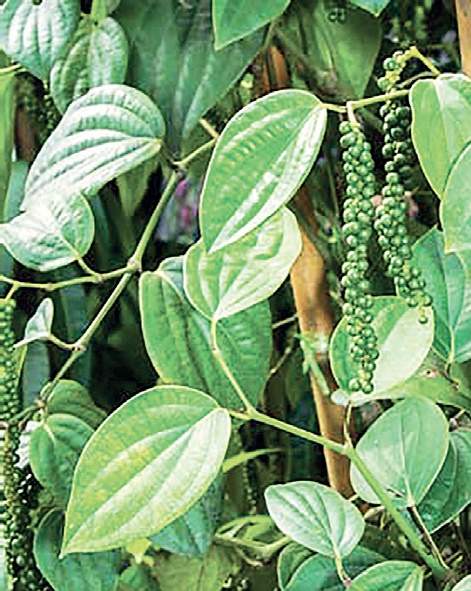
SpicesKF16jan2018

Kozhikode :

The immense effort that goes into setting up a gene bank is such that it can be termed as a mission. And when a group of farmers here came together to start one, it turned out to be a worthy venture. And ‘spicy’ too.

The Koorachundu Sugandhavila Karshaka Samithi realised it was high time they set up a gene bank to conserve the native varieties of spices, after they found that imported and hybrid varieties have become popular among farmers. They decided to begin with pepper and the Indian Institute of Spices Research (IISR), Moozhikkal, which got enthusiastic about the idea, decided to help the farmers collect a wide variety of local pepper plants.

Unlike the research institutes where spices are conserved in labs and experimental farms, the Samithi members will grow local varieties in their farms. As of now, the farmers are conserving 11 pepper varieties, including Arakulam Munda, Chomala, Pottanadan, Thulamundy, Kaniyakkadan and Nedumchola.

“The idea came up when we thought about the Western Ghats’ conservation and peaceful co-existence of farmers and wild animals,” said Samithi secretary P T Thomas.The Samithi, which began its gene-bank mission a month ago, plans to expand its basket to include clove, nutmeg, mace, cardamom and cinnamon in the coming days. It has 30 farmers, who own around 90 acres. Each farmer will collect a specific spice and grow it in his farm.

“Landraces of many crop plants are getting eroded due to a variety of reasons. Conservation of the landraces, which harbour many useful genes, is mostly a government effort. However, if people-participatory or farm conservation can be effected, it’ll help conserve landraces in their natural habitat,” said IISR’s crop improvement and biotechnology division head B Sasikumar.

The native varieties of pepper have the capacity to survive in the Western Ghats and can be cultivated at a low cost. Farmers can plant it under a jackfruit tree without the need for a support system, said Thomas. In contrast, imported and hybrid varieties need a proper support system.

The Samithi members are hopeful the gene bank will become fully functional in 18 months’ time. “The yield from native varieties can be an influential thing among farmers as the yield influences the farmer to decide whether to continue with the cultivation or not. However, at the Samithi, we’re planning to go forward without considering the yield from native varieties,” said Thomas.

source: http://www.newindianexpress.com / The New Indian Express / Home> States> Kerala / by K C Arun / Express News Service / January 01st, 2017

English welcomes Sowmya Dechamma

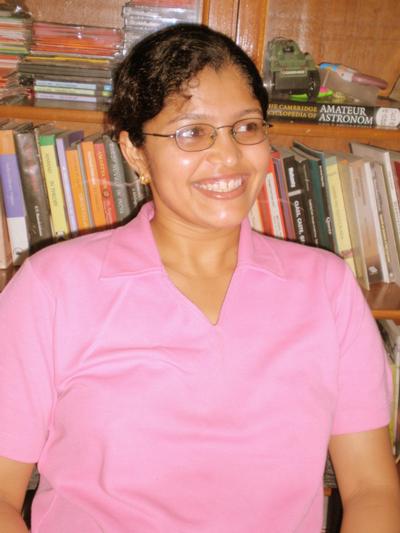
SowmyaDechammaKF16jan2018

This autumn English will be welcoming Sowmya Dechamma CC, PhD who has received a prestigious Commonwealth Fellowship to work in association with Dr Stephen Morton in the area of postcolonial studies.

Dr Dechamma is an Assistant Professor in Comparative Literature at the University of Hyderabad, India. Her area of study is Minority Discourse in Colonial India, and her project title is ‘Between the Colony, Anti-Colony and the Modern: The Politics of Identity of Kodagu’. Her tenure at Southampton is from September 2010 to February 2011.

Professor Anne Curry (Head of Humanities) commented: “This is important recognition of Stephen Morton’s and English’s excellence in the area of postcolonial studies.”

source: http://www.southampton.ac.uk / University of Southampton / Home> English> Part of Humanities> News & Events> News / June 25th 2010

Elephants In The Coffee To Be Screened At BNHS

The growing coffee industry in India has given rise to conflicts between humans and elephants leading to deaths of both humans and these huge mammals.

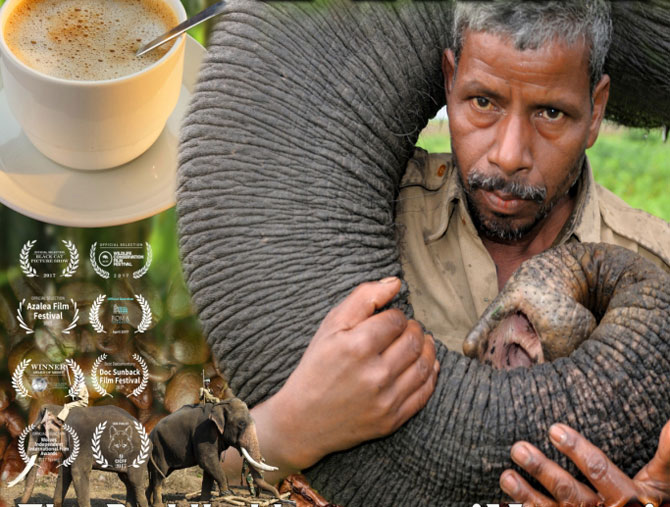
Poster of the movie 'Elephants in the Coffee'
Poster of the movie ‘Elephants in the Coffee’

Having a cup of coffee is a routine activity for many. Have you ever thought is your cup of coffee fatal for anyone? The growing coffee industry in India has given rise to conflicts between humans and elephants leading to deaths of both humans and these huge mammals. A documentary by international photographer, author and explorer D. K. Bhaskar and journalist Dr Thomas Grant ‘Elephants in the Coffee’ offers an insight into this topic. The screening of this internationally acclaimed documentary has been organized at BNHS Hornbill House on Friday, 19th January at 6:00 PM followed by a discussion with Mr. Bhaskar.

The Documentary:
Celebrated as the elephant God in India, elephants are now seen as a ‘menace’. ‘A god that became a menace’ reads the tagline of this documentary which is catchy and strong yet could implore an array of ideas. Shot mainly around the Nagarhole National Park in Karnataka and surrounding coffee estates, this 58 minute documentary sheds light on the relationship between humans and elephants.

The documentary explores and highlights the views of all involved stakeholders including villagers, coffee estate owners, naturalists, government and even the mahouts or elephant care takers. This documentary has garnered national and international appreciation and multiple awards at film festivals.

‘Elephants in the Coffee’ has been produced by CLIC Aboard, a non-profit organization established by Mr. Bhaskar which works to connect students in US and India through photography.

The team which worked on this documentary included three student associates from CLIC apart from Dr. Grant, Mr. Bhaskar and others. For more details regarding the film, visit http://www.elephantsinthecoffee.com/

The documentary will be screened at BNHS on Friday, 19th January at 6:00 PM. Mr. Bhaskar would later engage in a discussion session to throw light on the film, the human-elephant conflict and related topics. The screening is free and open to everyone.

Details in a nutshell:
What: Screening of ‘Elephants in the Coffee’
When: Friday, 19th January
Time: 6:00 PM
RSVP: Siddhi Shelar – s.shelar@bnhs.org / 022-22821811

source: http://www.mid-day.com / Mid-Day / Home> Mumbai / by mid-day online correspondent / January 10th, 2018

Kodavas: One of the few tribes in India allowed to possess a gun without a licence

A Kodavn takes aim: a shortage of bullets threatens his way of life

An acute shortage of cartridges is threatening the way of life of the Kodavas, a martial race living in Kodagu (Coorg) district in south-west Karnataka. The Kodavas are one of the few tribes in India allowed to possess a gun without a licence. Cartridges are sold like any other commodity in Janata bazaars, cooperative stores and by private traders throughout the district.

But every time a fresh consignment of cartridges is received by the 36 licenced ammunition dealers, long queues are formed in front of these shops. The cartridges are rationed and usually-one box is allotted per person. At least four private dealers have closed shop because of the shortage.

C.U. Kalappa, president of one of the Janata bazaars, told India today in Mercara: “We had indented for 20,000 cartridges but the Government supplied us only 5,000. Now there is such a big rush for them that quarrels are frequent.” Of course, there are no shoot-outs as bullets have become a scarce commodity. Of the district’s demand of two-and-a-half lakh cartridges, the Government was able to supply only 1.3 lakh last year.

Shortage of bullets had been reported in the past few years after the Government banned manufacture of ammunition by private dealers and made the Government ammunition factory at Kirki the sole supplier. But it is only now that the shortage is being felt acutely and has restricted certain rituals of the Kodavas for whom guns are as common as ploughs.

Exception: The Kodavas have been exempted from the Indian Arms Act right from the time it was introduced by the British in 1834. The British made an exception for this tribe in appreciation of their valiant support to them in their fight against Tipu Sultan. Of the 3.8 lakh people living in Kodagu, almost every family possesses a gun, some even ten. The only regulation is that the Kodavas should obtain an exemption certificate from the Government, which gives them the right to possess any gun without a licence. Borkar, the district superintendent of police said: “In the past five years 12,189 exemption certificates have been issued. We can roughly estimate that about 40,000 weapons are in the district.”

Kodagu is perched on the summit of the Western Ghats and its numerous hills are covered with thick forests. Panthers, tigers, wild boars, bisons and elephants abound in large numbers and the Kodavas are adept hunters. The 1973 Wild Life Preservation Act put an end to one of the important traditions of this tribe. But even now, clandestine hunting goes on.

Legend has it that in the good old days no Kodava was allowed to cultivate a handlebar moustache unless he had shot a tiger. Even as late as 1970 there were nine forests reserved specially for hunting and licences were issued to people who wanted to shoot tigers. Today most of the ancestral houses are decorated with stuffed bisons or boar heads and tiger skins.

The Kodavas are one of the few races in India who worship a god for sports and hunting called Sarthau. Every year a special festival called Kiel Poldu (worship of arms) is held in which Kodavas perform poojas for their guns and swords. Every festival is usually accompanied by a shooting competition in which three coconuts are placed and the men are expected to knock them down. The Kodava festive dress, a black robe with a white turban, is embellished with jewelled guns and swords.

The men usually carry an ornamental dagger and a sharp sword. According to tradition, whenever a male child is born two rounds of ammunition are fired in the air. When a male member dies, two rounds are fired simultaneously and if it is a female, only one round. During the death ceremony, every time a group of mourners pay homage to their dear departed, a round is fired.

Complaint: Because of the acute shortage of cartridges, these customs have to be curtailed drastically. The more affluent families still observe these customs with the full paraphernalia and usually buy the bullets in ‘black’ at double the controlled price. Said B.D. Ganapathy, a noted Kodava writer: “We don’t use the guns as indiscriminately as before because of the cartridge shortage. But it has not drastically affected our culture because we are still willing to buy cartridges from other sources. But I don’t know how long we can continue.”

Said K.N. Ponappa, vice-president of the Mercara Kodava Samaj: “Our major complaint is that our crops are systematically being destroyed by wild animals and we are helpless because of the Government Act banning shooting. The Government must modify these laws.”

The present law stipulates that if a wild animal is troubling a village then the forest officer should be called to shoot it. But one planter said: “Who can afford to wait till a government officer comes to shoot the animal?” Many planters kill the animal themselves and have a feast at dusk.

source: http://www.indiatoday.in / India Today / Home> News> Magazine> Coorg / by Raj Chengappa / November 20th, 2013

How single-origin coffees in India disappeared

With tax, growers have lost the incentive to sell cured coffee

Slip between the cup and lip: Production of fine coffee needs a lot of effort, but rewards are uncertain.   | Photo Credit: pixelliebe
Slip between the cup and lip: Production of fine coffee needs a lot of effort, but rewards are uncertain. | Photo Credit: pixelliebe

Under the Constitution, agricultural income can be taxed by the State and not by the Centre. However, in the case of tea, the Centre contended that there was a substantial manufacturing process involved in the production of tea; hence, income from tea could not be classified as fully agricultural income and that a part of the income had to be taxed as central income.

This was done under Sec 8 of the I-T Act, which stated that due to the manufacturing activity involved, 40% of the income would be taxed by the Centre.

In 2002, the Centre then followed the same logic and introduced Sec 7 & 7B for rubber and coffee respectively. It decided to partially tax the agricultural income from both commodities, claiming there was manufacturing activity involved.

Where coffee is cured or hulled before being sold, manufacturing activity was involved and hence 25% of the income was to be taxed by the Centre.

Curing is a process by which raw coffee is converted to green beans ready for roasting. Substantial machinery and effort is involved but the actual cost of curing works out to about ₹2 per kg for a product worth about ₹200 per kg, or 1%. The Centre thus claimed the right to tax 25% of the agricultural income from coffee.

How did this lead to the end of single-origin coffees from India?

Rise of raw coffee

Once this legislation was enacted planters, started selling uncured coffee instead of cured coffee. The coffees were sold in raw coffee form which is a ‘bulk’ coffee. Soon, a vibrant, active, regular and credible market for raw coffee developed. Today, the farm gate prices are quoted mostly for raw coffee. When raw coffee is traded, the criteria looked at is moisture content, appearance and outturns, not so much the cup taste. Overnight, the charm of producing a fine cup disappeared.

Good bulks at the least cost of production became the norm. The coffee was then bought by curers, exporters and domestic roasters, who cured, graded and bulked the coffee according to customer requirements. In the process, the origin of the coffee got lost.

The production of fine coffees takes a lot of effort; while the extra input and efforts are certain, the rewards are uncertain. There is a considerable marketing effort involved and the price realisations are uncertain.

In such a scenario, most growers will be reluctant to pursue fine coffees when they know that they fall within the jurisdiction of an income tax officer.

Though today there is no agricultural income tax, central income tax can also be avoided. As a result, one finds that most of the fine coffee awards are won by corporates, who have the administrative capacity to deal with the extra headaches.

Just before the enactment of the rule 7B, pooling of coffee was abolished and free open market sales began. The first coffee auctions were opened for growers. This was an opportunity to sell their coffees after curing in the name of the estate and an opportunity for buyers to buy single-origin coffees.

It was the ideal platform for promoting single-origin coffees. Then came Rule 7B and the sellers disappeared. The auctions never recovered from this setback.

Low-hanging fruit

The Finance Minister often talks of reducing complexity in income tax rules; deleting this rule is one of the easiest steps he can take.

Using an appropriate cliché, it is “one of the lowest hanging fruits” he is ever likely to find. This is a rule that brings little revenue, may be even no revenue, but destroys a beautiful business. We hope he picks this ripe coffee cherry at the earliest.

And, if he is a coffee drinker himself, he will find he has many fine single-origin coffees from India to choose from.

(The writer is a coffee planter with an interest in financial markets and agricultural development)

source: http://www.thehindu.com / The Hindu / Home> Business> Agri-Business / Guest Columns / by M.Meyyappan Jr / January 17th, 2018

Tracing the roots of Kodava tribe

There is opposition to releasing the findings of research

Blood samples of 100 couples to be drawn for DNA tests Kodava tribe is said to be 2,000 years old Research team asked to be cautious while dealing with sensitive issues There is apprehension that research findings may divide the community

Virajpet (Kodagu Dt.) :

Kodagu Natural Sciences Society has launched a unique initiative to trace the origin of Kodavas by ascertaining the ancestry, customs, culture, language and a study of genealogy by the Kodagu Natural Sciences Research Society.

A research professor from Delhi University has drawn 150 blood samples of selected Kodava families for conducting the DNA test. This was revealed at a seminar organised by the Akhila Kodava Samaja here on Friday, attended by representatives of various Kodava Samaj units, prominent Kodavas and office-bearers of society. The significance of the research will be to carry out DNA tests on Kodavas to trace their origin and roots.

Society president Lt. Gen. B.C. Nanda said Kodavas inhabited Kodagu 2,000 years ago. The first recorded instance of Kodavas was found in 1174 AD during Hoysala dynasty in the State. Kodava was the only community that accepted the “gotra” system other than non-Muslim and non-Christian communities, he said.

Speaking in favour of tracing the origins of Kodavas, Gen. Nanda said modern scientific inputs gave ample opportunities to take up research work. Along with the DNA test, socio-cultural aspects, somatometry (physical measurements on various attributes) and demography should go hand-in-hand to corroborate the theory. The final report will be submitted to Akhila Kodava Samaja president Matanda.C. Monnappa.

Gen. Nanda said the pilot project started involving nine couples aged between 20 and 40. As many as 100 DNA samples will be drawn from Kodavas living in all parts of Kodagu. The outcome of the study will be kept confidential.

The former president of the Karnataka Kodava Sahitya Academy B.P. Appanna, who did not approve of the idea, said a report on the scientific study on Kodavas can turn out to be sensitive. The principal investigator of the study team is M.A. Abdul Kalam, Department of Anthropology, University of Madras, Chennai, and the project coordinator is Xavier Raj from the Social and Environmental Research Centre, Chennai. The cost estimated for carrying out the study is Rs. 11.80 lakhs.

source: http://www.thehindu.com / The Hindu / Home> National> Karnataka / by Jeevan Chinnappa / February 18th, 2006