Immortalised in stone

StoneKF26aug2017

Since ancient times, kings have dedicated hero stones, called Bira Kall in Kodava language, to the memory of martyrs. Many hero stones have been found in North Kodagu, especially around Somwarpet. These coarsely sculpted granite tablets, often issued by the rulers or commissioned by affluent families, are also known as Kolle Kallu, stones of the killed.

A number of hero stones have been lined around the Government Museum in the Madikeri Fort. Often, the hero stone comprises of 2 or 3 panels. Usually, on the top of the hero stone, a sun and a crescent moon are inscribed. At the bottom, figures of men and women holding weapons such as swords, shields and bows are carved.

Some sculptures in the classic style have been found elsewhere in Karnataka, such as Mysuru, Shivamogga and Belagavi. In such hero stones, the topmost compartment, underneath the sun and moon, would be a linga and a bull with worshippers around them. The second would show the hero ascending the heavens with apsaras on either side fanning him. The third would have the hero battling other warriors during his life on earth. Sometimes there is a fourth, the bottommost compartment, which might have a horse and an elephant etched.

A peep into history
Of these, the most well-known Bira Kall in Kodagu, made in 1768, has an image representing Kannanda Doddayya, a dalavayi or army general, wearing a traditional costume, called the kuppya chele, with a gun in one hand and a native war knife, an oide katti, in the other. It is said that when Hyder Ali unsuccessfully attacked Kodagu, Doddayya stood before King Muddu Raja II on the eve of the battle and declared: “Twice before have I returned after defeating Hyder and bowed to you. But this time, I shall not be back.” Indeed in 1767, Doddayya was fatally wounded near Kajur Bagilu even as the army returned victorious. Later, his house was destroyed and 24 members of his family were killed by Hyder’s son Tipu Sultan.

According to G Richter’s Manual of Coorg, which was published in 1870, Doddayya’s Bira Kall was first placed in a paddy field, upon a hill slope and opposite the Mercara Central School.

A kaimada, a small sanctuary built in remembrance of ancestors, was built a few decades ago and the Bira Kall was shifted into it. In front of this place, which is also called Birappa Sanctuary, and to the right is a shrine dedicated to Vishnu Murthy (Vishnu’s spirit). To the left of the sanctuary is a shelter, called the pavali, where a number of devotees can sit within. Behind the sanctuary and to the left is a trishul, planted upon a raised platform. There are two raised stone seats, one behind the other and facing the sanctuary.

The Kannanda family has 3 more memorial stones, featuring some more family members, placed inside another shrine. While one stone has a male ancestor with younger members, the second has a woman with children around her and the third shows two male ancestors holding weapons. Beside this second shrine is another pavali with stone benches inside. When I paid a visit to the Bira Kall site, I met some members of the Kannanda family — Suresh, Ashwini, and a clan elder, Pookunhi to know more about the hero stone. They narrated the legend of Doddayya. Accordingly, Doddayya’s Kodagu army had successfully defeated Hyder Ali’s army and was returning back victoriously. But unfortunately Doddayya was struck and wounded on the way.

The king, pleased upon seeing the return of the victorious army, was dismayed when he heard of the dying general. Doddayya was led up the walls of Madikeri Fort and all the lands that he looked upon were then granted to his family by the grateful King. Part of this was what is today called the Kannanda bane (land), the area beyond Mann’s compound and Ajjamada Devaiah circle in Madikeri. Doddayya passed away and a Bira Kall was made for him. Some more land grants were made to the Kannanda family by the king. Thus the family came to own lands in seven places: Bavali, Madikeri, Haleri, Poramale, Kajur, Noorokkal and Katakeri. It is said that at one point, the Kannanda family owned half of Madikeri. Family members sold away most of their lands over the years. Now only 3 of the original 7 places remain with them.

Folk culture
A week after the festival of Shivaratri, the Pade Bira (war hero) Kannanda Doddayya is remembered and a two-day festival is organised. Dance and enactment performances, called there, are arranged. On the first day, prasada is prepared and the Guru Karana, an ancestor who was the preceptor as well, is remembered. The bhandara, money offered at the temple, is moved that evening. Throughout the night, the Anji Koot Murthy (five spirit deities) is held. At dawn the next day, the Vishnu Murthy There is held.

The final function, Pade Bira There, has a performer imitate Kannanda Doddayya and the Nari Pooda (tiger spirit) There has another performer emulate a tiger. The Pade Bira There and the Nari Pooda There performers together dance frantically around the place. While the Pade Bira sits upon the seat near the temple, the Nari Pooda sits upon the seat away from the temple.

The Nari Pooda performer leaves early while the Pade Bira performer is the last one to remain.

Not only do the hero stones allow us to remember those who have sacrificed themselves, they also allow us to understand a time in history.

source: http://www.deccanherald.com / Deccan Herald / Home> Supplements> Spectrum / by Mookanda Kushalappa / April 26th, 2016
Farmers’ collective sets up black pepper gene bank

The gene bank features 42 native varieties of black pepper

Kozhikode :

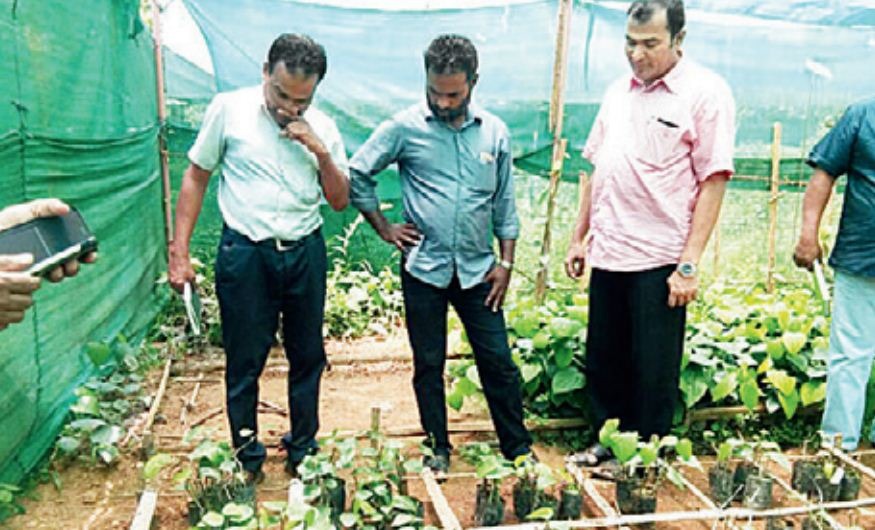
In a bid to arrest the declining fortunes of black pepper in its historical home turf, a farmers’ collective in Wayanad has set up a gene bank featuring 42 native varieties, including rare accessions, of the spice indigenous to Kerala. The Wayanad Social Service Society (WSSS) hopes to protect and popularize the native pepper varieties many of which have better disease resistance and drought tolerance but had been abandoned by farmers following the advent of high yielding hybrid varieties.

Apart from protecting the diversity of black pepper in the state, the field gene bank of pepper, spread around three acres at Mananthavady, would also make available planting material of native varieties to farmers.

The native pepper varieties which have been collected from Wayanad, Nilgiris, Coorg and other Malabar districts include the once widely cultivated Kalluvalli, Jeerakamundi, Neelamundi, Cherumaniyan, Karimunda, Ibe rian, among others. Farmers say that these varieties are drought tolerant when compared to hybrid varieties.

“Kerala had earned its global monopoly in pepper trade from ancient times onwards. Though the yield of native varieties was less, they were resistant to drought, pests and disease at tacks. The intensive and unscientific high input farming of hybrid varieties using chemical fertilizers and pesticides, have contributed to decimation of pepper cultivation in many regions of Malabar,” said director of WSSS Father John Choorappuzhayil.

He said that native pepper varieties for the gene bank were collected from remote tribal colonies apart from a few wild varieties of pepper from the forests.

“We are still in the process of identifying and adding more native varieties to the gene bank. We hope to collect around 60 native pepper varieties soon,” he added.

Dr N Anil Kumar, the director of the biodiversity programme of M S Swaminathan Research Foundation, said that native pepper varieties could vanish forever if left unprotected especi ally in the wake of increasing challenges posed by climatic variations in the region.

“The diversity of black pepper, which had its origins in the state, has immense genetic value. Also it is a historical and cultural treasure given its role in establishing the spice trade and pepper routes in medieval times originating from Kerala. Even the government should think of exploring the tourism potential offered by the on-farm assemblage of native pepper varieties,” he added.

Anil Kumar said that farmers who took up the cultivation of native pepper varieties should be provided incentives by the government.

“Also it would be prudent for farmers to set apart at least 10% of their land for cultivation of native varieties as is mandatory in some European countries,” he added.

source: http://www.timesofindia.indiatimes.com / The Times of India / News> City News> Kozhikode News / by K R Rajeev / TNN / May 30th, 2017

The tragic story of a warrior

Pattedar's graves
Pattedar’s graves

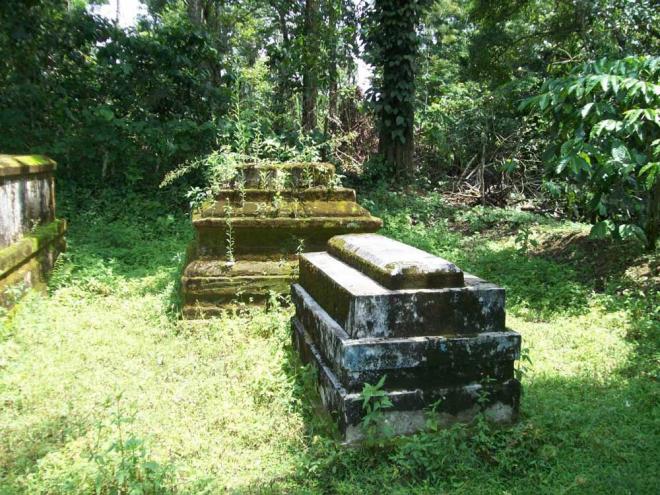
A few of the families in Kodagu maintain the tombs of their distinguished ancestors. A few families are also in the possession of paintings of their ancestors being felicitated by the kings. A few others maintain artefacts such as oide katti, also known as a billhook-shaped war knive, with king’s insignia upon them.

The Thathanda family is one such family that received three of these honours.

They have their ainmane, or ancestral house, in Kuklur village of Virajpet taluk. Their ancestral house was formerly a mundu mane, a house with an open, central courtyard, which is called a mund. The sepulchre of their renowned ancestor Karyagara (officer) Thathanda Subbayya lies some distance away from the ainmane. It has a Nandi figure upon it. Beside this tomb is an unmarked grave. Both these tombs are within an enclosure.

Nearby in the same graveyard are two large graves. The names of two of the four buried there were not known to us. Clansman Thathanda Nanaiah explains, “Subbayya ajja’s (forefather) elder brother had a son who addressed ajja as kunjappa (one of the names for a paternal uncle). After ajja’s death, this nephew inherited his possessions. It is this nephew’s grave which lies beside the tomb of ajja and within the boundary. The two buried outside the boundary were clan elders, each called a pattedar. ”

According to his book, Kodagina Itihasa (1974), historian D N Krishnaiah came to learn of Karyagara Subbayya from the Thathanda elders. In 1811, two British officers General Welsh and Captain Williamson visited the court of the then king of Kodagu, Linga Rajendra. They were pleased with the hospitality offered. When the king heard the news of a rogue tusker, he proposed a hunt and his guests agreed. Thathanda Subbayya was given the responsibility of organising the hunt.

Accompanied by elephants and attendants, the hunting party set out to the jungle. In the trees and around a forest clearing, boxed seats made of cane were prepared. Ladders were used to reach it. The king, the two Englishmen and others settled themselves in the cane boxes. Kodava pikemen, with their long spears, would comb the jungle and drive the prey into the clearing during a hunt. Several drum beaters would aid the hunters by scaring the animals with their noise. This way, the wild tusker was driven into the clearing and shot dead.

Pleased with Subbayya’s arrangements, the king honoured him with a gold medal and gifted him a gun. Subbayya was also awarded a oide katti with the king’s insignia on it. A painting of Subbayya and the king was also gifted to him. However, some people grew jealous of Subbayya and schemed against him. The opportunity came when the king received complaints about cattle-stealing tigers.

A hunt was organised by Subbayya in order to eliminate the tigers. On the night before the hunt, Subbayya ensured that the cane seats were securely placed in the area where the hunt was to take place. When he left, his enemies loosened the seats. The next day, when the king shot a tiger, the seat he was on fell apart and he fell. Furious, he demanded to have the head of the man who had set up these seats. Subbayya was blamed for what was thought to be a shoddy work. As he was deep in the forest with the other hunters, the executioners were sent out to behead Subbayya.

One servant ran before them and told Subbayya everything that had transpired. Subbayya was unhappy as there was no way for him to prove his innocence. Subbayya told the servant to convey to the king that he had been framed and sent him back. As Subbayya did not want to be punished for a crime he did not commit, he shot himself. When the king came to know what had taken place, he was displeased. Subbayya was buried on his family farm. Enquiries were held and the king discovered that Subbayya was indeed innocent. The king had a mausoleum built over Subbayya’s grave.

source: http://www.deccanherald.com / Deccan Herald / Home> Supplements / by Mookonda Kushalappa / August 15th, 2017

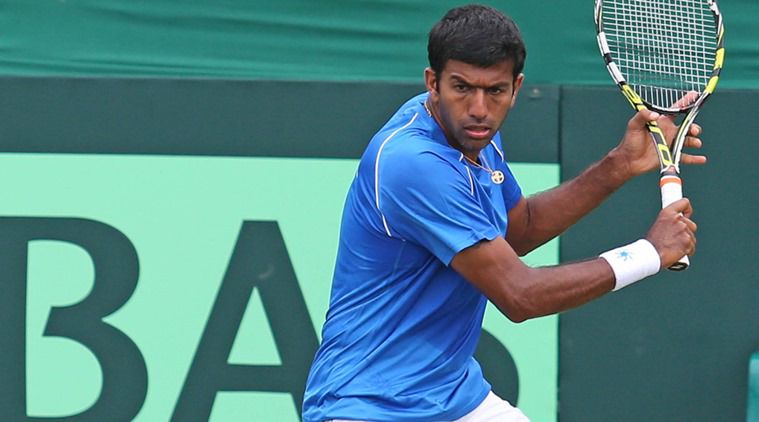
At 37, ace Rohan Bopanna is just getting started

Fresh from his Grand Slam in France, he’s got big plans

RohanBopannaKF26aug2017

Washington :

By the time most tennis players are 37, they have retired or gone on to become commentators or analysts – or even entered another profession.

When Rohan Bopanna reached that age, he got his maiden Grand Slam win in the French Open mixed doubles with Canadian partner Gabriela Dabrowski.

“Even though it sounds very cliché,” Bopanna said, “age is only a number, but whoever says whatever to me, I look at it as a positive—that means they are thinking of you, whether it’s a negative, or whether it’s a positive. They are talking about you. That means you are doing something out there.”

The trophy he won in June was “purely a personal goal — nobody else’s goal. Whether I win a Grand Slam or don’t win a Grand Slam, I am the one who’s putting in the work. So, I don’t think age should bother you. It never bothers me what everybody says.”

He achieved the title 14 years after first turning pro.

Immediately after his Grand Slam victory, the All India Tennis Association nominated him for the Arjuna Award, saying: “This is a well-deserved victory. We wish him more success in years to come. His victory will certainly be a morale booster to young and budding tennis players in the country.”

Bopanna, who has been a member of the Indian Davis Cup team since 2002, he finished in 2010, with Pakistani Aisam-ul-Haq as a runner-up in the doubles at the U.S. Open. Earlier that year, the duo, nicknamed the IndoPak Express, had also reached the quarter-finals at Wimbledon. After the U.S. Open, they went on to win the Johannesburg Open.

Regarding his Paris win, he said: “If you had asked me a few years ago about getting my first Grand Slam on a clay court, I would have probably said that what you are saying is just impossible. But, over the years, I enjoyed playing on clay, and I learned how to move better on it and that made the difference. Even in my games, and in my style, I’m not always serving and volleying now. The guys return extremely well now and so, I mix and match my strengths accordingly. So, that experience over the years has helped and made a big difference to get my first Grand Slam.”

He credit his wife, Supriya Annaiah, 29, a psychologist, as his inspiration and a catalyst for his success.

“My wife is a psychologist, and so indirectly, I may be getting powered,” he said. “And, it’s nice to have her at these major tournaments. Sometimes, you are so much into practice and training and all that, you need some time away from it to keep your mind relaxed, and she brings that good side to me.

“Being a psychologist, she knows about down-time, de-compressing, a hundred percent. She understands the mechanics to this sport and how much sometimes I just need time for myself to just focus, which she gives me and that’s something.”

There have been other benefits to his top performance. Bopanna was named spokesman and partner with FDC Ltd./India’s balanced energy drink brand Enerzal after his win and Enerzel committed to being a partner with his tennis academy.

“Tennis is a sport that we as a brand are invested in and believe that India has tremendous potential to excel at globally,” said Ameya Chandavarkar, director of FDC India. “Teaming up with Rohan and his academy allows us to truly be part of the tennis ecosystem, from the grassroots all the way to the top.”

Bopanna said the commercial endorsement and being spokesman for Enerzal “would help in getting the message out about sports awareness, and the exposure, the promotion, the nutrition aspects, and everything else comes into play.”

He also said that he has been involved with the IndianOil, which has supported athletes over the years with its IndianOil Sports Scholarships – one of which he received in 2002.

If India is to compete to European and American standards, business backing is essential, he said. “We have to match up in every way and that’s where we have to change the mindset,” he said.

source: http://www.indiaabroad.com / India Abroad / Home> India / by Aziz Haniffa / August 21st, 2017

Started by an IAS officer, this Coorg-based organisation is teaching environmental activism to children

E-base, Kodagu, is addressing various local issues such as man-animal conflict prevalent in the area, protecting the Kaveri river, and water conservation.

Nestled in the lush Western Ghats, surrounded by coffee plantations, elephant corridors, and forests alike, Titimati is not far from the Nagarhole Tiger Reserve. A green and resilient building made of clay bricks, local stones, Mangalore tiles and bamboo stands there. It is the E-base at Kodagu — an embodiment of responsible and sustainable living.

Located in the popularly known Coorg district of Karnataka, it is the fifth E-base in the world that started in June 2016. An E-Base serves as a symbolic model for educational, environmental and energy issues throughout the world. The first one was established in Antarctica in 2008.
Ebase01KF26aug2017

E-base, Antarctica
Sir Robert Swan, OBE, who established the first E-base in Antarctica, was the first man to have walked, unassisted, to both the North and the South Pole. He has served as the United Nations Environment Programme (UNEP) Goodwill Ambassador.

After successfully removing 1,500 tonnes of waste from the shores of Antarctica, Sir Robert Swan stood at the Bellingshausen Russian Base and envisioned an education base that would allow him to share the beauty of this continent with students and leaders around the world.

Powered entirely by renewable energy, Robert and a small team lived in the E-Base and broadcasted clean technology and energy saving techniques to schools and universities around the world.

The purpose of an E-base is to inspire a global audience to tackle the issue of climate change by showing that if we can achieve the seemingly impossible in Antarctica, we can all take small, achievable steps in our own backyards.

Since Antarctica, E-bases have been established in Pench, Madhya Pradesh; Leh, Ladakh; and Blue Ridge Mountains, USA. All have the common objective to educate and learn about global climate issues, while addressing local sustainability challenge

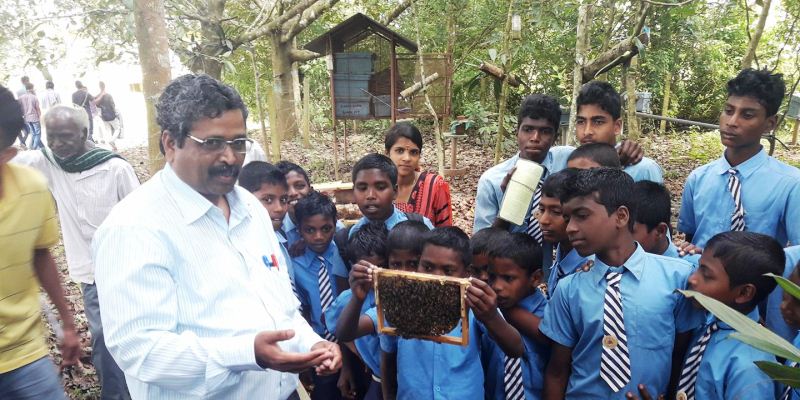
Visit to Forestry College, Ponnampet.

Taking the E-base to India
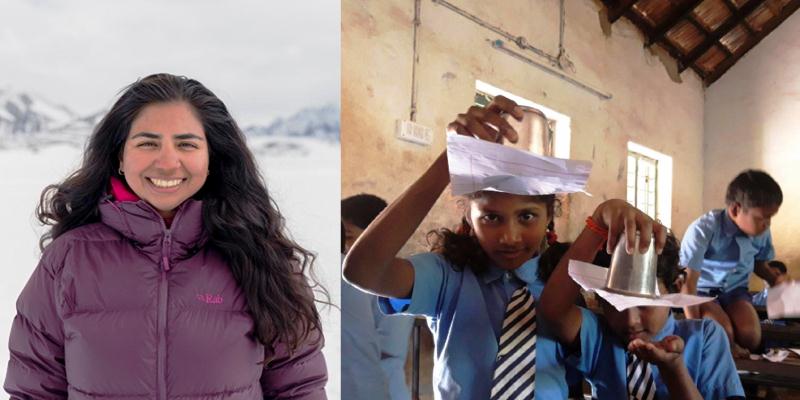
Charulata Somal, IAS, CEO Zilla Panchayat of Kodagu, driven by the zeal to make the best things happen in the district, started the E-base in 2016.

It all started in the March of 2016, when Charulata went to Antarctica on an expedition led by Robert Swan for ‘A Leadership on the Edge Programme to the Last Wilderness on Earth,’ not just once but twice the same year. A passionate environmentalist, Charulata, after her return from Antarctica, decided to take forward the concept of E-base in her district to safeguard its flora and fauna through education.

E-base, Kodagu, was established at Titimati Ashram School, a residential government school for tribal children. The E-base runs a paid fellowship programme every year which brings bright, young, motivated individuals to work with the children and build a curriculum on sustainability while imparting life skills to the kids.

With a strength of 250 children and a potential to reach out to over 500 children in the neighbourhood, the E-base gives the fellow a broad canvas to teach and explore.

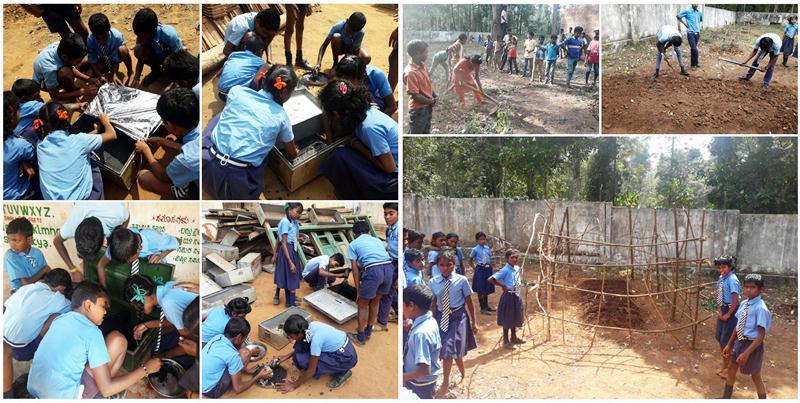
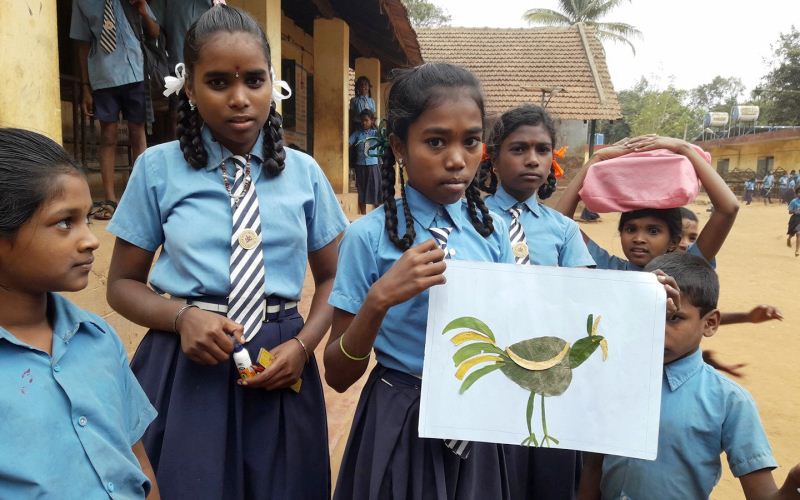
Children building solar cooker from waste and managing a vegtable garden at E-base.

“We have had one fellow till now and will be receiving our second fellow in June. Our previous fellow, Deepti Bhatt implemented 14 mini projects, core projects, field trips and workshops which included activities like creating and nurturing a vegetable garden at school and making eco-friendly toys. We hope that these efforts will be carried forward by our incoming fellow,” says Aarati Rao, an educator who worked for building a sustainability curriculum for a similar concept learning space, i.e. the E-base in Leh before meeting Charulata Somal on the International Antarctica Expedition 2016.

Practicality and hands-on learning are of prime importance at the E-base and fellows are chosen on the basis of their ability to integrate project-based learning and experiential learning into their teaching style. “The fellow’s role becomes important in utilising the infrastructure and the resources available to provide access and exposure to the children to the outside world while staying rooted in their traditions,” explains Aarati.

Environmental education hub
“E-base, Kodagu, serves as a space for kids to learn about environmental conservation and drive change through activism and ownership. Its objective is to address various local issues such as man-animal conflict prevalent in the area, protecting the Kaveri river, water conservation, and native tree preservation. It also aims to be a space that’ll serve as a window to the world since it is internet-enabled,” says Aarati, who, along with Charulata, realised the vision of starting an E-base in a biodiversity hotspot like Kodagu.

Children demonstrating their art made using leaves.

The E-base integrates rainwater harvesting technology, organic farming and clean energy for teaching children sustainable practices from a very young age.

The long-term vision is to make the students capable of countering environmental challenges and inspire them to be the problem solvers of the world. There are 11 ashram schools that are catering to the tribal kids at Kodagu, and the E-base team hopes to make use of the E-base as a learning centre.

Although there are merely five E-bases across the world, the team at Kodagu hopes that there would be an E-base in every country which would virtually connect kids and help them come up with solutions for the big challenges the world faces today.

“That is the big picture which we hope to achieve in the long run,” says a member of the E-base.

source: http://www.yourstory.com / YourStory / Home> Education / by Hema Vaishnavi / August 23rd, 2017

Rajasthani Textile heritage at lit fest in Bhutan

Thimpu (PTI) :

Ahead of the 8th edition of the Mountain Echoes literary festival that begins tomorrow, an exhibition showcasing the traditional designs of Rajasthan was inaugurated here today.

Curated by Indian fashion designer Prasad Bidapa, the show titled “Handmade in Rajasthan” is being hosted at the Nehru Wangchuk Cultural Centre here.

With collections inspired by traditional ‘kota doria’ and handloom cotton saris, the exhibition celebrates the indigenous craft forms that give Rajasthan its distinctive identity and aims to present a 360-degree view of the state’s textiles.

“Mountain Echoes presents a carefully curated segment of beautiful clothes which are handmade in Rajasthan. Each garment reflects the heritage aspect of Indian textiles and craftsmanship, creating a resonance that is luxurious and extremely collectible.

“From the finesse of the kota doria sari to the robust hand-woven khadi… from the exquisite precision of our hand- blocked printing to the finesse of our embroidery, this collection is an emphatic tribute to the spinners, weavers, dyers, printers and embellishers of the beautiful state of Rajasthan,” Bidapa said.

The show sets the stage for the literary festival that will witness literary discussions with speakers from across the globe including Shashi Tharoor, Markus Zusak, Karma Gelay, Pema Abrahams among others.

Set against the stunning backdrop of the eastern Himalayas, Mountain Echoes literary festival is an initiative of the India-Bhutan Foundation, in association with the Indian literary consultancy, Siyahi.

The festival will come to a close on August 27.

source: http://www.ptinews.com / Press Trust of India / Home> Nation / Thimpu – August 23rd, 2017

Specialty Coffee Association Readies Inaugural ‘Avance’ Sustainability Conference

Guatemala City :

Sustainability leaders and advocates from across the coffee supply chain will gather in Guatemala City to participate in the first sustainability conference hosted by the Specialty Coffee Association.

The inaugural event, called Avance, will be held Oct. 11-12 at the headquarters of Anacafé, Guatemala’s national coffee association. It will consist of lectures, workshops, panel discussions and dialogue on topics like climate change and coffee production economics, with a focus on Central America.

Avance is designed to be inclusive of roles and experience levels across the coffee industry, as well as of English and Spanish speakers. Business representatives from coffee-consuming countries, as well as farmers, development practitioners, and public officials from coffee-producing countries, will be present to learn from experts and from one another about sustainability topics in the coffee sector.

Avance is the result of years of advocacy by members of the coffee community to include the voice of coffee farmers and representatives from coffee-producing countries in discussions around sustainability issues. The conference also builds on years of work by the SCA’s Sustainability Council and conversations within the specialty coffee community on how the industry can work together to make coffee better.

The Specialty Coffee Association was formed last year after members of the Specialty Coffee Association of America and the Specialty Coffee Association of Europe voted to unify the two groups. They are continuing to operate as separate organizations while the unified structure is put into place.

source: http://www.vendingtimes.com / Vending Times / Home / by Emily Jed / Gautemala City – August, 24th, 2017

Rain brings Mallalli waterfalls alive

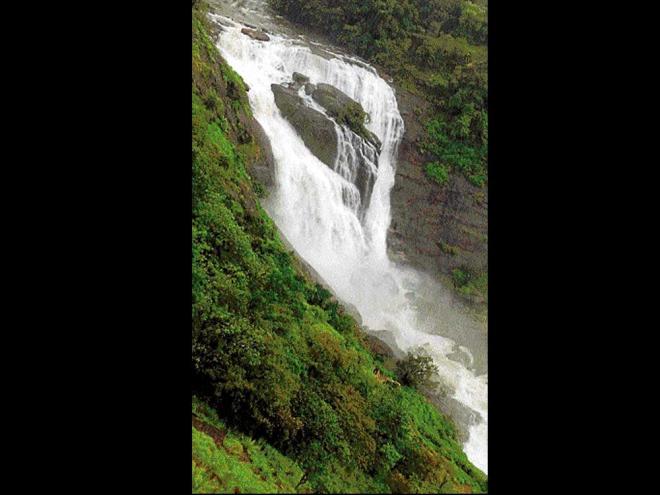
Mallalli Falls at Somwarpet taluk. DH photo

Mallalli waterfall in the taluk has come alive following heavy rain in the region. The milky flow of water is attracting tourists from across the district and also the state.

A vast patch of land on the top of the waterfalls helps tourists peek into the water spectacle. The row of peaks of Western Ghats on the otherside, as if kissing the skies, makes for a visual treat. The Pushpagiri shrine enhances the visual treat.

The Kumaradhara river that jumps from a height of 150 foot here, flows towards another small waterfall.

The waterfall, in particular, has been drawing people in hordes. Students and tourists from different parts of the State visiting the waterfall.

The footfall swells during holidays and the available space is too small to hold the crowd. It also exposes lack of basic amenities in the place.

The waterfall is located within a distance of three km from Hanchinahalli on the way to Pushpagiri.

Pushpagiri can be accessed through Shanthalli located at a distance of 22 km from Somwarpet.

If one is lucky, he or she may also behold the sight of rivulets enroute Mallalli.

source: http://www.deccanherald.com / Deccan Herald / Home> District / by DH News Service / Somwarpet (Kodagu) – August 13th, 2017

How to Make Green Coffee

GreenCoffee01KF26aug2017

A cup coffee is probably your go-to drink when you have to remain alert on a lazy work day or pull an all-nighter. But we usually get trapped between the never ending combat of benefits and side effects of drinking coffee due the excessive amount of caffeine it contains. What if we were to switch to a better version of it? Just like to green tea, green coffee is considered to be good for our health.

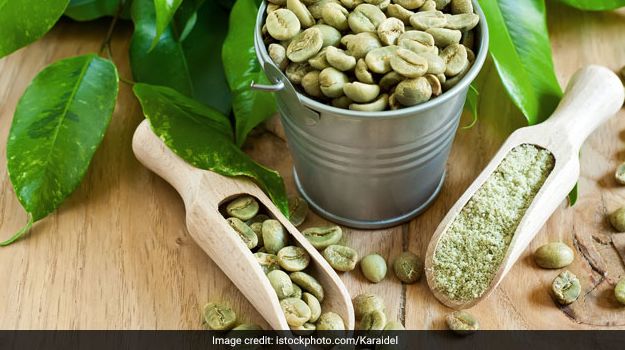
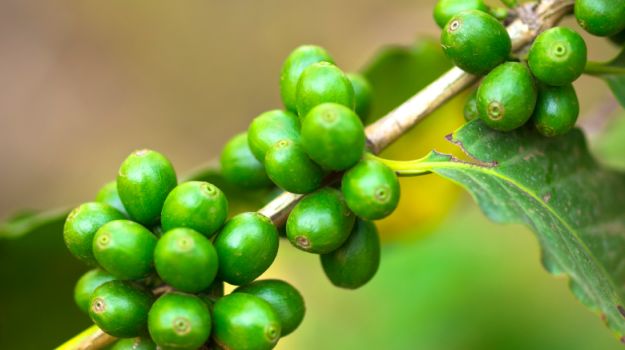
Green coffee beans are the seeds of the Coffea Arabica fruit that are not roasted unlike a regular coffee. During the roasting process of coffee beans, a natural antioxidant called Chlorogenic acid present in the beans is lost. The cholorogenic acid is meant to fight many health problems such as high blood pressure, diabetes, indigestion and even weight loss. Therefore, green coffee beans with an original amount of chlorogenic acid are considered to be healthier. According Macrobiotic Nutritionist, Shilpa Arora, “It is best to consume green coffee is you want to lose weight and it is recommended to drink it as the first thing in the morning. This helps in increasing your metabolism and burning more fat through the day.

GreenCoffee02KF26aug2017

Health Benefits of Green Coffee

1. Highly rich in antioxidants, green coffee prevents our skin cells from getting damaged.

2. It also inhibits the release of excessive glucose in our bloodstream. Due to the lack of glucose in our liver, our body starts burning the stored fat to reach the basic glucose level. Thus, it boosts your metabolism and helps to burn extra fat.

3. It works as a natural detoxification element by cleansing our liver from toxins and bad cholesterol.

4. Green coffee beans are rich in compounds like Gamma-Aminobutyric Acid (GABA), Epigallocatechin Gallate and Theophylline, that help in delaying signs of ageing like wrinkles and also keep our skin supple.

Step-By-Step Method to Make Green Coffee

Ingredients (as per 2 servings):

20 grams of green coffee beans
300 ml of hot water
If preferred: sugar, honey or a pinch of cinnamon

Method:

Using green coffee bean powder

3. To get the coffee beans in powered form, grind the same in grinder and maintain the intensity as per liking. Use a heavy and strong grinder as unroasted coffee beans are hard to grind.

2. Put the powder in 2 separate cups and slowly pour hot water (approximately 90°C) in the cups.

3. Leave the mixture for 10 minutes and then filter it to get a warm and delicious beverage.

4. Sugar or honey can be added if desired. Though the subtle flavours are best enjoyed without them.

Using whole and raw green coffee beans

1. This method is more time consuming. Soak the beans overnight in a bowl of water.

2. The next day, boil them along with the same water on high flame. After the first boil, leave it on low flame for at least 15 minutes.

3. Keep the mixture to cool completely and then filter out the flavoured water in a cup and enjoy. The green coffee made with this method has a much stronger flavour. If you find it to be too strong then you can dilute it a bit by adding warm water.

GreenCoffee03KF26aug2017

Before you set out to make your first cup of green coffee, you must keep somethings in mind. For instance, it is best to use Arabica coffee beans. Also, it is best to drink it after your meals to improve your digestion and keep your metabolism going.

Disclaimer: The opinions expressed within this article are the personal opinions of the author. NDTV is not responsible for the accuracy, completeness, suitability, or validity of any information on this article. All information is provided on an as-is basis. The information, facts or opinions appearing in the article do not reflect the views of NDTV and NDTV does not assume any responsibility or liability for the same.

source: http://www.food.ndtv.com / Smart Cooky / Home> Food & Drinks / by Gunjan Bajaj / August 18th, 2017

Regional languages facing threat of extinction: Bilimale

Purushottama Bilimale, researcher and head of Kannada department, Jawaharlal Nehru University (JNU) inaugurates a multilingual poets' symposium organised by Karnataka Arebhashe Culture and Literature Academy in Gowda Samaja, Madikeri, on Sunday. dh photo
Purushottama Bilimale, researcher and head of Kannada department, Jawaharlal Nehru University (JNU) inaugurates a multilingual poets’ symposium organised by Karnataka Arebhashe Culture and Literature Academy in Gowda Samaja, Madikeri, on Sunday. dh photo

Owing to an obsession with English, several regional languages are facing the threat of going extinct, said Purushottama Bilimale, researcher and head of Kannada department, Jawaharlal Nehru University (JNU).

He was speaking during a multilingual poets’ symposium organised by Karnataka Arebhashe Culture and Literature Academy in Gowda Samaja, Madikeri on Sunday.

Starting from the communication between the nations to the communication between households, English has been dominating the scene, to the extent that English schools are being opened in rural areas, Bilimale said.

More than 400 languages in the country have been feared of becoming extent in the next 30 years, he said. The youth have not been taking enough care to preserve the multilingual fabric of the Indian culture.

The absence of projects which aim towards developing the language in the local levels has been the main reason for the extinction of regional dialects of languages, Bilimale observed.

The Central Government has only been focusing on Hindi and it has cleverly passed on the responsibility of protecting the regional languages to the states, he said.

Pattada Shivakumar, lecturer at Government PU College, Doddaravalanje, said that languages like Arebhashe, Kodava and Tulu are included in the list of languages which face the threat of extinction.

The poets who took part in the poets’ symposium were: Bareyanda Joyappa and Kudekal Santhosh(Arebhashe), M A Ajij, K S Kanchana (Kannada), Chammattira Pravin Uttappa and Shobha Subbaiah (Kodava), Kishor Rai, Navin Suvarna (Tulu), M A Muhammed, M A Abdulla (Beary) and Charles D’Souza (Konkani).

Arebhashe Culture and Literature Academy president Kolyada Girish was present on the occasion.

source: http://www.deccanherald.com / Deccan Herald / Home> District / DH News Service – Madikeri / August 14th, 2017