Hand-Stamping Of All Visitors Resumes In Kodagu

Mysore/Mysuru:

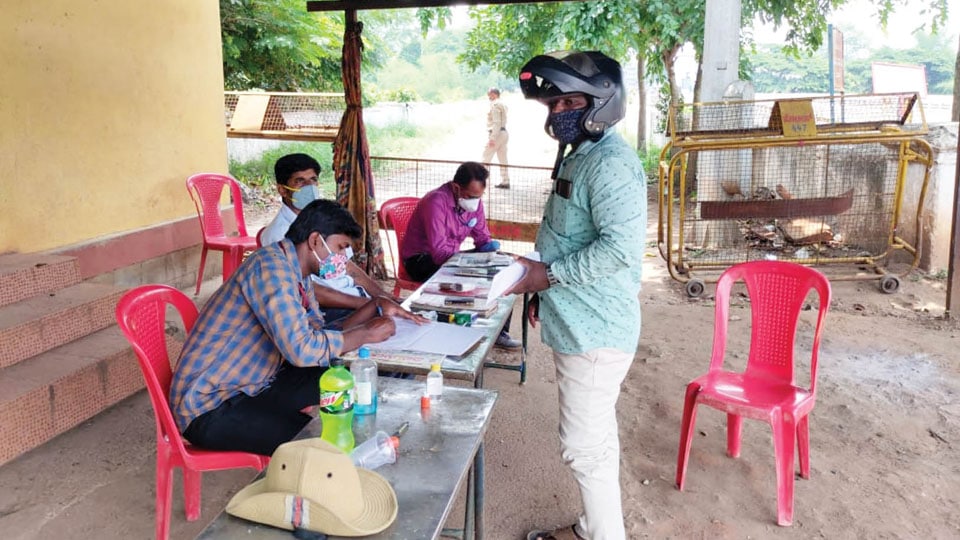
Like in the first wave of COVID-19, the Kodagu District Administration has resumed stamping the hands of all those who are entering the district from various check-posts with indelible ink.

This comes in the wake of Kodagu — that lacks even medium-scale medical infrastructure — witnessing on an average of more than 600 COVID-positive cases every day. Also, identifying the infection pattern, the District authorities have realised that the killer virus is primarily spread by people who are arriving in the district in hordes following the lockdown announcement. 

All the travellers from other bordering districts — Mysuru, Hassan, Mangaluru and Kerala — through Anechowkur Gate near Hunsur, Koppa Gate near Kushalnagar, Kodlipet Gate near Somwarpet, Sampaje Gate near Madikeri, Kutta Gate (from Tholpetty) and Karike check-post near Bhagamandala are being hand-stamped and they are being told to be in home-quarantine for 14 days. 

“HOME QUARANTINED,” reads the hand stamp, along with the date it was given to determine when their 14-day isolation ends. Before they enter the check-posts, their addresses, phone numbers, Gram Panchayat jurisdiction, purpose of visit is recorded and the same is conveyed to the respective Gram Panchayats so that the home isolated visitors are constantly monitored. 

The process of hand-stamping began in Kodagu on May 6 and the daily list is updated to the respective Panchayat Development Officer. 

Health officials said only those with negative certificates are allowed from Kerala. As a result, the movement of goods vehicles between the two States has come down drastically. Virajpet Tahsildar Yoganand said that with the rise in COVID cases, the surveillance has been strengthened.

As many as 12 personnel from the Revenue, Health, Police and Forest Departments are working in shifts at Makutta check-post. CCTV cameras have been installed at the check-posts,  he added. 

All the vehicles are being checked at the Hipligate check-post on the Kodagu-Hassan border. Check-posts have been set up at Shanthapura and Kodlipet to check the vehicles from Hassan entering the district. Barricades have been placed near the check-posts. These check-posts operate round-the-clock.

source: http://www.starofmysore.com / Star of Mysore / Home> News /May 10th, 2021
Karnataka: Kodagu crematorium cries for revamp as COVID death toll rises

Kodagu was among the first districts to report COVID cases and had sought the help of volunteers, especially for the cremation and burial of COVID victims.

Madikeri :

“When we started this service a year ago, we did not know it would become so severe. We are stressed and emotionally drained. But we cannot abandon it now,” said a volunteer from the Vishwa Hindu Parishad, which is involved in conducting the last rites of COVID victims in Kodagu.

It was among the first districts to report COVID cases and had sought the help of volunteers, especially for the cremation and burial of COVID victims. Over 100 volunteers came forward from Popular Front of India, Vishwa Hindu Parishad, Bajrang Dal and Seva Bharathi.

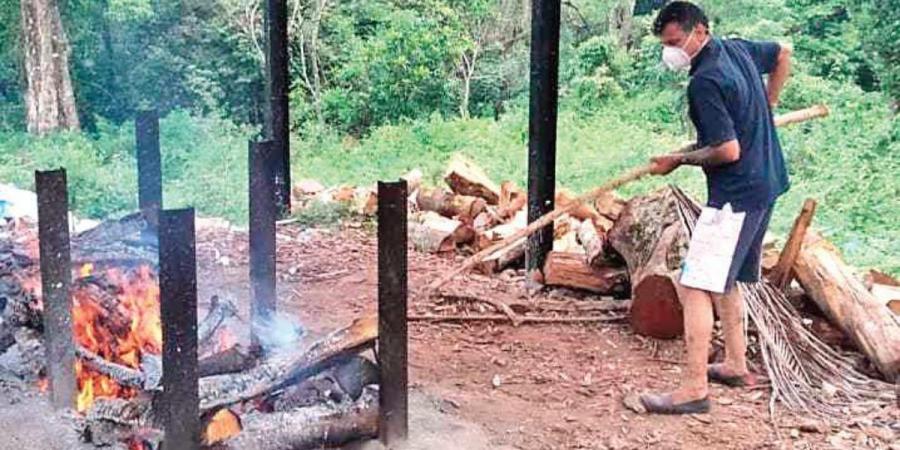
While the district rarely reported COVID deaths last year, it is seeing an average of six deaths per day over the last one month, the highest being 16 on a single day. The designated crematorium for COVID victims in Madikeri is equipped to raise only three pyres at a time.

“We can arrange two pyres on the cemented structure and the third on the temporary setup that has been arranged with the increase in COVID deaths. When there are more than three deaths, we have to wait for nearly three to four hours for all the three bodies to burn completely. We then collect the ashes and hand them over to relatives,” a volunteer said.

“We dispose of our PPE kits, sanitise ourselves and then go back to the Madikeri COVID Hospital to collect the remaining bodies. We repeat the same process. When there are more deaths, most of our day is spent at the crematorium,” they added.

Volunteers of VHP and Bajrang Dal have conducted the last rites of 101 victims, and they do selfless service as they don’t accept any monetary donations. “But I request the district administration to provide us with health insurance. If anything happens to us tomorrow, at least our families can survive with the insurance money. Social service alone has been a part of most of our lives. Also, if the government can expand and improve the crematorium, it would reduce a lot of our stress,” a volunteer said.

source: http://www.newindianexpress.com / The New Indian Express / Home> States> Karnataka / by Prajna GR, Express News Service / May 10th, 2021

Take Measures To Increase Oxygen Bed Capacity In Kodagu District

Minister Somanna inspects Virajpet Govt. Hospital

Minister Somanna inspects Virajpet Govt. Hospital

Madikeri:

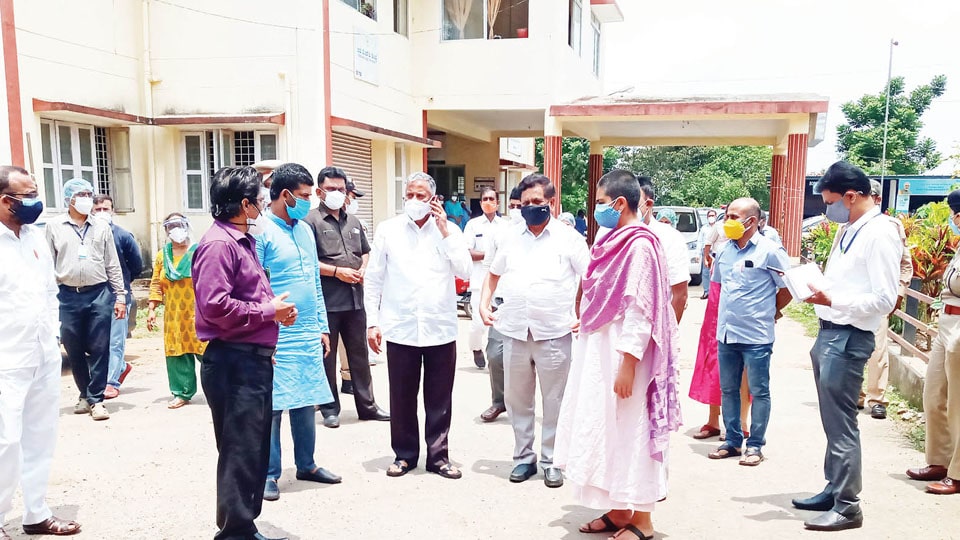
Kodagu District in-Charge Minister V. Somanna said that all measures will be taken for increasing oxygen bed capacity in the district in the wake of rising COVID cases.

He was presiding over a review meeting on COVID Control and treatment measures at the ZP Hall here on Thursday.

Pointing out that there are plans to increase the number of oxygen beds in the district by 250, including 50 in Somwarpet, 20 in Pollibetta, 20 in Kutta and a good number in Kodagu Institute of Medical Sciences (KIMS) Hospital, Somanna said that all Corona warriors and persons aged over 45 years should get compulsorily vaccinated for their own health and well-being.

Noting that several organisations such as Rotary, Lions and Chamber of Commerce have come forward for joining hands with the District Administration, he directed the authorities to take measures for refilling the 13 KL Oxygen tank at the District COVID Hospital. He also asked the authorities to ensure timely vaccine and oxygen supplies to the district in accordance with the demand.

Madikeri MLA Appachu Ranjan expressed concern over rising number of COVID deaths in the district. Noting that there are complaints that Doctors and Nursing Staff were complacent in taking care of patients, he urged the authorities to ensure proper food and boiled drinking water to all patients at COVID Hospital.

Virajpet MLA K.G. Bopaiah wanted the authorities to ensure that people above 60 years of age are vaccinated in the district. He also asked them to ensure that second dose is given to all the vaccinated.

MLC Veena Achaiah suggested to install CCTV cameras at ICU wards of COVID Hospital.

Another MLC Sunil Subramani said that the staff of Kodagu Institute of Medical Sciences (KIMS) were doing a good job and they should continue with their good work, without giving scope for any complacency.

MP Pratap Simha said that the District has been provided with a 13 KL oxygen tank and the authorities should submit daily updates of oxygen requirement and use. Instructing the authorities to ensure that there is no oxygen shortage at any point of time, he said that there is every possibility that the deadly virus may peak in the coming days and the authorities should brace up themselves by augmenting oxygen capacity and number of oxygen beds.

Kodagu District in-Charge Secretary V. Anbukumar  told the meeting that the oxygen bed capacity at the Medical College Hospital will be increased to 150 in phases.

DC Charulatha Somal said that 130 oxygen cylinders have been handed over to the DHO through the Tahsildars of three taluks in the district. Also, measures have been taken to take custody of all oxygen cylinders  available at Kushalnagar Industrial Area after discussing with the owners of industries, she added.

KIMS Director Dr. Cariappa, Superintendent Dr. Lokesh, RCH Officer Dr. Gopinath and Dr. Anand spoke about the measures taken for COVID management and control in the district.

SP Kshama Mishra, Additional DC Raju Mogaveera, In-Charge Assistant Commissioner Srinivas and other officials were present.

source: http://www.starofmysore.com / Star of Mysore / Home> News /May 08th, 2021

This Coorg coffee cultivator wants to grab a slice of India’s packaged coffee market

Launched 3 years ago, Levista is eyeing expansion in south India, Mumbai and Delhi

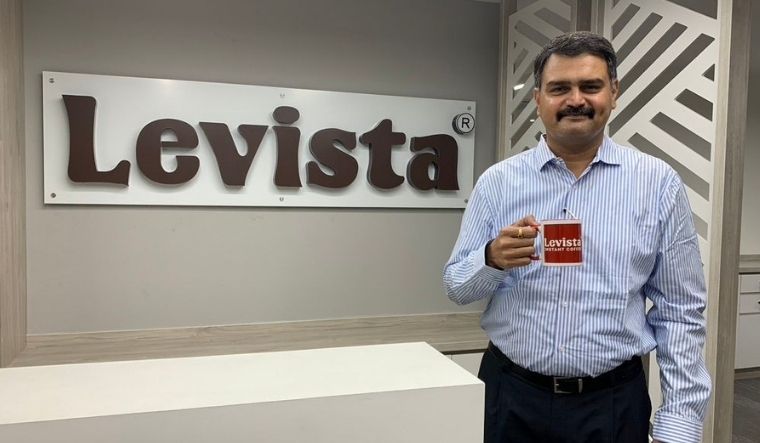
S. Shriram, vice-president-sales and marketing at Levista

Coorg in Karnataka, is among the foremost coffee growing regions in India. SLN, a three-decade old coffee plantation company in the region is now aiming to grab a slice of the Rs 2,200-crore annual packaged coffee market, which is dominated by big players like Nestle (Nescafe), Hindustan Unilever (Bru) and Tata Coffee.

SLN launched its own brand of coffee called Levista three years ago and has ever since expanded to 40,000 retail outlets, predominantly in Tamil Nadu and Karnataka. It has now set its sights on expanding across other markets, starting with the rest of south India.

“Of the Rs 2,200 crore market annually, over 80 per cent of the coffee consumption happens in the five southern states and Union territories. Therefore, we aim to reach a significant market share here rather than being sparsely spread all over the place,”  S. Shriram, vice-president sales and marketing at Levista, told THE WEEK.

“At the moment, we have a deep presence in Tamil Nadu and Karnataka. We launched our coffee in Goa in February and business is growing steadily. We will be entering the Andhra Pradesh and Telangana market by Sankranti and will penetrate deeper in there. Kerala will follow next.”

The company has the markets of Mumbai and Delhi-National Capital Region on the radar, too, however, it has not finalised a launch date yet, added Shriram.

Levista is also available on online platforms, including Amazon and it is also scaling up on other e-commerce platforms to reach a wider audience.

“Players like Big Basket have also aided our brand coverage, as has Flipkart. We have been recently on boarded through Udaan that reaches small retailers as well as hyperlocal players MilkBasket,” said Shriram.

While south India has a strong tradition of filter coffee, the rest of the country has largely been a tea drinking market. However, things have started changing with penetration of cafes like Cafe Coffee Day and Starbucks in the last decade. International coffee brands like Lavazza are also expanding in the country, buoyed by rising coffee consumption here.

“There is a huge scope for us to grow. The coffee market has been growing steadily. Out of home coffee consumption through cafes has already hit a pan-India presence and thanks to this familiarity, more new consumers are sipping coffee at home, through packaged coffee,” noted Shriram.

Levista’s parent SLN currently has a capacity upwards of 50,000 metric tonne per annum, and Shriram says the company will be able to produce enough coffee for the domestic market as well as for exports.

Talking of exports, the brand is already present in Singapore, Malaysia, Middle East, Maldives and Sri Lanka, reaching out to the south Indian consumers in these markets. The company intends to have a larger international presence next year, added Shriram.

source: http://www.theweek.in / The Week / Home> News> Business / by Nachiket Kelkar / November 20th, 2020

SP Launches Emergency Response Vehicles

Madikeri: 

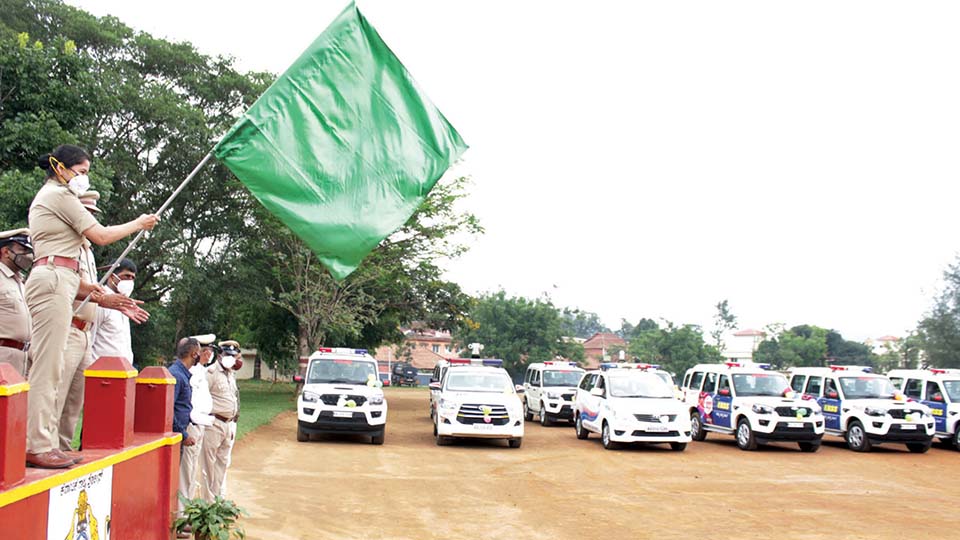
Kodagu SP Khsama Mishra launched 7 ‘Emergency Rapid Response’ vehicles at the District Parade Grounds here yesterday.

Speaking after flagging off the vehicles, Kshama Mishra said that Emergency Rapid Response vehicles are meant for the benefit of public. Pointing out that the public can call the National Helpline No.112  in case of emergencies or any crisis or criticality, she said that ERSS (Emergency Response Support System) Helpline -112 service is an ambitious initiative of the Government of India.

Noting that the earlier Police Helpline No.100 and Fire Emergency Helpline No.101, have been merged with 112 Helpline number, she said that the people of Kodagu can call 112 in case of accidents, crimes, rescue, natural disasters, illegal and unlawful activities etc., 

Explaining the working of the helpline, the SP said that this service will respond quickly to emergency and frantic calls made by the public from anywhere in the district.

Dy.SP Dinesh Kumar, DSB Inspector Medappa, City Police Inspector Anup Madappa, Rural Police Inspector Ravikiran, Reserve Police Inspector Rachaiah and others were present.

source: http://www.starofmysore.com / Star of Mysore / Home> News / May 05th, 2021

Virtual Museum Of Kodava Heritage

Sir,

The year gone by will not be forgotten for a long time to come. A year that turned the world upside down. Travel and hospitality sectors which provide most employment were crippled beyond belief. The pandemic has changed the very nature of tourism and travel for ever. Their worlds will never be the same again. Words like hybrid and virtual have come in to the lexicon of tourism. This is the new reality.

Monuments, cultural heritage sites and famous museums across the world have gone ‘hybrid’ to provide online guided tours through their sites and galleries to millions who are unable to travel anymore. In India, Government has announced that many of the country’s UNESCO Cultural Heritage sites and major museums will prepare to provide online access.

Technology not only makes this possible but has opened the magical doors to the creation of virtual museums that are only limited by imagination!

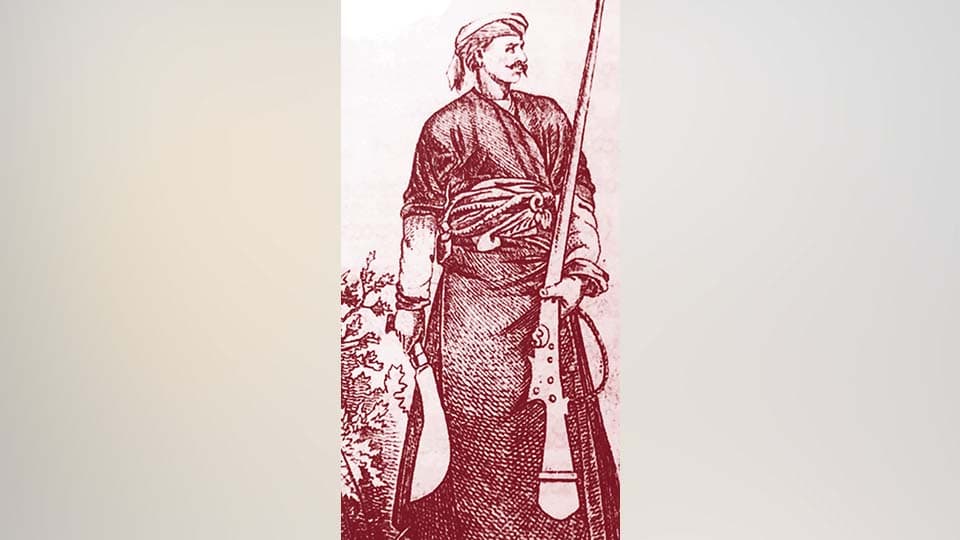
In this brave new world, India Foundation for the Arts (IFA)  — www.indiaifa.org  — has come forward to invite proposals from multi-disciplinary teams for the creation of a Virtual Museum to showcase Kodava Heritage and Culture. The virtual museum will be an interactive online space for the rich and thriving heritage of Kodavas offering a glimpse into their history, customs and cultural practices. IFA has an enviable record of supporting path-breaking initiatives in the field of art and culture.

The exciting prospect of this museum of cultural heritage of a proud warrior people has  become possible by a CSR grant from Recaero India Pvt. Ltd., which is a pioneer in the field of aerospace engineering. This grant will clearly need to be supplemented with generous donations as the project progresses.

For a project of this kind to be successful, we need to access tangible resources like photographs, video clips of marriages, folk dances and observance of rituals, jewellery and objects which are unique to the Kodava way of life. The design team would also require to reach out to members of the community for intangible resources like accounts of social rituals and customs of Kodavas that may have been lost in antiquity. We, therefore, request  members of the community to volunteer to provide the resource requirement and any other support.

The Project Coordinator in IFA Darshana can be reached at: darshana@indiaifa.org. I can be reached on: rathicodanda.kodavaheritage@gmail.com

— Rathi Vinay Jha, Chair, India Foundation for the Arts (IFA)

Bengaluru

29.4.2021

source: http://www.starofmysore.com / Star of Mysore / Home> Voice of the Reader / May 05th, 2021

Madikeri municipal council urges volunteers to join battle against COVID-19 as cases surge

The CMC has requested volunteers with medical and non-medical background to register and the council will soon assign responsibilities to them within the city limits.

Madikeri :

Following the increase in the number of active COVID-19 cases across Madikeri, the City Municipal Council has urged residents to join in voluntary work to help handle the pandemic. The CMC has requested volunteers with medical and non-medical background to register and the council will soon assign responsibilities to them within the city limits.

The call for volunteers was made by the CMC on Saturday evening and 25 people have already registered for the work. “Two people even called from Bengaluru to join the team. However, they required an accommodation facility and this is not feasible,” explained Soumya, AEE. She added that the state has released guidelines to the district to form ward committees of volunteers in city limits to help the administration in handling the pandemic situation.

The volunteers will first involve themselves in conducting surveys across their ward to identify inter-district, inter-state and international travellers. “The volunteers have to find out if these travellers are following the quarantine norms and also urge them to take RTPCR test if they have symptoms,” Soumya explained.

Further, the volunteers have to create awareness on the vaccination drive and provide correct information on government orders. Supplying essentials to people in home quarantine and home isolation and supplying rations to the needy will also be taken up by the volunteers.  

Currently, the CMC is readying the database of volunteers and the ward committees will shortly be formed to entrust COVID related work. Volunteers in Madikeri city limits can register after dropping a message with their names and ward details on WhatsApp to 9620383963.

source: http://www.newindianexpress.com / The New Indian Express / Home> States> Karnataka / by Prajna GR / Express News Service / May 02nd, 2021

The couple showcasing coffee’s dark side

Raghunath Rajaram and Namisha Parthasarathy are trying to simplify coffee with a radical approach that involves reinventing the flavour wheel and learning about coffee’s colonial hangover.

Ārāmse Coffee started out as a small in-person gathering organised by the duo in Mysuru in August 2019. (Cottonbro, Pexels)

We enjoy coffee from around the world, but fail to see beyond labels and brand names into the world of cultural identity and the farms and roasteries that work behind the scenes to bring us our daily cup of joy. It’s a topic that Raghunath Rajaram and Namisha Parthasarathy, a couple that co-founded coffee subscription company Ārāmse Coffee, spoke eloquently on coffee’s best brand ambassador James Hoffmann’s YouTube channel a month ago when the latter opened his channel to content creators.

The Beginning

Ārāmse Coffee started out as a small in-person gathering organised by the duo with coffee lovers in Mysuru to understand the growing speciality coffee scene in August 2019. These were more informative for Rajaram who confesses that he used to drink filter coffee “with milk along with three spoons of sugar” before his wife introduced him to good coffee while they were staying in Shoreditch in East London. “That, along with an introductory class to the Specialty Coffee Association (SCA) gifted by Namisha sent me down the coffee rabbit hole,” he says laughing.

When the couple came on a visit to India in 2019, the idea was to take up yoga but they landed up creating coffee workshops in Mysuru. “We started six-person workshops featuring two roasters and two different types of brewing. It was a tech-free way to spend half a Sunday and learn more about coffee,” Rajaram says about the beginning of Ārāmse Coffee.

Soon, the pandemic hit and the team had to quickly pivot from in-person meetings to something else. They went about it in two ways. First was to recreate the south Indian filter that Rajaram has grown up drinking since childhood and a prototype of which they are expecting to showcase at The London Coffee Festival later this year or in early 2022. The second was to create a community of coffee lovers online by starting coffee videos and later branching out to coffee products and a coffee subscription package to generate revenue. They are currently focussed on scaling up their subscription service and adding more content whilst in India.

Rajaram is especially happy with the direction of the coffee subscription model. “It’s a recommendation-based subscription that we offer through various roasters. We match the MRP so you are not overpaying for each subscription,” he explains. With a coffee experience tailored to individual palates and that can be further customised with ‘My Coffee Journey’ by the user, Rajaram says the system has been custom coded to scale, with the recommendation-based technology getting better with each order as it learns more about the user’s palate.

Raghunath Rajaram and Namisha Parthasarathy of Ārāmse Coffee.

The Conundrums

Whilst creating content and working on their own filter, the couple were also keen on exploring the impact of colonialism on coffee in a producing nation like India.

The couple is flummoxed by the fact that despite being the seventh-largest producer of coffee in the world, we still bulk produce and send some of our best beans to Europe and other countries. “Historically, Indian coffee has largely been bulk processed, white labelled and exported to countries like Italy, Germany and Belgium,” they say.

Parthasarathy is, in fact, working on a project for her certification in the SCA Sustainability Program that explores the localisation of coffee flavour wheels as one small way of making coffee more inclusive, especially for producers in the Global South. It’s a topic that leads to the SCA Flavour Wheel.

The Flavour Wheel

Globally, the SCA has a flavour wheel that roasters, baristas and everyone in the business refers to while describing any coffee. Rajaram says, “The problem is that the flavour wheel was largely developed in the US and UK and this could lead to some implicit biases as to what flavours are desirable and which aren’t. Tasting notes like Earthy, which are very sought after in the subcontinent, would make coffee folks in the Global North cringe as this is considered a flaw amongst those circles.”

According to the couple, having a localised flavour wheel for each place would make coffee a lot more inclusive and accessible. “We have our own unique fruits and spices that could easily make their way into these wheels.”

It’s a topic that sounds familiar to Debabrat Mishra, founder of Koraput Coffee, that’s working with tribals in Odisha to make coffee beans. According to Mishra, the wheel needs new flavours that have not been considered until now. “Our coffees have notes of green chilli, white pepper and even gooseberry because of cross microbe activity between the trees and coffee plants in Koraput. The SCA flavour wheel and way of scoring coffees that prioritises automation over traditional methods needs to change,” he says.

The SCA needs to acknowledge the shortcomings in its flavour wheel and adopt a country-specific approach, which is unlikely; or, every country could create a flavour wheel that best represents the coffee flavours found in its beans, which is too ambitious. So technically nothing can be done at the moment, except more education amongst coffee lovers.

source: http://www.lifestyle.livemint.com / The Mint / Home> Mint Lounge> Food> Drink / by Priyanko Sarkar / May 03rd, 2021

Coffee, critters and climate change

With temperatures rising and pests proliferating, Indian coffee growers are fighting challenges beyond their control.

Unpredictable rise in temperatures followed by an uncertain monsoon cycle has gradually started taking a toll on coffee yields. (Chevanon Photography, Pexels)

Coffee is the first thing I see, smell and taste in the day. But as caffeine-junkies like you or me ride the wave of premium specialty brews, we need to pay attention to growers across major regions in India, such as Karnataka, Kerala and Tamil Nadu, who are battling a host of challenges due to a changing climate.

As spring transitions to summer, the pattern of unpredictable rise in temperatures followed by an uncertain monsoon cycle has gradually started taking a toll on yields and impacting the livelihood of coffee farmers.

Bengaluru based Tej Thammaiah, a co-founder of Maverick & Farmer Coffee Roasters and third-generation coffee farmer, says his team of growers on the 150-acre estate have meticulously documented the cultivation process to pinpoint the impact of increasing temperatures over the last decade. The mild, aromatic Arabica plant with its nuanced flavours, second only to Robusta in production volume in India, is highly susceptible to even the slightest change in climate. As temperatures increase, it hastens fruit ripening, leading to a loss in the overall quality of beans.

To fight this temperature change at estates such as Pollibetta in Coorg, his growers strive to find plots at higher, cooler elevations. But in this new environment, the finicky coffee fruit typically takes longer to mature. Moreover, changing plot locations is not a sustainable solution since coffee fruits in India are grown primarily in “shady” conditions, under a canopy of trees. And deforestation and logging is taking a toll everywhere.

It gets worse: When plants aren’t grown in ideal conditions, it leaves them more vulnerable to pests and diseases. Sunalini Menon, president of a coffee grading and training institute called Coffeelab in Bengaluru, mentions that a beetle known as white stem borer has been particularly harmful, spreading through India and Sri Lanka. It prefers plants exposed to sunlight and after burrowing in hard wood and roots as a larva, it hatches and feeds off the plant, destroying the woody tissue, leading to stems wilting and leaves yellowing. The beetle seems to have a particular liking for Arabica.

Not all hope is lost, though. Menon says India was one of the first countries to battle another infamous dweller, a fungus known as leaf rust, at the Mysore Coffee Experimental Station established by the British in 1925 at Chikmagalur, Karnataka. Known as the Central Coffee Research Institute, this research centre now run by the Coffee Board of India is researching and guiding growers on pest control, as well as initiatives such as diversifying shade patterns with local balsa and cedar trees and introducing new varietals of Arabica and Robust suited for tropical growth.

But she does believe it’s important to let go of the hesitancy to uproot plants. Farmers, perhaps for cultural reasons, have typically been hesitant to replant their land though research suggests that shorter plant life-cycles increase quantity, improve bean quality and even give growers some reprieve from emerging pests and diseases.

Ultimately, however, no practice can replace the tedious, time-consuming process of screening crops regularly. A task which falls squarely on growers.

Some shift to growing other crops. Those who stick it out, especially in smaller estates, need more support–in the form of agritourism, research on new techniques, investment in weather stations or, simply, from consumers.

If that doesn’t happen, we may in time find it increasingly difficult to get that morning fix.

For those new to coffee: Thammaiah suggests Selection 795 or Cauvery to taste domestic Arabicas (while we still can).

Nightcap is a column on beverages by Varud Gupta, author of Bhagwaan Ke Pakwaan and Chhotu. @varudgupta

source: http://www.lifestyle.livemint.com / Live Mint / Home> Mint Lounge> Food / by Varun Gupta / April 26th, 2021

Peaceful Madikeri City Municipal Council elections held amid Covid-19 pandemic

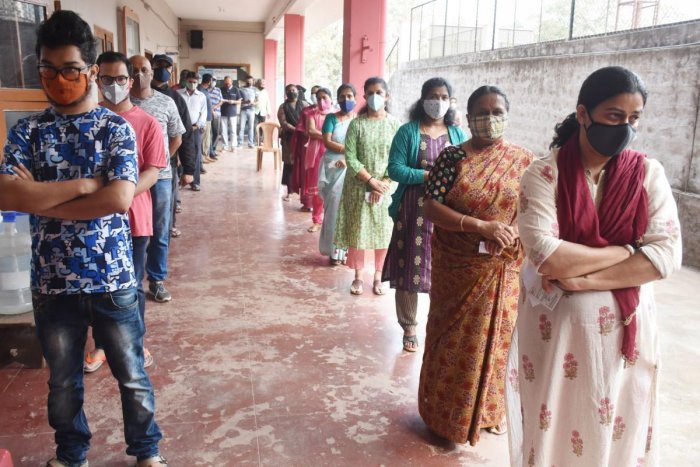
Voters wait in queues following social distancing in Madikeri, to cast their vote.

The Madikeri City Municipal Council elections were held peacefully on Tuesday. The elections were held for 23 wards.

The voters took part enthusiastically during the voting process, despite the fear of the Covid-19 pandemic. The future of the candidates will be known on April 30.

People waited in a queue as early as 7 am at the polling booth near the KSRTC bus stand.

A similar scene was found in several other polling booths as well. Even though the number of senior citizen voters was less, women and youth took part in large numbers.

People who were tested positive for Covid-19 were allowed to cast their franchise between 5 pm and 6 pm. The patients wore PPE kits and exercised their franchise.

The candidates expressed their happiness over the good turnout of voters. Many candidates had speculated about a poor turnout due to the pandemic.

However, the spirited show of the voters is a good sign, said the candidates.

The seniors opined that there were no elected representatives at the City Municipal Council from the last two and a half years and the public was fed up with the administration of the officials.

The officials were not listening to the woes of the people in the CMC wards. Hence, the overwhelming attendance by the voters at the polling booths clearly indicated the fact that the people wanted elected representatives in the CMC administration, they added.

Maintenance of rules was given emphasis at the polling booths. The people wore masks and maintained social distancing.

Police vigil was tightened at every polling booth. Deputy Commissioner Charulata Somal paid a visit to the various polling booths to review the situation.

Candidates in fray

A total of 108 candidates contested from 23 wards of the CMC.

Both the BJP and Congress had fielded candidates in all the wards while JD(S) had fielded candidates in 22 wards.

SDPI fielded nine candidates, Aam Aadmi Party fielded four candidates and one candidate contested from Karnataka Rastra Sangha.

Virajpet MLA K G Bopaiah arrived at the polling booth at Junior College, Madikeri, along with his family to cast the vote.

MLC Veena Achaiah exercised her franchise at the polling booth in ward number 3.

K G Bopaiah later predicted that BJP will win 15 out of 23 seats and will come to power in the CMC.

He also said that tough rules in the state were inevitable to contain the spread of Covid-19. He suggested conducting Covid-19 tests of people entering Kodagu. Those who test positive should be home quarantined.

Congress leader Mittu Changappa cast his vote at the booth set up in St Micheal School in Madikeri at 7 am, as the first voter. He boasts of holding the record of being the first voter during the past 28 elections.

Workers violate rules

Workers of various political parties and also the supporters of independent candidates were seen flouting the Covid-19 guidelines, near the polling booths.

Voting percentage

At 11 am, there was a voting percentage of 31% and the percentage rose to 63% at 2 pm.

source: http://www.deccanherald.com / Deccan Herald / Home> State> Mangaluru / by Adithya K A, DHNS, Madikeri / April 27th, 2021