In Kodagu, this independent researcher is working with local tribes and children to protect this precious habitat

Neethi Mahesh has dedicated a lot of years to researching the riparian habitats of the Kodagu district. She is currently working with a tribe of honey collectors and students for better results .

Just like we hardly think of women when it comes to research in niche fields, one rarely thinks of fish when it comes to conservation. Neethi Mahesh is changing both mindsets. “Yes, the Government of India does have a Department of Fisheries, but its concern is with commercial fishing, rearing, catching and so on. When it comes to freshwater fish, quite a bit of work has been done in the past, but we have barely scratched the surface when it comes to taxonomy,” says Neethi. And the fish that has caught her academic interests is the migratory fish mahseer that dwells in riparian habitats, the area of interface between river and land, of Kodagu.


Environmental Studies and Ecology are subjects to which she was introduced early on and growing up in a space surrounded by greenery drove her to choose this field of research  


The 37-year-old’s journey started at Agumbe Rainforest Research Station where she was volunteering for the King Cobra Telemetry Project (a project to understand the ecology of cobra) in 2013. It was then that she heard about mahseer, their dependence on freshwater and how they migrate in the monsoons. While the river Seethanadi in Agumbe was not an ideal option to carry out research, she shifted to Kodagu and currently works at Dubare Reserved Forest. “Why mahseer is important is because it is a strong indicator of the river ecology itself. And it is in the riparian habitat that they spend most of their time,” asserts the researcher who was assisted in funding for her research by the WWF India and The Rufford Foundation in 2015 and The Conservation Hero Grant by The Habitats Trust in 2019.  
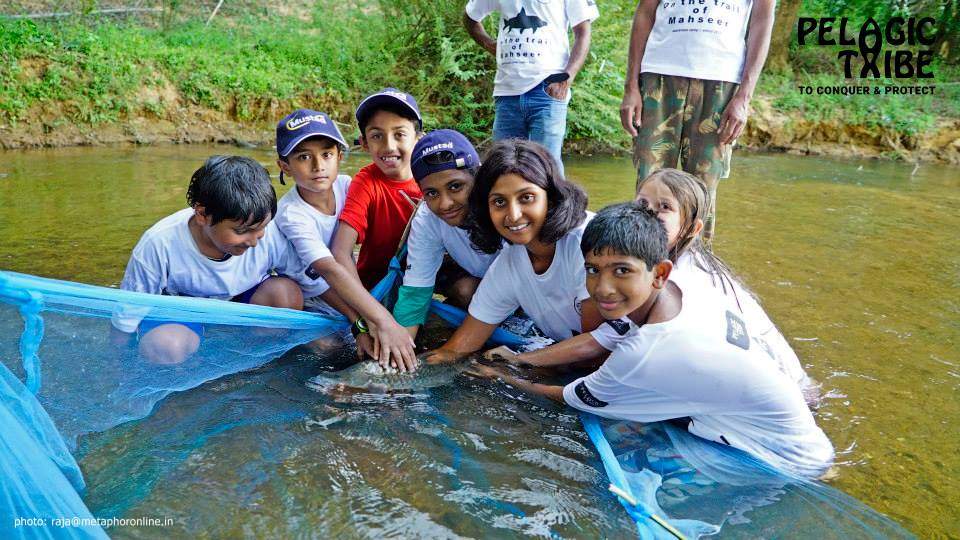
River outreach with students | (Pic: Neethi Mahesh)

River bank modification, land-use change, dam proposal and more — there is a lot that threatens riparian habitats, which are majorly responsible for diverting flood water downstream. Invariably, the native species are threatened too. Hence, she has also been working with the native Jenu Kuruba tribe, who are traditional honey collectors, to preserve the local species. To this end, they started a seed bank and a nursery along with executing plantations of local species, all with the support of the Karnataka Forest Department. “The tribals were shifting to planting commercial species because it gets them the money, but a lot of time was spent on making them understand that their indigenous knowledge and skills are valuable. And unless it’s not documented, we will never know about it,” says the independent researcher who hails from Bengaluru. They have identified 12 species, as of now, that are important and have so far collected six to seven species. “One of the species that we are working for is a kind of river jamun (plum) that grows during the monsoon and drops into the river where, via observation, we can confirm that mahseer and other omnivore and herbivore fishes feed on it,” she explains.


It was in the year 2015 during which she mapped out the river stretch of Kaveri and did her basic groundwork for her research


What we love best about what Neethi is trying to do involves government school children as well. “There has been environmental generational amnesia and the new landscape is normal to them. We are trying to get them out in the open, teach them how to test the water in the river, how fertilisers affect it and so on,” she explains. But what she is most excited about currently is her soon-to-be-launched portal Our River, Our Life. “It’s a river-monitoring page. One can upload their quality report of their location online. It could also serve as a flood-watch. And then there is also her Voices from the River blog, where people can share their river stories,” she informs. It surely sounds resourceful.
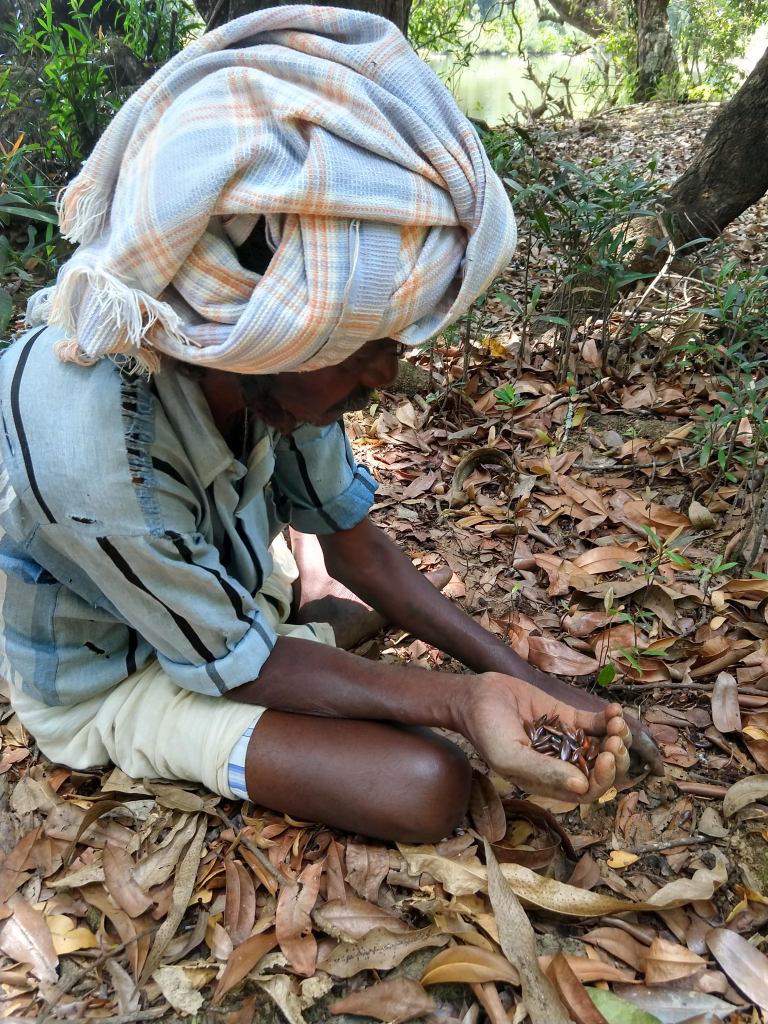
Collecting seeds | (Pic: Neethi Mahesh)

Her area of research
Spatial ecology is the study of the spatial area occupied by a species. The species’ relationship with the habitat, other species and so on are studied in detail. It is also the study of the species’ own microhabitat and what affects it. Some of the courses that can help you understand more about this are:
– Graduate Certificate in Spatial Ecology from Michigan State University, US
– Computational Methods in Ecology and Evolution (MRes) from Imperial College, London

source: http://www.edexlive.com / EdEx-TNIE / Home> Happennings> Fish / by Seema Rajpal, Edex Live / March 06th, 2021
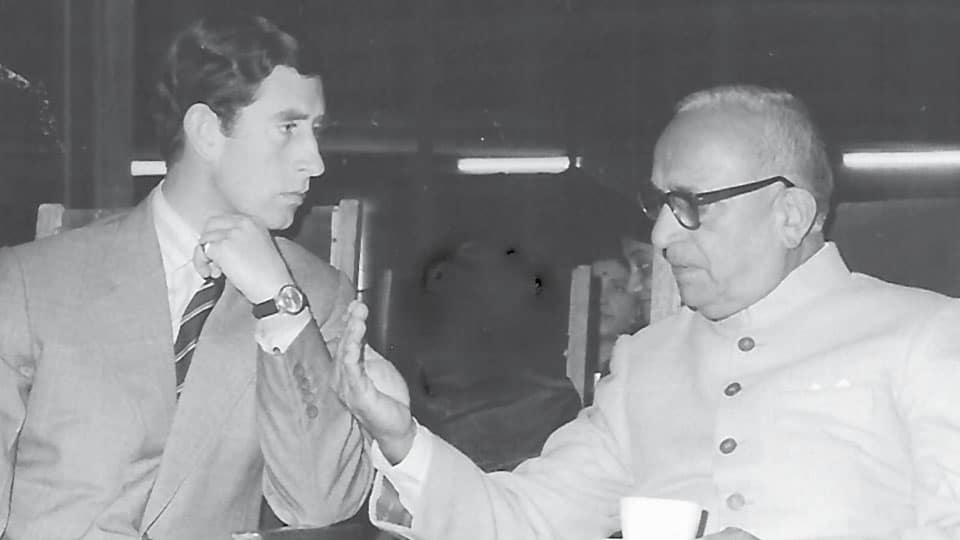
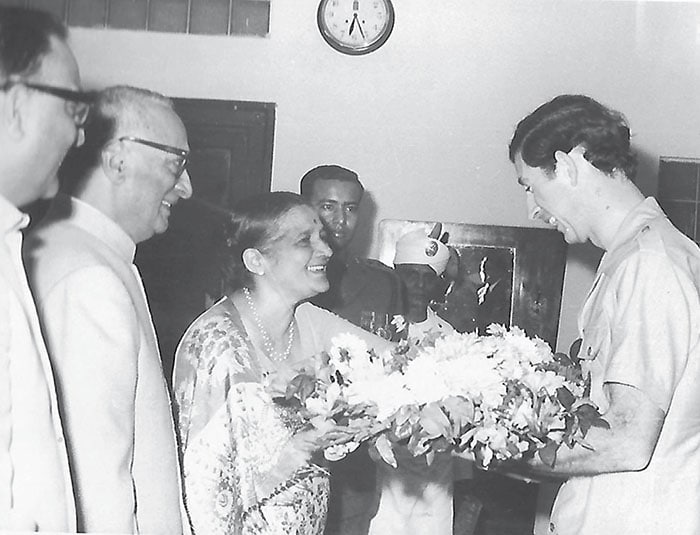
India Visit Of Prince Charles

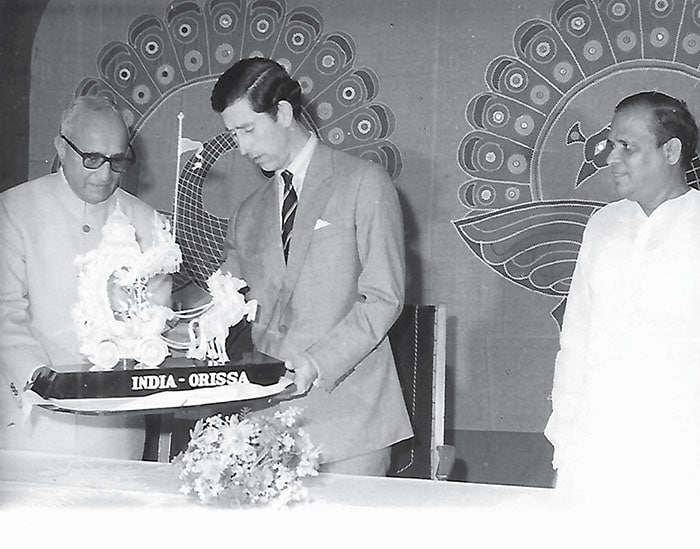
Charles, Prince of Wales, the heir to the throne of United Kingdom (UK), has visited India 10 times till date. One of his visits was in 1980, and one of the States where he was a State Guest was Orissa. My father, C.M. Poonacha, was the Governor of Orissa at the time. Prince Charles stayed in the Raj Bhavan for a couple of days and my parents interacted with him as his hosts. For my father, who was a freedom fighter, this was quite an experience to host the future King of the UK, whose ancestors were his adversaries. 

Prince Charles was a 32-year-old bachelor at the time. Those who have watched ‘The Crown’ on Netflix would recall that before his foreign tour in 1980, he had started dating Diana Spencer. He took her to Balmoral Castle to meet the Queen and other members of the family and was supposedly put through the ‘Balmoral Test’ to assess if she has the right qualities to be a Windsor and a potential Queen of UK. 

Months prior to her marriage, Diana moved to Buckingham Palace to familiarise herself with the protocols to be followed as the future Princess of Wales. My father found Prince Charles to be an amiable, intelligent, and well-read young man. It is commendable that India and UK continue to have cordial relationship despite the dark colonial era. I recently found some of the photographs taken during the 1980 visit.

Mr. & Mrs. C.M. Poonacha greeting Prince Charles.

Had I known as much as I do now about Queen Victoria and her Indian God-daughter Princess Victoria Gowramma of Coorg, I would have visited Bhubaneswar for a chat with Prince Charles! An opportunity missed.

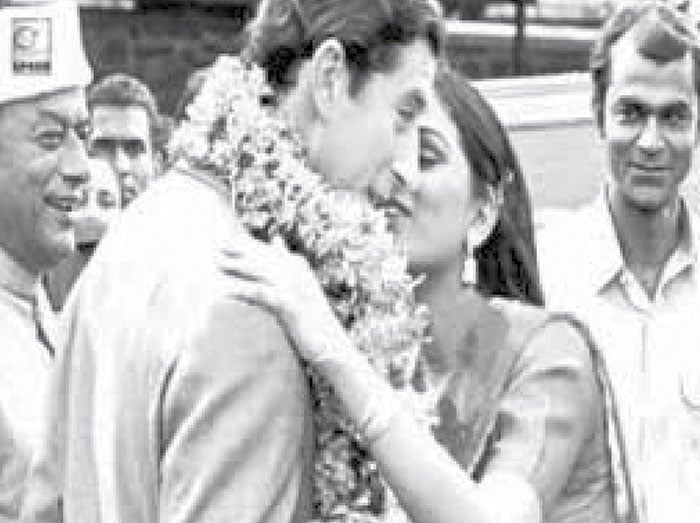
After his visit to Orissa, Prince Charles was the State Guest of Maharashtra. Wherever he went, girls were swooning over him! He was arguably the most eligible bachelor in the world at that point in time. I am sure many would remember the cheeky kiss the then 16-year-old Padmini Kolhapure of Satyam, Shivam, Sundaram-fame, stole from the Prince charming!

C.M. Poonacha and Prince Charles.

Prince Charles and Lady Diana Spencer were married in 1981. Their tumultuous life, divorce and the subsequent horrendous accident that took Diana’s life, are familiar to the world. The person who stole Charles’ heart was Camilla Parker Bowles (née Camilla Shand). There are several speculations about Charles becoming King and Camilla his Queen. One rumour is that Queen Elizabeth II will abdicate later this year after her 95th birthday celebrations and make way for Charles to be coronated. Another scenario is that the Queen will hold on to the crown and make Charles the Regent. Yet another speculation is that the Queen might bypass Charles and name his son Prince William her successor. If Queen Elizabeth II, after 69 years on the throne, continues as the Monarch till her demise, then by normal scheme of things UK will have King Charles and Queen Camilla. 

People in the UK are divided on the issue of continuation of the monarchy with a slight bias towards retaining the royal head of State. In any case, it is more than a couple of centuries since monarchy in the UK ‘reigns but does not rule’.

Padmini Kolhapure giving a peck on Prince Charles’ cheek.

When Padmini Kolhapure kissed Prince Charles!

Bollywood actress Padmini Kolhapure made a lot of headlines in 1980 when Prince Charles came to India and the teenage actress welcomed him with a warm kiss on his cheeks. The Prince was welcomed by Padmini during a visit to a Bollywood shooting spot and after putting the garland on his neck, she planted a kiss on his cheek. According to reports, Prince Charles was also surprised with the actress’ gesture. This became quite a topic of discussion at that time.

About the author: C.P. Belliappa is a Chemical Engineer. He is based in Coorg (Kodagu). He is known for his writings on issues pertaining to Coorg. He writes humour, history and human-interest stories. Four of his books — Tale of A Tiger’s Tail & other Yarns from Coorg, Nuggets from Coorg History, Victoria Gowramma: The Lost Princess of Coorg, and Tongue of the Slip — have been published by Rupa Publications. He presently serves as President, Coorg Institute of Technology (CIT), Ponnampet, South Kodagu.

source: http://www.starofmysore.com / Star of Mysore / Home> Feature Articles / by C.P. Belliappa / March 03rd, 2021

Six-year-old in Karnataka hears for the first time on World Hearing Day

The young boy, who has been diagnosed with profound hearing loss since birth, was gifted with hearing aids with the efforts from Swastha Centre for Special Education and Rehabilitation, Suntikoppa.

Madikeri :

The silent world opened up with sounds to the six-year-old Dhruva, who heard for the first time on the World Hearing Day on Wednesday. 

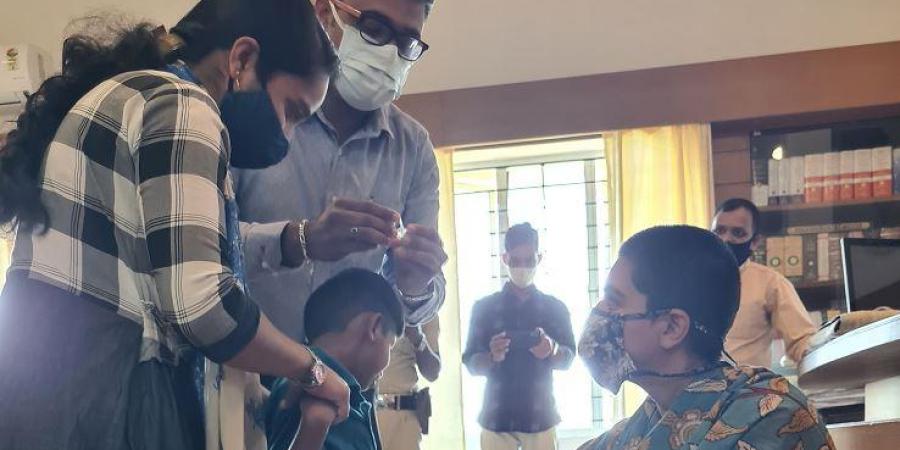
The young boy, who has been diagnosed with profound hearing loss since birth, was gifted with hearing aids with the efforts from Swastha Centre for Special Education and Rehabilitation, Suntikoppa. The hearing aids were handed over to Dhruva by Kodagu DC Charulata Somal.

Son of Srijith and Rekha from Madapura in Kodagu, Dhurva was diagnosed with hearing loss at the age of three. While his parents looked forward to equipping their child with hearing aids, the equipment was out of reach for the parents. However, the Community Based Rehabilitation programme conducted by Swastha Institution introduced Dhruva’s parents to Aarthi Somaiah, the director of Swasta and the journey from here has been a sweet one.

Swastha Institution, a unit of Coorg Foundation, has over 100 specially-abled students. The centre provides vocational training to all the students even as many are placed across reputed private companies in the district. After the institution learnt about Dhruva, many donors were contacted.

SLN Group Vishwanath and his wife and Komal of Kanbail Estate, came forward to join hands with Swastha to help Dhruva who has now been equipped with Rs 62,500 worth of hearing aids. Dr Achaiah conducted the hearing test for Dhruva and the hearing aids were placed on Dhruva by DC on Wednesday.

“Dhurva has been born with severe to profound hearing loss and hearing aids play a major intervention. Once he starts responding to the hearing aids, he will be given speech therapy,” explained Dr Achaiah.

Director Aarti said that early intervention is required to identify differently-abled. “The centre has strategized the early intervention programme across the district and this enables identification, assessment and service delivery to differently-abled children aged six and below. The mainstreaming will be taken up by training the mothers of differently-abled at Anganawadis, which will be chosen as intervention centers.”  

source: http://www.newindianexpress.com / The New Indian Express / Home> Good News / by Prajna G R / Express News Service / March 03rd, 2021

Tadiyandamol Hill beckons trekkers

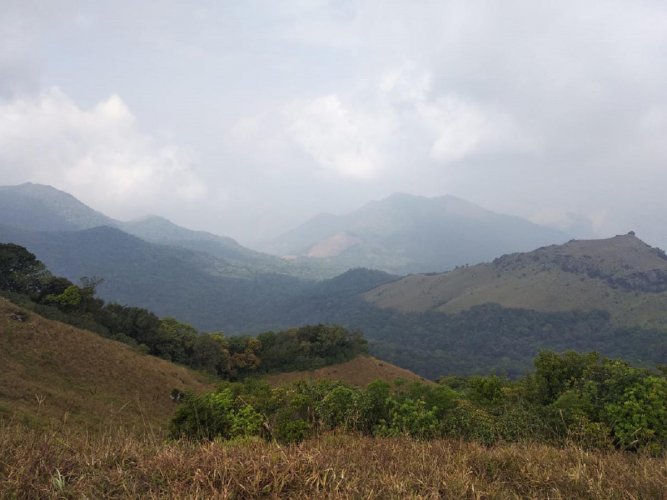
A view from the top of Tadiyandamol Hill in Kodagu.

Tadiyandamol, the highest cliff of Kodagu, is known for nature’s bounty and attracts trekkers. Tadiyandamol roughly translates to ‘tall, broad hill’ in the local dialect.

It is the highest peak in the Kodagu district and the third highest in Karnataka after Mullayyanagiri and Kudremukh.

To embark on the trekking adventure, trekkers have to trail through lush green plantations and here and there water bodies cross the path. The path does not make one feel tired as one looks at the beauty of the surroundings. 

Owing to the Covid-19 pandemic, the trekking activities were suspended for a few months.

Trekking activities resumed

When the trekking activities resuming, people from all age groups have started their trekking adventure.

The number of people during the weekends and holidays is on the rise. 

Trekkers from not only Karnataka but also from outside the state and country visit Tadiyandamol.

With verdant valleys in all directions, the views all around from the top mesmerise the trekkers. 

The trekkers enjoy a whiff of cool breeze at the top with the clouds playing hide and seek. Trekkers visit the spot even during winter and summer. 

Distance and height

Tadiyandamol cliff is 48 km away from Madikeri. The height of the cliff is 1,717 metres and one has to cover 10 km to reach the cliff via Nalkunadu palace in Yavakapadi.

One can enjoy the beauty of nature while traversing the trekking trial via Kabbinakadu.

After reaching Kakkabbe via Napoklu, one must locate Yavakapadi village. Jeeps are also available for rent from Kakkabbe. After driving for six to seven kilometres, the rest of the way can be covered on foot.

Panoramic view

The panoramic view of Tadiyandamol during monsoon is totally different. One come across several waterfalls cascading down the hillock en route.

Several researchers also visit the cliff to study biodiversity.

To check the pollution, the forest department has laid down a few restrictions on the trekkers.

The trekkers have to pay Rs 100 and ensure that they do not dump plastic and other waste en route.

“Tadiyandamol is a paradise for the trekkers,” said Prof Pattabi of Mangalore University, who had trekked along with a team recently. 

source: http://www.deccanherald.com / Deccan Herald / Home> State> Mangaluru / by DHNS, Napoklu / February 27th, 2021

India’s youth must find innovative ways to overcome pandemic crisis: Nikhil Chinapa

Time to help is now, says popular DJ Nikhil Chinapa, who is moderating a fundraising concert for daily-wage workers affected by the pandemic

Nikhil Chinapa | Twitter Photo

Bengaluru:

Every ’90s kid will remember being a fan of VJs. One such name that people never forget was Nikhil Chinapa, who was a popular face on MTV. While he may be living in Mumbai now, at heart, he still considers himself to be a “Bangalore boy”. “I still support RCB over Mumbai Indians,” says Chinapa, who is busy gearing up to moderate the Open Up India Fundraising Campaign, United Nations Development Programme  (UNDP), which is for sanitation workers and migrant workers.

The concert will be taking place virtually on March 13. The concert will have performances by Vasu Raina, Raghav Meattle and Lucky Ali, to name a few artistes.  With things going back to the way they were before the pandemic, one might question the need for a fundraiser. To this, Chinapa says, “The impact of the pandemic has been so huge that it will still take time to recover, especially for daily wage workers. This is the time we can come together to help as possible,” says Chinapa, who believes the youth of the country must find innovative ways to overcome this crisis.

“They can come up with new ideas,” he adds. One of India’s most popular DJs, Chinapa has missed playing for a live audience but he is choosing to not sweat the small things. “Lockdown was a low phase but I have nothing to complain. I’m grateful I got to spend more time with my wife and daughter, who turned 3 this year,” says Chinapa, who married fellow DJ, Pearl Miglani, in 2012, and to whom he credits his DJing skills. 

Chinapa’s career as a television personality started when he won the MTV VJ Hunt in 1999. He has also been a part of shows like India’s Got Talent 2, MTV Splitsvilla, MTV Mashups, Fame X etc. Agreeing that people’s taste in music and the way they consume entertainment has changed drastically, Chinapa says the secret to staying relevant is to  understand the change and to pursue what you love with passion.

He explains this with the example of the upcoming concert, which will be streamed digitally, which was something that not many considered some years ago. “As the style of music and the way the industry functions has its own limitations, the only way to go about this is to do things with the same passion you felt on the first day,” says Chinapa. For details about Open Up India Fundraising Campaign, UNDP India, check Insider.in

source: http://www.newindianexpress.com / The New Indian Express / Home> Cities> Bengaluru / by Monika Monalisa / Express News Service / February 28th, 2021

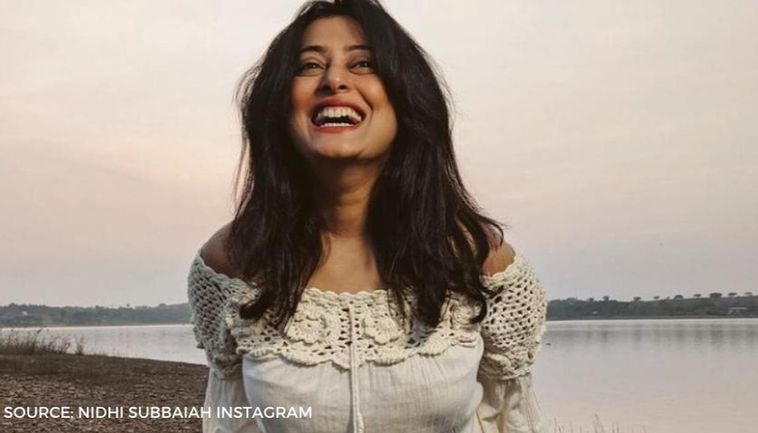
Nidhi Subbaiah To Enter Bigg Boss Kannada 8: Here’s Everything You Need To Know About Her

Nidhi Subbaiah is all set to enter the house of Bigg Boss Kannada season 8. Here is a general trivia about the actress to prepare you to watch her on the show.

Nidhi Subbaiah is all set to enter the house of Bigg Boss Kannada season 8 and thus fans are eager to know more about the contestant.

Nidhi Subbaiah entered the industry through television advertisements and small roles in films, She rose to fame through movies like Pancharangi and Krishnan Marriage Story.

 She made her Bollywood debut in 2012 through Oh My God and bagged a lead role in 2012 released Ajab Gazabb Love. 

Below is a list of things fans need to know about Bigg Boss Kannada’s Nidhi Subbaiah.

Who Are Bigg Boss Kannada season 8 Contestants | Bigg Boss Kannada 8:  Here's The List of Confirmed Contestants | Celebs Photo Gallery | India.com  Photogallery

Who is Nidhi Subbaiah?

Nidhi marked her debut in 2009 with the movie Abhimaani which turned out to be a box office failure. She later appeared in movies like Chamkaysi Chindi Udaysi, Veera Bahu, Anna Bond, and Ayushman Bhava. She gained popularity among the Kannada audience through her commercials.

Nidhi Subbaiah general trivia

Bigg Boss Kannada’s Nidhi Subbaiah’s age is 35 years old, born on the 16th of February, 1985. She married her long-time boyfriend Lavesh Khairajani. Their wedding ceremony was a beautiful mix of traditional South-Indian, Sikh, and Sindhi cultures.

Nidhi Subbaiah achievements as a sportsperson

Nidhi Subbaiah pursued her education in Mysore in Sri Jayachamarajendra College of Engineering.

She proved her potential as a sportsperson by winning gold medals at national level spots in sailing.

The actress has an impressive record of winning three national gold medals in the same year at Visakhapatnam in Andhra Pradesh and at Chilka Lake in Orissa.

Adding to her list of achievements, Nidhi was also a Naval NCC Cadet and won the best cadet award in 2004.

What is Nidhi Subbaiah’s net worth?

Working as a model and actress in the south Indian film industry, Nidhi garnered quite a lot of net worth throughout the years. She made her earnings through advertisements and roles in Kannada, Telugu, and Hindi movies. Nidhi Subbaiah’s net worth is estimated to be around 85 crore rupees, according to a report by thepersonage.com.

A peek into Nidhi Subbaiah’s photos on Instagram

Nidhi Subbaiah often shares photos of her daily moments on her social media to interact with her fans. In a recent post, the actress shared a picture of herself cradling her dog and wrote ‘Little Pablo!’. Nidhi Subaiah’s photos on Instagram let her fans get a glimpse of her daily life as the actress consistently updates her fans.

source: http://www.republiworld.com / RepublicWorld.com / Home> Entertainment News> TV News / by Princia Hendriques / March 01st, 2021

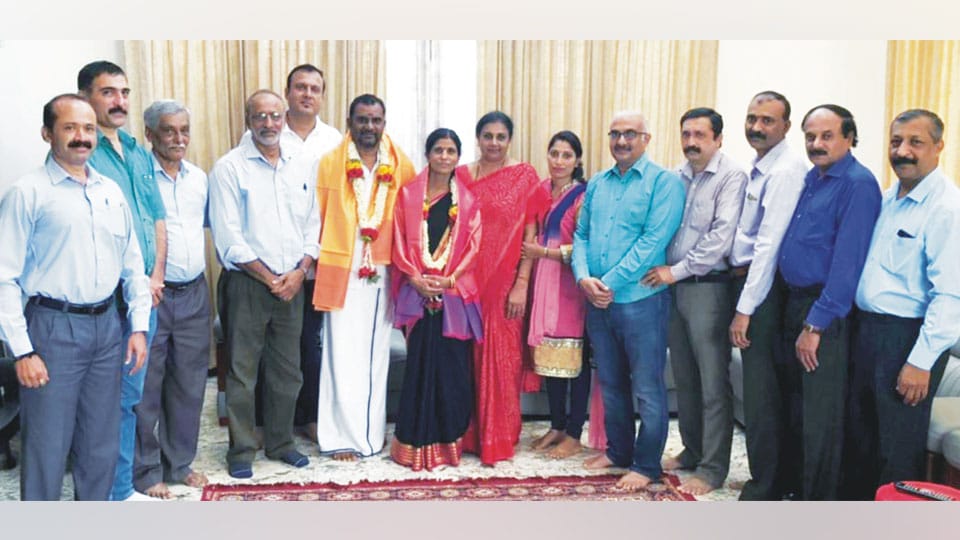
Kavery Kodava Association Honours New Mayor And Her Husband

President of Sri Kavery Kodava Association, Mysuru, P.S. Devaiah (fourth from left), Association office-bearer P.M. Praveen Chengappa (standing behind P.S. Devaiah), Treasurer K.M. Chengappa (extreme right) and other office-bearers of the Association seen greeting the newly-elected Mayor Rukmini Madegowda and her husband Madegowda at the Mayor’s residence in Vidyashankar Nagar in city this morning.

source: http://www.starofmysore.com / Star of Mysore / Home> Photo News / February 28th, 2021

IRS Officer From Kodagu In Foreign Asset Investigation Unit

Will probe undisclosed foreign assets

Mysore/Mysuru: 

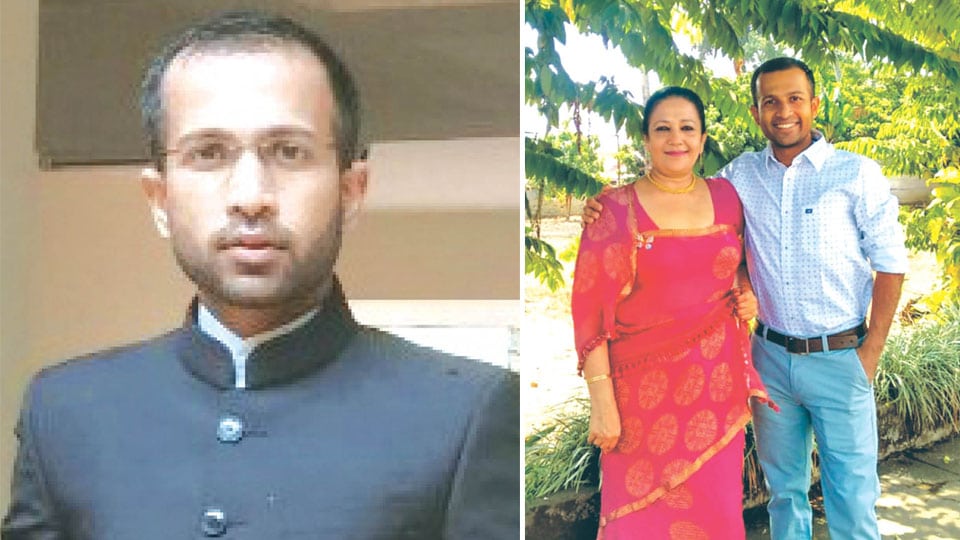
Dr. Kottangada Pemmaiah, an Indian Revenue Services (IRS) (Income Tax) officer from Kodagu, currently posted in Surat, Gujarat, as the Deputy Director (Investigation), has been additionally appointed as the Deputy Director of Foreign Asset Investigation Unit (FAIU) in Surat.

Dr. Pemmaiah will work in the FAIU that has been created by the Union Government in the countrywide investigation wings of the Income Tax Department for focussed probe in cases of undisclosed assets held by Indians abroad and possession of black money in foreign shores.

FAIUs have been recently created in all the 14 Investigation Directorates of the Income Tax Department located in various parts of the country that are primarily tasked to undertake raids and seizures, and develop intelligence to check tax evasion done by various methods.

Gujarat has created two such units, one in Ahmadabad and the other in Surat. Karnataka will have one. The FAIUs have been created as new wings within the various Investigation Directorates of the Income Tax Department to bring focus on cases of undisclosed assets held abroad by Indians and black money stashed abroad, Government sources said. 

The new units will also probe cases of Indian entities named in global tax document leaks like the Panama Papers. The FAIUs will be under the authority of the jurisdictional Director General of Income Tax (investigation) rank officer and its work will be directly monitored by the Central Board of Direct Taxes (CBDT).

Dr. Pemmaiah is the son of Kottangada late Devaiah. His mother Viju Devaiah is a social worker and President of Cauvery Pommakkada Koota at Gonikoppal. Before getting into Civil Services, Dr. Pemmaiah was serving as Resident Medical Officer at Gonikoppal Community Health Centre.

source: http://www.starofmysore.com / Star of Mysore / Home> News / February 27th, 2021

Their job? Waking up and tasting coffee

Their daily grind is to evaluate and certify the bean

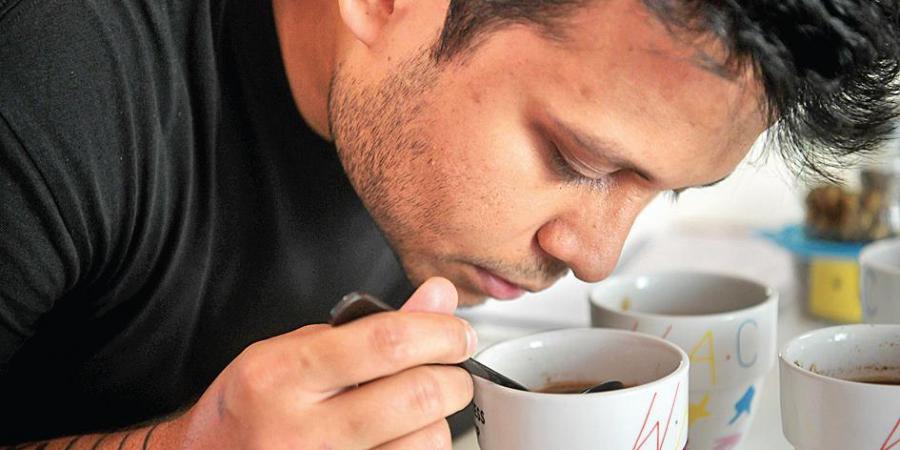
Suhas Dwarkanath slurps coffee

Bengaluru :

Imagine having coffee breaks throughout the day! And imagine your boss insisting that you take these coffee breaks! Well, coffee tasting or cupping is not as simple as that. There is a science and a philosophy behind that hot cuppa you consume daily.

Coffee goes through a process – from beans to brew. From planting the seed to picking the fruits, to curing it, roasting it and finally grinding it – making it ready for consumption. In between the planter and the consumer, is a very important person called the taster who not only certifies that the coffee is good for consumption but also grades it, helping planters fix a price.

This profession started when consumers were able to recognise the difference in the coffees, and roasters started tasting every batch of coffee, and preparing a cupping report to ensure consistency. This report quantifies all the sensory attributes to coffee which are fragrance (dry coffee), aroma (wet coffee) and taste. Tasting evaluates coffee on flavour, body, acidity and after taste. The coffee industry took cues from the beer, wine and scotch industries as they have been doing it for much longer.

Ideally, a coffee taster should be on a bland diet for a week before tasting. However, when it becomes a regular job and tasting happens a lot more frequently, a taster shouldn’t eat for a minimum of two hours before tasting.  Most of them do it first thing in the morning on an empty stomach or after a minimum of a two-hour gap.

Tasting starts with roasting and one such taster Suhas Dwarkanath (32) is a Bengaluru boy, who fell in love with coffee as a child. He used to walk past Coffee Day every day on his way to school and the aroma that wafted through made him decide that he wanted to work with coffee when he grew up. After completing MBA, he went to Dubai to pursue a job and it was then that he found out that there’s more to coffee than filter coffee. He studied at ‘Specialty Coffee Association’ and became a certified taster.

He decided to return home and opened a business called ‘Benki Brewing Tools’ making his childhood dreams a reality. The tasting room is a sacred place and is kept free of any outside smell so as to not interfere with the aroma. He says, “All your senses are working when you are tasting the coffee.” The tasting room has a red light as the human eye cannot differentiate between different shades of brown under this light making the process unbiased.

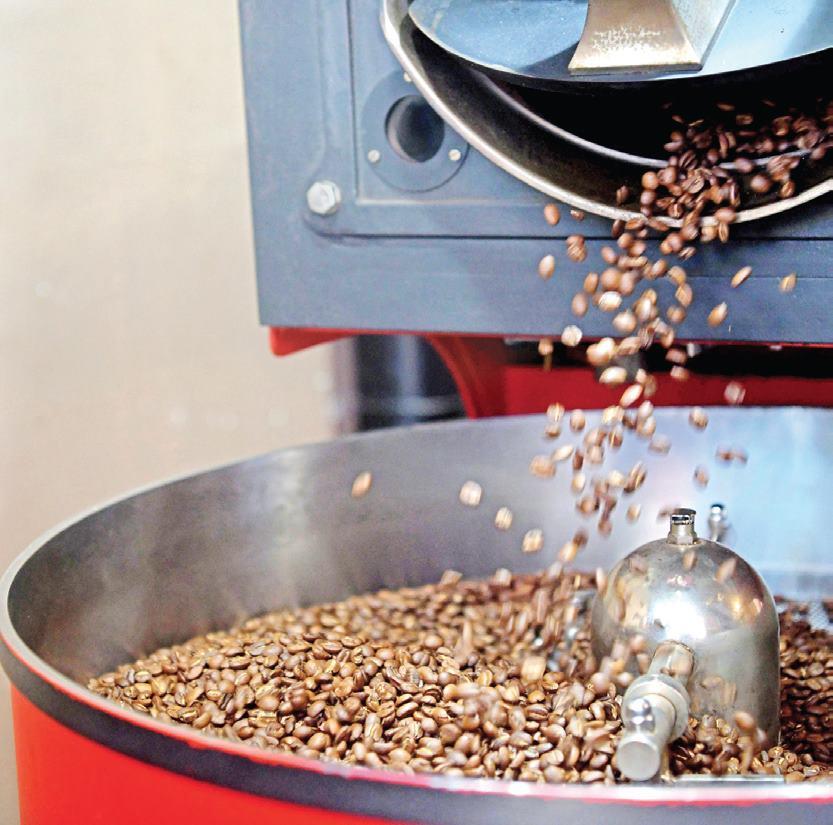
The temperature is between 22 and 26 degrees Celsius because it influences taste and anyone tasting a batch of coffee anywhere in the world should get the same result. The process is quite elaborate. A taster needs to roast the beans first as roasting is transforming the green bean to something that’s consumable and soluble in water. Tasters must have knowledge of roasting but don’t need to be roasters.

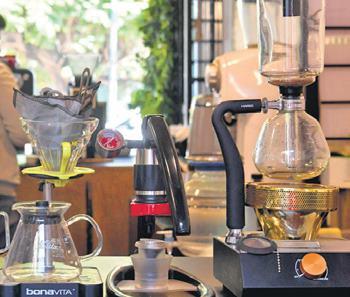
Tools of the coffee taster’s trade

Roasting the beans caramelises the sugars, increases the size, changes colour and makes the flavours pop. The taste of the coffee depends on the soil, weather conditions and the microorganisms that migrate as these factors determine how the plant matures. For instance, if a farmer is growing pepper in the same estate, the microorganism that feeds on pepper will sit on a coffee cherry and influence the taste of the coffee.

After analysing and roasting the beans, it rests for 8-24 hours after which it is ground (coarse grind).  A taster takes 8.5gm of coffee in a cup, evaluates the fragrance, then introduces 150gm of water at 92 degrees Celsius which rests for 4 minutes. The taster then breaks the crust to evaluate the aroma and slurps the coffee and evaluates the taste.

While tasting multiple cups, a taster cleanses the palate using unsweetened/unsalted crackers or just rinses mouth with plain room temperature milk. The nasal cavity is neutralised by smelling one’s skin.


Suhas also trains people and one such person is Sandesh. A computer engineer, Sandesh is married to a coffee lover. While sourcing coffee for his wife from across the globe, he decided to open a roastery. He learnt the art of tasting as every roaster needs to understand it so as to sell the right product to the right customer. He calls his business ‘Kohi Roasters’. He says, “I have found the love of my life.”

Once you fall in love with coffee you carry it everywhere you go. One such coffee taster is Ajay from Maharashtra, who, tired of being cooped during the lockdown, visited coffee estates in Chikkamagaluru and Kodagu. En route home, he stopped in Bengaluru to meet his coffee buddies and share his experiences. He has a small brewing kit and carries it wherever he goes. He says, “I can brew my coffee in a moving bus.”

COURSE CUP
To become a coffee taster, one needs to study cupping. It is available as an independent course as well as a part of other coffee courses. Specialty Coffee Association is the only one that has international recognition. It was first formed in Europe with its headquarters in Essex, UK (SCAE), and later in the USA with its headquarters in Santa Ana, California (SCAA).

WHERE  THEY TEACH
Coffee Board of India
Central Coffee Research Institute, Chikkamagaluru
Benki Brewing Tools, Bengaluru
Araku, Hyderabad

POPULAR COFFEES IN INDIA

  1. Arabica:  Flavourful, aromatic, acidic (needs shade). Arabica comes from Robusta
  2. Robusta:  Bold, double the amount of caffeine, strong. Mother plant
  3. Liberica:  Mix of Arabica and Robusta (not very commercial, gets mixed in Robusta here in India)
  4. Excelsa:  Delicate and difficult to grow in all kinds of topography (not very commercial, gets mixed in Robusta here in India)

source: http://www.newindianexpress.com / The New Indian Express / Home> Cities> Bengaluru / by Meghana Sastry, Emirates News Service / February 28th, 2021

The biology of coffee, one of the world’s most popular drinks

Image by Myriams fotos via Pixabay

You’re reading this with a cup of coffee in your hand, aren’t you? Coffee is the most popular drink in many parts of the world. Americans drink more coffee than soda, juice and tea — combined.

How popular is coffee? When news first broke that Prince Harry and Meghan were considering Canada as their new home, Canadian coffee giant Tim Hortons offered free coffee for life as an extra enticement.

Given coffee’s popularity, it’s surprising how much confusion surrounds how this hot, dark, nectar of the gods affects our biology.

Coffee’s ingredients

The main biologically active ingredients in coffee are caffeine (a stimulant) and a suite of antioxidants. What do we know about how caffeine and antioxidants affect our bodies? The fundamentals are pretty simple, but the devil is in the details and the speculation around how coffee could either help or harm us runs a bit wild.

The stimulant properties of caffeine mean that you can count on a cup of coffee to wake you up. In fact, coffee, or at least the caffeine it contains, is the most  commonly used psychoactive drug in the world. It seems to work as a stimulant, at least in part, by blocking adenosine, which promotes sleep, from binding to its receptor.

Caffeine and adenosine have similar ring structures. Caffeine acts as a molecular mimic, filling and blocking the adenosine receptor, preventing the body’s natural ability to be able a rest when it’s tired.

This blocking is also the reason why too much coffee can leave you feeling jittery or sleepless. You can only postpone fatigue for so long before the body’s regulatory systems begin to fail, leading to simple things like the jitters, but also more serious effects like anxiety or insomnia. Complications may be common; a possible link between coffee drinking and insomnia was identified more than 100 years ago.

The National Film Board of Canada produced a documentary on the cultural history of coffee called ‘Black Coffee: Part One, The Irresistible Bean’

Unique responses

Different people respond to caffeine differently. At least some of this variation is from having different forms of that adenosine receptor , the molecule that caffeine binds to and blocks. There are likely other sites of genetic variation as well.

There are individuals who don’t process caffeine and to whom drinks like coffee could pose medical danger. Even away from those extremes, however, there is variation in how we respond to that cup of coffee. And, like much of biology, that variation is a function of environment, our past coffee consumption, genetics and, honestly, just random chance.

We may be interested in coffee because of the oh-so-joyous caffeine buzz, but that doesn’t mean that caffeine is the most biologically interesting aspect of a good cup of coffee.

In one study using rats, caffeine triggered smooth muscle contraction, so it is possible that caffeine directly promotes bowel activity. Other studies, though, have shown that decaffeinated coffee can have as strong an effect on bowel activity as regular coffee, suggesting a more complex mechanism involving some of the other molecules in coffee.

Antioxidant benefits

What about the antioxidants in coffee and the buzz that surrounds them? Things actually start out pretty straightforward. Metabolic processes produce the energy necessary for life, but they also create waste, often in the form of oxidized molecules that can be harmful in themselves or in damaging other molecules.

Antioxidants are a broad group of molecules that can scrub up dangerous waste; all organisms produce antioxidants as part of their metabolic balance. It is unclear if supplementing our diet with additional antioxidants can augment these natural defences, but that hasn’t stopped speculation.

Antioxidants have been linked to almost everything, including premature ejaculation.

Are any of the claims of positive effects substantiated? Surprisingly, the answer is again a resounding maybe.

Coffee and cancer

Coffee won’t cure cancer, but it may help to prevent it and possibly other diseases as well. Part of answering the question of coffee’s connection to cancer lies in asking another: what is cancer? At its simplest, cancer is uncontrolled cell growth, which is fundamentally about regulating when genes are, or are not, actively expressed.

My research group studies gene regulation and I can tell you that even a good cup of coffee, or boost of caffeine, won’t cause genes that are turned off or on at the wrong time to suddenly start playing by the rules.

The antioxidants in coffee may actually have a cancer-fighting effect. Remember that antioxidants fight cellular damage. One type of damage that they may help reduce is mutations to DNA, and cancer is caused by mutations that lead to the misregulation of genes.

Studies have shown that consuming coffee fights cancer in rats . Other studies in humans have shown that coffee consumption is associated with lower rates of some cancers.

Interestingly, coffee consumption has also been linked to reduced rates of other diseases as well. Higher coffee consumption is linked to lower rates of Parkinson’s disease and some other forms of dementia. Strikingly, at least one experimental study in mice and cell culture shows that protection is a function of a combination of caffeine and antioxidants in coffee.

Higher coffee consumption has also been linked to lower rates of Type 2 diabetes. Complexity, combined effects and variation between individuals seems to be the theme across all the diseases.

At the end of the day, where does all this leave us on the biology of coffee? Well, as I tell my students, it’s complicated. But as most reading this already know, coffee will definitely wake you up in the morning.

This is an updated version of a story originally published on Jan. 19, 2020. The original story called coffee the world’s most popular beverage. The term “most popular” can be defined differently. Retail sales of coffee outpace tea globally, but tea is the most consumed beverage after water.

Thomas Merritt , Professor and Canada Research Chair, Chemistry and Biochemistry, Laurentian University . This article is republished from The Conversation under a Creative Commons license. Read the original article.

source: http://www.interaksyon.com / InterAksyon / Home / by Thomas Meritt via The Conversation / February 15th, 2021