Chefs at city hotels are whipping up dishes sprinkled with nostalgia as they serve recipes that have been passed down to them from their mothers and grandmothers.
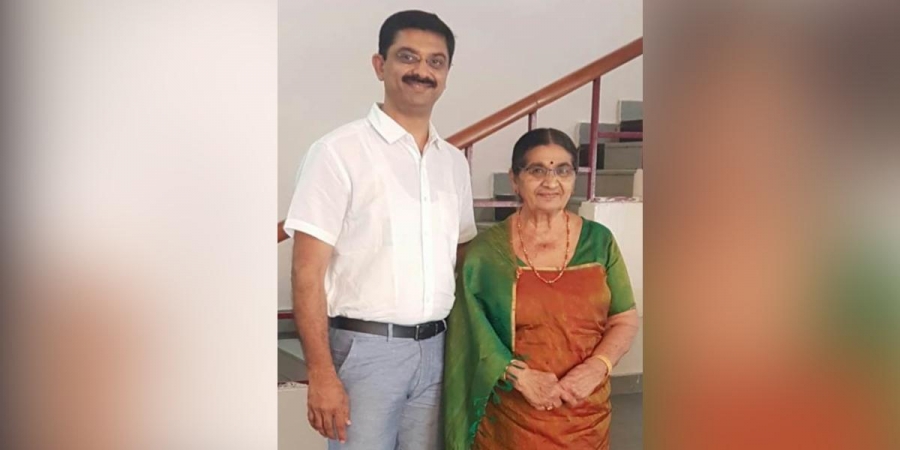
Naren Thimmaiah with his mother Parvathy Uthappa from whom he learnt the recipe of Koli Barthad
Bengaluru :
While a regular chicken curry was always a staple on his menu at the hotel, two months ago, executive chef Rohan Malwankar introduced a new dish at Courtyard by Marriott Bengaluru Hebbal. The Malvani Chicken Curry is spicy and eaten with brown rice. But there’s another ingredient here – a whole lot of love, especially since the dish has been a part of Malwankar’s family since ’82, when his grandmother first started cooking it. Now, the chef, whose hometown is Malvan in Maharashtra, recreates the same recipe for his guests in Bengaluru, sans any change from the original recipe.
Like him, other chefs in star hotels too are relying on recipes from their family archives. This, they believe, is them doing their small part in preserving the Indian food culture. “Inventing new dishes or crafting fresh recipes is important for a chef,” says Naren Thimmaiah, executive chef, Vivanta Bengaluru, Residency Road.
“The actual feather in the cap lies in mastering one’s traditional dishes,” he adds. Which is why, while setting up Karavalli 30 years ago, Thimmaiah spent weeks in Goa, Mangaluru and Kerala, learning heirloom dishes.
The one closest to his heart is the Koli Barthad, a chicken preparation that has been a staple in his own house in Kodagu. “Cooking this dish reminds me of my childhood. I used to fetch curry leaves from our backyard and peel ginger to help my mother during this preparation. Only if I knew that years later, I would be making the same dish for my guests and they would enjoy it just as much as me,” says Thimmaiah.
The key to nailing such dishes lies in no trial, no error. Dirham Haque, executive sous chef, Four Seasons Hotel Bengaluru, explains that his Awadhi Biryani – a “family treasure” that has been a part of many Eid celebrations – tastes “just the same as it would if it came from a grandmother’s kitchen”. “Traditional dishes are best not tampered with. Using quality ingredients and letting those shine is the best way to pay homage to tradition,” he adds.
While there’s love, there’s also equal amounts of labour that goes in. Malwankar explains how the star of the Malvani Chicken Curry is a paste of dry and wet coconut. “This needs to be freshly prepared. It takes 35 minutes and is done with a grinding stone,” he says, adding that the other ingredients, like the Malvani masala, are locally sourced.
It is this quality of being made from scratch that makes home-style cooking popular with guests, believes Sandeep Kalra, the executive chef of The Ritz-Carlton, Bangalore. “For restaurant-style cooking, half our preparation is done beforehand. But for home-style cooking, it’s done from scratch, there’s less butter and oil, and a lot of love,” says Kalra, who whips up recipes from his childhood for guests upon request. These include dishes like Kurkure Bhindi, Amritsari Pulao and Wadi, Baingan Bharta or Murgh Tariwala. “I make these dishes the way it has been consumed in my house for years,” he says, adding that these are served with a side of nostalgia. “Sometimes, you get emotional and end up calling mum in the middle of cooking,” he says with a laugh.
source: http://www.newindianexpress.com / The New Indian Express / Home> Cities> Bengaluru / by Simran Ahuja , Express News Service / February 16th, 2021
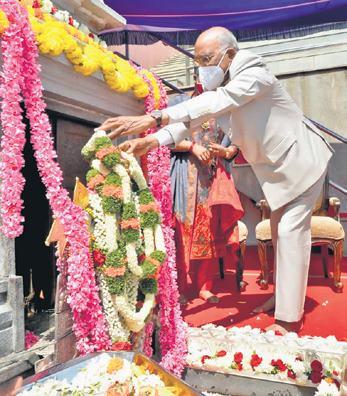
Meanwhile, before taking part in the inaugural ceremony, the President alongside First Lady Savita Kovind and daughter Swati Kovind visited Talacauvery and offered puja to Goddess Cauvery
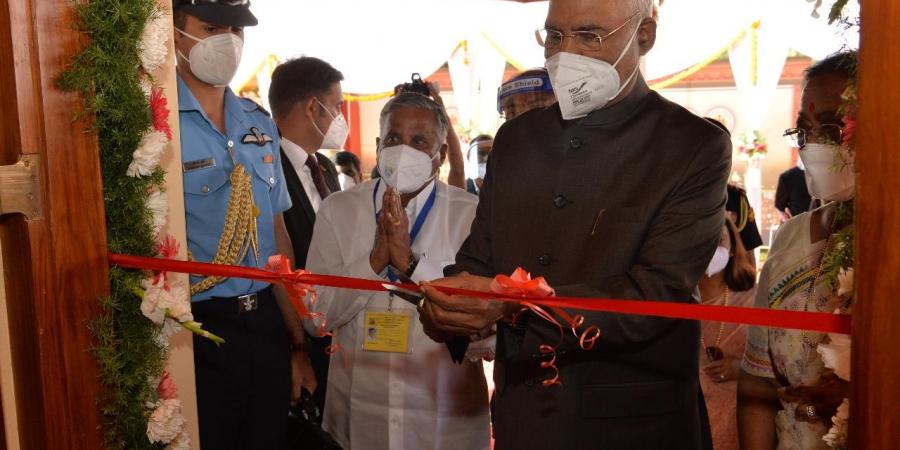
President Ram Nath Kovind inaugurates the General Thimayya Museum in Madikeri (Photo | Special arrangement)
Madikeri :
It was an ode to the pride of Kodagu as the President of India inaugurated the General Thimayya Museum in Madikeri on Saturday. The museum has been built at Sunnyside, the former residence of General KS Thimayya.
The President unveiled the inaugural stone at the General Thimayya Museum and took a tour inside the museum, which retold the story of the General. The war diary preserved inside the museum narrated the stories of various wars fought by the Indian military. The words of the first elected Prime Minister of Jammu and Kashmir Sheikh Abdulla appreciating General KS Thimayya, the narration of the Battle of Kangaw in the war diary and the release of the ‘General Thimayya March’ battalion tune were among the numerous artefacts that retold the greatness of the erstwhile General.
“General Thimayya Museum preserves special aspects of the extraordinary character and contribution of one of the finest soldiers in the history of our army. The memorial at ‘Sunny Side’, once the residence of General Thimayya, highlights the sterling features of our brave forces. District Kodagu has the honour of having enriched our Armed forces with stalwarts like General Thimayya and Field Marshal Cariappa. I am sure that this museum will inspire our youth to carry forward the legacy of General Thimayya,” were the words inscribed by the President in the logbook at the museum.
The inaugural ceremony also witnessed participation from Chief of Defense Staff Bipin Rawat, General Officer Commanding (GOC) and Colonel of the Kumaon and Naga Regiment Lt Gen Rana Pratap Kalita alongside other dignitaries from the military. District in-charge minister V Somanna, Kannada Culture Department minister Aravind Limbavali alongside Kodagu MLAs took part in the inaugural ceremony. Only about 40 dignitaries were allowed to witness the inaugural ceremony.
Kovind offers puja to Goddess Cauvery at Talacauvery
Meanwhile, before taking part in the inaugural ceremony, the President alongside First Lady Savita Kovind and daughter Swati Kovind visited Talacauvery and offered puja to Goddess Cauvery. The Temple Committee and archaks offered the President a shawl and a saree each to Savitha and Swati Kovind as a token of respect.
“This is the first time that the President of our country has visited Talacauvery. We are proud that he visited the centre and this has been possible because of the greatness of General Thimayya,” shared Rajesh Achari, one of the archaks at the temple. Meanwhile, a stringent combing operation by the forest department, police and anti-naxal squad had been ordered to ensure safe visit of the president to Talacauvery.
The security was tight across Talacauvery and Madikeri. While nearly 500 police were guarding Bhagamandala-Talacauvery area, the President’s convoy route in Madikeri was guarded by nearly a hundred police. Zero traffic was ordered on the convoy route in Madikeri from 2.30 pm to 5 pm.
MLC submits memorandum seeking Bharat Ratna
MLC Veena Achaiah, who was present during the inaugural ceremony of the General Thimayya Museum, handed over a memorandum to the President. The MLC has requested the President to award Bharat Ratna posthumously to Field Marshal KM Cariappa and General KS Thimayya.
Stray cattle and dogs shifted
To ensure smooth travel of the President’s convoy, Madikeri city municipal workers along with support from police were seen herding stray cattle and street dogs on Friday at midnight. All the stray cattle were shifted to the Madikeri Market Complex without fodder or water, evoking anger among many residents.
source: http://www.newindianexpress.com / The New Indian Express / Home> States> Karnataka / by Express News Service / February 06th, 2021
The outlet has been brought to the country by B2C Network LLP.
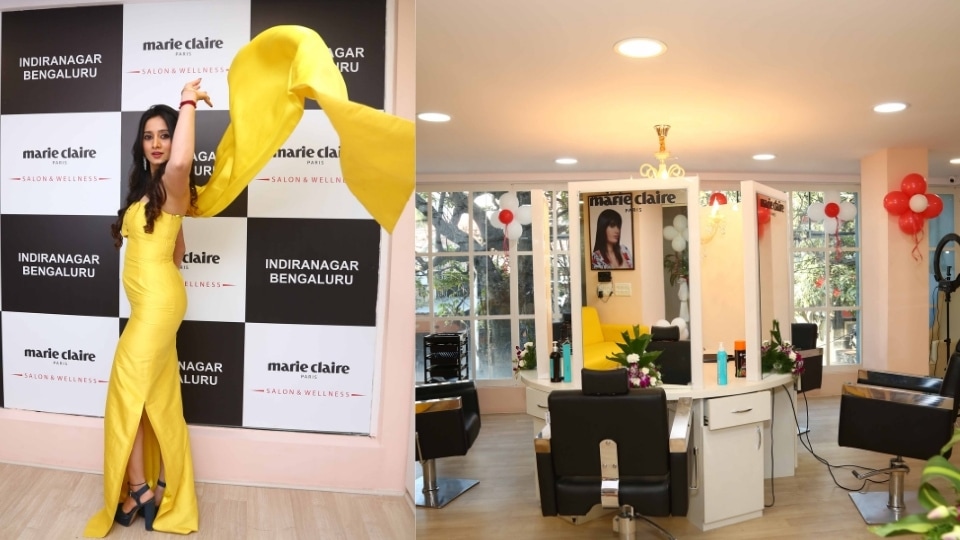
Marie Claire Paris, the exclusive French lifestyle brand that forayed into the Indian beauty and wellness sector with the launch of its salons and salon & wellness centers in Bangalore, Hyderabad, Pune, Chennai, New Delhi and Vadodara, has now launched its sixth franchise salon & wellness outlet at Indiranagar in Bengaluru.
The salon has been brought to the country by B2C Network LLP, the exclusive licensee for Marie Claire Paris Salon, Salon & Wellness, Just Nails and IIWA (Beauty Aademy).
Celebrating the launch by adding a bit of glitz and glamour, Mr. Mohan Kumar – Indiranagar Franchisee, Mr. P.S.Sriram- Marie Claire’s Bengaluru Master Franchisee, Ms Vandana Bhardwaj – Director & Spokesperson, B2C Network and Ms. Harshika Poonacha (Kannada actress) – the chief guest for the evening, along with the other guests, were offered unique experience at the Salon & Wellness that left them relaxed and pampered.
Speaking on the occasion of the launch, Ms. Vandana Bhardwaj, the Director and Spokesperson of B2C Network LLP, said, “Thank you Bengaluru for such a great response! This is our sixth salon in the city and we are all set to open 2 more outlets within the next 2 months. Marie Claire Paris keeps on upgrading and adding new services in the menu to assure all Global trend styles and new treatments are available in India for our clients. I wish our franchisee – All the best!”
Mr. P. S. Sriram, the Master franchise of Marie Claire Paris Salons in Bengaluru, said, “We are so excited to launch the Marie Claire Paris Salon & Wellness center in Indiranagar, Bengaluru. Marie Claire, the lifestyle and fashion brand, will cater largely to the highly fashionable clientele of Indiranagar with our technically skilled technicians to offer services like Hair, Nails, Skin, Makeup, Bridal packages and Body treatments etc. A high-end locality like Indiranagar has to have a brand like Marie Claire Paris Salon & Wellness.”
Marie Claire, the lifestyle and fashion brand, will cater largely to the highly fashionable clientele of Indiranagar.(Digpu)
Ms. Harshika Poonacha, the Chief Guest for the evening, said: “It’s a beautifully made salon, well maintained hygiene, great location and the staff is well-versed technically with all services. I was extremely happy with my makeover here. All the best to Marie Claire team.”
B2C Network intends to open hundreds of Marie Claire Salon & Wellness centers in India via franchising, as well as over 30 vocational training academies in the next 5 years. Its objective is to provide the best quality services where clients feel homely and to train cum employ skilled manpower through IIWA Academy.
source: http://www.hindustantimes.com / Hindustan Times / Home> Brand Post / by HT Brand Studio / February 10th, 2021
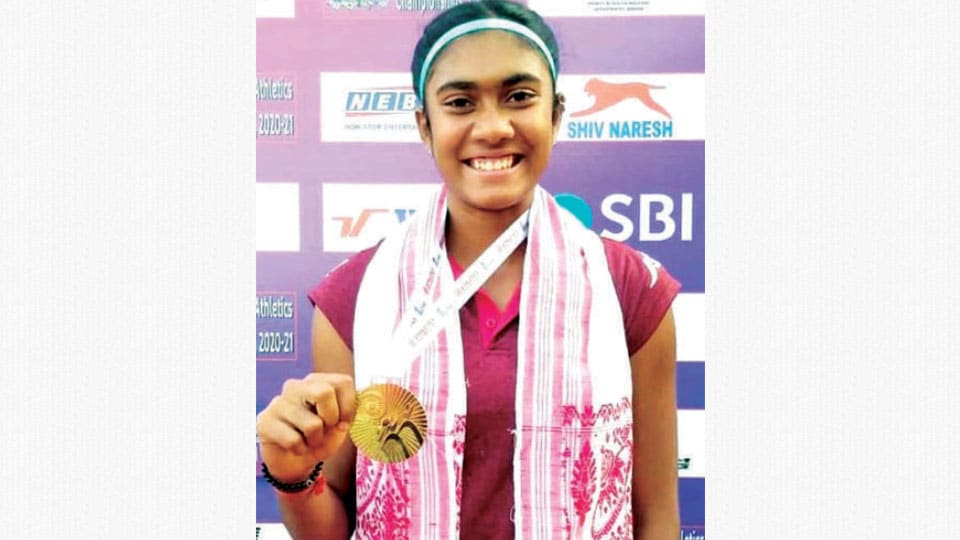
Completes 80-metre hurdles (U-16) in 11.50 seconds at National Junior Athletics Championships
Bollanda Unnathi Aiyappa from Kodagu has created a new national record in the 80-metre hurdles held on Feb. 8 and 300-metre hurdles held on Feb. 9 at the 36th National Junior Athletics Championships at the Sarusajai Stadium in Assam.
Representing Karnataka in the Under-16 category, Unnathi Aiyappa clocked 11.50 seconds in the 80-metre hurdle and bagged the gold medal. It is a new national record. In the 300-metre hurdles too, she clocked 40.11 seconds, creating a record. She defeated Soumita Paul (West Bengal) 40.15 and Roshani Yadav (Uttar Pradesh) 40.94.
She is the daughter of former Indian heptathlete Pramila Aiyappa (from Guddanda family) and quartermiler B.P. Aiyappa. Notably, it was her father, presently a national athletic coach, trained her to achieve the feat.
In 1979, the legend P.T. Usha had created a record in Under-16 category by completing the 80-metre hurdles in 12.2 seconds and in 1985, Karnataka’s A.N. Rekha matched Usha’s record. Now Unnathi has broken this record to wind up the race in 11.50 seconds.
In the 300-metre hurdles, Unnathi clocked 40.11 seconds, thereby breaking a national record that was held by an athlete from West Bengal.
Unnathi was a constant presence at the Kanteerava Stadium in Bengaluru from a very young age, accompanying Pramila during contests and later on, as a trainee under her parents.
She watched on television her mother winning the Asian Games bronze in the heptathlon at Guangzhou in 2010 but at five, was too young to understand its significance. Soon though, she too was winning medals on her own at the school level and now she has risen to national level, breaking records.
source: http://www.starofmysore.com / Star of Mysore / Home> Sports / February 11th, 2021
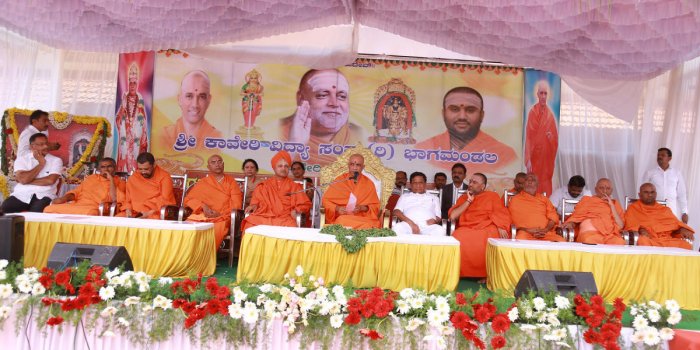
Adichunchanagiri Mutt pontiff Dr Nirmalanandanatha Swami speaks during Guruvandana programme in Bhagamandala
Adichunchanagiri Mutt pontiff Dr Nirmalanandanatha Swami said that the Mutt will contribute towards building the future of the children in Kodagu.
He was speaking during the Guruvandana programme organised by Sri Cauvery PU College in Bhagamandala.
The pontiff said, “Students from foreign countries used to come to Nalanda and Takshashila in India, for education.”
India has produced the greatest scientists, mathematicians and philosophers, he said and also added that Adichunchanagiri Mutt is imparting education to thousands of students.
Virajpet MLA K G Bopaiah said that there is a need to build an educated society in the real sense.
The religious institutions should provide moral education to the children. The people should support the institutions like Mutts in this endeavour, he said.
Cauvery Vidya Sangha president Hosur Satish Kumar Joyappa presided over the programme.
Pattedars of the Chidukaru and Hosagadde families who donated land to the institution were honoured on the occasion.
Adichunchanagiri Mahasamsthala Mutt, Hassan seer Shambhunatha Swami, Arameri Kalancheri Mutt seer Shantamallikarjuna Swami, ZP members Chandralaka, Kavitha Prabhakar and others were present.
source: http://www.deccanherald.com / Deccan Herald / Home> State> Bengaluru / by DHNS, Napoklu / February 10th, 2021
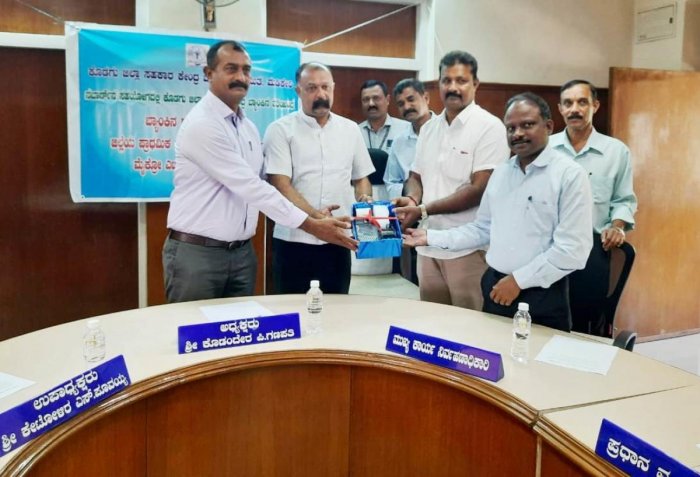
Micro ATMs were distributed to Primary Agriculture Credit Cooperative Societies at DCC Bank hall in Madikeri.
Micro ATMs are being distributed to all the Primary Agriculture Credit Cooperative Societies (PACCS) in the district in a phased manner. The farmers should make use of the facilities, said Kodagu District Cooperative Central Bank president Kodandera P Ganapathi.
He was speaking after distributing micro ATMs in the DCC Bank hall on Tuesday.
The government has directed to implement digitalisation in cooperative banks on the lines of nationalised banks. In this regard, micro ATMs are being distributed to 21 Primary Agriculture Credit Cooperative Societies in the district, he added.
For the benefit of the customers of the bank and cooperative societies, micro ATMs are being given. The micro ATMs are being implemented in association with Nabard. All the branches of DCC Bank will be installed with micro ATMs, he said.
“Farmers find it difficult to reach the DCC Banks, situated far away from villages. Instead, using the micro ATMs at primary credit cooperative societies, they can complete their financial activities,” he said.
The district has 73 Primary Agriculture Credit Cooperative Societies. The micro ATMs are helpful in carrying out financial transactions. The micro ATMs are installed with 90% funds from Nabard and 10% from the DCC Bank, said Kodandera Ganapathi.
The micro ATMs will be installed at Bhagamandala, Karike, Maragodu, Made, Payaswini, Hathoor, Hudikeri, Rudraguppe, Thithimathi, Srimangala, Kanooru, Devanageri, Birunani, Bairambada, Mayamudi, Rameshwara Koodumangaluru, Nanjarayapattana, Chettalli, Handli, Aluru Siddapura and Torenoor societies, he added.
DCC Bank CEO Salim said that measures will be initiated to extend all the facilities from the cooperative banks to the farmers.
RuPay card is being distributed to all the farmers, he added.
Sampaje Payaswini Agriculture Credit Cooperative Society president Anantha said micro ATMs will benefit farmers from rural areas.
DCC Bank vice president Ketolira Harish Poovaiah and others were present.
www.deccanherald.com / Deccan Herald / Home / DHNS, Madikeri / February 10th, 2021
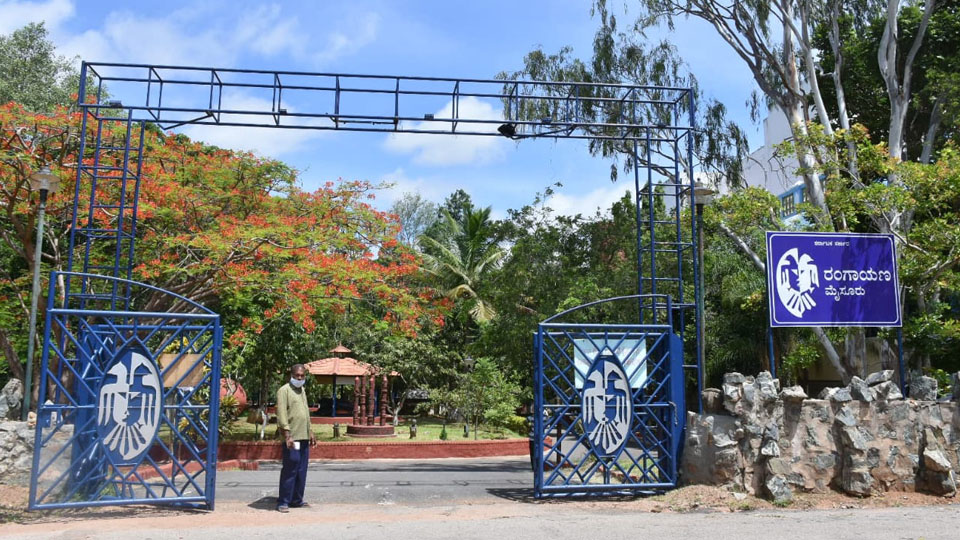
‘Girijanotsava – Namma Jana Namma Samskruti,’ a programme to showcase the folk art of tribal community has been organised by Rangayana, Mysuru, at Karmadu village in Kodagu on Feb. 23 from 10 am to 6 pm.
MLC Shantaram Budna Siddi will be the chief guest. MLA K.G. Bopaiah will be present.
Vanavasi Kalyana Kendra- South Zone President Krishnamurthy will be conducting a seminar on the occasion.
‘Girijanotsava’ is one among the two projects taken up by Rangayana, Mysuru, in association with the Department of Kannada and Culture, under its Tribal Sub-Plan (TSP), to create social awareness among tribal communities.
The other event titled ‘Giri Rangapayana – Arivinedege Adivasi’ featured 10-day theatre training camp to 12 tribal youth from Bommadu tribal village located near Nagarahole forest area in Kodagu district, starting from Jan. 27.
The participants of the training camp will be staging street play at 15 haadis (tribal hamlets) in Kodagu. The inaugural street play was staged at Bommadu on Feb. 3. The play is directed by theatre artist N. Srinivas.
Nataka Academy Member Radha, who also belongs to ST community, is the convenor of this camp.
source: http://www.starofmysore.com / Star of Mysore / Home> News / February 07th, 2021
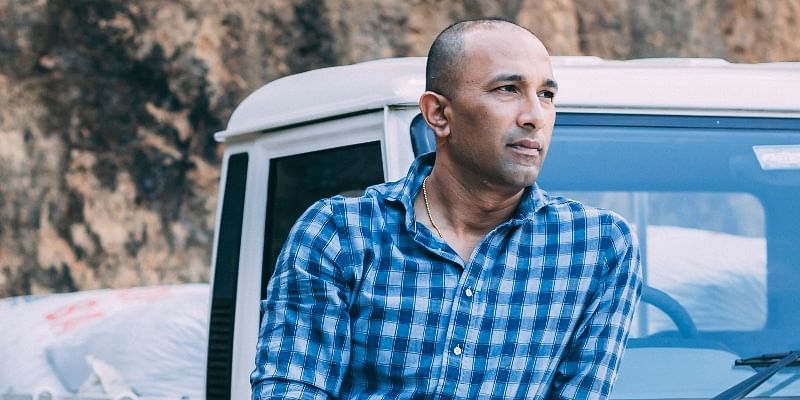
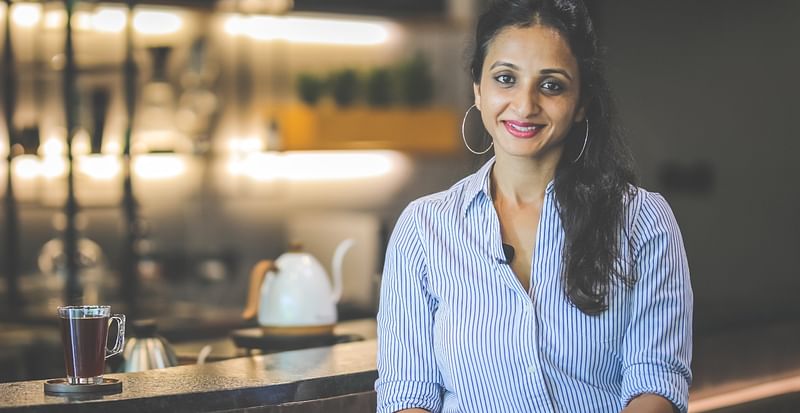
Ex-banker Soomanna Mandepanda and his wife, Puja Soomanna set up their startup Humblebean in 2017 to ensure better prices and reach for small coffee farmers and improve every part of the value chain.
For former banker Soomanna Mandepanda, the motivation for setting up Humblebean was not just to sell the best coffees, but more importantly, uplift the small and medium Indian farmers who grow them.
In the process, he is trying to bring about changes at almost each stage of the business — from cultivation and supply chain to research and education.
Founded in 2017 by Soomanna and his wife and former Yahoo executive Puja Soomanna, Bengaluru-based Humblebean works on an omnichannel model: It ties up with small coffee farmers in south India, roasts and grounds supply, provides the beans to roasters, exports its products, operates brew bars, and has an online presence.
A responsible way to grow coffee
The coffee drinking experience has been gaining traction in India, with the market for the brew expected to record a compound annual growth rate of 7.2 percent during 2021-25, according to a January 2021 Statista report.
Startups including Sleepy Owl, The Flying Squirrel, and Coffeeza, as well as shops such as Third Wave Coffee Roasters are making their presence felt in the market.
India is the world’s sixth-largest producer of coffee and fifth in terms of exports; in fact, 70 percent of its production is exported, says a January 2021 report by the India Brand Equity Foundation. Yet, Soomanna says, “a lot of small and medium farmers and farms aren’t getting the kind of business and reach they should” .
Soomanna would know: he spent most of his childhood on the coffee estates of Coorg and was a small farmer before moving to the world of finance and banking for 13 years. One way to correct the imbalance, he says, is by “making great biodiverse coffee that farms in India are already poised to do”.
According to him, 80-90 percent of coffee farms in India are held by small and medium farmers, whose secondary income comes from crops such as jackfruit, avocado, pepper, and orange that are part of the same farms.
Cultivating other crops alongside coffee “ensures automatic carbon sequestration, top soil replenishment, and lesser need to feed chemicals unlike commercial crops grown in other countries”, says Soomanna. “The mining of the minerals is automatic and you become carbon neutral.”
Puja Soomanna
Advocating farmer-friendly norms
Increasingly popular among young consumers are organic, speciality, and Rainforest Alliance coffees that respectively employ natural methods of cultivation dispensing with harmful chemicals, are of the highest grade being derived from a single origin or single estate and protect the environment as well as worker rights.
However, in India these certified varieties are grown largely on rich estates; most small and medium farmers cannot afford the costly certifications and grades.
Coffee cultivation and the business are still quite unorganised in India, the certifications cost a lot of money, and need constant follow-ups, says Soomanna. “The norms are difficult to adhere to for most small farmers. It is a replication of an American model.”
___________________
He says most large corporations in India export to Europe. “The small companies in Hassan, Chikmagalur, etc. certify about 150 estates and add the tags. But the farmer doesn’t get the price because the better prices are still being fetched with the local trader. The local traders are important, but the real traceability is lost.”
As farmers don’t get better prices, there is little driving them to improve their produce, he says. “Speciality coffee is something few farmers can afford to grow.”
Hence, the need to bring in farmer-friendly rules, he says.
The Humblebean coffee
Promoting social value investing
Given the largely unorganised state of affairs, Humblebean focused on getting farmers on board. The team collected random samples, tasted them, and guided farmers on growing the beans in a better way.
By 2018, the team had got 50-60 farmers on board and given them assessment reports free of cost. Until then, the startup was in its pre-revenue stages, bootstrapped with funds from family and friends.
The team then focused on getting roasters to directly buy from farmers. For this, it adopted the idea of social value investing, in which everyone who is part of the value chain comes together to solve a problem and there is money in it for all.
__________________
“Once we got the farmers on board, we decided to tie up with brands and introduce them to the new portfolios of coffees,” says Soomanna. “We incubated close to four different brands in India from scratch to start a unique brand with a different blend. The idea was to bring in multiple partnerships and inclusiveness in the farming community on one platform.”
Most of the speciality coffee firms have restricted names and types of beans grown on particular estates. “The idea is to bring in more brands that can access different estates, work with them, and encourage the farmers,” says Soomanna.
Humblebean also fulfils the complete roast and ground process for such brands and even gives them a credit facility, he says.
Quality comes with education
Towards the end of 2018 and early 2019, the Humblebean team found that coffees served at most star hotels weren’t up to the mark.
One of the reasons for this, Soomanna says, is that coffee as education is lacking in hotel management schools: one has to go to Italy to learn more about its nuances. The Coffee Board of India mostly takes care of the functionality, he says.
_________________
“We met a few management schools and after some discussions it was decided that the colleges would look at it as part of the curriculum,” says Soomanna.
Brewing innovative Indian blends
Even as Humblebean works to improve every part of the value chain, it is trying to offer consumers a very Indian coffee drinking experience.
To that end, the startup opened its first Brew Bar in the food experience section of a workspace on Bengaluru’s Residency Road in 2019. Humblebean was one of the early members of that workspace set up by a Singapore-based company.
Puja, who conceptualised Brew Bar, spent time innovating the blends with the use of Indian robustas.
“We don’t serve a single cup of speciality coffee; we wanted to make sure through the brewing methods can small and medium farmers come into mainstream brewing?” says Soomanna.
______________
He says these Indian blends “aren’t being used by a single new-age speciality coffee company” as they are considered “harsh and used as a filler across the world. But they are unique and you need great expertise and experience to make a robusta out of them”.
Following research and development, the startup has also come up with its own set of products. Together with B2B partners, it has launched these products online and will soon sell them at other marketplaces. The range is priced at Rs 220-350 for 250 gm for limited editions and depending on the roast.
“Indian coffees can have a global impact,” says Soomanna. “The idea is to be farmer-friendly and also not cause too much environmental damage. We want to bring an amazing cup of coffee from the farms the way it should be drunk.”
Edited by Lena Saha
source: http://www.yourstory.com / YourStory / Home> Start Up / by Sindhu Kashyap / February 07th, 2021
Last Sunday, 31st January 2021, I went to Madikeri on a bore-breaking trip with my wife and two friends. It was a two-and-a-half-hour journey by car via Kushalnagar. The road being good travelling was comfortable.
Kushalnagar is the Gateway to Kodagu, with River Cauvery flowing quietly as a boundary between Mysuru and Kodagu districts. The two districts were connected with a bridge. It was a surprise for me to find the town growing enormously. It has become a huge tourist hub. There is Harangi Dam and a Garden a few kilometres away and in the city outskirts you have the famous and very popular Nisargadhama — riverside forest safari and boating with huge shopping arcades spread over a very large area on Madikeri road.
Another tourist attraction is the Buddhist Golden Temple on the other side of the river at Bylakuppe, a Tibetan Colony. There is a Sainik School, Engineering College and many more. It is going to be a boom city of Kodagu beforelong.
We reached Madikeri rather late at 3.30 pm keeping our schedule to just three places — Gen. K.S. Thimayya Museum, Medical College and Kodava Heritage Centre. Our President Ram Nath Kovind would inaugurate the Museum tomorrow (6.2.2021) and it was as it should be. Our President, under the Constitution, is the Commander-in-Chief of our Armed Forces.
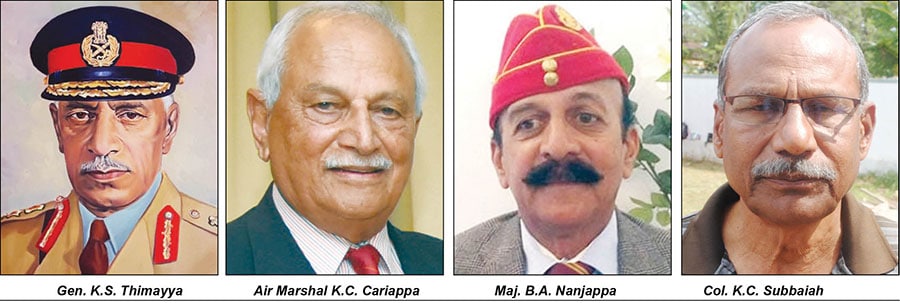
Our first visit was to the Gen. Thimayya Museum and those in charge of arranging the artefacts, photographs, videos, audios etc., have indeed taken much time, trouble and care. Special compliments and commendation should go for this great effort to Air Marshal Kodandera C. Nanda Cariappa (retd.), Maj. Biddanda A. Nanda Nanjappa (retd.) and Col. (retd.) Kandrathanda C. Subbaiah. All residents of Kodagu.
As we were sauntering around the place, with a few Army personnel and local labourers working to get the Museum ready to receive the President, there came the most talkative man I have ever met in my life, Maj. Nanda Nanjappa. Indeed a live-wire man bursting at the seams with a zeal and enthusiasm for the work on his hand — getting the Museum ready in all aspects for the big day. I listened to him about how the Museum happened and the herculean efforts he and his friends-in-arms have made to get the place ready for the VVIP arrival.
I am familiar with this house called “Sunnyside” where Gen. K.S. Thimayya’s mother lived. She was a very famous lady known for her riches and celebrity status. The house is on the main road, as you enter Mercara from Mysuru, on a slope. I remember, as a student in Madikeri in the 1950s, going for evening walk with fellow students and friends on this road and occasionally talk about the lady of the house with awe. There was a fountain visible from the gate with an angel perched on top. The house being at the bottom of the slope was not visible to the road.
According to my information this house was sold by Gen. Thimayya’s wife to the Government of Karnataka in the year 1972 and the RTO Office took over this house, with about 2.5 acres of land, for its use. Wonder it took over 50 years to reclaim the house for the Museum under the Kannada and Culture Department of the State Government. Thanks to the efforts of Field Marshal Cariappa – General Thimayya Forum comprising about 22 members to get the State Government to vacate the RTO and set up this Museum. However, the theme, concept and the vision of the Museum came mainly from two Army and one Air Force Veterans who are also members of the Forum — Air Marshal K.C. Nanda Cariappa, Col. K.C. Subbaiah and Maj. B.A. Nanjappa — that I mentioned earlier. A good job well done. Sure, the Supreme Commander of Indian Armed Forces, Ram Nath Kovind, will have many good words to say about the Museum and give a big Shabash for the Forum.
I do not want to be presumptuous but I guess there is a need for a small library with books on Gen. K.S. Thimayya and other top brass in the Army, which is also a reading room for reference-seekers and book-worms.
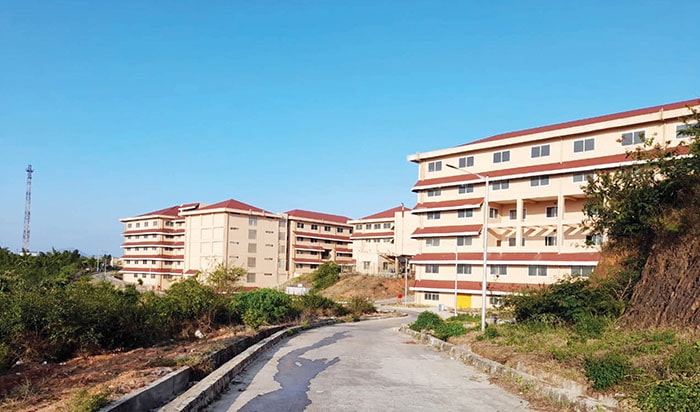
Our next visit was to the Medical College, about five kilometres from downtown or 11 kilometres via Abbey Falls. It is located atop a hill in a village known as Karnageri. A number of high-rise buildings, washed in light pink, are visible from a distance as we manoeuvred the never-ending, serpentine, well-laid out concrete road. The construction of the road itself must have cost a fortune. A clear case of penny wise, pound foolish.
Access to city for students and staff must be a very time-consuming and tiring exercise. Specially during monsoon. In Kodagu, specially Madikeri, climate is of two kinds — monsoon and winter veiled in mist. Summer is, no doubt, severe but short.
I left the place wondering if the Government officials or the politicians could not find another place, plain land in Virajpet, Gonikoppal or Kushalnagar considering the importance of the logistics and environment for locating such an important institution. Let it be.
My next visit was to my mad obsession, the Kodava Heritage Centre at Vidyanagar in Madikeri. About this Centre I have written enough and more and our reporters of Star of Mysore and Mysooru Mithra too have published many pictorial reports. All in vain.
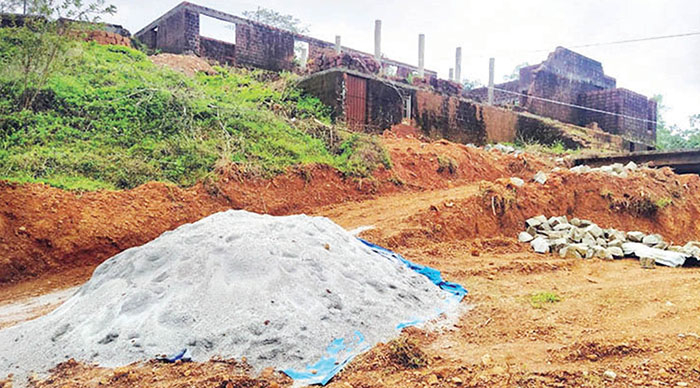
The idea of a Kodava Heritage Centre may be well-meaning and also much-needed for a Vanishing Tribe, Kodavas. But, the way it was held to ransom in the past 15 years is tragic and an insult to “Kodavame”. As I saw it, I do not think it will be completed at all and seems to be in danger of being abandoned as unviable. Is it jinxed? If it is so, so be it. What cannot be cured must be endured till the end comes. There is no medicine for fate !
That way the fruition of Gen. Thimayya Museum is a miracle. Unless such miracles happen, this Heritage Centre will not come to fruition.
Pictorial journey of Madikeri By K.B. Ganapathy
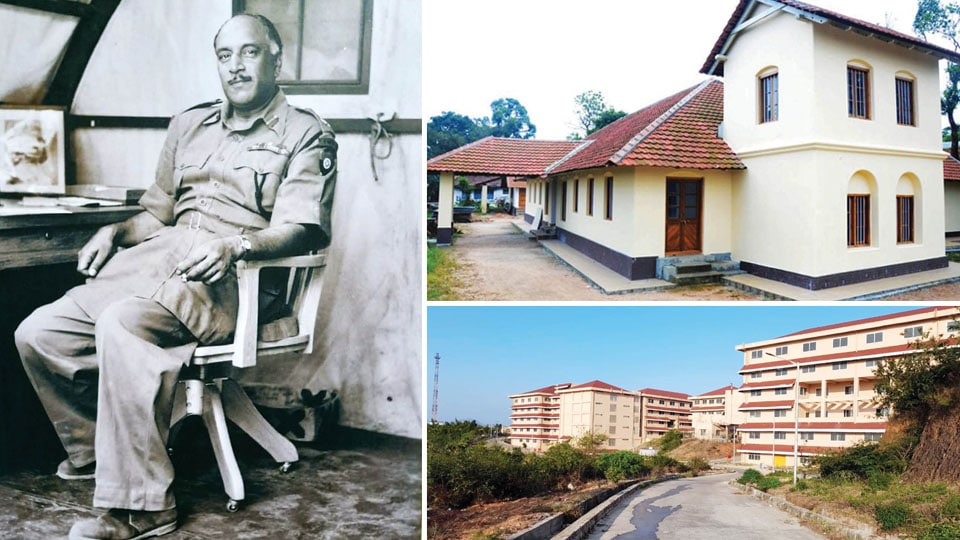
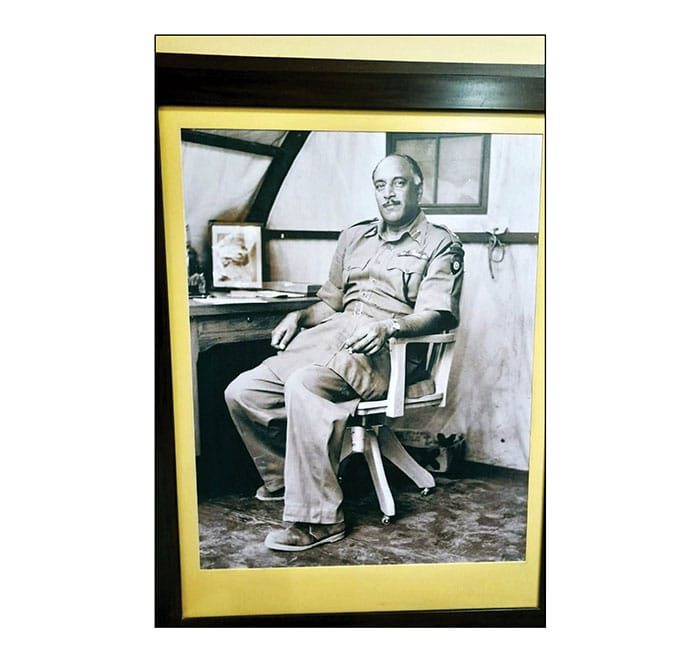
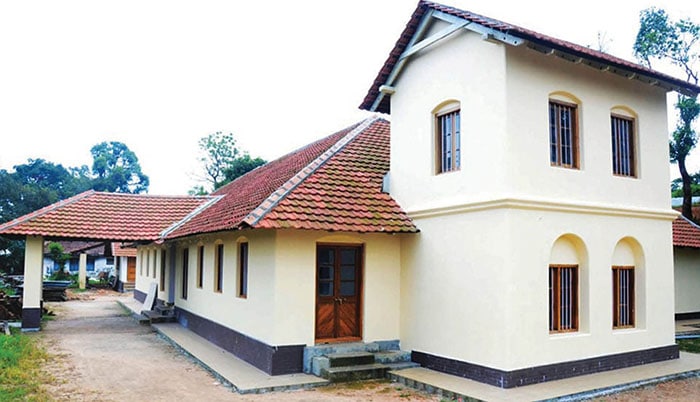
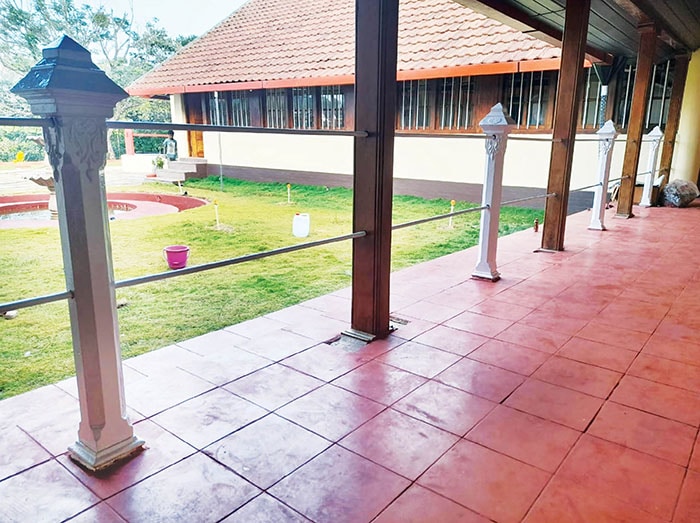
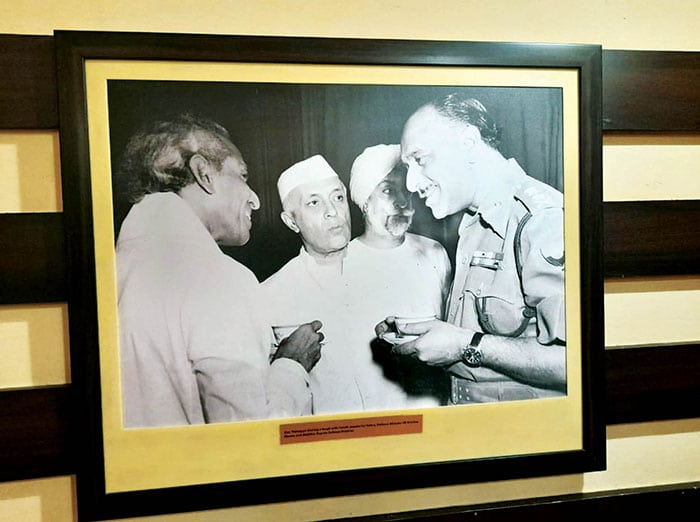
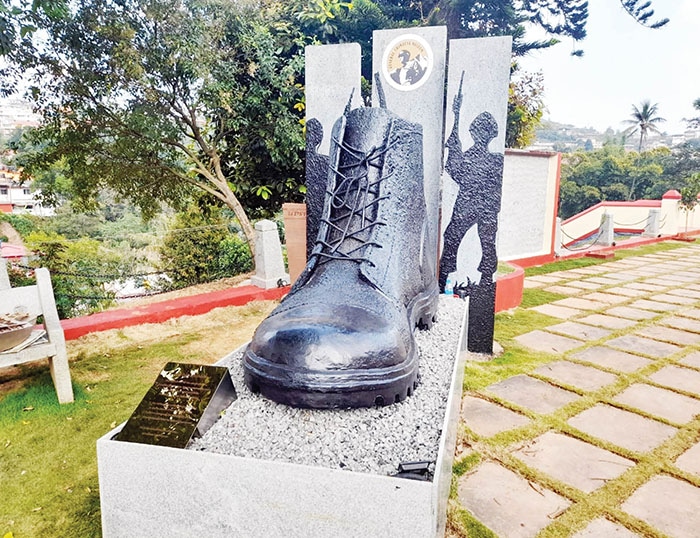
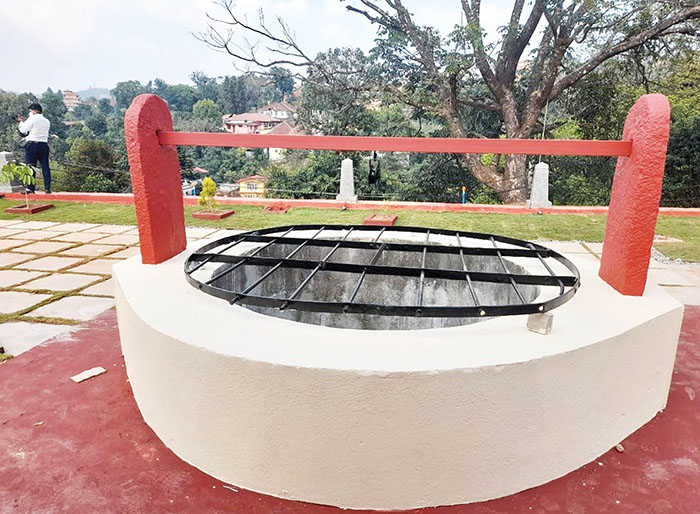
A photo of Gen. K.S. ThimayyaSunnyside: Gen. K.S. Thimayya Museum building with a portico.The RTO had ruined the building without maintenance and it was restored. The picture shows the cast-iron ornate dwarf pillars on an open veranda which were fully buried in a protective wall by the RTO. Only when the wall was demolished, these pillars emerged.Gen. K.S. Thimayya with the VIPs — Jawaharlal Nehru and V.K. Krishna Menon.A cement sculpture in the open yard of the Museum.… and the well as old as the building.Medical College at Karnageri village in Madikeri.A view of Kodava Heritage Centre in Vidyanagar, Madikeri, from the main road.
e-mail: voice@starofmysore.com
source: http://www.starofmysore.com / Star of Mysore / Home> Abracadabra> Columns / by K.B. Ganapathy / February 05th, 2021
The three main Kodava festivals are Kailpodh, Kaveri Sankramana and Puthari. Traditionally, the Kodavas are paddy farmers and soldiers by profession who worship River Kaveri, the lifeline of Kodagu.
During Kaveri Sankramana (when the river goddess is worshipped), people gather at Talakaveri temple to witness, worship and collect the water which springs up from the fountain at an auspicious time that day.
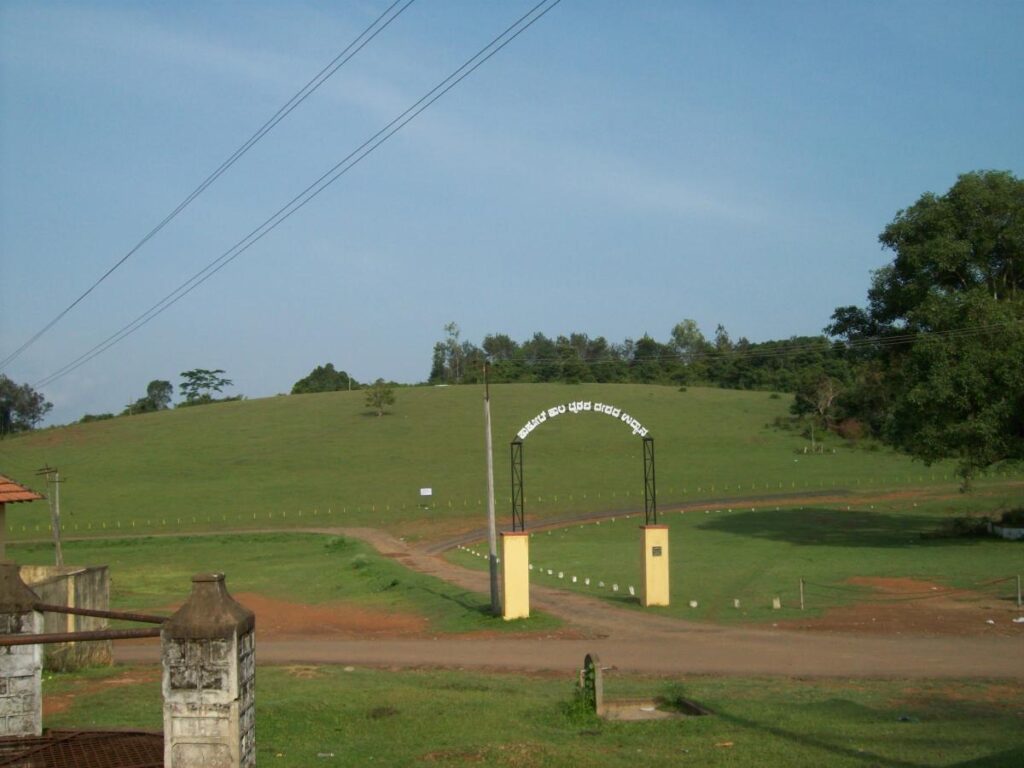
During Kailpodh (when weapons are worshipped) and Puthari (when the gods are thanked for the rice harvest), villagers gather in their local mands. The mand is a religious place, considered an open-air temple, of the Kodavas. This is a village green which usually has a sap-exuding tree, often a pipal tree.
A Village green. Photos by Mookonda Kushalappa
During Puthari, the names of Aiyappa, Mahadeva and Bhagwathy are invoked at the mands. In Kodagu, Aiyappa is the god of the forests.
A group of villages form a cluster called naad in Kodava language. For eight evenings before Puthari, the village men practise the puthari kolaata (dancing in a circle with sticks in hand) in the moonlight in the mands.
A day after Puthari they gather again at the village mand and perform the village kolaata. A couple of days later, men from a number of villages gather at the naad mand and perform the naad kolaata. For a few evenings, the men continue to do the kolaata.
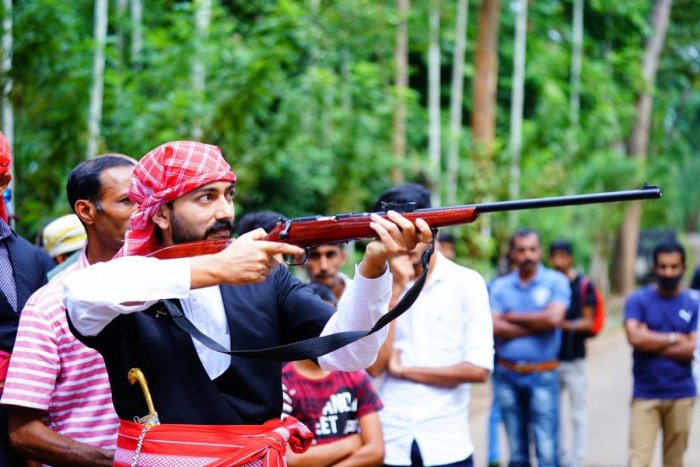
During Puthari, boys and men engage in mock combat duels. They hold a pathure kolu (a stick made of rattan) and a pare (rattan shield) and fence with each other. The village gods Igguthappa and Baithurappa are invoked before a contest. The combatants must strike below the waist. The game is accompanied by drum beats. Then, after a few days, the village gathers at the village green for the oor-orme (village gathering) and the Puthari festival comes to an end. On the day of Kailpodh, people bring their farmhouse guns and odikattis (broad swords) to the village mand in the afternoon. They aim at coconut shells and shoot them. Later, they cut three banana stalks each, in single strokes. They also compete throwing heavy stones.
Annual festival
Every Kodagu temple has an annual festival. Before the festival, for some days, the people of the village or the naad have to follow certain rules. On a particular day, the village thakka or the village elder assembles all the male members of the village, irrespective of caste or community, at the village green.
Then the rules are announced by the temple thakka (elder). Accordingly, no tree or plant can be cut, no animal can be hurt, no egg can be broken, no coconut can be cut, no liquor can be brewed or drunk, nobody should quarrel or argue, and nobody eats non-vegetarian food within the village or the naad for certain days.
Every family is to send men to clean, maintain and renovate the temple, village green, roads and other community properties. A day before the temple festival the villagers gather again. Anybody who violates the rules must step forward and pay a monetary fine at that time. All these activities and rituals make the Kodava culture social in nature.
source: http://www.deccanherald.com / Deccan Herald / Home> Spectrum> Spectrum Statescan / by Mookonda Kushalappa / February 06th, 2021
WELCOME. If you like what you see "SUBSCRIBE via EMAIL" to receive FREE regular UPDATES.
Read More »