When Kodagu merged with Mysore: A short political history of the region

An erstwhile independent state, Coorg was merged with Mysore after the States Reorganisation Act was passed in 1956.
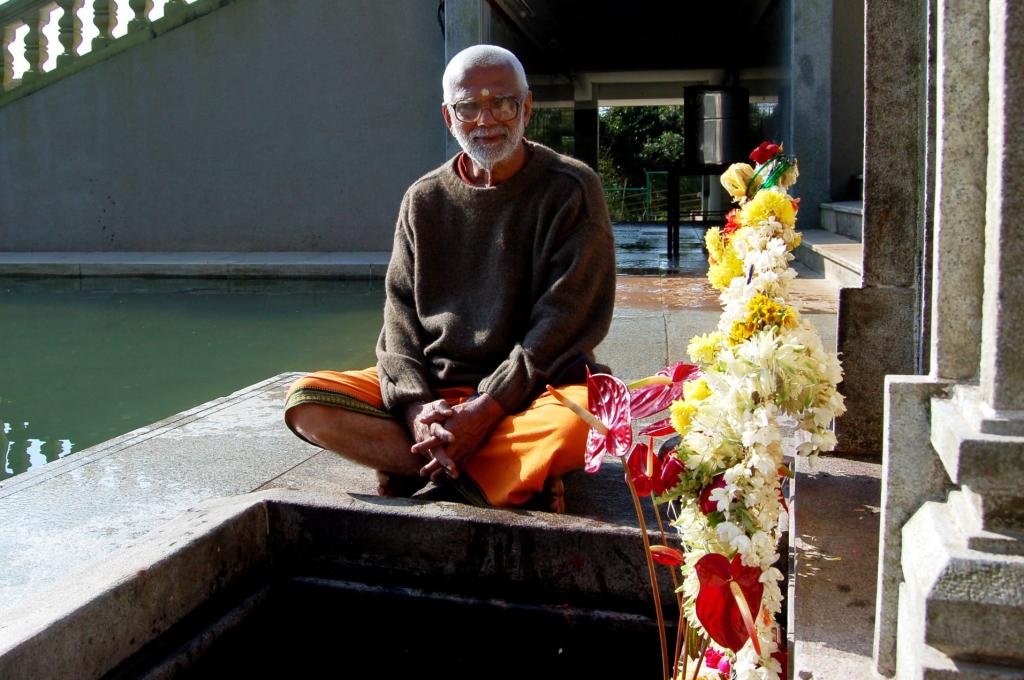
TemplePriest02KF12aug2020

It was S Nijalingappa’s death anniversary on August 8 and I was reading about the unified Mysore state’s first Assembly elections in order to get some insights about the first and one of the longest serving Chief Ministers of our state. One article led to another and I found myself in the middle of several articles about Coorg’s merger with Mysore. It was such an interesting revelation that I kept hopping from one article to another and got deeper into the rabbit hole.

Since most of us outside of Kodagu are informed just in passing in our textbooks about how Coorg was an independent state before the unification, I thought this was a story worth telling.

After more than a century of direct British rule since its annexation from its last ruler Chikka Veera Rajendra (in 1834), Coorg became an independent (Type C) state within India along with other small, hilly, erstwhile princely states like Himachal Pradesh. Coorg had a strong Congress party presence and participated enthusiastically in the freedom struggle, with even stalwarts like Gandhi visiting the state on a few occasions to mobilise the immensely patriotic people from the land of coffee, commanders and Kaveri.

But the Congress leadership within Coorg was heavily divided over whether to remain an independent state or to join the larger neighbouring state of Mysore. While one faction led by the Gandhian CM Poonacha was more pragmatic in seeing the impracticality of a tiny state like Coorg being allowed to remain independent in a country as large as India and being open to the idea of merging with Mysore since Kannada was already the language broadly used in education and administration within Coorg, the other faction led by another Gandhian Pandiyanda Belliappa was , staunchly against the merger. The loyalty of both factions and leaders, however, lay with the Congress.

When the legislative assembly elections were announced in late 1951, to be held along with the first ever election to independent India’s parliament, the Pandiyanda Belliappa faction moved away from the Mysore-sympathetic Congress and formed the Thakkadi Party (weighing machine), contesting as independents on the plank of Coorg’s continuation as an independent state.

In what was a Brexit style election to decide the future of Coorg state, the Congress emerged victorious, winning 15 seats in the 24-member Coorg Assembly, while the Thakkadi Party won the remaining 9 seats. Questions were raised about the fairness of the elections as allegations surfaced that voters were sent from the neighbouring towns in Mysore to vote for the Congress, in effect for Coorg’s merger with Mysore. Poonacha, however, took oath as Coorg’s first and only elected Chief Minister and ruled till 1956 with a two-member Cabinet.

In 1956, the States Reorganisation Act was passed in the Parliament by the Nehru government, allowing Coorg’s merger with Mysore. Several efforts were made by key dignitaries from Coorg to secure an independent state status, including the decorated Field Marshal KM Cariappa, who was then serving as India’s High Commissioner to Australia and New Zealand. He wrote a letter to President Rajendra Prasad, making a case for Coorg to remain an independent state. But it proved too little, too late as the Nehru-led Congress government remained committed to the Act and reined in dissent within the party units across states.

When the bill was taken up to be voted by Coorg’s Assembly as it required ratification by state assemblies before becoming a legislation, 22 out of 24 legislators, including Pandiyanda Belliappa, voted for Coorg’s merger with Mysore. The first and only elected legislative assembly and government of Coorg was thus dissolved, paving the way for its integration with the unified Mysore state.

Poonacha went on to serve both the Mysore and central governments in various capacities as cabinet minister holding various important portfolios, and also served as the Governor of Odisha and Madhya Pradesh. He was also Coorg’s representative in the Constituent Assembly. Coorg also sent two members to independent India’s first elected Parliament. After its merger with Mysore, however, Coorg was clubbed with Mangalore earlier and Mysore later into a single parliamentary constituency. It sends two legislators to the 224-member state assembly of Karnataka.

Many people in Coorg are still divided and emotional over the issue of Coorg’s merger with Mysore. The Codava National Council, under the leadership of NU Nachappa, fought for the restoration of statehood for Coorg for several decades. But it has now toned down its demand to that of an autonomous development board exclusively for Coorg within Karnataka, with many other perks similar to those offered to other sparsely populated hilly regions and tribes in the Himalayas and the North East.

Kodagu, the official name of the district, is one of the most developed districts of Karnataka across most parameters of development. With an HDI of 0.817, it is only behind Bengaluru, Dakshina Kannada and Udupi in terms of human development. As it reels under another bout of floods this monsoon, let us keep the beautiful Coorg in our prayers and cherish its less known history.

Rakshith S Ponnathpur is a financial and economic policy researcher with a keen interest in Karnataka history and politics.

source: http://www.thenewsminute.com / The News Minute / Home> News> History / by Rakshith S Ponnathpur / August 12th, 2020
Daughters Of Talacauvery Chief Priest Reach Kodagu

TemplePriest01KF12aug2020

Madikeri:

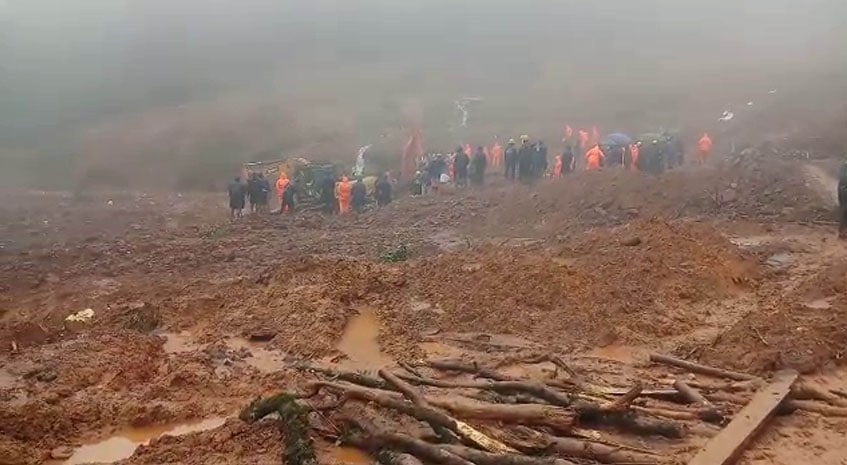
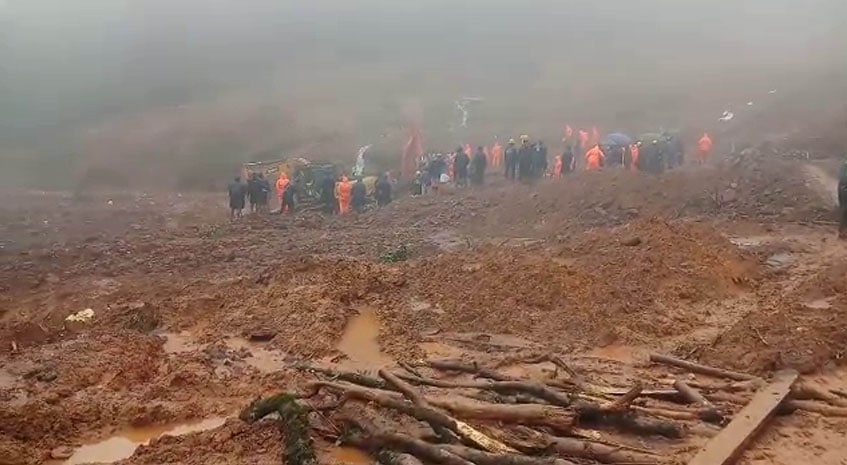
As rains have abated in Kodagu, rescue operations have been initiated in full swing and over 150 personnel from National Disaster Response Force (NDRF), State Disaster Response Force (SDRF) and Madras Engineering Group (MEG) are carrying out search for the priest family that was washed away at Talacauvery on Wednesday midnight.

Five persons of a family including the Chief Priest of Sri Cauvery Temple T.S. Narayanachar are buried alive as a portion of the Brahmagiri Hill collapsed on two houses where the priests lived. Along with Narayanachar, his wife Shantha Narayana, Narayanachar’s brother Anandathirtha Swamiji and relatives Ravikiran Bhat and Pavan Bhat are feared to be dead.

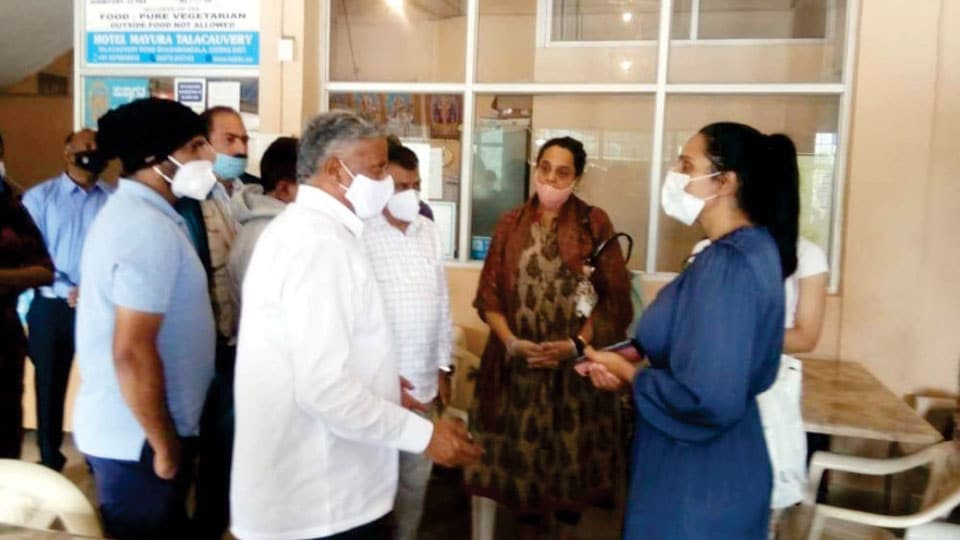
In the search carried out on Saturday, the body of Anandathirtha was found. Search is on to find other missing persons. Meanwhile, daughters of Narayanachar-Shantha couple Sharada and Namitha who are settled in Australia and New Zealand have reached Talacauvery and are discussing with the rescue personnel about the rescue operations.

TemplePriest02KF12aug2020

Rains have abated in the hilly district but areas where River Cauvery flows are still deep under water. Flood situation at Balamuri and Kottamudi remains to be grim as water level has not receded. The connection between Murnad and Napoklu continues to be disrupted. Flood waters have receded in Kushalnagar and the residents have begun cleaning their houses to make them fit for living.

source: http://www.starofmysore.com / Star of Mysore / Home> News / August 10th, 2020

Kodagu secures 18th place in SSLC results

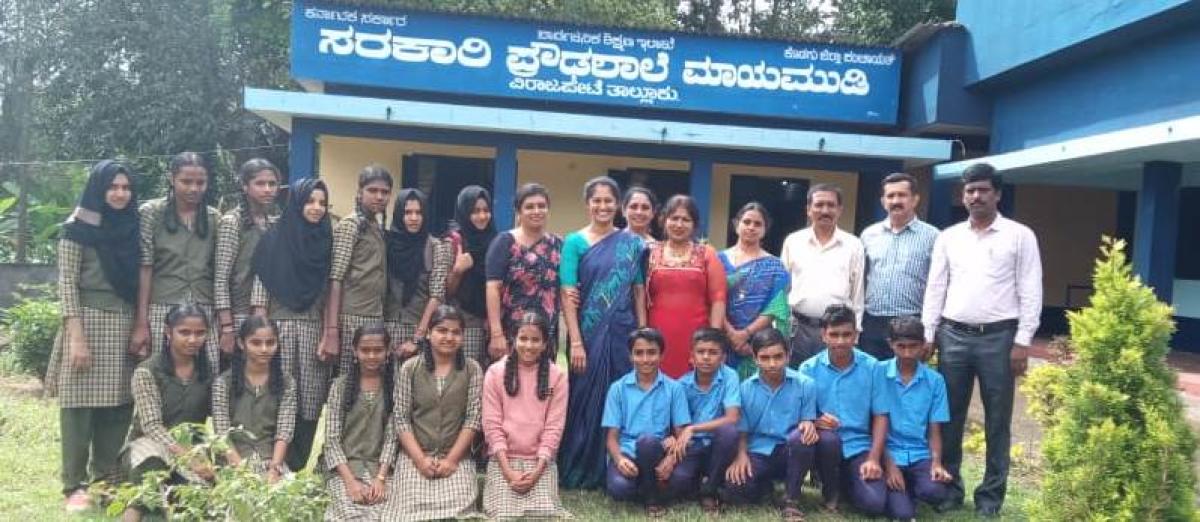
Students and teachers of Government High School in Mayamudi, which has achieved 100% results in SSLC examinations. DH Photo

Kodagu district stood at the 18th position in the state in the SSLC examination results announced on Monday.

The district has shown a lot of improvement as it was in the 22nd position last year.

This year, a total of 7,164 students took SSLC exams in 27 exam centres in the district. Among them, 74 candidates were from Covid-19 containment zones.

Jagath Poovaiah of Fathima Convent in Kushalnagar has emerged as the district topper while scoring 620 out of 625 marks.

Gana, a student of Sandeepani School in Somwarpet, has scored 618 marks and is the second topper from the district. She has scored 122 marks in first language Kannada, 97 in English and 100 each in Hindi, Mathematics, Science and Social Studies.

Other toppers

Vijaya M D from Morarji Desai Residential School and K S Anusha from Lions School, Gonikoppa, have secured 617 marks each and share the third place in the district.

H K Rahul from Vishwamanava Kuvempu High School of Chowdlu village has secured 607 marks.

OLV English Medium School student N K Shravani has secured 605 marks.

Government High School in Mayamudi has secured 100% results. The students have excelled in the examinations, despite the pandemic. Most of the students in the school are from economically backward families and therefore, their achievement is worth a praise, Headteacher Vani Nachappa said.

Other schools which have registered 100% results are: Morarji Desai Residential School in Basavanahalli, Cauvery School and Pragathi School in Virajpet, St Annamma High School and Bright School in Virajpet, Sandeepani English Medium School and Vishwamanava Kuvempu English Medium School in Somwarpet and Shantinikethana School, Kodagarahalli.

source: http://www.deccanherald.com / Deccan Herald / Home> State> Karnataka Districts / by DHNS / August 11th, 2020

Anandatheertha, the sage who lived for Kaveri, dies

Anandatheertha lived a life of intense commitment to the Kaveri. He died in landslide in Talakaveri on August 6.
AnandateerthaKF10aug2020

Regular trips to Talakaveri, located near Bhagamandala in Kodagu district, Karnataka, are fond for river Kaveri. A temple to Goddess Kaveri, also dedicated to Shiva as Agasthyeswara and Ganesha, overlooks the ancient tank that collects water from a nearby wild spring there.

For the devotees, the tank was the origin of the east-flowing river of peninsular India. According to the legends, the river disappears in its birthplace — only to take rebirth at Bhagamandala located a little away at the foothills.

I met Swami Anandatheertha (died at 76) for the first time one September evening about a decade ago. The meeting was followed by a long conversation about the mighty river, the lifeline of vast stretches of Karnataka and Tamil Nadu.

Several conversations followed over time — and each one of them gave me the impression that he was no less than a living encyclopaedia — not just on the Kaveri but all the rivers on Earth.

It was this school teacher-turned-sage who showed me the exact origin of the river. Anandatheertha lived in Mumbai for long and taught at a school there, but returned to his native place three decades ago to become the traditional trustee and administrator of the temples in Talakaveri and Bhagamandala.

He lived a spartan life in a small house in Talakaveri, located in the Brahmagiri range of Western Ghats at an elevation of 1,341 metres. His brother-in-law was the chief priest of the temple. He lived with his sister and her husband.

A scholar with strong social and political concerns, Anandatheertha was a secular person. Between sacred and profane, he lived a life of intense commitment to the river and the surrounding forests.

In the 1980s, he was among the members of the Save Western Ghats March — a major environmental protection initiative involving scientists, anthropologists, sociologists, activists, journalists and local communities.

He marched together with others for 100 days along the length of the ghats, highlighting the socio-ecological challenges the area grappled with. He had actively engaged with almost all attempts to save the Western Ghats and the Kaveri from human encroachment and destruction.

He travelled extensively across the length and width of the river, urging local communities to save the river. He found comfort in the role of a low profile environmentalist with extreme devotion to the cause.

Journalist and filmmaker O K Johnny, who authored Kaveriyodoppam Ente Yathrakal (Journeys Along Kaveri), pointed out that Anandatheertha was always anxious about the fate of the Kaveri.

Except for the little stretch in his small locality, the river is on its deathbed. For Anandatheertha, Western Ghats and the river were integral to his existence. In a way, he always spoke in the river’s voice.

It was the place where sage Agasthya was blessed by Brahma, Vishnu and Ganesha while meditating under the ashwaththa tree. Saptarishis, or the seven great sages, had performed their yajna or ritual sacrifices at the Brahmagiri peak.

He also spoke about Lord Brahma’s daughter Lopamudra, who was rechristened as Kaveri later. Kaveri eventually turned herself into a river to serve the humankind.

Everything is a fond memory now. On August 6, 2020, Anandatheertha failed to turn up at Talakaveri temple along with the chief priest to conduct the morning rituals. One of the security guards at the temple went to check the priest and found the priest’s house buried in mud.

According to available information, the development officer of the local Grama Panchayat had issued a notice to Anandatheertha, directing him and the family of the head priest to move away from the place for the hill was prone to landslides; Anandatheertha was living at the foothills.

However, Anandatheertha refused to move away. Even the cowshed he had with over 20 bovines was buried deep in mounds of mud and rubble. The area surrounding the priests’ houses is now inaccessible, according to Kodagu district commissioner Anies Kanmani Joy.

A portion of the Brahmagiri Hill collapsed on the two houses where Anandatheertha and the priest were living. At least five people are missing as of August 7.

Other than Anandatheertha, his sister Shantha Narayana (68), her husband and temple’s head priest T S Narayanachar (70) and relatives Ravikiran Bhat and Pavan Bhat are missing.

Mud came crashing down on the two houses Wednesday midnight; around 30 acres of the mountain range collapsed. The Geological Survey of India (GSI) had predicted possibilities of landslides in Talakavery, in the close vicinity of the temple, after detecting surface cracks during last monsoon.

It had conducted extensive field study in Kodagu following the two subsequent floods since 2018 and discovered slope modification without proper precautions as the major cause of landslides.

Unbridled construction of houses by carving hill slopes resulted in land destabilisation in the region. Unsupported slope cuts for road widening also contributed to the tragedy.

A spiritual leader who always expressed concern over change in land use patterns in Brahmagiri hills and the mushrooming illegal constructions has now turned its victim.

He was always against large-scale capital investments to convert Talakaveri as a concrete jungle in the name of spiritual tourism. The encyclopaedia on rivers is no more.

source: http://www.downtoearth.org.in / Down To Earth / Home> Environment / by K A Shaji / August 07th, 2020

Jothe Jotheyali: Here’s What Anu And Arya Have To Tell You About The Kodava Attire

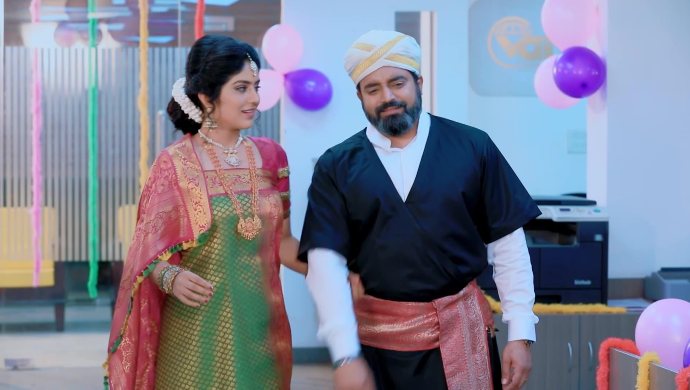
Anu and Arya in the Kodava attire

As we know, Anu and Arya recently dressed up for their ethnic day in the beautiful Kodava attire. Speaking of which, we all know how Kodagu is a travel destination and the most beautiful place to be. However, here’s a little about their outfits!

Kodagu or Coorg is the smallest district in Karnataka, is perched on the Western Ghats at a height of about 1000m above sea level. It is known for its hills and tropical forests along with wild animals and lush coffee plantations on hill slopes. About a third of the district is covered by forests fed by monsoon rains that lash the region for nearly four months in the year.

The first thing that comes across as ‘different’ about Kodavas is their traditional dress. The Kodava women drape their sarees in a distinctive style with the pleats tucked at the back of the waist and the pallu drawn under her left shoulder as it is considered more convenient for agricultural and other work. The traditional jewellery worn by Kodava women is also distinctive and is inspired by nature – the moon, flowers, fruits, snake to name a few.

The Kodava man’s attire is a kupya which is a long black or white wrap-around tunic along with a red gold-embroidered silk chele that is a sash with a peeche kathi (dagger made of silver, gold, ivory and wood). A white mande thuni (turban) or a red chouka (checked scarf) is tied around his head while an odikathi (war knife with a broad blade) is fixed to a thodang (silver girdle) at the back of his waist.

Catch all the episodes of Jothe Jotheyali exclusively on ZEE5!

source: http://www.zee5.com /ZEE5 / Home> Zee5News> Entertainment / August 08th, 2020

The Tamara Coorg ranked No.1 Romantic Hotel in India

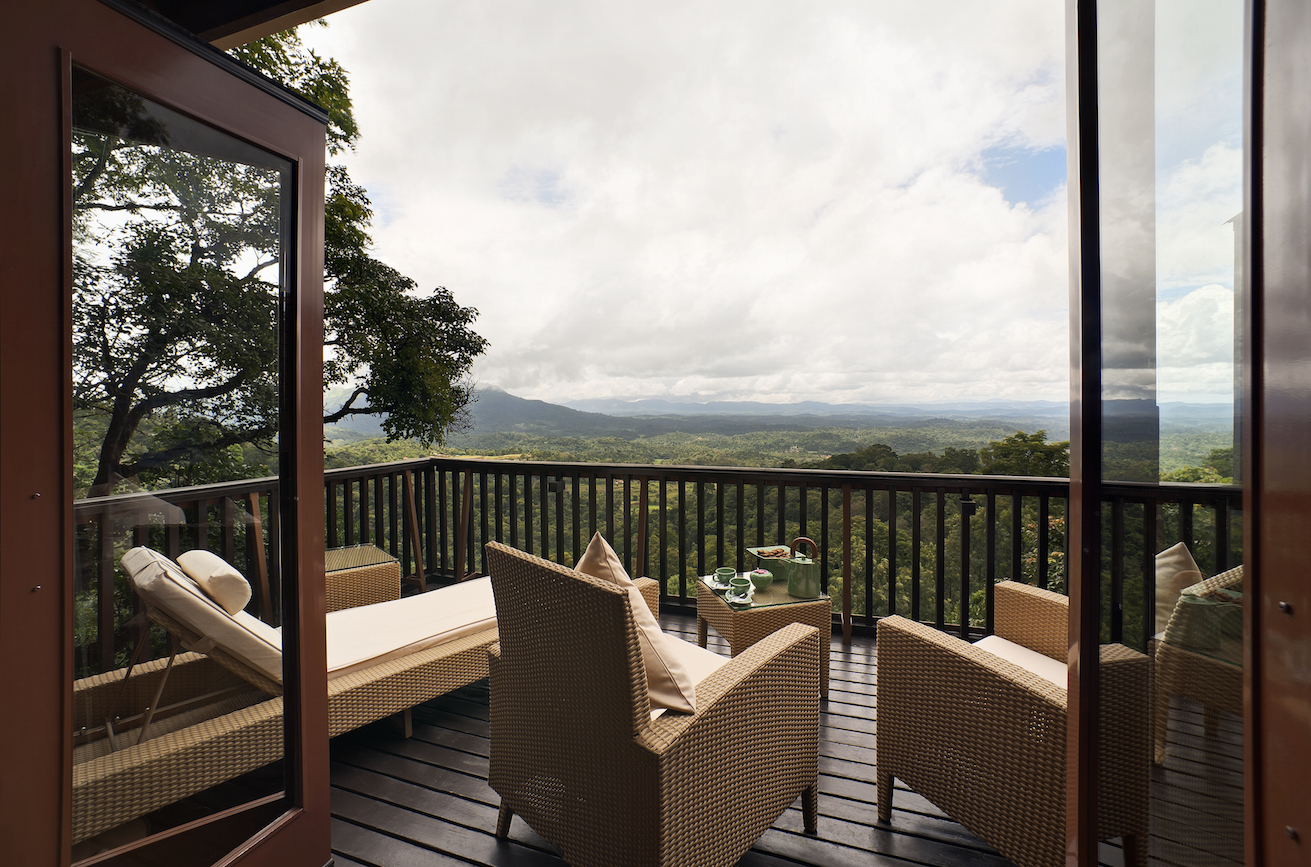
TamaraCoorgKF08aug2020

The Tamara Coorg has once again been ranked #1 on Tripadvisor Travelers’ Choice Awards List of Top 10 Romantic Hotels in India for the year 2020.

Tripadvisor is the world’s largest travel platform and the Travelers’ Choice Awards is considered one amongst the most prestigious in the travel industry as it is rated by the travelers themselves. This coveted award program celebrates travelers’ favorite hotels, restaurants and airlines around the world, honoring unique businesses every year. The Tamara Coorg has also been ranked #16 on the list of Top 25 luxury hotels in India while The Tamara Kodai launched in 2018 has also made it to the list and has been ranked #20 amongst the Top 25 luxury hotels in India.

The Tamara Coorg is a luxury experience nestled in the heart of the hills, where you can rediscover the joy of being in nature; where your quest for serenity ends. The Tamara Coorg spans 180 acres where you will experience nature and luxury at its best as you wake up to the breathtaking view and the calming silence of the hills, disturbed only by the chirping birds and the rustle of leaves. The unique nature based experiences at The Tamara Coorg includes Forest Therapy, Trekking, Plantation Tours, Blossom to Brew, Bird Watching amongst others.

The exquisite cottages at The Tamara Coorg are designed to provide guests with a rustic, luxurious space to unwind, and enjoy an unmatched view of the hills in the distance, while suspended in nature. Relaxation gets even better at the award-winning spa and wellness centre, The Elevation Spa. It offers signature spa treatments, while the fitness centre includes a steam & sauna, a state-of-the-art fitness center, and a Yoga Temple

Ms. Shruti Shibulal, CEO and Director, Tamara Leisure Experiences Pvt. Ltd, said “We are very proud that The Tamara Coorg has been voted #1 in the Best Romantic Hotels in India category for the year 2020. To have the public recognize us for our commitment to providing unforgettable experiences is very meaningful. This recognition is dedicated to our team who are our biggest asset and who have worked passionately to ensure our guests receive warm, personalized and memorable service”.

Travelers’ Choice Best of the Best and Travelers’ Choice winners are calculated based on the millions of reviews and opinions collected in 2019 from travelers and diners around the world on Tripadvisor. The awards take into account the quality and quantity of traveler reviews and ratings specific to each award category. The hallmark of winners continues to be remarkable service and quality experiences for travelers and diners.

Winners are calculated based on the quality and quantity of the millions of reviews, opinions and ratings collected on Tripadvisor in 2019, prior to the pandemic. With over 8.7 million businesses listed on Tripadvisor, these awards are a testament to the service and quality that winners consistently provide to their guests.

source: http://www.voyagersworld.in / Voyager’s World / Home> Hospitality / by Voyager’s World Bureau / August 07th, 2020

Having right mindset important for Team India in next 1 year, says Raghunath

Bengaluru :

The Indian men’s hockey team must treat the next one year as a countdown to the Olympic Games in Tokyo, feels former drag-flick specialist VR Raghunath.

“I think the team must take this period as a one year countdown, and forget everything that’s happened in the last 6-8 months. It is time to start afresh,” said Raghunath.

The former defender, who was part of some of India’s finest victories including the 2014 Asian Games gold medal and FIH Champions Trophy silver medal in 2016, further said that the six-week break would have helped the players recharge.

“The six-week break was ideal for the players to return to the national camp feeling fresh. The Indian team’s fitness is top class and they will continue to build on this plus point the next one year but having the right mindset in their approach and staying mentally positive will be very important,” he said.

Putting things into perspective, Raghunath explained, “How the players cope mentally in this new scenario, how they approach every day mentally and once they start training and playing matches, how they will cope with the pressure and the results will matter a lot.

“Usually in the lead up to the Olympics, the last 6-8 months pass by really fast and the team must be absolutely prepared physically and mentally.”

Commenting about the team’s defence, Raghunath said India’s current backline can challenge the best teams in the world.

“They are very experienced and the current set of defenders have about 50-80 caps together. They know each other very well and I don’t see them having any problems even when they are put in a tough match-situation against any top team in the world,” said the Coorg-lad who continues to actively take part in domestic hockey.

He further highlighted that young dragflicker Harmanpreet Singh has matured as a player and with good support from senior compatriot Rupinder Pal Singh, India can produce lethal PC attack.

“Having two top dragflickers who can play full match is an advantage for India. Both Harmanpreet and Rupinder are equally good and they have completely different execution and qualities.

“Having various options and combinations in drag flick is always good. Plus, India has good options in Varun Kumar and Amit Rohidas who can be great support when one of the two top flickers are having a rough day,” opined Raghunath.

source: http://www.daijiworld.com / Daijiworld.com / Home> Sports / by IANS / August 06th, 2020

The Joshna Chinappa interview | ‘It’s exciting to be back on court’

The World No 10 in squash, who resumed practice at the Indian Squash Academy in Chennai on Monday after more than four months.

Indian squash star Joshna Chinappa (File | PTI)

Chennai :

Joshna Chinappa heaved a sigh of relief when the Tamil Nadu government announced last week that athletes can train at the stadiums.

The World No 10 in squash, who resumed practice at the Indian Squash Academy in Chennai on Monday after more than four months, feels it’s important not to burn out in order to get back in shape too quickly.

In an interview with The New Indian Express, the 33-year-old opens up on finding purpose in training, staying focussed for the 2022 Commonwealth and Asian Games and the role of her sports psychologist during these difficult times. Excerpts:

How different was the training this time?
Having access to the academy and squash court is a relief. Right now, we are training solo. It’s just one of us on the court hitting the ball. In the last four months, everything was shut. Predominantly, my training was only at home, basic fitness training. It’s exciting to be back on the court.

Is there a sense of fear or paranoia even though in Chennai there are signs of things improving?
It (fear) is always there at the back of your mind and we should not take things like wearing a mask and sanitising your hands for granted. I just try and remember these because it’s easy to forget once you train in a public place. It’s about being more aware. But I know when I go to play, it’s a safe and secure environment.

How is your body responding to this increase in training load?
Doing fitness is different from playing. My body is pretty bruised up (laughs). It is slowly getting used to it. But I just feel, in another few days or in a week’s time, I should be able to play a bit more fluently. I think I need two weeks of consistent practice and strength training to get back into rhythm.

What are the challenges of starting afresh?
For me, it’s about finding the purpose of training right now. (And decide) Should I push myself hard or keep my fitness at a good level or play squash as much as I can. It’s important not to burn out when I train hard every day. But there is no tournament in sight currently. The challenge is in figuring out how to train correctly and efficiently so that I can look after my body and when the Tour does start, I will still be fresh to play for a few years.

You said a month ago, there was no motivation to train…
I believe things will start again, if not this year, at least by January. For me, Commonwealth Games (CWG) and Asian Games have always been the biggest motivation for the last few years. I’ve a plan to train and compete at the 2022 CWG and Asiad. It’s important to keep training and stay focussed.

Did having a sports psychologist help you get through this phase?
Having a sports psychologist has played a huge role in my game. I’ve worked with someone for the last 10 years. He is also a squash player, so he understands my game. For me, there are two people that I trust with my game – my coach and psychologist (both based in the UK). It’s nice to have someone to speak to, to bounce ideas off and to keep your perspective as positive as possible. Especially, during times like this when things are challenging, mentally.

When do you think Indian players will be okay with taking part in events abroad?
Right now, things are looking hard. Travel is not sorted out. Our Tour is trying to put together something from September or October onwards. But again, nothing is confirmed. Things are changing every couple of weeks. I personally don’t feel like competing till October or November, if at all. Some tournaments have been cancelled. It’s a little grey.

Do you see tournaments happening in India this year?
I actually asked the federation about this. They are keen to start something when things get better. As I said, it’s all about how the situation is – travel, quarantine period and safety measures have to be considered. All it takes is one person to stop the tournament completely, be it domestic or international. It’s important to try and wait a little bit. Let people first get back to training. Hopefully, when the situation gets better, we can start off with low-key domestic tournaments.

source: http://www.newindianexpress.com / The New Indian Express / Home> Sport> Others / by Srinidhi PR / Express News Service / August 05th, 2020

Trouble brewing: India losing Italian coffee market to Uganda

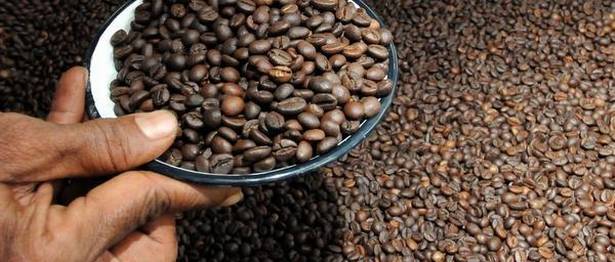
CoffeeBeansKF05aug2020

There’s more trouble brewing for Indian coffee exporters, who are not just facing a slump in overall demand due to the Covid-19 pandemic, but also staring at a loss of share in Italy, their largest export market, to exporters from Uganda.

Indian coffees are facing stiff competition from low-cost producer Uganda in the Italian market, which they have been dominating for over past three decades now. Italy accounts for about a fifth of India’s coffee exports.

Indian coffees in Italy are largely sold in the premium segment, such as in cafes and coffee bars. Brazil, the largest coffee producer, dominates the Italian market with half the market share, followed by India, which has a share of around 20 per cent, and other major producers such as Vietnam and Uganda.

“The Ugandans are trying to get as much as possible in the Italian market in the current scenario and that’s a big worry for us,” said Ramesh Rajah, President of the Coffee Exporters Association.

The Ugandan robustas, which are comparable to the Indian variety in terms or quality, are priced cheaper by at least $200 per tonne or about 20 per cent, which is attracting buyers’ interest in Italy, he said.

“During normal circumstances, consumers want quality and are willing to pay more. As the Italian economy is facing a tough times due to the pandemic, consumers are starting to look for better-value coffee. They now see Uganda, which is 20 per cent cheaper than India, as a good value proposition. Vietnam is even cheaper but because of taste and other factors, it is mainly sold commercial packaged coffee segment and not in the premium segment of Italy. The premium segment got more affected during the pandemic than the commercial coffees and is hitting us the most,” Rajah said.

Shipments drop 27%
Coffee shipments to Italy in the first half of calendar 2020 have dropped 27 per cent at 36,547 tonnes, compared to 50,513 tonnes in the same period last year. The arabica shipment to Italy was 14 per cent lower at 4,774 tonnes (5,577 tonnes), while robusta exports took a major beating as shipments were lower by 27 per cent at 31,134 tonnes (42,658 tonnes). During the same period, total coffee exports from India were down 16 per cent in volume terms and value at 1.78 lakh tonnes (2.11 l t) and $404 million ($482 m) respectively.

“For the unwashed robustas, India is facing competition from lower-priced origins like Uganda. Although the Indian quality is sought after, importers do consider more price-efficient coffees. This is more evident under the current Covid-19 circumstances, where more competitively priced coffees are likely to find favour with buyers,” said Anil Ravindran, Partner at RV Commodities, an exporter in Bengaluru.

In fact, the Ugandans are trying to regain their market share in Italy from the India exporters, to whom they had lost market share about three decades earlier. “We took the market 30 years ago, and they are trying to come back now,” Rajah said.

Logistical challenges
Indian exporters had displaced the Ugandans in Italy as the land-locked African producer had faced logistical challenges in shipping out its coffees then. “We never tried to undercut others when we gained the market in Italy. Our selling proposition was reasonable price and reliable supplies throughout the year and our coffees are better prepared and have less imperfections. We gave better products and started getting premiums. As the customers started getting used to our coffees, the premiums started going up,” Rajah said.

So, it is these premiums that are proving to be a challenge for the exporters in retaining their markets. Though the quantum of premium has come down, the Indian robustas still attract a higher price over the London terminal (LIFFE). At present, the Indian robusta cherry is attracting a premium of $500-$600 per tonne over the LIFFE, while a buyer in Italy can get Ugandan coffee at $250-300 above the terminal price. “We are seen as unreliable now as our premiums are too high. Losing the market to Ugandans will have a long-term impact,” Rajah said.

Further, Indian exporters are finding it difficult to match Ugandan prices as that would mean having to source cheap and reduce the prices, which would hurt the growers’ realisations at the back-end. This, when growers are already reeling under the impact of multi-year low prices.

Rajah said the Government should step in and immediately support the exporters to defend their markets, either by increasing the incentive under the Merchandise Exports from India Scheme (MEIS) to 5 per cent, or implementing the Remission of Duties and Taxes on Exported Products (RoDTEP) scheme at the earliest, while ensuring credit facility at reduced interest rates.

source: http://www.thehindubusinessline.com / Business Line / Home> Agri-Business / by Vishwanath Kulkarni / July 09th, 2020

Harangi Dam Full: Madikeri MLA Appachu Ranjan Offers ‘Bagina’

AppachuRanjanKF04aug2020

Kushalnagar:

Following copious rains across Kodagu district, the Harangi reservoir is almost full. The dam is two feet short of reaching its maximum level of 2,859 feet at 2,857 feet this morning.

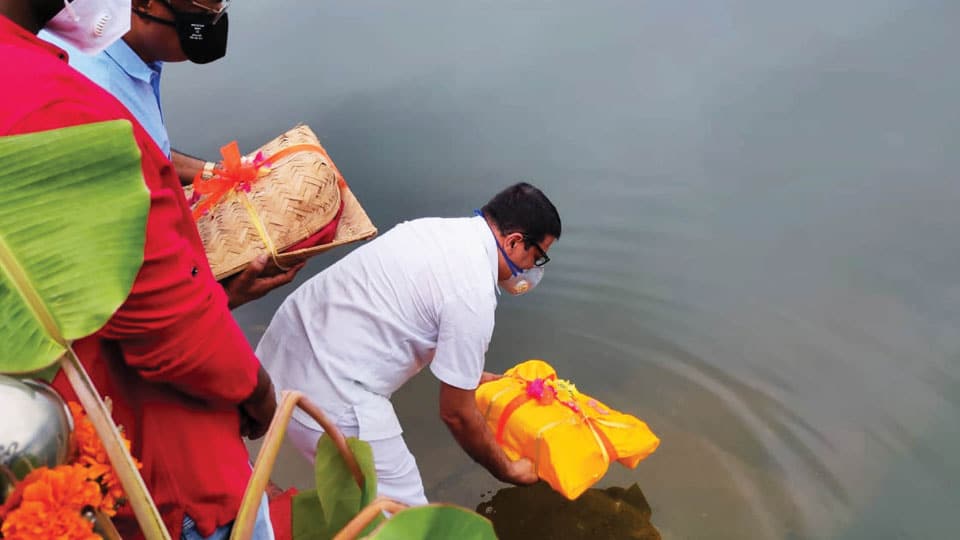
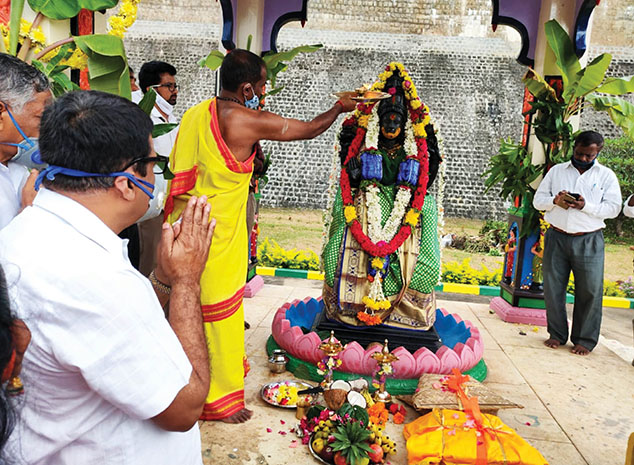
Before the crest gates were opened, Madikeri MLA M.P. Appachu Ranjan offered ‘Bagina’ to River Cauvery after performing puja to the statue of River Cauvery located at the base of the reservoir this morning.

Executive Engineer Rajendra, Harangi Reservoir Assistant Engineer Nagaraju and other BJP leaders were present on the occasion.

This reservoir is the main source of water for KRS dam in Mandya district. Irrigation Department Executive Engineer Rajendra said that water from the Harangi reservoir is now being released into the river.

AppachuRanjan02KF04aug2020

Following heavy flow in recent days, water is also being released into irrigation canals.

The right bank cannals feeding irrigated lands in Hunsur and KR Nagar taluks of Mysuru district are getting 1,500 cusecs of water every day while 400 cusecs of water is being released to left-bank canals feeding lands towards Hassan district. The inflowing water is much clear compared to last year.

Experts opine that this is probably due to growth of vegetation at the areas of landslides, which had caused heavy damage in the region, last year.

Harangi Dam provides irrigation facility to thousands of acres of farmland in Periyapattana, Hunsur and KR Nagar of Mysuru district, Arkalgud taluk of Hassan district and Kodagu district.

The Harangi Dam can hold 8.5 TMC of water.

source: http://www.starofmysore.com / Star of Mysore / Home> News / July 31st, 2020