Forgotten tales of valour and courage: NNRC in Korea and General KS Thimayya

Synopsis

In Nov 1948, Thimayya moved Stuart tanks in utmost secrecy by dismantling their turrets and used them in direct firing role that led to the capture of Zoji-la which had evaded capture on previous instances. It was because Zoji-la was in our hands that liberation of Kargil was possible in 1999.
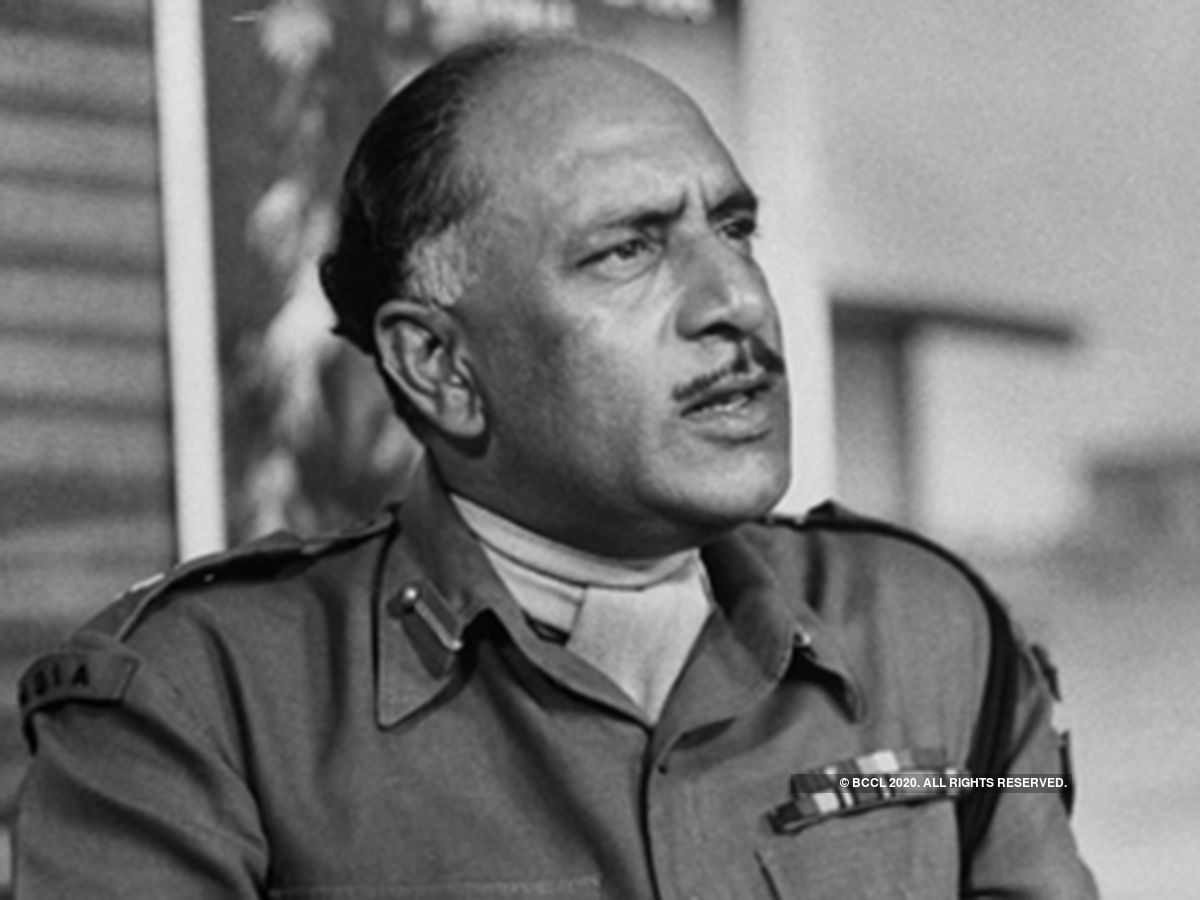
General KS Thimayya
General KS Thimayya

There were three elements to India’s largely unknown role in the Korean War 1950-1953. This is the second in a continuing series on that conflict. For the earlier story on the 60th Para, click here (https://bit.ly/2DW0PHS)

India became a member of the United Nations when the organization was founded on October 24th, 1945. Established to ensure world peace—among other goals— after a ruinous World War, the UN has had a mixed track record. One of its successes, however, was the bringing of the Korean War to a close. India played a unique role in bringing the conflict to a speedy conclusion by advocating against a policy being debated at the UN which could have led to the war’s prolongation or escalation. That war was also the first commitment to a UN assignment by an independent India and the Indian Army. This contribution and the men who made it a success are still celebrated as heroes for their commitment and courage.

The Korean War began on 25th June 1950 and would rage for three long years between the Western alliance—led by the USA under a UN resolution called the UN Command—and a Socialist alliance of North Korea and China (known as the Korean People’s Army (KPA) and the Chinese People’s Volunteers (CPV)) supported by the Soviet Union. The two sides reached a military stalemate by the middle of 1953 and had agreed on the terms of a ceasefire. In truth, the war would have come to an end in 1952 if the peace talks held at Panmunjom on October 25, 1951 could have reached a decision on the question of prisoner swaps. This was a contentious topic, and one where India finally found the solution—a solution accepted nearly unanimously by the UN, allowing for the signing of the Korean Armistice Agreement on July 27, 1953. India’s efforts to find a compromise failed more often than not, increasing tensions between India and the United States, and even South Korea. The US had reasons to suspect Indian neutrality as we were among the first countries to recognize China diplomatically, even advocating for their seat at the UN in 1950.

A major issue that defied agreement was how to deal with a large number of Korean and Chinese prisoners—about two hundred thousand of them—held by the UN Command. Many prisoners refused to return to their original countries. There were also a few similar UN prisoners, mostly Americans, held by the Korean People’s Army (KPA) and the Chinese People’s Volunteers (CPV))

The Armistice agreement stipulated that a Neutral Nations Repatriation Commission (the NNRC) would be established with two countries from each bloc, and headed by India—underscoring our nation’s reputation as a neutral country. Thus the NNRC had Czechoslovakia and Poland from the Eastern Bloc, and Sweden and Switzerland from the West. India was also tasked with providing a brigade of soldiers to provide security for the prisoner exchange.

The NNRC decided the fate of the remaining 20,000 POWs —and their repatriation—also called the Big Switch. It followed Operation Little Switch in April-May of 1952, which saw the exchange of wounded and sick soldiers held by both sides. The solution included handing over these prisoners to the NNRC headed by India. A full Indian contingent of nearly 6000 called Custodian Force of India (CFI) were to take over physical custody of these prisoners; this was our nation’s initiation into peacemaking and conflict resolution.

Led by General Thimayya as Chairman, and Ambassador B.N. Chakravarty, IFS, as the Alternate Chairman, the Neutral Nations Repatriation Commission (NNRC) was a task that many did not think Indians would be able to handle or deliver, because of its layered complexities and intrigue.

The Indian government had made sure to send their best medical unit 6oth Para Field Ambulance earlier ( https://bit.ly/2CrHWfn) and now, in sending General KS Thimayya—later to be the COAS— they displayed the same intent.

The force behind the NNRC

Kodandera Subayya Thimayya was one of three brothers born to a rich coffee planter of Cheppudira clan in Madikeri in the district of Kodagu. He joined Bishop Cotton School in Bangalore before enrolling at the Prince of Wales Royal Indian Military College (RIMC) in Dehradun; he was one of six Indian cadets later chosen to attend the Royal Military Academy at Sandhurst along with Gen PN Thapar who would later succeed him as the Chief in 1961 and be made a scapegoat for failures in 1962. Gen Thimayya’s brothers too joined the Army and his elder brother Ponnappa later joined the INA inspired by Subhas Chandra Bose and his younger brother died in the first war in Kashmir.

Thimayya graduated from Sandhurst in 1926 and received a commission into the British Indian Army, going on to become the first Indian to command an Infantry brigade: the 268th Indian Infantry Brigade—part of the post-World War II British Commonwealth Occupation Force in Japan. He received the British Distinguished Service Order for his service for the British military during World War II.

General Thimayya was also chosen to lead the counter offensive in Kashmir and headed the Jammu Kashmir force from April 1948 . The J&K force was split as Srinagar and Jammu Division, Gen Thimayya headed the Srinagar Div in May 1948 . Immediately he set about recapturing territories lost to the marauders with his daring and dynamic brigade commanders – Brig LP Sen of 161 brigade in Uri Sector, Brig Atal of Para Brigade tasked to recapture Zojila and Harbaksh Singh in command of 163 in Handwara – Kupwara . They were on a recapturing spree when Nehru decided to unilaterally declare suspension of operations as the case was referred to the UN much to the protestations of the army brass. Fortunately Pakistan didn’t comply with the UN resolution allowing the re – commencement of operations. This window of opportunity saw the consolidation of Ladakh with the capture of Zojila Dras and Kargil. Leh a weakly held garrison was saved by the sheer audacity and courage of Thimayya and Air Cmde Mehar Singh who landed in a Dakota together for the first time in Leh paving the way for beefing up troops that saved Leh from enemy hands . In another audacious move for capture of Zojila tanks of 7 Cavalry was used in a direct firing role which completely destroyed the enemy morale leading to its capture . Thus Ladakh was saved in the nick of time by November 1948 before winter set in . Seeing the change in pace and tempo of operations Pakistan quickly agreed to the terms of the UN resolution calling for a ceasefire before it lost all other territories held by them. The rest is history but what stood out is the sheer character and audacity which made him a national hero for saving Kashmir .

Another anecdote that revolves around him is the detention of a senior politician’s son after he and some goons passed lewd remarks and even tried to molest the wife of an Army officer of 5 JAT in Amritsar in 1959 . With the personal involvement of none less than that of the CM Of Punjab the ripples of this action went up to Parliament. General Thimayya was summoned for an explanation and his response that silenced the opposition was “If we cannot defend the honour of our women, how can you expect us to defend the honour of our country?”

His ability to project India’s honor was on full display during his handling of the NNRC in Korea.

The NNRC through CFI was responsible for gathering non-repatriated prisoners into camps; that included nearly 170,000 prisoners held by UN forces who didn’t want to return to either China or North Korea.

In the face of Chinese demands for the forceful repatriation of their soldiers, the UN and the CFI worked hard to explain to each prisoner their rights and privileges; they could then choose to go home or remain with the side that captured them.

This called for compassion, fairness, and neutrality on the part of the Indian Custodian Force, who rendered yeoman service during the entire span of their mission from September 1953 to March 1954. On several occasions, intricate situations were resolved only because of the patience and tact of General KS Thimayya and Major General SPP Thorat. They proved their mettle, earning well-deserved praise for their command and for India.

It was an unenviable task; in the end only less than 100 who wished not be repatriated to either country came back to India once the NNRC and CFO concluded their operations. A few Koreans chose to resettle in India, while others were repatriated to Brazil.

General Thimayya is not only an Indian military hero he is also a hero of the Korean War . It has been 66 years since the end of the Korean war but even till day he is remembered by Koreans with gratitude and affection. He was awarded a Padma Bhushan in 1954 for his service in Korea.

General Thimayya went on to become the COAS from 1957-1961. After his retirement the UN again requested for his service in 1964 to command UN troops operating on Cyprus in keeping with his reputation of impartiality displayed in Korea . He would however die of a massive heart attack on December 18, 1965 at the age of 59.

————–

Col ( Dr) Divakaran Padma Kumar Pillay, Shaurya Chakra, PhD is a Research Fellow, with the Manohar Parrikar Institute for Defence Studies and Analyses. His twitter id is @dpkpillay12.

—————
source: http://www.economictimes.indiatimes.com / The Economic Times / Home> National> Business News> News> Defence / by ET Contributor – Col.(Dr)Divakaran Padma Kumar Pillay / July 21st, 2020
The buzz in Kodagu

Traditional beekeepers are busy bottling the flavours of Western Ghats

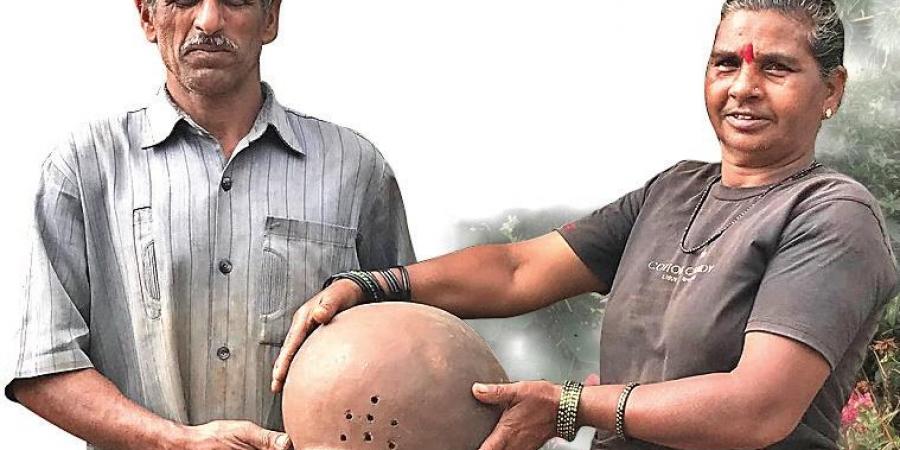
Pattu Cariappa and his wife Nethravathi

Madikeri :

The buzz fills the air in the north-eastern villages of Somwarpet during the spring season. Apis Cerana bees, known as the honey bees of Coorg, go around merrily collecting nectar from colourful indigenous flowers lining the Western Ghats. The sweet nectar is bottled — to produce one of the purest forms of honey in the nation — ‘Kala Thein’.

BeehiveKF20jul2020

Massive bee hives on tree trunks and building tops always fill the beholders with a sense of fear. But to the bee keepers, honey bees are their comrades. The villagers nurture and look after the bees and in return, these insects provide them with a lifeline. It would not be an exaggeration to say that the traditional beekeepers of seven villages – Kumbara Gadige, Mutlu, Kikkaralli, Hammiyala, Hacchinadu, Surlabbi and Mankya – are preserving the Western Ghats by indulging in traditional beekeeping.

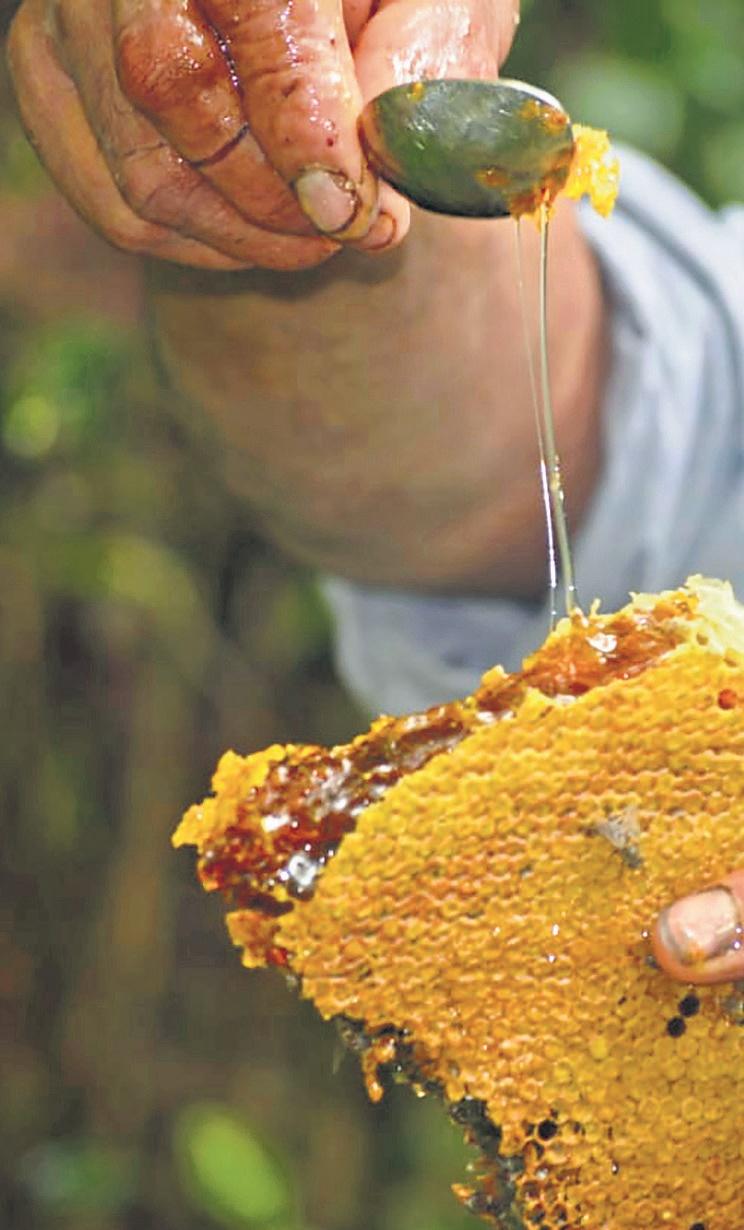
Pattu Cariappa, a resident of Hammiyala village, briskly walks up to his estate and points at an earthen pot covered with fresh leaves. He then lifts the pot, which is placed upside down, and shows the bee hive where the bees are going about busily. He inserts a finger into the hive and slowly guides the bee onto one side to reveal the honey-filled comb. Ask him if he is not scared to do so, he smilingly replies, “These bees are well-acquainted with me. I won’t harm them and they don’t harm me.”“I learnt the art of beekeeping by watching my elders. The best time to start is in December.

First, we smear the heated pot, which has three to four tiny holes, with bee wax. We carry this pot into the forest and place it on a steady area. Since we know our forests well, we also know where the bees are likely to build a hive and we keep the pot in a suitable place. Once this is done, we frequently visit the spot to check if the bees have arrived. Once the bees settle into the pot, we bring the pot close to our house. We shift the pot only during evening hours – when all the bees have settled in the hive after collecting nectar,” explains Pattu.

While the beekeeping starts sometime in December, the honey is extracted and harvested only after a year and half – in June. In traditional beekeeping, the harvest method does not use smoke or other harmful gas to chase them away. Instead, the beekeepers slowly move the honeybees to one side and take out the comb. The honey is then extracted from the comb. “I do not use bare hands to squeeze out the honey as it is unhygienic. Instead, I use a clean white cloth to extract honey from the comb, which is then bottled to produce one of the purest forms of honey,” he adds.

“Some people think that pure honey does not turn sugary. But it does and settles at the bottom of the bottle. Pure honey has very less moisture content,” he says. How does one know if the honey is pure? Pattu’s wife Nethravathi explains, “If the hive is built inside the cavity of a tree, one can smell the tree bark in the extracted honey. Similarly, any form of adulteration can be found out easily through the smell. Wild honey, which uses harmful methods of extraction, is watery.” The seven villages have a good economy. While the traditional beekeepers have been harvesting honey since ages, it is only recently that they have found a sustainable earning.

“Earlier, we used to sell it on the streets across the district and did not earn much from it,” recalls Pattu.

However, they have now found a platform for their business through the initiative of ‘AinMane’ of Thammu Poovaiah. A popular café based in Madikeri, AinMane, is sourcing honey from these traditional beekeepers. “The ‘AinMane’ management is promoting the traditional form of honey and providing us with a sustainable lifestyle,” says Nethravathi.

source: http://www.newindianexpress.com / The New Indian Express / Home> States> Karnataka / by Prajna GR / Express News Service / July 19th, 2020

Doctors from Kodagu urged to return home

Unlike other bigger districts in the State, Kodagu has limited private healthcare resources and this has been one of the reasons for its dependence on cities like Mysuru and Mangaluru for healthcare needs.

However, under the regulated situation triggered by COVID-19, patients of one district are not being treated/permitted in another easily, and this has put a further strain on the medical staff and infrastructure in the district. This has necessitated roping in more doctors. The fact that three doctors had to be rushed to Madikeri COVID-19 Hospital from the Mysore Medical College and Research Institute to handle the situation resulting from the spurt in infections highlights the situation in the hilly district.

Exhausting the possible options amidst the crisis, the Kodagu district administration sought to play the “Work for Kodagu” card, with a fervent appeal to doctors belonging to Kodagu and working elsewhere to return to their homeland and join hands with the government in the unending fight. “I think it’s the best opportunity for them [doctors of Kodagu origin] to work for the land. Kodagu needs doctors and you can fill the emptiness,” said Deputy Commissioner Annnies Kanmani Joy.

The recruitment process has been eased to such an extent that any medical graduate and postgraduate can walk into the medical college or the DHO office in Madikeri with relevant educational documents.

“If selected, the appointment order is issued the very next day and he or she can start working,” Ms. Joy said, while sharing Kodagu’s COVID-19 combat when she came live on Facebook.

However, there are not many takers for the doctors’ posts as only two have responded.

“The appointees can either work in the medical college hospital or in PHCs,” she said, recalling the help received from the people hailing from the district when Kodagu was battered by two back-to-back floods and landslides. Ms. Joy said Kodagu might be a small district but the COVID-19 preparedness was on a par with any other bigger district.

source: http://www.thehindu.com / The Hindu / Home> News> States> Karnataka / by Shankar Bennur / Mysuru – July 18th, 2020

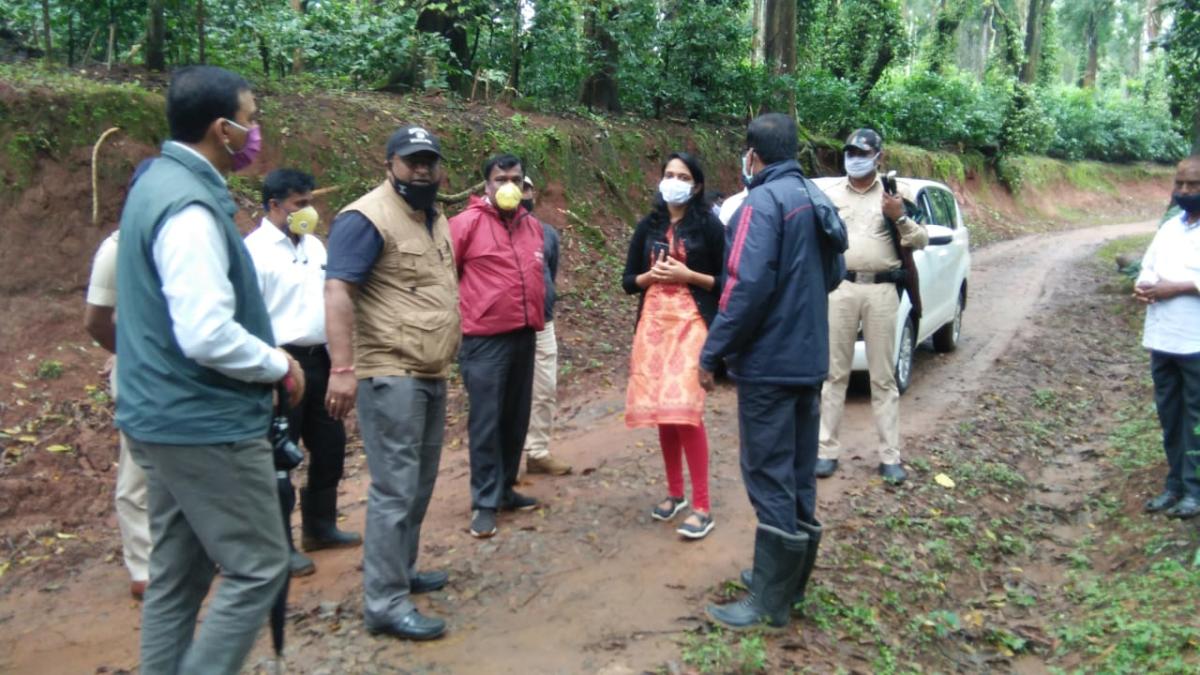
DC Annies Kanmani Joy directs officials to allocate sites to flood victims

Deputy Commissioner Annies Kanmani Joy visits the rehabilitation site in Arekadu village, on Thursday.

Deputy Commissioner Annies Kanmani Joy has issued orders to allocate sites in Arekadu village, to the people dwelling on the river banks who lost their houses owing to floods.

The district administration had cleared the encroachment of land in Arekadu village which was earmarked for the houses meant for flood victims in Nelyahudikeri limits. But, there were confusions regarding the road which passes through private land.

Speaking on the occasion, she said there was a minor issue regarding the road that connects to the rehabilitation site.

“The marking of the site will be done in the next 15 days. The ACF has given permission to fell the trees on the site. After felling of trees is complete, the rest of the works will be carried out by Taluk Panchayat executive officer,” she added.

ZP member Sunitha Manjunath, Taluk Panchayat member Shuhad, local Gram Panchayat former vice president Safiya, district assistant commissioner Javaregowda, Somwarpet tahsildar Govindaraju, Horata Samiti leader P R Bharat, Tata company general manager M B Ganapathy, legal manager Vijay Karnad and deputy general manager K P Appaiah were present.

source: http://www.deccanherald.com / Deccan Herald / Home> State> Karnataka Districts / by DHNS, Siddapura / July 17th, 2020

It’s very hard because of the uncertainty: Joshna

India's ace squash player Joshna Chinappa (left) recently broke into the top-10 of the women's world ranking. FILE PHOTO
India’s ace squash player Joshna Chinappa (left) recently broke into the top-10 of the women’s world ranking. FILE PHOTO

Joshna Chinappa has experienced a hankering to return to the squash court once before. It was when she tore her ACL (anterior crucial ligament) in 2012. She was out of action for 10 months then.

This time, by admission, the 18-time national champion is at her fittest – reflective in her jump to No.10 in the latest issue of world rankings – and yet, all she can do is attach therapeutic significance to household chores while hoping for the Covid-19 pandemic to subside.

“Initially, it was fine because as an athlete you console yourself, saying it’s the break you deserve, and that it’s all going to return to normal soon,” Joshna tells DH. “…but after the first few weeks, it became very hard because of all the uncertainity.Trying to stay fit in a small space isn’t easy. More importantly, you don’t even know what you’re training for. Usually, you have a tournament, a goal you’re working towards. This time, there isn’t one, but you do it because you don’t want to start from scratch when the sport returns.”

Going by Professional Squash Association’s announcement from a few of weeks ago, the tour should restart mid-August. By that, Joshna, who last played in Egypt in March before hurrying back to India upon news of the virus outbreak, will have not have played in five months. She, however, reckoned it’s going to be a lot longer before resumption.

“It will take some time to get back, especially a sport like squash because there is quite a bit of contact with the opponent. There are so many guidelines which need to be followed if we’re back to competing again,” says the 33-year-old.

“I don’t see us returning to the court till October or November, and even then it will be vastly different from what it used to be.” she adds.

While the PSA has remained tight-lipped about its SOPs, Joshna offered glimpses, saying the tour is likely to enforce stringent testing measures and play without crowds.

“I also think they will host several tournaments in one location. What that does is keep all the players and support staff in one area. This way we can be monitored better,” she says. “Even then there will be a fear among athletes to compete. It’s going to be difficult to break away from that but I think we should just get on with it.

“I don’t think we’re properly safe until they come up with a vaccine, but we can’t endlessly wait for that to start living once again,” she opined.

source: http://www.deccanherald.com / Deccan Herald / Home> Sports> Other Sports / by Roshan Thyagarajan, DHNS-Bengaluru / July 13th, 2020

Student secures 92% in PUC exams in spite of personal tragedy

Nidyamane Prakruthi.

Personal loss failed to shake this student. When all her classmates were busy preparing for the PU Board exams, Nidyamane Prakruthi lost her family in a road mishap. However overcoming grief, this gritty student has secured 92% in the exams.

Her father Nidyamane Ashoka, mother Hemavathi, brother and sister died on the spot in a car accident near Sullia in Dakshina Kannada during September 2019. They were all heading to Moodbidri to see Prakruthi, who was studying at Alva’s College.

Prakruthi fought the trauma and put all her efforts in studies, to excel in the examinations.

Kodagu toppers

Apoorva H G from St Micheal PU College, Madikeri, has scored 590 out of 600 (98.33%) in Second PU Board examination in the Commerce stream, thus bagging the topmost position in the district in the stream.

A U Ranjana, a student of Vidyanikethana PU College, Gonikoppa, is the topper in the Science stream for the district. She has secured 589 marks (98.17%).

K S Lakshmi from St Jospeh Composite PU College, Madikeri, is the district topper from the Arts stream. She has scored 564 marks (94%).

PU Education Department Deputy Director Shivalinga Shetty said the other toppers from the Commerce stream are B N Chaitra (97.50 %), A M Devika (97.33%) and B M Lipika (97.33 %) from St Annamma PU College, Virajpet.

Mrinalini Tamankar (97.83%) from Vidyaniketana PU College, Gonikoppa, has secured second place in the district in the Science stream with 587 marks, K Yukta Kaverappa and Fatima Taslima P R from the same college have scored 582 marks (97.17%).

H G Dhayashree with 562 marks (93.67%) is the second topper in Arts. She is a student of Made Mahadeshwara PU College, Madenadu.

H P Ankita from St Joseph Composite PU College and H C Geetha from Government PU College, Sampaje, have shared the third position in Arts with 558 marks (93%).

source: http://www.deccanherald.com / Deccan Herald / Home> State> Mangaluru / by DHNS, Madikeri / July 15th, 2020

Col. G. Kannan Takes Charge As Kudige Sainik School Principal

ColKannanKF15jul2020

Kushalnagar:

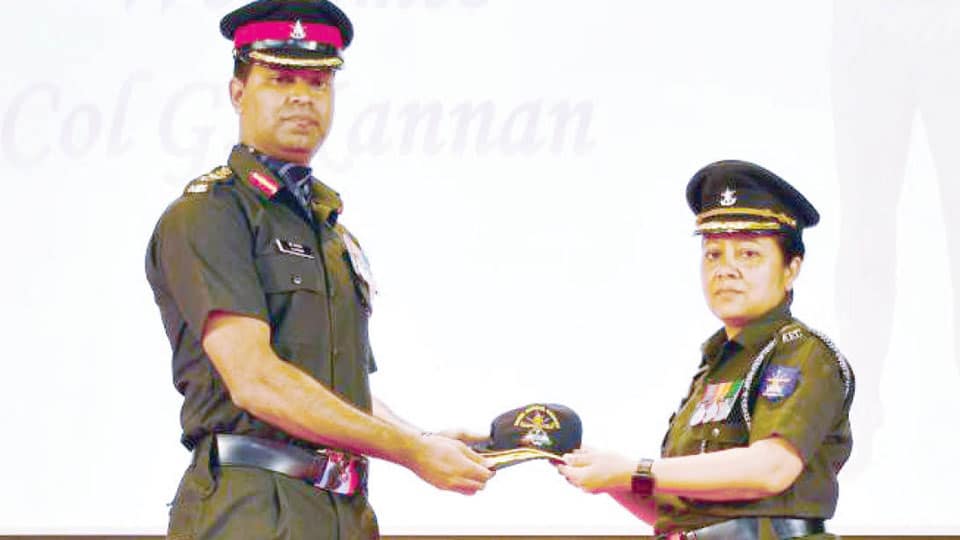
Col. G. Kannan recently took charge as the new Principal of Kudige Sainik School located in Kudige Agricultural Farm premises near Kushalnagar in Kodagu district. He was received by Vice-Principal Lt. Col. Seema Tripathi.

Soon after taking over, Col. Kannan paid floral tributes to martyred soldiers memorial in the campus.

Speaking on the occasion, Col. Kannan expressed happiness about the facilities provided to the students and also lauded the School’s achievement over the years.

Noting that Kudige Sainik School was one of the prestigious educational Institutions, he stressed on the need for maintaining discipline, unity and hard work. Expressing concern over the spread of COVID-19, Col. Kannan said that it was important to fight unitedly to tackle the virus, which has been causing great havoc across the world. Emphasising on the need for maintaining COVID regulations, he said it is important for every individual to take precautionary and safety measures such as wearing of face mask, use of hand sanitisers and maintenance of physical distancing for containing the spread of the virus.

He further said that the School must make special efforts for more admission of girl students.

School’s Administrative Officer Squadron Leader R.K. Dey, senior teacher S. Suryanarayan and other staff were present.

Col. G. Kannan has the experience of serving as the Principal of various Training Schools of Defence Department. He has been conferred Vice-Chief of Staff Award in recognition of his service. He is a Post-Graduate in Computer Applications and holds a B.Ed degree too.

source: http://www.starofmysore.com / Star of Mysore / Home> News / July 13th, 2020

New Team Of Rotary Mysore Midtown

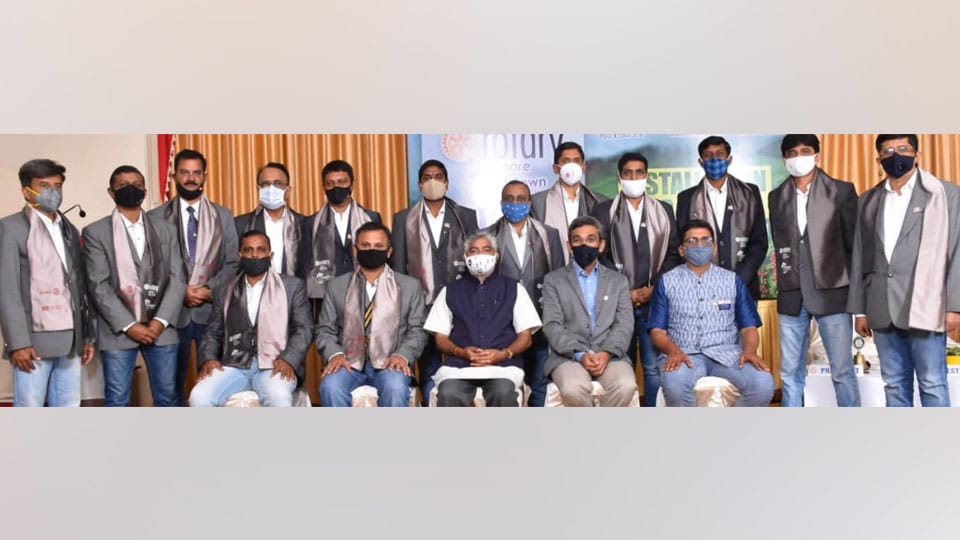
The Installation Ceremony of the new office-bearers of Rotary Mysore Midtown for the year 2020-21 was held at a private hotel in city yesterday.

RotaryMysoreKF13jul2020

Seen are (standing from left) Rtn. Harish – Sergeant, Rtn. Rakesh – Youth Service Director, Rtn. Manojkumar – Immediate Past President, Rtn. Ravindranath, Rtn. Naveenchandra – Vice-President, Rtn. Abhilash Nair – Joint Secretary, Rtn. Mallikarjun – Club Service, Rtn. Naveenchand – Vocational Service, Rtn. Jaykumar – Community Service, Rtn. Madhusudan – International Service, Rtn. Sathyendra – Treasurer and Rtn. Prahlad – Editor; (sitting from left) Rtn. Veeresh – Secretary, Rtn. A.N. Aiyanna – President, Addanda Cariappa – Rangayana Director (chief guest), Rtn. PDG. Nagarjun – Installing Officer and Rtn. Rohith Ramdev – Assistant Governor.

source: http://www.starofmysore.com / Star of Mysore / Home> Photo News / July 09th, 2020

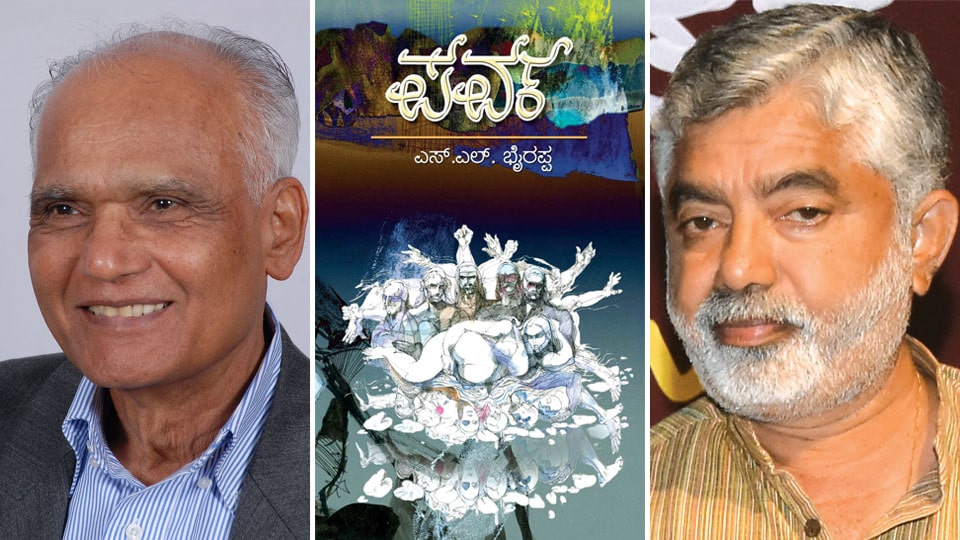
Rangayana To Adapt Dr. S.L. Bhyrappa’s ‘Parva’ As A Play; Details Worked Out

RanganayanaKF12jul2020

Theatre personality Prakash Belawadi to direct the play based on acclaimed author’s popular novel

Mysore/Mysuru:

Saraswathi Samman recipient and acclaimed Kannada novelist Dr. S.L. Bhyrappa will soon catch the imagination of theatre lovers as his novels will be adapted into plays at theatre repertoire Rangayana.

Though the novelist’s works have been translated into English and many regional languages, Rangayana had not so far experimented on them as there was a prejudice that Bhyrappa is a right-wing writer. Though art and literature transcends the boundaries of caste, creed, sex, personal prejudices and religion and one cannot brand a writer as right wing, left wing or neutral, Dr. Bhyrappa was an anathema to many theatre activists, artistes and people who were in the forefront of theatre in Mysuru.

Dr. Bhyrappa hails from Mysuru and despite this, Mysuru’s Rangayana never thought of adapting his novels as plays to reach the mass audience. Now with Addanda C. Cariappa as the Rangayana Director, things are moving in the right direction without any bias, vested interests or prejudice. Bhyrappa’s novel ‘Parva’ will be adapted into a play and work has begun in this regard.

Rangayana has the distinction of bringing Kuvempu’s ‘Sri Ramayana Darshanam’ and ‘Malegalalli Madumagalu’ into theatre and both the plays received tremendous response. Rangayana artistes said that this ‘Parva’ adaptation is an ambitious project and the nitty-gritty of the project has begun with the artistes examining the finer details in the novel.

After the first show at Rangayana, ‘Parva’ will be staged across the State including places like Shivamogga, Dharwad, Kalaburagi, Chikkamagalur, Hubballi, Udupi, Chitradurga, Davanagere and other places.

Considering Dr. Bhyrappa’s popularity and a wide reach – thanks to the universal appeal of his novels – artistes are sure that the ‘Parva’ play will be well-received.

Actor Prakash Belawadi, a multi-faceted personality who has created a niche in theatre, will direct the play. If COVID pandemic eases, the play will be ready to be staged during Navaratri. “It is an ambitious project and as promised to the audience during last Bahuroopi, we will adapt Bhyrappa’s novel into a play. We will meet Bhyrappa and Prakash Belawadi soon and discuss the plans, chapters to be adapted, theme, overarching message and finer details,” Rangayana Director Cariappa told Star of Mysore.

Dr. Bhyrappa’s ‘Parva’ was written in 1979 and has entered 41st year. It has seen many reprints and is among the popular works of the acclaimed novelist. Recently, Kannada and Culture Minister C.T. Ravi had discussed about adapting ‘Parva’ into a play at a meeting of Ranga Samajas.

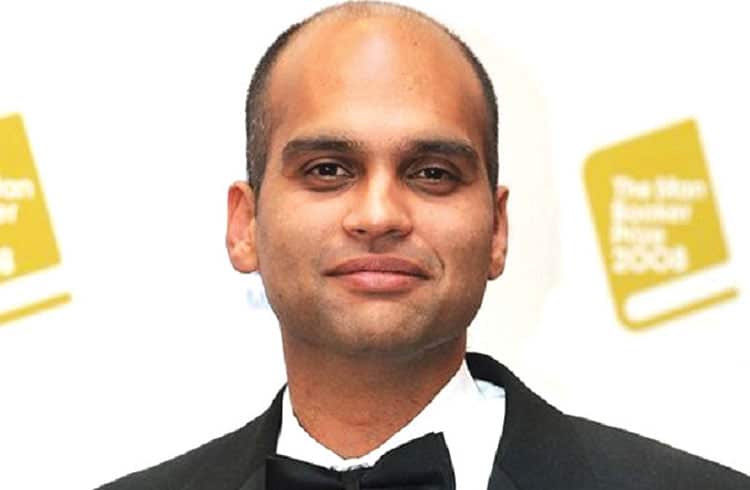
Booker Prize Winner Aravind Adiga on ‘Parva’ plot

Aravind Adiga, an Indo-Australian writer and journalist whose debut novel, ‘The White Tiger’, won the 2008 Man Booker Prize, describes ‘Parva’ in the following words:

ArvindKF12jul2020

“By the mid-1970s, the novelist’s genius for detail — the smell of sandalwood soap on a lover’s body, the toothache that distracts the hero, the tiger’s skin against which the scholar rests to study the Vedas — and his ability to create memorable voices, especially for his women, were strengthened by a new interest in formal experimentation. In 1979, after having won the Sahitya Akademi award for ‘Daatu’, his novel about caste, Bhyrappa published the work that defines him for many readers: Parva.”

“On the surface, it is an anthropological retelling of the Mahabharata, in which the Kurukshetra war is freed from mythology and magic and presented as an actual historical event, the novel is really a study of human character under extreme stress. Innovative in structure, ‘Parva’ is built around long interior monologues that are like arias; one by one, Bhyrappa enters into the minds of the major players, Pandava and Kaurava alike, to create complex, almost Cubist, character portraits,” Adiga says.

“First we see Karna being stupid and lustful, goading the Kauravas on to rape Draupadi; then, we see him about to bathe in the Ganga, thoughtful and insecure, having just discovered that he is the illegitimate son of Kunti; now we see him in battle, a cold-blooded killer; and finally, as a man torn between his loyalties, who lets himself be killed rather than betray either side. Melancholic in tone — the world of the Mahabharata is coming to an end in every page — ‘Parva’ reads like a Hindu Gotterdammerung. Though Bhyrappa’s characteristic failings are present here — repetitiousness and occasional verbosity — it is one of the most breathtaking of 20th-century Indian novels,” Adiga adds.

source: http://www.starofmysore.com / Star of Mysore / Home> News / July 10th, 2020