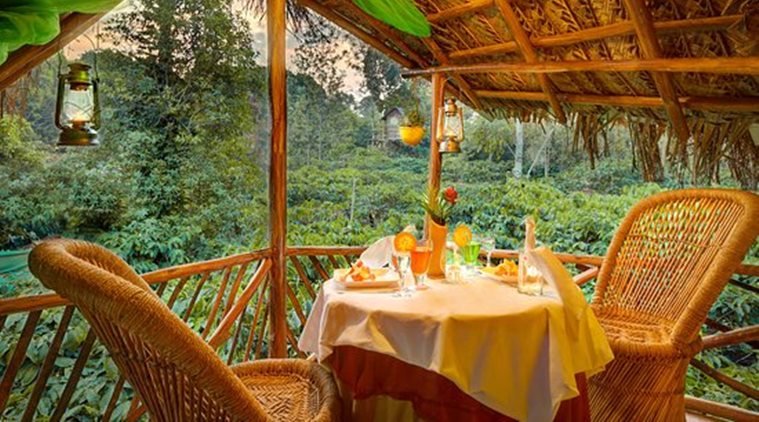
Homestays and resorts in Coorg have started a ‘Work-from-resort’ also called ‘workation’ initiative, where employees can stay at the homestays or resorts and work from there. The resorts have come up with attractive packages that offer rooms at affordable rates.
Few homestays in the hilly district have started to invest in internet connections since most of the places in Coorg have a poor data connection.
Facing a brunt due to Covid-19 lockdown, the tourism industry in Coorg (Kodagu) has come up with an innovative initiative to attract tourists.
Homestays and resorts in Coorg have started a ‘Work-from-resort’ also called ‘workation’ initiative, where employees can stay at the homestays or resorts and work from there. The resorts have come up with attractive packages that offer rooms at affordable rates.
The step has been taken to boost the income and tourism sector in the district, a few homestay owners in the district said, adding that the increase in Covid-19 cases in the area continues to be an obstruction in getting new bookings.
Speaking to indianexpress.com, Nikshan Nanaiah from Coorg Evergreen County resorts said, “The work from resort initiative gained good response especially from people in Bengaluru initially after the exit from the lockdown. We had received a good number of booking for the option for at least one week.”
According to Nanaiah, many resorts opted for this service and started to promote the ‘workation’ option. “Under the work from resort option, we are providing good internet connectivity, room, office furniture and food service. All of these are included in the affordable package ranging from two days to one-two weeks.”
The top resorts in Coorg have also started to offer the work from resort options. A manager of a branded resort in South Coorg told that they have started the bookings and many have already come to stay. “We have different packages to offer our customers and also affordable packages to our member customers. People from Bengaluru and Mysuru are coming to the resort to stay at least for one week and they are also working from here only,” he said.
Few homestays in the hilly district have started to invest in internet connections since most of the places in Coorg have a poor data connection.
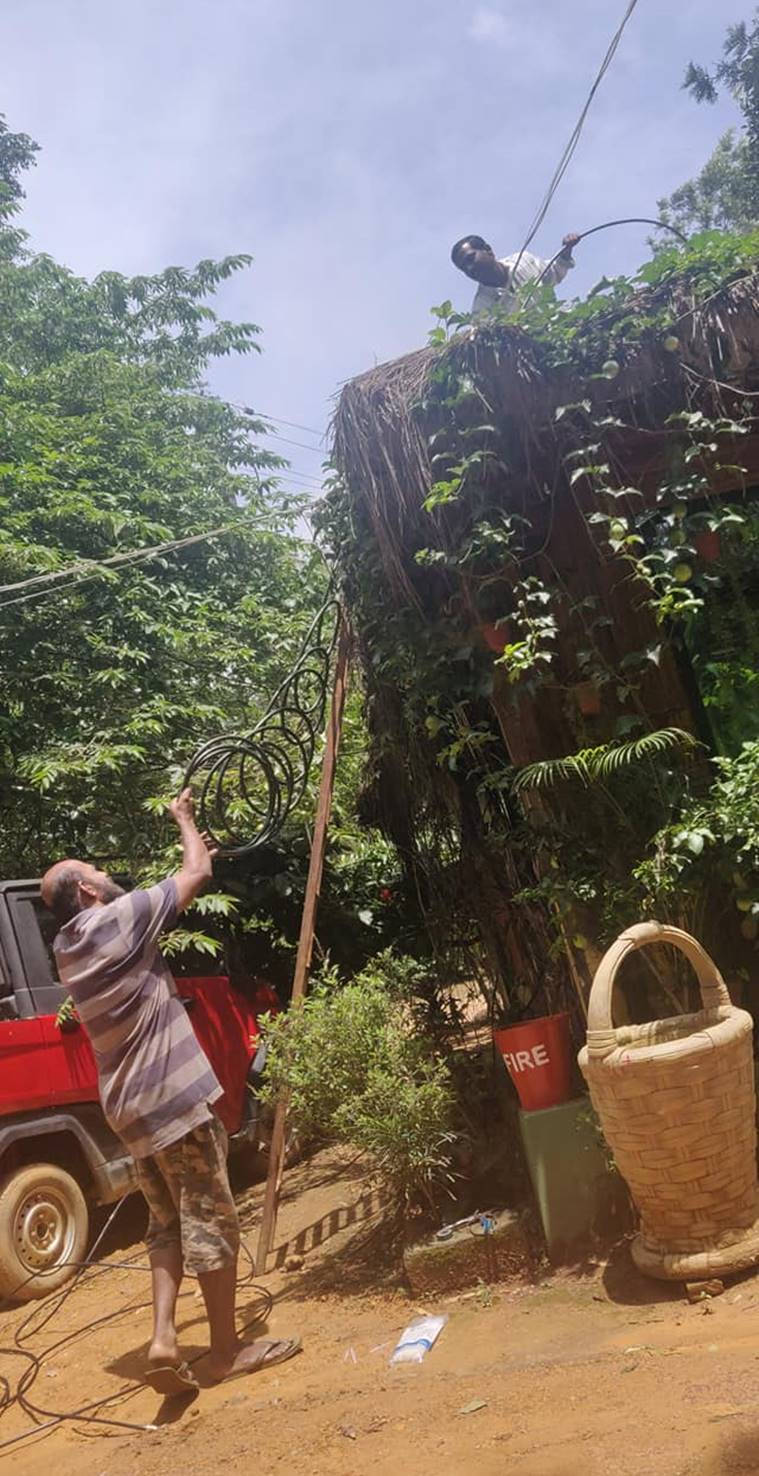
Internet cable is being set at Coorg Evergreen County resort in Coorg.
“Earlier tourists were not asking for internet connectivity since they come here to relax from their daily work life, but now after COVID-19 everything has changed, they come here to work. We have now taken good internet broadband connection to attract the tourists who want to work from here,” Kumaran, owner of Pavitra homestay in Coorg said.
Apart from the homestays and resorts offering work at their places, the major concern is about the safety of both tourists and the employees. Nanaiah says that they have made a list of precautionary measures to take. “We have thermal screening facilities, with daily temperature checks if they are symptomatic they will be sent back and we are also taking care of the employees and checking their temperature daily to ensure all are safe.”
According to the various resort owners, they are charging approximately Rs 2,000 to 6,000 per day for the workation option.
Coorg which is about 260 km from state capital Bengaluru is a hill station known for its waterfalls, national parks, wildlife, and temples. Earlier in 2018 and also in 2019 the district suffered from the back-to-back floods and landslides which had a major impact on tourist footfall.
Sagar Ganapathy, President, Association for Rural Tourism (ART) Coorg and also the owner of Jungle Mount Adventures said, “Tourism in the district has incurred a huge loss from past three years continuously due to the flood and landslides, now Covid-19 has also impacted the industry.”
“When we opened the homestays and resorts after lockdown the bookings we received were very less and we got bookings from the people who are our regular customers. Hence few resorts tried work from resort options which branded resorts are running this successfully with all the precautionary measures,” he said.
Coorg has nearly 800 registered homestays and more than 2,000 unregistered homestays which are run by families at their residence and 500 hotels and lodges. These homestays and hotels generate employment to around 50,000 people.
“Due to Covid-19 we now have no steady source of income. We opened up the business but after a week there were many cases in Coorg. So many resorts and homestays closed voluntarily. We have paid a 50 per cent salary till last month to the employees. But next month, we don’t know what to do.”
Meanwhile, the state government is planning and bring various initiatives to revive the tourism sector in the state. Speaking to indianexpress.com, Karnataka Tourism Minister C T Ravi said, “ Tourism contributes 14.8% to our gross state domestic product (GSDP), we are planning various ways to revive tourism in the state. New ideas like ‘workation’ are welcome, in the next cabinet meeting we will take up the issues faced by the homestays and resorts.”
source: http://www.indianexpress.com / The Indian Express / Home> Cities> Bangalore / by Darshan Devaiah BP / Madikeri / June 30th, 2020
Having overcome suicidal thoughts, Uthappa says it’s important to remove the stigma attached to mental illness and has been using his experiences to spread awareness over the last few years.
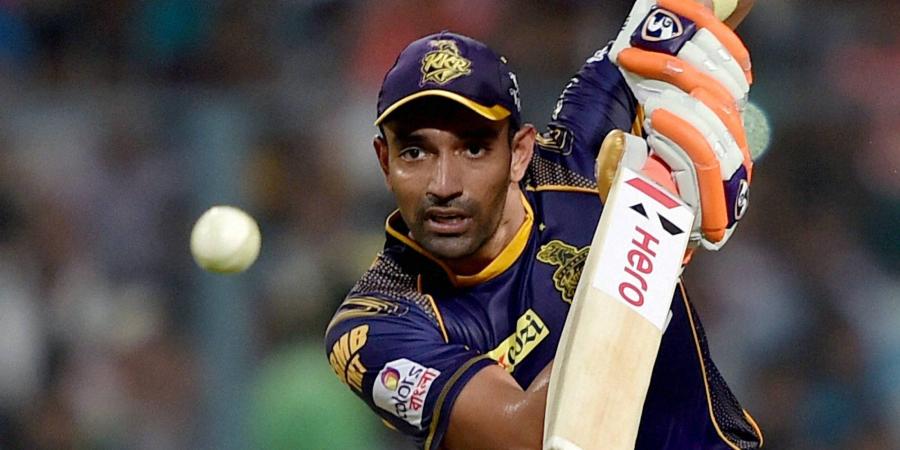
Robin Uthappa. (File photo | PTI)
Kochi :
“Before I realised what I was going through, things got really bad and I started considering suicide as an option. For a whole year, the idea of suicide was a very real option for me. I had thoughts of jumping out of the balcony.” Chilling words, of Robin Uthappa.
The 34-year-old batsman is talking about what he went through between 2009-2012 when he experienced severe mental struggle. His disclosure takes added significance in the light of Bollywood actor Sushant Singh Rajput’s alleged suicide which caused nationwide shock.
The T20 World Cup winner cites his own example to explain that mental illness does not distinguish between the rich and poor or other divisions.
“At the point when I was depressed, I was earning the most amount of money in my career. I was the captain of Karnataka’s Ranji Trophy team and playing for RCB. But you can’t notice when this thing secretly climbs up on you,” he adds.
Uthappa chose to confide in a close relative who helped him get the necessary assistance. He also admitted that cricket was a good distraction, but added that there was no support system within the sport when he was grappling these thoughts.
“There wasn’t necessarily a support system within the cricketing set-up. I never spoke about this with my teammates. The sport can make you feel mentally tired because you are travelling and living out of a suitcase for 250-300 days a year. That can get to you mentally, but the trigger could be anything. It is important to recognise it and seek help,” he says.
Pacer Mohammed Shami had also recently opened up on having suicidal thoughts, while Australian cricketer Glen Maxwell took a break from cricket to address mental health issues.
Uthappa believes teams having sports psychologists and mental conditioning coaches will go a long way in helping avoid such dangerous thoughts.
“Having a mental health expert on board will be great for sportspersons because they will know there is somebody to talk to. If they can smoothly integrate that into the team chemistry, it would be wonderful,” he adds.
Sushant’s death has sparked a dialogue on mental health and Uthappa hopes his experience makes people wait before taking their lives.
“I decided to reveal my struggles to raise awareness. When I was considering jumping off the balcony or ending my life, something within me kept telling me to wait. The voice didn’t tell me to stop. The voice just said ‘wait’ and I listened.
“I want people to know that you can actually come back from such a state and live a happy life. That’s why I talk about it because everybody deserves a good and happy life. It is important to break the stigma attached to mental health and depression or going to a psychiatrist. There is no shame in seeking help,” says Uthappa.
source: http://www.newindianexpress.com / The New Indian Express / Home> Sport> Cricket / by Martin Joseph / Express News Service / June 21st, 2020
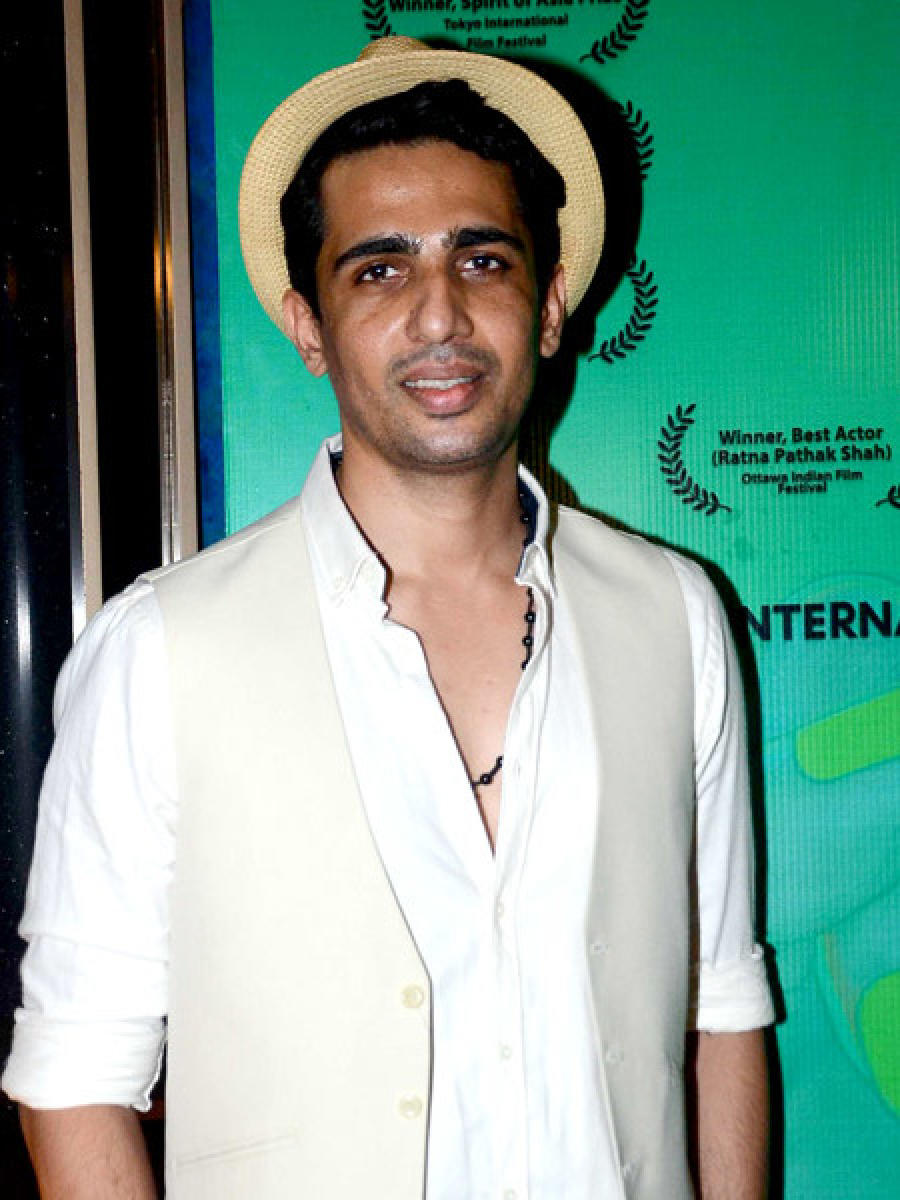
Actor Gulshan Devaiah says the untimely demise of Sushant Singh Rajput has served as a wake-up call for the Hindi film industry, which otherwise functions on the basis of popular opinion.
The 42-year-old actor, who moved to Mumbai from Bengaluru almost a decade ago to pursue a career in cinema, believes Rajput’s death has pushed many people in the showbiz to assess their ambition and reason for joining the profession.
“There are certain approaches that I need to reassess after this terrible tragedy. I am in the process of figuring it out, I am introspecting, self-reflecting, understanding the work we do, why we do and whether it is okay to fail,” Devaiah told PTI in an interview.
Best known for his performance in films “Shaitan”, “Goliyon Ki Raasleela Ram-Leela”, “A Death in the Gunj” and “Mard Ko Dard Nahin Hota”, the actor said now when he looks back at his journey in movies, there is both a “sense of pride and disappointment”.
Devaiah said in this business-driven industry, merit doesn’t count and success is measured on the basis of box office or popularity.
“It is a tough business and everyone comes here with a lot of ambition and aspirations. Some people achieve it, some don’t… All we want is more and more people to like us and want to work with us.
“But the way success is perceived popularly is by films making money (at box office) and having ‘x’ number of followers or likes on social media. It is not based on merit. The entire entertainment business is a game of perception.”
Rajput, 34, was found dead at his Mumbai residence on June 14. His death has reignited discussions around the struggle of survival for outsiders.
Devaiah said while there is a lot of “toxicity” in the showbiz because of the power structure, actors need to safeguard themselves from getting into a position where they can “lose control”.
“People try to wield a certain power from casting companies to producers. There is abuse of power. If we can rein it a little bit and be less judgmental and be more responsible, we all can be nice.
“For actors like me, who have ambition and expectations, it is ok to have it but you have to prepare yourself to fail. If it doesn’t matter to you then no matter what people say and look and snigger at, it won’t affect you.”
He believes Rajput was in a pretty sound position professionally, and rather than putting out theories on the reasons for his decision, the need of the hour is to do some self-analysis.
“Sushant was doing incredibly well for himself, his death is unfathomable. He worked in TV for 10 years, he came into films that made money. In reality, only he knows why he did it or maybe he didn’t…
“I don’t have a popular opinion. I take this tragedy to self-reflect and assess and understand the world we live in,” he said.
Devaiah said going forward he plans to be more accepting of the nature of the film business and manage his expectations.
“A lot of people come here with dreams and aspirations and dreams are shattered everyday one can see that. A lot of this pain can be avoided if we look inwards and set our perceptions.”
source: http://www.deccanherald.com / Deccan Herald / Home> Entertainment / by PTI, Mumbai / June 21st, 2020
Delegation meets Justice H.N. Nagamohan Das One-man Commission
Madikeri:
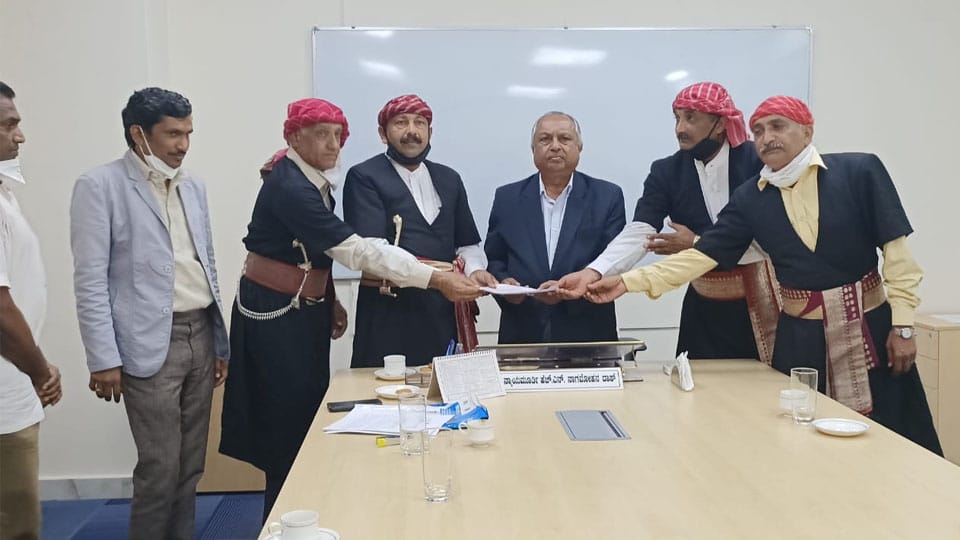
Members of Codava National Council (CNC) led by its President Nandineravanda U. Nachappa recently met Scheduled Caste Welfare Department and Justice H.N. Nagamohan Das Commission in Bengaluru urging him to include Kodava tribe in the ST list of the Constitution.
The meeting took place at Yavanika, the One-man Commission’s office on Nrupathunga Road in Bengaluru. Nachappa presented a memorandum explaining the need for the inclusion of Kodavas in the ST list of the Constitution and apprised him about the tribal ancestry and indigenous tribal traits.
Justice Nagamohan Das was told about the need and necessity of statutory protection to preserve the Kodava culture, language, folkloric identity, their age-old hereditary piece of untitled lands, besides their historical continuity.
Also the Commission’s attention was drawn regarding ‘sabotaging’ the genealogical studies being carried out to include Kodavas in the list of ST communities. The studies are being carried out by KSTRI (Karnataka State Tribal Research Institute), Mysuru.
“The ongoing ethnography study of Kodava tribalism is in a diabolic ‘Etic’ approach. We have requested the Commission to direct the KSTRI Mysuru to apply ‘Emic’ approach. We further urged that on the basis of the parameters laid down by Justice Lokur Committee Report, the ethnographic study should be carried out. In this regard the title of the schedule should be “Kulashashtra Adhyayana” or “Ethnographic” study but KSTRI has titled it ‘Kodagu Jilleyallina Kodava Samudayada Arthika-Saamaajika Adhyayana’ (a socio-economic study of Kodavas),” Nachappa said.
There is a clear cut order issued by the Government to conduct an exclusive Ethnographic study. KSTRI has carried out a major portion of socio-economic study and created fake economic status. “The KSTRI neither collected authentic documents nor produced proper income and expenditure sources but collected only verbal statements, marginalising the real ethnographic issue,” Nachappa claimed.
“The KSTRI created a fake exaggerated version with prejudiced mindset which is not acceptable to us. We want the real ethnographic study to explore and establish true tribal ethnicity,” Nachappa told Justice Nagamohan Das.
Almanda Jai, Pattamada Kusha, Pattamada Ashok and others were present.
source: http://www.starofmysore.com / Star of Mysore / Home> News / June 26th, 2020
Rashmika Mandanna has surprised Mahesh Babu and family by sending them a special gift hamper. Rashmika has sent a basket full of delicious goodies including Avocados, Mango pickle and other organically grown foods. Along with the gift hamper, Rashmika has sent a hand-written note to the Superstar couple. This act of Rashmika is winning praise from Superstar’s fans.
None other than Mahesh Babu’s wife and former actress Namrata Shirodkar took to social media and revealed Rashmika’s gift hamper to Mahesh. Namrata has thanked Rashmika for sending such a beautiful gift all the way from Coorg where Rashmika is staying with her family. Namrata said this is the first gift hamper Mahesh Babu has received in Covid times. She also said she got such a lovely gift in this monsoon. Acknowledging the gift received, Namrata Shirodkar wrote, “Thankyou for all the delicious goodies rashmika !! all the way from Coorg #monsoonseason #mangopickle our first gift hamper in covid times happy monsoons !! #stayhomestaysafe”
It can be noted that Mahesh Babu is the first big star hero with whom Rashmika has acted. Rashmika got a big break after working with Mahesh Babu in Sarileru Neekevvaru. Rashmika is now paired up with Allu Arjun in Sukumar’s directorial Pushpa.Rashmika is pinning high hopes on Tollywood and is expecting to pair up with all the big stars in Telugu. Recently, she has turned down a movie alongside Nani as she didn’t want to play second fiddle to Sai Pallavi. Looks like Rashmika is making her moves well.
source: http://www.gulte.com / Gulte.com / Home> Movie News / by Gulte Desk / June 29th, 2020
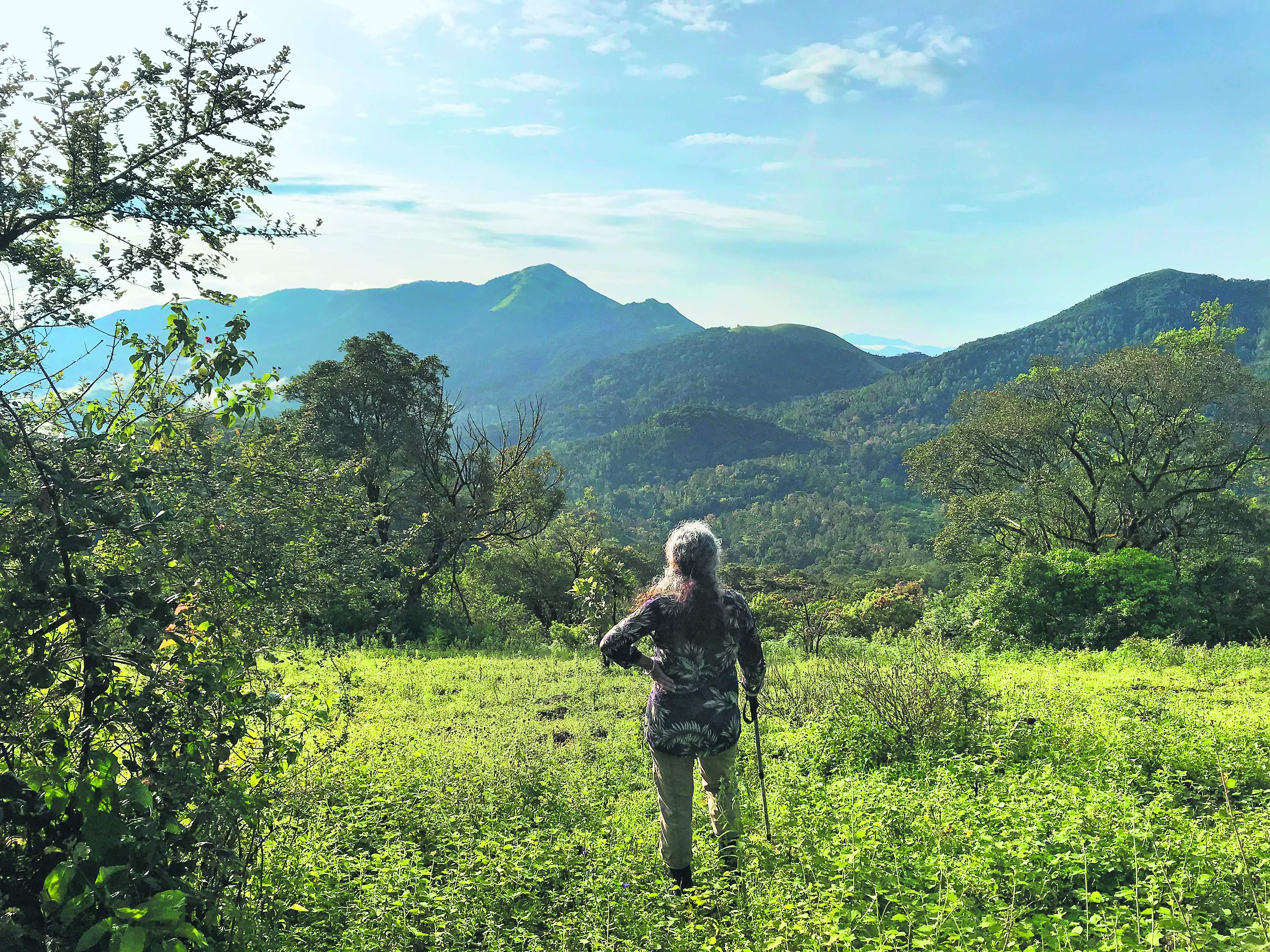
On a pre-scout exploring Coorg’s dramatic landscape
It all started with an email out of the blue. A world-class chef was shooting a food/adventure show in India in 2020 and was looking for ideas.
Only later, we learnt it was none other than ‘GR’ — the crew’s codename. ‘Gordon Ramsay’ was as unmentionable in public as the expletives he spews. The horror stories of chefs facing him in Hell’s Kitchen outdid the B-grade Bollywood horror flicks made by the Ramsay brothers back home whom we were more familiar with.
This was the second season of Gordon Ramsay: Uncharted. Ramsay gets out of the studio and into the wild outdoors to explore remote places and learn local food secrets with a dose of heart-pumping adventure. The emphasis lay in foraging and going back to the source. He would meet rising star chefs and embark on a culinary adventure that ended in a big cook-off. Locals would critique his take on the region’s cuisine, albeit with none of GR’s trademark vitriol with which he roasts amateur chefs on Twitter. He has likened someone’s poached egg in noodle soup to ‘toxic scum on a stagnant pool’, another’s Scottish breakfast as ‘heart attack on a plate’, a poor bloke’s rice as ‘older than me’, an attempt at empanadas as ‘camel hoofs’ and somebody’s overdone steak as ‘Gandy’s flip flops’.
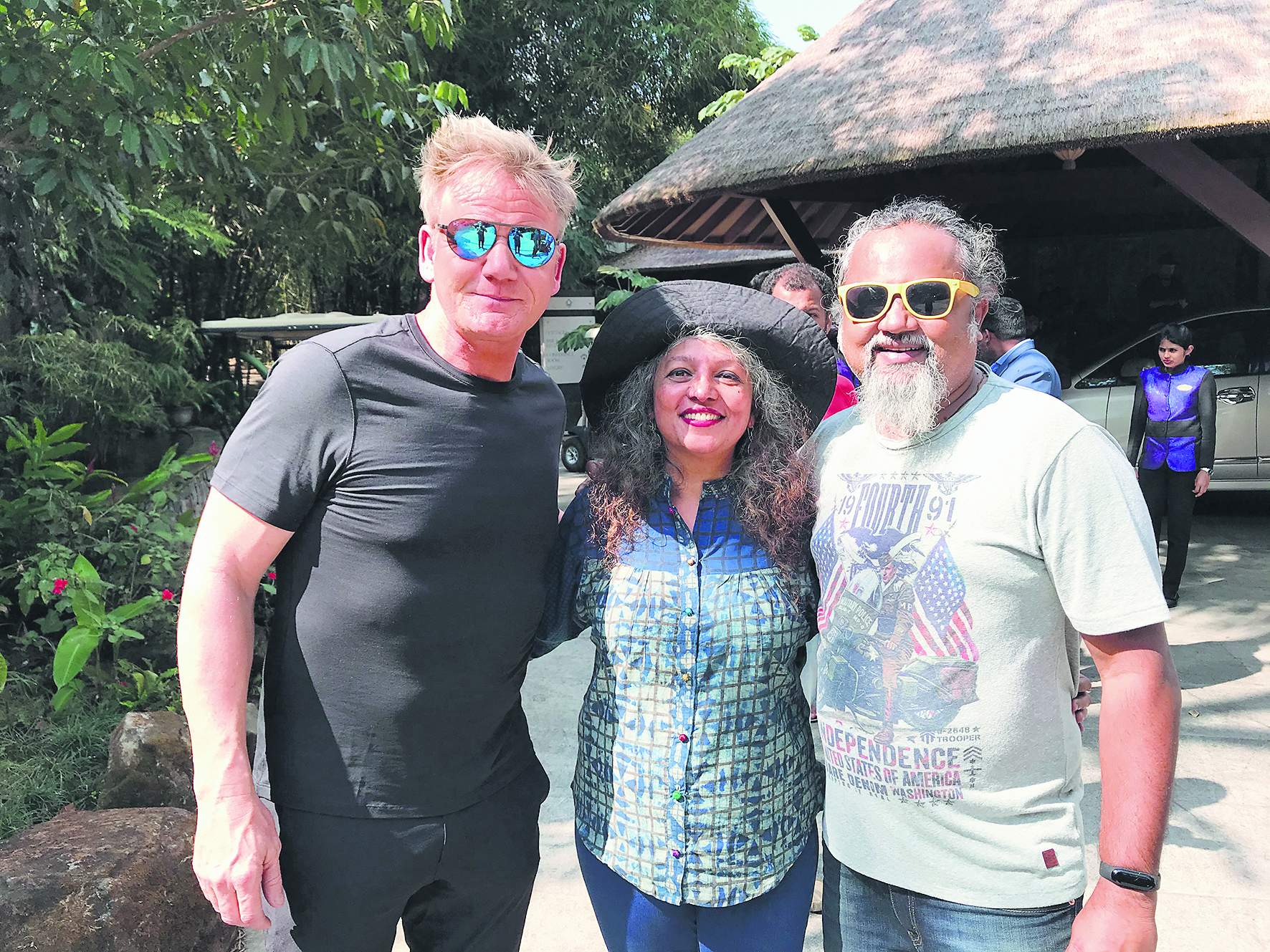
Gordon with Priya and Anurag
What could we suggest to an ill-tempered firebrand Michelin-starred chef who seemed to have done it all?
Season 1 saw Gordon rappel down a waterfall in Morocco to hunt for the perfect mushroom and go spearfishing in Hawaii. In New Zealand, he waded in a stream to catch an eel with his bare hands, tasted grubs from a rotten tree trunk, and dived for paua shells and sea urchins, braving strong currents and sharks. He jumped into the Mekong River in Laos to catch snails and learnt how to cook a giant water bug called ‘toe biter’. In Peru, he dangled perilously from a cliff edge to harvest a plant for insect larvae while in Alaska, he scaled the 60-ft Chimney Rock to make tea from ‘old man’s beard’.
Season 2 upped the ante with bigger, bolder and better stuff, injected with a healthy dose of jeopardy to the food.
From snuba diving (a mix of snorkeling/scuba) in Tasmania for rock lobster, jumping off a helicopter into Durban’s shark-infested waters and using rhino poop to catch tilapia in South Africa, trying swamp rat and Cajun cuisine in Louisiana’s Bayou, hunting Arowana fish with bow and arrow and roasting the Goliath birdeater (one of the largest spiders in the world) in Guyana’s remote rainforests, fishing for freshwater prawns in a flood-prone cave in West Sumatra, to scuba diving for scallops in the frigid fjords of Norway and making reindeer blood pancakes. So what challenges could India offer?
Hunting crabs in Malabar
Gordon was no stranger to India. His 2010 series for Channel 4’s Gordon’s Great Escape, took a deep dive into our culinary traditions and his quest for curry. He rode in a dodgy pantry car of the rattling Mangla Express, slicing onions and cooking veg curry for 400 diners, before playing apprentice to biryani masterchef and ‘King Qorma’ Imtiaz Qureishi for a wedding feast in Lucknow. He described Qureishi as the “Dog’s bollocks in the region” (No 1). Gordon’s glossary is colourful — ‘Bloody Hell’ could mean ‘Absolutely Delicious’ and **** could be anything. He rode a Royal Enfield, jumped onto a running train, cooked khud gosht in a desert pit he dug, sampled mahua and chapda chutney in Bastar, hunted with the Konyak tribe in Nagaland, tasted blood sausages and the world’s hottest chili bhoot jolokia in the North East, and cooked with ‘Sambar’ Mani in Dharavi, while trying everything from bullock cart racing and climbing a coconut tree to vegetarianism at Sadhguru’s ashram, besides grabbing karimeen (pearl spot) out of Kumarakom’s backwaters.
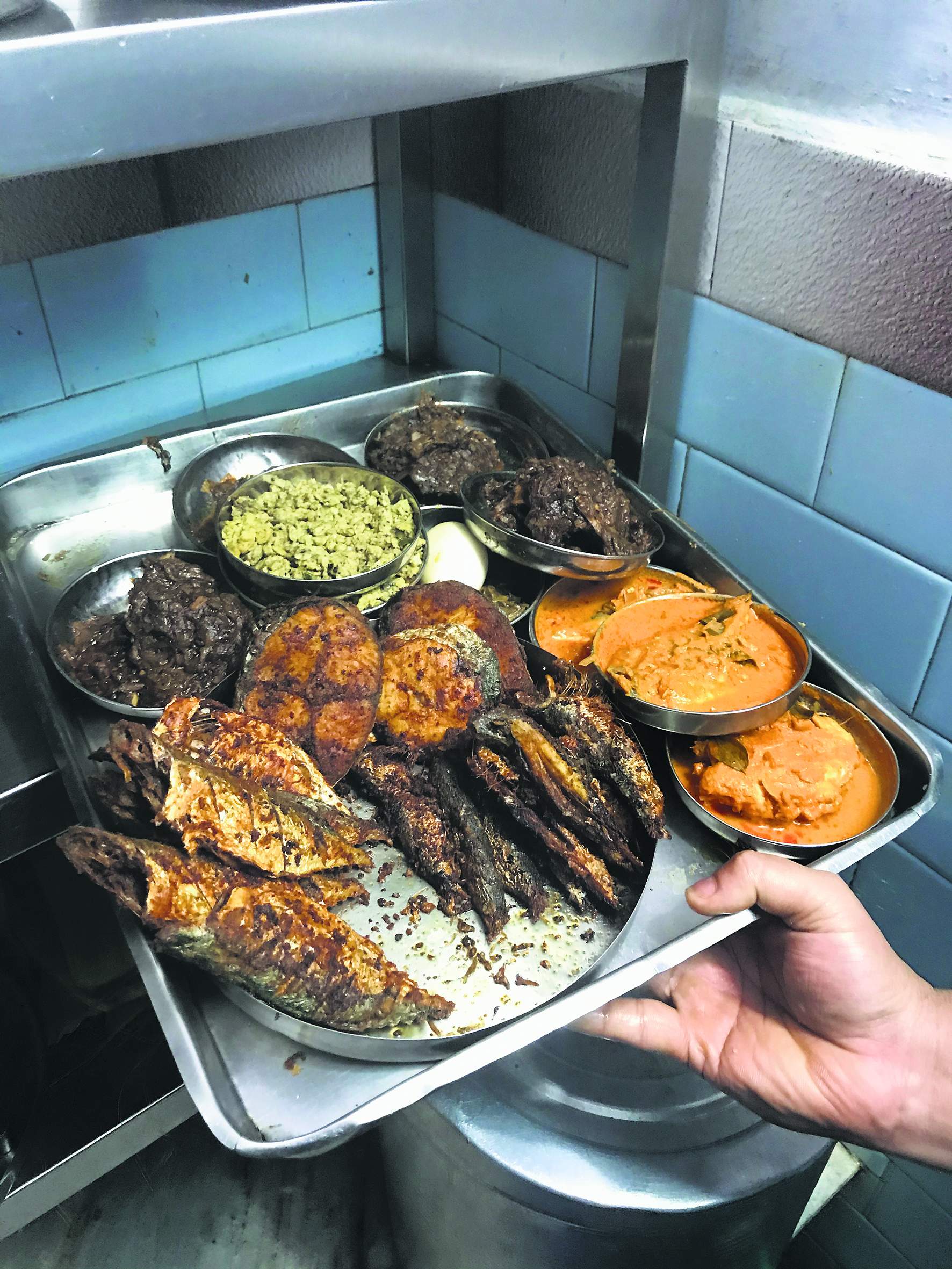
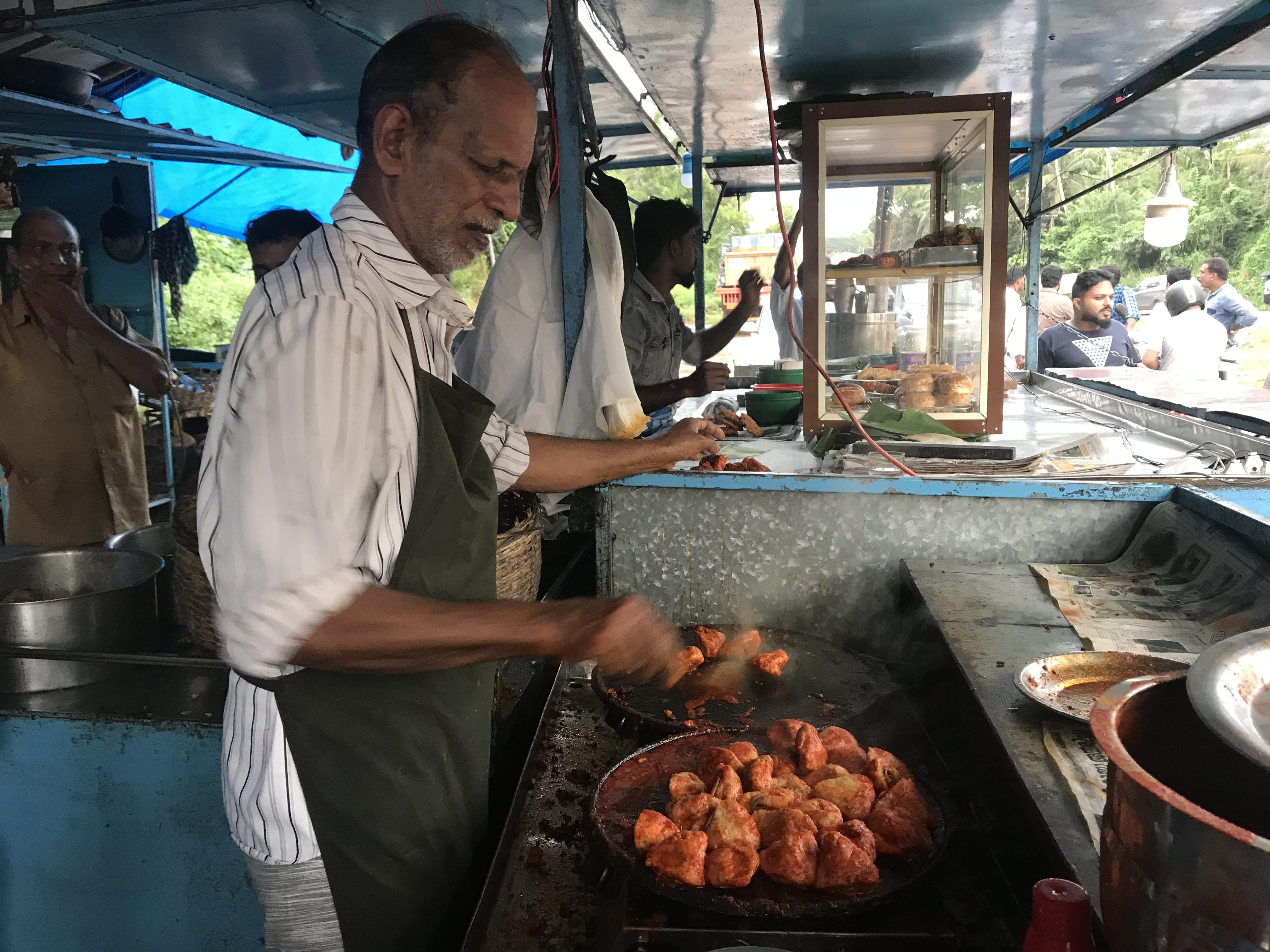
This was his second trip to Kerala and South India, but to a different part — the historic northern nook of Malabar. From Greek and Roman times to the European Age of Discovery, Kerala’s Spice Coast lured traders and travelers alike. For centuries, Arab seafarers controlled the lucrative global spice trade and often anchored in Kerala to tide the monsoon. Intermingling with the local populace resulted in a Malayalam-speaking community of Muslims called Mapila — derived from ‘Maha-pillai’, an honorific term for the new groom or son-in-law. As Kerala’s second-largest community, Mapilas are known for their distinct cuisine. In 1498, ambitious Portuguese explorers found a direct trade route to India to bypass Arab middlemen. Propelled by monsoon winds, they sailed across the Indian Ocean to reach Malabar, paving way for the Dutch, French and British. The English established a fort at Thalassery to protect their trade in ‘Tellicherry’ Pepper, prized as ‘Black Gold.’ It was befitting that a British chef was seeking culinary inspiration here. We were keen to get GR to try local fare like ari kaduka (rice stuffed fried mussels), kakka erachi (clam fry) and tackle audacious challenges.
Seafood in Kannur
Gordon is no pushover — a 6’2” tough-as-nails Scotsman, footballer, swimmer, karate black belt and Kona Ironman finisher. Yet, for all the potentially dangerous activities, we had to keep the host unharmed. We didn’t want to go down in history as the couple that got the world’s most renowned celebrity chef maimed! We vetoed the arduous boat ride on the high seas to dive for kallumakai (green mussels) around rocky islets due to the time crunch. On our recce in October, our old friends Nasir and Rosie of Kannur Beach House put us onto local fishermen. The late monsoon washed in surplus freshwater into the sea, thereby reducing its salinity, which resulted in lesser vitt (eggs) spawning on the rocks. So the spectacular beaches around Kannur had to suffice. The big question was where next?
The pristine backwater of Valiyaparamba for clam diving was too north. The Empress of Mapila cuisine Abida Rashid was far south in Kozhikode. An extension to Wayanad would make the show too Kerala-centric, a destination that features extensively in international shows.
So we suggested Kodagu (Coorg) — a region GR hadn’t visited before. After the unending stretches of human habitation in Kerala (India’s third most densely populated state), Coorg would be the perfect antidote. As Karnataka’s most forested district, its rolling hills and wild vistas were ideal for a show like Uncharted. It lay in the Western Ghats, one of the world’s eight hottest biodiversity hotspots, the fountainhead of South India’s most important river Cauvery, a record producer of honey, cardamom and coffee (80 per cent of India’s coffee comes from the area) with the highest concentration of sacred groves in the world.
Ari kaduka (green mussels)
Though Coorg and Wayanad are adjacent districts with similar topography — hills, coffee and spices common to both — the difference lay in the cultural/culinary uniqueness. Coorg is home to the Kodavas, a fascinating martial community who lived off the land while preserving their unique culture, cuisine and traditional attire. Unlike Wayanad, Coorg has a well-defined cuisine with charming homestays run by hospitable Kodavas. The new Kannur International Airport at Mattanur was strategically located at an hour’s drive from Kannur and two hours from Virajpet. It was no surprise that the production team was bowled over by Coorg’s beauty on the pre-shoot scout and unanimously chose it as the locale for the ‘Big Cook’. For us, the great clincher was getting a Scottish chef to a region dubbed ‘The Scotland of India’.
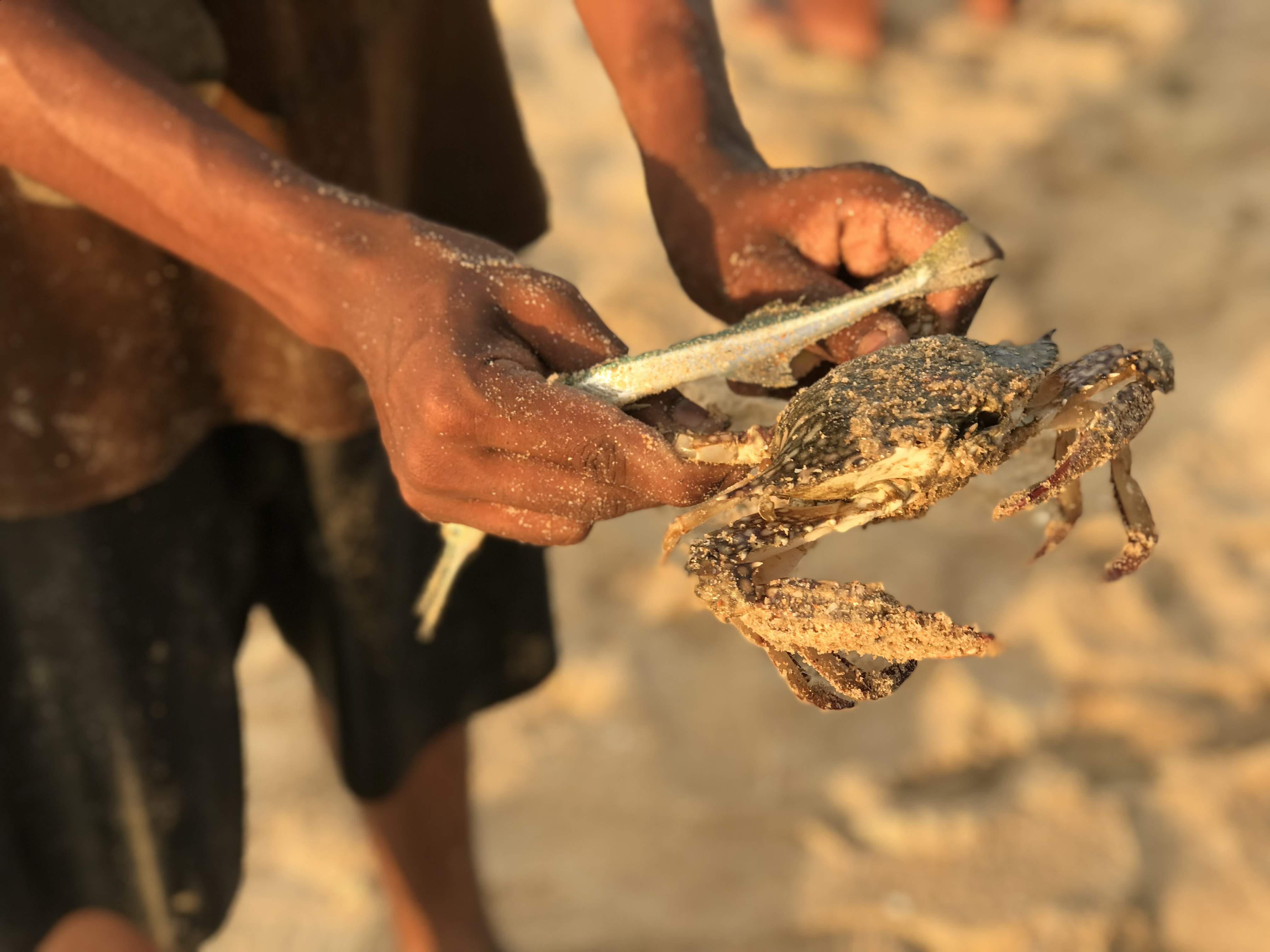
The shoot was scheduled for late January this year. So monsoon-centric activities like foraging for termay (fiddlehead fern), kemb (colocasia), bemble (bamboo shoot) and kumme (wild mushrooms) was out. Nor could one collect ripe garcinia fruits to make kachampuli, the dark vinegar that’s integral to Kodava cuisine. We were too early to harvest honey with the Jenu Kuruba tribe. Seasonality dictated our choices. Trekking to hills and waterfalls for vistas that were dramatic yet accessible, we scouted streams for crab hunting spots. Catching crabs traditionally involved baiting them with a gutted rotting toad wedged in split bamboo. The smell was enough to entice crabs from their rocky lairs, though we weren’t sure if a TV audience could stomach Kodagu’s wild old ways. We kayaked in hidden rivers for fishing options and hunted out two old wizened men of the Meda tribe, experts in mat and basket weaving to make fish baskets for us — a dying tradition. Signature dishes, rare treats, interesting locals and adrenalin-tinged tasks for GR — our job was to supply the ingredients — the world’s best chef and his team had to make a delectable episode out of it.
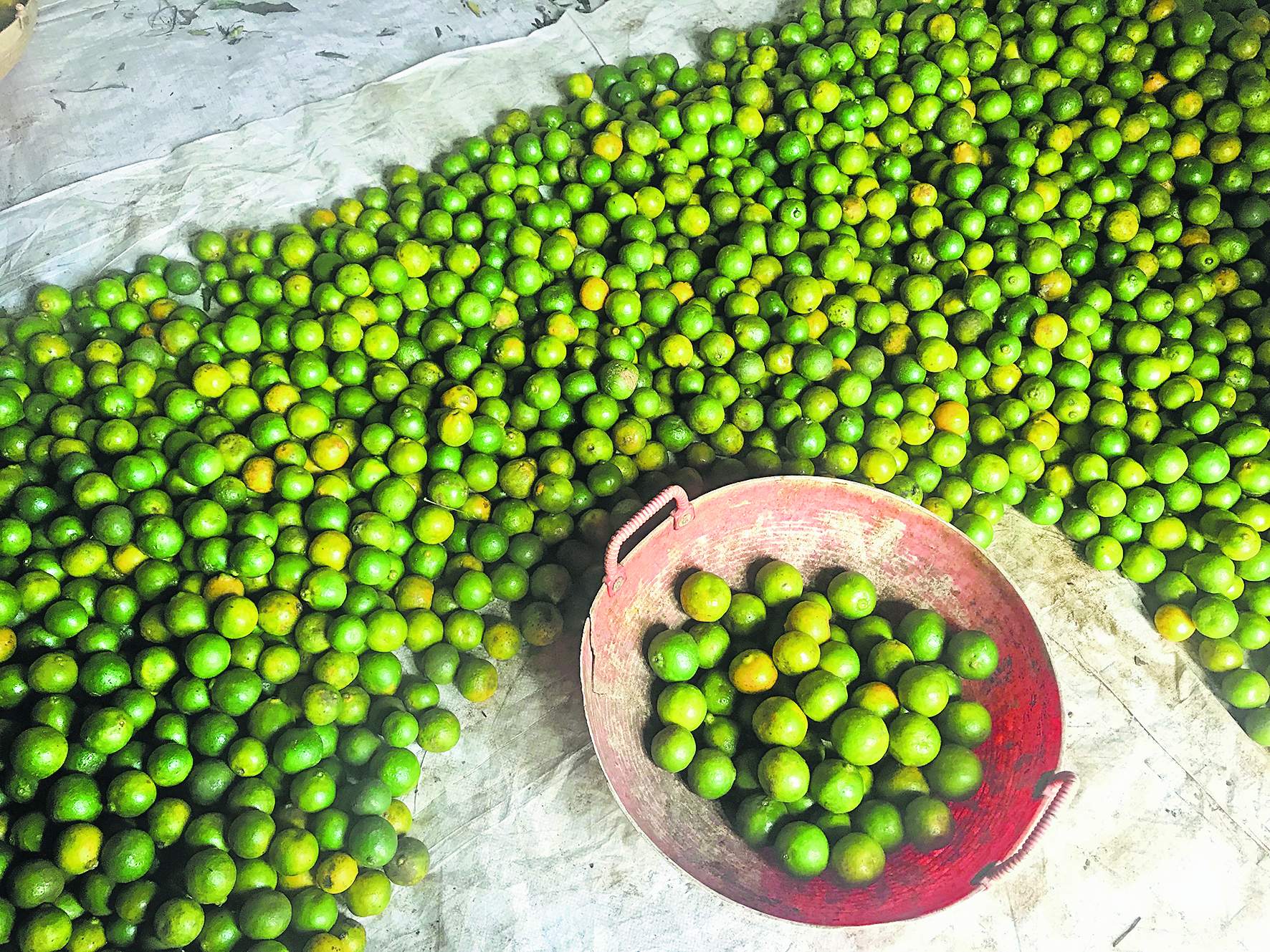
Coorg oranges
Production was shouldered by Adarsh NC of Felis Creations, with over a dozen blue-chip documentaries for Nat Geo, BBC and Animal Planet. Their recent three-part home-production Wild Cats of India was filmed by Sandesh Kadur and the third part India’s Wild Leopards is currently on Disney Hotstar. Adarsh says, “Primarily, we are into nature/wildlife and are happy filming tigers, leopards and counting scat on the field. We have covered the Western Ghats extensively and there was an adventure quotient to the program. But handling an international show with a star chef like Gordon was a dream come true. They were several challenges — two locations, multi-cam set up, high profile celeb, large crew, time crunch, permissions, travel, logistics… We were on the threshold of Corona with India’s first COVID cases reported in Kerala, so sending them back safely without harm or any adventure was nerve-wracking!” “It’s location, not a vacation”, was the oft-repeated mantra of Director Neil DeGroot. Executive Producer Jon Kroll admits, “The weakest episode this season is stronger than the strongest episode from last season!”
Gordon Ramsay: Uncharted Season 2 premiered on National Geographic in the USA at 10 pm on June 7, and Disney Hotstar, with the India episode slated for release in July.
source: http://www.indulgexpress.com / The New Indian Express – Indulge Express / Home / by Anurag Mallick an Priya Ganapathy /June 26th, 2020
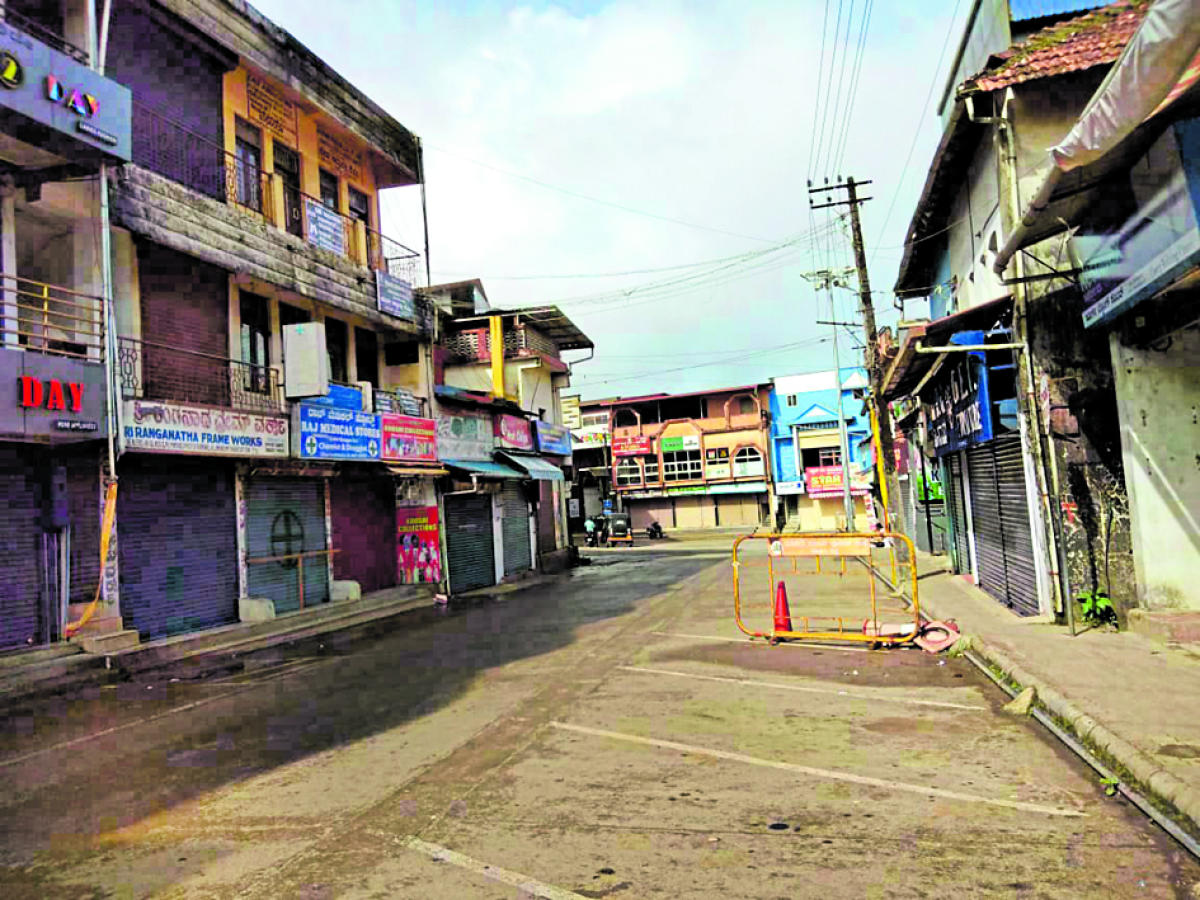
College Road in Madikeri wore a deserted look following the voluntary lockdown after 2 pm.
The call given by the Kodagu district Chamber of Commerce and Industry for a voluntary lockdown to check the spread of Covid-19 has evoked good response in the district.
A majority of the shops remained open on Saturday from 6 am to 2 pm.
People started arriving at the shops early in the morning in Madikeri to carry out the business.
About 50% of the shops had voluntarily closed after 2 pm. By 3 pm, 90% of the shops downed their shutters. Even the movement of people in Madikeri town to reduced after 2 pm. Bus stands, Indira Gandhi Circle, Thimmayya Circle, and Mahadevapete road wore a deserted look.
A trader said, “We have already incurred loss following the lockdown for the last three months. However, Covid-19 could not be controlled. There has been a surge in Covid cases in the district. In the interest of the safety of the public, the shops have been closed”.
Kodagu JD(S) unit president K M Ganesh has urged the authorities to supply necessary ration items to the areas that have been sealed down. People in the sealed down areas are facing hardships, he added.
He said the rise in Covid cases in the district had led to panic among people. With the closure of shops in sealed down areas, people are struggling to procure essential commodities. Officials should visit the restricted areas and look into the needs of the people.
4 new cases in Kodagu
Four new Covid-19 cases were reported in the district on Saturday. With this, the active cases have risen to 37 in Kodagu.
According to Deputy Commissioner Annies Kanmani Joy, of the four, one has inter-district travel history to Bengaluru while two others are primary contacts of the infected persons. One of the infected is a health worker.
A 33-year-old woman, who has travel history to Bengaluru, has been tested positive. A health worker from Subhash Nagara in Murnadu, a 14-year-old girl, who was the primary contact of an infected man from Shirangala and an eight-year-old boy, who was who was also a primary contact of an infected man from Huluse have been tested positive for Covid-19, Annies added.
The total recorded Covid cases in the district is 40. The containment zones in the district have increased to 19.
source: http://www.deccanherald.com / Deccan Herald / Home> State> Mangaluru / by DHNS, Madikeri / June 27th, 2020
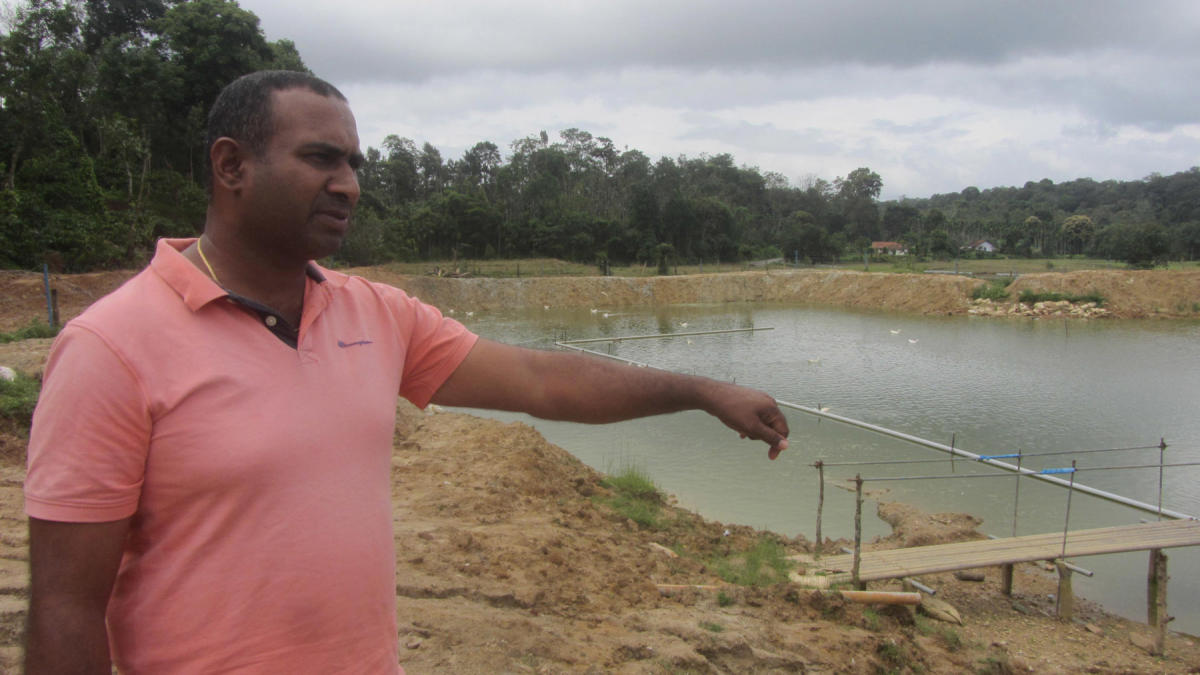
The lake where Tejas Nanaiah has taken up pisciculture at Kaggodlu in Madikeri.
At a time when farmers faced a crisis during the lockdown, here is a farmer who scripted success in pisciculture at Kaggodlu in Madikeri taluk.
He had taken up fish rearing in a vast lake spread in front of his house and sold the fish to earn additional income. Mandrira Tejas Nanaiah had sold 6,725 kg fish this season and fetched a good income.
He had spent nearly Rs 7 lakh for rearing fish in the last two years. He sold the fish in front of his house. Within a few hours of catching them, the fish sold like a hotcake. Along with pisciculture, he has taken up coffee, cardamon, arecanut cultivation as well.
A law graduate, Mandrira Tejas showed a keen interest in farming since the beginning and had taken up fish cultivation for the last few years. In addition to the lake, there are six farm ponds in his farmland, which have also been used for fish rearing.
He cultivates Rohu, Katla and common carp fish varieties. Initially, he had purchased fish seeds from the fisheries department in Madikeri. Now, he procures it from Bengaluru.
A fish normally weighs one and a half kg within a year. After two years, it weighs three kg. If the fish is caught in the second year, then a farmer will fetch more income, said Tejas.
All the weeds and unwanted organisms are cleared from the lake before initiating fish cultivation. Lime and cowdung slurry are also used in the lake, he said.
“I learnt the art of fish rearing through my experience,” he added.
For achieving success in integrated farming, Tejas had even won the taluk-level Yuva Krishika Award.
source: http://www.deccanherald.com / Deccan Herald / Home> State> Mangaluru / by DHNS, Napoklu / June 28th, 2020
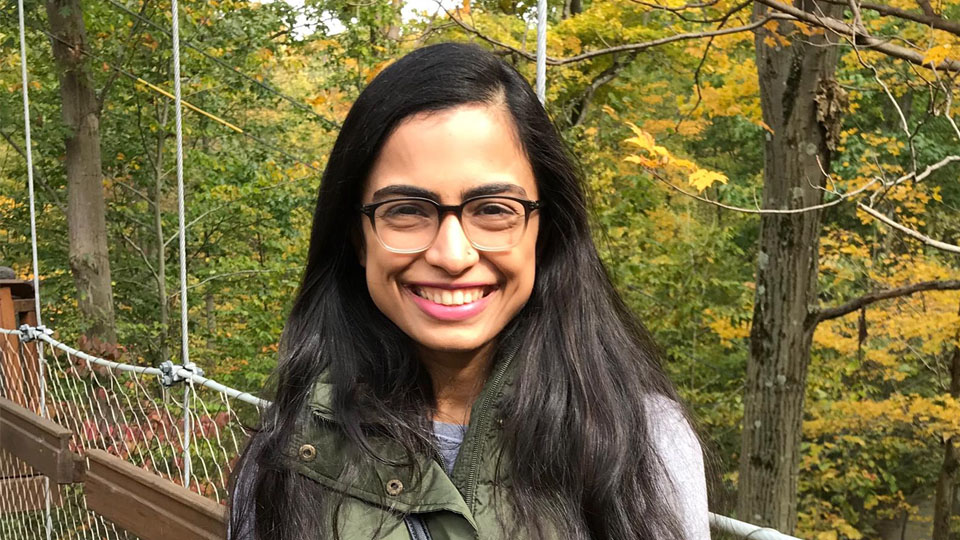
Kodagu-born Mathanda Reema Ramesh has completed her Fellowship in Paediatric Haematology and Oncology from Cleveland Clinic, USA.
The Fellowship programme provides an outstanding opportunity for the future Paediatric Haematologist-Oncologists to learn to diagnose and treat a broad range of common and rare blood disorders and cancer.
Located at Cleveland Clinic main campus, the Paediatric Haematology-Oncology & BMT Department plays a significant role in promoting the outstanding recognition of this world-renowned tertiary referral centre.
Reema Ramesh is the daughter of Mathanda A. Ramesh and Beena, residents of Virajpet, Kodagu. She is the sister of Dr. M.R. Aiyappa who works as a General Physician and Diabetologist at Brindavan Hospital, Mysuru. Mathanda Ramesh has been the President of Kodagu District Central Cooperative Bank.
Reema studied in Vijaya School, Kadanga, Cauvery School, Virajpet and Coorg Public School, Gonikoppal. She completed her MBBS at Kasturba Medical College, Manipal and MD in Paediatrics from University of Southern Illinois, USA.
source: http://www.starofmysore.com / Star of Mysore / Home> News / June 26th, 2020
WELCOME. If you like what you see "SUBSCRIBE via EMAIL" to receive FREE regular UPDATES.
Read More »