Joburg Super Kings: SA20 is preparing to enhance its renowned broadcast for Season 4, introducing a prestigious commentary team with leading figures in international cricket. Robin Uthappa, a highly regarded voice in Indian T20 cricket, rejoins the panel, joined by global cricket legends Dale Steyn and Eoin Morgan.
As SA20 prepares for another exciting season, audiences can expect expert analysis, compelling storytelling, and detailed insights from a team of analysts with decades of international experience in the commentary booth.
Adding Steyn, regarded as the top fast bowler of his era, and Morgan, the visionary leader behind England’s transformation in white-ball cricket, greatly enhances the analysis of all 34 matches. Their inclusion offers fans an unmatched perspective on fast-bowling techniques, leadership choices, team strategies, and crucial match moments.
Uthappa, who previously served on the broadcast panel, remains involved with SA20. His insights, developed through extensive experience in the IPL, international cricket, and various global T20 leagues, provide a valuable perspective during critical batting moments, pressure scenarios, and momentum swings.
Leading the global effort are prominent figures such as former England captain Kevin Pietersen, the skilful Indian batsman Robin Uthappa, and cricket voice Mark Nicholas. They are complemented by a legendary panel of Proteas icons who are deeply familiar with local conditions. At the forefront is AB de Villiers, widely recognised as one of the most potent and destructive T20 hitters ever. He is supported by JP Duminy’s strategic insight, Ashwell Prince’s batting skill, Chris Morris’s all-round ability, and Vernon Philander’s precise bowling.
Season 4 will once again showcase a mix of world cricket legends, popular South African stars, and experienced broadcasters, ensuring that every aspect of the game, from strategic insights to boundary-side energy, is presented with depth and style.
Keeping the action lively and full of energy are the likes of Natalie Germanos, Mpumelelo Mbangwa, Kass Naidoo, Mark Butcher, Nikhil Uttamchandani, Lesego Pooe, Motshidisi Mohono, and Kriya Gangiah.
Together, this vibrant and diverse line-up guarantees fans worldwide receive top-notch analysis, engaging stories, and unrivalled entertainment throughout the competition.
The SA20 continues to grow as one of the most thrilling T20 leagues globally, delivering elite cricket to fans across six vibrant host cities: Durban, Johannesburg, Cape Town, Paarl, Centurion, and Gqeberha.
The six competing teams will showcase their sporting skill and entertainment in a spectacular battle.
• Durban’s Super Giants
• Joburg Super Kings
• MI Cape Town (Season 3 – 2025 Champions)
• Paarl Royals
• Pretoria Capitals
• Paarl Royals
Fans in India can watch every moment of SA20 Season 4 live on JioHotstar and Star Sports Network, starting from December 26.
source: http://www.cricketnmore.com / CricketnMore / Home> Latest News / by IANS News / December 09th, 2025
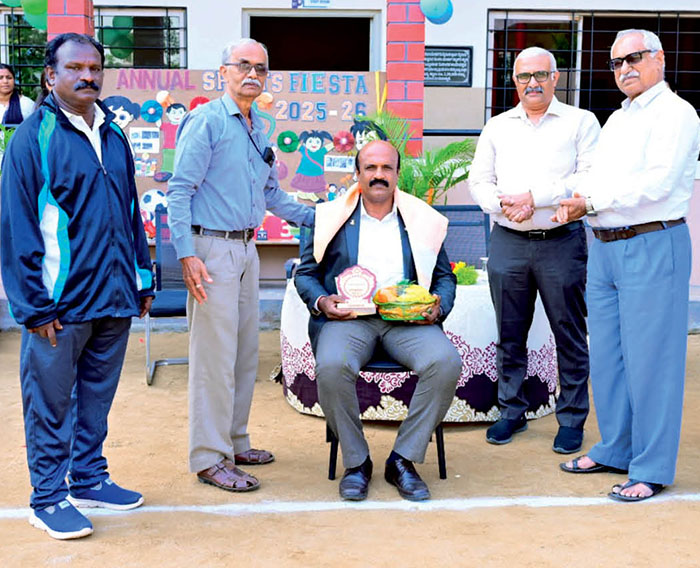
The Annual Sports Fiesta was held at Kodagu Model School on Kaveri Road in Vidyashankara Layout, Mysuru, recently.
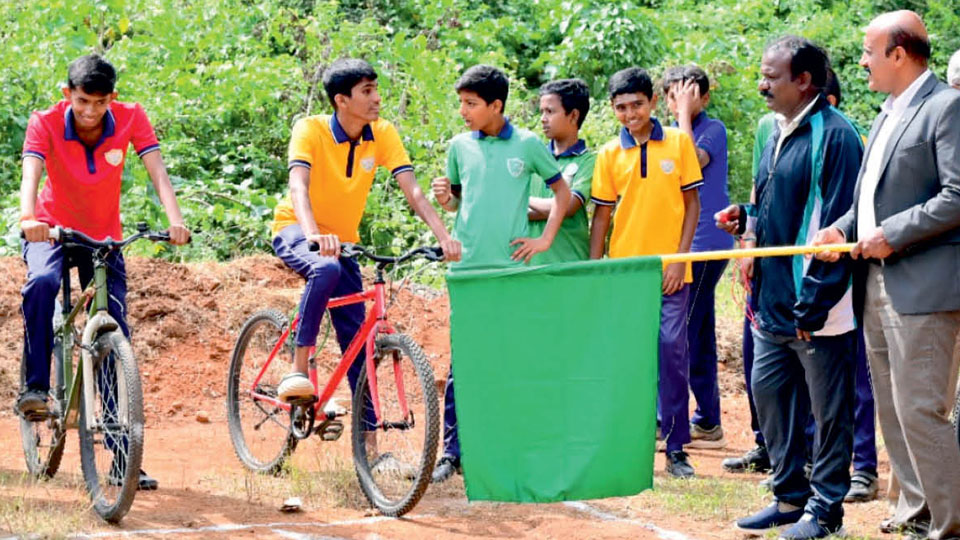
Dr. C. Venkatesh, Chairman and Director, Department of Studies in Physical Education & Sports Sciences, Sports Pavilion, University of Mysore, inaugurated the meet by lighting the sports torch, followed by a symbolic cycle ride to officially open the sports events.
In his inaugural address, Dr. Venkatesh emphasised that sports not only promote physical fitness but also strengthen mental well-being.
He inspired the students by sharing the life journeys of sports icons such as Dhanraj Pillay, Arunima Sinha and many others. He motivated the young athletes with powerful messages such as “Don’t fail without trying,” “No gain without pain,” and “Strength is life; weakness is failure.”
He highlighted that both education and sports are essential for their overall growth and success.
Sri Kaveri Kodava Association, Mysuru East and School President K.M. Belliappa spoke about the importance of celebrating Sports Day to foster sportsmanship, teamwork and holistic development among students.
The two-day celebration concluded with a valedictory and prize distribution. Ajjikuttira C. Subbaiah, Management Member of Sri Kavery Kodava Association, Mysuru East, an Army veteran, a National-level sportsperson and a recipient of several medals in veteran category, was the chief guest. Secretary P. A. Devaiah presided.
source: http://www.starofmysore.com / Star of Mysore / Home> Sports / December 09th, 2025
Experience the Geminids Meteor Shower this December with Starscapes! Join exclusive camps in Kausani, Mukteshwar, and Coorg for expert-led stargazing, cozy winter comforts, and breathtaking meteor views. Perfect for astronomy lovers, families, and photographers.
Witness the dazzling Geminids Meteor Shower at Starscapes camps in Kausani, Mukteshwar & Coorg this December—an unforgettable night under the stars!
Astro-tourism is on the rise in India, with destinations across the country enhancing the stargazing experience. From the Himalayas to the Aravallis, privately owned observatories are encouraging travellers to stay in cosy hotels and homestays, making the magic of the night sky accessible to all.
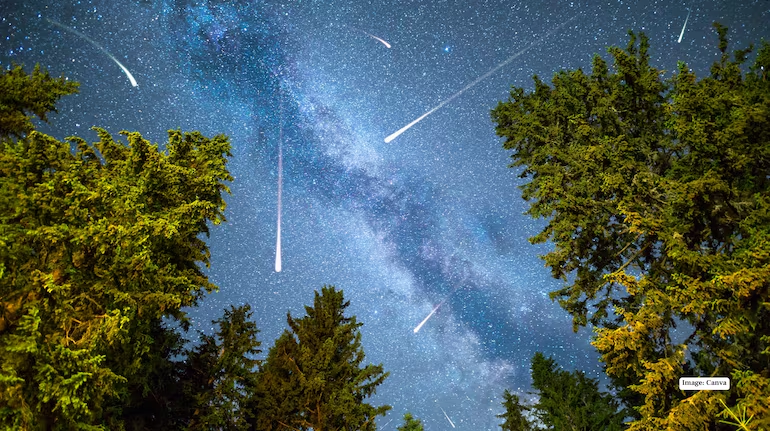
This December, India’s skies are set to dazzle like never before. The Geminids Meteor Shower, one of the brightest and most dependable celestial events of the year, will peak on December 13–14, 2025. Astronomy enthusiasts, adventure travellers, families, and photographers alike won’t want to miss this spectacular show.
To celebrate, Starscapes, India’s leading astro-tourism company, is hosting immersive two-night meteor-shower camps across Kausani, Mukteshwar (Uttarakhand), and Coorg (Karnataka).
If you’ve ever dreamed of lying beneath a sky filled with stars while multicoloured meteors streak overhead, these exclusive dark-sky camps promise an unforgettable winter escape—perfect for creating memories that last a lifetime.A Celestial Show Unlike Any Other
The Geminids are famous for producing up to 120 colourful meteors per hour under ideal dark skies. This year, the shower arrives on a moonless, crisp December night—perfect conditions for uninterrupted viewing.
Imagine watching meteors blaze across the heavens with the Himalayas as your silhouette in Kausani and Mukteshwar, or the lush Western Ghats as your backdrop in Coorg. Far from city lights and digital noise, these camps offer a rare chance to reconnect with nature and the cosmos.What Awaits You at the Starscapes Geminids Camps
Each camp blends scientific exploration, cosy winter comforts, and the thrill of celestial magic:
Expert-Led Meteor Watching: Knowledgeable StarGuides will walk you through the night sky using sky maps, constellation pointers, and fascinating stories about the Geminids and their origins.
Telescopic Stargazing: Before the meteor shower peaks, powerful telescopes will unveil spectacular deep-sky objects—star clusters, nebulae, Jupiter, Saturn, and more.
Cosy Winter Vibes Under the Stars: Enjoy hot chocolate, warm snacks, and peaceful silence, wrapped in blankets and crisp mountain or hill air.
Handpicked Dark-Sky Viewing Zones: Each group will be driven to a carefully selected, zero light-pollution spot—ensuring a front-row seat to the night sky’s most spectacular performance.Why These Locations Are Perfect for Meteor-Watching
When it comes to catching the Geminids at their brightest, location matters—and these three destinations offer some of the clearest, darkest skies in India. From Himalayan heights to the lush Western Ghats, each spot creates the perfect natural stage for a spectacular meteor show.
Kausani & Mukteshwar (Uttarakhand): High altitudes, dry winter air, and minimal light pollution make these Himalayan destinations ideal for observing faint meteors and star fields.
Coorg (Karnataka): Known for its misty hills and sprawling forests, Coorg offers wide, open horizons and stable winter weather—excellent for southern-sky viewing.When to Watch the Geminids
The meteor shower peaks on the night of December 13–14, 2025.
Best viewing time: 12:00 AM to 4:00 AM, when the radiant is highest in the sky.
During this window, the sky comes alive with a steady burst of glowing meteors—some slow, some bright, and many leaving long, colourful trails.The Experience: A Night You’ll Remember Long After It Ends
Step away from screens. Breathe in the cold winter air. Listen to the quiet. Under a sky filled with stars, you’ll:
Sip steaming hot chocolate.
Share stories with fellow sky-watchers.
Capture long-exposure shots of meteors.
Watch the sky transform into a celestial fireworks display.
Whether you’re travelling solo, with friends, or with family, it’s a wholesome, grounding experience—one that takes you back to the simple joy of looking up.Temperature Guide for December 2025: What to Expect at Each Location
A night under a meteor-lit sky sounds magical—just remember, the winter air will be part of the experience too. If you’re travelling to Kausani, Mukteshwar, or Coorg for the Geminids, expect the kind of crisp, soul-stirring cold that makes hot chocolate taste even better.
Advertisement
In Mukteshwar, the sun offers a gentle warmth with daytime temperatures hovering between 14–17°C, but once night falls, the mercury dips to a chilly 3–7°C—perfect for a snuggly jacket and a warm fire.
Kausani is just as wintry, with 15–17°C during the day and a sharper 3–5°C after dark—ideal for stargazing but definitely jacket weather.
Further south, Coorg trades Himalayan chill for a softer southern breeze. Days stay comfortably warm at 22–27°C, but nights cool down to 10–16°C, giving you the perfect balance between cosy and crisp.What to Pack
A magical night under the stars feels even better when you’re prepared. Here’s everything you’ll want to carry for a comfortable and unforgettable Geminids experience:
Warm clothing: Thermals, a fleece jacket, gloves, and a scarf to stay cosy during late-night and pre-dawn meteor watching.
Comfortable footwear: Trekking or closed shoes for walking across uneven or dimly lit terrain.
Photography gear: A DSLR or phone camera along with a tripod to capture long-exposure shots of meteors and star trails.
Light source: A torch or headlamp—preferably with a red filter—to preserve night vision during stargazing sessions.
Essentials: Water bottle, lip balm, and moisturiser to stay hydrated and comfortable in the crisp winter air.
How to Register
Eager to experience the Geminids Meteor Shower firsthand? Find all camp details, registration information, and the full itinerary here.
source: http://www.moneycontrol.com / MoneyControl / Home> Travel / by Priyanka Roshan / December 08th, 2025
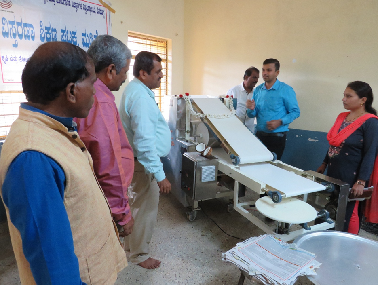
The AICRP on Sorghum and Millets & ICAR–Indian Institute of Millets Research, Hyderabad, in collaboration with the College of Forestry, Ponnampet, UAS, Mandya, established a Millet Bakery and Millet Roti Units at the Kodagu Agribusiness Incubation Centre of the campus. An awareness cum Millets training program organized to women members to enhance the millets utilisation. This initiative under TSP component of AICRP- Sorghum & Millets, is an innovative step toward promoting the consumption of nutritious millet-based foods among forestry college students, farmers while demonstrating practical millet value-addition technologies through an incubation-driven entrepreneurial environment.
The unit was initiated to integrate millet-based diets into hostel kitchens and provide students with healthier and nutrient-rich alternatives as part of their daily meals. With the efforts of Dr. Laxmi Balaganoormath, Assistant Professor & Principal Investigator of the project began by supplying Jowar rotis to hostel students during lunch. Encouraged by the positive response and increasing popularity among students, the initiative rapidly expanded its product portfolio to include finger millet cakes, millet biscuits, millet chikkis, and a variety of millet-based baked snacks. These products are made using millets, ensuring high nutritional value, freshness, and support for regional agriculture.
Beyond the hostel community, the Millet Bakery and Roti Unit at the Kodagu Agribusiness Incubation Centre has added broader value to the campus ecosystem. It provides hands-on training opportunities and skill development in millet processing, baking, and entrepreneurship for students and aspiring agripreneurs. The initiative also ensures a steady demand for local millet growers, thereby strengthening the local value chain and supporting climate-resilient agriculture. Furthermore, this incubation-based model serves as a demonstration platform for schools, community organizations, FPOs, and enterprises interested in adopting millet-based food systems.
Through the strong partnership between AICRP on Sorghum & Millets, ICAR–IIMR, Hyderabad, and the College of Forestry, Ponnampet, this initiative has become a role model for nutrition-focused and sustainability-driven food interventions in educational institutions. The Millet Bakery and Roti Unit is not only nourishing young minds and bodies but also fostering a culture of innovation, self-reliance, and community well-being powered by the simple strength of millets.
(Source: ICAR–Indian Institute of Millets Research, Hyderabad)
‘Puthari Namme,’ the harvest festival of Kodagu that marks the season’s first paddy harvest, was celebrated with grandeur across Kodagu and Mysuru last night.
The celebrations began with a puja to Lord Igguthappa and Goddess Cauvery, followed by the symbolic harvesting of the new paddy crop (kadiru) and the customary firing of gun shots into the air to herald prosperity.
Major festivities began at Sri Omkareshwara Temple in Madikeri, the Kodava Samaja, Gowda Samaja and several other venues, where people offered prayers and performed time-honoured rituals.
Families chanted “Poli Poli Deva…” as they symbolically welcomed the Dhanya Lakshmi — goddess of grain — into their homes. Kodava men wore the distinctive ‘kupya-chele’, ‘peechekathi’ and ‘mande-tuni’, while women adorned traditional sarees and ‘vasthra.’
Members of the Kodava Samaja, accompanied by ‘taliyatakki bolcha’ and traditional ‘valaga’, marched in a grand procession to the temple. The freshly harvested paddy was then taken to the Samaja, worshipped and later distributed to devotees. Special ‘thambittu’ made from fried kusubalakki mixed with ripe banana was distributed to all.
A Samaja member symbolically harvesting the paddy crop at a small field in School premises.
At Gowda Samaja
The Kodagu Gowda Samaja celebrated ‘Puthari’ with equal fervour. A symbolic paddy field was created on the premises where the ritual harvest was performed, followed by the distribution of the festive delicacy.
Members of Kodagu Gowda Samaja celebrating harvest festival at its premises in Railway Layout, Vijayanagar Fourth Stage, last night.
At the historic Sri Mrutyunjaya Temple in Badagarakeri, villagers celebrated ‘Puthari’ on a grand scale collectively. Led by village elders and the temple management committee, the ritual cutting of paddy was followed by a vibrant procession. Villagers walked 2 kms to the traditional fields, burst crackers, danced to the valaga and returned to the temple with the harvested crop.
Festival in Mysuru
In Mysuru, ‘Puthari Namme’ was celebrated at Sree Cauvery School premises in Kuvempunagar, where hundreds of Kodava community members, led by Mysuru Kodava Samaja office-bearers, gathered in traditional attire.
The event featured a wide range of Kodava cultural performances. Devotees took home the new paddy sheaves, chanting “Poli Poli Deva,” as they prayed to Lord Igguthappa and Goddess Cauvery, welcoming Dhanya Lakshmi into their homes.
Kodagu Gowda Samaja also marked the festival at Railway Layout in Vijayanagar Fourth Stage, where they harvested paddy crop after performing the rituals.
The cultural highlight of the evening was the spirited performances by youngsters who had trained diligently in traditional dances and songs, earning applause from the community.
source: http://www.starofmysore.com / Star of Mysore / Home> News / December 05th, 2025
Young Jenu Kuruba (honey-gatherers), Paniya and Kurichiya artists use Arpo–Tata Trusts Fellowship to reinvent tribal music.
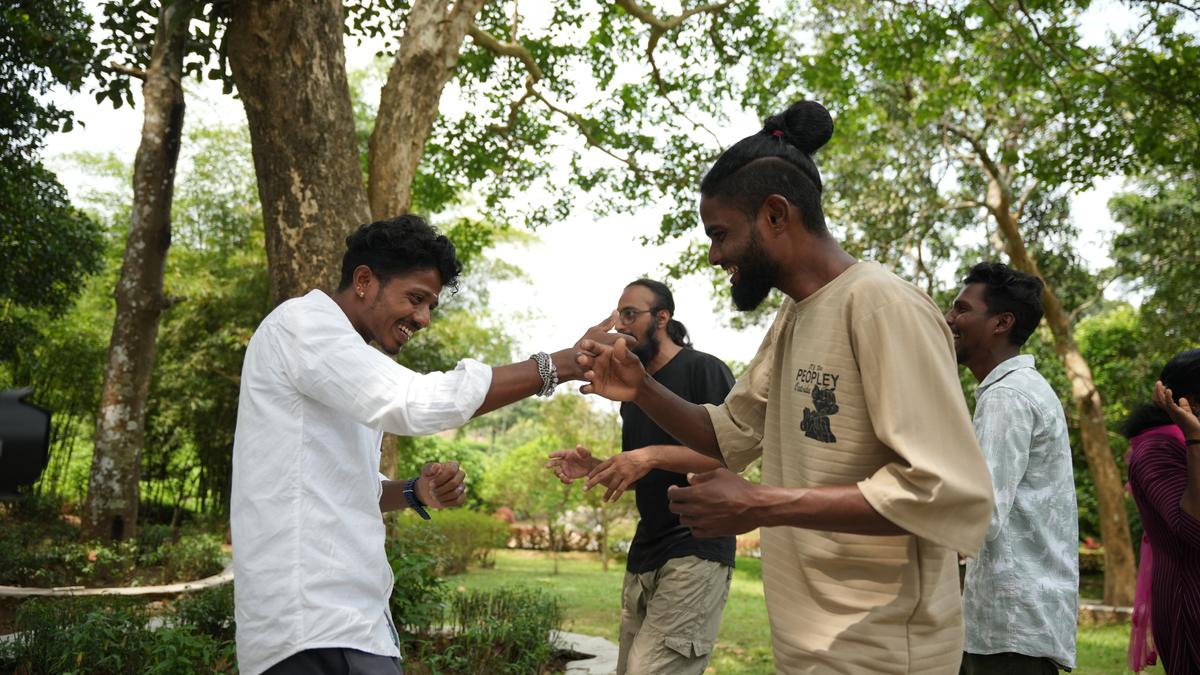
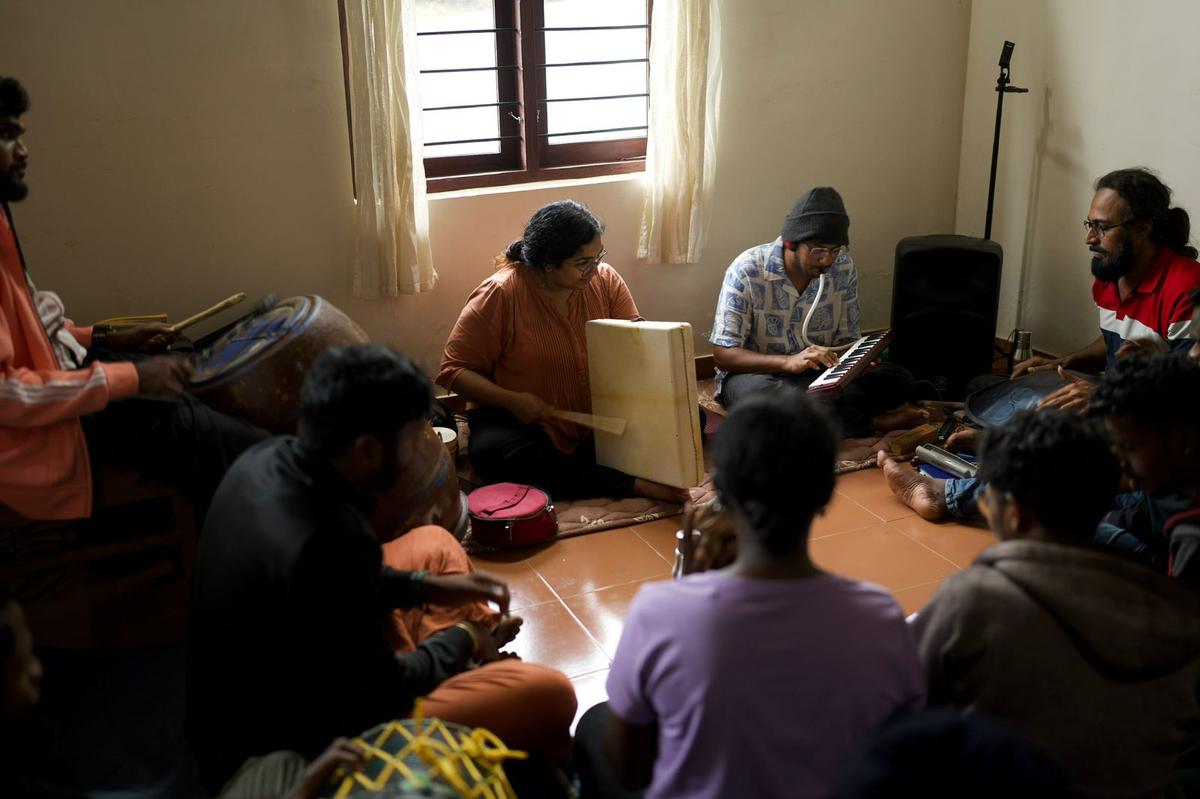
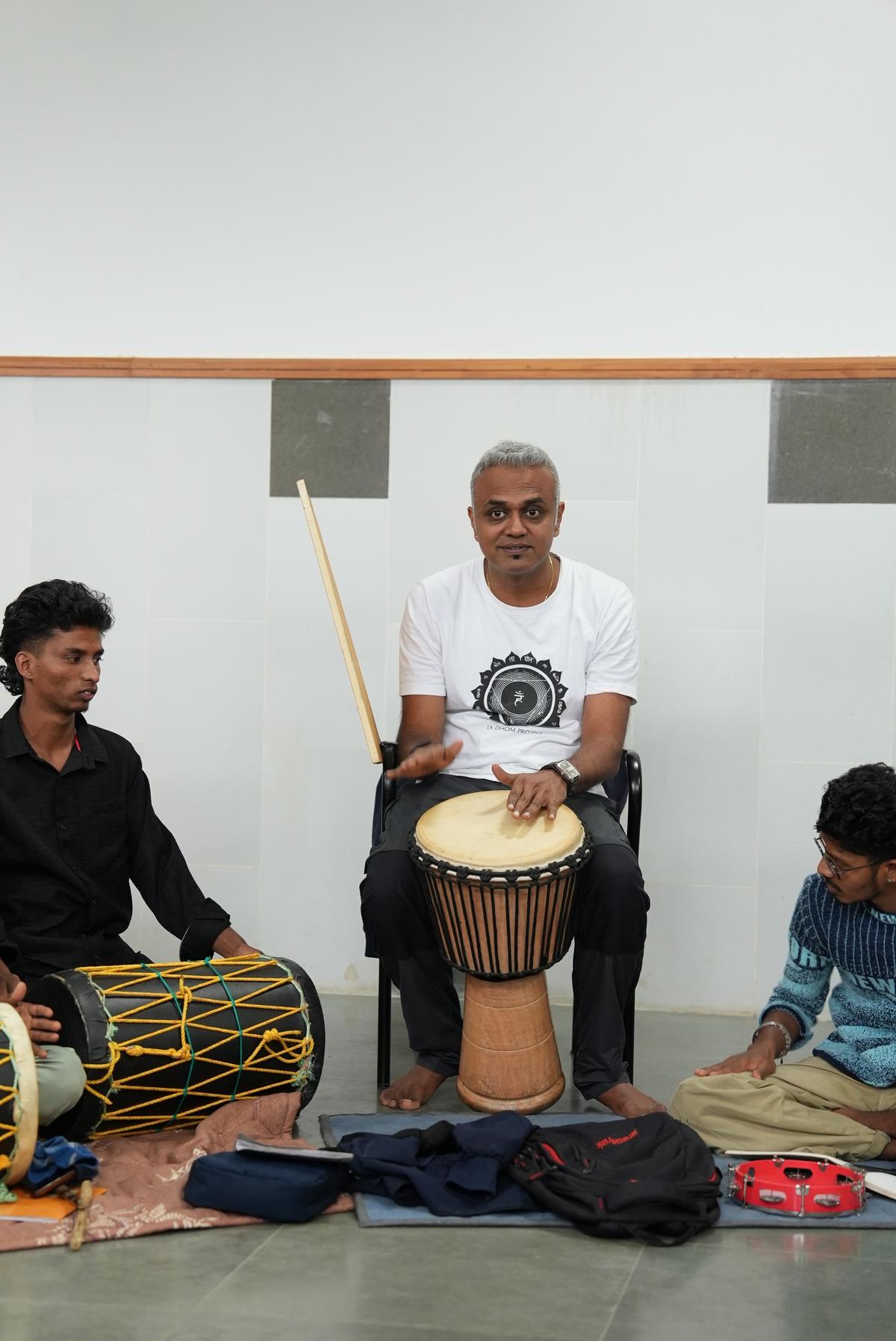
The Earthlore fellows rehearsing; Parvinder Singh (in black T-shirt) is one of the two non-tribal fellows in the band. | Photo Credit: Courtesy Arpo
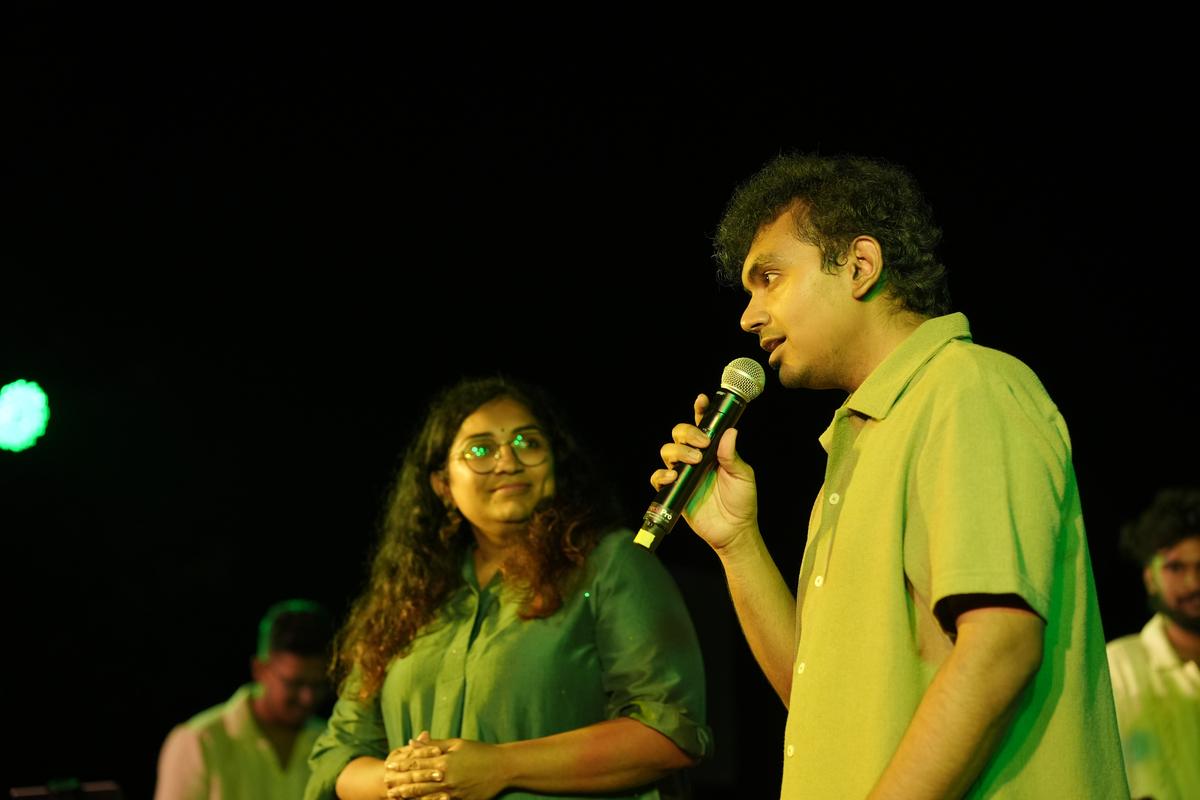
On a November evening, at Nisarga Art Hub in Angamaly, Kerala, as a bunch of indigenous musicians from Wayanad and Coorg sang of the forest, of people’s struggles, in their native tongue, the audience joined in, clapping hands and tapping feet. That day, the newly formed Earthlore band made their stage debut.
The band comprises 12 members from the Jenu Kuruba tribe, six from the Paniya tribe and one from the Kurichiya tribe, of Kerala’s Wayanad and Karnataka’s Coorg regions. A part of the not-for-profit Archival and Research Project’s (Arpo) flagship programme, Earthlore the band is the result of a year-long fellowship. Funded by Tata Trusts, the fellowship was announced last year, to form and professionally train a collective of indigenous musicians.
Of over 70 applications, 18 young musicians were selected by a panel which included members from tribal communities. “We work closely with marginalised and underrepresented artists to keep regional artforms alive, protect traditions, and create spaces for them to thrive. The Arpo Earthlore Fellowship is an example of this vision in action. It reflects our commitment for inclusive cultural empowerment,” says Paroma Sadhana, programme manager, arts and culture, Tata Trusts. To make it an inclusive programme, two slots were kept open for members from non-tribal communities — filled in by Parvinder Singh, an instrument maker and handpan artist, and Rishab, a keyboard player and composer, from AR Rahman’s KM Music Conservatory. The fellowship provided a stipend of ₹15,000 a month.
Saving the artistic heritage
The Jenu Kurubas, or honey gatherers, also known as Kattunayakars in Kerala, are a reclusive forest-dwelling community, recognised as a Particularly Vulnerable Tribal Group, with a deep-rooted culture of music and percussion. Living along the Kerala-Karnataka border, their dialect is a mix of Kannada and Tamil. “The Jenu Kuruba are a largely neglected group, which has been battling poverty, displacement and the resultant loss of cultural heritage,” says Sruthin Lal, co-founder of Arpo. “A few tribal artists such as Ramesh J.B. have been reviving the Jenu Kurubas’ music and composing songs in their dialect, with an aim to help younger people from the tribe to get re-acquainted with their heritage.”
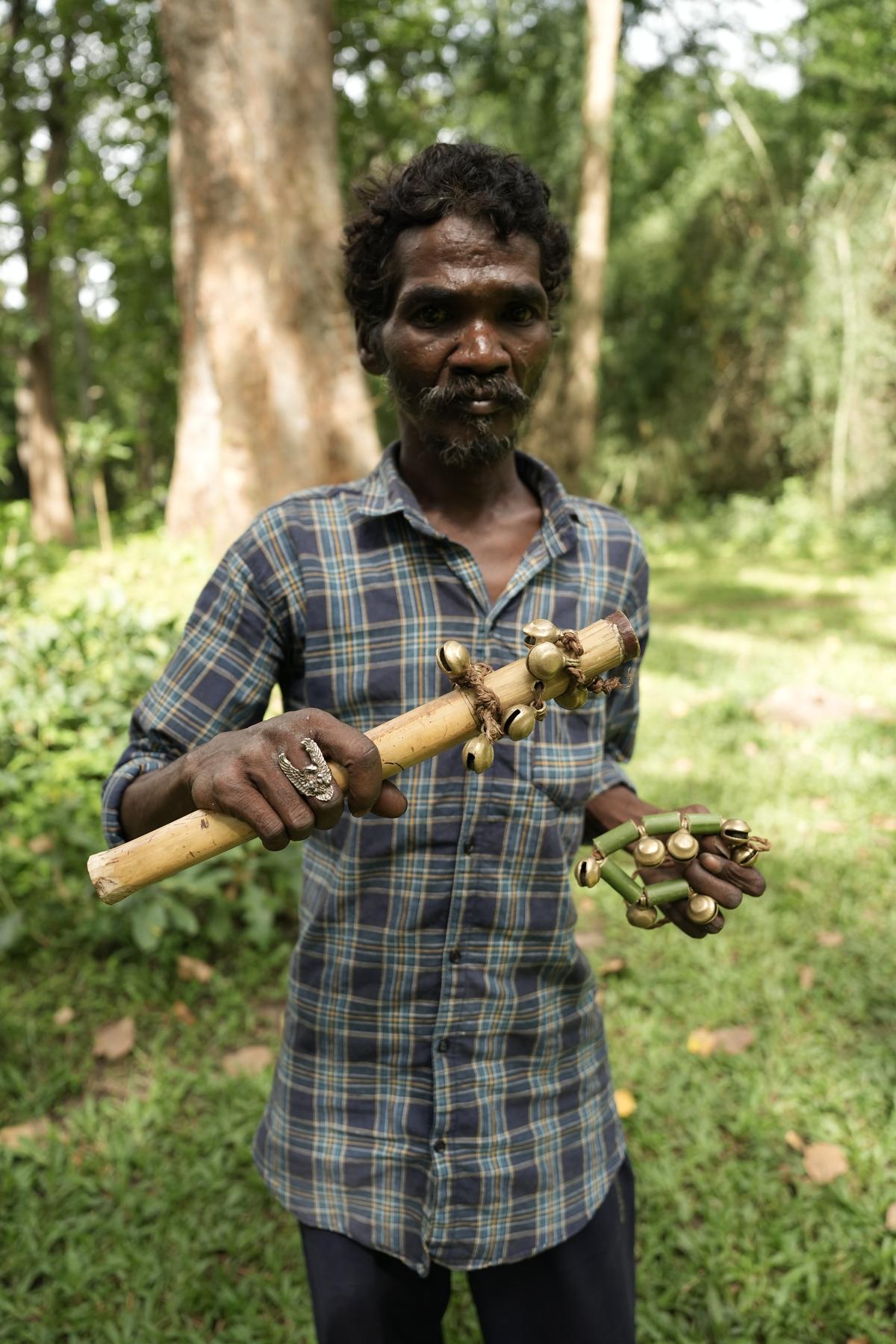
Tribal musician Bala with Jenu Kuruba music instruments kai gajje and kal gajje from Arpo’s earlier documentation project.
Tribal musician Bala with Jenu Kuruba music instruments kai gajje and kal gajje from Arpo’s earlier documentation project.
Last year, Arpo facilitated a few senior artists from the community, including Ramesh, to participate in the second edition of the Mahindra Percussion Festival in Bengaluru. There was born the idea of a fellowship for young tribal artists, says Lal.
Voices from the margins
While many of these youngsters have been actively involved in singing and are part of musical collectives within the community, few could showcase their talent to a larger, diverse audience. Lal adds, “They were extremely keen to do mainstream numbers. ‘Why should our music be limited to traditional songs?’ they would ask.”
That the youngsters endured hours of travel by buses, in unrelenting rain, from their homes in various parts of Wayanad to the training centre in Mananthavady town, just to be able to learn and perform was inspiring, says Charu Hariharan, percussionist, singer and composer, and one of the mentors of the fellowship. The others were playback singer Sreekanth Hariharan, Mumbai composer and percussionist Viveick Rajagopalan and Bengaluru’s folk-rock musician Vasu Dixit.
Charu Hariharan, percussionist, singer, composer and a mentor in a training session with the fellows. | Photo Credit: Courtesy Arpo
Charu, who co-designed the programme curriculum, says, “we left the design of the programme to the tribal artists. They know their music the best. We offered suggestions and introduced them to some instruments, such as the konnakol. The words they write and the songs they sing are powerful and rich with meaning.” The mentors took the fellows through the technical aspects of a performance, advising them on “how to overcome voice strain” and “how to finetune shruti and tempo”.
Composer, percussionist and a mentor Viveick Rajagopalan. | Photo Credit: Courtesy Arpo
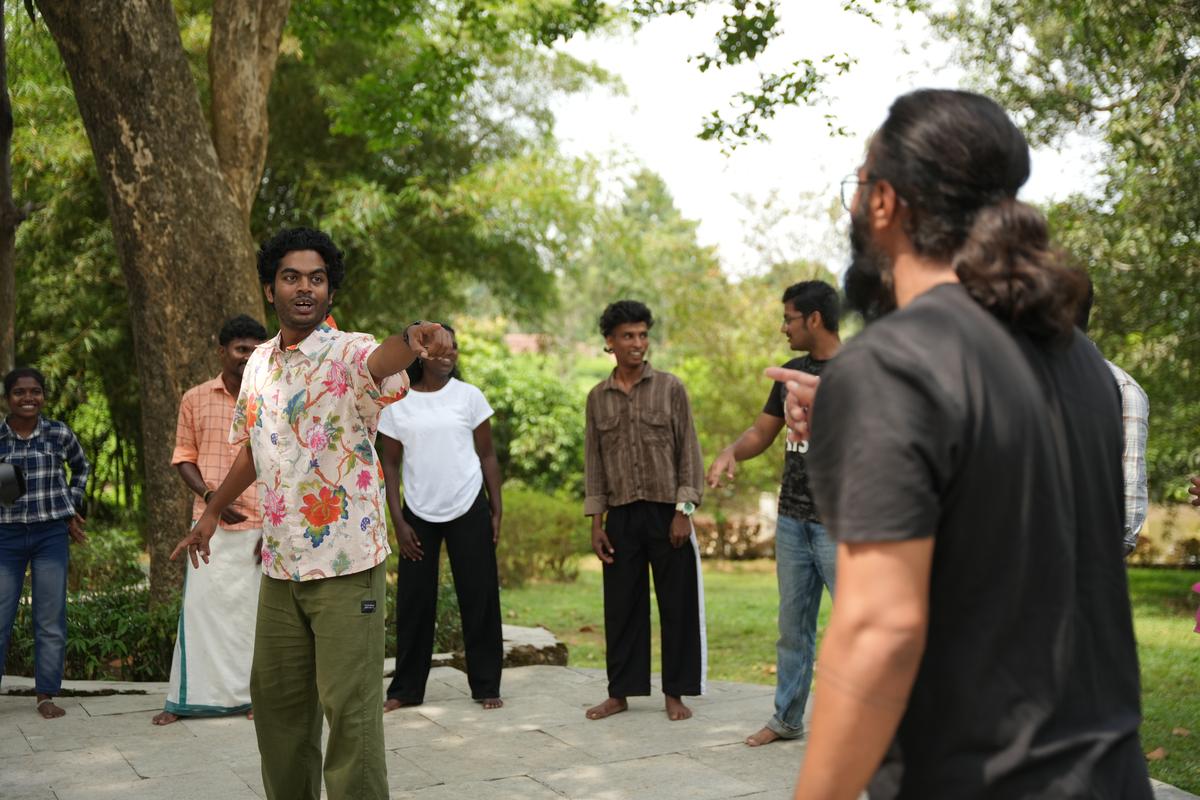
The young musicians built a repertoire of 10 songs, which included a bit of storytelling, theatrical elements, and rap. Ajithlal Sivalal, theatre practitioner and founder of Space of Act Theatre Collective, helped choreograph the performance movements. A mix of indigenous drums were used, such as thudi (used by the Paniya tribe), kottadhatta, a kind of drum made from bamboo, and the gajje, an anklet worn by the Jenu Kurubas, the djembe, and plastic drums the tribal youth use.
Ajithlal Sivalal (left, in floral shirt), theatre practitioner and founder of Space of Act Theatre Collective, in a choreography session with the fellows.
The fellowship further provided training in language and music production, on IPR (intellectual property rights), POSH (Sexual Harassment of Women at Workplace [Prevention, Prohibition and Redressal]) Act, and the SC/ST (Prevention of Atrocities) Act. Such programmes, Lal says, “can bring about a huge change” and hone the tribal youth’s “potential to grow into cultural leaders”.
Tunes of resistance and homecoming
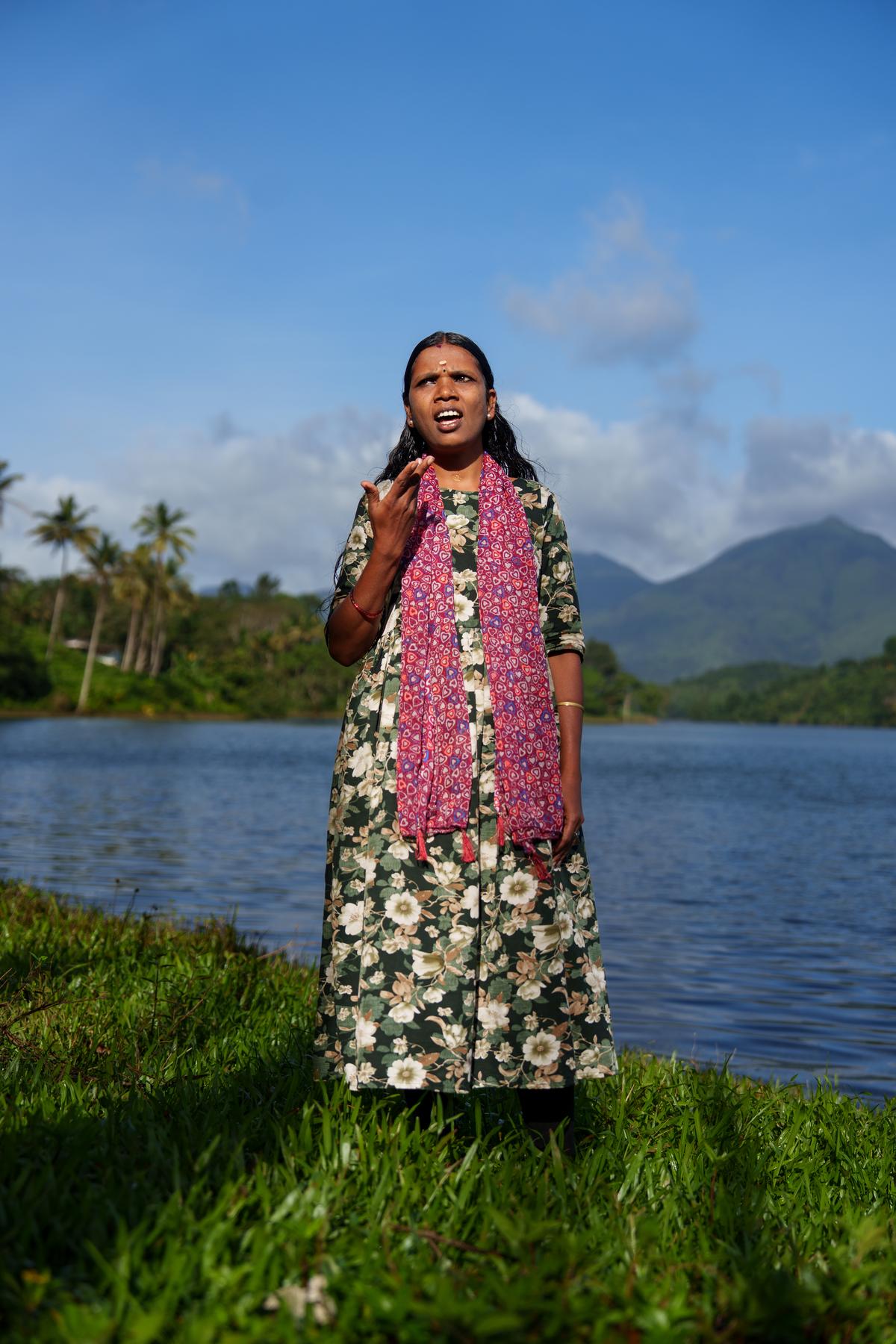
Band member Shyni M., 35, from Chembakamoola in Mananthavady, and an ASHA (Accredited Social Health Activist) worker, says “Jenu Kurubas are generally a shy group; education is still a problem and we have been robbed of our land. The forest was our home and farming was our profession. Our ancestors grew ragi, corn and rice among other things. But today, we are landless and forced to become daily-wage labourers. I now live in a small house amid several other houses.”
Band member Shyni M,. 35, from the Jenu Kuruba tribe, from Chembakamoola in Mananthavady is an ASHA worker. | Photo Credit: Courtesy ARPO
Many of their songs are fiercely political, speaking of the forest, nature, discrimination and colourism. “Our music is inextricably linked to the land of our ancestors. We are the children of the forest,” she adds, as Suraag S., 24, who’s pursuing his B.com at St Mary’s college, Mananthavady, says, “People may not understand our language, but the emotion they would get.”
A talented vocalist, Suraag has participated in several festivals and events such as Gothrathalam, held to preserve tribal artforms in Kerala. His own collective, Thidambu Gothra Kala Sangham Group, platforms tribal musicians. “I have been part of ganamelas too, which focus purely on film songs, but I love singing naadan paattu (folk songs) the most; I love the way the notes rise and fall,” he adds. Shyni, who says, “we see this (the fellowship) as a great opportunity to sing about our lives, our realities,” dreams of returning to the forest someday.
Earthlore band is next performing in Bengaluru on December 21 at Courtyard Koota and December 23 at Sabha.
source: http://www.thehindu.com / The Hindu / Home> Society / by Anasuya Menon / December 05th, 2025
A striking insight was how Kodava culture beautifully balances energies – men perform warrior dances with swords and guns, while women perform Ummathat, celebrating the life-giver.
‘Ummathat – The Rhythm of Kodava’, was screened in the ‘Indian Panorama Non-Feature’ section of the 56th edition of IFFI in Goa. (Supplied)
Synopsis:
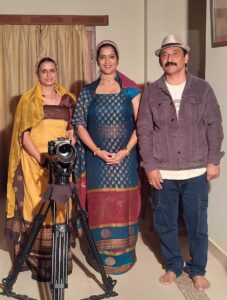
Purely a passion project by director Prakash Kariappa K, and produced by his wife, K Yeshoda Prakash, the documentary was supposed to be just an archival project, but later they decided to send it to festivals, starting with IFFI.
One of UNESCO’s “definitely endangered” world languages, so much so that even natives of Karnataka, to which this eponymous language and culture belong, are principally unaware of it, Kodava, had its debut at the ongoing 56th IFFI Goa, via a documentary, ‘Ummathat – The Rhythm of Kodava‘, in the ‘Indian Panorama Non-Feature’ section.
Purely a passion project by state award-winning director Prakash Kariappa K, and produced by his wife, K Yeshoda Prakash, herself a National Best Kannada film awardee, under their home banner, Swasthik Entertainment, it was supposed to be just an archival project, but later they decided to send it to festivals starting with IFFI.
“We’re both surprised and sad to find out that no such previous documentary, let alone comprehensive or not, exists at all,” Prakash and Yeshoda said, when South First caught up with them for a chat.
Q. How significant is this milestone for both the Kodava film industry and its culture?
A: We are immensely happy that our Kodava documentary has found a place in this prestigious section. We’re hoping that showcasing our specific indigenous tribe and culture will lead to healthy conversations among those keen to learn about unique cultures, especially about Kodagu, the smallest district in Karnataka, which is the land of Kodavas, who have contributed nationally variously to sports, defence, arts, etc.
Yeshoda and Prakash Kariappa K. (Supplied)
We hope this movie will interest relevant film personnel, technicians, and researchers. The 53 years of the Kodava film industry have produced 30 movies so far. This entry might encourage more.
Q. Both you and your wife are state and national film awardees, respectively. Why bring in a co-director?
A: Bollajira Yamuna Aiyappa is an MA specialising in Kodava language with a deep understanding of the culture, and also a Ummathat dancer herself. Our project required communicating and coordinating with over 100 female dancers, and we felt it would be best served to onboard her as co-director.
Q: Are the origins of Ummathat, mentioned as symbolising “the divine feminine”, explained in the film?
A: The name is widely believed to come from ‘Uma’ – another name for Goddess Parvati – and ‘aat’, which means dance in the Kodava language. It’s also thought to come from “Ummath Poov“ aka, ‘Angel’s Trumpets’ (Brugmansia) used by our ancestors as an instrument during the dance, which was later replaced with copper/silver cymbals. The dance begins by invoking Kaveriamma’s (Mother Kaveri) blessings, sun and moon, before every performance; the circle formation represents the womb and the cycle of life. The dance is a worship depicted through the feminine body.
Q: The film begins with a symbolic Ummath Poov leaf shot. Was it scripted or improvised later? Was it in accordance with ‘Kodavame‘, the Kodava sacred text, that promotes harmony with nature and respects ancestral values?
A. I had lived and breathed this project for 1.5 years of its making, since its inception. Yes, Kodavas love and respect nature since ancient times, and it was also a factor. The opening leaf-shot was in accordance with our original storyboard.
Q. What resources did you use for research to reach the authenticity? Did you refer to the Pattole Palame?
A. We did indeed begin with Pattole Palame. Compiled by Nadikerianda Chinnappa by 1922, it, after all, is the most authoritative and extensive ever written record of Kodava folklore, songs, and customs. And right from the initial stage, we consulted with Rani Machaiah, the only Padma Shri Kodava dancer and a living ‘Ummathat’ legend.
Cast and crew of ‘Ummathat – The Rhythm of Kodava’. (Supplied)
We also roped in M Shilpa Nanjappa, a state awardee in Bharatanatyam, who doubles up as the narrator of the dance forms. She focused on the authentic portrayal of ‘abhinayas’. Both their presences themselves being the authentication, refined our film by further correcting pronunciations, explaining mudras and demonstrating forgotten sequences, to maintain actuality of the dance forms, all throughout.
Q: Why was there no on-screen interview of Rani Machaiah?
A: We’d have really loved to, but her advancing age; she’s almost 80 and health concerns were a deterrent.
Q: In the process of researching and filming the 13 Ummathat dance forms, were you surprised by any historical or cultural revelations?
A: A striking insight was how Kodava culture beautifully balances energies – men perform warrior dances with swords and guns, while women perform Ummathat, celebrating the life-giver. While filming, we were moved by the community’s deep passion for preserving our ancient dance form. Both are equally sacred and essential to any Kodava gathering. We also discovered how the dance reflects the community’s famed hospitality, largely led by women. Many of its gestures mirror the grace, warmth, and dignity with which Kodavas welcome guests, making Ummathat not just a dance but a living expression of their identity.
Ummathat is widely believed to have derived from ‘Uma’ – another name for Goddess Parvati – and ‘aat’, which means dance in the Kodava language. (Supplied)
Q. Why were the dances staged and not based on live footage?
A: There were two brief actual footage, including one in front of a temple. We staged the dances mainly for logistics purposes, including the availability of dancers.
These dances take place in certain festivals and celebrations, at different times of the year, amidst a huge, uncontrollable crowd, and we knew it would be difficult to shoot them the way we wanted, without any distractions.
Q: You shot in the interiors amidst nature. How did you choose the sites? What were they, and what were the challenges of filming there?
A: Being a Kodagu native, born and raised, I was already aware of all the locations suitable for our documentary. We filmed at Kutta, Mutlu, and Thanthipala and the like places. Challenges chiefly were in coordinating over 150 dancers from across Kodagu and other places to get them to the spot. We also navigated sudden rains, inaccessible routes, which stretched our schedule a bit.
Q. Did your army background help you with the discipline?
Bollajira Yamuna Aiyappa, M Shilpa Nanjappa and Prakash Kariappa K. (Supplied)
A: I’m primarily a man of discipline, which I’ve been able to maintain thus far.
Q: Being a Kodava Sahitya Academy Awardee for Best Novel in 2024 and with a total of 11 novels in Kodava and Kannada languages, has this experience given you any literary ideas?
A. Yes, it has given me an idea for a novel which highlights the deep roots of Ummathat. That will be the best justice I can do post this project.
Q: How are you planning to get a return from this film? How is the Karnataka Government supporting your endeavours? What are your distribution plans?
A: IFFI is our debut screening. We’ll try to leverage the opportunity as best as possible by interacting with national and international delegates to discuss distribution or collaboration possibilities.
We also have full faith in the Karnataka government as we have received support from them in the past and are sure will receive the best support in future as well. As said earlier, it’s a passion project, and we’re happy to be in the service of our culture.
source: http://www.thesouthfirst.com / South First / Home> Community & Culture / by Sudipto Mallick / December 04th, 2025
The search crew was worried after finding tiger footprints and half-eaten carcasses of a wild bison near the forest boundary in Karnataka’s Kodagu district.
The child’s mother, Nagini, was glued to her phone and realised that her daughter was missing around 6 pm when the two other children returned. (Express photo)
A two-year-old girl who went missing from an estate worker’s house was recently miraculously reunited with her parents after spending an entire night safely alone near the fringes of a forest in Karnataka’s Kodagu district.
The incident was reported on November 28 when Sunanya was playing with two other children in a coffee plantation in B Shattigeri. Her parents, Sunil and Nagini, estate workers from a beekeeping family, had arrived with her at the private estate just five days prior.
Nagini was glued to her phone and realised that her daughter was missing around 6 pm when the other two children returned. She informed her husband, and they immediately notified the police and forest officials.
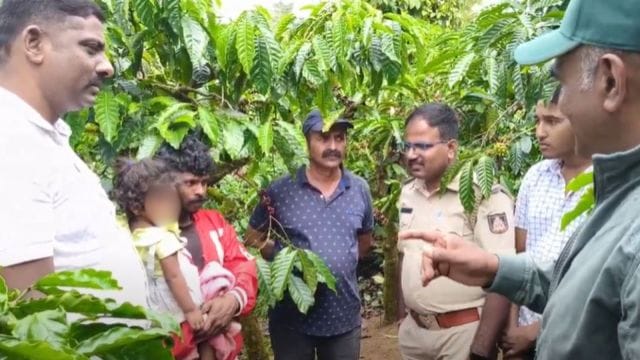
More than 100 people, including residents, the police, and forest personnel, joined the mission to find Sunanya. Four pet dogs also joined them, as they have a keen sense of detecting the presence of wild animals.
“We started the operation around 7 pm on November 28 and continued until 9.30 pm. But there was no result,” said a local police officer.
“We were very much concerned because there were tiger footprints and half-eaten carcasses of a wild bison near the forest boundary. By then, we had covered at least 1-1.15 km radius of the region,” the officer added.
The search to find Sunanya resumed the next morning, around 6.30 am. About three hours later, one of the pet dogs, Oreo, started barking, indicating that Sunanya had been found.
“It was the highest point of the estate. We found Sunanya staying in the middle of the bush close to the forest boundary. We all had a great sigh of relief when she was found,” said the officer.
Speaking to The Indian Express, Kollira Bopanna, gram panchayat president, said that the biggest fear they had was that wild animals would have killed the child.
“There are a lot of wild animals, including tigers and elephants, in the region. We don’t step out at night and remain cautious when we travel. It was god’s grace that the kid remained unharmed and managed to stay in the plantation,” he said.
“She spent the entire night without food or water. She walked nearly half a kilometre before falling asleep. She did not cry in the night, which could have either helped to rescue her or put her life at more risk. Usually, wild animals, especially at night, roam freely in these areas, which could have harmed the little girl. We are happy that she was alive,” Bopanna added.
source: http://www.indianexpress.com / The Indian Express / Home> News> Cities> Bangalore / by Kiran Parashar / December 02nd, 2025
H N Ravindra, fondly known as Harapalli Ravindra, stands today as a symbol of determination, innovation, and sheer hard work. Born into a small coffee-growing family in Harapalli, a remote village in Somwarpet taluk of Kodagu district, Ravindra’s life story is a testament to how passion, grit, and unwavering commitment can turn even the most challenging dreams into reality.
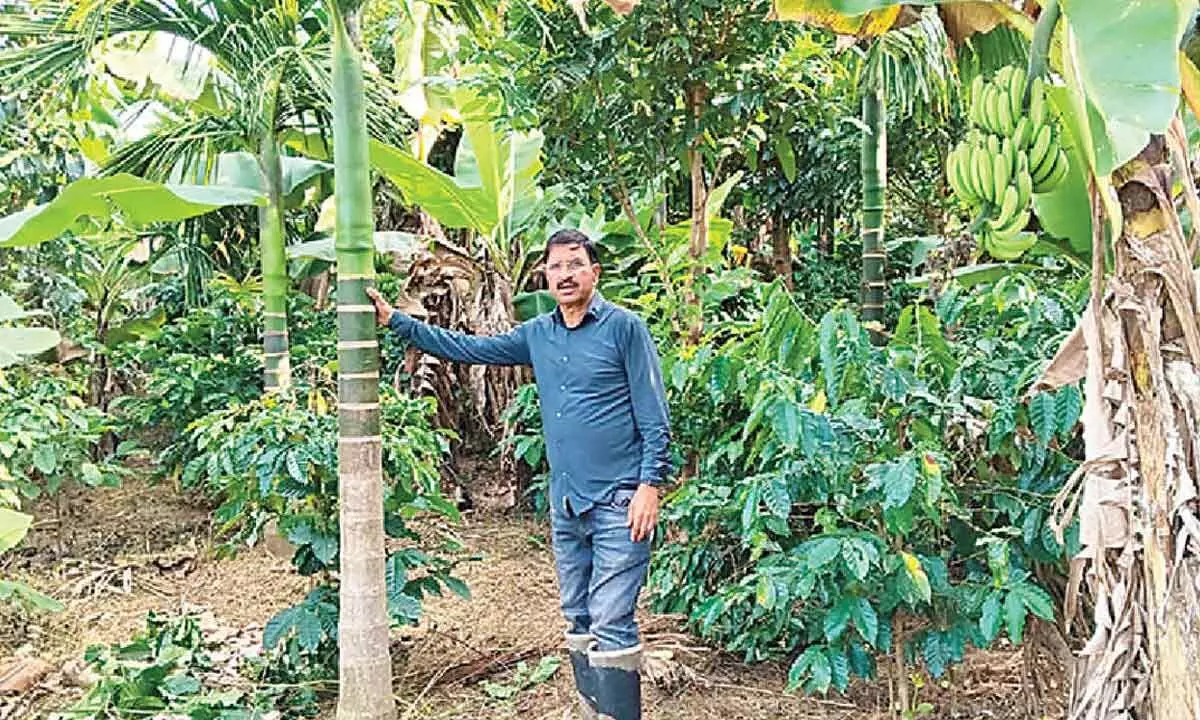
In 2016, Ravindra made a bold decision—he purchased 40 acres of completely barren and rocky land at Manchadevanahalli in Periyapatna taluk of Mysuru district. Locals believed the land was unfit for cultivation, but Ravindra saw potential where others saw wasteland. What followed over the next eight years is nothing short of remarkable. Through tireless effort, scientific farming practices, and a deep emotional connection with the soil, he converted this dry, unproductive stretch into a lush, green, fully fertile multi-crop farm.
Today, the farm stands as one of the finest examples of sustainable agriculture. Ravindra cultivates coffee in 30 acres and has diversified his land with guava, chikoo, banana, and over 2,000 sandalwood trees each plantation carefully planned to support soil health and long-term growth. His ability to merge traditional wisdom with modern farming techniques has helped the estate flourish.
What sets Ravindra apart, however, is his compassion toward nature and wildlife. Despite growing guava across two acres, he never harvests it. Similarly, he grows maize to provide shade for coffee plants but chooses not to collect it. Instead, he leaves these crops for birds and local wildlife. Every morning, hundreds of birds visit his estate, feeding freely before returning to their habitats. For Ravindra, this harmony between farming and nature is an essential part of life.
Despite being a successful entrepreneur and progressive farmer, Ravindra has never distanced himself from his roots. He works alongside labourers whenever he finds leisure, showing that humility and hard work remain central to his identity. His neighbors admire him not only for his achievements but also for his hands-on approach and respect for everyone associated with his journey.
From a humble farmer’s son to a model farmer inspiring an entire region, Ravindra’s transformation of barren land into thriving farmland stands as a living example of what dedication can achieve. His journey continues to motivate farmers across Kodagu, Mysuru, and beyond proving that with vision and hard work, even the toughest land can bloom with life.
source: http://www.thehansindia.com / Hans India / Home> News> State> Karnataka> Bengaluru / by The Hans India / December 02nd, 2025
He had donated 14-acre land and Rs. 1 crore to Coorg Institute of Technology, Ponnampet.
Mysore/Mysuru:
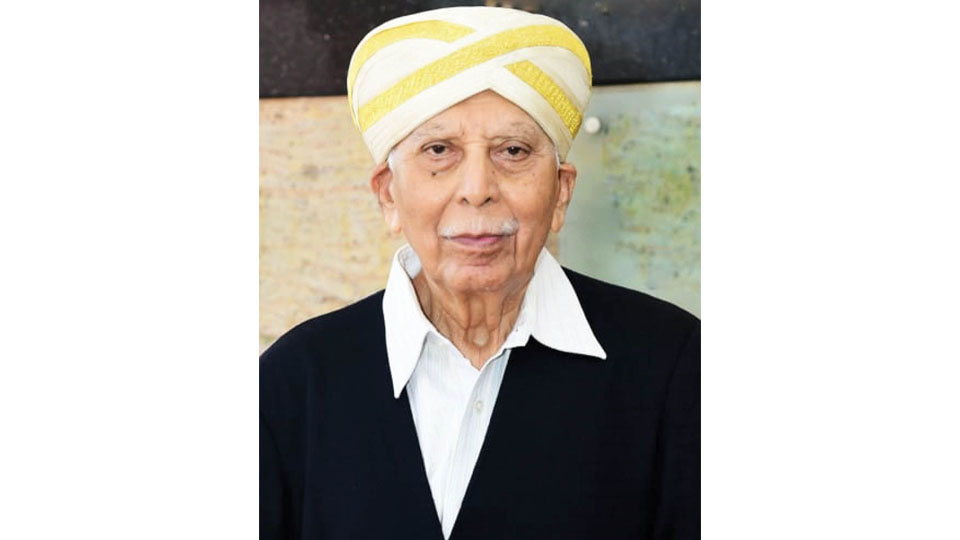
Chodumada K. Appaiah, aged 90 years, passed away due to age-related illness yesterday (Nov. 29) at his residence # 706, 80 ft. Road, A-Block, near Triveni Circle, Kanakadasanagar (Dattagalli), Mysuru.
A native of Hudoor village in Ponnampet, Kodagu, he leaves behind his wife Shanti Appaiah (Maneyapanda) and a host of relatives and friends.
Cremation took place at Muktidhama in Vijayanagar this afternoon, according to family sources.
A philanthropist, C.K. Appaiah had generously donated 14 acres of land and Rs. 1 crore to Coorg Institute of Technology (CIT) in Ponnampet; Rs. 11 lakh to Shree Kaveri Kodagu Mahila Sangha, Mysuru; Rs. 5 lakh each to Kodava Deenabandhu Charitable Trust, Mysuru; Kodava Samaja Ponnampet, Kodava Samaja Gonikoppa and also founded C.K. Appaiah and Parvathy Charitable Trust.
source: http://www.starofmysore.com / Star of Mysore / Home> News / November 30th, 2025
WELCOME. If you like what you see "SUBSCRIBE via EMAIL" to receive FREE regular UPDATES.
Read More »