All posts by admin

State’s first goat unit to come up in Kodagu

Madikeri:

The construction of the state’s first goat milk producing and processing unit is in full swing at Byadagotta near Kushalnagar.

Animal husbandry minister A Manju had in February laid foundation stone for the unit which will come up on 112 acres of land. It is estimated to cost Rs 5 crore of which the state government has released Rs 2 crore.

Veterinary Department deputy director Padmanabha said it has planned to buy Jamalapuri, Seroy, and beetle breeds of goats from Maharashtra which provide upto 3 litres of milk per day.

He said an expert team has been formed to purchase 200 goats for rearing. At later stages, goat milk producers unions will be established at village levels. He said the milk will be sent to Bengaluru for marketing and in later stages, the unit will pack the milk in sachets and sell in local markets too. Goat milk has a good demand in the state where it is sold at Rs 70 per litre.

The department has also planned to grow grass for goats here and manure produced by goats will be sold to farmers.

The government will appoint an assistant director, a doctor, technician, an agriculture officer, 50 labourers for the milk producing unit. The unit will also generate direct employment for 50 locals and provide indirect employment to hundreds of farmers, he said.

Farmer Ganesh said dairy farming is a good idea for farmers to boost their incomes. He said the area has greenery which provides fodder for goats.

Byadagotta village is situated just 8 kilometre from Kushalnagar and has potential for development. The state government also planned to construct a mini airport at Aluvara. Mangaluru university has already established a PG centre in Aluvara.

source: http://www.msn.com / MSN.com / Home> Headlines> News – The New Indian Express / December 26th, 2017

Ashwini Ponnappa ties the knot

SHEER JOY Badminton ace Ashwini Ponnappa (right) and Karan Medappa tied the nuptial knot in Ammatti on Sunday. DH PHOTO

Indian badminton star Ashwini Ponnappa entered a new phase of her life after marrying model Ponnachettira Karan Medappa at the Kodava Samaja, Ammatti, on Sunday.

The marriage rituals were held as per the Kodava tradition. Ashwini was draped in a traditional Kodava saree and Karan was dressed in ‘Kuppasa Datti’.

The wedding reception was held in Serenity Hall, Virajpet, on Sunday evening.

Tennis player Rohan Bopanna and squash player Jyotsna Chinnappa were among the sports stars who attended the function.

Ashwini had announced her engagement to Karan in November via an Instagram post.

Ashwini said she would continue her involvement in sports even after marriage.

source: http://www.deccanherald.com / Deccan Herald / Home> Sports / by DH News Service / Siddapur – December 24th, 2017

Coffee holidays: Unwind in nature’s lap with a hot cuppa

Karnataka, which accounts for over 70% of India’s total coffee production, is betting big on tourism around its coffee.

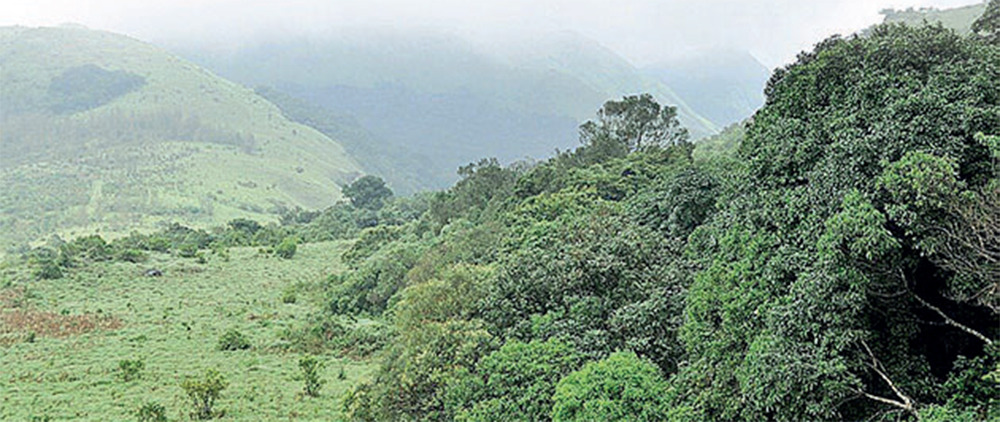
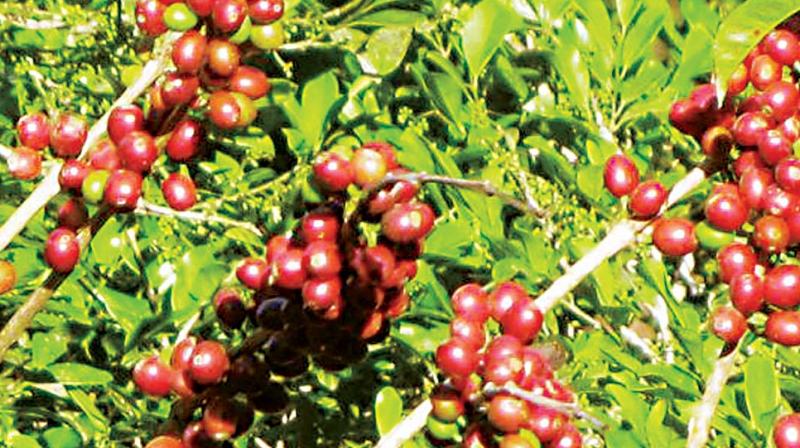
The last chunk of rainforest coffee on this planet is in India and grows along the Western Ghats covering Karnataka, Kerala and Tamil Nadu. (Photo: DC)

Bengaluru :

Karnataka, which accounts for over 70% of India’s total coffee production, is betting big on tourism around its coffee.

The last chunk of rainforest coffee on this planet is in India and grows along the Western Ghats covering Karnataka, Kerala and Tamil Nadu. Karnataka’s coffee gardens are a haven for wildlife, dozens of rare bird species, some 50 different types of tress apart from natural flora and fauna.
State Tourism Minister Priyank Kharge said a wide variety of farm and home stay options are available across coffee areas of Chikkamagaluru, Kodagu, Hassan, Sakleshpur and Baba Budan Giri (a mountain where first ever coffee in the country was grown in 1670), and Mullayanagiri (the highest coffee growing peek in Chikkamagaluru).

Kharge said, “We’ve recently eased a lot of restrictions around farm tourism and home stays, by decreasing the home stay registration fee to Rs 500 from Rs 10,000. We have also introduced additional incentives to encourage entrepreneurship in coffee tourism. We received home-stay registration requests from over 700 coffee farmers and estates in the last two months.”

Some of the activities promoted under coffee tourism include nature trails, trekking, pulping, bean plucking, drying, curing, roasting and grinding the coffee.

In addition, coffee lands offer amazing landscapes with unique culture and cuisines, he said.

Anil Kumar Bhandari president of Indian Coffee Trust said, “Corporates and real estate firms are eager to swallow huge chunks of coffee lands to build resorts, but coffee farmers with the help of the tourism department are trying to keep such elements out.”

Only individuals and families who are living in Karnataka for a minimum period of 15 years will be eligible for home stay licences.

source: http://www.deccanchronicle.com / Deccan Chronicle / Home> Nation> In Other News / by Mini Tejaswi / December 23rd, 2017

Shuttler Ashwini Ponnappa weds model Karan Medappa today

International badminton player Ashwini Ponnappa’s marriage with model Karan Medappa, is being held in Kodagu district of Karnataka on Sunday.

The entire event is being held as per Kodava customs.

In the morning, as per custom, ‘Eka Muhurtha’ was held at Kodava Samja, Ammathi, Virajapet taluk on Sunday.

The celebrations will continue from 6 pm as per the ‘Dampathi Muhartha’ custom

source: http://www.deccanherald.com / Deccan Herald / Home> States / by DH News Service / Kodagu – December 24th, 2017

Bengaluru start-up to launch Araku Aroma brand coffee in US

The company is also planning for a domestic foray in January at the India International Coffee Festival.

ArakuKF23dec2017

Krish Food and Fun India, a Bengaluru-based start-up, plans to globally launch Araku Aroma Brand of coffees in the United States. “The company is launching Araku Aroma Coffees in Edison, New Jersey in the US. We are helping marketing coffees grown in the tribal belt of Andhra Pradesh. The Araku is tribal valley near Vishakhapatnam,” said Krishna Chaitanya, Managing Director, Krish Food and Fun India.

The company is also planning for a domestic foray in January at the India International Coffee Festival. According to Chaitanya, “As per the agreement, we are to buy coffees harvested by tribal farmers in around 250 acres. The company plans to market around 500 tonnes of coffee annually.”

“For this we have invested Rs 2.5 crore to set up roasting facility and for marketing tribal grown coffees,” he added.

Chaitanya was in Bengaluru recently to make final arrangements to release Araku Aroma brand of coffees. “As part of the agreement with tribal community, we want to spend 10 per cent of our profits from selling Araku Aroma to procure anti-venom drugs and for providing general medical facilities to the tribal community,” revealed Chaitanya.

source: http://www.thehindubusinessline.com / Business Line / Home> Companies / by Anil Urs / Bengaluru – December 23rd, 2017

Karnataka : ‘ Tax tourists to preserve Kodagu’s green ’

CoorgGreenKF22dec2017

District wants to follow on Nilgiris’ footsteps, urges Payment for Ecological Services fund for the benefit of farmers and region’s ecology

Worried about the increasing tourism activity in Kodagu district, greens have urged the government to follow the Niligiris district administration and impose a green tax on tourist vehicles entering the district.

Recently, the Nilgiris district administration announced that tourist vehicles entering the district via the Burliar, Kakkanallah and Nambiar Kunnu checkposts will be charged a green tax of Rs. 20, which will be used for the maintenance of the district’s ecology. It is expected that the fee will be used by the administration to carry out restoration works and maintain the fragile Nilgiris landscape.

Sundar Muthanna, Bengaluru Co-ordinator for Coorg Wildlife Society, welcomed the move by the Nilgiris district administration and said this should be implemented at all entry points to Kodagu district too.

“Collecting a cess or tax from tourist vehicles is important at the entry points because tourism has a very negative foot print on the ecology. Some of the damage can be undone by the tourism industry itself. They cannot go on exploiting the land endlessly and they have to give back,” he said.

He said the money generated should be used for tree planting and rejuvenating the existing water sources. “The money thus collected must go to the Payment for Ecological Services (PES) fund. The idea for PES comes from the belief that a rich and diverse ecology is equal to economic capital for the state and the nation.

Through PES we can help the people of Malnad preserve the ecology they live in. A well-preserved ecology will encourage rainfall locally in the Malnad and in the neighbouring regions,” he said. The fund could be used to provide subsidies for Malnad’s planters and farmers, he said.

Paddy cultivation could be encouraged with this fund, as rice fields contribute richly to the streams and rivers, and help to make them perennial, or flow through the year. Cottage industries such as pepper processing, canning, coffee processing can be set up in each taluk of the districts of Malnad.

The entry point to Kodagu district is from Hassan, Mysuru, Dakshina Kannada and Kerala.

Dinesh Holla, convener Sahyadri Sanchaya, said uncontrollable damage has already taken place in the Western Ghats region of Kodagu and Chikkamagaluru. “Rainfall has reduced. The government talks about only development, but when environmentalists approach the minister requesting him to procure helicopters so that in case of forest fire, quick action can be initiated, we are told that we are not living in a foreign country. It is time that the youth come forward, raise their voice and protect whatever little is left behind in the fragile Western Ghats,” he said.

source: http://www.bangaloremirror.indiatimes.com / Bangalore Mirror / Home> News> State / by Deepthi Sanjiv, Bangalore Mirror Bureau / December 21st, 2017

I became so fluent in Malayalam that people now believe I can dub: Harshika

HarshikaKF21dec2017

Harshika Poonacha and her gang of giggling friends were coming out of a coffee shop when a man accosted her and wanted to know if she was interested in playing the heroine in his forthcoming movie.

Then a Class 10 student, Harshika was certain that he was a prankster and not a filmmaker, and didn’t bother to reply. But her friends told him that she was a dancer, head of their cultural team and that if he was serious about the offer, he should talk to her dad at her house, not far from where they were.

This was how the schoolgirl got catapulted to the world of movies through the Kannada film PUC — it was no trickster who made the offer but filmmaker Ramesh who was looking for a girl of her age group to do the lead role. In the next two years, however, she concentrated on her studies, and during her engineering course, she balanced studies and films so amazingly well that she not only passed her course with distinction but also established her foothold in the Kannada industry.

“I had offers from software biggies but I had to make a choice between films and a corporate job and I chose the former,” says Harshika, who has been shooting in Kochi for Charminar, her debut film in Malayalam.

After spending a month in Kochi and shooting in the city as well as Thrissur, she is literally gushing about Mollywood and says that she is sure to miss the industry as well as Kochi now that they have wrapped up the shoot. Originally from Coorg, she can speak several languages and she has added Malayalam to the list. “I speak so fluently that they now say that I am ready for dubbing,” she says.

Harshika plays a Malayali girl settled in Bengaluru in the movie directed by Ajith C Lokesh and her co-stars are Ashwin Kkumar, who played the villain in Jacobinte Swargarajyam, and Hemanth Menon.

“Charminar is a love story but there is a suspense that is linked to the title, so I can’t reveal more about the plot,” says the actress, who is looking forward to acting in more Malayalam films.

source: http://www.timesofindia.indiatimes.com / The Times of India / News> Entertainment> Malayalam> Movies> News / by Sujit Chandrakumar / TNN / December 17th, 2017

Coffee Homeground

DondorKF20dec2017

A “rich, strong, bitter, boiling hot, ruthless, depraved” cup of coffee is the “life blood of tired men” and most of us would agree to author Raymond Thornton Chandler on this.

In Meghalaya where tea is the traditional beverage, coffee has always remained a second fiddle to its more popular cousin. But things are changing fast and soon coffee will catch up with tea in popularity.

Though the practice of drinking coffee has seen an upward trend in the state in the last few years thanks to the booming cafe business, the beverage is not new to the hill tribes here.

“Coffee plant grows in the wild in Meghalaya and the fruits are eaten by birds. Some villagers would also drink coffee but they would prepare it indigenously,” says Dondor Giri Nongkhlaw, the owner of Smoky Falls Tribe Coffee, which is marketing the local brew.

Nongkhlaw is the first person to realise the potential of the local plantation and explore the villages for procuring beans. His quest for coffee grown in Meghalaya had its roots in his childhood memories of sipping a hot cuppa prepared by his grandmother by grinding the beans.

“I started intensive research on how to procure and market locally grown coffee after I retired in 2007. I have visited several villages and interacted with farmers and told them about the benefits of growing the cash crop,” says the former professor of Geography at Synod College. His roasting and grinding unit is the first in the entire northeastern region.

Smoky Falls is the result of Nongkhlaw’s untiring work and undaunted spirit. The 66-year-old man visits villages frequently and sensitise farmers on methods of plantation and soil replenishment. “Most of the villagers grow broomstick that affects the soil. This necessitates rejuvenation before going for coffee plantation,” he says.

Coffee, which is a labour intensive but high-return crop, was reportedly introduced in Cachar district in Assam during 1850s. It was also cultivated in Mizoram and Cherrapunjee in 1870s. Hundred tonnes of coffee were marketed in Shillong in the late 19th and early 20th centuries. But after 1930, the cultivation lost steam.

Arabica is the only variety that grew in the wilds of Meghalaya, according to a book written in 1906 by BC Basu, the then director of the Agriculture Department of undivided Assam. It was the Coffee Board of India that introduced Robusta in the state and trained farmers in planting the variety, says Nongkhlaw. There are indigenous varieties of coffee too like Coffea khasiana and Coffea bengalensis, which are common in the hills.

New avenues

The Coffee Board has taken up a large project to encourage new coffee plantation by raising group nursery with financial assistance from the board. It spent 10-15 years on survey and identification of suitable area. It was found that 44,000 hectare, including 5,900 hectare in Meghalaya, is suitable for coffee in the entire North East. Out of this, 3,350 hectare is suitable in Garo Hills and 2,545 hectare in East Khasi Hills.

In 2016-17, 1,90,000 coffee seedlings were raised in Ri Bhoi and Jaintia Hills. At present, Robusta and Arabica plantations cover an area of 1,005 hectares in Meghalaya. The production in the last five years varied between 25-30 metric tonne.

Arabica plant yields berries after the third year and Robusta after four. Nongkhlaw says sometimes the plants may bear fruits early but the quality will not be good.

While Robusta grows in low altitude areas, between 500 and 1,000 meters, Arabica is found in areas 3000 ft or more above the sea level. In East Khasi Hills, coffee plantation is found at Nongjri, Lapalang, Mawryngkang, Nongskhen, Myllat and Mynria. Marngar and Nongrim Jyrmi in Ri Bhoi also have the plantation. Four districts in Garo Hills too produce a substantial amount of coffee. The crop grown in the state is organic.

“Coffee is a cash crop and is also a perennial crop that can protect the environment. It is also giving income to the local population both directly and indirectly. The Soil Department here was helping the coffee farmers by providing technical guidance,” says a senior official of Coffee Board in Guwahati.

Now, the Meghalaya Basin Development Authority is also involved and recently two technical workshops were conducted in Tura and Shillong.

At present, around 1,700 farmers in the state are involved in coffee cultivation. The Coffee Board has a senior liaison officer in Tura and a junior liaison officer in Shillong. “The commercial crops board of the Soil Conservation Department was promoting coffee, especially in Garo Hills. But many farmers had left it due to lack of buyers until Smoky Falls came along. The Coffee Board has also been doing some work here,” said a senior official in the Agriculture Department.

Agents of change

Another agent of change, besides Smoky Falls and the various government units, is Zizira, a local food product’s venture. Zizira has explored the remotest corners of the state to find the best beans.

The young explorers at Zizira say though Meghalaya produces high quality coffee it does not count in the national market. This is because the number of farmers is less and those who grew coffee never sold the produce locally. “In fact, their harvest is purchased by the Coffee Board and sent to the nearest processing centre in Guwahati and then transported to Bengaluru’s auction houses. The identity of Meghalaya coffee is thus lost,” the team points out.

To empower the farmers here and give the indigenous crop its identity, the Zizira team has been exploring the back of beyond for the last two years. Zizira may source coffee directly from such farmers for both in-house consumption and creating its own product.

Talking about their unique experiences with coffee farmers, a member of the team narrates the story of Teibor Mynsong of Ri Bhoi district.

“Mynsong used to grow pineapples but shifted to coffee in 2012 because it requires less labour and care. The leaves fall off the plants and replenish the soil and no pesticide or fertiliser is required. He now has 1,200 coffee plants which produce 2 kg of coffee berries per year,” she says.

Nongkhlaw, who is planning to introduce green coffee soon, says while Robusta is a sturdy variety, Arabica needs care against stem borers and leaf rust.

Villagers at Nongjri in Sohra are also realising the benefits. About 20 farmers in the village near Bangladesh border have taken up coffee plantation. Along the serpentine road that leads to Nongjri Tluh from Pynursla, one would find rows of broom shrubs and bamboos and amid the bushes one can also spot a few coffee plants growing wildly.

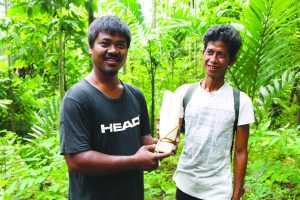
Coffee farmers Riing Wallang and Bison Roy Laso of Nongjri Tluh love to take visitors around their coffee plantation. Though the produce is good, “we are expecting less beans this year because of the torrential rain”, says the duo in unison.

“I have planted 1,000 more. It is true that coffee does not require much care but the price that we get is low and this makes things unsustainable. If we get a higher price, we can do better,” says 65-year-old Wallang while running up the slope to his coffee bagan (garden).

The farmers sell coffee fruits at Rs 60-70 per kg, informs Laso.

Besides coffee, they also grow broom, betel nut and papaya, among other things.

Back in Shillong, Nongkhlaw too points out the drawbacks.

Erratic power supply, says the owner of Smoky Falls, hampers roasting. “If power goes off in between roasting, then the entire 5 kg of coffee beans is wasted (the roasting machine can take in 5kg at a time),” he says.

Also, high price of locally grown coffee deters many from buying the product. “The high price is because we do not add chicory to the product unlike the instant coffee you get in the market. Also, a kilogram of coffee fruits would yield only around 350 gm of beans after removing the husk. So you can imagine,” says Nongkhlaw whose Smoky Falls brand is supplied to cities like Mumbai and Chennai but the sale is only online.

The organic status, says Nongkhlaw, might improve the scenario. But the Coffee Board official says it will take some time before proper certification.

Zizira says proper processing units are important. “A government official rightly pointed out to our team that even if a good number of people take up coffee growing, lack of knowledge and the required processing units are pushing these farmers to give up cultivation,” the team points out.

Future brew

The government recently proposed to export coffee to Bangladesh but Nongkhlaw says for this, there should be sustainability. The Coffee Board official says it may take three to four years to increase the production before the state thinks about exporting.

“There has been some talk of exploring the market. Whether the idea is practical will depend on the market and consumer preferences there but a possible hurdle might arise from the HS codes of Bangladesh,” says the official in the Agriculture Department.

But VR Gudde Gowda, joint director extension at Coffee Board Guwahati, is optimistic.

“Due to the coffee culture coming up in India, the North East youths are also attracted towards it. Nongkhlaw has set up a roasting and grinding unit in Shillong. He is buying the coffee directly from growers and thereby attracting more farmers to grow coffee,” says Gowda.

(Photo courtesy: Zizira, Sunday Shillong)

source: http://www.theshillongtimes.com / The Shillong Times / Home> Sunday / by Webeditor / Heather Cecilia Phanwar & Nabamita Mitra

Cricket’s Lost Talents! Robin Uthappa: A vibrant batsman, but too aggressive for his own good

RobinKF19dec2017

Cricket is a game of glorious uncertainties and a game of fine margin and even after 140 years, we are still not sure on what defines a successful player. They say, in any discipline of life, you need to have talent and everything else will take care of itself. But, the irony is that talent plays a very short role and grind, determination, stubbornness plays a big part in shaping up an individual’s career. Indian cricket is filled with examples of too many talented players not meeting their potential and players with a limited skill set achieving most out of their limited talent and becoming successful on the world stage.

After the turn of the century, Indian cricket became aspirational and wanted to dominate on and off the field and many players came from small towns and villages and made a name for themselves. Robin Uthappa from the state of Karnataka was a breath of fresh air and many big things were expected of him. And, on debut against England at Indore in an ODI, he smacked 86 runs and stamped his authority. Uthappa was a lad who was expressive, had big booming drives and technically was a sound player and coaching staff saw something in him. He was chosen for the 2007 ICC World Cup and was expected to be part of the Test team soon. Uthappa, as any player, got limited chances early in his career, but made full use of it and on the 2007 tour of England and Wales played an innings at The Oval which was reminiscent of 2002 NatWest final and pulled a victory out of nowhere.

Here’s blast from the past: Robin Uthappa going berserk vs Chennai Super Kings

https://www.youtube.com/watch?v=3e9wHpkvCX4

Match 18, RCB vs CSK: Best of Robin Uthappa

Life is funny and unpredictable and Uthappa learned this the hard way and soon lost his spot in the team after being part of 2007 World T20 and 2008 CB series teams which won the silverware. Uthappa made contributions and would have thought of cementing his place in the side. In 2008, Indian Premier League came to town and Uthappa got decent amount of sum and was part of Mumbai Indians. The form of the Karnataka dasher tapered off and the likes of Rohit Sharma, Virat Kohli, Suresh Raina started to jump ahead of Uthappa and soon lost his spot and was not told by selectors what was he doing wrong and to be fair to him, the selectors or management were not sure about his role in the team and his batting position kept on changing.

So, Uthappa took the boot on his chin and started plundering runs in domestic cricket, IPL and was hoping that his comeback would come, but India had moved on and Uthappa had to content being a player who would make sporadic appearances in case of injury or rest. Uthappa is only 32 years old but sadly last represented India in 2015 and many emerging players (Shreyas Iyer, Kedar Jadhav, Manish Pandey) have climbed ahead of him and even deep down he must be knowing that making a comeback looks very tough. The game of Uthappa is solid and his first-class record is pretty decent and the hunger is still there.

Any cricketer would tell you that playing Test cricket or scoring an international century is the ultimate high that you can get, but Robbie has neither one and it will sting him when he looks back on his career. The talented yet somewhat unlucky dasher has represented India in 46 ODIs and 13 T20Is and is still slogging it out in Ranji Trophy and would think of another recall to make amends. But, that ship has sailed and despite being talented and confident, Uthappa who made his debut before Kohlis and Sharmas would feel a tinge of sadness about how his career panned out.

source: http://www.freepressjournal.com / The Free Press Journal / Home> Cricket / by Dhaval Mehta / December 17th, 2017

CNC observes Thok Namme

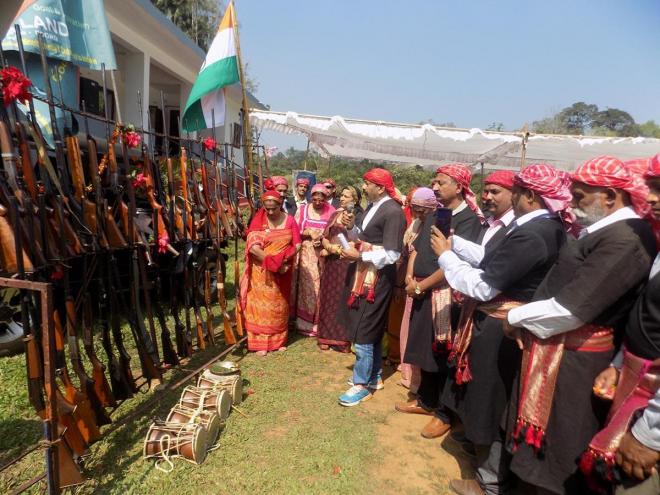
Codava National Council President N U Nachappa offers prayers to firearms as a part of Thok Namme, at an estate in Kolakere near Napoklu on Monday.

Codava National Council observed Thok Namme at an estate in Kolakere near Napoklu on Monday.

Speaking after offering prayers to firearms, CNC President N U Nachappa said that ‘Thok Namme’ (Gun Carnival) is organised to highlight the significance that guns represent in Kodava culture and life. “Possessing firearms is a right of the Kodavas.

It is also a religious and cultural symbol of the Kodavas.

The programme is being conducted in order to create awareness on the constitutional rights of Kodavas to own a gun. The programme also features mass worship of guns and aims to pass the message to the government that the possession of a gun is a birthright of a Kodava,” he said.

Nine resolutions, including urging the government to recognise the importance of guns in Kodava culture were passed on the occasion.

source: http://www.deccanherald.com / Deccan Herald / Home> District / DH News Service / Napoklu – December 18th, 2017