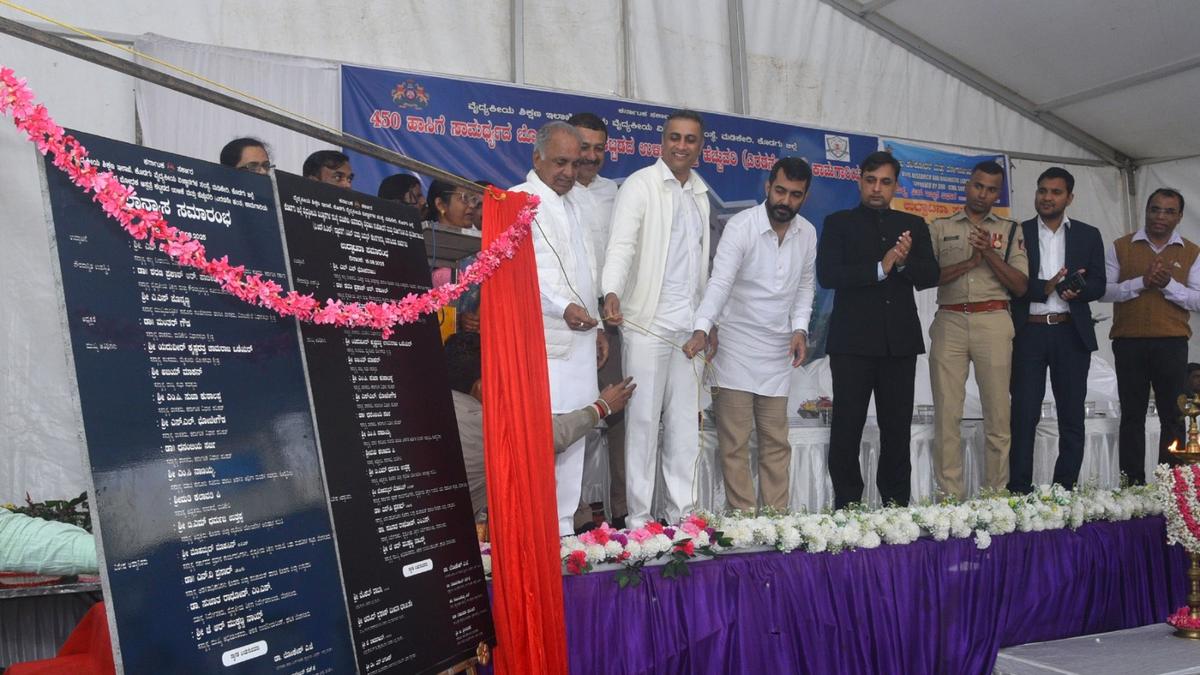
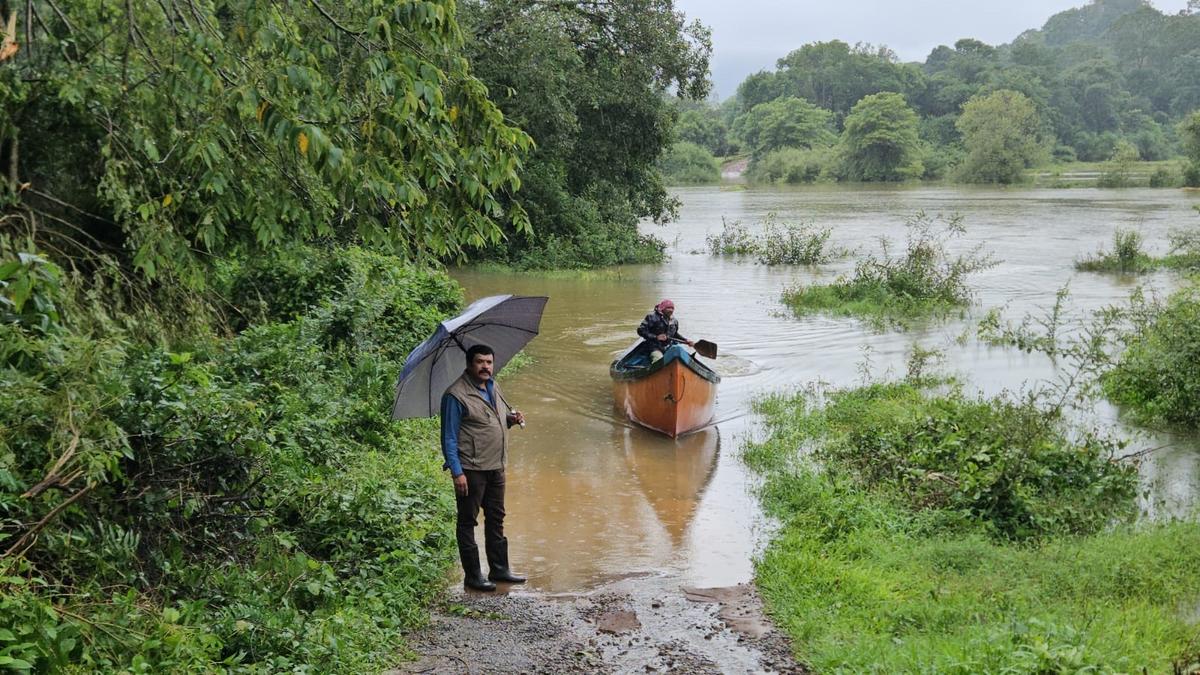
Minister in charge of Kodagu district N.S. Boseraju unveiling the foundation stone for the second phase works for construction of the 450-bed teaching hospital at Kodagu Institute of Medical Sciences in Madikeri on Friday. | Photo Credit: SPECIAL ARRANGEMENT
The foundation stone for the remaining and additional works (second phase) for the construction of the 450-bed teaching hospital of Kodagu Institute of Medical Sciences (KoIMS) was laid in Madikeri on Friday.
Minister in charge of Kodagu district N.S. Boseraju laid the foundation stone on the KoIMS premises in the presence of MLAs Mantar Gowda and A S Ponnanna.
Speaking on the occasion, the Minister told the doctors to provide quality healthcare services to poor patients. “When quality healthcare reaches the people timely, it brings a good name to the government. Therefore, doctors must ensure quality healthcare services,” Mr. Boseraju said.
The Medical Education Minister and the district’s MLAs have worked hard for upgrading the infrastructure of the institute, he added.
Mr. Ponnanna said healthcare services should reach everyone as all necessary development works were being carried out, while Mr. Gowda said it is the duty of doctors to provide quality healthcare to poor patients.
Steps have been taken to provide basic facilities to various departments of the institute, including the MRI scanning unit, Mr. Gowda said, adding that the cardiology department will also be upgraded soon.
Further, Mr. Gowda said that the hospital needs permanent doctors, and urged the Minister to take steps in this regard.
The upgradation works will be completed within a span of 18 months, and an additional ₹20 crore will be sought for the development of the Kodagu Institute of Medical Sciences, he added.
Steps will also be taken to start a Critical Care Centre, Mr. Gowda informed.
source: http://www.thehindu.com / The Hindu / Home> News> India> Karnataka / by The Hindu Bureau / August 15th, 2025
Chamarajanagar reported 134 deaths, Kodagu 126 deaths, Mysuru records 51
Mysuru:
Today, Aug. 12, World Elephant Day, throws a harsh light on the growing crisis facing Asian elephants.
In Karnataka — home to the largest elephant population in India — over 380 jumbos have died in the past five years, with more than 64 deaths attributed to unnatural causes. Disturbingly, electrocution alone has claimed 50 of these lives.
Forest Department data from 2021 to 2025 shows that the State’s prime elephant belt — Kodagu, Chamarajanagar, and Mysuru — has lost 311 elephants. Chamarajanagar recorded the highest toll at 134, followed by Kodagu with 126 and Mysuru with 51.
While most deaths were due to natural causes, nearly one in eight elephants fell victim to man-made hazards. In Kodagu, electrocution emerged as the single biggest killer, with 30 deaths caused by low-hanging power lines, fallen cables and uninsulated electric fences.
Other unnatural deaths included five from gunshot wounds, two in road accidents and five from other causes.
Of the 380 elephants lost Statewide, 204 were adults (over 15 years), 77 sub-adults (5–15 years), 23 juveniles (1–5 years), 49 calves (under one year) and 23 newborns. Four deaths could not be age-classified as the carcasses were too decomposed.
In Kodagu, 103 elephants died of natural causes and 23 due to unnatural causes, 18 of which were electrocutions. In Chamarajanagar, 130 died naturally and four died unnaturally. Mysuru reported 41 natural deaths and 10 unnatural ones.
Undermining reproductive potential
Experts warn that the loss of 281 adults and sub-adults severely undermines the reproductive potential of herds. “Elephants in Karnataka are dying at an alarming rate of 8–10 percent annually,” said Surendra Varma of the Asian Elephant Research and Conservation Centre, Indian Institute of Science, Bengaluru.
“With Karnataka’s elephant population, a 2 percent five-year mortality is normal. But when it rises to 8–10 percent, it’s a crisis. No concrete measures are being taken and in the long run, this will be disastrous for the State, which is a haven for these pachyderms,” he warned.
The gender ratio further deepens the crisis — there is only one male for every three females and the ‘musth’ mating period lasts just about 20 days to two months a year on average.
Males are fit to mate between the ages of 15 and 40, meaning the death of so many adults and sub-adults will directly hit the birth rate.
“Sadly, we seem to remember elephants only during Dasara. Their silent deaths in the forests go unnoticed and even the Forest Department has failed to take adequate precautions to prevent these tragedies,” Varma added.
A 2015 High Court order had directed Chamundeshwari Electricity Supply Corporation (CESC) and other power supply companies to raise the height of electric poles to 11 metres and insulate all electricity wires to prevent dangerous exposure. However, the corporations have been installing poles only up to a height of 7 metres. The Court also directed them to insulate the wires to reduce risks. Despite repeated written communications from the Forest Department urging compliance, the safety measures remain unimplemented.
— Murthy, former Chief Conservator of Forests, Kodagu Circle
source: http://www.starofmysore.com / Star of Mysore / Home> News / August 12th, 2025
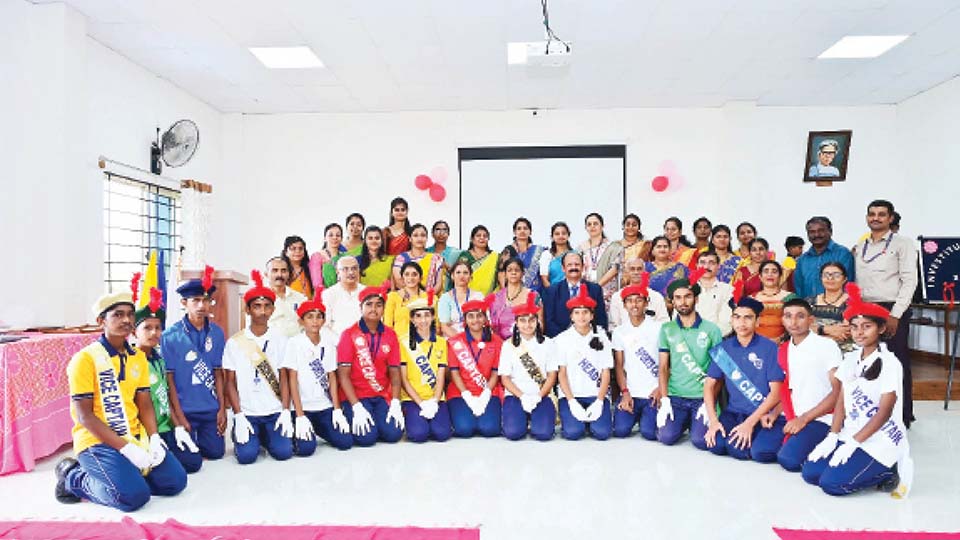
The Investiture Ceremony of Kodagu Model School, promoted by Sri Kavery Kodava Association – Mysuru East, was held in the presence of the Management Council recently.
The meet was declared open by showering of flowers followed by release of pigeons, symbolising peace, hope and new beginning. Students performed march-past. The stage programme started with traditional lighting of the lamp proceeded by an invocation & welcome address.
The chief guest for the day, Dr. Neravanda B. Suresh, former International Volleyball Coach & Director, Sports Authority of India, Special Area Games (SAG) Centre, Thalassery, Kerala.
Dr. M.M. Dechamma, retd. Associate Professor, Cauvery Degree College, Virajpet, Kodagu, was the guest of honour.
Dr. Suresh, in his motivating speech, emphasised that students should be physically, mentally, emotionally and socially healthy to become a responsible individual. In his interaction with the students, he mentioned that everyone should have a guru in their life to be successful.
Dr. Dechamma urged the student leaders to lead by example and inspire others. She highlighted the values of discipline, commitment and integrity in leadership.
The highlight of the ceremony was the conferring of badges and sashes to the newly elected members of the Student Council with oath administration.
K.M. Belliappa, President of the School, congratulated the Council Members and reminded them that leadership was not about authority but about service & setting the right example.
The ceremony concluded with a vote of thanks followed by the National Anthem.
source: http://www.starofmysore.com / Star of Mysore / Home> News / August 07th, 2025
Deadly fencing, forced evictions and surveillance deepen tensions as Adivasis fight to reclaim ancestral land in Karnataka
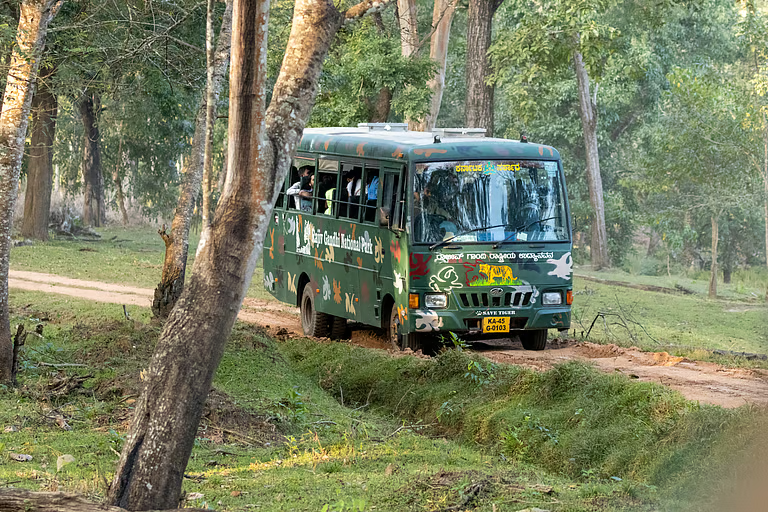
The tourism routes within Nagarahole encroach on Indigenous lands and are part of community forests, alleged Adivasi rights groups.iStock
Summary
Dozens of Jenu Kuruba families have returned to ancestral forest lands in Nagarahole, sparking clashes with Karnataka’s forest department.
The group, classified as a Particularly Vulnerable Tribal Group (PVTG), will lead a two-day protest on August 9 with support from Adivasi collectives and civil society.
Protesters accuse forest authorities of eviction, intimidation, and wildlife tourism in areas from which they are being forcibly removed.
They demand recognition of forest rights under the Forest Rights Act and an end to surveillance, displacement, and ecological destruction for commercial gain.
Adivasi and Indigenous communities in Karnataka are set to launch a major protest against the forest department’s ongoing attempts to evict tribal families from the Nagarahole reserve. The move follows the return of 52 Jenu Kuruba families to their ancestral homes in Karadikallu Hattur Kollehaadi village, land they say is rightfully theirs under Indian law.
Classified as a Particularly Vulnerable Tribal Group, the Jenu Kuruba have deep-rooted spiritual and ecological ties to the forest, its wildlife and sylvan deities. They gather medicine, honey, fruits, vegetables, tubers and the thatch and bamboo needed to build their houses. The name of the tribe means “honey collector”.
The communities’ return was met with resistance from forest officials, leading to fresh conflict.
On August 9, indigenous groups under the banner of the Nagarahole Adivasi Jammapale Hakku Sthapana Samiti (NAJHSS), supported by civil society organisations and forest rights defenders, will march to the Nanachi Forest Gate to protest against what they describe as “systemic violations” of the Forest Rights Act (FRA) of 2006. August 9 commemorates the International Day of the World’s Indigenous Peoples every year.
In a joint statement issued by Survival International, an organisation campaigning for tribal rights globally, the group said the protest would focus on “the systemic violations of forest and habitat rights guaranteed under the FRA and the continuing violence on our lives, livelihoods and our bio- cultural lifeworld.”
Despite directives from the Union Ministry of Tribal Affairs, they say the state government and local administrations in Mysuru and Kodagu have failed to implement the FRA and recognise their habitat rights. “This refusal to act reflects a deliberate and systemic denial of our constitutional and legal rights under national and international laws and covenants,” the statement said.
Forest authorities, they alleged, continue to evict families and criminalise indigenous leaders who assert their legal claims. At the same time, wildlife tourism continues unabated in the same “inviolate” areas the Jenu Kuruba are being removed from.
“The tourism routes within Nagarahole are encroaching on our lands and are part of our community forests. This blatant contradiction exposes the commodification of the forest under the guise of conservation, while denying rightful claims over forests that our people have protected for generations,” the group said.
The militarisation of the forest has escalated tensions and distressed the local communities, as artificial intelligence-enabled surveillance cameras and paramilitary units are stationed across the reserve. Community leaders argue this amounts to intimidation.
Officials have blamed the evictions on rising human-animal conflict in Kodagu, but tribal leaders disagree.
The real threat comes from deforestation and commercial coffee plantations. The evictions are meant to distract from the real crisis, as Adivasi communities have long been protectors of nature and have lived in harmony with wildlife for generations
Barbed wire and electrified fencing around plantations have led to injuries and deaths among wild animals, further fragmenting habitats and intensifying ecological stress.
These plantations have severely fragmented wildlife habitats, and in several instances, the deadly solar and barbed-wire fences have injured or killed animals. Such incidents, they noted, have worsened human-wildlife conflict and added to the ecological stress in Nagarahole.
The NAJHSS has demanded recognition of their forest and habitat rights under the Forest Rights Act, along with an immediate halt to evictions, intimidation, and the criminalisation of indigenous communities.
They have also called for an end to the surveillance of communities, a halt to tourism, and a stop to the ecological destruction of forests for commercial coffee plantations.
source: http://www.downtoearth.org / Down To Earth / Home> Forests / by Himanshu Nitnaware / August 07th, 2025
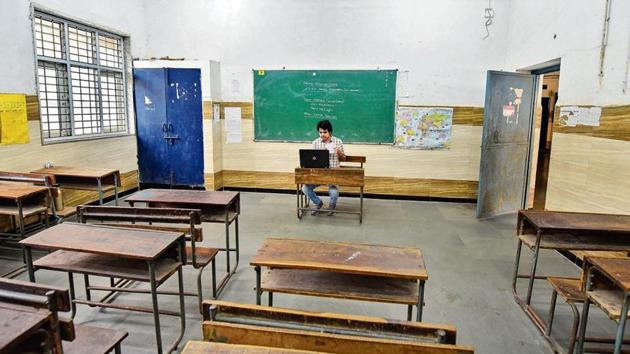
A government school in a tribal settlement of South Kodagu has reversed falling student attendance through an innovative daily programme.
Chennangi Government Primary School, which caters to tribal children, has introduced Dinnakondu Karyakram — a daily programme designed to make learning enjoyable. Since its launch, the school has achieved 100% attendance, a rare feat amid widespread concerns over declining enrolment in government schools across Karnataka, as reported by The New Indian Express.
The school, now accommodating 52 students, has witnessed a notable increase in admissions over the past two years. Children who once resisted attending classes are now showing up eagerly each day.
“Several tribal students stayed away from the institution. When their parents left for daily wage work, these students sat at home. However, we conducted a survey before the start of this academic year and have ensured that all the children from the tribal colony attend classes at the institution,” TNIE quoted Susha K., the headmistress of the institution, as saying.
Previously, the school had introduced Thingaligondu Karyakrama, a monthly talent programme, but some students continued to remain absent. In response, the school shifted to a more consistent approach with daily activities.
Each morning begins with engaging sessions of yoga, singing, dancing, literature, crafts, and unique games. This shift has not only ensured full attendance but also encouraged more than five students who had previously dropped out to return to school, added the report.
To further motivate students, the school has launched a YouTube channel where talent performances are uploaded regularly. “This has resulted in all the students attending classes without fail. It is like an incentive to these students, as the entire village watches and celebrates them after watching the YouTube channel,” the headmistress added.
Admissions have risen from 39 to 52 students over two academic years. In some cases, children who had taken transfer certificates were reportedly persuaded by the headmistress to rejoin the school.
Additionally, the school management has held awareness meetings with parents, urging them to prioritise their children’s education to secure a better future.
source: http://www.english.varthabharati.in / Vartha Bharati / Home / by Vartha Bharati / August 08th, 2025
HDMC yet to get approval from govt to install them near Kargil Stupa.
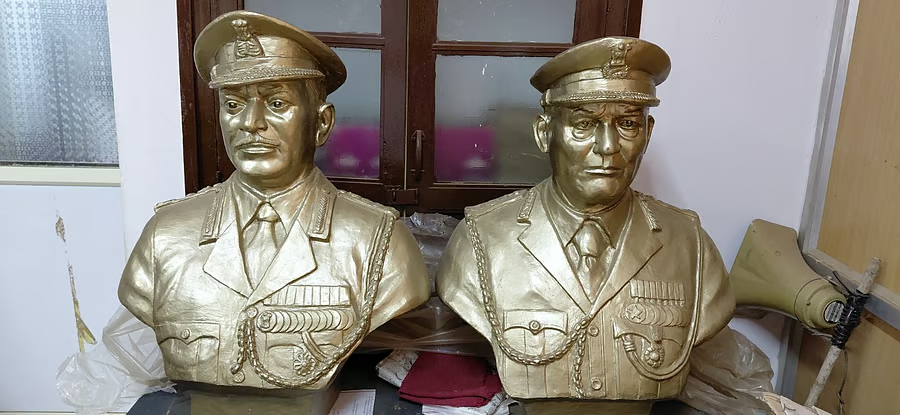
Bronze busts of military commanders from Karnataka gather dust at HDMC office. DH photo
The bronze busts of three renowned military commanders from Karnataka carved for installing on the premises of the Kargil Stupa in Dharwad are gathering dust at the Hubballi-Dharwad Municipal Corporation (HDMC) zonal office for the past seven years.
In 2017, the HDMC decided to install 2.5-feet-high and 2-feet-wide bronze busts of Field Marshal K M Cariappa, General K S Thimayya, and General Gopal Gurunath Bewoor, along with a national emblem of similar size near the Kargil Stupa. The HDMC had sanctioned Rs 10 lakh for the creation of these statues. Artists from Mumbai sculpted and delivered the statues to the corporation. Thus the busts were readied as per the plan but they were not installed.
According sources, the inauguration was initially scheduled for January 28, 2018. However, since government permission is mandatory for installing statues of prominent leaders in public spaces, the process got stalled. What’s more surprising is that even after all these years, no proposal has been sent to the state government to seek this approval, the sources said.
North Karnataka Soldiers’ Welfare Committee president Chandrashekhar Aminagad, who was instrumental in seeing up Kargil Stupa in memory of Kargil victory, expressed regret that despite approaching HDMC and urging elected representatives, there has been no progress on installing these statues.
“If the statues were not meant to be installed, why spend Rs 10 lakh of public money on them? Why are they lying idle in a zonal office? At the very least, could they not be temporarily placed at the deputy commissioner’s office to offer them some respect?” he questioned.
Aminagad pointed out that neither he nor the office-bearers of the committee are soldiers or ex-servicemen, but are patriots. It was in this spirit that India’s first Kargil memorial was established in Dharwad in 2002. Since then, several welfare programmes have been organised for serving and retired soldiers. Had the statues of these military commanders also been installed, the site would have gained historical significance. He expressed concern about when the state government would finally approve the installation.
Reacting to this, Mayor Jyoti Patil said that the installation of busts has been delayed due to the need approval from the state government. “Ideally, this approval should have been sought back in 2017. The matter will now be raised in the upcoming July general body meeting, and a letter will be sent to the state government so that the statues can be installed at the earliest,” the mayor said.
source: http://www.deccanherald.com / Deccan Herald / Home> India> Karnataka / by Srinidhi R / July 25th, 2025
Karnataka Revenue Minister Krishna Byre Gowda on Friday said that the construction of new Taluk Administration Buildings (Prajasaudha) in Ponnampet and Kushalnagar in Kodagu district will begin shortly.
He was speaking to media persons during his visit to the district. The Minister noted that though the two taluks were created more than 7 years ago, taluk offices have not yet been constructed, and said that the projects for the same would be expedited.
The government has sanctioned ₹8.65 crore each for the two buildings, and the tender process has been completed, he added.
Mr. Byre Gowda also inspected the proposed sites for the buildings and visited a bridge near Balyamandur. He said that the government was accelerating efforts to scan and digitally preserve original land ownership records across taluk offices to ensure landowners have guaranteed access to their documents.
“Preserving land records and making them accessible at the fingertips of landowners is the core objective of the Land Security Scheme,” said the Minister. The initiative aims to prevent loss, tampering, or forgery of land records, which often leads to disputes, he added.
With regard to digitisation of land records, the Minister said that the department has already scanned 33.5 crore pages of land records against the target of completing the scan of 100 crore pages of documents and records across Karnataka. This, he said, would serve as a legal guarantee for land records.
Mr. Byre Gowda emphasised the need for strict implementation of recent reforms in the Revenue Department and urged officials to adopt modern technology to deliver citizen services efficiently.
On the issue of recurring landslides in Kodagu, the Minister said that the government will allocate ₹50 crore for constructing retaining walls. The funds will be released soon by the Chief Minister, he added.
The Minister said full ownership rights would be extended to rightful landowners, and records dating back 30 to 40 years would be rectified where necessary, offering a long-term solution.
MLA for Virajpet A.S. Ponnanna apprised the Minister of rain damage in Kodagu district. Deputy Commissioner of Kodagu Venkat Raja, ZP CEO Anand Prakash Meena, and officials from PWD and various other departments were present.
source: http://www.thehindu.com / The Hindu / Home> News> India> Karnataka / by The Hindu Bureau / July 25th, 2025
Writer Harini Nagendra’s newest instalment in the best-selling series, Bangalore Detectives Club, sees protagonist Kaveri solving mysteries across 1920s B’luru & the forests of Kodagu
The cover of Into The Leopard’s Den
An elderly woman lies bleeding out on the floor of her ramshackle hut – an intruder turning her home inside out in search of something she refuses to surrender. As this mysterious killer discovers the object and flees, she clutches a picture of Bengaluru’s famous female detective Kaveri. Thrusting it into the hands of a boy who discovers her, she breathes her last with a plea on her lips – find the killer.
Into the Leopard’s Den (`499; Hachette), the fourth volume of writer Harini Nagendra’s best-selling cosy mystery series, Bangalore Detectives Club, dives straight into the tangled knots of this mystery, with the now pregnant 21-year-old detective, Kaveri, determined to unravel them all.
This time, the case leads her to the lush coffee plantations of Kodagu, leaving her motley crew of inquisitive neighbour aunty Uma, street urchin Venu and housemaid Anandi to investigate in Bengaluru. “While staying in the house of coffee plantation owner Lakamma, she learns of stories of a ghost leopard terrorising the place and scaring the workers away. At the same time, an exploitative British plantation owner’s life is in danger from multiple attacks,” explains Nagendra.
As an ecologist, the author’s environmental concerns come to the forefront stronger than in the previous three instalments, addressing colonialism’s ecological destruction alongside the murder mystery. “You get an insight into the time – the British expanded coffee production into the forest a lot but at a huge cost – the exploitation of labour, but also an ecological cost to the landscape,” she explains.
The Bengaluru of a century ago comes alive in these pages as the reader is transported to places that are familiar yet different. Nagendra explains her fascination with the period, nestled between two world wars and intimately associated with detective fiction from Agatha Christie’s Poirot stories to Miss Marple, Sharadindu Bandyopadhyay’s popular Byomkesh Bakshi series, and more. “The 1920s were a very interesting period in Bengaluru because while the rest of India was actively involved in the independence struggle, the Mysore Maharajas had a mediating influence here. While most books about the period have focused on Bombay, Delhi, and Kolkata, I wanted to talk about what it was like to live in Bengaluru at the time.” she explains.
Nagendra also makes it a point to include real women from the time (such as journalist Kalyanamma) or characters inspired by real women, with Lakamma being based on ‘coffee pudi’ Sakamma, an influential businesswoman.
This, with Kaveri’s independent, intelligent, and headstrong character, turns stereotypes of women of this period on its head. “A feminist discussion runs through the entire series because Kaveri is very strongly what we would call a feminist in these times. There were also a lot of independent women stepping out of the house for the first time in the 1920s,” says Nagendra, adding that at the same time, many, like her mother, grandmother and mother-in-law, were denied higher education. For her, imagining a character like Kaveri is partly a way of setting history right.
Kaveri and her doctor husband Ramu’s relationship, from a newly-wed couple to expectant parents, is a sweet and heartwarming thread in the series. Nagendra reveals that this loving yet nuanced depiction of an Indian arranged-married couple was a deliberate decision, keeping both her local and global readership in mind.
“There is often a feeling that Indian relationships are exploitative, always involving subjugation. I wanted to write about a regular but happy marriage of those times,” says Nagendra, adding, “Ramu is a traditional man, raised in a traditional family, married to an independent woman whom he didn’t really understand very well. But he wants to be supportive and over time, he understands her better, I’ve been enjoying seeing their relationship grow.”
source: http://www.newindianexpress.com / The New Indian Express / Home> Bengaluru / by Mahima Nagaraju / July 23rd, 2025
Heavy to very heavy rains in August means the hilly district ends up receiving 20 to 30 days of precipitation within a week, resulting in wide-spread damage to property, localized flooding and crop loss, apart from landslides.
A below-normal rainfall in Kodagu during July tends to be followed by heavy to very heavy rains in August. | Photo Credit: Special Arrangement
Notwithstanding the comfortable storage positions in the major reservoirs of the Cauvery basin in Karnataka, the catchment area in Kodagu district has received below normal rain in July, and has triggered an alert in the district administration.
Reason?
A below-normal rainfall during July tends to be followed by heavy to very heavy rains in August. The hilly district ends up receiving 20 to 30 days of precipitation within a week, resulting in wide-spread damage to property, localized flooding and crop loss, apart from landslides.
Though it is not the rule, public memory of the devastation caused in 2018, and similar trends in the following two to 3 years, has kept residents and officials on edge.
Hence, there is a heightened alert in Kodagu every time the rainfall is below normal in the district. The district tends to be pro-active for emergency response, identifying areas vulnerable to flash floods or landslides, and conducting a dry-run of emergency response with the involvement of the National Disaster Response Force, State Disaster Response Force and other departments, to handle any eventuality.
At a recently convened meeting of the District Disaster Management Authority, Deputy Commissioner Venkat Raja cautioned officials against complacency due to lull in rainfall in July. He issued clear instructions to all officials to remain vigilant until the end of August.
The Deputy Commissioner pointed out that while there was heavy rainfall in the last week of May and throughout June this year, the rainfall in July has been below normal. Hence, he impressed upon officials the possibility of heavy rains in the coming days, and the imperatives of taking appropriate precautionary measures in their respective jurisdictions.
The DC called for additional precautions to be taken to protect anganwadi, school, and college buildings, apart from protecting livestock. “Attention should also be paid to preventing damage to government buildings from falling trees,” he added, and called for precautionary steps, such as trimming of branches.
The Deputy Commissioner advised informing the Forest Department in advance if there are trees in a hazardous condition.
Engineers from the Public Works Department and Panchayat Raj Department have been instructed to work in tandem with the tahsildars, who have to keep the authorities informed of rain-related damage in their respective localities. Additionally, the Deputy Commissioner instructed tahsildars to carry out spot inspections.
District Superintendent of Police K. Ramarajan suggested that forest check posts be opened at various locations, including Anechowkur and Maldare, and called for deploying police personnel at these check-posts for better coordination.
Chamundeshwari Electricity Supply Corporation (CESC) engineers were instructed to ensure additional poles and transformers are available for installation wherever required.
Tahsildars, taluk panchayat executive officers, Additional Deputy Commissioner R. Aishwarya, CESC engineer Ramachandra, and officers from various departments participated in the video conference.
According to Karnataka State Natural Disaster Monitoring Centre (KSNDMC), Kodagu has received 468 mm of rainfall from July 1st to July 21st, which is 21% below normal, and is under deficit category. In the taluks, Virajpet has received 295 mm, which is 44% below normal, Ponnampet has received 366 mm, which is 30% below normal, and comes under deficit category.
source: http://www.thehindu.com / The Hindu / Home> News> India> Karnataka / by The Hindu Bureau / July 22nd, 2025
WELCOME. If you like what you see "SUBSCRIBE via EMAIL" to receive FREE regular UPDATES.
Read More »