Banerjee’s professional journey has taken him across diverse properties in Asia, ..
Category Archives: Uncategorized
Martyrs’ Day | Mahatma’s ashes taken out in procession in Madikeri
Madikeri is among the few places in the country where the ashes of Mahatma Gandhi have been preserved; the urn of ashes was taken out in a procession from the Kodagu District Treasury office
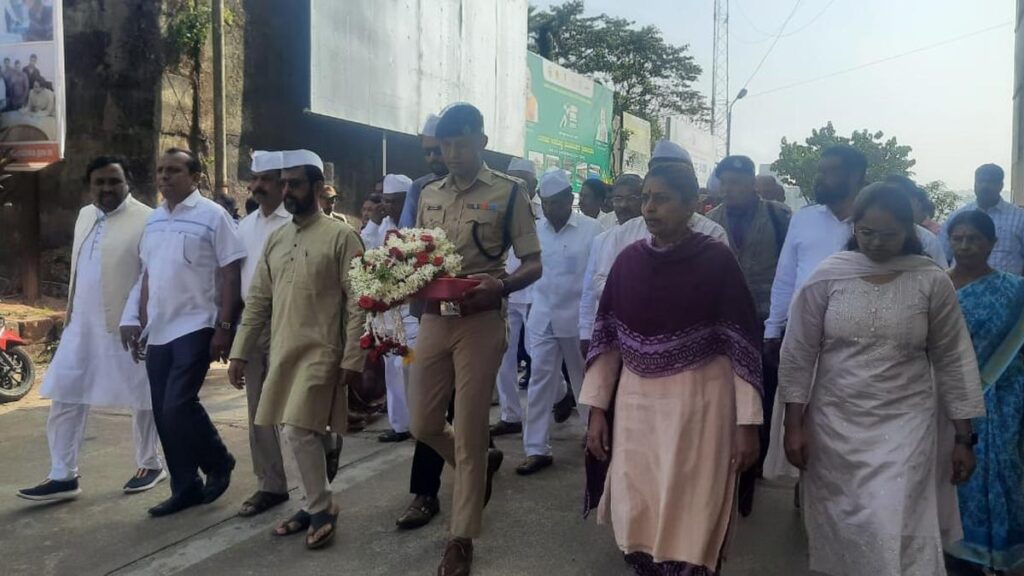
The ashes of Mahatma Gandhi were taken out in a procession through the streets of Madikeri in Kodagu near here on Monday as part of Martyrs’ Day.
Waterfalls regain their glory in Kodagu
‘Focus on growing indigenous variety of paddy in Kodagu’
A language of wood and sustainability
Architect George Emmanuel Ramapuram relates to the buildings of the past as a legacy, a treasure trove ‘that is proud to be passed on’, the longevity of these buildings coming with a huge sustainable quotient.

It is a language that speaks of growing up amidst intense nature, dense woods, the hills and its streams, flora and fauna leaving a deep imprint that has translated into physical structures which totally merge into their green environs.
Kodagu: Minister promises permanent solution to human-elephant conflict
Kodava community demands virtual constituency on the lines of intangible seat for Buddhists in Sikkim
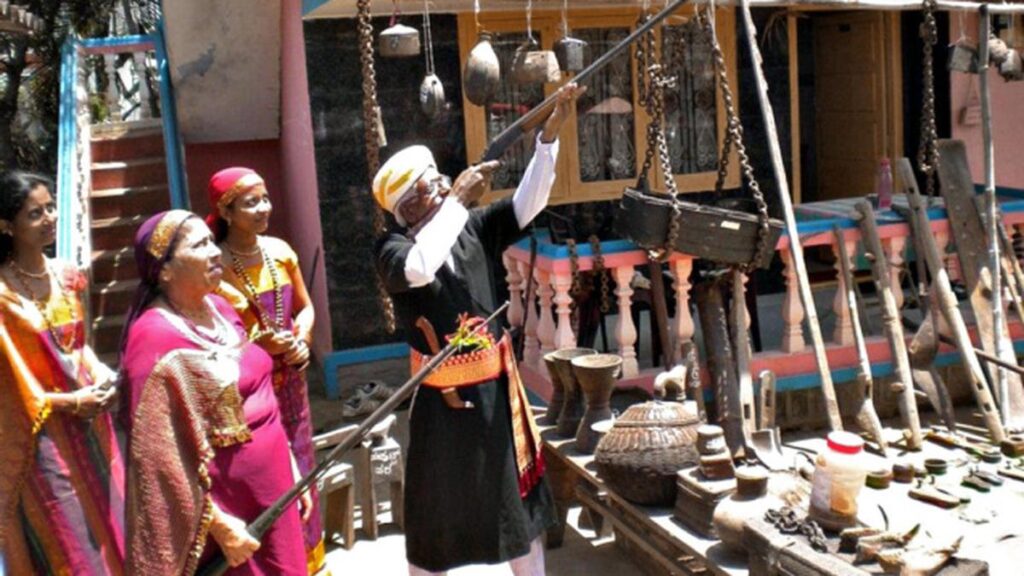
Kodagu district is one of the smallest districts in Karnataka. It was a Part ‘C’ State from 1952 to 1956. It was amalgamated with the then Mysuru State (now Karnataka) in 1956.
Members of the Kodava community, in the hill district of Kodagu, are demanding exclusive, intangible constituencies in Parliament and the Karnataka Assembly on the lines of the Sangha virtual constituency for the Buddhist monastic community in Sikkim.
source: http://www.thehindu.com / The Hindu / Home> News> India> Karnataka / by Darshan Devaiah B P / July 15th, 2023
Greens concerned over change in land use in Kodagu
Madikeri-based Environment and Health Foundation (India) said it was a matter of serious concern.
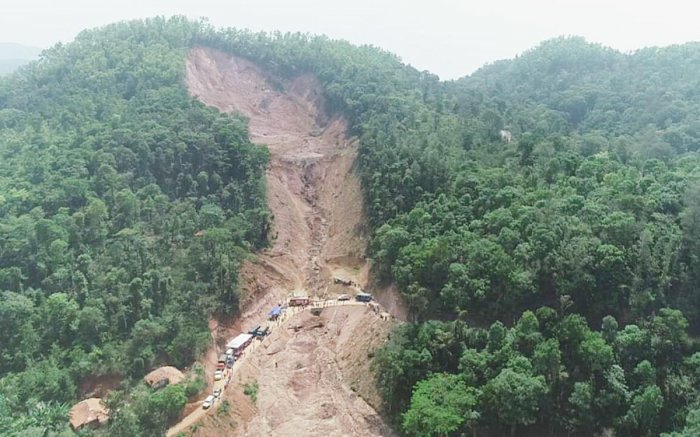
Activists in Kodagu have opposed the large-scale land transactions where people “from outside” were changing the land use, leading to commercialisation and displacement of indigenous communities.
Madikeri-based Environment and Health Foundation (India) said it was a matter of serious concern that people from outside the state were flocking to Kodagu for purchasing property by tempting the local people with high prices for their land.
“Some of them may be purchasing land with a view to cultivate plantation crops, but many individuals would be looking to convert the land for commercial purposes such as sites and resorts in order to make large profit,” said Colonel C P Muthanna , founder and honorary secretary.
In a letter written to Telangana Chief Minister K Chandrashekhar Rao, Muthanna said a number of persons buying properties in Kodagu were from Telangana.
“In view of the need to protect the Kodagu landscape as the catchment of River Cauvery and also in order to prevent further marginalisation of the local indigenous communities, we urge you to give a call to your people to not invest in purchasing land in Kodagu,” he said. He added that the foundation was trying to provide financial security to the people of Kodagu.
Experts have pointed to large-scale commercialisation and land use change as one of the reasons for the increasing incidents of floods and landslides witnessed in Kodagu over the last five years.
source: http://www.deccanherald.com / Deccan Herald / Home> States> Karnataka Districts / by DHNS, Bengaluru / July 25th, 2023
Human-Elephant Conflict In Kodagu: Thermal Drone Pinpoints Elephant Presence At Night
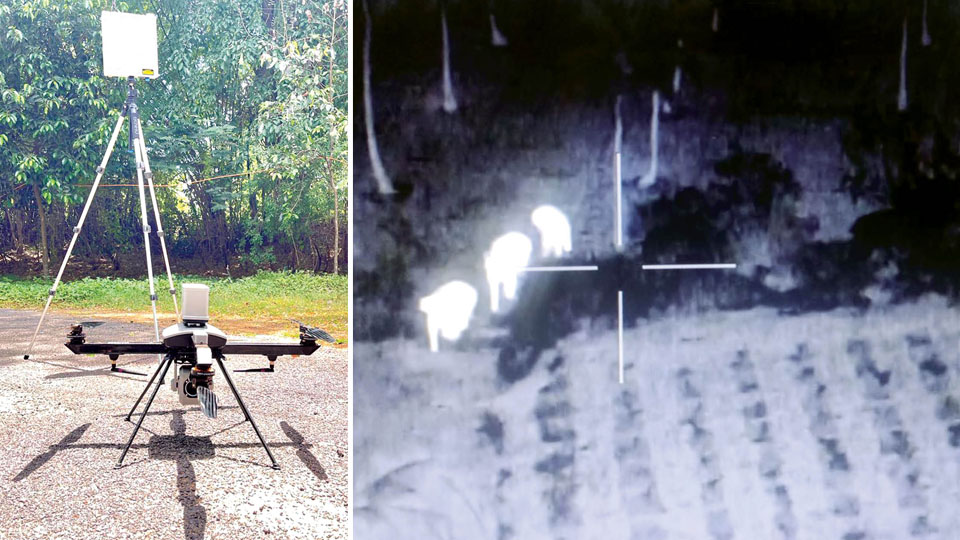
Helps Forest Officers effectively plan operations and drive pachyderms back into jungle.
Amid the rise in the human-elephant conflict in some forested pockets of Kodagu along the Nagarahole Tiger Reserve, the Forest Department has deployed a hi-tech thermal drone to keep track of daytime and nocturnal movements of wild elephants inside forest ranges and human habitats.
The drone technology was first used in Nagarahole to control forest fires and now, there are three such drones there. However, a need was felt to acquire a thermal drone due to the increasing human-elephant conflict.
Sources said while managing the human-elephant conflict, the safety of elephants and also humans has been a major concern for the Forest Department and the wildlife activists as deaths of animals are being frequently reported from various parts of the district as they come into contact with live electricity wires.
Due to the need, one thermal drone was brought to Nagarahole in January this year at a cost of Rs. 25 lakh. Monitoring the movement of the elephants has always been a challenge for the Department amid several limitations.
“Now we have been using a thermal drone and it detects live objects through their body temperature and those get flashed on the computer screen. It gives us a proper count of a herd and the number of calves,” Nagarahole Tiger Reserve Director Harshakumar Chikkanaragund told Star of Mysore.
The drone can also be used to drive the elephant herd away from a potential danger area as its location can be pinpointed. The drones are not only helping the staff determine the herd composition and drive them in a desirable direction but also prevent casualties.
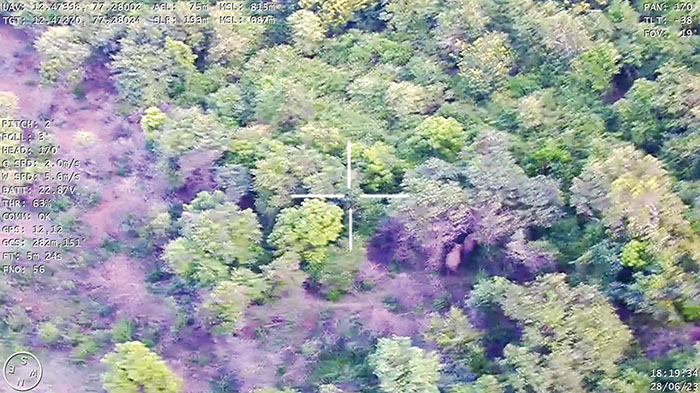
Unlike drones with normal cameras that rely on light signals to capture images, thermal drone cameras pick up heat signatures of living species in motion. This makes thermal drones ideal for deployment after sunset, complementing the use of normal drones during daylight hours.
“By accurately detecting herd movements, determining their composition and tracking elephant directions, objective decisions can be made for deploying elephant squads. Thermal drone cameras have become an invaluable asset for night-time operations. They enhance situational awareness, ensuring efficient management of wild elephant movements and mitigating potential conflicts,” Harshakumar added.
According to Deputy Range Forest Officer (DRFO) Yogeshwari Desai, who has been trained to use the thermal drone, the machine has a 2-km range and can fly 400 metres above the surface. It has a powerful thermal sensor and night vision ‘positive image’ technology cameras. It is convenient to use and the exact location can be ascertained. If one has to do physical combing even for a 2-km range, a lot of manpower and equipment is needed,” she explained.
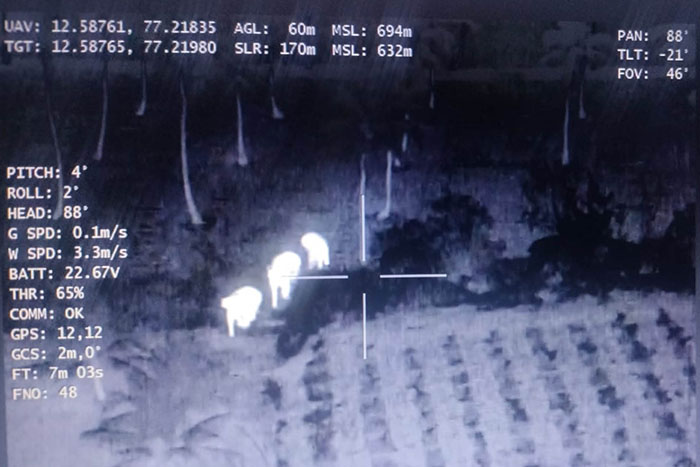
The camera on the drone operates based on the location information obtained via GPS, enabling easy navigation of the elephants’ whereabouts. Additionally, the drones produce minimal noise, allowing the staff to monitor animals such as elephants, tigers and other wildlife without causing any disturbance
During the night, the thermal drones conduct operations using radar, ensuring that local residents are not inconvenienced. Once the specific location of the elephants is identified, the information is sent to the Task Force and the teams proceed to drive the elephants back into the forest.
It also becomes easy to spot the origin of forest fire and extinguishers can be rushed to the place, she said. The drone has a backup of 40 minutes and after that, the battery must be charged. The drone has three batteries.
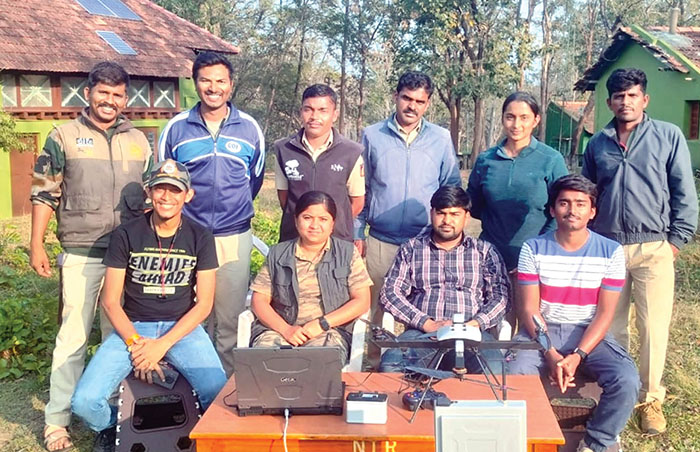
Trained team
Before the drone was deployed, a New Delhi-based team trained eight operators at Nagarahole. They are DRFO Jyothi Kumar and Forest Guard Sunil Nellebidu (Antharasanthe), DRFO B.B. Mahesh Kumar (D.B. Kuppe), DRFO Chethan Kumar Kolur (Nagarahole), DRFO Yogeshwari Desai (Anechowkur), DRFOs K.K. Arpitha and H.N. Madhuprasad (Hunsur) and Forest Guard Basavaraju (Veeranahosahalli).
The operators were trained for six days at Dammanakatte, Veeranahosahalli and Moorkal ranges that abut human habitats. The Nagarahole Director further said that they will seek aid from wildlife-related organisations, NGOs and firms to sponsor more such thermal drones for effective management of conflict zones.
source: http://www.starofmysore.com / Star of Mysore / Home> Feature Articles, Top Stories /July 18th, 2023
Maverick & Farmer’s new monsoon menu celebrates flavours of the Western Ghats
| With the monsoons at the doorstep, Maverick & Farmer Coffee, the artisanal farm-to-cup coffee brand, has crafted a new line coffees inspired and elevated by the local produce of the Western Ghats, home to the brand’s coffee estate. Directing the spotlight on ingredients found in the biodiverse and rain-laden Western Ghats, the menu celebrates the warm flavours and the spirit of the region. Embracing the brand’s commitment to revolutionising the coffee experience, sip by sip, the new menu marries local ingredients with maverick inventions to create brews that are apt for the season. The homegrown creations include – the Shoonti Kaapi, a soothing and healing hot, flat white with organic palm jaggery and dried ginger from the coffee estate at Pollibetta in Coorg. Yelakki banana plants dot the entire landscape of the coffee country, which inspired The Yellaki and Elaichi Cold Coffee, a deliciously refreshing drink infused with homegrown cardamom and laced with banana milk. Cinnamon is a beloved and comforting monsoon ingredient, and the Cinnamon Pour-over features naturally-processed Arabica coffee beans infused with the heady spice. The Kallu Hoovu Cappucino is an ode to the Kallu hoovu or Stone Flower, an aromatic spice used extensively in Malnad cooking and found in abundance along the rocky surfaces of the Western Ghats. When blended with the single estate fruity Arabica – Modur naturals, it becomes a gently flavoured cappuccino. Ashish D’abreo, Q grader, coffee roaster and co-founder of Maverick & Farmer Coffee, said, “The idea for the menu was to work in local and season-specific yet unexpected ingredients to create flavors that we haven’t yet tasted before, putting a whole new spin on coffees for the monsoons.” |
source: http://www.fnbnews.com / FnB News.com / Home> Top News / by The FnB News Bureau, Bengaluru / June 29th, 2023

