Category Archives: Uncategorized
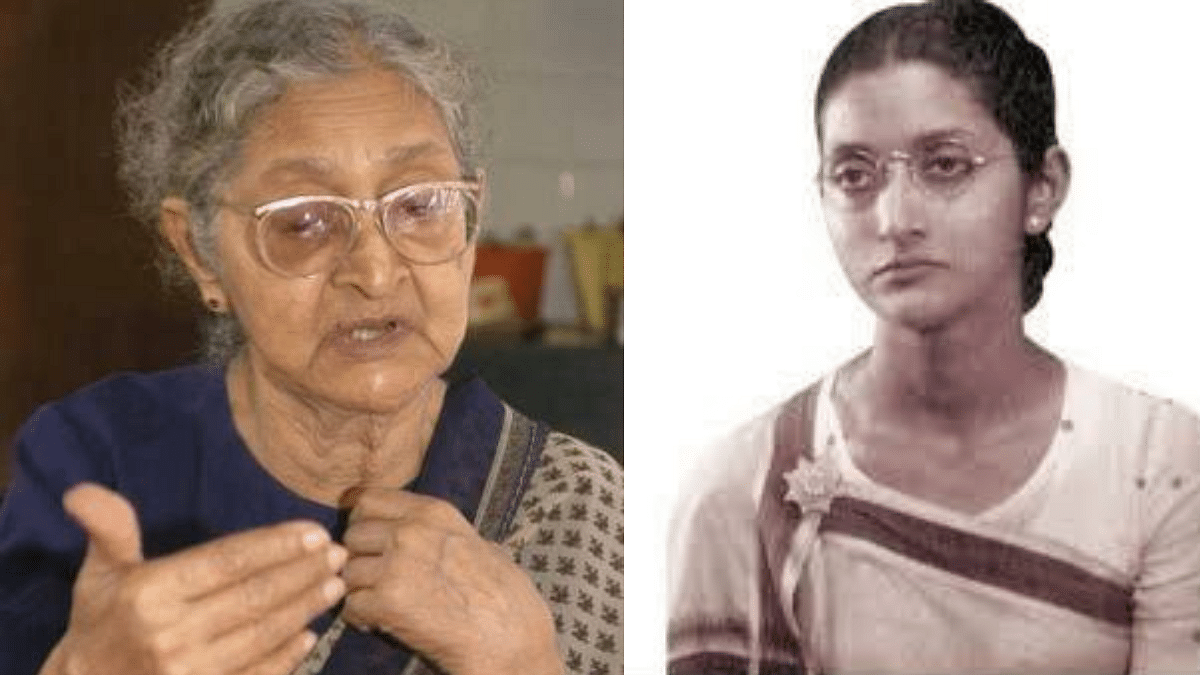
How Chonira Belliappa Muthamma, India’s 1st woman career diplomat, took on a male-dominated system
Muthamma is credited to be the first woman to join the Indian Foreign Services in 1949. She served as India’s ambassador to several countries & fought for her rights in SC.
New Delhi:
On 24 June, the world celebrates the International Day of Women in Diplomacy. In India, one such woman who paved the way for others in diplomacy was Chonira Belliappa Muthamma — the country’s first woman diplomat.
Born on 24 January, 1924, in Virapjet — a small town in Karnataka’s Kodagu district — Muthamma was the first Indian woman to clear the Union Public Service Commission (UPSC) examinations in her first attempt in 1948.
Her journey as the country’s first woman Indian Foreign Services (IFS) officer, however, was full of hurdles as she fought for and ensured she got what she deserved.
When Muthamma joined the foreign services, the ratio of women in administrative positions, was staggeringly low and men held most of the administrative positions. The male-dominated hierarchy was uncomfortable with the idea of a woman being equal to them.
According to Chokila Iyer, the first woman Foreign Secretary of India, Muthamma “opened the doors of South Block for her sisters in India.” In her tribute to Muthamma in the book Slain by System published in 2003, Iyer even called her “a diplomat par excellence and a fearless & forthright officer.”
Iyer added, “Diplomacy, like many other career avenues, has been forced to open its portals to both the sexes. For reasons not quite sustainable by logic, it was considered a chasse garde and a natural monopoly of men.”
Muthamma’s encounter during her UPSC interview was her first introduction to the challenges that lay ahead. She faced discrimination and discouragement from the then UPSC Chairman taking her interview, who tried to dissuade her from joining the IFS, she claimed in her writ petition to the Supreme Court in 1979 — which is considered a landmark judgment.
The UPSC chairman later personally informed Muthamma that he gave her the minimum marks in her viva by using his influence, said the writ petition.
She also had to sign an undertaking that she might have to resign from the IFS if she got married — a declaration as part of the “marriage rule”.
Rule 18 of the Indian Foreign Service Rules 1961 stated that “no married woman shall be entitled as of the right to be appointed to the service”.
Despite these hurdles, she joined the IFS in 1949 and served as India’s first woman diplomat for 32 years. Beginning her carrier as a Third Secretary in Paris, she served in several postings that were considered “difficult”, including Hungary and Ghana. Her last posting was in 1982 where she served as the ambassador to the Netherlands in The Hague.
A distinguished career
Muthamma’s father, an Indian Forest Officer, died when she was only nine years old and she, along with her sisters, was raised by their mother.
She graduated from Women’s Christian College in Chennai with triple gold medals and went on to complete her post-graduation from Presidency College, Chennai, with a degree in English Literature in 1948.
The same year, Muthamma sat for the civil services examinations and cleared the exam on the first attempt.
She then started as a Third Secretary in Paris and was later posted to Rangoon. She was shifted to London soon after. When she came back to Delhi, she was allotted the coveted division of the Ministry of External Affairs that dealt with Pakistan.
Later, she was given the much sought-after wing — “The Americas”.
After her retirement in 1982, she was nominated as a member of the special non-governmental Independent Commission on Disarmament and Security Issues — better known as the Palme Commission. She spent her retirement years with her brother in Bengaluru.
The landmark judgment
Systemic bias and inequality reached their peak when in 1979 Muthamma moved the Supreme Court after she was denied promotion to Grade I of the Service. She alleged that she was denied this position merely because she was a woman.
Her writ complaint mentioned that there was a long-standing practice of hostile discrimination against women in the foreign service. Following the petition, the ministry promoted her immediately in the hope that the SC would dismiss the case.
The central government also issued a statement that said, “Although the petitioner was not found meritorious enough for promotion some months ago, she has been found to be good now, has been upgraded and appointed as Ambassador of India to the Hague, for what it is worth.”
The Supreme Court dismissed the case, but Justice V.R. Krishna Iyer, who was part of the three-member bench hearing the matter, said: “The misogynous posture (of the Ministry of External Affairs) is a hangover of the masculine culture of manacling the weaker sex, forgetting how our struggle for national freedom was also a battle against women’s thraldom.”
With several achievements attached to her name, Muthamma, who passed away on 14 October, 2009, at 85, has left behind a lasting legacy for several women who aspire to be in the civil services — fighting the same struggle she fought decades ago.
(Edited by Richa Mishra)
source: http://www.theprint.in / The Print / Home> India / by Divyanshi Chandra / June 24th, 2023
Training on coffee cultivation conducted at Chukitong
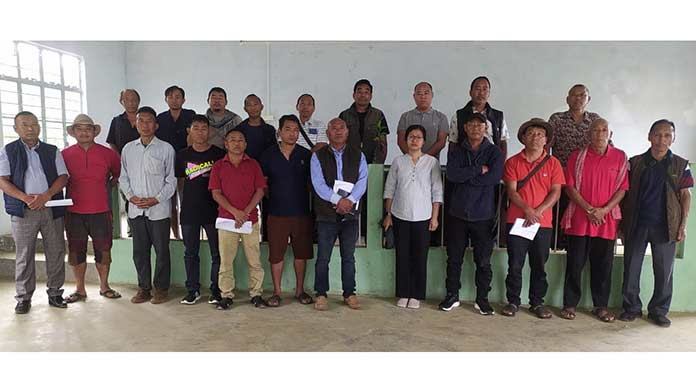
A one-day training on coffee cultivation was conducted for coffee growers of Tsungiki village area and Chukitong Range by resource persons from office of the senior liaison officer, Coffee Board, Mokokchung at Chukitong Range community hall, Chukitong under Wokha district on Thursday.
Resource persons for the training, extension inspectors N. Imtisungchit Imchen and Sentiyangla Pongener, dwelt at length on the various aspects of coffee cultivation including site selection, climate and soil requirements for coffee crops (mainly Arabica and its various selection grades), site for nurseries, raising of healthy seedlings in nurseries, germination beds, sowing, preparation of poly bags (basket) nursery, transplantation, and aftercare of seedlings. They also explained in detail the various steps involved in planting and aftercare including preparation of land, line markings and spacing for different varieties of coffee seedlings, pits for planting, planting and its aftercare, nutrient management, and harvesting.
Later, at the field trip part of the training, the resource persons imparted a hands-on demonstration training to the participants on the various procedures involved in coffee plant care including bush management, single step system, topping, pruning, handling, centering and de suckering, preparation and construction of heap for composting and its applications, weed management, and management of the various pests and diseases in coffee plants.
Meanwhile, speaking to Nagaland Post on behalf of the coffee growers of the area, Yanthungo Kikon expressed profound gratitude to the Coffee Board, Mokokchung and the resource persons for conducting the one-day training on coffee cultivation the area. Kikon also appealed for more support from the Coffee Board in the days to come as coffee cultivation in their area was still in its infancy. He also informed that 19 coffee growers from the area attended the one-day training on coffee cultivation.
source: http://www.nagalandpost.com / Nagaland Post / Home / by Correspondent / June 24th, 2023
A Coorg And His Revolver

The 107-year-old story of Koothanda M. Somaiah.
Koothanda M. Somaiah was born around the 1890s. Right from a young age, he displayed a mind of his own. He was good at his studies and excelled in sports. Somaiah was handsome and a cocky young lad.
His father, Mandanna, was well-to-do and wanted his eldest son to help him manage their paddy fields and newly opened coffee estate. However, young Somaiah was keen on a job and was curious to explore the world beyond Coorg.
After completing high school, which was the highest education available in Coorg in those days, Somaiah got a job at the post office in Pollibetta. His performance was particularly good and by the time he was around twenty years of age, he was made the postmaster of Pollibetta post office.
Pollibetta had a good number of British coffee planters, and the post office was an important department. Snail mail, as we now snidely refer to this facility, was the only mode of communication those days. Somaiah’s efficiency as a postmaster was very much appreciated by the Brits as well as the locals.
Things were progressing well for Somaiah. He hoped this experience would help him move up the ladder in Government service and enable him to realise his dream of seeing the outside world, especially Bombay.
Somaiah’s dream was rudely shaken by a rude British planter who had recently arrived in Pollibetta. This Brit rode to the post office and after securing his steed he barged right into the post office. He expected Somaiah to stand up and be different to him. The peeved Brit started ordering Somaiah around. Somaiah remained seated and told the white man to see the board at the entrance to the post office.
It was: ‘No Admission without Permission’
The Brit ranted and raved. He stormed out of the post office threatening to have Somaiah sacked. Even before any action could be taken, Somaiah mailed his letter of resignation to the Commissioner of Coorg. Despite persuasion from other British planters, Somaiah refused to take back his resignation.
Somaiah’s father now hoped that his son would join him in the cultivation of their land. But young Somaiah had his own plans. He had sufficient savings to travel to his dream city — Bombay. Before leaving Coorg, he acquired a compact revolver. With the Coorgs and Jamma holders exempted from the Disarmament Act, Somaiah could carry his revolver anywhere in British India.
Somaiah landed in Bombay sometime in early 1913. He got a good job and enjoyed life in the bustling city. However, an incident a couple of years later, marred his happiness.
On the morning of 24th August 1915, Somaiah was travelling in the tram from Dhobi Talao to Cheera Bazaar. The tram conductor checked the tickets of all the passengers including that of Somaiah’s. About half-an-hour later, Somaiah, who was engrossed admiring the changing scenes on the streets, was rudely jostled by the tram conductor. He crudely demanded to see Somaiah’s ticket. Somaiah told him that his ticket has already been checked. The conductor got aggressive and soon the two were embroiled in serious fracas.
To put an end to the conflict, Somaiah thrust his hand in his trouser pocket to take out the ticket. Suddenly the conductor struck Somaiah. An infuriated Somaiah’s hand grabbed the revolver in his pocket. He hit the conductor with the butt of the revolver. Now the situation became serious. The tram conductor called the Police and Somaiah was taken to the Police Station. His revolver and other possession on his person including his brand-new wristwatch were impounded.
Luckily, Somaiah was not charged for assault but for a lesser misdemeanour of ‘behaving in a disorderly manner in a public place.’
The Magistrate fined Somaiah Rs. 20 for possession of firearms without proper licence. He ordered the weapon and ammunition be confiscated and sent to the Commissioner of Police for disposal.
A shocked Somaiah tried to explain to the Magistrate that he was a Coorg and a Jamma holder, thus exempt from the Arms Act. This made everyone in the Court snigger and none of them had heard of Coorg! The Magistrate was not convinced even after Somaiah produced the exemption certificate issued to him in Coorg on 24th January 1909.
Somaiah pursued the case and appealed for his weapon and wristwatch to be returned to him. He emphasised the point that Arms Exemption to Coorgs entailed them to perform military or Police duties and as a responsible citizen, he had offered his services to the Government on more than one occasion.
The matter finally reached the Office of the Viceroy of India. The Viceroy’s Office acknowledged the exemption to Coorgs but ruled that the privilege of Arms Exemption ceases to extend to Koothanda M. Somaiah considering the offence committed.
This judgement devastated Somaiah. He continued to plead his case but to no avail.
107 years later, we know about this episode from a detailed letter Somaiah wrote to the editor of New India, that was published in their issue dated Saturday, 27th May 1916.
Somaiah explains how this decision to deprive him of his weapon was not only hurtful to him, but also to all the people of Coorg, for whom guns are important in their traditions, festivals and rituals. He sought the return of his revolver and wristwatch since he had already paid the penalty of Rs. 20 for his impulsive action.
Not much is known about Somaiah after this incident. He rarely communicated with his family in Coorg. Unfortunately, no photo of him is available. He apparently remained a bachelor. Sadly, Somaiah died in Bombay when he was in his late thirties.
The 107-year-old newspaper cutting was recently found by Somaiah’s nephew Koothanda P. Uthappa. The paper is fragile and I managed to take a scan of the document. Even though the print has faded one can read Somaiah’s spirited letter to the editor. My thanks to K.P. Uthappa for giving me access to this interesting story of ‘A Coorg and His Revolver.’
source: http://www.starofmysore.com / Star of Mysore / Home> Feature Articles / by C.P. Belliappa / March 17th, 2023
Five most stunning waterfalls in Madikeri during the monsoon season
Madikeri, a serene hill station nestled in the Western Ghats of Karnataka, India, is renowned for its enchanting waterfalls. Surrounded by lush greenery, mist-covered hills, and coffee plantations, Madikeri offers a tranquil escape for nature enthusiasts and travelers alike.
In this article, we will embark on a journey to discover the top 5 waterfalls in Madikeri, each showcasing its unique charm and captivating beauty. So, pack your bags and get ready to immerse yourself in the awe-inspiring splendor of these cascades during this monsoon. You can visit these waterfalls while a trip to Madikeri. The distance from Bangalore is around 260 km, means hardly 4 to 5 hour drive from the IT city.

1. Abbey Falls
Our adventure begins with Abbey Falls, one of the most renowned waterfalls in Madikeri. Located amidst a sprawling coffee estate, Abbey Falls offers a mesmerizing sight as water cascades down from a height of approximately 70 feet. The gushing waters create a symphony of sound, accompanied by the lush greenery surrounding the falls. A short trek through the dense forest will lead you to the falls, where you can witness nature’s grandeur up close. Remember to capture this breathtaking beauty on your camera and enjoy a refreshing dip in the pristine pool at the base of the falls.
2. Iruppu Falls
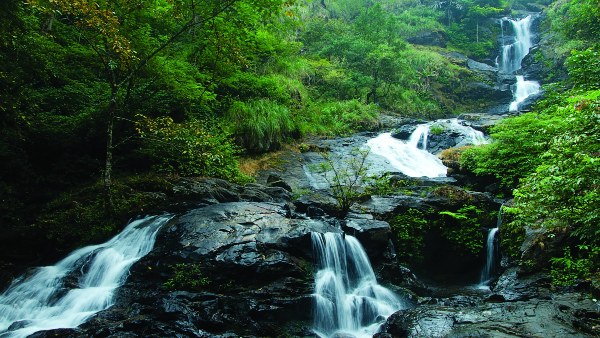
Moving on to our next destination, we arrive at the magnificent Iruppu Falls. Situated on the Brahmagiri Range in the Western Ghats, Iruppu Falls is a sight to behold. The gushing waters plunge down from a height of approximately 170 feet, creating a magnificent spectacle. Legend has it that this waterfall holds religious significance as it is believed to be the place where Lord Rama shot an arrow to create a water source for his thirsty wife, Sita. Surrounded by dense forests, the trek to Iruppu Falls is an adventure in itself. The picturesque surroundings, coupled with the soothing sound of the cascading waters, make it a perfect spot for a picnic or a refreshing swim.
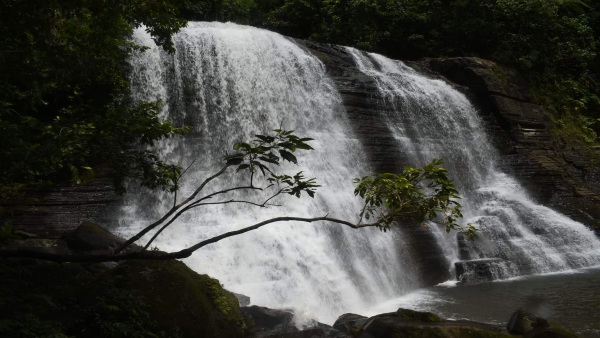
3. Chelavara Falls
Our next stop is the captivating Chelavara Falls, also known as Embepare. Located in the Cheyyandane village, Chelavara Falls is a hidden gem in Madikeri. As you approach the falls, the sound of rushing water echoes through the air, building anticipation for the breathtaking view that awaits. The cascading waters plunge from a height of approximately 150 feet, forming a stunning pool at the base. The verdant greenery and the mist-covered hills surrounding the falls add to its mystical charm. Indulge in the beauty of Chelavara Falls and let yourself be captivated by its tranquil ambiance.
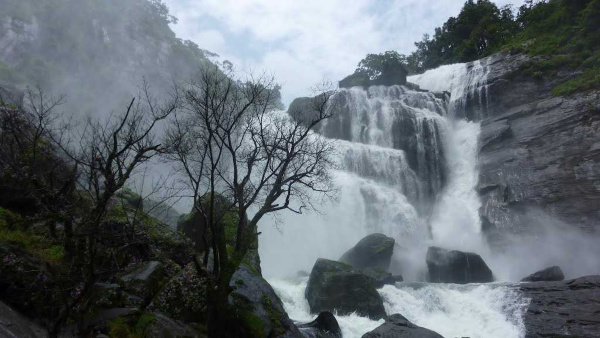
4. Mallalli Falls
Continuing our exploration, we arrive at the mesmerizing Mallalli Falls, nestled in the foothills of the Pushpagiri Mountains. Mallalli Falls is a true natural wonder, with water plummeting from a height of around 200 feet. The view of the falls against the backdrop of the lush Western Ghats is a sight that will leave you spellbound. To reach the falls, you’ll embark on an invigorating trek through picturesque landscapes, passing through dense forests and coffee plantations. The sheer force of the cascading waters, the mist that surrounds the falls, and the cool breeze that caresses your face create a truly surreal experience.
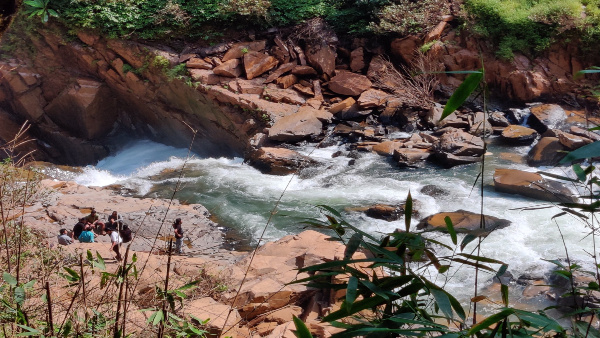
5. Burude Falls
Our final destination is the captivating Burude Falls, located near Siddapur in Madikeri. This waterfall is a hidden treasure, relatively unexplored by tourists, making it a perfect retreat for those seeking tranquility. The falls cascade down a rocky terrain, forming a series of smaller falls, and ultimately converge into a larger pool. The surrounding lush greenery and the serene atmosphere make it an ideal spot for nature lovers and photographers. The untouched beauty of Burude Falls is sure to leave an indelible mark on your memory. Madikeri is a paradise for waterfall enthusiasts, offering an array of breathtaking cascades surrounded by stunning natural landscapes. Abbey Falls, Iruppu Falls, Chelavara Falls, Mallalli Falls, and Burude Falls each possess their unique allure, captivating visitors with their splendor. From the gushing waters to the mist-covered hills, these waterfalls provide a rejuvenating escape from the bustle of city life. So, embark on this enchanting journey, immerse yourself in the mesmerizing beauty of Madikeri’s waterfalls, and create memories that will last a lifetime.
source: http://www.nativeplanet.com / Native Planet / Home> Travel Guide / by Navya Sona / June 23rd, 2023
Governor Launches Kodagu University’s New Website
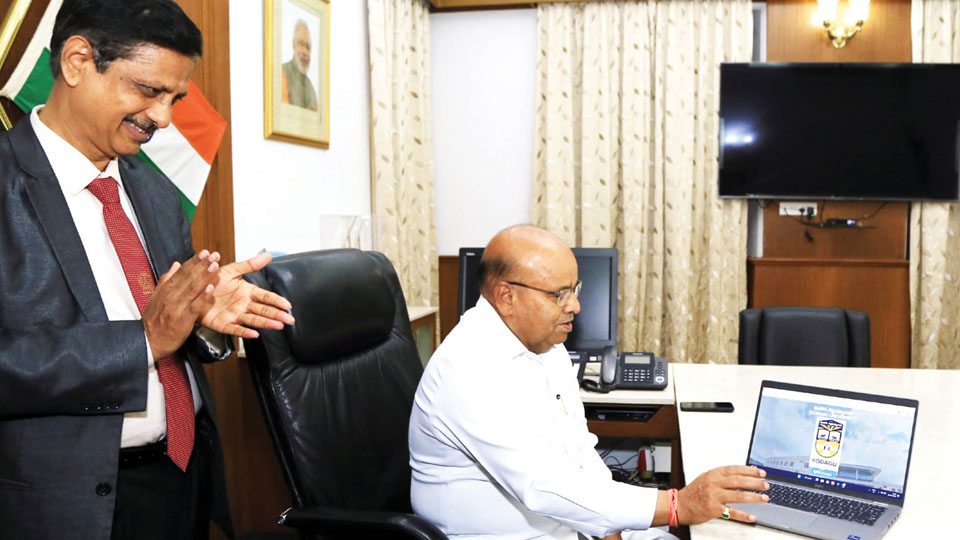
Kushalnagar:
Governor Thaawarchand Gehlot, who is the Chancellor of all Government Universities in the State, launched the new website of Kodagu University, which has been designed by Kodagu University and Karnataka Government e-Administration Centre. The new website was launched at Raj Bhavan in Bengaluru on May 25.
Earlier, Kodagu University Vice-Chancellor (VC) Dr. Ashok Sangappa Alur greeted the Governor with a flower bouquet and the Governor wished for the overall development of the University.
Special Secretary to the Governor, Personal Secretary, Additional Deputy Commissioner (ADC), Special Officers, representatives of e-Administration Centre and others were present.
Meanwhile, Professors, Lecturers, administrative staff, research students and Post-Graduation students watched the launching of the new website through internet.
Any information pertaining to admission at Kodagu University can be obtained by logging on to kuk.karnataka.gov.in
source: http://www.starofmysore.com / Star of Mysore / Home> News / May 28th, 2023
Karnataka government suspends DCF over illegal felling of trees
The Karnataka government on June 21 issued orders to suspend Chakrapani Y, Deputy Conservator of Forests (DCF), Bengaluru Urban division, until further orders.
Bengaluru :
The Karnataka government on June 21 issued orders to suspend Chakrapani Y, Deputy Conservator of Forests (DCF), Bengaluru Urban division, until further orders.
Chakrapani was earlier working as DCF, Virajpet division. Conservationists, activists and experts questioned the State Government’s decision to appoint him despite the allegations against him.
The orders have been issued citing the case of illegal felling of trees in Survey Nos. 76/35 and 76/1, Kutta village, Virajpet taluk. The PPCF, vigilance, in a letter dated February 4, 2023, had stated that after a detailed investigation, the officer was said to be involved in the case and in the guise of planting teak trees, the property owner had axed the trees.
It was also pointed that the signatures were forged of the land owner for 66 fully-grown mature trees in adjacent encroached government land located 10m from Nagarhole Tiger Reserve and Wayanad Wildlife Sanctuary in Kerala. In the order, it has also been pointed that the government seal and signatures were also forged. Knowing all this, the DCF is said to have given transportation permission, it said.
source: http://www.newindianexpress.com / The New Indian Express / Home> States> Karnataka / by Express News Service / June 23rd, 2023
This Bengaluru start-up pitches for ‘profit for the planet
Mycelium hopes to conserve 10,000 acres of Western Ghats through private forests.
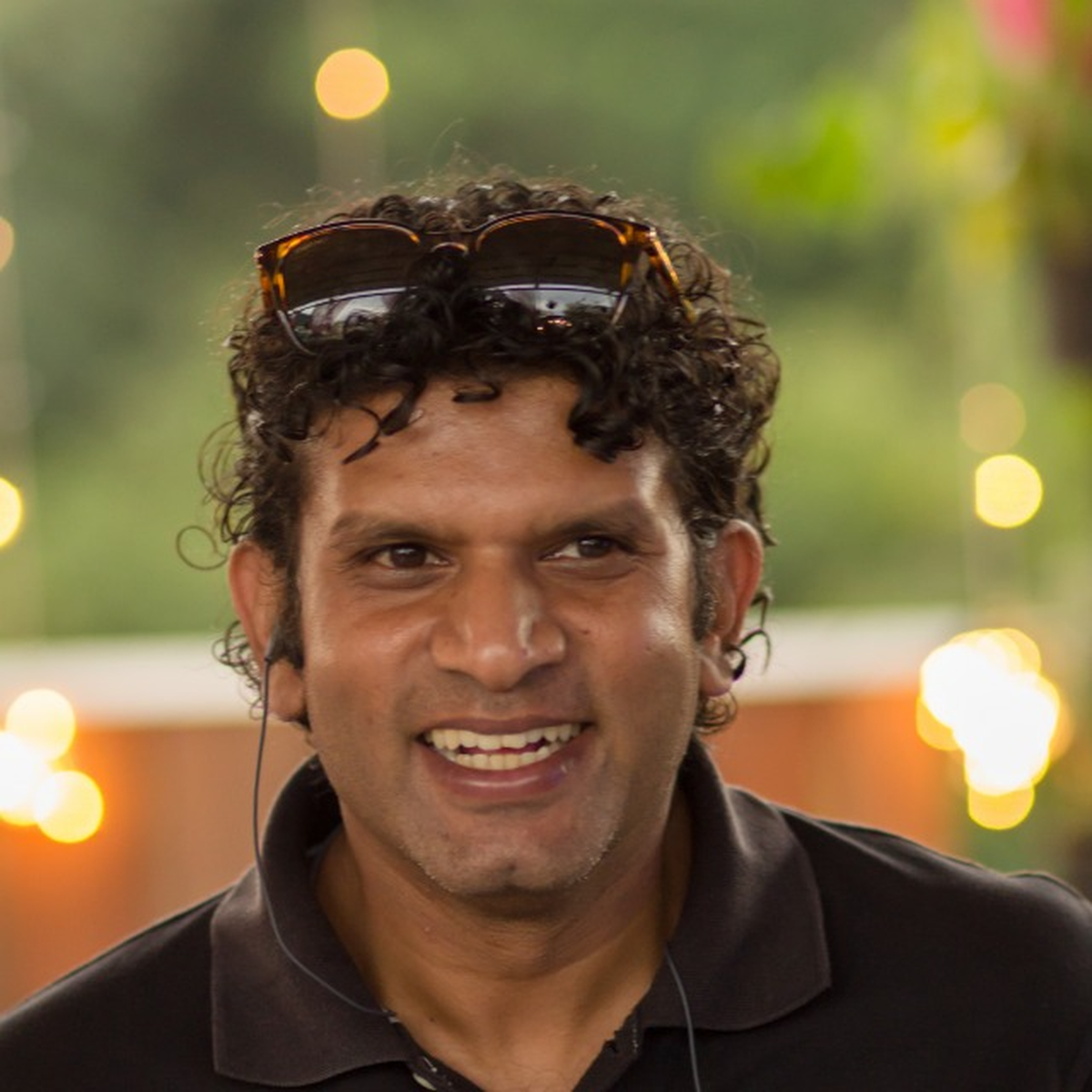
When Bengaluru-based serial entrepreneur Nishanth Prasannan moved to Kodagu with his family in 2016, it was an escape from the hustle and bustle of the city.
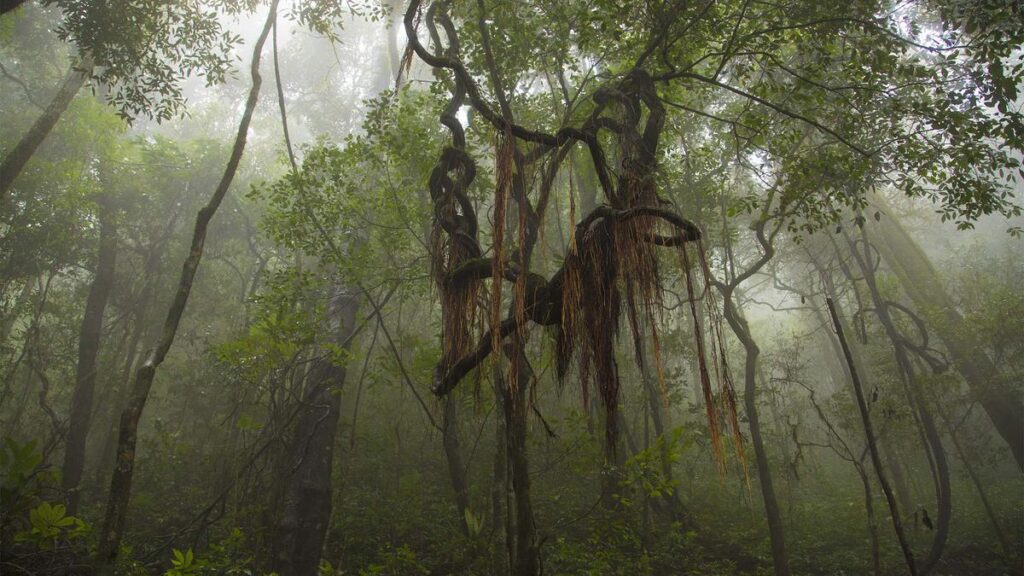
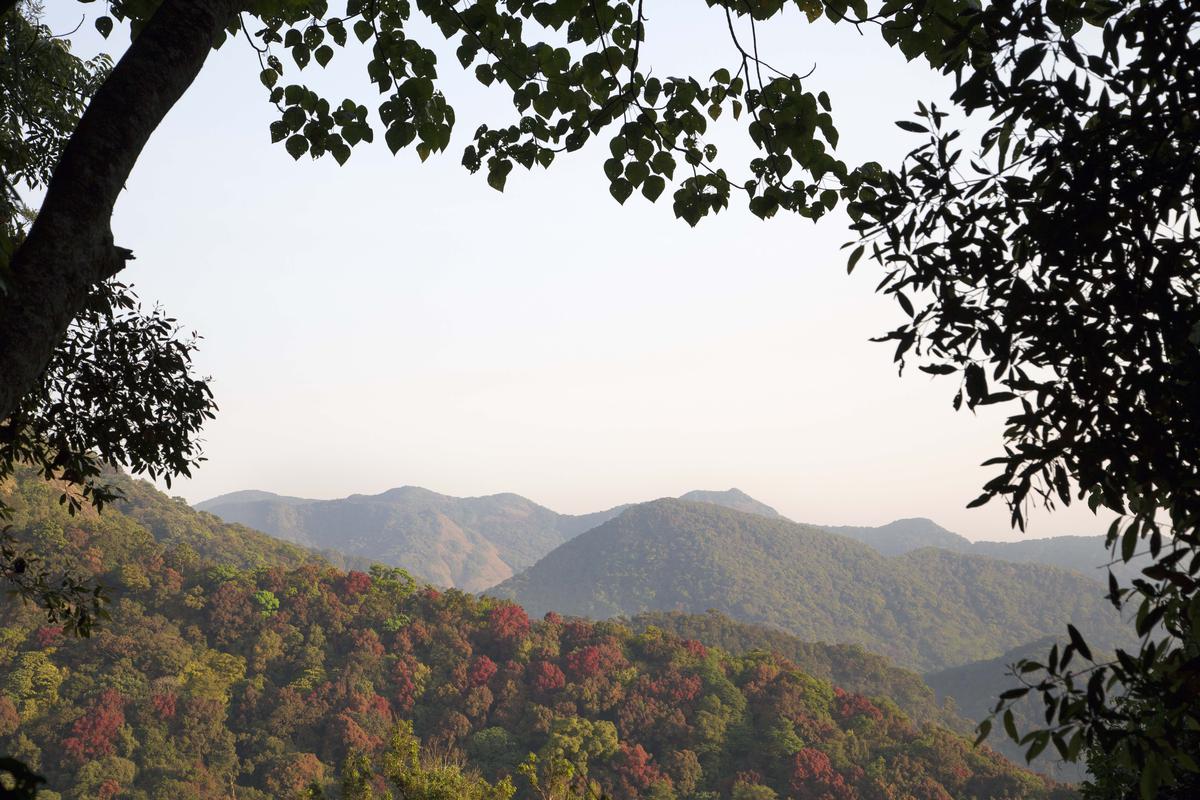
In his own words, Mr. Prasannan, an urban dweller until then, developed quite a “romantic” association with Kodagu, which was all so green and misty. It lasted for about two years. The heavy rains and landslides that shattered Kodagu in 2018 woke him up to reality with a jolt.
Skewed concept
“The year 2018 made me realise that not everything green is beautiful,” says Mr. Prasannan. When India’s State of Forest Report (ISFR) 2021 came out last year, environmentalists and conservation experts called out how the report had counted plantations as forests, which was misleading. “Forest cover is a skewed concept. Our landscape has been abused for years, and the abuse is not visible because it’s all green.”
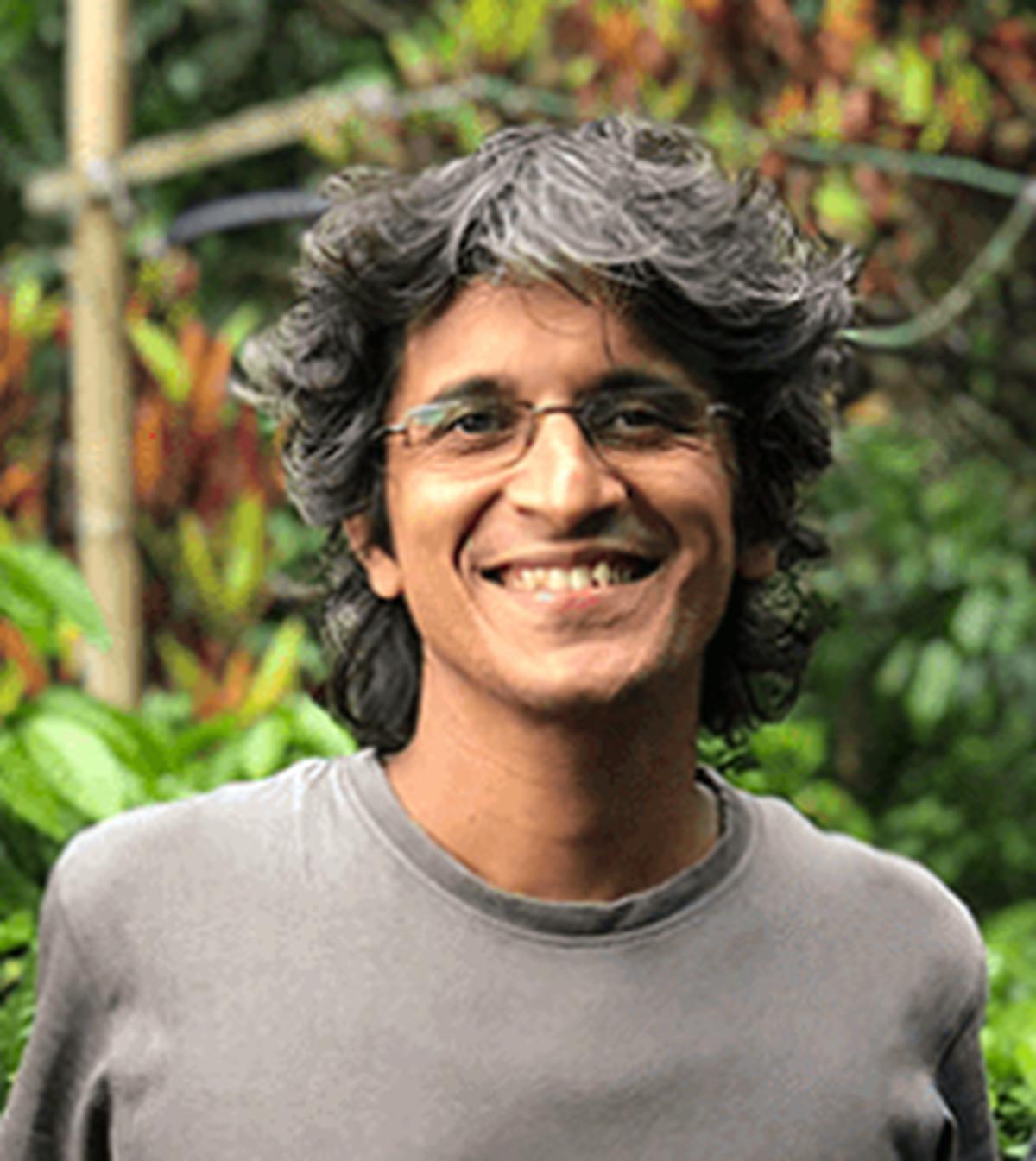
Mr. Prasannan, along with Abhishek Jain, who is a naturalist based out of Kodagu, then started probing ways to monetise land without exploiting it. This led to the birth of Mycelium, a Bengaluru-based start-up that aims to buy private lands outside of protected forests and conserve or restore these spaces.
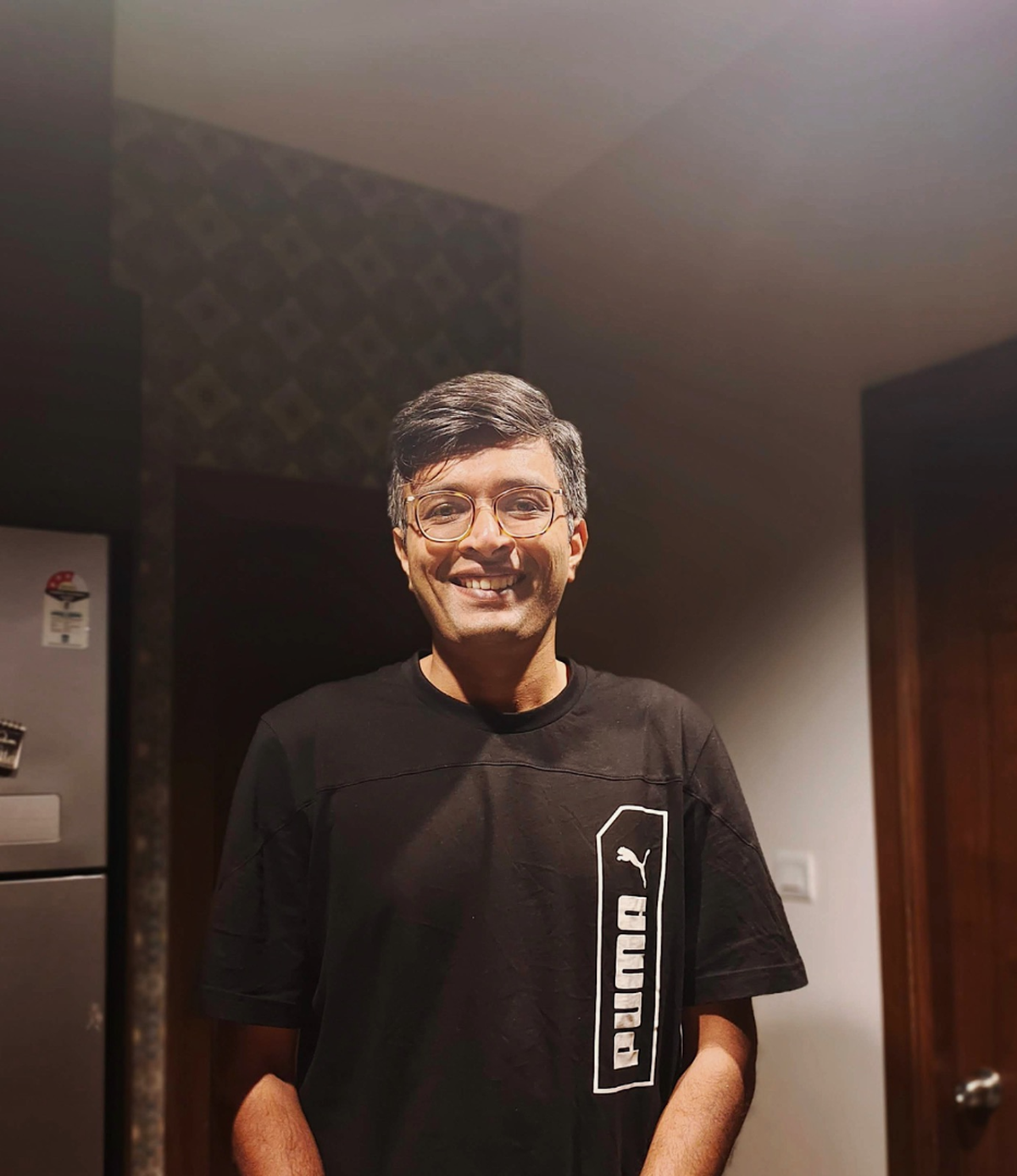
“We are not buying land for real estate purposes. Our idea is to look at rapidly depleting forests and pause that depletion. We are looking at private lands adjacent to forest or corridors of sorts that are prone to conflicts and then taking them off the market,” says Vinod Chandramouli, who joined as a co-founder in 2022.
Collective conservation
Mycelium takes the help of individuals who care for the cause and would invest money into it. They form a “collective”. The money is used to buy the land and develop the habitat. “The collective members do not get demarcated pieces of land, but equity in the company,” Mr. Chandramouli clarifies.
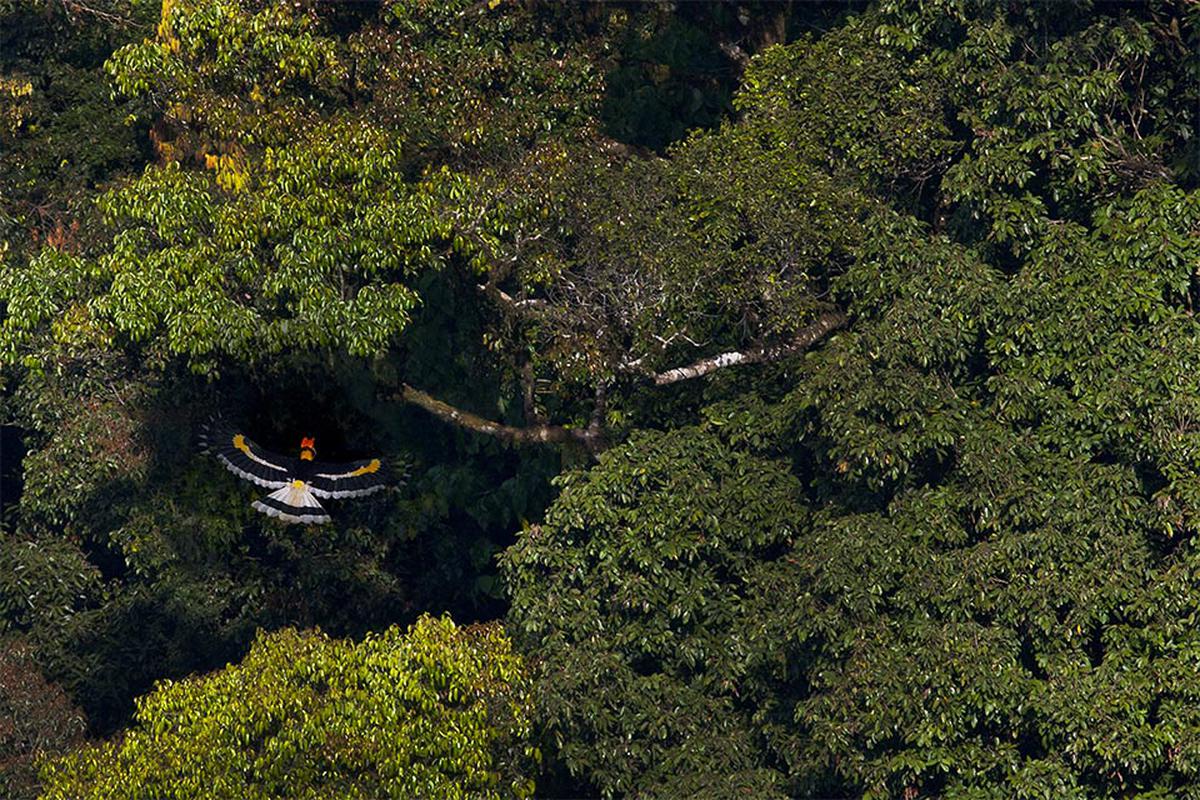
The start-up aims to conserve 10,000 acres of Western Ghats by 2035 and is currently finalising the registration of its first property, a 70-acre land near Pushpagiri. Named Dancing Frog Habitat, it has four collective members as of now.
According to the founders, 80 per cent of the land would be conserved as a pristine forest, while in the remaining 20 per cent, there would be facilities enabling the co-existence of humans with nature. The team is looking at revenue models such as forest experiences for communities, building interpretation centres, organising treks and building a marketplace of forest produce. The private forest would also be open for research purposes.
“The idea is to not attract urban dwellers to come and take selfies but to build a narrative that inspires them. Buying organic honey is considered cool today, but can we shift the narrative from buying honey to adopting a beehive? That’s what we are trying to do,” Mr. Chandramouli says.
The Mycelium team is building an advisory group that would guide the team and build a playbook that the founders hope would enable more people to replicate the same in other parts of the country. The ground-level execution would be with the help of the local community, say the founders.
Not new concept in India
Private forests are not entirely a new concept in India. In the 90s, a group of nature lovers came together to develop Vanvadi, a forest about 90 km from Mumbai. In 2021, Bengaluru-based entrepreneur Suresh Kumar converted 21 acres of barren land in Sagar into a forest with the help of environmentalist Akhilesh Chipli.
There have also been quite a few takers for forests inspired by the Miyawaki method in different parts of the country. Private forests adorned headlines in 2017 when Bollywood celebrities Saif Ali Khan and Kareena Kapoor gifted their son Taimur Ali Khan a forest on his first birthday.
Mycelium founders try to marry the concept with their entrepreneurial capabilities, build systems into the process of conservation, and make it economically sustainable. “We are exploring if there are ways to make a for-profit conservation narrative,” says Mr. Chandramouli.
Government’s earlier proposal
In 2018, the Karnataka government proposed the Karnataka Private Conservancies Rules-2018, which encouraged private conservation lands adjoining national parks and wildlife. The policy was vehemently opposed by environmentalists and conservationists who feared it would lead to encroachment of protected forested areas, circumvention of eco-sensitive zone regulations and increased man-animal conflict. Increased greenwashing attempts by corporates have also been making experts sceptical about for-profit conservation initiatives.
“Be it privately or government-owned land, if the forces are strong enough for changing land use, invariably land use gets changed in India. From a bird’s eye view, such initiatives come with several potential risks as too many elements are beyond the control of well-meaning investors. What are near these private forests? Are there human settlements? What if potentially dangerous animals start coming into these lands? Will it lead to increased human-animal conflict? Who would then be responsible? All these are issues that need to be thought through,” says Ravi Chellam, coordinator, Biodiversity Collaborative and CEO, Metastring Foundation.

He adds it is vital for such initiatives to invest in and empower local communities and not end up dispossessing them of their lands and restricting their access to these lands and the forest resources they offer. “There are also concerns related to justice and ethics at a broader scale because such efforts are in some sense resulting in consolidation of wealth by the wealthy.”
Nityanand Jayaraman, an environmental activist, echoes similar concerns. “Given that the market is a cause of the crisis, trying to solve it again using the market is concerning. Even if your aim is conservation, the idea is essentially profits. There’s an ecological and social crisis here which are both interlinked. Such initiatives marginally address the ecological issue but do not address the social issue.”
No financial institution funding
Mycelium founders, however, think differently and emphasize that the initiative will enable the locals to engage with them and tap into their knowledge. Prasannan says, “We have been really tight-fisted about the kind of funds we have been using. We are absolutely sure that we will not take financial institutional funding. If someone gives the money and says they want ‘x’ per cent returns, then there’s no investment into the cause.”
Mr. Chandramouli adds, “If we were to let this land become a coffee estate, it would have a larger impact on the Pushpagiri region than it would have if you take it off the market. Any collective member who comes in is heavily gatekept. We tell them from day 1 that this is not a real estate team and to not expect the appreciation of the land to go from ‘x’ to ‘y’. Nor is money going to come in as interest. These 70 acres are for the next 100 to 300 years.”
source: http://www.thehindu.com / The Hindu / Home> News> Cities> Bengaluru / by Shilpa Elizabeth / June 08th, 2023

