Category Archives: Uncategorized

Out-of-the-‘box’ solutions to labourers’ hunger woes

OutoftheBoxKF29apr2020

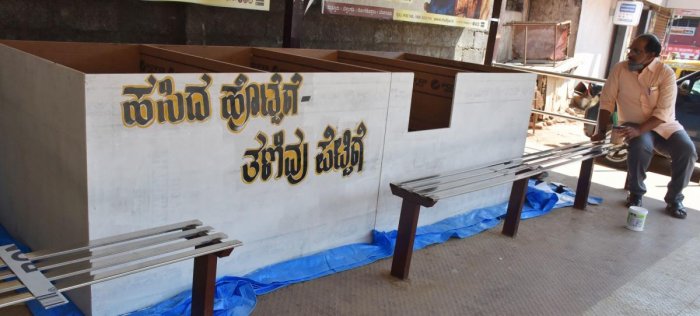
As hundreds of plantation workers are stranded in Kodagu and bearing the brunt of lockdown, the district administration has placed boxes in five prominent places in the district requesting the donors to contribute rice, lentils and other items that have a long shelf life.

The initiative, titled “Hasida Hottege Tanivu Pettige,” is directed towards providing foodgrain to the distressed labourers’ families. Under the scheme, boxes have been placed in an old private bus stand in Madikeri, private bus stand in Kushalnagar, private bus stand in Somwarpet, near clock tower in Virajpet and bus stand in Gonikoppa.

Workers, in thousands, from other districts and states work in coffee plantations in Kodagu. They are now stuck in the district and are not able to return to their native places.

They do not have any work and are currently living in the line houses of the plantations.

As these families do not have any ration cards, they cannot get foodgrain distributed by the government through fair price shops. It has become a challenge for the district administration to provide food and other facilities to these labourers.

The condition of labourers living in hilly areas of the district has worsened as the supply of rice, sugar, edible oil, onion and spices is hit.

The people, who purchase grains on Mondays, Wednesdays and Fridays, have been requested to contribute a share in these boxes, towards the less privileged.

The district administration has now been registering the names of volunteers to distribute the collected grains to the needy.

Deputy Commissioner Annies Kanmani Joy said that 2,500 workers had been identified in the district, to whom the food items collected will be distributed. This apart, food kits are being provided through the ITDP department, she added.

source: http://www.deccanherald.com / Deccan Herald / Home> State> Karnataka Politics / by DHNS / March 30th, 2020

Rage Coffee Brews Expansion With Refex Capital Investment

– Investors from Keiretsu Forum Chennai will also be participating

– Rage Coffee plans to expand its product line with the funding

– The company sells on ecommerce and 400 offline stores

RageKF10jan2020

New Delhi-based food & beverages brand Rage Coffee has raised funding in a round led by early-stage investment firm Refex Capital. Angel network Keiretsu Forum Chennai and some other “prominent” investors will also be participating in this round.

The list of participants include T.D Mohan, former joint MD of CavinKare; Dr Rajan Srikanth, co president of Keiretsu Forum Chennai and Singapore; Prakash Katama, former CEO of TVS Electronics; Uday Sodhi, former business head at SonyLIV, private equity investor Ajay Sarupria, actor Rannvijay Singh Singha; A. Kumar, Founder of Gemini Paints, and Sawan Gupta, MD at Spero Group.

Founder and MD of Wazir Advisors, Harminder Sahni, joined Rage Coffee’s board of advisors for the fundraise. Moreover, Sridhar Parthasarathi, who is the managing partner at Refex Capital, has also joined the Board.

With this funding, Rage Coffee will expand its product offering and omnichannel distribution, scale up production and strengthen its team. The company aims to “capture market share of the category devoid of any innovation – be it the ingredients, formulations, manufacturing techniques, packaging, distribution or use of data to be agile.”

Founded in 2018 by Bharat Sethi, Rage Coffee is a fast-moving consumer goods (FMCG) brand that deals in different varieties of coffee, without using any chemicals and is full of vitamins. The company claims to blend its coffee from plant extracts and natural compounds — Tea extract L-Theanine, fossil Ginkgo Biloba, L-Glutamine, and Panax Ginseng, among others.

Rage Coffee’s founder and CEO, Bharat Sethi, in a press statement, said, “Our approach to supply chain, sourcing, consumer segmentation, product R&D [Research and Development], D2C [Direct To Consumer] data-driven DNA combined with a hybrid distribution model and, most importantly, our close relationship with our customers places us in a great spot to build a brand that is truly poised to capitalise on the immense market opportunity.”

Rage Coffee retails its products through its website, other ecommerce platforms like Amazon and over 400 offline stores/touchpoints. The FMCG company plans to quadruple its sales and reach over 2000 outlets by the end of 2020. Rage Coffee will be banking on institutional and the foodservice industry — hotels, restaurants, cafe (HoReCa) business — to clock a significant chunk of sales.

To achieve its goals, Rage Coffee also appointed Arijit Mitra, former National Sales Head at Coke Beverages, as Director of Sales to grow the offline business in June 2019.

According to a Frost & Sullivan report, functional food & beverages in India is currently still in its initial stages growing at rate of 17.1% CAGR, expected to be valued at $4Bn in 2020. Some other players in this segment include Siliguri-based Udyan Tea, Mumbai-based Open Secrets and Bengaluru-based Hector Beverages with its brand Paper Boat.

In December 2019, Open Secrets raised funding in a round led by Matrix Partners India. Angel investors such as Paytm founder Vijay Shekhar Sharma, Snapdeal cofounders Kunal Bahl and Rohit Bansal and CEO of Godrej Consumer Products, Vivek Gambhir also participated in the round.

source: http://www.inc42.com / Inc42.com / Home> News / by Kritti Bhalla, Inc42 Staff / January 08th, 2020

Hockey India serves notice of merger to 10 member units

Upto 10 additional state member hockey units have been given time till June 30, 2020, to merge with the permanent state units.

Chennai :

Upto 10 additional state member hockey units have been given time till June 30, 2020, to merge with the permanent state units. If they don’t, their membership with Hockey India ‘will deemed to be withdrawn’ on July 1, according to a letter sent by the body to the 10 additional units in question.
HI have taken this step as they are required to follow ‘Clause 31.1.3 of the IOA Constitution,’ as stated by the letter, a copy of which is with this daily. Clause 31.1.3 states that: “The right to vote in any of the National Sports Federation is granted to those Associations that have only one Sports Association in one State for those sports. It implies, therefore, that in the field of sports, it will be ‘one State, one Unit’ and at the national level it will also be one unit (NSF) for one sport.”

HI took the decision at its Congress on November 30, 2019. While the additional state units are free to field teams for the nationals till June 30, once the new rule comes into effect that’s no longer possible. “The teams of your unit will be permitted to participate in the scheduled events being conducted by Hockey India upto 30th June, 2020 as per present practice. Further, from 1st July, 2020 onwards the membership of your unit with Hockey India will deemed to be withdrawn and you will be required to coordinate your sports activities related to hockey with respective State Member Unit,” the letter further added.

A few additional units have already asked what happens to academy sides (Madhya Pradesh State Hockey Academy for instance). HI are yet to get back to them with a concrete answer. Attempts to reach HI went in vain. Ten units in question: Andhra Hockey Association, Hockey Madhya Bharat, Hockey Bhopal, Hockey Gangpur-Odisha, Hockey Patiala, Bengaluru Hockey Association, Hockey Coorg, Hockey Him, The Mumbai Hockey Association Ltd, Vidarbha Hockey Association.

source: http://www.newindianexpress.com / The New Indian Express / Home> Sport> Other / by Express News Service / January 08th, 2020

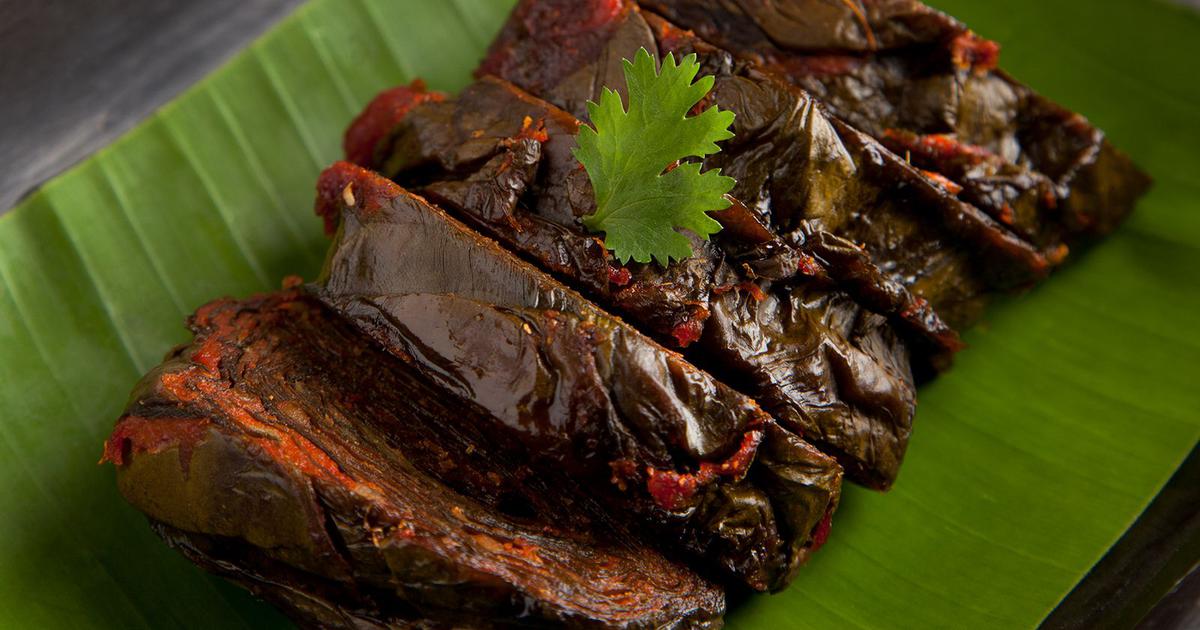
Patrade

Courtesy: Naren Thimmaiah

At Karavalli, every dish is sourced from its region of origin, and the recipes learnt from mothers and grandmothers. Patrade, a popular Konkani dish, was sourced from Pangal Nayak’s ancestral home in Katpadi near Udupi on the Mangalore coast. Colocasia leaves grow wildly in this region, especially in the monsoon. These leaves are layered with a paste of lentils and spices, rolled, steamed and pan-roasted to make Patrade. It is a great evening snack. Of course, there are numerous variations of it across India.

Serves 8

Cook Time 01h

Plus 3 hours for soaking rice

Ingredients
250 gm rice
50 gm ghee
50 gm red chillies
25 gm coriander seeds
25 gm cumin seeds
20 gm roasted moong dal
20 gm roasted chana dal
20 gm roasted toor dal
20 gm salt
50 ml tamarind pulp
20 colocasia leaves

Preparation
Soak the rice in 2 cups of water for 2-3 hours and drain.
Grind the rice, along with all other ingredients, except the colocasia leaves and ghee, into a thick batter.

Clean the colocasia leaves and remove the thick veins. Place the leaves on a platform with the back facing up.
Spread the batter on one leaf in an even layer and cover it with another leaf. Spread another layer of batter on it. Repeat the process twice.
Fold both ends and roll up the leaves, ensuring no batter oozes out.
Once all the rolls are made, place them in a steamer for about 30 minutes.
Remove from heat and allow the Patrade to cool.
Once cool, cut them into thick slices.

Heat ghee in a pan and fry the Patrade (for about 4 minutes on each side) and serve with extra ghee.

Naren Thimmaiah

Chef Naren Thimmaiah has been the face of Taj Hotels’ iconic Karavalli for over two decades, ensuring that it has a permanent spot among the world’s finest restaurants. His culinary genius has won him and his restaurant multiple prestigious awards. He is popular on television, and serves on the Board of Studies at Christ University and Srinivas University in addition to numerous hotel management institutes. He also advises the food panel of MasterChef India.

source: http://www.scroll.in / Scroll.in / Home> Food> Taste Test / by Naren Thimmaiah / January 08th, 2020

‘Coorg Person of the Year 2019’

Justice A.S. Bopanna, first judge from Kodagu to be elevated to the Supreme Court, was adjudged ‘Coorg Person of the Year, 2019’ by a Kodagu information portal.

A release stated Mr. Bopanna was the overwhelming choice for the title in a poll conducted for www.coorgtourisminfo.com, Kodagu’s first news portal, promoted by journalist P.T. Bopanna. The release said other nominations received included Fulbright scholar Sowmya Dechamma and Devika Carriapa, winner of Bal Sahitya award for 2019.

In the past, the winners of the Coorg Person title included Kaveri Nambisan, novelist (2005), Air Marshal K.C. Cariappa, environmentalist (2008), cricketer Robin Uthappa (2009), tennis player Rohan Bopanna (2010), squash champion Joshna Chinappa (2014), athlete M.R. Poovamma (2015), cartoonist Nala Ponnappa (2016), and badminton player Ashwini Ponnappa (2017).

Mr. P.T. Bopanna said: “The concept took shape in 2005 to develop role models for the people of Kodagu. The selection was made on the basis of a poll conducted through www.coorgtourisminfo.com.”

source: http://www.thehindu.com / The Hindu / Home> News> States> Karnataka / by Special Correspondent / Mysuru – January 08th, 2020

The making of India

IndiaThroughPeopleKF10jan2020

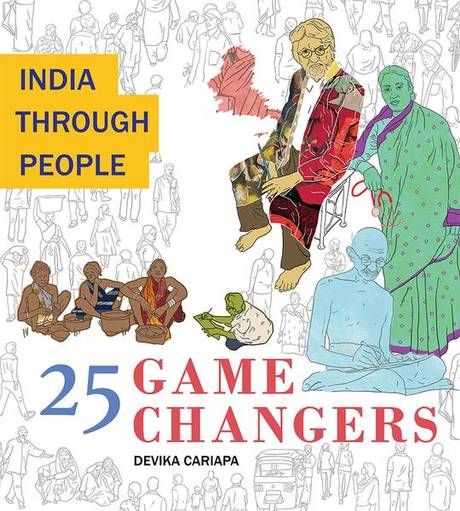
In her latest book India Through People: 25 Game Changers, Devika Cariapa talks about the people who drove change
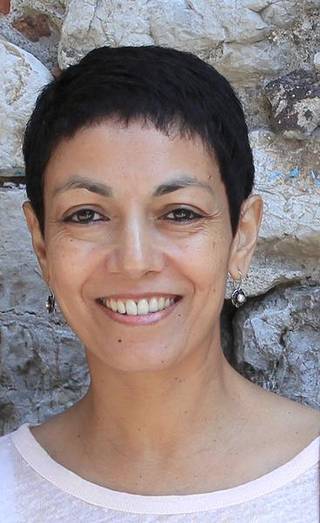
“Children are naturally interested in history,” feels writer Devika Cariapa. “Notice how carefully even the youngest of them listens to stories told by a grandmother or elder — particularly lingering on details of how they lived, what they wore, what they did at school and what they ate for lunch! It’s a natural progression then to get young readers interested in stories from history in a factual but fun way. Once they are hooked, it becomes a lifelong interest.” Devika, whose second and latest book for Tulika, India Through People: 25 Game Changers, was released last week, is also an archaeologist.

“The more I worked in archaeology, researching and visiting sites, the more I felt there were wonderful stories there that children would enjoy,” says Devika, over email. And so, when she became a full-time writer, she knew what her first book would be about — India Through Archaeology: Excavating History, is part of Tulika’s India Focus series. Devika explains that the series “will tell the story of India through the lens of different subjects”.

DevikaCariapaKF10jan2020

In India Through People…, Devika talks about India’s recent past, that she calls “a century and a half of great, radical changes”. To do so, she has picked 25 people who “helmed that change with great courage and vision”. She explains: “These game changers, all born after 1850, dealt with the challenges of the time and in doing so, not only left an imprint on their particular fields but also forged new paths for the nation.”

Narrowing down on the 25 men and women, however, was not an easy task. “This was probably the most difficult part of doing the book!” she adds. “For every one person included, there were at least two others that we felt could have been featured instead. We chose people from a range of fields and different parts of the country and ensured that those we could not fit in due to constraints of the size of the book were referenced in the timelines attached to each chapter.”

source: http://www.thehindu.com / The Hindu / Home> Books / by Akila Kannadasan / August 20th, 2019

Talk On “The Life And Times Of M.N. Srinivas” Tomorrow

SrinivasKF24dec2019

Mysuru:

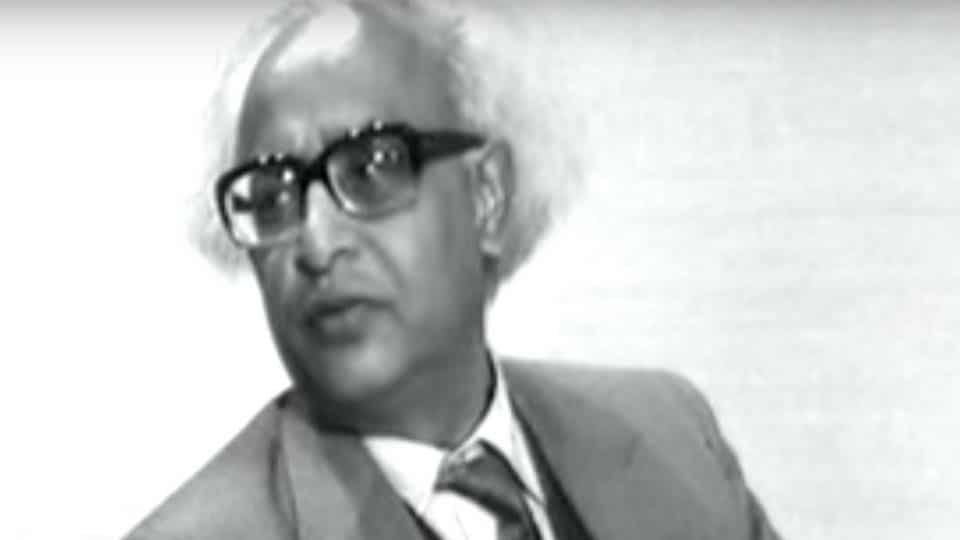
Mysuru Book Clubs – 2015 has organised a talk on “The Life and Times of M. N. Srinivas” by David Gellner, Professor of Social Anthropology at University of Oxford, tomorrow (Dec. 17) at 5.30 pm at Roopa Elite, No. D-29, 6th Main Road, V.V. Mohalla.

Profile: Mysore Narasimhachar Srinivas (M.N. Srinivas), a Social Anthropologist, was well-known for his body of work on caste systems and caste as a social institution. His connection with South India is seen in the extensive fieldwork he did in Coorg (Kodagu) and his study of the different castes in that hilly district.

A product of the University of Bombay and University of Oxford, he is the author of Social Change in Modern India and Caste in Modern India. He received the prestigious Padma Bhushan award in 1977.

Prof. David Gellner specialises in the study of religion, politics, ethnicity, caste and social change in Nepal and North India. Earlier, as Lecturer in Anthropology of South Asia in the University of Oxford, he walked in the footsteps of M.N. Srinivas, who was in that position in 1947.

For details contact Mob: 96062 87711 or 78997 57259.

source: http://www.starofmysore.com / Star of Mysore / Home> News / December 16th, 2019

When Coorg got a glimpse of Gandhi’s moral vision

The Living Stream

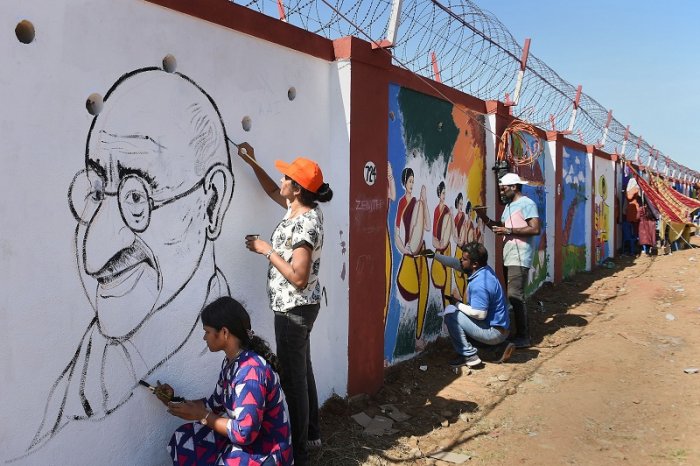
Students of various educational institutions and volunteers paint a picture of Mahatma Gandhi. (DH Photo)

During his first visit to Coorg, in February 1934, Gandhi visited Kaikeri, a bright and attractive Dalit settlement. A public meeting was held amidst its grand natural surroundings. On this occasion, several upper-caste women gave away their gold jewellery for the freedom movement.

Gandhi later addressed a public gathering in Madikeri: “It is a matter of very great joy to me that God has enabled me to come to this beautiful land of Coorg. Ever since I have come here, I have been simply drinking in the natural beauty of the place; and I presume your hearts are as beautiful as your scenery. And yet, there is lurking in my mind a doubt as to the beauty of your hearts; for I see that though there is not that poisonous untouchability here that is found in the plains, there is still some of it in your midst. For, in your address, you have said that temples are not open to Harijans. It is just like a father saying to some of his children, ‘I give you food, clothing, housing but I won’t let you come into the sanctuary of my heart.’ Imagine what those children would feel. So long as you do not allow Harijans to enter temples on the same terms as you do, I cannot say your hearts are beautiful. I wish, therefore, that you will take a lesson from Nature and wash out that black spot on your hearts.”

Gandhi’s reasoning reveals a distinct style of moral engagement.

It was ironic, he pointed out, that nature’s beauty hadn’t found a complement in the hearts of people living in its midst. The practice of untouchability was not as toxic here as it was elsewhere, but moderate untouchability wasn’t any more acceptable. The prejudice had to be overcome completely. And, if a father took care of only the physical needs of some of his children without allowing them space in his heart, how would they feel? To make his listeners empathize with the pain and suffering of being denied entry into temples, Gandhi reached for a moral analogy from family life, and not for historical or sociological discussions. And, the non-Dalits could still make their hearts pure. Gandhi’s faith in the human potential for self-reform and reconciliation is firmly in place.

On the day after his visit to Madikeri, Gandhi addressed a public gathering in Virajpet following the welcome address by a local Urdu scholar: “It was an agreeable surprise to me to receive an address in very choice, correct Hindustani. I am a lover of Urdu and Urdu literature. But I have noticed that down South, it is rare to find an Urdu scholar; and I was not prepared to find good Urdu writing and speaking in Coorg.”

The local scholar had urged Gandhi to do whatever was possible to unite the Hindus and Muslims across India and felt that his campaign to end untouchability upheld the ideal of a common humanity.

In response, Gandhi said: “Of certain things which I hold as dear as life itself, Hindu-Muslim unity, i.e., unity among all the races in India, is one; and as I did some years ago in Delhi, I should be prepared, given the occasion and the inspiration, to stake my life again for the same cause. My life is one indivisible whole, and all my activities run into one another; and they all have their rise in my insatiable love of mankind. Seeking to realize the oneness of life in practice, I cannot be happy if I see communities quarrelling with one another or men suppressing fellowmen. I am, therefore, glad that this (welcome) address admits that this Harijan movement is one for realizing the substantial oneness of man.”

The stakes behind seeking the unity of Hindus and Muslims (what he termed, “heart-unity” on another occasion) were for Gandhi very high. Ending untouchability was truly an effort to realize the oneness of humans. Achieving togetherness among communities was not a single-point struggle: it was connected with everything else he cared for.

These struggles of Gandhi extend a moral obligation in the present to evolve a response to the rising violence against Muslims and Dalits in the country.

source: http://www.deccanherald.com / Deccan Herald / Home> The Living Stream / by Chandan Gowda / September 29th, 2019

Army Recruitment Rally In Madikeri From Oct.13

An Army Recruitment Rally will be held at the District Sports Stadium in Madikeri from Oct.13 to 18 for the posts of Sainiks (General and Technical), Trademen, Clerks, Store-keepers, Nursing Assistants and Pharmacists.

Candidates, who have passed SSLC, PUC and D.Pharma, are eligible to participate.

Candidates from Kolar, Bengaluru City/ Rural, Tumakuru, Mandya, Chamarajangar, Ramanagar, Chitradurga, Kodagu, Hassan and Mysuru districts can participate in the rally.

Registration should be done online by visiting www.joinindianarmy.nic.in before Sept.29.

For details, contact Ph: 0821-2489972.

source:http://www.starofmysore.com / Star of Mysore / Home> In Briefs / September 15th, 2019