Category Archives: Uncategorized

Dist-level young scientist competition

The district-level ‘Yuva Vijnani’ competition will be held at the Madikeri Block Resource Centre in town on August 8 at 10 am, said a press release.

The selected candidates will be given the ‘Yuva Vijnani’ award for 2018-19 by the Rajya Vijnana Parishat and the Department of Science and Technology. Students who have applied for the competition should attend along with their guides.

Those who wish to apply should fill the application in the prescribed format and submit the same at the DDPI office in Madikeri before July 31. Students from Class 9 to II PU may apply for the award.

Another set of application should be submitted to the head office of the Rajya Vijnana Parishat in Bengaluru.

For details, people may contact: S T Venkatesh, District Physical Education Inspector, DDPI Office, Madikeri, on mobile phone number 94488 73999 or the T G Prem Kumar, Raja Vijnana Parishat District Director, on mobile phone number 94485 88352.

source: http://www.deccanherald.com / Deccan Herald / Home> State> Mangaluru / by Adithya K A / DH News Service, Madikeri / July 29th, 2019

Startups break new ground, use tech to help farmers

These firms are tapping governments, insurers, banks, farming co-operatives, development agencies and corporate social responsibility programs to create a business and help farmers.

Startups and technology firms are trying to break into India’s agricultural landscape using newer business models. These firms are tapping governments, insurers, banks, farming co-operatives, development agencies and even corporate social responsibility programs to create a viable business and help farmers. Most farmers have small holdings. Some even rent the land they farm on from others. Farmer distress is widespread.

Farming contributes around 15% to India’s gross domestic product. In short, India has few large farms that can pay for technology solutions. When CropIn Technologies first started out in 2010, the company tried selling its agri-tech solutions directly to farmers.

After investing lakhs of rupees, however, it managed to earn just Rs 6,000. Now, it tailors its solutions to specific needs. “Each customer segment that we deal with, we have a different value proposition for them,” said Jyoti , head of business development at CropIn Technologies. Large companies that depend on agricultural produce want information on sowing and pre-harvest activities up to harvest.

Development agencies are keen to develop sustainable farmer livelihoods, Vaddi said. CropIn is working with the World Bank in Bihar and Madhya Pradesh on a climate resilience project. It is also identifying a model where farming communities can adopt technology to create sustainable benefits — such as weather alerts on phone, best practices on farming, and advice on taking care of pest attacks. Agri-tech companies such as CropIn are also finding a market in banks and non-banking financial companies that give agricultural loans. The lenders are seeking CropIn’s expertise to help manage risk.

“If they have invested money in certain loans with farmers, the bankers want to know if it performing, how the crop is doing. Sometimes, a farmer takes a loan to sow one crop and then sows half his field with something else. There could be a genuine reason, but this is information a banker would want to know,” Vaddi said. CropIn is working with public and private sector banks as well as NBFCs. For banks and insurers, the company provides a platform that has data on the historical crop yields yields of a district. This helps in forecasting yields using machine learning.

The company also uses remote sensing satellites to determine what crops are sown in a region, using crop signatures it has collected over the past five years. Large technology companies, such as IBM and Microsoft, too are involved in the agri-tech space. The Weather Company, an IBM unit, provides hyperlocal weather information to farmers, along with data on soil moisture and temperature, which aids farmers in making informed decisions on how and when to irrigate. The company has tied up with agro-tech startup AgroStar to create crop disease prediction algorithms. “We are not expecting marginal farmers to pay for this.

We work with governments, banks, insurers, corporates who have business interests in agriculture and corporates that want to do meaningful CSR work,” said Himanshu Goyal, India Business Leader at The Weather Company. “It is not very expensive. It is cheaper than what a normal software costs and it is affordable,” he said. The company looks at delicately balancing value and cost, which even a company can appreciate, and one where people can build in affordability in business models, he said.

Microsoft is working with agrochemicals company United Phosphorus and the International Crop Research Institute for the Semi-Arid Tropics (ICRISAT) to provide agri-tech solutions to farmers. State governments and government-promoted organizations are also potential markets for agri-tech companies. The agriculture ministry signed a statement of intent earlier this month with IBM for a pilot study on using artificial intelligence and weather technology solutions in agriculture.

Tie-ups with governments also use sensors in agricultural fields to measure soil health and ground-level conditions. Pilots that require placing sensors on farms are also underway. Eka Software, which has built a digital commodity management platform that is used by the likes of Cargill and Rio Tinto, has built a blockchain platform for coffee farmers in a tie-up with the Coffee Board of India. The platform aims to help farmers get a good price for their product, while offering coffee roasters and exporters data on crop quality. “There is a lot of scope to use technology to digitise agriculture in India and curb waste,” Manav Garg, CEO of Eka Software, told ET in an interview earlier.

“We have built this platform for coffee, but we can also create similar platforms for other agricultural commodities.” State governments are also looking to invest in blockchain technology to help cashew and shrimp exports. “India is one of the largest exporters of shrimp to the European Union, and the EU has put in requirements to disclose the health of the shrimp. In Andhra Pradesh and Tamil Nadu, the governments are putting in place blockchain (technology) in which the manufacturers of the shrimp feed the content and that is made available to buyers. Kerala is doing the same thing for cashew nut,” said NG Subramaniam, chief operating officer of India’s largest IT services company Tata Consultancy Services. The blockchain technology is being launched by the state fisheries department, the Marine Product Export Development Authority and Tata Trusts, the Tata Group’s philanthropy arm. Business models are still evolving at at the farm level, experts say, whereas at the retail level — organic food or providing farm produce directly to homes — it is more established.

The government’s increased focus on improving farm incomes is also resulting in more pilot projects in the agri-tech space. “Future scale-up models will need farmers to have a stake, both to have ownership over and to demand accountability from the services. This is an emerging context,” said Amit Vatsyayan, Partner – Government and Public Sector Advisory Services, EY India. “A platform approach is very much needed for greater acceleration and adoption.”

Agritech Startups in India

CropIn
Offers farm management solutions for agricultural sectors. Works with farming companies, agri-input companies, crop insurance providers, seed production companies and government.
Total Funding: $16 million
Investors: Chiratae Ventures, Bill and Melinda Gates Foundation, Ankur Capital and 8 Other Investors

AgroStar
It provides agri-inputs including fertilizers, seeds, manures, farm equipment, etc. to farmers.
Total Funding: $15 million
Investors: Accel Partners, Aavishkaar, Chiratae Ventures and 3 Other Investors

FarmBee
Has an online platform providing data-driven agricultural solutions. It offers agricultural content, commodity prices, weather data, and contextual advice to the farmers. Enterprise customers include TAFE, RBL Bank, Pepsico etc.
Total Funding: $9 million
Investors: Sandeep Bhammer, Ravikant Banka, Shailaja Reddy and 23 Other Investors

NinjaCart
Has a B2B marketplace connecting farmers with retailers. Initially started out with a hyperlocal grocery marketplace but pivoted to B2B marketplace for sourcing fresh fruits and vegetables, staples and FMCG goods directly from farmers and brands after 6 months of launch. Currently works with about 120 retailers.
Total Funding: $48million
Investors: Accel Partners, Syngenta Ventures, Neoplux and 13 Other Investors

Stellapps Technologies
Uses IOT, mobility and data analytics to improve agri- supply chain parameters including milk production, milk procurement, cold chain, animal insurance and farmer payments. Offers a platform SmartMoo, which gathers data via sensors that are embedded in milking systems, animal wearable, milk chilling equipment & milk procurement peripherals and provides insights for management of cattle, organization of dairy farms and for logistics management.
Total Funding: $11 million
Investors: Bill and Melinda Gates Foundation, IndusAge Partners, Qualcomm Ventures and 8 Other Investors

source: http://www.economictimes.indiatimes.com / ET Rise / Home> Business News> RISE> Startups> News Buzz / by Jochelle Mendonca, ET Bureau / July 26th, 2019

When General Thimayya’s Grandson Comes Calling At ‘Sunny Side’

ThimmayyaMuseumKF20apr2019

Madikeri:

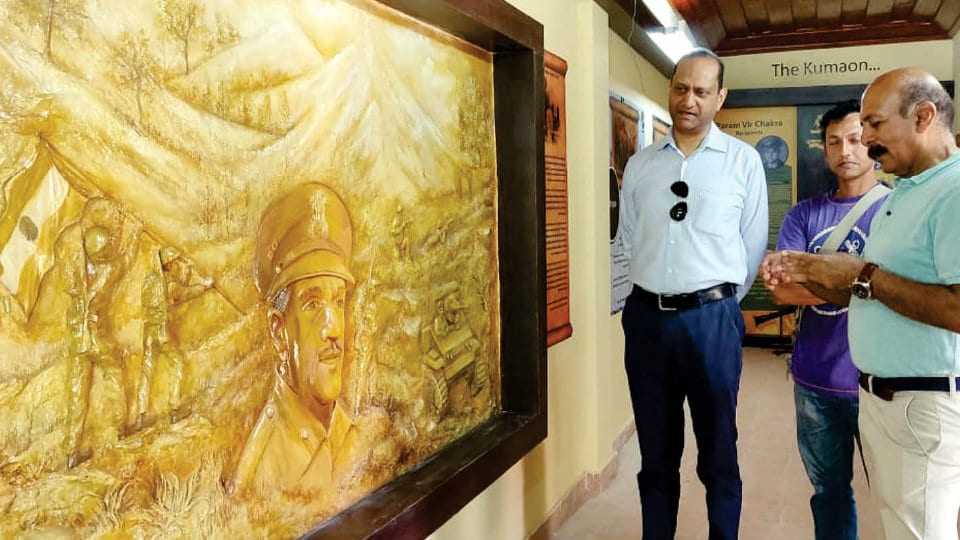
‘Sunny Side’, General Kodandera Subayya Thimayya’s house in Madikeri that is being converted into a museum and a war memorial, had a special moment last week when the celebrated General’s grandson Kongetira Belliappa visited the museum.

‘Sunny Side’ is located on G.T. Road in Madikeri and it is being renovated at an estimated cost of Rs. 6 crore. Belliappa is the son of Thimayya’s daughter Mireille, who married Maj. Gen. Kongetira M. Chengappa.

Visiting the museum that earlier functioned as RTO Office for the first time, Belliappa went around the museum and saw his grandfather’s photos, memorabilia and other artefacts. Stopping in front of some of the photographs, he turned emotional, recollecting the service of General Thimayya who was known as the “Soldier’s General.”

Some of the photographs portrayed the legendary General’s brilliant strategies and daring that have set the standard for professional soldiering and leadership. Belliappa appreciated the collection of photographs, artefacts and other items related to the Indian Army at the museum.

Field Marshal K.M. Cariappa-General K.S. Thimayya Forum Convenor Major Biddanda A. Nanjappa, who is instrumental in setting up the museum and the war memorial, explained the museum and its various sections.

Providing a detailed account of how General Thimayya inspired his soldiers to carry parts of Army Tanks up to a height of 12,000 feet snow-clad mountains of Zojila Pass — one of the highest Passes in the world — when Pakistan planned to annex Kashmir by force during their offensive of 1947-48, Nanjappa told Belliappa that it was a daring move and the Pakistan army ran away after seeing the Tanks staring at them. The parts of Tanks were carried up the mountains overnight and were assembled by early morning of Nov. 1, 1948.

The very appearance of the Tanks utterly dampened the morale of the bewildered Pakistanis who either fled or were vanquished. Once Zojila was taken, the road to Kargil was reopened and Ladakh was safe. Ultimately, on Nov. 24 Kargil was re-taken. Thus the unofficial 1st Indo-Pak War (and perhaps the longest and toughest of them all) ended in success owing to the bold, shrewd and relentless pursuit led by Gen. Thimayya, explained Nanjappa.

Nanjappa then requested Belliappa to hand over certain items that belonged to General Thimayya that is in possession of the family to be kept in the museum.

Art works featuring the valour of Indian soldiers on the battlefield will occupy the centre stage at ‘Sunny Side.’ Other main attractions of the museum will be the articles used by Gen. Thimayya, military uniforms, books and information on Indian Army, Navy and Air Force.

Apart from an Army Tank, weapons that were used by the soldiers of Indian Army in the past during many operations have been donated to the museum.

source: http://www.starofmysore.com / Star of Mysore / Home> News / April 20th, 2019

Bangalore Kodava Samaja Distributes Cheques To Kodagu Flood Victims

KodavaSamajaKF27mar2019

Bengaluru:

In a noble gesture, Kodava Samaja Bangalore had organised an event yesterday where relief cheques were disbursed to victims of floods and landslides whose lives were torn apart in the natural disaster that ravaged some parts of Kodagu last year. In all, cheques worth Rs. 2.65 crore were distributed to 355 flood victims.

Speaking to Star of Mysore over the phone, President of Bangalore Kodava Samaja Mukkatira T. Nanaiah said that the Kodava Samaja had constituted Kodava Samaja Flood Relief Fund and they had identified the victims through a committee and screened them for relief fund assistance.

“We had also invited applications from the victims and we had constituted an independent survey team to visit each victim’s house to assess the damage. The list of beneficiaries was prepared after a thorough assessment and survey and all the communities – Kodavas and non-Kodavas were included in the list,” he said.

Relief cheques were distributed to victims and the money was decided depending on the extent of damage. “We have distributed cheques from Rs. 30,000 and in excess of Rs. 2 lakh depending on the damage they have sustained,” Nanaiah said.

Kodava Samaja sources said that more than 500 people including non applicants had attended the event. “We have collected all applications and will look into the possibility of distributing compensation to them,” sources said.

The cheque disbursement ceremony was led by Maj. Gen. (Retd) Kodandera Arjun Muthanna, President of Kodava Samaja Flood Relief Fund and was presided over by Kodava Samaja President Mukkatira T. Nanaiah. Kodira Kavya Pratap Somanna rendered a prayer, Kodava Samaja Secretary Chiriyapanda Suresh Nanjappa welcomed and Samaja Vice President Mallengada Meera Jalajakumar proposed a vote of thanks.

source: http://www.starofmysore.com / Star of Mysore / Home> News / March 2019

Four From Coorg Battalion To Attend R-Day Parade

Kushalnagar:

CoorgBattalionKF30jan2019

Four cadets from 19/KAR NCC Battalion (Coorg Battalion) in Kodagu have been selected for the annual Republic Day Parade in New Delhi on Jan. 26. They will perform in the NCC contingent that will march through the Rajpath greeting dignitaries including President Ram Nath Kovind and Prime Minister Narendra Modi. One of the cadets will also participate in the cultural events.

The cadets are N.N. Ponnanna, a second year BA student of Field Marshal K.M. Cariappa College, Madikeri. He is the son of Napanda K. Nanjappa and Nayana. He will take part in the All India Rajpath Rally.

Cadet B.S. Thejas, also from Field Marshal Cariappa College, is the son of B.S. Shreedhara and Sheela. He is a second B.Com student and will participate in the Prime Minister’s Rally.

Sergeant D. Preethi is from Vivekananda Degree College, Puttur and is the daughter of D. Rama and Hema. She is studying in Second Year B.Sc and will take part in the All India Rajpath Rally.

Sergeant Debayana Bhaumik is a 9th Standard Student of Bharatiya Vidya Bhavan Kodagu Vidyalaya, Madikeri. She is the daughter of Debraj Bhaumik and Sanchita Bhaumik. She will take part in the All India Cultural display.

The cadets have been selected based on their capacity and excellent performance. They have been selected by Commanding Officer Col. V.M. Naik, AO Lt. Col. Sanjay Apte and ANO Maj. B. Raghav of Field Marshal K.M. Cariappa College.

source: http://www.starofmysore.com / Star of Mysore / Home> News / by January 24th, 2019

The woman who brewed change

Asia’s first woman coffee taster, Sunalini N. Menon, is now opening a museum for coffee

SusheelaNair01KF30jan2019

Susheela Nair

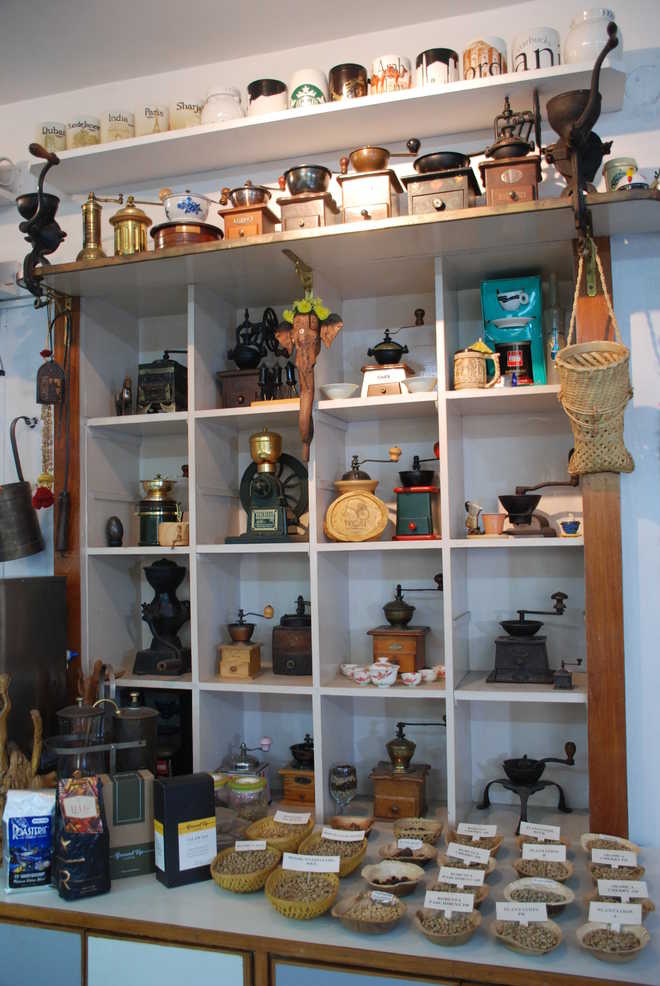
The aroma of coffee wafts through the air as one steps into the Coffee Lab in Sadhashiva Nagar, a posh locality in the heart of Bangalore. Every nook and corner of the lab is adorned with mugs, coasters, antique jugs, filters and other coffee paraphernalia collected from all over the world. The Coffee Lab bears the semblance of a mini museum with its walls lined with a variety of packaged coffee and curios from around the world — exquisite grinders, scented candles, filters, mugs, and a whole shelf of good old-fashioned tumblers, a stark contrast to a regular sparkling white laboratory filled with shiny apparatus used for coffee accreditation and testing.

SusheelaNair02KF30jan2019

It also houses memorabilia, including tribal products from coffee growing areas, areca nut pickers, ancient milk measurement units and coffee pots. Each equipment throws light on the culture of the country it comes from. For instance, Italian pots have ornate carvings; the ones in Iran are known for their silver and filigree work; Pakistan has a recurring crescent moon pattern while Egypt sports designed Cleopatra. The star attraction of the Coffee Lab is the painting of Mona Lisa in coffee powder.

In the middle of the lab, inhaling deeply from one of the deftly prepared samples of green and roasted beans, in front of her, is the first woman coffee taster in Asia and ‘quality-control expert’ Sunalini N. Menon. After acquiring a Master of Science in food technology, Sunalini’s first choice was to become a dietician, but destiny had something more fascinating in store for her. She had to choose between further studies at the New York Institute of Dietetics or a job with the Coffee Board. But she chose the latter which was a turning point in her life.
From an assistant taster at the Coffee Board of India to the head of the quality control department (at the age of 28), and director (quality control) until 1995, Sunalini has traversed a long way fighting a lone battle against all odds at every stage of her career. Steering her way through the male-dominated world of coffee tasters and growers, recognition and acceptance as an accredited international cupper came her way belatedly, almost two decades later. She is a walking encyclopaedia on coffee and knows the coffee bean inside out. This coffee veteran takes 100 sips of coffee — all in a day’s work. Known as Asia’s first woman of coffee, she moved on to set up her own lab, the Coffee Lab in Bangalore, in 1997 for evaluating the technical nuances of Indian coffee.

The advent of liberalisation in the Indian coffee market inspired Sunalini to set up her own lab in 1996. She established Coffee Lab Private Limited, the first private sector lab of its kind equipped with modern equipment and accredited by the Coffee Board of India, in Bangalore.
Explaining the main objective of her Coffee Lab, Sunalini says, “From the seed to the cup, we offer the entire gamut of services. We delve into the technical aspects of coffee-making, quality testing, advising growers on how and when to sell the beans, and preparing special coffee brands. Coffee Lab uses the time-tested techniques of visual and organoleptic evaluation for the quality analysis of Indian coffee. We conduct appreciation courses for homemakers and also classes for farmers.”

True to her social commitment of empowering women economically, Sunalini has employed women to handle the sensitive and critical steps of green coffee evaluation. Though there are innumerable problems plaguing the coffee industry, the coffee veteran believes that the burgeoning coffee culture in the country has the potential to impact the market.

Revealing her plans to start a Coffee Museum, Menon says, “A trust will be formed as it is a non-profit initiative. We will start the story of Baba Budan (who brought coffee to South India) and traverse through the cultural aspects of coffee, diversified cultivation pattern and types of seed material. We are planning a layout that is representative of a typical Indian coffee plantation. The exhibits will include antique coffee roasters, grinders, brewing equipment, mugs, cups and coffee powders from different parts of the world.”

source: http://www.tribuneindia.com / The Tribune / Home> Trends / January 26th, 2019

Passport Kendra In Mysuru To Serve People Of Kodagu

PassportOfficeMysureKF13nov2018

Mysuru:

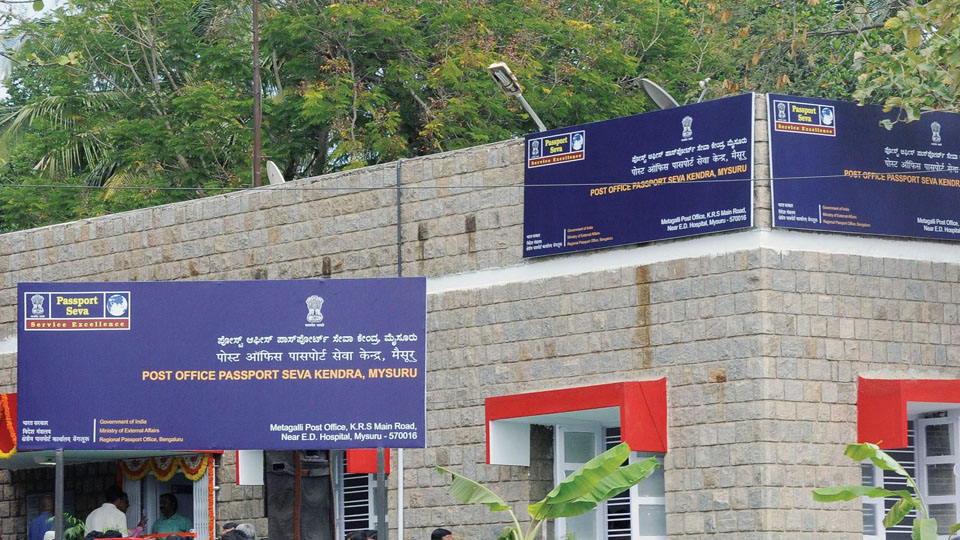
The Post Office Passport Seva Kendra opened at Metagalli Post Office in Mysuru will serve the people of Kodagu too.

According to Mysuru-Kodagu MP Pratap Simha, the service has been extended to the residents of Kodagu who had to go to Bengaluru or Mangaluru to get Passport services.

Keeping in mind the inconvenience faced by the people of Kodagu, then Union External Affairs Minister had agreed to extend the service to Kodagu, he said.

source: http://www.starofmysore.com / Star of Mysore / Home> News / November 12th, 2018

The Ghana coffee sector and its economic potential

GhanaCoffee01KF11nov2018

I have been busy during the last few months talking to people (COCOBOD, various ministries, Universities and Research Institute) about the current ‘State-of-the-Art’ of coffee in Ghana. Talking also to plenty friends, colleagues, associates and coffee-lovers too, I realized that very few people are aware that Ghana grows coffee and that coffee does have the potential of boosting our economy if it were to be paid the right attention.

Allow me to start with a simple Question and Answer:

Is coffee grown in Ghana? The answer is Yes

Brief overview of the Ghanaian coffee

Known predominantly as the World’s Second largest Cocoa producer, Ghana is increasingly entering the coffee market. Ghana’s relatively small coffee production made it the third smallest coffee producer in sub-Saharan Africa: just behind Liberia and the Central African Republic (which produce about 600 tons each annually). The primary coffee plant variety historically grown in Ghana is Robusta.

General Statistics on Ghana Coffee

– 12,250 tons of green coffee beans exported in 2015 (Ghana Export Statistics); this figure does not include leakages to neighboring countries and internal sales within the country

– An increase of about 550% in coffee price, over the past 5 years
+22% of Ghanaian Coffee Farmers are women

– Currently Ghana has 65% supply deficit that needs to be filled and government is trying to do that by providing new coffee seedling varieties and revamping old farms to increase productivity.

– We also have 15% penetration rate of retailing

– Current price of unhauled coffee of 64kg is going for a price between GH?200 -250 and

– The price of hauled green beans is going for GH?400-500 for same amount

Note: all these statistics are not absolute but estimated.

Coffee regulatory bodies

For every industry to be successful there is a need for institutions to govern their activities to ensure smooth flow within the sector.

Government and private bodies have established such bodies within the coffee industry.

Noted among them are:

– The Ghana Cocoa Board,

– International Coffee Organization and

– The Cocoa Research Institute of Ghana (CRIG)

1. The Ghana Cocoa Board (CoCoBod)

Cocobod was established by ordinance in 1947 with the sum of ¢ 27 million (being Ghana’s share of the net profit of the West African Produce Control Board) as its initial working capital. The Board traces its beginning further back to the cocoa hold-up of 1937.

Cocobod’s mission is to encourage and facilitate the production, processing and marketing of good quality cocoa, coffee and sheanut in all forms in the most efficient and cost effective manner, and maintain the best mutual industrial relation with its objectives.

It also issues license to businesses that want to trade (export) coffee by issuing them export certificates; these certificates are issued after due- diligence of course, and require annual renewal.

Support Examples from Cocobod:

– Under the CDP, Cocobod supplied free inputs-seedlings, fertilizers, wellington boots, cutlasses, etc-to Ghanaian coffee farmers to boost their interest in the sector.

– Payments toward land preparation, lining and pegging, weeding and transportation of seedling were also made to participating farmers.

– In addition, Cocobod has developed high stock of planting materials through its subsidiaries, Cocoa Research Institute of Ghana (CRIG) and Seed Production Division (SPD) for distribution for farmers for free.

2. ICO – The International Coffee Organisation

In July 2009 Ghana became a full member of the International Coffee Organisation (ICO) at a ceremony at the headquarters of ICO in London. ICO is the main inter-governmental organisation for coffee, bringing together producing and consuming countries to tackle the challenges facing the world coffee sector through international cooperation.

Ghana first assented to the International Coffee Agreement in September 1964, and has been a signatory to all the agreements, with the Ghana Cocoa Board as the implementing agency for the government.

By this deposition of the instrument of ratification to the ICO, Ghana indicated its consent to be bound by the ICA 2007, and has full voting rights as a member of the International Coffee Organisation.

3. Cocoa Research Institute of Ghana (CRIG)

The Cocoa Research Institute of Ghana (CRIG) was administered by the National Research Council, which was later superseded by the Ghana Academy of Sciences and the Council for Scientific and Industrial Research (CSIR).

The objectives of the Institute were subsequently expanded to include research on other indigenous and introduced tree crops that produced fats similar to cocoa butter.

The Institute’s Mission with regards to coffee is “to undertake research aimed at developing appropriate technologies and strategies for healthy and economic cultivation of coffee”.

4. Coffee Improvement Thrust

The main aim of the Coffee Improvement Thrust is to develop coffee planting material that will meet the challenges of growers by:

– modifying the genetic make-up of the plant

– adopting strategies to improve overall quality of the produce

Sector outlook

Production

The country is the second largest cocoa exporter in the world behind neighbouring Ivory Coast. Production of coffee, which was introduced to Ghana at the same time in the 18th century, trails in comparison.

But it has rebounded in recent years, thanks to a growing overseas demand and a blossoming domestic market that is giving farmers hope of growing a major cash crop. A government scheme launched in 2011 to revive the sector has transformed production and marketing of Ghanaian coffee. It led to 2,400 hectares of new and revitalised coffee plantations, with farmers attracted by the introduction of fair prices for the crop.

Government has since last month begun the distribution of four million coffee seedlings to farmers in the production area of the country under the Planting for Export and Rural Development (PERD) programme, Deputy Local Government Minister, Collins Ntim has revealed.

This, according to him, this would help the country bridge the huge deficit of 65 per cent in coffee production and supply. It is expected that by 2023, this programme will enable coffee production to reach 50,000 tons.

African Challenges

Currently Africa supplies only 10% of global coffee volumes, while coffee was first discovered in Ethiopia.

In most African origins:

– yields are low,

– quality is inconsistent, and

– supply chains are inefficient

Ghana: Do we have a problem?

Coffee industry in Ghana in spite of its ability to rig in millions of dollars as foreign exchange earning to help boost the economy has not receive the kind of attention it needs, noted problems faced by the industry are;

1.low government support – input supply and regulations

2. aging farmers and farms

3. mostly cultivated by small holder farmers

4. unstable pricing

5. inadequate access to market information help investors and farmers

After interacting with some coffee farmers and buyers, there is a need to have a second look at the commodity that some describe as the next oil, looking at the rate of consumption and the foreign income being earned from its export.

Brazil which is known as one of the largest beneficiaries of foreign exchange earners from coffee have adopted various climate smart coffee farming methods that has revamped their coffee industry and put them on top of the world chat.

Sustainable farm gives back as much to the land and people as it receives. Sustainable farming also minimizes pollution, takes steps to care for the environment, and cares for its employees.

Sustainable coffee farming looks at aspects like modern farming practices, which include:

– planting shade trees to check erosion

– using organic or animal waste as fertilizer to reduce carbon emission

– water efficient irrigation methods and mixed cropping

– proper harvesting practices, and

– reuse of coffee husk as manure

Many countries like Ethiopia, Togo, Rwanda, Gabon, Kenya, Brazil just to mention a few through the support of organizations like Solidaridad and CABI have successfully introduced such practices to coffee farmers in these countries and have seen significant improvements in their coffee industry.
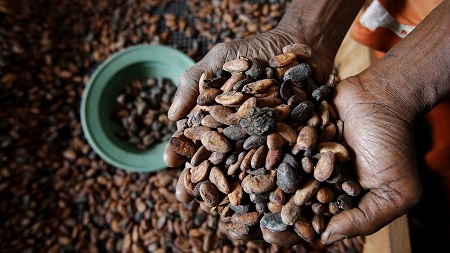
GhanaCoffeeKF11nov2018

These sustainable coffee projects after implementation in the above mentioned countries have resulted in

1. improvement of quality of coffee,

2. farmers are able to keep records which enable them to access financing

3. using of advanced processing machinery in the coffee value chain

4. and a significant increase in gourmet coffee export

Prospects in the sector

To know the prospects in a particular industry the value chain of that industry has to be well defined and clearly stated in order to identify opportunities and various aspects needed to make the industry successful. This also applies to the coffee industry in Ghana; below is a brief showing a possible coffee value chain that can be taken advantage of both for job creation and economy improvement.

Coffee Farming

In Ghana coffee is mostly grown in six (6) of the regions out of the ten (10). This means that there are large areas of land available for anyone to inter into coffee farming.

Coffee harvesting run from September through to January and planting mainly starts on the onset of the rains in May.

A well- maintained farm can produce an average of 1.8 tons of coffee cherries per hectare.

Through effective regulations and stakeholder engagements, average farm gate price of unhauled coffee rose from GHc40 for 65kg in 2010 to GHc250 for 65kg in 2016. In addition, under good farm management practices, an average net income of about GHc6, 988.30 (US$ 1,767.50) per hectare is estimated to be obtained by the farmer.

Processors

1. Haulers/Agents – there are very few people in this sector of the value chain and they all have their charges or approved means of making income; they tend to double as agents for both the farmer and coffee beans buyers they normally charge about GHC 1.00 for kilo to source for the beans for any interested buyer and they employ women to sort and grade the beans paying them about GHC 1.00 per kilo for well sorted beans.

Currently, there are thirty (30) Licensed Buying Companies (LBCs) registered to engage in internal purchasing and exports of coffee in Ghana and there is room for more.

2. Coffee Roasting in Ghana

Other than cafe retailers who brew per cup, roasting is the point on the value chain where coffee experiences its most lucrative transformation.

For any potential new roasters, coffee roasting can be profitable both locally and off shore. The export market provides avenues for revenue generation so far as quality standards are met, granting producers access to a multi-billion dollar industry.

Locally, there has been an increase in coffee consumption as a result of Ghanaians growing appreciation for cafe culture and an influx of expatriate residents. The rising number of cafes in the country, distributed coffee products and machinery are key indicators.

The increase in demand for roasted coffee is an excellent opportunity for local manufacturers, especially with raw material availability being secured long term through government initiatives to boost local coffee cultivation.

3. 3Retailers – in recent times many coffee shops are springing up in Ghana,.

This might be the start of coffee culture, even though most people still prefer the instant coffee, Ghanaian taste are becoming more sophisticated leading to a booming coffee shop business.

There is a very stiff competition in this sector from foreign franchise operated coffee shops but one that source fresh coffee locally has a competitive advantage over the rest.

In conclusion

Coffee may contribute to sustainable development in Africa’s rural areas. In 2007 and 2008, for example, Ghana received modest earnings of US$1,331,308.36 and US$2,767,378.00, respectively, from coffee exports.

The Ghanaian Coffee sector presents opportunities for Ghana to make great strides towards economic transformation. The following conditions can to help boost or move the Coffee Sector:

– Enhanced access to extension services,

– Favourable weather for the Robusta,

– Competitive and growing local market characterized by high demand for the produce.

– Reliable and increasing farm gate prices.

– Increasingly high farmer motivation.

– Growing interest among the youth.

– Buyer- perception of the quality-value of certain coffees from Africa.

– Our potential to increase volumes to meet growing demand.

This implies that coffee production, if boosted, can generate substantial income to supplement revenue generated by government from other sources and has good investment opportunities for private sector.

Let’s all work together to position our Ghanaian Coffee produce as the Best possible one(s)

Thank you,

Benedicta

About the Author:

Coffeepreneur Benedicta Tamakloe, is the Founder of Bean Masters (www.BeanMasters.Coffee ), a Ghanaian StartUp focused strictly on the coffee trading business.

She can be reached at +233 20 296 2988 and she also welcomes all remarks/questions/ feedback via email at coffeeinghana@gmail.com

source: http://www.ghanaweb.com / Ghana Web / Home / by Benedicta Tamaloe / November 07th, 2018
Geographical indication tag for state-grown coffee soon

Crop grown in Kodagu, C'magaluru, Bababudangiri among 5 varieties being considered for the GI tag.
Crop grown in Kodagu, C’magaluru, Bababudangiri among 5 varieties being considered for the GI tag.

Soon, coffee grown in Kodagu, Chikkamagaluru and Bababudangiri will get geographical indication (GI) tag, said Srivatsa Krishna, CEO and secretary, Coffee Board, on Monday.

Speaking to reporters on the sidelines of ‘Naya Bharat: Coffee Par Soch,’ as part of International Coffee Day, he said that the Board had applied for GI tag for coffee grown in five southern regions, based on their uniqueness. Of these five places, three are from Karnataka. The list also comprises coffee grown in Araku valley (Andhra Pradesh) and Wayanad (Kerala). The GI tag is likely to come by January 2019.

This is the first time that GI tag has been applied for coffee-growing regions. In 2008, GI tag was obtained for Monsoon Malabar coffee blend. “The idea of doing this is to recognise the coffee, promote the brand and increase local sales. Over 70% of India’s coffee is grown in Karnataka, but the market needs to be strengthened,” he said.

To increase the production of coffee, regain the market position and encourage farmers, Mahatma Gandhi National Rural Employment Act funds will be helpful, Krishna said.

“I request the Coffee Board to tie up with zilla panchayats to recoup and expand the areas. Funds for coffee planters under MGNREGA will be given, on the lines of mulberry and sericulture,” he said. Krishna said the floods in Kodagu had an impact on coffee production, but things were improving.

On the occasion, the Board announced the launch of Atal Incubation Centre at Coffee Board in Bengaluru. This centre will help startups and coffee growers to become entrepreneurs. The centre is set up under the Atal Innovation Mission (AIM) to nurture innovative startup businesses.

So far, in India, 20 centres have been established, Coffee Board is the 21st and the first such in India, said R Ramanan, mission director, AIM. This centre is being set up in partnership with Nasscom and FKCCI.

The Coffee Board also announced its partnership with Ernst and Young for ‘The Future of Coffee-Roadmap’, and with National Institute of Public Finance and Policy for a study on subsidies for Coffee Industry.

source: http://www.deccanherald.com / Deccan Herald / Home> State> Top Karnataka Stories / by Bosky Khanna, DH News Service / October 01st, 2018

Kodagu floods natural: Geologist

An exploration geologist ruled out the claims of ecologists about Kodagu bearing the brunt of a calamity due to manmade causes.

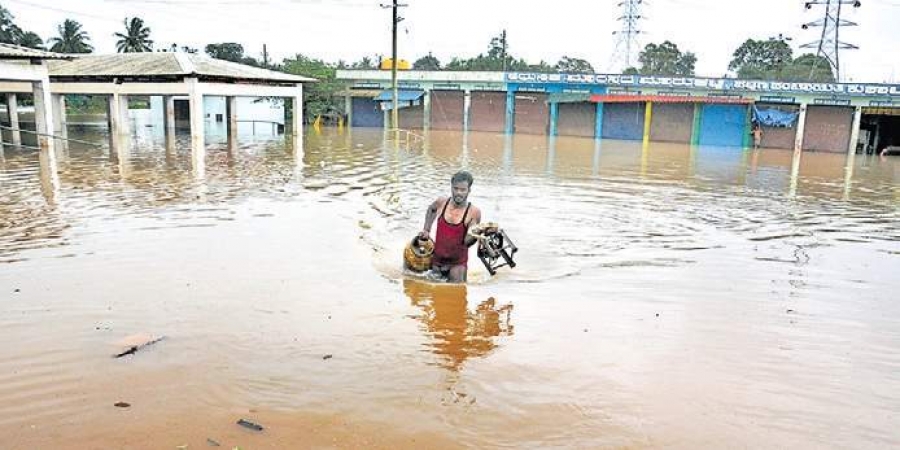
A man carrying an LPG cylinder and a stove wades through the flooded Kushalnagar-Hassan Road in Kodagu. (File | EPS)

Madikeri :

Amidst all the talks over indiscriminate exploitation of nature causing Kodagu disaster, an exploration geologist who has studied in New Zealand and is working in Australia ruled out the claims of ecologists about Kodagu bearing the brunt of a calamity due to manmade causes.

“Landslides in Kodagu are due to unprecedented rain in Pushpagiri Range and nearby region. What has happened to Kodagu is a natural calamity and not a manmade disaster,” said exploration geologist Iychettira G Machaiah, adding: “It is bizarre how some politicians and overnight ecological experts blame the same old timber mafia, sand mafia, forest encroachment, planters mafia as the cause for this disaster.” However, he says that the floods in the Harangi belt might be an induced disaster due to conversion of wet land and construction of layouts on the river bank and adds, “These organised layouts that have come up in recent years on wetlands are in serious violations of law.”

Nevertheless, the landslides in North Kodagu, he says, might happen once in 200 years and it is just a natural calamity. “Due to excess rainfall, the clay soil and laterite stone under the earth create a cave that starts to store water. And excess, unprecedented rainfall will result in their collapse, accompanied with a sound of breaking of earth’s plates. Western Ghats has a history of over 10 crore years and these disasters are natural to occur once in an occasion,” he stated.

He rubbishes statements of ecologists about deforestation causing such acts of nature and clarifies, “These landslides happen from the earth’s core and they will uproot the strongest trees. Mountains too could collapse during such a calamity. It is a nature’s freak event.”

source: http://www.newindianexpress.com / The New Indian Express / Home> States> Karnataka / by Prajna G R, Express News Service / August 31st, 2018