Category Archives: Uncategorized

Rooted in… Rainforests

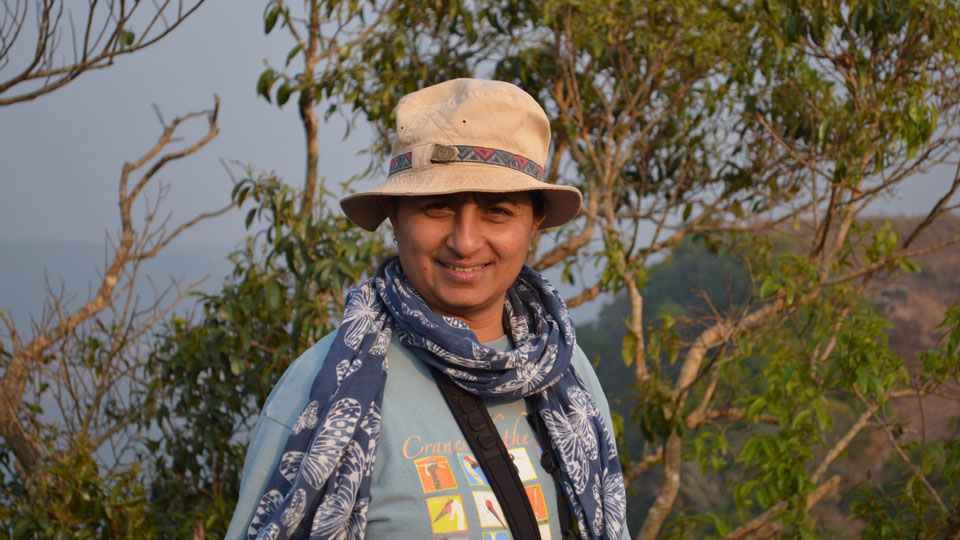
From studying hornbills to restoring degraded rainforests, tropical ecologist Dr. Divya Muddappa has dedicated nearly three decades to conservation in the Western Ghats…

Dr. Divya Muddappa, Senior Scientist at the Nature Conservation Foundation, Mysuru, has spent nearly three decades studying and protecting the rainforests of the Western Ghats. Her work in tropical ecology spans areas such as restoration ecology, conservation biology and plant-animal interactions, including seed dispersal and frugivory.

She began her research journey with the Malabar Grey Hornbill during her Master’s at the Salim Ali School of Ecology, Pondicherry University and later spent years studying hornbills across the Western Ghats, tracking their nesting patterns, distribution and the effects of rainforest fragmentation.

In a conversation with Star of Mysore, she says while her work in the forests has been deeply rewarding, the real challenge lies in convincing society, from the general public to policymakers, about urgency of conservation, especially when it comes into conflict with development and infrastructure projects. —Ed

SOM: What first sparked your interest in tropical ecology? Was there a moment when you knew forests would become your life’s work?

Dr. Divya Muddappa: That’s an interesting question because we rarely look back and think about where it all began. For me, the turning point was a visit to Topslip in the Anaimalai Tiger Reserve, where one of my seniors was working. She took me on a walk into the forest.

It was my first time in a dense evergreen rainforest. Hearing the sounds of animals, seeing so many birds, especially hornbills, and standing among those towering trees was simply fascinating. It captured my imagination.

At the time, I was doing my Master’s and trying to decide on a topic for my dissertation. That visit eventually led me to begin my work on hornbills. Looking back, that was the moment my interest in rainforests truly began.

SOM: Can you describe your current field of work?

Dr. Divya: My work focuses on protecting and restoring tropical forests, particularly in the Western Ghats. A large part of it involves studying carbon sequestration and biodiversity conservation in landscapes already shaped by human activity.

I’m also involved in conserving globally threatened tree species through ecological restoration, especially in fragmented plantation landscapes. Another important aspect of our work is restoring degraded rainforests and abandoned plantations and monitoring how these ecosystems recover over time.

SOM: What was your specialisation in your dissertation?

Dr. Divya:  I did my Master’s in Ecology and Environmental Science at Pondicherry University. For my dissertation, I studied the Malabar Grey Hornbill, a species endemic to the Western Ghats.

However, my work is not limited to hornbills. My broader area of interest is tropical forest ecology, particularly plant-animal interactions such as seed dispersal and frugivory. Hornbills, for instance, are important frugivores that play a key role in dispersing seeds across forests.

I later went on to study the brown palm civet, another endemic species of the Western Ghats, which is also largely frugivorous. My research looks at how different species interact with forests and contribute to ecosystem processes.

Currently, my partner, our team and I are working on restoring rainforests in fragmented landscapes in the Anaimalai  region of the Western Ghats.

SOM: You’ve spent years working in remote rainforests. Looking back, what have been some of the toughest challenges you’ve faced in the field?

Dr. Divya: Personally, working in the rainforests of the Western Ghats has never felt like a challenge. I come from Coorg, so being in forests and observing plants and animals is something I deeply enjoy. The bigger challenge lies in conservation itself. One of the hardest tasks is convincing people that protecting nature is just as important as protecting our own future.

There are also larger pressures such as rapid development, habitat loss and the climate crisis. These make conservation far more complex. Ultimately, the challenge is helping people rethink their relationship with nature. Not seeing it merely as something to exploit, but as something we must learn to live alongside and care for.

SOM: Field research can be physically and emotionally demanding and unpredictable. Are institutions in India doing enough to make field science safer and more supportive for women?

Dr. Divya: Field research can certainly be demanding, perhaps more emotionally than physically, especially when you are young and starting out. But passion and the desire to conserve these ecosystems keep you going.

When I began working in this field, society was already quite gender-biased. But we were so driven by our interests that we rarely stopped to think about whether formal support systems existed. We simply carried on with our work. I’m happy to say that things have improved in recent years. Thanks to greater awareness and better policies, many institutions now have systems that offer support and protection. In many cases, these are gender-neutral policies that safeguard everyone.

That said, we still have a long way to go. Many challenges women face come not from institutions but from broader social attitudes. Addressing those requires bigger behavioural and cultural change.

SOM: From when you began your career to where you are today, how do you see the journey of women in Indian wildlife science?

Dr. Divya: The journey has been encouraging. Compared to many other scientific fields, wildlife science has generally been more welcoming to women. Even when I started, women were working in the field, perhaps not many, but certainly some.

We were also fortunate to have strong role models. Some of my professors were women who influenced my work greatly and there were inspiring women scientists globally as well.

Today, it is also encouraging to see more women officers in the Forest Department, something that was far less common earlier. The bigger challenge is often whether women are able to continue their careers over the long term.

SOM: Wildlife biology requires patience and long-term commitment. Do women bring a different perspective to conservation work?

Dr. Divya: We are definitely seeing more young women entering the field today. In many academic programmes, the numbers are almost evenly split between women and men. I do think women bring a different perspective to conservation work. It is not necessarily better or worse. Just different, and that diversity is valuable. People observe and interpret nature in different ways.

Some studies suggest that women tend to make very detailed behavioural observations, particularly when studying social animals such as primates or elephants. Qualities like sensitivity, empathy and openness can shape how we observe and understand wildlife. In my experience, women may also be less driven by competition in a negative sense and more inclined towards collaboration, which is very important in conservation work.

SOM: What do you tell young women who are passionate about ecology but unsure about taking it up as a career?

Dr. Divya:  Ecology and wildlife conservation are fields where the line between a hobby and a career can sometimes be very thin. For many people, it begins as a hobby and gradually becomes a profession.

But I often say that you don’t necessarily have to make it your career to contribute to conservation. You could be a lawyer, doctor or engineer and still make a meaningful difference through the choices you make and the way you live.

What matters most is having a genuine connection with nature. That connection can exist whether you are a professional in the field or simply someone who loves and respects the natural world.

SOM: On International Women’s Day, how do you define leadership in science and conservation, especially in the Indian context, where some fields are still viewed through                                         a gender lens?

Dr. Divya: Leadership, in my view, is not about gender. It is about the qualities a person brings to the field. Traits such as empathy, sensitivity, determination, patience and the ability to collaborate with the team or group are essential for good leadership.

These qualities are not limited to any one gender. Rather than asking whether men or women make better leaders, the real question is whether a person possesses the qualities needed to                         lead effectively.

Ultimately, I hope more people recognise the importance of protecting nature and maintaining a clean and healthy environment. Because our own survival depends on it. I also hope more people come together to protect the natural ecosystems we still have left.

source: http://www.starofmysore.com / Star of Mysore / Home> Feature Articles> Top Stories / by B C Thimmaiah / March 12th, 2026

BJP workers lay siege to forest office in Kodagu over rising wildlife conflict

Demonstrators blocked the highway after expressing anger over the delay in the arrival of Chief Conservator of Forests, Sonal Virshni, whom they had demanded to meet.

BJP workers lay siege to the forest department office in Madikeri. Photo | Special Arrangement

Madikeri :

Kodagu district BJP workers on Friday laid siege to the forest department’s Aranya Bhavan office and blocked the Kushalnagar–Madikeri National Highway over the rising incidents of human–wildlife conflict.

The protest turned tense as party workers attempted to enter the forest department office, accusing officials and the state government of failing to address the increasing wildlife attacks in the district. Police personnel deployed at the site stopped the protesters from entering the premises and later warned of legal action when demonstrators blocked the highway.

The protest began around 11 am and continued until about 2 pm. Demonstrators blocked the highway after expressing anger over the delay in the arrival of Chief Conservator of Forests, Sonal Virshni, whom they had demanded to meet.

Police used barricades to prevent protesters from entering the office building, leading to heated exchanges between demonstrators and the police. After repeated warnings through loudspeaker announcements, protesters allowed vehicles to pass and continued their demonstration by the roadside.

Virshni later arrived at the spot around noon under police security as protesters tried to block her vehicle. Once she entered the office, the protesters submitted a petition listing several demands to the forest department and the state government.

The demands included Rs one crore compensation for families of victims who died in wild elephant attacks, implementation of scientific measures to prevent wildlife from entering villages, filing of FIRs against the forest department in cases of deaths caused by wildlife, and withdrawal of orders related to the takeover of C and D category land.

Several BJP leaders, including former MLAs Appachu Ranjan and K. G. Bopaiah, and MLC Suja Kushalappa, participated in the protest. They questioned the forest department about the utilisation of funds sanctioned to address wildlife conflict in the district.

The leaders also criticised the ruling Indian National Congress government in the state and warned that a district-wide bandh would be called if the issues related to wildlife conflict are not addressed.

source: http://www.newindianexpress.com / The New Indian Express / Home> Karnataka / by Marchn 13th, 2026

Karnataka State Police Run-2026: Coorg Public School teacher, student shine

Mysuru:

A teacher and a student of Coorg Public School, Kodagu, won individual medals in recently held  Karnataka State Police Run-2026 organised by Kodagu District Police in Madikeri recently.

While teacher C.B. Susheel won the first place in the Open Women’s 5K category, student Nivaan Nanaiah secured third position in the U17 5K category.

source: http://www.starofmysore.com / Star of Mysore / Home> Sports / March 12th, 2026

MP urges FM to waive interest on Kodagu Coffee Co-op

Mysuru MP Yaduveer Wadiyar met Union Finance Minister Nirmala Sitharaman in New Delhi on Thursday and submitted a request seeking a waiver of interest payable by the Kodagu Coffee Growers’ Cooperative Society Ltd. to the Coffee Board of India.

During the meeting, Wadiyar highlighted the financial strain on the cooperative society and urged the minister to intervene in the interest of protecting small coffee growers.

He requested that the Centre consider waiving the interest dues in line with an assurance reportedly given in 2015. According to the MP, such a move would help safeguard the livelihoods of thousands of coffee growers and workers in Kodagu while sustaining a cooperative institution that has served the region for nearly seven decades.

Wadiyar also raised concerns regarding taxation issues affecting tobacco growers and other stakeholders.

He emphasized the need for a balanced policy approach that protects the interests and livelihoods of farmers dependent on the tobacco sector while ensuring regulatory compliance.

source: http://www.indiancooperative.com / Indian Cooperative / Home> Coop News Snippets / by Amit Amana / March 06th, 2026

“There’s whole science to tennis-ball cricket”: Robin Uthappa backs BRPL

New Delhi :

As the Beyond Reach Premier League (BRPL) continues to position tennis-ball cricket within a structured framework, former Indian cricketer Robin Uthappa shared his reflections on how the format shaped his own journey as a batter.

Recalling his childhood days, Uthappa highlighted how tennis-ball cricket was more than just a pastime; it was foundational to his development as a batter, according to a release.

“I’ve played different forms of tennis-ball cricket. We’ve played leg cricket, hand cricket, and cricket in small 30-40 yard spaces,” Uthappa said during a conversation with Sushil Sharma, Co-Founder & CEO of BRPL.

“We had a road on the off side, a road on the leg side, and houses in front and behind. You could score only on the roads, and if you wanted to hit a four or six, you had to clear the house in front, which even had a window pane,” he added.

According to Uthappa, those unconventional playing conditions directly shaped his batting strengths.

“By virtue of playing there, my game developed in that fashion. I like playing down the ‘V’, hitting straight over the top. My attacking shots are always straight, trying to put your foot in long-off and long-on. That instinct was built by playing tennis-ball cricket,” he explained.

He further emphasised that tennis-ball cricket is far more technical than many assume.

“It depends on the kind of tennis ball you’re playing with. Some are dense, some less dense, and the lighter ones are actually harder to hit. Today, you even get tennis-ball bats. There’s a whole science to this. It’s not just haphazard anymore,” said Uthappa.

BRPL is open to aspiring and semi-professional cricketers aged 18-40, welcoming participants from 28 states and 8 Union Territories across India. (ANI)

(This content is sourced from a syndicated feed and is published as received. The Tribune assumes no responsibility or liability for its accuracy, completeness, or content.)

source: http://www.tribuneindia.com / The Tribune / Home> Sports / by ANI / March 01st, 2026

More than just coffee: Inside a sanctuary of sustainability that’ll make you fall in love with the wild side of Coorg

As guests leave Poomaale, Sunith Reddy hopes they’ll take back a new appreciation for nature and a sense of comfort in the wild; he wants to ‘rewild the human.’

Poomaale Estate offers a chance to be part of a community that’s redefining the relationship between humans and the environment (Pic: Beforest.co/poomaale-2-0-collective)

In the heart of the Western Ghats, where the mist clings to ancient canopies and the soil breathes with life, Poomaale Estate, a collective managed by Beforest, is challenging the traditional boundaries between real estate, travel, agriculture, and conservation.

What began as a personal quest for ‘slow life‘ by Sunith Reddy, CEO and co-founder of Beforest, has evolved into a sophisticated ecological model. “I started thinking about growing my own food and watching the sunset,” Sunith tells HT Lifestyle, reflecting on his 2018 exit from the corporate world.

“But in reality, it was about fixing broken pipes and battling pests. I wondered: can life really flow? Can food grow on its own? That is how the idea of food forests captured my imagination,” he adds.

x

A forest that works

Unlike traditional ‘protected areas’ that exclude human activity, Poomaale operates as a working forest. The estate balances a productive coffee plantation with strict conservation by mimicking natural cycles.

Sunith explains: “Imagine coffee as a living system. Instead of adding synthetic fertilisers, we use the nitrogen provided by leaves shed from the canopy trees. We connect the output of one element to the input of another. It moves from being a line to a circle.”

He shares that this ‘circular’ approach has yielded staggering ecological results:

⦿ 90 percent increase in the species richness indeX (SRI).

⦿ 50 percent of the estate dedicated exclusively to a ‘wilderness zone’.

⦿ Zero irrigation: The estate runs entirely on harvested surface water, offsetting approximately 12 million litres of water annually.

x2

The four returns of success

For Sunith, success isn’t measured just by coffee yields: Beforest utilises the ‘4 returns framework’ to monitor the landscape’s health over a 20-year generational timeline:

⦿ Return of inspiration: a sense of purpose in the land.

⦿ Return of social capital: rebuilding the fabric of local human connections.

⦿ Return of natural capital: enhancing biodiversity.

⦿ Return of financial capital: creating long-term, reliable income.

“Most of our rural landscapes are being depleted on all four fronts,” Sunith notes, pointing out that many villagers now aspire only to move to cities. “We want to reverse that. When a system spontaneously encourages these four capitals to grow, that is when Poomaale is successful,” he adds.

x3

Guardians of the land

The estate’s health is meticulously monitored by resident experts, including Aranya Bagchi, hospitality manager and naturalist. He says, “The presence of certain species indicates a healthy ecosystem.”

“Frogs have sensitive skin; their presence highlights a clean space. Similarly, having a diversity of dragonflies — the apex predators of the insect world — means our water is uncontaminated,” Aranya adds.

This commitment to the environment has turned Poomaale into a sanctuary for those fleeing urban exhaustion. In the Poomaale collective, living a forest-friendly life is not just about changing address, it is a shift from being a consumer to a steward of the land.

Dr Madhavi, a homeowner at Poomaale from Hyderabad, describes the move as a transition from a ‘suffocating concrete jungle to a serene jungle’.

x4

She says, “Buying property here was a profitable investment, gaining healthy life years as returns. It brings back childhood memories of grandparents’ homes. My future grandchildren will have similar memories in this pristine nature bed.”

x5

‘Rewilding’ the human

Ultimately, the goal of the Poomaale collective is more than just co-ownership; it is about intentional community. By integrating with local Kodava culture — including architecture modelled after traditional homes — the project seeks to foster a deep-seated gratitude for the land.

“We want to get guests used to the wild — the bees, the bugs, and the free-flowing water. A guest who was uncomfortable walking at night starts enjoying stargazing by day three. We don’t want to make this an escape from life, but life itself. Our entire agenda is to rewild the human,” Sunith concludes.

This article was produced following a three-day hosted stay at the Poomaale Estate in Coorg, upon editorial invitation

source: http://www.hindustantimes.com / Hindustan Times / Home / by Sanya Panwar / March 01st, 2026