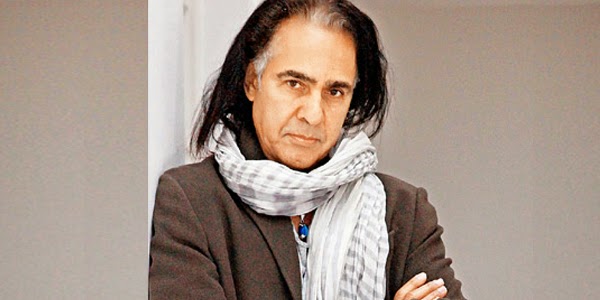
Who can forget the sex siren Zeenat Aman dancing and singing to the sensational disco beats of ‘Aap Jaisa Koi…’ in Feroz Khan’s super hit movie QURBANI in the 80’s. Wanna know who composed this all time hit song? Well the music was composed by Biddu Appaiah, popularly recognized as Biddu, the Indian-born, England based music composer who is regarded as a pioneers of Disco, Euro disco and Indi-pop around the globe.
Winner of the prestigious Gramm Award and ranked 34 in the 50 Greatest Producers Ever list of New Musical Express (NMI), Biddu after five decades of career in music has moved to writing and has penned a fictional novel ‘The Abundance of Nothing’ published by Times Group Books.
Speaking about his switch from music to writing he confessed, “I have been regarded as the king of Pop music but truly speaking producing pop music is purely for the young, just being young at heart does not qualify to compose pop music. Hence I decided to silently shift gears from music to my other passion writing.”
Few know that QURBANI had music by famous Bollywood music director duo Kalyanji Anandji but Feroz Khan happened to hear the disco beats of Biddu in London and was so impressed that he hired him to compose just one song for his movie.
Initially Biddu declined the offer as he was busy in the West but when he found Feroz Khan to be serious and willing to pay an enormous amount he gave in.
In an interview Biddu had said, “I am the first person to introduce disco in India thanks to Feroz Khan. It was his obsession that made me compose the song. Before ‘Aap Jaisa Koi…’ the disco fever was nonexistent in India, however the song became such a craze that after ‘Aap Jaisa Koi…’there was a literal flood of disco songs and no Bollywood movie was released without (at least one) disco song
Like today’s item numbers, disco songs had become a permanent fixture till the late 90’s.”
source: http://www.indiaglitz.com / IndiaGlitz / Home> IndiaGlitz> Bollywood / Tuesday – June 10th, 2014
If Saina and Sindhu performed well, no praise is less for the way Jwala and Ashwini combined to give their best against tougher rivals. By Rakesh Rao.
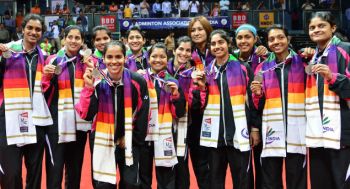
The jubilant Indian women with bronze medals./ Photo: by Sandeep Saxena
In the past four years, women badminton players have brought laurels to the country. Saina Nehwal, P. V. Sindhu and the crack doubles combination of G. Jwala and Ashwini Ponnappa have given India the much-needed identity and a place among the elite nations.
For long, the success story of Indian badminton was associated with the unprecedented achievements of Prakash Padukone and the lone All-England triumph of P. Gopi Chand. Now, there is not much to talk about our men when compared to the feats of our women players. No wonder, when the prestigious Thomas Cup and Uber Cup Finals were hosted by India, only our women’s team was expected to win a medal.
In a format where each tie has five matches — three singles and two doubles — India went in with optimism in two singles and a doubles.
For a nation, that had failed to produce true world-beaters in women’s badminton until 2006, the event was a huge opportunity to showcase India’s worth at the global stage.
With Saina and Sindhu among the world’s elite, having won bronze medals in Olympics and World Championship respectively, India had hoped to make initial headway. With the experienced doubles combination of Jwala-Ashwini looking hungry to make up for the lost time, India was hopeful of claiming the decisive third ‘rubber’ in these best of five match format.
The anticipated, dismal performance of Indian men — losing to Malaysia and Korea in the league — was soon pushed into the background as the women’s team produced a series of consistent performances.
Clubbed with Thailand (headed by World champion Ratchanok Intanon), Hong Kong and Canada, the host gained in confidence by winning every tie.
Saina ended her lean trot to beat Intanon, the Thai girl, who has struggled with fitness and form since winning the World title in August last year.
Saina had not beaten a higher-ranked player since the conquest of World No. 2 German Juliane Schenk in the BWF Superseries Finals in December 2012. Therefore, the 22-20, 21-14 triumph over Intanon was more than just another victory.
Like Saina, Sindhu too won all her five singles. Creditably, the 18-year-old has beaten all three leading Chinese girls — World No. 1 and Olympic champion Li Xuerui, former World champion and World No, 1 Wang Yihan and the reigning Asian Games and All England champion Wang Shixian.
Among Sindhu’s victories, the ones against Indonesia and Japan stood out. The youngster fought match-points in both these matches.
Sindhu bounced back to stop Indonesia’s Bellaetrix Manuputty 21-16, 10-21, 25-23 and returned the following day to overpower Japan’s Sayaka Takahashi 19-21, 21-18, 26-24. In recent times, Sindhu had lost a few three-game encounters. Therefore, these victories should boost Sindhu’s self-belief.
If Saina and Sindhu performed well, no praise is less for the way Jwala and Ashwini combined to give their best against tougher rivals.
Unlike Saina and Sindhu, whose professional needs are taken care of by the Gopi Chand Academy, life is much tougher for Jwala and Ashwini.
Jwala trains under Mohammad Arif in Hyderabad and Ashwini with Tom John in Bangalore. They had to fend for themselves when they had travel to each others’ city for joint training.
Perhaps, these challenges and the adverse times they had faced together in the days leading to the Indian Badminton League (IBL) auction last year, have toughened them. Jwala even fought a legal battle and won a favourable verdict from Delhi High Court against the Badminton Association of India (BAI). So over all, the coming together of these two doubles specialists, who won the National title in December, has helped the country more.
“I think, Ashwini and I are playing better and enjoying our game more than we did before the 2012 Olympics. We will surely improve ahead of the Commonwealth Games, followed by the Asian Games this year,” assures Jwala.
It was against Japan, in the semifinals, that the World No. 36 doubles pair lost its only match to World No. 4 Misaki Matsutomo and Ayaka Takahashi 12-21, 22-20, 21-16. Indeed, it was a gallant performance.
But this loss, after Saina and Sindhu had put India 2-0 up, proved costly. Japan easily won the third singles and the second doubles, where coach Gopi Chand experimented with Saina-Sindhu combination instead of the off-form pair of Pradnya Gadre and Sikki Reddy.
Overall, barring these four players, there is no bench-strength even in women’s badminton as well. India went in with just one plan and lasted as long it worked. All credit to Saina, Sindhu, Jwala and Ashwini for taking India to a historic medal. Will this prove as a catalyst for future medals in team events? Only time will tell.
source: http://www.sportstaronnet.com / Sports Star / Home> Vol.37, No.24 / June 14th, 2014
Shipments for the product stood at Rs 2,347.92 crore in the corresponding period last year
India’s coffee exports increased by 9.32% in value terms at Rs 2,567 crore during the January-May period this year on better realisation in view of firm global prices, according to the Coffee Board.
Coffee shipments from India, the world’s fifth biggest exporter, stood at Rs 2,347.92 crore in the corresponding period last year.
In volume terms, however, the shipments fell marginally to 1,59,275 tonnes in January-May of 2014 from 1,59,295 tonnes in the year-ago period.
“Because of firm global price trend, we got average export realisation of Rs 1,61,160 per tonne. This is 9% higher than Rs 1,47,394 per tonne earned in the year-ago period,” a senior Board official said.
Global coffee prices have risen by more than 80% during the period – after having dipped sharply last year – on expectation of production fall in the world’s largest coffee producer Brazil, the official added.
According the Board’s latest data, the country exported 43,465 tonnes of Arabica coffee and 73,645 tonnes of Robusta coffee during the January-May of this year.
The Arabica shipments rose by 31% from 33,220 tonnes, while Robusta exports dropped by 15% from 86,736 tonnes in the said period.
The shipment of instant coffee rose significantly by 91% to 18,875 tonnes in January-May of this year as against 9,850 tonnes in the year-ago.
Total domestic output is expected to be in line with the Board’s estimate of 3,11,500 tonnes for 2013-14 crop year (October-September), down by 2.1% from 3,18,200 tonnes produced in 2012-13.
India exports coffee largely to Italy, Germany, Belgium, Jordan, Turkey and Russia, among others.
source: http://www.business-standard.com / Business Standard / Home> Markets> Commodities> Food & Edible Oils / Press Trust of India / New Delhi – June 02nd, 2014
Shveta Reddy, a model-turned-actress is all set to enter tinsel town. This newbie has chosen Tamil over Kannada to kick start her career. Shveta is from Coorg and has moved to Bangalore to enter showbiz with Tharkapul directed by Ravi.
“I looked for a good launchpad for myself and I felt Tharkapul was the right choice. I have got an opportunity to play the lead with a known actor in Kollywood, whose name I am not supposed to reveal right now. He is the son of a famous director who does movies in all South Indian languages. I would have got a Kannada film, but it wouldn’t have been a good start for me. So I decided to take up this project.
I hope to get better opportunities here after my first film in Tamil,” she says. A BBM graduate, Shveta made sure she got short-term experience before entering the glam world. She took up theatre, walked the ramp and did advertisements. Her portfolio reached a Tamil director, who chose her for the debut role. “It is a cop film. My portions will start from June, for which I need to be in Chennai,” she says.
source: http://www.newindianexpress.com / The New Indian Express / Home> Entertainment> Kannada / by A Sharadhaa / May 22nd, 2014
Senior scientist and expert on apple cultivation from Himachal Pradesh Dr Chiranjit Parmar expressed confidence that in Karnataka, especially Kodagu, apple cultivation will be successful as the weather here is suitable.
Parmar, who was on a State tour, told reporters here on Monday that efforts are on to grow apples in Tumkur, Bangalore, Uppinanagady in Dakshina Kannada and Somwarpet in Kodagu.
He said Karnataka is better than Himachal Pradesh for apples as the growers here will get the yield twice a year compared to the northern state where it is once a year due to snow.
“Since three years, efforts are on to grow apples in Karnataka and it has been successful as the weather is conducive,” he said.
Parmar tasted the apples grown in Sulimlathe of Abbukatte in Somwarpet in the district.
Apple growers of Kodagu C R Shivakumar and Krishna Shetty of Uppinangady accompanied Parmar during his tour.
source: http://www.newindianexpress.com / The New Indian Express / Home> States> Karnataka / by Express News Service – Madikeri / April 22nd, 2014
Vero Beach artist Robert Ottesen has created the world’s first serigraph using a repeatable printing process and coffee-based ink. What began as a simple artistic statement led to several innovations that allowed an image of the Seattle Space Needle to be printed in a photo-realistic manner.
According to Ottesen, “I just wanted to make a simple artistic statement – by printing with coffee, I wanted to show its importance to our daily lives. I had no idea, when I started the project, how difficult it would be to create a photo-realistic image from coffee pigment alone.”
The print is already attracting attention from experts in the field.
“This is amazing. Rob has pushed the envelope and developed a new and creative print-making technique,” said Frank Romano, RIT Professor Emeritus and President of the Museum of Printing.
In order to print with coffee, Ottesen needed a coffee-based ink. So he turned to Bob Peterson, a consultant with over 30 years of experience in the ink business. Peterson, after numerous attempts, was finally able to get coffee to mix with a special blend of printing oils.
According to Peterson, “When Mr. Ottesen approached me and explained that he wanted to make an ink from coffee, I told him that it couldn’t be done. However, after listening to what he had planned to use the ink for, I decided to take on the challenge. Creating an ink from coffee grounds has never been attempted, to the best of my knowledge. It was extremely difficult to identify an ink varnish that would allow the coffee grounds to blend with the varnish. Additionally, the time and mechanical force required to blend the coffee with the varnish was ten times more than that of a regular ink. The process definitely required “thinking outside the box”!
Interested parties will soon be able to view a copy of this historic print at the Museum of Printing in North Andover, Massachusetts.
source: http://www.digitaljournal.com / Digital Journal / Home> Press Release / PRWEB.com Newswire / Vero Beach, Florida – April 02nd, 2014
Once branded as a limited-overs specialist, Robin Uthappa, nick-named the ‘Walking Assassin’, for that gumptious stroll down the pitch, has changed tracks, picking solid instead of swashbuckling. He now flaunts a controlled approach, improved technique, tailor-made for the longer version of the game.
Uthappa, who after missing six of the nine Ranji Trophy matches this season due to a ruptured hamstring tendon, cracked a crucial 100 in Karnataka’s Ranji Trophy quarterfinal win over Uttar Pradesh last week.
His four-hour stand and a century-run partnership with Karun Nair propelled Karnataka from a humiliating 15 for three to a position of dominance.
After scoring oodles of runs including a triple hundred in the Shafi Darashah, he struck a century for India ‘A’ against New Zealand ‘A’ in Vizag in September last year.
Uthappa then battled crippling cramps to score 86 against Vidharbha in his first Ranji Trophy match of the season. He followed that up with a 33, batting for two hours, against Orissa.
The 29-year-old took tough decisions, changing his attitude and lifestyle in a bid to give fresh life to his career. The Kodava moved out of his parents’ home – father Venu Uthappa, a hockey referee, and mother Roselyn – to live on his own and focus on his game. He also hired a personal coach Praveen Amre, a former India Test cricketer, to help him tighten his technique.
“I isolated myself from the people I knew, I worked on my fitness and lost 20 kilos. With Amre I went through an unlearning and learning process, to me, that is quite an achievement,” Uthappa said.
The 28-year-old Air India employee made Mumbai his training base. He has even rented out a flat in the suburbs to aide his training regimen.
He pays Rs 15,000-a day to train at the Mumbai Cricket Association’s indoor academy in the Bandra-Kurla Complex (BKC).
His stroll to stardom was however full of hurdles. As a kid, Uthappa had to overcome epilepsy, the medications for which made him overweight. Despite the baggage he was a prolific scorer at the inter-school level, playing for St Joseph’s Boys High School.
Uthappa made a memorable ODI debut with a stroke-full 86 against England in Indore. The following year, he played a stellar role in India’s World T20 triumph, becoming India’s first half-centurion in T20 when he made 39-ball 50 against Pakistan at Durban.
Thereafter, the Bangalorean, the forgotten man of Indian cricket, continued to state his case in the shorter versions of the game. He was then bought for a whopping $2.1 million by the now-defunct IPL team Pune Warriors. His last international appearance was in the rain-affected T20 game in South Africa in March 2012.
The stylish Bangalorean is looking to return to the national team. “I believe I’m close to getting a national call-up,” said Uthappa, who has also started a food and garments business, “I think everyone has seen the change in me, attitude and approach.”
source: http://www.articles.timesofindia.indiatimes.com / The Times of India / Home> Sports> Interviews> Air India / by Sunil Subbaiah, TNN / January 20th, 2014
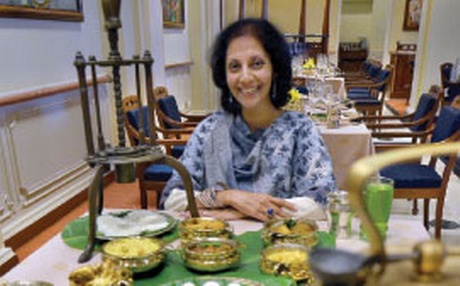
Writer and foodie Kaveri Ponnapa’s face lights up whenever she speaks about the traditional food of her forefathers, the warrior race—the Kodavas.
Writer and foodie Kaveri Ponnapa’s face lights up whenever she speaks about the traditional food of her forefathers, the warrior race—the Kodavas. She has endeavoured to capture the essence of Kodava cuisine by training and guiding the chefs of Dakshin, ITC Windsor hotel in Bangalore. Kaveri is all praise for the dedicated chefs and pronounces their Kodava food as almost as good as what’s cooked at home. And coming from her, that’s saying a lot.
Kaveri has spent years studying and documenting the food and culture of the people of Coorg which is a tiny hilly district near coastal Karnataka and has a distinct history and customs quite unlike the rest of the state. She picked up recipes and tips from her grandmother and later from her mother-in-law and is a brilliant cook herself.
The Coorgs or Kodavas migrated from the Eastern Mediterranean and are a fiercely proud and clannish community. They lived close to Mother Nature and lived on seasonal fruit and vegetables and grew paddy on the flatter lands and valleys as well as on the slopes. Their food is hence a rich mix of rather exotic forest produce and rice. Various items are made out of rice and broken rice as in other parts of South India like puttu and akki tari or broken rice flour which is used to make akki otis, a Coorg substitute for wheat flour rotis.
The key flavour in every Coorg dish is that of sourness which is thanks to concentrated vinegar, the much loved signature kachampuli made from a fruit that is from the same family as kokum or from local bitter oranges, kaipuli. “These days there is a big demand for this unique vinegar and there is adulteration happening so one should buy it only from reliable sources,” cautions Kaveri.
A largely meat and pork eating people with the ubiquitous Pandi (pork) curry being a much loved and best known Kodava dish. There are a lot of vegetarian dishes much to the delight of the uninitiated diner. The mushroom curry which is quite sweet and cooked in coconut could almost pass off as a Thai dish. Red pumpkin curry with grated coconut is delicious with rice flour rotis. The Kodavas make a variety of dishes from beans, double beans and wild greens which are tasty and subtly flavoured. Kaveri chose to be vegetarian for many years and would experiment and try out veggie recipes rather diligently.
Trade has certainly influenced the cuisine and one fine example is that of ghee rice which is usually eaten with chicken curry and definitely has a strong resemblance to a rice dish in Maplah cuisine.
The Kodavas were famed hunters informs Kaveri and they ate everything they hunted whether it was quails, partridges, venison. The monsoon was a long wet season so meats were dried and smoked and mushrooms which grow abundantly everywhere were dried and preserved. Almost every village household had a little kitchen garden where a variety of herbs, spices and vegetables like pumpkins, gourds, greens were grown, bamboo shoots and mushrooms thrived. “Foraging was a part of our culture and nothing went to waste,” says Kaveri.
Preserving techniques like pickling and salting were common and are used even today. Apart from the sour flavour, unique to Coorg, many dishes have a touch of bitterness thanks to dry roasted and then powdered fenugreek seeds. Roasted rice grains are used as thickeners in some dishes.
Kodavas do not have many desserts and dishes like banana fritters and steamed ripe jackfruit pulp served with grated coconut and a bit of jaggery are perfect. Kaveri has a website www.coorg.com with information on the history and cuisine of her people.
source: http://www.newindianexpress.com / The New Indian Express / Home> LifeStyle> Food / by Sangeeta Cavale Radhakrishna / December 22nd, 2013
The last date for submitting nominations is December 11 In the backdrop of the State Election Commission announcing election to Madikeri CMC, the authorities have started making preparations for the smooth conduct of election.
To check the movement of people in front of CMC office, a barricade has been installed. The nominations will be received at a building next to Kaveri Kalakshetra. No nominations were received on the first day. The last date for submitting nominations is December 11 and nominations will be scrutinised on December 12. The last date for withdrawal of nominations is December 14. The public campaign will end on December 20 and election will be held on December 22 from 7 am to 5 pm.
The counting will be held on December 24 at 8 am. The total population in the CMC limits is 33,381. There are 24,325 voters, of which 11,934 are male and 12,391 are female voters.
There are 28 polling booths. Two election officers and two assistant election officers have already been appointed for 23 wards. Deputy Registrar of Cooperatives S Sridhar will be the election officer for ward 1 to 11. Youth Services and Sports department Assistant Director Jayalakshmi Bai will be the Assistant Election Officer.
Similarly, Watershed department Deputy Director Tirumalesh will be the election officer for ward number 12 to 23 and Horticulture department Assistant Director Pramod will function as Assistant Election Officer.
Three booths have been identified as hypersensitive, two as sensitive and 23 booths as general. St Michael High School booth has highest number of voters—1263 and Taluk panchayat building polling booth has lowest voters—465.
A total of 120 officials will be deployed for election.
source: http://www.deccanherald.com / Deccan Herald / Home> District / DHNS – Madikeri / December 04th, 2013
Sandalwood actress Harshika Poonacha is on cloud nine. At the Karnataka State Film Awards announced for the year 2011, she was adjudged the Best Supporting Actress for her work in the Kannada film Thamassu. The film, directed by Agni Sridhar, had Shivarajkumar in the lead. In fact, Shivarajkumar had won a Filmfare Best Actor nod for this film. The actress, who is currently in Hyderabad, took to her social networking page to thank the team of Thamassu. “Thamassu” The film which made me feel special,Thnx to Agni Shridhar sir and The Hatrick hero Shivanna sir My first STATE AWARD is dedicated to you both coz I wudn have made it possible without you both:) Thnq so much for the support and blessings :)) Also I thank all my beloved frens for wishing me on calls,texts and social networking sites :)) Love u all,muaaaaahhhhh,” she wrote. (Harshika Poonacha )
When TOI reached out to the actress, she sounded ecstatic. “I am overjoyed. In fact, I was sleeping when the award was announced and my phone was on mute. I missed a whole bunch of calls and messages. I am replying to everyone now,” she said, adding that the team of her new film was throwing a party for her this evening. “Right now, my award is the only thing on my mind,” she signed off.
source: http://www.articles.timesofindia.indiatimes.com / The Times of India / Home> Entertainment> Regional> Kannada> Filmfare / Pratibha Joy, TNN / October 25th, 2013
WELCOME. If you like what you see "SUBSCRIBE via EMAIL" to receive FREE regular UPDATES.
Read More »