Category Archives: Uncategorized

Iraqi air force moves ahead with fighter squadron as U.S. exits

NEW AL-MUTHANA AIR BASE, Iraq:

Iraq expects to have an operational fighter wing squadron in 2015 or 2016, the nation’s top air force commander said Tuesday during a final press conference with outgoing U.S. Air Force leaders at a military base near Baghdad.

Iraqi Staff Lt. Gen. Anwar Hamad Amin said his country’s nascent fighter program represented an important step in the country’s ability to defend itself against external attack, as well as “the sacrifice from both sides, American and Iraqi, to build our Iraqi air force.”

Amin’s comments came as the U.S. Air Force contingent that has been training the Iraqis prepares to leave by the Dec. 31 deadline mandated by the current U.S.-Iraq security agreement.

Iraq finalized a long-awaited deal to purchase 18 F-16 fighter aircraft in September, and the White House announced Monday that it would notify Congress of the proposed sale of 18 more F-16 jets, according to media reports.

The Iraqi air force is still in its infancy, with cargo planes and small aircraft like the Cessna 208B and King Air 350 at its disposal. During the next few years, it will acquire more advanced C-130J cargo planes, as well as training fighter jets and the F-16s.

The aircraft are among the $11 billion worth of weapons and equipment that the Iraqi government has purchased from American defense companies, according to the State Department-run Office of Security Cooperation-Iraq.

A contingent of 157 servicemembers and Defense Department civilians will manage the OSC-I program to deliver the aircraft, while private defense contractors will show the Iraqis how to use them.

“They’re really more like acquisition specialists, as opposed to being in the squadron, doing the training,” Maj. Gen. Russell Handy, the senior U.S. Air Force commander in Iraq, said Tuesday.

Besides acquiring aircraft and equipment, the Iraqis must also address undermanning issues within their service.

Since English is the global language of aviation, pilots and other aviation workers must have a good grasp of it before learning how to use their new equipment.

“That’s one of our biggest challenges now, but we’re working through it,” said Amin’s aide, U.S. Air Force Col. Steve Burgh.

Ten of Iraq’s pilots are in the F-16 fighter pilot training pipeline at bases in the United States. One of the pilots has begun training in the plane itself, U.S. officials said Tuesday.

slavine@pstripes.osd.mil

source: http://www.stripes.com / Home> News / by Erik Slavin / Stars and Stripes / published December 13th, 2011

The Recyclists

Recycling ideas

Although Indians have traditionally reused and recycled, the waste bin is a relatively recent, modern and largely urban phenomenon.Sameer Shisodia speaks to a few people who are doing their best to reverse the trash menace


Over my first couple of trips to the certifiably developed US of A, I came back with two enduring images — the first was large parking lots with hundreds of cars parked in front of every mall, office, block of apartments and just about everywhere, and the other was cool people sipping ‘soda’, or coffee, from gigantic paper cups with lids, and then chucking those — usually with about half the contents still in there — into huge bins that you could find just about anywhere! I presume hordes of us came back home with such symbols of development. The trash can quickly rose up the ranks of development indices. Our economic growth brought along with it the idea of disposable incomes, consumption cycles, large supply chains, packaging and in tow behind all this, mountains of trash both inside and around the city!

However, in the Indian context, the idea of garbage, and the waste bin, is a relatively recent, modern and largely urban one. People used to rarely need to throw stuff away, and pretty much everything had another use, or was recycled into something else, after its primary use was done with. Even amidst the growing affluence and numbers of trash cans, there is thankfully a bunch who, at their core, have not felt comfortable with this change in behaviour and are doing not only their own personal damnedest to reverse the trash menace, and sometimes even changing mindsets around them.

Dr Meenakshi Bharath was always uncomfortable with the heaps of garbage and especially the heaps of it lying around Bangalore that were making many people fall ill — with dengue and chikungunya. In 2008 she first started segregating waste and composting at her own house, and also tackling it at a city level to impact policy making through an organisation called Solid Waste Management Round Table that she’s involved with. “Over the last two years about 1,500 kgs of food waste at home has been converted into wonderful manure and an equal amount of dry waste has been sent for recycling. The 5,000 tonnes of garbage generated in Bangalore is eminently manageable if all of us take the responsibility of segregating it at the point of generation”, she says.

Poonam Bir Kasturi is one of the pioneers of home composting — on all fronts of creating products for it, educating people through information and even a garbage tour of Bangalore which helps one connect with what happens to what one throws away. Her company, Daily Dump, has been creating products and services to easily compost wet organic waste at home — even if you just have a corner in a balcony. This itself reduces the volume of your waste significantly, and you produce something that can improve the quality of soil around you a lot! Poonam herself believes in more wholesome, local choices which automatically imply less wastage in the whole cycle of production and consumption — “I prefer to spend less, repair more, reuse more and when I buy try and buy more local, more fresh and less packaged.”

But it is also efforts of folks who do regular jobs, but just passionately follow better waste management at home which help.

To her surprise, Usha Srinath found the amount of garbage generated at home go down by 60 per cent merely through reuse of plastic packets when shopping, giving away boxes etc. to those who could make use of it, and composting. She’s very conscious and proud of the way of life she grew up with — much like the rest of India — where consumption was more or less related to need, and recycling was second nature irrespective of one’s economic status. “I often wonder how we dropped our traditional Indian practices that were intrinsically so eco-friendly. And am amused that now we have to re-learn them from the West!” she adds.

Similarly, Deepa Mohan has grown up in the pre-plastic-packaged times, and values the then natural thrift of the home-maker and the Indian culture of “jugaad” which has always helped reduce waste. However, she also noticed, over time, the growing aspirational value of consumption. “Some of the things I routinely did — taking the bus instead of the car, cycling to do my daily shopping, recycling envelopes by turning them inside out, bath-with-a-bucket instead of a shower, and cloth diapers instead of disposable ones for my baby — these started to be snidely referred to as ‘being cheap’. Now I find more and more that these are ‘cool’ things to do!”

So is there a wider acceptance of what was traditionally acceptable thrift, and is now the ecologically right set of choices?

Reena Chengappa and Anu Gummaraju have been instrumental in setting up Second To None, a community that is not just promoting recycling and upcycling – the creation of objects of art and utility out of waste — but also helping organise markets and facilitating commercial activity around this. This has already found resonance with a wide audience.

Yet, it’s early days for this mindset. Reena has heard it all — from questions about practicality, to those about the weirdness and the snobbishness of it all. However, she’s happy about how folks are accepting it — “All’s well now and folks are willing to look at this choice as an option”. Sejal Shah, who creates and promotes eco-friendly upcycled jewelry, has received a lot of encouragement from people, but only a lukewarm response from actual buying customers.

Even at home, it’s often a crusade. Chidambaram Subramaniam faced a bunch of challenges in both his efforts, and the reaction of people at home when the maggots in the compost bin multiplied and crawled in one day! Over time, his persistence with composting, and creating a kitchen garden in his balcony have not only found converts at home, but evoked curiosity amongst the neighbours as well.

At our local convenience store, one sees more people come in with their own bags. There was news of an apartment complex winning an award for its waste management efforts. Kids at school are carrying home the message that plastic is bad. Yes, these are mere dents in the armour of the marketing and packaging machinery that just injects so much into our lives that we end up wasting, but these are good signs and we might see bigger change if folks like Meenakshi succeed in bringing about positive changes in policy.

It’s good to know that for a growing tribe of Bangaloreans, taking garbage out of sight is not getting it out of mind.

Getting started

* Daily Dump: http://dailydump.org or help with composting at home

* Zero Waste Management Group: http://groups.google.com/group/zwm-blr for advice on how to help your community adopt better waste practices

*Bangalore’s own flea market: http://secondtononemarket.wordpress.com/

Eco-tips

What can you do to reduce your contribution to Bangalore’s growing landfills?

*Segregate! keep the kitchen (organic) waste separate from the dry waste (paper, plastics)

*Composting. This will ensure the organic waste – which is 60% water – is actually turned into beneficial nutrients for your garden

*Reuse. See what you don’t really need to throw away. Or what someone around you could reuse. Think hard before putting anything into a bin.

*Recycle. It’s amazing how much can be recycled. Talk to the neighbourhood gujari guy.

*Carry your own bags wherever you go shopping. Including multiple small ones for the veggies at large grocery stores.

*Avoid bottled water. Carry a bottle from home, and refill.

*Buy things you ‘need’, not just ‘want’.

source: http://www.deccanherald.com / Home> Supplements> Living /
Fun things to do this weekend in Bangalore

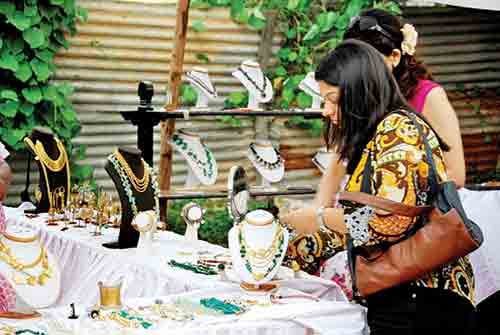
Flea for all
Sunday Soul Sante was first curated more than a year ago, to bring together the creative culture of Bangalore at one venue. This event is essentially a day-long feature that showcases some of the best things Bangalore has — art, craft, fashion and accessories, home furnishings and pottery. Food is also an integral part of the Sante and there is something to please everyone.

For entertainment there will be a fashion show choreographed by stylist and fashion consultant Prasad Bidapa. Apart from that a lot of music is on the plate — with DJs Ivan, Vachan and Inferno on the console.

Where: At Tripura Vasini, Palace Grounds
When: December 11, 12pm onwards

source: http://www.dnaindia.com / Home> Bangalore / by Vishwadha Chander / Saturday, December 10th, 2011

Chef challenge kickstarts

BANGALORE:

Metro Cash and Carry India, in partnership with the Food Lovers Club, kicked off the second edition of the Young Culinary Chefs’ Culinary Challenge in the city of Bangalore on December 7. Titled ‘Produce to Plate – Young Chefs’ Culinary Challenge 2011’, the challenge witnessed twenty-five (25) of the most talented and upcoming chefs from across hotels and restaurants in the city gather at a common platform and display their skills in producing some of the finest gourmet dishes for Bangalore’s connoisseurs. The 25 participants will undergo a series of challenges and eliminations before the seven best of the lot reach the final round.

As part of the preliminary rounds, the participating chefs along with their executive chefs visited the metro store in Yeshwanthpur, to identify and shortlist their preferred choice of ingredients for their recipes. The participants were required to submit details of their preferred ingredients and culinary workstations by December 2.
After the preliminary rounds on December 7 and 8, the challenge will host its final round on December 15 and results will be out by January 2012. winners will receive gold, silver and bronze medals, in addition to attractive cash awards of `61,000, `41,000 and `31,000 for the first, second and third prizes respectively. They will also have the privileged
opportunity to be featured in Food Lovers’ magazine.

The Young Chefs’ Culinary Challenge 2011 will have some of the most renowned chefs in India judging the event, including chef Abhijit Saha, founder director and executive Chef, Avant Garde Hospitality, Chef Madhu Krishnan-executive chef, ITC Gardenia, chef Nimish Bhatia-executive chef, The Lalit Ashok, chef Vijaya Bhaskaran-executive chef, Le Meridien, chef Rudolph Eichele-executive chef, The Leela Palace Kempisnki, chef Vijay Malhotra-executive chef, ITC Windsor, chef Ramasamy Selvaraju-executive chef, Vivanta by Taj, chef Naren Thimmaiah-executive chef , chef Naren Thimmaiah-executive chef, The Gateway Hotel.

Ajay Sheodaan, Director, Customer Management, METRO Cash and Carry India said, “The Young Chefs’ Culinary Challenge 2011 is a wonderful opportunity to encourage these promising chefs to sample, experiment with and create culinary masterpieces from the vast range of high quality products we offer.”

source: http://www.ibnlive.in.com / Express News Service, The New Indian Express / Bangalore, December 09th, 2011

‘Nature walk in coffee land’ reaches Madikeri

Madikeri, Dec 4, DHNS:

The ‘nature walk in coffee land’ organised to create awareness on environment from Bababudangiri reached Madikeri on Sunday.

The jatha was led by Krishnamurthy Pushpanath. The jatha reached Sampigekatte at 9.30 am.

The jatha was welcomed by skating children with flowers. District Congress Committee President B T Pradeep, Jaya Karnataka district president Rabin Kuttappa, Kodagu Growers Federation member B T Dinesh, Madhu Bopanna and others were present.

The jatha passed through Gandhi Maidan in Madikeri. After garlanding the statue of Gandhi, Krishnamurthy said, “There is a need to protect Western Ghats and Malnad to check global warming. It is our duty to protect Western Ghats.

There is a need to create awareness among the public on the need to protect Western Ghats from destruction. With the global warming, there has been increase in temperature by one or two degree every year. The increase in temperature will affect coffee. If this continued, then coffee plants may not survive by 2030.”

Kodagu Growers Federation’s Dr Pradeep said “the coffee plantations absorb carbon dioxide. Hence, the coffee growers are protecting the nature. The Centre should support the coffee growers.” The jatha left for Bhagamandala from Madikeri.

source: http://www.deccanherald.com / Home> District / Monday, December 05th, 2011

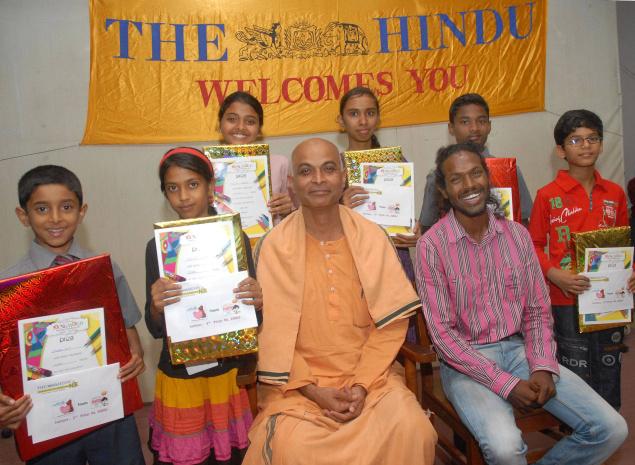
Stepping into a world of colour


We did it: Winners of the competition Photo: M.A. Sriram

The Hindu Young World Painting competition in Mysore, brought out some impressive work of art.

The young artists at The Hindu Young World painting competition held in Mysore recently portrayed their creative thoughts on the canvas with unlimited imagination.

The brilliant use of colours and expressive brushwork in the artworks produced during the annual on-the-spot competition brought to light their abundant ability.

Different topics

Participants came from Mysore, Kodagu, Chamarajagar, Hassan and Mandya. The topics given to the juniors were, “picnic with family”, “enjoying ice-cream with friends”, “visit to a museum or a botanical garden” and “having fun at the playground”. For seniors, the topics were, “enjoying rain with friends”, “bicycle ride with friends”, “watching cricket or tennis on television with family/friends”, and “science exhibition”.

MIOT Hospitals (Chime) is the title sponsor and Amrutanjan Relief Cough and Cold is the national sponsor for the event. In junior category, Uthaiah K.T., Bharatiya Vidya Bhavan-Kodagu Vidyalaya, Madikeri won first prize; Dakshith A.S. of Kautilya Vidyalaya, Mysore and Shruti Simlai of Kendriya Vidyalaya, Mysore bagged second and third prizes respectively.

In senior category, Akash T.P., Bharatiya Vidya Bhavan-Kodagu Vidyalaya, Madikeri won first prize; Mohini Menon of Bharatiya Vidya Bhavan-Kodagu Vidyalaya, Madikeri, won second prize; Sreeparna K.S. of Sadvidya High School, Mysore, won third prize.

The winners were given cash prizes. Lunar gave school bags to the first three winners in both categories. Seven consolation prizes were given to participants in each category. The winners of consolation prizes in junior category are: K M Pramodh Mahadesh, JNV, Chamarajnagar; Ankita C, SVEI, Mysore; Rakshitha Ravi, St Joseph’s Central, Mysore; Sujan B V, SVEI Public School, Mysore; T Ijar of Bright Public School; M Priyanka of Manasarovar Pushkarni Vidyashrama, Mysore and Shamnaz Abubakar of Kendriya Vidyalaya, Mysore.

Mahalaksmi R, Mahajana Public School, Mysore; Sandeep B, JNV, Chamarajnagar; M V Smitha, V V S Pandit Nehru High School, Mysore; B A Bhuvaneshwari, BVB-KV, Madikeri, Sushmitha S, JNV, Chamarajnagar; K Vinay Kumar, JNV, Chamarajnagar and Raj Kamal B Gowda, St Joseph’s Central, Mysore were the winners of consolation prizes in senior

source: http://www.thehindu.com / Life & Style> Kids / by Shankar Bennur / December 05th, 2011

Contest for best family photograph

BANGALORE:
Better Photography, a magazine on photography, organised a competition on India’s best family photograph called the Fun Frames contest recently. The winners are yet to be announced. Winners will get the opportunity to spend a holiday package from Club Mahindra for an entire family and a fabulous Olympus PEN E-P3 camera, the candidate would also be recognised on a national level by the magazine.
The concept was to capture precious memorable moments shared with family and friends through photographs and send the entries to the Fun Frames contest.
The contest was categorised in six sections namely,� family portraits, going places, kids at play, togetherness of the joy , photo series—‘A Travelogue in Frames’ and photo series—‘A Family Photoessay.’
The contest was promoted on a large scale through television promos on CNBC TV18, CNN IBN, Awaaz, CNN IBN, IBN Lokmat, magazine advertisements in Better Photography, Overdrive, T3, Chip, AV Max, Better Interiors, Entrepreneur, Burrp, Noise Factory along with banner ads across web18 sites including In.com , moneycontrol.com , ibnlive, ibn khabar, cricketnext.com. Social media was targeted and the contest was highlighted on facebook and twitter with various continuous promotions across Club Mahindra properties through banners, standees and fliers.
The entries were collected through a dedicated website (http://betterphotography.in/funframes/ ) as well as physical print entries by post were accepted. The last date for receiving the entries was November 15 and the magazine received an overwhelming 6,000 entries from towns and cities all over India.
Better Photography editor, K Madhavan Pillai said, “The number of entries was incredible and to receive a response from the smallest towns to the biggest metros in India was astonishing. We plan to conduct many more opportunities through photography to explore the talent and capabilities of the people of India.”
Renowned photographer Madhur Shroff� has been bestowed with the responsibility of selecting the final six entries that would go ahead to participate in the final face off.

The face off would require the participation of the families so the finalists would get an opportunity to stay with them at Club
Mahindra in Coorg. The winner of the final face off would be announced on� December 7 at an event in the Club Mahindra property in Coorg.

source: http://www.ibnlive.in.com / Bangalore / posted December 05th, 2011 / Express News Service, Indian Express

Designer Arati Monappa’s 10 rules of style for homes


Arati Monappa, designer and owner of Serenity reveals her 10 rules of style.

1. There are two categories of people who have antiques — those who have inherited them and those who buy them because they are genuinely interested and have read up about them. It’s important to keep a piece from the past, that has been handed down from generation to generation. Especially because, antiques today are so expensive. So, if you’ve inherited any antique, keep it.

2. There are so many ways you can put your heirlooms to use. For instance, if you have a very old pashmina shawl, one that’s not good to be used by you, you may use it as a drape over your sofa. It enhances the furniture piece and two, becomes a talking point.

3. Antique pieces blend very easily into today’s modern homes. You may have a technology driven home, stocked with plasma TVs and other hi-tech gadgets and still add antique pieces like old copper or brass lamps or wood carvings. These pieces give character and personality to an otherwise stainless steel, shiny, impersonal house.

4. Talking about care for copper pieces, I use a powder called Pitambari. You just rub the powder over the item to make it gleam. There are more solid means of preserving these pieces too, like applying a coat of lacquer. For old wooden pieces, you may apply a coat of MRF’s wood coat polish. Or you may simply use a brush to remove the dust and rub linseed oil on it.

5.Antiques are undervalued. I see people throwing out items like old copper pots or beautifully woven baskets and replacing them with plastic mugs and plastic bags. There is a need for a certain education about the value of the old heirlooms. Not because of their value, but mainly because, plastic can’t be recycled and is not good for the environment. By buying plastic, you are adding to the junk.

6. There are quite a few old valuables that young couples interested in doing up their homes could buy. They could go for a lovely ceramic pottery piece or pick up old lamps. An old lamp in the corner is enough to add character to the living room. Old textiles are another option. For instance, your grandmother’s old woven sari could make for a beautiful framed piece of art, in the hall.

7. My store Serenity, is a good example of how you can bring the old into the new. We’ve re-used old glass panes, doors and grills for the interiors. So, even if its a modern five- year-oldbuilding, it’s got all these old elements like granite pillars, attangadi tiles for the floor, old mirrors and more.

8. Bangalore has quite a few places where you could go hunting for antiques. There’s Thar Gallery in Indiranagar. I believe Raintree carries a range of old furniture. Then of course, you have Russell Market, where you still have little shops where you can pick up an interesting salvaged piece.

9. I like to spend money on carpets and artworks. I think these two are very important in a home and add a whole new character to it. A painting doesn’t have to be expensive. It could also mean indigenous art like a mithila, madhubani or warli art.

10. I am very fond of carpets for the intricacy of their weaves. I am partial to porcelain and ceramic too. I like my teacups and teapots!

source: http://www.dnaindia.com / Home> Lifestyle> Report / by Mahalakshmi Prabhakaran / Place:Bangalore, Agency:DNA / Thursday, December 01st, 2011

Tribal Families get a new lease of life

Centre’s programme to rehabilitate tribals bears fruit

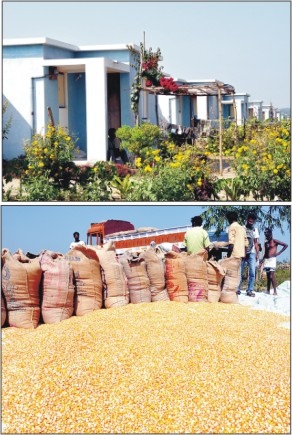
Caption: A view of the houses for the rehabilitation of tribals in Hunsur taluk. Picture right shows rich harvest of maize grown by the tribals.

Mysore, Nov. 27- The tribals of Nagarahole forest region, who depended on the forest produce for their livelihood and did odd jobs in the neighbouring plantations, are now gradually becoming self-dependent through agriculture, thanks to the rehabilitation work undertaken by the Central Government, under the directions of the Supreme Court.

More than 150 tribal families have benefited from this programme as they have been resettled in Shettihalli and Lakkapattana villages near Hanagodu of Hunsur taluk since Nov. 15, 2010. The tribal settlements have Jenukuruba (a tribal community) families from Kodagu district and H.D. Kote taluk.

Each family was given 3 acres of barren land where tribals have reaped a rich harvest of maize. On an average, each family has five members and hence, labour is no problem since they work at each other’s fields in a sort of barter system, traditionally called as Muyyi-Aalu system.

Each family is said to have grown 80 to 90 quintals of maize — enough to keep for own consumption and to sell. In order to encourage tribals to take up farming, Forest Department provided tractors to plough the fields and the Agriculture Department provided them with seeds, manure and other inputs.

The tribals depend on plantations for work, where they are paid good wages, especially during harvest seasons.

After reaping a rich harvest of maize, the tribals have already begun preparations for next crop. Agriculture Department officials are said to have advised them to take up mixed farming of crops like millets, beans, pulses etc.

Rajappa, leader of the tribals, is a Gram Panchayat member of Balele village in Kodagu. He is said to have played the main role in rehabilitating the tribals, with assistance from Living Inspiration For Tribals (LIFT).

The tribals are also growing vegetables for their consumption in their kitchen gardens. Their houses constructed by the government measure 50×80 ft, with RCC roofs, tiles floor, toilets, solar lighting and other amenities.

Talks are on to provide them with LPG cylinders for cooking and issue them ration cards under Public Distribution System.

About the rehabilitation

The new rehabilitation package for tribal communities and forest dwellers inside the Nagarahole National Park was launched in a bid to not only reduce human presence in critical wildlife habitat but also to meet the demands of tribal people.

The package is an offshoot of meeting the imperatives of Wildlife (Protection) Act of 1972, as well as balancing the requirements under the Scheduled Tribes and Other Traditional Forest Dwellers (Recognition of Forest Rights) Act of 2006, which stipulates that rights of Scheduled Tribes people and other traditional forest dwellers within critical tiger and wildlife habitat areas are not compromised.

The package ensures tribal rights with a few modifications and ensures space for tigers and other wild animals inside the National Park

source: http://www.starofmysore.com / General News / November 27th, 2011

CNC welcomes move to set up central varsity

The Codava National Council (CNC), spearheading the movement for creation of an autonomous Kodava homeland for Kodagu, on Sunday, welcomed the proposed move of the State Government to write to the Centre recommending establishment of a Central University to Kodagu.

CNC president N.U. Nachappa said in a statement on Sunday that the credit of the decision should go to the CNC, which had been submitting memorandums to the Centre and the State Government through the Kodagu district administration over the issue for many years now.

Mr. Nachappa quoted a report appearing in a section of the press in Bangalore on November 17 which said that following the proposal made by the CNC for a separate Central University dedicated to the study of Kodava ethnic culture, the Karnataka State Higher Education Council had resolved on November 16 to write to the Centre recommending the establishment of a Kodagu Central University, similar to the one in Gulbarga. However, Minister for Higher Education V.S. Acharya had said it would not deal with Kodava studies only. “We do not want to restrict it to just one subject. We will write to the Centre for a Central University in Kodagu region,” Mr. Nachappa said quoting the report.

He said the CNC was happy to know that the State Government was taking the lead in forwarding the recommendations made by the Deputy Commissioner, Kodagu, based on the several memorandums submitted by CNC, seeking the establishment of Central Kodava University and World Kodavology Study Centre. ‘The CNC is grateful to Mr. Acharya for having considered our legitimate claim with judicious perspective’, he said.

Census

Mr. Nachappa appealed to the Kodagu Deputy Commissioner to direct the caste census enumerators to enlist the Kodava people separately under the columns of the ‘Kodava’ caste, and not as ‘Kodagaru’ or ‘Kodaga’ or ‘Coorgi’ in the census sheets. The census was set to begin in the last week of this month.

Kodava Day

The CNC would be observing the annual ‘Codava National Day’ on November 24 at the Gandhi grounds in Madikeri, Mr. Nachappa said. It would mark the 20th year of the struggle of the CNC. The CNC would reiterate its stand on the creation of an autonomous Kodava homeland.

source: http://www.thehindu.com / National> Karnataka> Mysore, November, 22nd, 2011 / by Staff Correspondent