Category Archives: Uncategorized

Dash of creativity gives secondhand stuff the edge

In keeping with Bangalore’s ongoing celebration of all things recycled, the Flea Market at Jaaga fit the bill.

The event was organised by Second to None, a group that encourages people to buy and sell used products.

The flea market organised in Bangalore by the NGO Second to None encouraged people to buy and sell used products. Photo Ashwini N. The Hindu
“The idea behind the flea market was to provide a space for people to sell and buy secondhand material without going to the trouble of marketing or advertising. With different choices, customers buy items at a lower price than a new one, and which are in just as good a condition,” explains Anu Gummaraju, a founders of the organisation with Reena Chengappa and Shilpa Kamath.

The atmosphere was informal, yet the event created awareness among visitors about the simplicity of turning ‘waste to wealth’. Angad Gummaraju, a 14-year-old, took great pleasure in teaching kids — and grown-ups — how to make jewellery boxes and lamp holders in fifteen minutes through origami.

How did he learn to make these trendy accessories? “YouTube,” he quips, demonstrating just how easy it is to be ecofriendly and resourceful while having fun.

About thirty participants were seen exhibiting their wares at the stalls. Belaku, an NGO, had brought in bags, notebooks and trendy jewellery made out of recycled paper by disadvantaged village women.

Papier-mache artiste Rabi Ratnakar’s lamps and vases were a crowd-puller. “These are completely safe and extremely kid friendly,” he says.

Taantra Cakes sold preservative-free cupcakes. “This makes them more durable. The taste of the cakes gets better and they are healthier even without refrigeration,” explains Taantra Cakes owner Chaitali Singh.

Old books, clothes, bags, even photographs, found space in shoppers’ bags. Second to None is hoping to make every third Sunday ‘flea market Sunday’ so that more people can participate in the “recyclathon”.

source: http://www.thehindu.com /by Madhavi Shivaprasad / News> Cities> Bangalore / November 17th, 2011

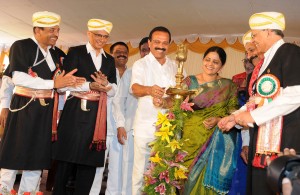
CM inaugurated Centenary Celebration of Kodava samaja

Chief Minister D V Sadananda gowda inaugurated Centenary Celebration of Kodava samaja. Speaker KG Bopayya, High Court Judge Bopanna, M C Nanayya MLC, Dati Sadananda Gowda seen in Picture.

Chief Minister D V Sadanada Gowda inagurated Centenary Celebration of Kodavasamaja.Speaker K G Bopayya, High Court Judge Bopanna, M C Nanayya MLC, Dati Sadananda Gowda seen in Picture

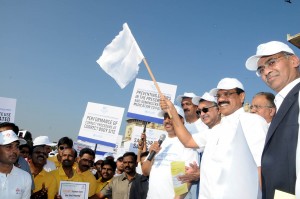
Chief Minister D V Sadananda Gowda Flaged off of Marathon Run by Quality Control in Health Management. Rajiv Gandhi University of Medical Sciences Vice Chancellor Dr Sheeprakash seen in Picture

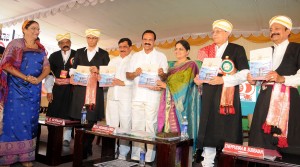
Chief Minister D V Sadanada Gowda Released Smarana Sanchike for Centenary Celebration of Kodavasamaja.Speaker K G Bopayya,High Court Judge Bopanna,M C Nanayya MLC,Dati Sadananda Gowda seen in Picture

source: http://www.sandanandagowda.com / Sunday, November 13th, 2011

Kodavas of Coorg: Bold, beautiful and brainy

That its men are brave and the women beautiful is an oft-remarked blanket statement about Coorg. The British called it the Scotland of India when they fell in love with this cool nook in the Western Ghats and its warm people.

The Kodavas or Coorgis are an ethnic minority. But unlike other minority communities, the Kodavas are largely privileged. In fact, a pleasant colonial hangover stays with the people who enjoy a good life with evening drinks, golf, and hockey.

Although a Hindu community on paper, their language, customs, and traditions are distinct.“Easily one of the most martial cultures in the country, these are a people who ritually worship their guns and swords. Interestingly, till a few decades ago, the birth of a male child was marked with a gun shot, announcing to the world the arrival of a warrior,” writes Pattamada Sundar Muthanna in a coffee table book on Coorg tourism, brought out by journalist PT Bopanna.

Thanks to the outstanding contributions of this community to the country’s defence sector, Coorg is also called the Land of Generals.Field Marshal Kodandera ‘Kipper’ Madappa Cariappa, the first Indian Chief of Army Staff of the Indian Army, was a Kodava. General KS Thimmayya was another brave soldier, who led the army during crucial conflicts with China and brought laurels to his homeland in the hills.

“The people’s right to carry arms was originally granted by the Kodagu kings, who did not maintain a standing army, but called on the people to fight when an invasion threatened. This right was formalised by the British when they exempted the Coorgis from the Arms Act. Today the Coorgis and a few other communities have the right to own guns without having to go through the process of getting a licence,” said Muthanna.

Characteristically, Kodava weddings are not exempted from the martial element either. The bridegroom, wearing his smart traditional costume— the knee-length kupya (similar to the Scottish kilt )—would chop banana trees with their carved daggers called pichekathi and odi kathi, symbolically to portray the duels he fought for the bride. The pichekathis are a part of the groom’s wedding gear, stylishly tucked into the cotton cummerbunds that hold their wraparound cloaks together. The ceremonies are tribal in nature more than Hindu, and are devoid of any Brahminical rituals. There is no chanting of mantras and slokas, and family elders direct it.

Like the Scots, Kodavas too stress upon their clan lineage. Their surnames indicate their clan, and inter-clan marriage is forbidden. Another distinguishing characteristic of this community is the high status given to women. According to the Gazette of Coorg, compiled by G Richter, published in 1870, “Young persons under 16 years of age are not married in Coorg. Exceptions from this rule are very rare. It is to be hoped that the Coorgis will ever be preserved from the misery of child marriages.” Dowry is forbidden, and widow remarriage is encouraged. Probably owing to the cool climate and the secluded terrain, the Kodava community is known for its liberalised outlook to alcohol consumption.

“Alcohol is offered to gods and ancestors during ceremonies. Children who have come of age enjoy a drink or two with parents,” said Muthanna.

A main festival in the Kodava calendar is called Puthari. It is an annual fest to celebrate the first harvest of paddy. Under full moonlight, stalks of paddy are cut and joyous gunshots mark the occasion.

The Kodava language is a mix of its geographical neighbours with many surprises thrown in. Malayalam, Tulu, and Kannada influences can be easily spotted, but the language is also unique as its people.

source: http://www.anhourago.in / DNA www.dnaindia.com / Home> Bangalore> Report / by Malavika Velayankkal / Sunday, Nov 13th, 2011

Tale of a forgotten World War II Hero

Late Subedar B.M. Uthaiah was a Prisoner of War for 5 years in Malaya
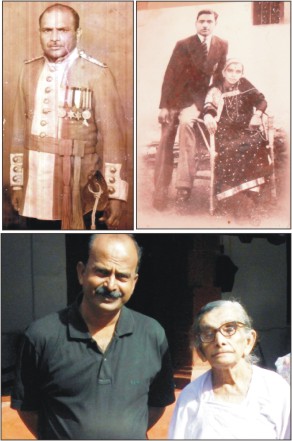

Caption: 1) Late Subedar B.M. Uthaiah. 2) For KEEPSAKE: The Uthaiah couple. 3) The author Ex-Sgt. M. N. Subramani seen with Subedar Uthaiah’s widow Dotty Thangamma at her native village in Virajpet.

By Mandetira N. Subramani, President, VeKare Ex-Servicemen Trust, Mysore.

Late Subedar Baltikalanda Medappa Uthaiah was born in Virajpet taluk, Kodagu District, on 13th November 1908. He did his schooling in Virajpet. After completing his SSLC , he took up a job in a Co-operative Society in Mysore.

A good sportsman and a brilliant hockey player, he used to actively participate in various athletic meets and hockey tournaments. His brilliance in sports and games got noticed by the then Mysore Land Force Officers and offered him a job in the Mysore Infantry as Havildar. Thus late Sub B.M. Uthaiah joined the first Battalion of Mysore Infantry in 1932 and went on to become a World War-II hero in his own right.

As a young combatant soldier, Uthaiah married Kodira Mandanna’s eldest daughter K.M. Dotty Thangmma in April 1940 while he was a Jamedar and at the time when the II World War had started. Jamedar Uthaiah became part of Indian Army as First Battalion, Mysore Infantry, which merged with the British Indian Army.

In Dec. 1940, that is within six months of his marriage, Jamedar Uthaiah proceeded to Bhopal in Madhya Pradesh for additional training in preparation for participation in the World War-II. After completing his training at Bhopal, he along with other members of Indian Army were shipped directly to Malaya from Bombay without even getting a chance to meet his wife and family for fighting against Japanese Army which was marching towards India through Burma.

As soon as the ship berthed in Malaya, the Indian soldiers were engaged in fierce fighting with the relentlessly marching Japanese Army. However, after a few days of fierce fighting for quite some time, the entire Indian battalion in which Uthaiah was fighting was surrounded by the Japanese Army and Jamedar Uthaiah was taken as Prisoner of War (POW) by Japanese Army. He along with other members of battalion were taken to Japan and put in a POW camp which was more like a concentration camp rather than POW camp.

Jamedar Uthaiah was subjected to severe torture and ill treatment by the POW camp authorities who were well-known for their ruthless brutal treatment to their prisoners. Since the prisoners were not permitted to communicate with any one outside the camp, Jamedar Uthaiah’s whereabouts were not known to any one in India including his Army Unit. His wife and family were totally distraught without any news of Jamedar Uthaiah.

His father Baltikalanda Medappa passed away in 1943 because of the sufferings of separation of his son and non-availability of any information about the son’s existence. The relatives and well-wishers of Jamedar Uthaiah and his wife Thangamma had concluded that he had become the war casualty and started preparation for re-marriage for Thangamma.

However, Thangamma was adamant and stood firm against re-marriage. She instead tried to find solace and comfort by visiting various temples in Coorg to pray for her husband’s safe return. Even after the end of World War-II, the whereabouts of Jamedar Uthaiah were not known and there was no communication from any quarter regarding his existence. During October 1945, after a gap of five years, the family members were informed regarding the arrival of Jamedar Uthaiah at Bangalore through a telegram which was received from Malaya via Colombo.

Immediately after arriving at Bangalore, Jamedar Uthaiah had to face a trial by British Army for possible involvement in Indian National Army (INA) activities. Finally, in December 1945, he was permitted to meet his wife Thangamma in Bangalore, who was very sick by then due to emotional suffering. He was subsequently posted to Bangalore till 1947.

He had to once again rush to Hyderabad in 1948 along with his unit to tackle the Razakars and to take part in the Hyderabad liberation which was successfully completed. However, he was very frustrated by all the treatments that he received from the British Indian Army in spite of all his sufferings and sacrifices. He finally took voluntary retirement in 1950 from the Indian Army and went back to his native district Kodagu. Subedar Uthaiah died on September 25, 1978, at the age of 69 like a true soldier unsung, unheard. His widow Thangamma, who is 92 years of age, now lives in Arji Village, Betoli post near Virajpet along with her youngest son, Bopanna. Uthaiahs were blessed with two daughters and four sons.

Late Subedar Uthaiah’s sufferings as a combatant soldier and a POW at Malaya during and after World War-II did not demoralise him in his life and he never thought ill of careers in Armed Forces when his son decided to join the Indian Air Force. True to the tradition of martial race to which he belongs to, as a Kodava, he encouraged his son, who was born after he returned to India from Malaya, to join the Arm-ed Forces in independent India. His second child B.U. Chen-gappa, an Engineering graduate, took commission in the Indian Air Force and went on to become a highly decorated Air Marshal in IAF.

Air Marshal Baltikalanda Uthaiah Chengappa, PVSM, AVSM, VSM retired in early 2000. Before his retirement, he held the appointment as Air Officer Commanding, Maintenance Command IAF.

Like father so is the son. A real chip of the old block. Air Marshal Chengappa went on to prove that Kodagu is indeed a cradle of mighty Generals, Air Marshals and valiant soldiers.

source: http://www.starofmysore.com / Features / November 10th, 2011
1971 Bangladesh Liberation War memoirs

When the Pak envoy was on the mule trail

The declassified 1971 war papers narrate a curious story of the Pakistani ambassador to Argentina fetching up an hour-and-a-half late for his farewell dinner. B K Sanyal, then India’s ambassador to Argentina, in a 1969 note to New Delhi found this amiss but said the Pak ambassador had not acted irresponsibly. “In my view, the ambassador did not act irresponsibly, but went away with a brigadier to visit mule breeders who are chiefly located in the Cordoba and Pampas areas.”

Before the 1971 war, Pakistan bought mules from Argentina to beef up its logistics capability in Kashmir. The Pak ambassador’s conduct triggered a chain of communications. K Sankaran Nair, then joint director, R&AW, wrote on Septemer 24, 1969, to C B Muthamma, joint secretary (Americas): “The Pakistani army has raised four mountain regiments and are likely to raise four more. These have mountain guns carried on artillery mules over hilly terrain. Eight mountain regiments would require 3,000 mules. The regiments are meant for use in PoK.”

How US responded to the signs of war

The 1971 war papers document how the US mission in India packed off confidential documents to secure places during the conflict, asked its banks to be ready to close accounts of American citizens and discussed the possibility of the war being a long affair.

A letter written at the peak of the Indo-Pak war by the then IB chief gives an insight into the mindset of the US mission in India during the 1971 war. “Sensitive documents with various US missions in India have been sealed under instructions from the US government. Thereafter, the documents are to be sent partly to Colombo and partly to Kuala Lumpur,” Atma Jayaram, director IB wrote on December 13, 1971.

Jayaram wrote that the “First City National Bank and the Bank of America in Madras were contacted by officials of the local US consulate and advised that they should prepare to close the accounts of American nationals and arrange for their transfer to places (presumably outside India) at a short notice.”

source: http://www.articles.timesofindia.indiatimes.com / by Josy Joseph / TNN / November 06th, 2011

‘Ekikarana’ movement: A timeline

The regions that make up for today’s Karnataka were under as many as 20 different administrative units with the princely state of Mysore, Nizam’s Hyderabad, the Bombay Presidency, the Madras Presidency and the territory of Kodagu being some of them.


* Under such circumstances, a need was felt among Kannadigas living in these various administrative units to form one state, which would unify all Kannada-speaking people in the various regions. This movement called the Ekikarana movement was led by litterateurs and thinkers.

* The Karnataka Vidyavardhaka Sangha was established in Dharwad in 1890. This was an important phase in the history of the unification movement. The Sangha was started by R H Deshpande who strove for the revival of Kannada in a region which was part of the Bombay Presidency where Marathi was the language of administration.

* It was later that the Kannada Sahitya Parishat (Bangalore) was set up (1915), which was another driving force in the unification movement.

* Alur Venkata Rao was the leading light of the unification movement. The publication of his Karnataka Gatha Vaibhava in 1912 gave a huge push in terms of a mass movement. He was known as the Kannada Kula Purohita or the ‘High priest of the Kannada family.’

* The States Reorganisation Commission was constituted by the Central government under the States Reorganisation Act and consisted of Hon. Fazal Ali, Kavalam Madhava Panikkar, and HN Kunzru.

* The recommendations of the Fazal Ali Committee was ratified by the Parliament, which meant that several disparate Kannada-speaking regions would now come under the Mysore State.
n The State was formed on November 1, 1956.

n It was on November 1, 1973, under Devaraj Urs as chief minister that the Mysore State was renamed as Karnataka.

source: http://www.deccanherald.com /by DHNS / Home> Supplements> Spectrum / Tuesday, November 01st, 2011

NCC air wing expansion awaits state nod

MANGALORE:

NCC Directorate, Karnataka and Goa is ready to allot more funds to increase the number of air wing cadets in institutions in the region under Mangalore Group Headquarters (GHQ), but it is yet to get state government’s nod to go ahead with the plans.

Mangalore GHQ can increase the number of cadets from existing 900 to 1,200 if the state education department agrees to bear 25% of the expenses. A proposal in this regard sent by the Mangalore GHQ to the department in June 2011 is still pending in Bangalore.

Only seven institutes in Dakshina Kannada, Udupi and Kodagu, which come under Mangalore GHQ, have NCC Air Wings. St Aloysius High School, Milagres High School and Kittel High School in Mangalore, St Philomena High School in Puttur, Jain PU College in Moodbidri, St Michael’s High School in Madikeri and St Anne’s School in Virajpet are the institutions, which have NCC Air Wing currently. Students in schools, where there is no NCC Air Wing, may join the open admission wing at St Aloysius School, but admission here is restricted to 200.

Meanwhile, NCC Army Wing has separate units for Dakshina Kannada, Udupi and Kodagu districts. The 18 Karnataka Battalion NCC of Dakshina Kannada district has 13 schools and 11 colleges with a total strength of 2,150 cadets.

Mangalore GHQ master warrant officer Suresh Atri told TOI that more students should be given opportunity to join NCC Air Wing. “We have submitted a proposal, but we have not received any communication from the government so far,” he added.

It is a fact that students are motivated towards Indian military through NCC activities in schools. At the same time, Indian Air Force (IAF) too agrees a fact that they find it very difficult to attract youth from South India towards the force. IAF has already launched massive campaigns in South India to create awareness and to attract young to choose airmen’s job.

source: http://www.articles.timesofindia.indiatimes.com / Home> Collection / by Vinobha KT / TNN


Heads-up: Thursday is National Coffee Day! (in the U.S)

Take note that Sept. 29 is National Coffee Day, a day when we should all get really wired on free coffee, skip work and participate in bicycle races and pony rides.

OK, so maybe the free coffee is enough. Here’s where you can get it:

1. 7-Eleven. The chain is giving away free medium cups of java from 7-11 a.m. in your time zone.

2. Krispy Kreme. The stores are offering a free 12 oz. cup of House Blend Coffee all day tomorrow. Get on it!

source: http://www.content.usatoday.com / by Whitney Matheson/ USA TODAY / September 28teh, 2011

UCC Coffee Museum: Kobe, Japan

UCC Coffee Museum

This museum is arranged building from UCC Coffee Hall which was the one of the pavilions at Kobe Port Island Exposition from 1981. This is the only museum in Japan that has a theme of coffee. When the time of Expo, the coffee cup was motif of this building, but after the renewal of 1987, it changed to Islamic style that is looks like the mosque. There is main head office building of UCC is nearby that the museum is directory connected.

It has display process of coffee which starts from origin of coffee, plantation, marketing, and processing that has explained in chronological order. And introduction to the culture of the coffee how you enjoy, and the history of UCC in film and panel, and you can also see the CM and the coffee-can design that has used before. The name of UCC was in animation drama Evangelion New Theatrical Edition: Break that there is the display of commemoration panel which has autograph of director and the person in charge of 2D digital work of the animation. UCC has been producing the coffee with can design of Evangelion’s characters called Eva-cans that somehow they are related with Evangelion.
There is a coffee shop: Coffee Road where you can enjoy the coffee from all over the world, and the menu are special that you can only find in here. There are activities related to coffee that you can participate with the advanced reservation. The Coffee Seminars are held quite often that it is fun museum for coffee fans.

Click on the photo for enlarged view

Basic information

Hours Museum 10:00~17:00 (Last admission 16:30)

Coffee Shop 10:00~18:00 (Last order 17:30)

Closed

Every Monday( If the Monday falls on holiday, it will be opened and next day will be closed)
The following day of holiday
New year holiday
There might be some exceptional opening day.
Check the official site for more details.

Admission Fee

Adult 210yen
Child 100yen
Coffee Shop: Coffee Road (coffee shop doesn’t require admission fee)

Address

Minatojimanakamachi 6 chome 6-2,
Kobe Chuo-ku, Hyogo,
650-0046 Japan
TEL:078-302-8880
FAX:078-302-8824
Access

Kobe Shin-Kotsu Port Island Line: Minami-Kouen-eki

Website  http://www.ucc.co.jp/museum/

source: http://www.jin.jcic.or.jp / Home> Kobe Travel Guide /


Cauvery ‘Teertodbhava’ at 11.43 p.m. on October 17

The famous ‘teertodbhava’, emerging of the sacred or holy water from the tiny pond called ‘Brahmakundike’ at Talacauvery, foothills of the mighty Brahmagiri Hills in Kodagu, will occur at 11.43 p.m. on October 17 under the ‘Mithuna Lagna’.

Kodagu Deputy Commissioner N.V. Prasad said this at the preliminary teertodbhava meeting at the Old Assembly Hall in Madikeri on Tuesday. The puja rituals concerning the teertodbhava would start from September 28 at both Bhagamandala and Talacauvery with the patreyalli akki hakuvudu (filling rice in the vessel) at 8.45 a.m. on September 28, Aajna Muhurta on October 5 and Akshaya Patra on October 13.

Mr. Prasad gave a call to officials of all departments to take steps to ensure a successful teertodbhava. He instructed the Public Works Department engineers to repair the Madikeri-Bhagamandala-Talacauvery road a week ahead of the Cauvery jatra that ensued after the teertodbhava.

He said the officials of the Chamundeshwari Electricity Supply Corporation (CESC) should make arrangements to avoid power disruptions. The Talacauvery-Bhagamandala Temple Committee should keep diesel generators as stand-by to meet emergencies since the occurrence was in the night, Mr. Prasad said.

Sampath Kumar, Manager of the Temple Committee, said four generators would be kept ready to meet emergencies.

Mr. Prasad said the KSRTC Depot Manager Lachme Gowda should take steps to provide buses to the devotees visiting the temples on the teertodbhava day and on other jatra days. Mr. Gowda said 30 buses had been deployed during the last year’s teertodabhava and jatra, and the same number would be available this year as well.

Superintendent of Police Manjunath Annigeri said the police would regulate the movement of vehicles to and from Talacauvery in view of the lack of space for parking at Talacauvery. The Public Works Department should take steps to look into the parking problems, Mr. Annigeri said.

Mr. Prasad told the Department of Health officials to equip themselves with medicines, ambulance, and related facilities to attend to health needs during the occasion.

Additional Deputy Commissioner K.M. Chandre Gowda said this was a preliminary meeting and the Legislative Assembly Speaker and legislators would attend the next meeting to oversee the preparations. Every government department should cooperate to make the teertodbhava celebrations a success, Mr. Gowda said.

Seven sub-committees, including reception, transport, cultural, and publicity, were formed on the occasion.

Mr. Gowda asked the Assistant Director of the Department of Kannada and Culture to organise cultural programmes during teertodbhava at Talacauvery. The Karnataka Kodava Sahitya Academy president Iymudiyanda Rani Machaiah, Madikeri Deputy Conservator of Forests K.S. Anand, and Senior Assistant Commissioner M.R. Ravi, were present.

source: http://www.thehindu.com / by Staff Correspondent / National> Karnataka / Mysore, September 21st, 2011