Category Archives: Uncategorized

Tribals Karnataka Convention on Apr 25

Mysore:

More than 1000 tribals would take part in the first tribals’ convention to be held in Karnataka here on April 25. The convention is focussing on legalising forest land, distribution of `Anthyodaya’ ration cards for tribals, site and rights and self-respect of tribals. The convention will be inaugurated by President of Tribals Rights� National Forum MP Bajuban Riyang, Forum State General Secretary G C Bayyareddy told reporters.

He said there were more than eight crore tribals in the country.The tribals had no self-owned land nor houses and were residing in the outhouses of farm owners. The names of the tribals do not find a place in the voters’ list and they were deprived of government facilities, he said. More than 1,000 tribals from Mysore, Chamarajanagar, Kodagu, Dakshina Kannada, Uttara Kannada,Udupi, Chikkamagalur, Shimoga and Ramanagar Districts would participate in the convention

source: htttp://www.ibnlive.in.com / PTI /Apr 22nd,2011

First Woman IFS Officer Muthamma Passes Away

C B Muthamma, the first woman Indian Foreign Service (IFS) officer, died here on Wednesday. She was 85. 

She passed away in a private hospital where she was undergoing treatment, her family members said.

Chonira Belliappa Muthamma was born Jan 24, 1924, in Kodagu. In a career that began in 1949, she served as ambassador and high commissioner to a number of countries. She retired in 1982.

Muthamma had fought against gender bias in the foreign service and had taken the Indian government to court in 1979 for bypassing her for the coveted foreign secretary’s post.

Though the Supreme Court dismissed the petition, it noted that there was truth in Muthamma’s contention that there was gender discrimination in the foreign office.

Muthamma brought out in the form of a book essays she had written over the years. Titled ‘Slain by the System – India’s Real Crisis’, it was published in 2003.

She had also co-authored a book on Kodava cuisine.


source: http://www.bangaloremirror.com / IANS / Thursday  Oct 15th, 2009

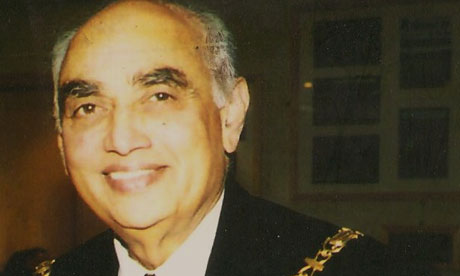
Keeki Thammaiah

Keeki Thammaiah obituary

Keeki Thammaiah 

The trappings of office were relished by Keeki Thammaiah as they echoed his native Karnataka ceremonial attire

My friend the lawyer, educationist and local politician Keeki Thammaiah, who has died of a heart attack aged 76, became the first Asian mayor of Harrow, north-west London, in 2000.

He came to politics relatively late when elected as a Labour councillor in 1994. As mayor, he demonstrated his skill in working with people across the divide of politics, race and class. He relished the ceremonials – the robes and chains – not only because of his innate respect for the office but also because he felt comfortable with these trappings. Their lavishness echoed the ceremonial attire of his native Coorg in Karnataka, south India, particularly that of the traditional kupya chaleworn by Coorg men – long black tunics with red and gold brocaded cummerbunds from which intricately worked swords in gold and silver were slung.

Keeki came from an affluent landowning family, and after qualifying as a lawyer served as an advocate in the courts of justice in Bangalore. He arrived in Britain in 1964, drawn by the vibrancy of its contemporary culture (listening to the Beatles for the first time was clearly a defining experience), as well as its legal traditions. He taught business law at institutions including Westminster College for a number of years.

Keeki and Naila, his wife of 40 years, kept an open house, and visiting Indians – dignitaries, students and tourists – enjoyed the warmth of their hospitality. A champion of Karnataka culture, with its rich tradition of Kannada literature and performing arts, Keeki supported initiatives that helped younger generations living in Britain to engage with this culture. On the day before his death, he and Naila had hosted a reception to launch an initiative to promote Karnataka and its artistic heritage.

He is survived by Naila, his son, Ponnu, and two grandchildren, Adit and Alok.

source: http://www.guardian.co.uk / by Nima Poovaya-Smith / The Guardian / Thursday, May 19th, 2011

Under the Canopy of Tradition


The district of Kodagu has approximately 346 ‘devara kadu’s (sacred groves). The drop in the number of such groves has been cause for concern in recent times. Some environmentalists blame it on the proliferation of coffee estates, observe M G Chandrakanth and M G Nagaraja
These are ancient groves that are deeply revered by the communities that live in their vicinity. The groves, which are hubs of biodiversity,  are called devara kadus, found largely in the State’s Kodagu region. 

The belief that people of the region have in these groves has ensured forest conservation. The concept of sacred worship of trees is unique and nurtures nature conservation with people’s participation and management. India’s first IG of Forests Sir Dietrich Brandis, who influenced and mentored Gifford Pinchot, the first chief of US Forest Service, recognised devara kadus of Kodagu in 1868.

Every village in the district has at least one devara kadu. The tradition of tree worship has its roots in the Vedas, where the ficus tree has been described as housing the fertility spirits of the mythical gandharvas and apsaras. Over the years, Kodagu has lost more than 50 per cent of its devara kadu (755 in 1,900 to 346 at present) with a forest cover loss from 10,343 acres to 4,184 acres. Kodagu currently has an approximate 346 devara kadus spread over 4,184 acres.

The size of the grove varies between one cent and 1,000 acres. For the nature-loving Kodava community, the devara kadu is a place of worship to appease its favourite deities. The drop in the number of devara kadus has been attributed to encroachment of the forest area for cultivation of coffee.

While sacred groves are found all over the State, for instance, Bidirammana gudi (Tiptur), Salumaradamma (Tarikere), Hongelakshmi (Tumkur), Kadamba (dynasty of Mayuravarma who ruled Kodagu), the Kodagu district is special because it has a devara kadu in every village. Uttara Kannada, Dakshina Kannada and Udupi districts have naga banas in most villages.

Kodagu is dominated by forests interspersed with valleys. In the west and north, there are peaks ranging from 3,800 feet to 5,724 feet high. The district is peppered with coffee, orange, cardamom and other spice plantations. Each devara kadu has a temple committee which conducts the annual devara kadu festival with participation from Kodagu families and the village community.

The oldest devara kadu of Kodagu (dating back to 1,000 BC) is in Kolathode-Bygode en route to Hathur-Kaikeri in Virajpet taluk. The grove has a prehistoric cone-shaped menhir, about 12 feet high and five feet deep, another menhir ten feet high and three feet deep and a dolmen with a U-shaped porthole near the menhirs. In Yedur and Choudlu in Somwarpet taluk, in the ajji bana (ancient grove), stones are arranged in the form of capstone with stone circle, which is a megalithic practice, for worship even to this day.

This is held during the suggi katte festival. At the foot of the big menhir, a stone axe dating back to the Neolithic era, is still worshipped. An open well, about 50 feet deep, has been dug to meet water needs during worship. The menhirs are unique when compared to the menhirs at Heggadehalli and Doddamolathe in North Kodagu.

For, villagers are known to have offered earthen images, such as that of a dog, child, horse, elephant and other forms to appease the deity, a prehistoric practice. During 1990, a compound was built around both the menhirs by Muruvanda family with the help of Kelappanda, Maletira and Chappanda families. At present, the deva thakka responsibility is shouldered by the Muruvanda family. The name Kolathode-Bygode indicates existence of a rivulet Golagundi joining the river Barappole (as thode implies rivulet).

Linked to family festivals

The tradition of devara kadu conservation by Kodavas is very closely linked to their family festivals, both involving the appeasement of the same deity. The festivals are known as karana kodupa, puttari, kailpod and Cauvery Sankramana (theerthodhbhava). As part of the karana kodupa ceremony, the head of the family and relatives assemble in the Iyenmane (ancestral home) to offer meedi (food) to the ancestor/s.

In Puttari, the harvest festival, the first harvest of paddy crop is offered to the karana (ancestor) seeking a good harvest. In the kailpod or kailmurtha (upon transplanting paddy), hunting weapons and agricultural implements are worshipped. In the Cauvery (Tula) sankramana, river Cauvery, the goddess of Kodagu is worshipped, as Cauvery takes its birth in the Brahmagiri hills at Talacauvery.

Policy implication

The size of the devara kadu is not crucial, but the code of forest conservation that every community or village in Kodagu teaches by way of preserving its devara kadus is a key lesson for the world. Each devara kadu has three common features: the deity, the temple forest and the sacred tank. Tree diversity as well as ancient trees are high in sacred groves attract diverse flora and fauna. In recent times, silver oak, an exotic tree from Australia is becoming a popular shade-giving tree in coffee plantations, because planters need not obtain felling permit from the Forest Department.

This however is affecting diversity of flora, fauna and contributing to climate change.  It is crucial that the Forest Department takes the initiative to demarcate devara kadus as devara kadu reserve forest and not merely as ‘reserve forest’ in the forest / land revenue records, as this practice will protect devara kadus from gradual loss.

A survey of all devara kadus is necessary to demarcate, preserve and protect devara kadu area and numbers. The Forest Department and all the temple forest committees which met under the leadership of Prof CG Kushalappa of Forestry College, UAS Ponnampet have the potential to jointly protect this unique tradition of forest conservation, and hold it as a shining example for the world to emulate.

(M G Chandrakanth is Professor, Department of Agricultural Economics, University of Agricultural Sciences, while M Nagaraja is Hon Secretary, Mythic Society)


source: http: //www.deccanherald.com / Supplements / Spectrum / Sacred Spaces /

After Ginger, its Turn of Banana in Kodagu

After tasting success in growing ginger in Kodagu, the farmers have started growing Cavendish variety of banana in Kodagu. There is a demand for Cavandish banana in Kerala.
Cavendish variety of banana grown in Virajpet. DH Photo The farmers were growing Cavendish banana on a pilot basis six years ago. However, now they have made it a permanent affair. The Cavendish banana grown in Kodagu is similar to that of the banana grown in Kerala. It has the same taste and size. In Kerala, Cavendish banana is used in medicine for indigestion among kids. One banana weighs 300 to 400 gm.

Every week, 10 to 15 tonnes of Cavendish banana is supplied to Calicut, Thalassery, Kannur, Kootuparambu from South Kodagu. One kg of Cavandish banana is sold between Rs 14 to 16 in wholesale in Kerala while Cavendish banana from Kerala costs between Rs 20 to 25.

Cavendish banana is grown in Balele, Karmadu, Kanoor, Mayamudi, Maldare, Ghattadalla, Siddapura, Heggala, Kedamullur, Thora, Permumbadi and Makutta. As Cavandish banana is grown in Kodagu, there is less demand for Cavendish banana from Kerala. As wholesale merchants in Kodagu are dependent on inter-state market, there is continuous demand for Cavendish banana growin in Kodagu, said merchants.

For temples

There is a great deamand for ‘Elakki’ banana grown in Kodagu in Hunsoor, Mysore, Bangalore and Kerala. ‘Marabale’ or ‘Kaadubale’ which is grown in South Kodagu has demand in temples of Tamil Nadu for making ‘Rasayana prasadam.’ The Palani temple in Tamil Nadu has been preparing ‘Rasayana prasadam’ using Marabale from Kodagu.

About five to 10 tonne ‘Marabale’ grown in South Kodagu is supplied to Palani temple every week. The cost of Marabale is Rs 7 to 8 in wholesale.

The growers supply it according to the demand from the temple.


source: http://www.deccanherald.com / DHNS / Virajpet / May 08th, 2011


In 40 Years, Kodagu Stripped of Forests

BRAHMAGIRI (Kodagu)

From 86 to 16 — that’s the percentage of green cover Kodagu lost over the past four decades due to unabated illegal timber smuggling and development initiatives by the government and locals.
“Kodagu, which had about 86% of its land under forest cover in the late 1970s, now has a mere 16%. This includes about 40% which has been converted into coffee estates. If things continue in this way, we may end up with no forest in Kodagu by 2025,” said K M Chinnappa , chairman of Wildlife First, a state-level NGO fighting for environment and wildlife.

He maintained that Unesco’s World Heritage tag is needed to save Kodagu’s precious forests. “I am not saying the district will get back its 86% green cover the moment it is bestowed with the heritage tag. But at least it will put a stop to further destruction,” said Chinnappa, who was with the state forest department for 26 years, before taking voluntary retirement.

Data from various sources collected by NGOs states that dense forests extend to more than 4,102 sqkm and reserved forests to 830 sqkm. The trend shows a net loss of more than 20-26 sqkm every year in greenery.
Environmentalists point out that illegal timber lobbies are active in the region – both from Karnataka and Kerala. They said that despite continuous media reports about the illegal timber trade in nexus with forest officials, there has been little impact. “It is time the authorities wake up and make their stand clear. The depleting forest cover has led to the extinction of many rare animal species and destroyed the habitats of wild animals,” said environmentalist Ravi Chengappa , principal convener of Cauvery Sene.

It’s not that the locals here are not conscious about conservation and environment, but illegal felling of forests continues. Coffee planter C K Ganapathy , residing near Srimanagala forest range close to Brahamagiri Wildlife Sanctuary, said trucks loaded with illegal timber ply frequently from forests in Kodagu but are rarely seized by forest authorities. He pointed out that the issue of Transit Permits (TP), flouting the laws of the district, is one of the reasons for the high rate of timber smuggling.

Going Bald
In 1970s, 86% of Kodagu was forest cover
40% of this land was converted into coffee estates
Development, projects shaved off green cover to 16%
Trend shows annual net loss of 20-26 sqkm


source: http://www.timesofindia.indiatimes.com / by Manu Aiyappa / TNN / Jun 18th, 2011