Category Archives: Uncategorized

How to Save Sepia Heroes

Raghu Karnad, in his debut book brings back memories of World War II through the lives of three men from his family.

Hyderabad :

For my mother, who didn’t let me forget,’ reads the dedication to Raghu Karnad’s debut book Farthest Field: An Indian Story of the Second World War.

The much-acclaimed book that hit the stands last year tells us a story, a part of history that almost slipped out of public memory. In his prologue, Karnad writes: ‘People have two deaths: the first at the end of their lives, when they go away, and the second at the end of the memories of their lives, when all who remember them have gone.’

Thus, people also have two burials – one physical and another when their names and then photographs are forgotten. When their memories had become mere pictures in his grandmother’s home in Madras, Karnad discovered the existence of Bobby (Godrej Khodadad Mugaseth), her brother, trying to cross ‘the farthest field of all’, the second death.

In frames alongside his were photographs of his maternal grandfather Kodandera Ganapathy (Ganny) and Manek Dadabhoy, his brothers-in-arms in the Second World War, one of the first things the family recalled about the three.

So Karnad began with the registry of the Commonwealth, visited their graves and retraced their lives through interviews of those who knew them individually or as part of the British armed force. For, he writes, ‘the larger story was the key to retrieving what I could of their private stories’. But somewhere along the way, this became the story of not just the story of three men of his family, but the untold story of the tens of thousands of soldiers who fought for the British in World War II.

Hyderabad Express interviews the author-journalist before he heads to the Jaipur Literature Festival to be part of a discussion on the forgotten role of India in the First and Second World Wars.

Excerpts

How long have you been working on the book?

I spent three years – a year on research, one year writing, and one year editing it, though it wasn’t that clean-cut. I was still interviewing WW II veterans, whenever I could find one, even in the final lap.

How old were you when you first started asking questions about the photos of Bobby, Ganny and Manek in your grandmother’s house?

I’d seen those photographs right through my young life, but I never did ask questions about them – not while my grandmother, who’s at the centre of the story, was still alive. It wasn’t until four years ago, when I was 28 and working in Delhi, that it slipped out as a wisp of anecdote in a family conversation. But even then, it was just a hint of what would turn out to be their full story.

You write that you couldn’t believe you hadn’t noticed you looked like Bobby. After tracing the threads of their lives, how much do you think you and Bobby have in common?

In some ways, not much – Bobby was a wild, reckless young guy by everyone’s account – he liked to gamble, he really liked to tempt fate, and I doubt he liked sitting still. He wouldn’t have made much of a writer. But there’s a deeper level on which I do imagine I share something with Bobby, which has to do with his loose sense of identity – with not feeling like he belongs too firmly to any of the camps around him – in terms of community, language, national identity.

Do you think of these three as family, or as characters you recreated from the brink of their second death?

I struggled sometimes to reconcile the fact that these young people, who felt like my characters, were also close members of my family. But knowing that helped me check myself when I drifted towards clichés, or got carried away by sentiment. It’s easy to take liberties with the lives and deaths of perfect strangers; it’s not as easy when they’re family.

There are moments in their lives, including a secret romance and a shotgun wedding, which some of my relatives think should not have been shared. But to me those moments were the most valuable and the most moving in the book.

Where all did the research take you?

I travelled quite a lot across the country, from Calicut to Chandigarh and Roorkee. And of course to Manipur and Nagaland – the only parts of mainland India that the fighting actually reached. These were most exciting, because in Manipur, the oldest living memory is of the war – for tribal societies, modernity arrived overnight in the form of hideous industrial war machines. The novelist Easterine Kire described it as being, for the Nagas, like the Big Bang.

It was a chance encounter with one elderly man, Yangmasho Shishak, that opened my eyes to some of the themes that run through Farthest Field. He lives in a village near the Burmese border. He was a teenager when the war came, and found himself serving one side – the British – and then the other – the Japanese. A perfect, one-man symbol of Indians in the war.

The Characters

Bobby, or Godrej Khodadad Mugaseth  was a Parsi native of Calicut. He was Raghu Karnad’s maternal grandmother Nurgesh’s (Nugs) younger brother. Of the three, Bobby,who studied to be an engineer, saw most action in the war. He signed up with the British Indian Army (Bengal Sappers) in 1942, and went to Sudan, Abyssinia, North Africa, Iran, Iraq, before going towards Imphal, where he is buried. He died in 1944.

Ganny, or Kodandera Ganapathy from a Kodava family, was a Karnad’s grandfather, and studied medicine like his wife. Recruited as a military doctor, he was posted deployed at the Northwestern Frontier, home to the Pashtun tribes, in present-day Pakistan. He died of asthmatic bronchitis in December 1942, a month before his daughter, the author’s mother, was born.

Manek Dadabhoy, also a Parsi, was a friend Bobby made in Madras. He married Nugs’ younger sister Kosh (Khorshed). Always fascinated by speed, and signed up with the RAF as a pilot. He was sent to the Northwest Frontier and later, when the Japanese invaded, to Burma where he died in 1943, when his plane crashed.

source: http://www.newindianexpress.com / The New Indian Express / Home> Hyderabad / by Chetana Divya Vasudev / January 26th, 2016
Dr. Maletira Machayya

Obituary : 1937 – 2026

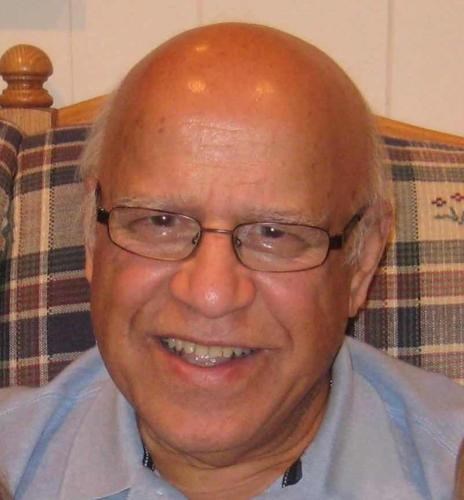
Maletira “Mac” Machayya died January 17, 2026, at Eventide in Fargo, ND. There will be a celebration of life Friday, January 30, from 1 pm to 3 pm at West Funeral Home, West Fargo, ND.

A private inurnment ceremony will take place at Gethsemane Episcopal Cathedral, Fargo.

Maletira Ganapathy Machayya, the son of Dr. Maletira and Bollamma Ganapathy Machayya, was born February 10, 1937, in Madikeri, India.

He earned his medical degree from Madras Medical College, India, in 1960. He completed a General Surgery Residency at Furness General Hospital, Barrow-in-Furness, England, in 1969, and Urology Residency at Preston Royal Infirmary, Preston, England, in 1971.

While in England, he became a Fellow of the Royal College of Surgeons. He completed a rotating internship at Illinois General Hospital in Chicago, Illinois, in 1972.

Mac married Margaret “Maggie” Burns in 1971 in Barrow-in-Furness, England.

In 1972, Mac, Maggie, and newborn son Mark moved to Valley City, North Dakota, where Mac began a distinguished career as a general surgeon. There, they raised their family and made lifelong friends. Mac served the community for many years at Mercy Hospital and Meritcare Clinic, which later became Sanford Clinic. His dedication to patient care earned him the respect and gratitude of countless individuals and families throughout the region.

In his free time, you would find Mac working on a new project around the house, woodworking and creating stained glass art. Mac was also a member of The Lions Club in Valley City. Many memorable summers were spent with family and friends at the cabin on Lake Eunice in Minnesota. Maggie passed away in 2005. In 2013, Mac moved to Fargo to be closer to his family.

He is survived by his three sons, Mark (Katie) with grandchildren Makayla, Dakota, and Memphis, Bemidji, MN; Kevin (Jamie) with grandchildren Josie and Gaby, West Fargo; and Jon (Jill) with grandchildren Ellie, Lincoln, and Vera, West Fargo; sister-in-law June Burns, Barrow-in-Furness, England; and extended family in England and India.

He was preceded in death by his wife; his parents; Maggie’s parents, Edward and Frances Burns; brother Devaiah Ganapathy; sister Maletira Sushiela; and brother-in-law Antony Burns.

Mac’s family is appreciative of the care received from Eventide and HIA Hospice.

In lieu of flowers memorials preferred to Sanford Health Foundation or CHI Mercy Health Foundation Valley City.

Arrangements by West Funeral Home, West Fargo.

To plant trees in memory, please visit the Sympathy Store.

source: http://www.legacy.com/ Machayya

Boseraju lays foundation stone for new police residential quarters in Madikeri

Kodagu district in-charge Minister N.S. Boseraju laying the foundation stone for a police residential quarters project in Madikeri in Kodagu district on January 26. Manthar Gowda, Madikeri MLA and Bindu Mani R.N., Kodagu district Police Superintendent, are also seen.  | Photo Credit: Special Arrangement

Kodagu district in-charge Minister N.S. Boseraju laid the foundation stone for a new police residential quarters project near Maitri Police Community Hall in Madikeri on January 26.

The project, which is part of the fifth phase of the Police Housing 2025 scheme, envisages the construction of 12 2-BHK staff quarters and six officers’ quarters.

The work, which is to be executed by the Karnataka State Police Housing and Infrastructure Development Corporation Ltd., Bengaluru, at a cost of ₹5.3 crore, has been entrusted to a private company. 

A statement issued by the Kodagu district Police Superintendent Bindu Mani R.N., said the construction of the residential project is scheduled to be completed in 11 months.

Manthar Gowda, Madikeri MLA, S.J. Somashekar, Deputy Commissioner of Kodagu, Anand Prakash Meena, chief executive officer of Kodagu Zilla Panchayat and other officials were present on the occasion.

source: http://www.thehindu.com / The Hindu / Home> News> India> Karnataka / by The Hindu Bureau / January 26th, 2025

The story of Queen Victoria’s forgotten goddaughter

Queen Victoria, who ruled the British Empire for 64 years, died 125 years ago, marking the end of the Victorian Era and influencing India’s royal lineage.

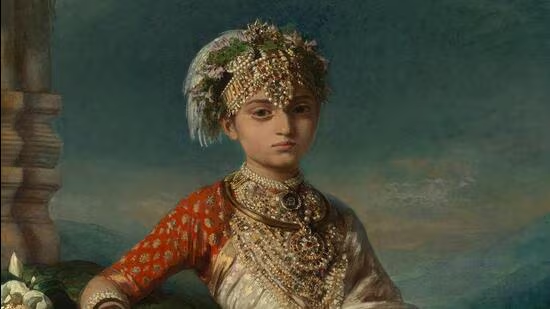
In 1864, just two years after she had given birth to her daughter, Edith, Gowramma succumbed to TB and was buried in London’s Brompton Cemetery. She was 22. (Princess Victoria Gouramma Portrait,(1854), by Franz Xaver Winterhalter/ Wikimedia Commons)

125 years ago this month, the queen who had lorded over the British empire for almost 64 years passed away at the age of 81. At her death in 1901, the “Empress of India”— Queen Victoria— had held sway over the destinies of close to a quarter of the earth’s population and a fifth of its surface. Her death marked the end of the so-called Victorian Era, a glorious period in British history which saw the invention of the telegraph, the bicycle and the internal combustion engine, alongside antiseptics and anaesthetics (the Queen herself requested chloroform at the birth of her eighth child in 1853, instantly making obstetric anaesthesia acceptable and bringing relief to countless expectant mothers), and the Empire expanded rapidly to the point where “the sun never set” on it.

In the Empire’s “jewel in the Crown”, India, Victoria’s passing saw a slew of her statues being installed as a tribute, both in British-ruled provinces and princely states. The latter had reason to be particularly grateful to the Queen – personally overseeing the drafting of the Government of India Act of 1858, which placed India under Crown Rule following the Indian Rebellion of 1857, she had insisted that a provision be included about being respectful to Indian rulers, honouring their religions, territorial boundaries, and chosen heirs. One of the biggest beneficiaries was Mysore – Maharaja Mummadi Krishnaraja Wadiyar, who did not have a son, adopted his grandson, Chamarajendra Wadiyar X, as his heir; the adoption was legitimized in 1866 via royal order, Chamarajendra crowned king, and Mysore, ruled by the East India Company since 1831, restored to the Wadiyars in 1881.

Tragically, the visionary Chamarajendra died of diphtheria in 1894, at only 31. When Queen Victoria died,his son, Nalvadi Krishnaraja, commissioned Thomas Brock, one of London’s most celebrated sculptors, who also designed and executed the Victoria Memorial outside the gates of Buckingham Palace, to create a marble likeness of the monarch. That beautifully crafted sculpture, inaugurated in 1906 by the queen’s grandson, George (later King George V), stands at the MG Road entrance of Cubbon Park.

Although the Queen never visited India, leave alone Mysore, the posthumous statue is not her only connection to our neck of the woods. A confirmed anti-racist, slave trade abolitionist, and humanitarian, the queen was wont to “adopt” the children of deposed Indian kings, bringing them to England, converting them to Christianity, and showering them with love. Unfortunately for the adoptees, this effectively took away their agency and independence, and alienated them from their land, language, religion and people.

The most famous of Victoria’s Indian godchildren was Duleep Singh, the last Maharaja of the Sikh empire, who was forced to “gift” the Koh-i-Noor to the queen after the second Anglo-Sikh war in 1849. Lesser known is Gowramma, a daughter of the last king of Kodagu (then known as Coorg), Chikaveera Rajendra (a cruel, licentious, complex despot whose story was immortalised in the Kannada novel of the same name by Jnanpith awardee Masti Venkatesh Iyengar), who was deposed in 1834. In 1852, Chikaveera travelled to London with 11-year-old Gowramma, both to deliver her to the queen’s care and to parley for the return of his kingdom.

Victoria took an instant fancy to the “poor little princess”, formally admitted her into the British aristocracy as her goddaughter, “Victoria Gowramma of Coorg”, and even tried to orchestrate a marriage between Duleep Singh and Gowramma. That did not work out, but the two Indian royals did end up sharing a warm friendship. Eventually, Duleep Singh arranged Gowramma’s marriage – to a British colonel 30 years older to her.

In 1864, just two years after she had given birth to her daughter, Edith, Gowramma succumbed to TB and was buried in London’s Brompton Cemetery. She was 22.

(Roopa Pai is a writer who has carried on a longtime love affair with her hometown Bengaluru)

source: http://www.hindustantimes.com / Hindustan Times / Home / by Roopa Pai / January 06th, 2025

India International Coffee Festival returns for its second edition this February; check all the details here

With over 20,000 visitors expected, IICF 2026 is designed as a dynamic farm-to-cup experience.

Image for representational purpose only. Photo Courtesy: File pic

The India International Coffee Festival (IICF) returns in 2026 for its second edition, this time bigger, bolder, and crafted as a true celebration of India’s thriving coffee movement.

Presented by the Specialty Coffee Association of India with support from the Coffee Board, the gathering unites every part of the value chain: farmers and producers from coffee-growing regions, processors, exporters, equipment innovators, roasters, retailers, café owners, baristas, and passionate consumers, all under one roof in Bengaluru.

With over 20,000 visitors expected, IICF 2026 is designed as a dynamic farm-to-cup experience. It’s a place to explore where coffee begins, how it’s transformed, and the many hands and innovations that shape every sip, from estates to cafés to home brewers. Knowledge sharing, business opportunities, and hands-on discovery meet in a vibrant environment dedicated to advancing India’s specialty coffee culture.

The coffee trail

A curated pathway through the festival’s most engaging zones, featuring immersive farm-to-cup experiences, brewing workshops, tastings, sensory activities, and hands-on demos with experts across the value chain.

The national coffee championships

Six competitive categories, including Barista Championship, Brewers Cup, and a rapidly growing Coffee in Good Spirits segment. Finalists from the Mumbai, Bengaluru, and Delhi preliminaries battle for a chance to represent India on the world stage.

Latte art arena

Daily showcases from the country’s top latte artists, with opportunities for visitors to try their hand at pouring art.

The cupping exchange

Open cupping sessions hosted by leading Indian roasters, spotlighting rare lots, innovative processing, high-scoring regional coffees, and stories directly from producers and harvest teams.

Brew school

Practical sessions tailored for home brewers: pour-over fundamentals, espresso basics, grind science, flavour interpretation, and more.

The India innovation hub

Returning stronger for its second edition, this hub highlights Indian brands shaping the future of coffee tech. Discover working prototypes, new-to-market equipment, estate-level processing innovations, and conversations with engineering and design minds pushing standards forward across both farm and café.

Conversations, culture and community

Workshops and masterclasses led by industry leaders, both Indian and international, explore farming practices, post-harvest craft, brewing techniques, sensory development, sustainability, and the science of flavour. Live music, performances, and a Drum Jam by Roberto Narain add a cultural rhythm that keeps the festival buzzing. Stand-up comedy by Sonu Venugopal brings laughter into the mix, while Mysore Xpress takes the stage with electrifying live music, adding new rhythm to the coffee celebration.

IICF 2026 aims to be a meeting ground for everyone who cultivates, crafts, serves, studies, and loves coffee. It marks the next step for India’s coffee community: a place to taste, learn, innovate, connect, and be part of a culture that’s just getting started.

Where: Chamara Vajra, Marakata, Jayamahal Main Road, Bengaluru
When: February 12 – February 14 / www.indiacoffeefestival.com

source: http://www.mid-day.com / mid-day.com / Home> Lifestyle News> Food News> Article / by mid-day online correspondent / venue edited / January 05th, 2025