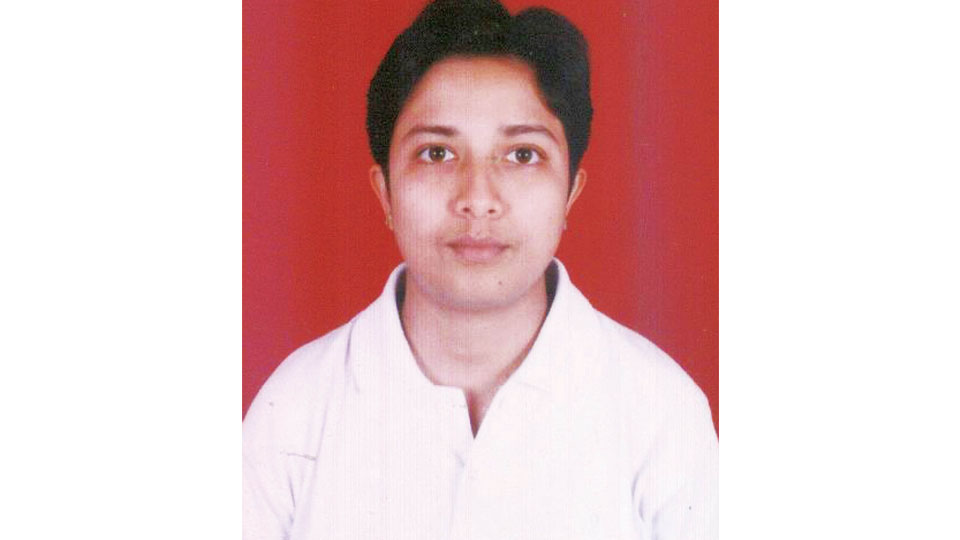
Lt. Col. M.A. Smitha of Mysuru has become the first Kodavathi Woman Army Officer to be selected for promotion to the rank of Colonel.
Commissioned to Army Service Corps (ASC) in 2005 from Officers Training Academy (OTA), Chennai, she has had a illustrious career of 18 years in the Army service in challenging appointments and locations across the country.
A few major achievements include a tenure in UN Peace Keeping Mission in Israel and Syria (UNDOF) where she was awarded a Force Commander’s Commendation Card for displaying exemplary courage under challenging situations.
She displayed her multi-talented skills in 2013 by winning the Raid Himalayan Car Rally along with her Army Team in a Gypsy in women’s category. She also summited Mount Kilimanjaro, the highest peak in Africa, in 2014.
A native of V. Nalkeri in Kakotuparambu, Virajpet taluk, Smitha is the daughter of ESM HSM, Mevada S. Appanna [37 (Coorg) Medium Regiment and 35 Medium Regiment] and Radha, who are presently residing at Vijayanagar 3rd Stage, Mysuru. She is married to Col. Mandepanda Aiyappa (Maratha Light Infantry) and they are blessed with two daughters.
source: http://www.starofmysore.com / Star of Mysore / Home> News / April 14th, 2023
Kodava traditions and celebrations are centred around a rich oral folk tradition. Mookonda Kushalappa tells the stories of those that kept it alive.
During the times of the Rajas, writing was not popular among the Kodavas of Kodagu, who were paddy farmers and cattle herdsmen.
In the absence of literature, the region was rich in oral folklore. A song was sung for every occasion — songs were sung during the annual village festival and during the harvest festival Puththari. Songs were sung for weddings and funerals. Four singers would carry small hourglass drums called dudi and beat them with small, curved sticks. These rustic songs often had the same rhythm.
The compiler
A key force in chronicling these oral traditions was Nadikerianda Chinnappa. Chinappa was born in 1875 in Karada village.
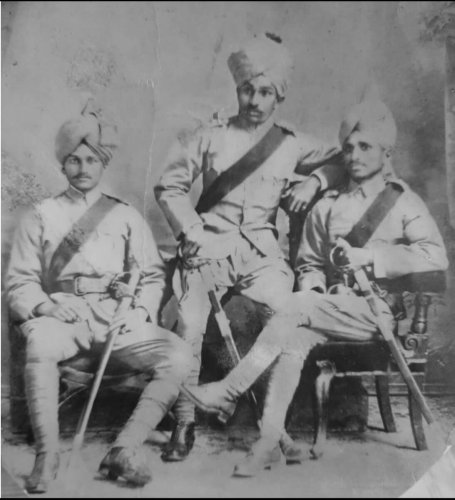
In 1899, he joined the revenue department and wrote an English poem “My position as Shanbhog”. In 1900, he became a Revenue Inspector. In 1902, he joined the Indian Army’s Coorg Regiment and became a Subedar Major. Two years later, the regiment was disbanded and he joined the police department.
Subedars Codanda Ayyanna, Bolachanda Nanjappa and Nadikerianda Chinnappa of the Coorg Regiment, Fraserpet (Kushalnagar), 1902. Photo courtesy Boverianda Nanjamma Chinnappa
After his training from Vellore, he became an SI in Kushalnagar. Thereafter, he was transferred to Napok, Srimangala and Virajpet until he was made prosecuting inspector in Madikeri.
In 1917, he created a Kodava prayer called ‘Sri Moola Kanniye’, addressed to ‘the first maiden’ or Parvathi who was incarnated as Kaveri. This came to be known as the Kodava anthem. He also composed a Kannada poem in honour of the deity of Chomamale hill, Somagiri Deva.
During his free time, he would ride through the countryside on horseback. He would visit folk singers and every time he heard an interesting song, he would bring the singer home. His wife would cook food for the singer, while Chinnappa would offer him toddy. The singer would beat the dudi and sing the song while Chinnappa wrote it down.
By 1922, he had extensively collected several folk songs which were sung during various ceremonies and festivals such as the Kaveri Song, the Wedding Song, the Funeral Song and the Puththari Harvest Song, along with 750 proverbs and idioms.
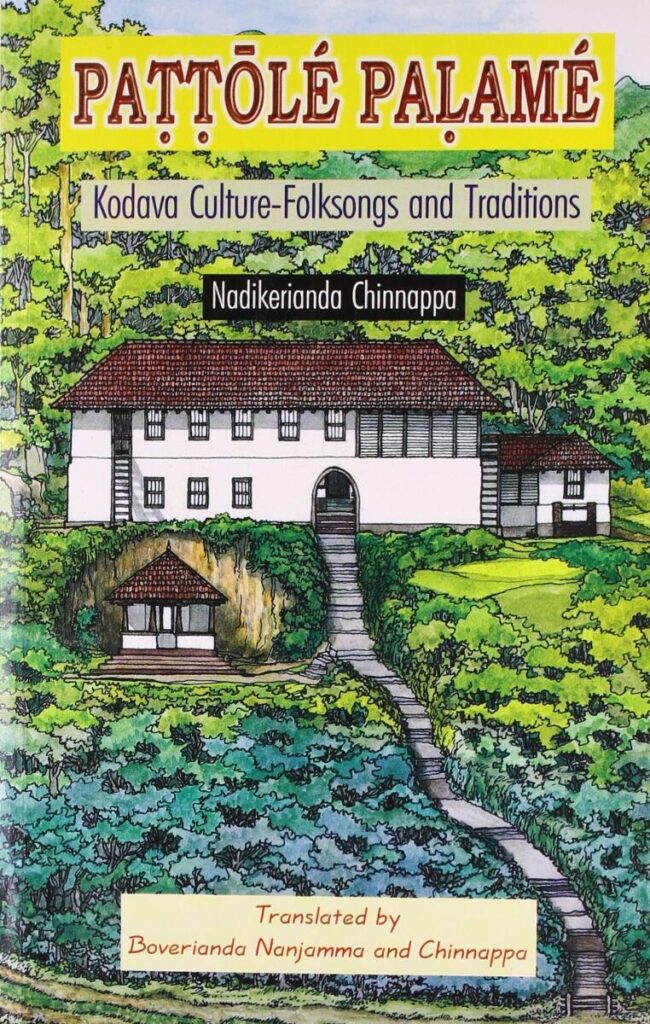
The folk songs were divided into categories based on when they were sung or in praise of whom they were sung — customs and ceremonies, festivals, heroes and deities. He published a compilation, titled ‘Pattole Palame’ in 1924. The Pattole Palame is one of the earliest compilations of folklore in India.
The name Pattole Palame was originally used for old palm-leaf records kept by astrologers in Kodagu. It comes from the words ‘patt-ole’ (silk leaves) ‘palame’ (lore), meaning oral traditions recorded on palm leaves, which were like silk.
Between 1894 and 1928, G A Grierson, a civil servant, conducted the Linguistic Survey of India. A knowledgeable speaker was invited from every known Indian language. The person had to narrate a translated biblical parable and either sing a song or narrate a story in the language.
In 1922, Chinnappa was recorded narrating the ‘Prodigal Son’ in Kodava language. He also sang his own composition, ‘Sri Moola Kanniye’. These gramophone recordings were sent to the British Library’s Sound Archives and the Madras Museum.
The language was recorded as ‘Kodaga’ and wrongly identified as being from Madras. The narrator was uncredited and the song was called ‘Coorg national anthem: Swadesi priya kirtane’. It was in the 1970s that Chinnappa’s voice was identified by his son Subbayya when he listened to the Madras Museum recording.
In 1929, Chinnappa translated the Bhagwat Gita into Kodava and called it ‘Bhagvathanda paat’. Krishna was called by his Kodava name Kuttappa in this book.
The translators
Chinappa’s legacy has been kept alive by his descendants, including his grandson Boverianda Muthanna Chinnappa, fondly nicknamed Bobjee. After working as an engineer in India and various countries abroad, Boverianda Chinnappa became an entrepreneur in Canada. He married his cousin Nadikerianda Nanjamma, another grandchild of Nadikerianda Chinnappa.
Nanjamma worked as a statistician and taught statistics in India and Canada. She co-authored a book on Business Survey Methods. In 1993, she was elected a fellow of the American Statistical Association.
After their retirement, Boverianda Chinnappa and Nanjamma returned to India. Their translation of Pattole Palame into English was published in 2003. Nanjamma’s brother renowned cartoonist N Ponnappa illustrated the cover of the book.
The Pattole Palame book cover
The couple visited nearly 1,720 clans in Kodagu over the years to research ainmanes. Their work was compiled into a book called ‘Ainmanes of Kodagu’ and an online website.
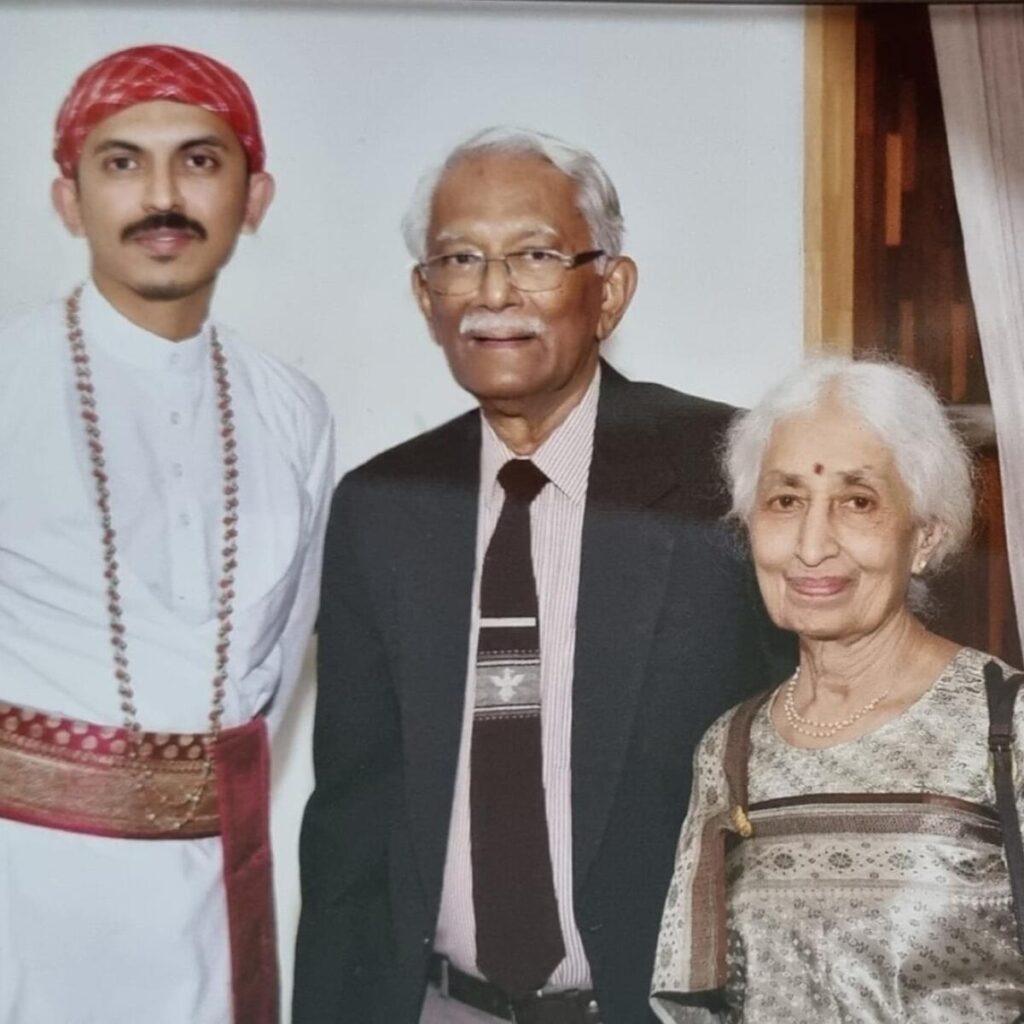
The author (extreme left) with Boverianda Chinnappa and Nanjamma in 2018. Photo courtesy: Iynanda Dinesh Monnappa, Cauvery Studio, Ammathi
In 2006, Nanjamma received a Mangalore University honorary doctorate from the Governor of Karnataka. That same year, she won the ‘Coorg Person of the Year’ award.
Boverianda Chinnappa passed away on March 10 this year. He is survived by his wife, two daughters and their families.
source: http://www.starofmysore.com / Star of Mysore / Home> Spectrum / by Mookonda Kushalappa / April 05th, 2023
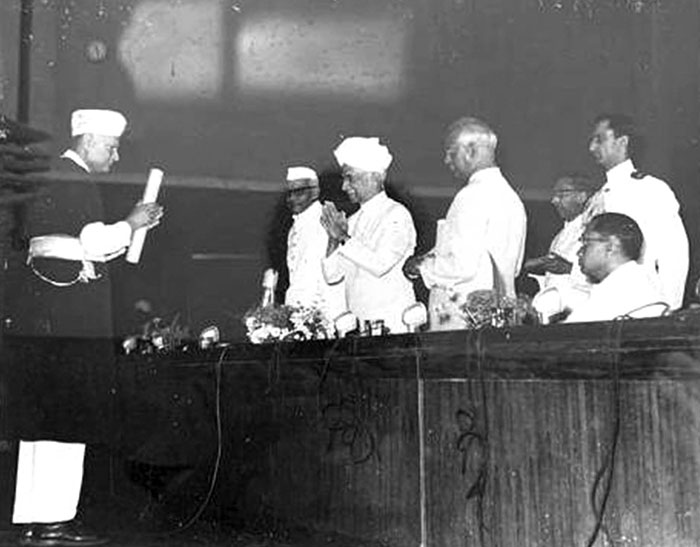
Devanira K. Appaiah, a teacher, received the prestigious President’s Award for teaching from the then President Dr. S. Radhakrishnan in 1962.
He may have been the first Kodava to wear a kupiya-chale (traditional Kodava men’s attire) for the ceremony at Rashtrapati Bhavan.
Appaiah is the father of Raghu and Sanju from Ammathi, Kodagu. (Pic. courtesy: WhatsApp)
source: http://www.starofmysore.com / Star of Mysore / Home> Feature Articles (above part of the article ) by Prof. G. L. Shekhar / Top Stories / April 10th, 2023
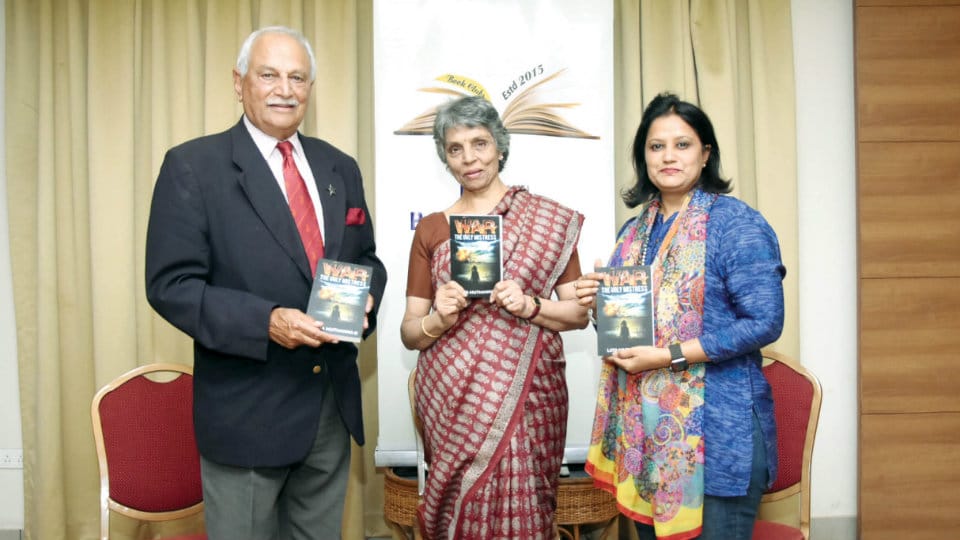
Air Marshal (Retd.) K.C. Cariappa (Nanda) released Dr. Lata Muthanna’s novel “War – The Ugly Mistress” at a programme organised by Mysuru Book Clubs-2015 at Sri Kanteerava Narasimharaja Sports Club (Mysore Sports Club) on Lalitha Mahal Road here last evening.
Speaking on the occasion, Air Marshal Nanda Cariappa said that his profession is related to the book. Pointing out that the book has focussed on Indian Navy, he said that it reminds one of the turbulent times of the war period over 50 years ago.
Noting that the author has vividly explained war scenarios, he said that the book has also highlighted the post-war scenarios.
Recalling his younger days when he dreamt of becoming a pilot, which he realised by joining the Air Force, he said that he was fortunate to get an opportunity to serve the Nation. He further said that everyone should read this book for a better understanding of the serious consequences of war.
Prof. K.C. Belliappa, former Vice-Chancellor of Rajiv Gandhi University, Itanagar, Arunachal Pradesh, who was the chief guest, said one can get a real war experience by reading the book and lauded the author’s contribution to literature though she is a doctor by profession.
Dr. Lata Muthanna, a well-known Consulting Physician, said the book owes a lot to serendipity. She stated that when she started to draw the outlines of the narrative, the civil war in Sri Lanka was still on. After the civil war ended, she went to Sri Lanka and spent time with the main character of her book, Angeline, a Singaporean, who as a child, had survived the Second World War. The book literally carries her (Dr. Lata) to different places and various periods of time. It was as though she lived through the wars and felt the fear, anger and desperation of all those who were involved in it, she said. Maintaining that no Government has the right to throw its people into the jaws of death, she said that the world citizenry should never allow that to happen.
The book release was followed by a panel discussion, in which retired Statistician Boverianda Nanjamma and retired engineer Boverianda Chinnappa took part. Both are translators and scholars of Kodava studies
Sharada Chengappa, a multifaceted personality, received the first copy of the book. Her husband Chengappa was a well-known freedom fighter, who had the good fortune of caring for Mahatma Gandhi when he visited Kodagu.
Mysuru Book Clubs-2015 Founder-President Shubha Sanjay Urs, Chinimamba Desraj Urs, Sita Bhaskar, Nalini, Kavita Bopaiah and others were present at the event.
source: http://www.starofmysore.com / Star of Mysore / Home> News / February 12th, 2020
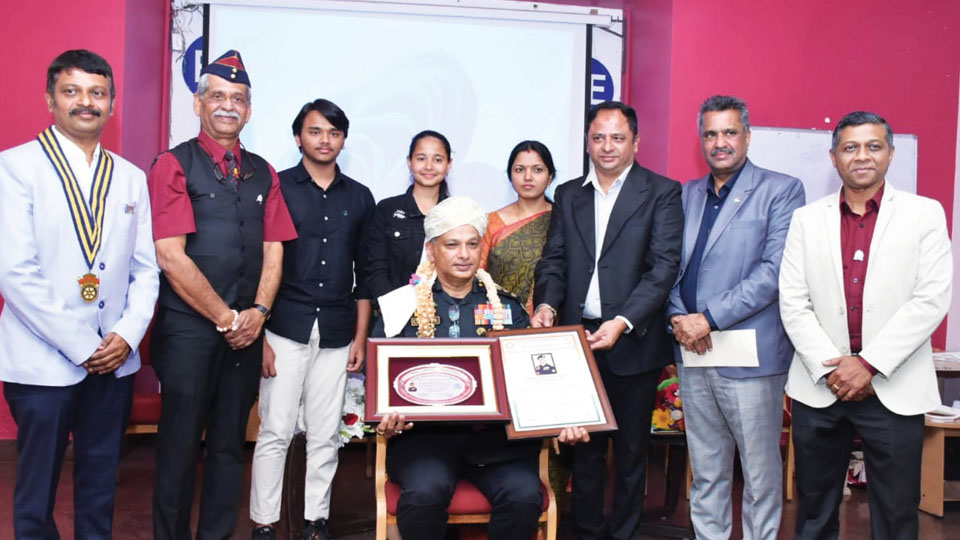
National Security Guard (NSG) Force Commander Brigadier B.M. Cariappa (Baleyada Muthanna Cariappa) was conferred the prestigious ‘Rotary Sainik Desh Rathna’ award at a programme jointly organised by Rotary Mysore Midtown and Shrisainik Foundation at Rotary Centre Hall on JLB Road here yesterday.
Speaking after conferring the award, Col. (retd.) Ravi Shirahatti lauded the acts of Brig. B.M. Cariappa during the victorious Kargil War against Pakistan.
Pointing out that Brig. Cariappa’s achievements and works are a model to young servicemen as well as armed service aspirants, Ravi Shirahatti said that though several will be willing to don Army uniform, it is not possible for many.
Noting that donning the Army uniform is a pride for everyone, he said that it is important to understand the past and history of Wars. Maintaining that those serving in the Army should be ready for sacrifice, he said, as such, the honour of Armymen will continue even after their retirement from service. Observing that a tree’s future depends upon the deep-rootedness and sturdiness of its roots, he said that the service profession demands valour, integrity, sacrifice and commitment. In the absence of these, the purpose of serving in the Army cannot be fulfilled, he said adding that he (Ravi) feels proud to have served the Indian Army.
Brig. Cariappa who spoke after being conferred with the award, reminisced on how he led his group during the 1999 Kargil War.
Noting that the first two attempts of the Indian Army in capturing the Khalubar Hills in Kashmir had failed, he said that he was then entrusted with the responsibility of capturing it, following which he came up with an innovative operation and succeeded in doing the job.
Explaining how the Kargil War was won, he said that crucial decisions were taken by the Indian Army during the War which resulted in a crushing defeat for Pakistan’s misadventure.
Earlier, Brig. Cariappa was accorded a grand welcome at the venue with Hootagalli KHB Colony’s Rotary Midtown Academy students playing Musical Instruments and saluting him.
Rotary Midtown President Rtn. M.S. Naveen Chandra, Hon. Secretary Rtn. S. Kumaraswamy, Rtn. K.L. Rakesh Babu, Rtn. S. Abhilash and others were present.
source: http://www.starofmysore.com / Star of Mysore / Home> News / February 23rd, 2023
In 1930, the tiranga was hoisted at a number of villages in Kodagu district.
The Madikeri fort, where freedom fighters replaced the Union Jack with the Tricolour. Credit: Special Arrangement
In 1928, Paruvangada Kushalappa attended the annual Congress session in the then Calcutta (now Kolkata) and was returning to Kodagu when he fell ill and passed away.
He was 38 years old and the president of the Coorg Agricultural Society.
The following year, an area in Ponnampet was named after him as Kushalapura and the tiranga (the Indian tricolour flag) was regularly hoisted there.
This flag was the old design which had three colours as well. In 1930, the tiranga was hoisted at a number of villages in Kodagu district.
That year, Mallengada Chengappa and two others removed the Union Jack at the Mercara (Madikeri) fort and replaced it with the tiranga.
For this act, they were arrested. Two years later, Satyagrahis again replaced the Union Jack with the tiranga at the fort.
After that, there were permanent guards to protect the Union Jack at the fort.
In August 1942, the Quit India movement had been declared all over India.
Several local leaders such as Pandyanda Belliappa, Chekkera Monnaiah, Kollimada Karumbaiah and C M Poonacha were arrested and deported to Vellore.
The British thought that there was now nobody to lead the movement.But they were wrong.
Gundukutti Narasimhamurthy organised a Seva Dal camp for volunteers in Madikeri. On August 18, Malachira Muthanna and two other students were arrested for hoisting the tiranga in front of the ‘Kodagu’ newspaper office at Madikeri.
On August 19, when students took out processions at various places, at least 12 of them were arrested and released that same evening.
Some of the high school students in Madikeri and Virajpet who had participated in the movement were expelled from their hostels.
They were driven out along with their belongings, suitcases and mattresses placed on their heads. Meanwhile, the British authorities arrested B D Ganapathi, a sub-editor of ‘Kodagu’ weekly, locked the newspaper office and sealed it.
The erstwhile peaceful movement turned violent and went out of control.
In November that year, dynamite parcels addressed to A S Machaiah, Mallengada Chengappa and Mukkatira Belliappa arrived in Kodagu.
The British authorities became alert, confiscated these parcels and arrested the three persons. Yet, this action didn’t stop the subversion that was planned.
Telegraph wires were cut in various places across Kodagu. Dynamite was found placed inside the post office and the police station in Virajpet.
The munsif court building in Virajpet was set on fire. Dynamite was thrown inside the Gonikoppa police station.
Koniyanda Thimmaiah, Mallengada Chengappa and C Chengappa were found guilty of cutting the wires. Chengappa was again arrested, along with, along with the other two.
On August 15, 1947, chief commissioner Diwan Bahadur Ketolira Chengappa replaced the Union Jack with the tiranga at the Madikeri fort, one last time.
source: http://www.deccanherald.com / Deccan Herald / Home> State> Karnataka Districts / by Mookonda Kushalappa / August 09th, 2022
The new pattern has more number of multiple choice questions compared to the earlier examinations.
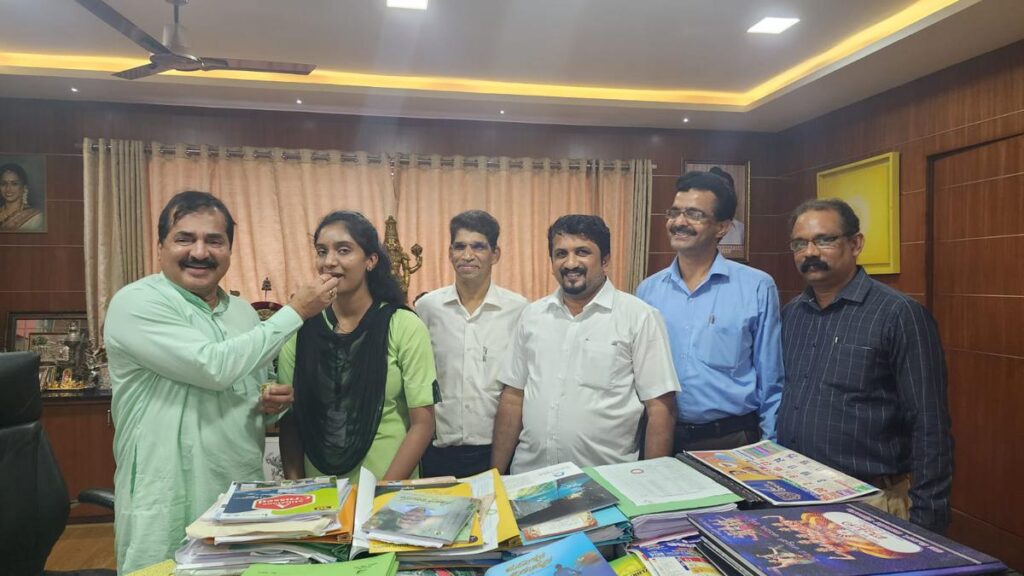
M. Mohan Alva, chairman, Alva’s Education Foundation, Moodbidri offering sweets to Ananya K.A., who topped the commerce stream in the second PU exams in Karnataka. The results were announced on April 21, 2023.
Ananya K.A., topper in the commerce stream of the second pre-university examination, said that the new pattern of the PU exam helped save time in answering the questions.
Ms. Ananya had prepared well for the new pattern that had more number of multiple choice questions compared to the earlier examinations. “I was better prepared,” she told The Hindu.
Ms. Ananya hails from Kushalnagar in Kodagu district. She is the eldest of two daughters of ex-serviceman K. Ashok and government school teacher G. Nalini. She was a student of Adichunchungiri School in Hassan up to class 10. She joined Alva’s Pre-University College, Moodbidri, in Dakshina Kannada district, two years ago under the free education scheme of Alva’s Education Foundation for sportspersons.
“I am a volleyball player. But due to an injury, I had to discontinue sports and concentrate on academics this year,” she told The Hindu.
As she has been staying in a sports hostel since class 8 in Hassan, it was not difficult for her to stay away from her family, in Moodbidri.
She is now preparing for the company secretary entrance examination scheduled on May 1.
Congratulating Ms. Ananya for securing 600/600 marks, M. Mohan Alva, chairman of Alva’s Education Foundation, Moodbidri said this is first time that a commerce student has secured 100% marks in the examination. Mr. Alva said the foundation will continue to offer free education to youngsters with a talent for sports, cultural activities or academics.
source: http://www.thehindu.com / The Hindu / Home> News> Cities> Mangaluru / by The Hindu Bureau / April 21st, 2023
Rani’s entire career has been dedicated to preserving and promoting the folk dance form, Ummathat, of the Kodava tradition.
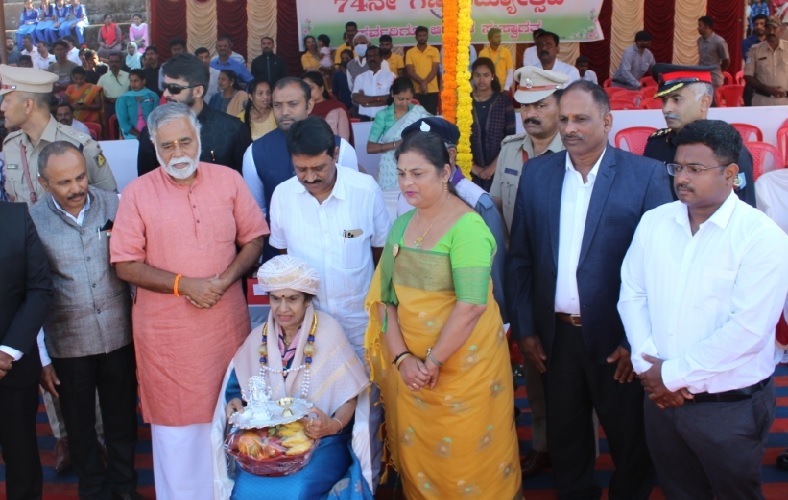
Rani Machaiah (seated) was felicitated at a function in Madikeri on Thursday 26 Jan (supplied)
The news came as mellifluous as the song that accompanies Ummathat, the traditional dance form of Kodagu.
Rani Machaiah — better known as Ummathat Ki Rani — was at her home in Madikeri when she received the news of the nation honouring her with Padma Shri.
Congratulatory calls have been flooding her from relatives, friends, well-wishers, and most importantly, from her large number of students since Wednesday, 25 January.
“A train of thoughts crossed my mind,” the 79-year-old shared her experience with South First. “I have worked for around 50 years, promoting this traditional dance form.”
She has been leading Ummathat since 1984 and she had trained over 10,000 students.
Rani recalled taking her students to different states to showcase the dance form. “Ummathat is performed by a troupe of 20 — two will be singing and the other eighteen will dance to narrate a story,” she explained.
“This dance form is similar to the traditional ones of every other state,” she added.
Creating masters
Rani doesn’t dance anymore. But she still teaches students to master the art form. She had trained several batches of students.
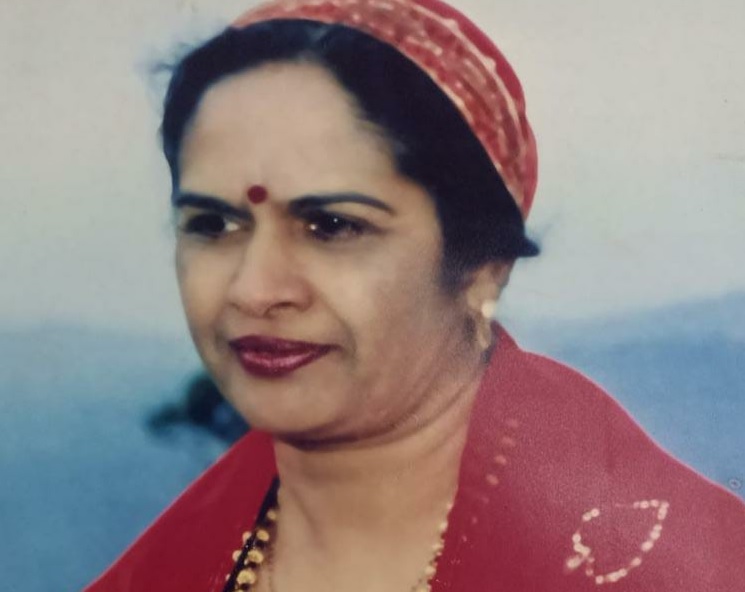
Padma Shri Rani Machaiah. (Supplied)
“Once they get married, they leave and a new batch joins. Girls of any age can join the troupe,” Rani said.
Her students had performed in Lakshadweep, Goa, Chhattisgarh, Himachal Pradesh, Jammu and Kashmir, Haryana, Mizoram, Odisha, Punjab, Maharashtra, Madhya Pradesh, and several places across Karnataka.
“We get invitations from various places and institutions from all over the country and we perform our traditional Ummathat there,” Rani, who has dedicated herself to preserving and promoting the traditional dance form, said.
Rani was born in 1943 in Siddapura in the Kodagu district. Her husband, the late Machaiah, was an advocate, who passed away when she was 65.
Her son, Sathish Machaiah, 55, is a software engineer in Bengaluru. Rani’s daughter, Saritha Devaiah, is a homemaker in Kodagu. Her husband Devaiah owns a plantation.
When asked about her inspiration to take up Ummathat, Rani said it was personal interest.
Now, a lipi
Rani is the chairperson of Kaveri Kalavrunda Sangha, an organisation she founded. She is the recipient of the Rajyotsava Award and many other honours.
She was a former president of Karnataka Kodava Sahitya Academy and at present, she is encouraging groups of Kodavas working on designing a lipi — alphabet or script — for the Kodava language to preserve its literature since the language doesn’t have a lipi now (traditionally, Kodavas use the Thirke script, which is an abugida).
“It will look somewhat similar to Kannada and it will have phonetics and extra words that are used in the Kodava language in Kannada lipi,” Rani said.
source: http://www.thesouthfirst.com / South First / Home> Karnataka / by Bellie Thomas / January 27th, 2023
In 1997, Pandanda M Kuttappa, a retired bank employee, wanted to channelise this hockey craze to unite Kodavas and explore the potential of the talent in the region.
Members of different families get ready for Kodava Family Hockey Festival at Napoklu in Kodagu district of Karnataka. | Photo Credit: H S Manjunath
It was a sunny Saturday morning when this reporter reached the General Thimmayya stadium at Napoklu village in Kodagu district. The men, women and children gathered at the stadium were eager to showcase their hockeyplaying talent.
More than 3,000 hockey talents from Kodava community (with a population of around 1.5 lakh) converge in a Kodagu village during the summer months to vie for the coveted family hockey title. This time it was the turn of the Appachettolanda family to host the hockey festival at Napoklu from March 18 to April 9.
Ask a Kodava, he/she proudly says that it is a festival, and does not call it as a tournament. So the organisers have aptly named it as hockey ‘namme’ (festival in Kodava language).
It is better to know a bit about Kodavas. A majority of people from Kodava community live in Kodagu district of Karnataka.
When you interact with Kodavas, they take pride in their representation in the armed forces — which include the personalities such as Field Marshall KM Cariappa and General KS Thimmayya — and in sports, especially in hockey.
There are more than 800 families of Kodavas with each having a unique name. Of them, 336 families are participating in this year’s hockey festival. The size of the families ranges from 100 to 400 people.
Interacting with businessline on the sidelines of the event, Pandanda Bopanna, President of the Kodava Hockey Academy, says “Hockey is in the blood of a Kodava.”
History of Kodava family hockey so far
chart
Festival objectives
In 1997, Pandanda M Kuttappa, a retired bank employee, wanted to channelise this hockey craze to unite Kodavas and explore the potential of the talent in the region. Kuttappa and his brother Pandanda Kashi Ponnappa started a family-led hockey festival in Kodagu keeping four objectives in mind.
According to Pandanda Bopanna (Kuttappa’s son), the first objective was to bring harmony within the Kodava community and families. Though many Kodavas were participating in national and internation hockey matches, they were not seen playing in their homeland.
The second objective of Kuttappa was to give an opportunity for local Kodavas to witness in real-time the game of their national and international players.
Pandanda Bopanna, President of the Kodava Hockey Academy | Photo Credit: H S Manjunath
Thirdly, Kuttappa wanted to provide a platform for youngsters in the community to showcase their talent, and take a step forward in their sporting career. Fourthly, the event also acted as a matrimonial platform and ended up in marriages in many cases.
Invests retirement benefit
Bopanna says that his father had invested his retirement benefits for hosting the first edition of the family hockey festival.
The first edition of the event, hosted by the Pandanda family, was named as Pandanda cup, and it saw the participation of 60 family teams. (The event was not organised in 2019 due to the 2018 Kodagu floods and landslides. Covid forced the organisers to refrain from hosting the event in 2020, 2021 and 2022.)
On the record participation of 336 teams this year, Bopanna says nowhere in the world would any hockey festival or tournament be played with such a large number of teams and players in one location.
Gender, age no bar
Gender and age are not a bar in this event. Men, women, and children can be the members of a team.
The only condition is that they should be from the same family. Women have the option to represent the family they are married to, or their paternal family. This year’s participation includes people in the age group of 6 to 84 years.
Highlighting her experience, Shivachaliyanda Dechakka, a 10th standard student from a sports hostel, says her family team won the first match, and lost the second one. She says it was a good experience for her to play with seniors.
While many teams have at least one woman representation, there are a few without them. In fact, the Kethira family had representation of five women, including the goalkeeper, in their team of 11.
Aman Poonacha from Palanganda family, an 8th standard student from Bengaluru, says he made his first entry as a player in his family team in a match on Saturday. However, he was not happy with his performance.
Confluence of youth and experience Several stars from Indian hockey make it a point to be the representative of their families in the family cup.
KK Poonacha of Koothanda family, a former international player and former coach of Indian women’s team, who had just finished a match earlier on Saturday, says that he has been attending the family hockey cup matches since 1998, and his family team has won the cup in four editions.
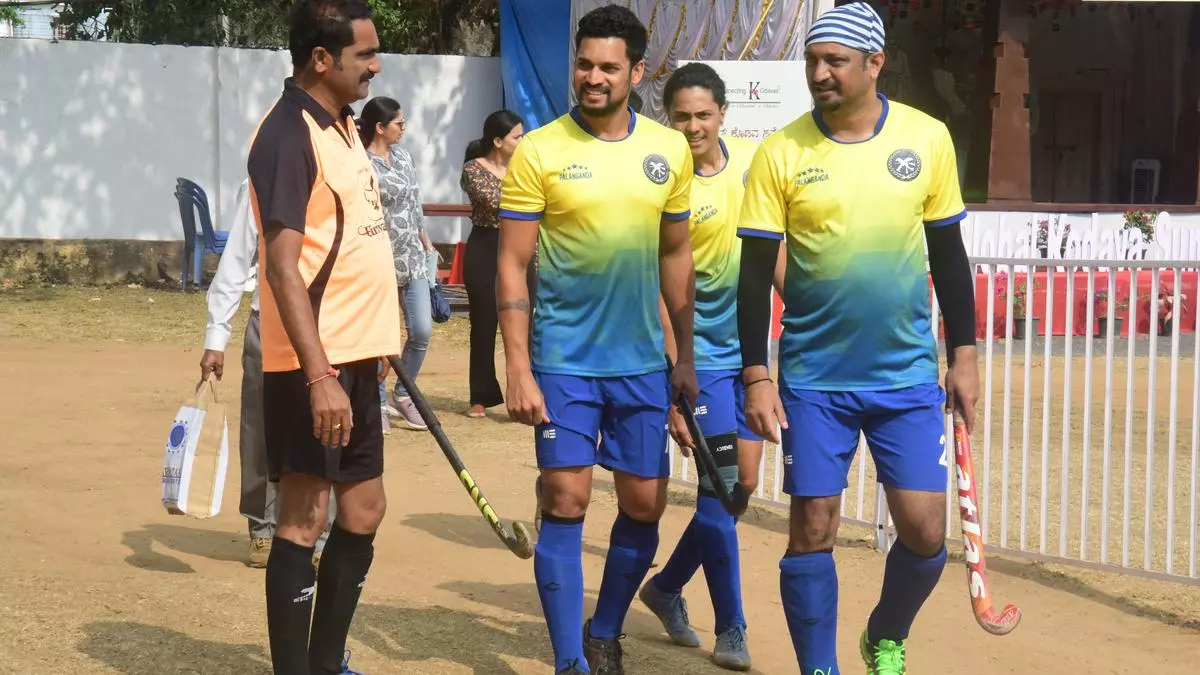
KK Poonacha of Koothanda family, a former international player and former coach of Indian women’s team | Photo Credit: H S Manjunath
Showing the five stars on his family hockey jersey, Ajay Ayyappa of Palanganda family, who works in the Department of Central Excise and GST in Bengaluru, says that he makes it a point to attend the hockey festival every year, and adds that his brother Amar Aiyamma, a former Indian player, will be playing in the next matches.
According to Pandanda Bopanna, former Indian team players such as Nithin Thimmaiah of Mekerira family, Pradhan Somaiah of Pudiyokkada family, PL Thimmanna of Puliyanda family, PU Bopanna of Pullangada family, and the former India Junior player KP Somaiah of Kuppand family are participating in the matches this year.
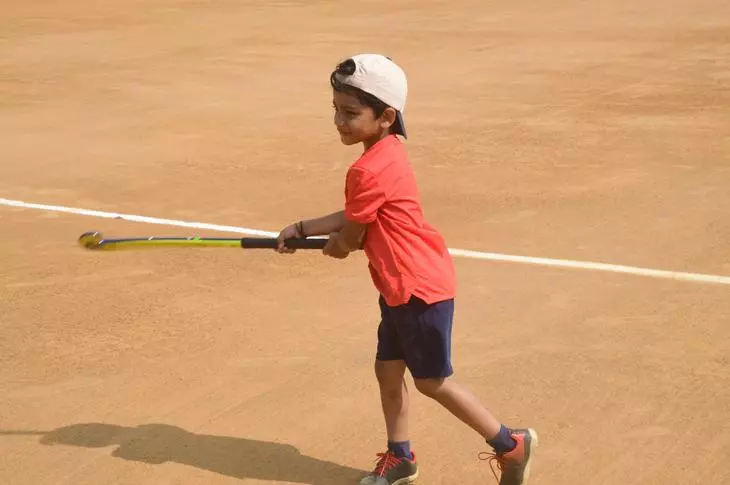
A boy is seen practising hockey at Napoklu. | Photo Credit: H S Manjunath
Terming this hockey festival as a good platform for beginners, KK Poonacha says they will get to play with the experienced players of national and international repute. This will be a good scouting ground for hockey talent also.
Stating that youngsters are motivated to play when they witness players of national and international repute, Ajay Ayyappa says it is like giving life to hockey again through this hockey festival, as people at the grassroots level are playing less these days.
Behind the scene
Appachettolanda Manu Muthappa, coordinator of the Appachettolanda Hockey Festival, says that his family has around 180 members, and they are actively participating in the smooth conduct of this event.
On resource mobilisation for organising the event, he says contribution of the amount from the family members and support from the public and corporates help them generate resources for the event. The State government has also been helping with funds for the event for some years.
A special gallery has been set up at the venue at a cost of around ₹35-40 lakh, and it can accommodate up to 25,000 people.
Appachettolanda Manu Muthappa, coordinator of the Appachettolanda Hockey Festival | Photo Credit: H S Manjunath
Deepak Chengappa of Nayakanda family, who is the Tournament Director, says that 21 matches are being conducted every day. The event has five jury members. Around 200 members, including the technical teams of Hockey Coorg and the whole Appachettolanda family, are helping him in the smooth operation of the event.
The event has four national referees, and 15 state referees. With an intention to encourage youngsters to take up refereeing as a profession, nine degree students are undergoing training here, he adds.
‘Encourage talent’
Kishor Cariappa from the Ammatanda family says that even though a lot of promising players take part in the Kodava Hockey Festival, their talent goes unnoticed once the tournament is over.
“Steps should be taken by Hockey Karnataka and Hockey India to hand-pick potential talent and start grooming them. Even though 336 teams took part this year, Hockey India officials were conspicuous by their absence. Organisers should make efforts to invite hockey think tanks in India to the event,” he adds.
Kishor Cariappa feels that the Karnataka government can help build two hockey venues with stands for Kodagu Hockey Festival in south and north Kodagu so that organising committees don’t have to spend lakhs of rupees on curating pitches every year.
Do you know who hosted the event?
chart 02
Future plans
Pandanda Bopanna says that three families have been finalised to host the next three editions of the hockey festival.
“We are encouraging other families who have not hosted so far to come forward and host. It is an opportunity to gain experience. It is not easy to host such a big event. It gives the family time to bond and also gives their youngsters a chance of hosting an event,” he adds.
source: http://www.thehindubusinessline.com / Business Line / Home> News> Sports / by A J Vinayak / April 04th, 2023
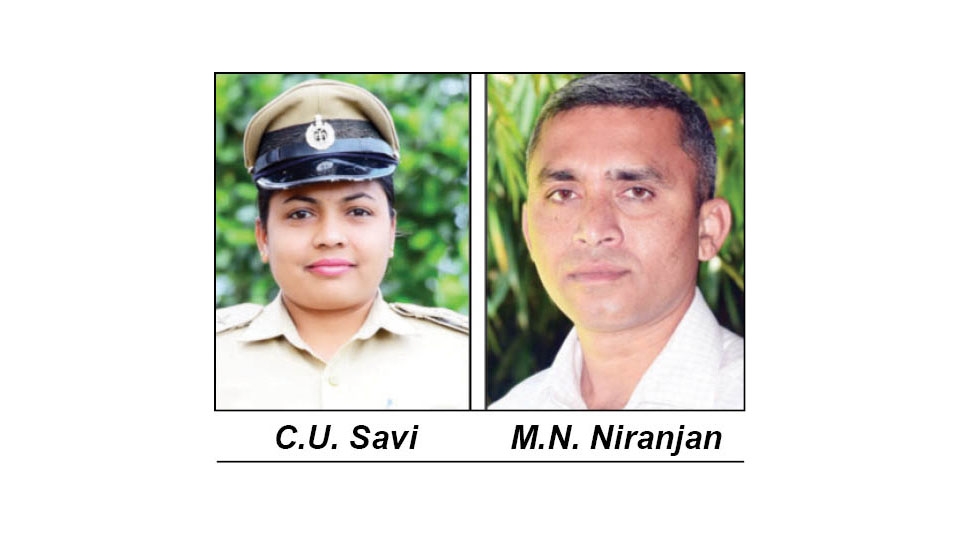
Two Police personnel from Kodagu have been selected for the Chief Minister’s Medal for their exemplary service in the Department.
They are Madikeri Division’s CID Forest Mobile Squad Sub-Inspector C.U. Savi and District Crime Detection Unit Head Constable M.N. Niranjan.
Savi has been serving in the Police Department since 13 years and has served at many places including Nanjangud and Bylakuppe and is presently serving in Madikeri Division. She is a native of Kolakeri.
M.N. Niranjan is a resident of Ashokapura in Madikeri and is serving in the Police Department since 22 years.
He had served in various Police Stations including Madikeri Rural Police Station and is presently serving at District Crime Detection Unit.
source: http://www.starofmysore.com / Star of Mysore / Home> News / April 03rd, 2023
WELCOME. If you like what you see "SUBSCRIBE via EMAIL" to receive FREE regular UPDATES.
Read More »