The Annual Kail-Poldh Festival get-together will be held on Sept. 11 (Sunday) from 9 am to 5 pm at Kodava Samaja premises in Vijayanagar 1st Stage here.
The day-long programme comprises Ayudha Puja, Sports and Games, Lucky Dip, Honouring eminent Kodavas and distribution of Scholarship to meritorious children. In all, 42 scholarships will be awarded to Kodava students who have studied in Mysuru and passed the respective exams.
Details of Scholarship:
Highest scorers in final exam of 7th Std., SSLC (English), SSLC (CBSE), SSLC (Economically Weaker Section), PUC, BA, B.Com., B.Sc. (Computer Science/Maths), BBM, MBA, Law, MA, M.Com., M.Sc., (PCM/CBZ); BE, BE (Mech), BE (Arch), BE (Computer Science), BDS, MBBS, B.Sc./M.Sc. (Ag.), Diploma in Commercial (Secretarial) Practice, Best sports students in PUC; CBSE XI & XII and ICSE I & II; SSLC (CBSE)
Highest marks in Science; PG in Medicine, MD or MS;
Achievers in Sports at State-level, Graduation in Home Science or Hotel Management; Highest marks in SSLC for Kodava Police Family, Sportsperson in Kodava Police Family representing University of Mysore, must be Kodava Samaja Members.
Applications for the award of Scholarship and Honouring of eminent Kodava Members of Samaja for their achievements in various fields should be sent to Hon. Secretary, Kodava Samaja, Mysuru, to reach before Sept. 2 by 5 pm along with Xerox copies of relevant marks card, certificates, family name and contact phone/mobile number.
source: http://www.starofmysore.com / Star of Mysore / Home> News / August 17th, 2022
A new bilingual title of 21 poems deep-dives into the culture and literature of Coorg, hoping to become a tool to revive their language after UNESCO listed it as a Definitely Endangered Language.
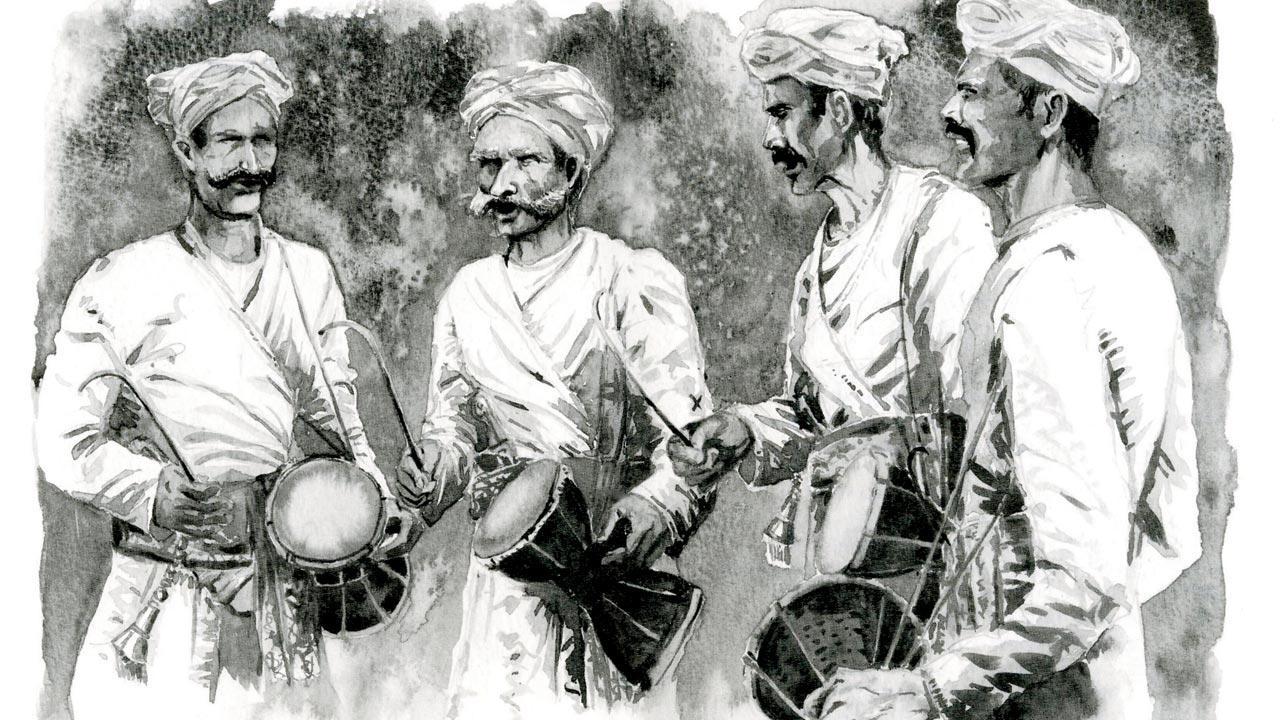
Duditaptkaras, bards of Kodagu, singing traditional songs of the land
“Come and see the ainmanes of old where our ancestors lived as one.”
This line is extracted from Ainmane, a poem in A Place Apart: Poems from Kodagu, by Bacharanianda P Appanna, is dedicated to one’s ancestral home and sums up the core of this seminal literary project. For the first time, poetry by this authority on Kodava takkë (language of the Kodavas) has been translated and transliterated into English by cultural researcher Kaveri Ponnnapa. Apart from home, family, culture and tradition, forest and prayer are the other subjects from everyday life that find their way here.
The language spoken by an estimated 1.25 lakh Kodavas, it was listed by UNESCO as a Definitely Endangered Language. With her studied knowledge, Ponnapa swung into action to resurrect the language of her community. She collaborated with Appanna and his wife Ranu, an educator and poet, and together they released this ode. In the transliterations that appear in the third section of the book, Ponnapa uses the Roman script to relay Appanna’s poetry and creates an exhaustive glossary, thereby paving the way to familiarise it to the larger audience. This was after she realised that it was easy to read for Kodava speakers like her and those with limited or no knowledge of the Kannada script. The accompanying illustrations by Rupesh Nanaiah act as cultural markers of identity and though they are not directly illustrative, the essence of what it means to be Kodava reflects through this seamless symphony of poetry and art, making each poem read like a love letter about the land and its people.
Edited excerpts from an interview with Ponnapa.
What led to Kodava takkë being identified as one of UNESCO’s listed Definitely Endangered Languages of the world? There are multiple, complex reasons why our language finds itself in this position today, including the lack of good educational facilities and economic opportunities for Kodagu [Coorg], its people. The young continue to migrate out of the district. When this happens, there are far greater pressures for them to learn and use a dominant language such as English to secure their place in a new environment. Historically, the Kodava population has been extremely small. This kind of migration for an already small population implies that ultimately, we have an even smaller number of speakers.
The second contributing factor is that ours was an oral tradition. The historical method of oral transmission broke down to be replaced with formal education using the Kannada script, which was then also used to write Kodava takkë. It has limited the expansion of the language to those with access to a Kannada education. The diaspora in particular, who do not have the opportunity to learn Kannada, have no access to written works in their language which would enrich and expand their knowledge of Kodava takkë and encourage them to keep up with their mother tongue.
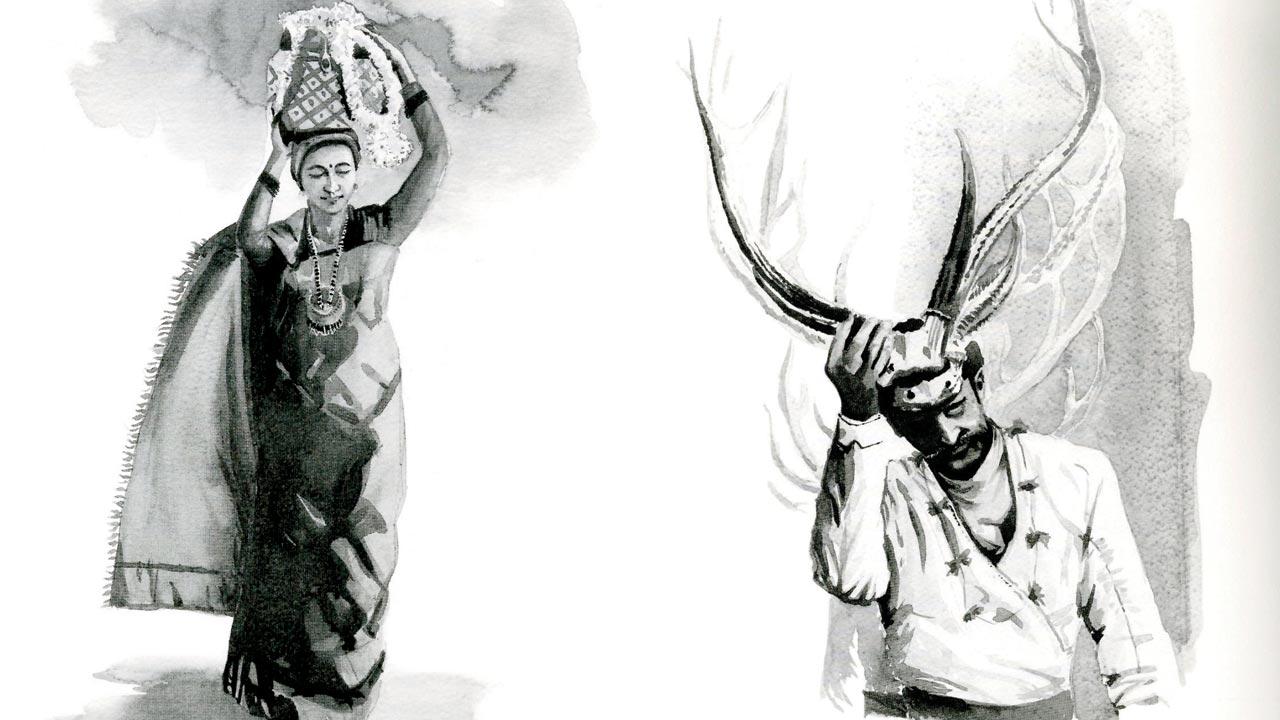
A woman carrying poliya, a basket of assorted food items which seals a new relationship between two clans at a marriage ceremony; (right) Stag horn dance of Kodagu. Hunting, a sacred activity, was once an integral part of life. These dances exist to this day. Pics courtesy/Kaveri Ponnapa
What did you discover while working on the project? I was deeply struck by how the language ideally expressed our specific experiences as a people, and like so many aspects of our culture, was embedded in the landscape, which we hold sacred. Appanna was born and lived in Kodagu when it was still an independent state, when our cultural identity was more strongly defined. His understanding and knowledge of the Kodava language, culture and landscape makes him an invaluable repository of our heritage, a great deal of which has passed into history, but needs to be documented for our future.
Since we were dealing with poetry and song—the traditional ways in which all our cultural knowledge was transmitted across generations—it was fascinating to explore the rhythms of unfamiliar poetic expressions spun out of familiar words, which, in the simplest of ways, became capable of expressing a great deal of meaning and emotion.
Ross Perlin of the Endangered Languages Alliance, had observed: “It’s hard to maintain the full richness, depth and complexity of a culture without its languages.” This depth and richness was revealed while writing the book.
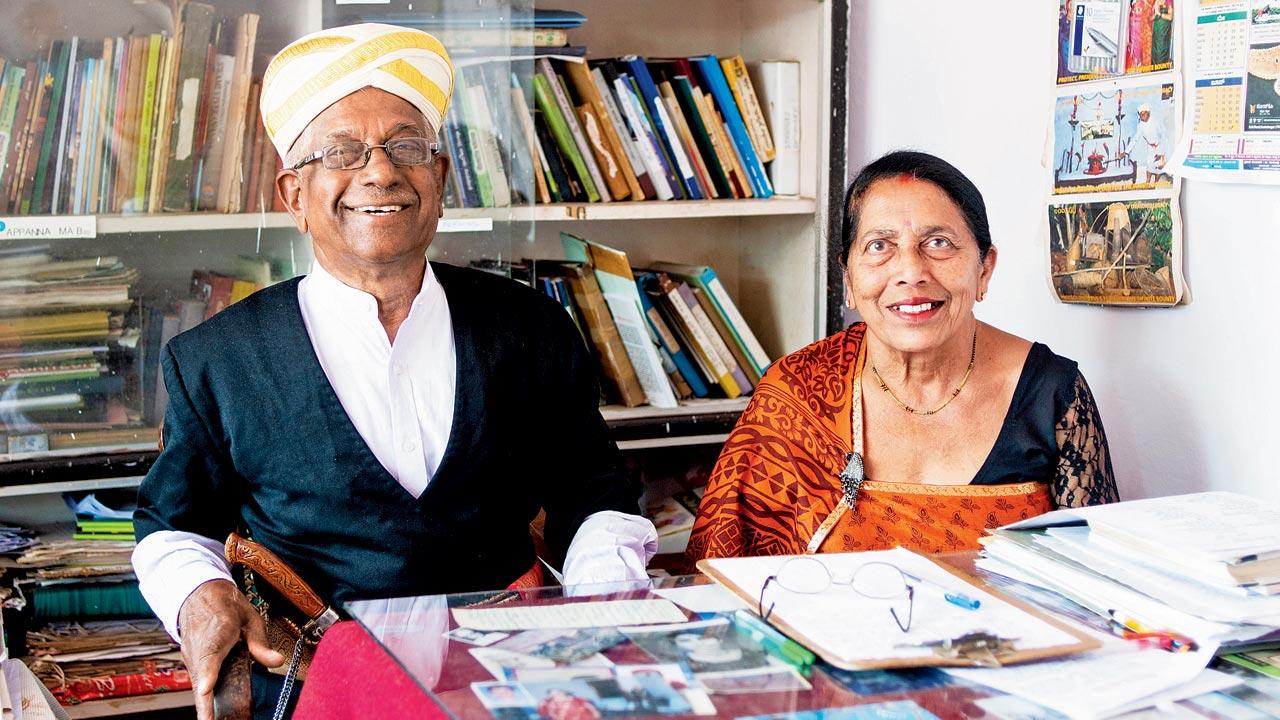
All of Bacharanianda P Appanna’s writing projects are collaborative efforts with his wife Ranu Appanna
How did you overcome challenges of translations and transliterations? The use of the Kannada script for Kodava takkë comes with a series of compromises and challenges, reflected in a loss of linguistic nuance, loss of vocabulary as well as distinct changes in pronunciation and speech for the Kodava language.
While transcribing the words of the poems, many of them sounded different from the original. People habituated to viewing Kodava takkë through the lens of Kannada find it difficult to make a shift, and are content to stay with inaccurate renderings, until the nature of the language itself changes. It took repeated readings, clarifications, and consultations with the Appannas, as well as other native speakers and elders before setting anything down on paper.
Creating audio recordings—which will soon be accessible on my website—was another important way to access the linguistic sounds and rhythms that are lost when written in a script that cannot encompass many of its sounds.
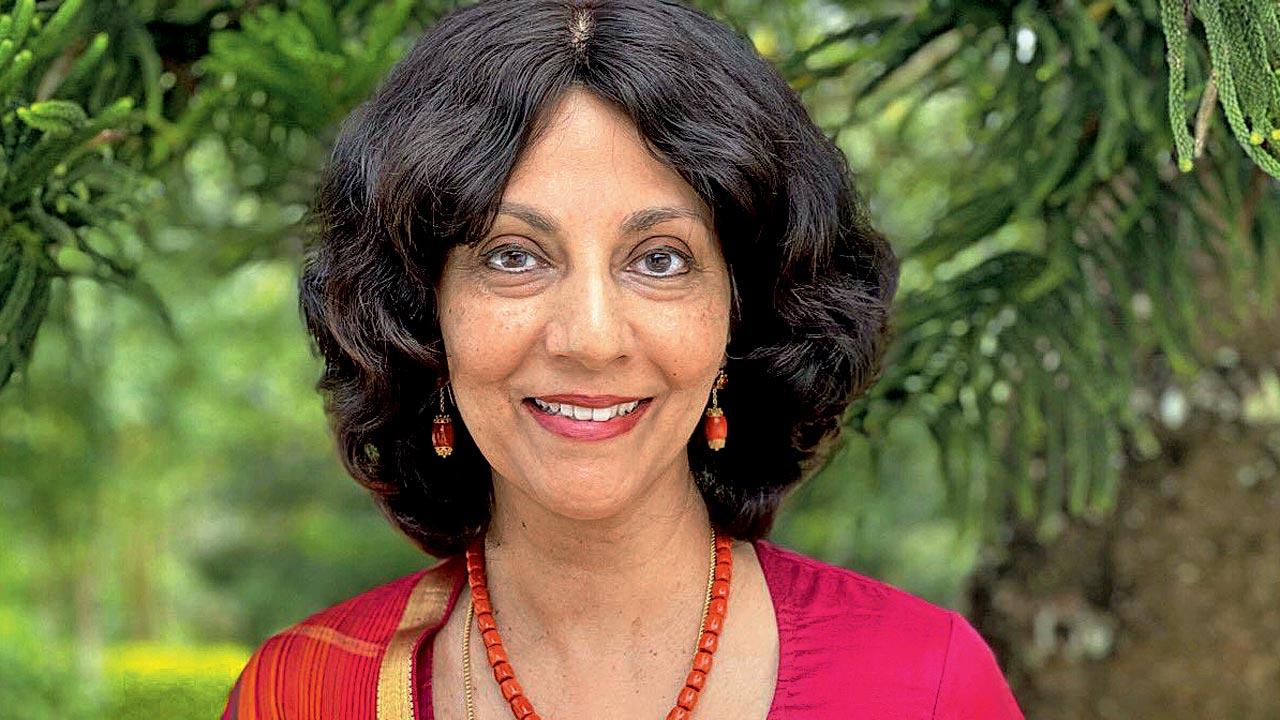
Kaveri Ponnapa
How can Kodava takkë stay alive? One of the ways is to provide a more universally accessible script that is available to the greatest number of speakers. This is where Romanisation comes in. The idea of the transliteration came from my personal experience of being part of the diaspora, and despite being a fluent speaker, having no means to enter into the written works in my language to be able to expand my cultural and linguistic knowledge.
To order a copy : www.coorg.com
source: http://www.mid-day.com / mid-day / Home> Sunday Mid-Day News / by Fiona Fernandez, Mumbai / May 22nd, 2022
The troops and peasants controlled the Amara Sullia region, Puttur, Bantwal and Mangaluru for nearly 13 days. (Photo credit: Twitter/ @girishalva)
Historians say the foundation for the Amara Sullia Uprising was laid in the early 1830s.
Highlights
In 1834, Chikka Veera Rajendra of the Haleri dynasty, the king of Kodagu, was deposed by the British
After capturing the entire Mangalore city, the British Union Jack was lowered and the rebel flag was hoisted
Many are unaware of Coastal Karnataka’s role in the fight against the British: Dayananda Kathalsar
Bengaluru:
In 1837, 20 years before the 1857 Sepoy Mutiny – the First War of Indian Independence – and nearly a hundred years prior to the Civil Disobedience Movement, the people of coastal Karnataka and Kodagu led an armed rebellion against the British and were successful in holding the port city of Mangalore (now Mangaluru) and other regions for nearly 13 days before the rebellion was crushed.
Dr Peter Wilson Prabhakar, a renowned historian from Dakshina Kannada, who narrated the timeline of events of the Amara Sullia Uprising to News9 opines that the foundation for the uprising against the British was built in the early 1830s.
In 1834, Kodagu king Chikka Veera Rajendra of the Haleri dynasty was deposed by the British leading to an immediate revolt in the region. (The British controlled Dakshina Kannada – South Canara – after Tipu Sultan’s death in 1799, while Kodagu was an independent state until 1834).
Swamy Aparampara started the revolt in Kodagu along with Hulikaadida (the one who killed a tiger) Nanjayya. But within two weeks, Aparampara was arrested in Manjarabad and hanged.
Another revolt led by Kalyanaswamy in 1835, who claimed to be a descendant of the former king of Kodagu, was crushed by the British. He was imprisoned and hanged to death in 1836.
This is when soldiers, who belonged to the army of Chikka Veera Rajendra, chose one among them named Putta Basappa and presented him as Kalyanaswamy to the people. They needed a figurehead as the real Kalyanaswamy was dead.
The soldiers trained Putta Basappa at a hill in Kodagu and presented him to the public as Kalyanaswamy.
Varying reasons for rebellion in South Canara-Kodagu
While the invasion of Kodagu resulted in a rebellion in the region, for the people of Sullia and Puttur in Dakshina Kannada the administration and revenue changes made by the British lit the fire.
“Earlier the Amara Sullia and Puttur Magane (revenue divisions) were under the control of the king of Kodagu. In 1834, it was separated from Kodagu and added into the Canara district,” Prabhakar told News9.
Earlier, in 1830-31, the British had made a major change to tax collection.
“Up to the 1830s, the revenue tax was in kind (payment in the form of goods like pepper etc). But in 1830-31, the people were asked to pay tax in cash and not in kind,” the historian said.
The high tax was a burden on the people, which sparked agitation.
“Separation of Sullia and Puttur from Kodagu, high taxes and payment in cash instead of kind, were the main reasons,” he added.
Before the rebellion in Kodagu in 1834, due to the imposition of these high taxes and change in the revenue system, there was a rebellion in South Canara.
It was popularly called “Koots” – meaning a group – rebellion. Almost the present Kasaragod, Dakshina Kannada and Udupi revolted against the British in 1830-31.
“While the Civil Disobedience Movement by Mahatma Gandhiji began in 1930, a hundred years before in South Canara, the no tax movement was started,” Prabhakar said.
1837 – The Amara Sullia Dange (Uprising)
In 1837, when the soldiers of Chikka Veera Rajendra, led by Kalyanaswamy (Putta Basappa) along with the people of Kodagu started moving towards Sullia. They travelled through the Bisle Ghat and not through the present route of Sampaje.
Through the ghats, the troops first entered Bellare and destroyed the British Treasury in Bangle Gudde.
The British Treasury in Bellare. (Photo credit: Anindith Gowda Kochi Baarike through a special arrangement)
After that, the troops were divided into three divisions. One was sent to Dharmasthala and Uppinangady. Another was sent to Kasaragod and Kumble.
The third division was sent to Puttur, through Bellare and Kumbra.
The first battle between the troops of Kalyanaswamy and the British took place on March 30, 1837, on the outskirts of Puttur.
The British were defeated. Those who survived retreated to Mangalore (presently known as Mangaluru) – it was where the British Collector was seated.
On March 31, the British Treasury in Puttur and the entire city were under the control of the peasants and soldiers led by Kalyanaswamy.
On April 5, the troops, who had gained military aid from the kings of Vittla and Belthangady, entered the port city of Mangalore and started capturing the city.
At the time the district headquarters of the British was located at the present-day Balmatta. After destroying the British buildings and plundering the district treasury, the entire Mangalore city area was captured.
The troops controlled the Amara Sullia region, Puttur, Bantwal and Mangalore for nearly 13 days. The British Union Jack was lowered and the rebel flag was hoisted in Bavuta Gudde – the hill with the flag – in Mangaluru.
This is also noted in the Dakshina Kannada District Gazetteer. Many believe the flag to be of the Haleri dynasty since the troops belonged to the Kodagu king Chikka Veera Rajendra.
Rebellion crushed by the British
The rebellion angered the British, who brought in reinforcements from Bombay and Madras Presidency.
The British then crushed the rebellion led by Kalyanaswamy and the peasants of the Amara Sullia and the surrounding regions. The movement was labelled by the British as the loot of Kalyanappa – Kalyanappana Katakayi – to lower its significance in the region.
“Kalyanaswamy, Beeranna Banta, Guddemane Appayya and Laxmappa Banga Arasa – the king of Nadavara – were hanged to death in present-day Bikarnakatte in Mangaluru,” historian Prabhakar said.
The others, who were captured, were deported to Singapore and other islands.
Anindith Gowda Kochi Baarike, who has authored the book on the uprising titled Recalling Amara Sulya that will be published soon, told News9 that not many know that in May-July 1837, a court marshall took place and the people who led the uprising were charged with treason.
“It was not a mutiny. It was a mass movement led by the people of the region,” he added.
Rich history forgotten
Many are unaware of the rich history of coastal Karnataka and its role in the fight against the British, says Dayananda Kathalsar, the president of the Karnataka Tulu Sahitya Academy.
“All the youth should love their mother tongue. Tulu, the ancient Dravidian language spoken by people in coastal Karnataka, should be included in the 8th schedule of the Constitution of India,” Kathalsar told News9.
Now, a ‘youth revolution’ for the Tulu language, Kathalsar added, is underway in Mangaluru.
“Nearly 25,000 people in Mangaluru have learned Tulu and its script after a ‘revolutionary’ effort by youth of the region,” he added.
“This shows that when the youth are led in the right directions, the impossible can be achieved.”
Kochi Baarike, the author of Recalling Amara Sulya, said that several areas in present coastal Karnataka could be called the “cradle of the Indian freedom movement”.
“Despite a mass movement, they were charged with treason. And till we got independence in 1947 – 110 years after the uprising – there was no avenue to discuss this,” Kochi Baarike said.
“The least we could do now is document what happened,” he added.
(Note: The timeline of the events of the Amara Sullia Uprising has been reported in this feature as narrated by historian Peter Wilson Prabhakar)
source: http://www.news9live.com / News Nine / Home> State> Karnataka / by Prajwal D’Souza / August 14th, 2022
Saxophonist Rudresh Mahanthappa’s Hero Trio will make their NYC Debut this August to celebrate Charlie Parker’s Birthday at Smoke Jazz.
Located at the junction of 106th and Broadway (aka Duke Ellington Boulevard), Smoke Jazz Club is one of New York City’s premier live music venues. Renowned for offering top-notch programming of accessible, timeless jazz featuring legendary performers, modern masters, and rising stars, Smoke stands apart with its candlelit dining room, stellar acoustics, and classic American cuisine.
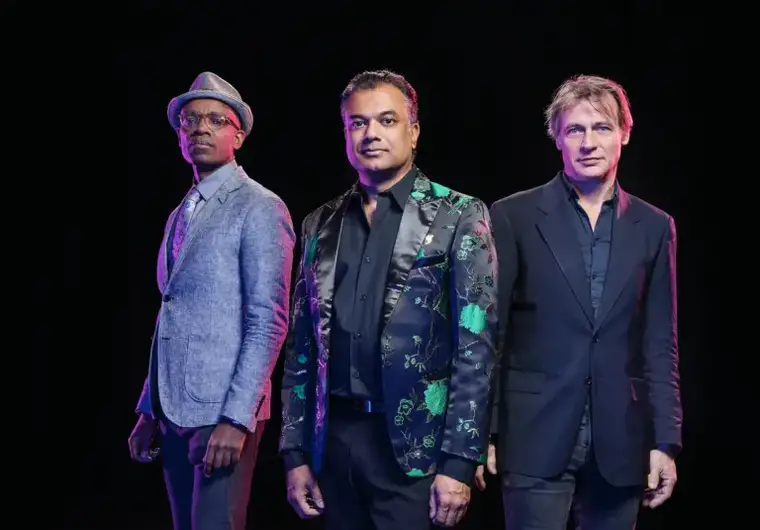
Rudresh Mahanthappa’s Hero Trio also includes bassist Harish Raghavan and drummer Rudy Royston. Their performance will set on Thursday and Sunday at 7 and 9 p.m., and on Friday and Saturday at 7, 9 and 10:30 p.m.
Hero Trio earned high praise for its eclectic 2020 self-titled debut and the 2022 follow-up Animal Crossing. Animal Crossing is a digital-only EP featuring four new songs, each an unlikely addition to the canon of jazz standards which is also the titular theme from the wildly popular video game.
At Smoke, Mahanthappa will explore Parker’s compositions, classic standards, and modern covers with the Raghavan and Royston. “The idea behind Hero Trio was to turn the idea of playing a set of standards on its ear and freshen up the idea,” the saxophonist explains.
Rudresh Mahanthappa is widely known as one of the premier voices in jazz of the 21st century as well known for his exellent alto saxphone performances. He has been recognized by multiple jazz magazines including DownBeat Magazine, Jazz Journalists’ Association,and JazzTimes Magazine. He has also received the Guggenheim Fellowship and the Doris Duke Performing Artist Award, and is currently the Anthony H. P. Lee ’79 Director of Jazz at Princeton University.
For information visit https://www.smokejazz.com/calendar/.
source: http://www.nysmusic.com / NYS Music / Home> Blues-Jazz> NYC Metro> Upcoming Shows / by Savanna Tong / August 07th, 2022
In today’s situation where there are many people who think that I can get rich by acquiring property and money, this goldsmith has some love for the environment. Therefore, there is a great desire to earn money by trading gold and silver and to preserve the environment for the next generation. Trader Rajendra Singh has been continuously planting and nurturing plants for the past many years without any publicity. Rajendra Singh is originally from Rajasthan, residing in Siddapur, Virajapete taluk of Kodagu district. He settled in Kodagu 20 years ago.
Rajendrasingh, who was concerned about the environment from a young age, has a great love and concern for the environment. The reason for that is that Rajendra Singh, who was born and brought up in the desert of Rajasthan, felt that if there were no trees, he would face such difficulties.
Planting and nurturing work
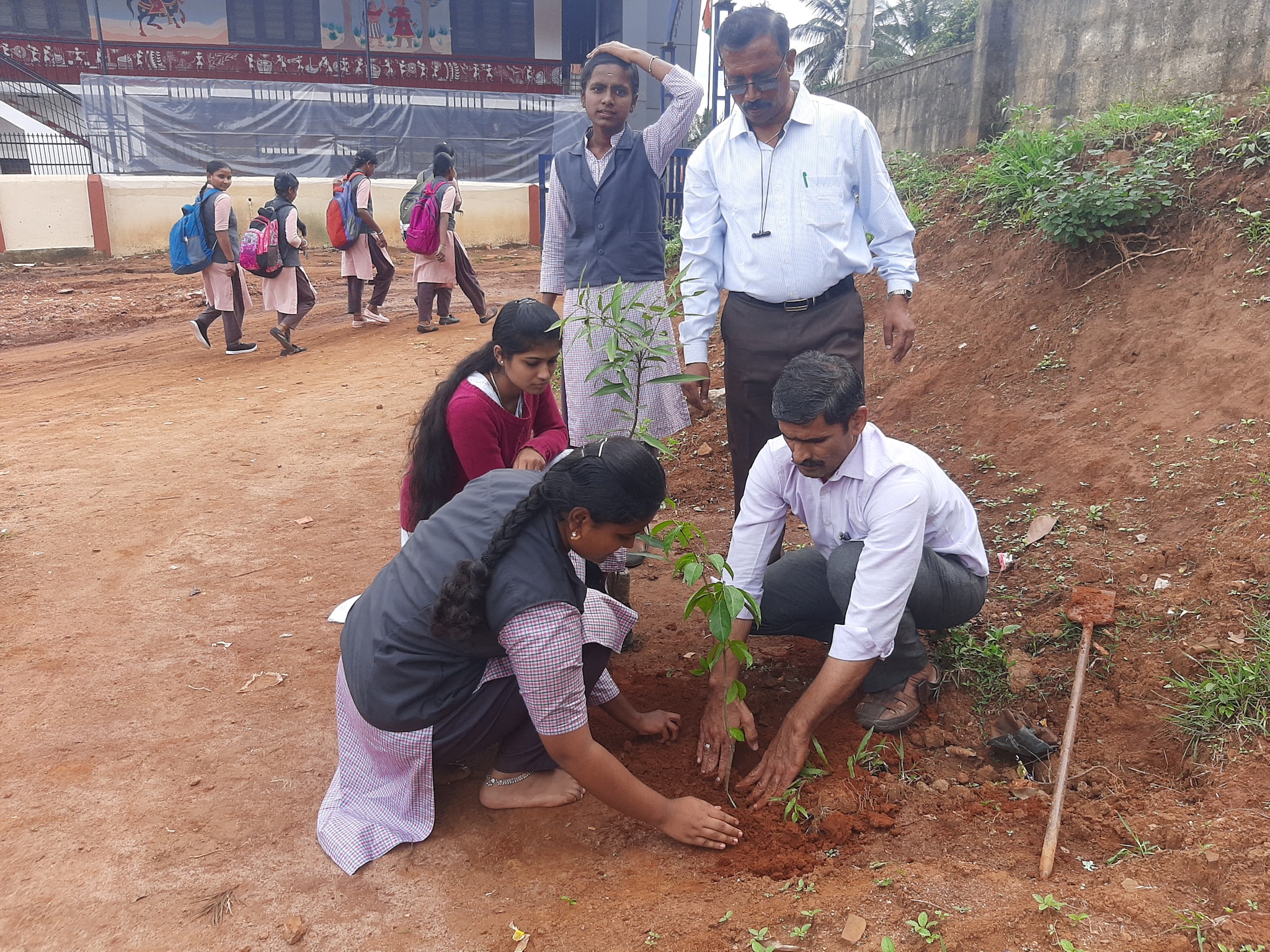
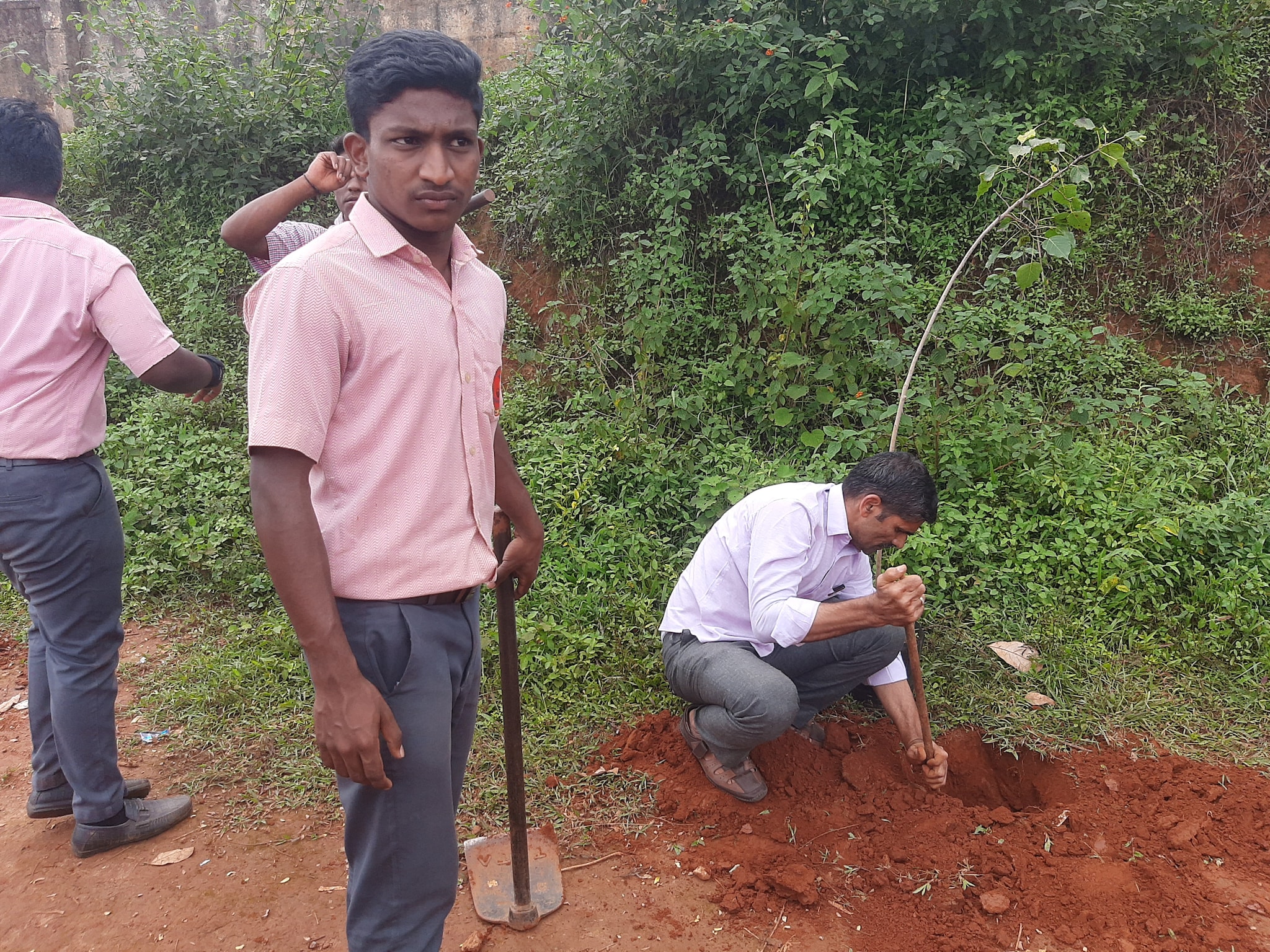
Thus, even after coming to Kodagu, his concern for the environment did not diminish. They are constantly doing the work of planting and nurturing plants in school college premises, bank police station and government office premises.
Planting
What does Rajendra Singh say?
Especially in 2014, thousands of trees were cut down while the high tension line was being laid in Kodagu to Kerala. As a result, there was a lot of ups and downs in Kodagu without rain as before. Such a situation was created that if it came, it would pour down immediately, otherwise it would not rain at all. Rajendra Singh says that he was very bored by this and started planting a lot of plants.
Rajendra Singh who planted 1.80 lakh saplings
So far, approximately 1.80 lakh saplings have been planted and nurtured in school and college premises of various taluks of Kodagu, government offices, schools and colleges of Priyapatnam, Mysore taluk and Hunsur taluk. Besides, they are planting plants on roadsides and in forest areas.
Students are aware of the environment
They are watering the plants they have planted themselves during summer. Realizing that the work of planting and growing plants is not possible on his own due to the environmental degradation, Rajendrasingh is making students aware of the need to plant and grow plants before going to schools and colleges.
Planting
A businessman is also very concerned about the environment
Besides, they are working to encourage students to plant and grow plants by conducting various competitions and giving prizes. On the whole, the locals are appreciating his concern to save the environment even though he is a gold and silver trader.
Rainfall has decreased in Kodagu region since last one week. Two weeks ago there were scattered landslides along with rain in Kodagu environment.
source: http://www.irshivideos.com / IV News / Home> Latest News & Updates / August 01st, 2022
Call to help preserve memories of a vanishing people
While modernisation has opened many opportunities for the well-qualified, it has also distanced the young from their heritage and culture. This is even more accentuated amongst Kodavas living outside Kodagu. There is a need to establish a platform where young Kodavas could learn and keep in touch with the community’s heritage, cultural practices, folklore, music, dance, festivals and history, says Mrs. Codanda Rathi Vinay Jha, IAS (Retd.) and Chair, India Foundation for the Arts (IFA), who has initiated establishing a Virtual Museum of Kodava Heritage & Culture named ‘Sandooka,’ a treasure trove of information. —Ed
Kodavas are a micro-minority community in India, who live in Kodagu (Coorg) in Karnataka State. It is estimated that there are about 1,50,000 ethnic Kodavas within and outside Kodagu.
Kodavas, by virtue of living quite isolated in a densely wooded hilly terrain on the Western Ghats of India since time immemorial, have developed their own unique culture, physical attributes, cuisine, language, attire, religious rituals and practices.
Over the centuries, Kodavas adapted themselves to the harsh weather conditions, dangers from wild animals and the inhospitable terrain of Kodagu and transformed the land to an idyllic haven it is today. With the passage of time, they toiled literally with bare hands to cultivate paddy in the valleys.
With the forests providing bountiful supply of wild game, they became expert hunters initially with bows and arrows, and later with firearms which enabled them to emerge as a warrior race. They transformed the fertile land and were able to grow enough paddy that they could export to neighbouring areas.
The interactions with immediate neighbours in present day Kerala, Mysuru and Mangaluru, influenced the Kodava language, places of worship, construction of their dwellings and some of the religious practices as well. However, Kodavas still retain their fundamental philosophy of ancestor and nature worship. They come under the broad umbrella of Hinduism.
Kodagu was ruled by Kodava Nayakas or Palegars who were basically warlords. The Haleri dynasty established their rule in Kodagu after cleverly replacing the hopelessly divided Nayakas during the early part of the 17th century. The Haleri Rajas ruled for over two centuries until the British takeover of the administration in 1834 after deposing the last Raja. During the rule of the Haleri Rajas and later the British, Kodavas remained the prominent community very much involved in the administration.
During the British rule, education was introduced and this brought about quantum changes in the lifestyle of the Kodavas. Kodavas found several employment opportunities. Introduction and scientific cultivation of coffee and spices vastly improved the economy of the region. Kodava culture and ethos found expression in the writings by the British, European and Kodava authors.
By the time India got her independence, many Kodavas held important and high-level offices in sectors such as the Defence Forces, Administration, Revenue Department, Forest Department, Police, in the field of Education, Engineering and Medicine.
Kodavas have several distinctive elements in their social, cultural and religious practices. One of them is the deferential status given to women. There is no dowry system in the community. Centuries ago, widow remarriage was permitted. This enlightened attitude is now reflected in well-educated Kodava women shining in a variety of fields.
After India’s independence many Kodavas ventured out of Kodagu seeking better opportunities in education, employment, business and sports. Kodavas are now spread all over the globe. The last three decades has seen a large number of Kodavas migrating outside the country. There is now a sizable number of Kodava diaspora in the US, Canada, UK and Australia. In many cases, there are a couple of generation of Kodavas born and brought up outside Kodagu and outside India as well.
While modernisation has opened many opportunities for the well-qualified, it has also distanced the young from their heritage and culture. This is even more accentuated amongst Kodavas living outside Kodagu. There is a need to establish a platform where young Kodavas could learn and keep in touch with the community’s heritage, cultural practices, folklore, music, dance, festivals and history.
It is with this aim in mind that Mrs. Codanda Rathi Vinay Jha, IAS (Retd.), as Chair, India Foundation for the Arts (IFA), initiated establishing a Virtual Museum of Kodava Heritage & Culture (VMKHC). This project is evocatively named — Sandooka — a treasure trove of information. IFA has successfully supported several path-breaking projects in the field of art and culture.
Sandooka will be a living museum that will be interactive and open to receiving relevant new materials from the public. People, especially the future generations of Kodavas, will have an easily accessible platform to gather details of their heritage. Weblinks will also be given to some of the websites dealing with Kodava culture. It is hoped that this treasure trove of information will be of immense help to those who wish to carry out further research on Kodavas. VMKHC will cover the following aspects of Kodagu and Kodavas:
1. Customs and Rituals
2. Cuisine
3. Architecture
4. Clothes and Jewellery
5. Art & Craft
6. Landscape
7. Literature and Folklore
8. Community Histories
9. Festivals
The project is generously funded with a Corporate Social Responsibility (CSR) grant from Recaero India Pvt. Ltd., which is a pioneer in the field of aerospace engineering and is headed by Vinay Jha, IAS (Retd). A highly professional team has been forged to deal with every aspect of the project. The team comprises:
Lina Vincent – Project Head; Upasana Nattoji Roy – Designer (Switch Studio); Saurav Roy – Designer (Switch Studio) and Mookanda Nitin Kushalappa – Researcher.
IFA office-bearers are: Arundhati Ghosh (Executive Director) and Darshana Davé (Project Co-ordinator); Advisory Group: Rathi Vinay Jha, C.P. Belliappa and Hemanth Sathyanarayana.
Sandooka invites submission of Kodava artefacts, rare photographs, antiques including jewellery (photos) and anecdotes of yore. All accepted materials will be given due recognition and credits. Sharing your valuable knowledge and collections will enrich the contents of Sandooka.
For details of submission of materials, please visit: www.sandookamuseum.org
source: http://www.starofmysore.com / Star of Mysore / Home> Feature Articles / by C.P. Belliappa / August 01st, 2022
Kodava Education Society Joint Secretary Chiriyapanda Raja Nanjappa inaugurates ‘Kodavame Padipu’ programme at CIT PU College in Ponnampet on Wednesday. Karnataka Kodava Sahitya Academy Chairperson Dr Parvathi Appaiah, Academy member Dr Mullengada Revathi
People are busy in agricultural activities during the month of Kakkada and also it keeps raining during the month. Hence, our ancestors imposed restrictions on holding auspicious programmes during Kakkada month, opined Kodava Sahitya Academy member Dr Mullengada Revathi Poovaiah.
Speaking during ‘Kodavame Padipu’ programme, organised by Karnataka Kodava Sahitya Academy, at Coorg Institute of Technology (CIT) in Ponnampet on Wednesday, she said that the youth should understand the reasons behind the religious rituals. “Our elders gave a lot of importance to indigenous food and used them during the rainy season. They planned their food according to the seasons,” Revathi added.
Inaugurating the programme, Kodava Education Society Joint Secretary Chiriyapanda Raja Nanjappa said it is believed that the Kodava tribe was present during the origination of River Cauvery and called upon the present generation to get acquainted with the local tradition and culture.
He further said, “The Jamma land is not government land. It is inherited by Kodavas from generations. Also, the gun is used for religious rituals in Kodava culture. However, our ancestors did not use a gun for fighting. Gun rights of Kodavas should be preserved, he added.
During the programme, the resource persons spoke on the importance of ‘Kakkada Padinett’, ‘Kakkada Tingalra Pudume’, ‘Kodava Namme’ and ‘Kodava Takk’.
Karnataka Kodava Sahitya Academy Chairperson Dr Ammatanda Parvathi Appaiah, member Padinjaranda Prabhukumar, CIT PU College Principal Dr Sannuvanda Rohini Thimmaiah, Thookbolak Kala Sahitya Vedike convener Madhosh Poovaiah and others were present.
Students of CIT PU College watched the programme online.
Kodava Samaja, Napoklu, president Appachettolanda Manu Muttappa inaugurates the 153rd birth anniversary celebrations of Appacha Kavi, organised at Appacha Kavi auditorium in Kodava Samaja, Napoklu.
The Ainmane, traditional house of Haradasa Appacha Kavi, the first poet of Kodagu, should be developed into a memorial, said Appachettolanda Manu Muttappa, president of Napoklu Kodava Samaja.
He was speaking during the 153rd birth anniversary celebrations of Appacha Kavi, organised by Karnataka Kodava Sahitya Academy and Napoklu Kodava Samaja, at Appacha Kavi auditorium, on Tuesday.
Manu Muttappa said that along with the residences of great poets and writers, their native places should also be developed.
“There is a need to introduce Appacha Kavi’s works to the present generation. Appacha Kavi had great knowledge of Kannada and Sanskrit. An education officer called Raghunatha Raya inspired Appacha Kavi to create literary works in the Kodava language, he said.
Speaking on Appacha Kavi, Rangayana, Mysuru, director Addanda Cariappa said that Appacha Kavi should be awarded the ‘Karnataka Ratna’ award.
Karnataka Kodava Sahitya Academy chairperson Dr Ammatanda Parvathi Appaiah, Academy registrar Ajjikuttira Girish, Appaneravanda Ainmane Development Committee president Appaneravanda Chummi Devaiah, Appaneravanda Ramu and Dr Manoj were present.
‘Ummattat’ and other cultural programmes were held on the occasion.
Folklore scholar Bottolanda Kashi Achaiah sang songs composed by Appacha Kavi.
source: http://www.deccanherald.com / Deccan Herald / Home> State> Mangaluru / by DHNS, Napoklu / September 21st, 2022
Kodagu Champ Ankitha Suresh has been selected as Assistant Coach for the Indian Women’s Hockey Team which will take part in the 22nd Common Wealth Games (CWG) to be held at Birmingham in England between July 28 and Aug. 8.
Ankitha, apart from being Assistant Coach, will also be the Manager of the team. Team India, which has already reached England and is practicing, will take on Ghana in the first match.
It may be recalled that the Indian Women’s Team which had trained under Aniktha Suresh had given a good show at Olympic 2021 held in Tokyo.
Daughter of B.A. Suresh and B.S. Dharmavathi, residents of Madikeri, Ankitha is married to Honnampadi Suresh Kushalappa of Suntikoppa.
source: http://www.starofmysore.com / Star of Mysore / Home> Sports / July 26th, 2022
Yesterday morning as I sat at my working desk, there sat a brown cover addressed to me on the table.
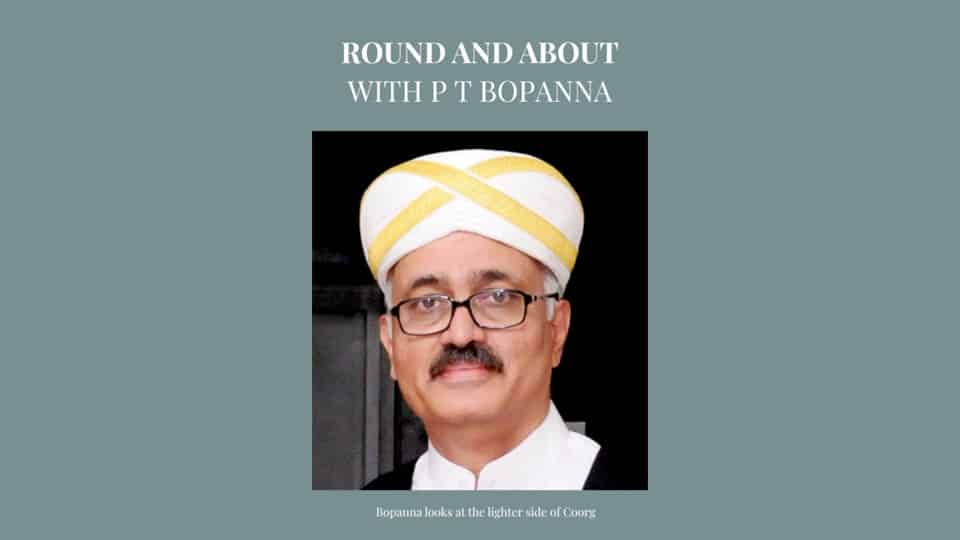
It came from Palanganda T. Bopanna, a journalist author from Bengaluru. Inside was a thin book with a thick hard cover embellished with the photograph of the author in his ethnic Kodava headgear of a peta adorned with a pattern of golden strap crossing each other as if hugging the peta.
The title of the book is quite revealing and says what it contains:
Round And About With P.T. Bopanna’ with a bottom line: Bopanna looks at the lighter side of Coorg. Himself being a Kodava (Coorg), his writings here are of Kodagu related subjects or about himself with VIPs. I finished reading it in one hour and here I am writing about it. This was possible because each of the 25 pieces inside, including the Foreword by the Kodava iconic Fashion Guru of India Prasad Bidapa and the Epilogue, are no longer than two or three pages in fairly larger font and pictures. Good reading for those familiar with Kodagu (Coorg) and the people written about in the book.
There is a Preface also by the author and I was delighted to find the names of Mr. Boverianda Chinnappa and Mrs. Nanjamma Chinnappa, now residents of Mysuru, being mentioned for their “valuable suggestions” in bringing out this thin book of 68 pages. “The couple has been a source of strength to me in my book and web ventures,” he writes in gratitude.
As a Kodava myself, I know there are any number of Kodavas all over the world engaged in different activities and pursing professions who have become great achievers. Kodava people belong to a microscopic minority as a population who lived in a land of their own known as Kodagu ruled by Nayaks and then Kings and then the British, now a district in Karnataka.
The land area cannot increase but population increases. As a result when the family grew, its land-holding was not sufficient for running the family. Perforce they got themselves educated and some members had to leave Kodagu and then Kodava (Coorg) diaspora became a reality. Fortunately those who went out of Kodagu, a great majority of them, are doing well and very well. Some of them became celebrities and some are recognised by the governments. But there are other achievers who remain without public recognition but doing very well in their given profession, business or industry.
One example for anonymous achievers and distinguished persons among Kodavas is given in the book itself in the person for whom the book is dedicated (page 3). He is Pemanda Monappa Belliappa, a retired IAS Officer of Tamil Nadu.
Acknowledged as an outstanding administrator, Belliappa was decorated with MBE (Member of the British Empire) by the Queen of England. More than this, he established ‘Pemanda Monappa Scholarship’ in Cambridge University in perpetuity, in the name of his father, Pemanda Monappa, former Karnataka Inspector General of Police. Nearer home, he has also made handsome donation to the Coorg Education Fund, Madikeri. People like Belliappa are indeed the pride of Kodagu. There are many such Stars of Kodagu!
Bopanna, who claims to be a chronicler of Kodagu or Kodavas, may also venture to trace all those achievers among them, after independence of our country (1947) and publish a book with their biodata. This would be a great contribution from him to the Kodava people.
source: http://www.starofmysore.com / Star of Mysore / Home> Columns > Abracadabra / by K.B. Ganapathy / July 20th, 2022
WELCOME. If you like what you see "SUBSCRIBE via EMAIL" to receive FREE regular UPDATES.
Read More »