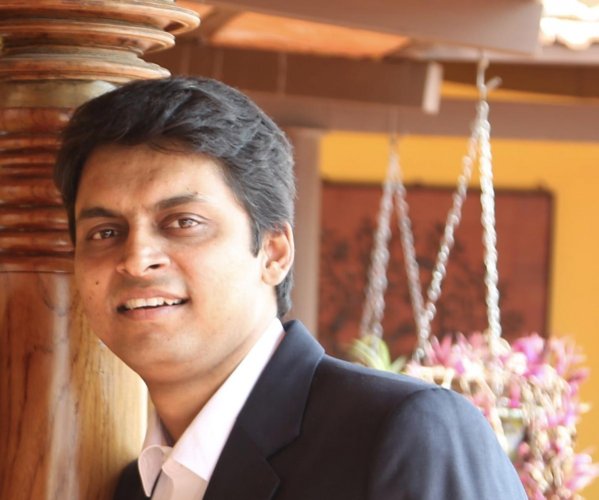
Senior advocate of Kodagu, Maletira Dhyan Chinnappa, has been appointed as the Additional Advocate General of Dharwad Bench of the High Court.
Dhyan Chinnappa obtained his Law degree in National Law College, Bengaluru, and attained post-graduation from London in 2002. He has served in various courts in the country.
He is the son of M P Chinnappa and Kaveri Chinnappa.
source: http://www.deccanherald.com / Deccan Herald / Home> State> Mangaluru / by DHNS, Madikeri / October 30th, 2019
In its 42 years, Coorg Wildlife Society has taken up conservation of the mahseer, ecology awareness, plantation and cleanliness drives.
Participants during a nature awareness trek organised by the Coorg Wildlife Society
Madikeri :
Triangular green and yellow stickers with the silhouette of a sambar deer are instantly recognisable on a majority of vehicles in Kodagu. The stickers of Coorg Wildlife Society — a pioneer NGO that has taken oath to protect the Western Ghats in the district — are a badge of pride which not only connect residents instantly, but also give out a strong message of environment conservation.
Established in 1980, Coorg Wildlife Society (CWS) is primarily engaged in wildlife programmes across Kodagu, and has a dedicated team that aims at increasing awareness about wildlife and protected habitats.
“CWS started with an aim to educate children and the local population about wildlife, flora and fauna. Gradually, the society got involved in conservation of environment,” explained KA Chengappa, president of CWS. Member Navin Bopaiah shared that CWS has a long history of campaigning for the environment, which has ensured that government policies and laws help safeguard wildlife and promote wildlife-friendly land management.
CWS’mahseer fish conservation progamme
Among the many projects undertaken by the organisation, the conservation of mahseer fish ranks first in its table of achievements. Nearly 35 years ago, CWS leased a 35-km stretch of river Cauvery near Siddapura to start a conservation programme for the endangered mahseer species. Today, the organisation has been successful in curbing mahseer poaching, and establishing a large-scale breeding programme to revive the fish variety.
“All commercial activities along the 35-km stretch of river have been stopped due to the efforts of CWS. We have made many blocks across the stretch and appointed guards to stop illegal fishing of mahseer. With successful breeding programmes, the fish variety has restocked in river Cauvery,” explained Chengappa. He added that CWS has now taken special interest in repopulating the Cauvery with the orange-finned mahseer variety.
“Orange-finned mahseer are native to the Cauvery and are critically endangered. Apart from illegal fishing, excessive preying of these fish by other fish varieties affected its population. We are starting conservation of the orange-finned variety in a holding tank, and have got immense support from the fisheries department,” he explained.
CWS is also in talks with the forest department to extend the conservation of mahseer in the Cauvery at Bheemeshwari, in Mandya district. “We have written several letters to the authorities to stop construction of the Mekedatu dam, that will seriously affect the species in Cauvery Wildlife Sanctuary,” Chengappa confirmed.
Apart from mahseer conservation, the society is actively involved in plantation drives, cleanliness projects, birding programmes and organising eco treks across Kodagu. CWS, with support from the forest department, will soon initiate a plantation drive of Napier Grass across Dubare and Mathigodu riverside areas, where elephant populations are found in herds. The organisation hosted a bamboo re-plantation drive to replenish the forests. It also hosts treks across reserve forests and hills of Kodagu with support from the forest department. “These are awareness treks, and participants learn the importance of forests and its inhabitants. Cleanliness drives are also hosted along the way,” he explained.
Meanwhile, a massive clean-up drive was hosted by the CWS team on Thithimathi forest fringes and saw participation from students from Bengaluru and Mysuru too. Two truckloads of trash were cleared during the Environment Day event. The annual birding initiative by the organisation attracts professional and amateur birders, who record the variety of bird species found in the district. During this year’s bird festival, the team spotted the critically endangered Indian Vulture soaring high up in the sky, across the Brahmagiri Range.
The team opines that awareness among the people towards environment protection is the need of the hour. “Alongside awareness, forests must be maintained scientifically. The population of tigers and elephants is increasing, but forest cover is shrinking. If this continues, we will have to face a grave future filled with human-wildlife conflict,” concluded Chengappa.
source: http://www.newindianexpress.com / The New Indian Express / Home> Good News / by Prajna GR, Express News Service / June 12th, 2022
Five hockey players who trained at the Sports Authority of India Training Centre, Madikeri and represented the State in the 12 th Hockety Senior Women’s National Championship, were felicitated by the local authorities recently.
They represented Karnataka at the event held in Bhopal in May and scripted history by winning the silver medal after a gap of 33 years.
The players were S.P. Likitha, Leelavathi B. Koppad, H.G. Dhanushree, B.A. Shaya Kaveramma and K.A. Deepthi. The authorities said in addition, two ex-atheltes Pooja and Nisha from SAI Training Centre, Madikeri, were also in the team.
Kodagu Deputy Commissioner B.C.Satish praised the performance of the girls in the tournament and said that they were models for other athletes and sportspersons and a source of inspiration to perform better.
He said they should raise the bar higher and strive for greater achievements and promised all facilities and assistance to the SAI Training Centre to ensure high performance at both national and international levels.
Superintendent of Police M.A. Aiyappa said practice makes a person perfect and player should give their best to shore up their performance in future tournaments as well. He said one could achieve perfection and victory in any field provided one was committed and passionate about it. Kodagu ZP CEO Bhanvar Singh Meena said Kodagu was known to patronise hockey and advised the youth and the players to practice, participate in more tournaments and make themselves eligible to represent the country in international tournaments like the Olympics, Common Wealth Games etc.
Offficials of the training centre including Mini Unniraj, in-charge of the Centre, C.U. Rani, Assistant, Komala, hockey coach, were among those present.
source: http://www.thehindu.com / The Hindu / Home> News> National> Karnataka / by Special Correspondent / Mysuru – June 10th, 2022
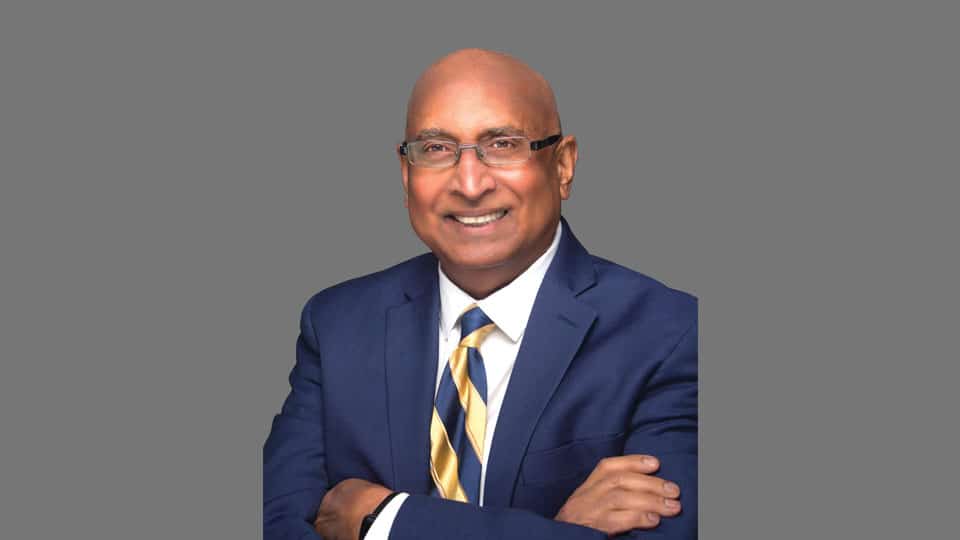
Having studied at AIISH Mysuru, Dr. Bopanna Ballachanda becomes the first Indian-American to occupy the top post.
Dr. Bopanna Ballachanda is a Professor (Adjunct) at Texas Tech Health Sciences and Chief Audiology Officer at National Hearing and Balance centres in Albuquerque, New Mexico. With more than 30 years of experience, he is now the President-Elect of the American Academy of Audiology (AAA) and he will have a three-year term from October 1, 2022.
Hailing from Kodagu and coming from a humble background, he did his B.Sc. in Speech and Hearing from the All India Institute of Speech and Hearing (AIISH – 1970 batch), then under the University of Mysore. By becoming the first person of colour to head AAA, Dr. Bopanna has become a role model for many.
Star of Mysore caught up with Dr. Bopanna, who was on a short visit to Mysuru and spoke to him about his role in AAA, Mysuru memories and his family. Excerpts:
Star of Mysore (SOM): You have a three-year term and how do you propose to take forward the programmes of American Academy of Audiology (AAA)?
Dr. Bopanna Ballachanda: The American Academy of Audiology is the world’s largest professional organisation of, by and for audiologists. It is committed to advancing the science, practice and accessibility of hearing and balanced healthcare for our patients.
I am humbled and honoured to be elected by the members as the President-Elect and later the President of AAA. My role is to understand the issues and address them when I take charge. These opportunities and challenges vary from year to year. However, the Academy has set goals and agenda to further the profession and help audiologists achieve their highest potential.
SOM: You are the first Indian-American to occupy the top post of AAA. This is no mean feat and you studied at AIISH Mysuru. Do you have any fond memories of Mysuru?
Dr. Bopanna Ballachanda: I do have a lot of fond memories of Mysuru. Back then Mysuru was a quaint town with excellent opportunities for scholarly work, today too I hope it’s the same. I still cherish my time in Mysuru when I used to meet friends at the corner of crossroads (Somberi Katte) and talk for hours. I also fondly remember the joy I felt riding my bicycle to the Institute from home. So Mysuru and my time in Mysuru is very much in my thoughts.
SOM: Audiology is a relatively lesser-known profession or a field of expertise in India. Do you think there is a lack of awareness? If so, what should be done to popularise it?
Dr. Bopanna Ballachanda: You are absolutely correct. Audiology is lesser known. However, the field of audiology has been in existence in India for a long time. Based on my research, I see an apathy for hearing loss and corrective measures to overcome communication problems. Hearing loss and its impact are not well-acknowledged and hearing loss and its impact on humans need to be made aware.
As we know that the two major inputs to the brain are vision and hearing. We are quick to correct vision problems but are reluctant or hesitant to correct or use hearing aids. Recent research has clearly shown that an untreated hearing loss has many impacts on communication, psychological well-being, and most of all deterioration in mental functions. Hearing loss does not only affect hearing but has broader consequences like memory loss etc. I don’t know the reasons why people cancel or postpone treatments. Being out of India, I have limited knowledge of the apathy or lack of motivation of the general public to deal with hearing problems.
SOM: AIISH is doing wonderful work in audiology and the institute has grown in leaps and bounds. Your comments on this.
Dr. Bopanna Ballachanda: AIISH is a great institute. I had the opportunity to visit the institute a few days back and I was stunned by the clinical facilities, research work, and innovative projects. I was humbled by the warm welcome extended by the Director, Dr. M. Pushpavathi. The Institute that I remember has changed a lot, and changed for the better. I am so proud to say that I graduated from this premier institution.
SOM: You are from Kodagu, a small district, how did you get to where you are now professionally?
Dr. Bopanna Ballachanda: Like many Indians in the 80s, I stepped foot in the USA with a dream. I was born to late Pulianda Kamakshi and late Ballachanda Belliappa. My dream began when I graduated with a B.Sc. degree from AIISH and a love for Wild West through John Wayne movies. On the way to the Wild West, I did a two-year stint as a specialist of Speech and Hearing at the Al Sabah Hospital in Kuwait, finally ending up at the University of Texas, Dallas, where I earned a Ph.D in Auditory Neuroscience, the study of hearing and the brain which at that time had not been explored very much.
SOM: Tell us about your initial days in the US.
Dr. Bopanna Ballachanda: I was recruited by Purdue University, Indiana, as an up-and-coming academician. While at Purdue I pioneered clinical procedures for practising audiologists, authored two books that are used as educational material in many audiology programmes and many professional/scientific articles that received acclaim in the hearing industry.
I returned to India after 10 years in the USA in 1990 and got married to Kambeyanda Naina Muthappa and then I moved to the University of New Mexico as an Associate Professor of Audiology.
SOM: Tell us how you got involved with American Academy of Audiology and the business side of audiology?
Dr. Bopanna Ballachanda: During my tenure at the University of New Mexico, I became actively involved with the American Academy of Audiology. I was the first foreign-born audiologist in the USA, the first Indian to be elected to the Board of Directors of the AAA, and served as President of the New Mexico Speech-Hearing Association and on the Senate of the University of New Mexico.
After seven more years of teaching at the University of New Mexico, I gave up a guaranteed job to venture into yet another phase in my life — clinical practice. With the help of my wife, who is a Chartered Accountant and entrepreneur, I opened my first clinic in July of 2003 in Santa Fe, New Mexico. The first year was a challenge, but after that, by God’s grace, I’ve never had to look back. Another seven years later I had the opportunity to purchase a group of clinics in Arizona and Texas. My wife says seven is my magic number. I had 16 clinics in New Mexico, Arizona and Texas. My wife and I owned and ran the clinics together.
SOM: Tell us about your family and do you feel you achieved your American dream?
Dr. Bopanna Ballachanda: I have a wonderful son and a daughter, Tanek Ballachanda and Jyothi Ballachanda. Tanek is a mechanical engineer working for a space programme in Seattle, Washington State while Jyothi is studying to become a pastry chef.
Have I achieved my American dream? Life is a journey of fascinating dreams that evolve, I don’t think I’m even halfway there. It’s been a lot of hard work, and it was never about the money, but about pushing myself beyond. In that sense, I think I have a sense of fulfilment.
source: http://www.starofmysore.com / Star of Mysore / Home> Feature Articles> Top Stories / June 09th, 2022
Seventy five families who had lost their houses to the devastating flood that hit Kodagu in August 2018, were allotted new houses as part of the rehabilitation programme of the Government.
The allotment was made through draw of lottery by the Kodagu Deputy Commissioner B.C.Satish on Wednesday. The new houses have been constructed near the office of the Regional Transport Authority.
The DC said in the first phase of the rehabilitation, 35 families whose house was completely destroyed in the flood, were rehabilitated and provided with new houses in Karnageri while 383 houses were constructed in Jambooru near Madapura. Similarly 80 houses were constructed in Madenadu and 22 houses in Biligeri and 140 houses were constructed in Gaalibeedu.
In all, 66o houses were constructed in three phases and allotted to the beneficiaries while the remaining 75 families are being rehabilitated now. The process will be completed by the end of the month and the district official website http://kodagu.nic.in has published the details of beneficiaries complete with the house number allotted to them. Mr.Satish said Infosys Foundation funded the construction of houses at Jambooru.
There were some works pertaining to electricity supply, UGD and water that was pending but the allotment letter will be issued to the beneficiaries in due course by the officials of the Rajiv Gandhi Housing Corporation.
source: http://www.thehindu.com/ The Hindu / Home> News> National> Karnataka / by Special Correspondent / Mysuru – June 01st, 2022
The Palekanda brothers recently took part in the Pan India Master Games held in Bengaluru and won three gold medals and two silver medals
Palekanda P Bopaiah (94) and Palekanda Beliappa (85)
Madikeri :
Age is just a number. This has been proved right by two brothers of Kodagu who are making their district and state proud by actively participating in various sports championships held for senior citizens across the country. Palekanda P Bopaiah (94) and Palekanda Beliappa (85), residents of Kuttandi village in Kodagu district, have now set their eyes on participating in track and field championships to be held in in Sydney and Japan next year.
The Palekanda brothers recently took part in the Pan India Master Games held in Bengaluru and won three gold medals and two silver medals. By taking part in javelin throw, relay race, 1,500 metre running race, walkathon, 100 metre run, the two brothers call themselves all-rounders.
“Both of us stay together in our village. I have been passionate about sports from the time I was a kid and my schoolmates could never match my speed in athletic events when I was a young boy. My elder brother is a retired Army man. Both of us decided to resume our participation in sports field over three years ago and we haven’t looked back since,” said Beliappa.
The brothers have also set up a Master Games Association for senior citizens in Kodagu and are working out the modalities to enable senior citizens to become its members.“My first participation in sports championship as a senior citizen was at Vadodara. I won the third place in the National Masters Game. Ever since, I ensure that I take part in all championships that are held for senior citizens across the country. Both my brother and I are now looking forward to taking part in the athletic championships scheduled to be held in Sydney and Japan next year ,” he added. However, the duo needs at least Rs 2 to 3 lakh fund to take part in the international championship and are eagerly looking forward to sponsorship.
source: http://www.newindianexpress.com / The New Indian Express / Home> Good News / by Express News Service / June 03rd, 2022
The virtual museum will likely stand completed and be accessible globally by February next year and the groundwork for the project is ongoing.
Dudi, a traditional drum of the Kodavas, made of metal base and animal hide. Image meant for representational purpose only.
Madikeri :
The Kodava community has a unique culture juxtaposed with tribal and martial history. While the unique traditions are highly revered in the district, research work on the history or culture of the community is less. However, this loophole is now being addressed by the Indian Foundation for the Arts (IFA), which will soon set up an interactive Virtual Museum of Kodava Heritage and culture called the – Sandooka Museum.
The virtual museum will likely stand completed and be accessible globally by February next year and the groundwork for the project is ongoing. The museum will be an interactive online space that will provide a glimpse into the history, traditions, land, lives, customs and beliefs of the Kodava community.
We are putting together various videos, pictures, audios and text for the project. There are numerous village festivals in Kodagu and each Kodava clan has its own annual rituals. At the ground level, we are visiting the villages, Kodava families, temples and Kodava organizations to avail authentic materials for the museum,” explained M Nitin Kushalappa, an author who is involved in the museum project with the IFA.
“We do not acquire the materials from the people but make copies of the same, which will be uploaded online,” he added.
“This might be the first virtual museum of the sort in India. Our approach is based on community collaboration and we have an open call announced in which we are inviting people to share their own stories and experiences of Kodava culture. Be it a family photograph or heirloom, documentation of a festival or ritual, or even images of public artifacts that they would like to talk about. The open calls will select stories from among those sent in a feature on the website and that it is ‘The Living Museum of Kodava Culture,’ “explained Lina Vincent, the project director.
The advisory committee led by Rathi Vinay Jha, CP Beliappa and Hemanth Sathyanarayan is guiding the project team led by project director Lina Vincent, design team Saurav Roy and Upasana Roy alongside Nitin. The team is currently involved in recording folk songs and other audio and video clips from the people from the community. The team is open to accepting contributions from the community members.
Kodavas are indigenous residents of Kodagu and the population of the community is just 1.25 lakh. The majority of the Kodavas are settled in Kodagu. The community has rich tribal and folk culture that is being passed on from generations. Not many works have taken shape in documenting the rich culture of the community. The establishment of a virtual museum archiving the traditions of the community is welcomed by the residents of the district.
source: http://www.newindianexpress.com / The New Indian Express / Home> States> Karnataka / by Prajna GR, Express News Service / May 29th, 2022
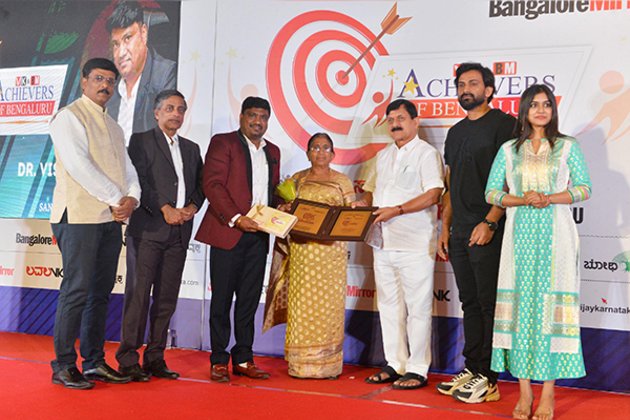
Dr Vishwa Cariappa BS, Managing Director of San Group of Companies was presented ‘Achievers of Bengaluru’ Award at a function held in Bengaluru on May 20, 2022.
The Award, instituted by Vijaya Karnataka and Bangalore Mirror, was presented by Home Minister Araga Jnanedra. The Home Minister expressed his delight and congratulated the organisers for hosting the prominent event.
Responding after receiving the award Dr BS Vishwa Cariappa said, “It is an inspiration for me to do even better.
‘Achievers of Bengaluru’ Award is intended to recognize those who have achieved excellence in various fields. I am very happy to be a part of such an award.” Cariappa further added, “San Group launched with the goal of achieving excellence in the real estate industry and today the company has expanded into several sectors. This award is also an encouragement to serve more people in the future.”
The event was also attended by noted performer Dolly Dhananjay along with actress Sanjana Anand.
This story is provided by SRV. ANI will not be responsible in any way for the content of this article. (ANI/SRV)
source: http://www.newdelhinews.net / New Delhi News.net / Home / by ANI / May 27th, 2022
Travelling for over eight hours from Shivamogga,retired teacher displays simplicity.
Madikeri:
At a time when family members of high-ranking officers do not shy away from using official vehicles of their sons or daughters for long trips at the expense of taxpayers’ money, the father of Kodagu Deputy Commissioner (DC) travelled in an ordinary KSRTC bus from his native in Shivamogga to meet his son in Madikeri.
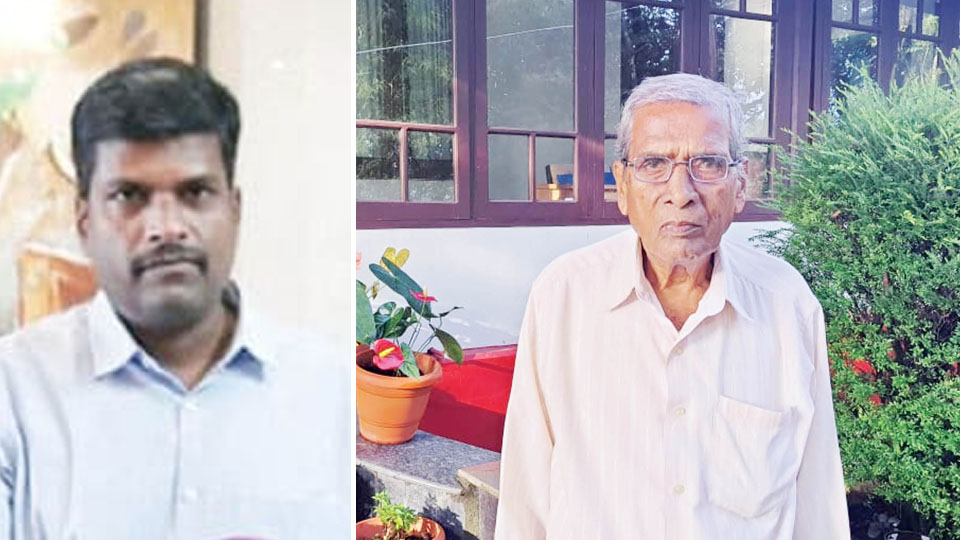
Eighty-two-year-old B.C. Chandrappa, father of Kodagu DC Dr. B.C. Satish travelled in the KSRTC bus for over eight hours despite his age. After reaching Madikeri, he walked to his son’s official residence with a small bag in his hand and told the gate-guarding Policemen that he was the DC’s father.
The shocked Cop could not believe it and went along with Chandrappa and informed Dr. Satish about his father’s arrival. The DC’s father had not informed his son and his surprise visit brought a broad smile on Dr. Satish’s face. He cordially invited him inside.
Hailing from a humble background, Dr. Satish took charge as Kodagu DC in October 2021. He had earlier worked as the Assistant Commissioner in Belagavi, Bailhongal and Kumta, CEO of Dharwad Zilla Panchayat and as the DC of Raichur.
Chandrappa is a retired teacher and after retirement, he is looking after his six-acre arecanut farm in Shivamogga. He is fitted with a heart stent and he also underwent a knee surgery. Despite his health condition, he did not claim any facility the Government offered to his DC son.
By not utilising his son’s powers as the DC, Chandrappa, who as a teacher earlier having taught thousands of students on the values and virtues of life, is an ideal example for others to follow. Madikeri Akashavani Programme Head Dr. Vijay Angadi said that as the father of a DC, Chandrappa was a model to others. “I came to know of DC’s father’s visit to Madikeri when I went to the DC’s residence for talks regarding Akashavani programmes on May 19. Hats off to his humbleness,” Vijay said.
source: http://www.starofmysore.com / Star of Mysore / Home> News> Top Stories / May 23rd, 2022
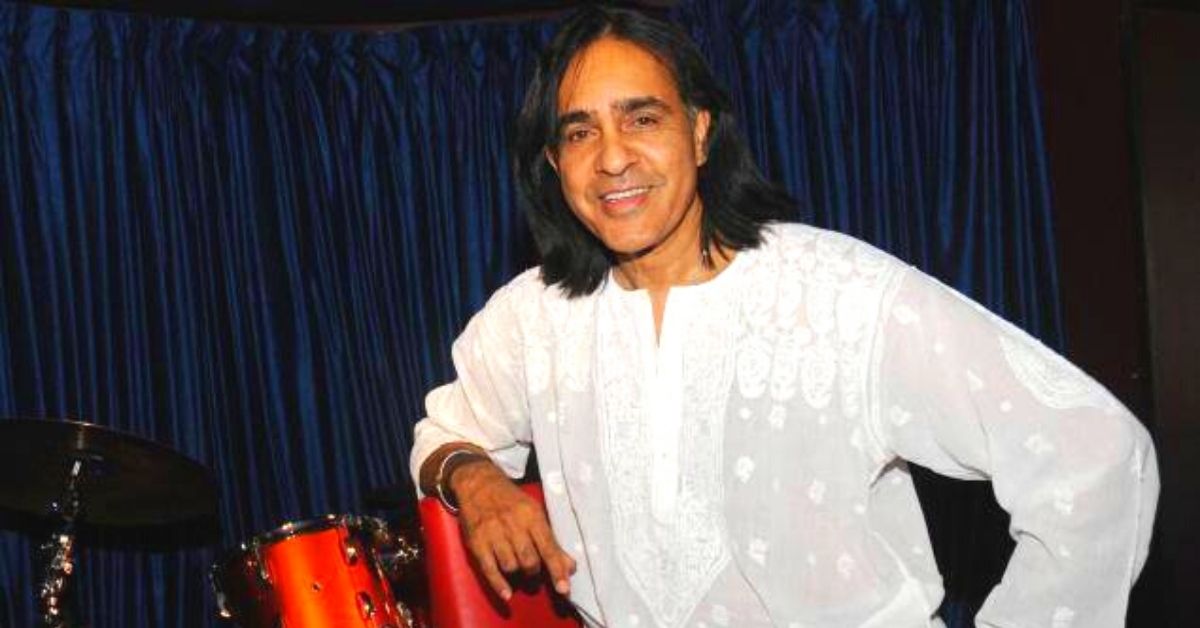
Arriving in London during the late ’60s with just his guitar, Biddu Appaiah went on to become a globally renowned music producer who sold millions of records. Here’s his story.
What do the songs ‘Kung Fu Fighting’, ‘Aap Jaisa Koi’, ‘Disco Deewane’ and ‘Made in India’ have in common? Apart from selling millions of copies worldwide, these records serenaded audiences from Russia to Peru, and stood as pioneers of global disco and pop music from the Indian subcontinent. (Image courtesy Facebook/Biddu)
What also binds them is the fact that they were all produced by a man from Bengaluru who left for London in the Swinging Sixties to pursue his love for popular Western music.
It’s incredible that more people in India don’t know Biddu Appaiah and his remarkable contributions to music. A great deal of the pop music Indians listen to today can trace their roots to the songs he produced. It was his production chops that not only introduced the world to artists like Carl Douglas, Nazia Hassan, Alisha Chinai and Shaan, but also opened commercial avenues for other independent talent in India who didn’t require the backing or endorsement of the Hindi film industry (Bollywood) producers or already established cinestars.
The Hindi film industry fought to wrest control back from the music labels supporting independent artists, but the onset of the internet has revived that spirit of independence. Here’s the brief story of a man, music producer and composer who left India behind to follow his dreams, but found his way back to influence generations of artists.
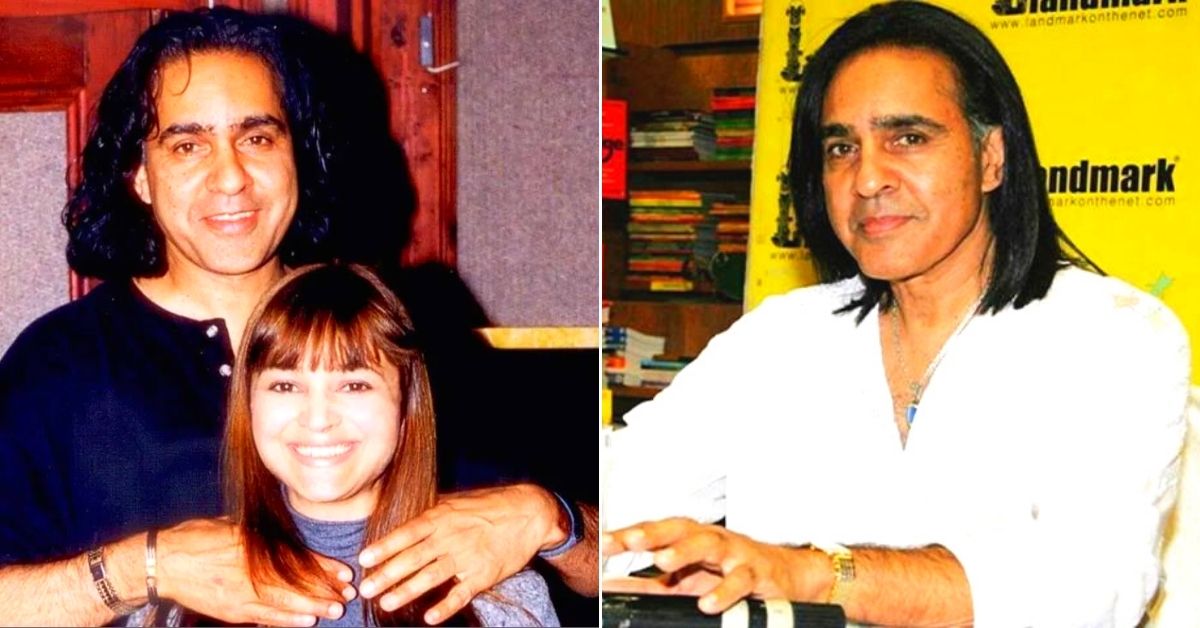
Left: Biddu & Alisha China (Image: Instagram/Alisha Chinai), Right: At a book launch (Image: The Post Script Team/Creative Commons)
‘Everybody Was Kung-Fu Fighting’
Born on 8 February 1944 in Bengaluru, Biddu attended the Bishop Cottons Boys’ School. Growing up listening to pop music from the West on the popular radio station Radio Ceylon (of Sri Lanka), his major musical influences as a teenager were Elvis Presley, The Beatles and The Rolling Stones. Learning how to play the guitar, he eventually formed a band with his friend Ken Gnanakan called the Trojans at 16.
They would play in small clubs, weddings, private parties and bars across Bengaluru before graduating to gigs in other cities like Kolkata and Mumbai. As an English-speaking band, they made their name by largely playing cover versions of songs by The Beatles, The Rolling Stones, Trini Lopez, and other Western music stars of the day. However, once the group split up, Biddu briefly performed as the lone ‘Trojan’ before leaving for England in the late 1960s.
Embarking on a journey to England in 1967, Biddu first made his way to the Middle East by climbing on a Haj ship in 1967 to Mecca before hitchhiking across the Middle East, where he performed multiple gigs.
In a 2020 interview with the Deccan Herald, he recalled, “I wanted to make it in the West. India in the 60s was a poor country; we were dancing with Russia instead of rocking with the West. I needed to get out of India as my interest was Western pop music; I was never into Bollywood. I left India and walked all the way to Beirut, singing there for six months until I saved enough moolah [money] to get to England.”
About his arrival in England, he once said in an interview with the BBC, “I didn’t really know too much about England or anything – I’d just come here on the chance of meeting the Beatles and doing some music. Everything that I did had this danceable flavour.”
To support his dreams of becoming a singer, he worked odd jobs, including one as a chef in London to save up enough money for studio time. He eventually cut a single, which impressed nobody and recalled “as an Indian in those days, they were happier to hire me as an accountant than as a singer”.
Realising that he wasn’t going to make it as a singer signed on a major record label, he instead decided to produce his own records, which, in the early days, didn’t generate much success. His first major success came in 1969, when he produced a song called ‘Smile for Me’ written by Barry and Maurice Gibb of the Bee Gees and performed by a Japanese band called The Tigers.
Since members of the band couldn’t speak English at the time, Biddu taught them how to sing English songs phonetically, given his knowledge of the language and love for pop music. The song topped the charts in Japan, and its success was the breakthrough he needed in England.
Entering the 1970s, he was producing a variety of disco songs that received little airplay on radio, but found underground appreciation from fans in the north of England.
His first real moment of success and mass acclaim came when he began working with Jamaican-born musician Carl Douglas in 1972. As a 2020 Financial Times article recollects, “Douglas was recording ‘I Want to Give You My Everything’ (written by Larry Weiss), which they did in a few hours. There was little time left to record a B-side. Douglas proposed ‘Kung Fu Fighting’, which he had written after seeing youngsters doing mock-kung fu moves in the street. It was recorded in a couple of takes. Biddu added the ‘Hurgh! Hurgh!’ exclamations. The record company people heard it and instantly realised that the B-side was the hit. They were right — ‘Kung Fu Fighting’ became one of the biggest-selling singles of all time.”
From here, there was no looking back. Biddu would soon establish himself as an important producer in the UK soul and disco scenes in the 1970s, working with a variety of artists including Tina Charles and Jimmy James. The songs he produced made their way to the UK Singles Chart and Billboard 100, while he continued making his own critically acclaimed music with ‘The Biddu Orchestra’.
‘Aap Jaisa Koi’
Biddu was never truly interested in doing film soundtracks, according to his autobiography ‘Made in India: Adventures of a Lifetime’. But that changed when Feroz Khan, a renowned Hindi cinema actor and producer, came to London to meet him in 1979.
Feroz had heard his instrumental albums and wanted him to produce a song for a film he was making called ‘Qurbani’. They met at an apartment he was renting near Claridges Hotel in Mayfair, and what ensued would change Indian pop music forever.
The Bollywood actor’s sales pitch was pretty simple, even though Biddu admittedly knew little of Hindi films or music. Feroz said, “Listen, you and I come from Bangalore. We are both Bangalore boys.” Biddu observed that Feroz was using the “old boys from the hood routine”. Feroz would then go on to say, “Come on, do it for a friend. Your mama will be so pleased.”
Although Biddu initially agreed to take on the project, he was still not convinced, even though Feroz had gone out on a limb for him. Local music directors in Mumbai had threatened to organise a boycott of his film if he “used a foreigner” to make music for one of the songs. However, once Feroz agreed to Biddu’s wish to record the song in London and not use playback singers dominating the music charts in India, there was no looking back.
The next thing they had to do was find a singer in London who could sing in Hindi. That’s when Feroz Khan came up with the name of a young 15-year-old Pakistani girl living in London called Nazia Hassan. Feroz knew her parents well and convinced them to let their daughter sing one song for his film. A couple of days later Biddu met the young Nazia, her brother Zoheb and their parents at their apartment in Century Court opposite the famous Lord’s Cricket Ground.
After singing a verse and chorus from one of Biddu’s songs ‘Dance Little Lady’, Nazia got the gig and went on to record the timeless ‘Aap Jaisa Koi Meri Zindagi Mein Aaye’.
“Her voice did not have the piercing sharpness of most Asian singers. The pleasantness in her voice was around C3, from middle C to G4 — warm, expressive and nubile. It wasn’t a great voice. But it was different, and it was this that made the difference between using her and someone from the old school in India,” wrote Biddu in his autobiography.
After recording Nazia’s part, he went into Red Bus Studios and added some of his magic dust alongside his sound engineer Richard Dodd.
“I had a catchy introductory riff played on the sitar; I used the syn drums, which had never been used in a Hindi song before. The syn drum made a sound not unlike my name. It went ‘bidoo’ every time you hit it and I double-tracked Nazia’s voice to give it some oomph. Once again, I used a rhythm box with a Latin beat to give it a hip-swaying groove,” he wrote.
‘Made in India’
Suffice to say, the song became a raging hit in not just India, but around the world. Despite its massive success, Bollywood didn’t come calling immediately. Instead, about a year later, a representative from the London branch of HMV (later called SaReGaMa), one of India’s largest music companies, came to see him. The record executive expressed the company’s desire for Biddu to make an album with Nazia Hassan. This was the first non-film album the company was going to make. After much negotiation, which also included the payment of royalties to the artists involved, he got into the studio with Nazia and Zoheb to produce an Urdu album.
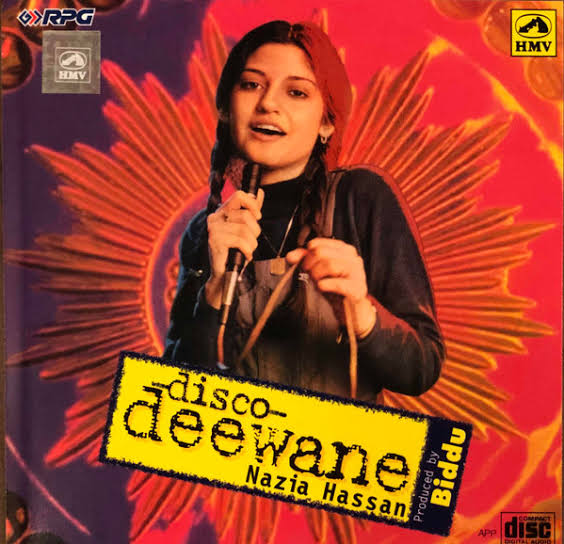
Modelling the siblings on another famous brother-sister duo in the United States called ‘The Carpenters’ they recorded the album ‘Disco Deewane’, which was a smash hit across the world with the record charting across 14 countries, including Brazil, where it went No.1. The record sold almost 100,000 copies on the day of its release, a remarkable feat for South Asian music artists in the West. Following ‘Disco Deewane’, they went onto work on three more albums including ‘Star/Boom Boom’ in 1982, ‘Young Tarang’ in 1984 and ‘Hotline’ in 1987.
Album cover of a pop and disco music classic (Image courtesy Wikimedia Commons)
Together, the brother-sister duo went on to sell 60 million records worldwide. During this period, he also made massive hit records for famous Japanese (Akina Nakamori), Chinese and Filipino pop stars as well, besides making a return to the UK music scene with house music records.
After spending about a decade making records with Nazia and Zoheb, he worked with Hindi vocalist Shwetta Shetty producing her 1993 album ‘Johnny Joker’.
But it was 1995 that Biddu really made his mark in India, composing and producing the legendary ‘Made in India’ album by Hindi pop and playback singer Alisha Chinai. The song and the music video that followed was one of the key avenues MTV chose to launch their channel in India.
Interestingly, some anecdotes even claim that the song was originally meant for Nazia on the vocals, but she apparently refused. Eventually the song fell on Alisha China’s lap and for the backup vocals, Biddu employed another young budding singer, Sophie Chaudhary.
opping the charts in India, the album sold over five million copies. In addition to Alisha Chinai, he kickstarted the pop music careers of artists like Shaan, his sister Sagarika Mukherjee and even famous playback singers Sonu Nigam and KS Chitra. A lot of the Indian pop music scene in the 1990s and early 2000s was marked by the records that Biddu produced.
There’s a lot more to his story. But what’s more important is that generations of people from literally all over the world have swayed their hips to his hit records. And this isn’t even an exaggeration. For a man from Bengaluru, who hitchhiked across the Middle East and landed up in London with his guitar, he sure made his mark on the world of music.