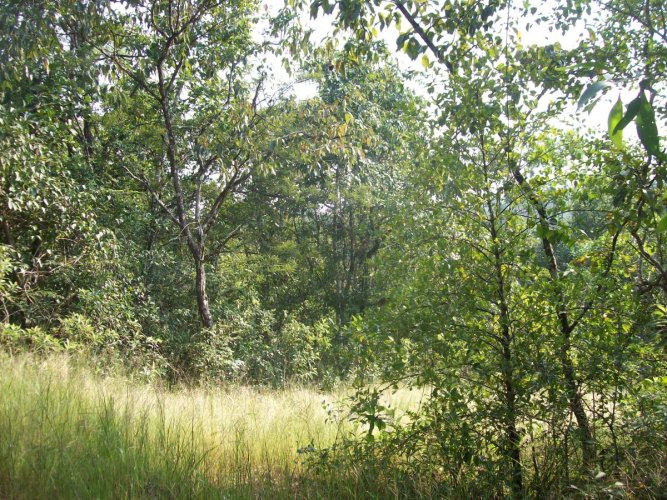
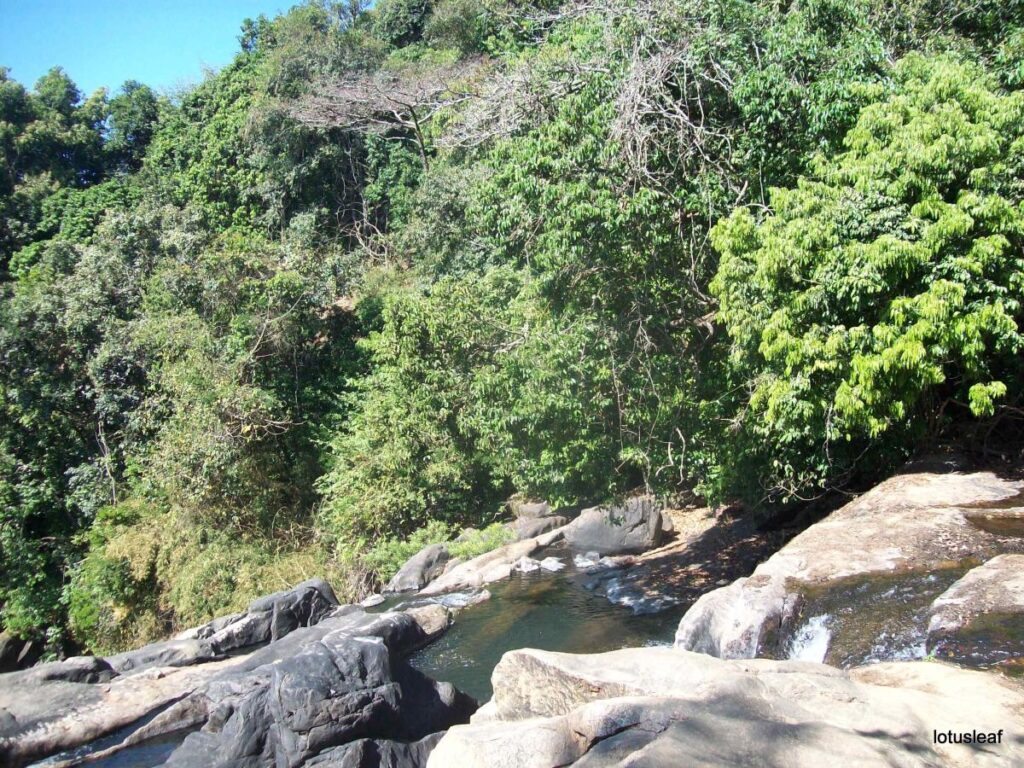
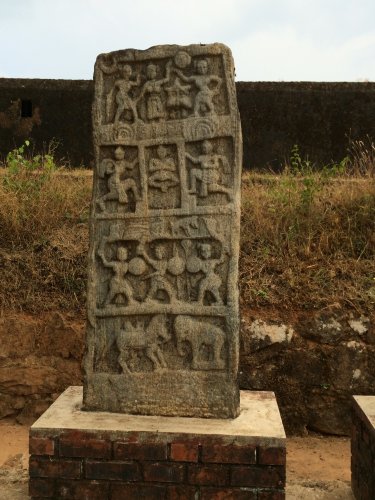
A few thick forests have been left untouched for ages. Though close to human habitation, these forests have withstood the test of time for religious and ecological reasons. Here, the air is cool and sunlight streams in through miniscule gaps in the gaps in the canopy.
Karnataka, Maharashtra and Kerala have thousands of such sacred spaces.
These woods that range from a few acres to a few hundred have many names.
They are called kaan in Malnad (Karnataka’s Western Ghats), devakaad in Kodagu, and devarakaadu in other parts of Karnataka. In Kerala, they are called kaavu where theyyam (ritual dances) is performed.
These groves are rich in biodiversity and are known for the ecological services they offer.
Like these regions, many countries and civilisations across the world have maintained ancient groves. The lore associated with these forests are many. In India, it is said that ancient sages would meditate in forests known as tapovan (woods of penance).
The scrub forests of the Thar desert have been protected by the Bishnois, followers of Guru Jambha. In fact, they are known for putting their lives on the line while protesting the cutting down of trees in these groves.
Glimpses from sacred groves in Uttara Kannada / DH photo
Devakaads of Kodagu
In Kodagu, there are dedicated forests beside every village settlement to Aiyappa, the god of forests and hunting. Kodavas held the belief that the spirits of their deceased ancestors would be led on hunts in these sacred forests by Botekara Aiyappa (Aiyappa, the hunter). No living Kodava would venture out to hunt animals or even cut down the trees in these devakaads.
There are also a few devakaads that are dedicated to other gods and goddesses. One of them is the Mahalaxmi devakaad in Ammathi-Vontiangadi in Kodagu. Located behind the bus stop, the site displays a board issued by the Government of Karnataka, declaring the grove as a devara kadu (forest of the gods).
According to Cheppudira G Kushalappa, Dean of the Ponnampet Forestry College and Kodira A Kushalappa, a retired IFS officer, there were 1,214 devakaads of a total size of 2,550 hectares in 1996 in Kodagu.
Apart from their religious and cultural significance, sacred groves help conserve our forest wealth, says Kodira Kushalappa. “Forests cool temperatures and bring rainfall. They help in retaining the topsoil and help sustain streams, which water neighbouring farms. Forests also serve as home to birds which feed on insects that are found in the fields,” he adds.
According to a 2002 study, there were 215 tree, 86 bird, 163 mushroom and an uncounted number of butterfly species found in the sacred groves and coffee plantations of Kodagu. Forty-nine out of 163 species of mushrooms were unique to these groves.
Another paper noted that there were 25 medicinal tree species (rare, endangered and threatened) found in the devakaads. A 2003 research study noted that the larger sacred groves had higher diversity than in natural reserved forests. There was a high level of endemic and globally threatened species present in these forests.
Butterfly species such as the Travancore evening brown (Parantirrhoea marshalli) or the Malabar banded swallowtail (Papilio liomedon Moore) are restricted to low elevation evergreen forests in the southern Western Ghats that are excluded from protected area network. Tree species like the Actinodaphne lawsonii, Hopea ponga, Madhuca neriifolia, and Syzygium zeylanicum, which are on IUCN threat list, are found in the sacred groves.
The swampy areas in kaans have been found to have the large-sized, threatened tree species Syzygium travancoricum, which grow close to water bodies and is classified in the IUCN Red List as “critically endangered”.
These sacred groves help in watershed protection, protect against fire, maintain a favourable microclimate and protect against soil erosion.
Kaans of Malnad
There are many rules for the Malnad kaans. The trees cannot be cut in the groves but adjoining villagers could cultivate wild pepper.
Francis Buchanan, a British officer, who travelled through Malnad in 1801 wrote that permission to cut a tree in a kaan was to be sought from a village headman, who also served as the priest of the village temple. Otherwise, the tree feller would face the wrath of the forest deity.
The main difference between a kaan and a devakaad is that no cultivation was allowed in the devakaads, while the cultivation of wild pepper and sago palm was allowed in the kaans.
The crop grown in the kaans initially came under forest produce. Later cultivation by clearing by fire was permitted. Even industries were allowed to venture into the kaans, leading to widespread destruction in central western Karnataka.
Now, various individuals have been fighting cases in courts to preserve the sacred groves.
Temple committees and villagers aid the forest department in conserving these sacred groves. Mookonda Arun Ganapathy, the secretary of the Bhadra Kaali temple in Bilugunda village, Kodagu explains that researchers and students often come to the nearby Aiyappa devakaad.
Arun states, “There are encroachments happening in these sacred groves despite government efforts. Many of the well-preserved ones are by the road side. The villagers take measures to protect them. Regular rituals in the forest temples help protect these sacred groves. Trees should not be cut inside these holy forests. Sacred groves are essential for preserving the environment and our culture.”
source: http://www.deccanherald.com / Deccan Herald / Home> Spectrum> Spectrum Top Stories / by Mookonda Kushalappa / May 26th, 2022
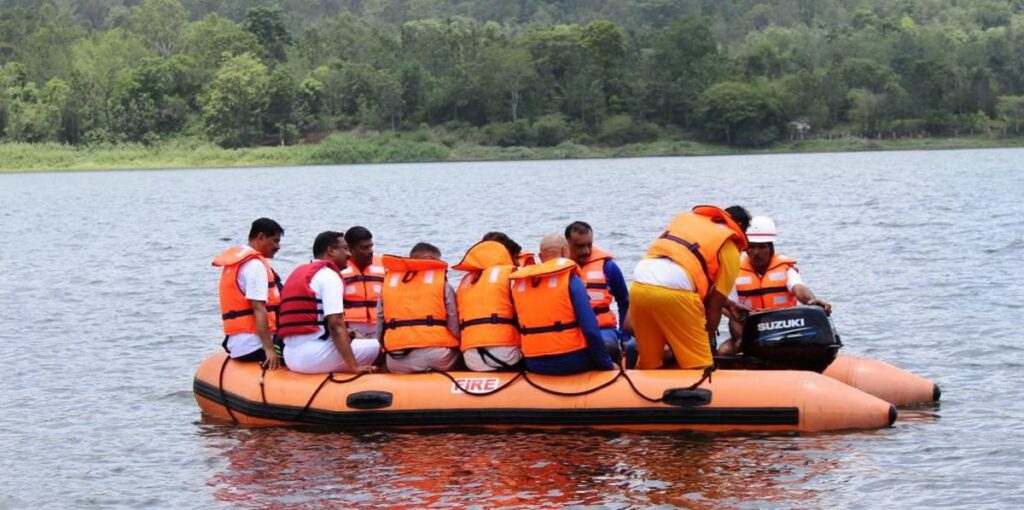
A drill on rescule and relief being conducted in the Harangi backwaters by the Kodagu Disrtrict Disaster Management Authority, on Thursday. | Photo Credit: SPECIAL ARRANGEMENT
Kodagu district administration displays its monsoon preparedness
The Kodagu District Disaster Management Authority tested its monsoon preparedness and its capabilities to conduct rescue and relief operations during natural calamities, at the Harangi backwaters on Thursday.
This is part of an exercise in the run up to the monsoon conducted by the Authority not only to test their capabilities but also to infuse confidence in the public.
The exercise was conducted at Basavanahalli in the backwaters of the dam and entailed putting all the equipment at its disposal and using it for various missions that were simulated for the drill.
Kodagu has been affected by floods and landslides in the recent past and hence the focus was on rescuing people trapped amidst swirling waters or from landslides and protecting human and animal life.
Deputy Commissioner B.C.Satish said the District Disaster Management Authority and the district administration had taken precautionary measures to prevent any untoward incident and was also equipped to deal with any eventuality. The exercise conducted by the district police and fire emergency personnel, was a demonstration of the strengths and capabilities, he added.
The National Disaster Response Force (NDRF) team was expected to arrive and be stationed in key and vulnerable areas of the dsitrict next week, said Mr. Satish. Both the NDRF and SDRF will coordinate their activities in areas identified as vulnerable based on the floods and landslides that hit the district since 2018, he added.
In addition, scientists from the Geological Survey of India are also expected to pay a visit to the district and map the vulnerable areas. The DC said task forces will be constituted at the district, taluk and gram panchayat levels during monsoon to coordinate rescue and relief in case of any eventuality. Nodal officers have already been appointed to coordinate the efforts at all hoblis and necessary instruction and information provided on the ways and means of handling any situation in an effective manner, said Mr.Satish.
Fire Officer P. Chandan said that all preparations were in place to rescue human and animal lives in case of floods.
source: http://www.thehindu.com / The Hindu / Home> News> National> Karnataka / by Special Correspondent / Mysuru – May 26th, 2022
People can send stories along with photographs and audio or video clips for curation.
Bengaluru-based India Foundation for the Arts (IFA) is inviting members of the Kodava community to share stories of their people and cultural history for an online museum it plans to launch next year.
It is International Museum Day on May 18.
Speaking ahead of the occasion, IFA said people can send stories along with photographs and audio or video clips, which will be curated.
The project is called Sandooka, the Living Museum of Kodava Culture. Sandooka means treasure chest in Coorgi language, and the museum strives to be a repository of stories ranging from the traditional costumes to present-day experiences of the Kodavas, native inhabitants of Kodagu in Karnataka.
IFA is working with Nitin Kushalappa, an author and researcher who is a member of the Kodava community, to put together this project along with design experts Upasana and Saurav Roy from Switch Studio.
The project started in 2021. Rathi Vinay Jha, chair of the Sandooka museum’s advisory group, shares, “The younger generation of the community is dispersed all over the world and is losing connection with their heritage. This museum will provide an opportunity to reconnect with their culture.”
And because the project wants to foster community participation and be accessible globally, the concept of online museums fits well, says Lina Vincent, project director and curator.
Arundhati Ghosh, executive director, IFA, believes the museum will help document and preserve the stories and heritage of the Kodavas, much of which remains undocumented.
“My vision is for it to be a virtual space devoted to the Kodava community. I hope this can serve as a model for other communities that are disappearing to keep their stories alive,” says Lina.
You can submit the stories at sandookamuseum.org/form/intro
source: http://www.deccanherald.com / Deccan Herald / Home> Metrolife – Your Bond With Bengaluru / by Sowmya Raju, DHNS / May 17th, 2022
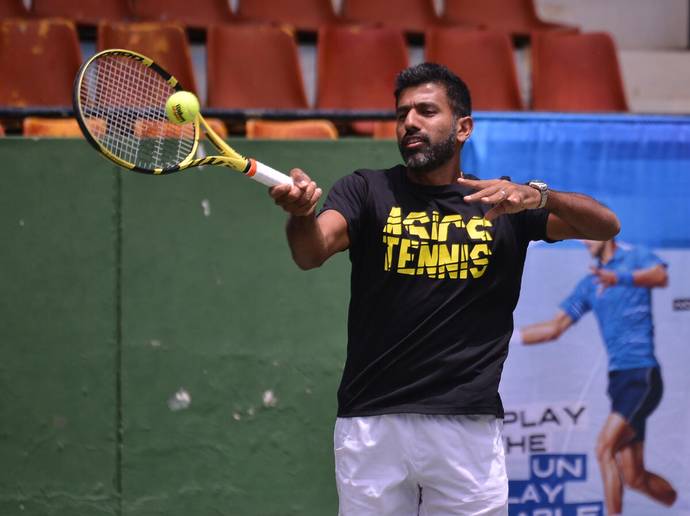
“There’s one Indian playing an ATP250 event or in an ATP Masters, for example, out of a billion people and if you’re not able to show that match, how do you encourage young athletes?,” asks Indian tennis star Rohan Bopanna.
Proven champion: Rohan Bopanna was the last man from India to win a Grand Slam title when he lifted the mixed doubles crown at the 2017 French Open with Canada’s Gabriela Dabrowski. – V. SREENIVASA MURTHY
After a lean 2021 season, Rohan Bopanna,India’s top-ranked men’s doubles player, has had a fairly good run in the first four months of 2022.
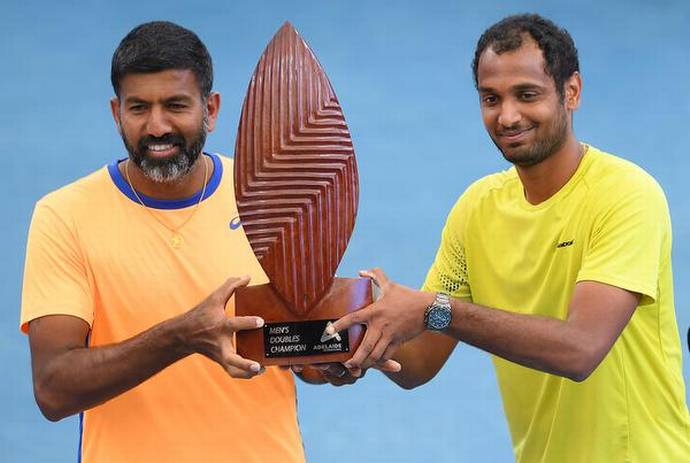
World No. 25 Bopanna began this season winning the first ATP 250 event of the year in Adelaide with compatriot Ramkumar Ramanathan . The pair went on to win the Maharashtra Open in Pune.
The 6-foot-4 tennis star from Bengaluru was the last man from India to win a Grand Slam title when he won the mixed doubles crown at the 2017 French Open with Canada’s Gabriela Dabrowski.
In a chat with Sportstar, the 42-year-old reflected on the first quarter of this season and his plans for the Roland Garros. He also shared his thoughts on the possibility of the Chennai Open returning to the ATP tour calendar and the way forward for Indian tennis.
Any initial thoughts on your season so far?
I am extremely happy with the way the season has gone so far, especially looking at how it was last [year]. Last year during this period of time, I hadn’t won a match up until literally this week (April), which was the Estoril week. So surely, extremely happy with the way the season has gone. Having two titles, having some good results in some big events, so that’s really wonderful and I’m really happy with it.
This season, you have played with a few singles specialists (Ramkumar Ramanathan, Denis Shapovalov and Aslan Karatsev) and also with players who primarily play doubles (Jamie Murray and Matwe Middelkoop). How do they differ? How do you adjust to their playing style?
The biggest thing that has always helped me, no matter who I played with, is to only focus on my game and not to really worry whether he’s a singles player or a doubles player. I try and see where I can adapt my game to their strengths and use my strengths in those situations. That always helps me.
At the end of the day, you just have to find a way to win these close points. Figure out who’s playing kind of a little bit better in that particular match on deuce points and maybe ask them to take it or you take the deuce points.
As far as a singles player is concerned, Karatsev was the only one who I had not played with and that was the first time but I’ve been playing with Dennis Shapovalov for a long time and you know we had some good wins. We beat the number one pair [Mate] Pavic and [Nikola] Mektic in Miami. And then I played with Jamie for the first time, and that was really a fruitful partnership. We lost a close semifinal match [against eventual champions Rajeev Ram of the US and Joe Salisbury of UK in Monte Carlo]. Even in the semifinals, we definitely were the better team, but unfortunately, we could not win.
Great beginning: Rohan Bopanna began this season winning the first ATP 250 event of the year in Adelaide with compatriot Ramkumar Ramanathan. – GETTY IMAGES
This season has been very interesting with some big wins, but there’s a pair — Wesley Koolhof and Neal Skupski — that has beaten you three times. Would you say they are ones to beat this season? You finally beat them in Monte Carlo.
I told them after the match, “Nobody beats Bopanna four times in a row!” But having said that, yeah, they’ve been very, very consistent. They’ve been consistent throughout the season, and I think they have won three tournaments already. They made a couple of finals. They’re definitely the team doing well this season. When they’re confident like that, it’s tough to play them. You have to really find those small margins to try and beat them. That’s what happened in Monte Carlo. We played some close points which went our way and we managed to get that win. Yeah, surely they are the top team and the hottest team right now in the season so far.
India also won the Davis Cup tie against Denmark at home. The next tie is against Norway, which has a top ten player in Casper Ruud. Have you already started planning for that tie? Can you also share your thoughts on the format of Davis Cup?
Colours of pride: Rohan Bopanna and Divij Sharan with the tricolour after winning their doubles match to help India seal the Davis Cup tie against Denmark at the Delhi Gymkhana in New Delhi. – V.V. KRISHNAN
It was really nice to have a home tie. The crowd in Delhi was fantastic. It was lovely to have so many people come out and support us. Playing in India after long time, playing on grass — I’ve always loved it.
We’ve gotten used to the format. Two-day format works perfectly well, especially if you have a separate doubles team and a few separate singles guys playing it, so it kind of works out.
For every team out there, there’s not really that much of a difference. Because it’s also best-of-three sets, it’s much easier on the body, it’s easier to manage that… really happy that we got through that tie. Divij [Sharan] and I had an extremely close match.
They [Danish captain Frederik Nielsen and his partner Mikael Torpegaard] saved a couple of match… three match points. I was happy that we got the win there and especially for Divij also, to win at home. It’s a club he has grown up in and practised quite a bit, so it was nice for us to finish that tie in the third rubber itself.
We have a tough opponent in Norway and still long way to go before that because we have so many other big events before even looking at that far ahead of the season. We are still in the clay-court season and have Roland Garros. Not really looking for anything beyond that actually.
Talking about Roland Garros, have you finalised your partner?
I am playing with Middelkoop itself all the way except for Madrid because [in] Madrid, both of us could not get in because the cut-off was so strong. In Rome, Geneva and Roland Garros, I am playing with Middlekoop and I will be playing mixed doubles also, but I’m looking for a partner who I can play with and try and do well there.
How did this partnership with Middelkoop start?
Actually, it was just one event we had played in Antwerp a couple of years ago. We went to the finals in that tournament in Antwerp. So I kind of knew we got along well. Our game style suited pretty well so we said ‘why not? Let’s give it a try in the clay-court season’ but unfortunately the cuts have been so strong. Even though both our rankings are almost combined 60, we’re still struggling to get into the bracket, so that’s been a little challenging, but nevertheless, we’re trying to get as many tournaments as possible together and see how that goes.
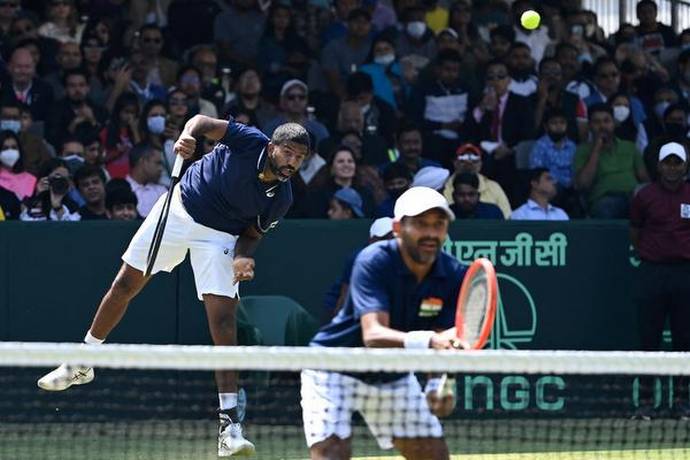
Double impact: India’s Rohan Bopanna serves as Divij Sharan watches during their men’s doubles tennis match against Denmark’s Mikael Torpegaard and Frederik Nielsen in the Davis Cup world group 1 play-off between India and Denmark, in New Delhi. “The biggest thing that has always helped me, no matter who I played with, is to only focus on my game and not to really worry whether he’s a singles player or a doubles player. I try and see where I can adapt my game to their strengths and use my strengths in those situations — that always constantly helped me,” Bopanna said. – AFP
Do you think on clay, a team that plans better strategies wins more as compared to hard court, where if you have a very big server on your team, then you can possibly win with power? Do you think there is some basic difference while playing on clay and on hard court as a doubles team?
I don’t think that really makes that much of a difference for doubles. It’s pretty similar. The game is still pretty quick. Yeah, you know it’s not like singles that you have so many more rallies. A lot of these matches are still going into super tiebreaks like anywhere else, any other surface.
The Tamil Nadu government is trying to bring Chennai Open back. Your initial reactions to that.
I was thinking about it. It’s excellent. Chennai has always given such great support for tennis. I’ve had some very good success playing in Chennai, not only in the Chennai Open but also much earlier, playing nationals, futures and Davis Cup.
I’ve always loved playing in Chennai and I will be very happy if the tournament is back. I don’t know whether I will be playing or not by the time the tournament comes back, but still, I’m very happy to hear that they are planning to get the ATP back there. It’s a good city and [has] a lot of good tennis lovers who would love to have the tournament back.
Do you think India should have more ITFs and Challengers to give the players more exposure? What do you think should be the way forward?
It’s definitely what we need. We need a minimum 30 men’s and women’s Futures, about 20 to 30 Challengers for men and women. Also, that’s the only way if we want to compete with the best in the world. Other countries hold so many more tournaments. We have to give our country that chance before we say, ‘OK, here’s an Indian, maybe competing at the highest level’.
The other biggest thing I keep saying is that tennis has to be shown in India. This is one thing lacking. There’s one Indian playing an ATP250 event or in an ATP Masters, for example, out of a billion people and if you’re not able to show that match, how do you encourage young athletes?
How does a young athlete even know that there is somebody from their own country even playing? These are small things which make a difference.
I’ve been saying this over and over again for a long time. Unfortunately, the only way it will change is when there is visibility for your sport.
Like any other sport, there is growth when there is visibility. That is what is needed for tennis as well and it’s not just about showing tennis [with] the top guys playing. If there’s a countryman playing, it’s very important to get that also broadcast and that’s surely the right step forward for the sport to grow.
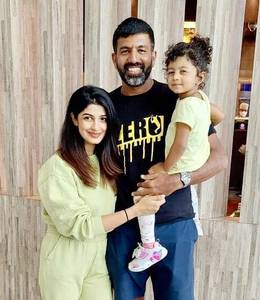
Little joys: Rohan Bopanna with wife Supriya and daughter Tridha. “My wife and daughter have been travelling to Australia and now my daughter understands that I play a little tennis. She keeps asking me why I keep going to the tennis court and why I’m playing tennis so much,” said Bopanna on travelling with the family for tennis tournaments. – SPECIAL ARRANGEMENT
Any fun experience that has happened to you this season or any other memorable incident across the tournaments that have you played so far that you think the readers might love to know?
The good part is that everything is finally open. We don’t have to do Covid tests anymore. Doing all those PCR tests… 150-160 PCR tests… Getting your tests done every two days in different countries, getting the reports… Definitely happy that we don’t have to do that anymore that often and maybe just once in a while.
It’s good to have the fans back. To be honest, that is the biggest fun thing about playing this sport.
I get to travel with the family. My wife and daughter have been travelling to Australia and now my daughter understands that I play a little tennis. She keeps asking me why I keep going to the tennis court and why I’m playing tennis so much.
You kind of build a family outside your family when you keep travelling because you constantly see them during that particular tournament once a year like it may be the US or UK or wherever it may be. So that is something I missed for two years. Going into the country, but not able to see them. So, it’s now nice again to meet those friends. The biggest thing is I love exploring the city so I can go and start exploring some coffee shops.
Federer and Nadal are returning after injury breaks. Federer is 40 and Nadal will be turning 36. And then there is someone like Ash Barty who took retirement at 25. What’s your perspective on this situation. What does it say about the changing narrative in the world of sports when it comes to age and retirements?
It’s a purely individual choice, to be honest. It’s how you feel. At the end of the day, it’s not easy travelling week in, week out, living out of a suitcase, eating every meal in a restaurant. It takes a toll. Even though it sounds glamorous from the outside, it’s not easy because you’re away from family and friends. Each individual looks at life differently.
Also, during the pandemic, a lot of people have gotten to reflect on what they really enjoy, what they missed and all that. Having said that, it’s very difficult to say whether they want to retire or keep going… At the end of the day, it really comes down to purely the individual decision because you never know where the mindset is. As long as the mind is healthy, you want to travel [you carry on].
The mind says, ‘You know what? I don’t want to travel anymore. I just want to stay at home. I enjoy being home more.’ That’s what it boils down to.
And then, everybody has goals — different goals, different mindsets. That athlete or that person has decided, ‘OK, this is my goal. I’ve achieved that. OK, I’m done.’ I don’t think that’s something anyone else can talk about or figure out.
source: http://www.sportstar.thehindu.com / Sport Star / Home> Tennis / by Nihit Sachdeva / May 14th, 2022
The city-based VeKare Ex-Servicemen Trust has urged the State Government to give exemption from entry fee to the armed and paramilitary forces personnel visiting ‘Sunny Side’ that houses General K.S. Thimayya Museum in Madikeri, Kodagu district.
Trust President Mandetira N. Subramani has written a letter to Chief Minister Basavaraj Bommai urging to fulfill this demand by exempting entry fee to those in service and retired Armed Forces personnel.
Urging the Kodagu District Administration and the Government to consider the request, he said the exemption in paying an entry fee of Rs. 20 has been sought as a respect towards the Armed Forces fraternity.
Subramani has also urged the Director, Department of Sainik Welfare and Resettlement, to impress upon the Chief Minister to pass orders in this regard.
He has suggested the exemption should be granted upon production of identity cards issued by the competent authority.
The suggestion came from an 85-year-old ex-serviceman Manira T. Nachappa, who had fought three major wars when he served the 37 Coorg Medium Regiment from November 1957 to December 1977.
“Nachappa met me at the recent annual general body meeting of T. Shettigeri Ex-Ser-vicemen Welfare Association in Kodagu and urged me to take up the issue with the authorities concerned,” Subramani said. The museum was inaugurated in February 2021 by President of India Ram Nath Kovind. “Sunny Side”, the ancestral house of General K.S. Thimayya, who served as the Chief of Army Staff from 1957 to 1961, has been converted into a museum.
source: http://www.starofmysore.com / Star of Mysore / Home> News / May 10th, 2022
Get-together of Kodagu Ex-servicemen Welfare Association held in city.
Mysore/Mysuru:
Asserting that ex-servicemen must get all facilities extended by the Government, JD(S) MLC C.N. Manjegowda, who himself is an ex-serviceman, said that he was committed to get all due Government benefits to ex-servicemen.
He was speaking at the 4th anniversary and get-together of Kodagu Ex-servicemen Welfare Association organised at Sri Chamundeshwari Convention Hall on Bannur Road here yesterday.
Maintaining that he is fighting for the cause of ex-servicemen, Manjegowda said he had questioned the Government on the facilities extended to the family members of martyred Pulwama attack soldiers. Manjegowda said he likes to be remembered as an ex-serviceman and a honest politician who always worked for the cause of the general public.
Asking ex-servicemen to contact him any time for getting work done by any department, the MLC contended that the JD(S) was the only party that gave a party ticket to an ex-serviceman to contest the Legislative Council polls.
‘I have apprised the Chief Minister and the Home Minister on the services rendered by ex-servicemen. I will always be in touch with the Government to discuss issues concerning ex-servicemen”, he said.
Pointing out that Kodagu district has given many soldiers and warriors to the country, Manjegowda said that the nation should be indebted to Kodagu for this and also the sacrifices made by brave and valiant soldiers.
Noting that the Army and the Police are two pillars of the society, he urged the Government to distribute P-caps to the Police personnel just as is done in other South Indian States. Observing that most of the people who join the Armed Forces do not have a sound financial background, he said that after retiring from the Army, he joined the Police force and served in other departments later before quitting Government service.
Pointing out that those who had served in the Army want to be in a place where there is discipline and dedication, Manjegowda explained his political journey. Referring to allotment of Government land for ex-servicemen, the MLC bemoaned that ex-servicemen are being made to wait for years while private organisations are getting land much easier and quickly.
He announced that he would exert pressure on the Government to clear pending land allotment applications of ex-servicemen. Manjegowda presented Rs. 50,000 cheque to the Welfare Association, during which he announced that he would give Rs. 10 lakh out of his Legislator’s fund for the construction of the Association building.
The MLC also promised that he would make all efforts to get a CA site for the Association if the audit report and all records are straight.
Senior ex-serviceman K.G. Kuttappa and Association members K.B. Aiyappa and A.C. Subbaiah, who excelled in sports, were felicitated.
Association President K.K. Aiyappa, Vice-President K.U. Bheemaiah, office-bearers A.P. Motaiah, C.K. Basappa, K.S. Achaiah, N.K. Ganapathi, A.P. Appaji, K.S. Prabhakar, P.K. Bopaiah, Jaishankar, A.S. Lokanath, Chitra Subbaiah, K.A. Geetha and others were present.
source: http://www.starofmysore.com / Star of Mysore / Home> News / May 08th, 2022
Gulshan Devaiah, who recently played the love interest of Rajkummar Rao in the movie Badhaai Do, tells us why he picked a role with a short screen time.
Gulshan Devaiah’s part in the movie Badhaai Do was not just a pleasant surprise for his fans, but also brought in more substance to the movie. Devaiah, who romances Rajkummar Rao, the male lead in the movie, says Rao is a wonderful actor and romancing him was easy. “His wife had visited the set in Dehradun and she said, ‘You guys share such wonderful chemistry’,” says Devaiah, who plays a character by the name Guru Narayan.
His association with Harshavardhan Kulkarni, director of the movie, goes back to Hunterr, which was Kulkarni’s first movie as director. When Badhaai Do came about, they thought Devaiah was a great choice to play a part.
“I think they waited for the right time to call me. He said there is a small part and asked me if I would be interested to come for a shoot for 2-3 days. It comes towards the end of the movie but it is a very crucial part,” says Devaiah.
Though he is very clear about not doing cameos, he made an exception for this particular movie. “Sometimes, some things really seem like a good idea. I am not really a cameo sort of guy, I like full-fledged parts. I trust Harsh as he’s my friend and I want to support him as well,” says Devaiah, adding that the team wanted his part to be a surprise. He had even requested an uncredited part but “the team was too embarrassed about it”.
Most of Devaiah’s scenes are with Rao, who he “likes and respects” as an actor. “It was a wonderful opportunity to reunite with all of them. I had last worked with him in Shaitan, where he had a small part,” says Devaiah. The actor is also seen sharing screen space with Sheeba Chaddha, who plays Rao’s mother in the film.
Guru Narayan is basking in the glory of the success of the film, which has appealed to the LGBTQ community who find him relatable. “I didnt think of the fact that he was gay, I just knew that he was in love. Guru Narayan is a person who is comfortable with who he is. All the LGBTQ community wants is equal treatment,” says Devaiah, who is yet to watch the movie.
While the actor is keener on playing full-length roles, he says it depends on numerous factors. “You have to have some sense and curate your career after a certain point. In the beginning, you just hope you work on good projects, but after a point, you need to have some sort of idea about what you want to do or what you don’t want to do. In my case I have figured the latter,” says Devaiah, whose next film is a project with Zoya Akhtar, the story of which is written by Reema Kagti, and stars Sonakshi Sinha.
source: http://www.indulgexpress.com / Indulge Express, The New Indian Express / Home> Entertainment / by Monika Monalisa / February 21st, 2022
Actor Varsha Bollamma has decided to donate her eyes.
Actor Varsha Bollamma has decided to donate her eyes.
Actor Varsha Bollamma has decided to donate her eyes. Her kind gesture has left her fans extremely grateful to the actor. They couldn’t help admiring the Maane Number 13 actor. A user wrote that Varsha has beautiful eyes and by deciding to donate them, she proved her heart is also beautiful. Rest dropped clap and heart emojis in the comment section.
Besides this kind gesture, Varsha was also in news recently for her film Selfie. The film was appreciated by many for exploring the issue of college admission rackets. The movie explored how management quota seats are sold for exorbitant money.
Selfie was written and directed by Mathi Maran. Besides Varsha, Chandrasekhar, Amirtham Gunanidhi, G.V Prakash Kumar, Gautham Vasudev Menon and others were also part of the film. Sangili Murugan, Vidya Pradeep and Tiger Thangadurai also featured in important roles in the film. The song Imaikkariye, written by Arivu, was released on Tuesday and it garnered enormous praise. G.V. Prakash Kumar’s music and mellifluous vocals captivated the audience.
Varsha was also part of the film Stand Up Rahul, which was released this year. Stand Up Rahul narrated the story of an employee who doesn’t dare to stand up for anything in his life. Stand Up Rahul was written and directed by Santo.
Banking on her recent success, Varsha is also a part of two upcoming films titled Swathi Muthyam and Meet Cute. Swathi Muthyam is written and directed by Lakshman K Krishna. Rao Ramesh, Vennela Kishore, Surekha Vani and others will be seen in this film. Meet Cute is written and directed by Deepthi Ganta. Aakanksha Singh, Sathyaraj, Adah Sharma, Ruhani Sharma, Sunaina and others will be seen in this film.
source: http://www.news18.com / News18 / Home> News> Movies> Entertainment Bureau / May 04th, 2022
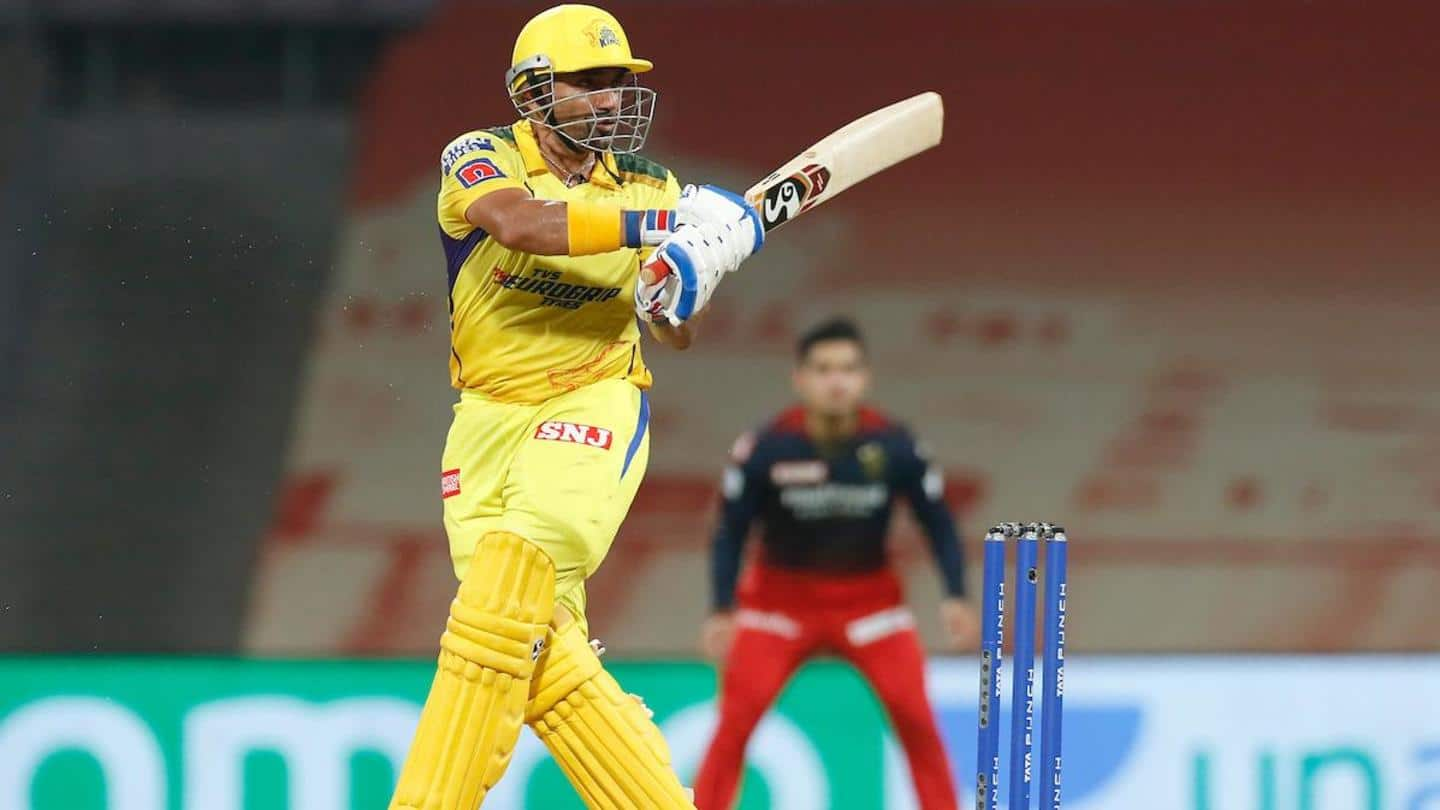
Uthappa has 4,950 runs from 201 IPL matches (Source: Twitter/@IPL)
Uthappa is the fifth-highest run-scorer for India in T20 cricket, after Virat Kohli, Rohit Sharma, Shikhar Dhawan, and Suresh Raina. The former has tallied 7,270 runs from 288 matches at an average of 28.50. The tally includes 42 half-centuries.
Chennai Super Kings (CSK) batter Robin Uthappa is set to complete 5,000 runs in the Indian Premier League (IPL). He could reach the landmark in the upcoming game against Royal Challengers Bangalore (RCB). Uthappa, who is one of the few players to have played 200 IPL games, has represented a number of other franchises in the past.
Here are the key stats.
Uthappa is one of the most experienced batters in the IPL.
He started his journey in the cash-rich league with Mumbai Indians in the inaugural season (2008).
Uthappa later represented Royal Challengers Bangalore, Pune Warriors India, Kolkata Knight Riders, and Rajasthan Royals.
CSK roped in Uthappa ahead of the 2021 season.
He requires 50 runs to touch the 5,000-mark in the tournament.
Career
Eighth-most runs in the IPL
At present, Uthappa is the eighth-highest run-scorer in the IPL. He has racked up 4,950 runs from 201 matches at an average of 27.97. The tally includes 27 half-centuries and the best score of 88. Uthappa will become only the seventh cricketer to register 5,000 IPL runs. He will overtake Universe Boss Chris Gayle, who has the seventh-most runs presently (4,965).
Do you know?
Uthappa claimed the Orange Cap in 2014
Uthappa is one of five Indian players to have bagged the Orange Cap in a season. He finished as the leading run-scorer in KKR’s title-winning campaign in 2014. Uthappa smashed 660 runs from 16 matches at an average of 44.00 in that season.
Feats
Notable feats of Uthappa
In a career spanning over a decade, Uthappa has hammered 481 fours and 182 sixes. He needs 19 more to become only the sixth batter with 500 or more IPL fours. Uthappa could also become the ninth batter with 200 sixes in the tournament. Interestingly, he has aggregated over 400 runs in three seasons (2012, 2013, and 2014).
Information
Fifth-most runs for India in T20 cricket
Uthappa is the fifth-highest run-scorer for India in T20 cricket, after Virat Kohli, Rohit Sharma, Shikhar Dhawan, and Suresh Raina. The former has tallied 7,270 runs from 288 matches at an average of 28.50. The tally includes 42 half-centuries.
source: http://www.newsbytes.com / News Bytes / Home> News> Sports News / by Parth Dhali / May 03rd, 2022
While ‘Adi Pepper’ was locally known as forest pepper and was used only for domestic purposes by the locals, it has now attained a brand value of Rs 3500 per kilo.
Left, N Poonacha receiving the award at the ceremony in New Delhi. Right, Snapshot of the indigenous ‘Adi Pepper’ spikes.
Madikeri :
A progressive farmer, Napanda Poonacha of Kodagu district looks forward to being known as a pro-nature farmer. He is extensively working towards identifying commercial crops that have little or no ill impact on biodiversity and he was recently awarded the Plant Genome Saviour Farmer Reward (2019-20) for his contribution towards the conservation of indigenous crops of ‘Adi Pepper’.
The award has been conferred by the Union Agriculture Ministry’s Protection of Plant Varieties and Farmers’ Rights Authority and Poonacha received the award from union agriculture minister Narendra Singh Tomar at a ceremony in New Delhi on November 11.
“This award has been granted to farmers who recognize, conserve and promote crops that are useful to biodiversity. Similarly, I won the award for my research, conservation and promotion of ‘Adi Pepper’ – an indigenous variety of pepper that is extensively found growing across natural habitat of Garvale village limits in Kodagu,” explained Poonacha.
He is the proprietor of Adi Pepper Demo Farm and Research Center in Garvale and is extensively involved in identifying native crops in the district that have great potential of becoming a commercial crop without causing damage to the ecosystem.
“Adi Pepper crops are extensively found in the natural habitat across the Garvale area. At the research center, we took the initiative of getting this species of pepper registered under PPFRI and this quality pepper was recognized as farmer’s variety pepper in 2015. This is the only species of pepper that has undergone biochemical analysis and is considered the best among the seven species of pepper that are grown across Kodagu,” he detailed.
While this variety of pepper was locally known as forest pepper and was used only for domestic purposes by the locals, it has now attained a brand value of Rs 3500 per kilo – earning over six times more returns than the other species of black pepper marketed in the district.
“Adi pepper is a native crop and has no harmful impact on biodiversity. This is high-quality pepper and its processing is different from the other species. The ripening of the pepper seeds takes place in November and it is harvested during the same month. However, the pepper seeds are handpicked, treated with hot water and then dried and processed. This ensures top quality of the pepper, earning high returns,” he explained.
source: http://www.newindianexpress.com / The New Indian Express / Home> States> Karnataka / by Pragna GR, Express News Service / November 18th, 2021
WELCOME. If you like what you see "SUBSCRIBE via EMAIL" to receive FREE regular UPDATES.
Read More »