Since the area has many kids from the backward classes and tribal community, classes on computers have become a boon to these kids.
A Gram Panchayat member in Kodagu district has taken the unique initiative of educating tribal kids with computer knowledge.
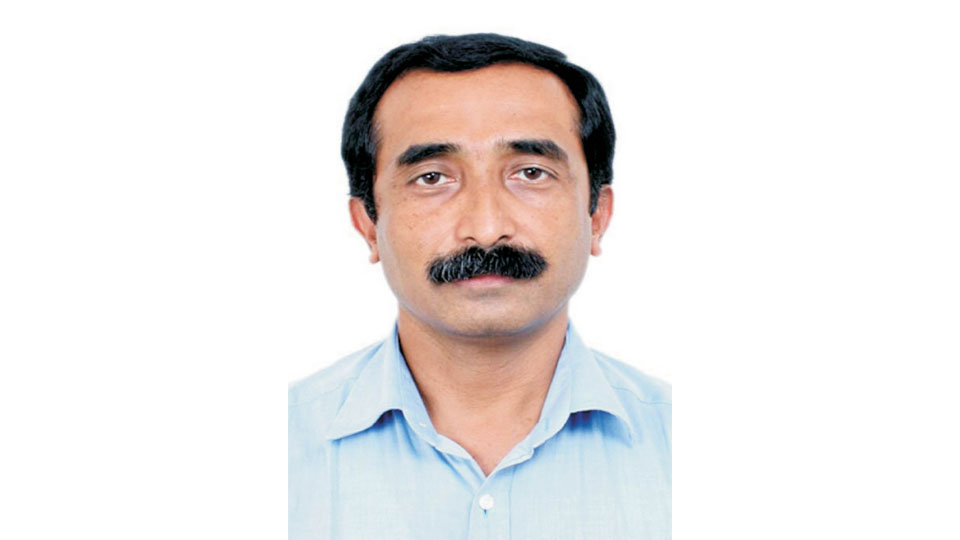
The computer classes are held once a week at the digital library in the village and witnesses enthusiastic participation from the kids. “Every panchayat makes plans for the development of the roads and other infrastructure work. However, I looked forward to doing something for the rural kids,” shared Mukkatira Ritesh Biddappa, Grama Panchayat member of K Badaga village.
With the support from the Panchayat PDO and other members, he drew a plan to start computer classes for the kids from economically backward classes in the area. “The panchayat is equipped with a digital library and the classes began here two weeks ago. I take classes on computer basics every Saturday,” he explained.
Since the area has many kids from the backward classes and tribal community, classes on computers have become a boon to these kids. Currently, Ritesh is taking classes for sixth and seventh grade government school students in the village. “After six months of basic training, I will involve another batch of students and this will continue,” he confirmed.
While Ritesh was working in a finance company in a city, he moved back to his hometown to do some social service. “Grama Panchayats must not be constrained to just infrastructure work. There are several other initiatives that can be thought through, keeping in mind the needs of the people,” concluded Ritesh.
source: http://www.edexlive.com / The New Indian Express, Edex Live / Home> News / by N Dhamotharan, Edex Live / April 04th, 2022
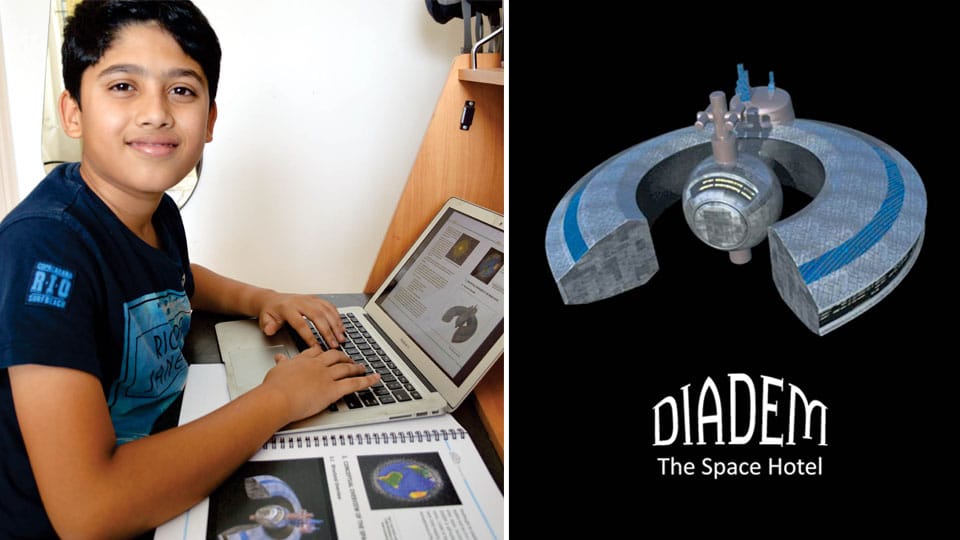
Mukkatira Neerav Aiyappa, a Class 7 student of National Public School International (NPSI), Mysuru, who participated in the Annual Space Settlement Contest, has bagged the first place in Grade 7 Category for his proposal of a Space Hotel ‘DIADEM.’
He presented a design of the Space Hotel in the orbital space settlement LEO (Lower Earth Orbit) at the contest jointly organised by National Aeronautics and Space Administration (NASA) Ames Research Centre, San Jose State University and the National Space Society (NSS).
This international competition invited all students around the world up to 12th Grade to participate in its 2018 edition.
Neerav will receive a NASA certificate and has been invited to attend the NSS 37th Annual International Space Development Conference to be held at Sheraton Gateway Hotel in Los Angeles, California, USA, from May 24 to May 27, 2018 for a poster and oral presentation of his winning proposal. His project and ideas will be used by NASA for its future space programmes.
Speaking to Star of Mysore, Neerav, who has been working on the project since 11 months, said that among various forms of tourism like eco-tourism, nautical tourism, wellness tourism and medical tourism, a new concept has emerged in the form of space tourism, kindling interest to explore various destinations. Rather than seeing comets, planets, and constellations on a telescope, space tourism provides a privilege of experiencing first-hand the beauty of comets, asteroids, stars and planets, he added.
Space tourism will not only provide new vacation experience but create a new view to the earth, transforming the thoughts and perception among humans socially, culturally and emotionally, inspire new careers for the generation of engineers and will open newer fields for research in space medicine, nanotechnology, physical sciences and others, he said.
Through his project, Neerav has created a ‘Space Hotel’ providing space tourists a unique experience of a lifetime and enrich space and its potentials. “My project aims to create a ‘wow’ factor in the field of travel, provides job opportunities, ability to renew space exploration and research, explores possibility of hypersonic travel and have a newer perspective of earth,” he said.
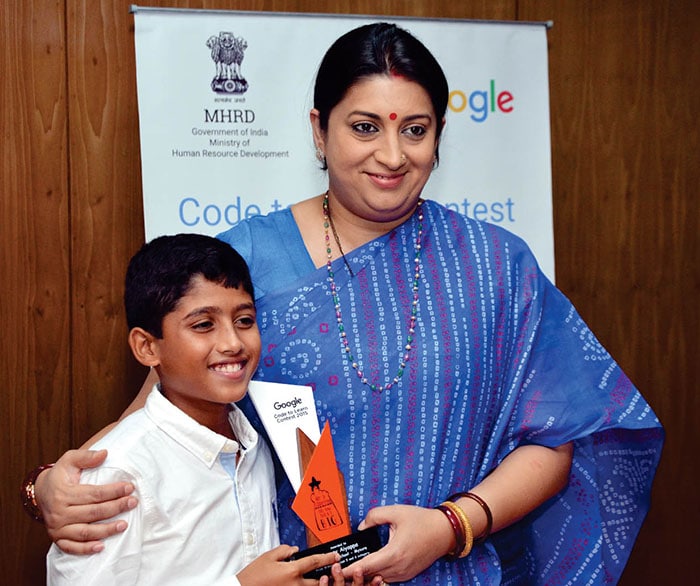
A file photo of the then Union Human Resource Development (HRD) Minister Smriti Irani felicitating Mysuru boy Neerav Aiyappa for winning Google India Code to Learn 2015 Contest.
In his project, Neerav has detailed out the concept of the space hotel, life support system, logistics of the space hotel, economy and time-line, space laws and code of ethics.
Neerav had won the Google India Code to Learn 2015 Contest where he created a game software project using “Scratch” programming called “Wings Over Waves.” The then Union HRD Minister Smriti Irani felicitated him under Rashtriya Avishkar Abhiyaan.
He was a finalist at RYSI Award (Raman Award) held on Mar. 5, 2018 at Panchavati (Sir C.V. Raman’s residence) in Bengaluru where he demonstrated the principle fluid and thermodynamics in intermediate category with a working model.
Neerav is the son of Mukkatira Muthanna and Kavery, residents of Yadavagiri and grandson of Mukkatira Gappu – Janaki of Ponnampet and Guddanda Nanda – Kanthy of Virajpet.
source: http://www.starofmysore.com / Star of Mysore / Home> News / March 27th, 2018
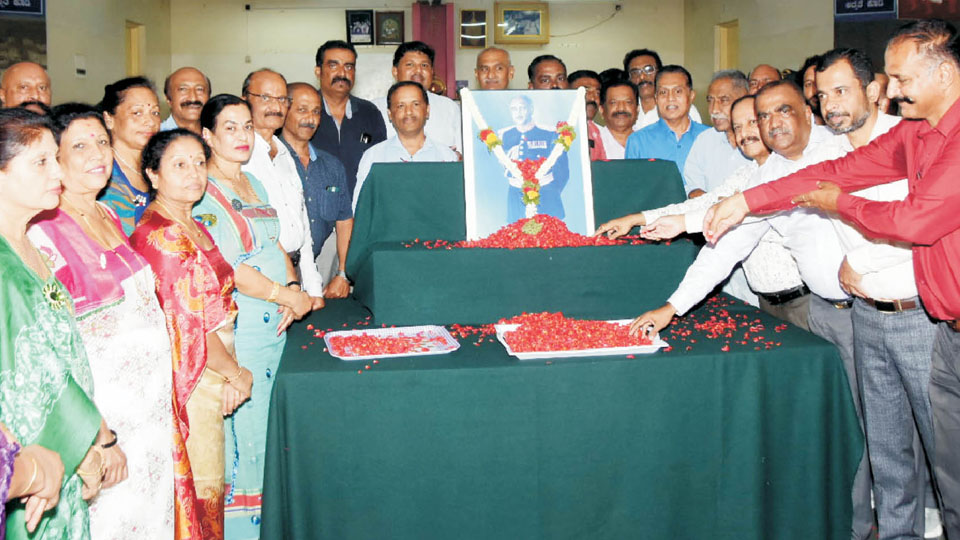
The Management of Kodava Samaja, Mysuru, celebrated the 116th birth anniversary of late General K.S. Thimayya at the Samaja premises in Vijayanagar this morning.
Picture : (L to R) Mechanda M. Shashi Ponnappa, Samaja President; Malachira M. Ponnappa, Samaja Vice-President; Kuttimada D. Muthappa, President of Kodava Samaja Cultural and Sports Club and Machimada P. Nanaiah, Samaja Hon. Treasurer, offering floral tributes to the portrait of the late General. Ponjanda Lovely Appaiah, President of Shri Kaveri Kodagu Mahila Sangha, Appanderanda Tara Somaiah, Samaja Joint Secretary, Mukkatira B. Jeevan, Samaja Hon. Secretary and others were present.
source: http://www.starofmysore.com / Star of Mysore / Home> Photo News / March 31st, 2022
The keeper-batsman skippered South Zone and Tamil Nadu
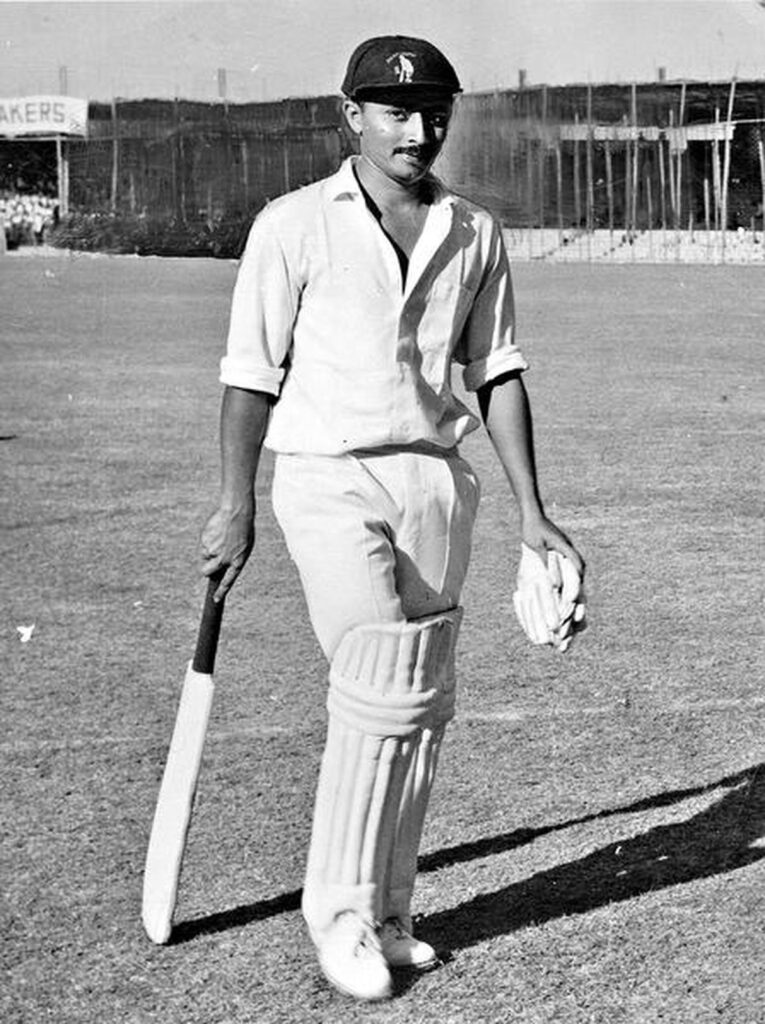
Former Tamil Nadu and South Zone captain P.K. Belliappa passed away in Bengaluru on Wednesday morning. He was 79 and is survived by his wife, a son and a daughter.
Belliappa, who made his debut for Tamil Nadu (then Madras) in 1959, played 94 First Class matches till 1974.
An opening batsman and a wicket-keeper, he made 4061 runs at an average of 29.42 with a highest score of 141 and had 93 catches and 46 stumpings to his credit.
Former India leg-spinner V.V. Kumar said “I played with him for close to 20 years and he was a great captain in the 60s. Under him we really did well in various tournaments. He was a gritty opening batsman and very good ’keeper who gave valuable inputs to the bowler as well. He was a self-made cricketer and off-the field, the heart and soul of any party.”
Another contemporary, former TN fast bowler B. Kalayanasundaram, remarked “he was my captain when I made my debut in Ranji Trophy and someone who always encouraged players. Once played me in an inter-district match when I was not well and made me bowl just five overs before allowing me to take rest, so that he could then pick me for the State side.”
“I knew him from my younger days as we were neighbours in Harrington Road and used to play with a golf ball. He was a very pleasant person and incidentally, I made my debut in his last Ranji Trophy match,” said former India wicketkeeper Bharat Reddy.
The TNCA president and members condoled the demise of Belliappa in a statement. His last rites will be held in his native place Coorg.
source: http://www.thehindu.com / The Hindu / Home> Sport> Cricket / by Staff Reporter / Chennai – February 19th, 2020
Works are in full swing to set up the third Elephant Camp in Kodagu at Harangi. The State Government has released Rs. 50 lakh for the project that is expected to ease the burden of the existing elephant camps.
Already, Kodagu has two elephant camps, one at Dubare and another at Mathigodu near Anechowkur Gate that borders Mysuru. There are eight elephant camps in Karnataka including the two in Kodagu and the Harangi Camp will be the ninth in the State.
The eight jumbo camps house more than 100 tamed elephants that are used to rescue wild animals and for logging purposes at Government timber depots. The new elephant camp is expected to reduce the burden on the nearby Dubare Elephant Camp, which currently has over 31 elephants, the highest in the State.
90 percent works complete
Over 90 percent of the works have been completed at the Harangi Elephant Camp and interestingly, the Camp houses a Tree Park, also in the same vicinity. From 2017 till 2021-22 Rs.1.38 crore has been released by the Government and works are on to create the Tree Park.
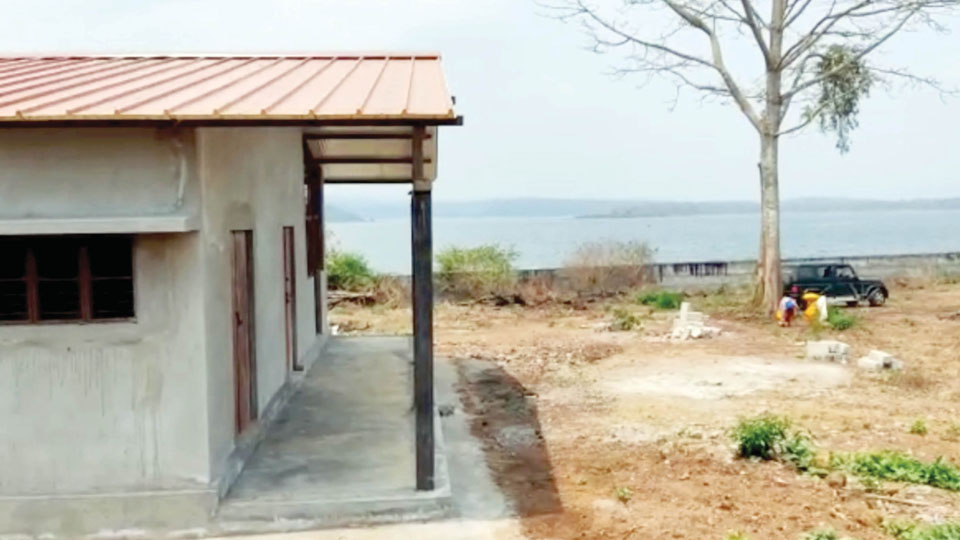
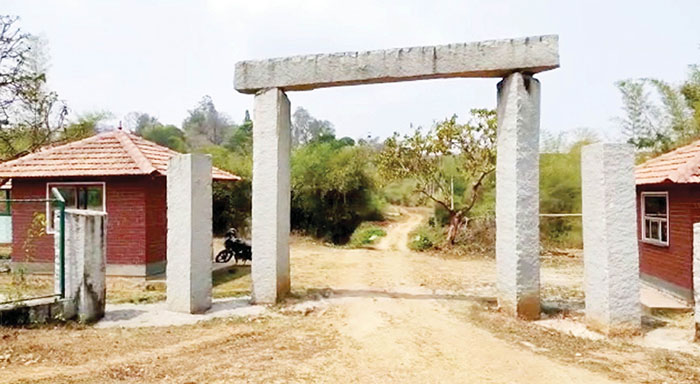
The Forest Department is establishing the elephant camp in a 40-acre land at Athur Reserve Forest beside Harangi Reservoir in Kushalnagar Taluk. The place, located near the Harangi Dam backwaters, is ideal to set up the elephant camp. The camp per se is eight to 20 acres. The Athur Range Forest extends up to 2,000 acres and it is an ideal elephant habitat with plenty of water and green swathes.
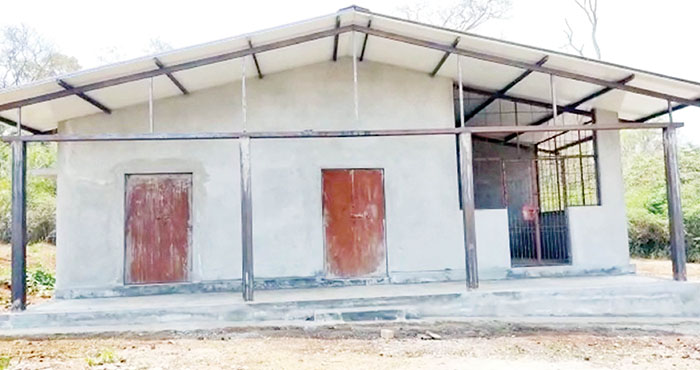
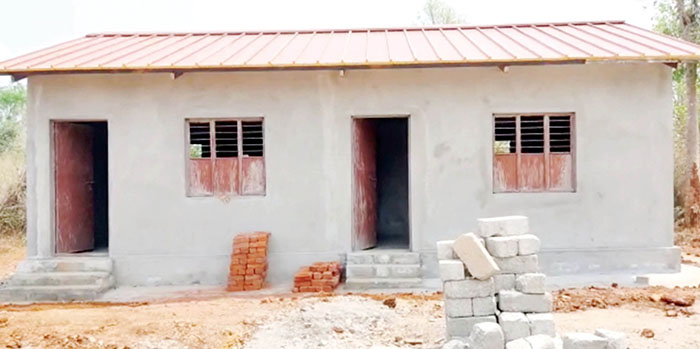
Four houses have been constructed for the mahouts and their families to stay, a vast kitchen has been constructed to prepare food for the elephants and store rooms has also been constructed. Basic facilities including toilets have been constructed for tourists who come there.
Abundant water source
Borewells have been sunk to provide a steady stream of water and as the land comes near the Harangi Dam backwaters, there is no shortage of groundwater. Electricity works are on now at the camp and enough care is being taken to ensure that the forest area is not damaged while erecting the power poles and when the power lines are drawn.
The funds for the camp have been released from Compensatory Afforestation Fund Management and Planning Authority (CAMPA). Apart from setting up a new elephant camp, there are plans to initiate other related development programmes including developing the camp as a tourist centre and at the same time provide shelter to the elephants.
Other tourism projects
The Government has also plans to closely develop Cauvery Nisargadhama in Kushalnagar and together with the new elephant camp in the region, the initiatives are set to boost eco-tourism activities.
Kushalnagar Range Forest Officer J. Ananya Kumar told Star of Mysore that once the Harangi Elephant Camp works are completed, five elephants will be shifted from Dubare Elephant Camp to immediately ease the burden. Later, 15 more jumbos will be shifted in phases. Appointment of staff and doctors will be decided by the State Government.
Among the State Government plans to improve tourism in Harangi are water sports on behalf of Jungle Lodges and Resorts, Jet Ski and para-sailing. The Kodagu District Administration is weighing various options for tourism promotion once the Harangi Elephant Camp is fully established.
source: http://www.starofmysore.com / Star of Mysore / Home> News / March 21st, 2022
M.M. Uthappa has been awarded Ph.D in Faculty of Mechanical Engineering Sciences by the Visvesvaraya Technological University (VTU), Belagavi, for his thesis ‘A study of motivational factors and its impact on project team performance (A study conducted at selected private and public sector companies in India)’ submitted under the guidance of Dr. A.N. Santosh Kumar.
Macharanda Madappa Uthappa is a Mechanical Engineer graduated from BMS College of Engineering, Bengaluru and earned his post-graduation — Master of Technology (M.Tech) and Master of Engineering Management (MEM) from VTU. He received his Doctorate during VTU’s 21st Annual Convocation held on Mar. 10 at Belagavi.
Uthappa is a Chartered Engineer (C Engg) and also an elected Fellow Member of Institution of Engineers India (FIE).
He started his career with Tata Group and after a 25-year corporate service till 2015 in various capacities, he quit the job in 2015 and registered as Full Time Research Scholar at VTU’s Research Centre in Sri Jayachamarajendra College of Engineering (SJCE), Mysuru.
Also a folk singer and lyricist, Uthappa has translated many Kannada devotional songs to Kodava paaje.
source: http://www.starofmysore.com / Star of Mysore / Home> News / March 17th, 2022
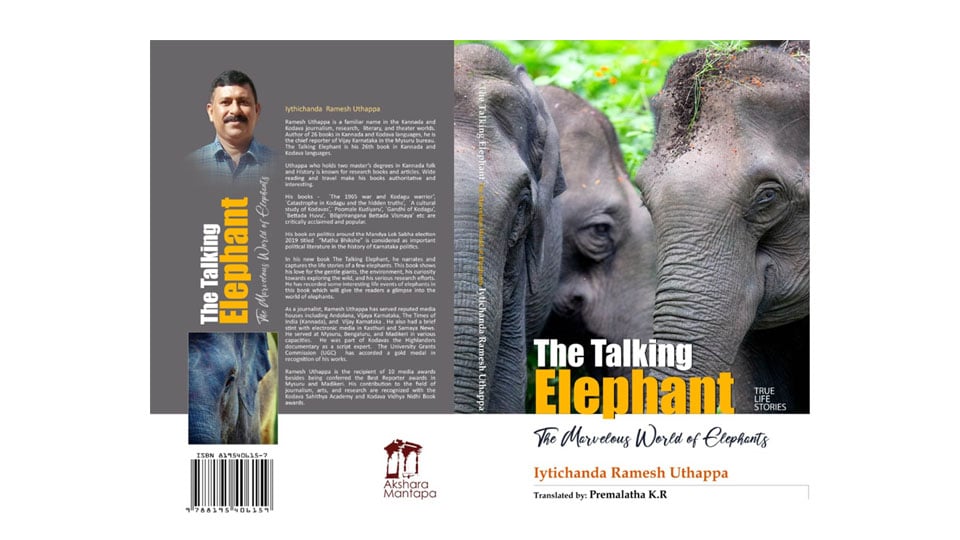
Journalist Ithichanda Ramesh Uthappa’s four books focusing on the mysteries of the elephant world will be released at a programme jointly organised by KSOU, Karnataka Forest Department, Wildlife Conservation Foundation and Bengaluru’s Akshara Mantapa Prakashana, at KSOU’s Cauvery auditorium in Mukthagangothri campus here at 3 pm on Oct.4.
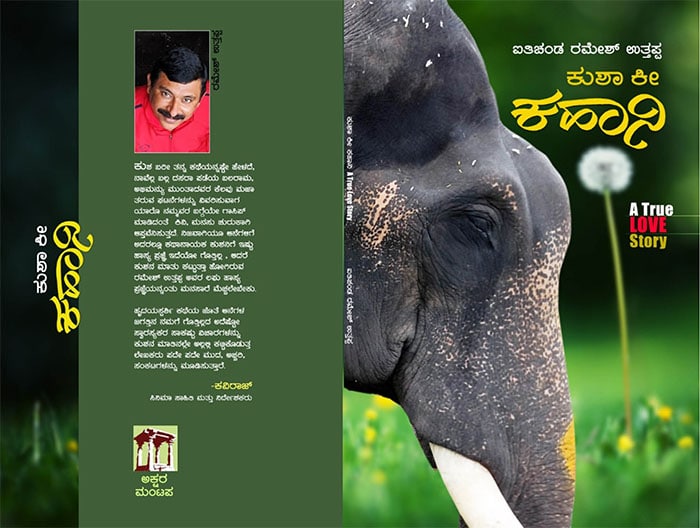
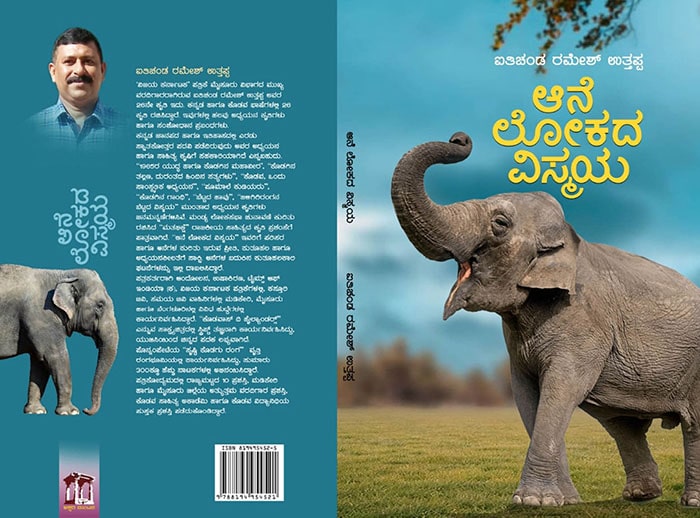
The books to be released are: Abhimanyu the Great, Kusha Ki Kahani – A True Love Story, Aane Lokada Vismaya and its English translation The Talking Elephant.
KSOU Vice-Chancellor Prof. S. Vidyashankar will inaugurate the programme. PCCF (Wildlife) Vijaykumar Gogi will deliver the keynote address. MP Pratap Simha, Mysuru CCF T. Heeralal, Chamarajanagar CCF Manojkumar and Wildlife Conservation Foundation’s Rajkumar Urs will release the books.
Karnataka State Wildlife Board Member and journalist Vinod Kumar Nayak will speak on the books. Golden Howdah carrying elephant Abhimanyu’s Mahout Vasanth and Photo-journalist Nagesh Panathale will be felicitated by MCDCC Bank President G.D. Harish Gowda on the occasion.
Abhimanyu the Great is about howdah elephant Abhimanyu’s traits and about the bonding between humans and elephants. The book also focuses on the special relationship that Abhimanyu has with his Mahout.
Kusha Ki Kahani’ is about the ‘love life’ of Dubare elephant camp member Kusha. The foreword for the book is written by Cinema Director Kaviraj, who is also known as a ‘romantic poet.’ Many in the cinema world believe that this book can become a story for films.
Aane Lokada Vismaya is about the individual success stories of many elephants that have earned global fame for their extraordinary acts. The Talking Elephant is the English version of Kannada work Aane Lokada Vismaya, which has been translated by writer K.R. Premalatha.
source: http://www.starofmysore.com / Star of Mysore / Home> News / October 02nd, 2021
Field Marshal K M Cariappa and General K S Thimayya, both from Kodagu, broke down several barriers for Indians in the army.
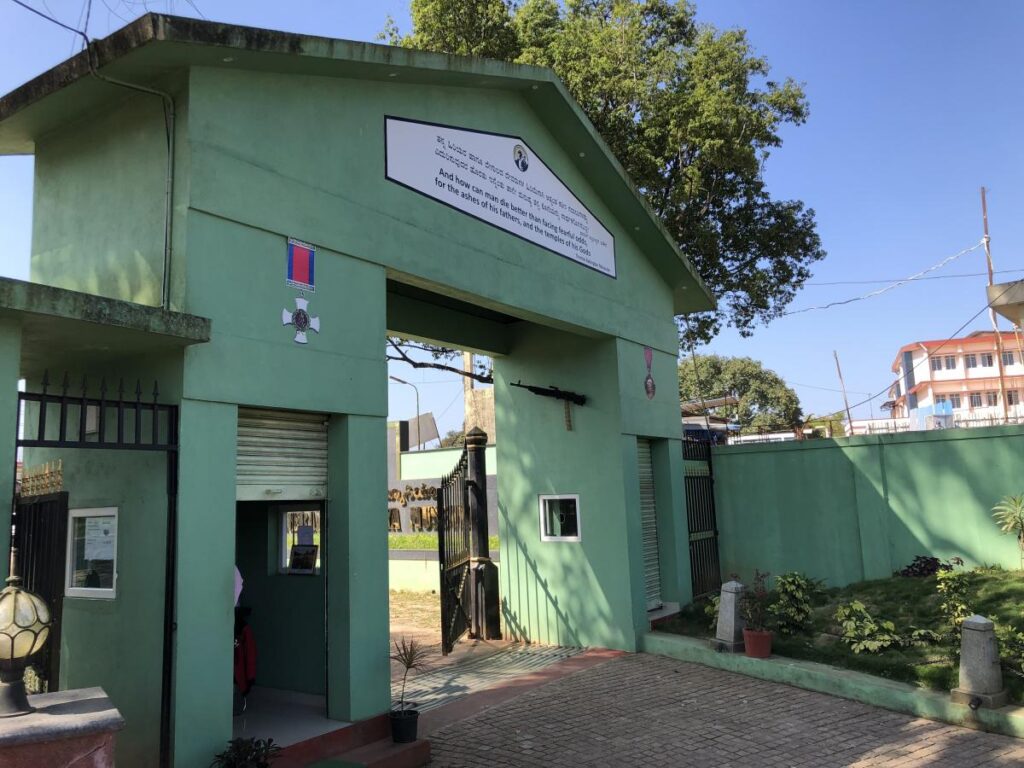
The entrance to the General Thimayya museum. Photos by author
The General Thimayya Memorial Museum commemorates the life of the Indian General and is meant to inspire the younger generation to join the armed forces.
The museum was originally called Sunnyside and was the family home of Gen Thimayya. But not many people know that it was his mother Cheppudira Cheethavva (aka Seethamma) who inherited the house from her father.
Thimayya’s two brothers went on to serve in the army as well. Thimayya himself had a four-decade-long career in the armed forces from 1921 to 1961. A distinguished combat officer, he saw action in the Second World War, then in the 1948 war against Pakistan and went on to serve as Army Chief from 1957 to 1961.
After his retirement, he was sent on a peacekeeping mission to Cyprus, where he passed away in 1964.
But his illustrious career in the armed forces could have turned out differently. At one point, as a young lieutenant, he wanted to quit the army and join the Indian freedom movement, but was dissuaded from doing so by the Motilal Nehru.
“Nothing will please the British more than your resignation. For 30 years we have fought for Army Indianisation. We are now winning the fight. If you give up, we shall have lost it,” Nehru told him. “We are going to win independence. Perhaps not this year or the next, but sooner than later the British will be driven out. When that happens, India will stand alone. We will have no one to protect us but ourselves. It is then that our survival will depend upon men like you.”
Nehru’s prescient words led Thimayya to stay on in the army. The rest is history, and is on display at Thimayya’s family home.
For some years, the Sunnyside House served as the RTO office in Madikeri. This was until the Field Marshal K M Cariappa and General Thimayya Forum, whose president Col (retired) Kandrathanda C Subbaiah and convener Major (retired) Biddanda Nanda Nanjappa renovated and converted it into a museum.
This museum is spread over 2.6 acres and located on G T Road in Mahadevpet in Madikeri, and was inaugurated in February 2021 by the President of India Ram Nath Kovind.
An old-style building, many rooms in the house have been dedicated to various members of Thimayya’s family. One room has been dedicated to General Thimayya’s wife Codanda Nina. Another room is dedicated to Thimayya’s brother Freddie, the painter, while a third has been dedicated to General Thimayya’s home regiment, the Kumaon.
One room also displays Kodava culture: there is a Kuppya Chele (traditional male costume) on display accompanied by a hand-wound, Pani-katt, white turban.
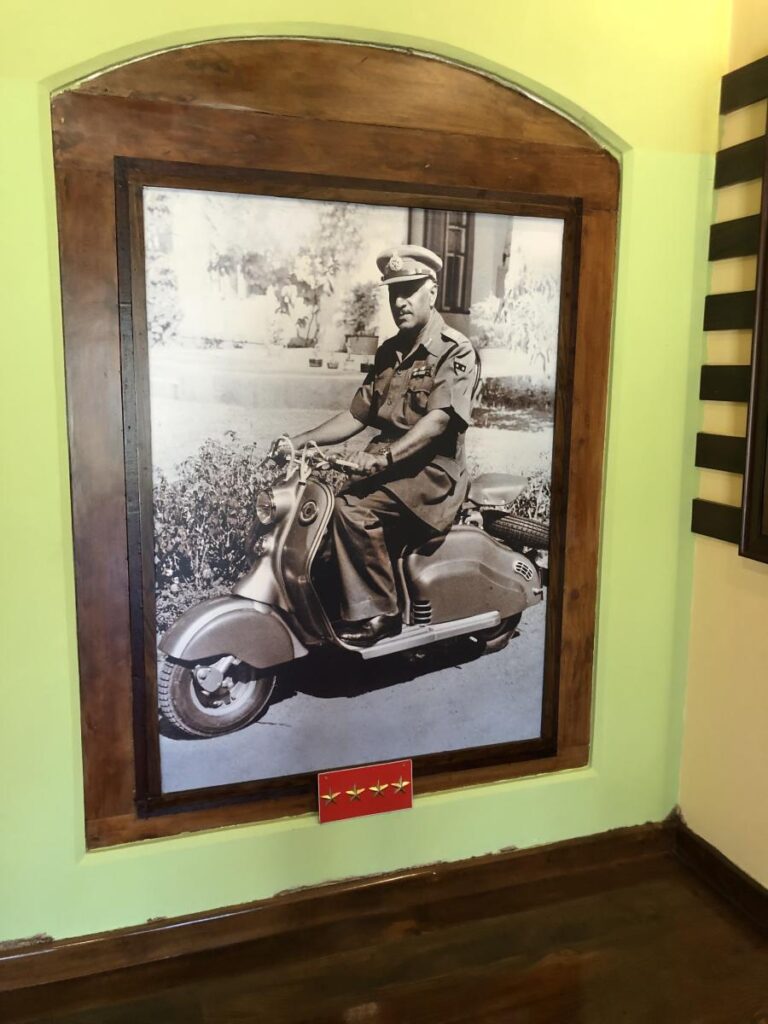
The house itself has several pictures from Thimayya’s life, along with a video film. There is a famous photo of the General riding a Lambretta scooter. There are also pictures of Thimayya during his wedding.
A photo of the General on his scooter at the museum. Photos by author
Besides this, a replica of his uniform and medals are on display.
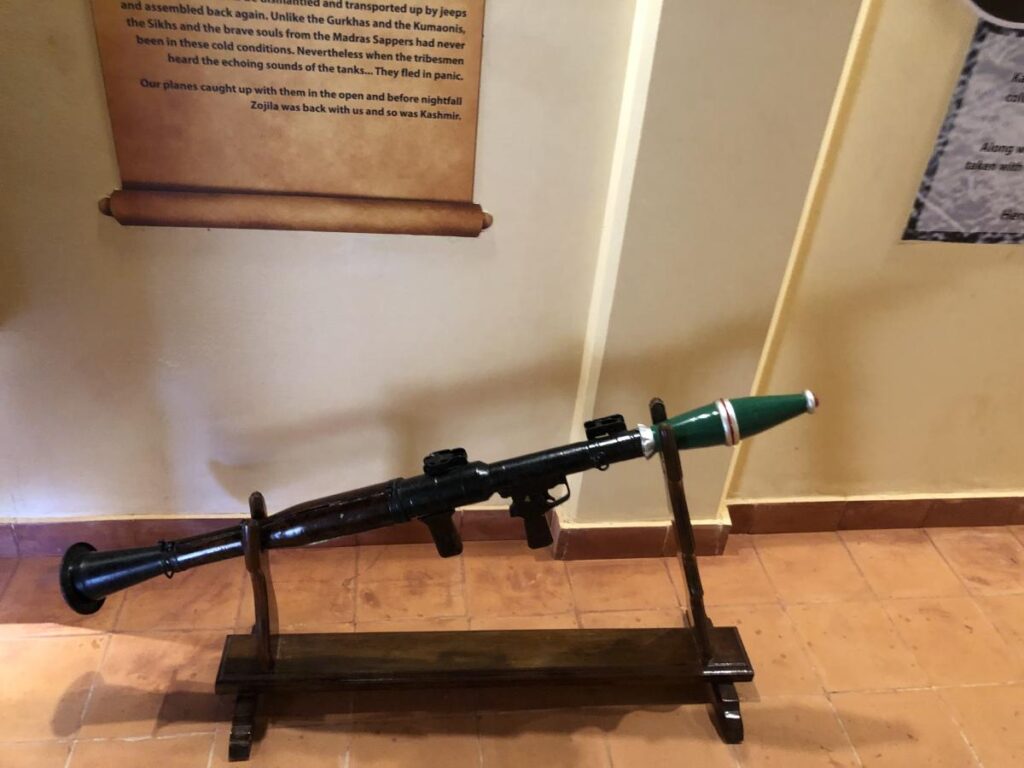
The museum also houses 24 weapons donated by General Bipin Rawat.
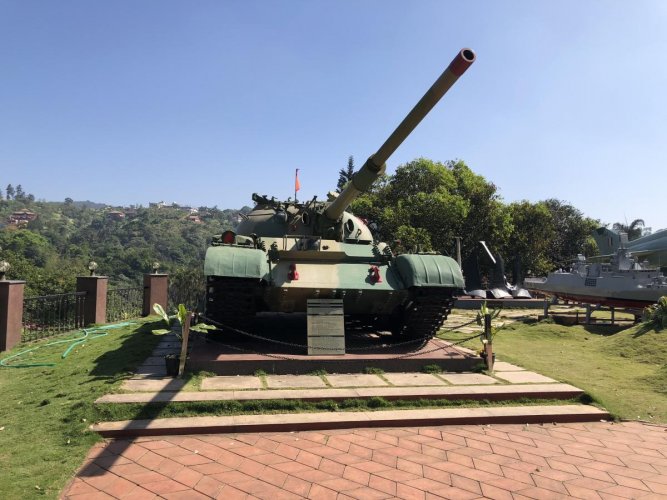
Outside the house, near the entrance, stands a battle tank called Himmath, donated by the Army training centre in Pune, a decommissioned MIG21 supersonic fighter jet and interceptor aircraft, a 24-feet INS Shivalik ship model, a Sindhughosh submarine and a Navy gun mount (anti-aircraft gun).
A rocket launcher is just one of the many weapons on display at the museum. Photos by author
Both the tank and the jet were used during the 1971 war.
source: http://www.deccanherald.com / Deccan Herald / Home> Spectrum / by Mookonda Kushapallpa / DHNS / March 19th, 2022
Veteran Indian drag-flicker and former Olympian V.R. Raghunath from Kodagu has been appointed as the Hockey India Selection Committee Member.
Raghunath is one in a long line of illustrious hockey players from Kodagu, one of the nurseries of Indian hockey in the country. He made his first foray into the national side with the 2003 Sub-Junior Asia Cup in Dhaka, which India won.
Raghunath made headlines for the first time when he was drafted into the national side at the 2006 World Cup. Raghunath is a good drag flicker and has scored many beautiful goals for India at the crucial moments.
He played almost all the senior events in 2007 and 2008 and went on to play for a decade more. He got Arjuna in 2016 and retired from international hockey after the Rio Olympics.
Harbinder Singh is the Chairman of the Selection Committee (men) while Syed Ali is the Chairman of the Selection Committee (women). Mohammad Riaz, Dr. Dilip Tirkey, Dr. R.P. Singh, Rajnish Mishra, Sardar Singh, Joydeep Kaur, Asunta Lakra and Surinder Kaur are other members.
source: http://www.starofmysore.com / Star of Mysore / Home> News / March 16th, 2022
The Dry waste Collection Centre at Ponnampet Grama Panchayat, with collection from all the wards, became operational in January 2019. Pic courtesy: Clean Coorg Initiative
There is something about a hill vacation, travelling across narrow winding roads upwards, landscape dotted with lush green terrain, tantalising water streams, foggy foothills, chirping birds, the buzzing sounds of insects and clean air. But now, contrast this with unsightly scenes of rubbish by the roadside — styrofoam, plastic wrappers, bags and bottles, and more. The garbage keeps growing, competing with the hills, and becomes a monstrous man-made mountain in the midst of a landfill, laden with grotesque man-made objects that speak volumes about our use-and-throw culture and our complete lack of consideration for the environment.
Coorg, nestled in the Western Ghats, also known as the Scotland of India, and a popular tourist destination has, however, managed to make significant progress in fighting the waste menace. The town has demonstrated their commitment towards zero waste, with the closure of two landfills.
“Zero waste” is a concept that entails minimum or zero pollution to land, water and air due to solid waste management (SWM) practices and zero waste going to landfills. This initiative was a collaborative initiative by the volunteers of Clean Coorg Initiative, Hasiru Dala, the Gram Panchayat and the local government.
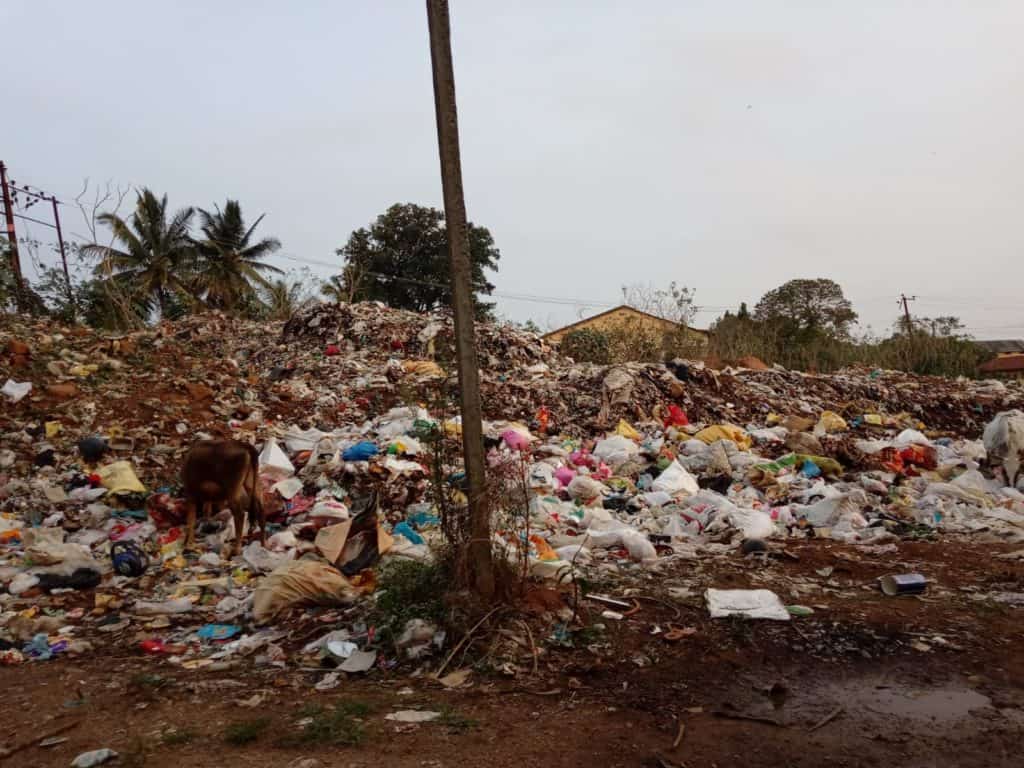
The 30-year old Ponnampet landfill as it stood in 2019. It would burn most of the time, the dump going down to nearly 40 feet./ Pic courtesy: Clean Coorg Initiative
How it all started
Alarmed that Coorg could soon degenerate into a dumping ground, in 2016, Prashanth Chinnappa, a local resident of Coorg brought several like-minded people together, to form ‘The Clean Coorg Initiative (CCI),’ a voluntary platform to promote a clean and healthy Coorg, with a core focus on promoting segregation of waste at source.
According to Pooja Uthappa, Volunteer at the Clean Coorg Initiative, “Waste is a relatively new phenomenon in this landscape. With rapid urbanisation, the quantum of garbage is also rapidly increasing. The other concern is around waste disposal practices. Dumping in one area or on the sides of the road and open air burning are common practices. Unfortunately some of the dumping areas are in the fringes of the forest areas, and the wild animals unknowingly consume them (the garbage dumped).”
Pooja also points out that Coorg residents depend primarily on groundwater; so when waste is dumped in open lands/ dumping grounds or landfills, it eventually contaminates water sources. But that’s not all. “Talakeveri, in Kodagu district, is considered the source of the river Cauvery and is an important lifeline for inhabitants in Karnataka and Tamil Nadu; incidents of indiscriminate garbage dumping adds to the problem downstream,” she says.
Pavan Aiyappa, Volunteer, CCI says, “We have a simple mission, which is to preserve the fragile ecology of Coorg for future generations, adopt sustainable initiatives, manage waste, promote responsible tourism, and preserve our natural resources”.
The group soon realised that clean up drives were a temporary solution, with no place for disposal of the litter collected, and that systemic changes were needed, along with on ground awareness. They started by undertaking a survey, observing practices, existing infrastructure and dumping spots. Savita Chengappa*, a volunteer from CCI, says, “We surveyed the entire stretch, till the Kerala border and we realised that we need somebody on the ground, who could go to the gram panchayat, create awareness and build capacities of the local team, using the Solid Waste Management (SWM) Rules 2016 framework. We also had to envision and plan the concept of stream-based processing of waste.”
The team also wanted to build on the success of Dry Waste Collection Centres (DWCCs) in Bengaluru, and wanted to understand the workings of the same in a rural set-up. Aparna, another active volunteer with CCI, says, “For us, all these were still theoretical and we needed to put these concepts into practice.”
Partnerships and initiatives
The group then decided to collaborate with the government and other organisations and approached Hasiru Dala, a social impact organisation working with waste pickers to assist with onground implementation and solutions.
Nalini Shekar, Co-founder Hasiru Dala, says, “Initially we were happy to support the group with necessary IEC and training, but soon realised that Coorg has a unique challenge, given its terrain. It has a large tourist footfall and considering the floating population, it is challenging to ensure that information and education programmes reach all of them. Secondly, while collection happens, there is no recycling industry in the area. Thirdly, there are limited workers in the solid waste management space, as most workers are employed in the coffee estates, agriculture and the tourism industry.” But given their expertise in dry waste management, it appeared that a system could indeed be put in place.
Pooja says, “Our first priority was capacity building for the municipal workers, the ASHA workers, the Self Help Groups (SHGs) and the officers, towards implementation of decentralised waste management. The training included the concepts of segregation of waste at source, the management of DWCCs, roles and responsibilities of officers, management of reject waste. For the general public, the sessions focussed on responsible disposal of waste through segregation at source.”
She shares that the group also conducted several outreach programmes like clean up drives, cycling awareness, sustainable menstruation and reached out to schools. CCI volunteers, in partnership with Wasteless Auroville, introduced a subject titled ‘Garbology’ as part of the school curriculum in Deviah memorial Preparatory School, Bittangala. Their outreach programme touched more than 800 government school children and teachers.**
CCI also hosted a Parivarthana Mela, to showcase sustainable lifestyle practices. This included composting workshops.
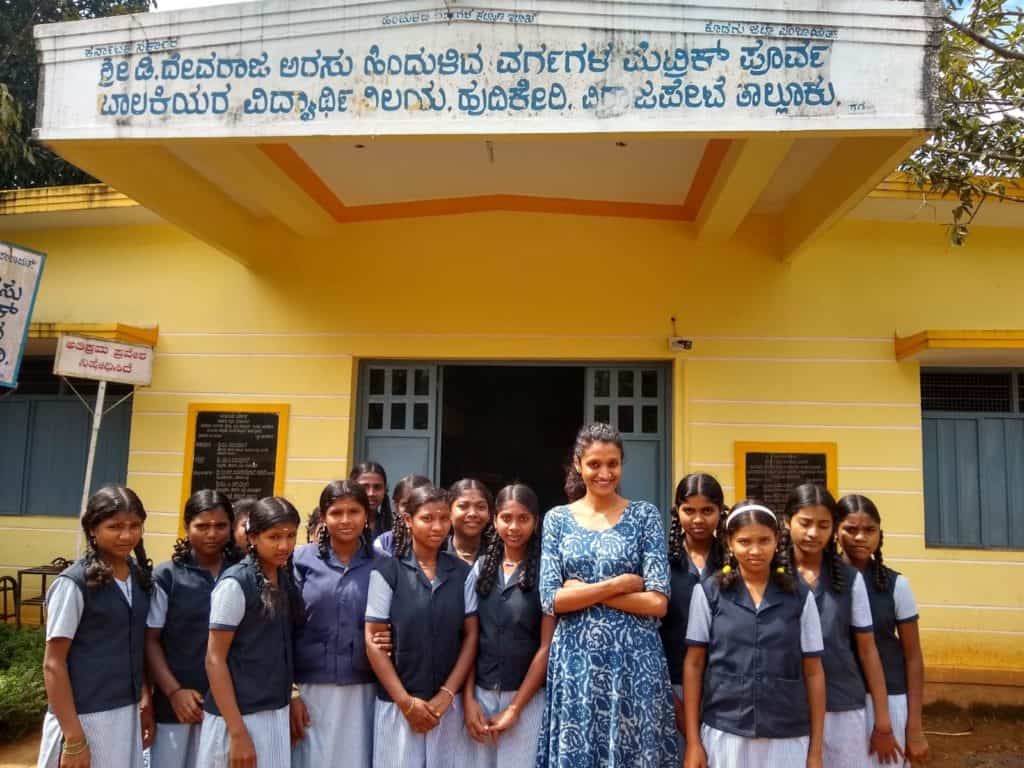
Awareness programmes were held in several schools in the region. Pic courtesy: Clean Coorg Initiative
Besides working on door-to-door awareness programmes, the team reached out to shopkeepers and explained the system of fines for non compliance. Pooja acknowledges the contribution of Kodava Koota from the United States of America, for supporting the outreach programmes.
Closing the landfills
The group then went on to streamline and simplify the waste collection process and a Dry Waste Collection Centre was set up. Puttaraju, Panchayat Development Officer ( PDO), Ponnampet who worked towards the closure of Ponnampet landfill shares, “After CCI and Hasiru Dala’s intervention, we felt the need for a decentralised set up and a DWCC. We zeroed in on the location and approached the Zilla Panchayat for permissions. They were very supportive and passed a resolution for the construction of the DWCC.”
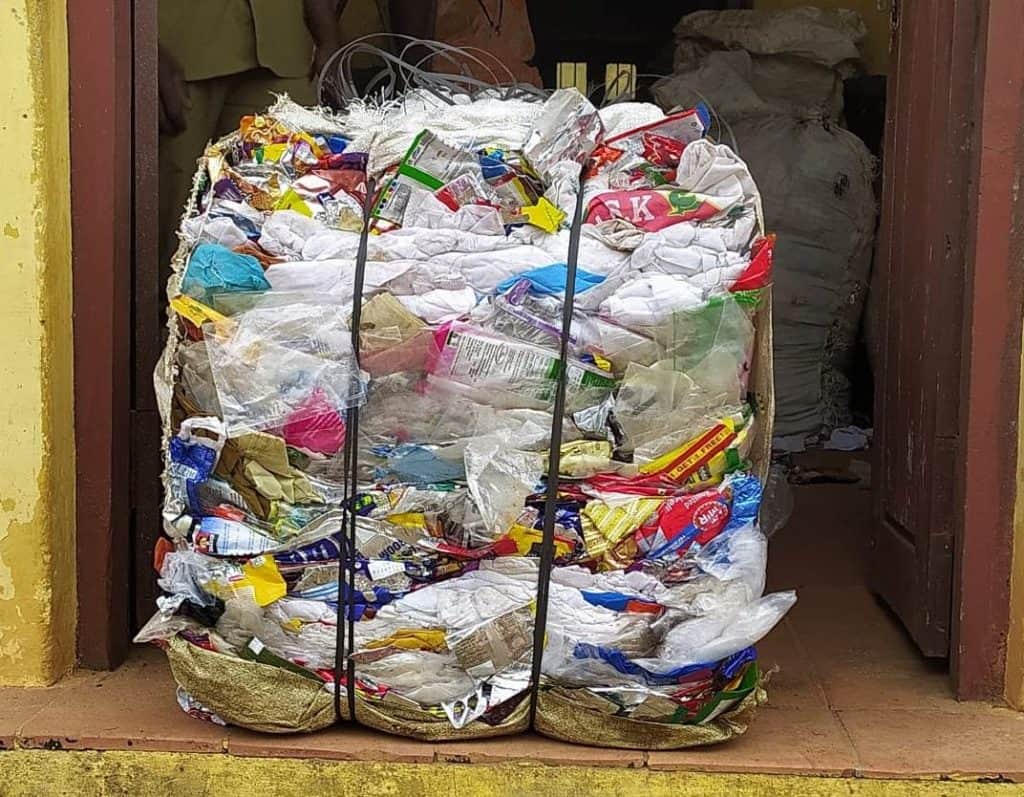
Hasiru Dala team also came up with a simple manual bailing system, which was then given to different GPs and this ensured that low value and multilayer waste could be sent for co-processing. Aparna, Volunteer CCI adds, “This process, then led to the natural question, do we really need dumping grounds or landfills?”
Aiyappa adds, “The rationale was much more than aesthetic beauty. We were also concerned about groundwater contamination and leachate from landfills, but also, given that the landfill was 30 years old and the waste was going about 30 feet down, we were also worried about landfill fires.”
The team then approached the GP, who in turn took to the implementation of the Karnataka Plastic Ban. The Panchayat passed a resolution on the plastic ban and introduced the “bring your own bag” concept, drawing in from the 2Bin1Bag concept and imposition of fines for littering, Aiyappa shares that thereafter, they went about methodically working with the GP to close the landfill in two areas, Ponnampet Taluk and Karmadu, Virajpete Taluk.
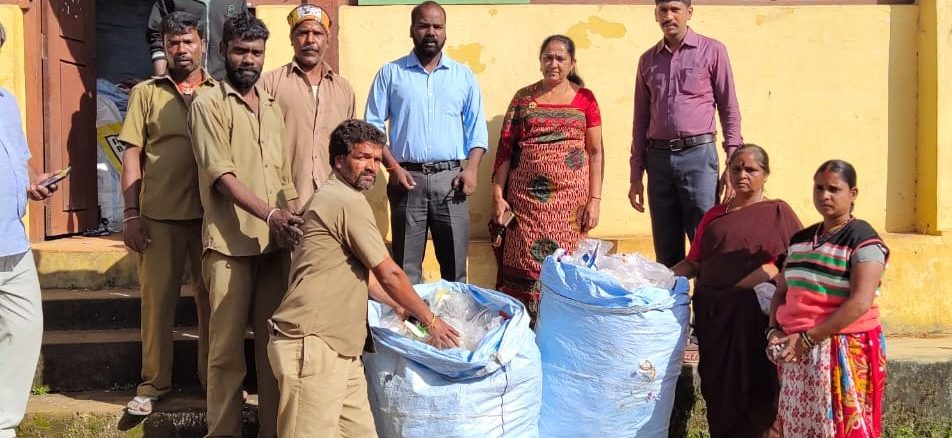
Hasiru Dala introduced Manual Baler to some of the Gram Panchayats in South Coorg, to pack the non-valuable materials through this and save money in transportation. Pic courtesy: Clean Coorg Initiative
Stiff penalties for violation
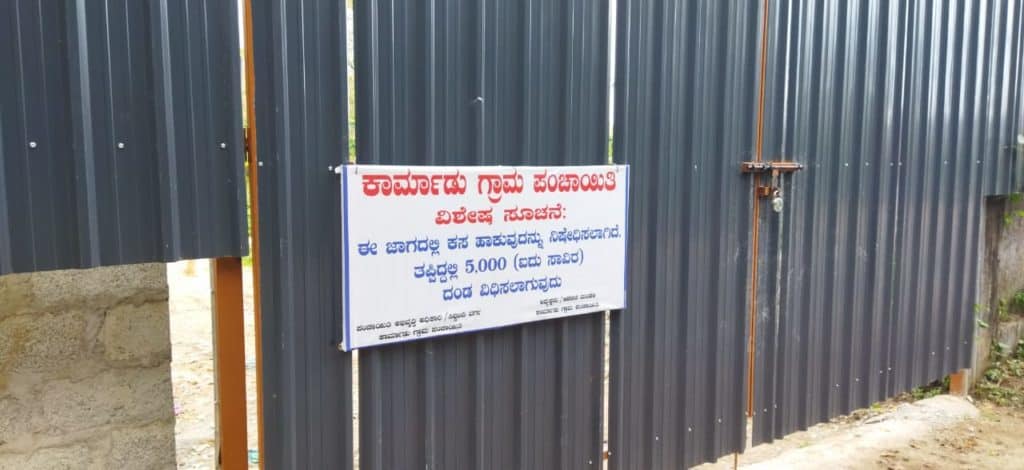
Niren Nannaiah, President, Karmadu Gram Panchayat, adds,“We had various meetings on the need for closure of the landfill. We have cordoned off the area with a metal sheet, installed CCTV cameras and put up a board notifying the penalty for dumping garbage in and around the place. We decided that it was futile to impose nominal fines of a hundred or couple of hundred rupees, so we fixed it at Rs 5000. We have penalised a few people. But that’s not all, we have also issued notifications on the need to use reusables or fibre cutlery at all events, especially marriages and functions.”
Nithin B S, PDO Karmadu, says the closure of the Karmadu landfill involved several stages: first sensitising people, then streamlining collection, seeking support of the elected representatives, passing resolutions and issuing the necessary notifications. But the most important was the imposition of fines.
The cordoned-off Karmadu landfill area. Pic courtesy: Clean Coorg Initiative.
We also made an announcement in the neighbouring gram panchayat that no dumping will be entertained, but they are free to drop segregated waste at our processing or dry waste centre. We spent about three lakh rupees in setting up the entire system, apart from separate investments in the installation of the CCTV camera,” said Nithin B S.
Finally an order was passed to close the landfill. The next question was, what do we do with the landfill site? The team then worked with the GP and proposed a design for a public park.
Mr. Suraj Ajiikutiria, SBM, Virajpet and Ponnampet Taluk, says, “ In order to actualise the vision of Swacch Bharat Abhiyan, we will need to close dumping sites in all 104 villages, plan for decentralised infrastructure and streamline collection just like we did in these Taluks.”
The most important takeaway from these experiences in Coorg is the need for a coming together of all stakeholders and a model that is both socially and environmentally inclusive, and which enables us to proudly proclaim, ‘landfills have no business.’
[The author wishes to acknowledge the contribution of Nirmala Shekar, Beula Anthony, Ramya K and Rohini Malur, for this article. ]
source: http://www.citizenmatters.in / Citizen Matters / Home> Waste Management / by Pinky Chandran / March 16th, 2022
WELCOME. If you like what you see "SUBSCRIBE via EMAIL" to receive FREE regular UPDATES.
Read More »