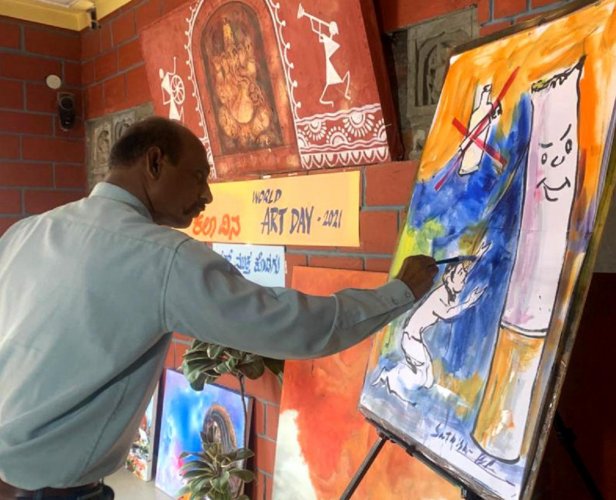
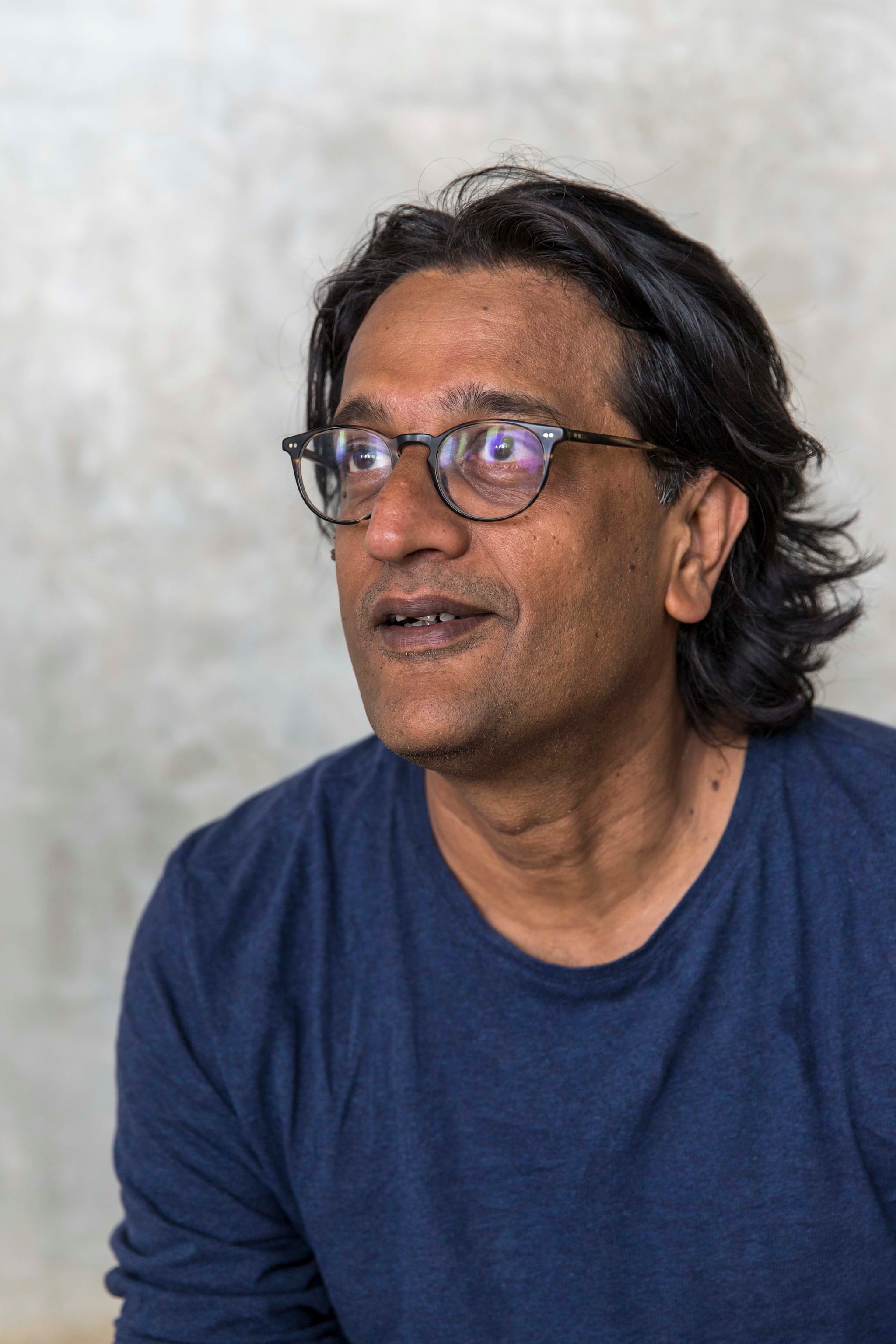
Artist B R Sathish in the Kunchagayana in Virajpet.
To create awareness about the ill effects of narcotic drugs, artist B R Sathish conducted a Kunchagayana programme on social media.
Speaking on the occasion, Kodagu Press Club president Ajjamada Ramesh Kuttappa said that there is a need to fight against the drug menace. Everyone should join hands to create a drug-free Kodagu.
In the Kunchagayana, T D Mohan sang songs while artist B R Sathish made drawings to create awareness.
Janapada Parishat district president Ananthashayana and others were present.
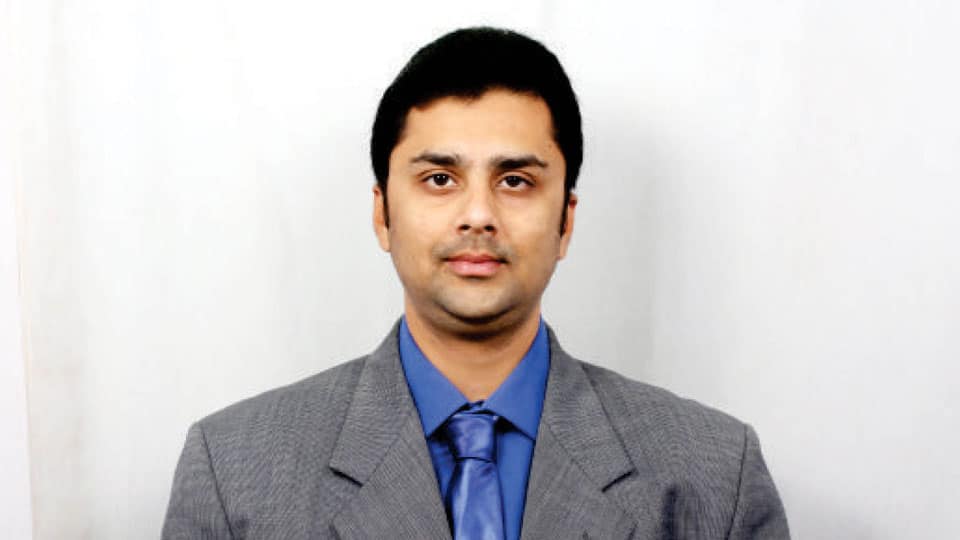
Shravan Manjunath Nagesh, a native of Kodagu, has been appointed as Justice of the Peace (JP) in the State of New South Wales, Australia. He took Oath of Office in Court during February 2021.
After passing the ‘Justice of the Peace’ exam with 100 percent marks, Shravan was nominated by a Member of Parliament (MP) following which the Governor of New South Wales State approved his appointment.
A native of Gonikoppal, Kodagu, 28-year-old Shravan was born to Nagesh Krishna and Deena Nagesh.
As his father was working as a Senior General Manager at a Multi-National Company in Sydney, Australia, Shravan did his basic education at Australia and completed his graduation in Mechanical Engineering at BMS Engineering College in Bengaluru.
His mother Deena is a realtor.
Shravan is the grandson of late B.S. Ganesh Kumar, Joint Director of Agriculture, Mysuru district.
source: http://www.starofmysore.com / Star of Mysore / Home> News / April 15th, 2021
Describing the 37 Coorg Medium Regiment as a matter of ‘pride for Karnataka’, ex-Sergeant of Indian Air Force Mandetira Subramani, who is also the president of VeKare Ex-Servicemen’s Trust (VKET), has emphasised the need to post a few more willing young officers, junior commissioned officers (JCOs) and jawans among Coorgs to the regiment and make it more meaningful.
Representation needed
Even though the regiment uses the insignia of Coorg i.e Odi Kathi and Peeche Kathi, and displays the insignia in sports track suits, besides celebrating the two major festivals Puttari and Kaipodh, it is surprising to note that there is no significant representation of Coorg officers, jawans and JCOs in the regiment as of now, said Mr. Subramani while addressing the recent 9th annual general body meeting of T. Shettigeri Ex-Servicemen Association, Kodagu.
He urged the president of the association Kattera Vishwanath to approach the Chief of Army Staff and request him to post a few willing young officers, JCOs and jawans among Coorgs already serving the army in different artillery regiments to the regiment.
Youth training
He also said the Army recruitment rallies should be held in Kodagu more frequently. He urged the members of the association to motivate and train the youth in Kodagu to join the Indian Army as officers or as combatant soldiers depending on their educational qualification.
source: http://www.thehindu.com / The Hindu / Home> News> States> Karnataka / Mysuru – April 14th, 2021
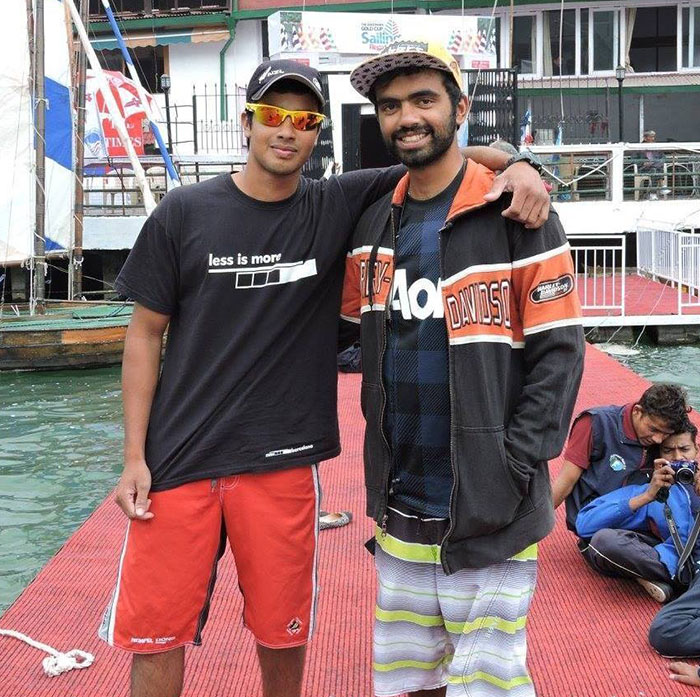
Four sailors from India to compete at this year’s Tokyo Olympics
Mysore/Mysuru:
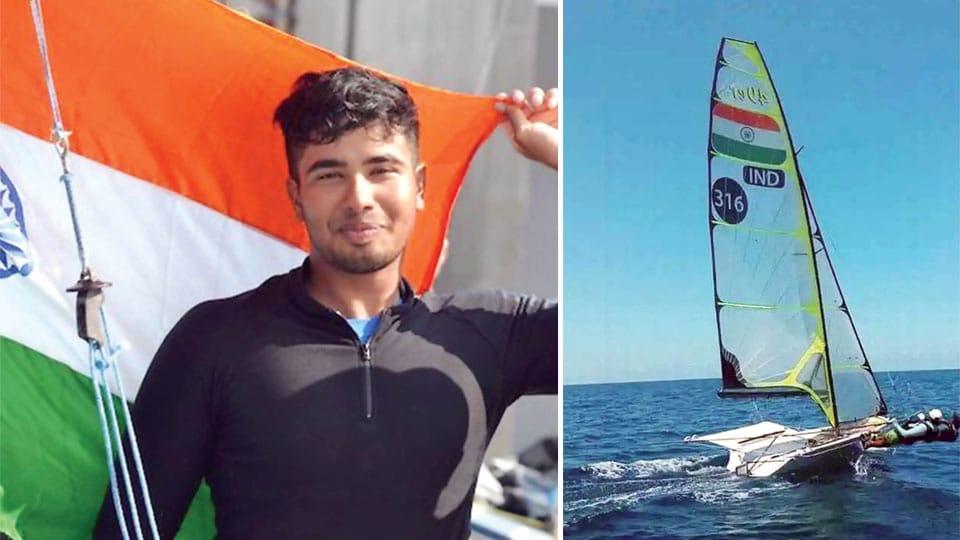
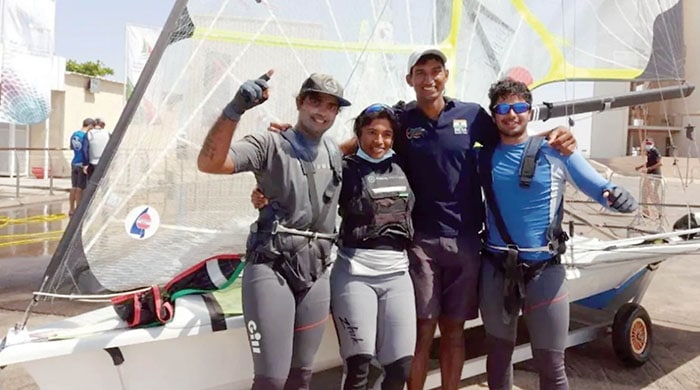
In a historic first for India, four sailors from the country will compete at this year’s Olympics after the pair of Kelappanda Chengappa Ganapathy – Varun Thakkar and Vishnu Saravanan made the cut for Tokyo at the Asian Qualifiers in Oman on Thursday.
This was after Nethra Kumanan became the first Indian woman sailor to qualify for the Olympics in the laser radial event in the Mussanah Open Championship, which is an Asian Olympic qualifying event, held on Wednesday. It is also the first time that India will compete in three sailing events in the Olympics.
“Yes, history has been scripted. Four Indian sailors have qualified for Olympics to compete in three events. It’s the maximum number of sailors qualified and also in number of events,” Yachting Association of India Joint Secretary General Capt. Jitendra Dixit said.
Chengappa – Thakkar pair finished on top of the points table in the 49er Class. The duo had to finish in the top six in the medal race to make the grade, but the duo finished fourth and first overall to qualify.
“We got the result we wanted. All our hard work has paid off. We are grateful for all the people who supported us. It was a shaky (final) race, but we did it. Now the work starts,” Chengappa and Varun said after their achievement. Vikas Thakkar and Ganapathy had also won the bronze medal in 49er men’s sailing event at the 2018 Asian Games in Indonesia.
“I congratulate Indian athletes Nethra Kumanan, K.C. Ganapathy and Varun Thakkar who have qualified for Tokyo Olympic in sailing. I’m particularly proud of the quota of Nethra, who is India’s first-ever female sailor to qualify for the Olympics!” tweeted Union Sports Minister Kiren Rijiju.
Twenty-six-year-old Ganapathy is the son of Kelappanda late Deepak Chengappa and Reshma Chengappa (from Allaranda family). His mother Reshma runs a furniture business in Chennai and the family is settled there. His grandparents are Kelappanda late Pratap and Padma Prathap. Padma resides at Kolthodu village near Hatur village in South Kodagu.
Speaking to Star of Mysore, Padma said that it was a proud moment for India in general and Kodavas in particular as Ganapathy has achieved the distinction of being the first Kodava Yachtsman to qualify for the Olympics.“He has been sailing all through his life and started sailing at the age of six. He won the Under-12 National Championship and has come a long way. I pray for his success every moment and I am confident that he will make India proud,” she said.
In fact, Ganapathy quit school to pursue full-time sailing and won the Asian Games bronze. Later he enrolled himself at an Open School.
source: http://www.starofmysore.com / Star of Mysore / Home> News> Sports / April 10th, 2021
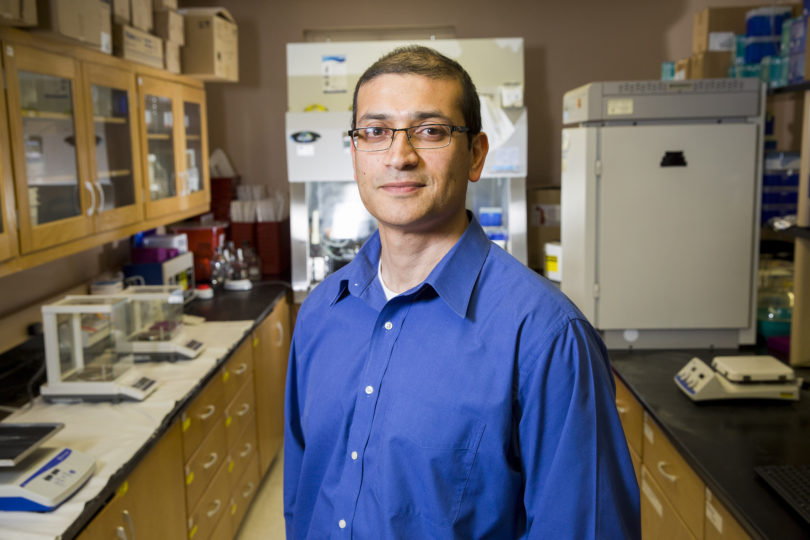
Lohitash Karumbaiah, assistant professor in UGA’s College of Agricultural and Environmental Sciences, led the team that designed and created Brain Glue.
Hydrogel mimics the composition and mechanics of the brain.
Researchers at the University of Georgia’s Regenerative Bioscience Center have developed Brain Glue, a substance that could one day serve as a treatment for traumatic brain injuries, or TBIs.
The Brain Glue is a hydrogel matrix with a gelatin-like consistency that acts as a scaffolding for transplanted stem cells, which are capable of repairing damaged tissue. With the unique ability to take the shape of the void left in the brain after a severe trauma, the Brain Glue will enable a more natural healing environment for stem cells to colonize and regenerate.
Lohitash Karumbaiah, assistant professor in UGA’s College of Agricultural and Environmental Sciences, led the team that designed and created Brain Glue. The main difference between Brain Glue and other synthetic hydrogels, according to the team, is the variety of possibilities to trap neural stem cells, improve integration and reduce the likelihood of rejection.
“It’s very common with these invasive injuries that surgeons will actually remove the part of the dead brain leaving behind a cavity or hole,” said Karumbaiah. “The question is, then, can you replace that with something like our Brain Glue, loaded up with compounds native to the brain together with a mix of protective agents that can be incorporated for the best therapeutic outcome.
“The cool thing about this chemistry is that you can take our Brain Glue liquid formulation and then very briefly expose it to long-wave UV light and form a hydrogel in any shape you like,” he said.
Every day, 153 people in the U.S. die from injuries that include TBI, according to the Centers for Disease Control and Prevention. Those who survive a TBI may live with impaired thinking, memory, movement or sensation. TBIs can also lead to personality and emotional changes.
The new approach is described in the journal ACS Biomaterials Science and Engineering and a recently awarded abstract from the International Brain Injury Association.
For more than two years now, Karumbaiah has been awarded seed-funding for his collaborative TBI work with Maysam Ghovanloo, associate professor of electrical and computer engineering at the Georgia Institute of Technology. The TBI research was initially funded by the Center for Regenerative Engineering & Medicine, known as REM, a collaborative initiative launched in 2011 between the University of Georgia, Emory University and the Georgia Institute of Technology.
The REM collaboration is an extension of Karumbaiah’s work to further study neuroplasticity: the brain’s ability to self-renew, adapt and compensate for injury and disease. His future studies will focus on how neural networks form and change in response to traumatic insults, and he will investigate the therapeutic use of electrical stimulation to help return loss of function in any given region of the brain.
“Multiple methods are needed in these kinds of studies,” said Karumbaiah. “The Brain Glue is where we make the scaffold, and the neuro-network function is really this other arm — learning how neurons fire and wire together and what this really means in terms of function.”
Steven Stice, director of the Regenerative Bioscience Center, is working with Karumbaiah on a licensed technology for commercialization of the new Brain Glue, which was recently named best abstract at a meeting of the International Brain Injury Association.
Karumbaiah’s work recently attracted a four-year, $1.5 million research grant from the National Institutes of Health.
“Lohitash sets an example for other junior faculty to emulate,” said Stice, GRA Eminent Scholar and D.W. Brooks Professor in CAES. “To be recognized internationally at such an early stage takes great skill and dedication.”
The Regenerative Bioscience Center at the University of Georgia links researchers and resources collaborating in a wide range of disciplines to develop new cures for devastating diseases that affect animals and people. With its potential restorative powers, regenerative medicine could offer new ways of treating diseases for which there are currently no treatments-including heart disease, Parkinson’s, Alzheimer’s and stroke. For more information, see www.rbc.uga.edu.
source: http://www.news.uga.edu / UGA Today / Home> Health & Wellness> Science & Technology / by Charlene Betourney / December 19th, 2017
Madikeri MLA Appachu Ranjan expressed his dissatisfaction over work on the newly constructed Government Ayurveda and Homeopathy Integrated Hospital, built at a cost of Rs 60 lakh, at B G S Circle in the new taluk centre, Kushalnagar.
He inaugurated the building during a programme organised by Kodagu Zilla Panchayat and the department of Ayush on Monday.
Inspecting the work on the building, Appachu Ranjan vented his ire against the contractor and said that the hospital was not constructed as per the proposed plan.
“The wheelchair ramp meant for specially-abled people and for patients, at the entrance of the hospital, is built unscientifically. The staircase, toilet and bathroom fittings are of poor quality,” the MLA noted and took ZP assistant engineer Fayaz and contractors Mahesh, Prakash and Manjunath to task.
The ramp and the staircases should be set right immediately, he added.
“There is no use of having old fashioned structures. The hospital should have modern facilities,” the MLA said and directed the engineer and contractors to incorporate the necessary changes in the building.
Zilla Panchayat member K P Chandrakala said that the building work was done in a hurry and is not according to the plan. She too pointed out that the ramp and the staircase are unscientific and urged those concerned to demolish the existing ramp and the staircase and build new ones.
The ZP member also demanded action against the engineer and the contractors.
Speaking to the reporters, Appachu Ranjan said that the new hospital building is constructed at a cost of Rs 60 lakh. But, the work is not carried out properly.
The official and the contractors have been taken to task. Directions have been issued in this regard. The hospital is built to cater to the needs of the people in the surrounding villages, he said.
Stating that the second wave of Covid-19 has crept in, he asked the people to be more cautious. Everyone should follow the norms such as wearing masks and following social distancing.
Somwarpet Taluk Panchayat president Pushpa Rajesh, vice president Abhimanyu Kumar, ZP member K R Manjula, Town Panchayat president B Jayavardhan and vice president Surayya Banu were present, among others.
source: http://www.deccanherald.com / Deccan Herald / Home> State> Mangaluru / by DHNS, Kushalnagar / April 05th, 2021
Kozhikode, Apr 8 (PTI): Cricketer Robin Uthappa was on Thursday presented with the National Excellence award instituted by IIM-Kozhikode for his contribution in the field of cricket.
This is the 3rd edition of the award, presented annually to eminent personalities for their contribution to the world of sports, and to commemorate IIMK”s iconic Calicut Half Marathon which is now into its 12th year.
The event, which is going completely virtual for the first time is scheduled to be held from April 9-11, according to a IIM-K release.
Presenting the award, IIM-K Director Prof. Debashis Chatterjee recounted Uthappa”s contribution to the game of cricket and how he ably carried his team forward by demonstrating resilience, focus and determination – a quality that resonates with the legend of Arjuna.
Traits like Focus, Flexibility and Freedom were the idea behind constituting this national award, he said and recalled the iconic moment when Uthappa tipped his cap and saluted the crowd after hitting the stumps in In India”s famous bowl-out win over arch-rivals Pakistan in 2007 T20 World Cup, as one of the most memorable events in the game of cricket, an IIM-K release said.
Paralympian and Arjuna Awardee Dr Deepa Malik and Babita Kumari Phogat, renowned wrestler are the previous winners of the award, instituted two years ago.
Uthappa expressed gratitude about his debut and relived the days when he shared the stage with cricketers like Sachin Tendulkar, Sourav Ganguly, Rahul Dravid and Virender Sehwag among other Indian cricket legends.
Sharing with the IIM-K community the importance of not giving up, especially when the chips are down, he said one should always have self-belief in taking challenges head-on one step at a time, in order to achieve their goals.
Calicut Half Marathon is the largest student-driven marathon organised every year for the past 11 years.
The marathon aims in contributing towards different social issues that can bring a phenomenal change when assimilated together.
It is this belief that the students of IIM Kozhikode wish to encourage and promote through the marathon.
IIM-Kozhikode Calicut Half Marathon in its 12th edition is bringing the theme ”Better Together United Despite Distances,” the release added.
source: http://www.outlookindia.com / Outlook / Home> The News Scroll / PTI / April 08th, 2021
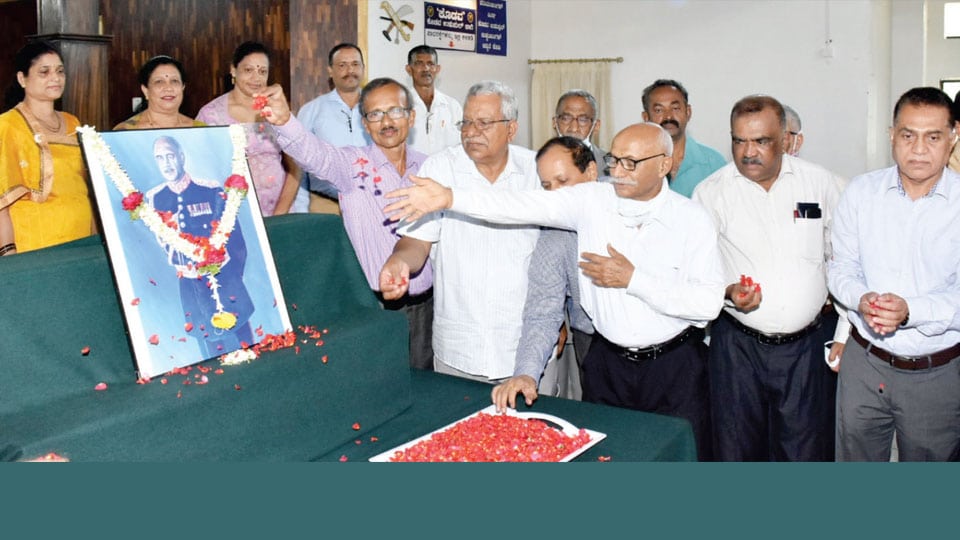
Marking the 115th birth anniversary of General K.S. Thimayya, Kodava Samaja, Mysuru, had organised a simple function at its premises in Vijayanagar 1st Stage here this morning.
Office-bearers of the Samaja offered floral tributes to the portrait of Gen. Thimayya. Samaja President Kekada M. Belliappa, Vice-President Mechanda M. Ponnappa, Secretary Malachira M. Ponnappa, Treasurer Mukkatira B. Jeevan, Joint Secretary Padiyanda Vimala Poonacha and former Presidents of the Samaja were among those present.
source: http://www.starofmysore.com / Star of Mysore / Home> Photo News / March 31st, 2021
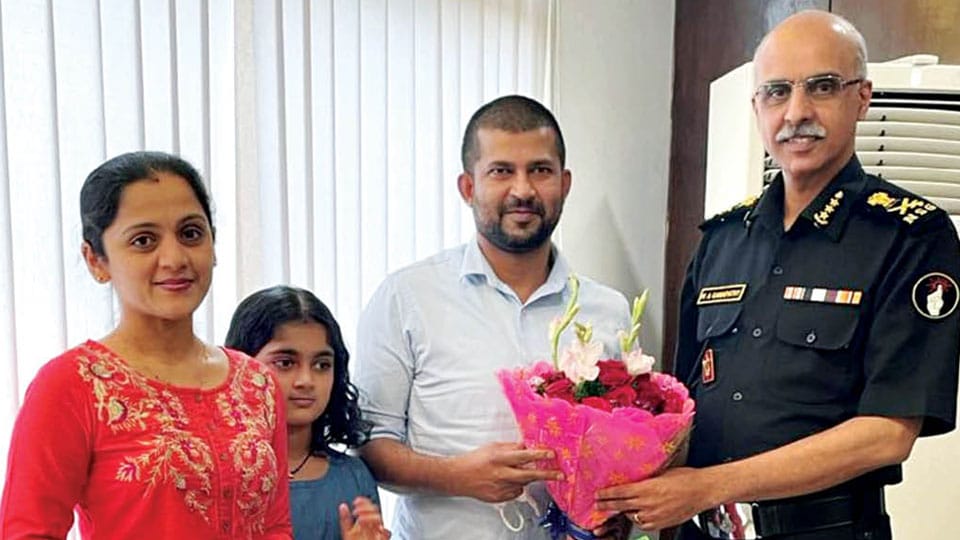
Senior IPS Officer from Kodagu district, Maneyapanda A. Ganapathy, yesterday took charge as the Director General of National Security Guard (NSG), an elite counter-terrorism unit under the Ministry of Home Affairs.
Picture shows Mysuru-Kodagu MP Pratap Simha congratulating M.A. Ganapathy at the NSG Head Quarters in Palam, New Delhi, this morning. Also seen are MP’s wife Arpitha Simha and daughter Vipanchi Simha.
source: http://www.starofmysore.com / Star of Mysore / Home> Photo News / March 19th, 2021
Kumar worked with adivasis in Andhra’s Araku Valley for decades, grew coffee of the highest quality and took it to Paris in 2017. On March 19, Araku Coffee opened its first café in India in Bengaluru. Kumar wants to replicate the Araku model for other crops as well, he tells us how
Cafe L’Orange
In the late 1990s, the late Kallam Anji Reddy, founder-chairman of pharmaceutical company Dr Reddy’s Laboratories, appointed developmental economist Manoj Kumar as the head of his NGO, the Naandi Foundation. Kumar’s brief was to foster sustainable livelihoods in rural India.
One of the many projects Kumar embarked on in the early 2000s was to get adivasi farmers in Andhra Pradesh’s Araku Valley to grow specialty coffee, which, simply put, is organic and sustainably grown coffee of the highest quality. To many people, it appeared to a quixotic endeavour. Araku was not a traditional coffee-growing region. Kumar, who grew up in Kerala drinking kattan kaapi, the traditional home-brewed black coffee, had no real knowledge about coffee; and the Araku Valley had been riddled with Naxal insurgency for decades. Kumar worked with, and lived among, the tribals for over a decade and through biodynamic farming and the formation of an adivasi cooperative, one of the world’s largest fair-trade and organic certified cooperatives, he achieved the seemingly impossible.
In 2017, Kumar opened the first Araku Cafe and store in Paris and about a year later, Araku Coffee bagged top honours for the best coffee pod at the prestigious Prix Epicures OR awards in Paris. On March 19, Araku opened its first cafe in India. The 6000 sq ft, two-level flagship cafe in Indira Nagar in Bengaluru features, among others, an in-house roastery, the country’s first Specialty Coffee Association-certified Coffee Academy, a book store, and food that is sustainably procured.
In an interview to Moneycontrol, Kumar talks about the growing interest in specialty coffee in India, its transformative potential, and about replicating the Araku model in other parts of the country. Edited excerpts:
How do you see Araku’s flagship cafe take the specialty coffee story forward in India?
By and large, the production of specialty coffee in India has so far been almost nil, barring a few micro estates. We have been a notable exception. Our success has made coffee growers realise that it is possible to get much higher value and definitely profits if they can elevate their coffee to the level of a specialty coffee. I’m hoping that this desire to excel will be infectious to the community of coffee growers in India. They could learn to look at coffee as being more than just an average-to-poor-quality mass-produced commodity, which is neither financially rewarding nor sustainable. We are blessed to have the climate and topography to grow coffee. Europe and most of the coffee-drinking nations don’t grow coffee. I see our cafe in Bangalore as a place where people can interact and learn more about the power of specialty coffee. And we would want to take it beyond producers to policy makers and to everyone through a consumer movement to inculcate a certain pride in the opportunity we have to make coffee a profitable Indian-origin commodity and revive India’s agriculture to an extent. Araku is not a traditional coffee-growing region, and yet we have grown world-class coffee there. So, you can imagine the potential of places such as Chikmagalur and Coorg…
Tamagoyaki Toastie is on the menu of Araku’s café in Bengaluru.
Have you met people from the coffee-growing community who want to get into specialty coffee?
Absolutely. When we started the Araku journey, we had only between 10 percent to 20 percent of farmers whose coffee could be rated as specialty coffee. Today, I have 80 percent of my farmers all growing specialty coffee. I have requests from many small estate and large estate owners, and even people who are into wine now want to know if we can help them with the same regenerative agricultural practices that made our coffee world-class.
Araku Coffee co-founder Manoj Kumar
You’ve been to specialty coffee hotspots across the world. How have your experiences shaped the flagship store?
Scandinavia inspired me a lot. The quality of service there was based predominantly on knowledge. Every brewer, roaster, and barista I met had a completely different level of knowledge and that knowledge was shared with the customer. A relatable example would be going to an Apple store for the first time and discovering that every staffer has an in-depth knowledge about the products. So, one of the things I took away from there was that our team had to be knowledgeable about what they were selling, even if it meant setting up a coffee school at the cafe. Our team is not just selling a random service, they are selling coffeeology. And our prices are extremely competitive. Somebody even mentioned that a lot of the coffee we serve is, more or less, the same price as the coffee you get at Starbucks.
The Naandi Foundation has been at work replicating or adapting the Araku model in other parts of India. How has that worked out?
The Naandi Foundation is now massively expanding its agricultural footprint. We are now in a large way expanding into Wardha and the Vidarbha region, replicating the Araku model with other crops. We started off with pomegranate and that is very much on track but we are also exploring or expanding into other portfolios. Turmeric in that region is world-class, and it has a Geographical Indication tag. Then, we looked at red gram and other pulses. The idea is to have a bouquet of produce for the farmer to get it to be profitable and to identify one or two which become unique to that region. I think the winners here will be turmeric, pulses, and organic cotton. We are also looking closely at working in Meghalaya and Kerala and the Konkan belt.
You first went to the Araku Valley in 2001. Looking back, which was the turning point of your journey?
I’d think earning the trust and respect of the tribals was the turning point. I had started with just 1,000 farmers, and I would tell them that one day their land would produce a coffee that would be world-class. And they would always tell me that they wouldn’t let me down. That kind of love and trust from their end really made all the difference.
MURALI K MENON works on content strategy at HaymarketSAC.
source: http://www.moneycontrol.com / MoneyControl / Home> News> Trends> Features / by Murali K Menon / March 20th, 2021
WELCOME. If you like what you see "SUBSCRIBE via EMAIL" to receive FREE regular UPDATES.
Read More »