Using social media as their tool and selfie culture as a weapon, this couple is urging the residents across the state to keep aside a bowl of water for the birds during this summer season.
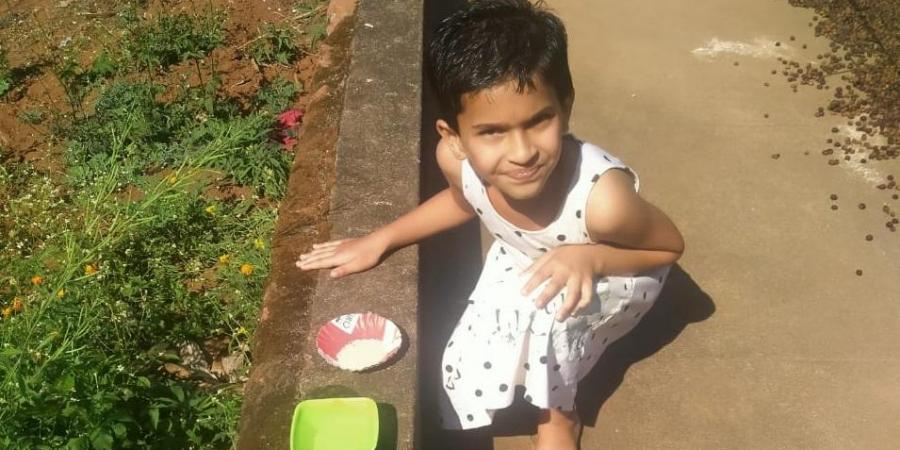
‘Hakkigondu Gutuku’ (a drop to the birds) campaign is receiving an optimistic reaction from many residents across the state including children. (Photo | EPS)
Madikeri (Karnataka):
A couple in Kodagu has started a unique campaign to protect the non-migratory birds during the peak summer season.
Using social media as their tool and selfie culture as a weapon, this couple is urging the residents across the state to keep aside a bowl of water for the birds during this summer season.
‘Hakkigondu Gutuku’ (a drop to the birds) campaign has started from March 10 by Gautham Kiraganduru and his wife Sumana, which is receiving an optimistic reaction from many residents across the state including children. Known for their social works, the couple established ‘Namma Pratishtana’ firm in the district and is promoting various eco-friendly activities.
“Birds are an important part of the ecosystem and they ensure balance in the environment. There is a need to promote and preserve the bird species. Hence, to protect the birds during the summer season, we have started this initiative where we have requested the participants to set up a DIY arrangement to feed birds. The residents have to keep some water and grains for the birds and then click a selfie alongside this setup. We will pick the three best pictures and honour the winners with prizes,” explained Gautham.
The initiative that is making noise across social media has gained attention from not just the residents of Kodagu, but also from the residents across the state including Davanagere, Uttara Kannada, Dharawad, Bellary, Hassan, and Shivamogga among others. “We have received numerous selfie photographs of people setting up the bird feeders. Also, international kickboxer Girish R Gowda has extended support to this initiative,” added Gautham. He explained that numerous trekkers are also participating in this initiative and are setting up feeders across several spots.
Last year, this couple had gained attention after they signed up for body donation during their wedding ceremony. Instead of distributing wedding invitation cards that have low shelf-life, they printed Kannada books with works of unrecognized writers and shared them as wedding invitations. They had also grown over 1,000 different saplings and distributed the same as wedding gifts to the guests.
source: http://www.newindianexpress.com / The New Indian Express / Home> Good News / by Prajna GR / Express News March / March 18th, 2021
The project has been launched for the first time in the country on an experimental basis by the Khadi and Village Industries Commission with support from the management of Ponnampet Forestry College.
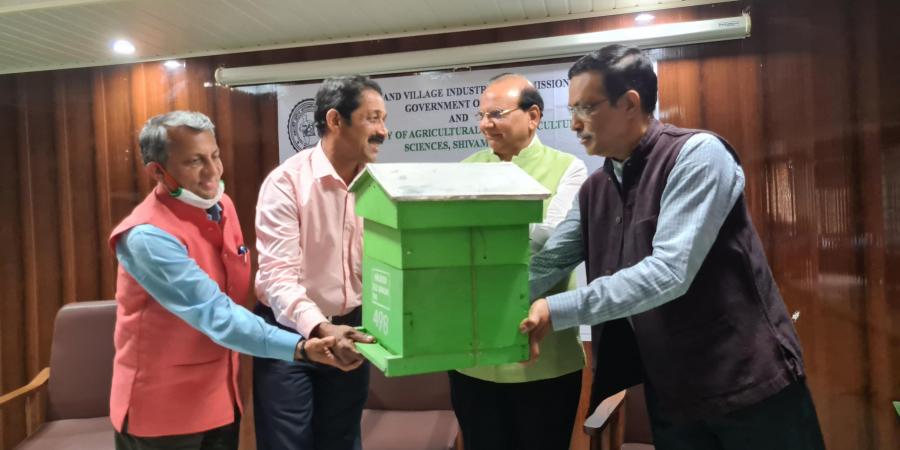
Beekeeping equipment distributed to a farmer during the event (Photo | Special arrangement)
Madikeri :
A research project to reduce human-elephant conflict with the help of honey bees was inaugurated at Ponnampet Forestry College in Kodagu on Monday. The project has been launched for the first time in the country on an experimental basis by the Khadi and Village Industries Commission (KVIC) with support from the college management.
RE-HAB — Reducing Elephant Human Attack by using Bees — aims at controlling wild elephant movement into villages by roping in honey bees. The success of the initiative will be monitored regularly to launch it across the country. A total of three elephant conflict places have been chosen in Kodagu district including two at Nagarahole Sanctuary and one at Thora village in Virajpet where a total of ten beehive boxes have been placed across the forest fringe. The boxes have been placed approximately at eight feet distance and tied using a fence rope. This set-up will act as an elephant conflict mitigation measure.
The project was launched by KVIC Chairman Vinay Kumar Saxena at Ponnampet Forestry College. “In 2017, the Sweet Revolution was launched in the nation to promote apiculture. Beekeeping has many benefits and a farmer can earn from the bee wax, royal jelly and bee venom apart from the honey extraction. Further, beekeeping enables cross pollination and increases the income of a farmer by 30%,” he said.
Saxena explained that states with high elephant populations are spending crores on solving the human-elephant conflict and added, “Many of the mitigation methods to control the conflict are unscientific. The research project of RE-HAB will be monitored regularly and, if successful, will be implemented across the country.”
He said that the RE-HAB project will create a sustainable employment opportunity in beekeeping while also fighting the elephant conflict ecologically. Dr Kushalappa, the dean of the Forestry College, reckoned that the project will enable integrated farming while controlling the elephant menace.
Alongside launching the project, a total of 50 beneficiaries were given bee colonies and beekeeping equipment by KVIC to promote apiculture in the district. Dr Sudarshan of KVIC said, “We are finding a physical solution to an ecological problem. Nature must work with nature and the RE-HAB will work at a low cost.”
source: http://www.newindianexpress.com / The New Indian Express / Home> States> Karnataka / by Prajna GR / Express News Service / March 15th, 2021
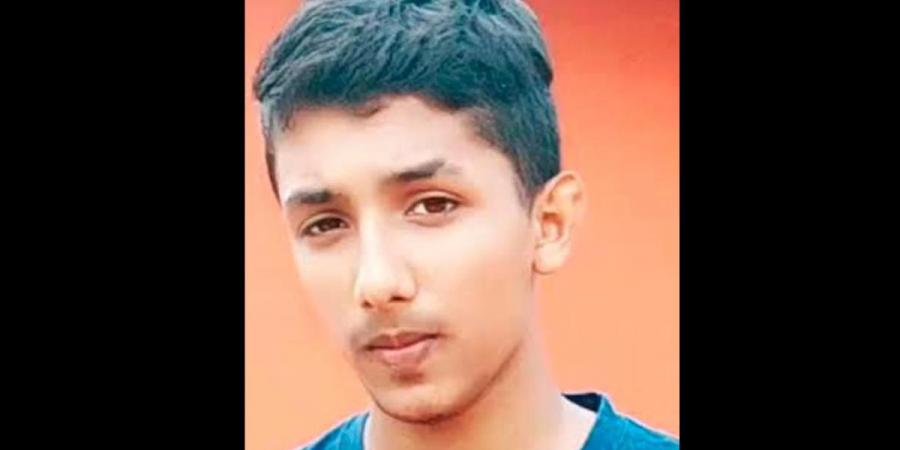
During a picnic, some students who went for a swim in the Cauvery were pulled by the water currents. Lenin Bopanna managed to save the lives of four students but drowned in the process.
Lenin Bopanna
Madikeri :
A student who drowned saving the lives of his schoolmates was posthumously honoured with the Hoysala Shaurya Award by the Women and Child Welfare department. The award was received by the boy’s parents at a ceremony hosted in Bengaluru.
Lenin Bopanna was a student of Lion’s School in Kalathmadu village near Gonikoppal. In March last year, 39 students of the school from the Scouts and Guides team had visited the popular tourist destination of Dubare Camp for a picnic.
However, a tragic event unfurled as some students who went for a swim in the Cauvery river were pulled by the water currents. Lenin Bopanna managed to save the lives of four students during the incident but drowned in the process.
The son of Madeera Harish and Kavitha of Hysodluru village, Lenin was nominated for the award with the help of state Scouts and Guides Commissioner PGR Sindhya. Lenin’s father Harish said that his son received the award for his bravery following the efforts of Sindhya and the principal of Lion’s School.
source: http://www.newindianexpress.com / The New Indian Express / Home> States> Karnataka / by Express News Service / March 10th, 2021
Kodava Samaja, Mysuru and Nethradhama Super Speciality Eye Hospital have jointly organised free eye check-up camp for Kodava Samaja and Kodava Association members and their family on Mar. 16 from 10 am and 2 pm at Samaja premises in Vijayanagar.
For details, contact Mob: 70191-20650 or 94837-54771.
source: http://www.starofmysore.com / Star of Mysore / Home> In Briefs / March 13th, 2021
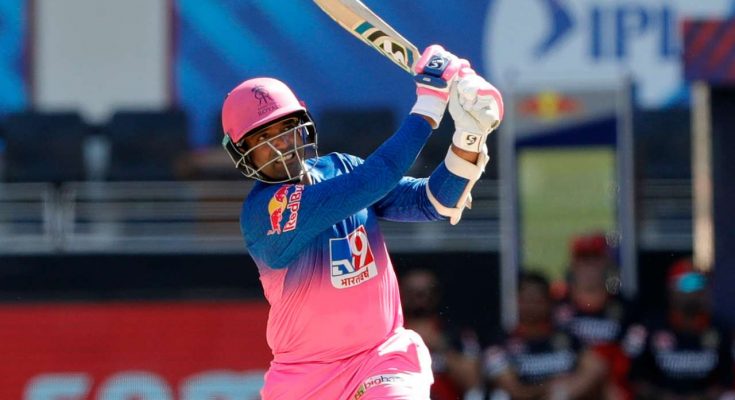
As Rohit Sharma raised his bat while walking back to the pavilion after his record-breaking 264-run knock, he receieved a standing ovation from the crowd as well as the Indian dressing room. But there was another Indian player alongside him at the crease, who perhaps, had an even bigger role to play in helping the Hitman reach that major milestone. That player was none other than the selfless Robin Uthappa.
The 35-year-old has been a seasoned campaigner both in domestic cricket as well as in the Indian Premier League (IPL). However, he never really cemented his place in the Indian team despite making multiple comebacks. Nevertheless, whenever he has received an opportunity, Robin Uthappa has always proven himself as a selfless team man.
In fact, he is one of the most experienced players as far as the IPL is considered. Over the years, he has represented franchises like Royal Challengers Bangalore, Pune Warriors India, Kolkata Knight Riders and Rajasthan Royals.
The veteran right-hander will now embark on a new journey once again as he will play for Chennai Super Kings (CSK) in the upcoming IPL 2021 season. In an exclusive interview with CricXtasy, Robin Uthappa speaks about his fantastic run of form in the recently concluded Syed Mushtaq Ali Trophy and Vijay Hazare Trophy, prospect of reuniting with MS Dhoni at CSK, and much more
Excerpts from Robin Uthappa’s exclusive interview with CricXtasy:
Q: About your IPL days, your best time was probably with KKR. You had a sensational season yourself in 2014, winning the title as well as the Orange Cap. That is what gave you an opportunity to make a comeback for India later that year too. So what would you like to say about your time at KKR? Your general camaraderie with Gautam Gambhir and the others in the team?
Robin Uthappa: Obviously that was one of my fonder memories and experiences in the IPL for sure. So for me, that was something I completely enjoyed, especially when Gauti (Gautam Gambhir) was the captain. And yes, that journey has been something that I hold dear to me.
But I’ve had a good time, in other franchises as well. You know, for instance, I had a good time in Mumbai in the first year. And at Pune Warriors as well, even though we didn’t do well as a team. I was able to perform well and make an India comeback.
Even at RR, it was only one year but the kind of friends that I have made and the relationships that I’ve built in that franchise is something that will be for life. So in every franchise, it’s been a great experience. It’s had its ups and downs. But it’s been a wonderful experience in every franchise that I’ve played with so far.
Q: Talking about ups and downs. that one game against Mumbai Indians in 2019, which was also your last game for KKR. Do you think that they were a bit harsh on you to release you on the basis of that one knock?
Robin Uthappa: Well see, the thing is, obviously, they were looking at different things. For a couple of years, they made me play in the middle order, which is not where I’m normally or, you know, naturally suited to bat, because my entire life I have opened the batting. So for me, even though I tried to make that adjustment to bat in the middle order for the sake of the team, I wasn’t able to adjust.
Then they possibly felt that they had other people who could do the job for them at the top of the order. So, you know, they felt at that point that is best for us to part ways. In fact, my release hadn’t happened till the day before the auction. Initially, they told me that I would still be a part of the team when you know, Brendon McCullum was coming. But the day before the auctions, I got a call from them saying that, you know, they will be releasing.
So, clearly, they had plans to move on and navigate to other avenues they believe would work for them. So, that happens in franchise cricket. It’s a part and parcel of franchise cricket. But I’m grateful for my time with KKR, it was a good one. Yeah.
As a leadership group, RR were more reactive than proactive: Robin Uthappa
Q: One of the most talked-about points about the last season was the kind of opening combinations RR tried in almost every game, there was a different combination. So, do you think that, maybe they could have given you another season at the top of the order? Maybe they were just too quick in writing you off?
Robin Uthappa: See, the thing is, you can talk about ifs and buts. But you have to realize that reality is what it is. They had spoken to me last year when I joined them that they would like me to bat in the middle order. I said that I will try my best and because you know, it is not something naturally I’m comfortable with. Because opening the batting is something that I know what I’m doing. It comes very naturally to me and I have done it my entire life.
And when we got off to the kind of stars that we were getting off within the team, I suggested to them that “you know, I could open the batting”. But it took about seven-eight games before that actually happened and in a tournament like IPL, every game is important. I felt that as a leadership group, they were being more reactive than being proactive at that point in time.
Sanju Samson is a match-winner: Robin Uthappa
Q: This season’s Vijay Hazare Trophy, it was absolutely sensational for you as an individual. How would you say the Kerala team has progressed now, from the time that you joined them? Something about the youngsters in the group, like Azharuddeen, Samson?
Robin Uthappa: I don’t think Sanju is a youngster anymore. Yeah, he’s one of the most important players in that team. He’s the one on whom the team is heavily dependent. The success of the team is really dependent on his performances, and he is doing well because he’s a match-winner. So keeping those things in mind, you know, the youngsters have done really well.
In fact, there are a lot of youngsters who have derived a lot of inspiration from guys like Sanju, and the fact that he’s gone up to the highest level. And having said that, they’ve all worked on their own games. Last year in our season, we felt like our batting was struggling a little bit. I think, this year’s performance is a result of the work that everyone has put in over the last few years into their own individual batting and how they can do well for the team. And we’ve done just that and we worked hard and the results are there to see.
But you know, having said that, I think as a team we also believe that we can go much further in the tournament than where we’ve gone. Like for instance, in the Syed Mushtaq Ali Trophy, we definitely felt that we could have gone further. Unfortunately, we did not, and in fact, we missed qualification by three or four runs in the last game. So all those learning experiences I think will serve us well in the seasons to come and serve all the boys, who not just want to you know play for Kerala but also want to win championships.
So you can only hope and believe that everything that you go through and experience in your career serves you. And everyone’s very hardworking not just Azhar or not just Sanju. There is Sachin who is working really hard, then Sreesanth, who is making a comeback after so many years. You know, it’s just the testimony that age is honestly just a number if you put in the work that’s required.
Q: When CSK picked you up in the IPL 2021 trade window, there was a lot of talk on social media that another aged player has joined the ‘Dad’s Army’. But your current form has silenced the critics in style. What would you like to say about that?
Robin Uthappa: These age things are just left to the trolls, for them to get some attention. So I don’t know how that serves society in any way. But it is what they do. I think for people like us, we realize that age is just a number. It depends on how passionate you are.
Like, for instance, you take an example of the guy who started KFC. Colonel Sanders was 65, when he eventually opened his own KFC. So that just goes to show it doesn’t matter what line of work you’re in. Tom Brady, at 43-44, is continuing to win national championships, which is played at a very high level. So, you know, there’s enough proof that these things are just perceptions that are held by people. But if you work hard enough, if you’re focused enough or channelized enough, then all of these things don’t necessarily matter.
I think the more experienced you are, the better you do. Why do you give youngsters the long run? Because you want them to gain experience. So in the same way, when you have an experienced player, you know they’re hardworking enough, they go out there and do well. People don’t seem to see that and don’t seem to understand it. For lack of depth, or maybe something else. I’m not sure. But I’m someone who believes that honesty gets the numbers. Look at Roger Federer today, at 38, pursuing tennis at the highest level coming back from injuries. So it’s just perception.
Robin Uthappa opens up on his future with CSK
Q: So now that you have been approached by CSK, did they kind of let you know already what your role might be? Or did you let them know about your batting preference?
Robin Uthappa: We haven’t discussed the role yet. I think the role will be clarified. And the clarity of that will be defined once I join the team. But yeah, whatever the role is, whenever I get an opportunity, I’m confident that I will go out there and do my best. I am sure this will add value to the team, that much faith I have in myself.
Q: You were one of the first players to have had the experience of playing under MS Dhoni’s captaincy, and you won that T20 World Cup. So any special memories about that tournament, about Dhoni the captain?
Robin Uthappa: We’ve had some great memories from that tournament. I think just his (Dhoni’s) leadership skills and the way he has executed those skills. As a captain, and I think, as a leader, the most important thing he did was giving the players the freedom to express themselves. I think that is one of the most important things that a leader or a captain can do within a group environment and respect that individuality. And that’s something that he does extremely well.
Q: I would just like to pinpoint at one performance in your last group game of the Vijay Hazare Trophy, and where you scored, I guess, 87 off 32. Now do you think you have got a blueprint to bat and now are you clear in your mind that ‘this is how I’m going to play my cricket, whether I play for CSK or for India again’?
Robin Uthappa: Well, yeah, it is something that I’ve actually been working on for a couple of years. There are always requirements within the team, right, and there are roles that are defined or there are roles within that team that we need to perform. My role is always to make sure that I bat for as long as possible for Kerala. So if I can bat for as long as possible it benefits the team and increases the confidence within the group. So that is essentially what I’m looking to do at all points when I am opening the batting for Kerala.
But having said that, in that game, the requirement was to finish the game as quickly as possible. And they mentioned to us at Lunch break that if you can finish the match in 14 overs it will increase our net run-rate and help us qualify. We were already 4.5 overs, 76-1. So I said okay, maybe I’ll just have a look-in for a couple of balls, and then I’ll just go after it and try and score as many runs as possible. And which is essentially what I did. I gave myself a couple of balls. And then I started going after. And we were able to finish the game in I think 8.5 overs or so.
So I think it again depends on the requirements of the match and the requirements of the team. But, I definitely feel like I’ve had a lot more freedom than I had in the past. And I think the technique that I have right now allows me to play with a lot more freedom than I had in the past.
Robin Uthappa relives his best memories playing for the Men in Blue
Q: You have played 59 International games for India so far, but do you think your best memory is still that chase at The Oval in the sixth ODI in 2007?
Robin Uthappa: I’ve had quite a few I think. But that (game at The Oval) definitely is right up there. But there are different ones that serve the team, serve individuals. I enjoyed, for instance, we won a game in Mumbai against Australia in 2007. It was a really low-scoring one-dayer. They scored 187 or something and we scored the runs back in the 45th over. Zak bhai (Zaheer Khan) and Murali Karthik scored the runs back for us. So I think that was something that I actually enjoyed, because I got a 47 or 48 in that match. So for me, I think, when everyone was getting out, me being able to contribute to that victory was big for me. So, yeah, that is a special game to me.
I think I’ve had a lot of comebacks, four or five or six comebacks in the Indian team. So you know, a lot of those comeback matches have been special. I got a 30-ball 70 against West Indies in Chennai. That was very special for me. And then, you know, Rohit Sharma’s 264. I had scored a run-a-ball 14. That was also my comeback match. So, you know, a lot of these comeback games have been special to me in one way or the other.
But yeah, Oval will stand up there as a fantastic experience. Then to get a 50 on my T20 debut against Pakistan in a World Cup. And to have that bowl out is also a great memory. So I’ve been fortunate you know, incredibly lucky to have had wonderful memories playing cricket, there are a lot of memories that are etched in, you know, part of our culture, which is fantastic. And I consider myself very lucky to have all of them.
source: http://www.cricxtasy.com / CricXtasy.com / Home> Interview / by Anuj Nitin Prabhu / March 13th, 2021
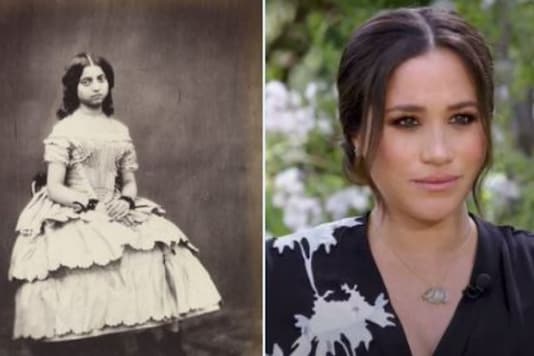
Dr Priya Atwal, a historian, took to Twitter and spoke about the little-known life of Princess Gouramma of Coorg who was adopted by Queen Victoria as one of her godchildren.
The history of Princess Gourumma of Coorg was shared on Twitter by Dr Priya Atwal.
While Meghan Markel’s revelations into the British Royal family has once again triggered the debate of race in UK, a historian from India has claimed that Meghan is probably not the first woman of colour to be a part of the monarch family. While there is mention of Queen Charlotte’s (1744-1818) black ancestry, Queen Voctoria had her imperial godchildren too, according to the Victorian historian. Dr Priya Atwal took to Twitter amid raging debate about Meghan’s acceptance in the Royal family and spoke about the little-known life of Princess Gouramma of Coorg.
“Princess Gouramma (1841-64) was brought to Britain in 1852 by her father, the deposed Rajah of Coorg. The Rajah campaigned to win back his family wealth from the East India Company, but also asked Victoria to adopt his daughter, believing the Queen would give her a good life (sic),” Atwal wrote. It was Princess Gouramma’s father, Rajah of Coorg, who offered her to the Queen after baptising her with the hope that she would be brought up with “aristocratic guardians and secure her a good marriage”. Victoria readily accepted the idea and adopted Princess Gouramma. But princess of Coorg wasn’t the only one. Queen Victoria had several ‘godchildren’ whom she adopted from royals from the empire.
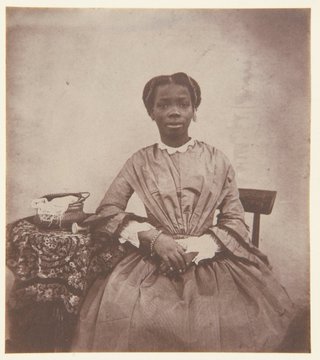
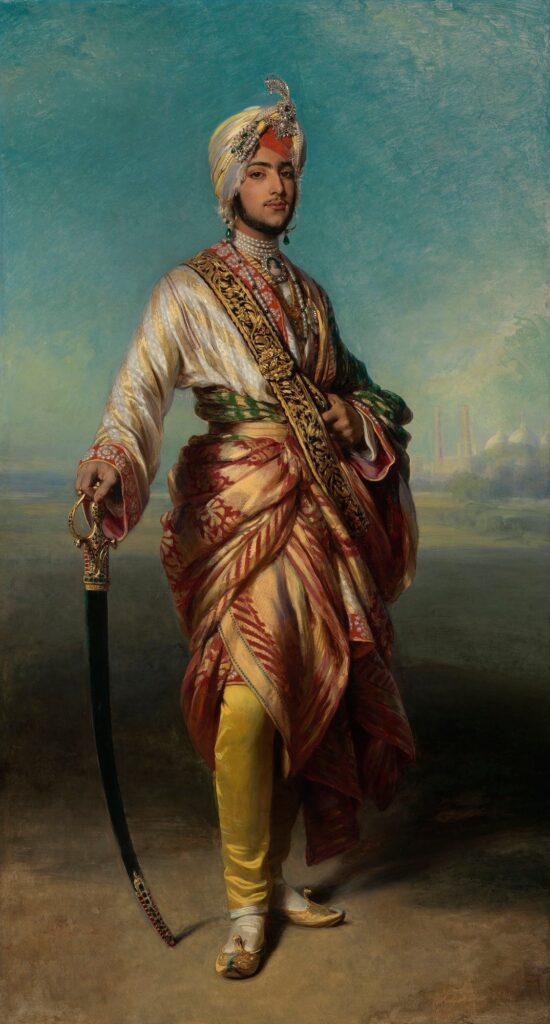
Duleep Singh and Sarah Bonetta Forbes were among these godchildren of the Queen.
_______
Dr Priya Atwal@priyaatwalAs a historian of Victorian royalty, I am fascinated by some of the parallels between #MeghanMarkle’s current situation and the little known story of Princess Gouramma of Coorg. A thread
1/12
_________-
But facing racial attacks never stopped for the Queen’s godchildren even after being adopted. Atwal says their lives weren’t easy. Duldeep and Sarah ‘were both feted and treated as racialised others in Victorian Britain’. “And their lives were pored over in a newly-emerging popular press,” Atwal writes. “As I’ve found in my research, for her it was a good way to learn about her new territories and project a benevolent image of her family.”
_______
Dr Priya Atwal@priyaatwal·The Hindu Rajah offered up Gouramma to be baptised as a Christian & hoped Victoria would bring her up as an adopted daughter with aristocratic guardians and secure her a good marriage. Incredibly, Victoria was keen about the idea & readily agreed. 4/12
Victoria took multiple young royals from around the empire as wards/godchildren – inc. Duleep Singh & Sarah Bonetta Forbes. As I’ve found in my research, for her it was a good way to learn about her new territories & project a benevolent image of her family. 5/12
_________
Gouramma faced a different struggle. She was pressured to become the model Anglicised princess. Even though the Queen had accepted her into the family, she had banned Gouramma from maintaining any contact with her family. The curtailment of ties again had racial undertones. According to Atwal, this was supposedly to prevent her from slipping into “native” or “heathen ways”. “She was moved from foster family to family as her caretakers struggled with the cost and demands of raising a royal ward.” The struggle of a new life was too much for the young princess who even tried to run away many times. It was the unwanted attention and being under scrutiny all the time that added to her woes. “In this I find her parallels with Meghan most intriguing: Gouramma often spoke of dearly wishing for more privacy & living independently – even to become a household maid – so she could be free of scrutiny. Yet her actions were attributed to her “innate Oriental weakness (sic),” Atwal writes.
Meghan too has spoken about the unwanted attention from media that has deprived her of any privacy in personal life. Meghan, who married Prince Harry in 2018, said she told the royal family she was struggling and needed professional help but was told “that I couldn’t, that it wouldn’t be good for the institution.” She even suggested that the Buckingham Palace was “perpetuating falsehoods” about her and Prince Harry. Asked by Winfrey how she felt about the Palace hearing her speak out, Markle replied: “I don’t know how they could expect that after all of this time we would still just be silent if there’s an active role that The Firm is playing in perpetuating falsehoods about us.”
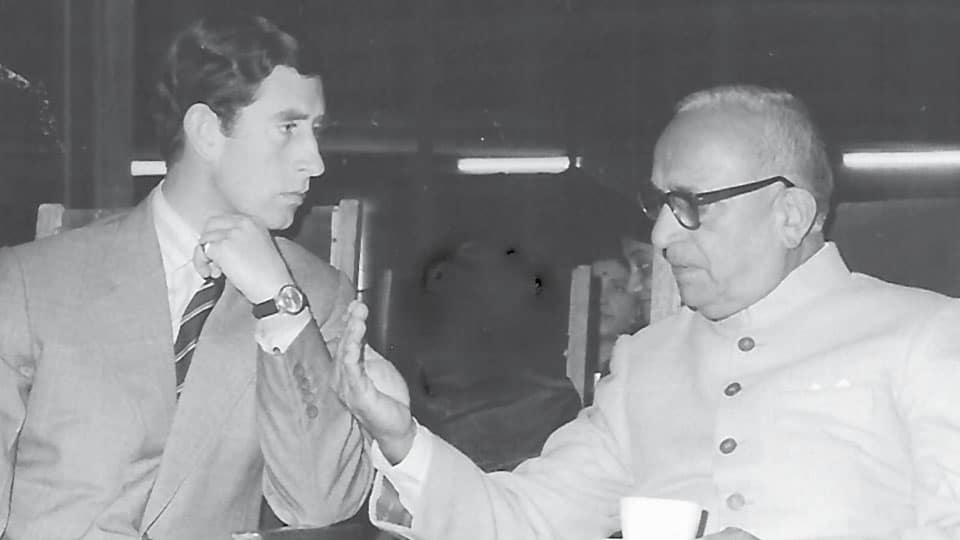
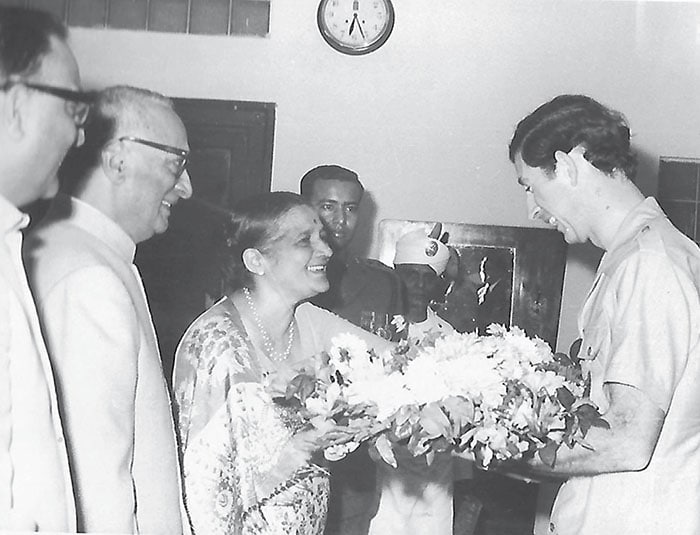
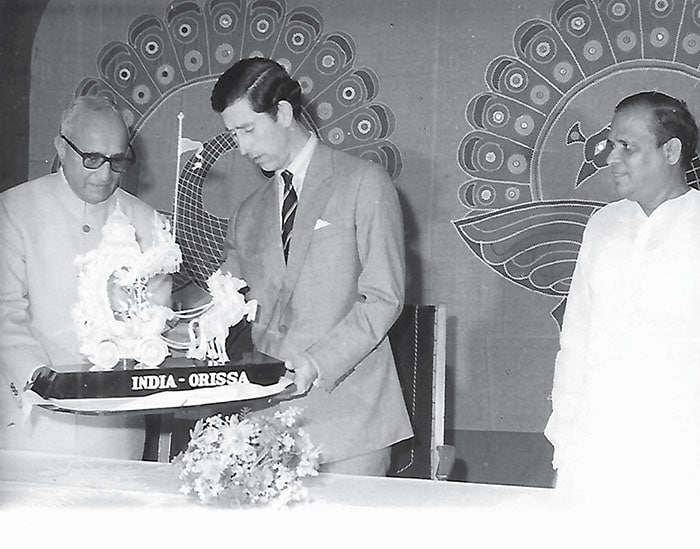
Charles, Prince of Wales, the heir to the throne of United Kingdom (UK), has visited India 10 times till date. One of his visits was in 1980, and one of the States where he was a State Guest was Orissa. My father, C.M. Poonacha, was the Governor of Orissa at the time. Prince Charles stayed in the Raj Bhavan for a couple of days and my parents interacted with him as his hosts. For my father, who was a freedom fighter, this was quite an experience to host the future King of the UK, whose ancestors were his adversaries.
Prince Charles was a 32-year-old bachelor at the time. Those who have watched ‘The Crown’ on Netflix would recall that before his foreign tour in 1980, he had started dating Diana Spencer. He took her to Balmoral Castle to meet the Queen and other members of the family and was supposedly put through the ‘Balmoral Test’ to assess if she has the right qualities to be a Windsor and a potential Queen of UK.
Months prior to her marriage, Diana moved to Buckingham Palace to familiarise herself with the protocols to be followed as the future Princess of Wales. My father found Prince Charles to be an amiable, intelligent, and well-read young man. It is commendable that India and UK continue to have cordial relationship despite the dark colonial era. I recently found some of the photographs taken during the 1980 visit.
Mr. & Mrs. C.M. Poonacha greeting Prince Charles.
Had I known as much as I do now about Queen Victoria and her Indian God-daughter Princess Victoria Gowramma of Coorg, I would have visited Bhubaneswar for a chat with Prince Charles! An opportunity missed.
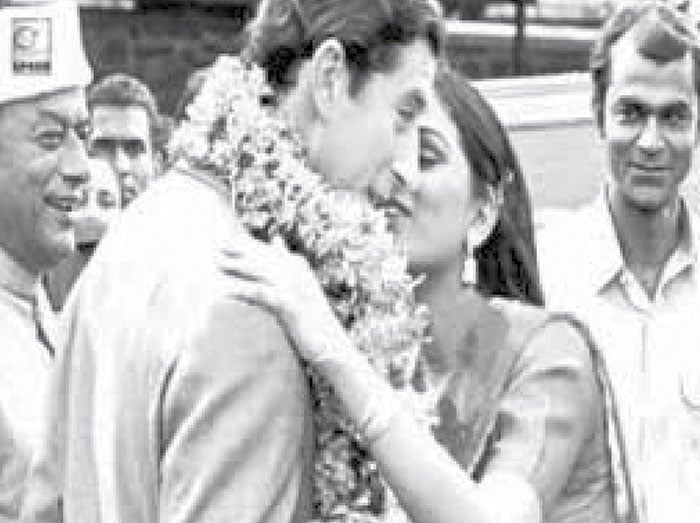
After his visit to Orissa, Prince Charles was the State Guest of Maharashtra. Wherever he went, girls were swooning over him! He was arguably the most eligible bachelor in the world at that point in time. I am sure many would remember the cheeky kiss the then 16-year-old Padmini Kolhapure of Satyam, Shivam, Sundaram-fame, stole from the Prince charming!
C.M. Poonacha and Prince Charles.
Prince Charles and Lady Diana Spencer were married in 1981. Their tumultuous life, divorce and the subsequent horrendous accident that took Diana’s life, are familiar to the world. The person who stole Charles’ heart was Camilla Parker Bowles (née Camilla Shand). There are several speculations about Charles becoming King and Camilla his Queen. One rumour is that Queen Elizabeth II will abdicate later this year after her 95th birthday celebrations and make way for Charles to be coronated. Another scenario is that the Queen will hold on to the crown and make Charles the Regent. Yet another speculation is that the Queen might bypass Charles and name his son Prince William her successor. If Queen Elizabeth II, after 69 years on the throne, continues as the Monarch till her demise, then by normal scheme of things UK will have King Charles and Queen Camilla.
People in the UK are divided on the issue of continuation of the monarchy with a slight bias towards retaining the royal head of State. In any case, it is more than a couple of centuries since monarchy in the UK ‘reigns but does not rule’.
Padmini Kolhapure giving a peck on Prince Charles’ cheek.
When Padmini Kolhapure kissed Prince Charles!
Bollywood actress Padmini Kolhapure made a lot of headlines in 1980 when Prince Charles came to India and the teenage actress welcomed him with a warm kiss on his cheeks. The Prince was welcomed by Padmini during a visit to a Bollywood shooting spot and after putting the garland on his neck, she planted a kiss on his cheek. According to reports, Prince Charles was also surprised with the actress’ gesture. This became quite a topic of discussion at that time.
About the author: C.P. Belliappa is a Chemical Engineer. He is based in Coorg (Kodagu). He is known for his writings on issues pertaining to Coorg. He writes humour, history and human-interest stories. Four of his books — Tale of A Tiger’s Tail & other Yarns from Coorg, Nuggets from Coorg History, Victoria Gowramma: The Lost Princess of Coorg, and Tongue of the Slip — have been published by Rupa Publications. He presently serves as President, Coorg Institute of Technology (CIT), Ponnampet, South Kodagu.
source: http://www.starofmysore.com / Star of Mysore / Home> Feature Articles / by C.P. Belliappa / March 03rd, 2021
The young boy, who has been diagnosed with profound hearing loss since birth, was gifted with hearing aids with the efforts from Swastha Centre for Special Education and Rehabilitation, Suntikoppa.
Madikeri :
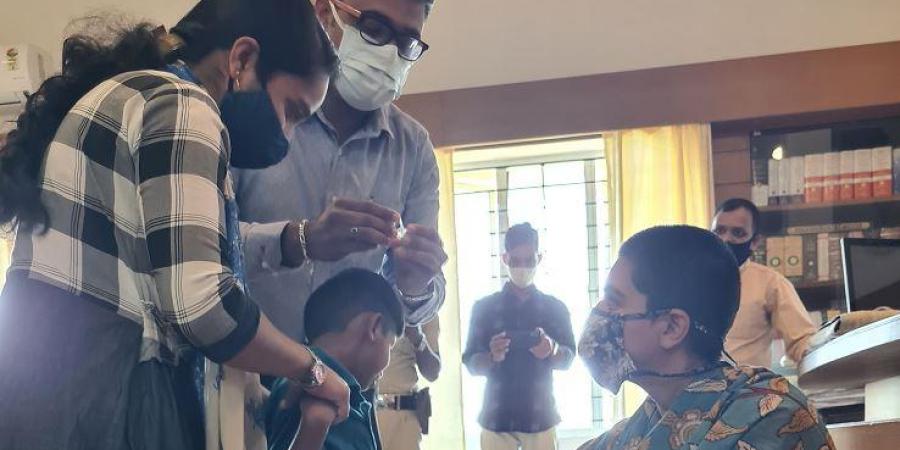
The silent world opened up with sounds to the six-year-old Dhruva, who heard for the first time on the World Hearing Day on Wednesday.
The young boy, who has been diagnosed with profound hearing loss since birth, was gifted with hearing aids with the efforts from Swastha Centre for Special Education and Rehabilitation, Suntikoppa. The hearing aids were handed over to Dhruva by Kodagu DC Charulata Somal.
Son of Srijith and Rekha from Madapura in Kodagu, Dhurva was diagnosed with hearing loss at the age of three. While his parents looked forward to equipping their child with hearing aids, the equipment was out of reach for the parents. However, the Community Based Rehabilitation programme conducted by Swastha Institution introduced Dhruva’s parents to Aarthi Somaiah, the director of Swasta and the journey from here has been a sweet one.
Swastha Institution, a unit of Coorg Foundation, has over 100 specially-abled students. The centre provides vocational training to all the students even as many are placed across reputed private companies in the district. After the institution learnt about Dhruva, many donors were contacted.
SLN Group Vishwanath and his wife and Komal of Kanbail Estate, came forward to join hands with Swastha to help Dhruva who has now been equipped with Rs 62,500 worth of hearing aids. Dr Achaiah conducted the hearing test for Dhruva and the hearing aids were placed on Dhruva by DC on Wednesday.
“Dhurva has been born with severe to profound hearing loss and hearing aids play a major intervention. Once he starts responding to the hearing aids, he will be given speech therapy,” explained Dr Achaiah.
Director Aarti said that early intervention is required to identify differently-abled. “The centre has strategized the early intervention programme across the district and this enables identification, assessment and service delivery to differently-abled children aged six and below. The mainstreaming will be taken up by training the mothers of differently-abled at Anganawadis, which will be chosen as intervention centers.”
source: http://www.newindianexpress.com / The New Indian Express / Home> Good News / by Prajna G R / Express News Service / March 03rd, 2021
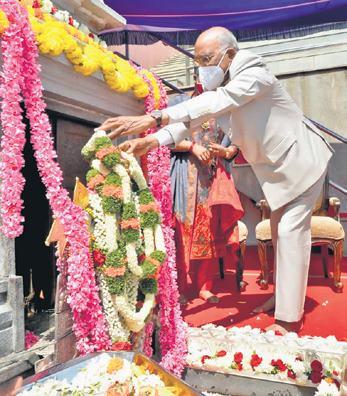
Meanwhile, before taking part in the inaugural ceremony, the President alongside First Lady Savita Kovind and daughter Swati Kovind visited Talacauvery and offered puja to Goddess Cauvery
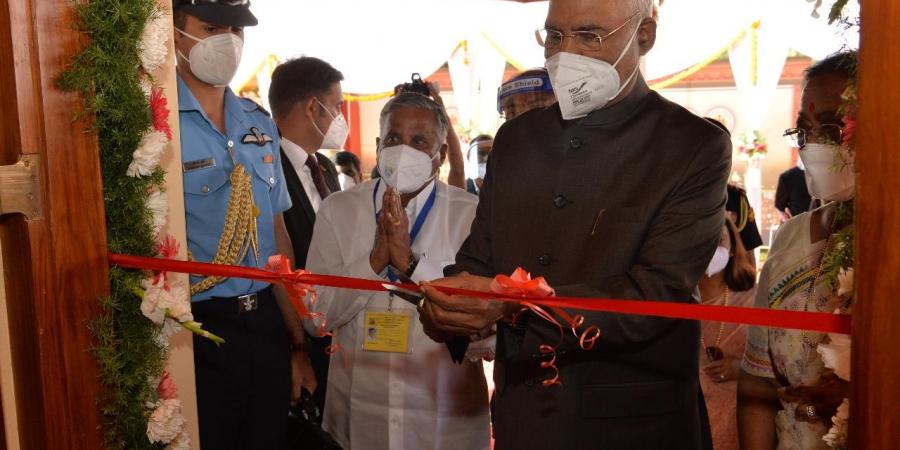
President Ram Nath Kovind inaugurates the General Thimayya Museum in Madikeri (Photo | Special arrangement)
Madikeri :
It was an ode to the pride of Kodagu as the President of India inaugurated the General Thimayya Museum in Madikeri on Saturday. The museum has been built at Sunnyside, the former residence of General KS Thimayya.
The President unveiled the inaugural stone at the General Thimayya Museum and took a tour inside the museum, which retold the story of the General. The war diary preserved inside the museum narrated the stories of various wars fought by the Indian military. The words of the first elected Prime Minister of Jammu and Kashmir Sheikh Abdulla appreciating General KS Thimayya, the narration of the Battle of Kangaw in the war diary and the release of the ‘General Thimayya March’ battalion tune were among the numerous artefacts that retold the greatness of the erstwhile General.
“General Thimayya Museum preserves special aspects of the extraordinary character and contribution of one of the finest soldiers in the history of our army. The memorial at ‘Sunny Side’, once the residence of General Thimayya, highlights the sterling features of our brave forces. District Kodagu has the honour of having enriched our Armed forces with stalwarts like General Thimayya and Field Marshal Cariappa. I am sure that this museum will inspire our youth to carry forward the legacy of General Thimayya,” were the words inscribed by the President in the logbook at the museum.
The inaugural ceremony also witnessed participation from Chief of Defense Staff Bipin Rawat, General Officer Commanding (GOC) and Colonel of the Kumaon and Naga Regiment Lt Gen Rana Pratap Kalita alongside other dignitaries from the military. District in-charge minister V Somanna, Kannada Culture Department minister Aravind Limbavali alongside Kodagu MLAs took part in the inaugural ceremony. Only about 40 dignitaries were allowed to witness the inaugural ceremony.
Kovind offers puja to Goddess Cauvery at Talacauvery
Meanwhile, before taking part in the inaugural ceremony, the President alongside First Lady Savita Kovind and daughter Swati Kovind visited Talacauvery and offered puja to Goddess Cauvery. The Temple Committee and archaks offered the President a shawl and a saree each to Savitha and Swati Kovind as a token of respect.
“This is the first time that the President of our country has visited Talacauvery. We are proud that he visited the centre and this has been possible because of the greatness of General Thimayya,” shared Rajesh Achari, one of the archaks at the temple. Meanwhile, a stringent combing operation by the forest department, police and anti-naxal squad had been ordered to ensure safe visit of the president to Talacauvery.
The security was tight across Talacauvery and Madikeri. While nearly 500 police were guarding Bhagamandala-Talacauvery area, the President’s convoy route in Madikeri was guarded by nearly a hundred police. Zero traffic was ordered on the convoy route in Madikeri from 2.30 pm to 5 pm.
MLC submits memorandum seeking Bharat Ratna
MLC Veena Achaiah, who was present during the inaugural ceremony of the General Thimayya Museum, handed over a memorandum to the President. The MLC has requested the President to award Bharat Ratna posthumously to Field Marshal KM Cariappa and General KS Thimayya.
Stray cattle and dogs shifted
To ensure smooth travel of the President’s convoy, Madikeri city municipal workers along with support from police were seen herding stray cattle and street dogs on Friday at midnight. All the stray cattle were shifted to the Madikeri Market Complex without fodder or water, evoking anger among many residents.
source: http://www.newindianexpress.com / The New Indian Express / Home> States> Karnataka / by Express News Service / February 06th, 2021
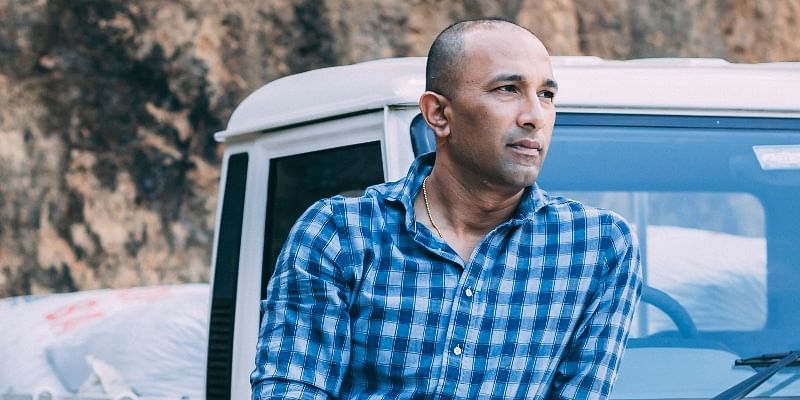
Ex-banker Soomanna Mandepanda and his wife, Puja Soomanna set up their startup Humblebean in 2017 to ensure better prices and reach for small coffee farmers and improve every part of the value chain.
For former banker Soomanna Mandepanda, the motivation for setting up Humblebean was not just to sell the best coffees, but more importantly, uplift the small and medium Indian farmers who grow them.
In the process, he is trying to bring about changes at almost each stage of the business — from cultivation and supply chain to research and education.
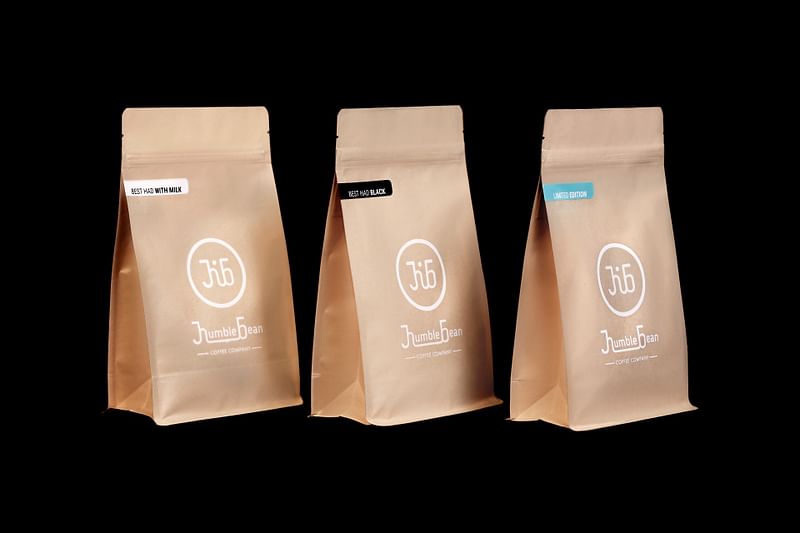
Founded in 2017 by Soomanna and his wife and former Yahoo executive Puja Soomanna, Bengaluru-based Humblebean works on an omnichannel model: It ties up with small coffee farmers in south India, roasts and grounds supply, provides the beans to roasters, exports its products, operates brew bars, and has an online presence.
A responsible way to grow coffee
The coffee drinking experience has been gaining traction in India, with the market for the brew expected to record a compound annual growth rate of 7.2 percent during 2021-25, according to a January 2021 Statista report.
Startups including Sleepy Owl, The Flying Squirrel, and Coffeeza, as well as shops such as Third Wave Coffee Roasters are making their presence felt in the market.
India is the world’s sixth-largest producer of coffee and fifth in terms of exports; in fact, 70 percent of its production is exported, says a January 2021 report by the India Brand Equity Foundation. Yet, Soomanna says, “a lot of small and medium farmers and farms aren’t getting the kind of business and reach they should” .
Soomanna would know: he spent most of his childhood on the coffee estates of Coorg and was a small farmer before moving to the world of finance and banking for 13 years. One way to correct the imbalance, he says, is by “making great biodiverse coffee that farms in India are already poised to do”.
According to him, 80-90 percent of coffee farms in India are held by small and medium farmers, whose secondary income comes from crops such as jackfruit, avocado, pepper, and orange that are part of the same farms.
Cultivating other crops alongside coffee “ensures automatic carbon sequestration, top soil replenishment, and lesser need to feed chemicals unlike commercial crops grown in other countries”, says Soomanna. “The mining of the minerals is automatic and you become carbon neutral.”
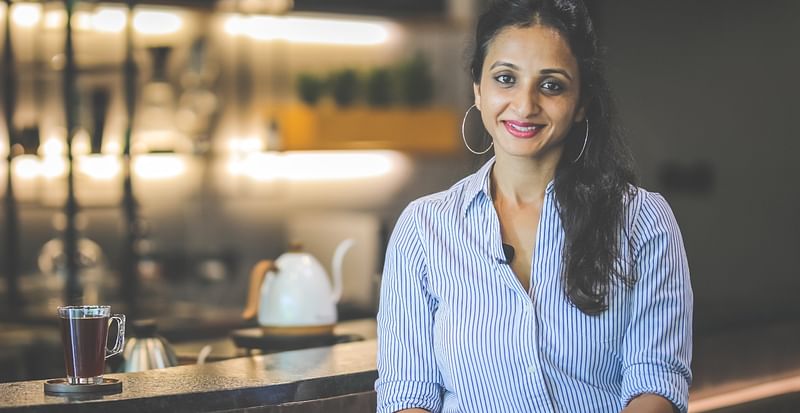
Puja Soomanna
Advocating farmer-friendly norms
Increasingly popular among young consumers are organic, speciality, and Rainforest Alliance coffees that respectively employ natural methods of cultivation dispensing with harmful chemicals, are of the highest grade being derived from a single origin or single estate and protect the environment as well as worker rights.
However, in India these certified varieties are grown largely on rich estates; most small and medium farmers cannot afford the costly certifications and grades.
Coffee cultivation and the business are still quite unorganised in India, the certifications cost a lot of money, and need constant follow-ups, says Soomanna. “The norms are difficult to adhere to for most small farmers. It is a replication of an American model.”
___________________
He says most large corporations in India export to Europe. “The small companies in Hassan, Chikmagalur, etc. certify about 150 estates and add the tags. But the farmer doesn’t get the price because the better prices are still being fetched with the local trader. The local traders are important, but the real traceability is lost.”
As farmers don’t get better prices, there is little driving them to improve their produce, he says. “Speciality coffee is something few farmers can afford to grow.”
Hence, the need to bring in farmer-friendly rules, he says.
The Humblebean coffee
Promoting social value investing
Given the largely unorganised state of affairs, Humblebean focused on getting farmers on board. The team collected random samples, tasted them, and guided farmers on growing the beans in a better way.
By 2018, the team had got 50-60 farmers on board and given them assessment reports free of cost. Until then, the startup was in its pre-revenue stages, bootstrapped with funds from family and friends.
The team then focused on getting roasters to directly buy from farmers. For this, it adopted the idea of social value investing, in which everyone who is part of the value chain comes together to solve a problem and there is money in it for all.
__________________
“Once we got the farmers on board, we decided to tie up with brands and introduce them to the new portfolios of coffees,” says Soomanna. “We incubated close to four different brands in India from scratch to start a unique brand with a different blend. The idea was to bring in multiple partnerships and inclusiveness in the farming community on one platform.”
Most of the speciality coffee firms have restricted names and types of beans grown on particular estates. “The idea is to bring in more brands that can access different estates, work with them, and encourage the farmers,” says Soomanna.
Humblebean also fulfils the complete roast and ground process for such brands and even gives them a credit facility, he says.
Quality comes with education
Towards the end of 2018 and early 2019, the Humblebean team found that coffees served at most star hotels weren’t up to the mark.
One of the reasons for this, Soomanna says, is that coffee as education is lacking in hotel management schools: one has to go to Italy to learn more about its nuances. The Coffee Board of India mostly takes care of the functionality, he says.
_________________
“We met a few management schools and after some discussions it was decided that the colleges would look at it as part of the curriculum,” says Soomanna.
Brewing innovative Indian blends
Even as Humblebean works to improve every part of the value chain, it is trying to offer consumers a very Indian coffee drinking experience.
To that end, the startup opened its first Brew Bar in the food experience section of a workspace on Bengaluru’s Residency Road in 2019. Humblebean was one of the early members of that workspace set up by a Singapore-based company.
Puja, who conceptualised Brew Bar, spent time innovating the blends with the use of Indian robustas.
“We don’t serve a single cup of speciality coffee; we wanted to make sure through the brewing methods can small and medium farmers come into mainstream brewing?” says Soomanna.
______________
He says these Indian blends “aren’t being used by a single new-age speciality coffee company” as they are considered “harsh and used as a filler across the world. But they are unique and you need great expertise and experience to make a robusta out of them”.
Following research and development, the startup has also come up with its own set of products. Together with B2B partners, it has launched these products online and will soon sell them at other marketplaces. The range is priced at Rs 220-350 for 250 gm for limited editions and depending on the roast.
“Indian coffees can have a global impact,” says Soomanna. “The idea is to be farmer-friendly and also not cause too much environmental damage. We want to bring an amazing cup of coffee from the farms the way it should be drunk.”
Edited by Lena Saha
source: http://www.yourstory.com / YourStory / Home> Start Up / by Sindhu Kashyap / February 07th, 2021
WELCOME. If you like what you see "SUBSCRIBE via EMAIL" to receive FREE regular UPDATES.
Read More »