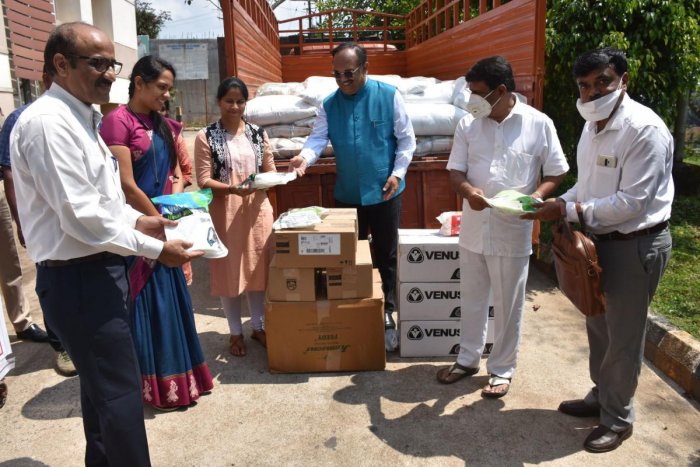
Mobius Foundation, a Delhi based NGO, handed over four ventilators to Kodagu district administration, for the treatment of COVID-19 patients.
Also, essential items for daily wage workers and the financially deprived, who are affected by the lockdown, were supplied by the NGO.
The items were handed over to the ‘Hasida Hottege Tanivu Pettige’ initiative, conceptualized by District Superintendent of Police Dr Suman D Pennekar.
Mobius Foundation convener Madhu Bopanna also handed over masks and medical kit for the medical staff, police and journalists.
Speaking on the occasion, he said that the organisation has contributed an amount of Rs 1 crore for PM CARES Fund on COVID-19. About 2,000 kg of lentils and 2,000 litres of oil have been contributed to ‘Hasida Hottege Tanivu Pettige’ initiative.
“It is the duty of every individual and organisation to help the needy during such a situation,” he added.
Madikeri MLA Appachu Ranjan, Deputy Commissioner Annies Kanmani Joy, Superintendent of Police Dr Suman D Pennekar and Kodagu Zilla Panchayat Chief Executive Officer K Lakshmi Priya were present.
Mobius Foundation had also lent a helping hand to the district during the flash floods and landslides.
source: http://www.deccanherald.com / Deccan Herald / Home> State> Mangaluru / by Aditya K A / DHNS, Madikeri / April 07th, 2020
Kodava is a small and beautiful mountain district of Karnataka and is well known in the world for coffee and its ‘brave warriors’, men and women, serving in all services.
File photos of Lt Gen CP Cariappa, Lt Gen CB Ponnappa (R) and Lt Gen PC Thimmaya (L). (Photo | KodaguConnect Twitter handle)
New Delhi :
It was a proud moment for the people of Kodava district when Lt Gen CP Cariappa took command of India’s elite 1 Strike Corps at Mathura on Friday. Lt Gen Cariappa became the Corp Commander and the District boasts of rare distinction of three Lieutenant Generals serving the army simultaneously.
Kodava is a small and beautiful mountain district of Karnataka and is well known in the world for coffee and its “brave warriors”, men and women, serving in all services. Talking only of Indian Army there are 90 posts at the rank of Lieutenant General.
Lt Gen PC Thimmaya and Lt Gen CB Ponnappa are the other two generals. Lt Gen Thimmaya is the Army Commander at the Army Training Command and Lt Gen Ponnappa is the Chief of Staff at the Northern Army Command. All three officers are a product of the National Defence Academy, Khadakwasla and joined the army at different times.
Lt Gen CP Cariappa is the junior-most among the three generals and was commissioned on 09 June 1984 into the 4th Battalion of the Rajputana Rifles. He served in UN Peace Keeping Force at Mozambique (Africa) and Iraq – Kuwait. Prior to taking over command of elite 1 Corps, he was the Military Secretary to the President of India at New Delhi. The officer on taking charge emphasized that his priority is ’fight against COVID-19 threat.’
Number of Kodava Lieutenant Generals in Indian Army at present: 3 File photos of Lt Gen CP Cariappa, Lt Gen CB Ponnappa (R) and Lt Gen PC Thimmaya (L). (Photo | KodaguConnect Twitter handle)
View image on Twitter
262
12:07 PM – Apr 4, 2020
Twitter Ads info and privacy
63 people are talking about this
_____________________________
At present Lt, Gen PC Thimmaya is the seniormost coorgi officer, who became Army Commander on 1 November 2018. He was the best cadet in pre-commission training at Indian Military Academy and was awarded the Sword of Honour. He got commissioned into 5th Battalion of the Mechanised Infantry in June 1981.
He commanded Army’s 10 Corps and was the Commandant, Army War College at Mhow before becoming Army Commander. Like the other two officers he also had UN Stint, was a Military Observer in UN Mission, Angola. He also was Defence Attache in the High Commission of India in Bangladesh. He assumed the command of Army Training Command in Nov 2018.
Lt Gen C Bansi Ponnappa is Chief of Staff of the prestigious Northern Command since Feb 2020. He was commissioned into 2 MAHAR Regiment in Jun 1985 and later commanded the same unit. The officer had two UN Tenures. He was in Somalia under UNOSOM-II and North Kivu Brigade of UN Peace Keeping Force in the Democratic Republic of Congo.
These officers follow in the footsteps of illustrious predecessors like Field Marshal K M Cariappa and General Kodendera Subayya Thimayya. Field Marshal Cariappa was first Indian Commissioned Officer, first Indian General and then first Commander-in-Chief of India.
A total of eleven officers from Kodagu have occupied top posts in the Army so far. This apart, Kodagu also boasts of having 20 Major Generals and four Air Marshals, which undoubtedly makes Kodagu, the Land of Generals.
Although, with time the numbers of people joining forces from the district have fallen, steps are being taken to regain it. The district has its own War Memorial with names of all martyred soldiers of Kodagu. A museum in the name of former Army Chief General Thimmaiah is also being constructed. The Kodava Legacy in the Army will continue.
source: http://www.newindianexpress.com / The New Indian Express / Home> Nation / by Mayank Singh / Express News Service / April 06th, 2020
The state government has reached out to tribals from Chamarajnagar stranded in Kodagu and provided them with food.
Mysuru :
The state government has reached out to tribals from Chamarajnagar stranded in Kodagu and provided them with food.Tribal development officials supplied 8 kg of ragi, wheat, sugar, jaggery, dal, horse gram, green gram, eggs, ghee and edible oil to the families of the migrant labourers.
The measure followed a report on ‘Soliga tribals of Chamarajnagar running out of food and desperate for vehicles to go back home’, published in TNSE.
Deputy Chief Minister Govind Karjol took up the matter with social welfare officials and directed them to contact the tribals and provide them with essentials. He, however, said they could not be shifted back to Chamarajnagar because of the ongoing lockdown.
Chamarajnagar District Minister Suresh Kumar directed DC Annies Kanmani Joy to provide foodgrains to the migrant labourers, following which the supply was ensured.
Tribesman Dasegowda confirmed that officials visited interior villages of Kodagu and supplied foodgrains to the labourers. The tribals, who had migrated to Kodagu to work in coffee estates, have been stranded there.
Kodagu District Minister V Somanna said, “I will meet the people on Tuesday and reassure them that the government will stand by them.”
source: http://www.newindianexpress.com / The New Indian Express / Home> States> Karnataka / by K Shivakumar / Express News Service / March 30th, 2020
The Ibnii Spa and Resort in Coorg, Karnataka, weigh the food wasted by customers and makes them pay for it at the time of checkout.
The guests have to pay Rs 100 for every 10 gram of food wasted by them. | Image: Unsplash | Photo Credit: Representative Image
Bengaluru:
Food waste is definitely not a good taste. A luxury resort in Karnataka came up with an ingenious way to decrease the wastage of food by its guests. The Ibnii Spa Resort started charging its customers for wasting food.
The resort which is located in the hills of Coorg, Karnataka, has come down from 14 waste bins to just one since the initiative was implemented.
The composting unit of the resort used to be overworked with 14 huge garbage bins of leftover food daily. The resort decided to decrease the quantity of waste by informing guests that they could place their orders any number of times.
However, when the wastage of food did not stop, the resort came up with the unique idea of making the guests pay for the food they ordered but did not eat.
How much do the guests pay for wasting food?
The idea was simple. At the end of every meal, all the leftover food is weighed on a weighing machine in front of the guests. At the time of checkout, the guests are told how much food they wasted during their stay. They have to pay Rs 100 for every 10 gram of food wasted by them. The amount is to be dropped in a donation box which goes to a not-for-profit organisation that feeds children at an orphanage in Madikeri.
How have the guests reacted to the initiative?
The initiative which was started six months ago has made a huge impact on the conscience of the guests. “We have seen a drastic decrease in the quantity of food waste. From fourteen waste bins every day, we now only need one,” Shreya Krishnan, CSR adviser at The Ibnii, told Deccan Chronicle. The guests have appreciated the resort’s efforts to reduce food wastage.
How much food do we waste?
One-third of the food produced in the world for human consumption every year gets lost or wasted, according to the Food and Agricultural Organisation of the United Nations.
Not only is wasting food doing wrong to the farmers who grow the crop and to the chefs who cook the dishes but it is also unfair to those people who can’t afford two meals in a day and impacts the environment too.
source: http://www.timesnownews.com / TimesNowNews.com / Home> News> Buzz / by Saumya Agrawal / February 21st, 2020
Seminar, biopic release to mark the centenary year of scholar Dr. I.M. Muthanna
Bengaluru:
Kodagu’s most acclaimed poet, Appachcha Kavi’s 150th birth anniversary celebrations will be held in New Delhi.
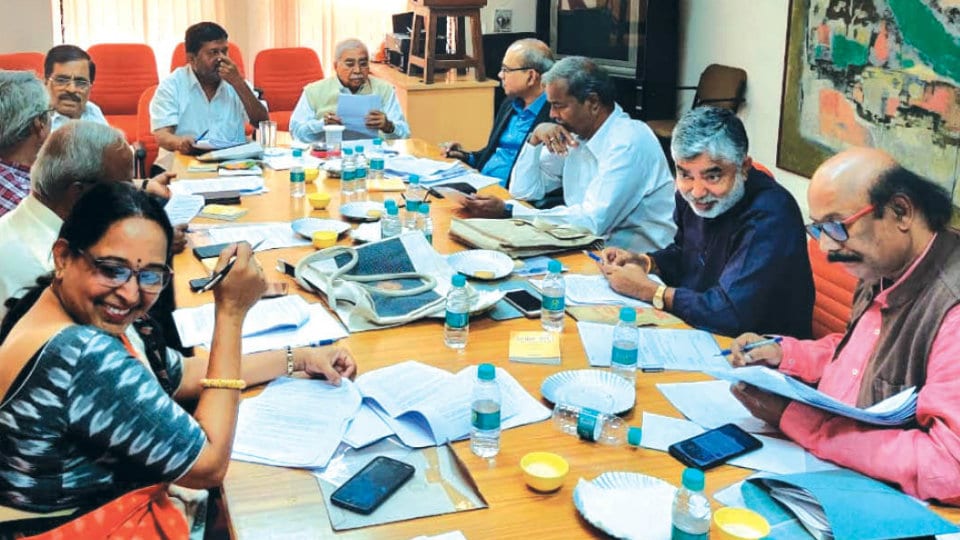
This decision was taken by members of Kendra Sahitya Academy, which had convened a meeting recently at its regional office in Bengaluru under the Chairmanship of Kannada writer Dr. Chandrashekar Kambar.
The Academy, in association with Delhi Karnataka Sangha, Delhi Kodava Samaja and Jawaharlal Nehru University (JNU), will jointly organise the 150th birth anniversary celebration of Appachcha Kavi.
On this occasion, to mark the centenary year of Dr. I.M. Muthanna, noted Indian writer and scholar, a seminar will be held and a biopic on the great writer will also be released.
Dr. I.M. Muthanna was a noted Indian writer, scholar and translator who wrote in English, Kannada and Kodava languages and had translated four plays of Appachcha Kavi to Kannada.
During the meeting, Academy member submitted a proposal to publish the biopic and plays of Dr. Muthanna.
Academy Convenors Dr. Siddalingaiah, Dr. Sarooj Katkar, Prof. H.S. Shivaprakash and others were present at the meeting.
source: http://www.starofmysore.com / Star of Mysore / Home> News / January 29th, 2020
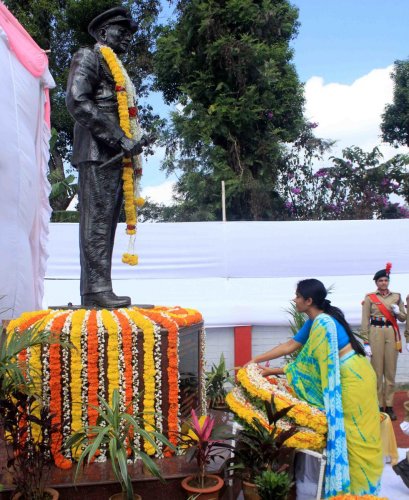
Deputy Commissioner Annies Kanmani Joy pays floral tributes to the statue of Field Marshal K M Cariappa in Madikeri on Tuesday.
Air Marshal (Retired) K C Cariappa said, “We, the people, should live as Indians first, ignoring the barriers of caste, creed and religion.”
He was speaking at the 121st birth anniversary programme of Field Marshal K M Cariappa, organised by the Department of Kannada and Culture, Karnataka Kodava Sahitya Academy and Field Marshal Cariappa and General Thimayya Forum at Field Marshal Cariappa Circle here on Tuesday.
MLA Appachu Ranjan said Cariappa used to reiterate the slogan that the nation comes first. “Cariappa believed in the values of punctuality and honesty. He was known for patriotism. All must cultivate his ideologies,” he said.
Ranjan said that he has requested the chief minister to move a proposal to the Central government to declare Cariappa’s birth anniversary as a national birth anniversary.
Deputy Commissioner Annies Kanmani Joy said that she is proud to work in the homeland Cariappa. Apart from being a land of natural resources and tourist attractions, Kodagu is also known as the land of brave soldiers, she added.
The dignitaries paid floral tributes were paid to the statue of Cariappa. Former minister M C Nanaiah, MLC Sunil Subramani, MLC Shanteyanda Veena Acchaiah, General Thimmaiah Forum President Col (retd) K C Subbaiah, convener B A Nanjappa, Karnataka Kodava Sahitya Academy chairperson Dr Ammatanda Parvathi Appaiah and Zilla Panchayat CEO K Lakshmi Priya were present on the occasion.
source: http://www.deccanherald.com / Deccan Herald / Home> State> Mangaluru / by Adithya K A / DHNS, Madikeri / January 28th, 2020
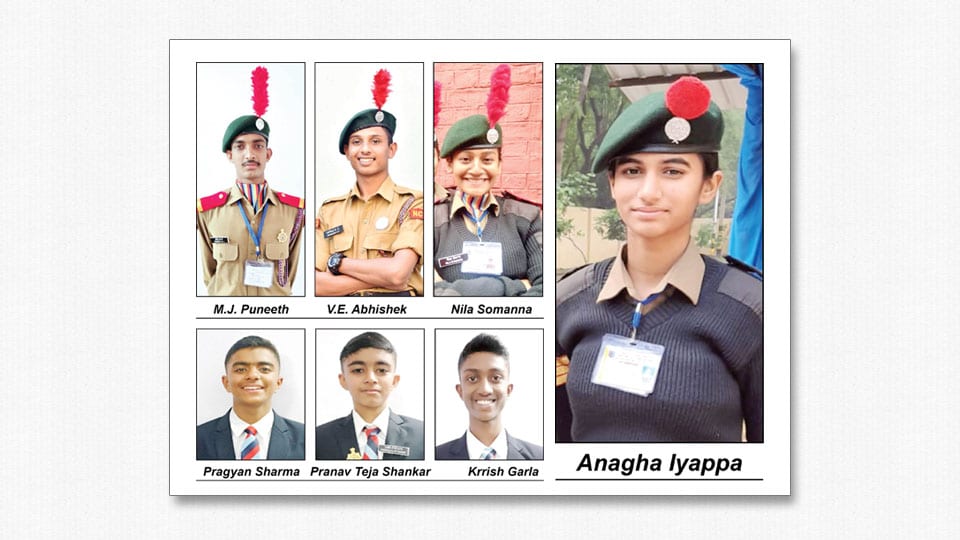
Three cadets from 19 KAR NCC Battalion (Coorg Battalion) in Kodagu of Karnataka-Goa Directorate have been selected for the Annual Republic Day (R-Day) Parade in New Delhi on Jan. 26. They will perform in the NCC contingent that will march through the Rajpath greeting dignitaries including President Ram Nath Kovind and Prime Minister Narendra Modi.
The cadets are Junior Under Officer M.J. Puneeth, a Second B.Com student from Field Marshal K.M. Cariappa College, Madikeri. He is the son of M.L. Jagadeesh and T.M. Chandramani. Puneeth hails from Manjoor village in Sakleshpur of Hassan. Puneeth will take part in Prime Minister’s Rally.
The Republic Day celebration is a three day extravaganza and after this celebration at India Gate, on Jan. 27, a Prime Minister’s Rally is held by a crème of NCC cadets displaying various breathtaking performances and drill.
The other cadet is Sergeant V.E. Abhishek, a Second PUC student from Pre-University College, Murnad. He is the son of V.S. Eshwar and V.E. Asha Kumari of Murnad village. He will take part in all India cultural show.
The third candidate from Coorg Battalion to participate in the prestigious parade is Codanda Nila Somanna. She is a Junior Under Officer and will represent the cultural team and is taking part in youth exchange programme.
She is the head girl of Coorg Public School, Gonikoppa and is the only girl cadet from Kodagu to reach New Delhi this year. She is the daughter of Codanda Sampan Somanna and Rashmi from Balele village.
Ramakrishna Vidyashala, Mysuru
From Mysuru, cadets Pragyan Sharma, Pranav Teja Shankar and Krrish Garla of Sri Ramakrishna Vidyashala, Yadavagiri, are representing the Karnataka and Goa Directorate in New Delhi. They will attend the Prime Minister’s rally. These three are the only cadets from Junior Division Army Wing from Mysuru Group who are attending the R-Day Camp.
National Public School, Mysuru
Sergeant Kongetira Anagha Iyappa will also represent Karnataka and Goa Directorate at the Republic Day Parade. She is from the Junior Wing NCC, Mysore Group and is part of the Cultural Team competing at Delhi. She is a Class 9 student from National Public School (NPS), Mysuru and the youngest girl cadet in the Karnataka-Goa Contingent. She is the daughter of Col. Kongetira C. Iyappa and Nandini Iyappa.
source: http://www.starofmysore.com / Star of Mysore / Home> News / January 24th, 2020
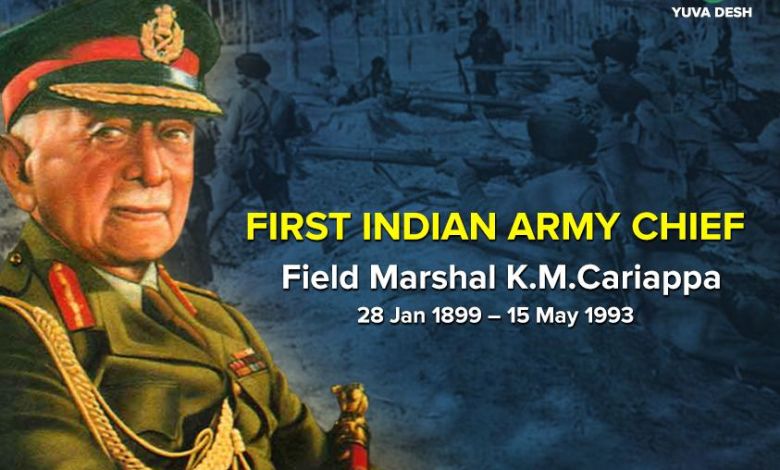
KM Cariappa is a man known for many firsts, but most importantly, he is known as the man who took charge of the Indian Army from its last British Commander in Chief, General Sir Roy Bucher. Born on January 28, 1899, in Coorg, Cariappa completed his education at Central High School at Madikeri and went on to study at the Presidency College in Madras.
However, Cariappa began his Army stint under the British and was among the few selected for the first batch of KCIOs (King’s Commissioned Indian Officers) at the Daly Cadet College in Indore and was commissioned in the Carnatic Infantry. He was in active service with the 37 (Prince of Wales) Dogra in Mesopotamia (present-day Iraq) and then posted to the 2nd Rajput Light Infantry (Queen Victoria’s Own). Cariappa went on to become the first Indian officer to undergo the course at Staff College, Quetta in 1933. In 1946, he got promoted as the Brigadier of the Frontier Brigade Group.
By Indian independence, Cariappa saw action in Iraq, Syria, Iran and Burma and became the first Indian Officer to be given command of a unit in 1942. He went on to receive many awards and accolades in his career spanning three decades. He received the prestigious Order of the British Empire (OBE) for his role in Burma against the Japanese during the Second World War.
In 1947, Cariappa became the first Indian to be selected to undergo a training course at Imperial Defence College, Camberly, UK. His role during the Partition is rarely mentioned, during which he oversaw the division of the Army. Cariappa also led the Indian forces on the Western Front during the Indo-Pak War of 1947 and successfully recaptured Zojila, Drass and Kargil and established a linkup with Leh.
On January 15, 1949, Cariappa became the first Commander-in-Chief of the Indian Army. He held the five-star rank of field marshal, the highest honour in the Indian Army, which Sam Manekshaw is the only other officer to have held.
source: http://www.defenceaviationpost.com / Defence Aviation Post / Home> Defence> Indian Army / source: Indian Express / January 20th, 2020
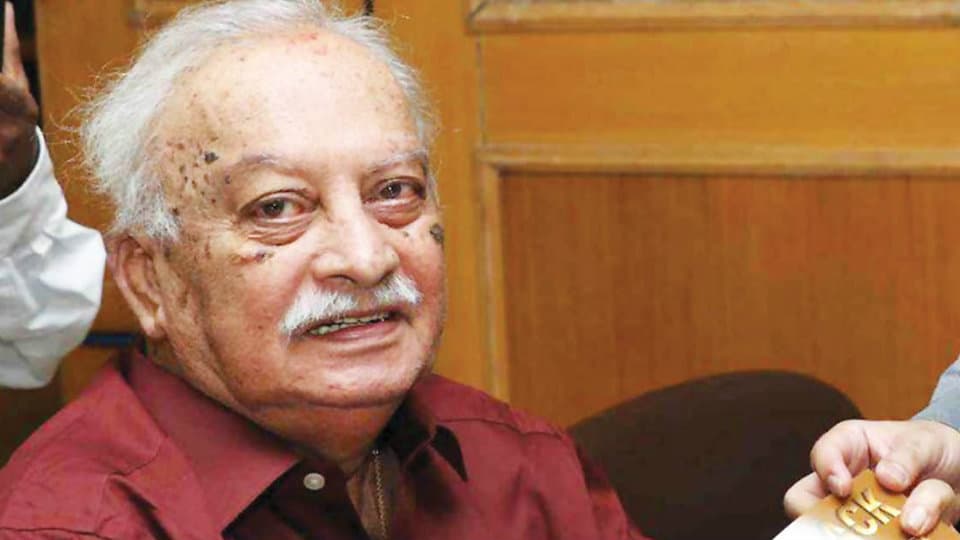
One of India’s leading Sports Administrators, five-time National Decathlon Champion, senior sports achiever in National and International arena and the first person in Kodava community to secure a Doctoral degree in Sports, Dr. C.M. Muthaiah passed away in Bengaluru on Dec. 5. He was 87.
Dr. Codanda Madappa Muthaiah was born in Madikeri on April 30, 1932 and had secured gold medal (first rank) in M.Sc. Biomechanics from Germany. Despite his education in Science, he had deep interest in sports and Muthaiah was involved in Decathlon, Long Jump and High Jump and had achieved National and International-level recognitions.
From 1956 till 1960, Dr. Muthaiah had won National-level and Asian-level championships. He had won the National Championship crown five times and recognising his achievements, he was bestowed the title “Golden Shoe” in 1977. One of his biggest regret was his narrowly missing the Decathlon Medal in the Tokyo Asian Games in 1958. Dr. Muthaiah was instrumental in bringing the Sports Authority of India, South Centre, to Bengaluru.
After dedicating his youth to the cause of sports, Codanda Muthaiah served the field as a Coach and Sports Officer. He went on to become a Senior First Grade Coach at Netaji Subhas National Institute of Sports commonly known as National Institute of Sports (NIS), the Sports Training Centre at Patiala in 1962. He later served as the chief of NIS, an Academic Wing of Sports Authority of India and Asia’s largest Sports Institute in Patiala, Punjab.
Dr. Muthaiah had also served as the Director General of the Sports Department of the Union Government and in 1982, he was conferred the ‘Asiad Vishist Jyothi’ for his contribution to Asian Games and Rajyotsava Award in 2013.
He was appointed as the Technical Advisor when the Asian Games was organised in New Delhi in 1982 and had served as Technical Director to various other National and International Games.
He also served as the Secretary General of Asian Track and Field Research Centre. After retirement, he was residing at Jayamahal Extension in Bengaluru. He is survived by wife Parvathi and a daughter.
source: http://www.starofmysore.com / Star of Mysore / Home> Sports / December 13th, 2019
Mother of Class 8 student, Arshiya T, was always worried about how to send her child to tournaments and cope with academics at the same time. “My daughter is passionate about badminton. But how will she cover the chapters that she misses out on during the tournament?” said Arshiya.
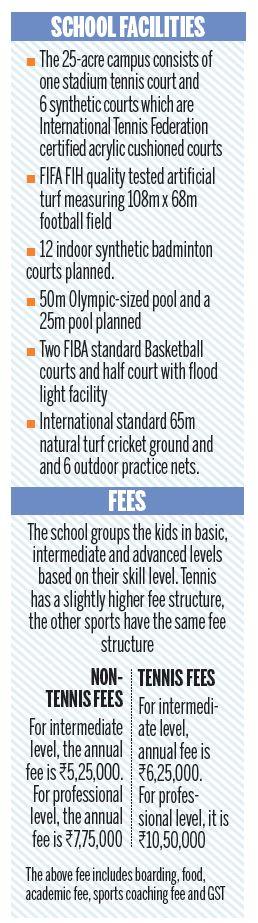
The Sports School at Vaderahalli on Kanakapura Road tries to mitigate this point of parents, who are worried about the academic performance of their kids. The school’s tailor-made teaching method allows students to pursue their sporting dream without compromising academics.
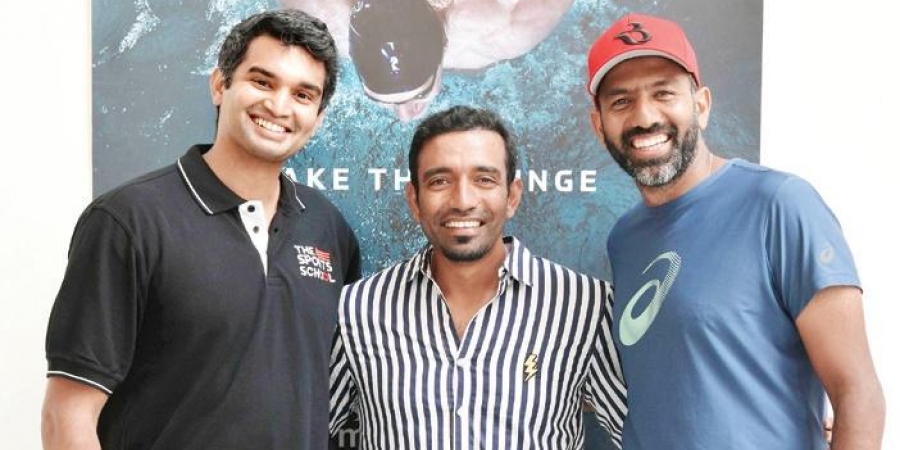
Set up in partnership with Jain Group of Institutions, the main highlight of the school is involvement of sports celebrities such as tennis player Rohan Bopanna, cricketer Robin Uthappa and shuttler Anup Sridhar on the advisory board. “Coaching is something that I’m fully passionate about. Today, I got the opportunity to advise The Sports School to run their cricket coaching, set up a curriculum, collaborate with many national and international clubs and associations to conduct tournaments often and make sure that each student is given complete attention to nurture their skills,” said Uthappa.
According to Sridhar, setting up of these kind of schools can empower other sports, other than just cricket. “The school allows children to get proper training from a young age that will ensure more potential. They can explore suitable careers that can go along with your sports interests with a backup of academic qualification. If we get such qualified professionals, it can boost any sport,” he said.
All these established players unanimously agreed that this is something essential for the development of the athletes.
“Managing studies during your competitions as well as during the preparations is a big challenge. I personally have faced this. Fifteen years ago, parents used to be very strict about children following studies and giving up any other interest for the sake of it. But now, parents are okay if children compromise on their studies. They want them to play more and be popular. Both situations are not correct. When I was introduced to the concept of this school, I took it up immediately. This is something I dreamed of doing myself at some point of my life,” Uthappa added.
Bopanna, who runs his own tennis academy, said, “I never had a facility like this. It’s good to provide an athlete the right direction to become a world-class player. They need education to lead their life and career. That drew my attention towards this initiative.”
He also added that the school takes care of the overall development of the player.
“Nutrition, physical fitness and stress management – everything has been taken care of, just like how a professional player is exposed to.”
Speaking about the development of students in rural areas and the concept of inclusion, Jaggi Nadig, chief marketing officer, The Sports School, said, “Training of specially-abled children and government school students is under discussion.
There is a lot of economics behind it. We are trying to get CSR sponsors to initiate that. Right now, we are focusing on reaching out to as many children as possible.”
source: http://www.newindianexpress.com / The New Indian Express / Home> Sports> Others / by Lesly Joseph, Express News Service / Decembr 23rd, 2019
WELCOME. If you like what you see "SUBSCRIBE via EMAIL" to receive FREE regular UPDATES.
Read More »