Category Archives: Inspiration / Positive News and Features

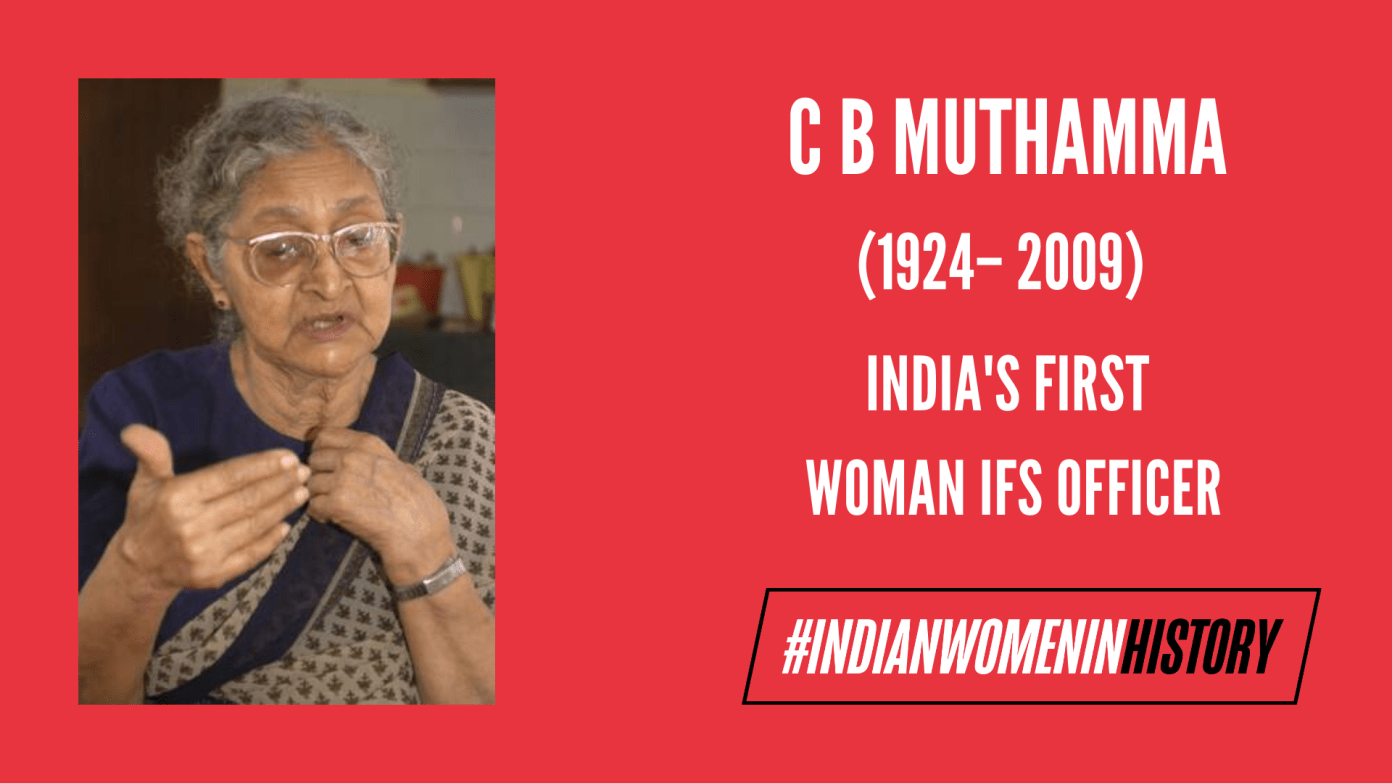
C B Muthamma: India’s First Woman IFS Officer | #IndianWomenInHistory

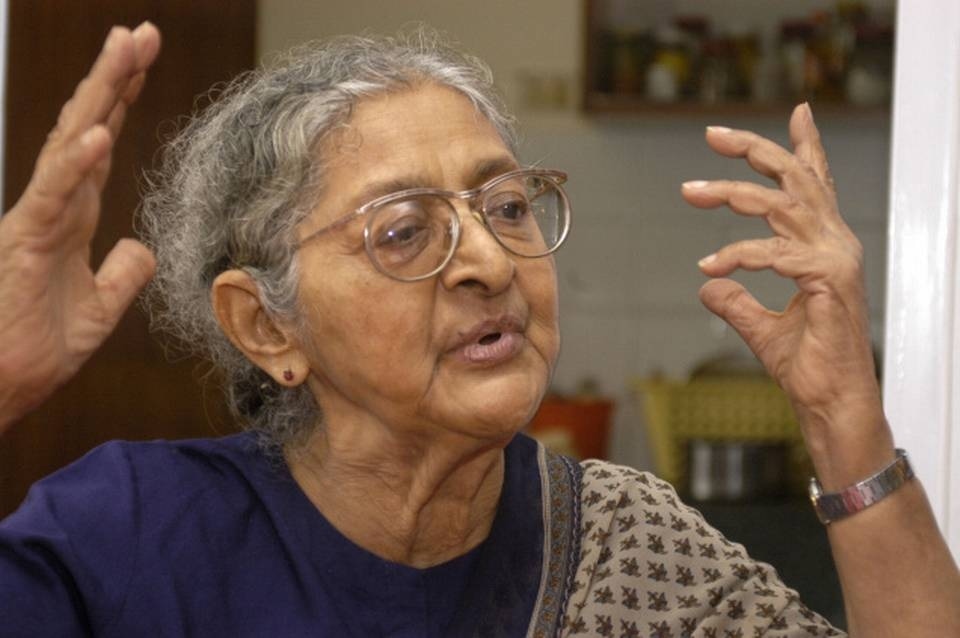
MuthammaKF17dec2019

A survey conducted in 2019 revealed women in India are paid 19% less than men. While the participation of women in the workforce is only 26%, with merely 9% being in any kind of leadership position, the practices of sex-based bias and stereotypes at formal and informal workplaces gravitate from structural violence over their bodies to seeking organisation’s permission to be under wedlock as in the case of the first Indian woman Ambassador: C B Muthamma.
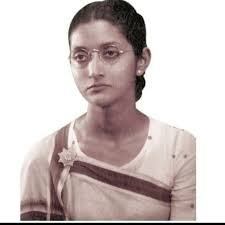
Image source : Twitter

Early life
Chonira Belliappa Muthamma, the first woman to clear the Indian Civil Services examinations, the first woman Indian Foreign Service (IFS) officer, the first Indian woman diplomat, later the first Indian woman Ambassador (or High Commissioner), was born in Virajpet in Karnataka’s Kodagu (then Coorg), a coffee-growing district in southern India on January 24, 1924. Muthamma’s father, who was a forest officer, passed away when C B Muthamma was nine years old. Being a single parent raising four children, her mother made it a priority to give them the best possible education. She did her schooling in St Joseph`s Girl School in Madikeri. Later, she moved to Chennai to pursue her undergrad from the Women’s Christian College and her Master of Arts degree in English Literature from Presidency College, Chennai.

IN THE END, SHE WAS GIVEN ABYSMALLY LOW MARKS, IN SPITE OF WHICH SHE TOPPED THE FOREIGN SERVICE LIST AND BECAME THE FIRST WOMAN IFS OFFICER IN 1949. WHEN SHE ENTERED THE SERVICE, MUTHAMMA WAS MADE TO SIGN AN UNDERTAKING THAT SHE MAY BE REQUIRED TO RESIGN FROM HER JOB ONCE SHE GOT MARRIED.

In 1948, a year after independence, C B Muthamma cleared the UPSC examination, becoming the first woman to join the Indian Civil Services. Her struggles started with the UPSC Board interview where the Board members tried to persuade her to change her first option for the IFS. In the end, she was given abysmally low marks, in spite of which she topped the Foreign Service list and became the first woman IFS officer in 1949. When she entered the service, Muthamma was made to sign an undertaking that she may be required to resign from her job once she got married. “This was clearly against the Constitution, but in those early days, it did not occur to me to challenge that rule…there was an attitude of vengefulness on the part of the men—a feeling that should be kept in their places, and that they should be encouraged to leave,” she cited this incident in her collection of essays, aptly entitled, Slain by the System.

Muthamma Vs Union of India

With this bizarre rule intact at the Ministry of External Affairs, Mira Sinha Bhattacharjea and Rama Mehta were among those who had to leave the service, points out Kishen Rana in the Indian Foreign Affairs Journal. In addition to facing everyday prejudices against women in Indian society, which got reflected in the ministry, Muthamma was not accepted by several Ambassadors citing various reasons as to why it was inappropriate to send a woman to the station. Finally, she was first posted to the Indian Embassy in Paris. It was there she understood that it is not only Indian diplomats who had problems with a female colleague, but also her peers in other Embassies who were equally not at ease in dealing with a woman in workplace. She then served in Rangoon, London, and on the Pakistan and America Desks in the Ministry of External Affairs in New Delhi.

SHE WAS FIRST POSTED TO THE INDIAN EMBASSY IN PARIS. IT WAS THERE SHE UNDERSTOOD THAT IT IS NOT ONLY INDIAN DIPLOMATS WHO HAD PROBLEMS WITH A FEMALE COLLEAGUE, BUT ALSO HER PEERS IN OTHER EMBASSIES WHO WERE EQUALLY NOT AT EASE IN DEALING WITH A WOMAN IN WORKPLACE.

The tipping point for her was when she was overlooked for promotion to Grade I, the highest level of Secretary to Government of India, of the IFS. In 1979, she brought the petition against the government, the Appointments Committee of Cabinet (ACC) and Ministry of External Affairs, on the grounds of professional gender bias and discrimination contradicting Article 14 (equality before the law) and Article 16 (equality of opportunity in matters of public employment) of the Constitution.

She further challenged Rule 8(2) of IFS (Conduct & Discipline) Rules, 1961 which stated that, “a woman member of the service shall obtain the permission of the Government in writing before her marriage is solemnised. At any time after the marriage, a woman member of the Service may be required to resign from service, if the government is satisfied that her family and domestic commitments are likely to come in the way of the due and efficient discharge of her duties as a member of the service,” and Rule 18(4) of IFS (RCSP) Rules, 1961 which noted that, “no married woman shall be entitled as of right to be appointed to the service.”

The Supreme Court Bench headed by Justice V.R. Krishna Iyer commented that this, “…bespeaks a story which makes one wonder whether Articles 14 and 16 belong to myth or reality.” Solicitor General, Soli Sorabjee opposed the petition saying that the rule overlooking women for ambassadorship was justified. He argued that the chances of leakage of confidential information of strategic significance were a dangerous risk, and so Muthamma’s case to be made an ambassador was rightly rejected.

Though C B Muthamma was promoted to Grade I and posted as India’s Ambassador to Hungary while the trail was ongoing, the Court struck down the blatant prejudice against women’s rights in India by the iconic judgement of the Bench headed by Justice V.R. Krishna Iyer.

Expert Judgements
“That on numerous occasions the petitioner had to face the consequences of being a woman and thus suffered discrimination though the Constitution specifically under Article 15 prohibits discrimination on grounds of religion, race caste, sex or place of birth and Article 14 of the Constitution provides the principles of equality before law….”

“If a fragment of these assertions were true, unconstitutionality is writ large in the administrative psyche and masculine hubris. If there be such gender injustice in action, it deserves scrupulous attention from the summit…“

“If a woman member shall obtain the permission of the government before she marries, the same risk is run by the government if a male member contracts a marriage. If the family and domestic commitments of a woman member of the Service is likely to come in the way of efficient discharge of duties, a similar situation may well arise in the case of a male member. In these days of nuclear families, inter-continental marriages and unconventional behaviour, one fails to understand the naked bias against the gentler of the species.”

“If a married man has a right, a married woman, other things being equal, stands on no worse footing. This misogynous posture is a hangover of the masculine culture of manacling the weaker sex forgetting how our struggle for national freedom was also a battle against woman’s thraldom.”

“Freedom is indivisible, so is Justice. That our founding faith enshrined in Articles 14 and 16 should have been tragically ignored vis-a-vis half of India’s humanity, viz., our women, is a sad reflection on the distance between Constitution in the book and Law in Action.”

“In the rat race of Indian official life, seniority appears to be acquiring a religious reverence. We have had the advantage of the presence of the learned Solicitor-General, appearing for the Union of India. With characteristic fair-ness he has persuaded his client to agree to what we regard as a just gesture, viz., that the Respondent-Union of India will shortly review the seniority of the petitioner, her merit having been discovered and her seniority to Grade II being recognised.”

The Court dismissed the petition but directed the Government to review the petitioner’s case in light of the only remaining element of her complaint—that relating to the promotion of people junior to her. The Court emphasised the need to overhaul all service rules to remove discrimination.

This ruling served as an aid at many women’s meeting in support of their struggle for equality. She thus became the first woman from within the service to be appointed Ambassador. Later, she served as ambassador in Accra in Ghana, and afterwards, she was made the Indian Ambassador to The Hague in the Netherlands. She retired as one in 1982 after 32 years of service.

A Trailblazer For Working Women
Foreign Secretary Nirupama Rao recalls C. B. Muthamma as someone who’d waive away references to being the ‘first woman diplomat’ by saying, “Someone’s got to be first—I was old enough to have been there first.” Arundhuti Ghosh, the fiery diplomat who fought for India’s concerns on nuclear issues in Geneva, remembers her as a formidable personality and feminist who always showed consideration for people who worked below her. “For example, once she pointed out that Joint Secretaries have two air conditioners in their office rooms while non officer-grade staff had none and she gladly gave up her own A/C to share with other staff. That was Muthu for you,” Gosh said.

After retiring, she continued to be an activist. C B Muthamma was nominated as the Indian member of the independent Palme Commission, a non-governmental Commission on Disarmament and Security Issues, which reported directly to the United Nations. The spinster remained active in social movements, helping riot victims and citizen groups, her philanthropy knew no bounds. In her book the Slain by the System (2003), a collection of essays criticising of the Indian political system and its political class, she writes, “Looking back, I cannot help but conclude that my tenure with the external affairs ministry was one long tussle with the anti-women bias.” She also co-authored The Essential Kodava Cookbook (2000), compiling forgotten recipes from Coorg for the culinary enthusiast inside her. She passed away on October 14, 2009 in Bangalore at the age of 85.

C B Muthamma proved that as long as social justice is an integral part of our constitutional fundamentals, gender justice will remain a non-negotiable article of faith. She not just managed to get the Supreme Court agree that gender discrimination did exist in the foreign office but also broke many visible and invisible barriers to set a level playing field for women in IFS, women in civil service and women in all workforce.

References
1) The Better India
2) Ministry of External Affairs
3) Indian Kanoon
4) The SOP

source: http://www.feminisminindia.com / Feminism in India / Home> History / by Nivedita Jayakumar / December 16th, 2019
Running closer to nature

This year, the marathon was completely eco-friendly and trash-free, with water being served in coconut shells, food in banana leaves and plates made out of areca leaves.

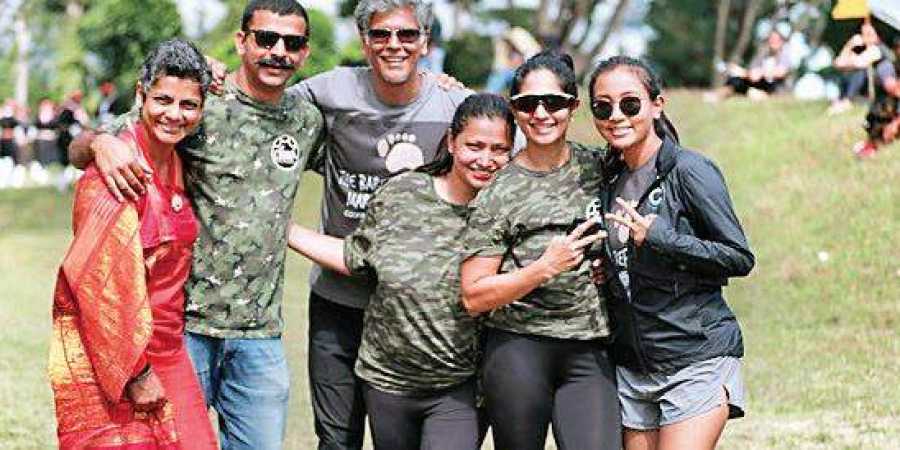
Nikki Ponnappa (left) along with Milind Soman (in grey) and members of The Coorg Wellness Foundation

Bengaluru :

Bengaluru-based golfer Cheppudira Nikki Ponnappa can never decide what she is passionate about more – her love for sports or working towards saving the ecology of her hometown, Kodagu. The international-level golfer recently arranged the fifth edition of Barefoot Marathon, which happened on Sunday in Kodagu. The marathon was an initiative by her organisation, The Coorg Wellness Foundation, in association with avid marathon runner and her friend, Milind Soman.

This year, the marathon was completely eco-friendly and trash-free, with water being served in coconut shells, food in banana leaves and plates made out of areca leaves. The warm-up exercise before most marathons is usually Zumba, but keeping up with local traditions, Valaga music, which is traditional Kodava music, pumped up the participants. The highest prize being `42,000 for 42 km, the marathon had some interesting rules for the prizes that were distributed.

The cash prize went to runners from the neighbourhood area, while the non-local runners got to bring home produce by local farmers, which included rice, coffee, spices etc. All the funds collected from this event will go towards betterment of the families who lost everything in the landslide that hit Coorg in 2018.

More than 400 people participated in this marathon. Ponnappa says the main objective of the run was to bring people closer to nature. “When you run barefoot and feel the soil, it makes you feel closer to Mother Nature. Barefoot is a symbolic way to do something auspicious, plus it has lot of scientific benefits too. We have many nerve points in our feet and these runs work wonders for them.

It was great to see so many people travelling to Coorg, especially from Bengaluru, to participate in this marathon,” says Ponnappa, who was first introduced to golf at the age of 14-15 by her father, who was then serving in the Indian Army. She is also a certified coach and a social activist. Ponnappa’s organisation, the Coorg Wellness Foundation, which was set up in 2014, works towards the development of the people of Kodagu and its eco-system. Along with free education and boarding, they also provide training to join the Army.

source: http://www.newindianexpress.com / The New Indian Express / Home> Cities> Bengaluru / by Monika Monalisa / Express News Service / December 10th, 2019

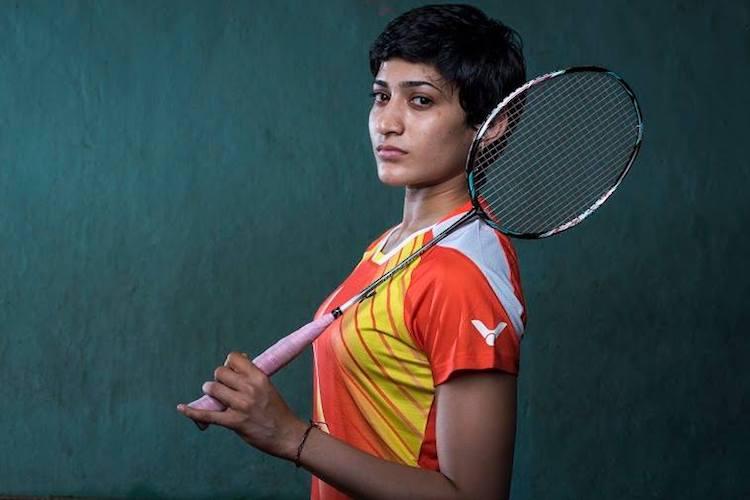
How her sporting family helped Ashwini Ponnappa become a consistent force in badminton

An excerpt from She Dared: Women in Indian sport, a book on the stories of leading women in Indian sport by Abhishek Dubey and Sanjeeb Mukherjea.

AshwininKF28nov2019

The women of the family and society form the fulcrum of many of the rituals related to the weddings in Kodagu (Coorg).The conducive ecosystem for the growth and development of the girl child manifests itself in the personas of the two Ashwinis who hail from this region – Ashwini Nachappa, in the closing decades of twentieth century India, and Ashwini Ponnappa in the opening decades of twenty-first century India.

As Ashwini Nachappa says, ‘The name “Ashwini” means “a female horse”.’ The two mares from Coorg have been brand ambassadors of Indian sports in terms of talent, strength, articulation and finesse. If Ashwini Nachappa galloped to success in athletics, Ashwini Ponnappa has been the stable and consistent force in the Indian badminton story. The two Ashwinis spread across generations give us the trailer of what the daughters of the country can achieve if they get a congenial environment for their growth. We have been through the pages of the sporting journey of India’s Florence Griffith Joyner or Flo-Jo, i.e. Ashwini Nachappa. It’s the turn of Ashwini Ponnappa now.

Born on 18 September 1989 in Coorg, Karnataka, Ashwini Ponnappa has sports flowing in her genes. ‘My dad M.A. Ponnappa was a hockey player. We have uncles who were hockey players and relatives who were into athletics and cricket. So, yes, we do belong to a sporty family. This has helped in my career as well. Dad was pretty fit and helped me with my physical fitness during tournaments, and in the off season when we didn’t have any training. Mum helped me with my diet and made sure that I ate right. More importantly, she helped me in keeping calm. The most important aspect is that they were with me always, irrespective of what happened in the match, and encouraged me to follow my dream of playing badminton and doing really well,’ says Ashwini.

Sports teaches us many things in life. And this is what one expects from parents who understand the meaning of sports. But did she take up sports as she happened to be from a sports family? ‘More than the sports family itself, I was a hyperactive child, and to keep me busy, my parents put me into sports. One thing followed another. Both my parents were working, and to keep me engaged, they put me in badminton. As is common amongst many of the players, I began with enjoying the game and playing with my parents. Thus, it all started as fun with badminton. Then I started attending coaching sessions. Actually, right next to Dad’s bank, there was a single badminton court which also had a coach. So it was convenient, as Dad used to drop me off there and then pick me up. After this, as this became part of my routine, Dad and mom started taking turns to pick me up and drop me off.’ Ashwini takes us down memory lane. This picking up and dropping off continued in the coming years with a new set ofchallenges. Professional sports demands frequent travel. In the case of a girl child, this becomes critical. For Ashwini Ponnappa, it was more challenging than usual—especially with both of her parents working. Her father used to travel with her for most of the tournaments, as her mother was at home looking after her younger brother who had asthma.

Among other things, what sports teaches us in life is the ability to take both victory and defeat in stride and move ahead. This lesson of sports, if learnt well, helps the best of the sportspersons not to take or put undue pressure. When a sportsperson is able to reach this zone, they perform their best.

Ashwini Ponnappa says, ‘There was no pressure as such from my parents to take up badminton. Most of us start as singles players and it was the same in my case. Gradually, I started moving up through the different age categories. I was runners- up in under-10, but the champion in under-13. Actually, it was from there that things started picking up for me. The state championships was followed by the nationals. I still remember that when I actually beat my partner, there was a change in the way I approached my game.’

Professional sports demand that one peaks as one starts entering the prime of one’s youth. This means forgoing many things that look like a sacrifice in the eyes of others. But for those who take up sports as their passion and a way of life, these are not sacrifices, but the means to achieve their end. Ashwini Ponnappa says, ‘I saw the best of both the worlds—school life and badminton. I was fortunate to have very good teachers in school. It was in the later stages i.e., when studies started getting serious in class VIII, that I started paying all my attention to badminton. And the fact that I was just an average student and more inclined towards badminton made my decision of taking up sports easier.’ And then she goes on to elaborate this further when she says, ‘I do remember my prelims happened when I was busy with my nationals. I fared badly in my prelims, but my teachers were very confident that I would do well in my board exams. They would say, “Don’t worry, you will do well.” My parents also did not put any pressure on me. It was during this time that I put in a lot of effort in my studies and I felt really happy when I did well.’ Ashwini does understand the significance of easing off the pressure during this crucial phase.

She says, ‘I had no pressure. I have seen my peers struggling to get permission to go for tournaments. But contrary to this, I easily used to get my leaves and had the liberty to leave the class early for my training sessions. For instance, my school closed at 3:30 pm, but I was allowed to leave at 2:30 pm. so that I could get an hour extra for my practice.’ Sports teaches us to be multitaskers in the formative years of our life. ‘At a young age, you learn how to juggle between your studies and sports, and I think this toughens you,’ she says. What was the regimen that gave her the initial rigorous training in multitasking?

‘My daily routine then was quite different because I had to manage both, my school, and then my college, along with training. Luckily, I had wonderful principals both in school and college. I was given permission to take off early from college to train. So my daily routine was waking up and starting my day with physical fitness exercises at the ground at around 6 am, then rush home to get ready for school which started at 8:30 am ‘Then I would leave school at around 2:30 pm for practice, even though school got over at 3:30 pm. I would finish practice and head back home at around 6:30 pm. So my entire day was filled with training sessions and practice, along with resting and eating,’ says Ashwini. If youngsters try multitasking as a routine early in life, it helps them in so many other aspects later on in life. One aspect follows another and eventually a beautifully-crafted success story emerges.

Excerpted with permission from She Dared: Women in Indian Sport published by Rupa Publications India. The book is available on Amazon for Rs 242 only.

source: http://www.thenewsminute.com / The News Minute / Home> Book Excerpt / by Abhishek Dubey and Sanjeeb Mukherjea / November 26th, 2019

Bhavani From Kodagu, First Indian Woman To Get Trained At Mt. Ruapehu In New Zealand

BhavaniKF12nov2019

Madikeri:

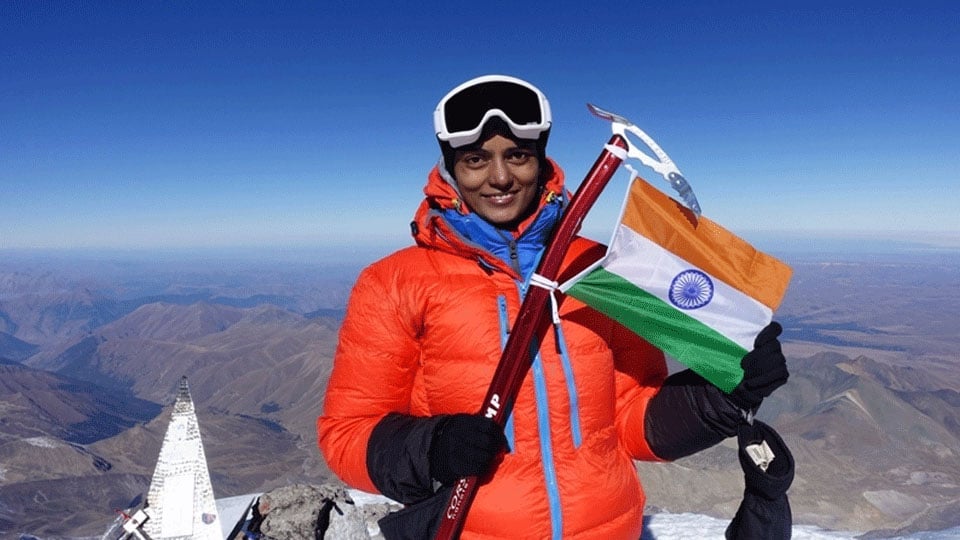
After pegging the National Flag atop Mount Elbrus, the highest mountain in Russia, T.N. Bhavani of Kodagu has one more feather in her cap in being the first Indian woman to have undergone training at the Mount Ruapehu, an acclaimed Stratovolcano in New Zealand.

Bhavani is the daughter of Thekkada Nanjunda (Shambu) and Parvathi (Divya) of Perur village near Napoklu in Kodagu. While studying at Navodaya Vidyalaya, Bhavani joined NCC which paved way to groom her interest in adventure activities.

Having got trained in swimming, horse-riding and mountaineering, Bhavani recently completed a three-month training in skiing at Mount Ruapehu in New Zealand and has been qualified as an International Skiing Instructor and is eligible to undergo advanced training in South Korea.

Mount Ruapehu is a Stratovolcano or a composite Volcano formed by alternate layers of hardened lava and ash.

They are characterised by a very steep profile and periodic explosive emissions. Getting trained in skiing at such mountains is not easy and Bhavani has come out successful in the training in September.

Road to success

Bhavani, having completed her primary education at J.C. School in Srimangala in South Kodagu, finished her secondary education at Jawahar Navodaya School in Galibeedu, Madikeri taluk. She graduated from St. Agnes College, Mangaluru and had worked as an Instructor at Himalaya Mountaineering Institute, Darjeeling.

Having attended many NCC camps at school and college, Bhavani had participated in the Republic Day Parade in Delhi in 2016.

She participated in the All India Vayu Sainik Camp held recently in Jodhpur, Rajasthan and won accolades from NCC Director General Lt. Gen. Anirudh Chakravarthy, Karnataka-Goa NCC Deputy Director General Air Commander C. Rajiv and former Chief Minister Siddharamaiah.

She got trained in mountaineering at Atal Bihari Vajpayee Institute of Mountaineering and Allied Sports, Manali and Himalaya Mountaineering Institute, Darjeeling. She underwent skiing training in Gulmarg, Kashmir and further in New Zealand.

Bhavani is acclaimed as the first woman to successfully complete the tough First Grade Training at Himalaya Mountaineering Institute climbing tough peaks like Friendship in Manali and others in Uttarakhand, Sikkim and Leh.

She reached the top of Mount Elbrus in 2018 after climbing for 8 hours continuously and was adjudged the first to reach the peak among four mountaineers from various countries.

source: http://www.starofmysore.com / Star of Mysore / Home> News / November 11th, 2019

After rain damage, Kodagu’s historical Nalknad Palace is crying for attention

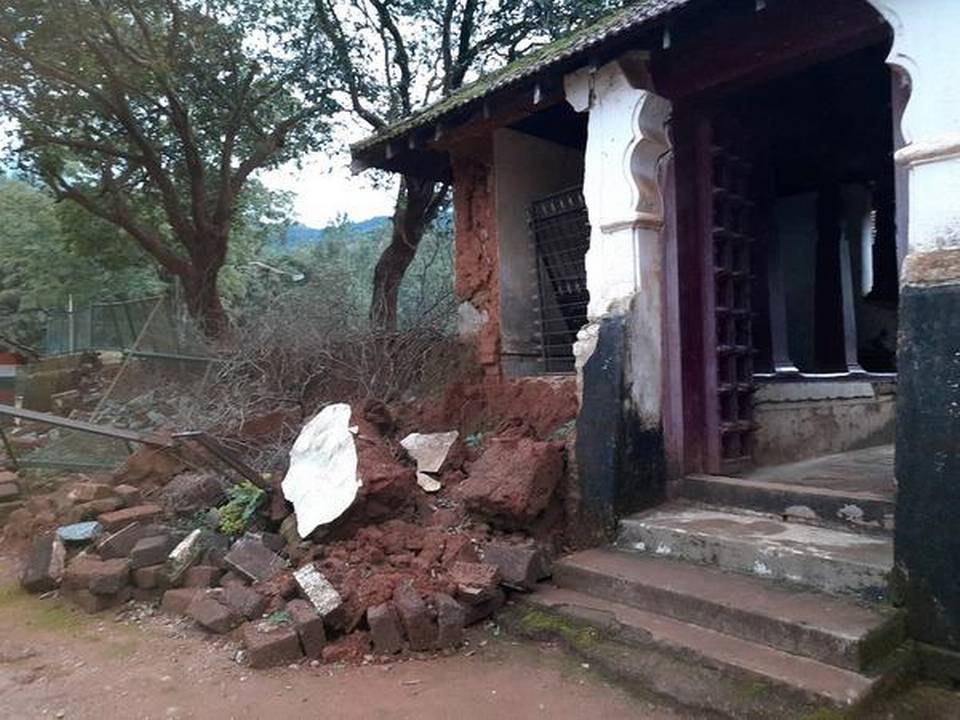
A portion of Nalknad Palace in Kodagu district collapsed a few weeks ago following torrential rains.   | Photo Credit: M.T. Shiva Kumar
A portion of Nalknad Palace in Kodagu district collapsed a few weeks ago following torrential rains. | Photo Credit: M.T. Shiva Kumar

There is no sign of restoration work being taken up by the ASI.

Nalknad Palace, at the foot of the dense Tadiandamol, the highest peak in Kodagu district, once stood as a symbol of elegance, architecture and style. Today, it is crying for protection.

The two-storeyed building with historical significance, which is also known as Naalnaad Aramane, was built between 1792 and 1794 AD to commemorate the victory of Haleri king Dodda Veera Rajendra over Tipu Sultan. It has precious murals, pillars, various wooden carvings, dark rooms [or hiding rooms], secret passages, bathrooms and galleries of the 18th and 19th centuries.

A portion of the palace collapsed a few weeks ago following torrential rains. There is no sign of restoration works being undertaken, according to sources in the Archaeological Survey of India (ASI). An ASI source said repair work can be taken up only after the rains subside fully. As such, the chance of miscreants damaging the precious artefacts and structures at the palace is high, as the lone caretaker leaves after closing time (6 p.m.).

Hiding place
According to the ASI, Dodda Veera Rajendra decided to construct the palace at Yavakapadi at the foot of Tadiandamol as the place was thickly wooded. Although he won a battle against Tipu, he was still under the threat of enemy troupes. The legendary ruler saw the need for constructing an elegant structure with safety features in the dense forest area to use as a hiding place. Thus, Nalknad Palace was built, according to a history lecturer in Hunsur.

A sign put up outside the palace gives brief details of the building, including that Dodda Veera Rajendra built it to protect his family from enemies.

He married again in 1796 to Mahadevamma at the same palace and lived there until she died in 1807. An elegant wedding mantap, constructed for his marriage, still exists there and is the cynosure of all eyes arriving at the palace.

It was also the hiding place and last residence of Chikka Veera Rajendra before he surrendered to the British in 1834 AD.

The palace was a rendezvous point for miscreants till a few years ago, before the ASI took it under its wing. Later, the palace was restored. Unfortunately, irreparable damage has been caused to the murals and paintings on the walls, according to ASI sources.

The Haleri kings might have left precious artefacts at the palace when they deposed to the British. Sources say the artefacts might have been shifted elsewhere or stolen.

According to the visitor register, footfall at the palace is sometimes nil and at other times reasonable.

source: http://www.thehindu.com / The Hindu / Home> News> States> Karnataka / by M. T. Shiva Kumar / Mandya – November 04th, 2019

‘Include a lesson on Appaiah Gowda in syllabus’

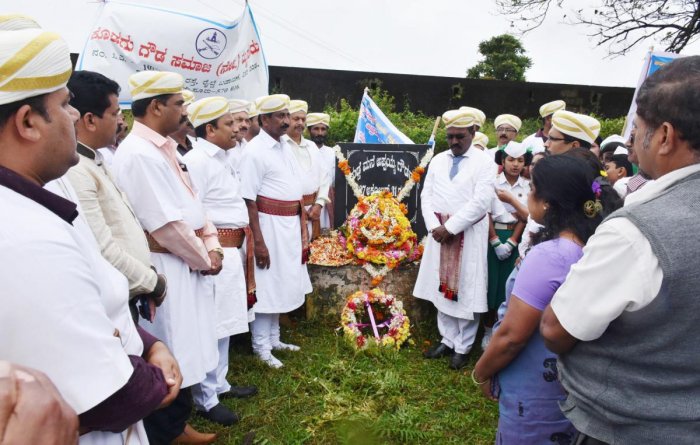
Tributes were paid at Guddemane Appaiah Gowda Memorial in Old Fort, Madikeri, on Friday.

The 182nd commemoration day of freedom fighter and martyr Subedar Guddemane Appaiah Gowda was jointly organised by district administration, Department of Kannada and Culture and Guddemane Appaiah Gowda Memorial Monitoring Committee, in Madikeri on Friday.

Dignitaries paid floral tributes to the statue of Appaiah Gowda at Field Marshal Cariappa Circle. Later, a silent procession was taken out till Old Fort.

Tributes were also paid at Subedar Guddemane Appaiah Gowda memorial, where he was hanged. Women sang ‘Lavani’ songs depicting the life and achievements of Appaiah Gowda.

District Congress Committee President K K Manjunath said that Guddemane Appaiah Gowda bravely fought against the British to save the people of Kodagu.

“Nobody can change history. One should not make efforts to misinterpret history. Instead, one should lead lives with peace and cordiality,” he added.

Advocate Vidyadhar said that more and more people need to know about the greatness of Appaiah Gowda, who laid down his life during the freedom struggle.

Karnataka Arebhashe and Literary Academy President Lakshminarayana Kajegadde said that a lesson on Guddemane Appaiah Gowda should be included in school curriculum. He fought against the British even before the Sepoy Mutiny, he added.

MLA K G Bopaiah, MLC Veena Achaiah, Deputy Commissioner Annies Kanmani Joy, Superintendent of Police Dr Suman D Pennekar and others were present.

source: http://www.deccanherald.com / Deccan Herald / Home> States> Mangaluru / by DH News Service, Madikeri / November 01st, 2019

Mysuru: Stone weighing 800 gm removed from 37-yr-old

An ultra sound scan indicated he had a kidney stone

Mysuru:

In a rare surgery, doctors at a government hospital in Virajpet removed a kidney stone weighing 800 grams from a 37- year- old man’s bladder on Tuesday.

Mohammed Rafiq, a daily wage worker from Kadanga village in Virajpet, was treated at the hospital after he complained of difficulty in passing urine and severe pain. “An ultra sound scan indicated he had a kidney stone. And an X- ray revealed it could be 8cm to 10cm in size, but we could not get the exact dimensions of the stone as its posterior length could not be measured. But when we opened up, we found it was much bigger. It was not easy, but after an long hour procedure, we succeeded in removing the stone. When we weighed it, we found it was 800 grams,” said Dr Vishwanth Chimpi, a general surgeon, who operated on Rafiq.

Speaking to the Deccan Chronicle, he added that while Rafiq must have had the stone for the past four to five years for it to have grown so big, it was only since the past one year that he had been getting intermittent pain, which intensified more recently. “As it was a calcium phosphate stone, it did not explode , but could not come out in the urine either as it was so huge,” he explained.

Dr Vishwanath admitted that the stone found in the daily wage worker’s body was the biggest he had come across, although three years ago he had removed a stone weighing 600 grams from a patient. Rafiq is now doing well.

source: http://www.deccanchronicle.com / Deccan Chronicle / Home> Nation> Current Affairs / by Shilpa P / October 24th, 2019

Flood relief: Donations touch Rs 188 crore

Donors from various organisations and companies have donated a combined total of Rs 188.04 crore for the Chief Minister’s Natural Disaster Relief Fund. The donations were received following a public appeal by Chief Minister B S Yediyurappa to contribute generously towards flood relief.

According to data, the donations came between August 13 and October 22, with officials expecting more funds in the coming days. The donations were by a total of 4,105 donors, with the highest number of donations on October 14. Highest in terms of donations received was on August 20, when a total of Rs 39.15 crore was contributed to the fund.

While the total amount available in the Natural Disaster Relief Fund was Rs 316.09 crore, Rs 97.17 crore of the said amount was the pending amount collected after the 2018 floods in Kodagu. “A total of 186 crore was collected from donors for Kodagu flood relief,” P A Gopal, joint secretary, Chief Minister’s Relief Fund, said. As on October 23, the amount of funds available was Rs 217 crore.

Donations were also received online for flood relief. Also, Rs 32.53 crore – one day salary of government employees – was handed over from the district treasuries for the relief, according to data.

source: http://www.deccanherald.com / Deccan Herald / Home> State> Food Relief / by Akram Mohammed / DH News Service, Bengaluru / October 24th, 2019

Kodagu SP Admits Daughter To Anganwadi

SPkf17oct2019

Madikeri:

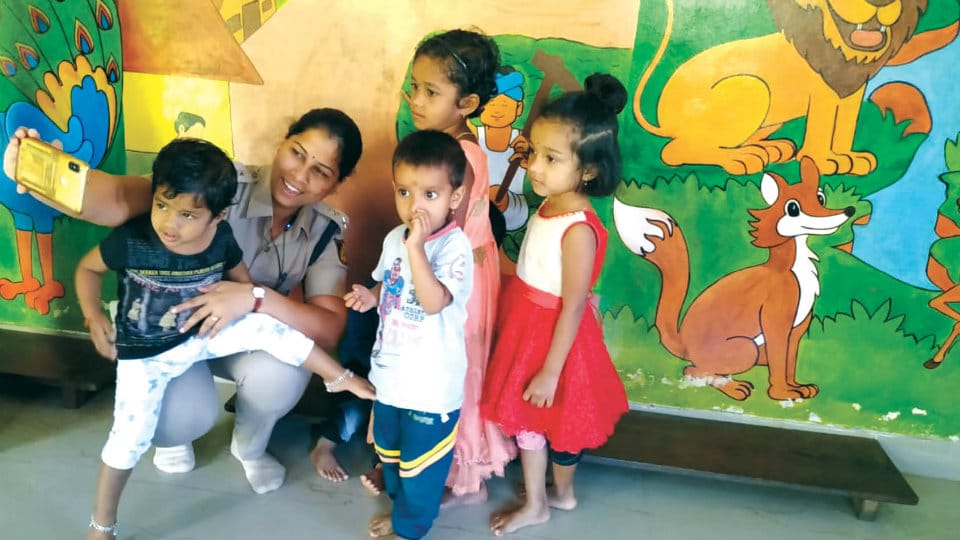
While majority of officials admit their children to study in educational institutions of repute, Kodagu SP Suman D. Pennekar has set an example by admitting her two-year-six-month-old daughter Kushi to an anganwadi centre located near Field Marshal K.M. Cariappa College, here.

SP Suman wanted Khushi to start her education by learning Kannada, her mother tongue, and hence admitted her to the anganwadi kendra.

The SP’s daughter takes part actively in all activities and also receives food everyday like other children of the kendra.

“Khushi, apart from taking part in all activities, enjoys every moment spent with other 17 children at the kendra,” said Anaganawadi Teacher Neetu.

Speaking to Star of Mysore, Saraswathi Pennekar, SP Suman Pennekar’s mother, said that it is important to see that Khushi does not develop the feeling of being a daughter to an influential officer. Instead, she must mingle with other children and pick up good values and ethics from Government institutions like the anganwadi centres.

SP Suman, who drops Khushi to the centre every day, also spends time with other children while she comes to pick her from the centre.

A qualified Ayurvedic Doctor, Suman, is a native of Beedi village in Belagavi district. The 2013-batch IPS officer took charge as Kodagu SP in May, 2018.

Meanwhile, the photograph of SP Suman taking a selfie with her daughter and children at the anganwadi centre had gone viral. She has also been receiving appreciation from all corners of the society for her affection towards mother tongue and Government institutions.

source: http://www.starofmysore.com / Star of Mysore / Home> News / October 16th,2019

C. B. Muthamma – The First Woman Diplomat of India

MuthammaKF15oct2019

Women today are seen in every sector. Professions that were conventionally considered to be ‘men’s jobs’ are now crowded with women. The women of today do not face as much struggle or prejudice in pursuing the career of their dreams as they did two or three decades before. This has been possible because of a few women who have confronted the unjust ways of the patriarchal world and made name for themselves.

One of these powerful ladies was C.B. Muthamma. Muthamma was the first IFS officer of India. She joined foreign services in the first qualifying batch of the service, right after the independence in the year 1949. This was at a time when a woman in diplomacy was a rarity in itself.

For the longest time, women were not considered fit for holding a diplomatic position across the globe. In fact, in 1933 it was stated in a debate in British House of Commons that “The special virtues of women are ill-adapted to the diplomatic life,” the virtues referred being ‘sympathy’ and ‘intuition’. These virtues were considered fatal as a balanced attitude was required in order to preserve diplomatic relations.

A British author Helen McCarthy has remarked in her book, ‘Women of the world’ that, “Even in the 21st century, a woman wielding serious powers in the global arena is an oddity. A phenomenon to be explained rather than taken for granted. Not only is her performance subject to closer scrutiny than her male peers, but it often comes to stand as a test of the ability of all women and to reflect for good or ill, the wisdom of allowing a woman to do a man’s job.”

There was a criterion up until the 1970s that only unmarried women can apply for the IFS services, and they will need to quit their positions whenever they choose to get married. Women were also not promoted to senior positions in the services.

C. B. Muthamma believed that this was clear discrimination. Which is why, when she was not considered for a well-deserved promotion, she filed a petition in the Supreme Court of India against the government of India, seeking justice for herself and all the women who would want to pursue their career in international relations. In a very famous case known as ‘Union of India vs. C. B. Muthamma’, the government changed its policy of not promoting the women before the apex court could give out its judgement for the case. The petition filed by Muthamma was then dismissed with her promotion to Grade 1 of the IFS, with the words by the judges that “We hereby dismiss the petition, but not the problem.”

The landmark case pushed the government to change its rules regarding these discriminating laws. And women now represent 18.5% of the total foreign officers of the country. However, it was this case that set off the trigger for many women to pursue careers in diplomacy while simultaneously leading a normal family life.

C.B. Muthamma has served as an inspiration to all the female diplomats, not only in India but across the world. India lost an exceptional officer of its foreign services when she bid adieu to the world on October 14, 2009.

source: http://www.thecsrjournal.in / The CSR Journal / Home> Header News / by Hency Thacker / October 15th, 2019