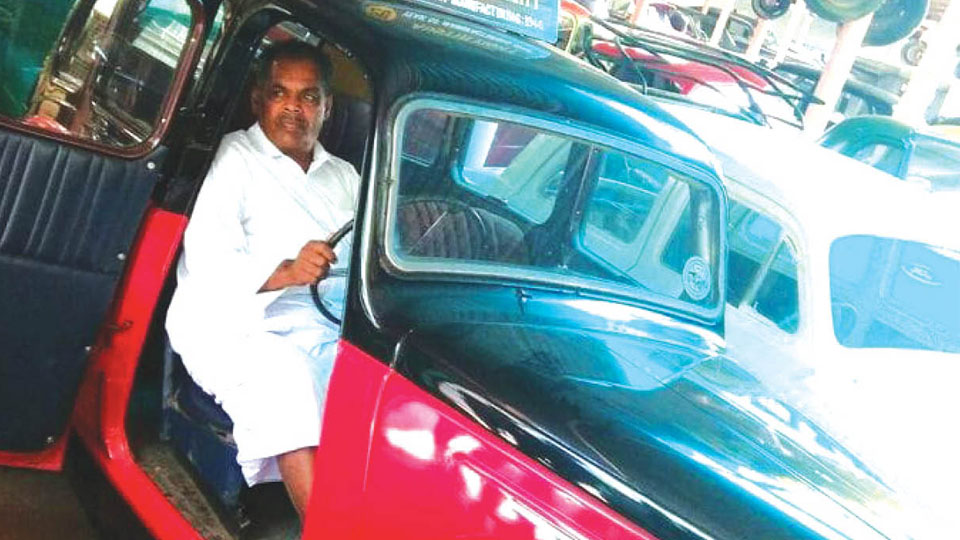
A farmer and a vintage car collector died after a tree branch fell on him at Nellihudikeri village near Siddapura in Kodagu district yesterday.
The deceased, 67-year-old P.C. Ahmed Kutti Haji, was working in his Mubarak Estate along with his son Ashraf at around 11.30 am. Due to heavy rain and wind, a branch of a banyan tree fell on Ahmed Kutti. He was immediately rushed to a hospital. But he succumbed to his injuries in the hospital. Kodagu Deputy Commissioner P.I. Sreevidya has announced Rs.5 lakh compensation to his family. She sent the cheque through the Tahsildar.
With his death, Kodagu has lost a collector of Vintage ‘beauties
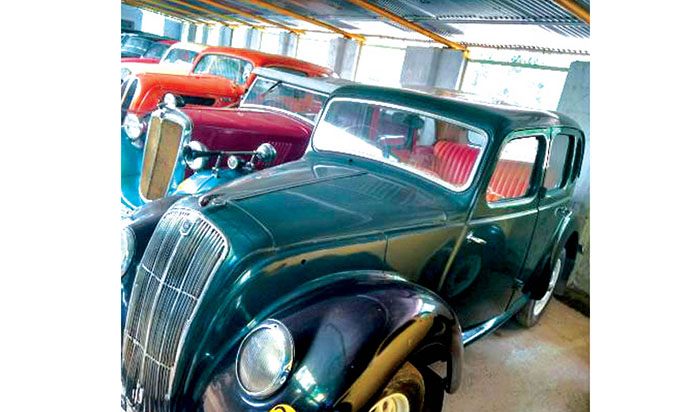
Ahmed Kutti Haji is a coffee planter and also an industrialist. He has a huge collection of vintage cars which he threw open to public. Collecting vintage cars was a hobby for Ahmed who has 86 of them and over 15 vintage petrol jeeps. Not to stop there, he also has 20 old two-wheelers, a 125-year-old bicycle and a 200-year-old bullock cart. The oldest car in the collection is 1925 model.
Normally vintage car collectors eye Bengaluru to add cars to their collection. Changing the trend, Ahmed focussed on old workshops in Kodagu and surrounding areas to hunt vintage ‘beauties.’ After picking them, Ahmed gave old cars a fresh coat of paint and tuned them to working condition.
Almost all foreign cars owned by Ahmed were manufactured between 1925 and 1965. Barring Dharmasthala, no other place in the State has such a wide collection of vintage cars.
With his death, Kodagu has lost a vintage automobile enthusiast.
source: http://www.starofmysore.com / Star of Mysore / Home> News /June 10th, 2018
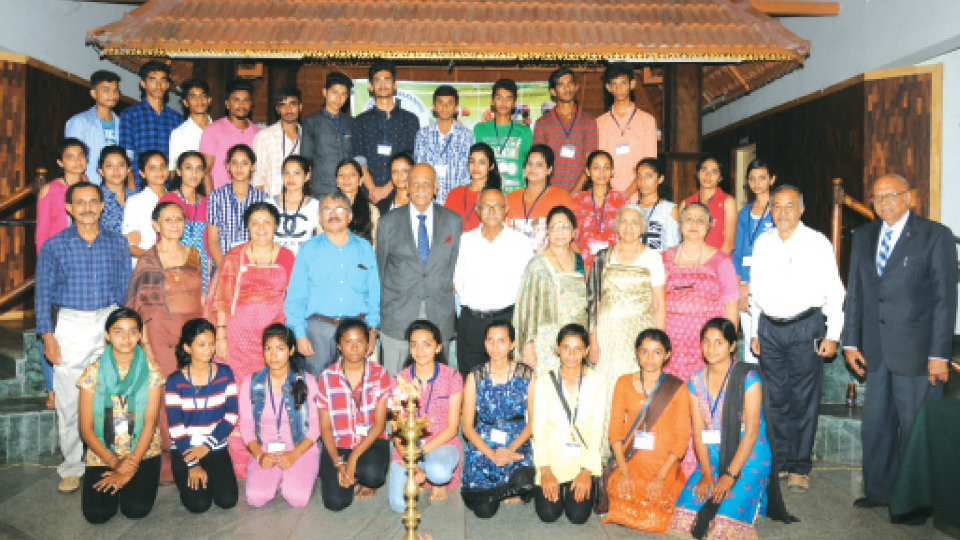
A four-day special Personality Development camp ‘Spoorthi 2018’ is being organised since yesterday for students who hail from Kodagu and pursuing their studies from PUC to Graduation. The camp is being organised by Kodava Deena Bandhu Charitable Trust at Kodava Samaja, Vijayanagar First Stage. The camp will conclude on June 5.
The camp was inaugurated last evening by Major General (Rtd.) Codanda K. Karumbaya and senior Orthodontist Dr. Adengada A. Kuttappa. Addressing the students, Karumbaya said that students must have grip over at least four to five languages so that they can pursue a career in any part of the world. Along with mother tongue and the medium of study, students must strive to learn dominant foreign languages, he said.
Giving an example of Indian Army, the retired officer said that people from various nook and corners of India serve in the Army. One common thread that unites them is Hindi. They all learn Hindi and protect the nation like one family, he said.
On the choice of careers, he said that students must have a proper aim and the courage to pursue their dreams. And it is important for them to periodically assess their capabilities and career path.
A step-by-step monitoring process where there is a room for improvement must be a part of a student’s activity, Karumbaya opined.
In his address, Dr. Kuttappa said that it is important for students to read and know about achievers. Almost all the achievers had a tough childhood where they fought against odds to study. “Even our Prime Minister Narendra Modi had a difficult childhood where he sold tea on Railway platforms to eke out a living. Our former President A.P.J. Abdul Kalam used to study under streetlight due to abject poverty,” he said.
Students must not discontinue studies at any cost and must strive to secure merit scholarships to pursue their education. Only those who realise the value of education and money at a young age will make good citizens and this in turn, will give rise to a good society, Dr. Kuttappa said.
Kodava Deena Bandhu Charitable Trust Honorary Secretary Pattada A. Jayakumar, Kattera A. Cariappa and Trustee Lieutenant Colonel (Rtd.) Chowrira A. Ganapathy were present.
During the special camp, achievers in various fields will address the students and guide them in academics and careers.
source: http://www.starofmysore.com / Star of Mysore / Home> News / June 02nd, 2018
The Consortium for Tobacco Free Karnataka (CFTFK) launched the ‘One million signature campaign’ as part of the World No Tobacco Day on Thursday.
Bengaluru :
The Consortium for Tobacco-Free Karnataka (CFTFK) launched the ‘One million signature campaign’ as part of the World No Tobacco Day on Thursday. The campaign will demand strict regulation policy on the sale of tobacco products and removal of ‘smoking zones’ in restaurants and bars across the state to safeguard non-smoker’s health.
A memorandum with 10 lakh signatories will also be submitted to the state government demanding appropriate measures to protect children from easy access to tobacco products and exposure to tobacco advertisement and to protect the health of non-smokers.
International athlete and Arjuna awardee Arjun Devaiah launched the campaign which is likely to continue for next eight months.To spread more awareness about the risks associated with tobacco use, CFTFK also launched information kiosks at crowded public places.
source: http://www.newindianexpress.com / The New Indian Express / Home> States> Karnataka / May 31st, 2018
Swastha has rehabilitated many such children
There are 101 such children in Swastha
It has been training special children in various vocations since 2004
Madikeri:
Swastha, a centre for rehabilitation of special children on Sunticoppa-Madapur road in Kodagu, is a “home sweet home” for 101 such children.
Swastha has been taking care of such children and training them in various vocations since 2004.
Ganga Changappa, project head of Swastha, told The Hindu that 19 children, who had been trained in bookbinding, folder-making, screen printing, manufacturing table mats, bags, mushroom cultivation and offset printing, had been shifted to Polibetta, where they were working now.
In Swastha, special children undergo training under the watchful eyes of specialists. As many as 18 children have found placements in Kodagu and elsewhere. Some have been self-employed. Tulasi, who joined Swastha in 1986 and trained there till 2003, is now employed in a garment factory in Bangalore. Manohar, who was admitted in Swastha with cerebral palsy, works as a helper at the KSRTC depot in Kushalnagar. Guruappa, who is partially visually challenged, works in the Bengaluru International Airport.
Three are working as instructors at Swastha itself. Mohini, who is physically challenged, is working as a tailoring instructor, according to Aarti, counsellor and psychologist at Swastha. Two mentally challenged girls got married some time ago. Besides, seven children had joined regular schools under inclusive education stream, she said.
Eighteen-year-old Gaurav from Somwarpet made news recently for a different reason. He is less than two feet in height. But he is unperturbed by this and is preparing for the SSLC examination.
Special skills are needed to handle such children, and the faculty at Swastha has them in abundance. The faculty deals with children with cerebral palsy, autism, mental retardation, and epilepsy.
There are six special educators, a rehabilitation teacher and a speech therapist, apart from the counsellor.
Ms. Aarti said Swastha had also brought the parents of the children under one roof. The parents had formed a self-help group. They would meet on the fifth of every month. The group was planning to buy sweaters for the special children this year.
The children get free vocational education, accommodation, uniforms, and medical care. There is free transport for day scholars. Swastha is funded by the JRD Tata Trust and Coorg Foundation, an initiative of Tata Coffee Limited, Polibetta.
Ms. Ganga Changappa said Swastha incurred an expenditure of Rs. 30 lakh every year. Two hundred children had applied for admission in Swastha, she added.
source: http://www.thehindu.com / The Hindu / Home> National> Karnataka / by Jeevan Changappa / August 17th, 2008
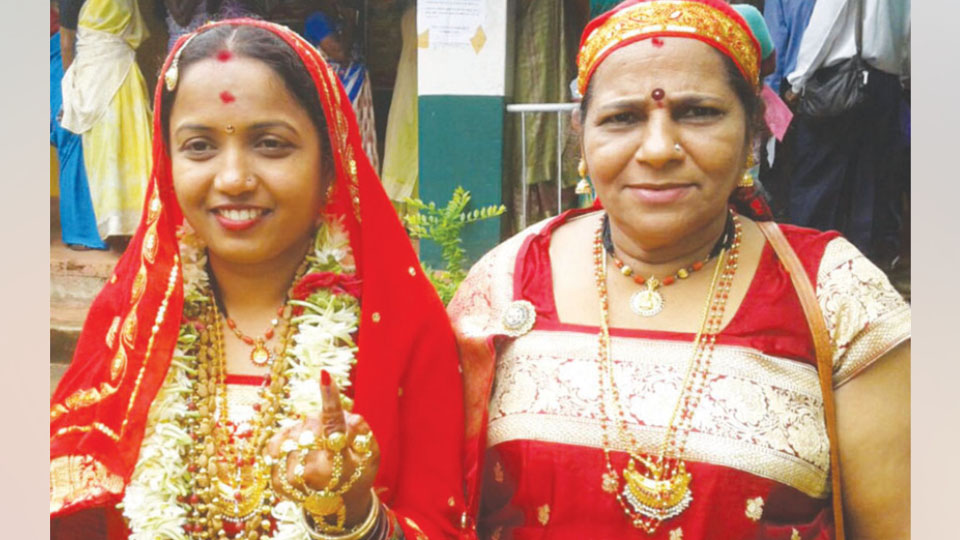
The polling booth staff and other voters at polling booth 131 located at Kandanakolli School were surprised to see a woman gorgeously dressed in a bridal attire entering the booth to vote along with her mother yesterday.
The woman was Smitha of Kandanakolli village whose marriage was arranged with Praveen of Moovathoklu village at Gowda Samaja in Madikeri to be solemnised yesterday only.
Not heeding to the advice of her family members and relatives, Smitha was said to be firm on exercising her franchise first before entering wedlock. Her determination won and Smitha after voting went to the Kalyana Mantap and participated in the marriage rituals.
Smitha felt happy that she had broken the tradition for a worthy cause to exercise a democratic right.
source: http://www.starofmysore.com / Star of Mysore / Home> News / May 12th, 2018
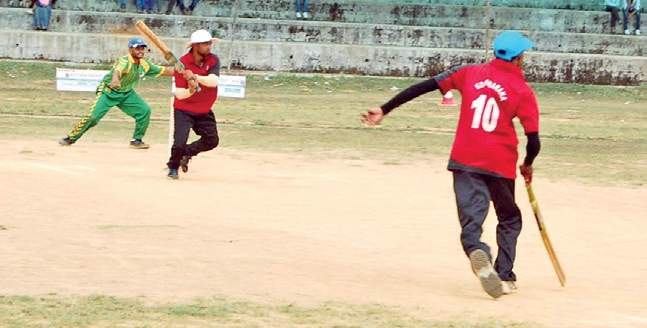
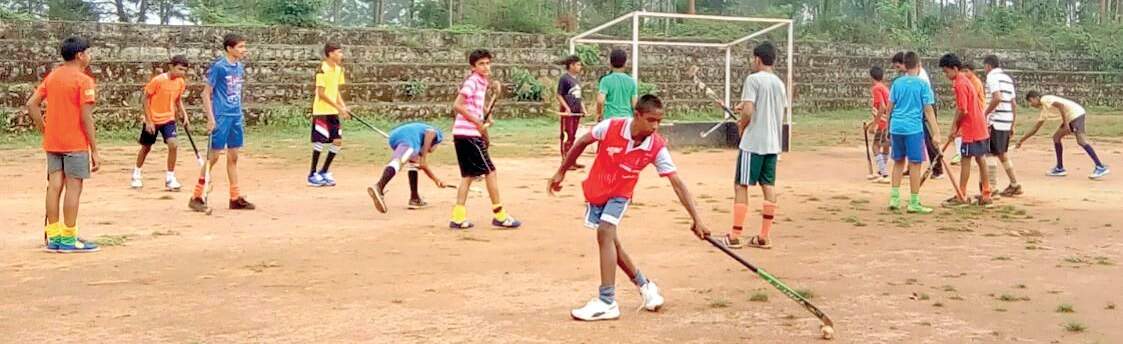
From lush green coffee estates to the Cauvery, the distinct culture and traditions of Kodagu, is a known certitude. While Kodavas form the indigenous majority, the district is also home to several other communities such as the Arebashe Gowdas, Maaples, Heggades, Airis, Billavas, and Eravas. And the uniqueness of these communities is that each of them has, in a way, embraced a bit of the Kodava culture. Topping this list is the tradition of community sports spread across the district—just like the aroma of coffee —during April and May. Hockey, cricket, kabaddi, volleyball, throwball, squash, badminton, and athletics – the different communities get sun-kissed playing and watching the various sports that unravel during the summer months.
It has been 22 years since community sports began here when Pandanda Kuttappa and his brother Kashi Ponnappa introduced hockey. This was followed by the Arebashe Gowdas who flagged off cricket 20 years ago. “While tennis ball cricket stared in 1995 at village cluster level, it began as a community sport in 1998,” says Rishith Madaiah, secretary of Arebashe Gowda Cricket Academy. Kedambdi Cup, Paikera Cup, Kuttana Cup – each family takes turns in organising annual cricket tournaments, which go on for 21 days between April and May.“The Arebashe Gowda community has 18 clans and 920 families,” adds Rishith. The tournament began with 54 family teams and this year will see participation from 225 families at the Cheremane Cup.
This year’s Kulletira Hockey Cup will see a record-breaking participation of 333 teams – which has found a place in Limca Book of Records. “What started as a support ground for hockey enthusiasts has now made its mark at an international-level,” says sports journalist Kayapanda Shashi Somaiah. International hockey players like Prabhjot Singh, Deepak Thakur, Devesh Chauhan, Vikram Pillay, and Yuvraj Walmiki will take part in the tournament, whose final will be held on May 20.
A sum of `1.5 crore is going towards organising this event and Dr A B Subbaiah, former Indian goalkeeper and secretary of Hockey Karnataka says, “It is pleasant to see how hockey has been reuniting Kodava families. However, the funds could be used in a better way – in training new talents and in building a hockey association – than cracking it up on two months’ amusement.” The other community that gets busy in sports during the summer months is the Muslim community which has been organising cricket and volleyball events for over a decade now. Then there are Dalit Jai Bheem Cup Cricket, Malayalee Cricket Cup, Billava Cup, and Marati Cricket Cup.
The indigenous tribal communities too have recently started organising community sports, among which is the Erva Cricket Cup. While the Kodava hockey tourneys get their funds from private companies, other sports are mostly sponsored by noted families in their community, by community social clubs and from politicians who represent these communities. Meanwhile, it is the brotherhood and harmony that unfolds profoundly at these games. “It has united families divided due to property dispute and separated by boundary limits,” says Shashi Somaiah, sports journalist.
A few have other thoughts. “Nearly 21 years have passed since hockey was introduced as a community sport here. Yet, it has not contributed any international players. The game has to become result-oriented than entertainment-oriented,” says Ulliyada M Poovaiah, editor of a Kodava newspaper.
What’s new this year?
The winners of Kulletira Hockey Cup, along with cash prizes, will be gifted the Kodava traditional weapon, Peechakathi, and Kodava traditional attire. Blood donation and eye camps will be held during Cheremane Cup.
Cultural uniqueness
While community sport is bringing families together, it is also bonding two different families in kinship. The cultural uniqueness of each community comes alive during the inaugural and closing ceremonies.
source: http://www.newindianexpress.com / The New Indian Express / Home> States> Karnataka / by Prajna GR / Express News Service / April 22nd, 2018
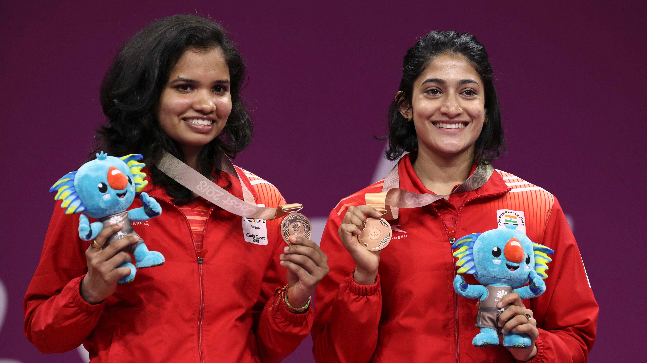
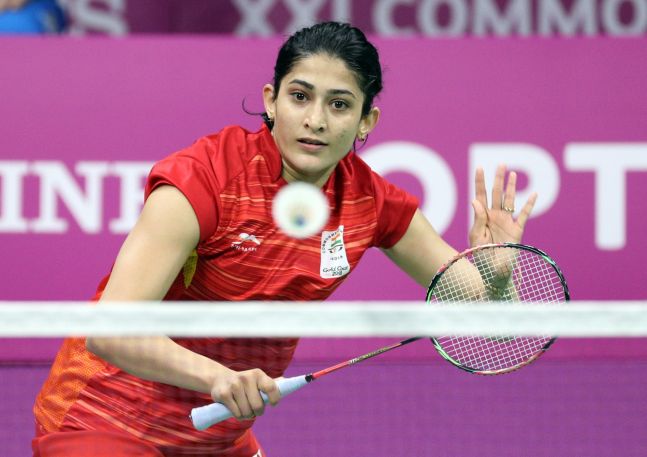
Ashwini Ponnappa (right) won her third Commonwealth Games medal as she bagged a Bronze in women’s doubles with N Sikki Reddy in Gold Coast. (Photo: Reuters)
India completed their best-ever medal in badminton at the Commonwealth Games (CWG) on Sunday with a total of the six medals, including two Gold, three Silver and a Bronze.
India not only won a Gold and two Silver in the singles events but scooped a gold medal in the Mixed Team event, a Silver in men’s doubles and a Bronze in the women’s doubles.
The reason for India to win double the number of badminton medals this year than the last two CWG is the success of doubles.
On Sunday, after the Games officially got over, Pullela Gopichand said that he felt “this tournament belongs to Ashwini (Ponappa).”
Ashwini Ponnappa is a name well known in India. She has been India’s top doubles players for quite a lot of years now but it is truly now that her name has begun to be highlighted well.
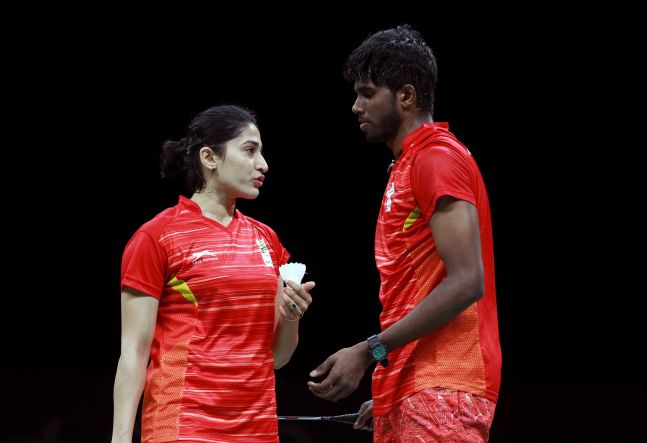
During the Mixed Team event final against Malaysia, Ashwini played the first match of the tie, the mixed doubles, with Satwiksairaj Rankireddy. Satwik, who is only 17 years old, is already one of the best doubles players in the country and world No.21 in men’s doubles along with Chirag Shetty. However, on April 9, 2017, it was Ashwini who led the pair to a stunning win against Rio Olympics silver-medallist Peng Soon Chan and Liu Ying Goh.
Ashwini Ponnappa was constantly chatting with Satwik, guiding him, during their mixed doubles match in the Mixed Team event final. (Photo: Reuters)
In the first game of the mixed doubles, the Indian pair completely dominated the Malaysian pair but Chan and Goh soon found their way through Ashwini and Satwik and took over from the second game.
In the decider, Chan and Goh were leading 12-7 at one point but the Indian pair then won a point to make it 8-12. From there as Ashwini led the way with her serve, India won seven straight points to go up 15-12.
Therafter, Chan and Goh could win only three more points before Ashwini and Satwik took the match away.
Ashwini in that mixed doubles victory was a sight to behold. Such was her brilliance that even the commentators were in awe of her skills and intelligence.
One could see in those final few moments, the determination and belief in her eyes and her strokes, she knew they could win it. Even as the Malaysians played it around, Ashwini knew exactly where the shuttles would come, she would leap up front and go for the kill.
Satwik supported her ably. Ashwini was constantly chatting with Satwik, guiding him, discussing their strategies, leading the team and it showed. Satwik’s control at the back of the court enabled Ashwini to absolutely intimidate the opponents at the net. Ashwini’s sharpness and booming smashes, along with Satwik’s jump smash, eventually took them home.
It was that unexpected mixed doubles victory that pegged the defending champions Malaysia behind. It gave Kidambi Srikanth to come forth and play his game.
Like Gopichand said, “The win in the team championship was very critical to put the team 1-0 up and give the confidence to Srikanth to beat Lee Chong Wei.” And Srikanth dominated the legend Chong Wei in some style.
Satwik and Chirag, thereafter, missed the chance to seal the win in men’s doubles and India’s Golden Girl Saina Nehwal came next and sealed the deal, giving India their first-ever mixed team Gold at CWG. (India Open: Indian doubles stars show spark, five pairs in quarters)
Ashwini, along with N Sikki Reddy, went on to win a bronze medal in women’s doubles and missed a mixed doubles Bronze by a whisker.
Consider this, on April 14, Ashwini played a total of four matches. Four gruelling badminton matches and still managed to scoop a Bronze in women’s doubles.
ASHWINI’S ROLE IN GUIDING THE YOUNGSTERS IN INDIAN DOUBLES
Ashwini’s importance in this badminton setup is not limited to the medals she brings home. Her stature has gone beyond that.
She plays in two different categories with two youngsters — a 17-year-old Satwik and a 24-year-old Sikki. She is the one who is making them better players.
Satwik is one of the most successful stories to come out of Premier Badminton League (PBL), where he plays along Olympic medallist Pia Zebadiah for Hyderabad Hunters. He came into prominence playing alongside Zabadiah but the immense growth the youngster has shown in the past year and a half, is down to the experience he is gaining from Ashwini.
Ashwini is a leader on the court. She teaches Satwik the mental aspect of the game and that helps him when he plays with Chirag in men’s doubles. (BWF rankings: Satwiksairaj-Chirag Shetty break into world top 20 for first time)
In fact, Ashwini is almost transmitting her leadership quality into Sikki. Sikki, who also plays mixed doubles with Pranaav Jerry Chopra, shows those leadership qualities alongside Pranaav.
Ashwini has achieved a great deal over the years. A women’s doubles Gold with Jwala Gutta in 2010 CWG started a long success story. Even then, perhaps the success did not get its due recognition. Thereafter, came a Silver in women’s doubles with Jwala at 2014 Glasgow Commonwealth Games, a Bronze in women’s doubles at the 2011 World Championships and many more. Yet, those achievements hardly created a stir in the sporting spectrum.
Doubles badminton needs to be given its due credit. In Australia, while Saina Nehwal, PV Sindhu and Kidambi Srikanth held sway at the individual events, the doubles players quietly took home two medals. Consequently, India was the most dominant nation in badminton during the Gold Coast events.
At the age of 28, Ashwini has a great deal of experience and many more years of play where she can achieve more glory and impart far more knowledge.
Even as the success story of Indian badminton at CWG 2018 was largely attributed to the credentials of the singles, it were truly the doubles players who stamped their name uniquely in Australia.
Among a host of Indian badminton stars in Gold Coast, Ashwini perhaps shone the brightest.
source: http://www.indiatoday.in / India Today / Home> News> Sports / by Abreshmina S. Quadri / New Delhi – April 16th, 2018
Around fifty youths mostly professionals at various sectors volunteered themselves to clean up the Cavuery River at Srirangapatna taluk on Sunday
Mysuru:
Around 50 youngsters, mostly professionals in various sectors, volunteered to clean the Cauvery at Srirangapatna on Sunday.
Uniting under the banner, ‘Yuva Brigade’, the youngsters assembled bear the Sri Ranganathaswamy temple, and cleared the river of plastic and cloth dumped in the waterbody.
Members from the Mysuru-based NGO Swachanda also participated in the programme.
“We arrived at the banks of the river around 6am, and started to fish plastic and cloths from the Cauvery. This went on till 11am. We cleared around two truckloads of garments dumped by devotees in the river. The waste removed from the river was transported to the designated dumpyard,” Swachanda member BK Purushotham told TOI.
Members of the ‘Yuva Brigade’ led by social activist Chakravarthi Sulibele, have initiated a campaign to clean the Cauvery starting from Talacauvery to Srirangapatna. The campaign started on April 12.
The campaign is called ‘Jeeva Nadige Jeeva Thmbi (Infuse life into the river that is our lifeline)’. On Thursday, cleaning started at Siddapura, while the river was cleaned at Kushalnagar on Friday, Ramanathapura on Saturday, before the activists proceeded to Srirangapatna on Sunday.
source: http://www.deccanherald.com / Deccan Herald / Home> City News> Mysore News / Times News Network / April 16th, 2018
For 38-year-old S Thanaraj, a visit to study the impact on the lifestyle of Paliyar tribal community due to globalisation in 2006 was a life changing moment. He was impressed by how tribal communities embrace nature and live in forests complementing each other.
A native of Radhapuram in Tirunelveli, he shifted to Madurai to pursue law. Being a dalit, Thanaraj has witnessed caste discrimination at a very young age. He always stood against it and had the tendency of helping others since childhood. This came true after his formal education, when he turned an activist. The law graduate has worked in various areas like youth empowerment, environment and total prohibition by joining hands with various organisations including CESCI, Ekta Parishad and People’s Education for Action and Liberation.
Thanaraj became an Adivasi activist after he extensively worked with the Paliyars, educating them about the Forest Act which ensures their right over forest land. The Scheduled Tribes and Other Traditional Forest Dwellers Act passed in 2006 promises tribal rights over agriculture land which traditional belonged to them, accessing forest produces and right to protect and manage the forest, which had been denied for long.
“I went to educate them, but ended up learning so many things from them. Their life is an exemplary one in conserving forest, which needs to be learnt by all. I have taken these lessons to over 1.5 lakh school and college students so far,” Thanaraj said.
For instance, Adivasis do not kill pregnant animals for meat. When they collect roots, they plant more and they never cut living trees, they only use dead trees. They treat woman equally and encourage widow remarriage. There is no dowry system either, said Thanaraj.
While he worked for Paliyars till 2008, he expanded his horizon and started working for various communities like Kadar in Valparai and Anaimalai, Malasar in Amaravathi, Udumalaipettai and Anaimalai, Muduvan in the interior forests of Theni and Valparai forests and Mahamalasar from Anaimalai and Topslip.
Thanaraj’s has a strategy in empowering the Adivasi community. To create leaders among them, unite them to retrieve their rights over forest and defend themselves from exploitation, he along with the organisations he works for help Adivasis in various areas in the state by getting them housing facility and agricultural land. Only recently, Kadar tribe from 24 villages in and around Valparai in Coimbatore received 10 acres of land after several stages of protest.
Thanaraj has taken part in various national-wide protests carried out to ensure the rights of Adivasis. He has also organised many state-level protests demanding total prohibition. He has also extensively worked in the Tsunami rescue and rehabilitation throughout the TN coast. He also played active role in the protests against Sterlite and Koodankulam nuclear plant.
Thanaraj was lucky to get married to a like-minded person like K M Leelavathi, a daughter of a tribal leader from Coorg, in 2010. An MSW graduate, she too joined him in the work towards helping deprived communities. Recently, he joined the Centre for Justice and People and continues his work towards Adivasi empowerment.
source: http://www.timesofindia.indiatimes.com / The Times of India / Home> City News> Madurai News / TNN / April 11th, 2018
Vice Admiral A R Karve offers tribute after unveiling the war memorial at Sunnyside in Madikeri on Saturday.
A war memorial, built in memory of all martyrs from Kodagu who laid down their lives, on Sunnyside premises the abode of late General K S Thimayya was unveiled on Saturday by Vice Admiral A R Karve.
The government has planned to develop Sunnyside as a museum, and the work is in progress. The war memorial has been built next to the museum. A war tank has been placed in the memorial.
Later, the district administration and the Kannada and Culture Department observed the 112th birth anniversary of General K S Thimayya.
‘Pride of the nation’
Speaking on the occasion, Vice Admiral A R Karve said the people of Kodagu are known for their valour. He called upon the youth from the district to join armed forces. “Field Marshal K M Cariappa and General K S Thimayya are pride for the entire nation. Youth should come forward to serve the nation,” he said.
“Gen Thimayya was known for war tactics. He served as General from 1957 to 1961,” he said.
Forum member Major (retd) B A Nanjappa said, “Gen Thimayya was a sports lover. In spite of difficulties, he led the country to victory in the war.”
K C Subbaiah, who is the president of the Cariappa, Thimayya Forum, hoped that Field Marshal Cariappa will be bestowed with the Bharat Ratna at the earliest.
Deputy Commissioner P I Sreevidya, Superintendent of Police P Rajendra Prasad, Zilla Panchayat CEO Prashanth Kumat Mishra, Air Marshal (retd) K C Cariappa and others were present on the occasion.
source: http://www.deccanherald.com / Deccan Herald / Home> District / DH News Service, Madikeri / March 31st, 2018
WELCOME. If you like what you see "SUBSCRIBE via EMAIL" to receive FREE regular UPDATES.
Read More »