Reforestindia.in is a clarion call to action to save our rivers and forests
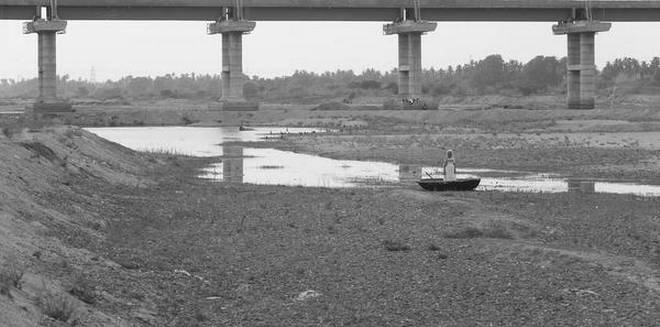
The stunning and powerful youtube video by Reforest India on River Kaveri, in three different languages: Kodava Takk, Kannada and Tamizh, sends out a powerful message, and thus has gone viral on Facebook. Vinod Lal Heera Eshwer, trustee of Reforest India, says: “As the title of the video suggests: This is the story of Kaveri (and every river everywhere). Instead of fighting over river sharing, we must look within to know how to make a difference. Without forests rivers, cannot exist.”
His commitment and passion to saving river Kaveri has led him to ask people to plant a tree if they really want to save the dying river. “Likes and shares won’t save Kaveri. Stop deforestation and start to reforest. Both these go hand-in-hand.” The initiative is a clarion call to action “to save Kaveri one tree. One person. One heart at time.”
Vinod says you can plant a tree. “But even if you can’t, you can donate money for a tree to be planted in someone’s name and honour. “
Reforest India is a renaming of a path-breaking tree planting initiative Trees for Free, which was started in Bengaluru, by Janet in 2005, in honour of her husband. Thousands of trees were planted ever since and Reforest India further wants to expand the impact.
“We are not interested in numbers, statistics and targets,” says Vinod, author of Let’s catch the rain and Let’s Plant Trees, who has been an eco-warrior and has empowered people to take action instead of just paying lip service to the cause of the environment.
“We are not interested in fund raising, to borrow a term, we are interested in ‘friend raising’.”
Arjun Ranga Rao, CEO and managing director of Cycle Pure Agarbathies, donated a huge amount only because he strongly believes in the cause. “I didn’t look at it as a CSR activity. My grandfather N. Ranga Rao had dreamt of becoming an entrepreneur in Coorg and in 1948 moved to Mysuru and made that dream a reality. So as a family, we want to give back to Coorg.”
“Plant a tree today, for someone you love, for the love of children, and for the love of mother earth,” concludes Vinod. For details visit: http://reforestindia.in.
source: http://www.thehindu.com / The Hindu / Home> Sci-Tech> Environment / by Sravasti Datta / February 19th, 2018
Joyappa Achaiah and Lim Changappa have started a campaign to ensure that the poor are able to walk safely.
Bengaluru duo roughs it out to convince people to donate footwear
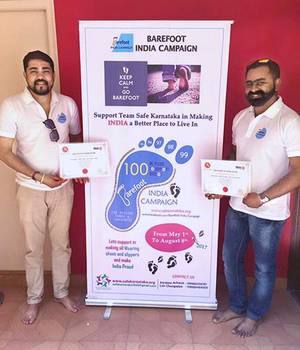
It was not a barefoot beach holiday. When Joyappa Achaiah and Lim Changappa, both 36, doffed their footwear and walked to work for 100 days from May to August, they were keen to make a point.
A large segment of the population, they say, cannot afford footwear. This, despite India being the second large producer in the world. The Bengaluru-based entrepreneurs came up with the Barefoot India Campaign to drive home the message, that the poor should be able to walk safely. A month-long footwear collection drive has begun in Bengaluru as part of the effort, from September 3.
‘Essential gear’
On what motivates them, Mr. Achaiah said, “We’ve been doing multiple drives to educate the girl child, and on women’s safety and environment protection. But these are initiatives that a lot of other NGOs have also taken up. We thought about the one thing that everyone needs, which is footwear. It’s not just part of attire, but essential protective gear.”
Before launching the campaign, they visited villages and slums and spoke to people about what they needed the most. “More than money, they highlighted the difficulty of walking without cover for feet. More than 10% of the poor in the State cannot afford footwear. We want to help them,” said Mr. Changappa.
The activists decided to convince by example, and took up the 100-day no-footwear challenge.
For the collection drive, cardboard boxes are being kept in public locations like ITPL, Manyata Tech Park, Embassy Golf Links, Forum Mall and Phoenix Mall, and in colleges. “People can drop their used pairs,” he said.
Those in good condition will be distributed directly, and the rest, refurbished.
The entrepreneurs have petitioned the Karnataka government to initiate a ‘Padharaksha Bhagya’ programme to supply footwear to 10 lakh needy people. A marathon in November and a shot at a Guinness record with a 100 ft rangoli of a bare foot are on the cards.
source: http://www.thehindu.com / The Hindu / Home> News> Cities> Bengaluru / by Sarumathi K / Bengaluru – September 03rd, 2017
In 1837, this anger turned to action for freedom and the British suffered a temporary defeat, says N.S. Deviprasad Sampaje, Writer.
The Jangama Kalyanaswamy’s flag used during the Sullia rebellion was hoisted by Guddera (Guddemane) Appaiah against the British in 1837 was later adopted as the Kodagu Gowda coat of arms. They are also called Arebhashe Gowdas
Mangaluru:
It was the first armed uprising against the British, which took place 20 years before the First War of Indian Independence in 1857. The men who laid down their lives in this uprising of 1837 in Mangaluru are not forgotten.
The Tulunadu Rakshana Vedike and several others organisations marked the 179th anniversary of the uprising on Tuesday at Bavutagudda, where the rebels hoisted the Indian flag to mark their victory over the British on April 5, 1837.
“The people of Kodagu and Canara (coastal Karnataka) were unhappy with the British for various reasons. In 1837 this anger turned to action for freedom and the British suffered a temporary defeat,” recalls writer, N.S. Deviprasad Sampaje.
Mr Sampage , who wrote the book ‘Amara Sulliyada Swatantrya Sangrama,’ detailing this early struggle for freedom, says it was a mass movement and not restricted to some villages or caste.
“It received unprecedented support from the people of Dakshina Kannada. However there were efforts to tone it down by labelling it ‘Kalyanappa na Katakayi, or ‘loot of Kalyanappa’.
But in reality it was a major movement for freedom in the region, which scared the British. The reports of the then Collector of Dakshina Kannada, Leven, reveals this,” he says.
The rebellion was led in Kodagu by leaders such as Aparampara, Kalyanappa and Putta Basappa and continued in Sullia, Puttur before culminating in Mangaluru, the seat of the British Collector.
It is said the rebels held control of the city for 13 days before British reinforcements arrived in Mangaluru and recaptured it.
But it took two months more for the British to arrest the rebels and hang them in public to silence the movement.
“The government must do a proper study of the entire movement so people get to know its importance,” emphasises Mr Sampaje.
source: http://www.deccanchronicle.com / Deccan Chronicle / Home> Nation>Current Affairs / by Gururaj A. Paniyadi, Deccan Chronicle / April 06th, 2016
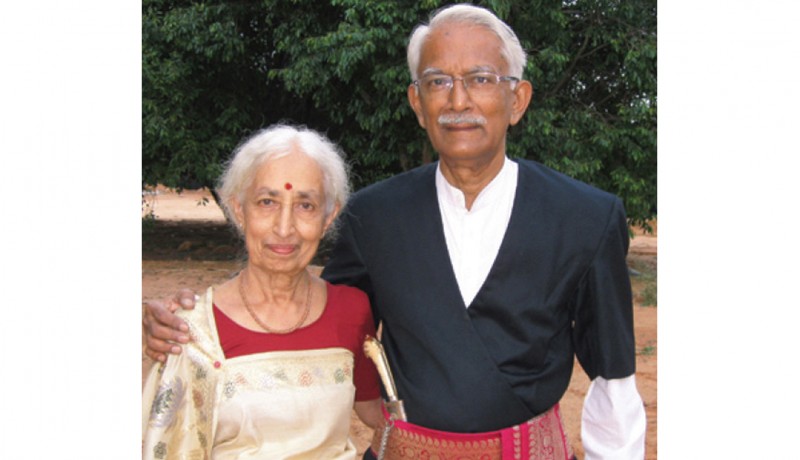
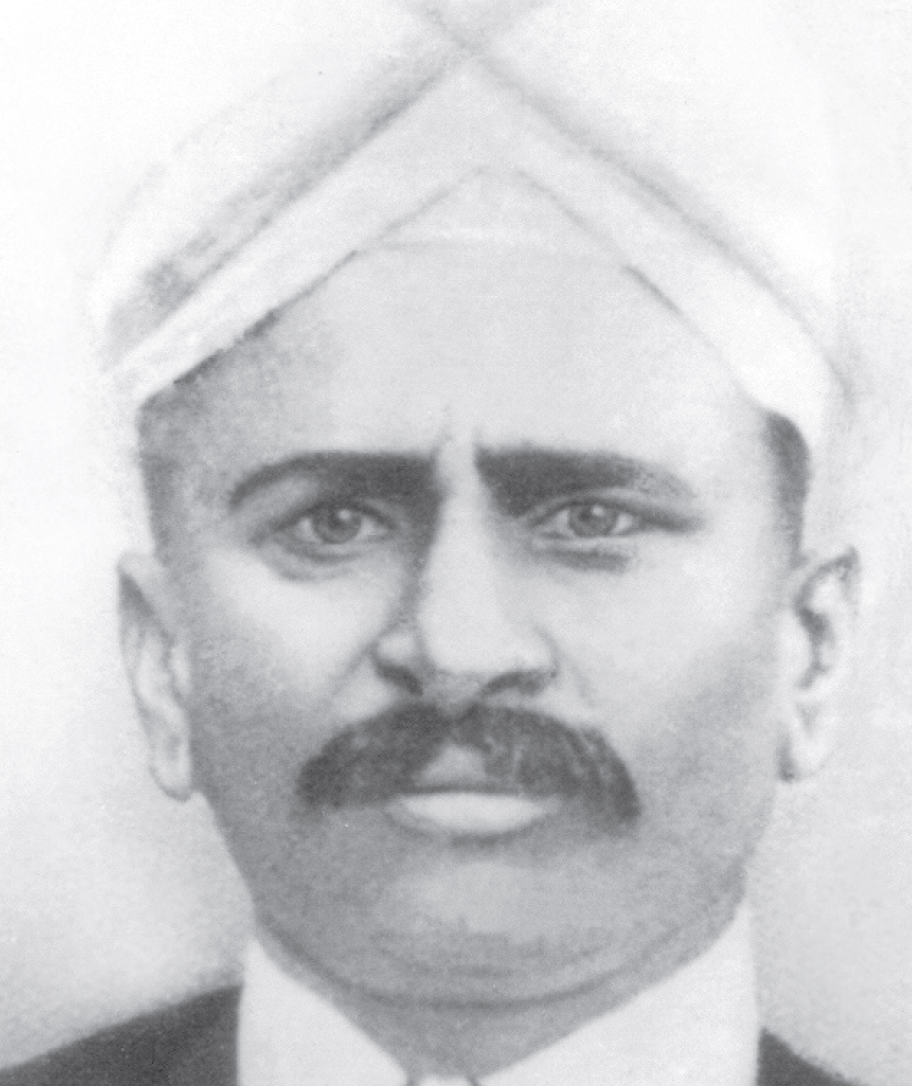
Boverianda Nanjamma And Chinnappa Recollect The Efforts Of Their Late Grandfather In Documenting The Folklore And Songs Of The Kodava Community.
Much as we admire him and are inspired by him, we have never seen our grandfather Nadikerianda Chinnappa; he died before we were born. We—Nanjamma and Chinnappa—are cross cousins. The narrative of our grandfather that follows is based on the recollections of our parents, aunts and elder cousins, gleaned from casual conversations over the years.
Our grandfather, who worked with the police, had gone to a remote village, riding his horse across a stream and through a forest path to investigate a quarrel over the ownership of a strip of land. On his way back, he stopped by the stream to eat the akki (rice) roti sweetened with jaggery his wife had packed for him. The sun was setting behind the hills and had painted the skies in brilliant hues of red and gold. Captivated by the scene, Nadikerianda Chinnappa sat lost in thoughts, when he heard the distant sound of Kodava dudi (small handheld, hourglass-shaped drums). Mounting his horse, he set out to locate the origin of the drumbeats. He found four men seated around a bonfire singing Kodava folk songs, practising for Puthari, the harvest festival. It was getting dark but he waited for them to finish. Recognising that our grandfather was in the police, the singers touched his feet respectfully. Our grandfather took the leader of the team home on his horse.
This was not uncommon; his wife Nanjavva knew he had brought a singer home for the night. She made a bed for the visitor in the attic and served them a hot meal with a drink of frothing toddy. Refreshed, grandfather and the singer sat in the hall; while the singer sang a ballad, Chinnappa transcribed the words late into the night. After many such sessions with various singers, he had a good collection of Kodava songs sung during weddings, funerals and festivals, and ballads in praise of deities and heroes.
Himself a good singer, Chinnappa’s passion for Kodava songs and ballads prompted him to transcribe them. During his travels around Kodagu as a police officer in the early 1920s, he observed that the unique customs and traditions of the Kodava community were being forgotten or altered. Chinnappa feared that Kodava traditions and songs that had been handed down orally over generations would be lost because of the dominance of English, and the influence of the cultures of neighbouring areas. So, he decided to document them.
Late in the evenings, after work, he neatly wrote down all the songs, proverbs and riddles by the dim light of a kerosene lamp, while smoking his favourite cigars. When he started documenting the customs and traditions, he consulted his mother Ponnavva who was well-versed in them. Meanwhile, his wife would read the draft first to ensure that it was clear to a layperson. If there were parts she did not understand, Chinnappa rewrote them. It used to be said that the waste paper basket would always be full in the morning.
British officials in Coorg—as Kodagu was called by them—got his draft reviewed by some prominent Kodavas. On their recommendation, C S Sooter, commissioner of Coorg, authorised financial assistance to publish it. Chinnappa chose the name Pattole Palame, meaning ‘silken lore’, for his book, which was first published in 1924. The 6th edition was printed in 2012.
Pattole Palame is a precious document of the heritage of the Kodava community. In the second edition published by the University of Mysore in 1975, the editor describes it as “one of the earliest, if not the earliest, extensive collection of folklore of any Indian community written in an Indian language by an Indian”.
The text of Pattole Palame is in Kannada and the folk songs, proverbs, etc, in it are in Kodava thakk, the language of the Kodavas, an oral language written using the Kannada script. Nearly two-thirds of the book consists of folk songs transmitted orally down generations, which are sung even today. Traditionally known as Balo Pat, these songs are sung by four men beating dudi. The songs have haunting melodies and evoke memories of times long past. Kodava folk dances are performed to the beat of many of these songs, which are a rich source of information on the culture, language and history of the Kodava people.
Chinnappa himself began translating Pattole Palame into English but could not complete it, as he died of cancer in 1931 at the age of 56, a few months after his retirement. It was in 2003, nearly 75 years after Pattole Palame was first published, that we, his grandchildren, translated it into English and published it.
Although he was best known for Pattole Palame, Chinnappa’s major literary work as a poet was Bhagavantanda Paat, his translation of the Bhagavad-Gita into the Kodava language, composed in the style of Kodava folk songs, published in 1929.
When Grierson, a British linguist, embarked on the first Linguistic Survey of India (1913 to 1920), he looked for knowledgeable representatives of the various Indian languages. Chinnappa, who was fluent in both English and Kodava thakk, was chosen for the Kodava language. As required, he translated the parable of the ‘Prodigal Son’ into Kodava thakk and narrated it, and sang his own poem, Sri Moola Kanniye, an ode to river Kaveri. These were recorded in 1922 on gramophone records; copies of the recordings were kept in the British Library in London and the Madras Museum. They were digitised recently by the Linguistics Department of the University of Chicago.
Born in 1875, Chinnappa was the fifth of eight children. After matriculating in Madikeri, he went to Mangalore for further studies. But when his elder brother Subbayya died suddenly, Chinnappa returned to Kodagu to take on family responsibilities. In accordance with Kodava tradition, he married Subbayya’s widow, Nanjavva.
His career took many twists and turns. A teacher at first, then a revenue inspector, and then an officer in the Coorg Regiment of the Army, he joined the police department when the regiment was disbanded in 1904, and rose to the rank of a prosecuting inspector.
Our grandfather was fond of sports. He was a bowler in the All Coorg XI Cricket team, which in those days consisted mainly of Englishmen. When he played billiards at Victoria Club in Virajpet, his British opponents would often swear under their breath on losing a game to him. On one such occasion, Chinnappa lost his patience, broke the billiards stick on his knee and threw it on the floor. This was a very daring act for an Indian in those days.
Chinnappa was also involved in establishing the Police Officers’ Cooperative Society, Coorg Cooperative Society, Coorg Central Bank and the Coorg Education Fund. He was fond of children and always carried peppermints in his pockets. He was a caring father to his own three children, the two stepchildren by his elder brother, and to his deceased sister’s daughter, whom he and Nanjavva adopted. He sponsored the education of many poor children, and there were always a few students boarding in his residence, free of cost.
Our grandfather was a man of vision and talent, and was self-driven. He was a folklorist, poet, police officer, sportsman, historian, singer, philanthropist, and caring householder. Above all, he was a man who lived life to the fullest and left a lasting and invaluable legacy for his people in his writings.
The authors are translators and scholars of Kodava studies
Featured in Harmony — Celebrate Age Magazine
August 2016
source: http://www.harmonyindia.com / Harmony / Home> Columns / August 2016
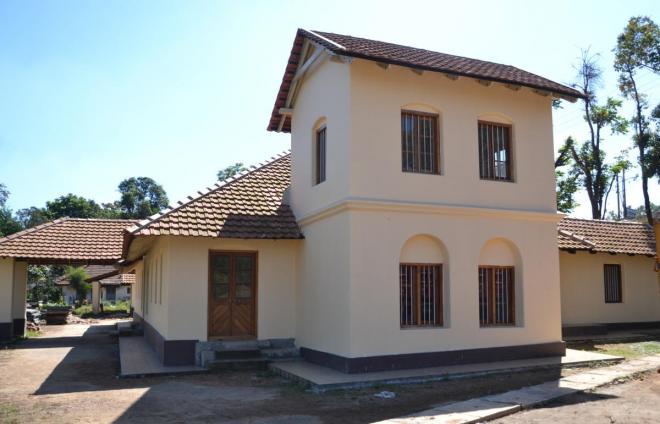
A view of the General Thimayya Memorial Bhavana in Madikeri.
The work on converting Sunny Side, the abode of late General K S Thimayya in Madikeri into a memorial has been re-started.
The state government, through the Department of Kannada and Culture, released Rs 2.30 crore for the purpose last week. The memorial is expected to be ready within a few months.
At the same time, a war tank, a long-pending demand, has finally arrived at the ‘Sunny Side’.
Demand for tank
Owing to shortage of fund, the work on converting ‘Sunny Side’ into a memorial could not be taken up. Ex-servicemen have been demanding that a war tank be kept in the museum of ‘Sunny Side’. When the Indian Army Chief General Bipin Rawat visited Kodagu to unveil the statues of Field Marshal K M Cariappa and General K S Thimayya on Kaveri College premises in Gonikoppa recently, the ex-servicemen’s association had appealed for the same. The war tank has arrived at Madikeri from Army Training Centre in Pune.
The battle tank “Himath” was used during the India-Pakistan war in 1971. After the completion of the memorial, the war tank will be open for public viewing.
The Nirmiti Kendra has taken up the work on the memorial but will retain the old structure of the house. It is proposed to keep a model of a fighter plane too, and items used by Gen Thimayya while serving the Army, along with war tank, in the memorial.
Funds for memorial
The state government had announced the conversion of the house into a memorial in its budget. Accordingly, the district administration had prepared an estimate for Rs 5.5 crore.
In 2013-14, the government had released Rs 45 lakh. When the state government claimed that it cannot release such a huge amount, the district administration had revised the estimate to Rs 3.70 crore. The state government has so far released Rs 1.45 crore. With the recent release of Rs 2.30 crore, the work is likely to be completed at the earliest, said the Nirmiti Kendra officials.
source: http://www.deccanherald.com / Deccan Herald / Home> District / by DH News Service, Madikeri / January 14th, 2018
January 15 is observed every year as Army Day in India.
New Delhi:
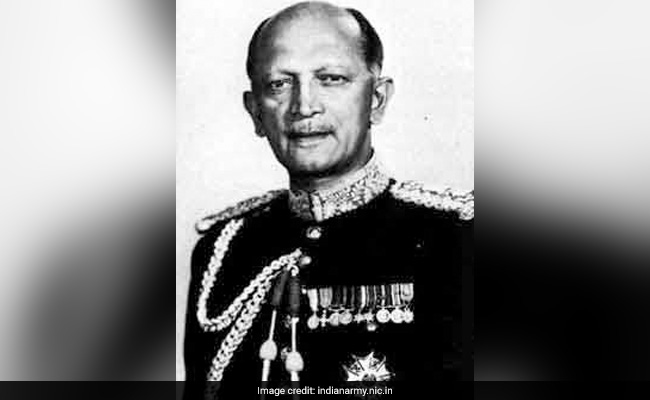
January 15 is observed every year as Army Day in India. Field Marshal Kodandera M Cariappa took over as the first Commander-in-Chief of the Indian Army from General Sir Francis Butcher, the last British Commander-in-Chief on this day in 1949. Army day is dedicated to the soldiers who fought to safeguard the country’s honour. Prime Minister Narendra Modi has extended his greetings on Army Day. PM said, “On Army Day, I convey greetings to the soldiers, veterans and their families”.
“Our Army always puts the nation first. I salute all those great individuals who sacrificed their lives while serving the nation. India will never forget our valiant heroes,” he added.
Army Day 2018: Important Things Students Should Know About Field Marshal KM Cariappa
January 15 is observed every year as Army Day in India
Born on 28th January 1900 in Mercara state, now part of Karnataka, Field Marshal KM Cariappa was amongst the first officers to receive the King’s Commission in 1919.
After an outstanding career, he became the first Commander-in-Chief of the Indian Army on January 15, 1949.
A hardcore Infantryman, Field Marshal KM Cariappa was a thorough gentleman who exhibited the highest standards of self discipline and compassion.
He had been a legend in his life time and left an indelible impression that would inspire the people for a long time.
Field Marshal KM Cariappa was the first Indian Commander-in-Chief of the Indian Army and was conferred the rank of Field Marshal on 28 April 1986.
He breathed his last in May 1993.
In memory of Field Marshal KM Cariappa, the Infantry Directorate at the Army HQ has been organizing the ‘Field Marshal KM Cariappa Memorial Lecture’ every year, since 1995, as part of Infantry Day celebrations.
Gen Dalbir Singh, then Chief of the Army Staff, dedicated a statue of Field Marshal K M Cariappa at the Army Parade Ground, Delhi Cantonment and rechristened the parade ground as “Cariappa Parade Ground” on December 29, 2016.
Three Service Chiefs paying homage at Amar Jawan Jyoti on the occasion of 70th #ArmyDay 2018 #ArmyDay2018@DefenceMinIndia@SpokespersonMoDpic.twitter.com/FbAUAAwFY
– ADG PI – INDIAN ARMY (@adgpi) January 15, 2018
source: http://www.ndtv.com / NDTV / Home> Section> Education / by NDTV Education Team / January 15th, 2018
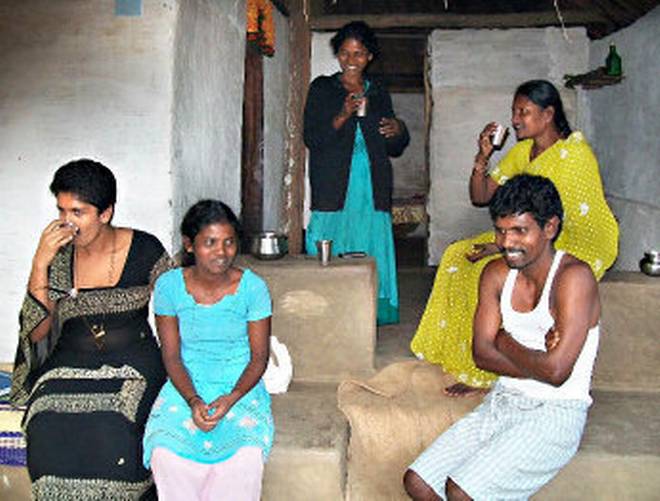
REACHING OUT: The president of the Virajpet taluk panchayat, Sarita Poonacha (left), sipping coffee at Kolli hadi, a tribal settlement in the Nagarahole National Park in Kodagu.
They stay in the house of a tribal couple overnight at Nagarahole
Madikeri:
The president of the Virajpet Taluk Panchayat, Sarita Poonacha, stayed in Kolli hadi, a tribal settlement, in the Nagarahole National Park on Tuesday as part of the “Grama Vastavya” programme to listen to the grievances of the hapless tribal people, according to information reaching here on Thursday.
This was the first step being initiated by the panchayat to redress the problems being faced by the tribal people, Ms. Poonacha said. J.K. Muthamma, a tribal member in the panchayat, also stayed with Ms. Poonacha. They were offered tuberous roots and honey for supper.
The Chief Executive Officer of the zilla panchayat, Mirza Akbarulla, who along with Ms. Poonacha, heard the grievances of the tribal people, said steps would be taken to redress them in a phased manner.
Replying to a man from the tribal community who alleged that officials only gave promises to them and nothing else, Mr. Akbarulla said his efforts were sincere and that he and other officials would not have visited them during the night if it were otherwise.
J.K. Thimma of the tribal community requested Ms. Poonacha to introduce regular buses to help tribal children reach schools in Kutta, Srimangala, Gonicoppa and other places.
Members of the tribal community also demanded more kerosene and ration under the public distribution system as the existing ration was not sufficient.
Tribal people sang revolutionary songs (Kranti Geete) and performed “Kolata” in the night to showcase their culture.
The deputy secretary of the zilla panchayat, Basavarajappa, executive officers of the Virajpet amd Madikeri taluk panchayats, Nagaraj and Motappa, respectively, and Assistant Director of Kannada and Culture Department K. Damodar were present.
The officials left while Ms. Poonacha and Ms. Muthama stayed in the house of J.K. Thimma and Bojamma.
source: http://www.thehindu.com / The Hindu / Home> National> Karnataka / October 30th, 2009
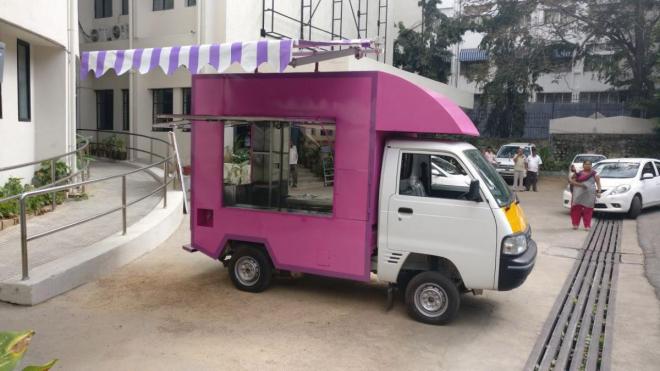
The ‘Saviruchi’ mobile canteen, run by Sthree Shakthi Okkuta, will hit the roads in Kodagu shortly.
The canteen will offer breakfast and afternoon meals.
Chief Minister Siddaramaiah, in his budget 2017-18, had announced the launch of the ‘Saviruchi’ canteen. Accordingly, the canteen will start functioning in all the 30 district headquarters by December end or January 15.
The ‘Jilla Sthree Shakthi Mahila Okkuta’, comprising women, has been formed in each district to run the canteen. The federation members themselves will run the canteen. Each federation will be given loan of Rs 10 lakh by Karnataka State Women’s Development Corporation to purchase specially-designed vehicle, utensils and as working capital, said Women and Child Development deputy director Mumthaz. The federation has to repay the loan within 60 months.
Along with breakfast and meals, they can also prepare tea, coffee, snacks and fruit juice for sale. Measures will be taken to sell even “sandige,” pickle, and masala in the canteen.
The 10-member team of the federation has already availed two-day training in management of the canteen along with maintaining hygiene.
source: http://www.deccanherald.com / Deccan Herald / Home> District / DH News Service / Madikeri – December 17th, 2017
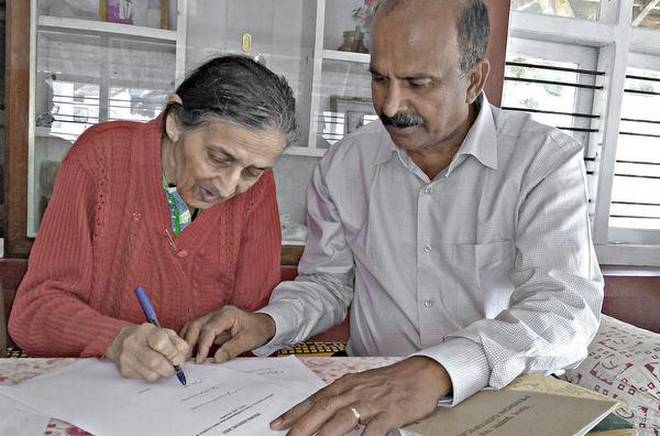
Ex-Sergeant Subramani assisting Kaveriamma in preparing the documents for her fight for pension
Kaveriamma is almost 80 and lives in Kiggal village of Kodagu district. She is the wife of an ex-serviceman who fought in World War II, the India-China war of 1962, and and the Indo-Pak war of 1965. And she is now waging her own battles, only it is for pension.
She first had to battle for nearly 12 years to get the pension denied because of a clerical error spelling her name Kaveriammal. She is now waging a second battle with the army authorities as she has received less than what was due to her.
The first round of trouble began when her late husband, Naib Subedar Ballachanda Nanjappa Aiyappa (JC-19016), mentioned his wife’s name as Rani — as he used to address her in private — instead of Kaveriamma in the family pension endorsement application submitted when he was alive.
Mandetira Subramani, retired Senior Non Commissioned Officer of the Indian Air Force and founder of the Mysuru-based Vekare Ex-Servicemen’s Trust (VKET), which is fighting Ms. Kaveriamma’s case, explained that Aiyappa had enrolled in the Indian Army (Corps of Electronics and Mechanical Engineering or EME) on August 19, 1940, retired on February 16 1966, and was later re-employed in the Central Excise and Customs Department as a lower division clerk. He died in 2000.
And that is when Ms. Kaveriamma’s ordeal began — her name in the EME records office at Secunderabad was spelt as Kaveriammal.
“While the descriptive roll of Mr. Aiyappa mentions his wife’s name as Ms. Kaveriamma, a clerical error resulted in it being changed to Kaveriammal,” said former Sergeant Subramani, who is also an advocate who takes up cases involving ex-servicemen.
Lakhs missing
It has now transpired that Ms. Kaveriamma has received pension with effect from September 12, 2012, and not from the date of her husband’s demise, he said.“The total arrears due to her is ₹7,42,874,” he added.
The reason given by the authorities is that she failed to exercise her option for family pension within two years of her husband’s demise. “But pension cannot be time-barred and even if such a retrograde law exists, we will fight to get it squashed,” he argued.
But cases like Ms. Kaveriamma’s are just the tip of the iceberg and there are countless incidents of pension held up because of petty clerical errors, he said.
Besides, there is a lack of awareness of the latest rules governing pension schemes, Mr. Subrami said, pleading for a more humane approach by the authorities in settling the pension affairs of ex-servicemen.
source: http://www.thehindu.com / The Hindu / Home> News> States> Karnataka / by R. Krishna Kumar / Mysuru – December 14th, 2017
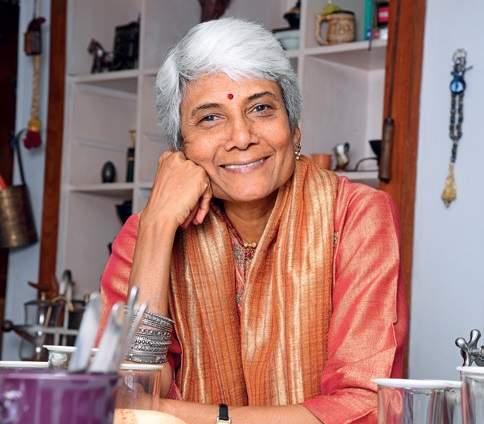
Asia’s first lady of coffee Sunalini Menon says she never planned on being a coffee-taster. She says that she decided on a course in Dietetics or a Phd. in Foods, when she chanced upon an advertisement calling for Assistant Cup tasters at the Coffee Board of India. “I had tried tea tasting as a child at an uncle’s tea estate in Munnar and the ad brought back happy memories of sipping, slurping, spitting and looking wise. I applied for the post and was called for the interview.”
She had to compete with eight men with more experience and qualifications, and that was her first job interview. Sunalini came first in the written and oral tests.
Sunalini, Asia’s first woman coffee taster, says, that the internal panel of examiners were not too keen to appoint her because she was young, had no knowledge about coffee and was a woman who could get married and give up the assignment. “But the then chairman of the Coffee Board was insistent that gender should not come in the way of a job and that as I had topped the interview, that I should rightfully be given the assignment.” Sunalini then joined the Coffee Board of India in 1972.
It wasn’t easy working at the Coffee Board of India, she says. She was the only woman at the officer’s cadre level in the Board then. “The staff working under me refused to accept my instructions or the schedule I had set for work, they were not used to taking instructions from a woman,” she says. “Fortunately, I had a chief who took me under his wing and advised me to first learn the subject and give them time to accept me. His parting words were ‘Tread slowly, but firmly’.”
The in-house training she was given was intense. Every day, she would taste washed arabicas, unwashed arabicas, washed robustas and unwashed robustas, to understand the various nuances in a cup.
Also, a founder trustee of the Women’s Coffee Alliance – India Chapter, Sunalini was present at the Coffee Santhe held recently at Karnataka Chitrakala Parishat. She says, “This is our annual fund raiser to help empower women coffee-plantation workers and their girl children.”
Coffee tasting is both a science and an art
While carrying out coffee tasting, there is a protocol that one needs to follow. The attributes that are evaluated in the cup are fragrance, which is the smell of the coffee powder in the dry state, and aroma, which is the smell in the wet state, when water is added to the powder. During the aroma evaluation, the crust (floating particles on the surface of liquor or the brew prepared for tasting and all the aromatic volatiles) is broken. With“Breaking of Crust”, fragrance, aroma and the other attributes are evaluated for flavour, aftertaste, acidity, mouthfeel, uniformity, balance, cleanliness, sweetness and, finally, the overall rating of the cup.
source: http://www.newindianexpress.com / The New Indian Express / Home> Cities> Bengaluru / by Akhila Damodaran / Express News Service / December 08th, 2017
WELCOME. If you like what you see "SUBSCRIBE via EMAIL" to receive FREE regular UPDATES.
Read More »