A Dalit worker in Kodagu, whose employer let loose dogs on him for quitting work, has been liberated from bonded labour.
Harish, 30, who had quit working in the Paruvangada Kishen’s coffee beans godown at Balale village in Kodagu’s Virajpet taluk, was allegedly bundled into a jeep by Kishen and his associate Madhu on August 30 and tied up in a shed where three dogs were reportedly let loose on him.
Mr. Harish had suffered injuries on his head, shoulder and hand. The accused later took Harish in their vehicle and left him near Balale hospital before the public admitted him to the hospital.
Following a complaint by R. Siddaraju, State coordinator, Human Rights Forum for Dalit Liberation, the Assistant Commissioner and Sub-Divisional Magistrate of Madikeri Sub-Division conducted a probe.
The inquiry had revealed that Harish had been forced to work in Kishen’s godown against his wishes. Kishen had forced Harish to work saying he owed him interest on borrowed money, the enquiry said.
‘Deprived freedom to move around’
By abducting him and assaulting him, the accused had deprived Harish of his freedom to move around, the Sub-Divisional Magistrate said, while issuing a Certificate for Release from Bonded Labour on November 14, 2017.
During inquiry, Harish said he had been working in the godown for ₹200 a day and was paid his wages weekly. Though Harish had taken a loan of ₹10,000 to go to Sabarimala, the dues had been cleared on return. However, long working hours (7 a.m. to 2 a.m.) and other problems made him quit and join another coffee estate as an employee, which angered the accused.
Meanwhile, Harish lodged a complaint with the Kodagu police after recovering from his injuries.
In September, the Kodagu police arrested the accused, who were later remanded in judicial custody. Presently, the accused are out on bail.
The Certificate for Release of Bonded Labour entitles Harish to immediate compensation of ₹20,000 from the government, and financial assistance of ₹80,000 upon conviction of the accused.
Meanwhile, the International Justice Mission (IJM), in a statement, said bonded labourers often face extreme violence and exploitation. IJM’s William Christopher said the victim was traumatised and still feared for his life.
source: http://www.thehindu.com / The Hindu / Home> News> Cities> Bengaluru / by Special Correspondent / Mysuru – November 21st, 2017
KM Cariappa received the prestigious order of the British Empire (OBE) for his role in the Burma against the Japanese during the Second World War.
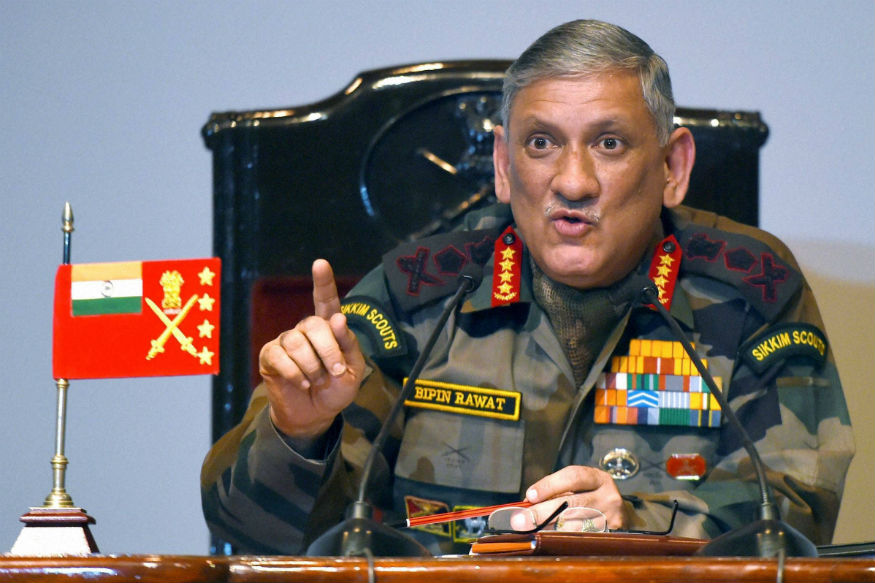
Army Chief General Bipin Rawat on Saturday pitched for Field Marshal Kodandera Madappa Cariappa, independent India’s first army chief, to be conferred the Bharat Ratna. However, few know of the man whose unrelenting patriotism and secular beliefs blazed a trail in the Indian Army.
KM Cariappa is a man known for many firsts, but most importantly, he is known as the man who took charge of the Indian Army from its last British Commander in Chief, General Sir Roy Bucher. Born on January 28, 1899, in Coorg, Cariappa completed his education at Central High School at Madikeri and went on to study at the Presidency College in Madras.
However, Cariappa began his Army stint under the British and was among the few selected for the first batch of KCIOs (King’s Commissioned Indian Officers) at the Daly Cadet College in Indore and was commissioned in the Carnatic Infantry. He was in active service with the 37 (Prince of Wales) Dogra in Mesopotamia (present-day Iraq) and then posted to the 2nd Rajput Light Infantry (Queen Victoria’s Own). Cariappa went on to become the first Indian officer to undergo the course at Staff College, Quetta in 1933. In 1946, he got promoted as the Brigadier of the Frontier Brigade Group.
By Indian independence, Cariappa saw action in Iraq, Syria, Iran and Burma and became the first Indian Officer to be given command of a unit in 1942. He went on to receive many awards and accolades in his career spanning three decades. He received the prestigious order of the British Empire (OBE) for his role in the Burma against the Japanese during the Second World War.
In 1947, Cariappa became the first Indian to be selected to undergo a training course at Imperial Defence College, Camberly, UK. His role during the Partition is rarely mentioned, during which he oversaw the division of the Army. Cariappa also led the Indian forces on the Western Front during the Indo-Pak War of 1947 and successfully recaptured Zojila, Drass and Kargil and established a linkup with Leh.
On January 15, 1949, Cariappa became the first Commander-in-Chief of the Indian Army. He held the five-star rank of field marshal, the highest honour in the Indian Army, which Sam Manekshaw is the only other officer to have held. He was also awarded the ‘Order of the Chief Commander of the Legion of Merit’ by US President, Harry Truman
Even after his retirement from the Army in 1953, Cariappa was not finished yet and served as the High Commissioner to Australia and New Zealand till 1956. He died in Bengaluru in 1993 at the age of 94.
With PTI inputs
source: http://www.indianexpress.com / The Indian Express / Home> Who Is / by Express Web Desk / New Delhi – November 04th, 2017
Gen Rawat’s comments came in response to a request by Col KC Subbayya from The Field Marshal Cariappa General Thimayya (FMCGT) forum about recommending the Bharat Ratna to Cariappa, who hails from Kodagu district in Karnataka. File photo of Army chief General Bipin Rawat. (PTI)
Gonikoppal:
Army Chief General Bipin Rawat on Saturday pitched for conferring the country’s highest civilian honour Bharat Ratna on independent India’s first army chief, Field Marshal General K M Cariappa.
“The time has also come to recommend Field Marshal Cariappa for the award of Bharat Ratna. If others can get it, I see no reason why he should not, a deserving personality for the same. We will shortly address the issue on priority,” he said
Gen Rawat’s comments came in response to a request by Col KC Subbayya from The Field Marshal Cariappa General Thimayya (FMCGT) forum about recommending the Bharat Ratna to Cariappa, who hails from Kodagu district in Karnataka.
Rawat unveiled the statues of Cariappa and General K S Thimayya, also a former Army chief who hailed from Kodagu district in Karnataka, at a function at the Cauvery College at Gonikoppal, Kodagu district.
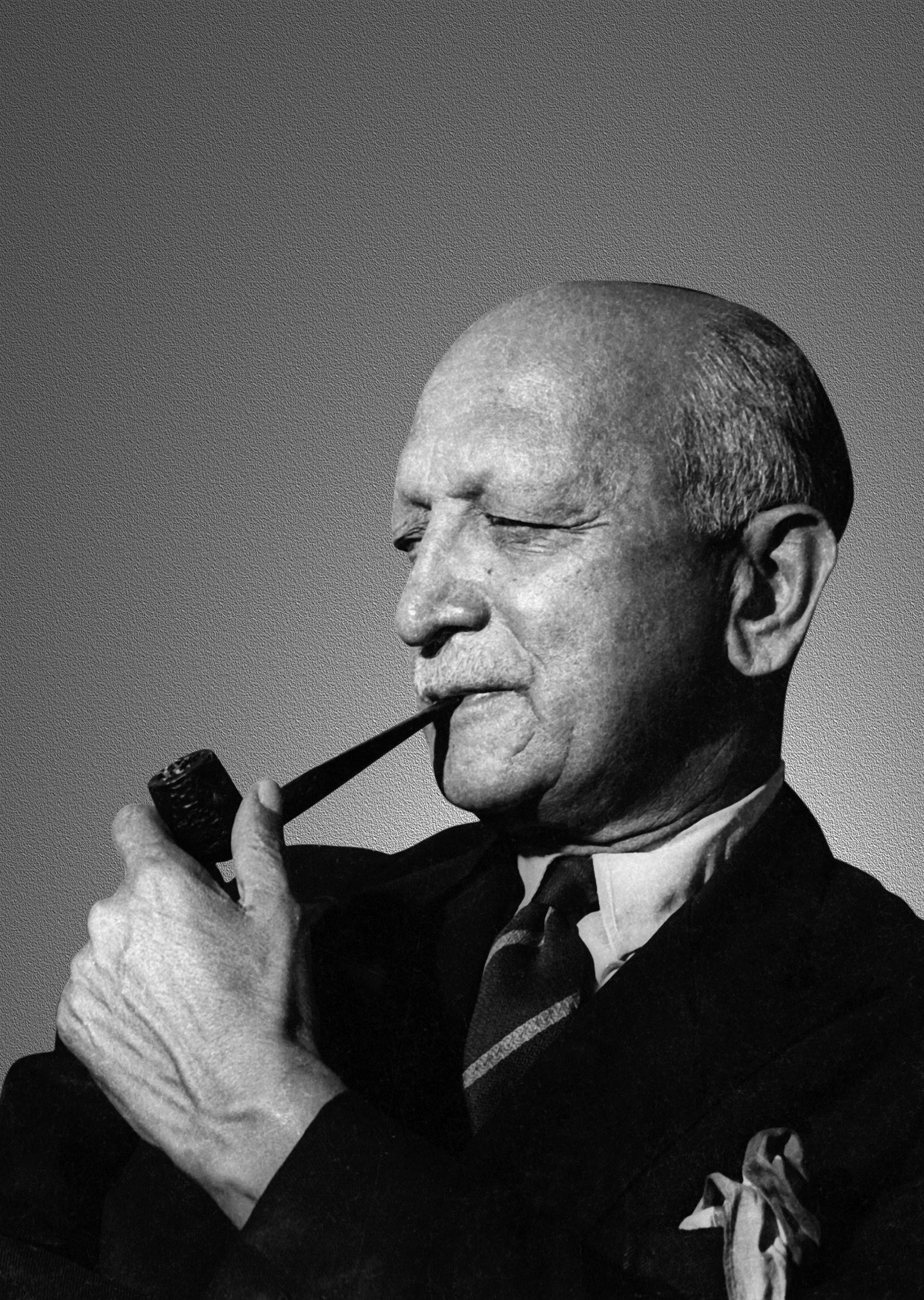
Former Commander-in-Chief of the Indian Military, Field Marshal Kodandera Madappa Cariappa (1899 – 1993), 1975. (Photo by Dinodia Photos/Getty Images)
Terming Kodagu (formerly Coorg) as a ‘land of warriors’, Rawat said he is proud, privileged and humbled for having got the opportunity to unveil the memorial in memory of Field Marshal Cariappa and General K S Thimayya.
Kodagu continues to serve the nation with a large number of officers and men serving the Army, he said and voiced hope that “there will be more Chiefs in the future who will rise from this great land”.
Cariappa was the first Indian Commander-in-Chief of the Indian Army and was conferred the rank of Field Marshal on April 28, 1986.
He was also a recipient of the prestigious order of the British Empire (OBE) for his role in the Burma campaign against the Japanese during the Second World War.
Cariappa also led the Indian forces on the Western Front during the Indo-Pak War of 1947.
He held the five-star rank of field marshal, the highest honour in the Indian Army, which Field Marshal Sam Manekshaw is the only other officer to have held.
Cariappa, whose military career spanned over three decades, retired from the Army in 1953 and later served as the High Commissioner to Australia and New Zealand till 1956.
He died in Bengaluru in 1993 at the age of 94.
source: http://www.news18.com / News18.com / Home> India / PTI / November 04th, 2017
Chief of the Army staff General Bipin Rawat will honour the Kodava martial warriors and unveil statues of First Field Marshal of Indian Army K M Cariappa and Padma Bhushan General K S Thimayya on November 4 at Gonikoppal in Kodagu district on November 4.
Field Marshal Cariappa is also a recipient of the prestigious order of the British Empire (OBE) for his role in the Burma campaign against the Japanese during the 2nd World War. General Thimayya, was awarded the Padma Bhushan in 1954 and took over as Chief of the Indian Army on 7 May, 1957.
The site for the statues has been provided by the Cauvery Educational Society and is located in close vicinity to the ‘lyn house’, the ancestral house of Kodavdira family belonging to theGenerals. The two statues are placed side by side about 25′ above the road level.
The bronze statues, 7’6″ in height have been made in Bidadi by Shilpi Vijay at a total cost of Rs 17 lakhs. This is the only LoC in India where statues of the Army Chiefs are Co-located.
The Field Marshal Cariappa General Thimayya forum was formed with the aim of helpingthe veterans of the area and to motivate youngsters to join the Defence Forces.
The two bronze statues will be unveiled in presence of Lt General R K Anand, General Officer Commanding, Dakshin Bharat Area, Major General K S Nijjar, General Officer Commanding, Karnataka & Kerala Sub Area.UNI MSP AE1323
— (UNI) — C-1-1-DL0100-1112494.Xml
source: http://www.news.webindia123.com / WebIndia123 / Home> News> India / Bengaluru – Tuesday, October 31st, 2017
The field marshal’s military philosophy is a useful pointer and guide at this critical juncture in the Valley.
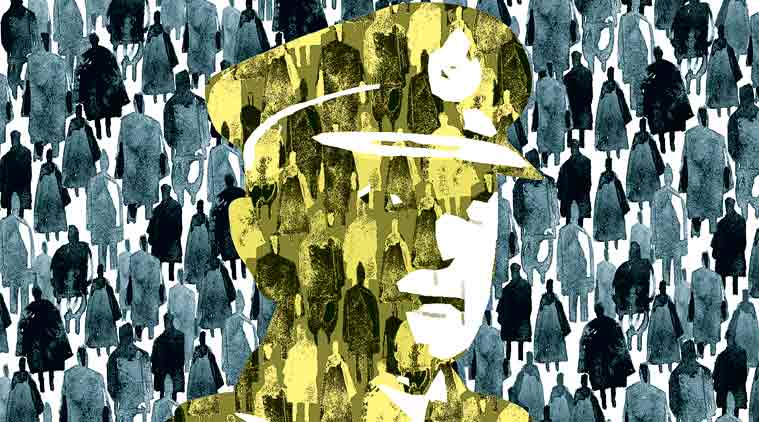
He knew that they were warm and hospitable if treated with respect and as equals. (Illustration: C R Sasikumar)
An interesting anecdote about a great Indian soldier, Field Marshal K.M. Cariappa, is lodged in my memory since childhood. As a habit, I keep asking questions. I had asked a question about Cariappa Park during my school days. Nobody had an answer till the senior political leader from Baramulla, Sheikh Mohammad Akbar, told me a fascinating story of how he had fulfilled the desire of the people of Baramulla, as chairman of the Town Area Committee, to commemorate Cariappa.
Once, after chasing the raiders beyond Uri, Cariappa was stopped by a group of people at Baramulla and told that they had suffered a lot due to the absence of food supplies, including salt. It was a puzzling question for the general, as no stocks were available with the army. But he fulfilled his assurance the next day when he visited the old town and distributed flour, rice and salt to the most needy families. He followed this gesture in many ways in various parts of Kashmir. K.S. Thimayya, whom he had put in command of the 19th Infantry Division at Baramulla, followed Cariappa in this regard. Grateful Baramullians named a park after Cariappa and the park exists even today.
My quest to learn more about Cariappa was deepened when I heard some commanders in Kashmir asserting during the recent turmoil that “yes”, stones would be answered through bullets and pellets. The people of Kashmir feel this attitude has been encouraged after Major Nitin Leetul Gogoi was awarded for using a civilian as a “human shield” in Budgam.
The Indian army’s history tells us that Cariappa showed great valour as a commander and the success he obtained was squarely his own. But many people in India may not know that apart from his military valour, he employed another natural tool as a workable mechanism to deal with the people all around including the enemy. Reading authors like B.C. Khanduri, J.S. Bindra, S.K. Sinha, L.P. Sen, K.C. Cariappa and others, I came to know of many interesting stories woven around the personality of that great soldier. When I came to know of Cariappa’s Waziristan experience, I was flabbergasted.
In June 1939, Cariappa was transferred to the 1st Battalion of the Rajput Regiment which became his parent unit. The battalion moved to Waziristan and he had to spend three years there. He was posted Waziristan in 1922 as well.
In November 1945, Cariappa was finally given command of a brigade. He was posted as commander of the Bannu Frontier Brigade in Waziristan.
Having served in the NWFP as a young officer, Cariappa was conversant with the terrain as well as the habits of the Pathan tribesmen who lived in the area. He had seen that the British policy of trying to keep them under control by force had not succeeded and he resolved to try a different method. He decided to win the hearts and minds of the tribesmen by extending a hand of friendship. He knew that they were warm and hospitable if treated with respect and as equals.
One day, while passing through a village, he saw a group of Pathan women carrying pitchers of water. When he found out that they had to fetch water daily from another village, four miles away, he immediately ordered a well to be dug near their own village. He followed this gesture with many similar deeds. The Pathans were overwhelmed and started calling him “Khalifa”. Later, when the region was torn by communal strife, Bannu remained a haven of peace thanks to the goodwill generated by Cariappa. When Jawaharlal Nehru visited Bannu in 1945 as head of the Interim Government, Cariappa organised a public meeting which was attended by all tribal leaders. The next day, when he visited Razmak where another brigade was stationed, Nehru was fired upon by the tribesmen and the visit had to be called off. Nehru was impressed by Cariappa’s leadership qualities and rapport with the tribesmen.
Veekay’s History Book (Victory of Knowledge Global Publications) tells us an interesting story about Cariappa. “In February 1946, he was appointed Presiding Officer of one of the General Court Martials constituted to try members of the Indian National Army (INA). Before the trial, he visited some of the detention camps, where the prisoners were lodged. He found them full of rancour and hatred against the British for treating them badly and holding them without trial. Cariappa was pained by their plight and wrote to the Adjutant General, requesting him to expedite the trials. He also recommended that some of them such as Shah Nawaz Khan, G.S. Dhillon and P.K. Sehgal should be pardoned. But, when as Chief of the Armed Forces he was to consider the recommendation to accommodate Indian National Army (INA) personnel including Shahnawaz, Dhillon and Sehgal and he refused to take them into the Indian Army, particularly for the reason that they would bring politics into the Army. There was a lot of pressure on him for this and Nehru relented only after Cariappa threatened to resign on this issue.”
I invested some more time to understand both sides of Cariappa’s character. He was a very tough general when it came to leading the armed forces, as was required by military ethics, and he never compromised his principles.
B.C. Khanduri, who worked with him as operations staff officer, says in his book Field Marshal K.M. Cariappa; His life and Times that, “Once between Mahura and Uri, he was snipped at from close quarters. He showed no signs of fear while his staff officers perspired.”
Lt. Col. J.S. Bindra, as intelligence and liaison officer with Cariappa recalls in his book an incident at Srinagar. He says: “The 268 Infantry Brigade was without a commander for a few days. Cariappa informed Army Headquarters to post Brigadier Bikram Singh. He (Bikram Singh) represented to the army that his relations with Bakshi Ghulam Mohammad, the then Deputy PM of J&K, were not too friendly and that Bakshi might create problems for him in his command.Cariappa asked him what else? Then, he told Bikram to put his ego in his pocket and do what he desired him to do. Bikram was in Tithwal by the same night and on the job”.
The other side of his character is described in Veekay’s History Book: “While Cariappa admonished Thimayya for lighting a cigarette while travelling in an Army vehicle, he asked the driver to stop to allow Thimayya to smoke.”
Lt. General Sen in his book, Slender was the Thread: Kashmir Confrontation 1947-48, describes another quality which Cariappa possessed and it was his broad-mindedness. He says, “He treated all troops the same and was utterly free of any parochial feelings.” He was best known for his love for the Indian soldier. Troops not only loved him, they worshipped him. But then, he never pardoned if anybody indulged in a crime.
Cariappa is no more but his philosophy of military leadership is available to us. Many retired and serving generals have emphasised again and again that there is no military solution to the Kashmir dispute. It has to be resolved through methods other than force. I am confident that the spirit of Cariappa’s soldiery would be a better guide at this critical juncture of the Union’s relationship with Kashmir.
The writer is a senior Congress leader and former Union minister.
source: http://www.indianexpress.com / The Indian Express / Home> Opinion> Columns / by Saifuddin Soz / October 05th, 2017
The Western Ghats has been plundered over the years, resulting also in progressively hotter summers in Bengaluru. While afforestation efforts to save the Ghats have been on for years, a team of passionate and dedicated Bengalureans is trying a different approach to save the many tree species. They are planting acres-wide groves in private and public lands that fall in the range, for now focussing on Coorg and Wayanad.
Meera, Rajesh, Sheshadri Ramaswamy, Uma, Anil Panolil Chirikandoth and Dhandapany collectively form Forest First Samithi (FFS) – a society that aims to engage and empower local communities in ecological conservation by educating them about endangered and endemic plant species. What started off as a team of four has today grown into a family with ten permanent members and over 30 volunteers.”FFS is trying to conserve endangered tree species by creating an eco-system where birds, small mammals and insects can also thrive,” says Meera, one of the founders of FFS, adding that the organization was started in 2008, and that most of their early years were spent on learning.
FFS’ vision for degraded lands in Kodagu started this May, and they have already spoken to local organizations and communities to get them on board. “Since we started work in Kodagu, we have already managed to add 35 species of endangered plants into the groves we worked on, and plan to touch 100 species,” she says, adding that the lands they are focusing on are public spaces ranging between 5 acres and 30 acres.
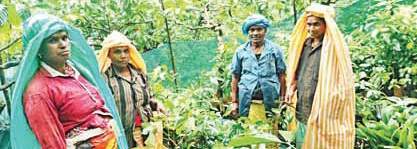
Workers in Wayanad grove Pics courtesy: Meera Rajesh
How it all started
FFS started work in the biological hotspot that is Wayanad, where a lot of native tree species have been chopped to give way to silver oak, coffee and teak plantations. Meera says that unless one ventures deep into the forest, it is unlikely you’ll come across any traditional species. “During the summer months, we noticed how trees in Wayanad were being chopped at an alarming rate for timber. That’s when we decided to do something about it. We got involved in a lot of discussions with research organizations and experts on how to go about it, and also spoke to locals to get them involved,” she says.
Years of hard work and research resulted in the complete transformation of a private farm land in Wayanad, where a section of it was partitioned to create what is called a ‘farm grove’. This grove comprises endemic, endangered tree species, while the rest of the land can be used for economic purposes. By getting farmers and land owners involved in understanding how these endangered species will actually better their crops in terms of soil quality, water retention and pollination, FFS has managed to conserve 100 species of trees in Wayanad.
source: http://www.newindianexpress.com / The New Indian Express / Home> Cities> Bengaluru / by M Shriya Sharma / Express News Service / September 06th, 2017
E-base, Kodagu, is addressing various local issues such as man-animal conflict prevalent in the area, protecting the Kaveri river, and water conservation.
Nestled in the lush Western Ghats, surrounded by coffee plantations, elephant corridors, and forests alike, Titimati is not far from the Nagarhole Tiger Reserve. A green and resilient building made of clay bricks, local stones, Mangalore tiles and bamboo stands there. It is the E-base at Kodagu — an embodiment of responsible and sustainable living.
Located in the popularly known Coorg district of Karnataka, it is the fifth E-base in the world that started in June 2016. An E-Base serves as a symbolic model for educational, environmental and energy issues throughout the world. The first one was established in Antarctica in 2008.
E-base, Antarctica
Sir Robert Swan, OBE, who established the first E-base in Antarctica, was the first man to have walked, unassisted, to both the North and the South Pole. He has served as the United Nations Environment Programme (UNEP) Goodwill Ambassador.
After successfully removing 1,500 tonnes of waste from the shores of Antarctica, Sir Robert Swan stood at the Bellingshausen Russian Base and envisioned an education base that would allow him to share the beauty of this continent with students and leaders around the world.
Powered entirely by renewable energy, Robert and a small team lived in the E-Base and broadcasted clean technology and energy saving techniques to schools and universities around the world.
The purpose of an E-base is to inspire a global audience to tackle the issue of climate change by showing that if we can achieve the seemingly impossible in Antarctica, we can all take small, achievable steps in our own backyards.
Since Antarctica, E-bases have been established in Pench, Madhya Pradesh; Leh, Ladakh; and Blue Ridge Mountains, USA. All have the common objective to educate and learn about global climate issues, while addressing local sustainability challenge
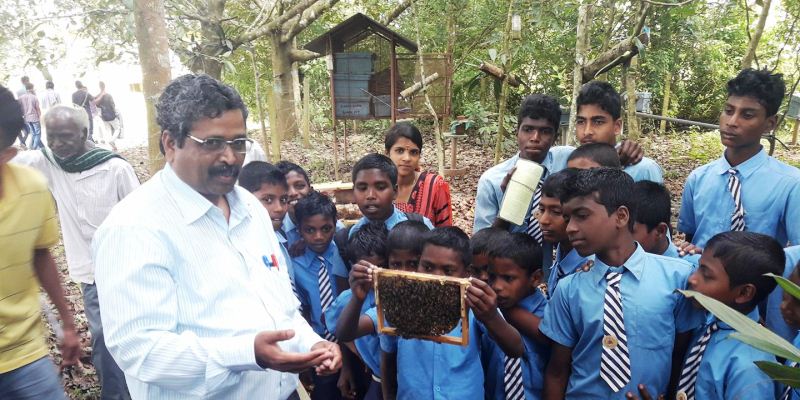
Visit to Forestry College, Ponnampet.
Taking the E-base to India
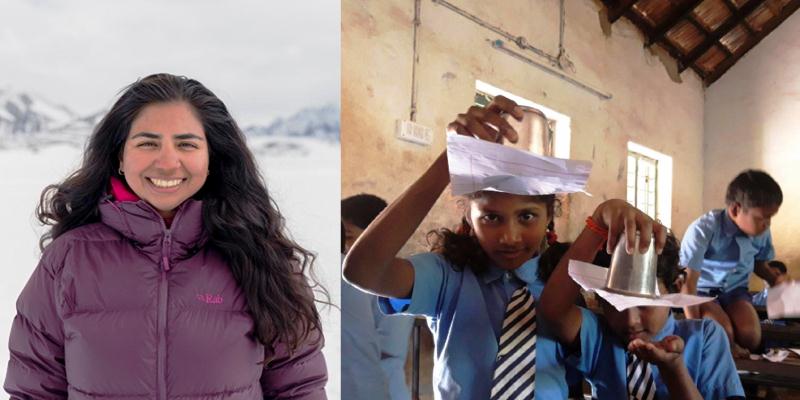
Charulata Somal, IAS, CEO Zilla Panchayat of Kodagu, driven by the zeal to make the best things happen in the district, started the E-base in 2016.
It all started in the March of 2016, when Charulata went to Antarctica on an expedition led by Robert Swan for ‘A Leadership on the Edge Programme to the Last Wilderness on Earth,’ not just once but twice the same year. A passionate environmentalist, Charulata, after her return from Antarctica, decided to take forward the concept of E-base in her district to safeguard its flora and fauna through education.
E-base, Kodagu, was established at Titimati Ashram School, a residential government school for tribal children. The E-base runs a paid fellowship programme every year which brings bright, young, motivated individuals to work with the children and build a curriculum on sustainability while imparting life skills to the kids.
With a strength of 250 children and a potential to reach out to over 500 children in the neighbourhood, the E-base gives the fellow a broad canvas to teach and explore.
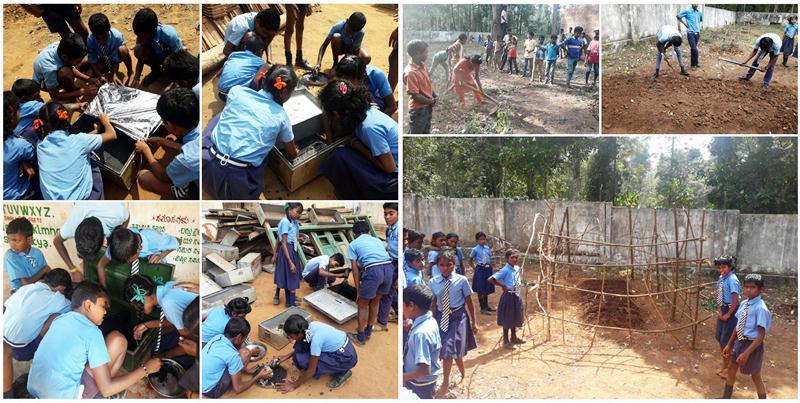
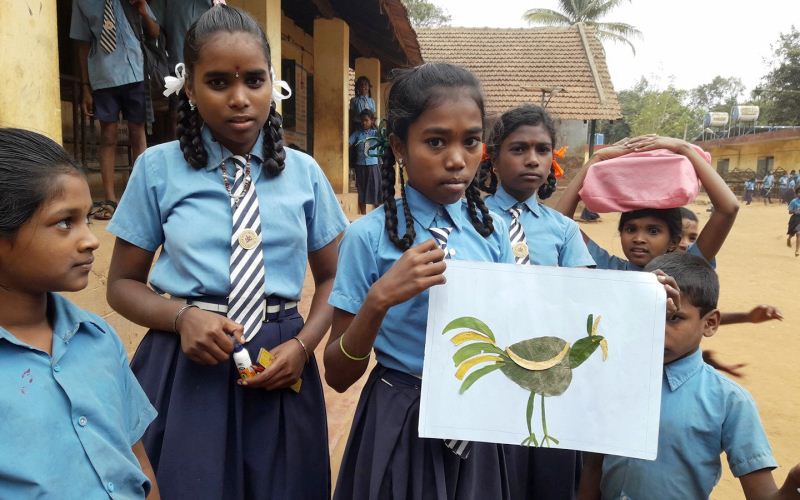
Children building solar cooker from waste and managing a vegtable garden at E-base.
“We have had one fellow till now and will be receiving our second fellow in June. Our previous fellow, Deepti Bhatt implemented 14 mini projects, core projects, field trips and workshops which included activities like creating and nurturing a vegetable garden at school and making eco-friendly toys. We hope that these efforts will be carried forward by our incoming fellow,” says Aarati Rao, an educator who worked for building a sustainability curriculum for a similar concept learning space, i.e. the E-base in Leh before meeting Charulata Somal on the International Antarctica Expedition 2016.
Practicality and hands-on learning are of prime importance at the E-base and fellows are chosen on the basis of their ability to integrate project-based learning and experiential learning into their teaching style. “The fellow’s role becomes important in utilising the infrastructure and the resources available to provide access and exposure to the children to the outside world while staying rooted in their traditions,” explains Aarati.
Environmental education hub
“E-base, Kodagu, serves as a space for kids to learn about environmental conservation and drive change through activism and ownership. Its objective is to address various local issues such as man-animal conflict prevalent in the area, protecting the Kaveri river, water conservation, and native tree preservation. It also aims to be a space that’ll serve as a window to the world since it is internet-enabled,” says Aarati, who, along with Charulata, realised the vision of starting an E-base in a biodiversity hotspot like Kodagu.
Children demonstrating their art made using leaves.
The E-base integrates rainwater harvesting technology, organic farming and clean energy for teaching children sustainable practices from a very young age.
The long-term vision is to make the students capable of countering environmental challenges and inspire them to be the problem solvers of the world. There are 11 ashram schools that are catering to the tribal kids at Kodagu, and the E-base team hopes to make use of the E-base as a learning centre.
Although there are merely five E-bases across the world, the team at Kodagu hopes that there would be an E-base in every country which would virtually connect kids and help them come up with solutions for the big challenges the world faces today.
“That is the big picture which we hope to achieve in the long run,” says a member of the E-base.
source: http://www.yourstory.com / YourStory / Home> Education / by Hema Vaishnavi / August 23rd, 2017
‘India and Cambridge university have had an enduring relationship’
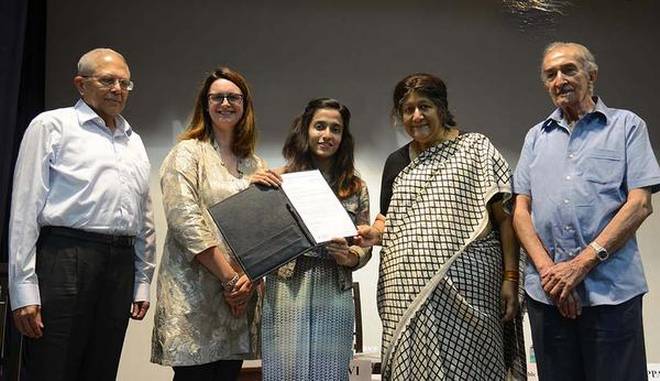
The Pemanda Monappa Scholarship was presented to Rupsa Banerjee, a student of English literature, by the Chief Justice of the Madras High Court Indira Banerjee at a function on Wednesday. Ms. Banerjee will study at the University of Cambridge, U.K.
Speaking on the occasion, the Chief Justice said studying in an institution like Cambridge broadened the outlook of students.
Congratulating the student, Chief Justice Banerjee hoped she would imbibe the qualities of Pemanda Monappa.
She recalled that in 1948, the officer was hand-picked by Sardar Vallabhai Patel to be the Inspector of Police of Hyderabad State despite the fact that they had never met.
P.M. Belliappa, former IAS officer and managing trustee of the Pemanda Monappa Trust, said the event was a celebration of the values that his late father followed till the very end.
Helen Pennant, director, Cambridge Trust, said it has been in existence for 30 years. It supports 500 scholars annually, she said. “One in three students at the university comes from outside the U.K.,” she said.
N. Ravi, Director, Kasturi and Sons Ltd., said the relationship between India and Cambridge had been an enduring one and several Indians, including mathematician Srinivasa Ramanujam, statistician P.C. Mahalanobis, Nobel Prize winner Venky Ramakrishnan and three former Prime Ministers were alumni of Cambridge.
source: http://www.thehindu.com / The Hindu / Home> News> Cities> Chennai / by Special Correspondent / Chennai – August 03rd, 2017
Deputy Commissioner Richard Vincent D’Souza asked the homeless and the siteless to enrol their names with the district administration.
Chairing a Scheduled Caste/Scheduled Tribe committee meeting at deputy commissioner’s office in Madikeri on Sunday, he said the district administration has a target to provide 1,000 sites to the needy.
But only 300 have registered their names so far. They need to submit their name, address, ration card and the proof of their residence in any of the districts. He said it has been decided to distribute around 1,000 title deeds to the beneficiaries under 94C. The district in-charge minister will distribute the facilities in a programme to be held in the next month.
Fisheries department senior assistant director K T Darshan said the families belonging to backward castes have been living in tents in Harangi Backwaters area. They should be provided with sites.
The deputy commissioner asked the officials to identify the lands for Ambedkar Bhavan in every hobli. The Revenue department officials have been told to identify 25 to 50 gunte land, he said.
Assistant commissioner Dr Nanjundegowda, district social welfare officer Mayadevi Galagali, ITDP officer Prakash, taluk panchayat executive officer Padnekar and taluk social welfare officer Ramegowda were present.
Deputy Commissioner Richard Vincent D’Souza asked the homeless and the siteless to enrol their names with the district administration.
Chairing a Scheduled Caste/Scheduled Tribe committee meeting at deputy commissioner’s office in Madikeri on Sunday, he said the district administration has a target to provide 1,000 sites to the needy.
But only 300 have registered their names so far. They need to submit their name, address, ration card and the proof of their residence in any of the districts. He said it has been decided to distribute around 1,000 title deeds to the beneficiaries under 94C. The district in-charge minister will distribute the facilities in a programme to be held in the next month.
Fisheries department senior assistant director K T Darshan said the families belonging to backward castes have been living in tents in Harangi Backwaters area. They should be provided with sites.
The deputy commissioner asked the officials to identify the lands for Ambedkar Bhavan in every hobli. The Revenue department officials have been told to identify 25 to 50 gunte land, he said.
Assistant commissioner Dr Nanjundegowda, district social welfare officer Mayadevi Galagali, ITDP officer Prakash, taluk panchayat executive officer Padnekar and taluk social welfare officer Ramegowda were present.
Deputy Commissioner Richard Vincent D’Souza asked the homeless and the siteless to enrol their names with the district administration.
Chairing a Scheduled Caste/Scheduled Tribe committee meeting at deputy commissioner’s office in Madikeri on Sunday, he said the district administration has a target to provide 1,000 sites to the needy.
But only 300 have registered their names so far. They need to submit their name, address, ration card and the proof of their residence in any of the districts. He said it has been decided to distribute around 1,000 title deeds to the beneficiaries under 94C. The district in-charge minister will distribute the facilities in a programme to be held in the next month.
Fisheries department senior assistant director K T Darshan said the families belonging to backward castes have been living in tents in Harangi Backwaters area. They should be provided with sites.
The deputy commissioner asked the officials to identify the lands for Ambedkar Bhavan in every hobli. The Revenue department officials have been told to identify 25 to 50 gunte land, he said.
Assistant commissioner Dr Nanjundegowda, district social welfare officer Mayadevi Galagali, ITDP officer Prakash, taluk panchayat executive officer Padnekar and taluk social welfare officer Ramegowda were present.
source: http://www.deccanherald.com / Deccan Herald / Home> District / by DH News Service, Madikeri / July 17th, 2017
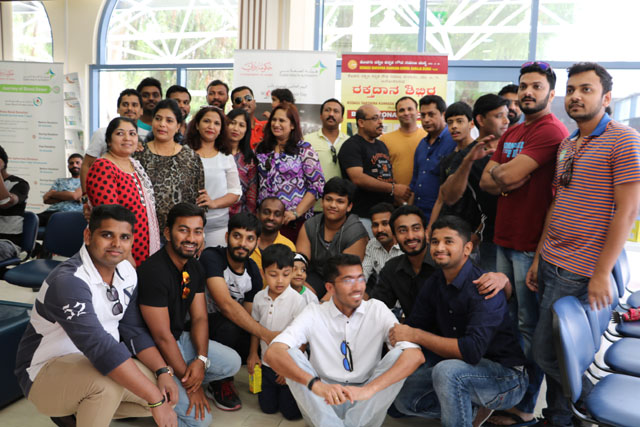
Kodagu Dakshina Kannada Gowda Samaja successfully concluded their annual ‘Blood Donation Campaign’ on Friday June 30 from 10 am to 3 pm at Sheikha Latifa Hospital, Dubai participated by very many members of the Sangha and friends.
As the requirement of blood is very much essential during Ramadan, the active members of the Sangha from Ajman, Sharjah, Dubai& Abu Dhabi voluntarily came forward in large numbers and donated blood for a good cause.
Founder President Ashok Uluvarna, Past President Ganesh Achhandira, Harish Kodi, Vice President Sunil Mottemane, General Secretary Kanneriyan Sunil Kumar, and TreasurerDilipUluvaru, were present during the campaign supporting the donors. Also present were Navin Gowda of Vokkalikgara Sangha, Dr. Nanda Kishore & Dr. Rashmi Nandakishore of Riva Laser Beauty and Spa & Dr. TrilokChandrashekar of Medi Clinic Hospital, Abu Dhabi who all participated in the blood donation campaign.
Rahul Bidappa, Ashish Kodi, AyushKodi, Meena Harish Kodi&JagadishKushalappa ably volunteered the campaign helping the donors in registering and completing the formalities. All those participated in the campaign were served with light refreshments, tea, coffee, fruits & juices by KusumadaraKodi, Ashok Ullvarana, ChandrakantKudwaje, Suresh Kumpala, SubramanyaKadikadka, Yathish Gowda, DilipUluvaru, SamarthaBantwal& Vinod Ramachandra who also sponsored the event.
Roshan Kampala& Praveen Kalagadge were responsible for the campaign while BalaSalian took charge of the programme.
source: http://www.daijiworld.com / DaijiWorld.com / Home> Middle East / by Shodhan Prasad / Wednesday – July 05th, 2017
WELCOME. If you like what you see "SUBSCRIBE via EMAIL" to receive FREE regular UPDATES.
Read More »