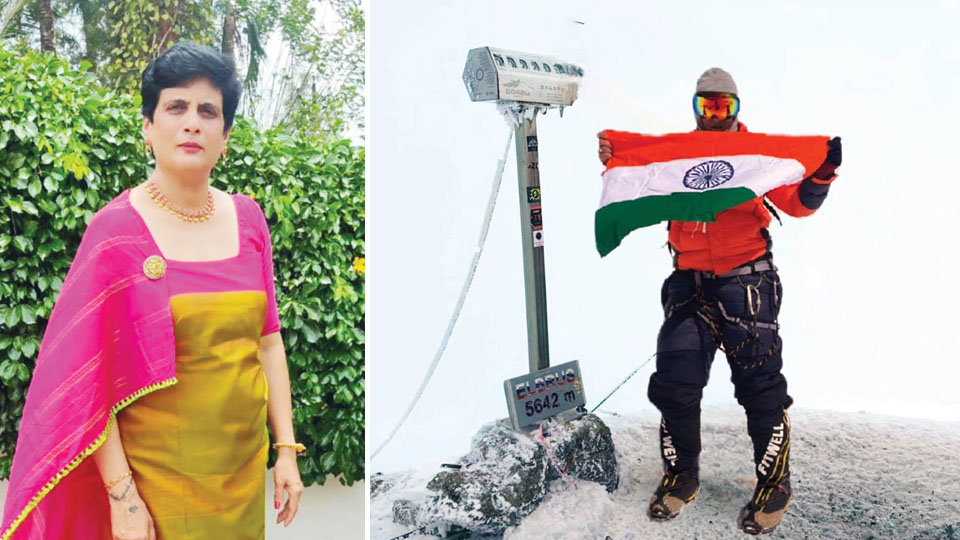
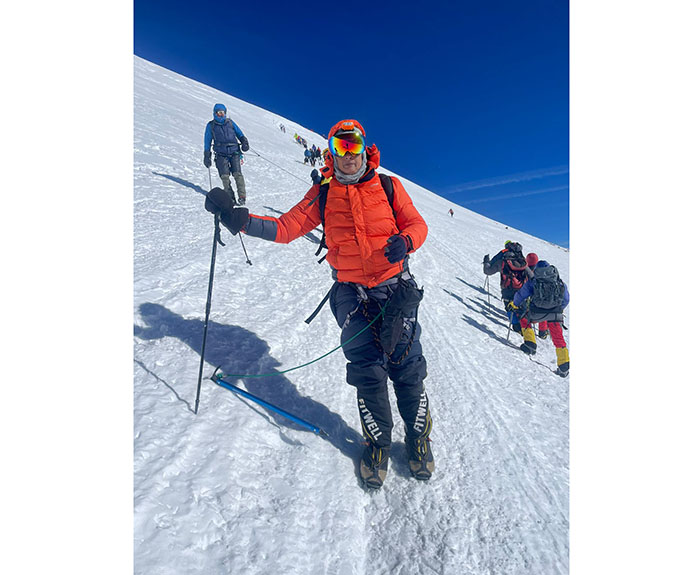
Jammada Preeth Appaiah, a resident of Bannimantap, Mysuru, reached the summit of Mount Elbrus, the tallest mountain in Russia and Europe, on Aug. 17. She completed the climb in 7 hours and 20 minutes, starting at midnight and reaching the peak at 7.20 am. She was part of 11-member expedition team.
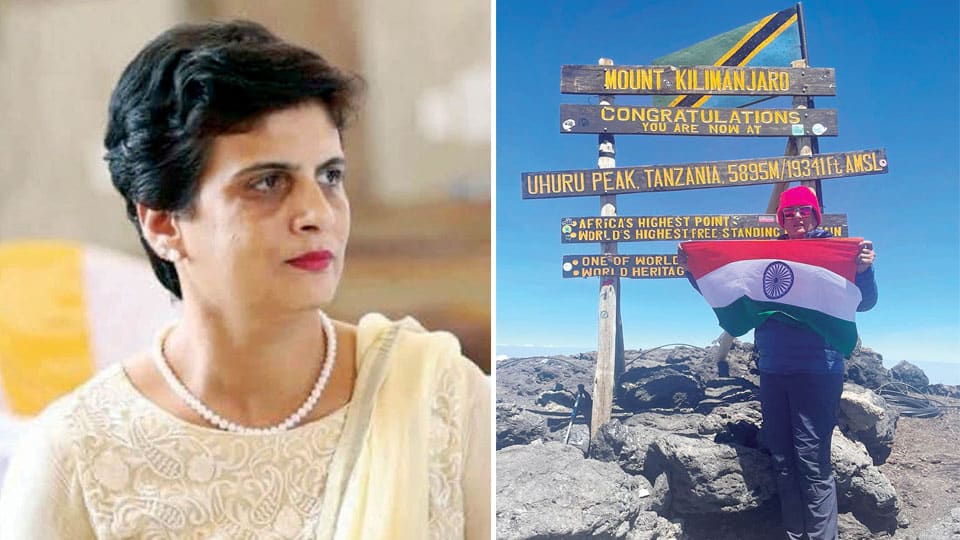
Preeth is the second person from Kodagu to achieve this feat, following Tekkada Bhavani from Peroor, Napoklu. In March 2023, Preeth also scaled Mount Kilimanjaro, Africa’s highest peak and the tallest free-standing mountain in the world at 5,895 metres (19,340 feet).
Mount Elbrus, an extinct volcano standing at 5,642 metres (18,510 feet) above sea level, is located deep within the Caucasus range near the Georgia border. This range, which includes 14 of Europe’s highest mountains, spans 700 miles and is home to the tenth-most prominent peak in the world.
Situated in the southern Russian republic of Kabardino-Balkaria, Mount Elbrus is the highest peak of the Caucasus Mountains. Although part of the Caucasus Range, which straddles Asia and Europe, most geographers classify it as the tallest peak in Europe.
Speaking to Star of Mysore over the phone, Preeth Appaiah shared details of her journey to conquer Mount Elbrus. She departed from Mysuru on Aug. 9, arriving in Russia on Aug. 10. On Aug. 11, she undertook an acclimatisation trek to a mountain rich in Molybdenum, standing at 4,120 metres (13,515 feet).
Following this initial trek, Preeth travelled to Elbrus village and completed two more days of acclimatisation walks to Pastukhov Rocks. The final summit push for Mount Elbrus began around midnight, with Preeth reaching the peak by 7.20 am on Aug. 17.
Biting Cold
“Mount Elbrus is fraught with hidden death traps, with temperatures plummeting to minus 35 to minus 40 degrees. The Arctic wind is extremely dangerous and despite wearing five layers of clothing and climbing gear, the cold was unbearable. The mountain is riddled with crevices and craters that can easily be camouflaged by snow in bad weather. We couldn’t summit for two days due to the weather, so we finally made the ascent on Aug. 17,” Preeth recounted.
After successfully scaling Mount Kilimanjaro, Preeth was determined to conquer Mount Elbrus as part of her goal to climb all seven summits — the highest mountains on each continent.
Preeth Appaiah is a home-maker, married to advocate Jammada M. Aiyanna in Mysuru. The couple has two sons, Pratham Poonacha and Aryan Kuttappa. Preeth is the daughter of late Hon. Captain Kunjiyanda Appaiah and Gowramma. Her brother, Kunjiyanda Machaiah (Machu), is a wildlife photographer.
source: http://www.starofmysore.com / Star of Mysore / Home> News / August 20th, 2024
Scaling heights is what enthrals her most. Jammada Preeth Appaiah, a resident of Bannimantap in Mysuru, has recently climbed Mount Kilimanjaro, the highest mountain peak in Africa. She reached the summit of the highest free-standing mountain in the world at 5,895 metres (19,340 feet).
Also called a stratovolcano (a term for a very large volcano made of ash, lava, and rock), Kilimanjaro is made up of three cones — Kibo, Mawenzi and Shira. Kibo is the summit of the mountain and the tallest of the three volcanic formations. While Mawenzi and Shira are extinct, Kibo is dormant. The highest point on Kibo’s crater rim is called Uhuru.
Medical condition did not deter her
Preeth Appaiah is a housewife who had a sciatic nerve problem and doctors had advised her not to do any physical activity which could aggravate her pain. But her medical condition did not deter her from achieving the feat and her main source of inspiration is her younger son Aryan Kuttappa who went on an expedition to the Himalayas in 2018.
She went on her first expedition to Mount Bhrigu, Himachal Pradesh, in 2018. Since then, she never looked back and she has climbed many mountains like Mount Sar Pass, Valley of Flowers and the Great Lakes of Kashmir. Her instinct to climb Kilimanjaro was kindled in 2022 when a group of people from Mysuru successfully climbed Kilimanjaro.
Though she had made up her mind to go ahead and her instinct said she could do it, the advice given by her doctors against any misadventure was playing at the back of her mind. But her elder son Pratham Poonacha was a constant motivator who goaded her to pursue her passion.
Preeth Appaiah then spoke to various persons in Mysuru and booked an agency for the trekking and the training started under the mentorship of Yoga Guru Mahadeva. She left Mysuru on Mar. 2 and began the actual trek to Kilimanjaro on Mar. 3. She returned to Mysuru on Mar. 11 after scaling the mountain on Mar. 8.
Not an easy task
“I tried coaxing people to come along but none from Mysuru came along. But I was determined to go and took the yellow fever shot and set the rucksack in order and went to the airport to board for Kilimanjaro. It was not an easy task for a woman to travel alone and in the journey, you do not know if there will be anyone coming along on the trek from the Marangu Gate in Tanzania,” she told Star of Mysore.
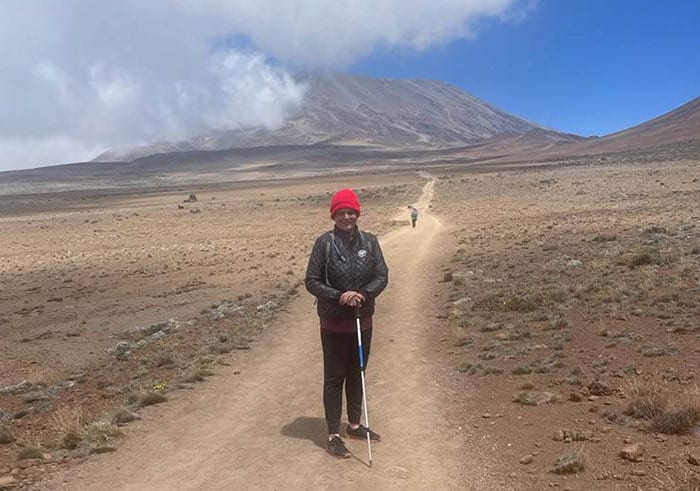
Preeth Appaiah trekked through the rainforest to Mandara Hut and from here she went to Horombo Hut and reached Kibo Hut walking amidst the Alpine Desert. “The view of Mount Kibo is just mesmerising but here I was totally out of shape due to altitude sickness. But as advised by my mentors, I took lots of liquids to keep myself hydrated. From Horombo Hut, I trekked to Kibo Hut which is physically challenging and steep too,” she added.
From here, many return. “But in my case, I had overcome altitude sickness and was going well and finally had a good rest. Mar. 8, 2023, International Women’s Day coincided with my summit feat and I got on to conquer Mount Kilimanjaro,” she said. She started the final walk on Mar. 7 at 11 pm and reached the summit at 8 am on Mar. 8.
“It was an enthralling moment of my life as I set foot on Kilimanjaro via Gilman’s Point. It was not an arduous task. After walking more than 10 hours, I reached the summit of Mount Kilimanjaro and Uhuru,” she recalled.
It was a proud moment, she said as she held the National Tricolour. This would not have been possible without the support of her husband Jammada M. Aiyanna, who is an advocate in Mysuru. Preeth is the daughter of Hon. Captain late Kunjiyanda Appaiah and Gowramma couple. Her brother Kunjiyanda Machaiah (Machu) is a wildlife photographer.
“Before trekking to Kilimanjaro, I used to keep the mountain photo as my mobile phone status and was dreaming of scaling it one day. Now that I have accomplished the feat, I feel fulfilled. I want to continue this passion and scale more peaks,” she said.
Preeth Appaiah was initially trained in mountaineering by Tiger Solanki of Tiger Adventure Foundation (TAF) and later on by Vinay Singh and Shankar Subramanya of Royal Riders and the International Academy of Mountaineering and Allied Sports.
source: http://www.starofmysore.com / Star of Mysore / Home> News> Sports / March 16th, 2023
More power to those who dream with their eyes open, navigate through every challenge and eventually emerge as winners.
Flt Lt Punya Nanjappa, Indian Air Force
Nari Shakti being the theme of India’s 75th Republic Day celebration, the grand parade on Kartavya Path, in the heart of the National Capital, New Delhi, displayed a spectacular combination of military feat and cultural vibrancy on January 26, 2024.
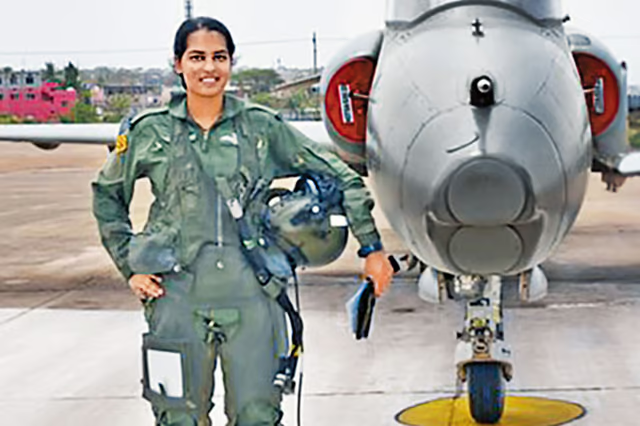
IAF showcased a breath-taking performance with a flypast featuring 51 aircraft during the Republic Day celebrations. This impressive line-up included 29 fighter aircraft, 8 transport planes, 13 helicopters, and one heritage aircraft. When 51 Indian Air Force (IAF) aircrafts zoomed over the Kartavya Path, piloting one of the fighter jets in the flypast was a young woman pilot from Mysuru. Flight Lieutenant (FLT LT) Punya Nanjappa was piloting the MiG-29 fighter and was among the eight female pilots who flew in various formations at the Republic Day parade. It was indeed a proud moment for India.
Breaking barriers is nothing new for Punya Nanjappa. She was the only girl in her batch training with 40 male cadets and the only female cadet from Karnataka to be selected as a trainee pilot for the flying branch training at the Air Force Academy, becoming the second woman from the state of Karnataka to be a fighter jet pilot after Meghana Shanbough from Chikkamagalur to do so. The training for cadets who are selected for the flying branch is divided into three stages. Punya completed Stage 1 training at the academy in Dundigal and was selected to join the fighter stream. Commissioned into the IAF in December 2020, FLT LT Punya is from the No. 47 Squadron of the IAF.
“ Flight Lieutenant (FLT LT) Punya Nanjappa was piloting the MiG-29 fighter and was among the eight female pilots who flew in various formations at the Republic Day parade. It was indeed a proud moment for India”
The sky is literally the limit! While choosing a career path, not many students are able to pursue their dreams and turn them into reality. Mysuru-based Coluvanda Punya Nanjappa is one such dreamer who followed her childhood passion to be a fighter jet pilot and worked hard towards achieving it. Not only is it a personal and professional achievement for Punya, but a social one too, a rare distinction for a woman who has her roots in Kodagu, a land of many ‘defence personnel’. Though the district basks in the glory of producing a Field Marshal, a General, and innumerable Lieutenant Generals, Brigadiers, and Majors in the Indian Army and their equal ranks in the Navy and the Air Force, for the first time a woman fighter pilot emerged from the tiny district.
Punya is the daughter of Coluvanda Anuradha Nanjappa, who served as a teacher at St. Joseph’s Central School, Vijayanagar, and the late Coluvanda P. Bala Nanjappa, who held the position of manager at Prabha Theatre. Though the family hails from a small district, they encouraged their daughter to aim high and achieve through hard work and courage.
Punya Nanjappa’s achievement represents a remarkable moment, highlighting the strides made by women in the IAF and representing women-power, equity and equal ownership in every walk of life with their male counterparts.
source: http://www.outlook.com / Outlook / Home> Brand Studio / by Outlook Bureau / March 08th, 2024
An Army Major from Mysuru has done exemplary work during flood rescue operations in Gujarat and Rajasthan. He is Ballachanda Maj. Akshay Thimmaiah, son of Ballachanda Sudha Bopanna and Ballachanda Prakash Bopanna, residents of Kuvempunagar in city. Maj. Akshay Thimmaiah is married to Mundanda Nidhi Ponnamma.
Following incessant rains in Gujarat, joint teams from the Indian Army and Indian Air Force have saved hundreds of lives and have rescued scores of people in flood-ravaged villages in Surendranagar district. Torrential rains in Gujarat have resulted in several deaths as well. The Gujarat Relief Department has confirmed 61 rain-related deaths in the State so far. Some parts of Rajasthan — especially those bordering the Northern Gujarat district of Banaskantha — too have seen heavy rainfall.
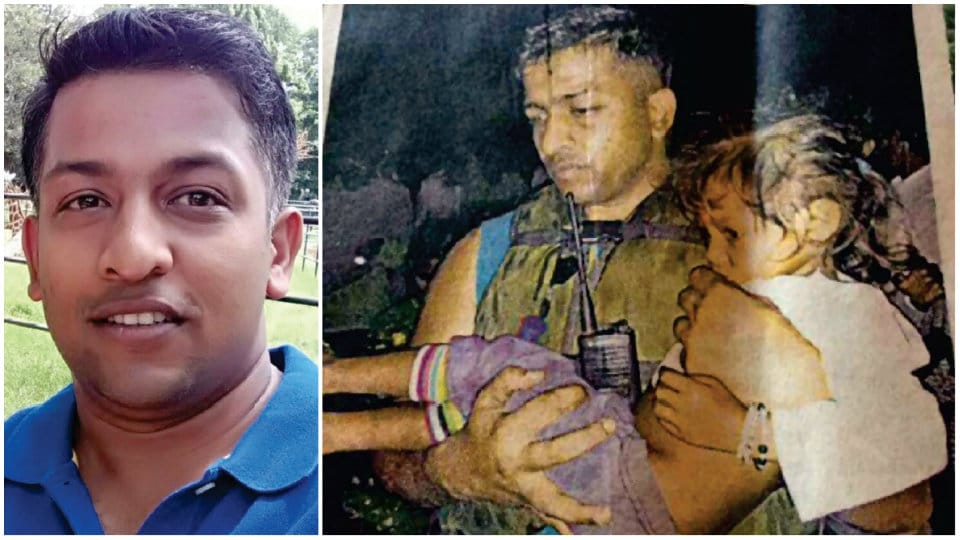
According to a report published in Dainik Bhaskar newspaper, on the night of July 25, Major Akshay Thimmaiah, along with two jawans from State Disaster Response Force (SDRF), saved the lives of 17 children, 12 women and 6 men who were stranded in Alethi village, near Sanchore in Gujarat due to bursting of Narmada Canal, causing flash floods. Maj. Akshay Thimmaiah saved the children after swimming and wading through 4-5 ft of flood waters for over 2.5 km. He showed courage in reaching the village and getting the civilians to safety despite rising water level.
Flood rescue team of 8 Cavalry Battalion under Maj. Akshay Thimmaiah saved the lives of over 100 people in Guda Malani, Rajasthan, in a daring night-long operation. The rescue operation was completed in 3 hours with water levels at 12-20 ft which had risen due to flood waters in Luni River. A total of 45 children, 32 women and 23 men were rescued and evacuated to safer areas.
source: http://www.starofmysore.com / Star of Mysore / Home> News / August 29th, 2017
Rotary Mysore Midtown and Shrisainik Family had organised an event at Rotary Centre Hall on JLB Road last evening where the ‘Rotary Sainik Desh Rathna’ award was presented to Ballachanda Maj. Akshay Thimmaiah by Maj Gen. (Retd.) S.G. Vombatkere.
Akshay Thimmaiah is the son of Ballachanda Sudha Bopanna and Ballachanda Prakash Bopanna, residents of Kuvempunagar in city. He is married to Mundanda Nidhi Ponnamma.
Speaking on the occasion, Akshay Thimmaiah opined that the Indian Army always welcomed people with leadership qualities and communication skills. He added that serving in the military was a noble one. He contended that a soldier would always be an inspiration for the youth. Hence he asked the youth to join the military and serve the nation.
Continuing, Akshay observed that a soldier should have great patience and perseverance to reach a goal. However, he opined that the honour and respect given to soldiers should also be extended to their family members.
Rotary Mysore Midtown President Narendra Babu, Hon. Secretary Naveen Chandra, Shrisainik Family’s K.V. Bhaskar and G. Madhura, Akshay’s wife Nidhi and his family members were present.
source: http://www.starofmysore.com / Star of Mysore / Home> News / February 15th, 2018
Air Commodore Kalianda A. Muthana flies indigenous fighter plane for 40 minutes
Bengaluru:
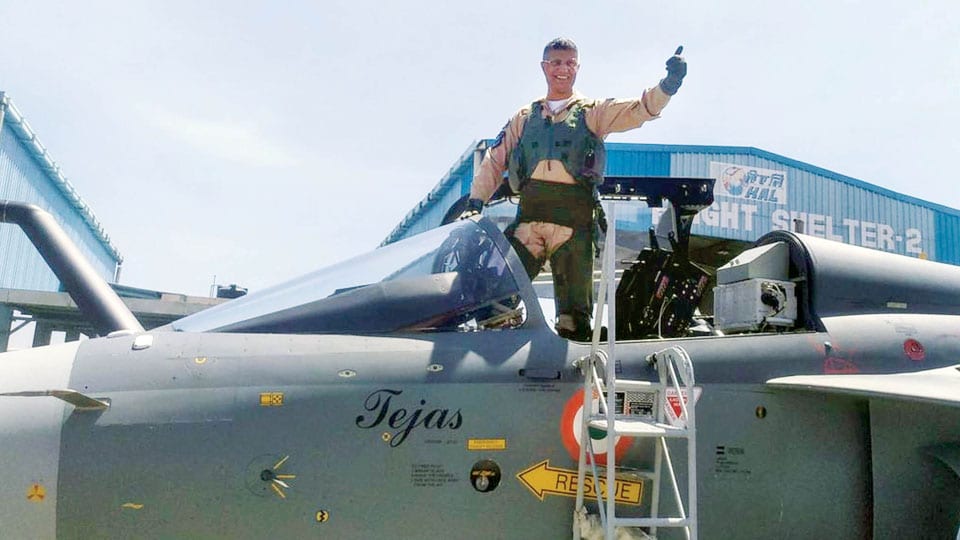
The first Light Combat Aircraft (LCA) Tejasin Final Operational Clearance (FOC)-Standard (SP-21) took to the skies for its maiden flight in Bengaluru on Tuesday last, the Hindustan Aeronautics Limited (HAL) said.
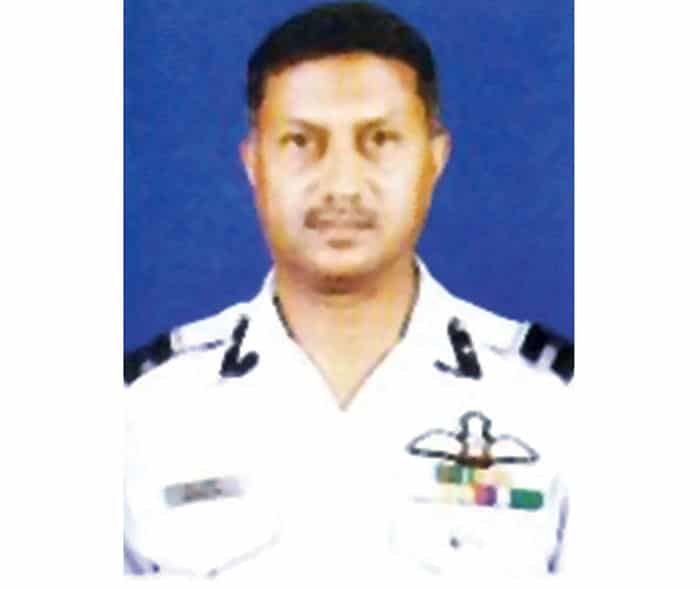
Piloted by Air Commodore Kalianda Appaya Muthana (Retd.), Chief Test Flying (Fixed Wing), the aircraft took-off from HAL Airport at around 12.30 pm, the Bengaluru-headquartered defence Public Sector Unit said in a statement. It was air-borne for 40 minutes.
This flight signifies exemplary team work between various stakeholders of the LCA Tejas programme such as HAL, Directorate General of Aeronautical Quality Assurance, Centre for Military Airworthiness and Certification (CEMILAC), Indian Air Force (IAF) and Aeronautical Development Agency (ADA), HAL Chairman and Managing Director R. Madhavan said.
K.A.Muthana
15 fighters by April 2021
HAL is targeting 15 fighters by April 2021. The flight is the first step in a series of things lined up to enable the IAF raise a second squadron of Tejas in Sulur, Tamil Nadu. The first squadron of Tejas — Flying Daggers — is already operating from there.
“HAL achieved the momentous feat within a record time of 12 months after release of Drawing Applicability List (DAL) and SOP (Standard Operating Procedure) by CEMILAC”, the statement said. “This would pave the way for production of remaining 15 fighters from FOC (Final Operational Clearance) block, which are planned to be delivered during the next financial year,” it said.
Advanced features
The FOC aircraft are equipped with advanced features such as Air-to-Air refuelling and Beyond Visual Range (BVR) missile system. “It imbibes a lot of manufacturing improvements which were based on the operational feedback of LCA-IOC (Initial Operational Clearance) fleet with IAF”, HAL said.
On February 20, 2019, the IAF had finally agreed that the indigenously developed and built Tejas was combat-ready and received the ‘release to service’ certificate — which means the fighter got the FOC — from DRDO, whose lab Aeronautical Development Agency (ADA) designed the aircraft.
First conceived in 1983
The aircraft, which was first conceived in 1983, is being produced by HAL. Although it was conceived in 1983, the project was only sanctioned in 1993. The FOC and release to service happened close on the heels of the final DAL (Drawing Applicability Lists) of Tejas was released to HAL on Dec. 31.
The aircraft was named Tejas (meaning radiance in Sanskrit) by Atal Bihari Vajpayee when he was the Prime Minister.
The cost of the programme is estimated at Rs. 39,000 crore. Tejas will eventually replace the ageing fleet of MiG-21 planes. All squadrons of Tejas will be made up of 20 planes in total, including four in reserve.
source: http://www.starofmysore.com / Star of Mysore / Home> News / March 19th, 2020
Air Cmde Muthana got a ‘dousing’ reception as he got out of the TEJAS after the flight that landed it the Final Operational Clearance
As Muthu taxied back to the dispersal after the Final Operational Clearance (FOC) sortie of the TEJAS Mk1 SP-17, now with a tail number of LA-2017, on March 17, 2019, he was clearly surprised by the reception he got. The spontaneous celebration that involved some water-dousing and hoisting him on their shoulders by his Light Combat Aircraft team and the large group of HAL employees was heart-warming to say the least.
Air Commodore Kalianda Appaya Muthana has been probably among the few outstanding fighter pilots and professionals of my generation who did not rise to the very upper echelons of the IAF leadership. Reticent and soft-spoken, but with just a hint of swagger, he was a natural flier from the word go, and though I never served alongside him in any squadron, he was a highly rated fighter jock wherever he went.
No one knows this better than Air Chief Marshal BS Dhanoa (Retd) , the IAF’s previous chief and Muthana’s squadron-mate on MiG-21s in 29 Squadron (Scorpios). Dhanoa reminisces, “We were together for the first time in the early 1980s on the MiG-21 Type 96 in Sirsa, and then again as senior squadron leaders on the same type in Jamnagar, where I was the flight commander. The squadron was assessed very highly by the IAF’s inspection team and after I left, Muthu took over as flight commander – the good run continued, with the Scorpios winning the IAF’s marksmanship trophy called Ekalavya. He was free, frank, fair and fearless.”
After tick-marking all the boxes in his career, Muthu followed the traditional path of the creamy layer of fighter pilots as he transitioned from being a flying instructor to joining the elite band of test pilots, commanding a squadron and a fighter base. Chosen to lead the SU-30 upgrade project in Russia, he returned two years later to take charge as the Chief Operations Officer of Air Force Station Pune, home to the first SU-30 MKI squadron (20 Squadron).
After leading the National Flight Test Centre (NFTC), which was closely involved with HAL in pushing the TEJAS towards squadron induction, Muthu quit the IAF to join HAL. It was a time when the TEJAS project had taken off for sure but had not lit its afterburners yet! Though the first order for 40 aircraft had already been signed and production of the initial series had commenced, the project needed further credibility as it grappled with issues of maintainability and sortie generation rates in the first IAF squadron. It was an ideal transition and a win-win situation for both HAL and the IAF as there could not have been a better professional to steer the project from Initial Operational Clearance (IOC) to the recent FOC.
His fellow HAL test pilots on the programme, Harsh Vardhan Thakur, Subroto Chaki and Pratyush Awasthi highlighted two solid outcome-driven achievements during his stint as Chief Fixed Wing Test Pilot. He first managed to convince the MoD and the IAF top brass to back the ‘doable’ TEJAS MK-1A rather than the over-the-top TEJAS MK-II. It is now almost a done deal. The second was his initiative to create a formal practitioner and subject matter expert-driven strategic process within HAL that has resulted in the emergence of synergy between pilots, designers, engineers and management, and allowed HAL to communicate effectively with users and think big. The possibility of developing a twin-engine TEJAS, both for the Indian Navy and IAF, the Advanced Medium Combat Aircraft and a range of unmanned aerial vehicles are now all within the realm of possibility.
India’s TEJAS project has still some distance to go before it wins the complete trust of the IAF’s fighter pilots, with several of them arguing that even a futuristic twin-engine TEJAS MK-II will not match up to the Rafale in every domain. However, it now appears to be on a stable footing with complete government and corporate backing, and an excellent and committed team. A current TEJAS test pilot argues, “TEJAS now represents India in a big way – not just HAL anymore. TEJAS-bashing should get behind us, sooner than later.”
If HAL can ramp up its production rates, address reliability and maintainability in the field, the TEJAS MK-1A may well have triggered a renaissance in contemporary Indian fighter development, and Muthu, who retires from HAL today (March 31), can well be certain that he has been a major catalyst in this transformation.
source: http://www.indiandefensenews.in / Indian Defense News / Home / by Indian Defense News / March 31st, 2020
(further source: Deccan Herald / March 31st, 2020 / by Arjun Subramaniam, Retd Air Vice Marshal of the the IAF, a military historian and strategic commentator)
Government schools might be losing importance in cities, but they are still the mainstay for educating children from rural areas. In Kodagu, a government school this year scored cent percent results in SSLC with the lone girl student from the school passing.
At a time when many government schools are shutting down because of lack of students, villagers at Neerugalale in the interiors of Somwarpet taluk in Kodagu district and alumni of the school got together to revive the Neerugalale Government Primary and High School . The villagers formed a committee along with the alumni association — Poorva Prathamika Shala Samithi (Pre-Primary School Committee) — and started the process.
What is inspiring and unique is that the villagers did not take any monetary assistance from the state government, and the entire project is the initiative of the villagers and alumni.
The school, which is 67 years old, started off as a primary school. The high school section was introduced only in 2007. While the institution had a considerable number of admissions in the past, it slowly started declining with parents preferring private schools. The majority of students come from backward classes, and this year, 114 were admitted in all, from grades 1 to 10.
“Government schools must not become places reserved only for the labour class. These schools can survive only when they are on a par with private schools,” said high school teacher Rathna Kumar, who has been working with the institution for the past 16 years.
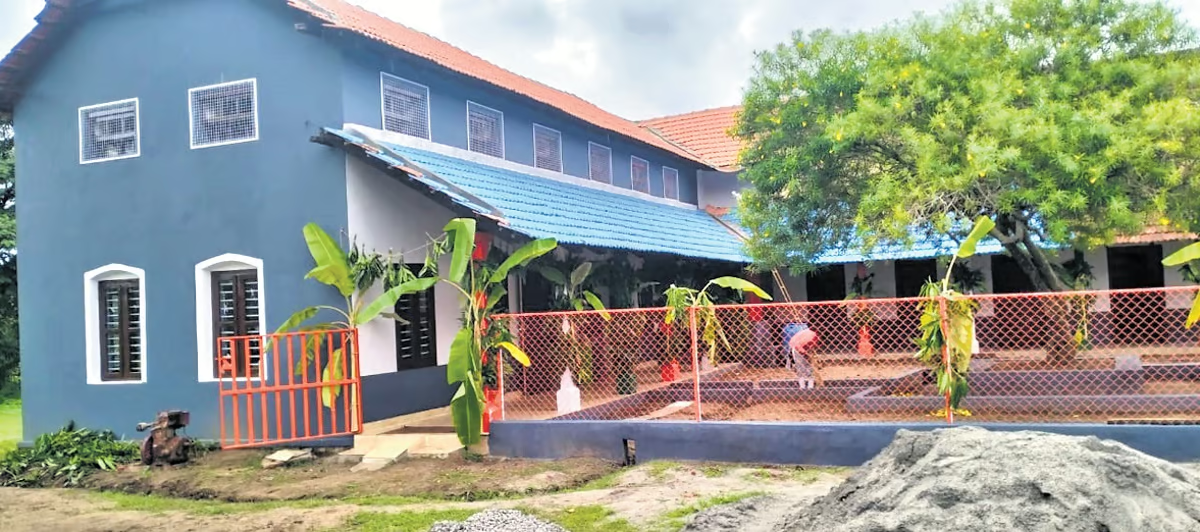
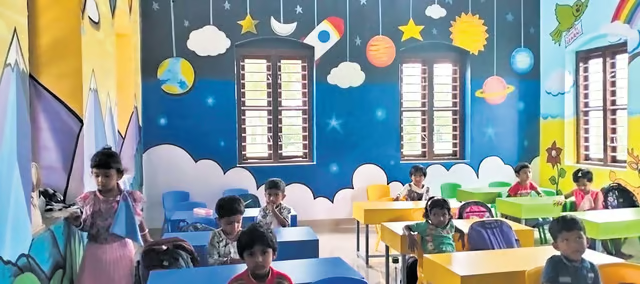
The Neerugalale Government School, and the new LKG classroom at the school, after the renovation | Express
“The majority of students here are from the Jenu Kuruba tribe, who work as estate labourers. But the school management wanted to attract more admissions and that was when the Poorva Prathamika Shaala Samithi was formed. As the admissions were declining year on year, the villagers, along with the school alumni, and the School Development and Monitoring Committee (SDMC) formed the committee. We held a meeting in March last year, and had set plans that we looked forward to introducing at the institution,” explained Rathna Kumar.
The committee’s first plan was to introduce kindergarten and to renovate the old building on the campus, for which permission was sought from the taluk BEO. But the education department authorities informed the committee that there was not enough funds or manpower to enable new classes for students. The committee then decided not to take any monetary help from the government.
“The campus has an old building with five classrooms, which was renovated using crowdfund. The BEO was supportive of the committee, and we took it upon ourselves to introduce LKG in the school,” Kumar said. Members from the committee and SDMC approached donors before starting the renovation work, and collected around Rs 10 lakh from villagers and alumni.
The ‘Poorva Prathamika Shaala Samithi’ committee members
“The work began with replacing old roof-tiles and plastering the walls. In about four to five months, three of the five rooms were renovated. One was converted into a classroom with brand new furniture, the second room became a games room and the third into an office. There are two more rooms that will be renovated once more funds are arranged. We have also built a hi-tech toilet on the school campus,” Kumar said.
After the renovation, the committee members visited villagers and encouraged them to enrol their wards in the school. The committee’s efforts bore fruit and 15 students enrolled for LKG. “Next year, we will introduce UKG. And the year after, we hope to get the state’s permission to introduce English medium for grade 1,” Kumar said and added that currently, the SDMC is bearing teachers’ salaries.
While many teachers in interior villages wait to be transferred out, the efforts of the Neerugalele School management has set an example. “Teacher Rathna Kumar took special care in ensuring the school’s development. The villagers joined hands to save the school that has imparted education to thousands,” said school principal Esthela Silva.
source: http://www.newindianexpress.com / The New Indian Express / Home> Good News / by Pragna GR / June 23rd, 2024
Charishma Kaliyanda, NSW MP for Liverpool, interviews her mother Bhanu Chottera, a former Indian Government architectural draughtsperson.
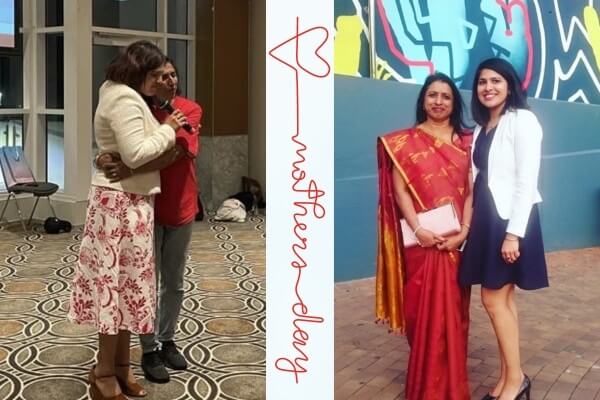
Our Mother’s Day series ‘My Mum in her own words’ pays tribute to our mothers, showcasing the intergenerational bond between mother and child. Here Charishma Kaliyanda, NSW MP for Liverpool, sits down with her mother Bhanu Chottera, a former Indian Government architectural draughtsperson.
Charishma Kaliyanda: What are your strongest memories of your mum?
Bhanu Chottera: My mum, known as ‘Baby’ to all, was the example of someone who gave unconditional love, she treated all her 5 children equally – no difference between boys or girls. You could never tell when she was unhappy or concerned, she was always bubbly and charming.
She always had the answers to our problems – and never refused when any of us asked for help.
Charishma Kaliyanda: She sounds a lot like you, actually! So what’s something your mum or dad used to tell you growing up that later turned out to be true?
Bhanu Chottera: They always encouraged me to study and stand on my own feet, regardless of being a girl. Education is the one thing nobody can snatch away from you and will make sure you can put food on the table. Dad always said, regardless of the situation, don’t hide away from your problems and don’t be afraid to speak out.
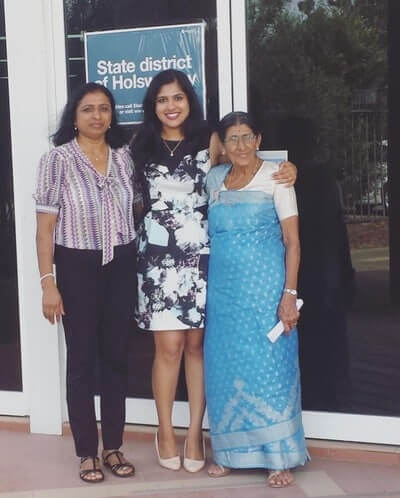
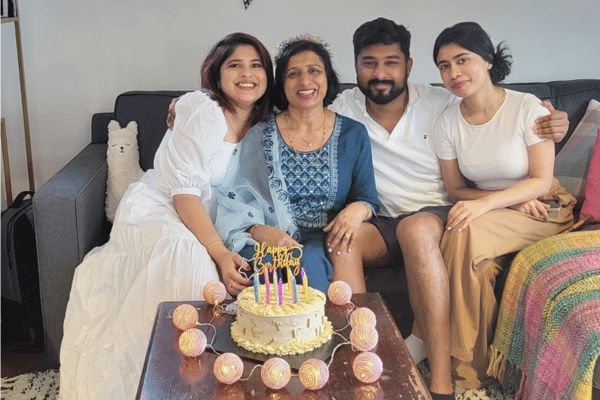
Charishma with her mother and grandmother (Source: Supplied)
Charishma Kaliyanda: How about Ammachi, what is the best advice your mum ever gave you?
Bhanu Chottera: Always be financially independent, and make sure you save some money as you never know when you’ll come across a rainy day when you need it!
Charishma Kaliyanda: That is definitely practical advice that we can all use. Tell me about the day I was born.
Bhanu Chottera: I felt blessed – but it was a lot of effort, because I was in labour for almost 22 hours with you!
I was so happy because I always wanted a girl. I grew up with two sisters so, in having a daughter, I knew I would always have someone to talk to, share experiences and develop a lifelong bond with.
The entire extended family was so pleased because my sister is the eldest and she was a role model for everyone else. You were also the first female grandchild on both sides of the family, and so your Thatha called you our ‘Lakshmi’.
Charishma Kaliyanda: That’s really cute, I didn’t know that. Tell me about the world events that have had the most impact on you?
Bhanu Chottera: The first event was the 2004 Tsunami in the Indian Ocean. I had never heard the word tsunami before and didn’t know what it was until I saw the devastation created that day – so many people died, there was so much destruction and across such a large area. It made me realise that things can change in the blink of an eye, anything can happen and life is short, precious and unpredictable. It made me really think about what I wanted from my life.
The other is COVID, of course. The whole period had a huge impact on me and reinforced that nothing belongs to you, so share what you have and show care to the people around you as much as you can.
Charishma Kaliyanda: Keeping those lessons in mind, what would you say are the best decisions you made in your life?
Bhanu Chottera: The first was keeping in mind my parents’ advice and getting an education because I got my dream job working for the Indian Government’s housing department as an architectural draughtsperson. I loved my work and my lifestyle and I made some amazing friends that I am still close with today.
The second was buying a home. After coming to Australia, starting a new life from scratch here, having a home of my own was a sign that I had some roots and could stand on my feet. It made me feel like I had achieved progress and independence, and I could nurture my family (and my own garden!).
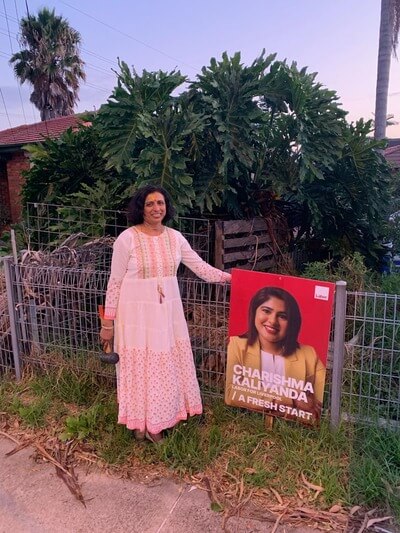
Mum on the campaign trail (Source: Supplied)
Charishma Kaliyanda: Speaking of gardens, that’s probably the biggest difference between us, you’re in your element surrounded by roses, mulch and manure and you still won’t let me forget how I accidentally killed your choko vine when I was 14! How did you feel when I told you I wanted to get into politics?
Bhanu Chottera: It was actually a shock. Coming from a different cultural background, I thought you might find it difficult to be accepted. I also saw the demands of working in politics in the media and thought it would be really challenging. At the same time, I remembered the advice I had gained from my dad, who served in the army for many years and had even fought in a World War and knew I should pass it onto my daughter. You come from a long line of fighters, so I knew you would be alright.
Charishma Kaliyanda: So how did you feel on election night when results came in that I had won? What went through your mind?
Bhanu Chottera: Which election? There have been a few!
Charishma Kaliyanda: Look, that’s a fair call.
Bhanu Chottera: The first one was a bit disappointing but I remember clearly thinking “there’s always next time, this is only the beginning”. We’ve been on a long journey, with 6 election nights in total! On election night last year though, I thought, “this is the right time”. I have seen you develop the skills and temperament to balance things and to be able to make the impact you want to on the things you are passionate about.
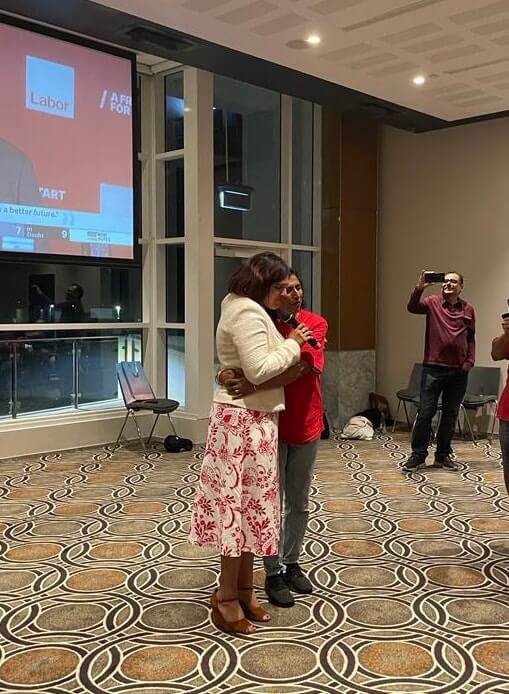
With mum on election night as results came in (Source: Supplied)
Charishma Kaliyanda: How about on the day I was sworn in at Parliament ?
Bhanu Chottera: That was one of the most exciting and memorable days of my life. I felt my daughter had achieved something I never thought possible. When we became Australian citizens, I remember we had the ceremony at the Liverpool Council chambers and when you were sworn in as the youngest councillor at Liverpool Council in 2016, I was blown away. To see you become a member of the NSW Parliament was a real validation of our decision to seek a new life in Australia because we wanted better opportunities for our children. You made us proud, and all the challenges and sacrifices worth it.
Charishma Kaliyanda: What do you worry about most now, regarding me?
Bhanu Chottera: Look, like every parent I always worry about your health, happiness and safety. I know the hours you work and the travel you do, as well as the stress and responsibility you take on. So I try and encourage you to maintain a healthy work/life balance.
Charishma Kaliyanda: If by encourage, you mean, nag with great affection, you’re spot on! So what about your own self, what are you looking forward to?
Bhanu Chottera: I want to stay healthy as possible so I can travel, starting with Cambodia! I try and eat well, meditate, exercise and stay connected with my friends. I really enjoy being involved with charities and community work because I like helping people and I know that people have been there to support me when I needed it, so I pay it forward.
Charishma Kaliyanda: What the one lesson you want me to take forward?
Bhanu Chottera: Always listen to people, but believe in yourself and act according to what your heart is telling you.
source: http://www.indianlink.com.au / Indian Link / Home> India in Australia / by Indian Link / May 09th, 2024
Charishma Kaliyanda (second from right) is NSW’s new parliamentary secretary for customer service and digital government, emergency services and youth justice. (Photo: Facebook)
NSW Premier Chris Minns has appointed lower house member Charishma Kaliyanda as the state’s new parliamentary secretary for customer service and digital government, emergency services and youth justice, replacing Anthony D’Adam, who was sacked a month ago after labelling the state’s police commissioner a liar.
Elected to Parliament in 2023, Kaliyanda’s appointment comes as Minns and NSW Labor attempt to fend off growing criticism in several parts of Western Sydney that many local members simply don’t reflect the communities in their electorates or make it to junior ministries let alone cabinet.
While there are some high-profile exceptions like Treasurer Daniel Mookhey, Jihad Dib (Kaliyanda’s senior minister) and Industrial Relations Minister Sophie Cotsis, the composition of the first Minns ministry was notable for its Anglo-Celtic weighting.
Community diversity and preselection of state and federal candidates, especially from southwest and western Sydney, have become an increasing friction point across the Australian political spectrum, with Labor losing once safe seats like Fowler to local independent candidates like Dai Le after locals were sidelined for so-called captain’s picks like Kristina Keneally.
Fairfield, where Le whittled down Labor’s margins to just a couple of points as a Liberal state candidate, is somewhat of a case study in how and why migrant communities abandon major parties, with former Fairfield Labor mayor Frank Carbone also quitting his party to run for council on an independent ticket.
You can’t undo years of electoral neglect overnight, but you can make an effort to listen.
Indian diaspora is one of Australia’s fastest-growing migrant communities, now numbering close to 1 million, and the ties are strengthening.
Australia appointed its first consul-general in Bengaluru, Hilary McGeachy, in 2023, adding diplomatic muscle to the massive nation’s south, which includes the states of Karnataka and Telangana.
The capital of Karnataka is Bangalore (population 15 million), which positions itself, for better or for worse, as India’s Silicon Valley.
In an interview with Indian Link , a community publication founded in 1994, Kaliyanda says it “empowers and elevates the South Asian community in Australia, by telling their stories and unpacking their experiences in a nuanced and unbiased manner” reaffirmed her commitment to her community.
“I had thought deeply about what I will wear on my first day as an MP. I wore a blue sari from Karnataka, draped in the Kodava style, with a Waratah broach,” Kaliyanda told the community publication.
“I wanted to share that I will be bringing my whole self to this role and to the Parliament — my commitment to and love for my community in wearing the colours of NSW, and my pride in where I come from and the diversity of my community in wearing a sari specifically from where I was born and in the Kodava style.
“I did struggle with it because there wasn’t really a playbook for what to do and what was expected but I was encouraged to “be myself”, and so I wanted to share my authentic self with our broader community.”
Asked who gave her the best advice for the first time in the bear pit, Kaliyanda told IndianLink: “two Labor Party colleagues, Jihad Dib and Sophie Cotsis, who were very supportive and full of advice.”
“There’s a lot to learn, so take it slow and ask questions as much as you can, Jihad told me,” Kaliyanda said.
Take it slow? That just changed. Welcome to the ministry.
source: http://www.themandarin.com.au / The Mandarin / Home> Careers / by Julian Bajkowski (headline edited) / June 17th, 2024
WELCOME. If you like what you see "SUBSCRIBE via EMAIL" to receive FREE regular UPDATES.
Read More »