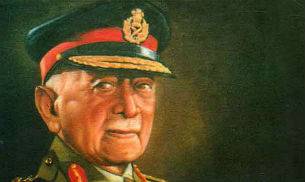
“An Indian and to the last breath would remain an Indian. To me, there are only two Stans – Hindustan (India) and Foujistan (the Army).” – Field Marshal K. M. Cariappa
Famously known as Kipper, Field Marshal K. M. Cariappa was born today, 117 years ago on January 28, 1899. He was the first Commander-in-Chief of the Indian Army and was the first Indian Officer who was given command of a unit before independence.
Some interesting facts that you must know:
– K. M. Cariappa’s full name was Kodandera Madappa Cariappa
– He was born at Shanivarsante in Kodagu, which was a princely state in Karnataka
– Cariappa was selected to the first batch in King’s Commission after the World War I in 1918
– His permanent regimental home was 2nd Queen Victoria’s Own Rajput Light Infantry
In 1933, he was the first Indian officer to undergo the course at Staff College
– Cariappa served in many countries like Iraq, Syria and Burma
In 1949, he was appointed as the first Indian Commander-in-Chief of the Indian Army
– After his retirement, he served as the High Commissioner to Australia and New Zealand till 1956
– He was awarded with the General Service Medal, Indian Independence Medal, Order of the British Empire, 1939-1945 Star, Burma Star, War Medal 1939-1945, Indian Service Medal and Legion of Merit
– He died on May 15, 1993 at the age of 94.
source: http://www.indiatoday.intoday.in / IndiaToday.in / Home> GK & Current Affairs> Listicles : Microfacts / Story / New Delhi – January 28th, 2016
Three men from Kodagu have made their heartland proud by playing a leading role in Tuesday’s Republic Day parade in New Delhi. Their families are happy their young and courageous sons have brought fame to their district.
Bommanda Chengappa, 76, is overjoyed that his only son, Colonel Bommanda Dheeraj Chengappa, 45, participated as a commandant of the President’s bodyguard at the Republic Day parade in New Delhi. Chengappa, himself a former BSF man, says it’s a great honour for the family.”Dheeraj was selected for the Army through the UPSC. He lives New Delhi with his wife and son. Dheeraj loves Kodagu, and speaks the Kodava language, but since he spent most of his childhood in Army schools, he is more fluent in English and Hindi,”laughs Chengappa. Dheeraj graduated from Delhi University and then joined the Army. Chengappa and wife Reeta, who live on their estate in Ammathi, Virajpet taluk, say they they visited him a month ago.
Captain Balyamanda Thimmaiah, 28, son of retired colonel Balyamanda Kaverappa, led the mechanized force contingent (Bees Bahadur). Kaverappa and his wife Pushpa are proud that Thimmaiah, an alumnus of APS Delhi, COPS Gonikoppal, St Joseph’s and MS Ramaiah College of Law, Bengaluru, participated in the parade. The family lives in Virajpet.
Mandapanda C Thimmaiah participated in the MiG-29 flypast at the parade. His father Mandapanda Sada Chengappa, a coffee planter residing at Chermabane, said these youths are giving Kodagu its moment in the sun. His other son, MC Appaiah, is in the Air Force.
source: http://www.timesofindia.indiatimes.com / The Times of India / News Home> City> Bangalore / TNN / January 27th, 2016
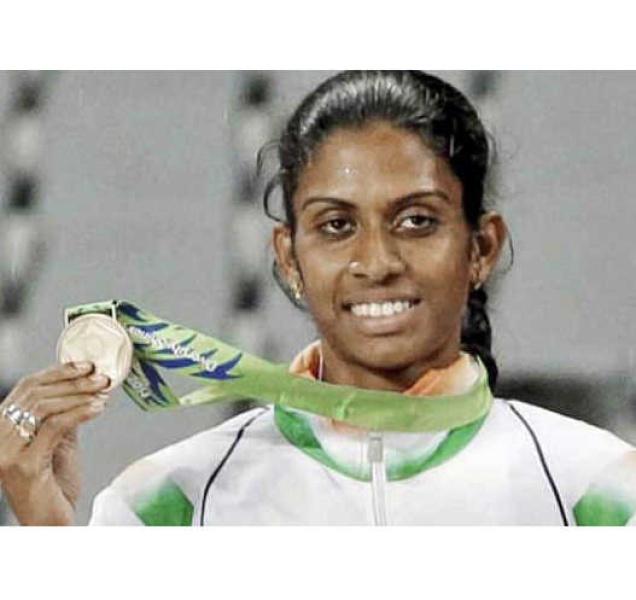
Athlete M.R. Poovamma.— PHOTO: By Special Arrangement
Athlete M.R. Poovamma, winner of the 2015 Arjuna award for her contributions in the field of athletics, is the ‘Coorg Person of the Year, 2015.’
Machettira Raju Poovamma, (25), a native of Kodagu, won the gold medal inwomen’s 4×400 meters relay at the 2014 Asian Games in Incheon, South Korea and clinched a silver in the 400m race in the Asian Championships at Wuhan, China, last June.
Ms. Poovamma participated in the 2008 Beijing Olympics and is currently ranked No.2 in Asia in the 400 meter category.
She was chosen as the ‘Coorg Person of the Year, 2015’ in a poll conducted by www.coorgtourisminfo.com, according to a release.
Daughter of M. G. Raju and Jaji, Poovamma completed her bachelor’s degree in business management from SDM College of Business Management, Mangaluru.
The past winners of this award include Dr. Kavery Nambisan, novelist (2005), Dr. Boverianda Nanjamma Chinnappa, researcher (2006); Robin Uthappa, cricketer (2007), Joshna Chinappa, squash player (2014), the release stated.
source: http://www.thehindu.com / The Hindu / Home> National> Karnataka / by R. Krishna Kumar / Mysuru – January 18th, 2016
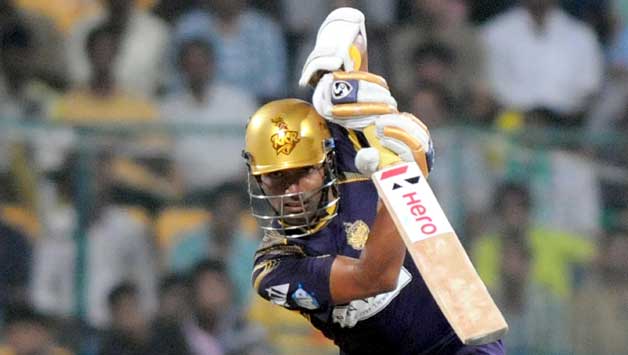
Robin Uthappa has become the first batsman to register over 1,000 runs in the Syed Mushtaq Ali Trophy. This is testimony to the Karnataka batsman’s explosive abilities with the bat which have also made him a prominent name in the Indian Premier League (IPL). Uthappa achieved the milestone en route his knock of 48 against Odisha which enabled Karnataka to take an easy six wicket win. Uthappa is a Karnataka stalwart and has been with the team for a long time now. In all, Uthappa has played 183 T20 matches including games for India and IPL teams and has scored an astonishing 4,665 runs at an average of 29.71.
Uthappa will hope that this milestone brings him in focus of the national selectors and perhaps an opportunity for him to make a comeback in the near future. Uthappa’s team Karnataka has not being doing too well in this edition of the Syed Mushtaq Ali Trophy. They have played five games and won only two while facing defeat in the other three.
Uthappa will hope that his milestone helps inspire Karnataka from here on and that they can pull off a miracle to stay alive in the tournament. Uthappa is a senior member in the Karnataka side and he holds a strong sway in the mood of the team. This feat will help brighten his mood and is likely to give the team bit of a psychological uplift. Uthappa has been a bright spot in Karnataka’s dull campaign having scored 205 runs in the five games so far at an average of 41 and strike-rate of a magnificent 139.45.
source: http://www.cricketcountry.com / Cricket Country / by CricketCountry Staff / January 09th, 2016
Thanks to her year-long battle, a 150-year-old law that denied them inheritance rights got repealed.
On December 2, the state government issued a notification repealing a 150-year-old law – part of the Indian Succession Act – which denied Christian women in these two districts neighbouring Bengaluru right to inheritance. In fact, the Act underwent an amendment in 1925, but this regressive section remained.
The topic came up in the Pinto household when her father MF Pinto, a coffee planter in Siddapura near Madikeri, had last year expressed his intent to divide his plantation equally among his four sons and Arlene. The sons apparently pointed to the 1865 Act which denies daughters a share in property.
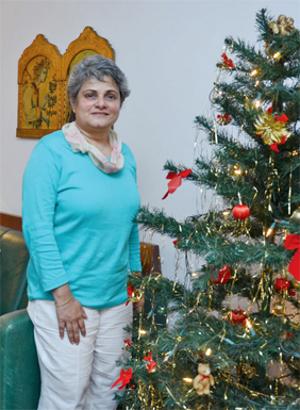
Arlene Pinto, a resident of Vittal Mallya Road, was shocked that a section denying inheritance rights to Christian women existed even now. Her father, as progressive as they come, did not want Arlene to suffer any injustice because of an archaic law and encouraged her to get the law changed, though he had predicted that it could take nothing less than 20 years to see it through. And when senior Pinto and his wife are holidaying abroad, his soothsaying fortunately turned wrong.
To everyone’s surprise, the logical end came within a year. “My father pushed me to write to the government about this archaic law. Since my family knew (Rajya Sabha MP) Rajeev Chandrashekar, I wrote to him on how this law is unfair to daughters of the community from Kodagu and Mysore regions while all communities have equal property rights,” recalls Arlene.
Following her petition, Rajeev Chandrashekar wrote to DV Sadananda Gowda, soon after the latter had taken charge of law ministry at the Centre in a November 2014 cabinet reshuffle; within two months, Gowda replied, “The matter has been examined and noted that Section 332 of the Indian Succession Act 1865 empowers the Governor General to exempt any race, sect or tribe from the operation of the Act.
The notification exemption the native Christians of Mysore and Kodagu is still in force as it is not expressly repealed. The state government may, by a notification, revoke any such order but it shall not have retrospective effect.”
Forwarding union law minister’s response, Chandrashekar subsequently wrote to the state government. The Karnataka State Law Commission acted on the representation and recommended that the “notifications by virtue of which all native Christians, in the territory of Mysore and in the Province of Coorg, were exempted from the peration of The Indian Succession Act, 1865, be revoked by Government of Karnataka by exercising the power conferred under the Indian Succession Act, 1925.”
source: http://www.bangaloremirror.com / Bangalore Mirror / Home> Bangalore> Cover Story / by Kushala S, Bangalore Mirror Bureau / December 25th, 2015
Ashwini Hospital will conduct a free eye testing camp till November 10, according to a press release. The camp will be held in various parts of the district on November 4 and 5.
An interaction with the participants will be held on November 6 at 1.30 pm and the inaugurating of the eye testing camp will be done on the occasion.
Schedule
On November 4, the testing will be done at Ponnappasante Primary School, Balele, Kanooru, Kutta, Srimangala, Hudikeri hospital, Ponnampet Sri Ramakrishna Sevashrama Hospital, Chettalli, Siddapur, Ammatti, Palibetta, Gonikoppa, Virajpet hospital, Titimati Primary school, Virajpet R I, H P Hospital, Bailukoppa Primary school, Bettadapura hospital, Chikkanerale, Halahanahalli, Kanagal, Attigoodu, Ravandoor, Sangara Chettalli, Hadya, Kittoor, Kellur hospitals, Chapparahalli Primary School, Kelaganahalli, N Shettalli anganwadi centres, Makodu Ayurveda hospitals, Koppa PHC, Maradooru gate, Tammadahalli and Avarti Primary School.
On November 5, the camps will be held at Madapur, Somvarpet, Shantalli, Alooru Siddapura, Shanivarasanthe, Kodlipet hospital, Bettageri Primary School, Napoklu, Bhagamandala, Cherambane Sampaje hospital, Made Co-op society, Koinadu Sri Ganapathy Kalamandira, Shirangala, Hebbale, Koodige, Suntikoppa, Moornadu hospital, Kushalnagar hospital and Rotary Hall, Basavanahalli Lamp Society and Haakattoor Charaka Chikitsalaya.
On November 6, the eye testing and surgery will be done between 9 am and 2 pm.
source: http://www.deccanherald.com / Deccan Herald / Home> District / Madikeri – DHNS, November 04th, 2015
What would life be without spicy food, ice-creams, perfumes, fragrant flowers, late-night parties and alcohol? Ask Sunalini Menon, who swears by this regimen.
No, she’s not a health freak or someone prone to allergies. She’s been practising abstinence for the sake of her passion, which is also her profession.
Asia’s first and only woman professional in the field of coffee cupping (tasting), Sunalini has experienced the aroma of several thousands of coffee types and spent a considerable time in the fields. “I love ice-creams and soft drinks but they affect my taste buds. My profession requires them to be extremely sensitive. So, I steer clear of cold food items or beverages,” she said. The chief executive of Coffeelab, one of India’s largest coffee exporters, Sunalini spoke to TOI on the ocassion of Coffee Santhe, a three-day carnival hosted by Karnataka Chitrakala Parishath.
Restraint and discipline are core attributes of a good coffee cupper. “It is essential to preserve the palate, the instrument vital for coffee tasting. We’re advised to avoid spicy food. Alcohol and smoking are a strict no no. Late nights and poor health can be a hindrance to the job,” she explained.
Coffee cuppers have to perform regular tongue exercises not only to keep their taste buds active but also to pick up foreign flavours. “Cupping with experts from other parts of the world helps calibrate one’s potential and understand the coffee produce of other countries. One also needs to perceive through the eyes, nose and palate of other cuppers,” she said.
Habituated to taking a sip and playfully swirling the liquid in her mouth before spitting, Sunalini said her job doesn’t allow her to swallow the coffee, however aromatic and delicious it be. “Coffee can have the distinct enzymatic flavours of apples, apricots, peaches and berries; sugar-browning flavours of chocolate, caramel, honey or those of spices like clove and pepper. It is an inborn acuity of taste, knowledge, experience, memory and good communication skills which help the cupper differentiate one flavour from another,” she said.
Sunalini, who entered the male bastion decades ago, said her journey hasn’t been easy. “I wasn’t lucky enough to be handheld when learning the tricks of the trade. I had to learn on my own, especially the chemistry of the coffee bean. It took a long time for me to be accepted into the fold, but once there, you are in,” she said.
Cupping as a Career
There are certifications for coffee tasters issued by the Specialty Coffee Association of America (SCAA) and Specialty Coffee Association of Europe (SCAE). The SCAA issues two types of certificates. One is called the Licensed ‘Q’ grader and the other, the Licensed ‘R’ grader. The ‘Q’ grader licence is a certificate for proficiency in evaluating arabica coffees and the ‘R’ grader for proficiency in evaluating robusta coffees,” said Sunalini.
She admitted that coffee tasting as a career could have some limitations.
“To overcome them, one needs to perhaps complement tasting with other jobs such growing, roasting or marketing coffee,” she said.Coffee tasting is more of a passion; it may not help you financially, especially in the first 10 or 12 years. Credibility comes only through knowledge and experience,” Sunalini signed off.
source: http://www.timesofindia.indiatimes.com / The Times of India / News Home> City> Bengaluru / by Sreemoyee Chatterjee, TNN / September 26th, 2015
The world has a dark fascination about war and particularly the Second World War. The last of the war action may have ended in 1945, but our imagination never seems to stop wondering about the large scale hostilities and the repercussions that wars have come to represent.
Every new book or movie about the Second World War opens us to some aspect of that war not known to people.
Raghu Karnad’s book, Farthest Field – An Indian Story of the Second World War, is what the title suggests and much more. It not only takes us through a journey of three men lost to war, but talks about India’s role in the Second World War and throws in snatches from the country’s nationalist movement that ran concurrently with the war.
Death, we have often believed, has an element of finality. But Karnad says people have two deaths. The first death occurs when they die, and the second when all those who remember them also die. Beautifully put.
The second death is the farthest field from which no one returns, says Karnad, and so the name of his book.
But war, says Karnad, brings the two deaths close, because it “chooses young people most deliberately to die”. A life barely lived, most of these young people lost in wars often end up as photographs.
And it was photographs of three young men that stood on table tops in his grandmother’s house that prompted him to prise open a history unknown not only to him, but to a whole generation of Indians.
These youngsters who stood in the photographs — Bobby Mugaseth, Manek Dadabhoy and Ganny or Kodandera Ganapathy — had their lives intertwined with each other through marriage and through their involvement in World War II. Bobby’s sisters had married Ganny and Manek. Ganny was Karnad’s maternal grandfather, while Manek and Bobby his grand-uncles (his mother’s uncles). Bobby’s sister Nugs (the author’s grandmother) was married to Ganny.
The book opens in Calicut, at the residence of Mugaseths, and follows the personal stories of these three men, a story recreated by the author with the help of research, conversations, chronicles and his own creative mind’s eye.
In the process of recreating the story that started unfolding 80 years ago, Karnad also had to understand the role of Indian Army in the Second World War and the country’s own nationalist movement that was playing out at the same time.
India’s broader role in the Second World War is that it had the largest volunteer army fighting the war for the British Empire. As per Karnad’s estimates, more than two million men and women served in it.
“As a part of the British Empire, India had won its war. Then, ceasing to be a part of the Empire, it won its independence,” says Karnad in his book. To a large extent, one was born of the other and yet India’s part in the world war is absent from its own history, he says.
Bobby’s journey took him to Roorkee training camp and then to Iraq and later to the Burmese frontier to defend India against Japanese forces. Bobby’s life was hell during the last few months with death staring at him daily, but he died of a shot from his own revolver. The gun went off in error was the explanation given. The truth was that nobody would know what caused that death. That was 1944.
By the time Bobby was gone, his brothers-in-law Manek and Ganny were already lost to war. Manek joined the Indian Air Force as a fighter pilot and died in 1943 when he crashed into a mountainside in Manipur. Ganny became an army doctor in North-West Frontier and died in 1942 of bronchitis, at the frontier. “The farthest field is not just a conceit about Bobby’s death but one that applies to all those Indians who were lost to the Second World War,” says Karnad in his afterword to the book.
Undoubtedly, Farthest Field opens up India’s forgotten role in the Second World War and at the same time helps the reader to refurbish memories about the war itself and the events unfolding at home in the country that led to its independence from Britain. The author’s brilliance is evident in the fact that the reader is not only transported to that era, but helps to stay connected with the book until the end.
Delving into the effortless storytelling ability of the book, one can fathom the kind of work the author has put in to bring out this book, probably prompting readers to say that Karnad is a writer to watch out for in the years to come.
source: http://www.deccanherald.com / Deccan Herald / Home> Supplements> Sunday Herald Books / by Latha Venkatraman / August 30th, 2015
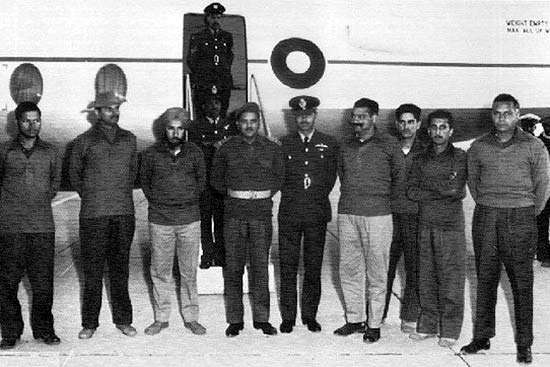
Prisoners of war at Delhi’s Palam airport after repatriation on January 22, 1966. The author is second from left
Fifty years ago, Cariappa’s Hunter aircraft got shot down over Pakistan. This is the fascinating story of the four months that followed…
by Kodendera ‘Nanda’ Cariappa
The second, or could it be called the third, Indo-Pak War was now nearly three weeks old, and there were no talks of a cease fire. To us in the field we did not really have a clear picture of how the war was going, or how either the Army or the Air Force was doing, on the ground or in the air. We knew of Air Force casualties more through the grapevine rather than through authentic sources. Our hope as young fighter pilots was to be detailed for as many operational missions as possible against the enemy. And of course, each of us hoped we would encounter him in the air and to shoot him down.
So it was on 22nd Sep ’65, I was detailed as the leader of what was meant to be a four-aircraft formation of Hunters. We took off at about 0830. Our target was enemy armour in an area some distance South of Lahore. Once the primary mission was accomplished, we could take on any ‘targets of opportunity’ that we might see. Now, in hindsight it would appear that our mission was not going to be as successful as one might have wished. At the take-off point final checks were carried out by the ground crew, rockets were ‘armed’ and the 30mm cannon were made ‘live’. This was when one of the aircraft had to return to dispersal because of a technical snag.
The first few minutes of the mission were over Indian territory, but as always, we were ‘keyed’ up and on the look out for enemy aircraft that might be on a sortie to attack our positions. As always happened, at least where I was concerned, there were butterflies in my stomach. The uncertainty of what awaited us across the border and what enemy opposition we might encounter was at the back of my mind. It was at this point that the pilot of the third aircraft found something seriously amiss with his aircraft and I ordered him to return to Base. And then there were two!
However, once over Pakistan, nothing mattered other than finding the enemy and doing what we could to destroy his armoured formations. We did not see too much by way of enemy activity other than a few dust columns that were kicked up by vehicles that were slow in following the standard dictum of ‘freezing’ in their tracks if enemy air was in the sky. We attacked what little we could see and then decided to return home. On the way back we spotted an enemy target that gave away its position by opening fire on us. We retaliated. Within moments of doing so my aircraft was hit by ground fire.
All the warning lights in my cockpit were illuminated, indicating that many systems and my controls had failed, and also to tell me that my aircraft was on fire. Shrapnel went through my cockpit and I found my controls jammed. My ‘wing-man’ called out on the radio that I was on fire and that I should abandon the aircraft. I acknowledged his transmission and ejected. All I can recall is my boots flying off and within seconds I was on the ground lying in a semi-supine position. Within moments I was surrounded by troops who ordered me to raise my hands in submission, and to stand up. I replied that I could not do so as I was hurting badly, and felt paralysed. The troops were in khaki uniform and for some unknown reason I thought they were Indian. At about that time I could hear artillery opening up and one of the troops said, “Those are your guns firing at us”.
I was a Prisoner of War!
The time was 0904 because my watch had stopped, presumably on impact with the ground. I was asked who I was and from where I had taken off. As per standard procedures, I rather parrot-like gave my ‘name, rank and number’. It was then that I was asked if I was related to General Cariappa. I feigned a faint because of the pain, or maybe I did pass out. The next thing I knew was that I was lying on a litter in the back of a jeep and was being questioned by a Brigadier.
After some first aid I was moved to a rear location, to a place called Luliani where for some time I was left on the floor awaiting treatment and then as it transpired, evacuation to a hospital. I have no recollections of that journey. When I did come to, I found myself in a hospital bed and in excruciating agony. This was the military hospital in Lahore. The following day I was taken to the operation theatre and was told the extent of my injuries. I was impressed by the number of doctors who had returned from abroad to be of service to their nation at this juncture in its history.
I stayed in hospital for about a week during which time General Musa the Pakistan Army Commander in Chief visited. He came to see me, knowing by now that I was General (KM) Cariappa’s son. He asked if there was anything I wanted. All I could think of was being with the other Indian prisoners of war. From Lahore I was flown to Rawalpindi and kept in the hospital there, and it was during this time that I was visited by President Ayub Khan’s son. Treatment and food in the hospital was good, yet being in solitary confinement I was hankering to be with the other Indians.
This happened soon enough and suddenly one fine morning I was discharged from the MH and moved blindfolded to what turned out to be a prison cell. Here I was given a pair of black armoured corps overalls, and a pair of rubber-soled slippers. It was by now almost mid-October with the winter chill beginning to manifest itself. There was one charpoy for furniture and nothing else. I was also given three typical army blankets; one served as the mattress and the other two as a covering. By day the outer wooden doors were closed, I was in darkness with no light penetrating, and by night they were kept open with the single dull electric bulb switched on.
If I wanted to use the toilet I would be taken blindfolded to the lavatory about 50 yards away. There the sentry would wait till I was through, and then would escort me back to my cell. It was here that a Major first interrogated me, and it was here that I really experienced the ‘fear of the unknown’ for the first time as a POW. There is no more frightening condition than being in solitary confinement. I was not subjected to ‘third degree’ treatment, but I was told that I had better answer all questions because if I did not, there would be no hesitation in ‘putting me away’!
I realized then that the standard ‘rank/name/number response would not help and so I did ‘reveal’ what I thought to be innocuous information. This lasted over a period of three days. During this tend days I was incarcerated in the cell I was fed thick wholesome ‘chappatis and dal’ twice a day. There would be a mug of sweet ‘langar’ tea at 0700 and again at 1500. ‘Lights on time’ was 1600. A few days later I was told that I would be moving to the main POW camp. I first moved to a transit camp in Rawalpindi itself where I was kept in ‘solitary’ again for two days. It was here that I met a Pakistan Army JCO who, having learned that I was my father’s son, came up to me and said he heard that I was in the Sadr Kothi (he meant the President’s home). I, of course, denied this.
A train journey to Dargai, throughout which I was blindfolded, to the main POW camp followed. Winston Churchill was supposed to have been billeted here too! Meeting with the 38 other Indian prisoners was a momentous occasion for me, who had, for the preceding six weeks been deprived of any form of company. I was the only airman with that group. I learned later that the others were kept in separate enclosures within in the same complex.
The next few days were filled with getting to know my mates, and settling into some kind routine. Soon thereafter, I joined the other airmen, who were Squadron Leaders Sikand and Pilloo Kakar, and Flt Lieutenants Mani Lowe, Lal Sadarangani, MV Singh and Vijay Mayadev. A third compound housed the twelve Sikh officers who had been segregated for political reasons. Our compound had a small forecourt about thirty feet long and some seven feet across. Then the billet that housed us comprised three rooms. One that had our seven charpoys packed closely together, a dry-toilet facility (more about this later) and our dining area.
We were given three blankets, and an olive green army pullover was all that we had to protect ourselves from the severe winter chill of the NWFP. As a result by 1700 hours we got into our beds and were regaled by stories and experiences by ‘Siki’ Sikand who seemingly had an endless fund of them. He often had us in splits of laughter! In the first week of November, quite inexplicably, Mani Lowe and I were told to ‘pack our bags’ as we were going “somewhere”. Blindfolded, we were put into a van and driven off to a place about two hours South from Dargai and put into two adjacent dank, cold and airless cells, similar to the ‘lock-up’ in our own Air Force Guardrooms.
The toilets were about fifty paces of so from our cells, and as was the practice, we would be blindfolded when being taken to and from there. We were not interrogated, and were unable to figure out as to why on earth we were separated from our mates. All we knew is that we were at an air force base because every evening and through the night we would hear the typical and unmistakable whine of Hercules aircraft starting up, taxiing and taking off. About ten days later we were returned to Dargai, much to our delight, and indeed relief.
The first Red Cross parcels came in on 7th Dec and our lot improved considerably. One packet that thrilled us was that the film star Asha Parekh had sent us dried fruit! Now, we were even provided with a quilt that was paid for from out of the approximately Rs 60 that was our entitlement as prisoners. The arrival of the ‘goodies’ from the Red Cross was an indication that our folks at home knew that we were alive!
Food was always the focus of attention. Breakfast was a boiled egg with three puris and a mug of tea. Lunch and dinner were always, monotonously identical; either lacy, glutinous “lady’s fingers” or well watered turnips to be eaten with chappatis and/or rice. We would be given a mug of tea at about 1500 hours and then we would play quoits for an hour or so. Once a week we had the luxury of a hot bath. Dinner would come by 1700 hrs after which Pilloo (Sqn Ldr Kakkar) would read to us from the Bhagavat Gita that we received with our Red Cross parcels.
Siki our ‘master chef’ was able to convince our ‘minders’ that we needed mustard oil to keep away the winter dryness from our skins. This then was used as a cooking medium and our dinner was a much more palatable meal with fried onions and some condiments being added. Dessert was usually a biscuit sandwich that had cocoa or melted chocolate providing the filling.
As 31st December approached we agreed that we must do something to celebrate New Year’s Eve. The first pre-requisite for a successful party was ‘hooch’! So, we decided to make some moonshine. The main ingredient would be methylated spirits to be purloined from the nursing orderly’s tray when he came every afternoon to dress MV’s wounds and mine. Our stratagem was to keep him distracted somehow, and for this Siki was particularly successful.
I cannot remember what excuse or reason we gave for asking for a pitcher, but we were given one. This was our ‘still’ into which put raisins, the bitter lemon (rind and all, and called for some unknown reason as “mitha”) that was provided as dessert and jaggery. We also added a few chappatis for good measure in the belief that the yeast would cause fermentation and therefore provide the desired ‘kick’ to our hooch. The ‘matka’ was then wrapped in a blanked and placed close to the fireplace where we hoped and believed its contents would mature!
Came New Year’s Eve, Dec 1965, the evening progressed as usual and we looked forward with eager anticipation to the dinner that Siki had planned. Dinner came at the usual time and then our chef got down to work. It is now almost 50 years since then, and I don’t remember too well all that we had to eat. But I do recall the unexpected arrival of the Camp Commandant who turned out to be a very pleasant chap. He wished us and then produced the unbelievable…some mutton, or, was it chicken? He left soon thereafter. We then drank our brew that tasted like nothing on earth, enjoyed a veritable repast, and talked late into the night.
Life carried on unchanging from day to day, when suddenly about the January 10 we received some intelligence that something was afoot. The source of our information was the sweeper who came in every morning to clean our ‘thunder boxes’. He was a Hindu, and therefore it appeared was sympathetic towards us. Given the menial and unpleasant nature of his duties it was not surprising that the guards accompanying him were reluctant to enter the toilets.
Siki ‘cashed’ in on this and wrapping his face securely to keep out the obnoxious smells, he would ‘chat up’ the sweeper. It was he who mentioned that in a few days a tailor would come to take our measurements, but he was unsure as to why. The tailor did arrive and within a few days we were outfitted with warm serge trousers and shirts, and even provided new olive-green pullovers. Events now moved fast, so fast that we did not realize we were being prepared for repatriation!
In fact, I don’t think we knew till the day of departure on 22 Jan 66. We were once again blindfolded, bundled into a vehicle and driven to Peshawar where we emplaned a Fokker F-27 that was going to Delhi to bring back the Pakistan COAS. We crossed the international border at approximately 0905, about the identical time that I was shot down exactly four months earlier.
Thus ended an unforgettable period in our lives. Siki retired as Air Marshal, Pilloo became a Wing Commander but was killed in an HF 24 accident. Lal Sadarangani, Mani Lowe and Vijay Mayadev left the Service as Wing Commanders and joined Air India. MV continued in uniform and retired as Air Commodore.
A few readers have written about General K.S. Thimayya in these columns with reference to your Abracadabra dated May 28. May I add further to some already written.
In 1957, Gen. Thimayya became COAS (Chief of Army Staff) superseding two of his seniors. V.K. Krishna Menon was the Defence Minister, had made a name in UN and other international forums, with high calibre and intelligence. Thimayya’s tiff with Menon was not personal. Whenever Menon visited Army units and interacted with Jawans (soldiers), he used to ask pointed questions on their grouse against any of their officers. It is something not liked by the senior officers who were accompanying the Defence Minister.
It was a question of discipline in the Army. Gen. Thimayya sent his resignation letter to Prime Minister; the rumour was that the other Chiefs were to follow if the resignation was accepted. Prime Minister Nehru tactfully handled the situation; General withdrew the resignation.
Gen. Thimayya wanted to write a book about his experiences in war fronts but the Government did not permit as he was in the service. Thimayya happened to meet one American writer Humpry Evans, who stayed with the General for sometime, made notes and got it published in US. The book “Thimayya of India” having a glossy wrapper on the cover with an impressive photograph of the General reviewing a Guard of Honour presented to him at West Point ( US Academy to train Defence officers).
Though he retired in 1961, his services were requisitioned directly by UN, to head a Peace Keeping Force at Cyprus — a small Island in Mediterranean, off the coast of Turkey and Greek, which had won Independence under Archbishop Makarios from Britain. However, it had to face a civil war between Greek Cypriot and Turkish Cypriot (mostly Muslims). Gen. Thimayya as head of the Peace Keeping Force did very well in separating the warring factions and brought peace.
Gen. Thimayya died in Nicosia (Cyprus) in Dec.1965. His body was brought to Bangalore; his wife and only daughter were there. Last rites were performed and the body was buried with all military honours and 17 gun salute. The Government of Cyprus honoured him by issuing a commemorative stamp and naming a street after him.
Gen. Thimayya was an alumnus of the Bishop Cotton Boys School, Bangalore. The alumni of the school celebrate “Gen. Thimayya Day” every year by arranging lectures by senior Army Officers and other dignitaries.
— Capt. (Retd.) A.K.Char / V.V.Mohalla, 28.6.2015
source: http://www.starofmysore.com / Star of Mysore / Home> Voice of the Reader / Sunday – July 05th, 2015
WELCOME. If you like what you see "SUBSCRIBE via EMAIL" to receive FREE regular UPDATES.
Read More »