Category Archives: Inspiration / Positive News and Features

The healthy choice

Some simple steps that can help provide 
affordable, quality health care anywhere in India
By Dr Kavery Nambisan

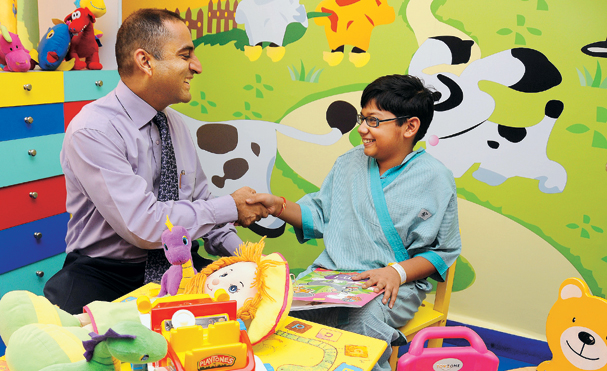
Healing bond: Dr Anupam Sibal with a patient at Indraprastha Apollo Hospitals, Delhi. Among the essential qualities of a doctor is the ability to empathise / Photo: Arvind Jain

Medical care in our country is like a patchwork quilt: a few small segments sewn with lovely silk while the rest are frayed and falling apart. Millions of Indians are deprived of basic medical facilities because they are too expensive. Well-to-do Indians have the right to be healthy. The rest simply suffer or die. We like to boast about the richness of our culture and about the billionaires who figure prominently in the news but when it comes to human development, we are paupers.
The imbalance in health care, the dreadful state of most government hospitals and the exorbitant fees charged by private doctors are common knowledge. How shall we redress these?

Like several of my colleagues, I have spent most of my surgical career working in rural areas, in south and north India. In many such places, being the only qualified surgeon, I had to handle all types of cases. Rural folk are hard-pressed for money and cannot spend too much on any illness. My experience and that of my colleagues shows that quality medical care that is affordable can be given anywhere in India (or any other country) by following a few essential steps.

As medical students we spend five and a half years learning the art and science of medicine. But we are not sensitised to the unique nature of a profession that has to deal with pain and suffering all the time. Mere moral lectures will not do. One way to sensitise young minds is by introducing humanities into the medical curriculum as is being done in many countries. It will help produce more rounded personalities, better equipped to take on the high-pressure job of a doctor while retaining human values.

For a young doctor, there are riches to be had from working with an experienced senior, especially in a hospital where the resources are not plentiful. He will learn to adapt and innovate, use his clinical judgment and will not be easily tempted to do too many investigative procedures like blood tests, X-rays and scans. He will be an all-round doctor rather than one with narrow experience. We certainly need specialists and super-specialists for the treatment of certain problems but for the majority of ailments, an efficient MBBS doctor is all you need. He can learn multiple skills by working with a senior who is willing to pass on his experience and knowledge.

A surgeon working in a small town or village should be able to do a hernia repair, mend a broken forearm, manage prostate trouble or do a caesarean section. He should be able to handle common medical problems like chest infections, skin allergies, diabetes, angina and high blood pressure. A multi-skilled doctor can handle 85-90 per cent of all patients walking in or wheeled into the hospital.
Doctors must have the ability to empathise. This quality can be developed by any doctor who is able to put herself in the patient’s place. She is then more likely to come up with the right mode of treatment.

A part of this process is telling the patient why he fell ill, explaining the disease and teaching ways of preventing future problems. This is an essential part of a doctor’s job but is totally neglected for two reasons: patients never ask questions like “What caused this illness?”, “What exactly is diabetes/blood pressure/eczema?” or “How do I protect myself in future?” Most of us prefer to fall sick and then be cured after suffering the pain and agony. This is silly, because learning how to prevent future problems is far better for health. Instead we are grateful when the doctor gives a few minutes of her precious time to prescribe medicines.

We doctors like to think that we have too much to do and little time to talk to patients. By readjusting our priorities and the way we work, it can be done. The rewards are tremendous, for both patient and doctor.
Small, well-run hospitals are much more efficient than large ones. It may make good business sense to have 1,000- and 2,000-bed mega-centres with hundreds of doctors and thousands of paramedics, and the main objective of making a profit. This usually results in diminished quality of care. The ideal in-patient capacity for a rural or a small-town hospital is 60 beds. In a city, it could go up to 100 or, because of multiple speciality departments, 200. In such hospitals, the doctors, nurses and other staff get to know each other. They meet and talk every day, not just as medical professionals but also as ordinary human beings. This makes it easier for them to work as a team and it boosts their morale. They are less stressed and more caring. For the patient, a well-managed small hospital with efficient doctors and staff is a real boon.

A good hospital will say ‘no’ to unnecessary gadgets. A hospital should have only those machines which are in regular use, with the exception of certain life-saving emergency equipment which are essential. Before any new purchase is made, its usefulness and running expenditure must be carefully looked into. Some hospitals buy equipment the way a fashion-crazy youngster blindly follows the latest style, without stopping to consider if it will suit her. The running expenses for rarely used equipment will be very high, and patients will be made to go through needless investigations in order to recover the money.
Most illnesses require fairly simple treatment and very little in the form of investigations and tests. An efficient doctor and nurse can do far more than any gadget. In many peripheral hospitals, seriously ill patients (like those who have suffered a heart attack or undergone major surgery) are being cared for perfectly well by giving intensive nursing care without the use of a multitude of gadgets. When more sophisticated methods are absolutely essential, such patients can be referred to a higher, multi-speciality centre. This will be psychologically better for the patient, and the medical bills will be a fraction of what one would pay in a fully-equipped ICU.

Choices such as these—of keeping the treatment simple and effective at all times—have to be made by those who run small hospitals. Any patient who cannot be treated without sophisticated gadgetry and/or by super-specialists should be referred to the appropriate centre at the earliest. In the vast majority of cases, this is not necessary.
For a doctor (or nurse or any hospital staff), there is no greater joy than that of seeing a patient cured and happy before going home. If more doctors can come together with this purpose in mind, we can do much more for the health of our nation than by blindly applying our knowledge. The knowledge is very important. But without genuine caring, it is at best cosmetic. And from experience, I know that a good living can be honestly made without chasing money.

Can doctors fulfil the real needs of patients? We need to make the right choices. The rest is simple.

Nambisan is a surgeon and novelist. Her most recent novel, The Story That Must Not Be Told, is shortlisted for the DSC South Asian Literary Prize.

source: http://www.week.manoramaonline.com / Cover Story / THE WEEK / Saturday, November 19th, 2011

Tale of a forgotten World War II Hero

Late Subedar B.M. Uthaiah was a Prisoner of War for 5 years in Malaya


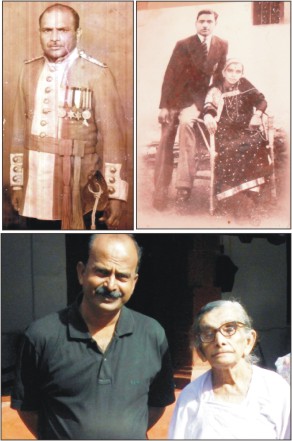
Caption: 1) Late Subedar B.M. Uthaiah. 2) For KEEPSAKE: The Uthaiah couple. 3) The author Ex-Sgt. M. N. Subramani seen with Subedar Uthaiah’s widow Dotty Thangamma at her native village in Virajpet.

By Mandetira N. Subramani, President, VeKare Ex-Servicemen Trust, Mysore.

Late Subedar Baltikalanda Medappa Uthaiah was born in Virajpet taluk, Kodagu District, on 13th November 1908. He did his schooling in Virajpet. After completing his SSLC , he took up a job in a Co-operative Society in Mysore.

A good sportsman and a brilliant hockey player, he used to actively participate in various athletic meets and hockey tournaments. His brilliance in sports and games got noticed by the then Mysore Land Force Officers and offered him a job in the Mysore Infantry as Havildar. Thus late Sub B.M. Uthaiah joined the first Battalion of Mysore Infantry in 1932 and went on to become a World War-II hero in his own right.

As a young combatant soldier, Uthaiah married Kodira Mandanna’s eldest daughter K.M. Dotty Thangmma in April 1940 while he was a Jamedar and at the time when the II World War had started. Jamedar Uthaiah became part of Indian Army as First Battalion, Mysore Infantry, which merged with the British Indian Army.

In Dec. 1940, that is within six months of his marriage, Jamedar Uthaiah proceeded to Bhopal in Madhya Pradesh for additional training in preparation for participation in the World War-II. After completing his training at Bhopal, he along with other members of Indian Army were shipped directly to Malaya from Bombay without even getting a chance to meet his wife and family for fighting against Japanese Army which was marching towards India through Burma.

As soon as the ship berthed in Malaya, the Indian soldiers were engaged in fierce fighting with the relentlessly marching Japanese Army. However, after a few days of fierce fighting for quite some time, the entire Indian battalion in which Uthaiah was fighting was surrounded by the Japanese Army and Jamedar Uthaiah was taken as Prisoner of War (POW) by Japanese Army. He along with other members of battalion were taken to Japan and put in a POW camp which was more like a concentration camp rather than POW camp.

Jamedar Uthaiah was subjected to severe torture and ill treatment by the POW camp authorities who were well-known for their ruthless brutal treatment to their prisoners. Since the prisoners were not permitted to communicate with any one outside the camp, Jamedar Uthaiah’s whereabouts were not known to any one in India including his Army Unit. His wife and family were totally distraught without any news of Jamedar Uthaiah.

His father Baltikalanda Medappa passed away in 1943 because of the sufferings of separation of his son and non-availability of any information about the son’s existence. The relatives and well-wishers of Jamedar Uthaiah and his wife Thangamma had concluded that he had become the war casualty and started preparation for re-marriage for Thangamma.

However, Thangamma was adamant and stood firm against re-marriage. She instead tried to find solace and comfort by visiting various temples in Coorg to pray for her husband’s safe return. Even after the end of World War-II, the whereabouts of Jamedar Uthaiah were not known and there was no communication from any quarter regarding his existence. During October 1945, after a gap of five years, the family members were informed regarding the arrival of Jamedar Uthaiah at Bangalore through a telegram which was received from Malaya via Colombo.

Immediately after arriving at Bangalore, Jamedar Uthaiah had to face a trial by British Army for possible involvement in Indian National Army (INA) activities. Finally, in December 1945, he was permitted to meet his wife Thangamma in Bangalore, who was very sick by then due to emotional suffering. He was subsequently posted to Bangalore till 1947.

He had to once again rush to Hyderabad in 1948 along with his unit to tackle the Razakars and to take part in the Hyderabad liberation which was successfully completed. However, he was very frustrated by all the treatments that he received from the British Indian Army in spite of all his sufferings and sacrifices. He finally took voluntary retirement in 1950 from the Indian Army and went back to his native district Kodagu. Subedar Uthaiah died on September 25, 1978, at the age of 69 like a true soldier unsung, unheard. His widow Thangamma, who is 92 years of age, now lives in Arji Village, Betoli post near Virajpet along with her youngest son, Bopanna. Uthaiahs were blessed with two daughters and four sons.

Late Subedar Uthaiah’s sufferings as a combatant soldier and a POW at Malaya during and after World War-II did not demoralise him in his life and he never thought ill of careers in Armed Forces when his son decided to join the Indian Air Force. True to the tradition of martial race to which he belongs to, as a Kodava, he encouraged his son, who was born after he returned to India from Malaya, to join the Arm-ed Forces in independent India. His second child B.U. Chen-gappa, an Engineering graduate, took commission in the Indian Air Force and went on to become a highly decorated Air Marshal in IAF.

Air Marshal Baltikalanda Uthaiah Chengappa, PVSM, AVSM, VSM retired in early 2000. Before his retirement, he held the appointment as Air Officer Commanding, Maintenance Command IAF.

Like father so is the son. A real chip of the old block. Air Marshal Chengappa went on to prove that Kodagu is indeed a cradle of mighty Generals, Air Marshals and valiant soldiers.

source: http://www.starofmysore.com / Features / November 10th, 2011

It’s all about Honey … HONEY!

Caption:

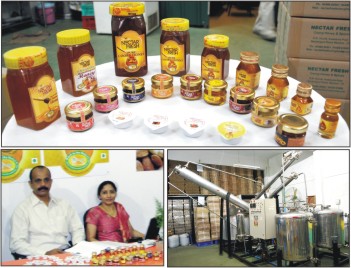
1) Some of the honey, jams and sauces produced by Nectar Fresh. 2) Chayaa Nanjappa with business partner Rajappa at Ahaar expo in Chennai. 3) The entire processing unit consisting of a container to feed honey to the settling unit.

They say ‘fruit of hard work is sweet’ and in this case it is metaphorically and literally sweet. Shall we call this a success story of a lone lady who made it big in the small scale industries sector or the growth of a brand which has today become one of the leading names in the field of honey? It is difficult to describe one without the other as this is the story of a lady who started a honey brand from scratch which has grown to great heights over the years. In this Weekend Star Supplement, SOM introduces its readers to this lady who says ‘If I could make it, then any other lady can

’ A flavour for every season

History:

Nectar Fresh was launched by Chayaa Nanjappa in 2007 at Bangalore and was backed by Khadi and Village Industries Board. Born on June 20, 1971 at Kodagu, Chayaa says, “I had a gut feeling and wanted to do something connected with my hometown. That instant I knew I wanted to start honey manufacturing and wanted to name it as Nectar Fresh.”

“The plant was doing well in Bangalore but due to some circumstances we had to relocate to Mysore in 2010.

Initially people said that Mysore is a small town and is not feasible for such businesses. But for me Mysore has been a lucky mascot. Most of the major deals were struck after we shifted here,” she says.

The plant was relocated to Kadakola near Mandakalli Airport when Chayaa partnered with Rajappa of MyStore.

Speaking about Nectar Fresh, Chayaa says, “We are one among the top 5 honey manufactures in India and are the only ones who are manufacturing different varieties of honey. Usually the Khadi and Village Board products are not considered as product for the high end markets. But today we have replaced international brands in hospitality sector under the Board. We have used their logo in our brand because it is the Board which has supported us. Also, there is a notion that business is only for the elite class who come from the same background or have the educational qualification for it. But we have proved this wrong. Anyone can do it if they have the survival instinct. Today we employ around 50 persons all over the country and around 20 in our Mysore plant.”

Chayaa, a PG Diploma holder in Mass Communication, underwent specialised training at Central Bee Research and Training Institute, Pune. She is also a member of the National Bee Board and is the first lady to have a honey processing plant in the country.

Process

The company has its mobile vans placed near the fields across India. Hence they are the only producers of a variety of honey in the country. They are also the first brand to launch honey blisters.

“Every month we have different varieties of honey according to the flowering season. This month it is acacia, clover and Himalayan honey,” says Chayaa, adding that lychee honey has the greatest demand.

Although Nectar Fresh has a wide network, it’s manufacturing unit is only at Mysore. The unit produces around 1,000 tonnes a day and is planning to increase it to 4,000 tonnes by procuring more equipment.

Processing plant: First, the honey is loaded into the container. This honey undergoes around 30 microns of filtration. It later undergoes moisture reduction and then again 2 microns of filtration. It is then cooled and sent to settling tanks. This will later be filled in containers and packed.

The brand has also started dealing with jams and sauces to help sick women groups. It aims to provide them with the technical knowhow and quality assurance and in turn market their produce thereby giving them a channel to avoid middlemen.

The processed honey is tested for quality at Pristine Laboratories, Bangalore and also at the units’s in-house laboratory.

Varieties

Nectar Fresh is known for its varieties in honey which include Coorg honey, rapeseed/mustard, eucalyptus, lychee, sunflower, Himalayan, acacia, clover, south Indian etc.

Market and export

Nectar Fresh today exports its produce to the Middle East, Malaysia and Australia. They will be looking forward to capture the US and European markets very soon.

The brand has replaced top international brands in India and today has a monopoly with the five star hotels.

“Previously we were not keen on our own private labeling and would supply in bulk and to the hospitality sector. But now we are entering the retail market also. We are the major suppliers to the Honey Society and are vendors for DFRL in city. Apart from this, ITC, Kerala Ayurveda, Taj group of hotels, Apollo etc., bottle their products here,” says Chayaa.

Mission beyond market

With an aim to be a leader in their business in India, Nectar Fresh is also seeing to offer its service beyond market. Apart from helping women with jams and sauces, they have empowered the locals around Kadakola region by providing them training and employment. They are also backing tribals by sourcing honey from the Sirsi belt.

The company is also associated with various charitable organisations helping girl child and Chayaa herself is a member of many women organisations in the country.

Competition

When asked about their major competitors in the market, Chayaa said “We have replaced many international brands including Australia’s Beerenberg Farm. In India, our major competitors are Kashmir Apiaries and Kejriwal Enterprises.”

Future

The company will soon be launching honey pouches with an aim to make honey available to even the lowest section of the society. The pouches are being prepared with the help of CFTRI. They will also be launching premixes of coffee and tea. The mix, which comes with milk, sugar and coffee/tea powder, can be prepared by just adding to a cup of water. With this the company plans to rule the Indian market and introduce Mysore and Kodagu to international customers.

Work hard and believe in yourself

I am not a feminist. But I support those women who work hard to stand on their feet. Most of the time, laws favouring women are abused and the most genuine cases do not have the privilege to use it. Hence, through our brand we intend to empower such women.

“Believe in yourself and have that never-let-go attitude. The success you achieve through this will give you a lot of self-respect rather than finding easy ways of making money.

“I have faced many hardships while coming this far. As a single woman, it was initially difficult for me to survive in this field. But that did not discourage me. With help from Corporation Bank, the government and of course from my business partner, now sky is the limit for Nectar Fresh. If I was able to achieve so much, then any woman can.”

source: http://www.starofmysore.com / Feature Articles / October 29th, 2011

Explorers Discover 3 Billion-year-Old Life Forms Off the Coast of Michigan

In mysterious sinkholes beneath the waters of Lake Huron, scientists have been exploring strange pockets of life that shouldn’t exist on present-day Earth. The microbes researchers have found would have been perfectly comfortable on the Earth of 3 billion years ago, before we had oxygen in the atmosphere.

How did the bottom of Lake Huron get riddled with sinkholes that time forgot? Find out, and see a video of life that hasn’t existed for billions of years.

The sinkholes at the bottom of the lake are pockets of de-oxygenated water that have pooled beneath the fresh waters above. So all the creatures who live in the sinkholes might have evolved at a time on Earth when no oxygen was available. In a recent Earth magazine article about the ongoing exploration of these sinkholes, first discovered a little over a decade ago, Lindsey Doermann writes:

These pockets of water teem with microbial life similar to that found around deep ocean hydrothermal vents or beneath ice-covered Antarctic lakes, not the kinds of microorganisms normally found in our own backyards . . . Before long, the true importance of these oddities became apparent: “These ecosystems in Lake Huron are analogs of the Proterozoic,” says Bopi Biddanda, a microbial ecologist at Grand Valley State University in Michigan and one of the leaders of the sinkhole science team. “They could be windows into communities that existed 3 billion years ago.”


Though it’s possible the creatures in the sinkholes are direct descendants of creatures who lived on pre-oxygen Earth, it’s more likely that they evolved from more recent organisms to thrive in an oxygen-free ecological niche. Either way, they are the closest we’ll get to seeing life from Earth’s distant past.

But how did those sinkholes get there in the first place? As you can see from this diagram, what’s happened is that freshwater from the Earth’s surface has sunk below ground, and eventually worked its way back out beneath the lake. As the water slowly eroded the lakebed, it created sinkholes of freshwater — lakes within lakes, if you will — where anaerobic or oxygen-free ecosystems began to thrive.


In this incredible video of the sinkholes, you can see the oxygen-free freshwater bubbling up from the lake bottom. All life on Earth may have once resembled these strange, algae-furred fingers reaching up from the sinkholes. It wasn’t until about 2 billion years ago that the planet began to have a significant amount of oxygen in its atmosphere. The shift to oxygen was caused by cyanobacteria like what you see in this video, who emit oxygen as part of their digestive cycle. As cyanobacteria took over ancient Earth’s seas, geologists believe that they caused the planet’s first climate disaster, killing off all the life forms that didn’t metabolize oxygen. Essentially, oxygen was a poison gas to them and made the planet unlivable. Lucky for multicellular organisms, oxygen ushered in a new era where life proliferated and diversified in dramatic ways, eventually leading to the world we live in today.

source: http://www.i09.com /by Annalee Newitz / Lost World / Geology> / Jul 18th, 2011

Gourmet Meal: Kodava Pandi Curry

The mouth-watering ‘Kodava Pandi Curry’, eaten with ‘Akki Roti ‘or ‘Kadambuttu’ (Rice Dumplings), is the staple diet of Coorg.

Gourmet Meal: Kodava Pandi CurryKodava Pandi Curry. Picture Courtesy: Anuj Kumar, Executive Chef. 

Generally eaten for breakfast, the ‘Pandi Curry’ is a specialty of Coorg and is cooked on all special occasions here.


To prepare a delicious Kodava Pandi Curry meal, you will require the following ingredients in addition to 1 kg of pork:

Ingredients:
1).  Half a kg of Onion
2).  Two hundred and fifty grams of Garlic
3).  Ten Green Chillies
4).  One inch of Ginger
5).  One tea spoon of Jeera
6).  Two or three Cloves
7).  A bunch of Coriander

Gourmet Meal: Kodava Pandi CurryKodava Pandi Curry. Picture Courtesy: Anuj Kumar, Executive Chef. 

Cooking Instructions:
1.    Roughly grind the ingredients to form the main ‘Masala’ used to marinate the pork.
2.    Add one tea spoon of Red Chili powder, ½ a tea spoon of Turmeric and Salt to taste.
3.    Keep the mixture marinated for 20 minutes.
4.    Place the marinated meat in a heavy bottom pan, and keep this on the fire for 45 minutes, depending on how tender the meat is.
5.    Once the meat is cooked, add 2-3 table spoons of the ‘Pork Masala’ (available at stores in Coorg).
6.    Add ‘Kachimpuli’ (Coorg Vinegar) and let the meat cook for a few minutes.
7.    Garnish with chopped Coriander and chopped Curry Leaves.

The ingredients for the ‘Akki Roti’ include:
1.    A cup of Cooked Rice
2.    A cup of Rice Flower
3.    A pinch of Salt

Procedure:

1.    Mash the Cooked Rice.

2.    Add the Rice Flower to the mashed Rice and knead it to form soft dough.

3.    Make a ‘Chapatti’ (Indian bread) out of the dough on the ‘Tava’ (Frying Pan).

Your delectable ‘Kodava Pandi Curry’ dish is ready to be served!

Gourmet Meal: Kodava Pandi Curry
Divya Madaiah

Divya Madaiah is a homemaker and a buisness woman. She caters snacks for all occasions and has taken training in baking and making desserts. Her hobbies include cooking, gardening, listening to music and reading..
source: http://www.coorgexperiences.orangecounty.in / by Divya Madaiah / Jul 14th, 2010


First Woman IFS Officer Muthamma Passes Away

C B Muthamma, the first woman Indian Foreign Service (IFS) officer, died here on Wednesday. She was 85. 

She passed away in a private hospital where she was undergoing treatment, her family members said.

Chonira Belliappa Muthamma was born Jan 24, 1924, in Kodagu. In a career that began in 1949, she served as ambassador and high commissioner to a number of countries. She retired in 1982.

Muthamma had fought against gender bias in the foreign service and had taken the Indian government to court in 1979 for bypassing her for the coveted foreign secretary’s post.

Though the Supreme Court dismissed the petition, it noted that there was truth in Muthamma’s contention that there was gender discrimination in the foreign office.

Muthamma brought out in the form of a book essays she had written over the years. Titled ‘Slain by the System – India’s Real Crisis’, it was published in 2003.

She had also co-authored a book on Kodava cuisine.


source: http://www.bangaloremirror.com / IANS / Thursday  Oct 15th, 2009

Surgery Pumps New Life into Her

Wockhart doctors perform rare operation that helps 13-year-old girl’s left ventricle pump more blood to the body


Looking at her sitting with quiet dignity, facing the glare of harsh lights, you would never guess what her tiny heart has been through.

Indira, 13, a farmer’s daughter from Kodagu, was born with her heart on the right side of her body, while the heart’s pumping chambers and arteries had got inter-changed.

She got a ‘new life’ after Dr Devananda from Wockhardt Hospital and his team performed three surgeries her – all within a year which has worked miracles for the child.

Ever since she was a year old, Indira used to fall sick frequently. She made trips to many hospitals, where she was prescribed medicines for for ailment. When she grew older, she had difficulty in breathing and used to turn blue after even after a little work.

Options open

Fortunately, Dr Devananda met her and explained to her family that surgery was the only chance for her survival.
Indira’s heart was unable to pump blood to the entire body as her ventricles had got interchanged. The right ventricle pumps blood to the lungs and the left ventricle to the rest of the body. As her left ventricle wasn’t strong enough to pump blood at required pressure, doctors had to train her heart by creating obstructions in the blood flow to increase blood pressure.

There have been only a handful of cases in the world where the ventricle has been trained to pump blood after the age of 12. As her parents could not afford the surgery, the Needy Heart Foundation stepped in along with Wockhardt Hospitals to facilitate the same. The final step, the ‘double switch’, was completed successfully. The girl was on artificial ventilation for two weeks as she had developed pneumonia after her surgery, on May 26 this year. Before the final surgery, doctors had given her a 25-50 per cent chance of survival. But Indira insisted she wanted the surgery and her parents relented.

Dr Prakash Vemgal, who monitored her after surgery till her discharge, spoke about how, after the tubes were removed from Indira’s mouth and she could speak, she told doctors that her birthday was on June 16.  A surprise party was arranged for her and she cut the cake.

After speaking to the press, she quietly left with her mother in an autorickshaw.

source: http://www.bangaloremirror.com / Bangalore Mirror Bureau / Monday, Sept 22nd, 2008

Be a Green Thumb this New Year

Turn over a new leaf this year with these no fuss potted plants that will brighten up any corner of your home

When software engineer Shabari Madappa had a baby she decided to make the most of her homemaker status by plunging her hands into mud and manure literally. She got together with friend Dhanya Menon (an interior designer) to start Green Essence, a gardening venture and soon-to-be store where she sells ornamental plants, herbs, orchids and bonsai among others potted in colourful planters and garden accessories.

Started in November, 2010, Green Essence is an extension of  Madappa being quite a green thumb herself. “I love gardening and have been into it. We also have a nursery in my family’s coffee estate in Coorg” says Madappa. Under Green Essence, the duo sells easy-to-care for cubicle planters such as cactus and succulents, herbs like lemongrass, oregano, rosemary, thyme, basil, curry and mint leaves for your kitchen window, exotic plants like orchids, desert rose and dromeliada.

They also do balcony and terrace makeovers and sell ceramic planters and Bio degradable pots made out of coconut choir. One of their best products, according to Madappa, are the self watering planters that only require you to water plants once in three weeks.

“The excess water collects in a tray and the soil pulls it back in a reverse osmosis process. There is no leaking or mess, so we even have these decorative covers or skins for these planters,” says Madappa. Green Essence will soon launch itself in the form of a store in the same premises as lifestyle store Orange Bicycle. Madappa plans to start a bonsai club once the store is in place where people can display their bonsais and even sell them.

At: Orange Bicycle, House no. 3353, 12th A Main, 5th Cross, HAL 2nd Stage, Indiranagar
Call: 98458 27010
Log on to: the Facebook page for Green Essence
For: Ornamental and herb planters, Rs 250 onwards, exotic planters ,Rs 850 onwards, bonsai Rs 3,000 onwards and balcony makeovers Rs 5,000.

onwardsource: http://www.mid-day.com / by Amirta Bose / 2011.01.03

K C CARIAPPA is the ‘Coorg Person of the Year’

Air Marshal K C Cariappa (retd), an environmentalist who took on the powerful timber lobby in Kodagu district of Karnataka is the ‘Coorg Person of the Year, 2009’.
K C CariappaAir Marshal Cariappa, son of Field Marshal K M Cariappa, topped a poll conducted by www.coorgtourisminfo.com, the first news portal of Kodagu, to select the Coorg Person of the Year. The others who were in the reckoning for the title, include another hardcore environmentalist and President of the Coorg Wildlife Society, Col C P Muthanna (retd) and New York-based novelist Sarita Mandanna, who has been given the largest advance by Penguin India ever paid to a debut novelist for her novel ‘Tiger Hills,’ set in Kodagu. 

Taking a pro-active role, Air Marshal Cariappa went beyond the ‘call of duty’ and approached the Supreme Court of India to restrain the timber mafia, backed by the Kodagu district administration and sundry politicians to prevent the formation of a road across the Pushpagiri Wildlife Sanctuary in Kodagu in the ecologically sensitive Western Ghats.

Following a public interest litigation filed by Air Marshal Cariappa, the Apex Court directed the Central Empowered Committee (CEC) to make an on the spot study of the situation and file a report. In a blatant violation of the law, the Kodagu district administration, backed by the two Kodagu MLAs, and supported by local villagers attempted to lay a road through the Pushpagiri reserve forest, amid opposition from Karnataka forest officials.

The controversial road is a seven km stretch between Madikeri and Subramanya near Mangalore in Dakshina Kannada district. Over 400 villagers from Galibeedu near Madikeri, deployed earthmovers to make the road. Their contention was that the road would shorten the distance between Kodagu and Subramanya.

In a mockery of justice, the villagers were provided ‘police protection’ to form the road by the district administration, headed by the then Deputy Commissioner Baldev Krishna. The top district officials, including the Superintendent of Police, went to the extent of publicly humiliating forest official Anil Rathan who protested against the road being formed through the reserve forest.

Air Marshal Cariappa was commissioned into the Indian Air Force in 1957 and he was shot down in the 1965 India-Pakistan war while carrying out attacks on enemy positions and taken Prisoner of War (POW). When President Ayub Khan of Pakistan, an old buddy of Field Marshal Cariappa, offered to release his son forthwith, the later famous said: “They (other POWs) are all my sons, look after all of them.”

After retirement from the Air Force in 1996, Air Marshal Cariappa has been living at Madikeri in Kodagu. He has been taking a keen interest in environment and was the President of the Coorg Wildlife Society for four years. Two years ago, Air Marshal Cariappa wrote the biography of his father, which brought out his literary talent as a writer.

Dr Jagadeesh Subbaiah Moodera, of the Massachusetts Institute of Technology (MIT), and winner of Oliver E. Buckley Prize, was the Coorg Person of the Year, 2008.
The past winners of Coorg Person of the Year include cricketer Robin Uthappa, researcher Dr Boverianda Nanjamma Chinnappa, and novelist Kaveri Poonacha Nambisan.


source: http://www.deccanherald.com / Madikeri / DHNS / Dec 31st


Multi-faceted Talent makes Kodagu Proud

With her special achievements in academic and extra-curricular activities, multi-faceted talent Jahnavi Prasad, an SSLC student of St Joseph’s College in the city, has shown all potentials of attaining a bright future.
Daughter of B N Prasad, the manager of Canara Bank branch here and C N Thejaswini, Jahnavi has secured several awards in the competitions held at different parts of the State. A budding talent in education, arts and sports field, she is the only student from Madikeri to secure the merit scholarship, given by the State government in 2007-08.  

Jahnavi’s mother Thejaswini is a dancer. Hence, the girl has naturally endowed with the talent. She has already given dance performances at different places for the past seven years, and is presently undergoing rigorous training from Vidushi Dr Vidya Muralihar of Madikeri for the senior grade in Bharatanatyam.

Jahnavi Prasad has passed the Kannada entrance exam conducted by the Kannada Sahitya Parishat by securing 178 marks out of 200. She has also passed the all India level general knowledge exam with distinction conducted by the Centre for Human Resource Development, Bangalore, in 2005 and secured a scholarship too.

The girl has also cleared the national-level scholarship contest conducted by the National Council for Development of Education, Chandigarh, this year. She has the credit of being third in the district in the Bharatantyam junior grade exam (2007-08) by securing 352 marks out of 400.

Jahnavi is good at Mathematics too. She surprised the peers by winning the ‘Professor of Maths’ award, clearing an exam conducted by National Educations, Bangalore, as early as 2002. She was the topper at the national-level in a competitive exam on Science conducted by ICETC, Davangere, in 2006-07.

Naturally, Jahnavi is a favourite of her teachers and friends. Proving her potentials in sports, she has won the first place in the Bangalore south zonal level table tennis tourney hosted by Bangalore Urban Zilla Panchayat and Public Instructions Department

source: http://www.deccanherald.com / Madikeri / DH News Service / Aug 29th, 2009