Category Archives: Leaders

A grand gesture by a Grand-Old-Man

Rotary spirit in action, Rtn. PDG Col. B.M. Chengappa dontates Rs. 2 lakh

Caption: Rtn. PDG Col. B. M. Chengappa (centre) is seen with (from right) Rtn. Joseph Mathew, Rtn. Sunil Baliga, President, Rotary West School, Rtn. B.S. Sridhara Raj Urs and Rotary West School Head Mistress Latha Shivkumar.

Mysore, Nov. 20 :
At 94, he is as sprightly as a man in his thirties. With an ever-cheerful and positive attitude towards life, Col. B.M. Chengappa, after a distinguished Army career, has been actively engaged in running his cardamom plantation in Virajpet, Kodagu.

An ardent Rotarian, he served as the District Governor of Rotary Dist. 3180 in 1983-84 and continues to be a member of the Rotary Club of Mysore West.

Col. Chengappa was invited to visit Rotary West Schools run by Rotary West Association (RWA) in Saraswathipuram and Kanakadasa Nagar here on Nov. 16. He was taken around Kanakadasa Nagar campus by RWA President Rtn. Sunil Baliga where RWA is building a PU College apart from running a Higher Primary School.

Rtn. B.S. Sridhara Raj Urs explained to Col. Chengappa the workings of the institution and the need for funds to carry on the activities. In a grand gesture, Rtn. Col. Chengappa announced a donation of Rs. 2,00,000 on the spot to RWA. He also announced that he would contribute Rs. 1 lakh every year as long as he could. May his tribe increase.

source: http://www.StarofMysore.com / Home> General News / November 20th, 2012

Bhupathi-Bopanna win Paris Masters

Mahesh Bhupathi and Rohan Bopanna clinched the Paris Master, their second title of the year, after scoring a hard-fought win over Aisam-ul-haq Qureshi and Jean-Julien Rojer, here today.

The fifth seed Indian pair, playing their fourth final of the season, struggled past the Pakistan-Dutch combination 7-6 (6) 6-3 in the summit clash, lasting one hour and 24 minutes.

Bhupathi and Bopanna had won the Dubai ATP event and ended runners-up at Cincinnati and Shanghai.

The Indians could not convert a single breakpoint of the six chances in the opening set but held nerves in the tie-breaker to take the lead.

They saved a crucial break chance in the second set and cashed in on both the chances on opponents’ serve to seal the win.

The Indians have already qualified for the season-ending finale, where they will make debut as a pair.

The 38-year-old Bhupathi is a four-time runner-up at the event, losing the final in 2010 with Max Mirnyi and 1997, ’99 and 2000 with Leander Paes.

Bopanna, 32, had made his debut at the year-end championships last year with Qureshi.

source: http://www.DeccanHerald.com / Home> Sports / by PTI / Paris, November 03rd, 2012

Rajyotsava in Kodagu

A variety of dances by school children, attractive march past by men in uniform, Naadageethe and Raita Geethe sung in unison marked Kannada Rajyotsava, organised by the district administration at the fort here on Thursday.

Amid drizzle that drenched the earth in the morning, district in-charge minister Appachu Ranjan hoisted the national flag and Kannada flag and inaugurated the celebration. In his inaugural address, the minister gave a call for the people to unitedly work towards preserving Kannada language and culture. Kannada language, which we speak today, has a history of 2,000 years. Apart from shouting slogans hailing Kannada, we should work in the ground level to preserve and promote the language. Specially, the emphasis should be laid on schools and colleges where they should be taught the skills of reading and writing Kannada.

“Language is a symbol of the richness of life and it reflects the culture. Kannada could be developed only when each of us dedicate ourselves and work proudly for the language and culture. The Central government has already given the classical status to Kannada. We should make an organised effort to gain all profits that the status would bring to the language,” he said.

Award Winners

Kodagu Zilla Rajyotsava award was conferred on several achievers from different fields on the occasion. The awardees are as follows: B S Lokesh Sagar (light music); B N Mohan Palegar (folk song); Roopa Srikrishna Upadhya (Bharatanatyam); Addanda Anitha Kariyappa (drama and cinema); B R Sathish (art); C N Boapaiah, Kayapanda Shashisomaiah, Nandagujar, Umesh (journalism); P M Appaiah, K Aine Asmakhanam, (sports); Dr Korana Saraswati Prakash, Paradanda Changappa (literature); Jeevan T B, P Mahadewaswami (education); Koodakandi Kaveramma Somanna, Manavattira Kaveriyamma Poovanna, Prakash B N, N S Kandadevaiah, P M Ravi (social service).

Kodagu zilla panchayat president B Shivappa, vice-president Usha Devamma, CMC president H M Nandakumar, deputy commissioner Dr N V Prasad and others were present.
Arogya Shri soon
Minister Appachu Ranjan announced that Vajpayee Arogya Shri scheme which helps the BPL families to avail free medical check-up and treatment at select facilities will be launched at Virajpet taluk on November 17.

source: http://www.DeccanHerald.com / Home> District / Madikeri, DHNS, November 01st, 2012

Art review


It rained ideas

The ample series of performances by mostly young local artists at Gallery Rasa on September 27 was another contribution from the well-guided enthusiasm and organisational skills of Smitha Cariappa, who has by now virtually institutionalised her efforts under the title of Live Art Lab being a part of BAR1 activities.

One has to congratulate her not just for practising performance since a time when it had only a slight presence in the country and none in the city, but also for encouraging and involving others, especially art students and young artists. At the moment as things are still beginning to take shape, one is bound to appreciate the fact that several people from within the circle, even many who otherwise engage with different media, are fascinated by the manifold potential of performance, while understanding that a degree of chaos, chance and mistakes belongs to the process, although some words of caution may not be out of place.

Although it did not start the event, Cariappa’s piece veritably introduced it in a gracefully simple and poetic manner, encapsulating her role as a creative but neutral and open-ended stimulant towards new ideas of the participants by using the metaphor of archaic rain-induction magic.

One could see the work of Deepak D L as complementary here with its humorous-serious combination of objectivity and randomness that admitted uncertainty whether performance has to mean something. Allowed so the freedom of individual interpretation, the present writer would like to stress the spectator’s primary need for sensation pointing to associations that becomes enhanced by its being incorporated in the live person of the performing artist. For this to happen during an actual contact of the viewer with the performer, the artist’s looks, gestures and behaviour along with the significant accessories and background have to be quickly recognisable at least in general terms, even if complexities of thought are to be considered carefully later. Without that, arbitrary or arcane symbolism risks turning into intellectual puzzles which tends to distract the audience from the mood as well as to confuse the reading of intended content. The varied sequence of performances had examples of both extreme options and in-between stages.

Perhaps the best one, anchoring in sheer sensation but thoughtful, which also formed another overture for the day, was by Aishwarya Sultana. Ingeniously using the large window outside and inside the hall, she cleaned it, wrote on it with water, erased it and tried looking within, indeed letting one viscerally yet subtly intuit the perceptual aspirations behind art-making and witnessing art.

Suresh Kumar G was equally inventive and topical in his use of the window in the interior and the noisy traffic on the road considering two, not entirely opposite sides of the observer and observation along with the two sides of screening oneself off and being exposed. The pieces by Dimple Shah, Mangala and Justine Williams dealing with rather diverse issues of anonymity versus fame, identity and truthfulness oscillated between authenticity of concerns or engagement with spectacular visuals and a confusing metaphorical language which troubled in particular with Shah’s effort being partly excellent.

The most layered in his not quite recognisable symbolism was Prakash L. At the other spectrum of message – simplicity and visual or aural primacy – were Anjana Kothamachu, Vasudev and Raghu Wodayar. They knotted fabric of dream by the first kind of illustrating a poem, the second somewhat formalistically tracing link lines between the body, dance and art, the last in a plain yet evocative way, conjuring a noisy crowd of self-centred mobile phone addicts.

Yearly gamut

The ninth annual show with 45 Indian artists 2012 at Galerie Sara Arakkal (August 25 to September 15) was a display very similar to what comes up there as a sort of yearly review of the institution’s steady repertoire while accommodating some slight changes.

The general profile continued with its emphasis on the traditional genres of painting and a few sculptures and a sporadic presence of once innovative photography-based and other complex media. It continued the preference for pleasant and often predictable styles as well, even though on the whole the level improved, thanks to a lesser number of very old-fashioned and amateurish idioms whereas comparatively progressive and ambitious artists could be noticed more often. With some all-India seniors from the always admirable K G Subramanian to Lalitha Lajmi and Achuthan Kudallur, to Yusuf Arakkal and S G Vasudev locally, the gamut included several middling styles together with some interesting contributions by mid-career artists (Rm Palaniappan, C F John) and especially younger ones from around here, like Ravikumar Kashi, Udaya Vir Singh, Manush C J, Gopinath S and Alok Johri.

source: http://www.DeccanHerald.com / Home> Supplements> Art Review / by Marta Jakimowicz / DHNS, October 07th, 2012

A tale of resistance & rewards

Heritage:

Three years after the British took over Kodagu, a rebellion against the rulers erupted in the region. Among the rebels was Guddemane Appayya. C P Belliappa charts the chronology of events immediately after the rebellion was quelled.

In 1837, three years after the British take-over of Kodagu, a rebellion erupted against the colonisers. This uprising is popularly known as ‘Amara Sulya da Katakai’. The primary reason for this revolt by some of the peasants in Sulya was their objection to the British collecting land tax in currency instead of in kind as was the practice during the reign of the rajas. There was also a rather mysterious individual named Kalyanaswamy who proclaimed himself a descendant of the Haleri rajas and claimed the throne of Kodagu.

The rebellious peasants rallied round him. Guddemane Appayya took command of the rebels. The entire uprising was not well organised and there was a great deal of confusion. However, it soon spread to Puttur and then right up to Mangalore, where some of the establishments of the East India Company were ransacked. Emboldened by their success, the rebels made a bid to attack Madikeri, the capital of Kodagu.

Three years of British administration had brought peace and stability in Kodagu and a majority of the people did not want this disturbed. Compared to the misrule of Chikka Veerarajendra, the administration was streamlined and there was equitable law. People-friendly policies were implemented in various fields. The alarmed British enlisted the support of Kodavas to quell the rebellion. The two dewans, Apparanda Bopanna and Chepudira Ponnappa, mustered the Kodavas, and within days the insurgency was put down. The British did not want any repetition of such revolts against their rule. Harsh punishments were meted out to those who took part in the rebellion. Amongst those executed were Kalyanaswamy and Guddemane Appayya.

After this operation was completed, a large amount of booty was collected from the rebels. The British offered the spoils of war to the Kodavas for having helped them. To the surprise of the British, Kodavas rejected sharing the war booty.

Awards for quelling rebellion

At the time, Colonel Mark Cubbon who was posted in Bangalore was also the Commissioner of Kodagu and Captain Le Hardy was the superintendent. It was Colonel Mark Cubbon who recommended to the then governor-general Lord Auckland that the gallant Kodavas should be suitably recognised for their distinguished service in quelling the rebellion. On Mark Cubbon’s recommendation, the following awards were presented: gold medals with gold chains worth Rs 400 to the two dewans, 12 gold medals with chains worth Rs 200 to subedhars and principal chiefs, 20 gold medals without chains for parpatigars and others of equal rank, 10 gold medals worth Rs 50 for peasants who supported the British, 200 silver medals worth Rs 10 for lower ranks and peasants.

Several bronze and copper medals were presented to the foot-soldiers. All these medals were two inches in diameter. They were cast in the same moulding with a Kodava warrior on the obverse and a trophy of Kodava arms on the reverse. Weights of the gold medals were adjusted by varying the thickness.

In addition, there were grants of land, Pegu ponies, fowling pieces (guns), shawls, clothes, turbans, etc.

But there was a 70-year-old subedhar named Monnaiah (spelt Moonien by the British) who rejected all that the British offered. He was crestfallen, because during the operation, he had lost his prized sword which was a gift from Dodda Veerarajendra. He wanted nothing other than replacement of the sword!

Mark Cubbon immediately acted on this request and had an exact replica made and presented to the subedhar. I wonder if this sword exists somewhere in one of the Kodava homes. Likewise, none of the gold and silver medallions are with any of the Kodava families.

However, I have one of the bronze medals, which was very kindly gifted to me by A Franklin, an avid art collector in Bangalore.

Franklin is also the proud owner of the autographed Bible that Queen Victoria presented to her god daughter Princess Victoria Gowramma of Coorg in 1852.

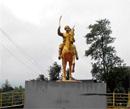
History has nevertheless come full circle. Recently an imposing statue of Guddemane Appayya on horse-back has been installed at the entrance to Madikeri town. He is recognised as one of the earliest freedom fighters.

source: http://www.DeccanHerald.com / Home> Supplements> Spectrum> Heritage / October 01st, 2012
BJP candidate is Kodagu ZP president

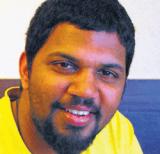
B. Shivappa of the BJP, who represents Abburkatte constituency in Somwarpet taluk, and Biddanda Usha Devamma, also of the BJP, representing Cheyyandane constituency in Madikeri taluk, were unanimously elected president and vice-president respectively of the Kodagu Zilla Panchayat at the elections held in Madikeri on Monday.

The post of the president in the second term was reserved for Scheduled Caste candidate and that of the vice-president for Woman (General). Mysore Regional Commissioner M.V. Jayanti, who conducted the elections, received nomination papers only from Mr. Shivappa and Ms. Devamma.

She declared them elected unanimous. Both are first-time entrants to the zilla panchayat.

They will hold the office till June 6, 2014.

Contender

K. Sundara of the BJP, who represents Kantur-Murnad constituency, was a strong contender for the president’s post, but the party leadership favoured Mr. Shivappa.

Mr. Sundara was absent during the elections.

Though other women members in the BJP, including Kanthi Belliappa, Mani Nanjappa Beena Bollamma, had expressed their willingness to be considered for the vice-president’s post, Ms. Devamma got the nod from the party leadership. The 29-member zilla panchayat comprises 21 BJP members, six Congress and two JD(S) members.

The zilla panchayat members congratulated the new incumbents.
———————————————————–
B. Shivappa will hold office till June 6, 2014

Biddanda Usha Devamma of BJP elected vice-president
———————————————————–
source: http://www.TheHindu.com / Home> National> Karnataka / by Special Correspondent / Mysore, October 02nd, 2012

55 pc posts reserved for women in GP polls

The State government has announced reservation for post of president in each gram panchayat.

Accordingly, 55 per cent of posts are reserved for women in the district. Last year, 32 per cent posts were reserved for women.

There are 98 gram panchayats in the district, of which, the posts of president in 53 Gram Panchayats are reserved for women.

This includes SC/ST, general and woman category.

According to the documents, the post of president is reserved for women in 12 gram panchayats in Madikeri taluk, 22 gram panchayats in Somwarpet and 19 gram panchayats in Virajpet taluk.

The post of president is reserved for SC candidates in 10 gram panchayats, of which, six are women. This includes one in Madikeri taluk, three in Somwarpet taluk and two in Virajpet taluk.

The post of president is reserved for Scheduled Tribe in seven gram panchayats, of which, five are for women.

The post is reserved for Backward class A, B category in 30 gram panchayats, of which, 16 are reserved for women. Under general category, as many as 26 posts have been reserved for women.

This includes six in Madikeri taluk, 11 in Somwarpet taluk and nine in Virajpet taluk. Meetings of the taluk elected representatives will be convened on September 24, 25 and 26 to decide on the reservation.

The meeting will be held at Mahila Samaja near old taluk office in Virajpet on September 24 at 10.30 am, at Okkaligara Kalyana Mantapa in Somwarpet on September 25 at 10.30 am and at Old Fort hall in Madikeri on September 26 at 10.30 am.

The elected representatives of the gram panchayat should attend the meeting.

source:http://www.DeccanHerald.com / Home> District / Srikanth Kallammanavar, Madikeri, Sep 22, 2012, DHNS :

Serving the Kodava cause


File photos of (left) CNC members led by N.U. Nachappa presenting a memorandum to the Kodagu district administration representative and (right) Kodavas staging a protest to highlight their demands.— / Photos: Nanda kumar, Sampath Kumar G.P./ The Hindu

Will the two-decade-old struggle of the Codava National Council (CNC), demanding an autonomous Kodava homeland, succeed? This is a debatable point. The CNC led by its president, Nandineravanda U. Nachappa, initially was demanding a separate Statehood, but later scaled it down to seek an autonomous homeland. Mr. Nachappa has been able to keep the organisation alive and make its presence felt, both at the State and the national level, by organising protests, demonstrations and other conspicuous events.

The main demand of the CNC is a full-fledged Kodava Autonomous Region, encompassing the 45 ancient traditional ‘naads’ (‘nad’ is a group of villages), on a par with the Darjeeling Gorkhaland Territorial Administration.

Mr. Nachappa says that the Central Government must accord ethno-linguistic tribal minority status to the Kodavas under the Constitution and extend reservation facilities in the fields of education, economic and employment. It should also ensure Constitutional special guarantee for the land tenures and customary personal laws of the Kodavas without any interference, on the lines of Jammu and Kashmir and Northeast States of India under Articles 370 and 371 of the Constitution.

The Government must facilitate the CNC to establish a Central University to propagate “Kodavalogy” on the lines of North-Eastern Hill University, Aligarh Muslim University and Banaras Hindu University, Mr. Nachappa demands. Kodava language must be included in the VIII Schedule to the Constitution and implemented as one of the three administrative languages in Kodagu.

The exemption under the Indian Arms Act to hold firearms to the ‘Kodava by race’ people should continue without any hindrance, Mr. Nachappa argues. In the same manner, the land rights being enjoyed by the Kodava people, thanks to privileges such as ‘Jamma’, must stay, he demands.

The CNC opposes the Dilip Singh Bhuria report submitted to the Centre that wanted Virajpet taluk to be declared as a Scheduled Area for the benefit of tribal people who live in that taluk. Mr. Nachappa argues that it would adversely affect the Kodava people, whose roots could be traced to Virajpet taluk and parts of Madikeri taluk.

Submitting memoranda

Memoranda are being submitted to the State and the Central Governments time and again by the CNC to further its cause. The Central and the State Government authorities too have been acknowledging them. But, there are many who look at its struggle sceptically. The movement lacked political support and the backing of the entire populace of Kodagu, they say. They also term it as an unpopular movement which does not cover populace other than a group of Kodava people in the district. But Mr. Nachappa maintains a hard stand, stating that cause of the struggle was important and it was achievable irrespective of numbers or backing by the majority.

He says that the struggle was totally peaceful and well within the bounds of the Constitutional framework. The CNC had also forged alliances with 13 other like-minded organisations across the country to achieve its goals in the past, including the Darjeeling Gorkha Hill Council and the Jharkhand Mukti Morcha.

The CNC claims credit for a series of development works that were initiated in Kodagu in the last one-and-a-half decades, including roads and bridges, plus release of special grants. It also says that the credit for the proposed move of the State Government to write to the Centre recommending establishment of a Central University in Kodagu, should go to the organisation.

Guests

Mr. Nachappa’s effort to rope in the support of political leaders and heads of other organisations is worth a mention here. During the previous Annual Day celebrations of the CNC in Madikeri, the AICC general secretary, Oscar Fernandes, Additional Advocate-General of Haryana and Supreme Court advocate, Brijesh Kalappa, and Karnataka High Court advocate, M.T. Nanaiah, were the guests. Gorkha leader Dawa Pakhrin, JMM leader Shibu Soren, and intellectuals Balveer Arora and T.K. Oommen, among others, have been guests in the past.

Mr. Nachappa has reiterated the demand of the CNC to establish the proposed Central University at the ‘Kodava Kund’ (Kodava Hill), a location identified by the CNC near Kakkabe.

The CNC delegations have submitted memoranda to the State Governors and met the Chief Ministers of Karnataka several times in the past.

Census

The CNC has been appealing to the Kodagu Deputy Commissioner to direct the caste census enumerators to enlist the Kodava people separately under the columns of the ‘Kodava’ caste, and not as ‘Kodagaru’ or ‘Kodaga’ or ‘Coorgi’ in the census sheets. This move would enable the minority Kodava people to assert their identity and uphold the dignity of the community whose people had been serving the nation admirably well in various fields, it felt. Some success was achieved in this regard in Kodagu.

To bolster its base, the CNC has been organising ‘Ain Mane’ (ancestral home) programmes in select Kodava families since a few years. It has been coming up with ‘human chain’ programmes in the entire district, mainly targeting the areas dominated by the Kodava populace.

Other causes

The CNC, apart from taking up the causes of the Kodava people, has also been observing World Indigenous Peoples Day, World Minorities Day, and ‘Black Day’ on November 1, coinciding with Kannada Rajyotsava.

Mr. Nachappa argues that ‘Kannada Nadu’ could not be complete without the creation of an autonomous homeland within the State of Karnataka.

Mr. Nachappa, who has not groomed a deputy so far in his nearly two-decade existence, has preferred to change the nomenclatures of his organisation several times. What appeared to be a broad-based organisation encompassing a few other communities as well in the beginning has come to patronise only Kodavas in the recent times. The ‘Kodagu Praja Vedike’ which took birth only to counter the CNC has now fizzled out.

Mr. Nachappa hopes that the Kodava Autonomous Region would become a reality along with Telangana.

Jeevan Chinnappa

A full-fledged Kodava Autonomous Region, a Central University to propagate ‘Kodavalogy’, special land rights… the CNC has a whole list of demands

source: http://www.TheHindu.com / Home> Features> District Plus / by Jeevan Chinnappa / September 08th, 2012

State Govt. to honour eight veteran journalists

TSR Memorial & Mohare Hanumantharaya awards to be presented

Caption: Shivasharanappa Vali, Ranganatha Rao, M.B. Desai, Nagaraja, Narayana Karantha, K.V. Paramesh, Ramesh Kuttappa, Ravindra Bhat

Bangalore, Aug. 25
The State Government will be honouring journalists by presenting the TSR Memorial and Mohare Hanumantharaya, Development and Environmental Journalism awards for the years 2010 and 2011 at Ravindra Kalakshetra here on Aug. 27 at 11 am.

G.N. Ranganath Rao and Garudanagiri Nagaraj will be honoured with TSR Memorial Award for 2010 and 2011 respectively. Shivasharanappa Vali (2010) and M.B. Desai (2011) will be given the Mohare Hanumantharaya Journalism Award while K.V. Paramesh (2010) and Ravindra Bhat Ainakai (2011) will receive Development Journalism Awards. Narayana Karanth Peraje (2010) and Ajjamada Ramesh Kuttappa (2011) will be given Environmental awards by the government.

Chief Minister Jagadish Shettar will present TSR and Mohare Hanumantharaya awards while Dy.CMs K.S. Eshwarappa and R .Ashok will present Development Journalism and Environmental Journalism awards respectively.

MP Ananthkumar and Justice G.P. Shivaprakash, retired High Court Judge & President of Journalism Award Selection Committee will be the chief guests.

Chikpet MLA Dr.D. Hemachandra Sagar will preside.

Late T.S. Ramachandra Rao (TSR), as the Editor of Prajavani, was famous for his column Choobaana. The government is presenting an award in his name since 1993 which includes Rs. 1 lakh cash prize. Till now, 18 journalists have received this award.

TSR award recipients: G.N. Ranganatha Rao entered journalism field by joining Tayinadu as a Sub-Editor. He also served in Samyukta Karnataka. He worked in Prajavani for 34 years and has authored 30 books.

Garudanagiri Nagaraja joined the movement for a responsible government against Mysore State when he was a student and was imprisoned. He received progressive farmer award also. He first served in Janavani, Praja-matha and later in Kannada Prabha. He has also served as the President of Karnataka Newspaper Academy.

Late Mohare Hanumantharaya was a freedom fighter from Bijapur district. After working as the Sub-Editor and Editor of Karnataka Vaibhava weekly in Bijapur, he joined Samyukta Karnataka as Editor and later became its Managing Editor. He started Kannada’s first digest Kasturi in 1956.

Mohare Hanumantharaya award recipients: Shivasharanappa Vali of Bidar district was involved in freedom movement, journalism, social work, educational, religious and political activities. He worked in Delhi’s Hindustan Samachar for 10 years and later in ‘Uttara Karnataka’ daily.

Mohan Basavaraja Desai: He started a Kannada weekly Darshana and later converted it into a daily Loka Darshana in border district of Belgaum. He has served as an Editor for 50 years in Kannada journalism.

Development journalism: K.V. Paramesh – Entering journalism field through Kodagu’s Shakti daily newspaper, he also served as Mysore Centre Head of E-TV Kannada, Bangalore Senior Reporter & Head of Political Division of Suvarna 24×7 and also in Samyukta Karnataka. His contributions include reports on Nagarahole forest fire, H.D. Kote taluk forest conditions, smuggling and sale of minor girls of Girijana tribes in Mysore district etc.

Ravindra Bhat Ainakai joined Samyukta Karnataka in 1990 and later served in Kannadamma of Belgaum, Aragini, Abhimani and Ee Sanje papers, for three years in Udayavani and later as Mysore Branch Chief of Prajavani. His columns have been published in book form titled Baduku Marada Mele, apart from other books Hejjenu, ‘Moorane Kivi’ etc.

Environmental journalism: Narayana Karantha Peraje – He has been serving in Dakshina Kannada’s monthly Adike since 22 years. He is well-known for his columns in Sudha, Taranga, Udayavani, Hosadigantha, Kannada Prabha etc. He is the author of more than 10 books including ‘Tala Tapasvi.’

Ajjamada Ramesh Kuttappa – Entering journalism through Kodagu’s Veeranadu paper, he later worked in DK’s Kannada Janantaranga and as Senior Reporter in Vijaya Karnataka for 11 years. At present, he is the Kodagu Reporter of Vijayavani. He has penned many articles on Kodagu’s environment, developmental works in forest, Nagarahole forest’s condition etc.

source: http://www.StarofMysore.com / General News / August 25th, 2012

‘Tiger Ashok Kumar’ retires


Caption: A file photo of Governor H.R. Bhardwaj presenting President’s Medal to ACP B.B. Ashok Kumar.
Mysore, Aug. 2

ACP B.B. Ashok Kumar, nicknamed Tiger Ashok Kumar for his valorous feats, retired on Tuesday.

He earned the epithet of Tiger when he was PSI at Ulsoor Police Station, B’lore for chasing and catching chain-snatchers.

He won the President’s Medal thrice and CM’s medal once. Other Police officers who won the President’s Medal thrice are Shankar Bidari, Gopal Halsur and G.A. Bawa.

Biddanda Ashok Kumar, hails from Parane village in Kodagu.

He was a terror for criminals and is credited with 18 encounters. While being a part of STF to nab Veerappan, Ashok Kumar had slain 13 accomplices of the brigand and shot down three notorious anti-social elements.

His promotion to DCP was challenged by some at KAT. It is said that even though KAT favoured Ashok Kumar, he was deprived owing to petty politics.

Finally, when the order for promotion came last month, some petitioned against it at High Court. The court’s verdict was expected on the very day he was to retire. Ironically, the court deferred the verdict to a further date.

source: http://www.StarofMysore.com / General News / August 02nd, 2012