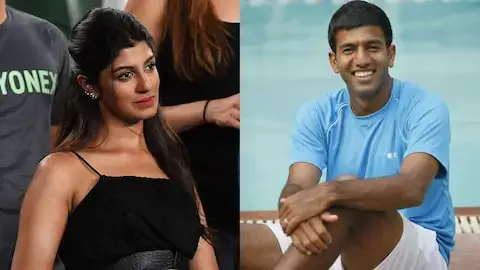
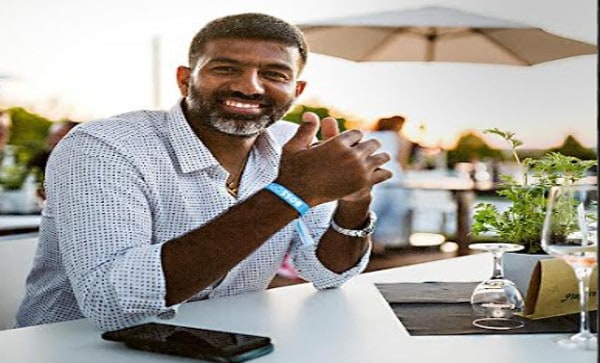
Here’s everything you need to know about the personal life and family of Rohan Bopanna and his wife Supriya Annaiah.
Rohan Bopannawas born in a middle-class family in Coorg, Karnataka. His father, M. G. Bopanna, works as a coffee planter, while his mother, Malika Bopanna, is a homemaker. He pursued his education at Sri Bhagawan Mahaveer Jain College, affiliated with Jain University in Bengaluru .
Both of his parents strongly support Rohan’s career. They reside in Coorg/Kodagu District, situated in the southern Indian state of Karnataka, approximately a six-hour drive from Bangalore. Additionally, Rohan has an elder sister who resides in Mumbai.
Supriya Annaiah and Rohan Bopanna
Bopanna tied the knot with Supriya Annaiah in 2012. Before the marriage, they dated for some time and married in a closed ceremony. Surpiya has a mutual friend whose cousin is Rohan. Supriya and Rohan met at a restaurant accidentally. Later, Rohan asked his cousin to introduce him to Supriya. And that’s how the couple started their journey together.
Supriya is a psychologist and media personality. She is also the director of the Rohan Bopanna Tennis Development Foundation, registered with the Indian Ministry of Corporate Affairs (MCA). Supriya Annaiah and Rohan Bopanna have a daughter named Tridha Bopanna.
Rohan Bopanna has had a legendary Tennis career
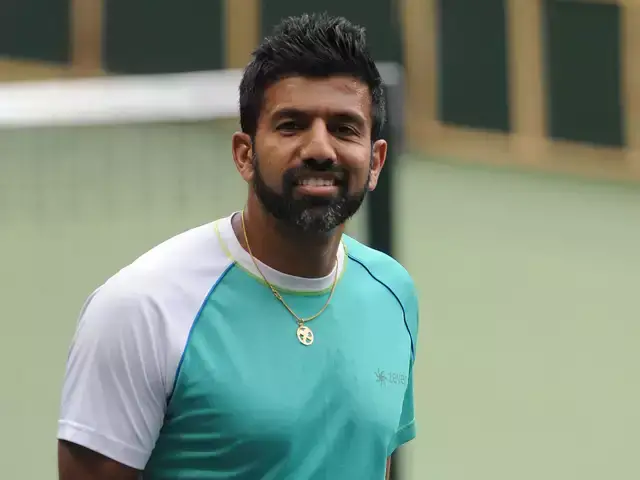
Rohan Bopanna achieved a career-high singles ranking of world No. 213, while he reached a career-high doubles ranking of world No. 3 on July 22, 2013. He has been a valued member of the Indian Davis Cup team since 2002. Bopanna has an impressive record, clinching victories in five Masters 1000 men’s doubles tournaments. These victories include the 2011 and 2012 Paris Masters, the 2015 Madrid Open, the 2017 Monte Carlo Masters, and, most notably, the 2023 Indian Wells Masters, where he made history as the oldest Masters 1000 champion.
Rohan Bopanna
Additionally, Bopanna was a finalist at the ATP World Tour Finals in both 2012 and 2015. Bopanna’s achievements extend to the Grand Slam stage as well, as he secured the 2017 French Open mixed-doubles title alongside Gabriela Dabrowski, making him the fourth Indian player to claim a Grand Slam title. Recognized globally for his campaign “Stop War Start Tennis”, Bopanna was awarded the renowned Arthur Ashe Humanitarian of the Year award in 2010.
source: http://www.mediareferee.com / Media Referee / Home> Tennis / b y Sabrik Dutta / September 02nd, 2023
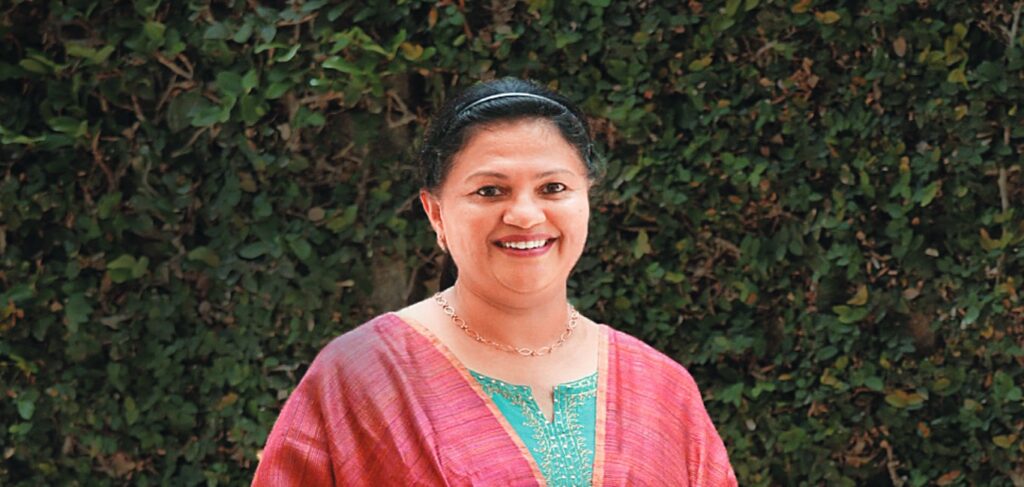
Suman hails from a family of coffee planters in Coorg
Embracing challenges as they come, Suman Nanaiah prides herself in curating out-of-the box personalised experiences for her guests. She started her career in 1996 and is now the Area General Manager of the Royal Orchid Group of Hotels in Mysuru.
Hailing from a family of coffee planters from Coorg, she embraced hospitality early on as a part of her culture. Crediting the same for her successful career in the industry, Suman has never looked back. Apart from involving her team in challenging projects, she also strives to recognise each team member’s strengths and weaknesses, and aims to help them streamline their efforts to achieve their goals. Keeping a sharp focus on the inputs provided by her team and taking into consideration their feedback, she is also a thorough decision maker. On days she is not busy tending to guests, she can be found in the jungles of South India with her son tracking big cats or pampering her taste buds while spending time with her family.
* What was your first hospitality job and at what age? Guest Service Associate at 26.
* How would you describe your personal leadership style? Integrity, clear communication, goal-setting and employee motivation.
* One drink/dish travellers should not miss at the metropole? Our wide variety of succulent kebabs at the Tiger Trail Restaurant. If looking for a combination then the achari murgh tikka with our in-house cocktail, Caipirojka.
* What steps is the property taking to ensure sustainability? Staff retention, recycling and waste reduction management, sourcing local and fresh seasonal produce, and energy and water conservation.
* Any particularly funny incident you recall with the guests? Once we arranged a wedding at the hotel and were informed that a VIP guest would arrive. We were told to ensure the grandest welcome, putting me and the entire team on our toes. Little did we know that the VIP guest was the groom’s best man at the wedding–Mirchi, his beagle, who travelled in his chauffeur driven car all the way from Mumbai.
* Any strategic change that you implemented owing to the COVID-19 pandemic? The foremost was staying connected with our guests through various digital channels and offering stress-free cancellation policies. We also enhanced our operational protocols by working closely with all local government health authorities.
* If not hospitality, what was your second career choice? Animal rescue and welfare sector.
source: http://www.outlookindia.com / Outlook Traveller / Home> Travel News> Story / by Simrran Gill / November 04th, 2020
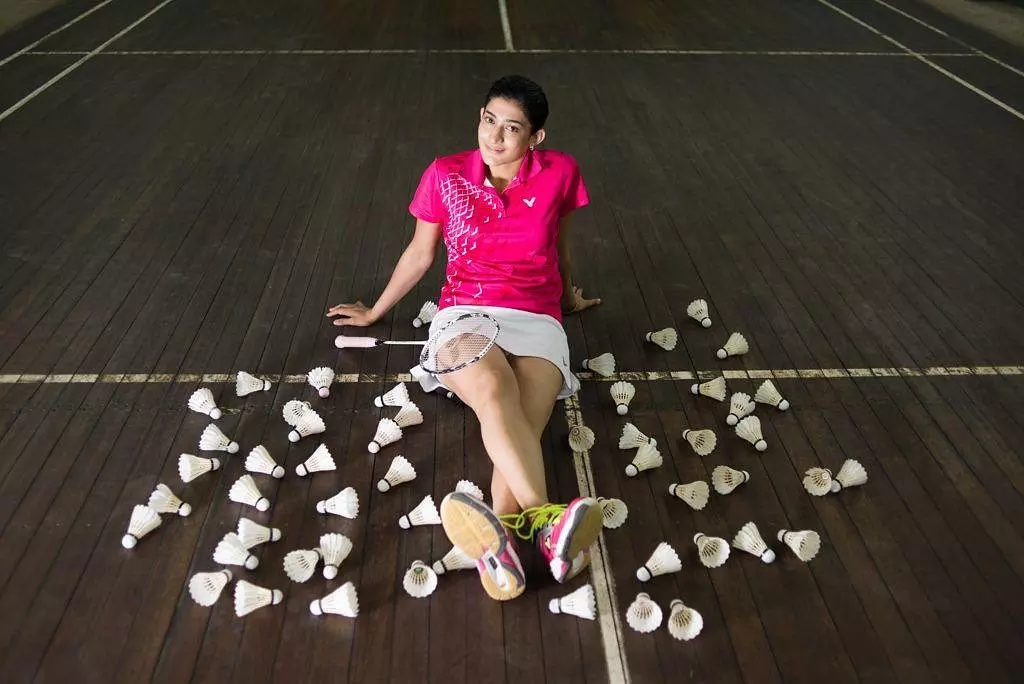
Ashwini Ponnappa, who has achieved many firsts for Indian badminton, is drawing new energy from her 20-year-old partner Tanisha Crasto. But the 33-year-old says her biggest challenge is to stay motivated.
Ashwini Ponnappa poses for a photo among shuttles at a badminton court. (Photo credit: Ashwini Ponnappa/Instagram)
Ashwini Ponnappa is unbothered about her age. An average female shuttler retires at 28, but Ashwini, even at 33, does not see any reason for slowing down. She does not let the thought of retirement sneak into her mind either. Having recently taken up the fresh challenge of playing two intense and physically demanding disciplines – women’s and mixed doubles – instead of one, Ashwini says she ‘finds solace’ in distributing her priorities. “It is not easy to play two events, but it is something that I want to do at this point, I kind of find solace in playing two events rather than one,” Ashwini told The Bridge.
Ashwini broke her long-standing and rather futile partnership with N. Sikki Reddy last year, following her highly successful one with Jwala Gutta which ended in 2016. She tried her hands at pottery and commentary before embarking on a fresh challenge by pairing up with Tanisha Crasto, 13 years younger than her. To put the matter into perspective, when Ashiwni had won her first title – the national sub-junior girls’ doubles gold in 2004 – Tanisha had been in her nappies.
A partner in the mould of a mentor
Ashwin admitted that the trickiest thing for her now is to stay motivated. But Tanisha’s exuberant presence is not allowing her to lag behind. “As you get older, things get tricker. When you are young, you have time on your side, enthusiasm. For me, the challenge right now is to look after my body and keep my mind fresh. And to keep going, keep pushing and keep having that belief and hope that ‘yes, you are going to get that result, again’,” Ashwini said. “It’s tricky, especially when it comes to getting to the stadium and training every single day. The glimmer of hope is that I always believe something good is going to come my way. And starting over with a young partner is a motivating,” she stated.
Being a senior player, Ashwini is more than just a partner in this new partnership. “I love the energy and enthusiasm that she (Tanisha) brings in to the court. Partnering with her is quite fun, because she always wants to do well. And she is very gritty on court. Our age gap does not matter on court. Of course, since I have played for such a long time, I tend to be more like a mentor,” she said. But Ashwini ruled out having any seniority complex. “But having said that, when you are on board, you cannot have a seniority complex. At the end of the day, you are in a partnership irrespective of how big the age gap is,” added the shuttler.
Even though the Ashwini-Tanisha partnership is at a nascent stage now, the combination has started clicking. They claimed their first International Challenge title in Nantes, France, in June. They were also part of India’s mixed team silver medal-winning squad at the 2022 Commonwealth Games. Ranked 56th in the world, Ashwini-Tanisha is the second-choice women’s doubles pair for India after Treesa Jolly-Gayatri Gopichand. The pair will next be seen in action at the Asian Games in Hangzhou in September. However, Ashwini is no longer in the reckoning for the Olympics or BWF World Championships, as she has slipped out of the top 32. “We just started playing in January. Unfortunately, we have not played too many tournaments. But I am very happy with the fact that we won the Nantes International Challenge. We are just getting started, we have a long way to go,” Ashwini asserted.
Juggling between challenges Her women’s doubles career is already legendary, but Ashwini’s transition to mixed doubles has always been challenging. “Switching to mixed doubles has always been a challenge. It is easier to have a woman on your side and also one at the back of the court. I have been a women’s doubles specialist in my career so far. I have always been known as a player who is predominantly at the back of the court rather than front,” explained Ashwini. “The most obvious difference is that in mixed doubles, you always find the girl at the net,” she said.
But, Ashwini, like always, is not willing to give up. “I think I have adapted over the years, which also requires me to move into the net. It’s not natural for me, but I have learnt to make the transition to the back of the court,” she said about the challenge of playing mixed doubles. This challenge is precisely the reason her partnership with B. Sumeeth Reddy has not taken off yet. In the mixed-gender event, they are ranked 64th and are yet to taste success. This is the latest of Ashwini’s many attempts to make her mixed doubles career fly. She had previously paired up with Satwiksairaj Rankireddy, to whom she attributed the speed and power of her smash. But that partnership was severed soon as Satwik specialised in men’s doubles and gave up on mixed doubles.
As she is ranked outside the top rung, Ashwini is no longer a sure shot on the World Tour; she features regularly in the qualifiers. This makes her newest journey more strenuous, as she has had to juggle between smaller tournaments for ranking points, where she often plays too many matches in a day. “If I am playing the bigger tournaments, it is not much of an issue because there is enough time. But if I am playing the smaller tournaments, which we have to since we do not really have a good ranking, there are times when you could end up playing three to four matches in a day,” said Ashwini.
Pride of Indian women’s doubles
Ashwini has been a trailblazer in Indian women’s doubles along with Jwala. The duo achieved many firsts for Indian doubles, by winning Commonwealth Games gold and BWF World Championships bronze. In fact, for 11 years, Ashwini and Jwala were India’s only doubles pair to win a medal at the Worlds before Satwiksairaj Rankireddy and Chirag Shetty – pioneers in men’s doubles – matched their feat in 2022 in Tokyo.
strip
“We were the first to win the bronze medal at the World Championships. And we were the first ones to win a bronze medal overall in 28 years. It was a very special moment for us. The best part for me was that we enjoyed the entire tournament. The icing on the cake was the bronze medal,” Ashwini said.
Ashwini welcomes changes in women’s doubles
Though she finds herself out of favour in the Indian badminton contingent in top-notch events, the seasoned star is delighted with the changes in Indian women’s doubles, which has emerged from an earlier archaic philosophy to become an attractive discipline for youngsters.
“When I started, I did not want to play doubles. I was more interested in women’s singles. I was asked to choose it. But over the years, I have proved myself as a women’s doubles specialist,” said Ashwini.
She welcomes the recent trend where more players are taking up the discipline and sponsors are supporting their bids. India now has two women’s doubles pairings in the top 50. There are five more in the top 100, including Ashwini-Tanisha at 56.
“It has evolved quite a bit in the last decade, especially the last few years. Especially after the Covid-19 pandemic. Youngsters are being pushed towards doubles and sponsors are supporting them. In the past, only one or two pairs were sent and not a lot of pairs went on their own. This has changed drastically,” observed Ashwini.
However, Ashwini finds the latest BWF World Tour hectic, where shuttlers are forced to compete for ranking and Olympic qualification points round the year.
“It gets really overwhelming at times. It is hard to find the right gap for a break. It would be nice if we have a streamlined year, where we would also get an off season. But I would say the sport is growing the way it should grow. There’s always good and bad, it depends on how you look at it,” opined Ashwini.
source: http://www.thebridge.in / The Bridge / Home> Badminton / by Sudipta Biswas / August 27th, 2023
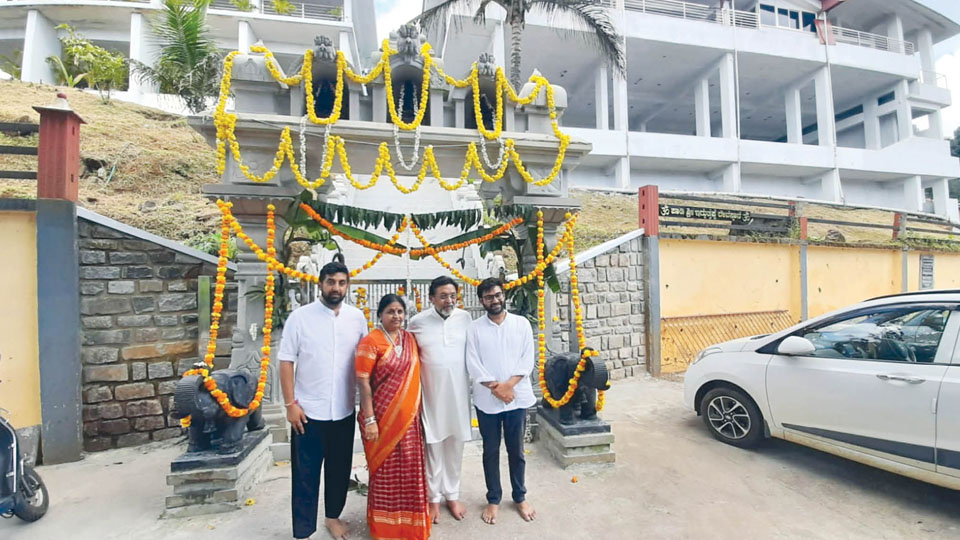
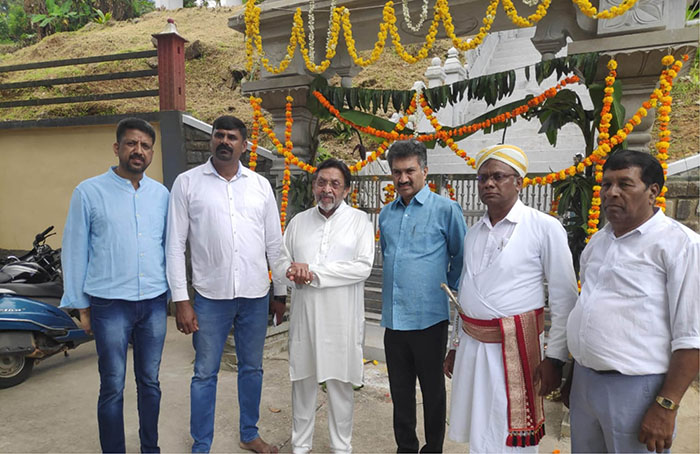
The grand entrance gate at the Paadi Igguthappa Temple in Kakkabbe, constructed at a cost of Rs. 12 lakh, was inaugurated by former Kodagu District Minister M.R. Seetharam. The event took place yesterday, and the funding for the gate was generously provided by Seetharam’s family.
Speaking on the occasion, Seetharam said that the gate’s construction and inauguration were made possible by the blessings of Lord Igguthappa. He highlighted that it was his family’s desire to contribute to this endeavour.
Seetharam also mentioned that the concrete road leading to the temple, built earlier for the convenience of devotees, still requires some finishing touches in the middle section, which will be completed in the near future.
Seetharam and his family received praise from both the Temple Committee and devotees for their generous donation towards this noble cause.
Among those present were President of Akhila Kodava Samaja and Temple Devathakka Parandanda Suman Kaverappa, President of the Devotees’ Group Kandanda Joyappa, Kaddaniyanda Harish Bopanna, Seetharam’s wife Shrithi Seetharam, children Raksha Ramayya, Sundar Ram, Lalitha Nandakumar and Kaliyanda Harry Mandanna, Parandanda Dolly, Bachamanda Poovanna, Lava Chinnappa, Kaliyanda Sampan Aiyappa, Pandanda Naresh, Bidatanda Thammaiah, Temple Parupathedara Paradanda Prince Thammaiah and Revenue Supervisor Ravikumar.
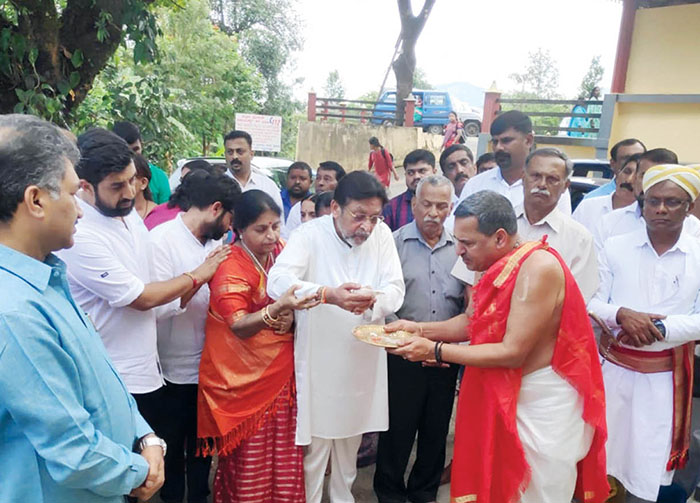
On this occasion, Seetharam contributed by performing rituals including the ‘Thula Bhara’ ceremony, adhering to the temple’s procedures. The rituals were carried out under the guidance of temple priests Kushabhat, Jagadish, and Shreekant.
source: http://www.starofmysore.com / Star of Mysore / Home> News / August 28th, 2023
‘It’s having the right people around—that is crucial. To stop a negative mindset and have the team encouraging and moving you forward, that helps one grow,’ says Rohan Bopanna.
Rohan Bopanna
Twenty years in the making, the legacy of tennis champion Rohan Bopanna has been strong and sublime. The oldest player on the masters’ circuit at 43, the lone Indian winning matches, tennis is ingrained in his soul. Now, the champion turns his aggressive play, ball plucking, and serve-oriented game to the 2023 US Open doubles draw with Australian Matthew Ebden, all the while also embracing his first love coffee – as Coffee Board of India’s coffee ambassador. But, more on that later.
At a time when the rigours of age force one to hang their boots, Coorg and Bangalore boy Rohan Bopanna perseveres. Playing his best tennis yet, 2023 saw him win an ATP master’s title, reach a major final and semi-final, making it back onto the doubles ranked No. 8. This resilience, perseverance, discipline and insatiable urge to compete has been his lode star. From a “not-scholarship worthy teen” who paid for coaching and board in Pune, the years have only transformed his game and resolve into the Indian tennis juggernaut he is today. Aware of the constant battle with age, Rohan’s 2023 Davis Cup appearance will be his last, international tennis continues though.
“I am retiring from Davis Cup, not general tennis. Having played Davis Cup for 20-plus years, it is the right time to make the call. It is based in India, and I see a few younger players upping their ranking. Thus, I was aware that I will be replaced by another Indian, unlike on the tour where if I retire, it is not guaranteed that the spot will go to an Indian,” explains Rohan, adding, “Playing my last match in India will be special. So proud and happy about my 20-year journey at the Davis Cup,” adds the player currently in the US.
Brushing aside his age, he feels, “Age is truly a number. The mind limits us, it defines if you can or can’t push the limit. If you manage the demands on the body, anything is possible. The right time for recovery, sleep, food, strength and mobility is key.” There are no off days for the grand slammer – an hour of mobility, exercise bands, strength work for his legs, agility and Iyengar yoga before practice. The gym for a cool down, he adds, “Doing squats is extremely painful for me as I don’t have cartilage. I focus on small muscles. Cooling down and stretching, and an ice bath is key. Investing and traveling with a physio helps me take care of my body as maintaining muscle is important.”
Loving simple home cooked fare, he admits being partial to rice, and no yeast. Not a stickler, if the urge strikes, in Rome, a pizza slice is welcome, even a rare dessert, and in Coorg his mom’s Pandi curry. Fruits, eggs, cereal for breakfast, his favourite filter coffee, salmon or chicken with white rice and vegetables for a meal, the most essential is, “Proper sleep – seven to eight hours, recovery is sacrosanct. Having a personal physio at Wimbledon helped me reach the doubles semi-finals after playing back to back matches on four consecutive days,” adds Bopanna.
Oh partner my partner
Bopanna and Matthew Ebden have been clinching tough matches on the doubles circuit since January 2023. A player who achieved a doubles career-high No. 3 in 2013, and earned 400th doubles win of his career in 2021, has over the relentless tournament-hopping, and match-playing found many partners – Imran Qureshi, Matwe Middelkoop, etc, and now Ebden. It’s about focusing on the relationship and evolving. “Camaraderie has to develop off the court too, which aids in tight matches. You need to trust each other, understand the need for space, when to take charge or change tactics. Ebden brings a calmness on court, and we both don’t get flustered,” mulls Rohan.
A Coorg at heart
Spending his formative years (till 14) at the family coffee estate Raja Prabha Estate at Madhapur (named after Raja his uncle, and Prabha his dad), one can easily picture a little Rohan running amok amid greenery, climbing and swinging from trees – even today, the outdoorsy persona thrives. “Being a part of coffee picking, harvesting, packaging – the estate has given me amazing memories. Tennis, I picked up much later, at 10. Till then, I was a naughty brat!” he smiles.
That tennis requires deep pockets, it’s Rohan’s parents’ unwavering support that has seen his fortunes rise. “When you are paying for so many tickets, it’s not easy – my coach, physio, wife and daughter. The hardest part is that from a young age one has to pay all the expenses. Even today, I pay for my coach, physio, travel, and unfortunately not many people know this, they think the federation helps,” he says.
Attributing his father for pushing his limits, and his mother for ensuring he was focused, today he realises the crucial role they played. “Not once did they say, ‘ok, tennis is going nowhere, let’s stop it.’ They encouraged me, gave me a chance to learn and excel. They wanted me to represent India one day. From 2002, now playing for 20 years has been a blessing,” he adds.
“Dad learnt and taught himself tennis in Coorg, he got eight members together, built a tennis court – formed a club, and they taught each other, even the wives! Appreciating this journey from basics – even today the club has no gym – my dad had built two poles with a rope to help strengthen my grip. Those days, often, there was no electricity, I would study under a candlelight, that was normal,” chuckles Rohan.
Gifted a bicycle in Pune, for four years, the grand slam winner would pedal 14-15 km every day, then at 19, he got a 1999 Hero Honda Splendour, which is there even today!
Many tennis players visited the estate for his wedding to Supriya, and loved it. “Mahesh, Sania and Rishi have come there – and yes, they played tennis on that basic court where I started my journey,” he says.
Dad’s biggest fan is Tridha
Rohan thrives on competition. But tennis can be a lonely endeavour. Respite with family helps, and Rohan is grateful his daughter can witness him play. “Our daughter Tridha is four. She watches me play – which is an amazing feeling. I am happy she can witness my live tennis instead of saying, ‘Oh, my dad used to play.’ It makes a world of difference. Having Supriya and her around is a blessing. She might not understand the game but is thrilled to watch me practice, picks up balls, she even brings a racket for fun – When I lose a match, she has now learnt to muster the courage, to say ‘bad luck’,” says the doting father.
The inner circle plays a significant role in an athlete’s journey, and his robust support system includes coach Scott Davidoff who has worked with players like Mahesh Bhupathi and Sania Mirza. Bringing a new energy to Rohan’s steadfast game, he adds, “Scott has been travelling with me for over 12 years. We are able to push and play at a higher level. He brings stability. When overwhelmed, Scott understands my struggles, is succinct, and helps manage the mind. It could be a suggestion on slowing down my first serves if I am not accurate, or using a kick serve – his perspective comes from years of experience.”
Brewing the coffee narrative
His love affair with coffee has come full circle as coffee ambassador for the Coffee Board of India. A rite of passage with the ubiquitous seed, the World Coffee Conference to be held in Bangalore from September 25-28, and Rohan is embracing this role whole heartedly. “The Coffee Board CEO recognised that I was doing my bit for Indian coffee. I’d love to showcase Indian coffee, its rich culture – which many are unaware about. To bring India onto the world map. Indian coffee is uniquely grown under shade, compared to others grown in direct sunlight,” pipes the guy always carries his coffee filter and roast on tour.
On awakening, a ritual steeped in love, the welcome brew and aroma is a camaraderie that is special. “My coffee love came way before tennis,” chuckles Rohan who is touring with gifts of his own artisan coffee blend. Many tennis players love coffee, thus the Rohan Bopanna blend in a tie up with Maverick and Farmer is quite the rage. “The beans are from my estate, roasted, and packaged – a medium roast 100 percent Arabica blend,” says the filter coffee aficionado who feels a medium roast enhances flavour, and is fascinated by the innumerable brewing methods.
Indian tennis needs structure
Indian tennis has been mercurial. While doubles has seen successes, the dearth of singles, Rohan feels, is because India currently does not have a structure to help its growth. “We need tournaments and opportunities for players based on rankings, more futures and challengers. Foresight too – each state tennis association should hold at least one of each per year. We have many junior tournaments, but after that, it’s zero – KSLTA, and MSLTA are trying to host tournaments which is great. If the other 15-20 states did that too, Indian tennis will get a full calendar. And Indian tennis will grow,” stresses Bopanna citing the example of US-based Ben Shelton (19) who is wowing fans and is in the top 100. “We don’t have that opportunity, we need to create it first before even asking where the players are,” he affirms.
Perseverance above all
From a dismal 2020 where he went five months without a win, a stellar 2022, and 2023, “It’s mental strength to constantly manage situations no matter what, that is important.” A calmer Bopanna now understands the reality of effort, how to stop the mind rambles. “It’s having the right people around – that is crucial. To stop a negative mindset, and have the team encouraging and moving you forward, that helps one grow.”
The writer is a senior journalist. Views expressed in the above piece are personal and solely that of the author. They do not necessarily reflect Firstpost’s views.
source: http://www.firstpost.com / First Post / Home> Opinion / by Suruchi Kapur-Gomes / August 27th, 2023
A new war memorial will be unveiled soon in South Kodagu, in the memory of all the martyrs, and to offer a tribute to the soldiers.
Soldiers are responsible for the protection of the country. They work selflessly for the betterment of the country and ensure that peace and harmony is maintained. Hence, to remember the struggle of martyrs and their sacrifices, a new war memorial has been set up at the main junction of T Shettigeri village, in South Kodagu and will be unveiled on August 28.
he major highlight of this memorial is that it has been set up by the funds donated by the No 33 Ex-Servicemen Association of T Shettigeri. This association consists of 450 retired soldiers. Installing a new war memorial was a dream of the association. This association has also contributed a lot to the society including extension of financial assistance to the needy and also providing aid during the time of natural disasters.
This war memorial is made up of marbles that cost around Rs 5 lac and the cost of construction is largely donated by the wife of K Bopaiah, a former havaldar, said president of Association, K A Vishwanath.
source: http://www.daijiworld.com / Daijiworld.com / Home> Karnataka / by Daijiworld Media Network – Madikeri (SJM) / August 25th, 2023
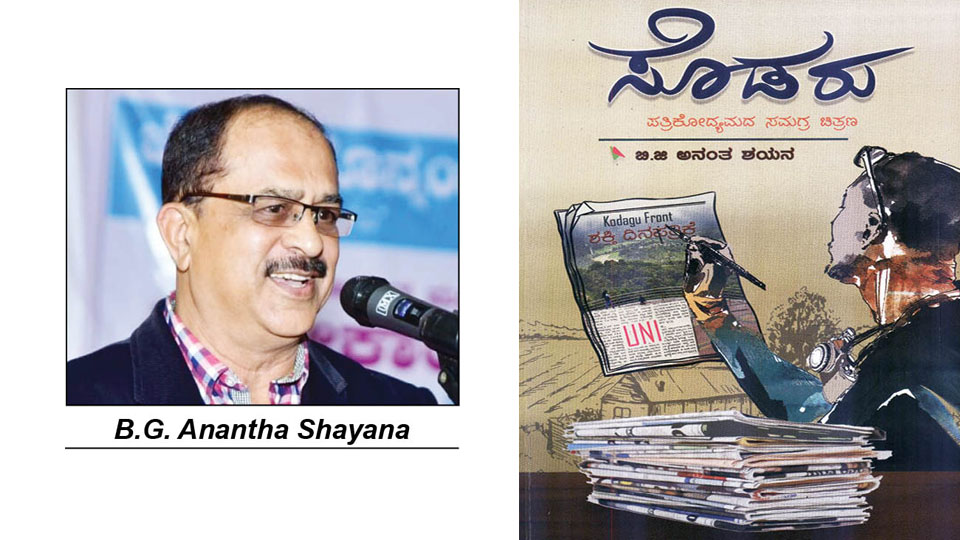
Publisher : Adiraaj Prakashana, 245/F, 5th West Cross, Uttaradhi Mutt Road, Mysuru. For book contact: 98445-76429. E-mail: ananth.alpinia@gmail.com
This is an age of information. Thanks to the quantum development in the area of information technology like never before. Books, newspapers, radio, telephone, internet etc., enable this revolution with speed and spread of information. But behind all these media blitzkrieg and bombardment is a journalist who provides the content. Smile please!
Being a journalist, it is natural for me to evince interest in the area of journalism and all that is related to that activity.
A few days back I learnt that B.G. Anantha Shayana, the senior journalist and the consulting editor of Kannada daily ‘Shakti’, Kodagu district, who is also the correspondent of United News of India (UNI), has written a book about his experience as a journalist
Kodagu being my home district and having done my SSLC in Madikeri Government Central School and then the graduation there, the book interested me much, coming as it was from the editor of Kodagu’s first and only favourite Kannada newspaper even today. It was started in 1957 when I was in the second intermediate (1957-58). I was a witness to its founder-editor B.S. Gopalakrishna, a fair complexioned person with rotund visage, working at the slanting composing table, standing head bent over the wooden type-setting board. The press was at the landmark (for those days) “chowki”, where four roads converged. His was a gradual growth as a publisher and writer against all odds.
When I left Madikeri after graduation in the year 1959, Shakti had become a noted local paper in Madikeri spreading its wings across Kodagu. Now 65 years on, it is still an iconic newspaper in Kodagu. This was possible because of B.S. Gopalakrishna’s three sons who took over the reins and responsibility to keep the flag of success flying high. One of the sons is B.G. Anantha Shayana, the author of the book “Sodaru”. “Sodaru” in old Kannada means light, lamp.
This book of 98 pages is all about the author’s experience as a journalist, executive and tourist abroad. He also speaks of ethical values to be followed in the profession and about the personal risk a reporter-journalist unwittingly faces in his over-enthusiasm. His every experience is illustrated in detail and this makes the book unputdownable for any journalist. I finished reading it in one sitting and then decided to write this column.
Let me share some of his experiences here with my own remarks as an intervention! Anantha Shayana has in a way delivered a sermon and also given a road-map for aspiring journalists. Therefore, this book may be recommended as an optional reader for students of journalism in their graduate or post-graduate classes. I am sure many working or retired journalists, including myself, would have had similar experience if not the exact ones.
The author speaks of the importance of correct information a journalist collects and gives the example of Sri Jayendra Saraswathi Swamiji of Kanchi Kamakoti Mutt, Tamil Nadu. That on August 23, 1997, the Swamiji had suddenly and clandestinely left the mutt and disappeared. That naturally made national and even international news. Those days telephone communication was outdated and difficult. Author Anantha Shayana got a phone call in the morning from his friend in Talacauvery (birth place of river Cauvery) in Kodagu. The call was made by his friend after walking 8 kms from Talacauvery to the nearest telephone booth in Bhagamandala, a township. By now an all India search for the Swamiji was launched on a war-footing. The caller said, “Anantha, three days back at midnight some Swamiji has come here with a small group. When asked who he was, nobody opens mouth. Must be a very famous Swamiji.”
Author says when he went there immediately, the Swamiji’s followers did not allow him to meet the Swamiji. However, when he said he was from UNI, he was allowed on assurance that it would make all India news! So it was, he was the first person to break this news.
By the way, I too reached there with our Mysuru journalists and met him at Talacauvery. But, what is important here is that UNI did not publish the news of finding the Swamiji IMMEDIATELY. The UNI Bengaluru and Delhi Office had called Anantha Shayana over 10 times to urge him to check, check and check again and confirm. They even asked him to go to Talacauvery once again. Further, UNI sent its Mysuru correspondent to Anantha Shayana in Kodagu to go again to Talacauvery. It was only then the UNI flashed the news, though many hours late, as “Sri Jayendra Saraswathi traced.”
This is called responsible journalism and responsible journalist on the spot. Which is why the motto of Star of Mysore printed on the second page declares: “We believe comment is free, but facts are sacred.” Sadly, these days we find more arm-chair journalists looking into a cellphone in hand, sometimes purveying fake news.
Be that as it may, I found in his one observation about the truth all the local newspaper editors and journalists come face-to-face with unlike the State and National newspapers. His observation is that what appears in those big newspapers do not embolden the reader, about whom a negative news has appeared, to directly go and attack the editor or the journalists. But the local, small-town or rural newspaper editors and journalists become direct targets of attacks and protests. Since I am a victim of this behaviour of readers, criminals, the corrupt and anti-socials, I can vouch 100 percent for what Anantha Shayana has written.
Writing about paparazzi and the British Princess Diana, the author refers to the famous photograph of her boyfriend Dodi Fayad and herself in a kissing pose under the caption “The Kiss.” He says the photographer was paid millions of dollars for this picture. However, sadly it was this obsession to take her photographs that led to the accident killing both of them. The moral Anantha Shayana says is that though a journalist should be a news hound, he should not intrude upon another person’s privacy.
We have seen on TV and read in newspapers some of our opposition leaders going abroad to Harvard, Oxford and elsewhere and giving lectures and interviews to the media criticising India, its government, its democracy and shaming India in foreign countries. But I was delighted to read in the book how the editor of a small district vernacular paper “Shakti” Anantha Shayana dealt with a delicate, despicable situation in a foreign country, Australia, where he went with seven of his friends. Anantha Shayana writes that in Australia they visited a primary school where he asked the group of six students what they knew about India. To his shock, instead of an answer he got a question from a student: Are you not afraid to live in India?
“Why should I?” said Anantha Shayana and asked, “Why do you ask me that question?” Then it became a kind of free-for-all. One said, India was a land of snakes and snake-charmers. “Do you know how to catch snakes?” another wanted to know. “Are there too many beggars? Do you have good houses to live? Do you have cars?” etc., etc. He then asked them if they had read any books on India. No, was the answer. Their opinion of India was hearsay.
Then Anantha Shayana took a class on India to them dropping famous names of politicians, Gandhiji, Generals, educationists, philosophers, space research, the heritage, culture etc. After he finished, one boy said, “I want to visit India.” When some of our opposition leaders visited England and Europe, nobody said “I want to visit India” because they were told by our own opposition politician that India is not a good place where democracy is dying or dead.
Anantha Shayana also writes about his meeting with two spiritual persons. One was Dalai Lama at Dharamshala in Himachal Pradesh.
Question: Will you wage a war against China?
Answer: Many nations in the world support us. One day we will win.
Question: But your youth organisations feel it is not possible to win back Tibet by peaceful means. What do say?
Answer: I am not in administration. I am engaged in matters spiritual. There is an elected government here in exile. They will look into it.
Question: Buddha gave up his palace and after meditating under a tree got enlightened. But you crossed Himalayas, came here and built golden temples, leading luxurious life with cars and palace-like residences.
Anantha Shayana says, Dalai Lama did not have an answer but brushed it aside saying, “These are the mischief played by monks. I don’t know anything.”
Another spiritual person Anantha Shayana mentions is one who became famous for teaching the art of living. Anantha Shayana met him when he visited Kodagu. The spiritual master told, “For propagating spiritual education I have trained 5,000 teachers. They will go to different parts of the country and teach art of living.”
According to Hindu Sanatana Dharma, only the enlightened souls can teach spiritual matters to the seekers. So Anantha Shayana asked: Are all these 5,000 teachers you have trained enlightened?
He did not like the question and he did not answer either.
Moral: Though unpalatable, the journalist must ask intelligent, probing questions.
e-mail: voice@starofmysore.com
source: http://www.starofmysore.com /Star of Mysore / Home> Columns> Abracadabra….Abracadabra / by K B Ganapathy / May 08th, 2023
Dr. Cheranda Koushik Ponnanna has been appointed as a Visiting Fellow at the National Institute of Health (NIH), National Institute of Diabetes and Digestive and Kidney Diseases (NIDDK), Phoenix, Arizona.
He will be conducting his Post Doctoral Resarch on the Genetic Basis of Type 2 Diabetes and Obesity. He holds a Ph.D in Genetics from University of Mysore. He is the son of Cheranda Ravi Thimmaiah and Usha from B. Shettigeri, Kodagu.
source: http://www.starofmysore.com / Star of Mysore / Home> In Briefs / August 14th, 2023
A Special General Body Meeting of Gokulam Kodava Sangha will be held on Aug. 15 (Tuesday) at 9.30 am at Kodava Samaja (Ground Floor) in Vijayanagar 1st Stage.
AGM:
The 17th Annual General Body Meeting (AGM) of the Sangha will also be held on the same day at 10.30 am.
Get-together:
The AGM will be followed by the get-together at 11.30 am.
Ammatanda K. Chinnappa, Sangha President, will preside, according to a press release from Chendanda Navin, Hon. Secretary of the Sangha.
source: http://www.starofmysore.com / Star of Mysore / Home> In Briefs / August 14th, 2023
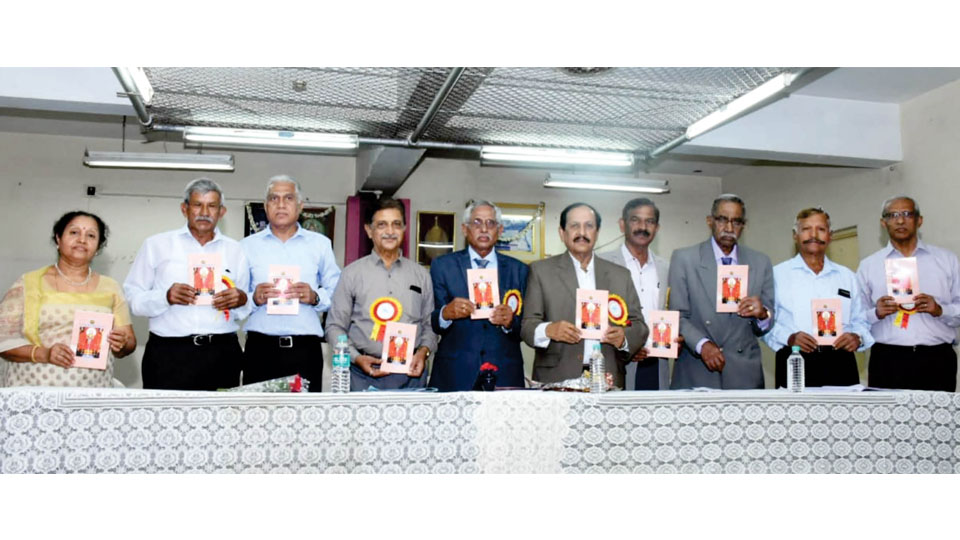
The 22nd Annual get-together of Kuvempunagar Kodava Residents Association, Mysuru was held on July 16 at Kodava Samaja’s Field Marshal K.M. Cariappa Community Hall in Vijayanagar 1st Stage here.
On the occasion, Association directory was released.
Seen in the picture are from left:
Ponjanda Lovely Appaiah, President, Shri Kaveri Kodagu Mahila Sangha; Byretira Ganapathy, Association Past Secretary; Mukkatira B. Jeevan, Kodava Samaja Hon. Secretary; Machanda Raja Muthappa, Association Secretary; Voterira B. Medappa (Vittal), Association President; Mechanda Shashi Ponnappa, Samaja President; Madapanda Lala Appachu, Association Vice-President; Balyamanda Nanaiah, Past President; Moovera Kuttappa, Past President and Ithichanda Kalappa, Association Past President.
source: http://www.starofmysore.com / Star of Mysore / Home> Gallery> PhotoNews / July 23rd, 2023
WELCOME. If you like what you see "SUBSCRIBE via EMAIL" to receive FREE regular UPDATES.
Read More »