The state budget has sanctioned Rs 20 crore for the reconstruction of damaged roads and bridges following incessant rainfall in regions including Virajpet, Madikeri and Ponnampet.
Madikeri :
Road connectivity and the health sector in Kodagu have received a boost in the state budget presented by Chief Minister Siddaramaiah. While Congress members termed it a progressive budget, BJP leaders criticised it as a “useless budget” with no special consideration for the district.
The state budget has sanctioned Rs 20 crore for the reconstruction of damaged roads and bridges following incessant rainfall in regions including Virajpet, Madikeri and Ponnampet.
Developmental projects for the Kodava Development Board, funds for the welfare of tribes who form a significant population in the district, and the health sector have also received support in the budget.
Virajpet Hospital will be upgraded from a 200 bed capacity to 400 beds, the budget assures funds for the upgradation of Kushalnagar Community Hospital. (File photo)
While Virajpet Hospital will be upgraded from a 200 bed capacity to 400 beds, the budget assures funds for the upgradation of Kushalnagar Community Hospital. Ponnampet will also get a new community hospital.
However, stakeholders in the tourism sector said the budget does not mention any special funds for tourism development.
Nagendra Prasad, president of the Kodagu District Chamber of Commerce and Industry Association, said that although Kodagu generates increased revenue for the state through tourism and liquor sales, no funds have been sanctioned for tourism infrastructure in the district.
“From property tax of hospitality facilities to GST, the tourism sector contributes immensely to the state revenue. But unfortunately, this revenue is not being invested back to further improve the sector,” he opined.
Meanwhile, former BJP MLA K. G. Bopaiah criticised the budget as a “useless” one and a “record budget of complete failure”. He said the budget is not people friendly and added that for the 17th time the Chief Minister has made “only promises, declarations and vague plans without any absolute focus”.
He recalled that the BJP government had sanctioned special funds to the district as per the Nanjundappa report due to heavy rainfall and said, “We used to sanction up to Rs 100 crore as a special package for the district. But for the past three years, the state has neglected Kodagu,” he alleged.
He further alleged that there is no plan or precision in the sanctioning of funds for mitigation projects to curb wildlife conflict.
Dharmaja Uthappa, district president of the Congress party, said the budget is progressive and that the Kodava Development Board, road connectivity and the health sector have received a boost.
“Even the issue of wildlife conflict is addressed and it is overall a pro development budget,” he opined.
source: http://www.newindianexpress.com / The New Indian Express / Home> Karnataka / by Express News Service / March 06th, 2026
Inclusion of Kodava language in the Eighth Schedule will provide legal, cultural, and educational benefits to the Kodava community.
CNC members stage a protest in front of the deputy commissioner’s office in Madikeri on Saturday. / Credit: DH Photo
Madikeri:
Marking International Mother Language Day, leaders of the Codava National Council (CNC) staged a protest in front of the Deputy Commissioner’s office here on Saturday, demanding that Kodava language be included in the Eighth Schedule of the Constitution.
CNC President N U Nachappa placed several demands, including the inclusion of Kodava Thakk in the Eighth Schedule as recommended in the report of the Commission headed by noted linguist Pandit Dr Sitakant Mahapatra.
He urged that on the lines of Konkani language model and similar to the proposal for Tulu, Kodava be declared an official language of the state under Articles 345 and 347 of the Constitution, and implemented in administration and education under Article 350.
Inclusion of Kodava language in the Eighth Schedule will provide legal, cultural, and educational benefits to the Kodava community. Official recognition by the Central government will enhance the language’s prestige and prevent it from being treated merely as a dialect. It would also facilitate the introduction of Kodava as a medium of instruction in school curricula.
He also alleged that the names of local Kodava folk villages, hamlets, and even festivals have been altered into Kannada, distorting them. This, he said, reflects disregard for Kodava heritage and uniqueness and amounts to a violation of human rights.
A memorandum was submitted to the government through DC S J Somashekar on the occasion.
source: http://www.deccanherald.com / Deccan Herald / Home> India> Karnataka / by DHNS / February 22nd, 2026
Olympic medallist Vijender Singh and tennis star Rohan Bopanna will flag off the 11th Cognizant New Delhi Marathon at Jawaharlal Nehru Stadium on Sunday. Over 30,000 runners from 31 countries are expected to participate across full, half, 10K and 5K categories. The event, recognised by AFI and World Athletics, also serves as an Asian Games qualifier.
Olympic medallist boxer Vijender Singh and the country’s ace tennis player Rohan Bopanna will flag off the 11th edition of the Cognizant New Delhi Marathon from the Jawaharlal Nehru Stadium here on Sunday.
With over 30,000 participants expected to take part, the marathon is set to be one of the largest sporting events in the country.
Certified as a National Marathon by the Athletics Federation of India (AFI), recognised by the Association of International Marathons and Distance Races (AIMS), and acknowledged by World Athletics, the event continues to strengthen its position on the global athletic calendar.
This edition of the event has attracted participants from 31 countries, 490 cities, and 32 states and Union Territories of India.
The event will be held in four categories — full marathon, half marathon, 10K and 5K.
India will be represented by an elite contingent, which includes Anish Thapa, A.B. Belliappa, Man Singh, Akshay Saini, T. Gopi, Bhagirathi Bisht, Nirmaben Thakor Bharatjee, Ashwini Madan Jadhav, Disket Dolma, and Stanzin Dolkar.
The marathon also serves as a qualifying race for the upcoming Asian Games.
Inclusivity and Social Impact
In a step towards greater inclusivity, the marathon will host approximately 20 visually-impaired athletes, reaffirming its commitment to creating an accessible and empowering sporting platform.
The event has also raised Rs 10 lakh, which has been contributed to the AFI as support for its junior development programs to help in strengthening grassroots athletics in the country.
“The New Delhi Marathon is not just a race; it’s a celebration of human spirit, perseverance, and unity. We are proud to witness such incredible global participation and to continue fostering an inclusive and inspiring event. Our goal is to create a platform where every runner — from elite athletes to first-timers — can push their limits and be part of something much larger than themselves,” said Nagaraj Adiga, Race Director & CMD, NEB Sports.
Rajesh Varrier, President – Global Operations and Chairman and Managing Director of Cognizant India added: “The participation of elite runners at the New Delhi Marathon reinforces its stature as one of the leading long-distance events in Asia and inspires every runner to push their limits.
AFI treasurer, Stanley Jones said the event is a perfect platform for country’s long-distance runners to make a mark.
“The National Marathon serves as a premier platform for India’s elite long-distance runners. With only the highest-performing athletes qualifying to represent the nation at events such as the Asian Games, competitions of this stature play a crucial role in identifying and preparing top talent,” he said.
Sustainability Initiatives
The marathon continues its strong focus on environmental responsibility by implementing comprehensive waste segregation, promoting recycling across the venue, partnering with environmental organisations and local authorities and encouraging greener practices among participants.
(Except for the headline, this article has not been edited by FPJ’s editorial team and auto-generated from an agency feed.)
source: http://www.freepressjournal.in / The Free Press Journal / Home> Sports / by PTI / February 20th, 2026
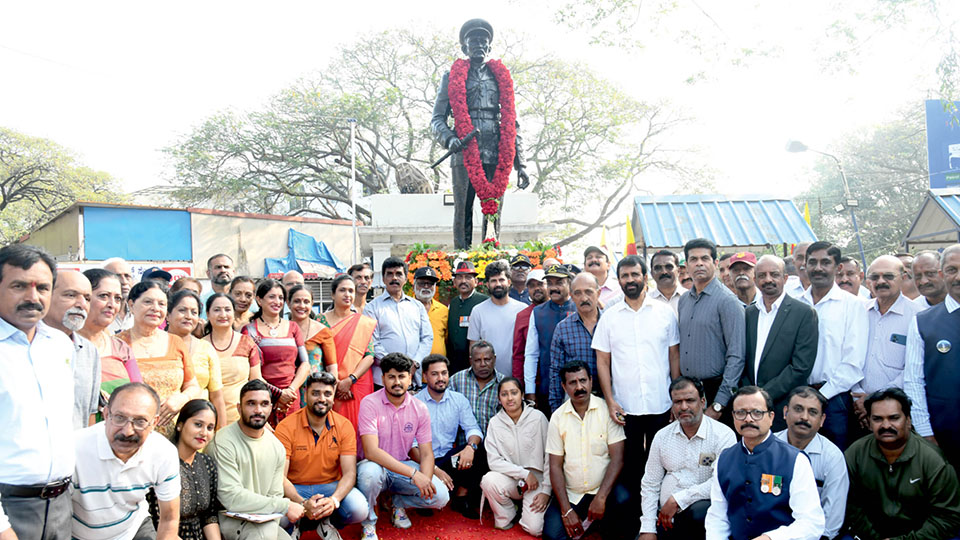
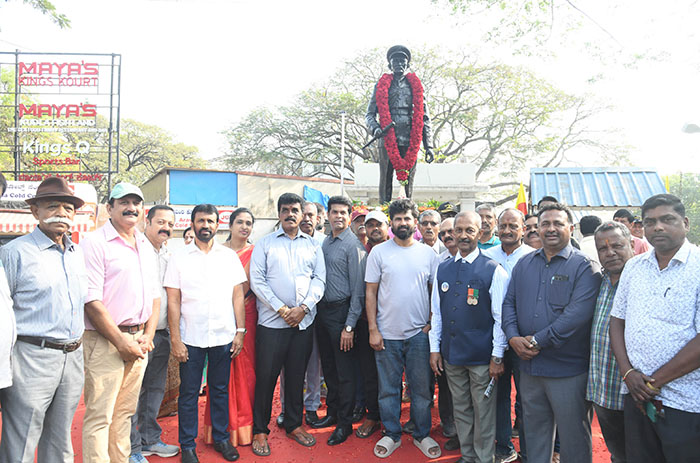
Kodava Samaja, Mysuru, along with the Field Marshal Kodandera M. Cariappa Fans’ Association, Mysuru, celebrated the 127th birth anniversary of Field Marshal K.M. Cariappa.
The programme was organised in front of the statue of Field Marshal Cariappa at the Field Marshal K.M. Cariappa Circle (Metropole Circle) on Vinoba Road this morning.
Former MP Prathap Simha offered floral tributes to the statue and said that celebrating the 127th birth anniversary of Field Marshal Cariappa is a matter of great pride for society. His contributions and valour have earned him immense respect across the nation. Kodagu’s contribution to the country is unparalleled.
He added that no other land could produce patriots and warriors like those from Kodagu. “Patriotism has grown there as a tradition. Though the Kodava community is small, its service to the Armed Forces is immense. It is a privilege for our land to cherish the memory of a leader like Field Marshal Cariappa, born in such a tradition,” he said.
World War II, freedom struggle
Field Marshal Cariappa’s service during World War II and the freedom struggle was exemplary to the world. The rank of Field Marshal is the highest in the Indian Army and it is a matter of pride not only for the Kodava community but also for Karnataka.
“He may not have received the Bharat Ratna, but he was honoured with the rank of Field Marshal,” Simha remarked. He further noted that Cariappa, along with General Kodandera S. Thimayya, gave democratic India a strong shape and direction.
“Even today, the Kodava community has contributed more than 30 Lieutenant Colonels to the Indian Army, five captains to Indian hockey and over 60 players to the sport. “For this, the community must feel proud and continue to grow. As the community grows, so will the nation and patriotism,” he said.
Former MLA L. Nagendra noted that it was Field Marshal Cariappa who made the entire world turn its attention towards India.
“He must be remembered every single day. When his statue was to be installed at Metropole Circle, many obstacles arose, but all were overcome and today the statue stands tall, and this is a matter of immense pride. In the coming years, thousands from the community should gather together to celebrate Cariappa’s birth anniversary on a grand scale,” Nagendra said.
The event was attended by former Mayors M.J. Ravikumar & H.N. Srikantaiah, former Corporators Pramila Bharath & Maletira U. Subbaiah, Mysuru Kodava Samaja President Ponjanda A. Ganapathy, Kodava Samaja Cultural and Sports Club President Mukkatira C. Ashok and Field Marshal K.M. Cariappa Fans’ Association President Nayakanda Thimmaiah among others.
source: http://www.starofmysore.com / Star of Mysore / Home> News / January 28th, 2026
Kodava Samaja, Mysuru and Field Marshal K.M. Cariappa Fans Club, Mysuru, will celebrate the 127th birth anniversary of Field Marshal K.M. Cariappa at Field Marshal K.M. Cariappa Circle (Metropole Circle) in city on Jan. 28 at 8.30 am.
Mysuru-Kodagu MP Yaduveer Wadiyar, MLAs K. Harishgowda, G.T. Devegowda, T.S. Srivatsa and G.D. Harish Gowda, MLCs C.N. Manjegowda and K.Vivekananda, former MP Prathap Simha, former MLA L. Nagendra, former Mayors M.J. Ravikumar and H.N. Srikantaiah, former Corporators Maletira U. Subbaiah and Pramila Bharath will be the chief guests.
Kodava Samaja President Ponjanda A. Ganapathy, Kodava Samaja Cultural and Sports Club President Mukkatira C. Ashok, Field Marshal K.M. Cariappa Fans Club President Nayakanda Thimmaiah and others will be present on the occasion.
source: http://www.starofmysore.com / Star of Mysore / Home> In Briefs / January 27th, 2026
With Chief of Army Staff General Upendra Dwivedi slated to hold an annual press conference ahead of Army Day, a look back at certain events that took place soon after General K M Cariappa took over as the Army chief.
General KM Cariappa and Jawaharlal Nehru
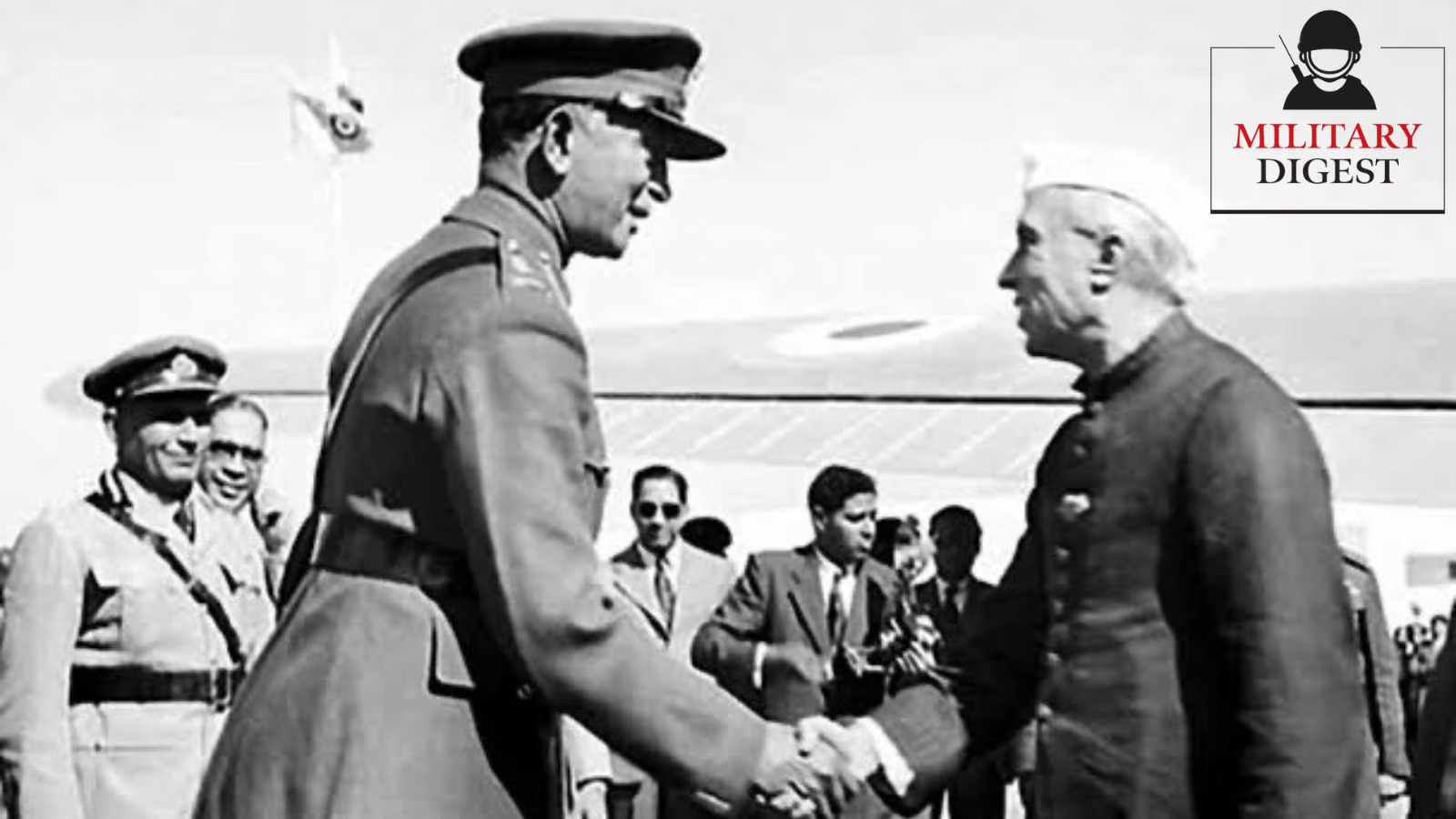
Chief of Army Staff General Upendra Dwivedi will hold an annual press conference on January 13 ahead of Army Day, January 15. It was on January 15, 1949, that General K M Cariappa (later Field Marshal) took over as the commander-in-chief and chief of army staff of the Indian Army—the first Indian to do so.
It is an apt occasion to look back at certain events that took place soon after General Cariappa took over as the Army chief, setting the tone for an apolitical Army in Independent India. The then prime minister, Jawaharlal Nehru, chided General Cariappa for having publicly praised the Government saying that it should have been avoided and that military officers should not broach political subjects in public. A letter that he wrote to General Cariappa on May 24, 1949, forms part of the Nehru Archives.
In an interview at Dehradun on May 2, 1949, Cariappa remarked, “The achievement made by the country under Pandit Nehru’s leadership in so short a period has no parallel in history.” He added that “the last Commonwealth Conference in London, when seen in clear perspective, will be found to have been a great triumph for the prime minister”. He also said that the people had not clearly appreciated the all-round progress made by the leadership.
Nehru was not pleased about these remarks made by the Army chief and conveyed his displeasure to him in no uncertain terms. “About three weeks ago, you made a statement to the press in the course of which you congratulated me for my work at the Commonwealth Conference in London. You further drew attention to the all-round progress made by the present leadership in the country. I am grateful to you for what you said. But this raises an important point, and indeed the press has drawn attention to this. Should our officers, civil or military, even including the head of the Army, express any opinion in regard to political subjects in public,” he said.
Nehru questioned whether senior officers should speak in praise of the work of the Government.
“Indeed should they deliver public speeches at all except on matters strictly confined to their own work or some social or cultural subjects? What you said was harmless enough, but there is always a danger in touching upon political questions. Obviously, it would be highly improper for an officer to criticise Government, more especially on a political issue. If this is so, then praise of Government should also be avoided,” said Nehru.
‘Avoid public statements completely’
The then prime minister said he was drawing the Army chief’s attention to this matter as Cariappa set the tone for the Army, and Nehru did not want the Army to get mixed up in any way with politics. “You yourself have made this clear on many occasions. In the past I did not like the activities of some Sikh officers who indulged in communal politics. The safest course, therefore, is for all officers to avoid public speaking or public statements completely except on strictly limited topics. Sometimes an officer may not even know the exact political significance of some issue or some remarks he might inadvertently make,” he said.
Nehru noted that the Government had the largest political party and organisation at its back.
Nevertheless, there are other parties and groups, and they might object to the Army doing or saying something in praise or in criticism of political parties or ideologies, he said.
Nehru said Field Marshal Bernard Law Montgomery, a noted British military personality of World War II, is apt to let himself go in public. “He has been repeatedly asked by the British Government not to do so. Recently, I was in Switzerland, and some members of the Swiss Federal Government told me how they had been greatly embarrassed at a rather casual remark of Montgomery in Switzerland,” he said.
In fact, Nehru and Cariappa continued to spar on various issues even after the retirement of the latter as Army Chief.
Cariappa’s unhappiness over Himachal L-G appointment
In a letter written to the prime minister in 1958, General Cariappa expressed unhappiness over the report regarding the appointment of J K Bhonsle, who had been a member of the Indian National Army, as the Lieutenant Governor of Himachal Pradesh. Cariappa had written that Bhonsle, by serving in the INA, had shown disloyalty to the then Government and had also been disloyal to the traditions of the Army.
Cariappa had also expressed his disagreement with the military guard firing a ‘feu-de-joie’ (ceremonial rifle volley), sounding of the Last Post on bugles, and so on, as is done at military funerals, at Rajghat, the samadhi of Mahatma Gandhi, on January 30. He said he found it “out of place” in that atmosphere of “sanctity, purity and solemnity”.
Nehru responded by saying that the military honours at Rajghat were decided upon after careful consideration. On the issue of Bhonsle, Nehru said that whether he did right or not when he joined the INA under very peculiar circumstances in Malaya was a subject on which there might be differences of opinion.
“You know that we have not criticised our present army officers or men because they served the then British Government in India loyally. We have spoken highly of our army. But it is another matter for us to condemn for ever a person who, in a peculiar set of circumstances, thought it his duty to serve his country in another way. I do not know what I would have done if I had been in such a position,” he said.
Nehru commented that British army officers functioned with neither ability nor courage in Malaya. “Ultimately, they meekly surrendered, having made a mess of things. In India, conditions were very peculiar, and the country generally was opposed to the British. If a young Indian was affected by this widespread sentiment in India, I certainly am not prepared to blame him,” he said.
source: http://www.indianexpress.com / The Indian Express / Home> News> Cities> Chandigarh / by Man Aman Singh Chhina / January 11th, 2026
Dr. Uluvangada T. Uthappa (Sanju), a native of Kodagu, has been recognised among the ‘Top 2% Scientists in the World (2025 Survey)’ compiled by Stanford University, USA.
The annual list, prepared by Prof. John P.A. Ioannidis of Stanford in collaboration with Elsevier and Scopus, identifies the world’s most influential scientific researchers representing about 2% of all scientists globally. The rankings are based on standardised citation metrics and composite indicators of scientific impact.
Dr. Uthappa is currently serving as a Post-Doctoral Researcher/Scientist at the College of Chemistry and Environmental Engineering, Shenzhen University, China. Earlier, he worked as a Post-Doctoral Fellow at Chonnam National University (2021-2022) and as a Research Professor at Yeungnam Univer-sity (2022-2023) in South Korea. He obtained his Ph.D in Chemistry from Jain University, Bengaluru, in 2021. His research focuses on addressing global challenges in environment, health, food and agriculture sectors.
He has published over 50 articles in reputed international peer-reviewed journals, with more than 2,300 citations and an H-index of 25. He has also filed two patents in South Korea and one in China.
An extraordinary achiever, Dr. Uthappa is the son of Uluvangada Sabu Thammaiah and Meena, residents of T. Shettigeri, Ponnampet Taluk, Kodagu.
source: http://www.starofmysore.com / Star of Mysore / Home> News / October 17th, 2025
The Codava National Council (CNC) marked “Pathalodhi”, the auspicious 10th day after Talacauvery’s holy water emergence, with poignant ceremonies at Mullusoge War Memorials, Madikeri Fort, and Naalnaad Palace in Kodagu.
Under Chairman N.U. Nachappa Codava, the events on October 26, celebrated Codava martial valour and lamented over two centuries of royal tyranny that decimated the indigenous Animistic tribe from 1633 to 1834.
Mullusoge, along the Cauvery near Kushalnagar, hosted tributes to Codava warriors who thwarted Hyder Ali and Tipu’s assaults more than 32 times, preserving Codavaland’s independence. Meedhi offerings exalted these protectors against Mysore aggression.
At Madikeri Fort (9:30 AM), the CNC mourned 40,000+ Codavas slaughtered inside, with 842 clans extinguished by Tipu and Rajas. The fort’s 201-year dark era saw Chaadi Siddi (spy)-executed beheadings for trivial defiance, epitomised by Tipu’s Devattparamb betrayal massacre. Oblations prayed for victims’ repose and CNC’s success in securing ST status and self-rule.
Naalnaad Palace in Yevakapadi (12:30 PM) saw floral honours for clans wiped out by Keladhi/Paaleri rulers. Abductions for royal gratification led to infants’ live burials in “Nagaari Kund”; resisters like Puliyanda Karicha were elephant-dragged to death. Kaapala mercenaries from Malabar enforced decapitations. Masti Venkatesha Iyengar’s “Chikavira Rajendra” immortalises this savagery, the CNC highlighted.
Post-1947 governance inherited this persecution, the CNC charged, exploiting Codava loyalty before erasure. Calling for atonement, it demanded GOI and GOK enact ST listing, 6th Schedule autonomy, “Gun-Thok” safeguards under Articles 25–26, and a unique 2026–27 census identifier for the non-caste, Animistic Codavas.
Participants with Nachappa were Chambanda Janath, Nandetira Ravi Subbaiah, Thennira Mina, Areyada Girish, Puttichanda Don Devaiah, Apparanda Viju, Apparanda Prasad, Nandineravanda Bopanna, Apparanda Prakash, Apparanda Vivek, Mekerira Babbu, Areyada Savan, Kupadhira Rani Monnapa, and Kupadhira Monnappa, uniting in solemn remembrance.
source: http://www.thehansindia.com / The Hans India / Home> News> State> Karnataka / by Hans News Service / October 26th, 2025
MLA for Madikeri Mantar Gowda has sanctioned a grant of ₹3 lakh from the MLA Local Area Development Fund for the development of the statue of Field Marshal K.M. Cariappa, the first Commander-in-Chief of the Indian Army, and its surrounding park in Madikeri.
During their visit to Madikeri on Tuesday, Tennira Maina, district president of the Rajiv Gandhi Panchayat Raj Organisation, and Mandira Sada Muddappa, nominated member of the Madikeri City Municipal Council, submitted an estimate for the proposed development works. Responding to their proposal, Dr. Gowda announced the grant.
Speaking on the occasion, Dr. Gowda said that Field Marshal Cariappa and General K.S. Thimayya were exceptional military leaders and it is the duty of every Indian to honour their contributions.
The MLA said that he would continue to extend full support to all programmes and initiatives associated with these great leaders.
source: http://www.thehindu.com / The Hindu / Home> News> India> Karnataka / by The Hindu Bureau / October 28th, 2025
WELCOME. If you like what you see "SUBSCRIBE via EMAIL" to receive FREE regular UPDATES.
Read More »