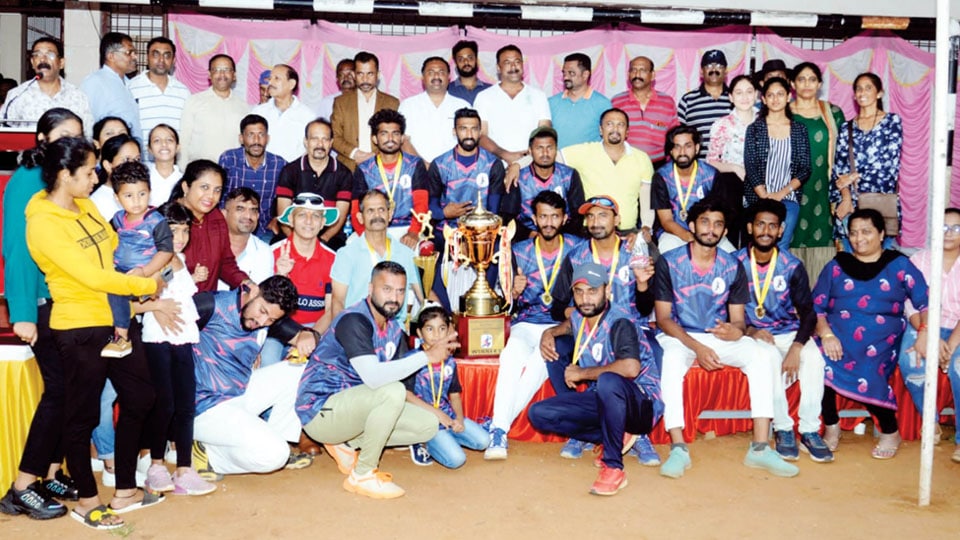
Picture : Mechanda S. Bopanna, Hon. Secretary, KSCSC; Kotrangada Pemmaiah, President, Sri Tala Cauvery Samskrithika Sangha; Alemada Ponnanna, Committee Member, KSCSC; Meederira Prakash, Joint Secretary, KSCSC; Mechanda Sashi Ponnappa, President, Kodava Samaja, Mysuru; Kuttimada D. Muthappa, President, KSCSC; Maletira U. Subbaiah, Corporator (chief guest); Iychanda Ashwath Chengappa, Vice-President, KSCSC; Aramanamada Ponnanna, Treasurer, KSCSC; Mundotira Kavin, Iychettira Dilip Kumar, Ayyalapanda Pattu Pemmaiah, Committee Members, KSCSC, Players and Team Management of Sree Tala Cauvery Samskrithika Sangha.
Kodava Samaja Cultural and Sports Club (KSCSC), Mysuru, had conducted Palengada Raja Poovaiah Memorial Tennis Ball Cricket Tournament and Veterans Cricket match in city recently.
The tournament was sponsored by Palengada Leelavathi Poovaiah and Veterans tournament was sponsored by Maletira U. Subbaiah.
Sree Tala Cauvery Kodava Samskrithika Sangha, Hootagalli and Sree Igguthappa Kodava Kshemabhivrudhi Sangha, Hebbal, were the winners and runners respectively.
Picture shows Mechanda S. Bopanna, Hon. Secretary, KSCSC; Kotrangada Pemmaiah, President, Sri Tala Cauvery Samskrithika Sangha; Alemada Ponnanna, Committee Member, KSCSC; Meederira Prakash, Joint Secretary, KSCSC; Mechanda Sashi Ponnappa, President, Kodava Samaja, Mysuru; Kuttimada D. Muthappa, President, KSCSC; Maletira U. Subbaiah, Corporator (chief guest); Iychanda Ashwath Chengappa, Vice-President, KSCSC; Aramanamada Ponnanna, Treasurer, KSCSC; Mundotira Kavin, Iychettira Dilip Kumar, Ayyalapanda Pattu Pemmaiah, Committee Members, KSCSC, Players and Team Management of Sree Tala Cauvery Samskrithika Sangha.
source: http://www.starofmysore.com / Star of Mysore / Home> News / June 02nd, 2022
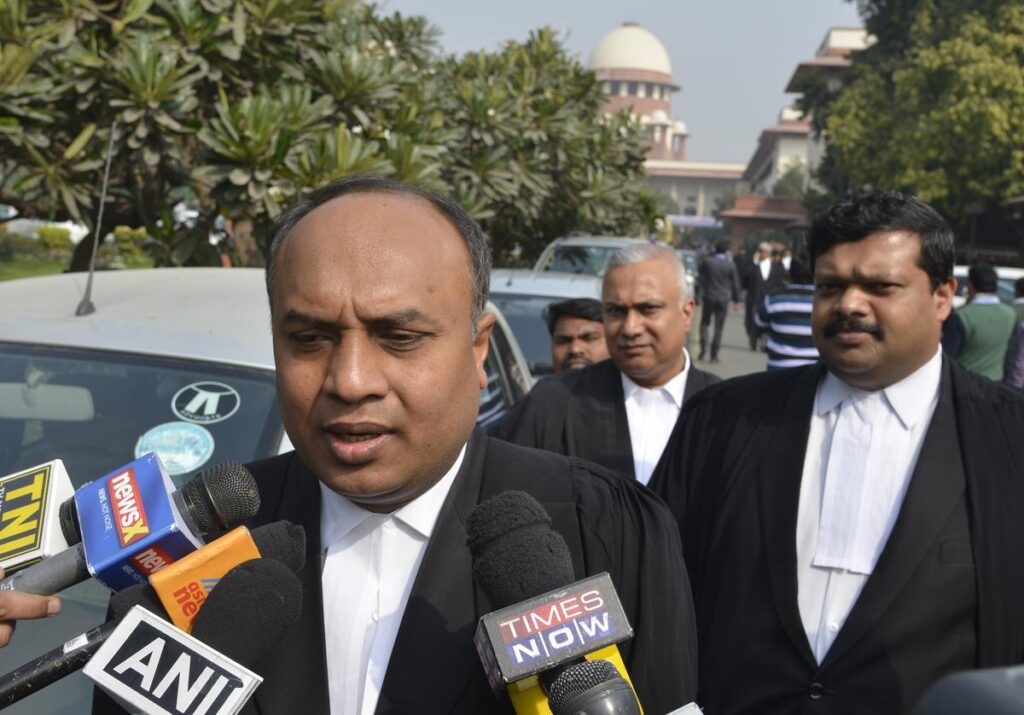
A file photo of Brijesh Kalappa outside the Supreme Court in New Delhi | Photo Credit: V. Sudershan
Supreme Court advocate Brijesh Kalappa had joined the Congress in 1997. His mentor former Union minister Kapil Sibal quit the Congress recently and is contesting the Rajya Sabha elections with the support of the Samajwadi Party
In a setback to the Congress in Karnataka ahead of its two-day Chitan Shivir that starts on June 2, Supreme Court advocate Brijesh Kalappa resigned from the primary membership of the party.
Mr Kalappa had joined the Congress in 1997. He quit the party saying he has been ‘lacking in passion’ in the recent past. His mentor former Union minister Kapil Sibal quit the Congress recently and is contesting the Rajya Sabha elections with the support of the Samajwadi Party.
In his letter to Congress president Sonia Gandhi, Mr Kalappa said: “I have been representing the party in Hindi, English and Kannada TV channels (since the UPA years in 2013) for almost a decade, and have clocked 6,497 debates. Besides, the party has been regularly assigning political work to me, which I have performed to the best of my satisfaction. Regarding TV debates, I have done my very best at all times and have never ever appeared without adequate preparation for any debate. Even at the worst of times for the party in the aftermath of 2014 and 2019 debacles, I have never felt enervated, and lacking in energy and enthusiasm.”
“But, in the recent past, I have been finding myself lacking in passion, while my own performance has been listless and perfunctory.
“It is under these circumstances that I am left with little option but to resign from the primary membership of the Indian National Congress, and to end an association that began in 1997.”
Mr Kalappa thanked Ms Gandhi for offering several opportunities in the party and in his home State of Karnataka.
Mr Kalappa served as the legal adviser to the Government of Karnataka with rank of Minister when the Congress was in power under the leadership of Siddaramaiah.
Mr. Kalappa’s resignation comes days after Kannada actor and former MLC Mukhyamantri Chandru resigned from the primary membership of the Congress after being denied a nomination to the Legislative Council.
source: http://www.thehindu.com / The Hindu / Home> News> National> Karnataka / by The Hindu Bureau / Bengaluru – June 01st, 2022
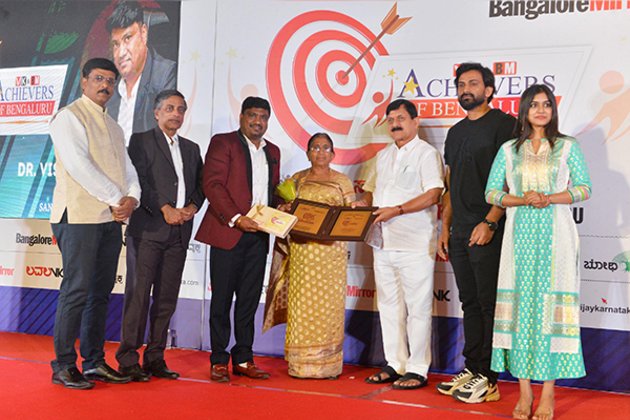
Dr Vishwa Cariappa BS, Managing Director of San Group of Companies was presented ‘Achievers of Bengaluru’ Award at a function held in Bengaluru on May 20, 2022.
The Award, instituted by Vijaya Karnataka and Bangalore Mirror, was presented by Home Minister Araga Jnanedra. The Home Minister expressed his delight and congratulated the organisers for hosting the prominent event.
Responding after receiving the award Dr BS Vishwa Cariappa said, “It is an inspiration for me to do even better.
‘Achievers of Bengaluru’ Award is intended to recognize those who have achieved excellence in various fields. I am very happy to be a part of such an award.” Cariappa further added, “San Group launched with the goal of achieving excellence in the real estate industry and today the company has expanded into several sectors. This award is also an encouragement to serve more people in the future.”
The event was also attended by noted performer Dolly Dhananjay along with actress Sanjana Anand.
This story is provided by SRV. ANI will not be responsible in any way for the content of this article. (ANI/SRV)
source: http://www.newdelhinews.net / New Delhi News.net / Home / by ANI / May 27th, 2022
Travelling for over eight hours from Shivamogga,retired teacher displays simplicity.
Madikeri:
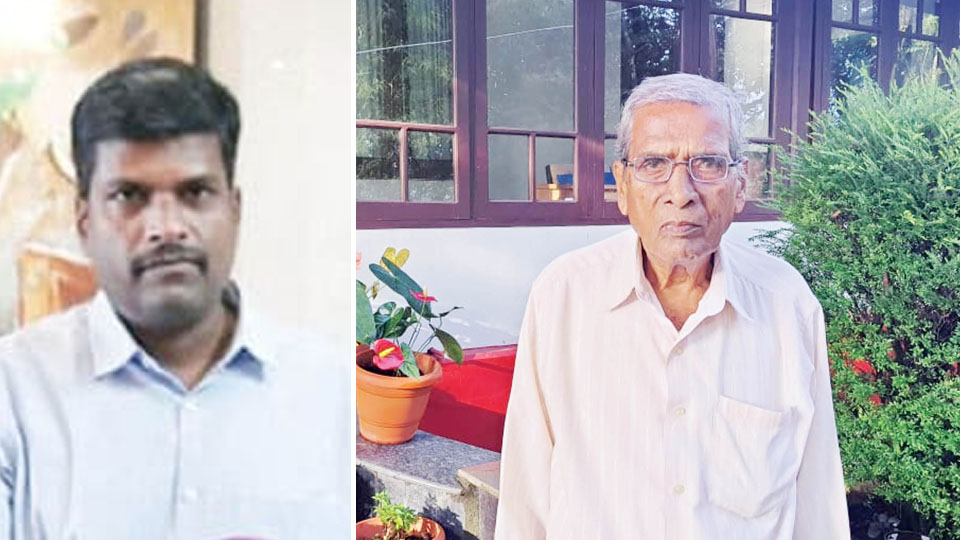
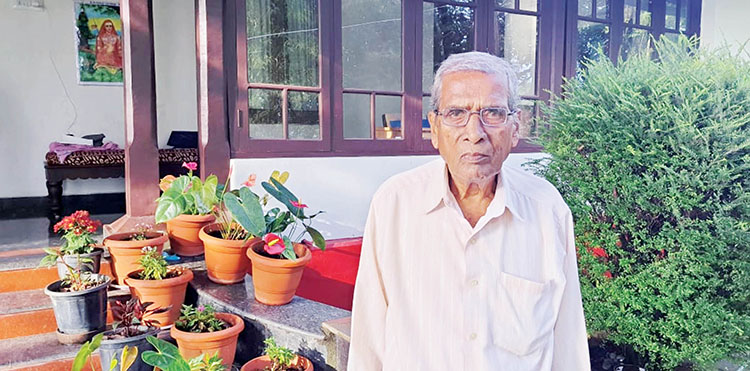
At a time when family members of high-ranking officers do not shy away from using official vehicles of their sons or daughters for long trips at the expense of taxpayers’ money, the father of Kodagu Deputy Commissioner (DC) travelled in an ordinary KSRTC bus from his native in Shivamogga to meet his son in Madikeri.
Eighty-two-year-old B.C. Chandrappa, father of Kodagu DC Dr. B.C. Satish travelled in the KSRTC bus for over eight hours despite his age. After reaching Madikeri, he walked to his son’s official residence with a small bag in his hand and told the gate-guarding Policemen that he was the DC’s father.
The shocked Cop could not believe it and went along with Chandrappa and informed Dr. Satish about his father’s arrival. The DC’s father had not informed his son and his surprise visit brought a broad smile on Dr. Satish’s face. He cordially invited him inside.
Hailing from a humble background, Dr. Satish took charge as Kodagu DC in October 2021. He had earlier worked as the Assistant Commissioner in Belagavi, Bailhongal and Kumta, CEO of Dharwad Zilla Panchayat and as the DC of Raichur.
Chandrappa is a retired teacher and after retirement, he is looking after his six-acre arecanut farm in Shivamogga. He is fitted with a heart stent and he also underwent a knee surgery. Despite his health condition, he did not claim any facility the Government offered to his DC son.
By not utilising his son’s powers as the DC, Chandrappa, who as a teacher earlier having taught thousands of students on the values and virtues of life, is an ideal example for others to follow. Madikeri Akashavani Programme Head Dr. Vijay Angadi said that as the father of a DC, Chandrappa was a model to others. “I came to know of DC’s father’s visit to Madikeri when I went to the DC’s residence for talks regarding Akashavani programmes on May 19. Hats off to his humbleness,” Vijay said.
source: http://www.starofmysore.com / Star of Mysore / Home> News> Top Stories / May 23rd, 2022
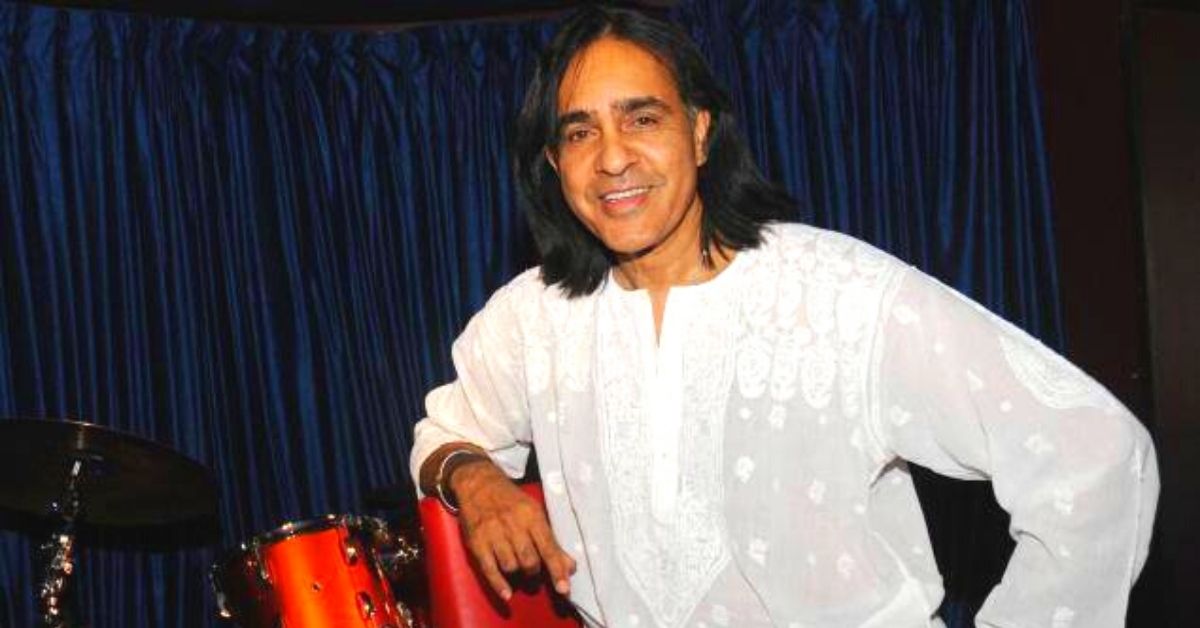
Arriving in London during the late ’60s with just his guitar, Biddu Appaiah went on to become a globally renowned music producer who sold millions of records. Here’s his story.
What do the songs ‘Kung Fu Fighting’, ‘Aap Jaisa Koi’, ‘Disco Deewane’ and ‘Made in India’ have in common? Apart from selling millions of copies worldwide, these records serenaded audiences from Russia to Peru, and stood as pioneers of global disco and pop music from the Indian subcontinent. (Image courtesy Facebook/Biddu)
What also binds them is the fact that they were all produced by a man from Bengaluru who left for London in the Swinging Sixties to pursue his love for popular Western music.
It’s incredible that more people in India don’t know Biddu Appaiah and his remarkable contributions to music. A great deal of the pop music Indians listen to today can trace their roots to the songs he produced. It was his production chops that not only introduced the world to artists like Carl Douglas, Nazia Hassan, Alisha Chinai and Shaan, but also opened commercial avenues for other independent talent in India who didn’t require the backing or endorsement of the Hindi film industry (Bollywood) producers or already established cinestars.
The Hindi film industry fought to wrest control back from the music labels supporting independent artists, but the onset of the internet has revived that spirit of independence. Here’s the brief story of a man, music producer and composer who left India behind to follow his dreams, but found his way back to influence generations of artists.
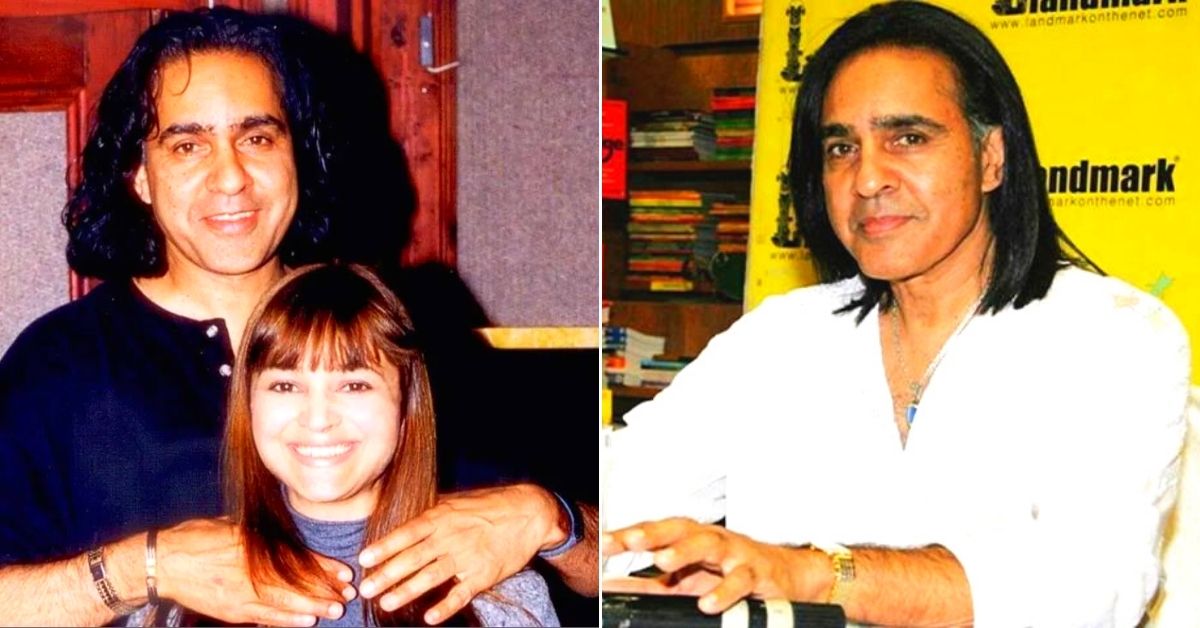
Left: Biddu & Alisha China (Image: Instagram/Alisha Chinai), Right: At a book launch (Image: The Post Script Team/Creative Commons)
‘Everybody Was Kung-Fu Fighting’
Born on 8 February 1944 in Bengaluru, Biddu attended the Bishop Cottons Boys’ School. Growing up listening to pop music from the West on the popular radio station Radio Ceylon (of Sri Lanka), his major musical influences as a teenager were Elvis Presley, The Beatles and The Rolling Stones. Learning how to play the guitar, he eventually formed a band with his friend Ken Gnanakan called the Trojans at 16.
They would play in small clubs, weddings, private parties and bars across Bengaluru before graduating to gigs in other cities like Kolkata and Mumbai. As an English-speaking band, they made their name by largely playing cover versions of songs by The Beatles, The Rolling Stones, Trini Lopez, and other Western music stars of the day. However, once the group split up, Biddu briefly performed as the lone ‘Trojan’ before leaving for England in the late 1960s.
Embarking on a journey to England in 1967, Biddu first made his way to the Middle East by climbing on a Haj ship in 1967 to Mecca before hitchhiking across the Middle East, where he performed multiple gigs.
In a 2020 interview with the Deccan Herald, he recalled, “I wanted to make it in the West. India in the 60s was a poor country; we were dancing with Russia instead of rocking with the West. I needed to get out of India as my interest was Western pop music; I was never into Bollywood. I left India and walked all the way to Beirut, singing there for six months until I saved enough moolah [money] to get to England.”
About his arrival in England, he once said in an interview with the BBC, “I didn’t really know too much about England or anything – I’d just come here on the chance of meeting the Beatles and doing some music. Everything that I did had this danceable flavour.”
To support his dreams of becoming a singer, he worked odd jobs, including one as a chef in London to save up enough money for studio time. He eventually cut a single, which impressed nobody and recalled “as an Indian in those days, they were happier to hire me as an accountant than as a singer”.
Realising that he wasn’t going to make it as a singer signed on a major record label, he instead decided to produce his own records, which, in the early days, didn’t generate much success. His first major success came in 1969, when he produced a song called ‘Smile for Me’ written by Barry and Maurice Gibb of the Bee Gees and performed by a Japanese band called The Tigers.
Since members of the band couldn’t speak English at the time, Biddu taught them how to sing English songs phonetically, given his knowledge of the language and love for pop music. The song topped the charts in Japan, and its success was the breakthrough he needed in England.
Entering the 1970s, he was producing a variety of disco songs that received little airplay on radio, but found underground appreciation from fans in the north of England.
His first real moment of success and mass acclaim came when he began working with Jamaican-born musician Carl Douglas in 1972. As a 2020 Financial Times article recollects, “Douglas was recording ‘I Want to Give You My Everything’ (written by Larry Weiss), which they did in a few hours. There was little time left to record a B-side. Douglas proposed ‘Kung Fu Fighting’, which he had written after seeing youngsters doing mock-kung fu moves in the street. It was recorded in a couple of takes. Biddu added the ‘Hurgh! Hurgh!’ exclamations. The record company people heard it and instantly realised that the B-side was the hit. They were right — ‘Kung Fu Fighting’ became one of the biggest-selling singles of all time.”
From here, there was no looking back. Biddu would soon establish himself as an important producer in the UK soul and disco scenes in the 1970s, working with a variety of artists including Tina Charles and Jimmy James. The songs he produced made their way to the UK Singles Chart and Billboard 100, while he continued making his own critically acclaimed music with ‘The Biddu Orchestra’.
‘Aap Jaisa Koi’
Biddu was never truly interested in doing film soundtracks, according to his autobiography ‘Made in India: Adventures of a Lifetime’. But that changed when Feroz Khan, a renowned Hindi cinema actor and producer, came to London to meet him in 1979.
Feroz had heard his instrumental albums and wanted him to produce a song for a film he was making called ‘Qurbani’. They met at an apartment he was renting near Claridges Hotel in Mayfair, and what ensued would change Indian pop music forever.
The Bollywood actor’s sales pitch was pretty simple, even though Biddu admittedly knew little of Hindi films or music. Feroz said, “Listen, you and I come from Bangalore. We are both Bangalore boys.” Biddu observed that Feroz was using the “old boys from the hood routine”. Feroz would then go on to say, “Come on, do it for a friend. Your mama will be so pleased.”
Although Biddu initially agreed to take on the project, he was still not convinced, even though Feroz had gone out on a limb for him. Local music directors in Mumbai had threatened to organise a boycott of his film if he “used a foreigner” to make music for one of the songs. However, once Feroz agreed to Biddu’s wish to record the song in London and not use playback singers dominating the music charts in India, there was no looking back.
The next thing they had to do was find a singer in London who could sing in Hindi. That’s when Feroz Khan came up with the name of a young 15-year-old Pakistani girl living in London called Nazia Hassan. Feroz knew her parents well and convinced them to let their daughter sing one song for his film. A couple of days later Biddu met the young Nazia, her brother Zoheb and their parents at their apartment in Century Court opposite the famous Lord’s Cricket Ground.
After singing a verse and chorus from one of Biddu’s songs ‘Dance Little Lady’, Nazia got the gig and went on to record the timeless ‘Aap Jaisa Koi Meri Zindagi Mein Aaye’.
“Her voice did not have the piercing sharpness of most Asian singers. The pleasantness in her voice was around C3, from middle C to G4 — warm, expressive and nubile. It wasn’t a great voice. But it was different, and it was this that made the difference between using her and someone from the old school in India,” wrote Biddu in his autobiography.
After recording Nazia’s part, he went into Red Bus Studios and added some of his magic dust alongside his sound engineer Richard Dodd.
“I had a catchy introductory riff played on the sitar; I used the syn drums, which had never been used in a Hindi song before. The syn drum made a sound not unlike my name. It went ‘bidoo’ every time you hit it and I double-tracked Nazia’s voice to give it some oomph. Once again, I used a rhythm box with a Latin beat to give it a hip-swaying groove,” he wrote.
‘Made in India’
Suffice to say, the song became a raging hit in not just India, but around the world. Despite its massive success, Bollywood didn’t come calling immediately. Instead, about a year later, a representative from the London branch of HMV (later called SaReGaMa), one of India’s largest music companies, came to see him. The record executive expressed the company’s desire for Biddu to make an album with Nazia Hassan. This was the first non-film album the company was going to make. After much negotiation, which also included the payment of royalties to the artists involved, he got into the studio with Nazia and Zoheb to produce an Urdu album.
Modelling the siblings on another famous brother-sister duo in the United States called ‘The Carpenters’ they recorded the album ‘Disco Deewane’, which was a smash hit across the world with the record charting across 14 countries, including Brazil, where it went No.1. The record sold almost 100,000 copies on the day of its release, a remarkable feat for South Asian music artists in the West. Following ‘Disco Deewane’, they went onto work on three more albums including ‘Star/Boom Boom’ in 1982, ‘Young Tarang’ in 1984 and ‘Hotline’ in 1987.
Album cover of a pop and disco music classic (Image courtesy Wikimedia Commons)
Together, the brother-sister duo went on to sell 60 million records worldwide. During this period, he also made massive hit records for famous Japanese (Akina Nakamori), Chinese and Filipino pop stars as well, besides making a return to the UK music scene with house music records.
After spending about a decade making records with Nazia and Zoheb, he worked with Hindi vocalist Shwetta Shetty producing her 1993 album ‘Johnny Joker’.
But it was 1995 that Biddu really made his mark in India, composing and producing the legendary ‘Made in India’ album by Hindi pop and playback singer Alisha Chinai. The song and the music video that followed was one of the key avenues MTV chose to launch their channel in India.
Interestingly, some anecdotes even claim that the song was originally meant for Nazia on the vocals, but she apparently refused. Eventually the song fell on Alisha China’s lap and for the backup vocals, Biddu employed another young budding singer, Sophie Chaudhary.
opping the charts in India, the album sold over five million copies. In addition to Alisha Chinai, he kickstarted the pop music careers of artists like Shaan, his sister Sagarika Mukherjee and even famous playback singers Sonu Nigam and KS Chitra. A lot of the Indian pop music scene in the 1990s and early 2000s was marked by the records that Biddu produced.
There’s a lot more to his story. But what’s more important is that generations of people from literally all over the world have swayed their hips to his hit records. And this isn’t even an exaggeration. For a man from Bengaluru, who hitchhiked across the Middle East and landed up in London with his guitar, he sure made his mark on the world of music.
“There’s one Indian playing an ATP250 event or in an ATP Masters, for example, out of a billion people and if you’re not able to show that match, how do you encourage young athletes?,” asks Indian tennis star Rohan Bopanna.
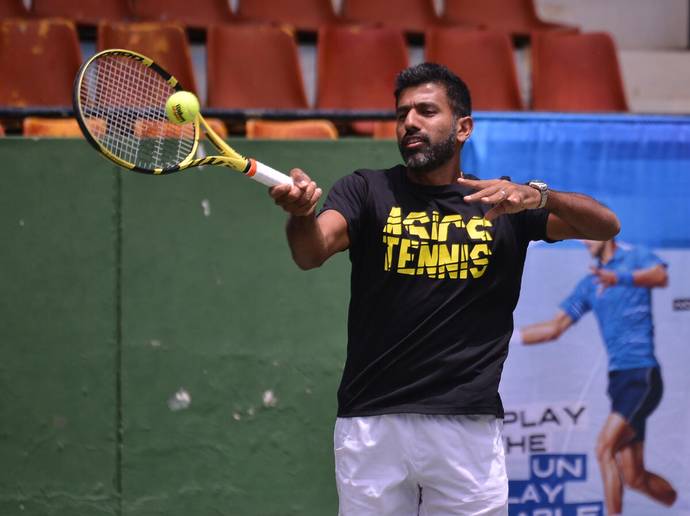
Proven champion: Rohan Bopanna was the last man from India to win a Grand Slam title when he lifted the mixed doubles crown at the 2017 French Open with Canada’s Gabriela Dabrowski. – V. SREENIVASA MURTHY
After a lean 2021 season, Rohan Bopanna,India’s top-ranked men’s doubles player, has had a fairly good run in the first four months of 2022.
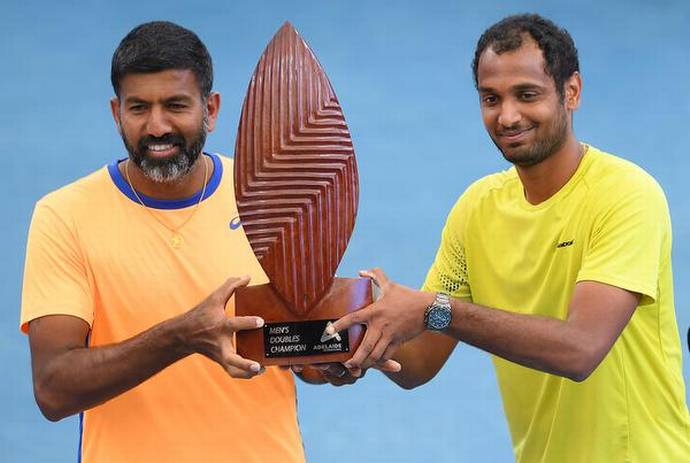
World No. 25 Bopanna began this season winning the first ATP 250 event of the year in Adelaide with compatriot Ramkumar Ramanathan . The pair went on to win the Maharashtra Open in Pune.
The 6-foot-4 tennis star from Bengaluru was the last man from India to win a Grand Slam title when he won the mixed doubles crown at the 2017 French Open with Canada’s Gabriela Dabrowski.
In a chat with Sportstar, the 42-year-old reflected on the first quarter of this season and his plans for the Roland Garros. He also shared his thoughts on the possibility of the Chennai Open returning to the ATP tour calendar and the way forward for Indian tennis.
Any initial thoughts on your season so far?
I am extremely happy with the way the season has gone so far, especially looking at how it was last [year]. Last year during this period of time, I hadn’t won a match up until literally this week (April), which was the Estoril week. So surely, extremely happy with the way the season has gone. Having two titles, having some good results in some big events, so that’s really wonderful and I’m really happy with it.
This season, you have played with a few singles specialists (Ramkumar Ramanathan, Denis Shapovalov and Aslan Karatsev) and also with players who primarily play doubles (Jamie Murray and Matwe Middelkoop). How do they differ? How do you adjust to their playing style?
The biggest thing that has always helped me, no matter who I played with, is to only focus on my game and not to really worry whether he’s a singles player or a doubles player. I try and see where I can adapt my game to their strengths and use my strengths in those situations. That always helps me.
At the end of the day, you just have to find a way to win these close points. Figure out who’s playing kind of a little bit better in that particular match on deuce points and maybe ask them to take it or you take the deuce points.
As far as a singles player is concerned, Karatsev was the only one who I had not played with and that was the first time but I’ve been playing with Dennis Shapovalov for a long time and you know we had some good wins. We beat the number one pair [Mate] Pavic and [Nikola] Mektic in Miami. And then I played with Jamie for the first time, and that was really a fruitful partnership. We lost a close semifinal match [against eventual champions Rajeev Ram of the US and Joe Salisbury of UK in Monte Carlo]. Even in the semifinals, we definitely were the better team, but unfortunately, we could not win.
Great beginning: Rohan Bopanna began this season winning the first ATP 250 event of the year in Adelaide with compatriot Ramkumar Ramanathan. – GETTY IMAGES
This season has been very interesting with some big wins, but there’s a pair — Wesley Koolhof and Neal Skupski — that has beaten you three times. Would you say they are ones to beat this season? You finally beat them in Monte Carlo.
I told them after the match, “Nobody beats Bopanna four times in a row!” But having said that, yeah, they’ve been very, very consistent. They’ve been consistent throughout the season, and I think they have won three tournaments already. They made a couple of finals. They’re definitely the team doing well this season. When they’re confident like that, it’s tough to play them. You have to really find those small margins to try and beat them. That’s what happened in Monte Carlo. We played some close points which went our way and we managed to get that win. Yeah, surely they are the top team and the hottest team right now in the season so far.
India also won the Davis Cup tie against Denmark at home. The next tie is against Norway, which has a top ten player in Casper Ruud. Have you already started planning for that tie? Can you also share your thoughts on the format of Davis Cup?
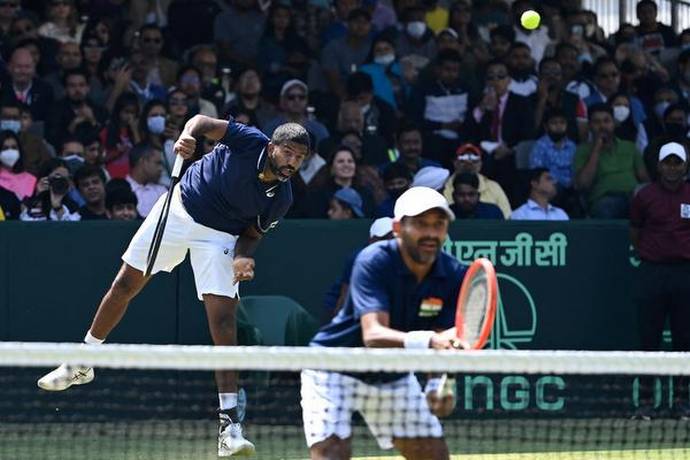
Colours of pride: Rohan Bopanna and Divij Sharan with the tricolour after winning their doubles match to help India seal the Davis Cup tie against Denmark at the Delhi Gymkhana in New Delhi. – V.V. KRISHNAN
It was really nice to have a home tie. The crowd in Delhi was fantastic. It was lovely to have so many people come out and support us. Playing in India after long time, playing on grass — I’ve always loved it.
We’ve gotten used to the format. Two-day format works perfectly well, especially if you have a separate doubles team and a few separate singles guys playing it, so it kind of works out.
For every team out there, there’s not really that much of a difference. Because it’s also best-of-three sets, it’s much easier on the body, it’s easier to manage that… really happy that we got through that tie. Divij [Sharan] and I had an extremely close match.
They [Danish captain Frederik Nielsen and his partner Mikael Torpegaard] saved a couple of match… three match points. I was happy that we got the win there and especially for Divij also, to win at home. It’s a club he has grown up in and practised quite a bit, so it was nice for us to finish that tie in the third rubber itself.
We have a tough opponent in Norway and still long way to go before that because we have so many other big events before even looking at that far ahead of the season. We are still in the clay-court season and have Roland Garros. Not really looking for anything beyond that actually.
Talking about Roland Garros, have you finalised your partner?
I am playing with Middelkoop itself all the way except for Madrid because [in] Madrid, both of us could not get in because the cut-off was so strong. In Rome, Geneva and Roland Garros, I am playing with Middlekoop and I will be playing mixed doubles also, but I’m looking for a partner who I can play with and try and do well there.
How did this partnership with Middelkoop start?
Actually, it was just one event we had played in Antwerp a couple of years ago. We went to the finals in that tournament in Antwerp. So I kind of knew we got along well. Our game style suited pretty well so we said ‘why not? Let’s give it a try in the clay-court season’ but unfortunately the cuts have been so strong. Even though both our rankings are almost combined 60, we’re still struggling to get into the bracket, so that’s been a little challenging, but nevertheless, we’re trying to get as many tournaments as possible together and see how that goes.
Double impact: India’s Rohan Bopanna serves as Divij Sharan watches during their men’s doubles tennis match against Denmark’s Mikael Torpegaard and Frederik Nielsen in the Davis Cup world group 1 play-off between India and Denmark, in New Delhi. “The biggest thing that has always helped me, no matter who I played with, is to only focus on my game and not to really worry whether he’s a singles player or a doubles player. I try and see where I can adapt my game to their strengths and use my strengths in those situations — that always constantly helped me,” Bopanna said. – AFP
Do you think on clay, a team that plans better strategies wins more as compared to hard court, where if you have a very big server on your team, then you can possibly win with power? Do you think there is some basic difference while playing on clay and on hard court as a doubles team?
I don’t think that really makes that much of a difference for doubles. It’s pretty similar. The game is still pretty quick. Yeah, you know it’s not like singles that you have so many more rallies. A lot of these matches are still going into super tiebreaks like anywhere else, any other surface.
The Tamil Nadu government is trying to bring Chennai Open back. Your initial reactions to that.
I was thinking about it. It’s excellent. Chennai has always given such great support for tennis. I’ve had some very good success playing in Chennai, not only in the Chennai Open but also much earlier, playing nationals, futures and Davis Cup.
I’ve always loved playing in Chennai and I will be very happy if the tournament is back. I don’t know whether I will be playing or not by the time the tournament comes back, but still, I’m very happy to hear that they are planning to get the ATP back there. It’s a good city and [has] a lot of good tennis lovers who would love to have the tournament back.
Do you think India should have more ITFs and Challengers to give the players more exposure? What do you think should be the way forward?
It’s definitely what we need. We need a minimum 30 men’s and women’s Futures, about 20 to 30 Challengers for men and women. Also, that’s the only way if we want to compete with the best in the world. Other countries hold so many more tournaments. We have to give our country that chance before we say, ‘OK, here’s an Indian, maybe competing at the highest level’.
The other biggest thing I keep saying is that tennis has to be shown in India. This is one thing lacking. There’s one Indian playing an ATP250 event or in an ATP Masters, for example, out of a billion people and if you’re not able to show that match, how do you encourage young athletes?
How does a young athlete even know that there is somebody from their own country even playing? These are small things which make a difference.
I’ve been saying this over and over again for a long time. Unfortunately, the only way it will change is when there is visibility for your sport.
Like any other sport, there is growth when there is visibility. That is what is needed for tennis as well and it’s not just about showing tennis [with] the top guys playing. If there’s a countryman playing, it’s very important to get that also broadcast and that’s surely the right step forward for the sport to grow.
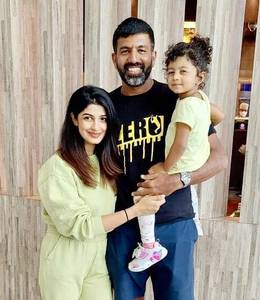
Little joys: Rohan Bopanna with wife Supriya and daughter Tridha. “My wife and daughter have been travelling to Australia and now my daughter understands that I play a little tennis. She keeps asking me why I keep going to the tennis court and why I’m playing tennis so much,” said Bopanna on travelling with the family for tennis tournaments. – SPECIAL ARRANGEMENT
Any fun experience that has happened to you this season or any other memorable incident across the tournaments that have you played so far that you think the readers might love to know?
The good part is that everything is finally open. We don’t have to do Covid tests anymore. Doing all those PCR tests… 150-160 PCR tests… Getting your tests done every two days in different countries, getting the reports… Definitely happy that we don’t have to do that anymore that often and maybe just once in a while.
It’s good to have the fans back. To be honest, that is the biggest fun thing about playing this sport.
I get to travel with the family. My wife and daughter have been travelling to Australia and now my daughter understands that I play a little tennis. She keeps asking me why I keep going to the tennis court and why I’m playing tennis so much.
You kind of build a family outside your family when you keep travelling because you constantly see them during that particular tournament once a year like it may be the US or UK or wherever it may be. So that is something I missed for two years. Going into the country, but not able to see them. So, it’s now nice again to meet those friends. The biggest thing is I love exploring the city so I can go and start exploring some coffee shops.
Federer and Nadal are returning after injury breaks. Federer is 40 and Nadal will be turning 36. And then there is someone like Ash Barty who took retirement at 25. What’s your perspective on this situation. What does it say about the changing narrative in the world of sports when it comes to age and retirements?
It’s a purely individual choice, to be honest. It’s how you feel. At the end of the day, it’s not easy travelling week in, week out, living out of a suitcase, eating every meal in a restaurant. It takes a toll. Even though it sounds glamorous from the outside, it’s not easy because you’re away from family and friends. Each individual looks at life differently.
Also, during the pandemic, a lot of people have gotten to reflect on what they really enjoy, what they missed and all that. Having said that, it’s very difficult to say whether they want to retire or keep going… At the end of the day, it really comes down to purely the individual decision because you never know where the mindset is. As long as the mind is healthy, you want to travel [you carry on].
The mind says, ‘You know what? I don’t want to travel anymore. I just want to stay at home. I enjoy being home more.’ That’s what it boils down to.
And then, everybody has goals — different goals, different mindsets. That athlete or that person has decided, ‘OK, this is my goal. I’ve achieved that. OK, I’m done.’ I don’t think that’s something anyone else can talk about or figure out.
source: http://www.sportstar.thehindu.com / Sport Star / Home> Tennis / by Nihit Sachdeva / May 14th, 2022
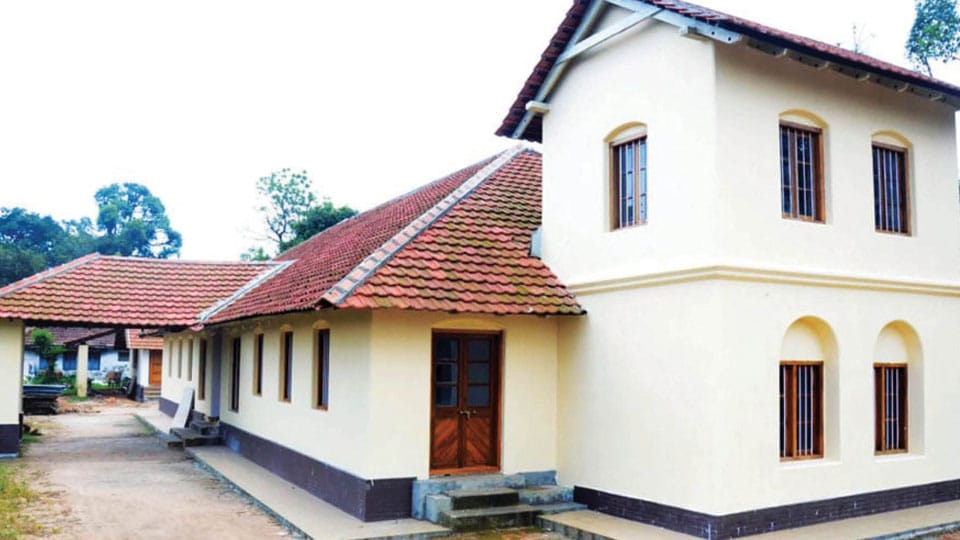
The city-based VeKare Ex-Servicemen Trust has urged the State Government to give exemption from entry fee to the armed and paramilitary forces personnel visiting ‘Sunny Side’ that houses General K.S. Thimayya Museum in Madikeri, Kodagu district.
Trust President Mandetira N. Subramani has written a letter to Chief Minister Basavaraj Bommai urging to fulfill this demand by exempting entry fee to those in service and retired Armed Forces personnel.
Urging the Kodagu District Administration and the Government to consider the request, he said the exemption in paying an entry fee of Rs. 20 has been sought as a respect towards the Armed Forces fraternity.
Subramani has also urged the Director, Department of Sainik Welfare and Resettlement, to impress upon the Chief Minister to pass orders in this regard.
He has suggested the exemption should be granted upon production of identity cards issued by the competent authority.
The suggestion came from an 85-year-old ex-serviceman Manira T. Nachappa, who had fought three major wars when he served the 37 Coorg Medium Regiment from November 1957 to December 1977.
“Nachappa met me at the recent annual general body meeting of T. Shettigeri Ex-Ser-vicemen Welfare Association in Kodagu and urged me to take up the issue with the authorities concerned,” Subramani said. The museum was inaugurated in February 2021 by President of India Ram Nath Kovind. “Sunny Side”, the ancestral house of General K.S. Thimayya, who served as the Chief of Army Staff from 1957 to 1961, has been converted into a museum.
source: http://www.starofmysore.com / Star of Mysore / Home> News / May 10th, 2022
Government must study uniqueness of each district and frame laws: Kodagu Samrakshana Vedike
Mysore/Mysuru:
Concerned over the recent announcement by Revenue Minister R. Ashoka stating that agricultural land conversions across Karnataka would be approved within three days and the required amendments would be brought to the Karnataka Land Revenue Act, the Kodagu Samrakshana Vedike has said that this would be a disaster for Kodagu, the principal catchment area of River Cauvery.
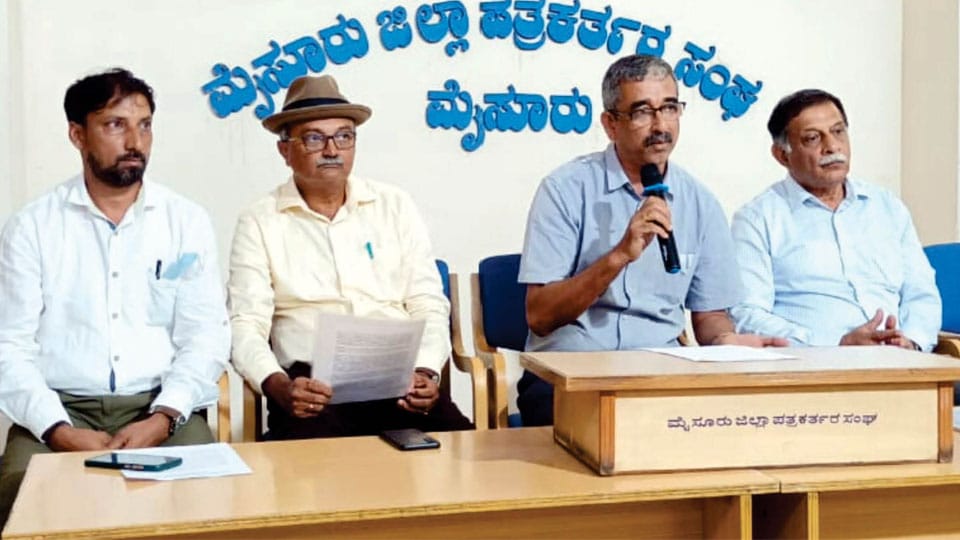
Addressing a press conference at Pathrakarthara Bhavan in city this morning, President of Kodagu Samrakshana Vedike Chottekmada Rajeev Bopaiah said that the Government move will destroy hilly terrains and ecologically-sensitive regions such as Kodagu.
“Large scale land conversion in Kodagu for sites and layouts will invite large numbers of people from outside the State into Kodagu and exert extreme pressure on potable drinking water and water for agriculture and industry. It will kill the River Cauvery that is a lifeline of Karnataka,” he said.
Accompanied by Vedike members Col. (Retd.) Cheppudira P. Muthanna, Jammada Ganesh Ayanna and Annira Harish Madappa, Rajeev Bopaiah said that the High Court had stayed the process of land conversions in Kodagu stating that the No Objection Certificate (NOC) for land conversions issued by the committee headed by the Deputy Commissioner is not valid to approve blanket land conversions.
Burning problems ignored; focus on new roads:Requesting support from Kodagu MLAs Appachu Ranjan, K.G. Bopaiah, MP Pratap Simha and MLCs Veena Achaiah and Suja Kushalappa, the Vedike appealed to them to save the birthplace of Cauvery from destruction due to rampant land conversions. “Unfortunately, the burning problems of Kodagu like human-animal conflict, land conversion, Pouthi Khata and electricity are ignored by the elected representatives and they are interested in only developing new highways, further destroying the landscape,” they said.
The Vedike demanded that the Government must act immediately to avoid destruction of Kodagu. “Unfortunately, many politicians and political leaders are involved in land conversion in Kodagu and those DCs who resist attempts to convert land are being transferred within three months and DCs who act favourably to the politicians are brought in,” Rajeev Bopaiah alleged.
“We have seen how Kodagu was ravaged by floods in 2018 and 2019 abetted by unbridled urbanisation and infrastructure development to promote tourism. Sale of agricultural land for non-agricultural purposes will have devastating consequences as reckless urbanisation has already caused a negative impact on the environment as evident in the floods and landslides,” he said.
Bearing on water: “The government move makes it easy for any individual, industrialist or real estate stakeholders to directly approach farmers and purchase land. It’s not just about land in Kodagu but this will also have a bearing on water and its implications will be felt in the downstream region of the State like Mysuru and Mandya, impacting food security and agriculture,” Rajeev Bopaiah added.
The Vedike has demanded that instead of passing land laws that are applicable across the State, the Government should study the uniqueness of each district and frame laws according to the local environment and ecology. “We will take our movement to the next level that will include a boycott of elections,” the Vedike has warned.
source: http://www.starofmysore.com / Star of Mysore / Home> News / May 11th, 2022
While ‘Adi Pepper’ was locally known as forest pepper and was used only for domestic purposes by the locals, it has now attained a brand value of Rs 3500 per kilo.
Left, N Poonacha receiving the award at the ceremony in New Delhi. Right, Snapshot of the indigenous ‘Adi Pepper’ spikes.
Madikeri :
A progressive farmer, Napanda Poonacha of Kodagu district looks forward to being known as a pro-nature farmer. He is extensively working towards identifying commercial crops that have little or no ill impact on biodiversity and he was recently awarded the Plant Genome Saviour Farmer Reward (2019-20) for his contribution towards the conservation of indigenous crops of ‘Adi Pepper’.
The award has been conferred by the Union Agriculture Ministry’s Protection of Plant Varieties and Farmers’ Rights Authority and Poonacha received the award from union agriculture minister Narendra Singh Tomar at a ceremony in New Delhi on November 11.
“This award has been granted to farmers who recognize, conserve and promote crops that are useful to biodiversity. Similarly, I won the award for my research, conservation and promotion of ‘Adi Pepper’ – an indigenous variety of pepper that is extensively found growing across natural habitat of Garvale village limits in Kodagu,” explained Poonacha.
He is the proprietor of Adi Pepper Demo Farm and Research Center in Garvale and is extensively involved in identifying native crops in the district that have great potential of becoming a commercial crop without causing damage to the ecosystem.
“Adi Pepper crops are extensively found in the natural habitat across the Garvale area. At the research center, we took the initiative of getting this species of pepper registered under PPFRI and this quality pepper was recognized as farmer’s variety pepper in 2015. This is the only species of pepper that has undergone biochemical analysis and is considered the best among the seven species of pepper that are grown across Kodagu,” he detailed.
While this variety of pepper was locally known as forest pepper and was used only for domestic purposes by the locals, it has now attained a brand value of Rs 3500 per kilo – earning over six times more returns than the other species of black pepper marketed in the district.
“Adi pepper is a native crop and has no harmful impact on biodiversity. This is high-quality pepper and its processing is different from the other species. The ripening of the pepper seeds takes place in November and it is harvested during the same month. However, the pepper seeds are handpicked, treated with hot water and then dried and processed. This ensures top quality of the pepper, earning high returns,” he explained.
source: http://www.newindianexpress.com / The New Indian Express / Home> States> Karnataka / by Pragna GR, Express News Service / November 18th, 2021
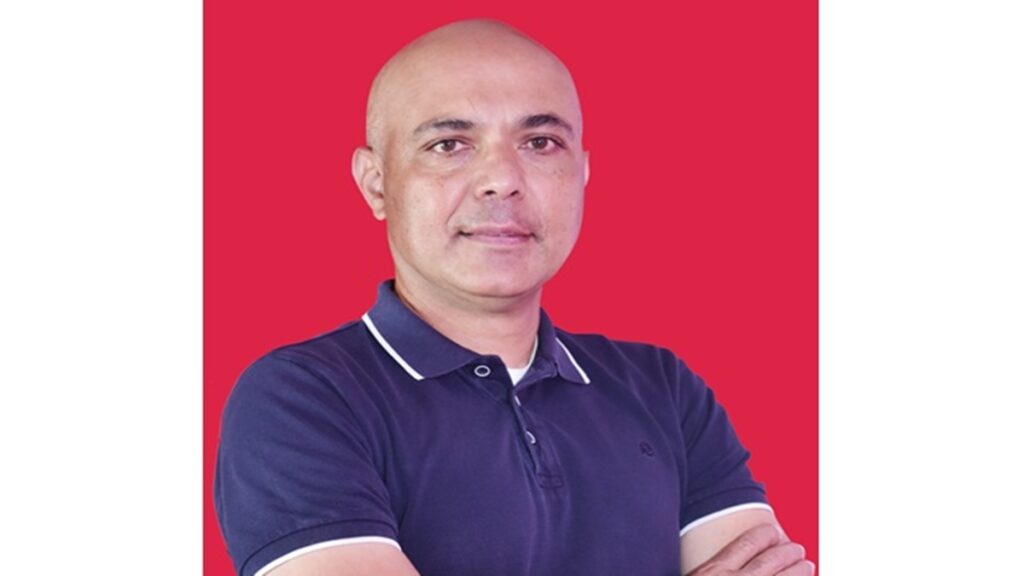
Cariappa is the former CMO of brand Jockey (Page Industries Ltd)
Over the past three decades, Cariappa has worked at Jockey, Arvind Lifestyle Brands Ltd, Coca Cola India (international trade department), ITC Ltd (international business division), and Brooke Bond India Ltd.
Cloud Tailor, a D2C platform that delivers personalised women’s fashion globally, has announced the appointment of M C Cariappa, as their independent advisor.
At Cloud Tailor, he will bring his knowledge and experience to support implementing a focussed business and operational strategy, guide in business expansion, oversee the platform’s regulatory and compliance metrics, and help develop the global communication strategy.
Cariappa is the former chief marketing officer (CMO) of brand Jockey (Page Industries Ltd), where he has, for over a decade, led the sales and marketing arm of the organisation. He has a proven track record in driving business growth, franchisee and distribution expansion, and building operational efficiency, the company said.
Over the past three decades, Cariappa has worked at Jockey, Arvind Lifestyle Brands Ltd, Coca Cola India (international trade department), ITC Ltd (international business division), and Brooke Bond India Ltd.
His deep involvement with the sales and marketing vertical across national and international markets has contributed to the exponential growth of brands through expansion and distribution of product lines across geographies, Cloud Tailor said in a statement.
Cloud Tailor is poised for strong and sustainable growth in the coming months and I am keen to work with the team to deliver value to the company,” said Cariappa. “The brand is young, aspirational, and exciting. We have the potential to be the forerunner in the personalised fashion solutions industry globally. The women’s wear industry has been steadily growing across the globe, which gives impetus to explore a more tailored approach. Scalability is an issue that most companies in this space face. This is where Cloud Tailor comes in with solutions,” he added.
“Cariappa’s proven executive leadership experience, operational excellence, industry expertise, and other critical skills, will add immense value as we scale Cloud Tailor in this niche market,” Susmitha Lakkakula, founder, Cloud Tailor, stated.
source: http://www.financialexpress.com / Financial Express / Home> Brandwagon / by BrandWagon Online / January 27th, 202
WELCOME. If you like what you see "SUBSCRIBE via EMAIL" to receive FREE regular UPDATES.
Read More »