Coorg Institute of Technology, Ponnampet, Kodagu, will be organising a special lecture on “An insight into Civil Services Exam” at its premises in Ponnampet at 11 am on Apr. 28.
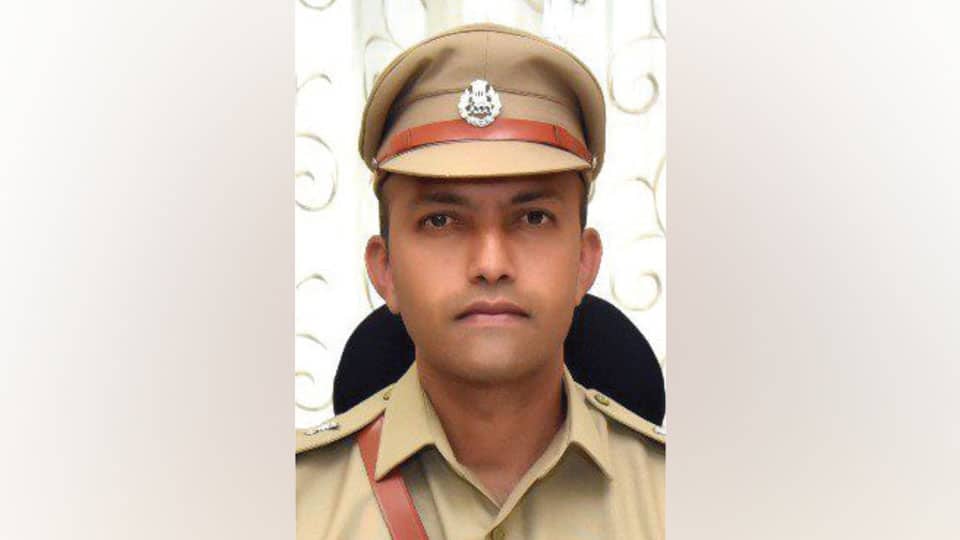
Mysuru SP R. Chetan, an alumnus of the college will deliver the special lecture, which is organised by the Alumni Association of the College.
For details, contact Mob: 95355-42005 or visit www.citcoorg.edu.in, according to a press release.
source: http://www.starofmysore.com / Star of Mysore / Home> In Briefs / April 26th, 2022
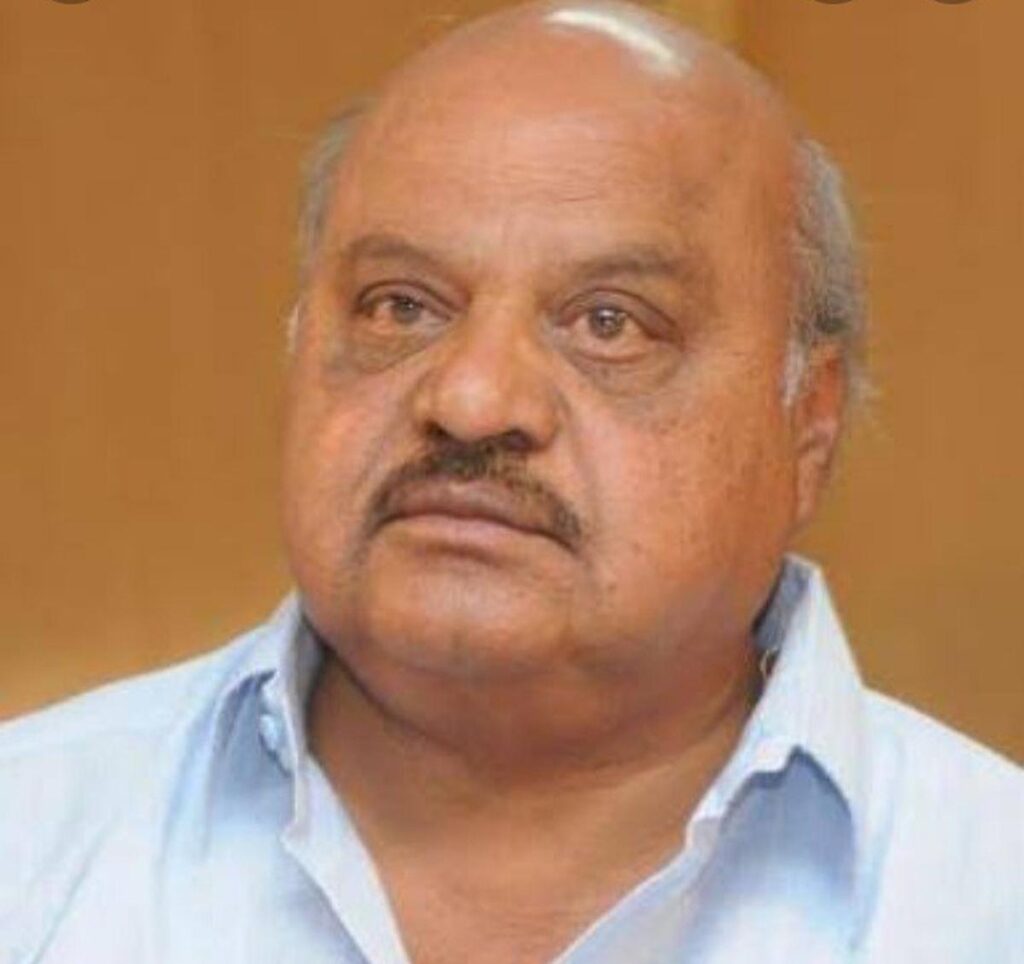
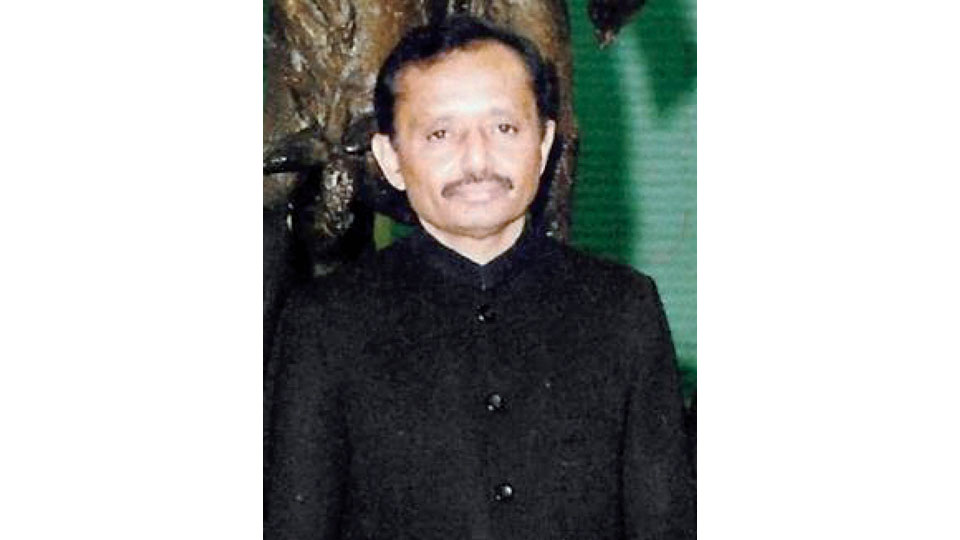
M S Boje Gowda, Coffee Board Chairman | Photo Credit: SPECIAL ARRANGEMENT
The 73-year-old Gowda, succumbed to bee sting as he was being rushed to a hospital
M.S.Boje Gowda, chairman of the Coffee Board, died after being stung by honey bees at his Krishnagiri Estate in Dasarahalli near Chikkamagaluru on Friday. The 73-year-old Gowda succumbed to bee sting as he was being rushed to a hospital in a car during a visit to his estate.
Mr. Gowda was appointed chairman of the board in May 2017 and has been in politics for decades. He began his career with the Janata Party and later joined the Congress. However, for the past few years, he had been associated with the BJP.
He also served the party as a president of its Chikkamagaluru district unit.
source: http://www.thehindu.com / The Hindu / Home> News> National> Karnataka / by Special Correspondent / Hassan – April 23rd, 2022
Project to improve treatment of neurological disorders was launched January
Soon diagnosis and timely treatment of common neurological problems, such as epilepsy, headache, stroke, dementia and brain infections, can be done from the grassroots level of primary health centres, secondary-level district hospitals and NIMHANS at the tertiary level in the State.
Recognising the need to improve treatment and prevent neurological disorders in the community, the State Government in association with NIMHANS and Niti Ayog launched the Karnataka Brain Health Initiative (Ka-BHI) in January.
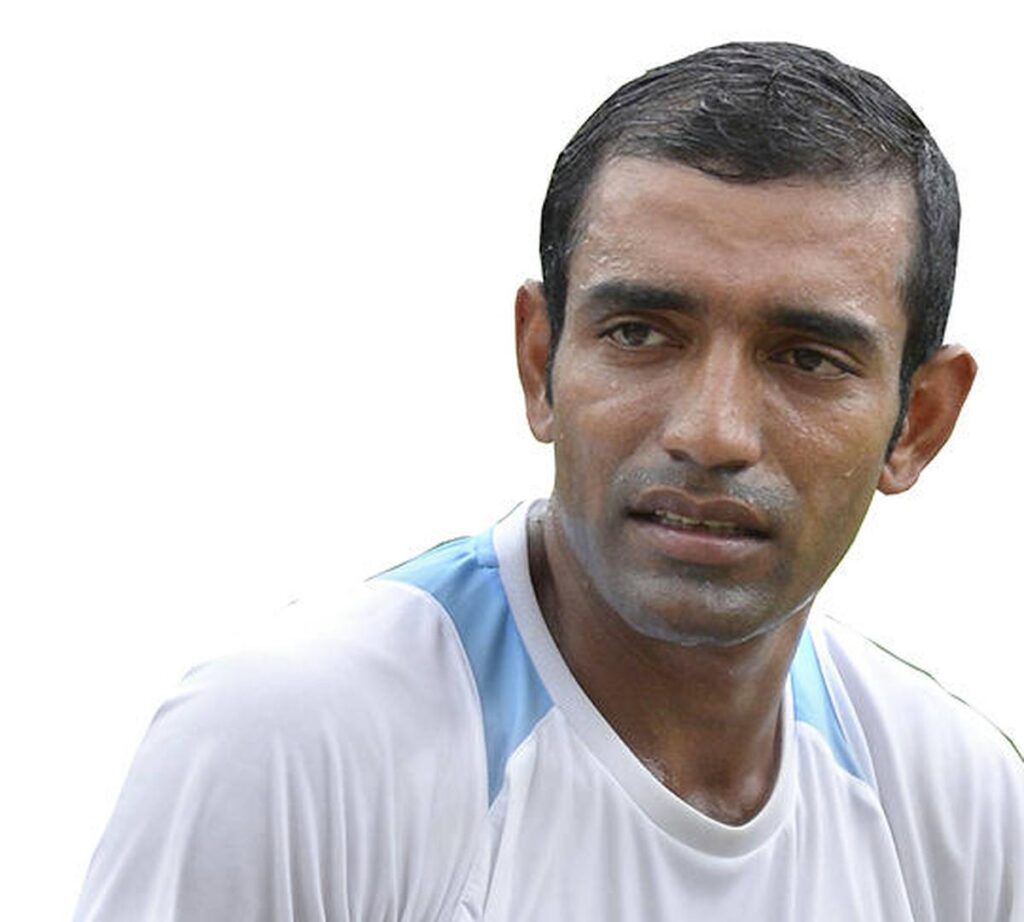
While training of doctors and preparations to start Brain Health Clinics in the three pilot hospitals – Jayanagar General hospital in Bengaluru Urban, SNR Hospital in Kolar and District Hospital in Chickballapur – has begun, the Government has appointed cricketer Robin Uthappa as the brand ambassador for brain and mental health programmes. The pilot project has also been announced in this year’s State Budget.
State Health Commissioner Randeep told The Hindu that brain health promoting activities such as physical exercises, yoga, sports, traditional art and crafts, stress reduction and nutritional support will be initiated in three pilot districts. “This is a first of a kind initiative in the country that will facilitate early diagnosis and timely treatment, for common neurological diseases,” he said.
NIMHANS Director Pratima Murthy said the burden of neurological disorders is rapidly increasing in India and is posing a challenge to the health of the society. “Neurological diseases, including stroke, epilepsy, headache, dementia and brain infections, contribute to immense disability in the community. Since brain health, mental health, non-communicable diseases, maternal and child health and elderly care overlap, coordination between the different national programmes under the National Health Mission is being strengthened through this pilot project,” she said.
“Ka-BHI will develop a model for prevention and management of neurological diseases and promote brain health, from grassroots level of primary care to tertiary care. This pilot study in three districts can become a model and be implemented in the whole State and at the national level in the coming months,” Dr. Murthy said.
Suvarna Alladi, professor and head of the Department of Neurology at NIMHANS, said the training programme for PHC medical officers was initiated on March 11. “Three in-person training workshops have been conducted for all the PHC doctors in the pilot hospitals. Overall 180 doctors, including 26 neurologists from NIMHANS, are involved in this. The protocols for diagnosis and management of neurological disorders have been drafted and weekly online neurology interactive teaching sessions are going on,” she said.
“The training of PHC doctors will be completed in June and they will be certified in treatment of common neurological diseases. Training programme for ASHA workers and community health officers has been developed. They will be provided with a 15-point questionnaire that can be used to screen patients with neurological disorders from the community level and Health and Wellness centres for early identification and timely treatment in referral centres,” Dr. Alladi explained.
source: http://www.thehindu.com / The Hindu / Home> News> National> Karnataka / b y Afshan Yasmeen / Bengaluru – April 15th, 2022
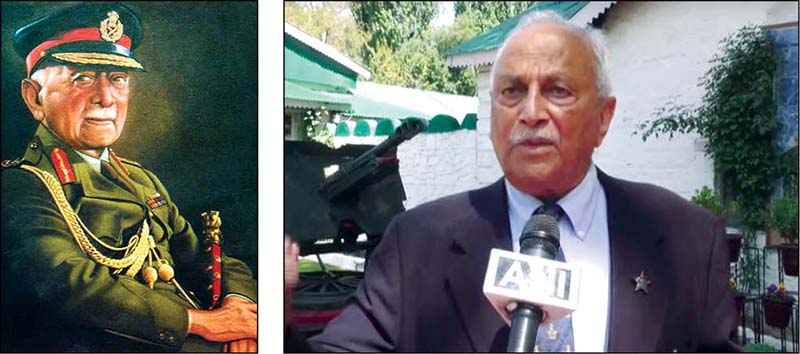
Field Marshal K.M. Cariappa’s son, family visitPark, War Memorials; recall warm ties
Madikeri :
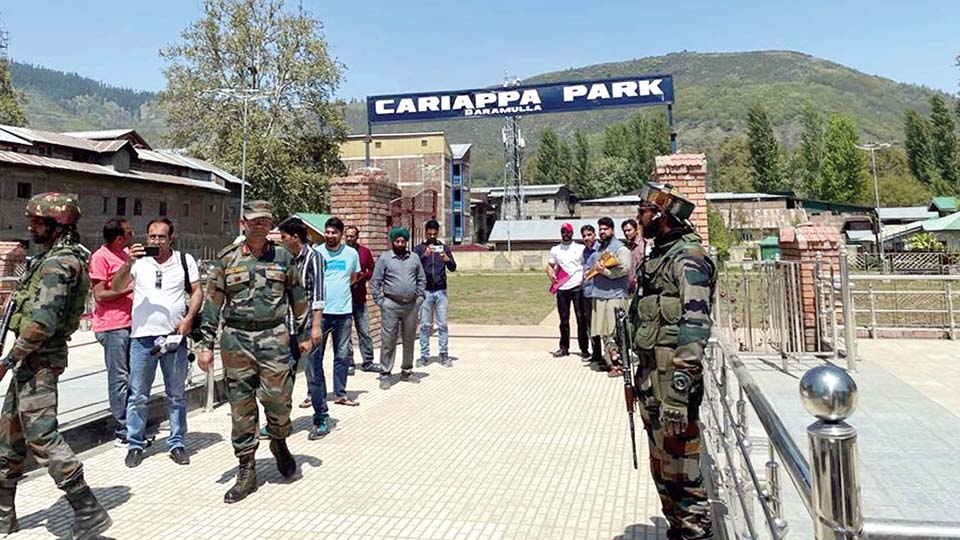
The Cariappa Park at Baramulla in Kashmir, named after India’s first Commander-in-Chief Field Marshal Kodandera Madappa Cariappa has been renovated at a cost of Rs. 3 crore.
Baramulla is located on the banks of River Jhelum, downstream of Srinagar.
It is a matter of pride for Kodagu and Karnataka that India’s legendary Armyman is being commemorated at Baramulla, a place that was once a hotbed of militants.
The winds of change began blowing through the Kashmir Valley after the Narendra Modi Government revoked the special status of Jammu and Kashmir by revoking Article 370 in August 2019 and took steps to change how the region will be governed.
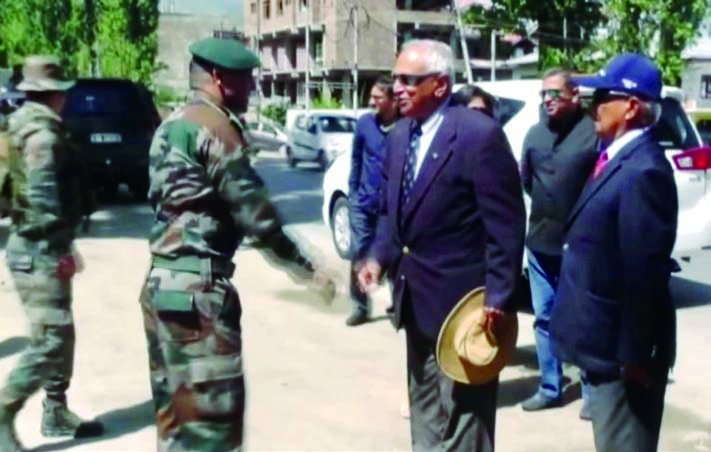
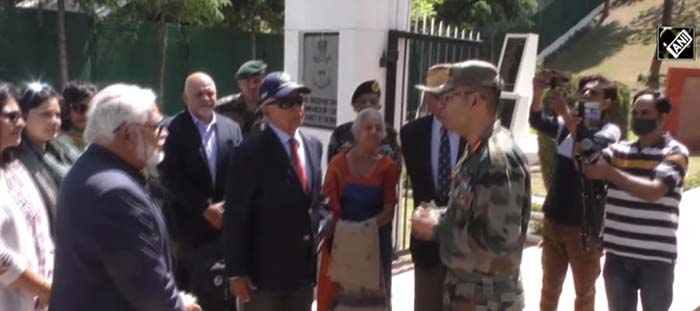
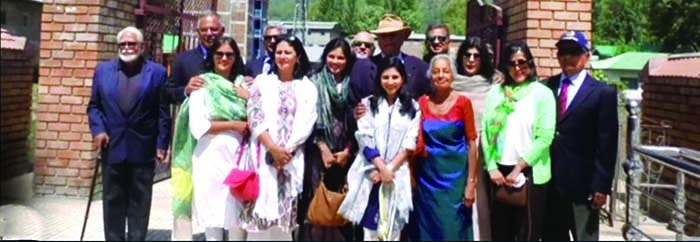
Though records are not available on when the Cariappa Park was created, its renovation began in 2020 and now it stands as a beautiful park. On Apr. 10, 2022 the family of Field Marshal Cariappa including his son Air Marshal (Retd.) K.C. Nanda Cariappa visited the park and paid respects.
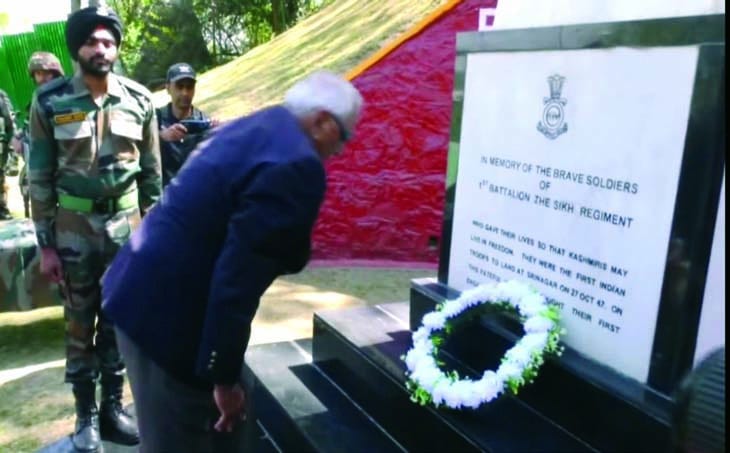
The family was warmly received by officers and they also visited a Sikh War Memorial, Dagger War Memorial and the Cariappa Park in Baramulla.
Nanda Cariappa and the family appreciated the work of the Indian Defence Forces, especially the Indian Army for maintaining peace and tranquillity in Jammu and Kashmir which has won many hearts.
The Cariappa Park has been set up by the Baramulla City Municipal Council along with a hi-tech digital library and the funding of Rs. 3 crore has been obtained from the Jammu and Kashmir Government and Rajaram Mohan Roy Library, Kolkata.
Nanda Cariappa recalled his father’s association with the people of Baramulla and said that the people had a special place in the Field Marshal’s heart.
The family visited Baramulla following an invitation from the heads of Baramulla Park Trust.
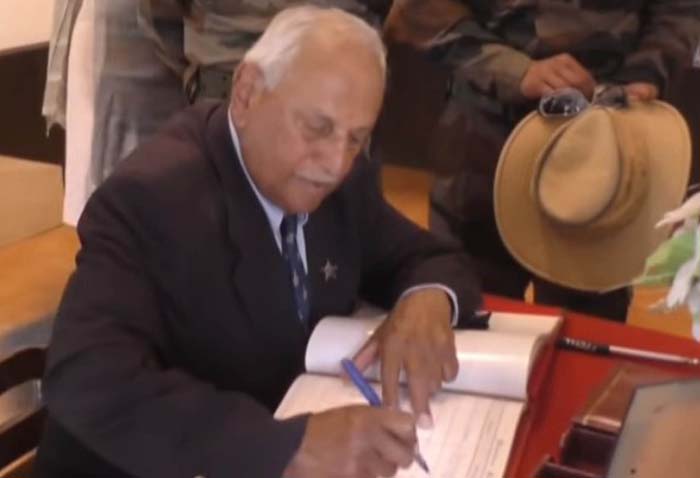
Nanda Cariappa signed the Visitor’s Book at the War Memorial and spoke to the media about Field Marshal Cariappa, Kodagu and Karnataka.
The family also visited the digital library that has state-of-the-art services and equipped with all the facilities considering the needs of users in the modern digital era. The library is linked with the National Digital Library of India to facilitate user access to around 3.5 crore academic resources including e-books, audio-books, lecture materials, thesis, reports, articles, journals, and question papers.
The Field Marshal’s family members K. Rohit, Sanjitha Cariappa, sons-in-law A.K. Devaiah and Saurabh Gupta, granddaughter Arushi Anand and daughter Gayatri Gupta were present.
Cariappa was close to people’s hearts
The Cariappa Park is one of the oldest parks in Baramulla and it was lying in a state of neglect. Senior citizens and political leaders in Baramulla narrate the stories of the ‘Kipper’ (as Cariappa was fondly called) and how he is still close to the people there.
(Left) Field Marshal K.M. Cariappa. Picture right: Cariappa’s son Air Marshal (Retd.) K.C. Nanda Cariappa recalling his father’s association with the people of Baramulla.
Once, after chasing the raiders from across the border beyond Uri, Cariappa, who was travelling in a military jeep, was stopped by a group of people including women and children at Baramulla and was told that they had suffered a lot due to the absence of food supplies, including salt.
It was a puzzling task for Cariappa, a General then, as no stocks were available with the Army so that they could be distributed among hungry residents. But he fulfilled his assurance the next day when he visited the old town and distributed flour, rice and salt to the needy families.
Cariappa followed this gesture in many ways in various parts of Kashmir. His noble act was appreciated by the Government those days. K.S. Thimayya (who rose to be General later), whom Cariappa had put in command of the 19th Infantry Division at Baramulla, followed Cariappa’s gesture and continued the support to the local population. Grateful Baramullians named the park after Cariappa.
source: http://www.starofmysore.com / Star of Mysore / Home> Feature Articles / April 12th, 2022
Joshna Chinappa on what it takes to gear up for the Commonwealth and Asian Games.
Joshna Chinappa. (File Photo)
Joshna Chinappa (35) might be looking at the most important year of her career. After returning to the top 10 world rankings earlier this year, the squash champion won a gold medal for India with Dipika Pallikal at the World Doubles Championship in Glasgow on Saturday.
Later in the year, she will head to the Commonwealth in Birmingham and the Asian Games in Hangzhou, China. We caught up with Chinappa to chat about everything from her intensive training regimen to pre-match rituals. Excerpts…
When someone asked you about competing against 20-year-olds in an interview recently, you said that your best physical years came after you turned 30. Tell us more. The tour is really strong right now with the girls being really fit and strong physically, so, it’s been important for me to train correctly, and look after my body, especially as I get older. I work with an amazing team in the UK on my strength and conditioning and that has helped me get a lot fitter in recent years.
2022 is a big year for you with the Commonwealth and Asian Games lined up. How do you fight nerves and keep a clear and focused headspace? I always look forward to playing in the Commonwealth and the Asian Games. It is the biggest platform for any athlete and the goal is always to win accolades for the country. The preparation for these games starts at least a year in advance. Closer to the event, I will take a couple of months off from playing tournaments just to train with my team for the 2022 games. For a sportsman, striking the right balance between mind and body is of utmost priority.
What is your training regimen? Usually, my mornings begin with a squash game on the court, followed by a fitness/gym session. In total, I dedicate around three to four hours to my training. Sundays are mostly off and spent doing things that I love.
What does your diet look like? I keep my eating habits simple. When I’m training, my diet consists of more protein, moderate amounts of carbs, fruits, veggies, and plenty of hydration. When I am playing a tournament, it is the same as training, except I eat more carbs. If I occasionally want to indulge in a cheat meal, I do like to treat myself with dark chocolate sometimes.
Is there anything you have had to give up food-wise that’s taken some will power? The hardest part is giving up junk food! I love eating rice and rasam but owing to my professional goals, I try to avoid consuming them in large quantities.
Quick three
Do you have a ritual at the beginning or end of a match? At the beginning of the match, I have to hit my first shot on the backhand side!
Best way to keep distractions at bay? For me, what works at keeping distractions at bay is that I get off social media very often. When I am in the middle of a tournament, only my coach and mom can reach me.
For young athletes with a dream to compete at the Commonwealth Games someday: what would be your best advice? Be passionate about what you do, work really hard and never give up!
source: http://www.newindianexpress.com / The New Indian Express / Home> Cities> Delhi / by Express News Service / April 13th, 2022
It was in 1961 that I joined Loyola College in Chennai for my PUC. A couple of days after I joined and settled in my hostel room, there was a knock on the door. I gingerly opened the door and there stood a senior. I braced myself for a round of ragging.
“Hi, I am Somayanda Freddy Subbaiah. I am from Coorg. Welcome to Loyola,” he extended his hand. I was relieved. He then took me across to meet the other Kodavas in Loyola including his elder brother Vittal. Freddy and I became good friends and remained good friends.
Freddy Subbaiah was born in Chettali to Somayanda Appachu and Kongettira Gange in 1944. His father owned a tea estate in the Nilgiris. Subbaiah had his entire education in Tamil Nadu. He had made up his mind quite early in life to be an IAS Officer. He single-mindedly started preparations to crack the tough UPSC exam. He diligently took part in all the activities in the campus and was particularly active in the debating society.
After completing BA in Economics, he continued in Loyola for his MA. As a post-graduate student, he stood for the Presidentship of the Students’ Union of Loyola College, which was a very keenly contested one. Freddy won the prestigious election and did commendable work during his tenure. This stint would help him later in the UPSC interview.
After completing his post-graduation, Subbaiah immersed himself in preparing for the UPSC exam; and still found time to attend Madras Law College to earn a degree in Law. He was very earnest in whatever he did and was extremely hard-working.
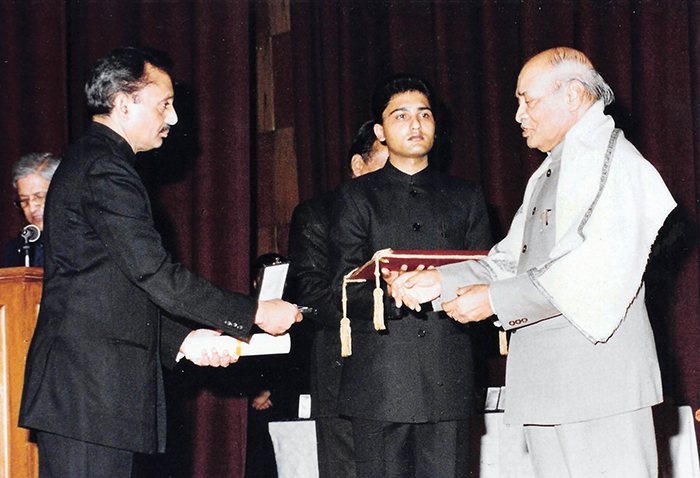
Dr. S.A. Subbaiah receiving the Asadharan Suraksha Seva Praman Patra from the then Prime Minister P.V. Narasimha Rao.
Freddy wrote the UPSC examination in 1968 and qualified for the final round which was the interview in New Delhi by a panel of retired senior bureaucrats and officers from the defence services. My father, C.M. Poonacha, was the Minister for Railways at the time. I happened to be in New Delhi. Subbaiah stayed with us a couple of days ahead of the interview. He was quite satisfied with his performance at the interview.
However, when the results were announced Subbaiah narrowly missed the IAS and qualified for the IPS. The reason why he missed the IAS was the reservation policy. Though disappointed, he accepted the IPS and opted for Karnataka cadre. He was the first Kodava IPS Officer post-independence.
After intensive training in National Academy of Administration, Mussoorie, and at the National Police Academy, Mount Abu, Subbaiah got his maiden posting as probationary Assistant Superintendent of Police at Belgaum, in January 1970. That was the beginning of an illustrious career.
Freddy Subbaiah proved his mettle at every posting he held. After serving as ASP at Yadgir, he was soon promoted and posted as Superintendent of Police at Kolar Gold Fields (KGF). At KGF, he endeared himself to the people with his prompt addressing of any issue that cropped up. When he was transferred to Tumkur as the SP in 1973, there was widespread disappointment at KGF for losing one of the best Police Officers the district had seen.
After two years in Tumkur, Subbaiah was transferred to Mysore as the SP, which is one of the prestigious postings for young IPS Officers. His sincere, prompt, dedicated and diplomatic handling of Law and Order issues were highly appreciated, not only by the people, but also by his seniors and political bosses. It was during his tenure at Mysore that Subbaiah tied the knot with Sumathi, daughter of Muckatira Aiyappa from Byrambada village, in 1976.
Subbaiah was highly knowledgeable and very well read. After joining the IPS, he was keen on contributing to the intelligence and security issues of the nation. His seniors recognised his treasure trove of knowledge and his abilities and recommended him for a deputation to the Central Government. In 1979, Subbaiah joined as an Officer in the Research and Analysis Wing (RAW) under the Cabinet Secretariat. He served the organisation with great distinction for 17 long years.
Subbaiah surprised his family and colleagues when he earned a doctorate degree in Economics from University of Mysore in 1983. While he was totally involved in his job, he still found the time to pursue his Ph.D. Despite his busy schedule, he made time for his family. Sumathi ably supported him and together they raised their two sons Bopanna and Mandanna with all parental care.
His dedicated work impressed everyone. In 1984, Subbaiah was appointed as the First Secretary at the Indian High Commission, Singapore. His next posting in 1988 was a coveted one at Geneva with dual assignment as Consular General of the Indian Mission as well as the Indian Representative to the UN at Geneva. He served in this position till 1991 and had the opportunity to visit several countries.
On his return to headquarters in New Delhi, he was involved in sensitive assignments such as the Shah Commission, Jain Commission, ISRO spy case and the Bofors probe. While on overseas assignments, he closely followed the activities of the LTTE and gave valuable intelligence inputs to the Government.
Freddy’s achievements and his immense contribution to the nation as an Officer in RAW reached the highest echelons of the administration. In recognition of his yeomen service, he was awarded the President’s Medal for Meritorious Service followed by the Medal for Distinguished Service. He was the first recipient of the Asadharan Suraksha Seva Praman Patra, the highest award for outstanding contribution within RAW. He received the award from Prime Minister P.V. Narasimha Rao.
In 1996, Subbaiah decided to return to Karnataka, though RAW was reluctant to let go of an outstanding officer in the department. With his seniority and experience, he was appointed as IGP – Intelligence. A year later, in February 1997, he was promoted as Additional Director General of Police. Subbaiah was on course to occupy the DGP’s post in the State.
I kept in touch with Subbaiah and met him in Tumkur, Mysore, Bangalore and at Geneva. My wife and I had dropped in at his residence in Indiranagar a few months before tragedy struck on that fateful day, 10th April 1997. Subbaiah went out for his morning walk and suddenly collapsed. Before any medical aid could be given, he passed away. It was shocking beyond words for his family, colleagues, friends, and the political leadership. He was aged just 52 and had many more milestones to cross in the years ahead.
Several articles appeared in national and local newspapers by those who knew Subbaiah well. Everyone uniformly expressed high accolades for Dr. S.A. Subbaiah as he was officially known. One of the most succinct and insightful comments was from the Cabinet Secretary while forwarding a note to the Prime Minister on the outstanding work by Subbaiah to the nation. This was quoted by RAW Officer B. Raman, who retired as Additional Secretary:
“What a pity the nation cannot be told of this Officer’s outstanding achievements.”
Subbaiah was involved in highly sensitive intelligence operations. He never discussed details of his work even with close family and friends. Undoubtedly, Subbaiah would have taken part in assignments as daring as those carried out by NSA Ajit Doval.
Subbaiah would have certainly been the DGP of Karnataka and would have eventually headed one of the premier Investigating or Intelligence agencies of the nation. Despite holding high-ranking positions, he remained simple and unassuming.
Subbaiah’s untimely demise this day 25 years ago was an irreparable loss to his family, the Kodava community and the nation at large.
source: http://www.starofmysore.com / Star of Mysore / Home> Feature Articles / by C.P. Belliappa / April 10th, 2022
Senior Police Officer M.A. Aiyappa took charge as the new Additional Superintendent of Police (ASP) of Mysuru district here yesterday.
A native of Gonikoppa in Virajpet taluk of Kodagu district, Mukkatira A. Aiyappa replaces N. Rudramuni, who has been posted to the DG&IGP’s office at Bengaluru.
Aiyappa, an ex-serviceman, had served the Indian Army as a Short Service Commissioned Officer for seven years before joining the State Police force as Dy.SP in 2012. After his appointment, he had served at Tumakuru, Bhatkal and a few other places and also in the State Intelligence, Bengaluru.
Prior to his appointment as Mysuru ASP, he was serving as Chief Vigilance Officer of Karnataka Power Corporation Limited (KPCL) in Bengaluru.
source: http://www.starofmysore.com / Star of Mysore / Home> News / May 08th, 2018
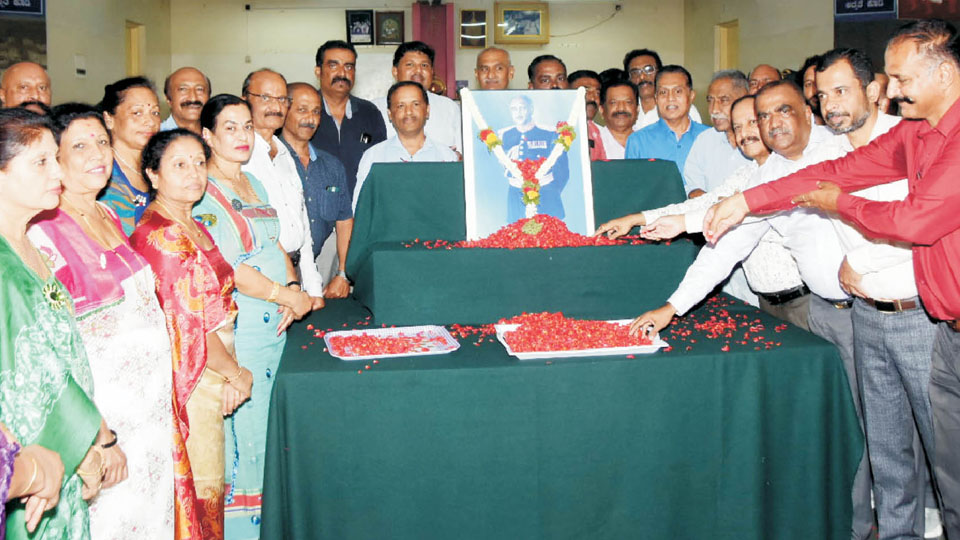
The Management of Kodava Samaja, Mysuru, celebrated the 116th birth anniversary of late General K.S. Thimayya at the Samaja premises in Vijayanagar this morning.
Picture : (L to R) Mechanda M. Shashi Ponnappa, Samaja President; Malachira M. Ponnappa, Samaja Vice-President; Kuttimada D. Muthappa, President of Kodava Samaja Cultural and Sports Club and Machimada P. Nanaiah, Samaja Hon. Treasurer, offering floral tributes to the portrait of the late General. Ponjanda Lovely Appaiah, President of Shri Kaveri Kodagu Mahila Sangha, Appanderanda Tara Somaiah, Samaja Joint Secretary, Mukkatira B. Jeevan, Samaja Hon. Secretary and others were present.
source: http://www.starofmysore.com / Star of Mysore / Home> Photo News / March 31st, 2022
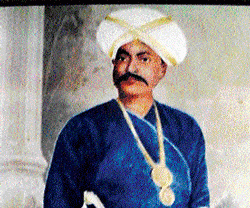
Chepudira Ponnappa was one of the four dewans in the court of Chikka Veerarajendra, the last raja of Kodagu. During his later years, he was no longer the king’s favourite counsel. However, when the British marched into Madikeri, they chose to continue the services of Ponnappa and other officials, writes C P Belliappa.
Chepudira Ponnappa was one of the four dewans in the court of the last raja of Kodagu, Chikka Veerarajendra. The other three were Dewan Apparanda Bopanna, Dewan Laxminarayana and Dewan Basavanna.
Dewan Ponnappa was a colourful personality. As a teenager, he attracted the attention of Chikka Veerarajendra’s grandfather Lingaraja, when he accompanied the raja on a hunting expedition. They were camping by the side of a stream and the raja was ina relaxed mood. At a distance, a herd of buffaloes was grazing. A crow sat on the back of one of the buffaloes. Lingaraja asked if anyone could shoot the crow without hurting the buffalo. Young Ponnappa took the challenge and impressed the Raja with his marksmanship. He was immediately inducted into the army and rose rapidly in the ranks. He was appointed an army commander during the end of Dodda Veerarajendra’s reign. When Lingarajendra succeeded his brother, Ponnappa was elevated as a dewan.
Ponnappa married Cheyyavva from the Kodendera family. By 1800, they had three sons and four daughters. Ponnappa had additional responsibilities of collecting land revenue and in enforcing law and order. For this task, he had to be away from home for long periods of time.
Cheyyavva, a formidable lady, took on the responsibilities of looking after their vast paddy fields during her husband’s absence. Ponnappa had built a large house in Kirgoor, and at the time it was one of the best constructions. There is an interesting story about the carpenter who built the house. The same carpenter carried out substantial work at the raja’s palace. After settling his dues, the raja gave him a paltry bonus. The carpenter supposedly commented later, “What kind of a raja is this. His official: Ponnappa tipped me with double the number of gold coins.” The raja was furious when he heard this, but by then, the carpenter had safely returned to Kerala!
During one of Ponnappa’s extended tours, he camped in a remote village for a week. He was the guest of the village headman who belonged to the Manjera family. The headman’s beautiful young daughter Somavva was serving food to the important visitor; and Ponnappa was smitten by the attractive damsel. Ponnappa, then in his 30s, mustered all his courage to ask the headman for his daughter’s hand in marriage.
Somavva’s father and Manjera family members were elated at this offer from the powerful and prosperous Ponnappa even though their daughter would be his second wife. The village elders insisted on the marriage taking place immediately, and Somavva gave her much feigned coy assent. Ponnappa extended his stay and the villagers enthusiastically started preparations for the wedding. There was excitement all round. Their new influential ‘son-in-law of the village’ was heartily felicitated.
A week later, it dawned on Ponnappa that he now had the delicate task of facing his first wife along with his new bride! As he approached his house in Kirgoor, an unsuspecting Cheyyavva came out to greet her husband who had been away for over a month. When Cheyyavva saw Ponnappa with a demure Somavva still in her bridal finery by his side, she flew into a rage. She brandished an odi katthi (sword) and stood menacingly near the entrance. Ponnappa had to retreat, and he soon undertook construction of another house, identical to the one built earlier, to start a family with Somavva. He had four sons and three daughters with Somavva.
Disillusioned dewan
By 1830, Ponnappa was disillusioned with the erratic and despotic rule of Chikka Veerarajendra. By then, he was 66 years old and distanced himself from playing an active part in the administration though he continued as a dewan. Chikka Veerarajendra listened more to the uncouth Dewan Basavanna who was his childhood companion and a kennel-keeper. Basavanna was intensely disliked by the citizens who referred to him as Kunta Basava since he had a limp.
The young raja had gone on a collision course with the British who were well-entrenched in the neighbouring areas of Karnataka and Kerala.
In 1833, Chikka Veerarajendra angered the British by taking Kulpally Karunakara Menon, an emissary of the BritishEast India Company, as hostage. Karunakara Menon warned the raja not to antagonise the British. In Menon’s famous words: “The British had the capacity to raise troops which could outnumber the trees in Kodagu! Ill-advised by Dewan Basavanna, Chikka Veerarajendra remained defiant and demanded the British to hand over his brother-in-law and sister who had been given asylum in Mysore. Chikka Veerarajendra accused his brother-in-law of hatching a plot to overthrow him.
By early 1834, the British decided to attack Kodagu. British troops encircled Kodagu from Mysore, Kodlipet, Kannur and Mangalore. A besieged raja called Dewan Ponnappa for advice. Dewan Ponnappa’s counsel was to immediately and unconditionally release Karunakara Menon. He was candid that the British could not be countered militarily. This enraged Dewan Basavanna who suddenly struck Dewan Ponnappa. Seventy-year-old Ponnappa momentarily lost consciousness but soon recovered. Without uttering another word, he walked out of Madikeri fort.
This was a defining moment in the history of Kodagu. Dewan Bopanna and other Kodava elders were appalled and they agreed it would be better if the administration of Kodagu was taken over by the British. They decided not to resist the impending British intervention.
On April 10, 1834, the East India Company under Colonel J S Fraser marched into Madikeri fort and announced the ouster of Chikka Veerarajendra. Kodagu was annexed and the raja was permanently exiled from his kingdom.
The British very diplomatically continued the services of Dewan Ponnappa, Dewan Bopanna and many other Kodava officials. Dewan Ponnappa lived to a ripe-old age of eighty-four. Before he died in 1847, his first wife Cheyyavva extracted a promise from him and her sons. Cheyyavva wanted to be buried closer to Ponnappa’s grave than her bête noire Somavva! This wish was fulfilled. The graves of Ponnappa’s two wives are located on either side of his tomb with that of Cheyyavva being closer by a foot!
His legacy
One of Ponnappa’s sons, Madayya was very influential, and in 1866, he renamed a small hamlet known as Balelesanthe (a place famous for selling banana leaves – an important commodity those days) as: Ponnappanapete after his illustrious father. Over the years, it transformed to Ponnampet and is currently a flourishing town in Kodagu. Chepudira family members installed a statue of Dewan Ponnappa in Ponnampet when the clan hosted the Kodava Hockey Festival in the town in 2000. Not to be forgotten , of course, is the fact that in 1957, Dewan Ponnappa’s great-great-granddaughter’s son, K S Thimayya, took charge as the Chief of Army Staff of India!
source: http://www.deccanherald.com / Deccan Herald / Home> Spectrum> History / by C.P. Belliappa / May 28th, 2012
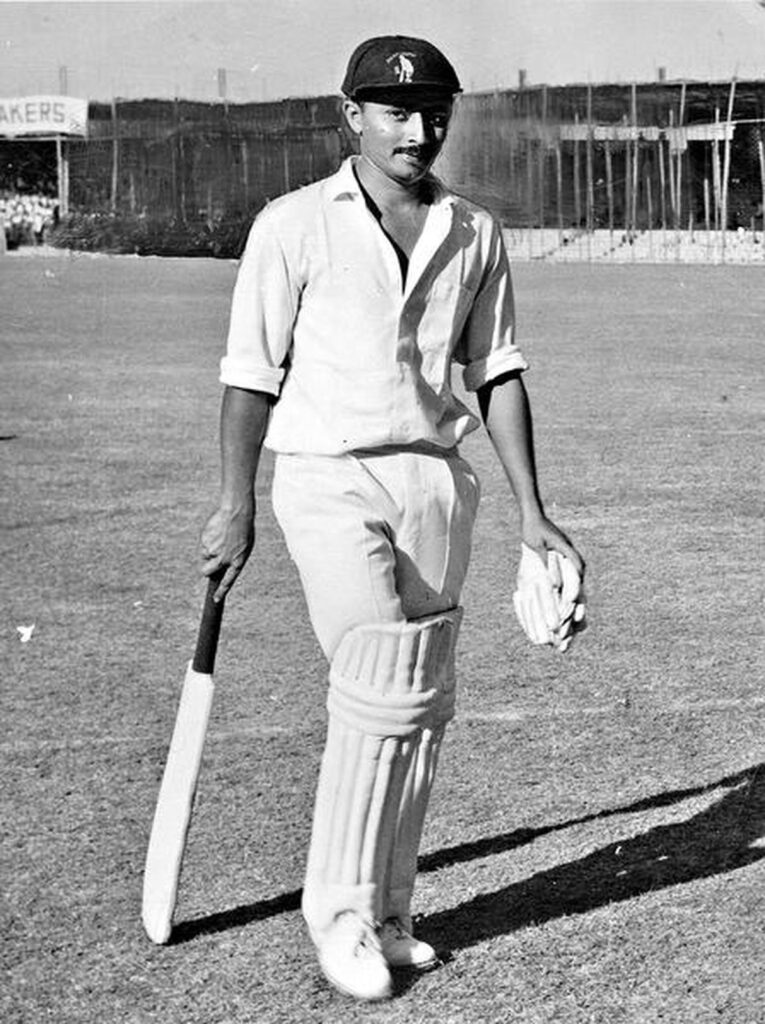
The keeper-batsman skippered South Zone and Tamil Nadu
Former Tamil Nadu and South Zone captain P.K. Belliappa passed away in Bengaluru on Wednesday morning. He was 79 and is survived by his wife, a son and a daughter.
Belliappa, who made his debut for Tamil Nadu (then Madras) in 1959, played 94 First Class matches till 1974.
An opening batsman and a wicket-keeper, he made 4061 runs at an average of 29.42 with a highest score of 141 and had 93 catches and 46 stumpings to his credit.
Former India leg-spinner V.V. Kumar said “I played with him for close to 20 years and he was a great captain in the 60s. Under him we really did well in various tournaments. He was a gritty opening batsman and very good ’keeper who gave valuable inputs to the bowler as well. He was a self-made cricketer and off-the field, the heart and soul of any party.”
Another contemporary, former TN fast bowler B. Kalayanasundaram, remarked “he was my captain when I made my debut in Ranji Trophy and someone who always encouraged players. Once played me in an inter-district match when I was not well and made me bowl just five overs before allowing me to take rest, so that he could then pick me for the State side.”
“I knew him from my younger days as we were neighbours in Harrington Road and used to play with a golf ball. He was a very pleasant person and incidentally, I made my debut in his last Ranji Trophy match,” said former India wicketkeeper Bharat Reddy.
The TNCA president and members condoled the demise of Belliappa in a statement. His last rites will be held in his native place Coorg.
source: http://www.thehindu.com / The Hindu / Home> Sport> Cricket / by Staff Reporter / Chennai – February 19th, 2020
WELCOME. If you like what you see "SUBSCRIBE via EMAIL" to receive FREE regular UPDATES.
Read More »