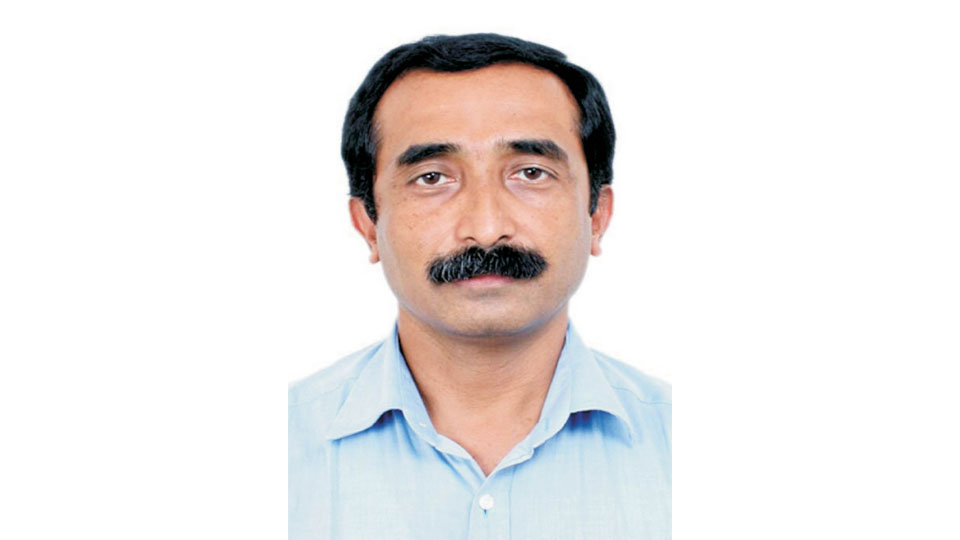
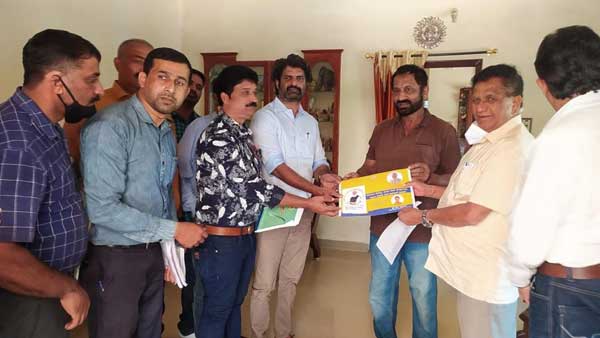
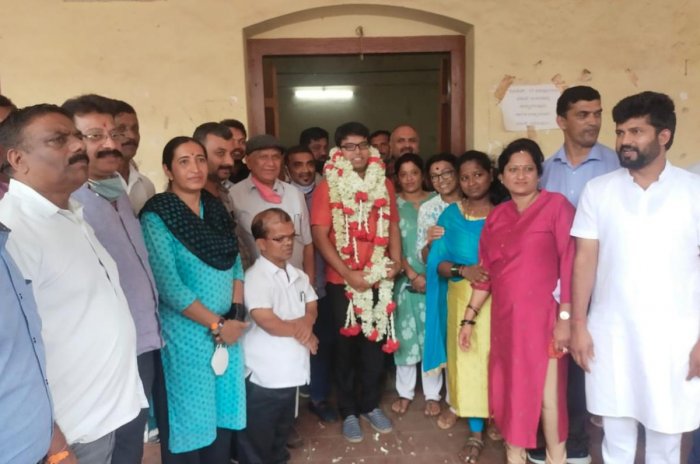
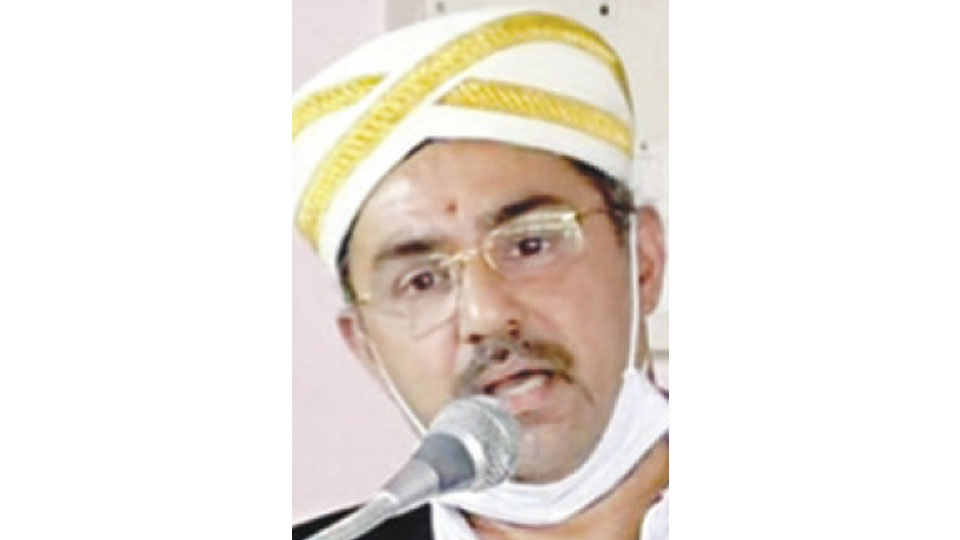
M.M. Uthappa has been awarded Ph.D in Faculty of Mechanical Engineering Sciences by the Visvesvaraya Technological University (VTU), Belagavi, for his thesis ‘A study of motivational factors and its impact on project team performance (A study conducted at selected private and public sector companies in India)’ submitted under the guidance of Dr. A.N. Santosh Kumar.
Macharanda Madappa Uthappa is a Mechanical Engineer graduated from BMS College of Engineering, Bengaluru and earned his post-graduation — Master of Technology (M.Tech) and Master of Engineering Management (MEM) from VTU. He received his Doctorate during VTU’s 21st Annual Convocation held on Mar. 10 at Belagavi.
Uthappa is a Chartered Engineer (C Engg) and also an elected Fellow Member of Institution of Engineers India (FIE).
He started his career with Tata Group and after a 25-year corporate service till 2015 in various capacities, he quit the job in 2015 and registered as Full Time Research Scholar at VTU’s Research Centre in Sri Jayachamarajendra College of Engineering (SJCE), Mysuru.
Also a folk singer and lyricist, Uthappa has translated many Kannada devotional songs to Kodava paaje.
source: http://www.starofmysore.com / Star of Mysore / Home> News / March 17th, 2022
Field Marshal K M Cariappa and General K S Thimayya, both from Kodagu, broke down several barriers for Indians in the army.
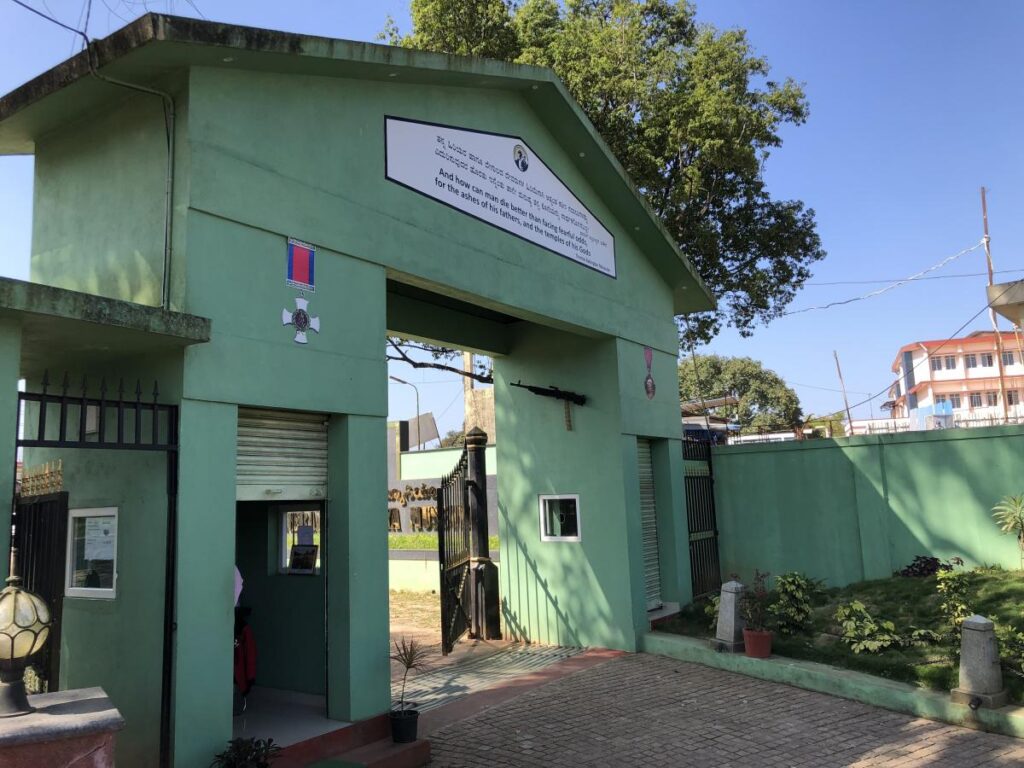
The entrance to the General Thimayya museum. Photos by author
The General Thimayya Memorial Museum commemorates the life of the Indian General and is meant to inspire the younger generation to join the armed forces.
The museum was originally called Sunnyside and was the family home of Gen Thimayya. But not many people know that it was his mother Cheppudira Cheethavva (aka Seethamma) who inherited the house from her father.
Thimayya’s two brothers went on to serve in the army as well. Thimayya himself had a four-decade-long career in the armed forces from 1921 to 1961. A distinguished combat officer, he saw action in the Second World War, then in the 1948 war against Pakistan and went on to serve as Army Chief from 1957 to 1961.
After his retirement, he was sent on a peacekeeping mission to Cyprus, where he passed away in 1964.
But his illustrious career in the armed forces could have turned out differently. At one point, as a young lieutenant, he wanted to quit the army and join the Indian freedom movement, but was dissuaded from doing so by the Motilal Nehru.
“Nothing will please the British more than your resignation. For 30 years we have fought for Army Indianisation. We are now winning the fight. If you give up, we shall have lost it,” Nehru told him. “We are going to win independence. Perhaps not this year or the next, but sooner than later the British will be driven out. When that happens, India will stand alone. We will have no one to protect us but ourselves. It is then that our survival will depend upon men like you.”
Nehru’s prescient words led Thimayya to stay on in the army. The rest is history, and is on display at Thimayya’s family home.
For some years, the Sunnyside House served as the RTO office in Madikeri. This was until the Field Marshal K M Cariappa and General Thimayya Forum, whose president Col (retired) Kandrathanda C Subbaiah and convener Major (retired) Biddanda Nanda Nanjappa renovated and converted it into a museum.
This museum is spread over 2.6 acres and located on G T Road in Mahadevpet in Madikeri, and was inaugurated in February 2021 by the President of India Ram Nath Kovind.
An old-style building, many rooms in the house have been dedicated to various members of Thimayya’s family. One room has been dedicated to General Thimayya’s wife Codanda Nina. Another room is dedicated to Thimayya’s brother Freddie, the painter, while a third has been dedicated to General Thimayya’s home regiment, the Kumaon.
One room also displays Kodava culture: there is a Kuppya Chele (traditional male costume) on display accompanied by a hand-wound, Pani-katt, white turban.
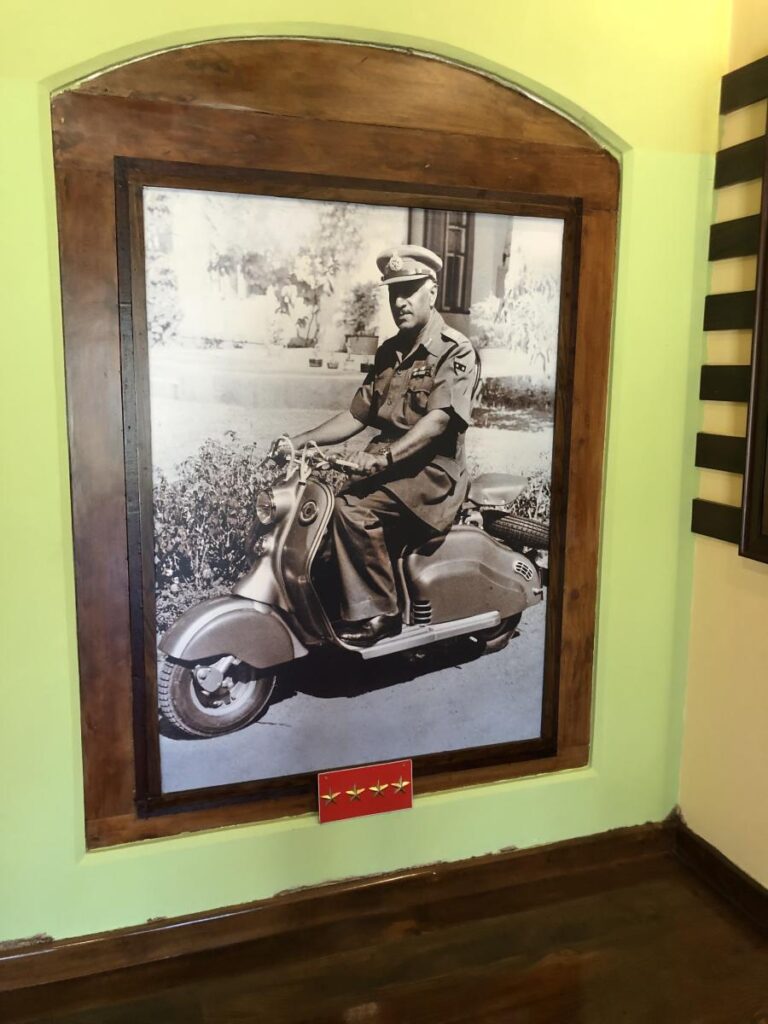
The house itself has several pictures from Thimayya’s life, along with a video film. There is a famous photo of the General riding a Lambretta scooter. There are also pictures of Thimayya during his wedding.
A photo of the General on his scooter at the museum. Photos by author
Besides this, a replica of his uniform and medals are on display.
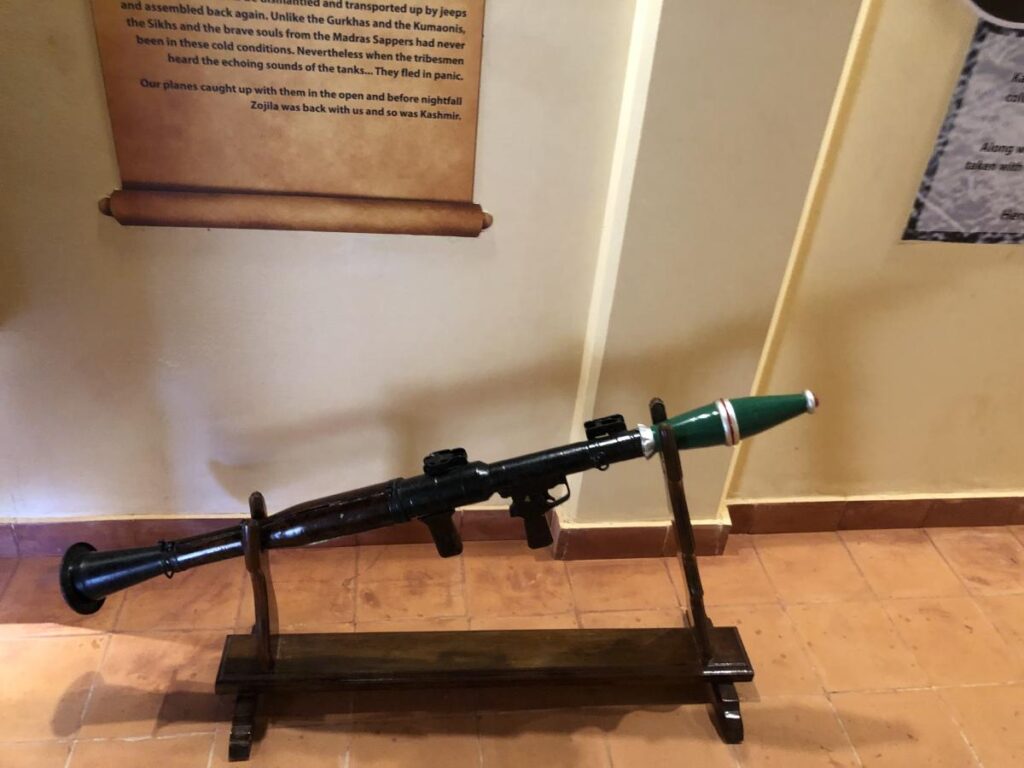
The museum also houses 24 weapons donated by General Bipin Rawat.
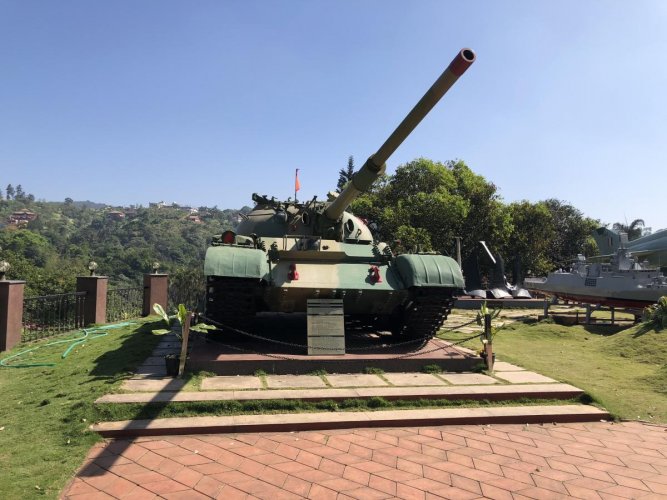
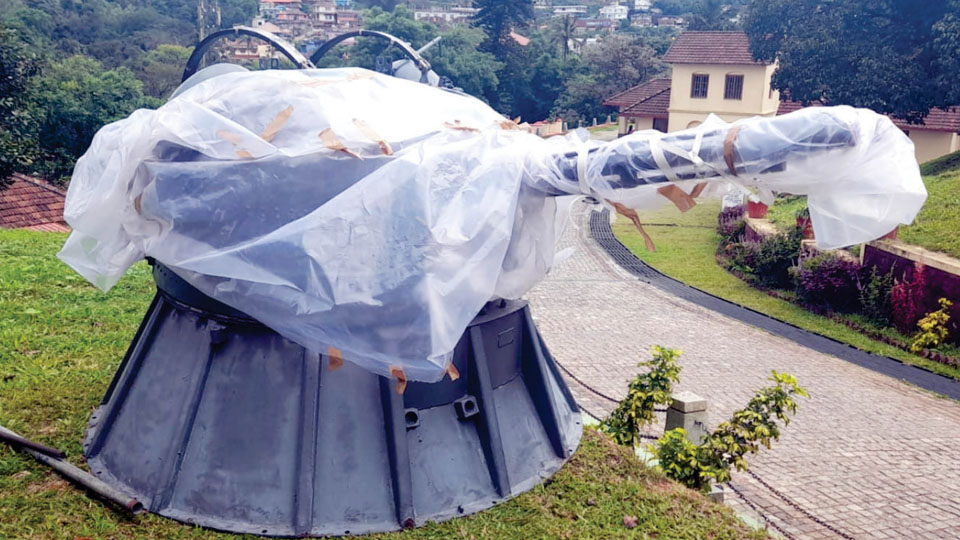
Outside the house, near the entrance, stands a battle tank called Himmath, donated by the Army training centre in Pune, a decommissioned MIG21 supersonic fighter jet and interceptor aircraft, a 24-feet INS Shivalik ship model, a Sindhughosh submarine and a Navy gun mount (anti-aircraft gun).
A rocket launcher is just one of the many weapons on display at the museum. Photos by author
Both the tank and the jet were used during the 1971 war.
source: http://www.deccanherald.com / Deccan Herald / Home> Spectrum / by Mookonda Kushapallpa / DHNS / March 19th, 2022
The BJP government in Karnataka launched the Revenue Documents at Your Doorstep programme. Karnataka’s Chief Minister, Basavaraj Bommai while speaking at an event in Chikkaballapur said that it was a pity that people were made to run from pillar to post to get basic documents like the caste certificate and RTC. Revenue Minister, R Ashok formulated this novel programme to end the plight of the poor, he also said.
Bommai also said that the most significant work done by Prime Minister, Narendra Modi is that he created awareness among the people about their rights.
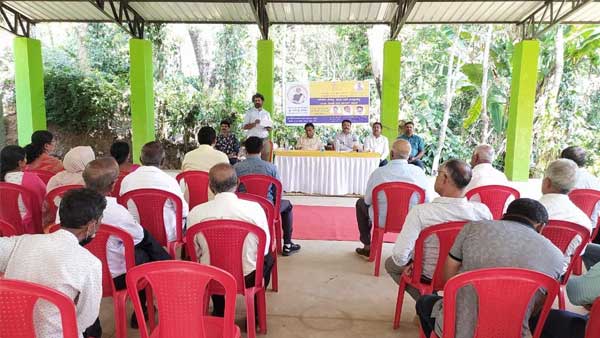
This dream programme of Bommai and Ashok was also launched in Kodagu district, where it has always been a nightmare to get property documents done. The programme attended by Kodagu MLA, K G Bopaiah and MLC, Suja Kushalappa was launched at Kavadi Village, Karmad Panchayat, Ammathi Hobli, Virajpet Taluk.
While launching the programme the BJP government assured that the revenue documents will be handed over at doorstep of the respective owners. The event was attended by the Tahsildar, Revenue Inspector and Revenue Department officials also.
Bopaiah, while speaking at the event said that this programme has been launched keeping the plight of the citizens in mind. They no longer have to run from office to office and waste time at revenue department offices. We have taken interest in delivering documents at your doorstep, he also said.
Documents such as the RTC, Income and Birth Certificates and Caste Certificates, survey maps will be delivered at your doorstep, Bopaiah also said. He explained that an application with 22 point checklist will be provided and the owners of the land will have to fill it up, following which the revenue department official will collect it at your doorstep. The MLA also assured that the corrections in the documents will be done at the earliest. There is no longer a need to stand in queues and run from pillar to post and office to office, he also added.
He said that the main issue that people were facing is the deletion of the pattedara’s (family head) name from the RTC (pauthi khatha). This new programme will ease out that process also, he assured.
Bopaiah however added that this programme is not an election gimmick, but has been introduced only with the view of easing the pain of and helping the people of the state.
MLC, Suja Kushalappa speaking at the event said that this is one of the best measures taken by any government in recent times. He said that the Revenue Documents at Your Doorstep programme is like a balm for the people who have been facing pain all these years.
Kushalappa assured that this programme would be a complete success and generations to come will thank the BJP government for this novel gesture. He said that he would ensure that the programme is a complete success and would personally oversee it in case anyone faces any difficulty.
source: http://www.oneindia.com / OneIndia / Home> News> Bengaluru / by OneIndia Correspondent / March 14th, 2022
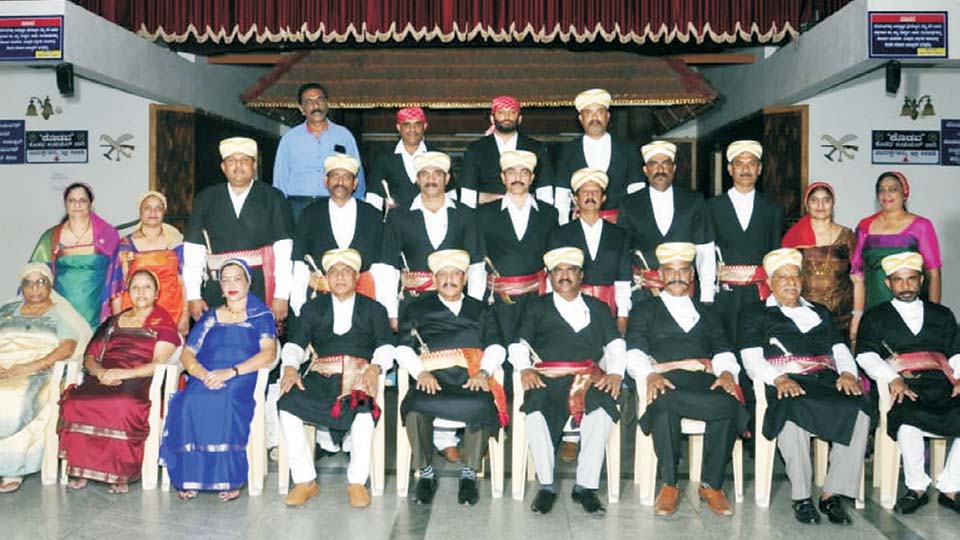
A group photo of Kodava Samaja Mysuru (KSM) Management Committee Members for the year 2021-23
(Sitting from left):Chembanda Nanjamma Pemmaiah, President – Kodagu Sahakara Sangha (KSS), Ponjanda Lovely Appaiah, President – Shri Kaveri Kodagu Mahila Sangha (SKKMS), Appanderanda Tara Somaiah, Joint Secretary – KSM, Mukkatira B. Jeevan, Hon. Secretary – KSM, Mechanda M. Shashi Ponnappa, President – KSM, Malachira M. Ponnappa, Vice – President – KSM, Machimada P. Nanaiah, Hon. Treasurer – KSM, Kekada M. Belliappa, Chairman, Sree Cauvery Educational Institutions (SCEI) and Kuttimada D. Muthappa, President – Kodava Samaja Cultural and Sports Club; Committee Members – middle row from left: Kalyatanda Meena Ponnappa, Thapanda Latha Nanjunda, Ajjinikanda Manish Pemmaiah, Ponnimada K. Biddappa, Balekuttira M. Poonacha, Pattamada T. Charamana, Kanacherira N. Mohankumar, Kunjiyanda Robin, Chovanda B. Harish, Kotera Revathy Kushalappa and Palachanda Saraswathi Suresh; Standing top row from left: Anjaparavanda T. Chinnappa, Kanjithanda B. Kushalappa, Chottemanda U. Alok Appanna and Sadmudira S. Rashan Bopaiah.
source: http://www.starofmysore.com / Star of Mysore / Home> Photo News / March 04th, 2022
New war machines brought to Sunny Side, General K.S. Thimayya Museum
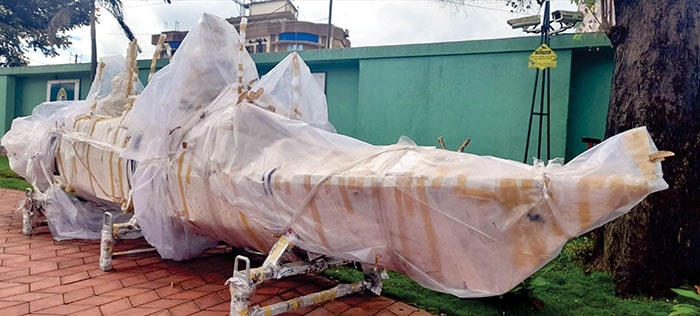
The submarine, INS Shivalik model and the anti-aircraft gun were brought to Madikeri from Visakhapatnam Naval Base in giant many-wheeled trucks and have been placed on the museum campus for a formal handing over and opening.
The formal handing over will take place in Madikeri either in December this year or January 2022. The Flag Officer Commanding-in-Chief, Western Naval Command of the Indian Navy, will arrive in Madikeri and officially hand over the new items to the Deputy Commissioner and they would be open for public display.
Till now, only one ship anchor was on display in the museum and not many of the Indian Navy relics were there. But now with the addition of the INS Shivalik and a submarine being added to the existing attractions, it is a befitting tribute to the celebrated General who is Kodagu’s pride.
About INS Shivalik
INS Shivalik is designed to escape detection by normal radars and surveillance equipment. Special aerodynamics, equipment and material used in designing and building these ships makes it very difficult to monitor their movements. That’s why they are called ‘stealth frigates.’
With INS Shivalik, India made it to the elite club of eight nations that build stealth warships, adding new fire power and muscle to its Navy. Apart from India, only the US, Russia, UK, France, Sweden, Japan, Italy and China have the capability to build stealth warships of this size and class.
The vessel was ordered in 1999 and saw its keel laid down on July 11, 2001 by shipbuilder Mazagon Dock Limited. As a multi-role warship, the INS Shivalik is fielded with a varying group of armament options to contend with aerial, surface and underwater threats.
Rear Admiral’s contribution
Rear Admiral Ichettira Uthappa, who is a relative of Col. (Retd.) Kandrathanda Subbaiah, the President of Field Marshal Cariappa and General Thimayya Forum, had visited Sunny Side four months back and Subbaiah had drawn the attention of the Rear Admiral to the fact that the museum did not have a warship.
Uthappa promised Subbaiah that he will pursue efforts to bring a warship model to the museum and accordingly, the war machines were brought to Madikeri. Rear Admiral Uthappa interacted with Navy authorities and sanctioned INS Shivalik warship model that is 24-ft in length and a submarine which is 8-ft in length.
Even the anti-aircraft gun that was brought to Madikeri from Visakhapatnam had served the Navy for years and the cost of all the latest additions to the museum is estimated to be Rs. 20 lakh.
According to Field Marshal Cariappa and General Thimayya Forum Convener Major (Retd.) Biddanda Nanjappa, Rear Admiral Uthappa bore the transportation costs of shifting the naval items to Madikeri and in the coming days, a suitable place will be made to accommodate these war machines, he added.
source: http://www.starofmysore.com / Star of Mysore / Home> News / December 01st, 2021
Vinank Kuttappa who was elected as the vice president of Virajpet Town Panchayat was greeted by MP Pratap Simha, MLA K G Bopaiah and other BJP members of the panchayat
Vinank Kuttappa from the BJP has been elected as the vice president of Virajpet Town Panchayat.
In the elections held on Friday, Vinank secured 10 votes, while his close contender from the Congress, Muhammed Rafi, got eight votes.
There are 18 elected members in the Town Panchayat. All eight members from the BJP, MP Pratap Simha and MLA K G Bopaiah voted for Vinank.
Six Congress members, one JD(S) member and an independent member voted for Rafi. Two independent candidates stayed neutral.
Tahsildar R Yoganand was the returning officer.
The seat occupied by former vice president of the Town Panchayat, Harshavardhan, was vacant, owing to his demise.
source: http://www.deccanherald.com / Deccan Herald / Home> State> Mangaluru / by DHNS, Virajpet / October 29th, 2021
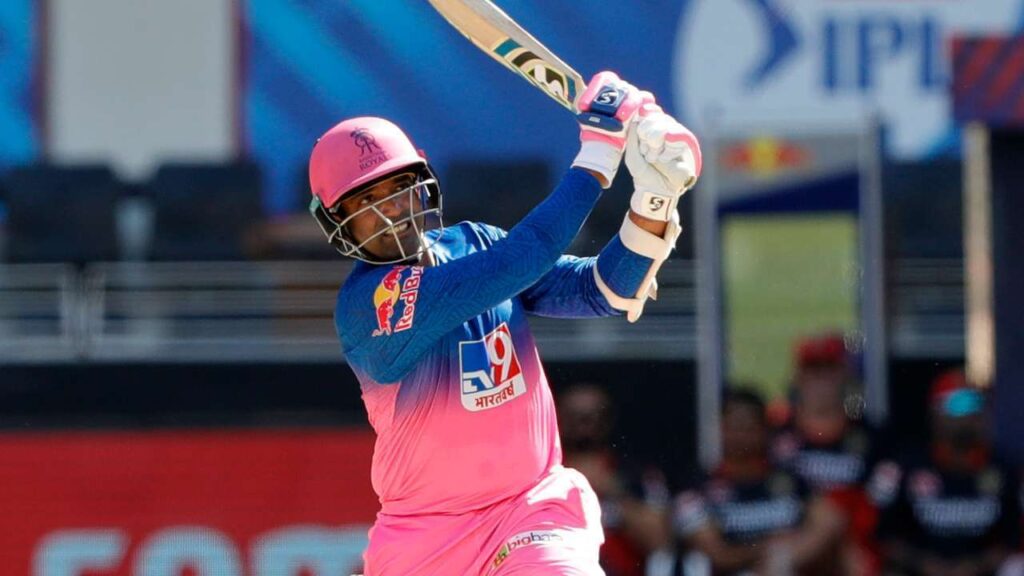
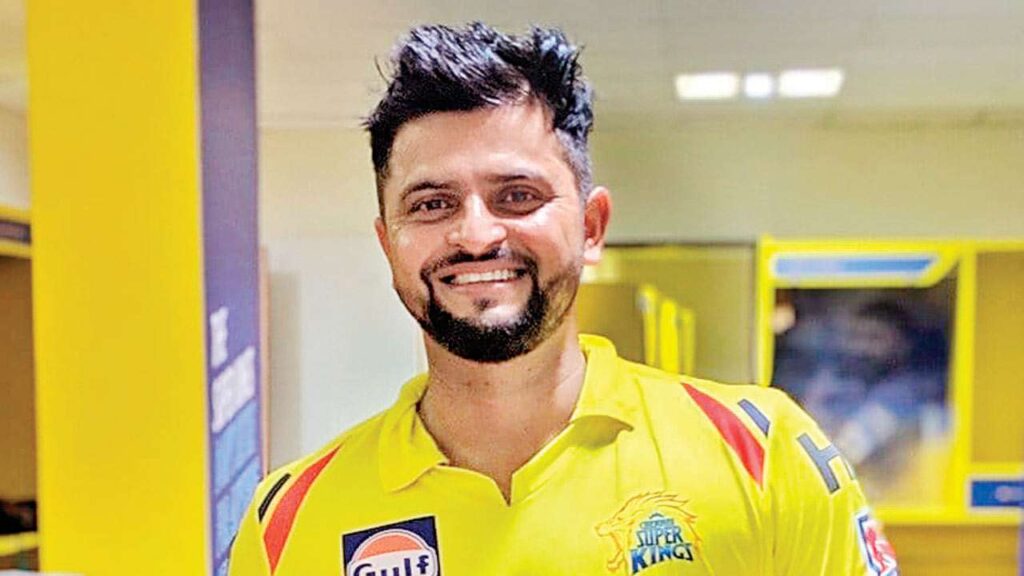
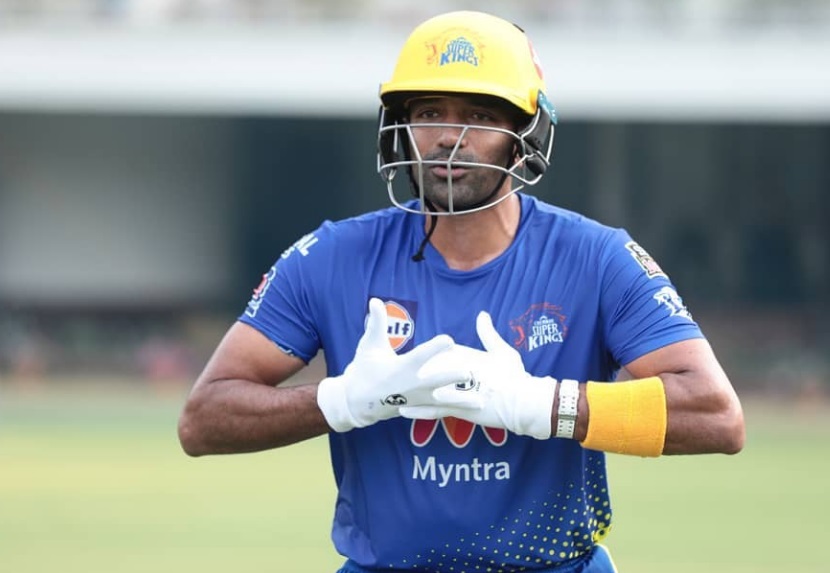
Robin Uthappa, the former India batsman has opened up on what goes through the mind of a cricketer during an Indian Premier League (IPL) auction, where a player’s value becomes about how much somebody is willing to spend on you.
During the recent IPL mega auction, defending champions Chennai Super Kings re-signed Robin Uthappa for his base price of Rs 2 crore. The explosive batsman had chipped in with valuable innings in last season’s playoffs after being given a chance late in CSK’s campaign in the UAE following Suresh Raina’s poor form.
Suresh Raina (Image Credit: Twitter)
Robin Uthappa Opines That It’s Not A Most Pleasing Feeling To See IPL Auctions And Wants A More Respectful Draft System Instead
Robin Uthappa vitally scored 63 off 44 balls during the first Qualifier followed by a knock of 31 off 15 in the final to beat Kolkata Knight Riders. While Robin Uthappa admitted that he and his family had hoped that he would go back to CSK, the 36-year-old candidly spoke of how vulnerable a player can be while watching their name come up at an IPL auction.
“Playing for a team like CSK was something I desired, it was one of my only prayers: let’s get back to CSK. My family, even my son, prayed for that, which is special for me. I’m happy to be back in a place where there’s a sense of security and a sense of respect,” Uthappa, who played 46 ODIs and 13 T20Is for India between 2006 and 2015, said.
Robin Uthappa opened up about his own fight with depression, battling suicidal thoughts and wanting to quit cricket at the height of his career. As elated as he was to have found a spot in CSK’s roster, Robin Uthappa advocated for the IPL to shift to a draft system rather than the auctions.
“The auction feels like an examination which you have written a long time ago, and you’re just awaiting the results. You feel like cattle (commodity), to be honest,” he said.
“It’s not the most pleasing feeling, and I think that’s the thing about cricket, especially in India… everything about you is there for the world to consume and then judge and express their opinions about it. Having an opinion about performances is one thing, but having an opinion on how much you get sold for is quite something else.”
“You can’t imagine what the guys who don’t get sold go through. My heart goes out to guys who have been there for a long time and then miss out and don’t get picked. It can be defeating sometimes.
“Suddenly your value as a cricketer becomes about how much somebody is willing to spend on you. I really hope for the sake of the sanity of everybody that this goes into a draft system where it is more respectful.”
________________________________________________
The consistently proven match-winner, Robin Uthappa, was traded to Chennai Super Kings by the Rajasthan Royals ahead of IPL 2021 Player Auction. He had joined the Rajasthan Royals ahead of the 2020 season and played 12 games for them. Earlier, he was one of KKR’s stars in the title-winning efforts in 2012 and 2014.
Robin Uthappa Owes Being Part Of Chennai Super Kings And He Wants To Finish His Carrier With CSK
Ahead of the IPL 2022, which begins in just over a month’s time, Robin Uthappa is geared up for another successful season with four-time winners CSK, hoping to end his playing career with them.
______________________________________________
The expectation is to contribute to the success of the team,” he said. ” I love being a part of the team. I love the hard work that’s involved in it. I have this new lease wherein I want to play as much as I physically can. God-willing to finish my career with a team like CSK. “
______________________________________________
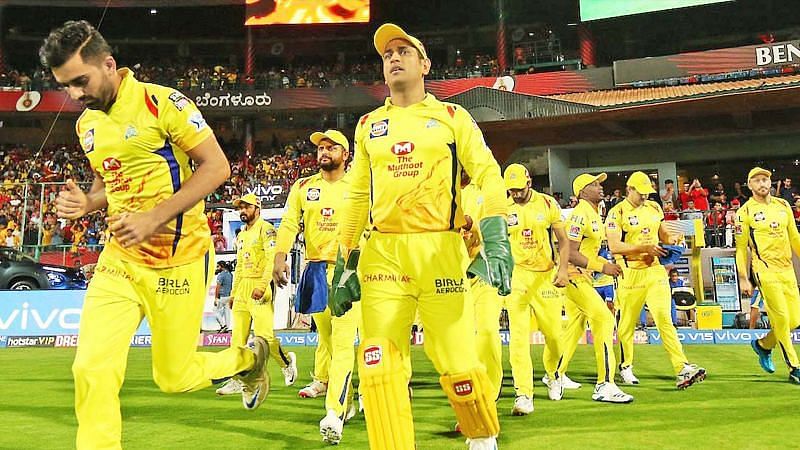
Chennai Super Kings (Image Credit: Twitter)
Apart from Deepak Chahar (14 crores), Ambati Rayudu (6.75 crores) and Dwayne Bravo (4.4 crores) were CSK’s most prized picks at the auction. Shivam Dube (4 crores) and Chris Jordan (3.6 crores) were the only other players that cost them more than two crores. Chennai Super Kings bought 21 players during IPL 2022 auction.
Out of 14 seasons, the franchise CSK has played 12 as they were banned in 2016 and 2017. The team has won the trophy four times in IPL 2010, IPL 2011, IPL 2018, and IPL 2021. The franchise has also reached the playoffs 11 times out of 12 seasons.
source: http://www.sportzwiki.com / SportZWiki / Home> Cricket> IPL 2022> News / by Nirmalya Banerjee / February 22nd, 2022
IGP (Southern Range) Pravin Madhukar Pawar given additional charge as KPA Director
Mysore/Mysuru:
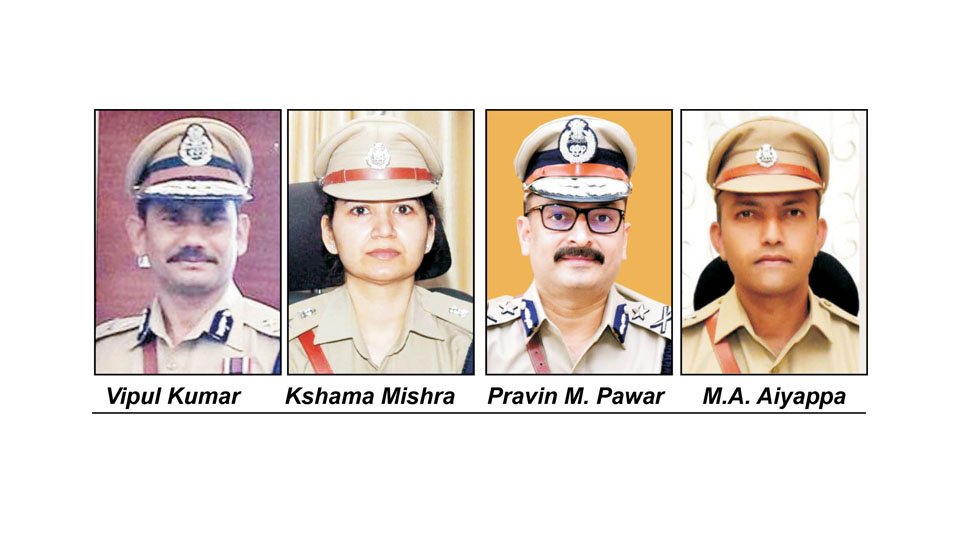
The State Government on Wednesday transferred Karnataka Police Academy (KPA) Director Vipul Kumar and posted him as the IGP of Internal Security Wing. IGP (Southern Range) Pravin Madhukar Pawar has been given additional charge as KPA Director.
Kodagu Superintendent of Police (SP) Kshama Mishra has been transferred without posting and Karnataka Power Corporation Limited (Vigilance) SP Malachira A. Aiyappa, a 2017 batch IPS Officer, has been posted to her place.
source: http://www.starofmysore.com / Star of Mysore / Home> News / February 18th, 2022
CNC says vested interests conspiring to include many others in Coorg by race classification
Mysore/Mysuru:
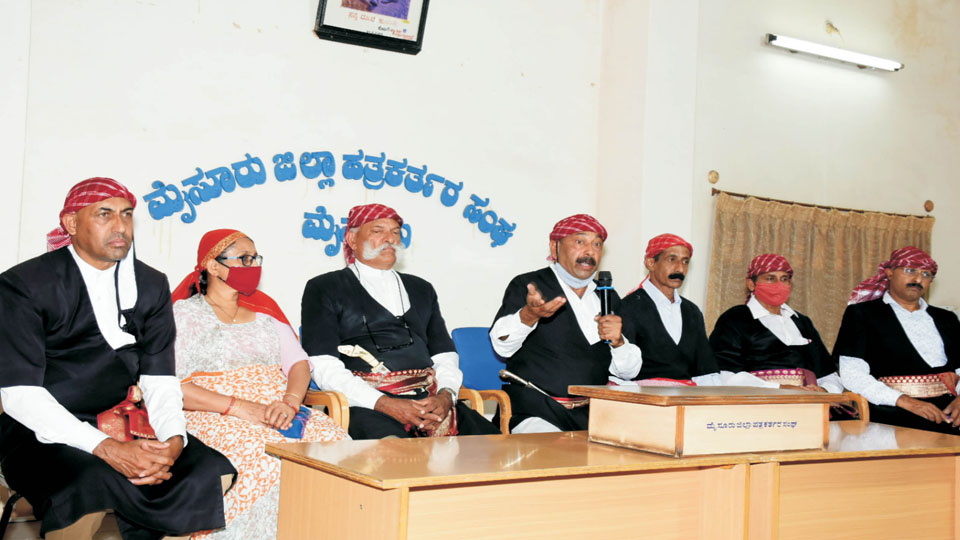
A gun is an integral part of Kodava culture, used in many rituals including birth, death and festivals and the Karnataka High Court has already upheld the Arms Act exemption granted to every person of Coorg by race Coorg (Kodagu district). As such, a law must be made to ensure that the rights of Kodavas over guns continue, demanded Codava National Council (CNC) President Nandineravanda U. Nachappa.
Addressing a press conference at Pathrakarthara Bhavan in the city yesterday, he said that all those who are settled in Kodagu are not Kodavas and attempts are being made by vested interests to portray a few communities as Coorgs (Kodavas by race). Attempts are being made at the highest official and political level to include many other communities in Coorgs by race classification for the sake of votes, he said.
“These vested interests who have settled in Kodagu — who are very different from the unique Kodava community — are systematically attempting to snatch away the exclusive rights of Kodavas by diluting the community itself and by demanding rights over guns. Kodava rights over guns are being questioned in the Court of law and the Courts have repeatedly upheld the Kodava community rights,” he noted.
The Kodava community has a long history with guns, and their culture is intrinsically linked with firearms. There are festivals in which gunshots are fired in the air, and a gun salute is performed when a child is born or a person dies. Firearms are an integral part of any Kodava festival, he said.
The British in recognition of their martial traditions granted the community a special privilege to own firearms without a licence in 1861. The exemption was then issued by the Union Government in 1963 under the provisions of the Indian Arms Act, 1959.
The Centre had issued a notification exempting every person of (the) Coorg race and every Jamma land tenure holder in Coorg from the Indian Arms Act. There was no curb on the privilege even after Coorg, which was a separate State earlier, merged with Karnataka, he said.
“This exemption has been questioned in Courts by vested interests and the Courts have repeatedly ruled in favour of Kodava community. As such, this exemption must be safeguarded with a law to protect the interests of the community. Like the Sikhs have been granted to possess the Kripan, Kodavas must be granted rights to possess a gun,” he demanded.
Other CNC leaders Kaliyanda Prakash, Lieutenant Colonel (Retd.) Balladichanda M. Parvathi, Chambanda Janath Kumar and Apparanda Poovanna were present.
source: http://www.starofmysore.com / Star of Mysore / Home> News / February 17th, 2022
Dr. Mechira Subhash Nanaiah of Murnad has been unanimously elected as the President of Kodagu Moolanivaasigala Samvidhanika Hakku Samrakshana Samithi, a Committee that has come into existence for the protection of Constitutional Rights of Kodagu original inhabitants.
Nanaiah’s election was announced at a meeting of Kodagu Gowda Samajagala Okkoota held at Madikeri on Sunday, which was attended by representatives of various Kodava communities.
The meeting also elected Kodagu Gowda Samajagala Okkoota President Soortale Somanna as the Hon. President of the Samithi.
This apart, senior advocate Padinjharanda G. Ayyappa, who is the President of Kodagu Heggade Samaja, Kodava Muslim Association (KMA) President Duddiyanda H. Soofi, Kodagu Airy Samaja President Babbira Saraswathi and Savita Samaja leader Vedapanda Kiran as the Vice-Presidents of the Samithi.
The meeting also resolved to include representatives of all original inhabitant communities in the Samithi and to evolve plans for launching a movement for reddressal of issues.
source: http://www.starofmysore.com / Star of Mysore / Home> News / Februrary 04th, 2022
WELCOME. If you like what you see "SUBSCRIBE via EMAIL" to receive FREE regular UPDATES.
Read More »