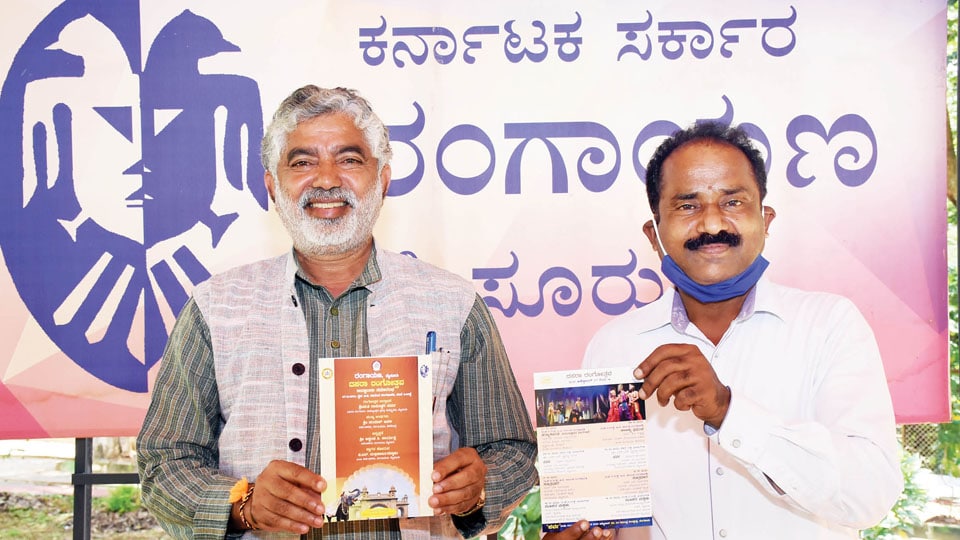
Stating that Rangayana is incurring an expenditure of Rs. 48,000 to present every show of acclaimed writer Dr. S.L. Bhyrappa’s popular play ‘Parva’, Rangayana Director Addanda C. Cariappa said that the ticket for the play is priced at Rs. 250 per head, with each show recording a collection of about Rs. 25,000.
Addressing a press meet at Rangayana here on Monday, Cariappa said that the Government had released Rs. 50 lakh for staging of ‘Parva’. However, Rangayana incurred an additional expenditure of Rs. 8.07 lakh, he said clarifying that costume designer Prasad Bidappa did not receive any remuneration. However, the money spent on his assistants has been accounted as remuneration, Cariappa said and added that more than 4,500 people have watched the play which has so far seen 14 shows.
Continuing, Cariappa said that with the performance of each show of ‘Parva’, the Rangayana is losing Rs. 23,000, with the collection being only Rs. 25,000, However, the loss is being made up with the utilisation of annual grant provided by the Government for different Rangayana activities, he added.
source: http://www.starofmysore.com / Star of Mysore / Home> News / October 06th, 2021
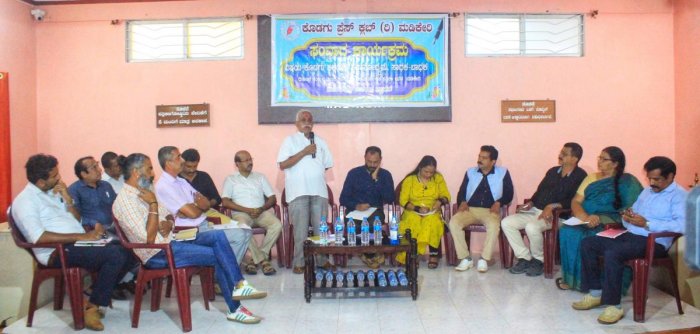
Chamber of Commerce president M B Devaiah speaks during a discussion on the pros and cons of tourism in the district, held at Kodagu Press Club, Madikeri, on Tuesday.
Various stakeholders in the tourism sector gave their suggestions towards developing sustainable and eco-friendly tourism in Kodagu, during a discussion on the pros and cons of tourism in the district, held at Kodagu Press Club, Madikeri, on Tuesday.
Chamber of Commerce president M B Devaiah said that it is the foremost duty of the people of Kodagu to preserve the environment of the district. Businesses can be carried out while maintaining ethics. Money is not everything.
“Nature-friendly industries should be set up in the district to provide jobs for people,” he added.
Pravasodyama Avalambitara Okkoota president K K Manjunath Kumar said that tourism contributes immensely to the development of a country.
Tourism in Kodagu has been generating good revenue, he said and pointed out that the countries which are backward in tourism are backward in development as well.
Resort and Hotel Owners’ Association president Nagendra Prasad said that there has been a significant rise in investment in the tourism sector in the district after the market for coffee fell. There are 1.50 lakh people in the district who are depending on tourism activities for their livelihood.
Kodagu Press Club president Ajjamada Ramesh Kuttappa in his introductory remarks, said, “Every citizen of the nation has a right to carry out legal work in any part of the country to make a living. No restrictions can be imposed on him or her in carrying out a job. A forum has been formed to discuss the problems of people working in the tourism sector and to find possible solutions.
Hotel, Lodges and Restaurants’ Association advisor Chidvilas said that coffee growers switched to homestay and hotel industry after they suffered losses in the coffee industry. He also advised imposing a total ban on plastic at tourist destinations in the district.
Kodagu Samrakshana Vedike convener Chammatira Pravin Uttappa said that there is a need to curb illegal activities which are carried out in the name of tourism.
“Insulting the traditional Kodava attire in some resorts should stop immediately. Tourism activities should stop during the Cauvery fair,” he added.
District Working Journalists’ Association president Savitha Rai, writer Bharadwaj K Anandateertha, Kodagu Hitarakshana Samiti president Rajiv Bopaiah, Travel Association president Cheyyanda Satya Ganapathy, Kodagu Tourism Association president Madetira Timmaiah and others were present.
source: http://www.deccanherald.com / Deccan Herald / Home> State> Mangaluru / b y DHNS, Madikeri / October 05th, 2021
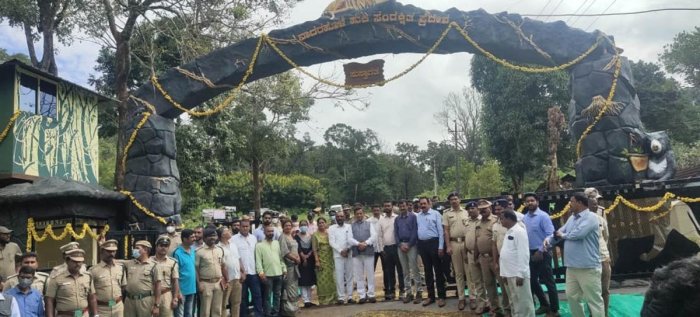
Virajpet MLA K G Bopaiah inaugurated the outpost and new welcome arch of Nagarahole Tiger Reserve, built at a cost of Rs 9 lakh, on the occasion of the 67th Wildlife Week on Sunday.
He said that the security has been upgraded with the new facility, so as to prevent the trespassing of people into the reserve forest. CCTV cameras have also been installed at the entrance.
Bopaiah also directed the forest department officials to take necessary measures to provide accessibility to fodder and water for elephants, bison and other herbivorous animals.
Saplings that provide fodder for such animals should be planted inside the forest area, he said.
“This will prevent the wild animals sneaking into human habitations, in search of food. Steps should also be taken to prevent the harm caused to the agriculturists living near the forests,” he added.
The MLA also inaugurated two safari tempo taxis for the benefit of visitors at Nagarahole. He also went on a safari in the new vehicle.
State Western Ghats Task Force chairman Shantheyanda Ravi Kushalappa, Nagarahole Tiger Reserve director D Mahesh Kumar, Nagarahole wildlife sub division ACF K P Gopal, Hunsur forest division ACF Satish and others were present.
source: http://www.deccanherald.com / Deccan Herald / Home> State> Mangaluru / by DHNS, Gonikoppa / October 03rd, 2021
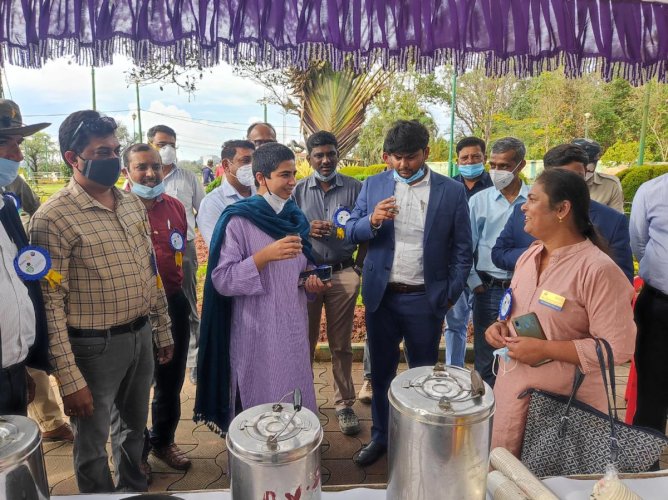
Deputy Commissioner Charulata Somal sips coffee at Raja Seat on Friday, on the occasion of International Coffee Day
Deputy Commissioner Charulata Somal said that the International Coffee Day celebrated in Kodagu, highlights the hard work of coffee growers, which is behind the taste of coffee.
She was speaking during the International Coffee Day programme observed by Rotary Misty Hills, at Raja Seat, on Friday.
The deputy commissioner added, “I got to know about every detail of coffee cultivation after I was posted to Kodagu. The dedication and effort by coffee growers in producing the best quality of coffee is commendable.”
Rotary Misty Hills president Anitha Poovaiah said that more than 1,500 visitors at Raja Seat were served coffee on account of International Coffee Day.
Rotary Deputy Governor H T Anil said that the quantity of coffee powder used by a person in India is 4 to 5 kg per year whereas, in a foreign country, a person uses 15 kg of coffee powder annually.
Therefore, there is a need to increase the usage of coffee in India, he added.
Misty Hills project director Devanira Tilak also spoke on the occasion.
Madikeri CMC commissioner Ramdas, horticulture department deputy director Sridhar, senior assistant director Pramod, Coffee Board deputy director Shivakumar Swamy and others were present.
‘Coffee export’
Kodagu Mahila Coffee Jagruthi Sangha distributed free coffee at various places in Madikeri on account of International Coffee Day.
The Coffee Day observed at Tadka House on Raja Seat Road was inaugurated by Kodava Samaja president K S Devaiah.
When the coffee industry was in distress women had started a unit to instil confidence in coffee growers in the district. The sangha has been promoting coffee consumption, said K S Devaiah.
Women have been actively engaged in managing coffee plantations and the industry. Kodagu’s coffee is known for its taste, he said.
Kodagu Coffee Growers’ Cooperative Society president M B Devaiah said the society is the largest coffee cooperative in Asia.
It is now mulling about exporting coffee and requires financial assistance from the government for exports, he added.
Advocate Pasura Preetham said the International Coffee Day is being observed since 2015.
Dr Mohan Appaji said that the consumption of coffee by those above 40 years is good for health.
Kodagu Mahila Coffee Jagruthi Sangha president Chitra Subbaiah, general secretary Anitha Nanda and others were present.
source: http://www.deccanherald.com / Deccan Herald / Home> State> Mangaluru / by DHNS, Madikeri / October 01st, 2021
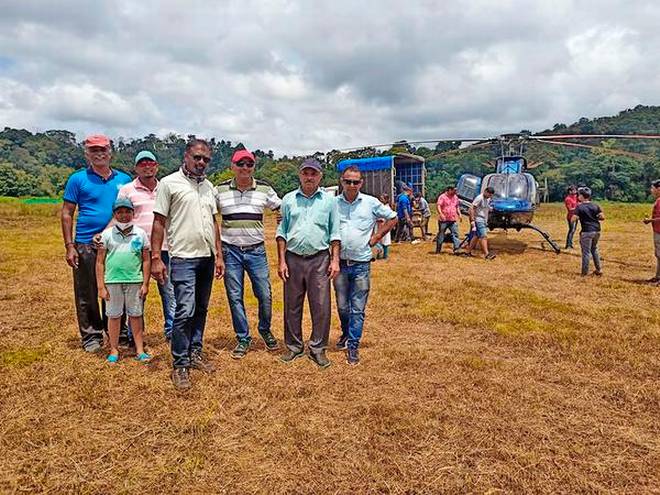
Locals gather to witness the heli-tourism initiative taking off, at Kakkabe in Kodagu. The chopper of a private operator that landed with three tourists can be seen in the backdrop.
A private operator flies in tourists from Bengaluru to a village resort close to Tadiandamol
Even as successive governments continue to dilly-dally over launching heli-tourism for high-end tourists despite umpteen promises, Kodagu has taken the first step towards giving a start to the initiative post-pandemic with local stakeholders taking the lead and kick starting the much-talked-about initiative.
A group of tourists from Bengaluru landed in a chopper at a village to explore Coorg’s splendour, staying in a resort located close to one of the highest points in Kodagu – Tadiandamol. These tourists, instead of taking the 6-hour drive to Madikeri from the IT Hub, chose to fly by a chopper owned and run by a private operator to reach the hill station.
In fact, Kodagu was also identified along with Mysuru for developing heli-ports by the Tourism Department which did not take off. However, an entrepreneur in the hospitality sector in Kodagu, Apparanda Sagar Ganapathy, who runs a resort at Kakkabe, coordinated with the chopper operator to ferry guests to his property where a helicopter landing facility was established recently at the resort to facilitate heli-tourism.
Mr. Ganapathy, who is also the president of Association for Rural Tourism (ART), says the potential of rural tourism remains unexplored as corporates and well-heeled tourists are keen to explore the life and lifestyles in villages. Heli-tourism can bring tourists who can afford chopper rides to the remotest corners of Kodagu to experience the coffee land’s unmatched beauty and the Coorg villages.
Villagers turned up in large numbers to witness the heli-tourism initiative. Kakkabe Panchayat president Kaliyanda Sampan and other locals were present to greet tourists.
Corporate executives can have their meetings amidst nature instead of in multi-storied structures. They can fly in by chopper, have a meeting, spend some valuable time and head back to their destinations. Infrastructure can help promote such kinds of tourism, the stakeholders believe.
The stakeholders in the hotel and hospitality sector in Kodagu, including ART and Kodagu Tourism Association, are also in the process of identifying infrastructure where choppers could land, bringing tourists, and promoting heli-tourism in a big way. Another resort is also in the process establishing the chopper landing space, foreseeing its potential, he said.
Kodagu has many luxury resorts, which, according to the stakeholders, are getting back their clients with the opening of tourism post-pandemic. But the mid-range resorts are lacking clientele with corporates, particularly those from the IT industry, are yet to return to their offices and continue to work from their homes.
“Before COVID-19, we used to get groups of 25-30 coming and staying in resorts during weekends or holidays. Such trips have stopped for one and half years due to the pandemic. Until the offices start working like before and schools and colleges function normally, tourism recovery may prolong,” Mr. Sagar said.
Unlike other places, Kodagu is predominantly covered by undulating hills with thick forest cover. There is a need to establish a safe environment for the landing and taking off of the choppers. “If we provide infrastructure like heli ports or helipads, more operators can show interest in bringing tourists by choppers, thus driving the tourist economy and helping revive the sector,” the travel operators said.
source: http://www.thehindu.com / The Hindu / Home> News> States> Karnataka / by Shankar Bennur / Mysuru – September 29th, 2021
Short films ‘Kodi Mova’ and ‘Nambike’, which won the first and second prizes in the short film competition, organised by Karnataka Kodava Sahitya Academy, were screened at Patrika Bhavan in Madikeri recently.
The programme was held under the aegis of the Kodagu Press Club.
The short film ‘Kodi Mova’ is directed and produced by Gopal Somaiah and ‘Nambike’ is directed and produced by Bollajira B Ayyappa.
Actor Roopesh Nanaiah said that even though the short films are made with less budget and are of less duration, their message can be equally strong as those of the mainstream films.
“Generally, people watch movies for entertainment. However, most of the movies that we watch are eventually forgotten. The movies that we remember forever have a good social message in them,” he said and stressed that the short films too, should propagate social messages.
He appreciated both the award-winning short films and said more focus should be given to the technical aspects.
Actor Neravanda Umesh felt that all the entries to the short film festival should have been screened.
The competition should be held every year so that the talents get opportunities, he said.
Kodagu Press Club president Ajjamada Ramesh Kuttappa was present.
source: http://www.deccanherald.com / Deccan Herald / Home> State> Mangaluru / by DHNS, Madikeri / September 29th, 2021
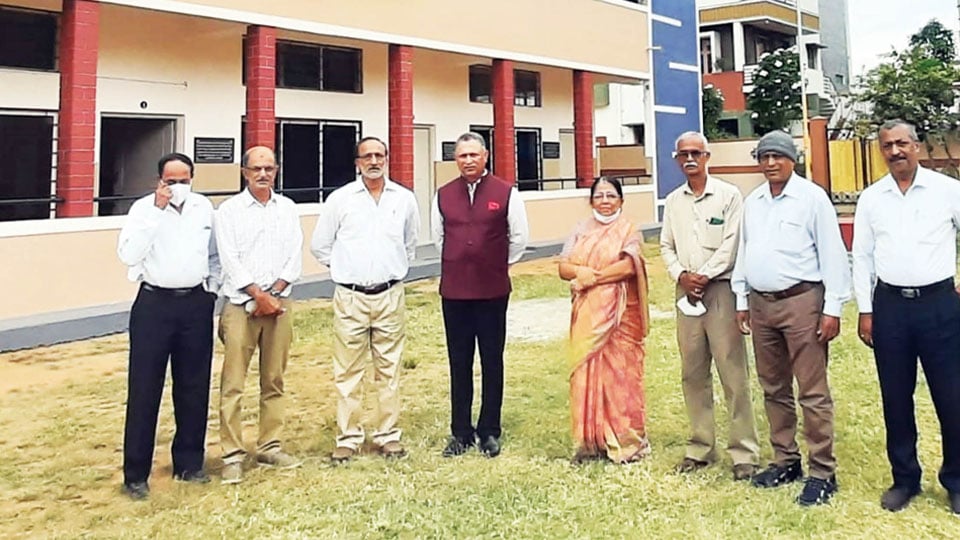
Lt. Gen. (retd.) Pattacheruvanda C. Thimmaiah visited Kodagu Model School at Vidyashankar Layout in Sathagalli here yesterday.
Lt. Gen. (retd.) Thimmaiah, now a resident of Mysuru, is also a member of Sri Kaveri Kodava Association, Mysuru East, which runs the School.
The former Army Officer was very much impressed by the progress of the school over the years. Expressing happiness about the infrastructural set up, he lauded the School’s achievements in a short period.
During his visit, Lt. Gen. (retd.) Thimmaiah discussed with the School authorities on what more was needed to be done for taking the Institution to greater heights and such other issues.
He suggested making Feeder Schools across the country as Sainik Schools, setting up of NCC units and increasing sporting activities in Schools. He also assured to come up with more useful suggestions whenever required on further development of Kodagu Model School.
The School Management members, staff and others accompanied him during his visit.
source: http://www.starofmysore.com / Star of Mysore / Home> News / September 28th, 2021
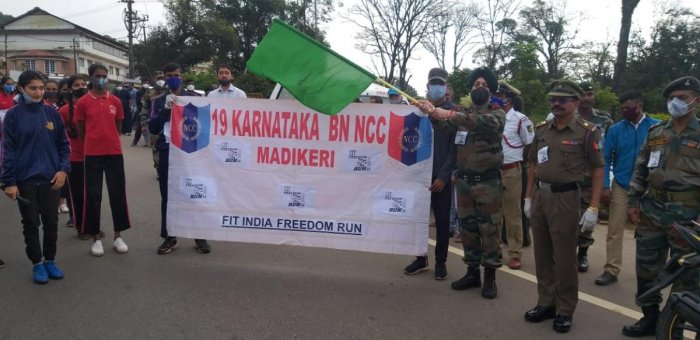
Lt Col Navdeep Singh Bedi flags off the Fit India Freedom Run in Madikeri.
The 19th Karnataka Battalion NCC Wing of Field Marshal K M Cariappa College, Madikeri CMC and the Green City Forum organised Fit India Freedom Run and cleanliness campaign on Saturday.
A cleanliness drive was carried out in front of the statue of Field Marshal K M Cariappa at Sudarshan Circle, General Thimayya Circle, Ajjamada Devaiah Circle, Chowki and State Bank Circle.
Lt Col Navdeep Singh Bedi said that there is a need to improve immunity to fight against Covid-19.
“Everyone should engage in exercise daily to maintain their health,” he added.
Field Marshal K M Cariappa College NCC officer Major Dr B Raghava also spoke on the occasion.
source: http://www.deccanherald.com / Deccan Herald / Home> State> Mangaluru / by DHNS, Madikeri / September 25th, 2021
As per the exemption, continuing from the British-era rule, the people from the hill district of Kodagu can posses pistols, revolvers and double-barrelled shotguns without a licence.
The Kodavas are a small martial community in Kodagu (Coorg) district in Karnataka. Image Courtesy: @KodaguConnect/Twitter
The Karnataka High Court on Wednesday upheld the Arms Act exemption granted to every person of Coorg by race, and Jumma tenure landholders in Coorg (Kodagu district).
A division bench of acting Chief Justice Satish Chandra Sharma and Justice Sachin Shankar Magadum heard the matter which was first filed on 30 June by 41-year-old Captain Chethan YK (retired), also a resident of Kodagu, who sought to know why only one race was given this exemption.
The judges in the case said: “The Kodava community which is a marshal community is enjoying the benefit of exemption since pre-independence and Jumma tenure holders are enjoying the exemption since pre-independence period. They have rightly been granted exemption for a period of ten years, it is not the case they have been granted exemption indefinitely. Exemption granted is subject to certain terms and conditions. Therefore, the Constitutional validity of the notification is upheld in the petition.”
Take a look at who are the Kodavas and the story behind their right to bear arms without a licence.
Kodava people
They are a unique race of people who live in Kodagu (Coorg, as the British called it), the smallest district in Karnataka.
The history of Coorg and the Kodava people is one that is shrouded in a lot of mystery. There are a variety of theories as to the origin of the Kodava, including theories of them being either the indigenous inhabitants of their region, or of foreign origins prior to two thousand years ago.
As per the indigenous theory, the Kodava people were an ancient warlike tribe, who were indigenous inhabitants of Kodagu. This tribe learned and practiced agriculture in the area and over the centuries they got civilised and gained prosperity.
The foreign origin theory, which is more popular with the community itself, says they are descendants of the broad-headed (Brachycephalic) stock who entered into the Indus Valley during the Mohenjodaro period and later migrated down to Coorg.
However, the most popular theory among the Kodavas is that they are descendants of the Indo-Greek soldiers, who came into India with Alexander the Great.
Weapons in the Kodava culture
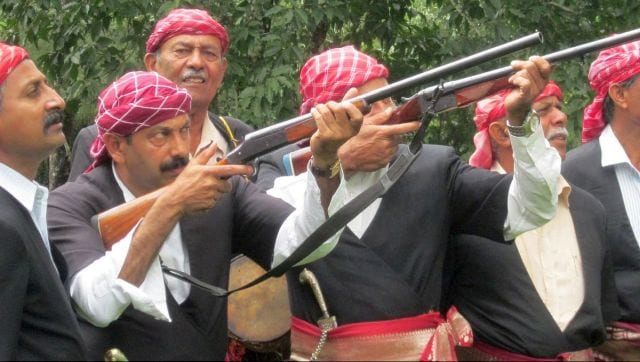
The Kodava community has a long history with guns, and historians say that their culture is intrinsically linked with firearms. There are festivals in which gunshots are fired in the air, and a gun salute is performed when a child is born or a person dies.
During the Kailpodh festival, celebrated each year on 3 September, all the weapons along with agricultural implements and vehicles are cleaned and decorated with flowers and worshipped.
The traditional sword and dagger also are a part of the Kodava attire, showcasing how intrinsically the arms are woven into their culture.
Exemptions from getting a gun licence
The British in recognition of their martial traditions granted the community a special privilege to own firearms without a licence in 1861.
One cultural reason for giving the exemption was that Kodava homes were far away from each other, in some cases could be as far as a kilometre.
“In older times when communication links were poor, a Kodava used to inform his neighbour by firing a single shot in the air about a newborn and two shots in case of any death in the family,” a prominent Kodava, who lives in Delhi, was quoted as saying to The Economic Times.
The exemption was then issued by the Union government in 1963 under the provisions of the Indian Arms Act, 1959.
The Centre had issued a notification exempting “every person of (the) Coorg race and every Jamma land tenure holder in Coorg” from the Indian Arms Act. There was no curb on the privilege even after Coorg, which was a separate state earlier, merged with Karnataka.
There are conditions, however, to the exemption. In a notification, the Ministry of Home Affairs, said, “The arms or ammunition carried or possessed by any person being from Kodagu by race and every Jamma tenure holder in Kodagu and herein exempted while residing or travelling outside the district of Kodagu shall not exceed one rifle with 100 rounds of ammunition for the same and one smooth bore breech or muzzle-loading gun with 500 cartridges or the equivalent in leaden shot and gunpowder.”
A home ministry official added that the exemption, valid till 2029, was given to the Kodavas as firearms were never misused in crimes or anti-national or anti-state activities.
According to reports, a proposal to do away with the privilege under the Arms Act was made in 1964 by the Centre. But the move was dropped, apparently, at the behest of Field Marshal K M Cariappa — the first Indian Commander-in-Chief of the Indian Army — and the then Union Minister C M Poonacha, who was also the former chief minister of Coorg state, before its merger with Karnataka.
‘Discriminatory’ exemption
In 2018, Captain Chethan (retired) filed a Writ Petition questioning the exemption granted by the Government of India to a certain class of people in the district in obtaining licence to possess firearms under Section 3 and 4 of the Indian Arms Act, 1959.
In his petition, Chethan, a resident of RT Nagar in Bengaluru, claimed that the continuation of the exemption, granted to some class of persons by the British Government in pre-Independent India in furtherance of their divide-and-rule policy, was unconstitutional, as it was based on irrational, fictitious and discriminatory grounds, such as race and ancestral land tenure.
The petitioner had claimed that the MHA did away with the scrutiny of persons before granting licence in respect of the people belonging to the ‘Coorg race’, adding that this itself is not only derogatory to the citizens of the entire nation other than the ‘Coorg race’, but also possess a threat to the life and liberty as the people exempted are permitted to hold arms and ammunition without any scrutiny of their antecedents or criminal records.
However, the petitioner’s concern was shot down by Additional Solicitor General M B Nargund appearing for the Union of India who said, “A kirpan is allowed to be used by the members of Sikh community and similarly, Gorkha community is permitted to use kukri.”
Senior Advocate Sajan Poovayya appearing for Respondents Kodagu Samaja Bangalore and Kodava Muslim Association also opposed the petition saying, “It is not like that if there are 100 people in a house they can have 200 firearms in the house, the quantity of arms and ammunition and the types of arms are all specified.”
Codava National Council president, Nandineravanda U Nachappa hailed the high court’s decision and speaking to Indianexpress.com said, “It is a historical judgment by the high court. Few people without any knowledge about the community had gone to court challenging exemption given to the Kodava community. We have received these rights under the customary law since Kodavas’ life revolves around the gun.”
source: http://www.firstpost.com / First Post / Home> India News / FP Staff / September 25th, 2021
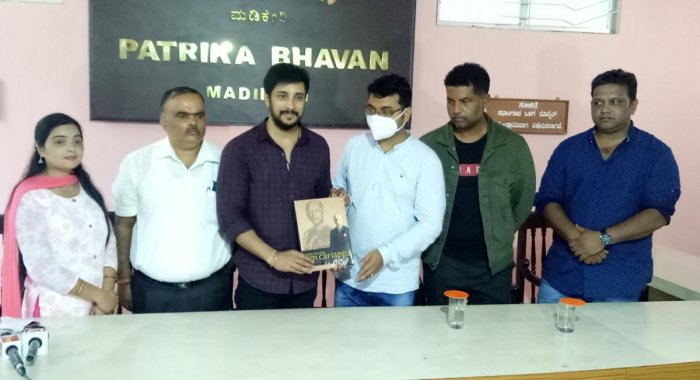
The team of a film on Field Marshal K M Cariappa, at Patrika Bhavan in Madikeri. Actor Prem, director Raghavendra and producer Arun Pradeep look on, among others.
Film director Raghavendra said that the family of Field Marshal K M Cariappa has given permission to Neo Cinema Samsthe to make a film on Cariappa.
Addressing reporters in Madikeri on Monday, he said that it will be his pride to direct the film. Actor Prem has been selected to play the lead role.
“Information has been obtained from Cariappa’s son Air Marshal Nanda Cariappa in Madikeri. The objective of the film is to narrate Field Marshal Cariappa’s valour to the entire world. The film is being made in Kannada, English and Hindi and is a big-budget movie,” he said.
Raghavendra further said that preparation will be done for eight months for screenplay and selection of places for shooting.
After the shooting, the film will hit screens in two years, he added.
Actor Prem said that Kodagu is a land of patriotism and culture.
If two children take birth in a Kodava family, one is sent to the army and another is chosen for agriculture. The life of Field Marshal K M Cariappa makes everyone proud, he said.
Madikeri CMC former member Veenakshi, film producer Arun Pradeep and distributor Anand were present, among others.
source: http://www.deccanherald.com / Deccan Herald / Home> State> Mangaluru / by DHNS, Madikeri / September 27th, 2021
WELCOME. If you like what you see "SUBSCRIBE via EMAIL" to receive FREE regular UPDATES.
Read More »