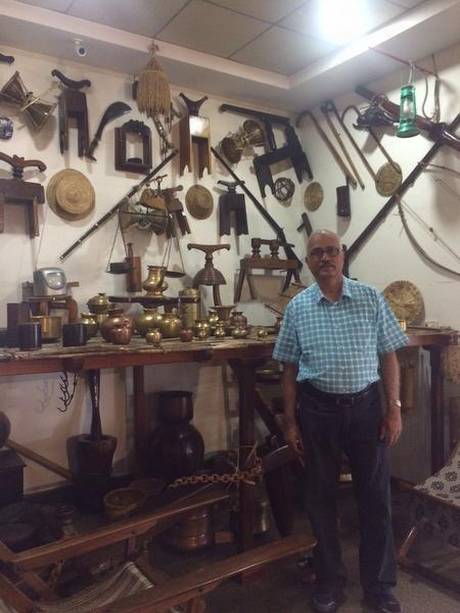
Author PT Bopanna says while there are a number of theories on who the Kodavas are, none are scientific enough to establish the origin of the race
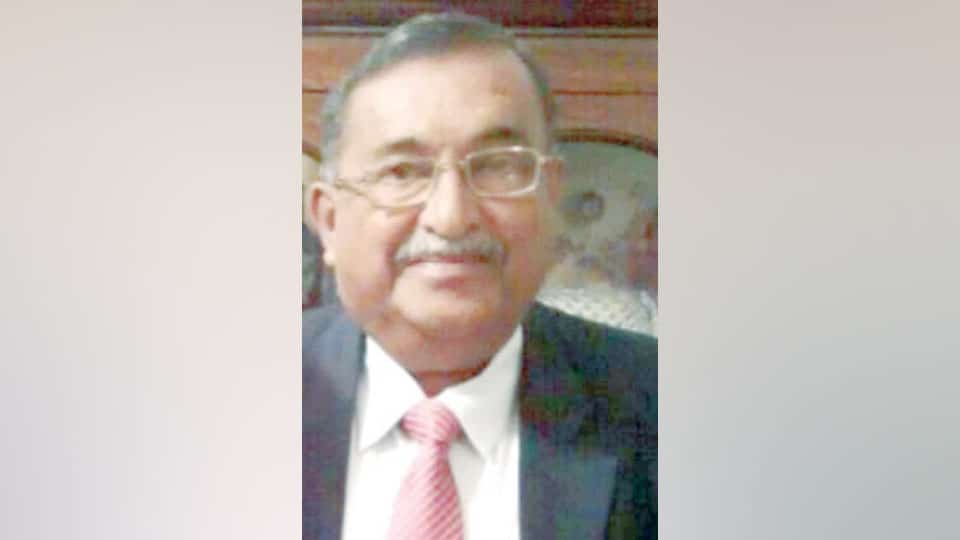
After retiring from journalism in 2010, with four decades in the field, PT Bopanna has championed the cause of Kodagu (Coorg) district in Karnataka. Bopanna’s passion to showcase Kodagu’s beauty, culture, cuisine and people serves as a mirror to the hilly region.
“I have documented the lifestyle, language and cuisine of Kodagu beyond the well-known akki rotti and pandi curry,” says 70-year-old Bopanna, who runs five Kodagu-centric websites, has published seven books and produced a documentary on Kodagu. Bopanna’s latest book, My Coorg Chronicles, (Rolling Stone Publications) traces his journey from journalism to activism, and his efforts to chronicle the unknown facets of Kodagu. My Coorg Chronicles has colourful photographs, illustrations and a caricature of Bopanna by cartoonist Ponnappa.
Bopanna speaks to MetroPlus about the many aspects of his journey.
Excerpts.
Would you describe yourself as a journalist, activist or chronicler?
After studying journalism at Bhavan’s College of Journalism in Mumbai, I started my career in 1981 as the Coorg Correspondent of The Hindu. I registered my first domain www.coorgtourisminfo.com in 2005. Initially the traffic to my website was not encouraging. So I decided to bring out the content from the website as a book in 2006. Discover Coorg was a runaway success. I brought out two more editions of the book, adding more content with each edition. It was also translated into Kannada.
Your research reveals Kodavas as being different from the rest of Indians…
Kodava women are highly educated. There is no dowry system, and women drape their saris opposite to the style adopted by the rest of India. The customs are unique. Kodavas are Hindus, but priests have no role in their marriages. Kodavas revere the Cauvery River, they worship nature and guns. The Keil Murtha festival is dedicated to guns. The harvest festival, Puttari, is ushered in with a gunshot. When I realised that the land has a rich culinary tradition and I compiled traditional recipes in the website, coorgrecipes.com in 2006.
Who exactly are the Kodavas?
This is a riddle that ethnologists are yet to crack. There are any number of theories on who they are, but none scientific enough to establish the origin of the race. One theory says they are the descendants of Alexander the Great, while another traces their origins to a band of Kurds from Iraq.
Why did you bring out a video on Kodagu?
During the course of my work I realised there was a lack of documentation on Kodagu. This was mainly because Kodava language does not have a script. The language is a mixture of Kannada, Tamil and Malayalam. Any documentation was only after the British annexed Coorg in 1834. They kept records and maintained diaries. After Independence, especially after Coorg merged with Mysore State (Karnataka) in 1956, there wasn’t any documentation. I decided to produce a video on various aspects of Kodagu and in 2014 brought out a DVD, Discover Coorg. The video features tourist spots, homestays, jewellery, hockey and golf, Kodava marriages and traditional folk dances.
source: http://www.thehindu.com / The Hindu / Home> Society / by Ranjani Govind / Bengaluru – August 18th, 2020
Kodagu Gowda Samajagala Okkuta has decided to support fully the priests who perform puja at Talacauvery Kshetra.
The decision was taken during a meeting held in the presence of Gowda Federation Youth wing, said Okkuta president Somanna Soorthale.
Okkuta office-bearers said, “The unscientific works at Gajagiri Betta led to its caving in. A delegation will be taken to the state government shortly demanding action against those who were responsible for such activities. At a time when the death of the Talacauvery priest and family members is still fresh in our mind, a few have been trying to recreate the history of Talacauvery, which is condemnable move.”
A few are trying to disrupt peace in peace-loving district, Somanna alleged. Kodi and Ballada families have been discharging their duties at Talacauvery and Sri Bhagandeshwara Temples for several centuries.
“We condemn all the unscientific activities that are carried out within 10-km radius of the Kshetra and all those that affect the sanctity of the Kshetra. However, we can not accept those who have been trying to harass those who are carrying out business activities in Talacauvery. Goddess Cauvery is worshiped by all. It is sad that a few are trying to distort the history of Talacauvery kshetra,” he added.
It is good that Akhila Kodava Samaja is planning to conduct Shatarudrabhisheka at Talacauvery on September 21. It would have been good if all the communities were invited for the same.
The meeting also condoled the death of Chief Priest Narayana Achar and four others in landslide at Gajagiri Betta in the first week of August.
source: http://www.deccanherald.com / Deccan Herald / Home> State> Karnataka Districts / by DHNS/ September 20th, 2020
A befitting tribute to Indo-Pak War Hero on his 55th death anniversary
Madikeri:
The statue of Squadron Leader Ajjamada Bopayya Devayya will be unveiled at Madikeri in Kodagu District on Sept. 7.
The 6-feet-9-inch bronze statue installed at the Old Private Bus Stand Circle will be unveiled on the day Devayya was martyred. Incidentally, the Circle has also been named after him.
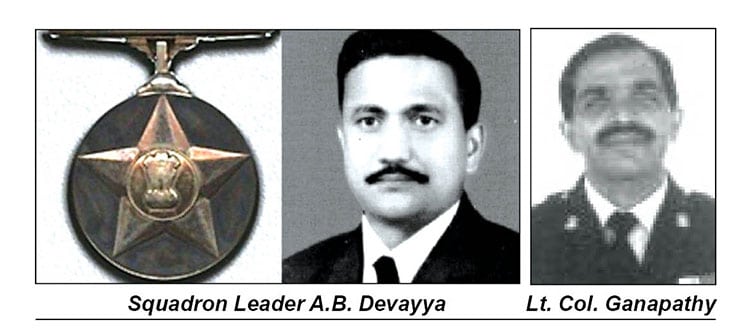
Sqn. Ldr. A.B. Devayya is the only Indian Air Force (IAF) Officer to be posthumously awarded the Maha Vir Chakra (MVC). During the 1965 India-Pakistan War, Devayya (called ‘Wings of Fire’) was part of a strike mission (on the Pakistani airbase Sargodha).
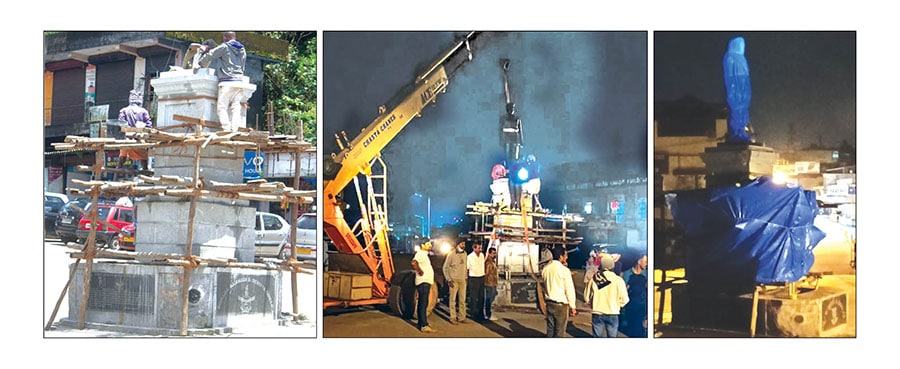
Works on installing the statue of Squadron Leader A.B. Devayya at Madikeri in Kodagu district is almost complete.
Works on installing the statue of Squadron Leader A.B. Devayya at Madikeri in Kodagu district is almost complete.
The work on the statue basement is almost complete and a giant crane was used to shift and mount the statue on the pedestal.
The bronze statue weighs 600 kg and Rs. 20 lakh has been spent on getting the statue carved at Kengeri near Bengaluru.
The statue installation work was spearheaded by Ajjamada family members, Squadron Leader Ajjamada Devayya Memorial Trust, Field Marshal K.M. Cariappa and General Thimayya Forum, Kodava Makkada Koota.
Wartime job
Sqn. Ldr. A.B. Devayya was born to Ajjamada Bopayya and Neelamma couple on Dec. 24, 1932 at Manchalli village near Kutta in South Kodagu. He joined the Indian Air Force as a pilot on Dec. 26, 1954. Devayya was married to Keethiyanda Sundari.
When the Indo-Pak war broke out in 1965, Devayya was an instructor at the Air Force Flying College. He was posted to No.1 ‘Tigers’ Squadron’ and flew the Mystere fighter bomber. During the war, Devayya shot down a US-made PAF (Pakistan Air Force) F-104 Starfighter while flying an inferior Mystere of French make. The dogfight between the Mystere and the Starfighter was recorded by British author John Fricker in his book ‘Battle for Pakistan’ published in 1979.
Action in the skies
John Fricker wrote, “On Sept. 7, 1965, Mystere pilot Squadron Leader A.B. Devayya showed commendable courage by staying in the fight, and despite being mortally wounded, he eventually scored several cannon strikes against the Starfighter, causing it to be abandoned. This was the first and only Starfighter to be lost through enemy action in the 1965 war.”
Devayya was part of an air strike mission on the PAF base at Sargodha, with the objective being to neutralise its air assets. He engaged in a dogfight with the Starfighter flown by Pakistani Flight Lieutenant Amjad Hussain at an altitude of 7,000 ft. The PAF fighter was faster and more modern, but Hussain made the mistake of reducing his speed in an attempt to out-turn Devayya.
Hussain failed to clear his tail during the dog-fight and suffered several cannon strikes. He was forced to eject since the Mystere had a limited range for action and did not have enough fuel reserves to return to India.
Posthumous award
The Mystere aircraft was destroyed and it was assumed that Devayya died on Pakistani soil. The IAF was not aware of what had happened to Devayya, first recording him missing and later declaring him dead. It was revealed much later by Pakistan that Devayya’s body was found almost intact by villagers not very far from Sargodha and buried.
For this feat in the 1965 conflict, 23 years later, in 1988 he was posthumously awarded the Maha Vir Chakra (MVC). He is the only Air Force Officer to have been awarded the MVC posthumously so far.
Two heroes from Kodagu receive ‘Maha Vir Chakra’
Two Defence personnel from Kodagu have so far received the honour of Maha Vir Chakra, next only to the supreme Defence award Param Vir Chakra. While Squadron Leader A.B. Devayya received the honour in 1988, the other officer is Major Puttichanda Somaiah Ganapathy (later promoted as Lieutenant Colonel) who is now leading a retired life in Bengaluru.
Major Ganapathy was awarded Maha Vir Chakra for his combat role in 1987 Operation Pawan in Sri Lanka (launched by Indian Peace Keeping Force) against the LTTE. His unit, located at Annakottai, was surrounded and repeatedly attacked by militants on Oct. 16, 1987. His Company had occupied this location to provide a firm base for the 41 Infantry Brigade to launch an offensive.
LTTE militants repeatedly attacked the position with very heavy fire, resulting in heavy casualties, and his unit required immediate replenishment of ammunition. Throughout the day, Major Ganapathy fought gallantly and kept the militants at bay.
When all efforts to drop ammunition by helicopter failed due to heavy fire, Major Ganapathy kept fighting, moving from trench to trench till 6 am on Oct. 17, 1987 when he was finally supplied with ammunition by a patrol. He displayed extreme devotion and held his position against heavy odds.
source: http://www.starofmysore.com / Star of Mysore / Home> News / by Prasad Sampigekatte / August 31st, 2020
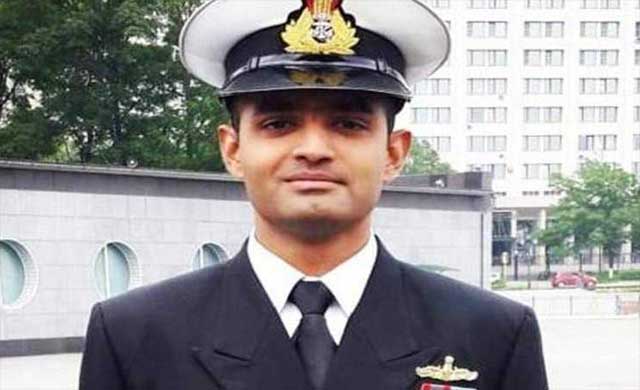
Lt Cdr Muckatira Suraj Aiyappa has been selected to represent India to undergo the prestigious staff course at the US warfare training college.
Suraj Aiyappa happens to be the son of Gonikoppal Arvathoklu Retd Lt Col M A Cariappa and Saraswathi Cariappa. He will be one of the representatives from 52 countries who will participate in the staff training course in the USA.
Aiyappa had attended the Rashtriya Indian Military College at Dehradun. He acquired a cadet captain degree from the Naval Academy. He was chosen as an officer of Indian Navy in the year 2010. He won the Chief of Naval Staff gold medal and best commanding officer of the navy in 2010. He has served as instructor at the Naval Academy.
At the programme held at Visakhapatnam in 2016, he had received the guard of honour presented by the President. His wife, Dr Yamuna, is a dental surgeon by profession.
source: http://www.daijiworld.com / Daijiworld.com / Home> Karnataka / by Daijiworld Media Network – Madikeri (SP) / August 27th, 2020
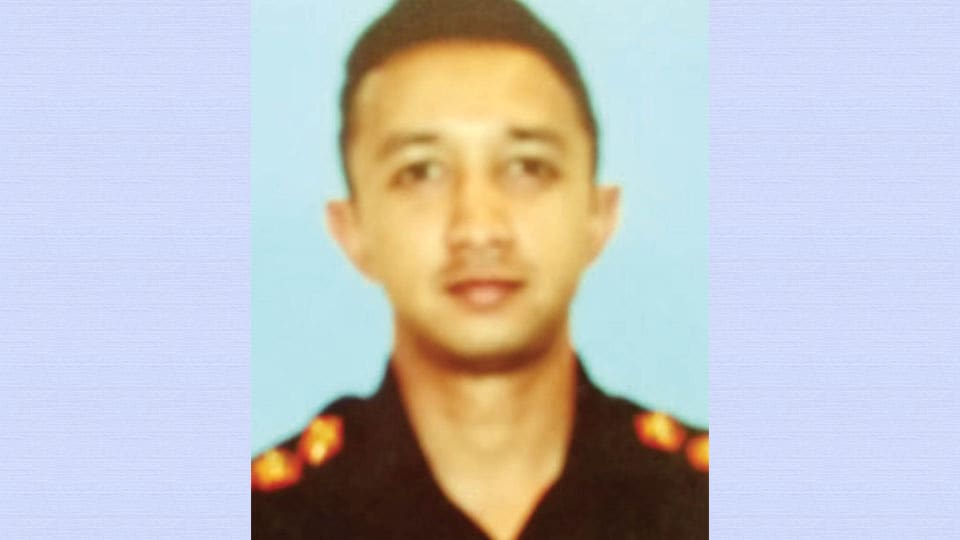
Captain Maletira S. Muthappa has been appointed as aide-de-camp (ADC) to Chief of Army Staff. Muthappa is at present serving in the Defence Ministry and joined as Commissioned Officer in the Indian Army in 2016.
He hails from Kedamulloor village near Virajpet and is the son of Maletira Rathna Subbaiah and Usha.
Muthappa is the fifth Army officer from Kodava community to serve as ADC to the Chief of Army Staff.
In 1953 Brigadier Codanda Cariappa, in 1973 Lieutenant General Buttiyanda Bopanna, in 1986 Lieutenant General Pattacheravanda C. Thimmaiah and in 2001, Maj. Muckatira C. Muthanna had occupied the post.
Maj. Muckatira C. Muthanna from 9 PARA (Special Force) served as ADC from 2001 to 2003 and had served two Army Chiefs — Gen. N.C. Vij (for a short time) and Gen. Padmanabhan (for full term). Muthanna is the son of Brigadier (Retd.) M.M. Ashok Cariappa, who was also from 9 PARA (SF) and later went on to command First Bihar Regiment.
What is ADC in Armed Forces?
An aide-de-camp (official position) in the Armed Forces primarily functions as a protocol officer, who looks after implementation of the protocols, and as an executive assistant.
An ADC is also responsible for carrying out liaison with the local military authorities and looks after the professional requirements of the Officer/Governor he is attached to.
An ADC should have five to seven years of experience in the Armed Forces. He is selected on the basis of his professional performance and an interview. Besides the Governors of States, aides-de-camp are authorised to senior officers in the Armed Forces and the President of India.
source: http://www.starofmysore.com / Star of Mysore / Home> News / August 28th, 2020
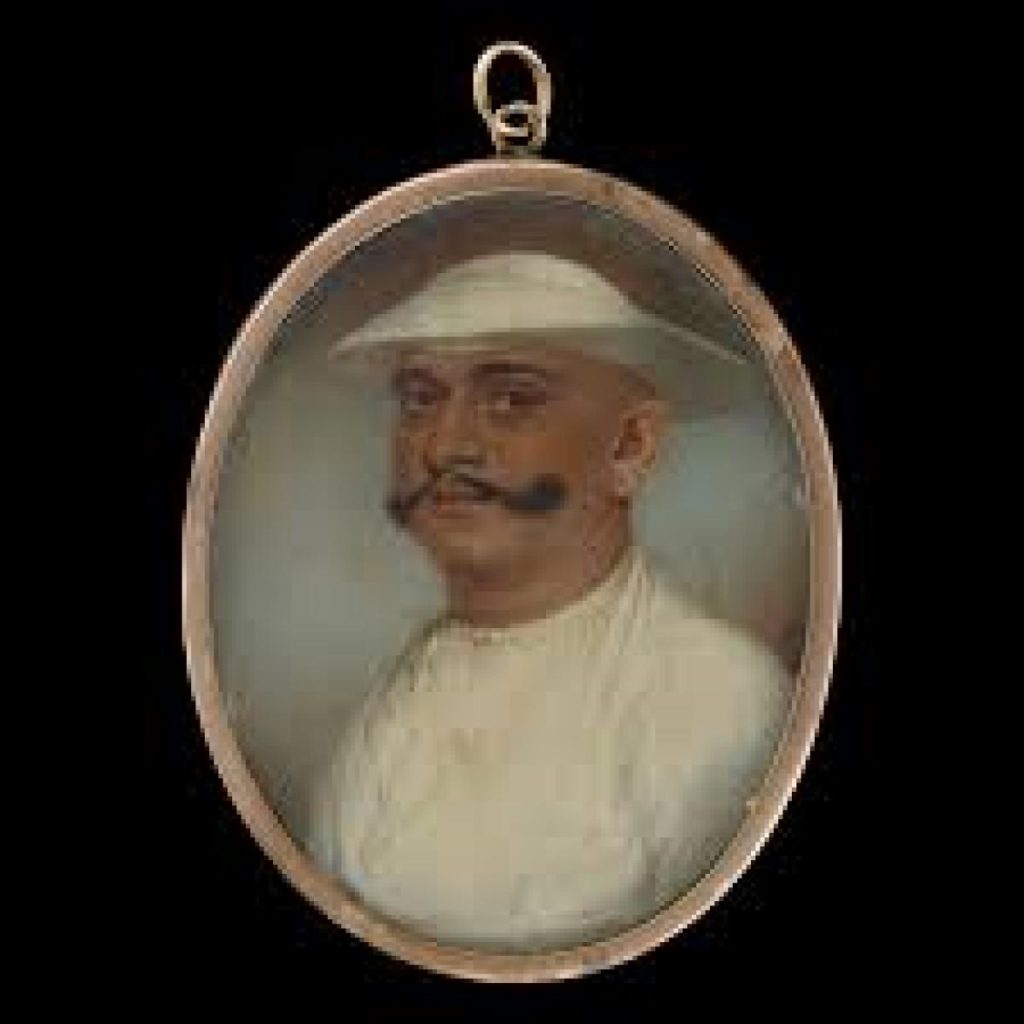
By 1800, Dodda Veerarajendra had sat on the throne of Kodagu for more than ten years. He is well-remembered for making a daring escape from a prison in Periyapatna in 1788, where Tipu Sultan had incarcerated him, his wife, mother, his brothers: Lingarajendra and Appajiraja, along with other close members of the family. With the help of Kodava and Vokkaliga chieftains, he was successful in foiling Tipu Sultan’s schemes to rule Kodagu.
In this endeavour, he forged an alliance with the British East India Company in 1790, which was sealed with a lofty statement: ‘This treaty of friendship between the East India Company and the kingdom of Kodagu is signed with God, Sun and Moon as witness’.
The treaty soon came into play during the third Anglo-Mysore war when Dodda Veerarajendra gave strategic and logistic support to the British army. He also provided transport and provisions for the troops. Similar support was extended to the British during the fourth and the final Anglo-Mysore war which ended in 1799. Eventually, Dodda Veerarajendra was able to consolidate his position in Kodagu.
By 1805, the king had three daughters with his queens Nanjammaji and Mahadevammaji. But in his obsession for a male heir, the raja slipped into deep depression. He started having fits of rage. He increasingly became suspicious of people around him. He was surrounded by the ruthless Siddis, of African origin, as his anga-battas (bodyguards). One day, in paranoiac rage, he ordered the assassination of his brothers Lingarajendra and Appajiraja. While Appajiraja fell to the anga-battas, Lingarajendra barely escaped, and lived to succeed his brother.
Dodda Veerarajendra’s officials were highly concerned and feared for their lives. The court officials then figured that they should bring a hogalu-batta (professional flatterer) to lift the king’s spirits. The feisty hogalu-batta, brought from South Canara, praised the king sky-high with a song composed in his honour. Dodda Veerarajendra was much pleased when the hogalu-batta sang that the king was the valiant ‘Lion of Kodagu’ who vanquished the ‘Tiger of Mysore’. The hogalu-batta got a pouch that jingled with gold coins for his flattery.’
Since there were no lions in Kodagu, the king despatched a letter to Jonathan Duncan, the governor of Bombay Province, to help him get a lion. Duncan replied promptly and asked the king to send his men to transport a lion to Kodagu from a zoo in Bombay.
Dodda Veerarajendra deputed his trusted Jemedhar Monnaiah to head a posse of soldiers to Bombay to fetch the lion. It was an arduous task. The men loaded the cage with the lion on to a bullock cart and trudged along the west coast for a couple of months. Sometime in May, they reached Kodagu at the banks of River Cauvery near Bethari village. While they prepared to cross the river there was an unexpected pre-monsoon downpour. The lion, which had withstood the journey reasonably well, was in distress when it got drenched. Its condition deteriorated. The beast died a couple of days later. Jemedhar Monnaiah and his men were most disappointed and braced themselves for the worst reprisal from the king.
The body of the lion was brought to Madikeri. Jemedhar Monnaiah broke the news to the king. Surprisingly, the king received the bad news quite philosophically. He had the lion stuffed and displayed in his palace.
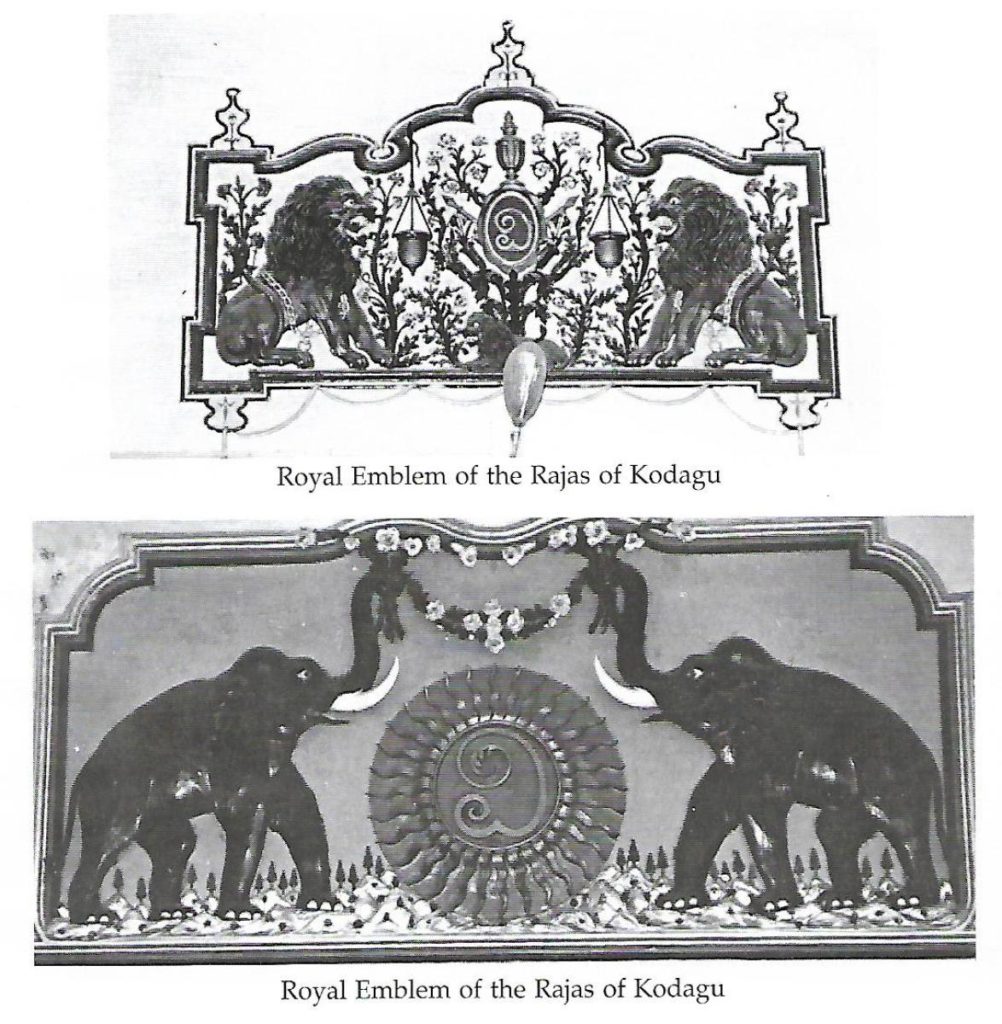
Emblem-of-DoddaVeerarajendra Photo courtesy: C P Belliappa
Subsequently, in 1806, the king even got his royal insignia redesigned by replacing the elephants with lions.
source: http://www.deccanherald.com / Deccan Herald / Home> Spectrum / by C P Belliappa / August 29th, 2020
A total of 19 police personnel from the state have been conferred with the President’s Police Medal on the occasion of Independence Day.
Bengaluru U:
A total of 19 police personnel from the state have been conferred with the President’s Police Medal on the occasion of Independence Day. V L N Prasanna Kumar, ASI, Criminal Investigation Department, has been honoured with the medal for distinguished service.
The others are:
R Hemanth Kumar, DySP, Special Investigation Team, Lokayukta; Parameshwar Hegde, DySP, CID; R Manjunath, DySP, ACB, Mandya; H M Shailendra, DySP, Kodagu; Arun Nagegowda, DySP, Mandya; H M Satish, ACP; H B Ramesh Kumar, DySP, intelligence, Bengaluru; Umesh, DySP (Armed), Police Training School, Mysuru; C N Diwakar, Circle Police Inspector, Kodagu; G N Rudresh, Special Reserve Police Inspector, KSRP, Bengaluru; B A Lakshminarayan, SI, City Special Branch, Bengaluru; M H Chandekar, special reserve SI, KSRP, Bengaluru; K Jayapra- kash, PSI, Mangaluru; H Nanjundaiah ASI, Chikkaballapur; Atheeq Ur Rahman, ASI, Shivamogga; Ramanjanaiah, ASI, Tumakuru, R N Balikai, ASI, Haveri, and K Honnappa, head constable, Bengaluru Rural.
source: http://www.newindianexpress.com / The New Indian Express / Home> Cities> Bengaluru / by Express News Service / August 15th, 2020
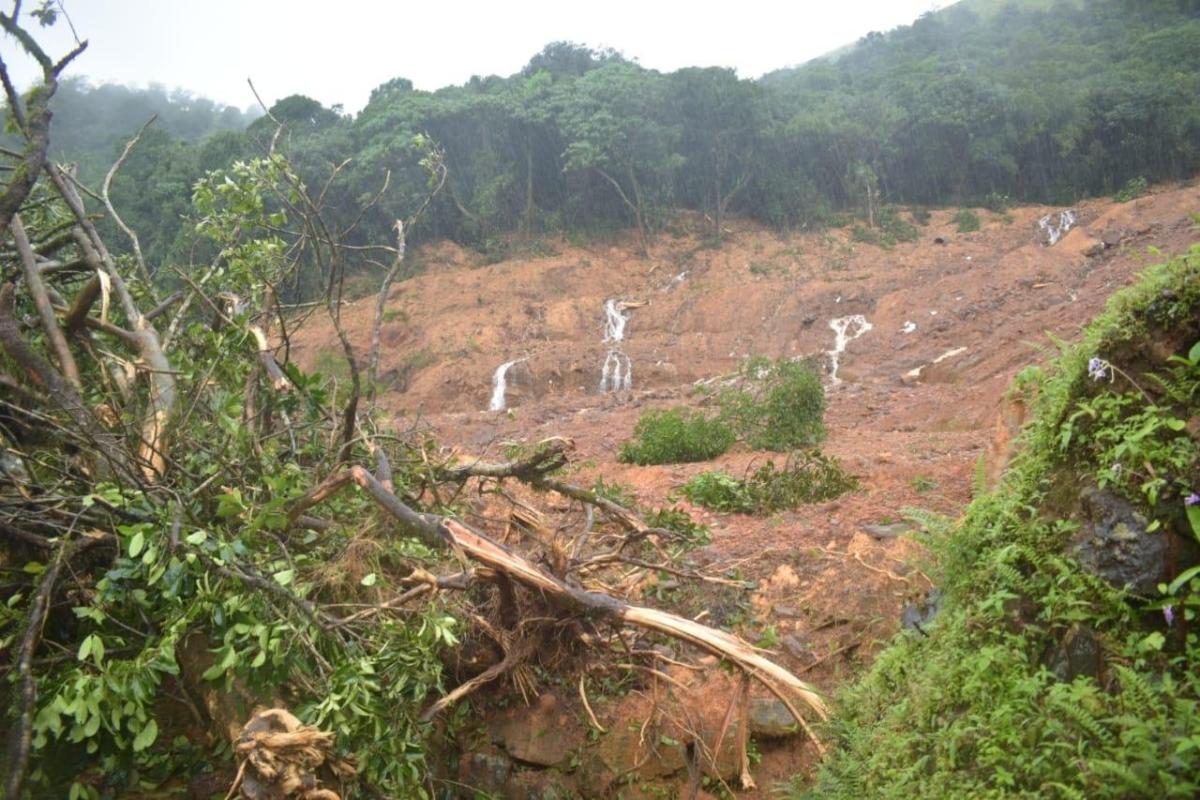
The site of landslide in the Brahmagiri range, Kodagu. DH Photo
The oft-cited maxim of the ecological sensitivity of the Western Ghats, repeated ad nauseam over the past two decades or so, has fallen on deaf ears. The failure to prevent the degradation of forests in the Sahyadris, along with the increasing instances of extreme rainfall over a short period of time — especially over the past three years — has wreaked havoc in this lifeline of South India.
The Karnataka government, which has improved its performance in terms of flood preparedness, relief work and rehabilitation measures, seems to have taken little action to prevent or mitigate future landslide hazards.
Despite the devastation, the government has either proposed or persisted with over 20 linear projects that could damage more than 25,000 hectares of forest in the region. These projects include Yettinahole River Diversion project, Kalasa-Banduri project, Sharavathy pumped storage power plant, Hubballi-Ankola railway line and many road construction and widening projects.
Worse, this year landslides have been reported in 80 locations between Mangaluru and Karwar, where highway construction work has been taken up.
Apart from infrastructure projects, change in land use norms, the lack of a long-term mitigation policy to address deterioration of green spaces and improve forest cover, and relentless expansion of plantations in the Malnad districts are just some aspects contributing to a looming environmental disaster in one of the world’s biodiversity hotspots.
Several activists, who relentlessly protested against projects in the Western Ghats, have hung up their boots, and lament the futility of their past efforts to ensure legal protection to the ecosystem.
There is no dearth of comprehensive reports on the cause of problems in the region and how to address them. In 2011, the report submitted by the Western Ghats Ecology Expert Panel, under the chairmanship of Prof Madhav Gadgil, had warned of impending natural disasters unless immediate and sustainable measures were taken to protect the ecosystem. The report sought to designate over 60% of the Western Ghats as highest-priority Ecologically Sensitive Zones.
All the states who are the custodians of the Western Ghats ignored this report. The states couldn’t come to a consensus on the subsequent Kasturirangan report even after four draft notifications, with Karnataka repeatedly rejecting the recommendations.
The Gadgil committee report was back in focus last year, as most of the places where the landslides took place were considered ecologically sensitive by the committee.
Now, the state government has set up another panel to study landslides in the region.
The benefit of commissioning a new report is still unclear. However, the government’s actions have made it evident that it is not keen on conserving the Western Ghats; experts say the degradation of forests here will have cascading effects, triggering landslides, choking streams and posing a flood threat for downstream areas, something we are witnessing today.
A scientific paper by Prof T V Ramachandra, Centre for Ecological Sciences, Indian Institute of Science and others shows that the extent of evergreen forests shrank by 16% in Kodagu between 1973 and 2018, from 40.47% to 24.17%; a loss of around 67,000 hectares of forest land. “The region had 32% of forest cover under interior or intact forests in 1973, whereas in 2018 it covers only 19% in various protected areas,” says the study.
“The expansion or construction of linear alignments would result in irreversible ecological degradation. The recent floods and landslides are certainly a warning to the decision makers of likely implications, with the drastic changes in the land cover eroding the native forest ecosystems. Further interventions will worsen the ecology and hydrology as well as livelihood, with increase in instances of human-induced calamities,” the paper warned. Yet, the state revenue department lifted a ban on the conversion of land use in Kodagu in February this year.
Degradation main cause
While environmental degradation triggering landslides is starkly evident in Kodagu, similar situations persist in all districts bordering Western Ghats – Hassan, Chikkamagaluru, Shivamogga, Dakshina Kannada, Uttara Kannada, Dharwad and Belagavi.
Conservation biologist Keshava H Korse pointed out that major landslides are being reported at core ridges of Western Ghats due to repeated disturbance of vegetation in such areas. “Bhagamandala, where major landslides were reported in the past two years, is one such area which has loose soil,” he said.
The area was classified as a highest-priority ecologically sensitive zone in the Gadgil committee report, where all development projects were expressly forbidden due to the fragility of the ecosystem. Yet, several projects were taken up here.
“The injuries to the Ghats cannot be healed in one go. Just to recover the natural vegetation where landslides have occurred, it will take four years,” Korse said.
Among the alarming incidents during the downpour in the first two weeks of August this year, were the landslides reported just six km from Linganamakki reservoir in Shivamogga district, pointed out Ananth Hegde Ashisara, Chairman of Biodiversity Board. He is heading a 10-member committee set up in February this year, to study the main causes for such landslides and to suggest an action plan to mitigate them.
Some of the places highly prone to landslides include the Kodagu DC office, villages near Jog Falls and settlements situated in the Western Ghats. “Our major challenge is to ensure people relocate from areas which are dangerous. It is a difficult task as people don’t want to move away from their homes or agricultural land,” Ashisara said.
Though reasons for landslides were varied across Malnad districts, he suspected that vegetation loss was one of the key triggers for extensive damages witnessed in Kodagu and Chikkamagaluru.
“Deforestation is high, non-agricultural use of land near the forests are prominent. The ecosystem can rejuvenate by reducing human interference in such regions. The ecosystem will revive on its own; this can be accelerated by planting flora indigenous to the region,” Ashisara said.
G S Sreenivasa Reddy, former chairman of Karnataka Natural Disaster Monitoring Cell and a member of the committee, said that there were observable changes in rainfall patterns that have triggered the crisis. “We will give recommendations on what each department should do to mitigate the problem,” he said.
According to him, the cascading effect of disturbing the Western Ghats will worsen fluctuations in the intensity of rainfall, affecting water security and crop cultivation patterns.
Col (rtd) C P Muthanna, former president of Coorg Wildlife Society, noted that Western Ghats are susceptible to even minute changes. “We are talking with the district administration to discuss measures to prevent such incidents. We are against converting land for commercial use as it causes degradation,” he said. Efforts are also being made to encourage planters to cultivate native trees inside plantations.
Sundar Rao Bantwal, who put an end to his environmental activism after the Yettinahole project was cleared, painted a gloomy picture on how environmental concerns were always sidelined over profits by politicians and contractors. “Despite a strong opposition, large projects are taken up in eco-sensitive zones. Even if we drag the cases to court, it will be of little consequence. Approaching the Green Tribunal too won’t help,” he said, citing the controversial project as an example. The project might fail in 10-15 years and neither those who approved it nor the ones constructed will take responsibility for the disaster, he added.
Ramachandra said despite recurring disasters, as many as 55% people in Kodagu are for ‘development’, while 40% are for conservation measures, with a small minority undecided. “After the last floods, we managed to convince the Deputy Commissioner to impose restrictions against resorts mushrooming in the district, which used to occupy natural courses of water. Recently, the restrictions were lifted after political interference,” he said.
Virajpet MLA K G Bopaiah was of the view that climate change was responsible for the widespread devastation. “Save for the last three years, receiving 20 inches or more rainfall in less than a week is unprecedented,” he said. Disputing that change of land use was the major cause for landslides, he said that landslides were reported where thick forests were present. “Nobody has even considered interfering in such dense forest areas,” he said.
Noting that several areas of the district were susceptible to landslides following heavy rainfall, he said that measures will be taken to address the same.
source: http://www.deccanherald.com / Deccan Herald / Home> Specials> Insight / by Akram Mohammed, DHNS, Bengaluru / August 15th, 2020
Berera Shambhu Aiyanna (73), former President of Bengaluru Kodava Samaja, a social worker and a resident of Vidyranyapura in Bengaluru, passed away early this morning at his residence.
He leaves behind his wife and two sons. Cremation was held this afternoon at Bengaluru.
source: http://www.starofmysore.com / Star of Mysore / Home> Obituary / August 18th, 2020
WELCOME. If you like what you see "SUBSCRIBE via EMAIL" to receive FREE regular UPDATES.
Read More »