Category Archives: Leaders

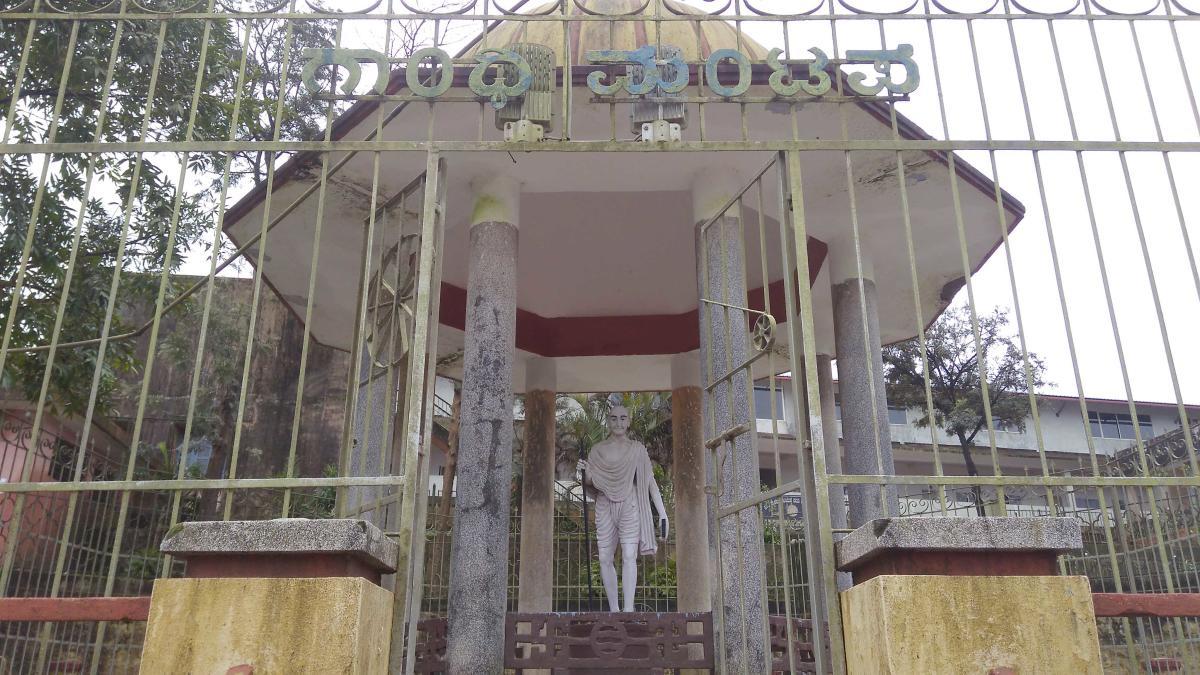
Inspiring a generation: Gandhi’s Kodagu visit

Gandhi Mantapa in Madikeri was built to commemorate Mahatma Gandhi’s visit to Kodagu in 1934. DH file photo

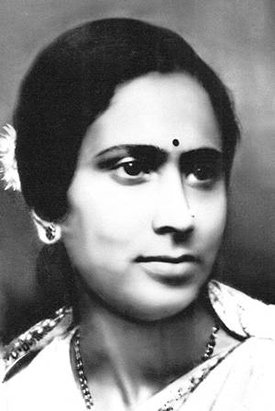
It was a cold February morning in 1934, when a young Seethamma, around 10 years old, woke up with excitement. After all, it was an important day and all she wanted was to catch a glimpse of Mahatma Gandhi, who happened to be in Kodagu.

Gandhi was set to address a gathering at Kakotuparambu grounds in Virajpet that day and Seethamma had to cover several miles on foot to reach the venue.

Her parents and cousins were already waiting outside and they all set out towards the venue immediately, only stopping to wash their faces in a small stream on the way. When they reached the ground, a large crowd had gathered and they saw the Mahatma from a distance.

“Gandhiji was sitting on the stage with his legs crossed to one side,” Seethamma would often tell her children and grandchildren, recalling that historic day. Just a glimpse of the great man was her most treasured memory.

A middle-aged Seethamma

The Mahatma, who was touring Tamil Nadu to mobilise funds for the upliftment of ‘Harijans’, was invited to Kodagu by Pandyanda I Belliappa and other freedom fighters of the district, which was then a Chief Commissioner’s Province.

On arriving at Kodagu, the Mahatma and his entourage first visited a Harijan colony in Gonicoppa, following which he addressed a meeting mostly attended by women. Though on a short visit, Gandhi also addressed gatherings at Ponnampet, Somwarpet and Madikeri among other places. He appealed to the people to donate generously to help the victims of an earthquake that had hit Bihar in January that year and also requested them to contribute to the Harijan Welfare Fund.

He asked the women to donate their gold jewellery and ornaments for the cause, while stating that, “The amount is not important to me because it is a token of tangible sympathy to the suffering. Thus, even a copper coin is valuable.”

Moved by the appeal, writer Kodagina Gowramma, who was around 22 years at the time, famously donated all her gold ornaments to the Harijan Welfare Fund.

Kodagina Gowramma. Courtesy: Wikipedia

Seethamma and Gowramma, and several others like them knowingly or unknowingly became part of the national movement – which was as much about uniting the very diverse people of India as it was about fighting a foreign rule.

Such was Gandhi’s charisma that he inspired people, young and old; women and men; poor and rich. This made the freedom movement a mass movement.

source: http://www.deccanherald.com / Deccan Herald / Home> Spectrum > Spectrum Statescan / by Dhanyata M Poovaiah / August 15th, 2020

The Amara Sullia uprising, 20 years before 1857

Photos for Spectrum
Photos for Spectrum

Twenty years before the First War of Independence in 1857, there was the ‘Amara Sullia Dange’ or Kodagu- Canara Mutiny against the British government. This fight, which was labelled ‘Kalyanappana Katakayi’ (Loot of Kalyanappa), to tone down its significance, received unprecedented support from people in today’s Kodagu, Dakshina Kannada districts of Karnataka and Kumble region in Kerala.

After Tipu Sultan’s death in 1799, South Canara (Dakshina Kannada) passed into British hands. Neighbouring Kodagu, however, still maintained a precarious independence.

In 1834, the East India Company resolved to invade Kodagu, which was ruled by King Chikkaveera Rajendra of Haleri dynasty. On April 11, 1834, the political agent of the British at Mercara (Madikeri), Lieutenant Colonel J S Fraser, issued a proclamation annexing Kodagu into the British administration. Fraser also resolved to respect the social and religious customs of the locals, but the promise remained on paper.

The British introduced major economic, social, and even territorial changes in Kodagu, for their administrative convenience. Amara Sullia was separated from Kodagu and made part of South Canara district, which was then part of the Madras province. What further incensed the people was a change in the mode of tax payment, which was now to be made entirely in cash. The farmers were used to giving part of their produce as the tax, but the new system only added to their burden. Now, many of them refused to pay the tax outright.

After Kodagu’s annexation, there was a resistance movement planned. In 1835, Swamy Aparampara, a Jangama saint, appeared in Manjarabad in Hassan district and claimed that he was a legal heir to the Haleri throne.

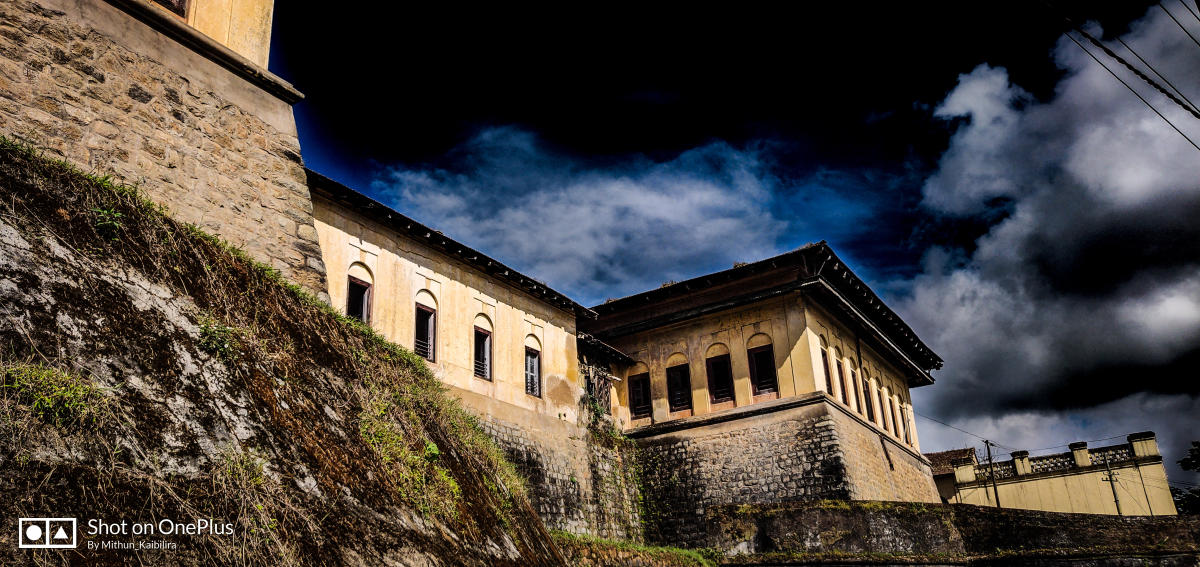
Madikeri Fort
Madikeri Fort

His plan was to attack and occupy Madikeri Fort on December 5, 1836. The people of Kodagu believed him to be the son of Appaji, who was the uncle of Chikkaveera Rajendra. Aparampara planned a resistance movement with the help of other rebellions including Kalyanaswamy, Kedambadi Rame Gowda and Guddemane Appayya Gowda. Aparampara visited Subrahmanya and met Kujugodu Appayya Gowda and Mallappa Gowda, the representatives of the Ikkeri dynasty. From there, they marched towards Madikeri with a battalion.

The British got wind of the plan and imprisoned Aparampara, with the aid of Kodagu’s Dewan, Cheppudira Ponnappa.

Now, the responsibility of the movement shifted onto the shoulders of Kalyanaswamy. He claimed to be the second son of Appaji and therefore, a member of the Haleri dynasty. Declared a king by his men, he popularised the movement by proclaiming that if he became the king, he would stop collecting revenue for the first three years and abolish the duties on commodities.

Dewan Ponnappa proved that Kalyanaswamy didn’t belong to the Haleri dynasty. However, the rebel leader remained popular and enjoyed support from local leaders.

Kalyanaswamy slowly extended the movement to Sullia and other parts of South Canara. Kedambadi Ramegowda of Sullia was primarily responsible for the organisation of rebellion in South Canara. When Kalyanaswamy was travelling from Kodlipet to Wayanad, he was captured by the British forces, though his imprisonment was concealed. His friend Putta Basappa posed as Kalyanappa and continued the rebellion.

Meanwhile, the resentment against the new tax policy continued, and Kedambadi Ramegowda and Nanjayya decided to start a rebellion in Sullia. They killed Atlur Ramappaya, the Amaldar (Agent) of Sullia, who was loyal to the British.

The battalion, headed by Kalyanappa (Putta Basappa), Kedambadi Ramegowda and others reached Bellare and attacked the British treasury. The rebels then reached Mangalore and hoisted the Haleri flag in ‘Bavutagudda’ on April 5, 1837, to mark their victory over the British.

In response, the British brought in reinforcements from Kannanur, and attacked the rebels. Several leaders were captured and killed, while a few others escaped. Putta Basappa and Appayya Gowda were hanged.

The British Commissioner Cotton, who submitted a report on the Canara Insurrection to the government in 1839, mentioned the movement was a furtherance of the Nagar Peasants’ Revolt of 1830-32, in present-day Shivamogga. “The Amara Sullia insurrection has the features of primary resistance, as well as peasants’ movement; the main intention was to drive away the colonial intruders,” says K R Vidyadhara, a lawyer in Madikeri who has studied the uprising.

A few scholars have conducted extensive studies on the Amara Sullia mutiny, with the incident even being portrayed in a Yakshagana performance called ‘Kalyanappana Katakayi’.

source: http://www.deccanherald.com / Deccan Herald / Home> Spectrum> Spectrum Top Stories / by Charan Aivarnad / August 15th, 2020

When Kodagu merged with Mysore: A short political history of the region

An erstwhile independent state, Coorg was merged with Mysore after the States Reorganisation Act was passed in 1956.

TemplePriest02KF12aug2020

It was S Nijalingappa’s death anniversary on August 8 and I was reading about the unified Mysore state’s first Assembly elections in order to get some insights about the first and one of the longest serving Chief Ministers of our state. One article led to another and I found myself in the middle of several articles about Coorg’s merger with Mysore. It was such an interesting revelation that I kept hopping from one article to another and got deeper into the rabbit hole.

Since most of us outside of Kodagu are informed just in passing in our textbooks about how Coorg was an independent state before the unification, I thought this was a story worth telling.

After more than a century of direct British rule since its annexation from its last ruler Chikka Veera Rajendra (in 1834), Coorg became an independent (Type C) state within India along with other small, hilly, erstwhile princely states like Himachal Pradesh. Coorg had a strong Congress party presence and participated enthusiastically in the freedom struggle, with even stalwarts like Gandhi visiting the state on a few occasions to mobilise the immensely patriotic people from the land of coffee, commanders and Kaveri.

But the Congress leadership within Coorg was heavily divided over whether to remain an independent state or to join the larger neighbouring state of Mysore. While one faction led by the Gandhian CM Poonacha was more pragmatic in seeing the impracticality of a tiny state like Coorg being allowed to remain independent in a country as large as India and being open to the idea of merging with Mysore since Kannada was already the language broadly used in education and administration within Coorg, the other faction led by another Gandhian Pandiyanda Belliappa was , staunchly against the merger. The loyalty of both factions and leaders, however, lay with the Congress.

When the legislative assembly elections were announced in late 1951, to be held along with the first ever election to independent India’s parliament, the Pandiyanda Belliappa faction moved away from the Mysore-sympathetic Congress and formed the Thakkadi Party (weighing machine), contesting as independents on the plank of Coorg’s continuation as an independent state.

In what was a Brexit style election to decide the future of Coorg state, the Congress emerged victorious, winning 15 seats in the 24-member Coorg Assembly, while the Thakkadi Party won the remaining 9 seats. Questions were raised about the fairness of the elections as allegations surfaced that voters were sent from the neighbouring towns in Mysore to vote for the Congress, in effect for Coorg’s merger with Mysore. Poonacha, however, took oath as Coorg’s first and only elected Chief Minister and ruled till 1956 with a two-member Cabinet.

In 1956, the States Reorganisation Act was passed in the Parliament by the Nehru government, allowing Coorg’s merger with Mysore. Several efforts were made by key dignitaries from Coorg to secure an independent state status, including the decorated Field Marshal KM Cariappa, who was then serving as India’s High Commissioner to Australia and New Zealand. He wrote a letter to President Rajendra Prasad, making a case for Coorg to remain an independent state. But it proved too little, too late as the Nehru-led Congress government remained committed to the Act and reined in dissent within the party units across states.

When the bill was taken up to be voted by Coorg’s Assembly as it required ratification by state assemblies before becoming a legislation, 22 out of 24 legislators, including Pandiyanda Belliappa, voted for Coorg’s merger with Mysore. The first and only elected legislative assembly and government of Coorg was thus dissolved, paving the way for its integration with the unified Mysore state.

Poonacha went on to serve both the Mysore and central governments in various capacities as cabinet minister holding various important portfolios, and also served as the Governor of Odisha and Madhya Pradesh. He was also Coorg’s representative in the Constituent Assembly. Coorg also sent two members to independent India’s first elected Parliament. After its merger with Mysore, however, Coorg was clubbed with Mangalore earlier and Mysore later into a single parliamentary constituency. It sends two legislators to the 224-member state assembly of Karnataka.

Many people in Coorg are still divided and emotional over the issue of Coorg’s merger with Mysore. The Codava National Council, under the leadership of NU Nachappa, fought for the restoration of statehood for Coorg for several decades. But it has now toned down its demand to that of an autonomous development board exclusively for Coorg within Karnataka, with many other perks similar to those offered to other sparsely populated hilly regions and tribes in the Himalayas and the North East.

Kodagu, the official name of the district, is one of the most developed districts of Karnataka across most parameters of development. With an HDI of 0.817, it is only behind Bengaluru, Dakshina Kannada and Udupi in terms of human development. As it reels under another bout of floods this monsoon, let us keep the beautiful Coorg in our prayers and cherish its less known history.

Rakshith S Ponnathpur is a financial and economic policy researcher with a keen interest in Karnataka history and politics.

source: http://www.thenewsminute.com / The News Minute / Home> News> History / by Rakshith S Ponnathpur / August 12th, 2020

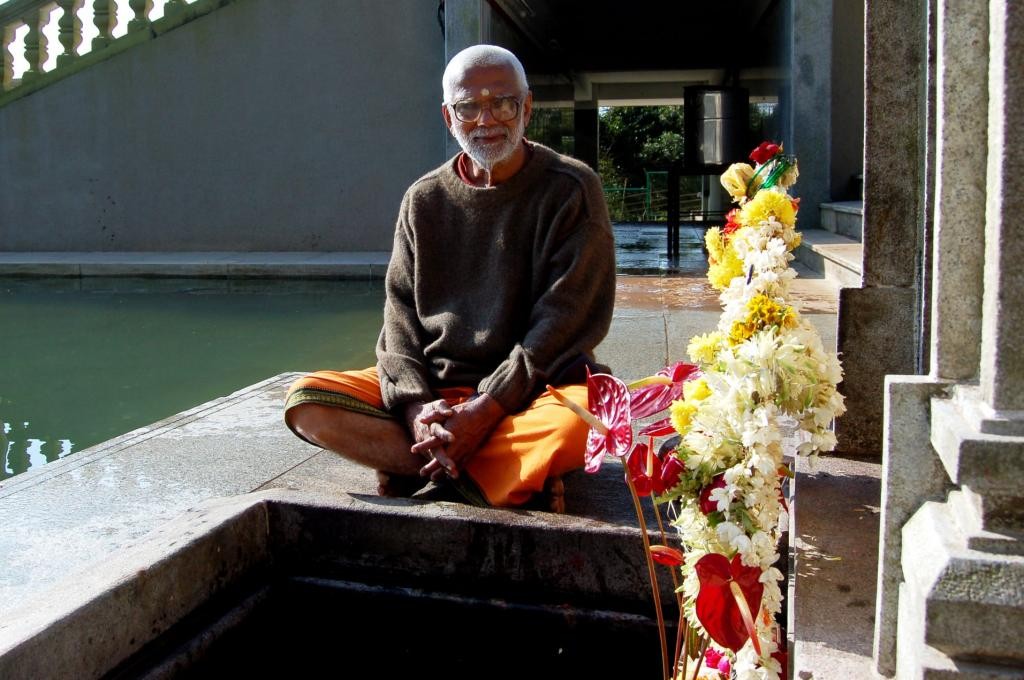
Anandatheertha, the sage who lived for Kaveri, dies

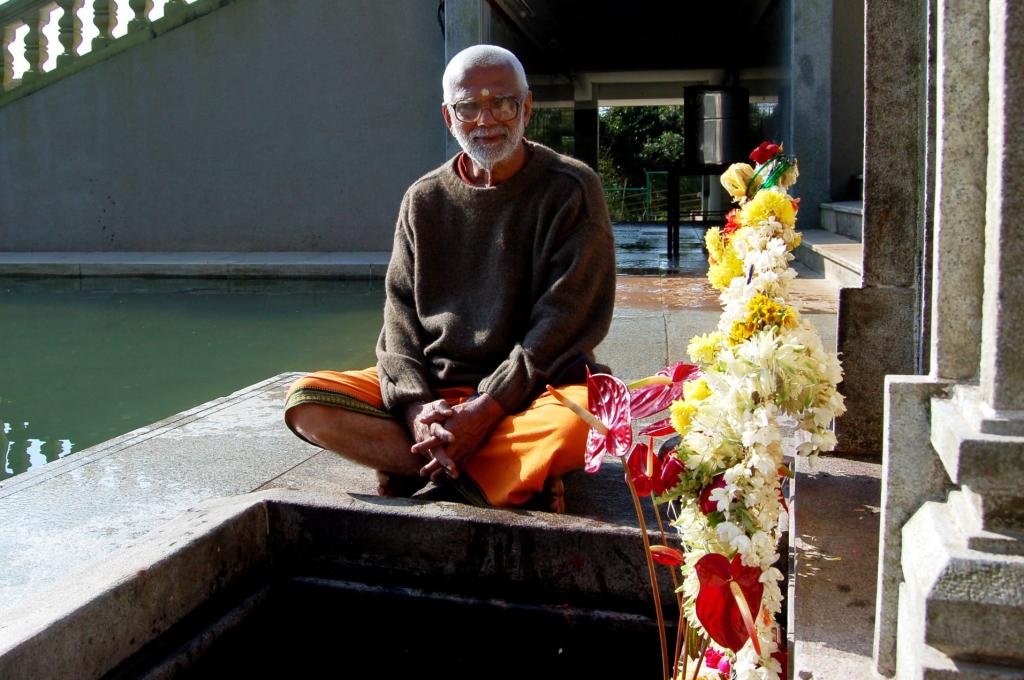
Anandatheertha lived a life of intense commitment to the Kaveri. He died in landslide in Talakaveri on August 6.
AnandateerthaKF10aug2020

Regular trips to Talakaveri, located near Bhagamandala in Kodagu district, Karnataka, are fond for river Kaveri. A temple to Goddess Kaveri, also dedicated to Shiva as Agasthyeswara and Ganesha, overlooks the ancient tank that collects water from a nearby wild spring there.

For the devotees, the tank was the origin of the east-flowing river of peninsular India. According to the legends, the river disappears in its birthplace — only to take rebirth at Bhagamandala located a little away at the foothills.

I met Swami Anandatheertha (died at 76) for the first time one September evening about a decade ago. The meeting was followed by a long conversation about the mighty river, the lifeline of vast stretches of Karnataka and Tamil Nadu.

Several conversations followed over time — and each one of them gave me the impression that he was no less than a living encyclopaedia — not just on the Kaveri but all the rivers on Earth.

It was this school teacher-turned-sage who showed me the exact origin of the river. Anandatheertha lived in Mumbai for long and taught at a school there, but returned to his native place three decades ago to become the traditional trustee and administrator of the temples in Talakaveri and Bhagamandala.

He lived a spartan life in a small house in Talakaveri, located in the Brahmagiri range of Western Ghats at an elevation of 1,341 metres. His brother-in-law was the chief priest of the temple. He lived with his sister and her husband.

A scholar with strong social and political concerns, Anandatheertha was a secular person. Between sacred and profane, he lived a life of intense commitment to the river and the surrounding forests.

In the 1980s, he was among the members of the Save Western Ghats March — a major environmental protection initiative involving scientists, anthropologists, sociologists, activists, journalists and local communities.

He marched together with others for 100 days along the length of the ghats, highlighting the socio-ecological challenges the area grappled with. He had actively engaged with almost all attempts to save the Western Ghats and the Kaveri from human encroachment and destruction.

He travelled extensively across the length and width of the river, urging local communities to save the river. He found comfort in the role of a low profile environmentalist with extreme devotion to the cause.

Journalist and filmmaker O K Johnny, who authored Kaveriyodoppam Ente Yathrakal (Journeys Along Kaveri), pointed out that Anandatheertha was always anxious about the fate of the Kaveri.

Except for the little stretch in his small locality, the river is on its deathbed. For Anandatheertha, Western Ghats and the river were integral to his existence. In a way, he always spoke in the river’s voice.

It was the place where sage Agasthya was blessed by Brahma, Vishnu and Ganesha while meditating under the ashwaththa tree. Saptarishis, or the seven great sages, had performed their yajna or ritual sacrifices at the Brahmagiri peak.

He also spoke about Lord Brahma’s daughter Lopamudra, who was rechristened as Kaveri later. Kaveri eventually turned herself into a river to serve the humankind.

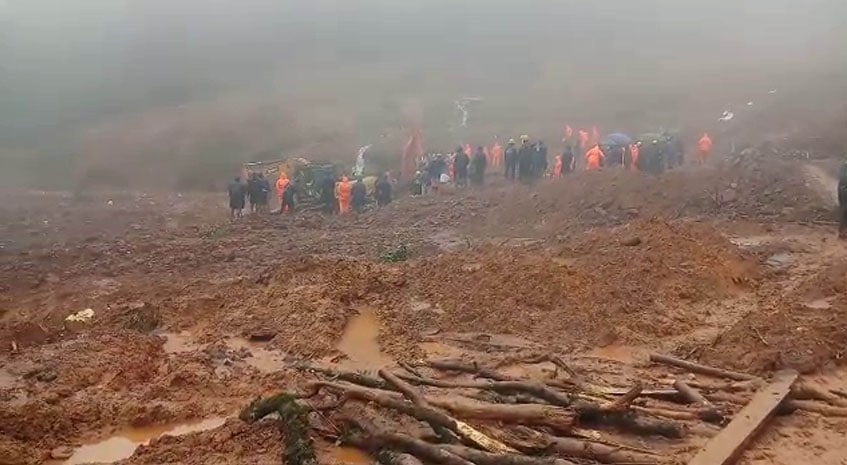
Everything is a fond memory now. On August 6, 2020, Anandatheertha failed to turn up at Talakaveri temple along with the chief priest to conduct the morning rituals. One of the security guards at the temple went to check the priest and found the priest’s house buried in mud.

According to available information, the development officer of the local Grama Panchayat had issued a notice to Anandatheertha, directing him and the family of the head priest to move away from the place for the hill was prone to landslides; Anandatheertha was living at the foothills.

However, Anandatheertha refused to move away. Even the cowshed he had with over 20 bovines was buried deep in mounds of mud and rubble. The area surrounding the priests’ houses is now inaccessible, according to Kodagu district commissioner Anies Kanmani Joy.

A portion of the Brahmagiri Hill collapsed on the two houses where Anandatheertha and the priest were living. At least five people are missing as of August 7.

Other than Anandatheertha, his sister Shantha Narayana (68), her husband and temple’s head priest T S Narayanachar (70) and relatives Ravikiran Bhat and Pavan Bhat are missing.

Mud came crashing down on the two houses Wednesday midnight; around 30 acres of the mountain range collapsed. The Geological Survey of India (GSI) had predicted possibilities of landslides in Talakavery, in the close vicinity of the temple, after detecting surface cracks during last monsoon.

It had conducted extensive field study in Kodagu following the two subsequent floods since 2018 and discovered slope modification without proper precautions as the major cause of landslides.

Unbridled construction of houses by carving hill slopes resulted in land destabilisation in the region. Unsupported slope cuts for road widening also contributed to the tragedy.

A spiritual leader who always expressed concern over change in land use patterns in Brahmagiri hills and the mushrooming illegal constructions has now turned its victim.

He was always against large-scale capital investments to convert Talakaveri as a concrete jungle in the name of spiritual tourism. The encyclopaedia on rivers is no more.

source: http://www.downtoearth.org.in / Down To Earth / Home> Environment / by K A Shaji / August 07th, 2020
Harangi Dam Full: Madikeri MLA Appachu Ranjan Offers ‘Bagina’

AppachuRanjanKF04aug2020

Kushalnagar:

Following copious rains across Kodagu district, the Harangi reservoir is almost full. The dam is two feet short of reaching its maximum level of 2,859 feet at 2,857 feet this morning.

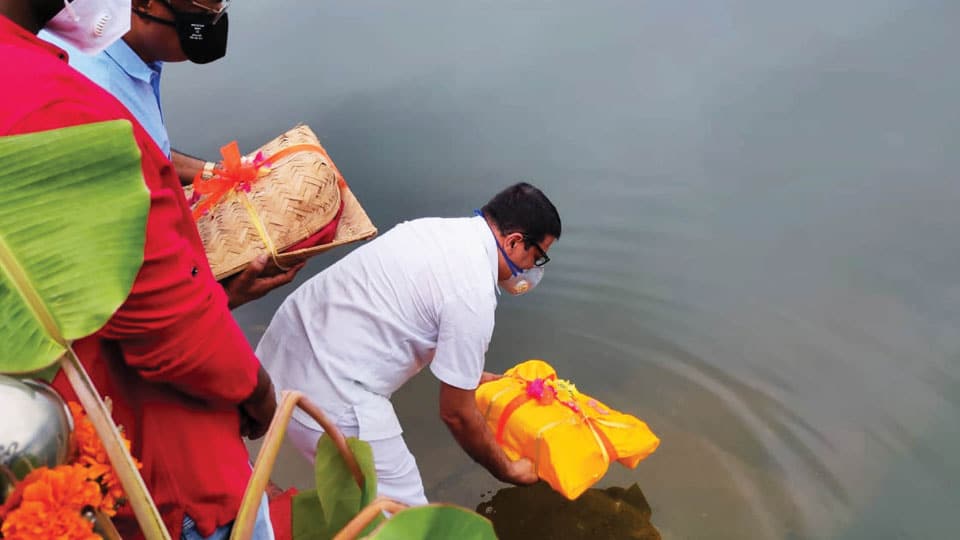
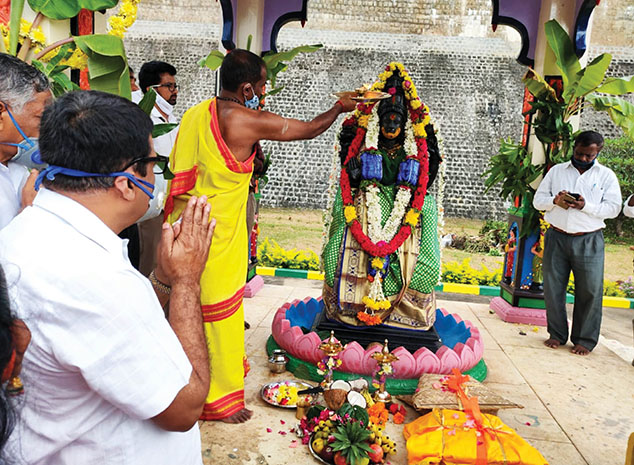
Before the crest gates were opened, Madikeri MLA M.P. Appachu Ranjan offered ‘Bagina’ to River Cauvery after performing puja to the statue of River Cauvery located at the base of the reservoir this morning.

Executive Engineer Rajendra, Harangi Reservoir Assistant Engineer Nagaraju and other BJP leaders were present on the occasion.

This reservoir is the main source of water for KRS dam in Mandya district. Irrigation Department Executive Engineer Rajendra said that water from the Harangi reservoir is now being released into the river.

AppachuRanjan02KF04aug2020

Following heavy flow in recent days, water is also being released into irrigation canals.

The right bank cannals feeding irrigated lands in Hunsur and KR Nagar taluks of Mysuru district are getting 1,500 cusecs of water every day while 400 cusecs of water is being released to left-bank canals feeding lands towards Hassan district. The inflowing water is much clear compared to last year.

Experts opine that this is probably due to growth of vegetation at the areas of landslides, which had caused heavy damage in the region, last year.

Harangi Dam provides irrigation facility to thousands of acres of farmland in Periyapattana, Hunsur and KR Nagar of Mysuru district, Arkalgud taluk of Hassan district and Kodagu district.

The Harangi Dam can hold 8.5 TMC of water.

source: http://www.starofmysore.com / Star of Mysore / Home> News / July 31st, 2020

Five-time MLA Appachu Ranjan stakes claim for ministerial berth

Five-time MLA Appachu Ranjan on Friday said he too is an aspirant for a berth in the Chief Minister B.S. Yeddiyurappa-led BJP Ministry in the State.

Speaking to reporters after offering bagina at Harangi reservoir in Kodagu district, Mr. Ranjan, who represents Madikeri Assembly constituency, said he is among the senior MLAs of the BJP in the State and hence is aspiring for a ministerial berth.

However, he said the party high command will be taking a decision in the regard. Mr. Ranjan had served as Minister for Youth Services and Sports during the regime of Jagadish Shettar as Chief Minister.

source: http://www.thehindu.com / The Hindu / Home> News> States> Karnataka / by Special Correspondent / Mysuru – July 31st, 2020

Retain Architectural Design During Renovation Of Madikeri Fort: MLA

MadikeriFortKF29jul2020

Madikeri:

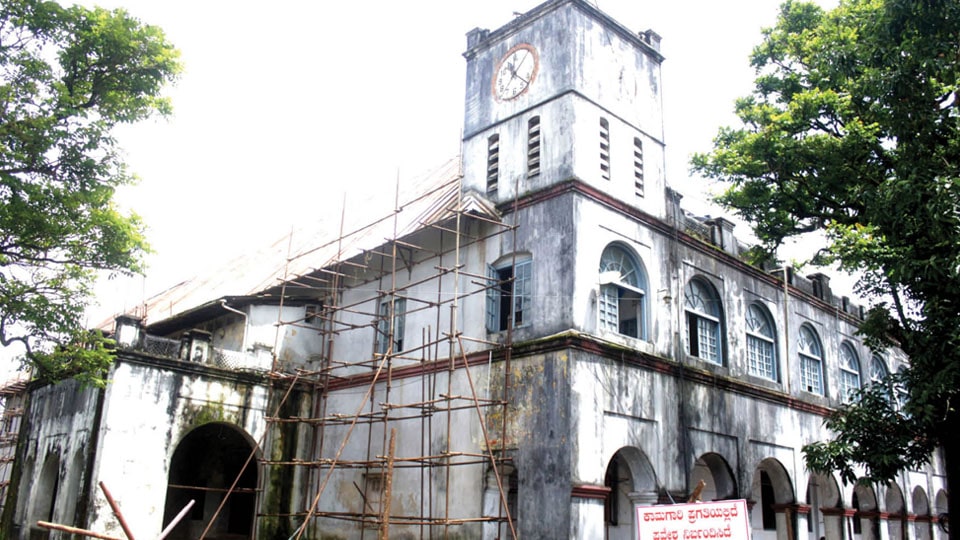
With the State Cabinet on Thursday sanctioning Rs. 8 crore for the renovation of the historical Madikeri Fort, the works on which has been taken up by the Archaeology Department, Madikeri MLA Appachu Ranjan has batted for retention of old architecture and heritage characterisitics of the structure, while also giving a modern touch to it.

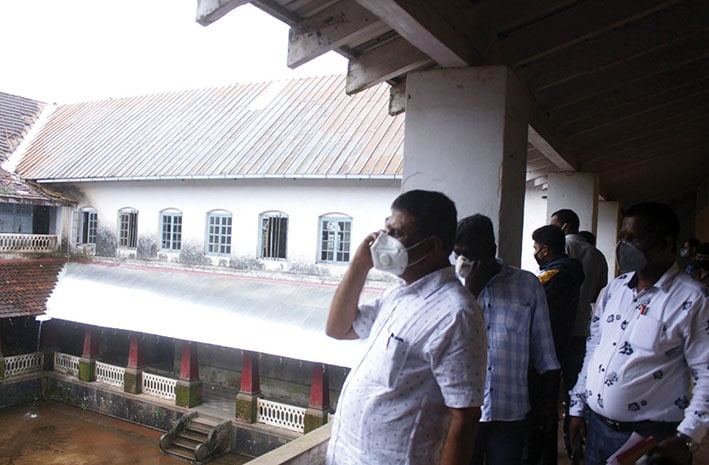
Speaking to presspersons after inspecting the ongoing renovation works of the Fort located in the heart of Madikeri City, Appachu Ranjan, who is also a former Minister, said that as an MLA earlier too, he had raised the Fort renovation and development issue a number of times in the Assembly..

Pointing out that the renovation works has been taken up following a High Court order, he said that now the State Government has sanctioned Rs. 8 crore for the works and it is satisfactory to note that the works have been taken up at last.

MadikeriFort02KF29jul2020

Asserting that Madikeri Fort and the associated Palace is symbolic of Kodava tribe, he said that it was important to develop the Fort as a Museum, while retaining the original architectural characteristics of the structure.Underlining the need for installation of Sound and Light system in the Fort premises once the renovation works are completed, he said that the richness and uniqueness of Kodava culture, customs and traditions must be portrayed through this system, just as being done in the case of freedom fighters such as Veer Savarkar and Bhagat Singh at Andaman Jail.

Earlier, Appachu Ranjan received inputs on the progress of works from the Department Engineer, who said that 5mm metal sheet has been cemented to the roof of the Fort. Expressing displeasure at the quality of the sheet, he asked the authorities to ensure quality of tiles, wood and other construction materials being used for renovation.

Earlier, Appachu Ranjan received inputs on the progress of works from the Department Engineer, who said that 5mm metal sheet has been cemented to the roof of the Fort. Expressing displeasure at the quality of the sheet, he asked the authorities to ensure quality of tiles, wood and other construction materials being used for renovation.

source: http://www.starofmysore.com / Star of Mysore / Home> News / July 28th, 2020

‘Kargil Vijay Diwas A Symbol Of India’s Pride And Valour’

Air Marshal Nanda Cariappa pays rich tributes to martyred soldiers

KargilDivas01KF27jul2020

Madikeri:

“Kargil Vijay Diwas is a symbol of India’s pride and valour. I bow to the soldiers who, with their indomitable courage, drove the enemy from the inaccessible hills of Kargil and waved the Tricolour there again. The country is proud of the heroes of India, who are dedicated to protecting the motherland. We remember the courage and determination of our Armed Forces, who protected our nation in 1999 and continued protecting us and their sacrifices will continue to inspire generations,” said Air Marshal Kodandera Nanda Cariappa.

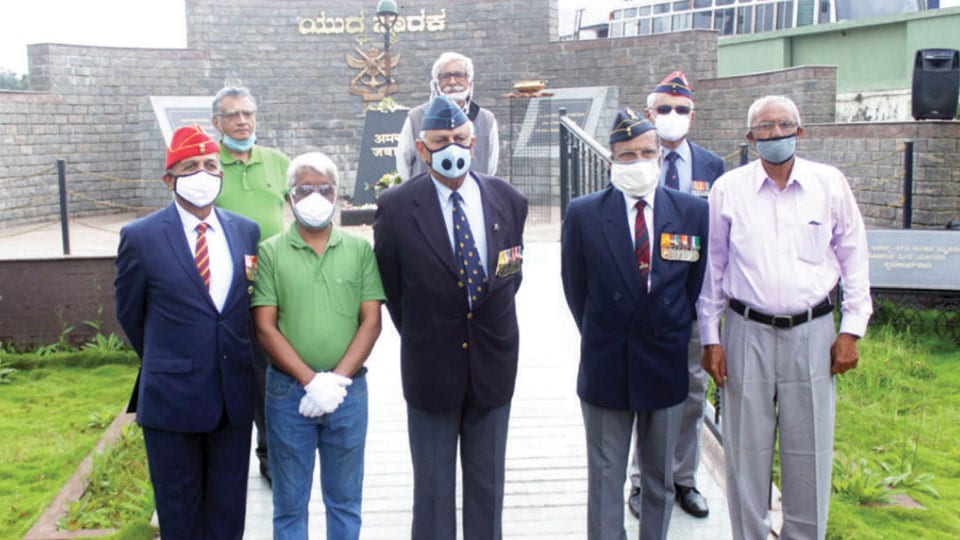
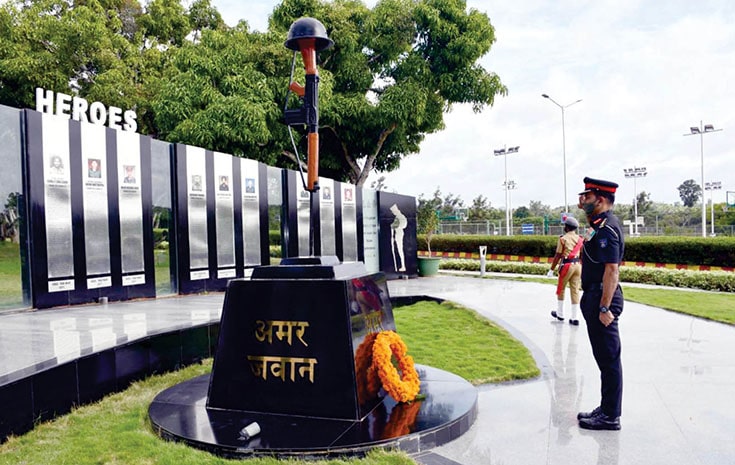
He was speaking at Sunny Side War Memorial — the house of General K.S. Thimmayya — at Madikeri yesterday on the occasion of Kargil Vijay Diwas. The event was organised amidst COVID pandemic by Field Marshal K.M. Cariappa and General Thimmayya Forum. “It is a special and a sacred milestone in the history of Indian Armed Forces,” he said after laying a wreath at Amar Jawan Memorial at Sunny Side.

Field Marshal K.M. Cariappa and General Thimmayya Forum President Col. (retd.) Kandrathanda Subbaiah, Lieutenant Colonel (retd.) Chengappa, Major (retd.) Biddanda Nanda Nanjappa and others paid rich tributes. Ajjinanda Thamoo Poovaiah of Kodagu Ekikarana Ranga, Kokkalera Cariappa, entrepreneur Arun, Sukumar of Hindu Vedike and others were present.

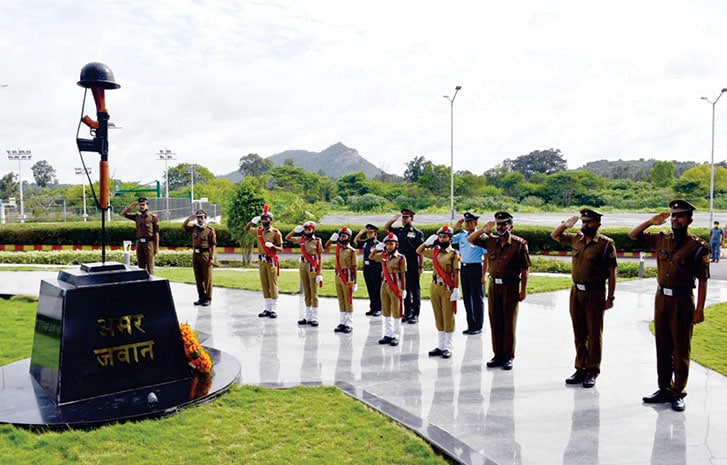
Kodagu Sainik School Principal Col. G. Kannan paying homage to war heroes at the War Memorial.

Sainik School pays tribute

The supreme sacrifice by the brave Indian soldiers was remembered by the Kodagu Sainik School fraternity by paying homage to war heroes at the War Memorial. Principal Col. G Kannan laid the wreath. Lt. Col Seema Tripathi, Vice-Principal and Sqn. Ldr. R.K. Dey, Administrative Officer also remembered the sacrifices.

Associate NCC Officers of the School also paid floral tributes at the Memorial. The Principal addressed the cadets and shared a video to the cadets about the event and told them that the School, under Ministry of Defence and with the support from Government of Karnataka, is committed to prepare them to be future leaders not only in defence forces but in all walks of life.

KargilDivas03KF27jul2020

Owing to the COVID pandemic, the programme and competitions were held online. Cdt. Amogh and his team of other cadets performed a role play titled “Yeh Dil Mange More!” a tribute to Capt. Vikram Batra, Param Vir Chakra awardee, through video conference. Online quiz, poster-making contests were held and e-certificates were also awarded to the winning cadets.

source: http://www.starofmysore.com / Star of Mysore / Home> News / July 27th, 2020

Forgotten tales of valour and courage: NNRC in Korea and General KS Thimayya

Synopsis

In Nov 1948, Thimayya moved Stuart tanks in utmost secrecy by dismantling their turrets and used them in direct firing role that led to the capture of Zoji-la which had evaded capture on previous instances. It was because Zoji-la was in our hands that liberation of Kargil was possible in 1999.

General KS Thimayya
General KS Thimayya

There were three elements to India’s largely unknown role in the Korean War 1950-1953. This is the second in a continuing series on that conflict. For the earlier story on the 60th Para, click here (https://bit.ly/2DW0PHS)

India became a member of the United Nations when the organization was founded on October 24th, 1945. Established to ensure world peace—among other goals— after a ruinous World War, the UN has had a mixed track record. One of its successes, however, was the bringing of the Korean War to a close. India played a unique role in bringing the conflict to a speedy conclusion by advocating against a policy being debated at the UN which could have led to the war’s prolongation or escalation. That war was also the first commitment to a UN assignment by an independent India and the Indian Army. This contribution and the men who made it a success are still celebrated as heroes for their commitment and courage.

The Korean War began on 25th June 1950 and would rage for three long years between the Western alliance—led by the USA under a UN resolution called the UN Command—and a Socialist alliance of North Korea and China (known as the Korean People’s Army (KPA) and the Chinese People’s Volunteers (CPV)) supported by the Soviet Union. The two sides reached a military stalemate by the middle of 1953 and had agreed on the terms of a ceasefire. In truth, the war would have come to an end in 1952 if the peace talks held at Panmunjom on October 25, 1951 could have reached a decision on the question of prisoner swaps. This was a contentious topic, and one where India finally found the solution—a solution accepted nearly unanimously by the UN, allowing for the signing of the Korean Armistice Agreement on July 27, 1953. India’s efforts to find a compromise failed more often than not, increasing tensions between India and the United States, and even South Korea. The US had reasons to suspect Indian neutrality as we were among the first countries to recognize China diplomatically, even advocating for their seat at the UN in 1950.

A major issue that defied agreement was how to deal with a large number of Korean and Chinese prisoners—about two hundred thousand of them—held by the UN Command. Many prisoners refused to return to their original countries. There were also a few similar UN prisoners, mostly Americans, held by the Korean People’s Army (KPA) and the Chinese People’s Volunteers (CPV))

The Armistice agreement stipulated that a Neutral Nations Repatriation Commission (the NNRC) would be established with two countries from each bloc, and headed by India—underscoring our nation’s reputation as a neutral country. Thus the NNRC had Czechoslovakia and Poland from the Eastern Bloc, and Sweden and Switzerland from the West. India was also tasked with providing a brigade of soldiers to provide security for the prisoner exchange.

The NNRC decided the fate of the remaining 20,000 POWs —and their repatriation—also called the Big Switch. It followed Operation Little Switch in April-May of 1952, which saw the exchange of wounded and sick soldiers held by both sides. The solution included handing over these prisoners to the NNRC headed by India. A full Indian contingent of nearly 6000 called Custodian Force of India (CFI) were to take over physical custody of these prisoners; this was our nation’s initiation into peacemaking and conflict resolution.

Led by General Thimayya as Chairman, and Ambassador B.N. Chakravarty, IFS, as the Alternate Chairman, the Neutral Nations Repatriation Commission (NNRC) was a task that many did not think Indians would be able to handle or deliver, because of its layered complexities and intrigue.

The Indian government had made sure to send their best medical unit 6oth Para Field Ambulance earlier ( https://bit.ly/2CrHWfn) and now, in sending General KS Thimayya—later to be the COAS— they displayed the same intent.

The force behind the NNRC

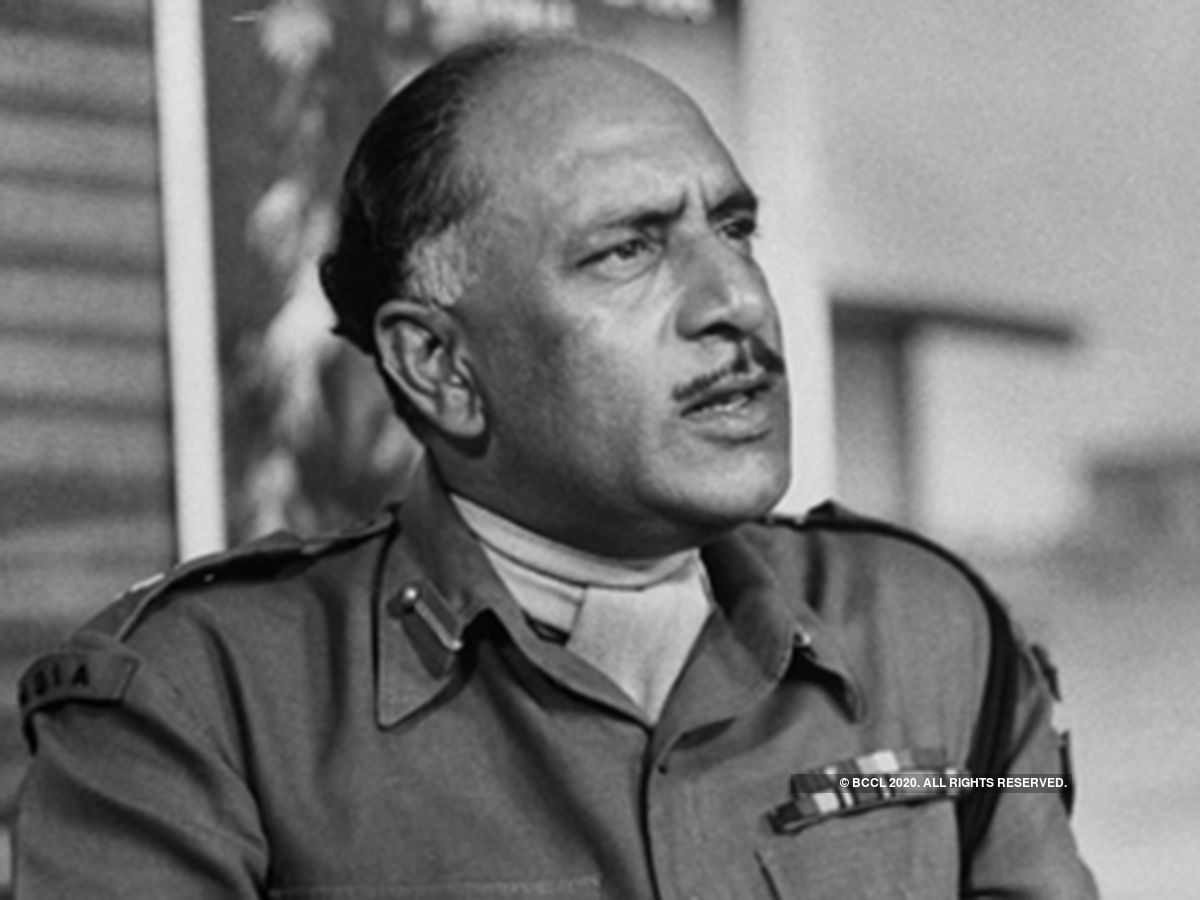
Kodandera Subayya Thimayya was one of three brothers born to a rich coffee planter of Cheppudira clan in Madikeri in the district of Kodagu. He joined Bishop Cotton School in Bangalore before enrolling at the Prince of Wales Royal Indian Military College (RIMC) in Dehradun; he was one of six Indian cadets later chosen to attend the Royal Military Academy at Sandhurst along with Gen PN Thapar who would later succeed him as the Chief in 1961 and be made a scapegoat for failures in 1962. Gen Thimayya’s brothers too joined the Army and his elder brother Ponnappa later joined the INA inspired by Subhas Chandra Bose and his younger brother died in the first war in Kashmir.

Thimayya graduated from Sandhurst in 1926 and received a commission into the British Indian Army, going on to become the first Indian to command an Infantry brigade: the 268th Indian Infantry Brigade—part of the post-World War II British Commonwealth Occupation Force in Japan. He received the British Distinguished Service Order for his service for the British military during World War II.

General Thimayya was also chosen to lead the counter offensive in Kashmir and headed the Jammu Kashmir force from April 1948 . The J&K force was split as Srinagar and Jammu Division, Gen Thimayya headed the Srinagar Div in May 1948 . Immediately he set about recapturing territories lost to the marauders with his daring and dynamic brigade commanders – Brig LP Sen of 161 brigade in Uri Sector, Brig Atal of Para Brigade tasked to recapture Zojila and Harbaksh Singh in command of 163 in Handwara – Kupwara . They were on a recapturing spree when Nehru decided to unilaterally declare suspension of operations as the case was referred to the UN much to the protestations of the army brass. Fortunately Pakistan didn’t comply with the UN resolution allowing the re – commencement of operations. This window of opportunity saw the consolidation of Ladakh with the capture of Zojila Dras and Kargil. Leh a weakly held garrison was saved by the sheer audacity and courage of Thimayya and Air Cmde Mehar Singh who landed in a Dakota together for the first time in Leh paving the way for beefing up troops that saved Leh from enemy hands . In another audacious move for capture of Zojila tanks of 7 Cavalry was used in a direct firing role which completely destroyed the enemy morale leading to its capture . Thus Ladakh was saved in the nick of time by November 1948 before winter set in . Seeing the change in pace and tempo of operations Pakistan quickly agreed to the terms of the UN resolution calling for a ceasefire before it lost all other territories held by them. The rest is history but what stood out is the sheer character and audacity which made him a national hero for saving Kashmir .

Another anecdote that revolves around him is the detention of a senior politician’s son after he and some goons passed lewd remarks and even tried to molest the wife of an Army officer of 5 JAT in Amritsar in 1959 . With the personal involvement of none less than that of the CM Of Punjab the ripples of this action went up to Parliament. General Thimayya was summoned for an explanation and his response that silenced the opposition was “If we cannot defend the honour of our women, how can you expect us to defend the honour of our country?”

His ability to project India’s honor was on full display during his handling of the NNRC in Korea.

The NNRC through CFI was responsible for gathering non-repatriated prisoners into camps; that included nearly 170,000 prisoners held by UN forces who didn’t want to return to either China or North Korea.

In the face of Chinese demands for the forceful repatriation of their soldiers, the UN and the CFI worked hard to explain to each prisoner their rights and privileges; they could then choose to go home or remain with the side that captured them.

This called for compassion, fairness, and neutrality on the part of the Indian Custodian Force, who rendered yeoman service during the entire span of their mission from September 1953 to March 1954. On several occasions, intricate situations were resolved only because of the patience and tact of General KS Thimayya and Major General SPP Thorat. They proved their mettle, earning well-deserved praise for their command and for India.

It was an unenviable task; in the end only less than 100 who wished not be repatriated to either country came back to India once the NNRC and CFO concluded their operations. A few Koreans chose to resettle in India, while others were repatriated to Brazil.

General Thimayya is not only an Indian military hero he is also a hero of the Korean War . It has been 66 years since the end of the Korean war but even till day he is remembered by Koreans with gratitude and affection. He was awarded a Padma Bhushan in 1954 for his service in Korea.

General Thimayya went on to become the COAS from 1957-1961. After his retirement the UN again requested for his service in 1964 to command UN troops operating on Cyprus in keeping with his reputation of impartiality displayed in Korea . He would however die of a massive heart attack on December 18, 1965 at the age of 59.

————–

Col ( Dr) Divakaran Padma Kumar Pillay, Shaurya Chakra, PhD is a Research Fellow, with the Manohar Parrikar Institute for Defence Studies and Analyses. His twitter id is @dpkpillay12.

—————
source: http://www.economictimes.indiatimes.com / The Economic Times / Home> National> Business News> News> Defence / by ET Contributor – Col.(Dr)Divakaran Padma Kumar Pillay / July 21st, 2020

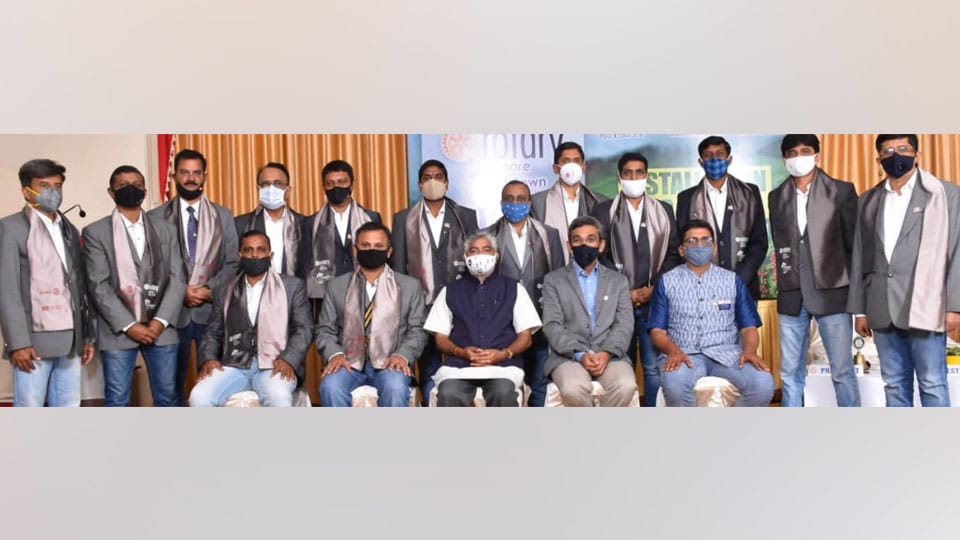
New Team Of Rotary Mysore Midtown

The Installation Ceremony of the new office-bearers of Rotary Mysore Midtown for the year 2020-21 was held at a private hotel in city yesterday.

RotaryMysoreKF13jul2020

Seen are (standing from left) Rtn. Harish – Sergeant, Rtn. Rakesh – Youth Service Director, Rtn. Manojkumar – Immediate Past President, Rtn. Ravindranath, Rtn. Naveenchandra – Vice-President, Rtn. Abhilash Nair – Joint Secretary, Rtn. Mallikarjun – Club Service, Rtn. Naveenchand – Vocational Service, Rtn. Jaykumar – Community Service, Rtn. Madhusudan – International Service, Rtn. Sathyendra – Treasurer and Rtn. Prahlad – Editor; (sitting from left) Rtn. Veeresh – Secretary, Rtn. A.N. Aiyanna – President, Addanda Cariappa – Rangayana Director (chief guest), Rtn. PDG. Nagarjun – Installing Officer and Rtn. Rohith Ramdev – Assistant Governor.

source: http://www.starofmysore.com / Star of Mysore / Home> Photo News / July 09th, 2020