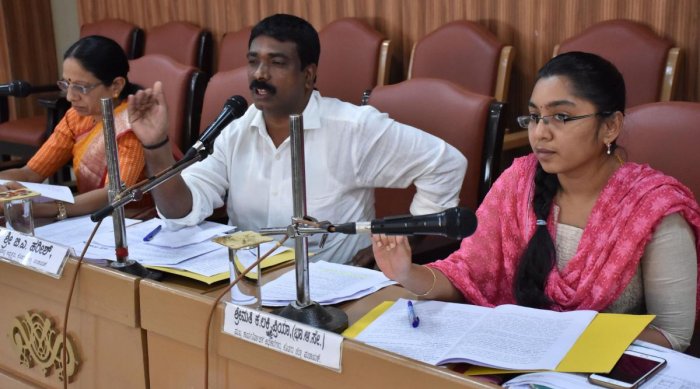
Zilla Panchayat President B A Harish, Vice President Lokeshwari Gopal and CEO K Lakshmipriya take part in the general body meeting of Kodagu Zilla Panchayat in Madikeri on Wednesday. DH photo
Zilla Panchayat members on Wednesday alleged that the selection of students for the sports school at Ponnampet in Virajpet taluk has not been done in a transparent manner.
Following pandemonium in the general body meeting of the Zilla Panchayat on the issue, Zilla Panchayat president B A Harish intervened and said the selection process can be withheld if found it is not fair. However, it was resolved to review the selection list.
Earlier, JD(S) member C P Puttaraju demanded a probe into the selection process. Responding to his demand, Health and Education Standing Committee chairman N T Kiran Cariappa said that 165 students took part in the selection. Among them, 15 boys and four girls have been selected. The selection was done by experienced coaches. The students selected during the last year have won several medals, he said.
Pointing out that there were students from Somwarpet as well, he said, “The selection cannot be limited to a specific taluk. It depends on the calibre of the students”.
As soon as the meeting began, member Bananda Pratyu said that the farmers are in distress. The market rates of coffee and pepper have fallen. Therefore, the Zilla Panchayat should pass a resolution to propose to the government to completely waive the loans availed by farmers, Pratyu said.
When the Zilla Panchayat president insisted on sticking to the agenda of the meeting, Pratyu and K P Chandrakala protested in front of his seat. The impromptu protest led to an exchange of words between Congress and BJP members.
Pratyu alleged that the farmers do not get even one hour of power supply at Balele, Kutta, Ponnampet and surrounding regions.
Member Shivu Madappa urged the Zilla Panchayat to repair the faulty power line to provide free electricity up to 10 hp, to the farmers, as assured by the government.
CESC executive engineer Somashekhar said that the problem is due to overloading. The issue will be rectified soon. To the reply by the official, the members warned of staging a protest in front of the CESC office if the electric line is not repaired within three days.
The Zilla Panchayat president directed the official to repair the electric line soon.
To an issue raised by member Suneetha, DDPI P Machado said that special classes are being conducted for SSLC students. The students staying in the school at night are provided food. “Preparatory examinations are being conducted to ensure best results in the final examination”, he added.
Zilla Panchayat Vice President Lokeshwari Gopal and CEO K Lakshmi Priya were present.
source: http://www.deccanherald.com / Deccan Herald / Home> State> Mangaluru / by DHNS, Madikeri / February 19th, 2020
“I have come here to build Rangayana and further the cause of theatre, art and culture and not to hoist the flag of BJP or any other political and non-political organisations. Of course, the BJP Government has appointed me as the Rangayana Director. From the day I took charge, I have been tirelessly working with my teams and I will continue to strive for the welfare of Rangayana without any other agenda or ulterior motives.”
These were the words of Rangayana Director Addanda C. Cariappa who has successfully steered the 20th edition of ‘Bahuroopi’ organised by State’s premier theatre repertoire, Rangayana. The festival that began on a grand note on Feb. 14, hit crescendo on Feb. 15, 16, 17 and 18, to conclude on an even grander note last evening.
Addressing a press conference at Rangayana premises this morning, Cariappa said that he has been in the field for 40 years and he will go to any extent to fight for the cause of theatre and artistes. “I have not come here as a Director to build a fort around me and my thoughts. I have come here to continue the good work done by previous Directors and also to take Rangayana to newer heights,” he said.
“Bahuroopi, that earlier meant only for theatre groups, art lovers and intellectuals, now, is a festival of common man and people broke all barriers, shed inhibitions and openly participated in all the events and the packed audience at all the events is a proof for this,” he opined.
“I have worked after gaining the trust of everyone and I do not want to defame Kodagu. I am a Kodava and tomorrow no one should say that Rangayana’s image was spoilt by a Kodava. I have no hidden agenda and I have worked honestly, earning the trust of everyone,” he said.
Gandhi Patha and honest work
Cariappa said that when he took over as Rangayana Director, there were talks of holding this Bahuroopi in the name of Girish Karnad. “I told them that dedicating the festival to Mahatma Gandhi on his 150th birth anniversary was a befitting tribute to the great soul. Everyone agreed and I coined the phrase ‘Gandhi Patha.’ It immediately struck a chord and everyone worked together as one team to ensure the success of the festival,” he revealed.
Gandhiji ubiquitous
Gandhiji was there everywhere, be it plays, seminars, venues, dance dramas, films, folk, cultural performances and even food and handicrafts. “This all-pervading and ubiquitous presence of Gandhiji was achieved with team work, support and participation. I did not differentiate between Left-leaning and Right-leaning thinkers. For me, all were equal. Before the festival began, I fell to the feet of many Gandhians in Mysuru and urged them to be a part of the festival. I visited Dalit Keris, congregations, temples and houses and pleaded them to participate. This paid off as there was overwhelming participation,” Cariappa said.
Atithi Devobhava
“Though there were attempts to disturb the festival and defame me initially, I extended open arms and invited them. I told them that my personal comments and Rangayana are separate, Kodavas are known to speak their heart out and I have done the same. I treated everyone equally with the principle of ‘Atithi Devobhava’ and the results are here,” he said.
Cariappa thanked all senior and junior artistes, repertoire groups, Bharatiya Ranga Shikshana Kendra, Mysuru Amateur Theatre Group, local artistes, staff of Rangayana and Kalamandira, Rangayana Joint Director V.N. Mallikarjunaswamy, Kannada and Culture Department Deputy Director H. Channappa, Canara Bank, donors and Government for providing finance and all those who worked tirelessly for Bahuroopi-2020 and its allied events.
“From the day I took over as Rangayana Director on Dec. 31, I began Bahuroopi work by conducting a series of meetings and by signing many files. I gave the push for the festival by forming various Committees and assigning responsibilities and together, we have achieved great success. From Jan. 1, every day I used to come to Rangayana at 6 am and be at work till 11 pm. I have not discriminated between any theatre groups and have earned the trust of all,” Cariappa added.
source: http://www.starofmysore.com / Star of Mysore / Home> News / February 20th, 2020
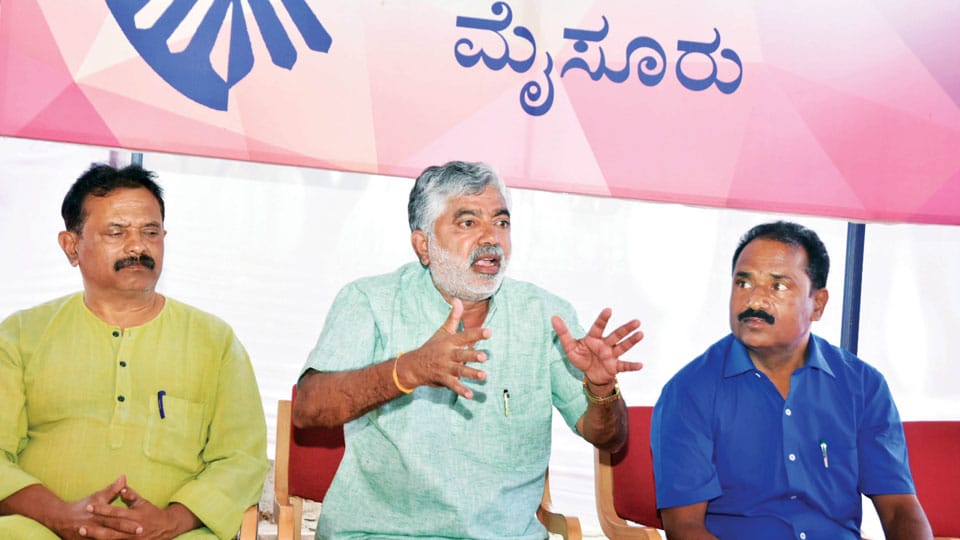
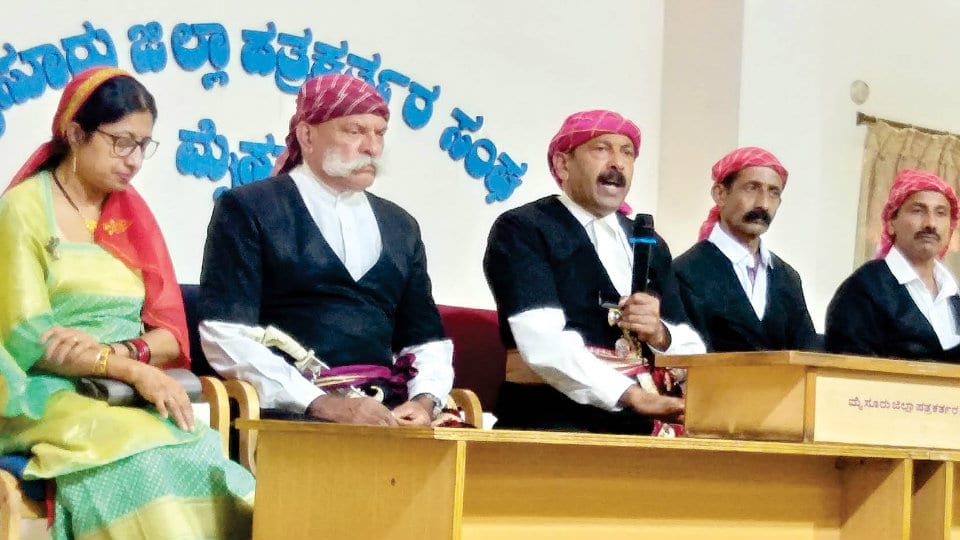
Codava National Council (CNC) President N.U. Nachappa, welcoming the Centre’s enthusiasm and commitment for the creation of Bodoland Territorial Region, has urged the Union Government to expedite the long-cherished aspirations of Kodava Land Geo-Political Autonomy under Articles 244, 371 (read with 6th & 8th Schedule of the Constitution) and also assign ST (Scheduled Tribe) tag to Kodava tribe.
Addressing a press meet at Pathrakarthara Bhavan here this morning, he said that the Union Government, on Jan. 27, succeeded in bringing the curtains down on more than three decades of “militia” activities in one of South Asia’s insurgency-hit region.
“First, the NDA Government in 2019 made its commitment of assigning greater Autonomy to the existing 10 Autonomous regions of North East. Now it has taken first step by entering into a pact with Bodoland people. On Jan. 27, a Tripartite Agreement was signed between the Government of India, the Government of Assam and the National Democratic Front of Bodoland (NDFB) known as ‘The Comprehensive Bodo Settlement Agreement (TCBSA).’ According to this agreement, it gives greater Autonomy and more powers to the body, which will again be renamed as the Bodoland Territorial Region,” Nachappa said.
The five points of the Agreement include:
1. Bodoland Territorial Area District (BTAD) to be renamed as Bodoland Territorial Region. 2. Inclusion of villages having predominant Bodo population into the Council region. 3. Bodo language with Devanagari script to be an associate official language across Assam. 4. Assam Government to set up a Council for welfare of the Bodo-Kachari people living outside BTC. 5. Steps to ensure land rights of the Bodos. As per the accord, Bodos can directly avail monetary aid from World Bank and IMF, he said.
CNC’s five demands are as follows: 1. Kodava land Geo-Political Autonomy should be carved out under Articles 244 and 371. (For traditional and indivisible home land of Kodava tribal community, comprising 45 ancient traditional Kodava Naads, that is from Marenaad to Pathkattnaad, from Gadinaad to Anjigerinaad, from Bengnaad to Kadiyathnaad, from Ballathnaad to Bottiyathnaad, from Noorokkanaad to Poramalenaad, from Muthnaad to Kuthnaad, from Badigerinaad to Paakerinaad, from Surlabbi Naad to Kurchinaad, Thodanaad to Ummathnaad, from Berali Naad to Bepp Naad, Kangalath Naad to Baira Naad, Thavu Naad to Botoli Naad, Perava Naad to Poo Naad, Kirnal Naad to Edenal Naad, Paadi Naad to Kuiangeri Naad, Madikeri Naad to Aarkeri Naad, Noorambada Naad to Kaggod Naad, Nelliya Pudikeri to Kanthamoo Naad, Nelji Naad to Aarayiranaad, Mudigerinaad to Paleri Naad etc.).
2. Indigenous Non-Schedule vulnerable, diminishing Kodava tribe should be included in the ST list under Articles 340 & 342 of the Constitution.
3. Minuscule micro minority dwindling Kodava tribe and their cultural heritage should be included in the Intangible Cultural heritage list of UNESCO.
4. Ancient, rich and living spoken language of the Kodava region and also the mother-tongue of aboriginal Indigenous Kodava tribe ‘Kodava Thak’ should be incorporated in the 8th Schedule of the Constitution.
5. Kodava gun rights should be continued without any time restriction. Kodava tribal folk are exempted under Section 3 and 4 of Indian Arms Act and can possess and carry gun at all times, since weapon is considered by Kodava tribal folk as revered sacrament. Because of their dwindling population and vulnerability there is an existential threat for them and their identity. Hence these minuscule micro minority diminishing ethnic tribe should be protected Constitutionally, the CNC President said.
Continuing he said, for the time being, let them be classified as ST under the Constitution because there is no other classification under the Constitution of India. However, in the long run we Kodavas would like to be classified as a Special Warrior Tribe, he added.
CNC’s demand and claim for Geo-Political Autonomy is most legitimate, logical, feasible and deserving in all sense among any other demands, he opined.
Considering the veracity of the legitimate demands put forth by Codava National Council before the Constitution Review Commission of India headed by Justice M.N. Venkatachalaiah comprising an 11-member stalwarts who are experts in various fields like Constitutional experts, Jurists, Civil servants, Law-makers, Diplomats, bureaucrats and Eminent Journalists have recommended for the creation of Coorg Autonomous Development Council under Article 371 of our Constitution, he said.
Renowned Economist and Rajya Sabha MP Dr. Subramanian Swamy too has taken cognisance of the subject and he is working towards it, Nachappa added.
source: http://www.starofmysore.com / Star of Mysore / Home> News / February 17th, 2020
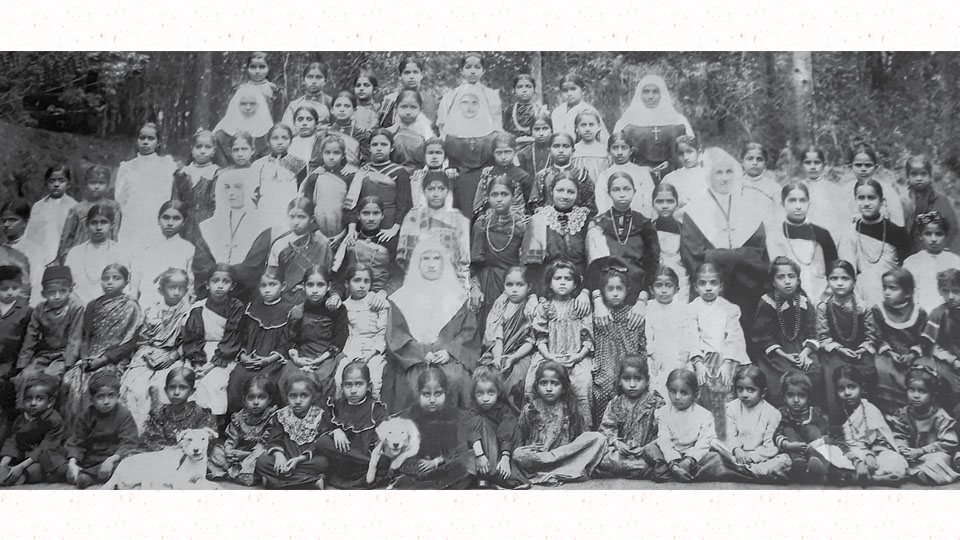
Educational institutions were first started in Kodagu after the British takeover in 1834. People took to education most enthusiastically. In 1909, St. Joseph’s Convent was founded by Catholic nuns in Madikeri. It was primarily for girls, but boys were allowed till 7th standard. I recently came across a remarkable group photograph taken in 1911, of the students at the time, along with the European nuns who ran the school. The school catered to both boarders and day-scholars.
This school offered better quality education to children of those locals who aspired to see their chldren well prepared to take advantage of lucrative jobs and career opportunities under the colonial dispensation. This school saw generations of students, especially women, pursue higher education and excel at a time when women were not much involved outside the traditional family responsibilities.
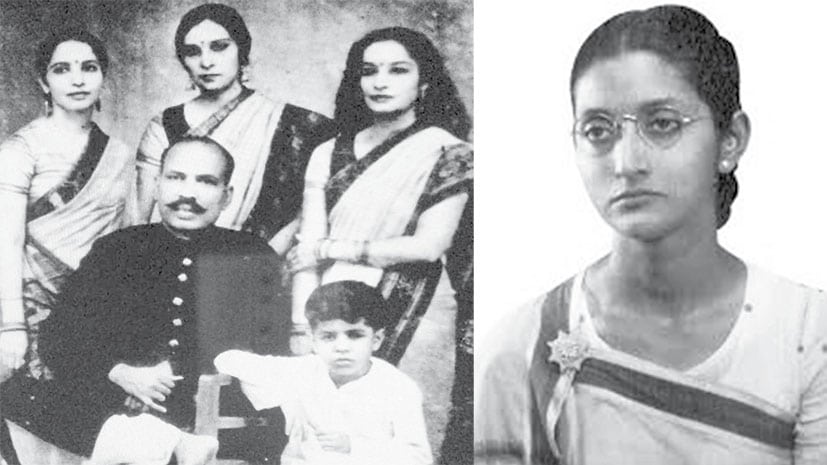
One family in this frame, frozen in time, has members who went on to become famous during the 1930s to 1950s. They are the seven daughters and one son of the first lawyer from Kodagu — Codanda D. Poovaiah. After school, six of his daughters pursued higher education outside Kodagu. The sisters excelled in various fields and soon came to be known as the ‘Poovaiah Sisters of Coorg.’ One of them, Rohini, was the first lady from Kodagu to acquire a degree. She later became the Principal of Crosswaithe College, a well-known institution in Allahabad. She was familiar with the Nehru family and had a brief role in the education of a young Indira Gandhi. She was awarded the Padma Shri in 1973. Another sister, Ashlesha, was one of the first lady doctors from Kodagu. Yet another sister, Swati, did her Nursing degree and later went on a scholarship to Columbia University in 1948 for further studies.
Three of the Poovaiah sisters with their dance guru Jailal. / Picture right shows Chonira B Muthamma, first lady IFS Officer.
The three younger sisters — Sita, Chitra and Lata — became renowned Kathak dancers and were much sought-after not only for their performances all over India, but also to direct dances in Hindi movies. All sisters took part in the freedom movement. Chitra and Lata defied prohibitory orders during the ‘Quit India’ movement. They were jailed for 2 weeks. Sita went on to earn a Ph.D in Arts from Bombay University and became the first Kodava lady to get a Doctorate degree. My father, C.M. Poonacha, was a freedom fighter and knew the family well. I had the privilege of being invited to their home on Malabar Hill in Bombay in 1968. Except for Ashlesha, all the sisters were spinsters.
On a personal note, my wife’s grandmother is one of the little girls sitting in the front row. She later married Pemmanda K. Monnappa who had the unique distinction of being the Inspector General of Police (IGP) in three Southern States. He was the Police Chief who headed the Government action in quelling the Razakars revolt in Hyderabad. He was the first IGP (equivalent to DGP now), of the newly formed Karnataka State in 1956.
My sister’s future father-in-law is one of the little boys sitting in the front row. Interestingly, his future mother-in-law is also in the same frame! This iconic, over a century-old photograph, has many stories to tell.
Over the years several girls who had their early education in this school went on the achieve in various fields. Konganda Accamma, who passed out of this school in the 1920s, joined Lady Hardinge Medical College in New Delhi. She was one of the first Kodava women to earn a MBBS degree. She headed the Vanivilas Women and Children’s Hospital for several years.
One of the most distinguished alumna of this school is C.B. Muthamma, who was the first woman to qualify for the Indian Foreign Service in 1949. She also has the distinction of being the first lady Ambassador from the IFS cadre. Muthamma had to face gender discrimination while in service. She fought against the Government and went to the Supreme Court in 1979. The Apex Court passed a judgement in her favour which paved the way for other women civil servants from being discriminated against. She authored a book titled ‘Slain by the System’ in 2003. Muthamma’s classmate was Jajie Mandanna, who was an MLC and a well-known consumer activist. I am told they fiercely fought for the top rank in their class!
St. Joseph’s is now a co-ed school and continues to provide quality education.
___________________
About the author:
C. P. Belliappa, born in 1946, is a Chemical Engineer. He is currently settled in Coorg. He is known for his writings on issues pertaining to Coorg. Four of his books — Tale of A Tiger’s Tail & other Yarns from Coorg, Nuggets from Coorg History, Victoria Gowramma: The Lost Princess of Coorg, and Tongue of the Slip, have been published by Rupa Publications. He currently serves as President, Coorg Institute of Technology, Ponnampet, South Kodagu.
source: http://www.starofmysore.com / Star of Mysore / Home> Feature Articles / February 16th, 2020
The annual fruit and flower show which began at Raja Seat in Madikeri on Friday has been attracting tourists and nature lovers in large numbers.
The traditional ‘Ainmane’ house made out of flowers, is the main attraction in the fruit and flower show in Raja Seat, Madikeri.
Artifacts featuring Virat Kohli, Wing Commander Abhinandan, Kuvempu, Atal Bihari Vajpayee, Narendra Modi, B S Yediyurappa, A P J Abdul Kalam, Mahatma Gandhi, Siddaganga seer, Dr B R Ambedkar, Field Marshal K M Cariappa, General Thimmaiah and Pejavara seer— all carved out of watermelons, mesmerise visitors, at the entrance of Raja Seat.
6,000 flower pots
A total of 6,000 flower pots have been arranged in the park. Flowers exhibiting a wide spectrum of colours and species, arranged in artistic patterns, have been providing a visual treat.
Raja Seat, which had lost its sheen owing to lack of flower-bearing plants, is now wearing a refreshed look.
The main attraction, however, is the traditional ‘Ainmane’ (house), designed with lakhs of flowers. A lot of visitors were seen taking selfies in front of the Ainmane.
Rocket
The heart made out of roses, rocket launching station of ISRO, coffee pot and the cup, Mickey Mouse, Swami Vivekananda and other artefacts made out of flowers are making the people spellbound.
Cultural programmes will be held in the evenings, as a part of the fruit and the flower show. Food festival is being held in Gandhi Maidan. People have been relishing their taste buds with sugarcane juice from Mandya and other delicacies. Stalls have been put up by the Horticulture Department and private nurseries, featuring the sale of various flower-bearing plants.
MLA’s praise
Speaking after inaugurating the fruit and flower show, Madikeri MLA Appachu Ranjan called upon the people to come to Raja Seat in large numbers to see the show.
The show is being organised by the Department of Horticulture at a cost of Rs 20 lakh. Cultural programmes are being organised by the Department of Kannada and Culture and Karnataka Kodava Sahitya Academy, he said.
Deputy Commissioner Annies Kanmani Joy said it has been a tradition to organise fruit and flower show in the month of January or February every year. The show will be on till Monday.MLC Veena Acchaiah, MLC Sunil Subramani, Kodagu Zilla Panchayat President B A Harish, Vice President Lokeshwari Gopal, Hopcoms President Biddatanda Ramesh Changappa and Horticulture department Deputy Director Chandrashekhar were present.
source: http://www.deccanherald.com / Deccan Herald / Home> State> Mangaluru / by DHNS, Madikeri / February 07th, 2020
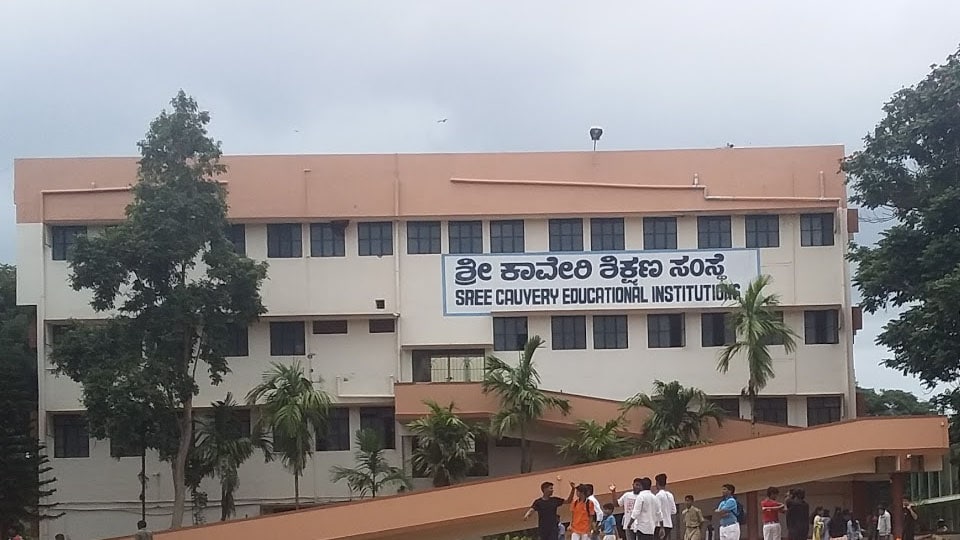
Sree Cauvery Educational Institutions, Kuvempunagar, conducted a one-day University-level workshop on “Business Research Methodology” at the College auditorium in city recently.
University of Mysore (UoM) Registrar (Evaluation) Prof. K. Mahadevan inaugurated the workshop. UoM Commerce Faculty Dr. K. Nagendra Babu was the guest of honour. Institutions Chairman M.K.Kuttappa presided.
The workshop was conducted in three sessions. First session was handled by Dr. R. Jagadeesh, Professor and Head, Department of Studies in Business Administration (MBA), SBRR Mahajana First Grade College (PG Wing), Mysuru; 2nd session by Dr. B. Mahadevappa, Professor of Commerce, Post Graduate Centre, Hemagangothri, UoM and 3rd session by Dr. S.J. Manjunath, Faculty, B.N. Bahadur Institute of Management Sciences, UoM.
The workshop had 300 participants including academicians, research scholars, PG and UG students.
Institution Hon. Treasurer M.B. Aiyappa, Vice-Chairman M.M. Ponnappa, Special Advisor Prof. K.C. Belliappa, Kodava Samaja President K.M. Belliappa and Cauvery First Grade College Principal K.M. Padvamavathi were present.
source: http://www.starofmysore.com / Star of Mysore / Home> News / February 03rd, 2020
Seminar, biopic release to mark the centenary year of scholar Dr. I.M. Muthanna
Bengaluru:
Kodagu’s most acclaimed poet, Appachcha Kavi’s 150th birth anniversary celebrations will be held in New Delhi.
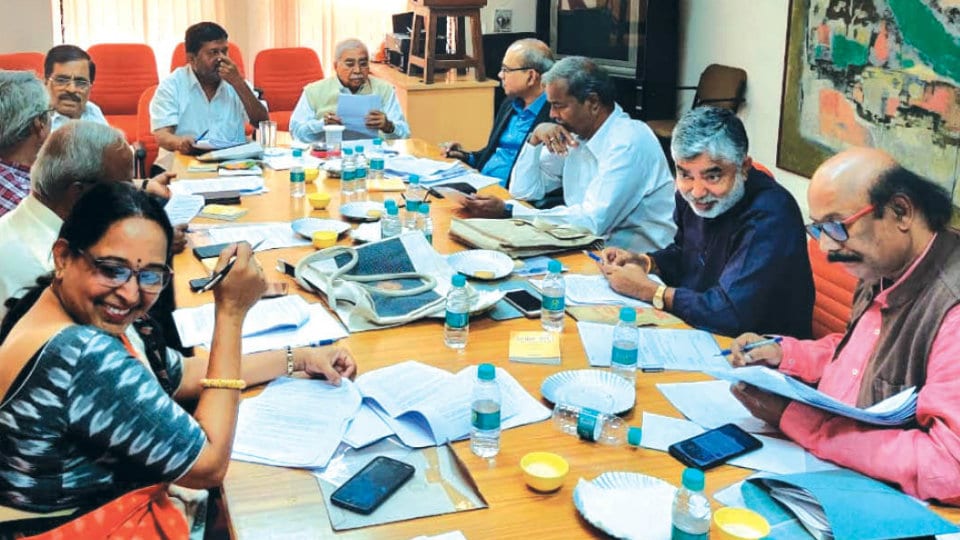
This decision was taken by members of Kendra Sahitya Academy, which had convened a meeting recently at its regional office in Bengaluru under the Chairmanship of Kannada writer Dr. Chandrashekar Kambar.
The Academy, in association with Delhi Karnataka Sangha, Delhi Kodava Samaja and Jawaharlal Nehru University (JNU), will jointly organise the 150th birth anniversary celebration of Appachcha Kavi.
On this occasion, to mark the centenary year of Dr. I.M. Muthanna, noted Indian writer and scholar, a seminar will be held and a biopic on the great writer will also be released.
Dr. I.M. Muthanna was a noted Indian writer, scholar and translator who wrote in English, Kannada and Kodava languages and had translated four plays of Appachcha Kavi to Kannada.
During the meeting, Academy member submitted a proposal to publish the biopic and plays of Dr. Muthanna.
Academy Convenors Dr. Siddalingaiah, Dr. Sarooj Katkar, Prof. H.S. Shivaprakash and others were present at the meeting.
source: http://www.starofmysore.com / Star of Mysore / Home> News / January 29th, 2020
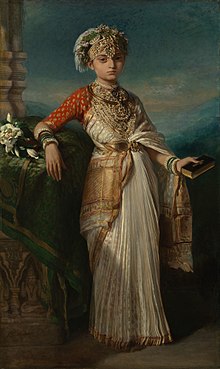
The days of March 1841 spent at Chikka Veerarajendra’s modest haveli in Benares were glazed thick with warmth, summer mangoes, and the colored rice flour that danced in the air in celebration of Holi. And for the first time in a long time, the unseated Rajah of Coorg felt a semblance of pride, after a degrading conflict with the British, while observing his favorite daughter Gowramma gurgling in the courtyard. As the mansion’s entrance gates unexpectedly rusted open, interrupting festivities, Veerarajendra was reconnected with Alamanda Somayya, an old ally to his family, who came with word of anglicized Coorg. When introduced to six-month old Gowramma, Somayya studied her tiny paint-smudged palms, prophesizing that ‘this Rajkumari will one day cross the seas’.
Although Princess Victoria Gowramma and her father were the first Indians to reach British turf in 1852, her somewhat diasporic narrative is little-known, forgotten within a bulky history of colonisation and foreign affairs. Perhaps the most articulate source on the royal is C.P. Belliapa’s novel Victoria Gowramma: The Lost Princess of Coorg, which constructs a meticulous timeline that draws on the prospective importance she held in Britain’s colonial system and the Indian religious landscape.
Being christened as the ‘lost princess’ seems fitting in respect to Gowramma’s position in contemporary Kodagu cultural dialogue – she bears our name, a rather ambiguous notability, and a beauty considered ‘exotic’ by outsiders, but upon closer exploration, was alienated from her people and heritage having been raised under the wing of Queen Victoria, and may even be considered a paradigm of what the British hoped for India.
From Benares To Britain
Gowramma’s journey begins with her father’s loss of Kodagu to the East India Company, leaving him bitter and distrusting of the ferenghis (foreigners). The pastoral simplicity of a kingdom fleshed out by generations of his ancestors now seemed fragile in the hands of the British. After being exiled to Benares, Veerarajendra began nurturing a pipe dream of his own, wherein he could restore himself to affluence by filing a legal suit against the East India Company, which would require his physical presence in London.
PERSISTENT COLOURISM SEALED GOWRAMMA’S FUTURE AS A BRITISH ROYAL – A FAIR COMPLEXION DISTINGUISHED HER FROM VEERARAJENDRA’S OTHER CHILDREN.
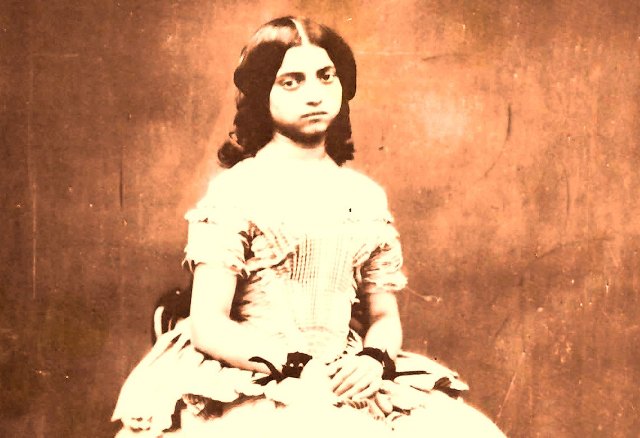
With the help of British doctor and close friend Dr. William Jeaffreson, Veerarajendra began crafting a trip to world’s most powerful social, economic, and technological center, under the desirable pretense of enabling a Christian education for his daughter. According to the Illustrated London News report in July 1852, persistent colourism sealed Gowramma’s future as a British royal – a fair complexion distinguished her from Veerarajendra’s other children, seeing as he’d dubbed her a “pigeon among crows”.
Image Source: Wikiwand
Grooming Of The Princess
Before their arrival, Dr. Jeaffreson offered a piece of advice to an anxious Veerarajendra saying, “Don’t be too hasty in taking up the legal issue on reaching London. Wait until Gowramma is well accepted by British society. A favorable public opinion is very important. I have received intelligence that the queen herself is eager to meet you and your daughter”. Governor-General at the time, Lord Dalhousie, also hoped for a publicised conversion of Princess Gowramma, which could possibly rescue the British regime’s stagnating reputation among its people.
Another motivating factor was young, recently-deposed Maharaja of Punjab Duleep Singh, who had expressed compliance in converting to Christianity after his state was annexed. The belief that a future marital alliance between Gowramma and Singh, two Christian Indian royals, could be a tool for proselytising the Indian population, had already begun gaining momentum within the monarchy. According to Belliappa, the Logins, guardians to Duleep Singh, were champions of this mentality, strongly believing in the European responsibility to spread the word of the Bible among pagan worshippers of India.
Queen Victoria, a spokeswoman for familial values, industrialisation, and social welfare herself, showed interest in Princess Gowramma’s story of passage from one of the humblest provinces of the British colony in India. Gowramma’s baptism on 30th June 1852 is remembered as an elegant occasion in which the young princess showed poise and grace.
On that day, Queen Victoria gifted Gowramma with her name, and a leather-bound bible with gold embellishments. She then entrusted the newly-christened Princess Victoria to the care of Major and Mrs. Drummond, who were to groom her in Western thought. From learning curtsying to using cutlery, Victoria grew into English ideals, and her consequent popularity in social circles and overall joie de vivre has been heavily-recorded.
Final Years
Overtime, the prospect of marriage between Duleep Singh and Victoria Gowramma began to fall out of the works, due to a lack of attraction, although they remained close friends. It was at this point in Gowramma’s timeline that royal disillusionment began to swell, as she realised her nights spent at royal balls with glasses of wine and attractive Englishmen weren’t the answer to what she wanted: a family and home to call her own.
SHE REALISED HER NIGHTS SPENT AT ROYAL BALLS WITH GLASSES OF WINE AND ATTRACTIVE ENGLISHMEN WEREN’T THE ANSWER TO WHAT SHE WANTED.
An obstacle that came in the way of Gowramma and eligible suitors was actually her father, who’d begun to earn himself the reputation of an ‘old reprobate’ in high society. It’s reasonable to conclude that Victoria’s consistent fear of upsetting the queen and consort contributed to her sad lack of autonomy, and also a naïve willingness. She ultimately married the nearly fifty-year-old Colonel Campbell, a charming friend of Duleep Singh, who was mostly attracted to her fine jewelry and 400-pound sterling allowance.
On 2nd July 1861, Gowramma gave birth to a baby girl, christened Edith Victoria Gowramma Campbell. However, this was only followed by a life of isolation in London, as Campbell was an indifferent husband, often only making contact to ask her for money – but Gowramma was not without great strength, and kept a brave face as a single mother.
In March 1864, Princess Victoria Gowramma succumbed to tuberculosis, just a few months before her 23rd birthday. Unsurprisingly, it’s suspected that Campbell disappeared shortly after her death, but not without her jewels.
Ultimately, Duleep Singh and Victoria Gowramma fell short of the grand scheme envisioned by the queen and British royalty. Perhaps India’s religious history would have shifted if a successful marriage between the Christian Indians had been fulfilled, as historians have realised the greater importance of religious propaganda as a tool of control for those colonised, rather than plain force. In respect to Gowramma herself, it’s impossible to trace her intricate lifetime of tragedy and romance without understanding the people and politics that governed her fate and sense of self.
References
1.Victoria Gowramma – The Lost Princess of Coorg by C.P. Belliappa
2. The Hindu
3. Coorg Jewellry
4. Evolve Back
5. Uk Asian
Featured Image Source: UK Asian
source: http://www.feminisminindia.com / Feminism In India – FII / Home> History / by Anoushka / December 12th, 2018
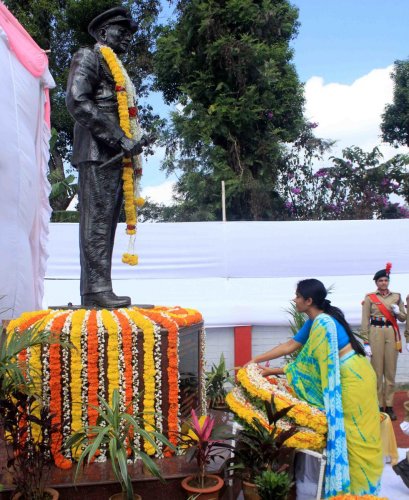
Deputy Commissioner Annies Kanmani Joy pays floral tributes to the statue of Field Marshal K M Cariappa in Madikeri on Tuesday.
Air Marshal (Retired) K C Cariappa said, “We, the people, should live as Indians first, ignoring the barriers of caste, creed and religion.”
He was speaking at the 121st birth anniversary programme of Field Marshal K M Cariappa, organised by the Department of Kannada and Culture, Karnataka Kodava Sahitya Academy and Field Marshal Cariappa and General Thimayya Forum at Field Marshal Cariappa Circle here on Tuesday.
MLA Appachu Ranjan said Cariappa used to reiterate the slogan that the nation comes first. “Cariappa believed in the values of punctuality and honesty. He was known for patriotism. All must cultivate his ideologies,” he said.
Ranjan said that he has requested the chief minister to move a proposal to the Central government to declare Cariappa’s birth anniversary as a national birth anniversary.
Deputy Commissioner Annies Kanmani Joy said that she is proud to work in the homeland Cariappa. Apart from being a land of natural resources and tourist attractions, Kodagu is also known as the land of brave soldiers, she added.
The dignitaries paid floral tributes were paid to the statue of Cariappa. Former minister M C Nanaiah, MLC Sunil Subramani, MLC Shanteyanda Veena Acchaiah, General Thimmaiah Forum President Col (retd) K C Subbaiah, convener B A Nanjappa, Karnataka Kodava Sahitya Academy chairperson Dr Ammatanda Parvathi Appaiah and Zilla Panchayat CEO K Lakshmi Priya were present on the occasion.
source: http://www.deccanherald.com / Deccan Herald / Home> State> Mangaluru / by Adithya K A / DHNS, Madikeri / January 28th, 2020
Kodava Samaja, Mysuru, is celebrating the 121st birth anniversary of Field Marshal K.M. Cariappa on Jan. 28 at 8.30 am at the Circle named after him in city (previously Metropole Circle).
The members will offer floral tribute to the bust of Field Marshal.
The Kodavas residing in city, Defence personnel and general public are requested to join in large numbers, according to a press release from Samaja President K.M. Belliappa.
source: http://www.starofmysore.com / Star of Mysore / Home> In Briefs / January 25th, 2020
WELCOME. If you like what you see "SUBSCRIBE via EMAIL" to receive FREE regular UPDATES.
Read More »