Category Archives: Leaders

Matt Chitharanjan: Brewing the perfect cup

Matt Chitharanjan (Jayachandran/Mint)

Matt Chitharanjan, co-founder, Blue Tokai, talks about the artisanal coffee wave, the importance of package design, and ordering Americanos on food delivery apps

Blue Tokai has now grown from a single roastery-cafe and e-commerce venture in 2016 to 21 cafes in Delhi and the National Capital Region, Jaipur, Mumbai and Bengaluru
_____________________________

It was in January 2016 that I first visited Blue Tokai, tucked away in the by-lanes of Said-ul-Ajaib in south Delhi. For a coffee junkie like me, it was an exciting prospect to visit a new roastery—the first in Delhi at the time—that focused on single-estate beans from India. It was after several wrong turns that I found Blue Tokai, located a stone throw’s from car workshops and cramped houses.

The urban chaos dissipated the minute I entered the roastery-café, where I was greeted by the whirring of grinders and the warm enveloping aroma of coffee. The co-founder, Matt Chitharanjan, 37, could be seen working with a team of roasters, controlling the temperature and humidity to extract the best flavour possible from the coffee bean. It was a process called profile roasting, something Blue Tokai was the first to offer in the Capital.

It has been three years since that first visit and much has changed. Artisanal coffee has become a part of hipster culture, and many more coffee entrepreneurs have joined Blue Tokai in offering Indian consumers A-grade beans straight from plantations located in Chikmagalur, Kodaikanal, Coorg, even Nagaland. The average millennial is now aware of the complex notes and flavour profiles underlying coffee—incidentally, while wine has 200-400 notes, coffee has 1,200—and even has a favourite estate from which his or her beans are sourced.

As I head to Blue Tokai again, these changes are even more palpable. For one, it is no longer the sole occupant of the lane in Said-ul-Ajaib. Now called Champa Gali, the little alley is teeming with eateries such as Jugmug Thela and Studio Thali, dedicated to the quaint and the artisanal. Meanwhile, Blue Tokai has grown from a single roastery-café and e-commerce venture in 2016 to 21 cafés in Delhi and the National Capital Region, Jaipur, Mumbai and Bengaluru, with plans to open more in the next four months in the these three metro cities. Chitharanjan and I settle down at a table overlooking the roastery with a couple of Americanos—mine being from Karnataka’s Attikan Estate, a medium dark brew with notes of dark chocolate, figs and roasted almonds—and look back at how the company and the coffee culture in India have grown in tandem.

The roots of Blue Tokai lie in Chitharanjan’s personal quest for good coffee. “I grew up in the US, and my father is from Chennai. While growing up, my parents would drink a lot of filter coffee,” he says. When he moved to San Francisco after completing his master’s degree in economics from the University of British Columbia, the third wave of coffee (the speciality coffee movement) was sweeping across the US. “Blue Bottle Coffee had opened a café close to my apartment and a lot of local roasteries were nearby. I got exposed to better-sourced and better-roasted beans,” says Chitharanjan, who started roasting beans as a hobby. Some years later, his work as an economist brought him to Chennai, and it was while working at the Institute for Financial Management and Research that he met his wife, Namrata Asthana.

In 2012, the couple was hoping to start an entrepreneurial venture and coffee was a common point of interest. “We moved to Delhi and it was very difficult to find good coffee here. There were either Cafe Coffee Day (CCD) outlets or very expensive imported coffee. So, Namrata said why not try doing coffee on our own,” says Chitharanjan. The couple reached out to growers who were producing high-quality beans and tried to convince them to sell a part of the produce to them. In early 2016, Blue Tokai received seed funding from Snow Leopard Ventures and Bold Ventures. “We have also raised subsequent rounds of funds after the initial seed funding,” he says.

Slowly and steadily, they started getting green coffee beans from single estates in Karnataka and Tamil Nadu, which would then be profile-roasted fresh on order, ground to a perfect grain according to the customer’s requirement, and shipped within 24 hours.

According to Chitharanjan, coffee should be consumed within three-four weeks of being roasted. One of the reasons that the brew served in coffee chains or bought off the shelves sometimes tastes stale is because it takes a long time for the coffee to make its way through the supply chain, thereby leading to a breakdown in flavour compounds. Which is why now even restaurants and hotels such as the Roseate House in Delhi and the Oberoi Patisserie in Gurugram order roasted beans directly from Blue Tokai and serve them fresh to diners.

Was it difficult initially to convince farmers to part with their A-grade beans to an Indian coffee startup? “It was. They felt it was a waste of their time, as until then no one in India had been willing to pay a premium for high-quality beans. When we approached them, there was reluctance and also a sense of wariness about who we were and what we were doing,” says Chitharanjan.

The couple was upfront with plantation owners about the fact that the packages would feature the name of the estate the coffee was sourced from. This was crucial both to maintain transparency and educate the consumer. “Each estate has its own terroir, which impacts the flavour profile. And that needed to get highlighted,” he says. For instance, the organic coffee from M S Estate in Chikmagalur. which is grown at an altitude of 1,100-1,400m, is wash-processed and has notes of berries, molasses and milk chocolate. The Bibi Plantation AAA coffee from Coorg, on the other hand, is grown at a lower altitude, and has warm notes of toffee, almond and caramel. “It was a risk for the plantations too. If we did a bad job, they would get a bad name. Luckily, they took a chance on us,” he says.

Once Blue Tokai started selling artisanal coffee online, it began to get word-of-mouth publicity. “One of the good things about coffee is that it is very community driven. People who like coffee are very vocal about their favourite brands and they tell everyone about it. We were lucky in the beginning as there was this unmet demand for what we were offering. So, appreciation for Blue Tokai grew organically,” says Chitharanjan.

Initially, he participated in farmers’ markets and embassy events. It was a time when e-commerce ventures were taking off and people were slowly getting used to finding coffee online, but “the online market wasn’t very crowded at that time”, he says.

One of the striking things about Blue Tokai coffee is not just the quality of the roast but also the packaging, with artwork by folk and tribal artists such as Sukhandi Vyam at the back, and information about the estate, type of processing and date of roast in the front.

“That was all Namrata. I was worried about the price and wanted to do basic simple packaging. But she has a background in design and communications, and it was she who came up with the logo and the idea to customize the pack with the name of the consumer and to put artwork as well. All this connects with our ethos of sustainability, transparency and education,” says Chitharanjan.

In fact, consumer education is always on top of Chitharanjan’s list. There are classes every month at Said-ul-Ajaib and the café in Mumbai for customers on how to make coffee on machines, and even manual brewing sessions for those interested. There are sessions on roasting and cupping. Last year, he roped in two experts from Australia to put together a barista and roaster training school in Said-ul-Ajaib and Mumbai. “We train baristas at other restaurants that stock Blue Tokai as well so that they are able to tell our story better,” he says. Of late, he has been noticing demand for artisanal coffee from smaller cities and towns such as Thane and Jodhpur. “People are opening up cafés in some of the tier 2 cities. They have been exposed to good-quality coffee through some channel and are interested in bringing it back to wherever they live,” says Chitharanjan.

At a time when the gourmet coffee market is growing, with names such as The Flying Squirrel, Koinonia, Black Baza, Halli Berri and Third Wave innovating with high-quality Indian beans, what is it that differentiates Blue Tokai from the rest? “I think we are all complementing each other in this ecosystem. Everyone is catering to their own customer base and helping the market grow in its own unique way. All our coffees are different, sourced from different estates. Even when we source from the same estate, the way we roast the coffee is different from others,” says Chitharanjan.

At the end, the customer is the winner, with a variety of styles and options at his disposal. “We want to be known as the coffee company and not as a café company. Even though we have 20-plus cafés at the moment, we don’t want to be the next CCD or Starbucks,” he says. The idea is for the coffee to be accessible and for the Blue Tokai cafés to act as customer engagement points, with a team of baristas guiding them.

“Putting together a coffee culture is important to us. Some entrepreneurs feel their coffee should taste good simply because they have bought a machine worth lakhs and good-quality beans. Anyone can press buttons on a machine, but an untrained person can easily ruin your coffee,” Chitharanjan says.

For most of us, coffee is a way to de-stress. But I wonder if this holds true for Chitharanjan, who is surrounded by the whiffs and smell of coffee all day. “I still have four-five cups a day. But for me, the best way to de-stress is spending time with family in the evening,” he says.

Having said that, his palate has changed over the years. He used to drink instant coffee while growing up, but after being exposed to the third wave of coffee, he moved to lighter roasted ones. “I used to make pour-overs at home all the time. But I have become so lazy now that I order Americanos from Zomato all the time. It is interesting to see delivery aggregators change my own consumption behaviour,” says Chitharanjan, who is now working on packaging techniques to help coffee transport better.

***

Notes that you enjoy in a cup of coffee

I enjoy fruity and floral notes in a coffee, as well as depth of flavour. You end up finding new notes as the coffee cools down.

How do you unwind?

By spending time with my family and exploring new destinations. One country on my bucket list is Japan.

Your favourite book

‘The Asian Saga’, a series of six books by James Clavell, which traces the lives of Europeans living in Asia.

Your favourite café

Father Carpenter in Berlin has great coffee, good food, and, most importantly, knowledgeable staff, which has none of the pretensions that you encounter in speciailty cafés.

source: http://www.livemint.com / Live Mint / Home> Explore / by Avantika Bhuyan / July 04th, 2019
‘Madikeri Square’ in town soon

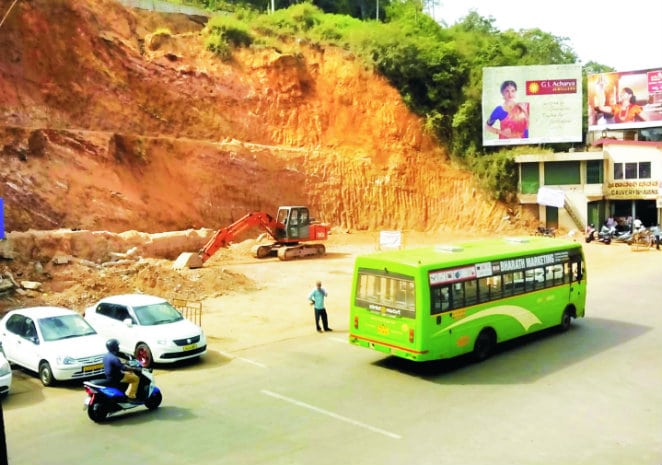
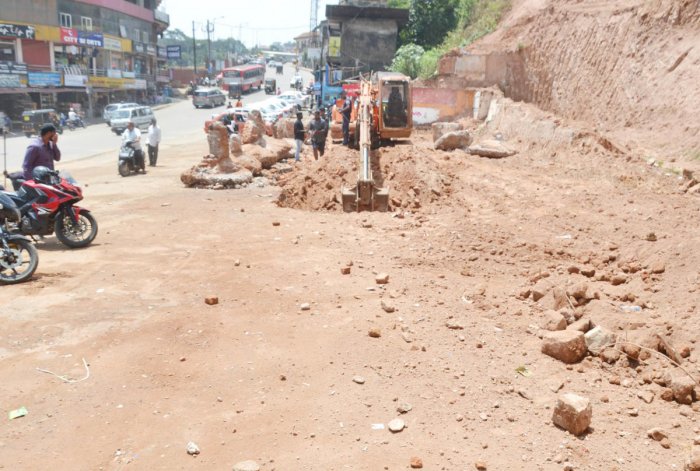
The site where Madikeri Square will come up.

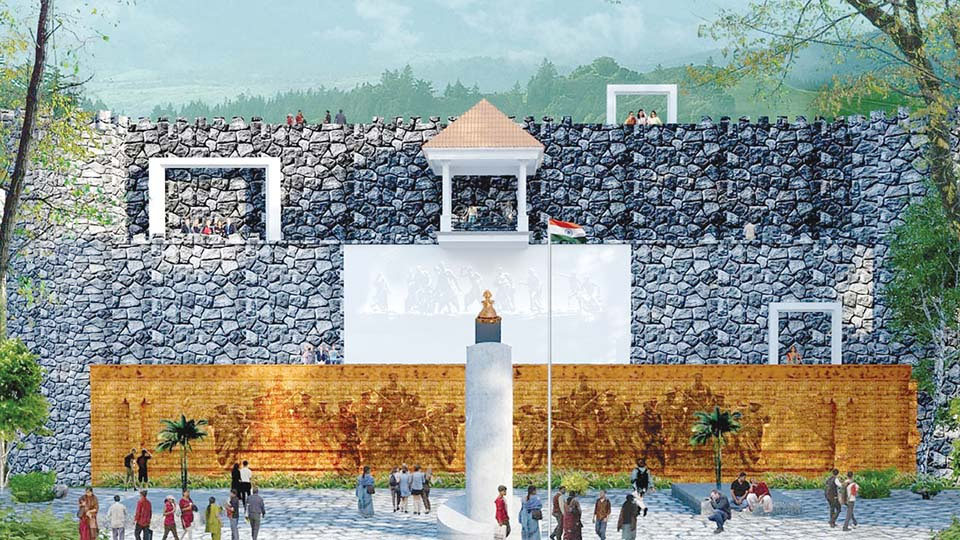
The City Municipal Council (CMC) has proposed to construct a tourist spot in the name of Madikeri Square on the old bus stand premises.

Architects and engineers had visited and inspected the spot and have prepared an action plan.

The private bus stand was damaged during the natural calamity in August 2018. Later, the bus stand building was demolished. There was a proposal to construct a commercial complex which has not materialised. Now, the CMC has come forward to construct Madikeri Square.

According to CMC Commissioner Ramesh, the estimated cost of the project is Rs 3 crore. It was decided to utilise Rs 1 crore from the district administration and Rs 2 crore from the Tourism Department for the construction of Madikeri Square.

District In-charge Minister Sa Ra Mahesh had visited the spot and directed the Tourism Department to chalk out a plan to attract tourists.

Using German technology, a retaining wall is being constructed at the site where the hillock had caved in on the private bus stand at an estimated cost of Rs 1.7 crore. The soil from the landslide site has been tested by an engineering college in Bengaluru, said the officials.

Kodava Makkada Koota President Bollajira B Ayyappa said if the bus stand land is converted artistically, then it will increase the beauty of the site. A bronze statue of Ajjamada Devaiah will be installed at the circle. The statue will be brought from Bidadi in Bengaluru.

Kodava Makkada Koota has urged to name Madikeri Square after Squadron Leader Ajjamada B Devaiah Square.

source: http://www.deccanherald.com / Deccan Herald / Home> State> Mangaluru / by Adithya K A / DH News Service, Madikeri / June 09th, 2019

ZP CEO admits child to Kadagadalu school

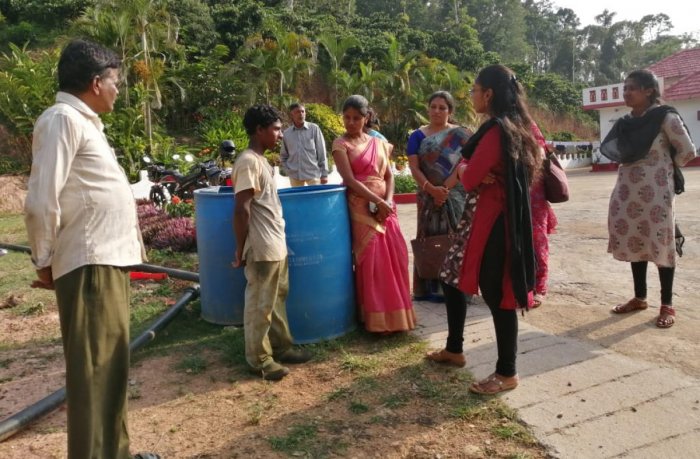
Kodagu Zilla Panchayat CEO K Lakshmi Priya and Madikeri Taluk Panchayat Executive Officer Lakshmi speak to a child in Kadagadalu.

Kodagu Zilla Panchayat Chief Executive Officer K Lakshmi Priya visited various places in Kadagadalu Gram Panchayat limits in Madikeri on Thursday and collected information on children who have dropped out of school.

As a part of the special enrollment drive by the education department, the ZP CEO and Madikeri Taluk Panchayat Executive Officer Lakshmi convinced the parents to send their wards to schools. A school dropout was admitted to the eighth standard in Government High School in Kadagadalu.

Kadagadalu Gram Panchayat Vice President Madettira Timmaiah, Kadagadalu Panchayat Development Officer B D Devika, Government Higher Primary School, Kadagadalu, Headteacher Neelamma were present.

source: http://www.deccanherald.com / Deccan Herald / Home> States> Mangaluru / by Adithya K A / DH News Service, Madikeri / June 07th, 2019

Lest We Forget Their Sacrifice-1 : The Story Of Field Marshal K.M. Cariappa

Cariappa01KF29may2019

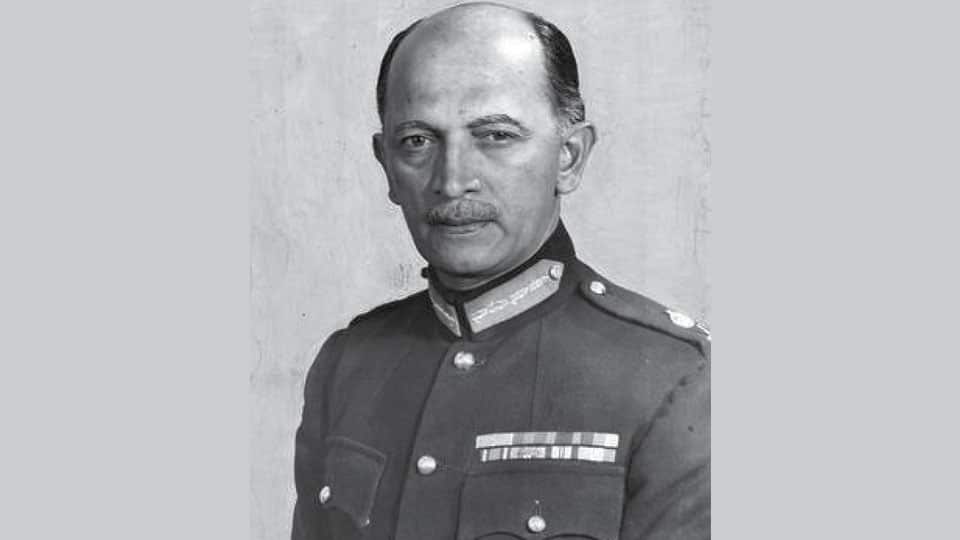
Leader, Commander, Benevolent Father to his children and a guiding beacon that led an entire nation and her armed forces — Field Marshal Kodandera Madappa Cariappa was the first Indian Commander-in-Chief of the Army. He was to his men the epitome of gentlemanly conduct and selflessness. His ideals still hold sway in the Indian Military Establishment. His greatest gift to the Indian People, probably was a fighting force that was no less compared to any other in the world and yet had the commendable restraint that prevented the Army from ever meddling directly in the political machinations of the country. This delineation lent a sense of integrity and unique purpose to the Military Establishment that has held it in good stead all these years. The credit for this must go to K.M. Cariappa. May 15, 2019 was his 26th Death Anniversary and it would indeed be a good time for a look back on his life and events…

By Dr. S.N. Bhagirath

On the 28th of January, 1899 the residents of Shanivarasanthe in Coorg heard a shot fired from the revenue quarters heralding the birth of a baby boy. The boy’s parents were Kodandera Madappa and Ammayya. He was the second among six children and was fondly called ‘Chimma.’ Madappa was a Sub-divisional Magistrate in Shanivarasanthe at that time. Chimma would one day command the Indian Army in Independent India and play definitive roles in WW-II and wars with Pakistan soon after Independence. He nurtured an Army that has stood the test of time. Till the very end of his life, he dedicated to the Army, a spirit of camaraderie and patriotism which remains legendary to this day.

Field Marshal K. M. Cariappa stuck to one particular daily habit — he would get up every morning, finish his ablutions and before his breakfast, walk up to the fire place by his bed side to render his salute to three things lined up there — the two photographs of his mother and father and a small silver statue of the unknown Indian Soldier! Like a true gentleman he sat for breakfast wearing a full suit, often alone.

K.M. Cariappa had his schooling at Madikeri. His English teachers C. Rensford and W.H. Whiteworth made quite an impression on the young Cariappa and imbibed British values in him. He was fond of playing Cricket and Hockey. In 1918, he went to Presidency College at Madras for his graduate studies. On his return to Coorg, there was an ongoing recruitment for the post of “Commissioned Officers” for the Army. Chief Commissioner Cobb was impressed by K.M. Cariappa and selected him over others.

Cariappa joined ‘Daley Cadet College’ on June 1, 1918. His first posting was in the 88th Carnatic Infantry (2nd Battalion) wherefrom he was transferred to 125 Napier Rifles. This regiment was stationed at Mesopotamia (Iraq) for two years. At the end of two years, he was transferred to ‘Prince of Wales’ 37th Dogra Regiment, which was at that time stationed in Afghanistan. During these postings, Cariappa learnt and incorporated into his men the tricks of guerrilla warfare — a move that caught the attention of his British superiors which eventually resulted in his promotion to the post of Quartermaster. He is believed to have got the nick-name ‘Kipper’ around this time. This nickname was later adopted by Nehru and Indira Gandhi as well!

As a representative of the British Indian Army, K.M. Cariappa had the opportunity to visit and observe many other armies. While in Japan, he sadly lost his mother in India. Upon his return, his reputation as an able officer had begun to make rounds in the higher echelons of the British administration. He was entrusted with the onerous task of escorting Viceroy Lord Irwin to Madikeri on an official visit. Cariappa was just 24 years old ! By 1927, Cariappa was a Captain in the Army. Cariappa’s coaching at Royal United Services Institute in 1932 and his time at Small Arms School (SAS) and Royal School of Artillery (RSA) prepared him well enough to clear the Quetta Staff College Entrance Examination. In 1936, he was appointed as Staff Captain and in 1938 he was promoted to the rank of Major.

Cariappa02KF29may2019

Personal Life

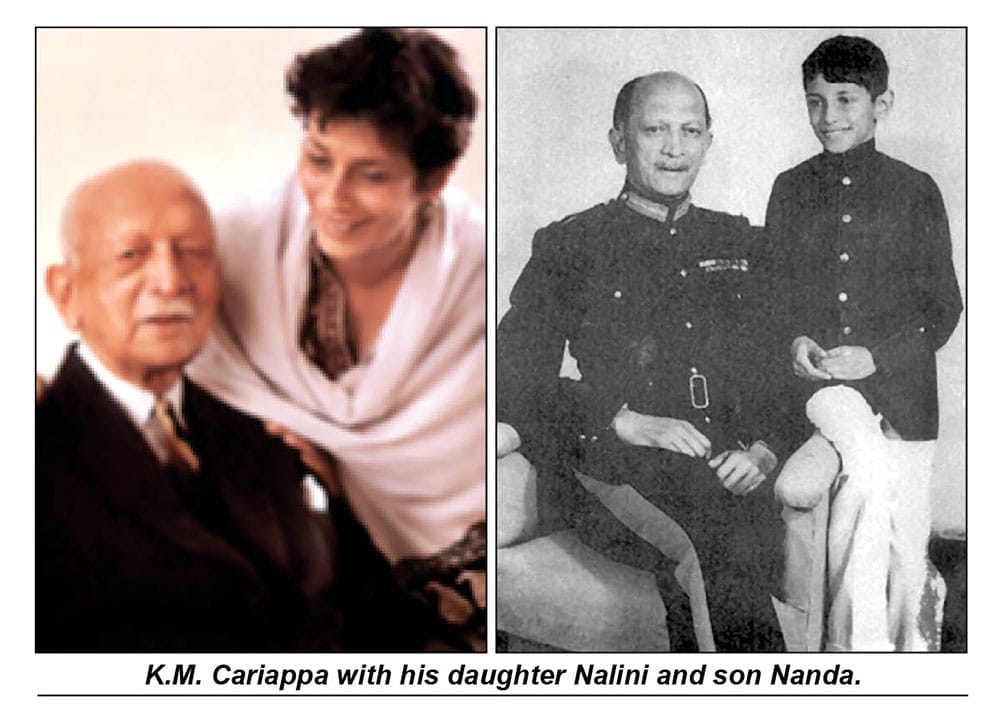
On his 37th birthday, he was sent back to India and was stationed at Hyderabad. In the same year, he got married to Muthu in a traditional Coorgi style wedding. He had his first child, a boy (Nanda Cariappa) in January of 1938. His daughter Nalini Cariappa was born in February of 1943. His tedious and hectic schedule and the constant transfers across the continent eventually took a toll on their marital life. The couple separated in 1946. After the separation, Cariappa took both his children (aged eight and three years) under his wings. He was ably assisted in this effort by his sister. A sudden transfer for Cariappa’s sister’s husband to Andaman & Nicobar Islands meant that he could no longer take care of both children by himself. He decided to send his daughter with his sister and retained his son with himself. In 1954, Cariappa learnt of the sad demise of his former wife Muthu in a car accident.

Professional Life

At the start of Second World War (1939), K.M. Cariappa was stationed in Iraq under General Slim in the Tenth Indian Division. By the end of 1939, Slim recommended Cariappa for the prestigious ‘Mentioned in Dispatches’ distinction. The next year (1940) saw Cariappa taking command of the Indian Divisions in Iran & Syria. In the succeeding decade, Cariappa became the first in Indian history to be offered the post of a ‘Commander.’ He took command of the ‘Rajput Machine Gun Battalion’ as acting Lieutenant Colonel in 1942. In 1943, the Japanese army occupied Burma and Andaman & Nicobar Islands. K.M. Cariappa was transferred to Calcutta (Eastern Command) to take back territories of Burma and Andaman & Nicobar Islands. His valour and able leadership at the height of Second World War earned him the ‘Order of the British Empire’ in 1944. Soon after World War II, he was promoted to the post of Brigadier.

[To be continued tomorrow]

bugs2beatles@gmail.com

source: http://www.starofmysore.com / Star of Mysore / Home> Feature Articles / May 29th, 2019

Chowrira Pemmaiah, Who Fought For Open Market For Coffee, Passes Away

PemmaiahKF27may2019

Madikeri:

Chowrira Pemmaiah (72), the man who spearheaded the fight for coffee open market, passed away yesterday at a hospital in Mangaluru.

A bachelor, Pemmaiah fought for the open market for coffee, which was under the control of Coffee Board and succeeded in getting the open market.

Pemmaiah served as the President of Hodduru Mandal Panchayat in the 80s and became popular through his efficient administration. He also served as the President of Moornad Educational Institutions and took it to the top.

Last rites were held this afternoon at Hoddur near Moornad, according to family sources.

source: http://www.starofmysore.com / Star of Mysore / Home> News / May 27th, 2019

Madikeri Square: Suggestion By SOM Reader

MadikeriSquare01KF27may2019

The old private bus stand at Madikeri in Kodagu is in the news of late, thanks to Star of Mysore Editor-in-Chief K.B. Ganapathy (KBG), who mooted construction of a Public Square at the spot, which is situated in the heart of the hilly town and converted the place into a tourist attraction.

The old private bus stand was constructed in 1936 by the British. The landslides and floods that occurred in August 2018 resulted in a portion of the bus stand collapsing and the entire building was demolished later to avert further accidents.

A view of the private bus stand spot in Madikeri

Following this, KBG, who hails from the district, in his column ‘Choomantra,’ published in Mysooru Mithra, a sister concern of Star of Mysore, on Nov.1, 2018, had suggested construction of a Public Square instead of building a commercial complex on the lines of Trafalgar Square at the centre of London City, in honour of India’s first and one and the only Commander-in-Chief Field Marshal K.M. Cariappa, who too hailed from Kodagu.

Taking note of the suggestions, Tourism Minister S.R. Mahesh, who is also the District in-charge Minister of Kodagu, proposed similar ideas. Though meetings were held in this regard a consensus is yet to be arrived at by the stakeholders concerned and the Madikeri City Municipal Council.

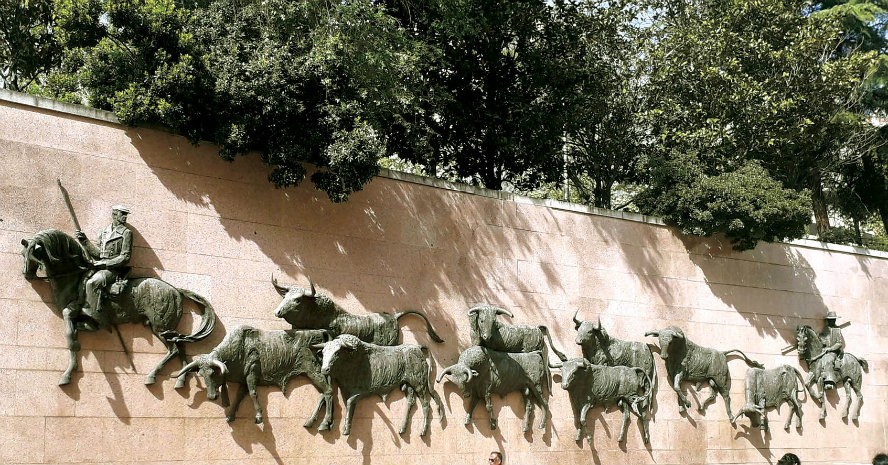
The Bull Fight Arena in Spain which is a major tourist attraction

Meanwhile, an ardent SOM reader R. Chandra Prakash, who was on a 22-day tour of 12 countries across Western Europe, has emailed two photos from Madrid, Spain, Bull Fight Arena and suggested a similar Arena in Madikeri Square depicting the history, heritage and valour of Kodavas on the wall of the old bus stand which will add great value for tourism.

source: http://www.starofmysore.com / Star of Mysore / Home> News / May 27th, 2019

Justice A.S. Bopanna Sworn-In As SC Judge

JusticeBopannaKF26may2019

New Delhi:

Four new Judges were sworn-in yesterday at the Supreme Court (SC), two of whom will go on to be the Chief Justices of India (CJI) in the line of seniority. Justice B.R. Gavai will become the CJI for over six months in 2025. He will be the second CJI from the Scheduled Caste community after Justice (retd.) K.G. Balakrishnan.

Justice Surya Kant will succeed Justice Gavai as the CJI in November 2025. He will remain in office till February 2027. The two other Judges sworn-in on May 24 are Jharkhand High Court and Gauhati High Court Chief Justices Aniruddha Bose and Ajjikuttira S. Bopanna.

On May 8, the Collegium led by Chief Justice Ranjan Gogoi had refused the Government’s request to reconsider the elevation of these two Judges to the apex Court. The Collegium’s reiteration had made it binding on the Government to clear their appointments. With these four new appointments, the Supreme Court will function with its full sanctioned judicial strength of 31 Judges.

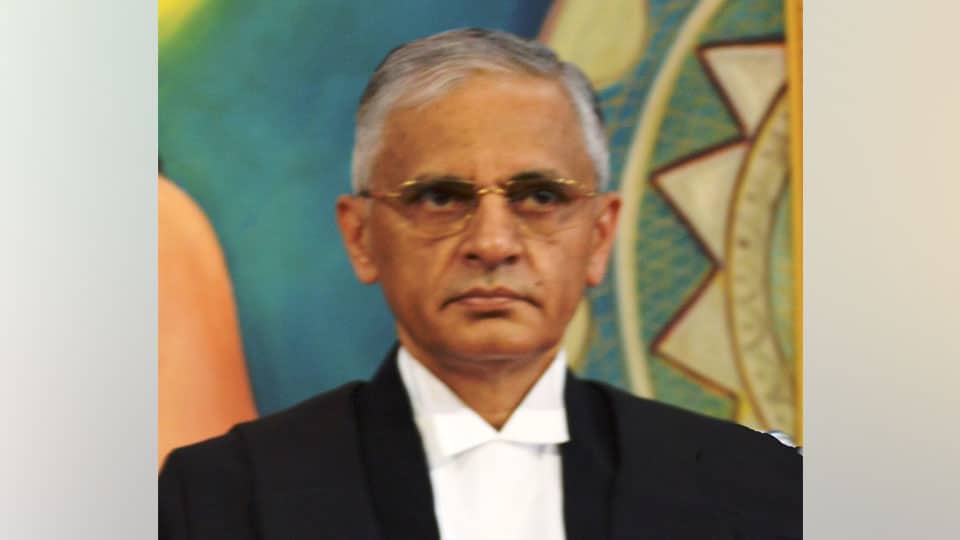
Justice A.S. Bopanna was appointed as a Judge of the Karnataka High Court on Jan. 6, 2006 and was elevated as Chief Justice of Gauhati High Court on Oct. 29, 2018. Justice Bopanna stands at Sl. No.36 in the combined seniority of High Court Judges on all-India basis. He is probably the first Judge from Kodava community to be a Supreme Court Judge.

Justice Bopanna was born in 1959 and enrolled as an advocate on Nov. 21, 1984, practised in civil, constitutional, company and service matters in the High Court as well as the civil and labour courts. He also worked as a Legal Advisor to Central Public Sector Undertakings, and worked as Additional Central Government Standing Counsel from 1999 to 2005.

Justice Bopanna was appointed as an Additional Judge of the High Court of Karnataka on Jan.6, 2006, and became a permanent Judge on Jan.3, 2007. He is the son of late Ajjikuttira N. Somaiah of Pollibetta, Kodagu.

source: http://www.starofmysore.com / Star of Mysore / Home> News / May 26th, 2019

Football tourney from May 24

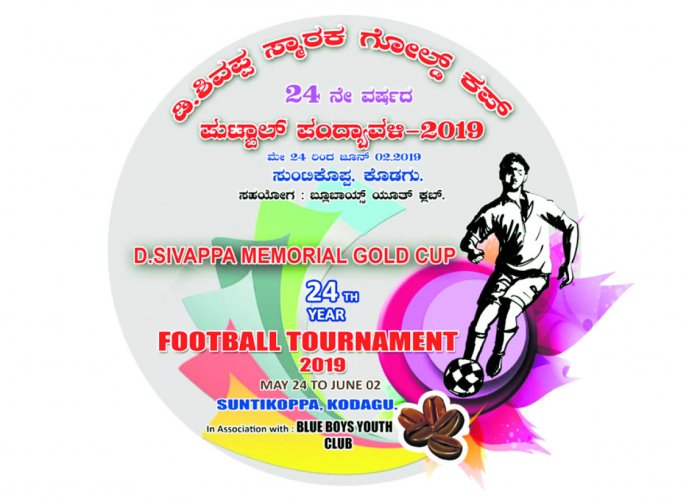
Logo of D Sivappa Memorial Gold Cup Football Tournament 2019.

D Sivappa Memorial Gold Cup Football Tournament 2019 organised by Blue Boys Youth Club will be held at the grounds of Government Primary School grounds in Suntikoppa in Kodagu from May 24 to June 2.

Bettageri estate owner late Doddamane Sivappa’s grandson and D Vinod Shivappa’s son Vishal Sivappa will flag off the tournament. He is the chief patron of the tournament.

Consumer Forum Hassan President A Lokesh Kumar, Kushalnagar DySP Dinakar Shetty and patron D Vinod Sivappa will be part of the inaugural session.

D Sivappa was one of the main patrons of football tournaments in Suntikoppa. After him, his son D Vinod Sivappa initiated a football tournament through Blue Boys Youth Club in loving memory of his father every year and has been sponsoring the trophies and cash prizes. Several philanthropists are behind the success of the football tourney in Suntikoppa, a press release said.

D Vinod Sivappa is sponsoring a cash prize of Rs 30,000 to the winning team, Rs 20,000 to the runners-up team, trophies and also other individual prizes.

First General Elections In Coorg-1951 …Remembering The First Parliament Elections

PoonachaKF22may2019

Coorg, or Kodagu, was a province of the dominion of India and was declared as a State in 1950. Daya Singh Bedi, ICS, was appointed as the Chief Commissioner of Coorg.

Just before the General elections of 1951, Coorg was offered the choice of either remaining a State or joining the Presidency of Mysore. While many Congressmen were in favour of merging Coorg with Mysore, there were some others who favoured the alternate choice.

The latter group of leaders broke away from the Congress and formed a new party with “Weighing Scales” as their symbol. They aptly named themselves the Thakkadi Party.

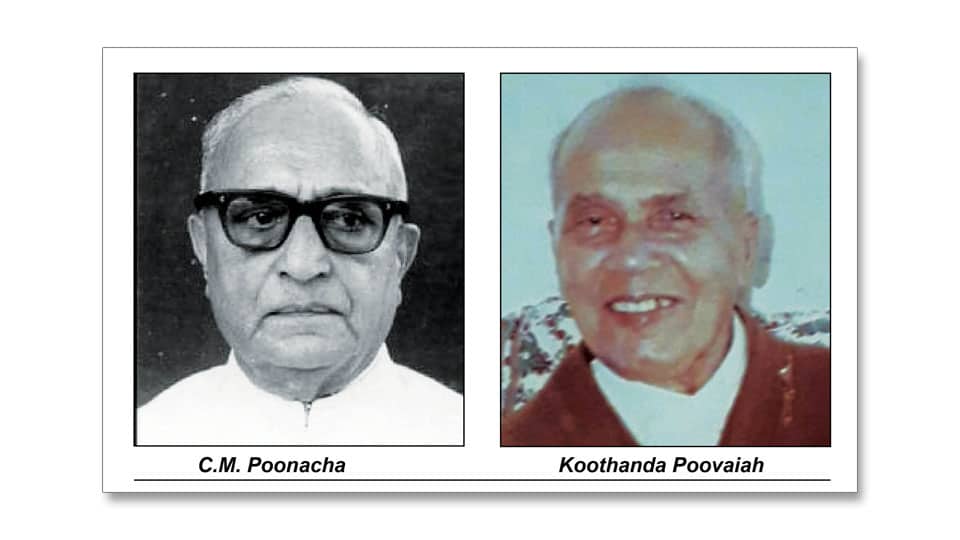
Pandiyanda Belliappa was the leader of the Thakkadi party and my father, Koothanda Poovaiah, also joined him. So, the election fever gripped our family as well.

My father would canvass in a jeep along with his followers in Pollibetta and Siddapur. The contest in Coorg was for 24 seats from 18 constituencies. Six constituencies were to elect two members each and the remaining 12 were single-member constituencies. There were no reserved seats, though there were 4 members from the SC category who contested under the General category. I recall that 27,947 people across Coorg voted in the elections.

While campaigning for my father, teams would visit the homes of the voters each day and collect their names and other details. My siblings and I were tasked with transferring these details to postcards which were then sent to the voters’ home addresses. These postcards were meant to identify voters on Election Day, a precursor to laminated voter identity cards of today. We enjoyed writing these postcards. I fondly remember being gifted a “Swan” pen by my father for my efforts.

Among the candidates from Siddapur were Muruvanda Machaiah and Betta Kurubara Kala. To our disappointment, our father lost the election and Muruvanda Machaiah won.

For me, it was an interesting involvement with the electoral process. Thereafter, I married into the Army and had to be content with sending postal ballots. It would be more than 30 years before I stepped into a polling booth again.

In the Coorg Assembly elections, the Congress party won 17 seats while the Thakkadi party won the remaining 7 seats. The Coorg Legislative Assembly was convened at Madikeri by the Chief Commissioner on 27 Mar 1952. Cheppudira M. Poonacha was elected as the Chief Minister of Coorg.

He also held the Finance portfolio. K. Mallappa was made the Home Minister.

The Congress party was in favour of merging Coorg with Mysore. In accordance with the States Reorganization Act 1956, Coorg ceased to be a State and was merged with Mysore on Nov 1, 1956.

While in existence, the State of Coorg sent an elected representative to the Parliament as well. Niddemane Somanna was the MP from Coorg. After the reorganization of States and subsequent delimitation of Parliamentary constituencies, Coorg and Mangalore were merged into a single constituency. More recently, Coorg was merged with Mysore LS constituency.

It is a matter of conjecture whether Kodagu and its people benefited from the historical changes brought upon it. However, its contribution towards nation-building has been significant and shall remain a matter of pride and fulfilment.

First Parliament elections

I am struck by a bout of nostalgia each time our country goes to the polls. There have been discussions about the lengthy election process this time around, consisting of seven phases and extending over four weeks.

Here, it is appropriate to recall that the first general election was conducted from Oct. 1951 to Feb. 1952, a period of six months. However, it is to be remembered that India was newly independent and conditions were very different.

The government of the day set up the Election Commission of India with Sukumar Sen, ICS, as the Chief Election Commissioner. He was given the mandate to conduct the Parliamentary election and all Assembly elections simultaneously “at the earliest”. The earliest dates proposed by Sen were between Oct. 1951 and Feb. 1952.

A massive enrollment drive was undertaken to prepare a list of the electorate. It is to be understood that in an era with rudimentary means of travel and communication, the exercise was an onerous one. The wide reach of All India Radio was utilised to create awareness about the impending elections and the importance of participating in them. As a part of the enrollment drive, volunteers and officials visited individual houses. The eligible voting age was fixed at 21 years and there was no discrimination between the sexes.

Quirky situations arose which made the task difficult. It must be remembered that 88 percent of our country was illiterate. Womenfolk were reluctant to reveal their given names and had to be coaxed to do so. Due to the overwhelmingly illiterate population, each booth had a set of ballot boxes with the party symbol pasted on them. The voter was advised to drop his ballot paper into the box of his choice; so much for a secret ballot!

Despite several handicaps, it was ensured that 45% of the registered electorate exercised their franchise by Feb. 1952.

Our country has been through 17 Parliamentary elections so far and the electoral process has been extremely streamlined. Modern ideas and technology have been employed to quell new challenges.

The modern Indian electoral process has been lauded by several countries and serves as a role-model to many of them. We should be proud of this achievement.

source: http://www.starofmysore.com / Star of Mysore / Home> News / by Shanthi Ganapathy / May 22nd, 2019

Two-day DC interview on Madikeri AIR

Deputy Commissioner Annies Kanmani Joy will be interviewed on All India Radio, Madikeri, on May 17.

The deputy commissioner will speak on the relief measures, compensation and future projects being planned by the district administration.

The programme will be broadcast on May 17 (8.35 am and 5.30 pm) and May 18 (1.30 pm and 6.50 pm), a press release stated.

source: http://www.deccanherald.com / Deccan Herald / Home> State> Mangaluru / by Adithya K A / DH News Service, Madikeri / May 17th, 2019