The legend of Field Marshal KM Cariappa is well known as he was the first chief of the Indian Army after independence. But one anecdote from the life of the legend himself elevated him far above others who could rival his glory.
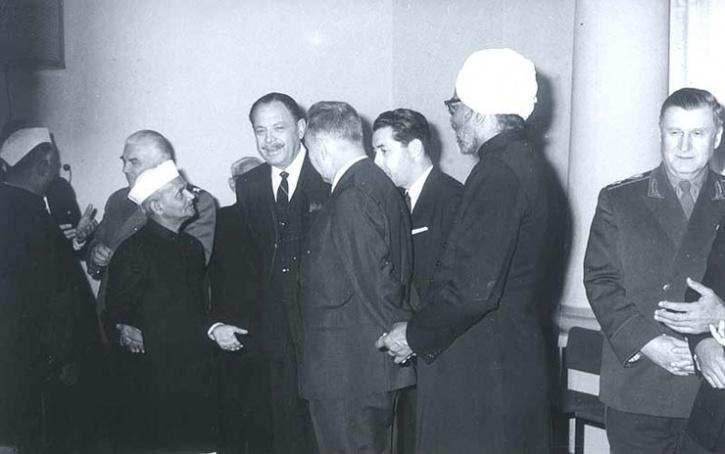
GENERAL AYUB KHAN AND FIELD MARSHAL KM CARIAAPPA, PIC COURTESY: AFP/WIKIPEDIA
Yes, the battle of 1965 where he refused the offer of Pakistan General Ayub Khan to release his son who was an IAF pilot and was captured and kept as Prisoner of War (PoW), the legend Field Marshal Cariappa not only refused General Ayub Khan’s offer but also asked to treat him at par with other PoWs.
Caught by Pak army when his plane was shot down
Sqn Ldr KC Cariappa was flying near the border and his plane was shot down. He had to eject and during the process of ejection and landing, the Sqn Ldr Cariappa ‘s spine was injured. Soon after the capture, like all other PoWs, the Sqn Ldr Cariappa told his name, rank and unit number. Like Wing Abhinandan, he also didn’t divulge any information.
News soon reached General Ayub Khan
REUTERS
Soon after his capture, the news reached General Ayub Khan that Pakistan army had captured son of India’s first army chief Field Marshal KM Cariappa, the General announced it on Radio Pakistan that his forces have captured Sq Ldr KC Cariappa, the son of legendary Indian Field Marshal.
When General offered Field Marshal to release his son
General Ayub Khan had served under Field Marshal Cariappa in the British Indian Army and always held him in high esteem. General Ayub Khan asked Pakistan High Commissioner in New Delhi to personally meet Field Marshall who in return politely refused General’s offer.
Field Marshal said other PoWs are also his sons
In his reply to the High Commissioner who had come on behalf of General Ayub Khan, Field Marshal Cariappa told him that he doesn’t want Pakistan to release his son but treat all PoWs well as all Indian soldiers are his sons.
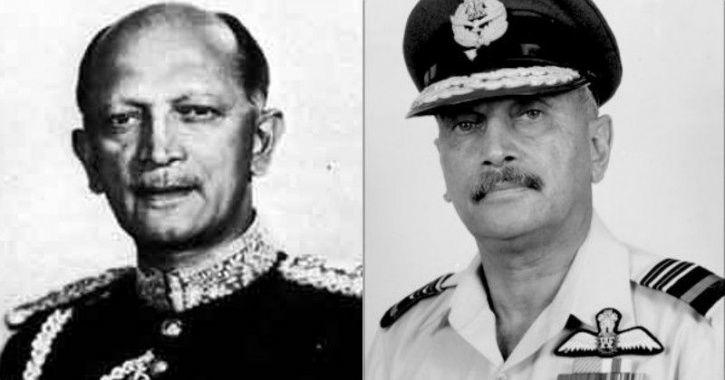
FIELD MARSHAL KM CARIAPPA AND HIS SON AIR MARSHAL KC CARIAPPA, PIC COURTESY: WIKIPEDIA/BHARAT RAKSHAK
Recently speaking to the media, Air Marshal KC “Nanda” Cariappa said “My dad was a man of high principles. For him, his son and all other soldiers were the same. Even though Ayub Khan was his junior and was close to him, he refused to get me released before the others. I was later released with all others”.
Air Marshal was quoted by the News18. Sq Ldr KC Cariappa was caught on last day of the war and when he came back, he commanded a helicopter unit of the IAF and retired as Air Marshal. He had also took part in 1971 war.
(With News18 inputs)
source: http://www.indiatimes.com / India Times / Home> News> India / by Maninder Dabas / March 06th, 2019
Professor Lissie Mathew’s book, Kathivanoor Veeran: Malakayariya Manushyan, Churamirangiya Daivam, traces the evolution of an ordinary man to God
Mannappan and Chemmarathy were not exactly a model couple, they fought as intensely as they loved. When he dies in war, after a domestic squabble, Chemmarathy is heartbroken, the last words she uttered to him were the unkindest. She jumps into his pyre and the two attain godly status. This is an extraordinary tale of Mannappan, a man who goes up to Coorg in Karnataka from his village, Mangad in Kannur, dies a war hero, and returns as Kathivanoor Veeran. To this date, few can listen to the tragic hero’s tale without a lump in the throat.
Professor Lissie Mathew’s book, Kathivanoor Veeran: Malakayariya Manushyan, Churamirangiya Daivam, retraces Mannappan’s journey to Kodagu (Coorg). Having grown up in Vayattuparambu in Kannur, Lissie’s childhood was full of the stories and colours of Theyyam. And she had always wanted to explore the story of Kathivanoor Veeran. A professor of Malayalam at the Sankaracharya College, Kalady, working on its Payyannur campus, she has to her credit 12 books.
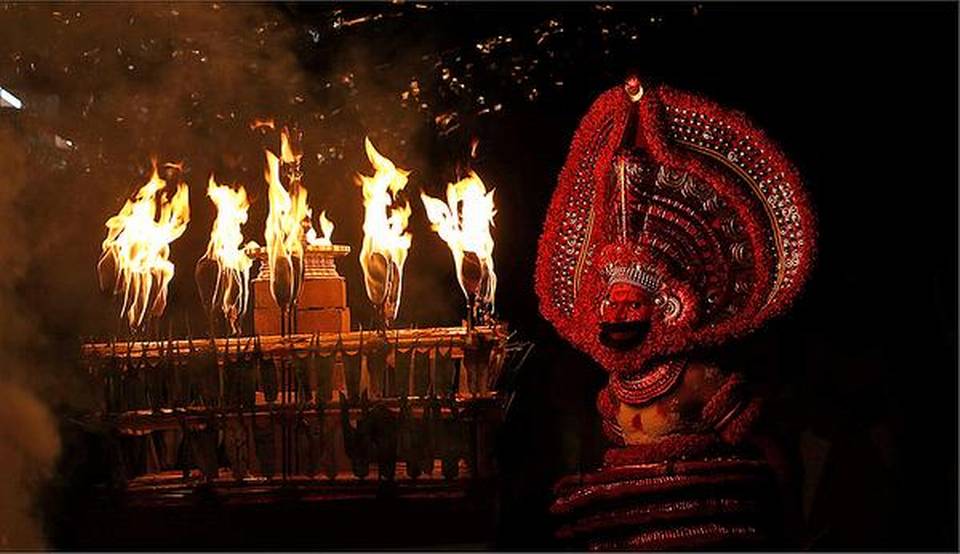
Kathivanoor Veeran is one among the most popular Theyyams, for it is a visual spectacle where the performer indulges in acrobatics and comes in close contact with fire. “It is an experience to watch Kathivanoor Veeran in action. I wanted to bring out the hero’s story through this book,” Lissie says.
The book delves into the micro-histories of Northern Malabar, where folktales, fiction, fact and history mingle in curious ways. It also explains the Theyyam, its rituals and practices in a detailed manner.
Excerpts from an interview with Lissie Mathew
Can you describe your relationship with the work.
I should say the book came out straight out of my mind, though it took four years of research, travel and interaction with people, to complete. It was hard work, but I wanted to trace Kathivanoor Veeran’s route from Mangad in Kannur to Kodagu (modern day Coorg). Through the thottam (the song sung before the ritualistic practice), which describes Mannappan’s life and death in great detail, one can get an insight into the geography, culture, mores and history of North Malabar. I followed the thottam to retrace Mannappan’s journey.
The thottam would have been difficult to interpret as it is in archaic Malayalam, often in the local dialect.
Yes. I could not understand it, the first time I heard it. I got the thottam singers to sing it for me, recorded it and I listened to it over and over again, until it began to make sense. It is fascinating, how these songs combine legend, history, reality and imagination. Most of the places mentioned in the thottams remain, though in different names. These thottams speak of a culture that is over a 1,000 years old.
What is the relevance of Theyyam today?
Theyyam talks about people and their problems, their relationship with Nature and fellow creatures. A rural-agricultural lifestyle makes up its very foundation. For instance, a Kathivanoor Veeran Theyyam performance is always followed by an annadanam (feast), which everyone partakes of. In this day and age, when we, as a people are becoming more self-centred, this is an example of how we are a part of our community and how we need to share our resources.
Performed most often in sacred groves (kaavus), it is important to understand the relevance of preserving these pockets of biodiversity intact. It is heartening to see that even the younger generation respects the rituals associated with Theyyam. By wanting to preserve the sanctity of Theyyam’s rituals, they are also contributing towards preserving the ecosystem.
Theyyam is performed by people in the subaltern communities. The Chirakkal Kolathiris, the rulers of the land, gave certain subaltern communities the right to perform Theyyam and it is continued to this day. Once they become Gods, even the upper castes, pray to them.
In that sense, Theyyam is undoubtedly, extremely relevant today.
source: http://www.thehindu.com / The Hindu / Home> Books / by Anasuya Menon / February 28th, 2019
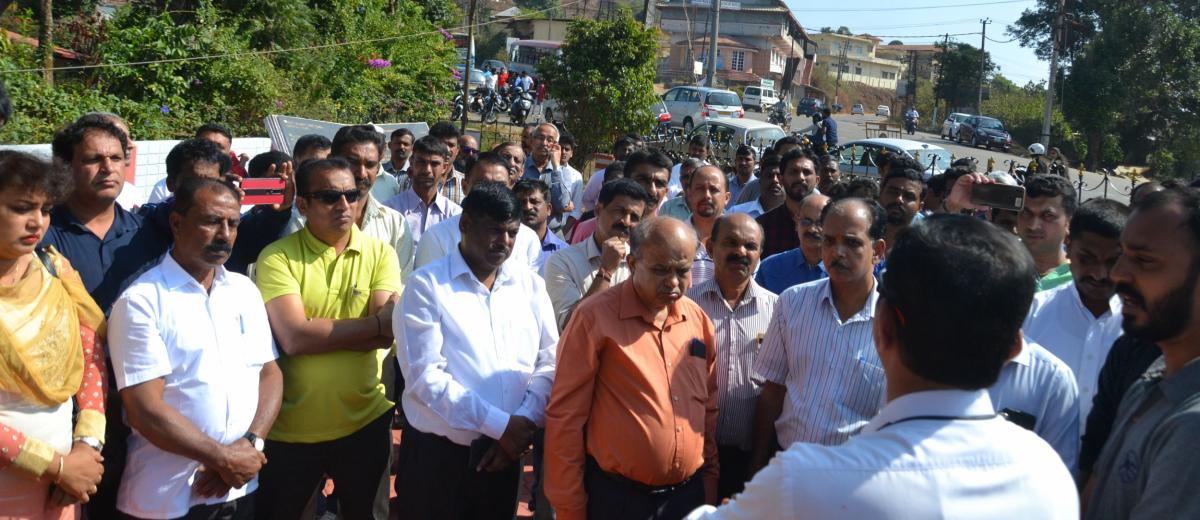
Tributes were paid in Madikeri on Friday to the martyrs of Pulwama.
Members of various organisations, political parties and ex-servicemen in Madikeri condemned the fidayeen attack on paramilitary CRPF personnel at Pulwama.
After garlanding the statue of Field Marshal K M Cariappa, a condolence meeting was held. The participants sang patriotic songs.
Senior writer Shobha Subbaiah said, “Martyrs should have a rebirth in the country to serve the country. All the help should be provided to the family of those martyred.”
Retired Air Marshal K C Cariappa said, “It is a cowardly act to attack soldiers. Prime Minister Narendra Modi and cabinet ministers should take stern action to ensure that such attacks do not occur in the country. An alert on the attack was issued one week ago. Unfortunately, the fidayeen attack has occurred.”
He said, “It is our duty to instil confidence in the family of the deceased.”
Senior journalist Ajjamada Ramesh Kuttappa said, “The attack has raised concern on the internal security of the country. There is a need to act against anti-nationals inside the country.”
source: http://www.deccanherald.com / Deccan Herald / Home> State> Mangaluru / by Adithya K A / DH News Service – Madikeri / February 15th, 2019
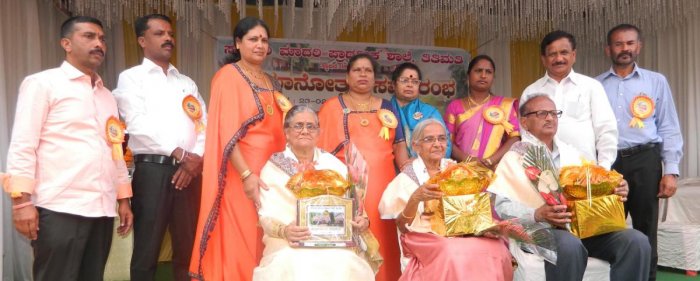
Senior teachers were felicitated during the centenary celebrations of Government Model Higher Primary School in Titimati on Sunday
Government schools celebrating centenary is a matter of pride, said MLA K G Bopaiah.
He was speaking after releasing ‘Shatadarshini’ souvenir during the centenary celebrations of Government Model Higher Primary School in Titimati on Sunday.
The parents and students should shed the inferiority complex about government schools. One should remember that those who have studied in government schools have made it to the top posts, he added.
Former ministers Suma Vasant and M M Belliappa were the alumni of the school, he said and added that the students should utilise the facilities provided to them at government schools.
Centenary Committee honorary president, school alumni and former minister Suma Vasant said that the government schools are catering to the needs of students from rural areas.
Get together
Alumni of the school had a get together during the centenary of the school. Senior teachers were felicitated on the occasion.
School alumni who were present during the occasion comprised of international sportsperson Paruvanda C Suguna Ponnappa, ISRO scientist Ashok, DFO Karunakar, physician Dr Sannuvanda Kaverappa, philanthropist Bachamada Chetan, former national hockey player Cheppudira Cariappa, Indian Navy Commander (retd) C M Bellyappa and Titimati Gram Panchayat president H E Shivakumar.
A cultural procession was taken out prior to the formal programme. A variety of programmes were held on the occasion.
Philanthropist Bachamada Chetan inaugurated an open-air auditorium built at a cost of Rs 7.5 lakh.
Centenary Committee working president Cheppudira Ramakrishna, school headmistress H M Parvati, ZP member R Pankaja, block education officer Srishaila and senior teacher Ittira Mandanna were present.
source: http://www.deccanherald.com / Deccan Herald / Home> State> Mangaluru / by DH News Service, Gonikoppa / February 24th, 2019
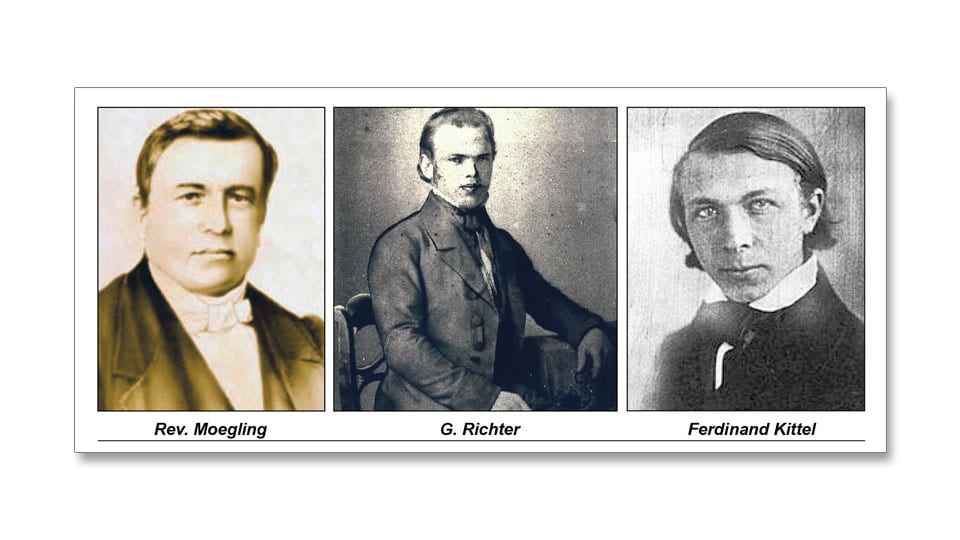
It was in 1836 that twenty-five-year-old Rev. Hermann Moegling, a German missionary from the Basel Mission, arrived in Mangalore. Christianity was already popular on the west coast of India. He founded the Basel Evangelical Mission Seminary, which became a hub of learning of not only religion but also Indian languages and culture.
Moegling, a linguist, was fluent in English, Sanskrit and Persian, besides his native German. He started learning Kannada and soon became proficient in the language. The credit for starting the first newspaper in Kannada “Mangaluru Samachara” goes to Rev. Moegling. The maiden issue of this newspaper was brought out on 1st July 1843. This eventful day is still being aptly celebrated as ‘Kannada Press Day.’ Rev. Moegling went on to translate several Kannada classics to German and vice-versa. Basel Evangelical Mission Seminary started by him in Mangalore continues under the new name Karnataka Theological College. Rev. Moegling laid the foundation for Mangalore becoming a centre for education.
In 1852, Rev. Moegling was preparing to leave for Germany for medical treatment when he had an unexpected visitor from Coorg — a man named Alamanda Somayya. The tall, impressive looking man was dressed as a sanyasi. He requested Rev. Moegling to accept him into the Christian fold. He offered his land in Coorg for construction of a church. Rev. Moegling was quite taken up with Somayya’s resolve.
Believing this to be a divine intervention, Rev. Moegling cancelled his trip. He moved to Coorg in 1853 along with his wife and adopted spiritual son Rev. Anandarao Kaundinya. Alamanda Somayya was baptised on 6th January 1853 and was christened Stephanas Somayya. Rev. Moegling built a house and a modest church on Somayya’s land in Armeri village.
Lt. Col. Mark Cubbon was the Chief Commissioner of Coorg at the time, and he encouraged Rev. Moegling to establish the first Protestant church and a school in Madikeri in 1855. Another notable personality in the field of education in Coorg was Rev. Georg Richter, also from the Basel Mission in Germany. He was brought to Coorg by Rev. Moegling in April 1856 and was given charge of running the school. Rev. Richter spent most of his life in promoting education in Coorg and was the first Principal of Central School in Madikeri, which was started in 1869. He later took charge as Inspector of Schools. His book, “Gazetteer of Coorg” published in 1870 is a comprehensive recording of social, cultural, historical and geographical aspects of Coorg. Rev. Richter’s wife, Armella, taught needlework to Coorg girls.
In a recent book by Albert Frenz (Stuttgart), titled “Georg Richter: His Work in Kodagu on the Basis of Official Reports” gives us an insight into Rev. Richter’s journey to India, and how he landed in Coorg and spent 38 years here except for an 18-month furlough in Germany.
The British administration granted 97 acres of land in Siddapur to Rev. Moegling to establish a church and to support a Christian settlement with a coffee estate. The work on this ambitious project started in 1857. Even though Rev. Moegling had his hands full with preaching the Gospel and opening the coffee plantation, he found time to author two books on Coorg. One in German, “Das Kurgland” details his evangelical work in Coorg. The other, written in English, titled “Coorg Memoirs” is one of the first in-depth study of history of Coorg.
Rev. Anandarao Kaundinya ably assisted his mentor. The new settlement was named Anandapura or ‘region of happiness.’ Rev. Moegling found Coorg to be an ideal place to live and called it his second country. In 1860, Rev. Moegling left for Germany to be with his ailing wife. He himself was in poor health. To his great disappointment, his illness did not permit him to return to Coorg. He died in 1881.
The work at Anandapura continued under Rev. Moegling’s disciple and another fellow German missionary Rev. Ferdinand Kittel. An Indologist and a polyglot, Rev. Kittel first came to India in 1853 and in time became a renowned scholar in Kannada. He too translated some of Kannada classics to German and wrote several books and poems in Kannada.
His most famous work is the first Kannada-English dictionary consisting of 70,000 words which he painstakingly compiled and published in 1894. It was while in Coorg that he started perfecting his proficiency in Kannada. He continued Rev. Moegling’s initiative in the field of education. Rev. Kittel also wrote a book on Kannada grammar. He was a regular contributor to Mangaluru Samachara. His work took him, besides Mangalore, to Dharwad as well. In recognition of his contribution to Kannada, an impressive statue of Rev. Kittel stands prominently on M.G. Road, Bangalore. Further, a Kittel Science College and a Kittel Arts College, have been established in Dharwad. There is talk of starting a University in Rev. Kittel’s name. That would be a fitting tribute to this great champion of Kannada.
One of the major hurdles faced at the Anandapura settlement was malaria, which the Europeans referred to as the ‘Coorg Fever.’ There were many deaths and gradually this scourge affected the project adversely. Anandapura coffee estate was subsequently taken-over by British planters who had shifted to Coorg from Sri Lanka. The coffee estate grew in extent and is now a part of Tata Coffee Limited. It still retains the name: Anandapura Estate.
Gabriel and Hanna Alamanda
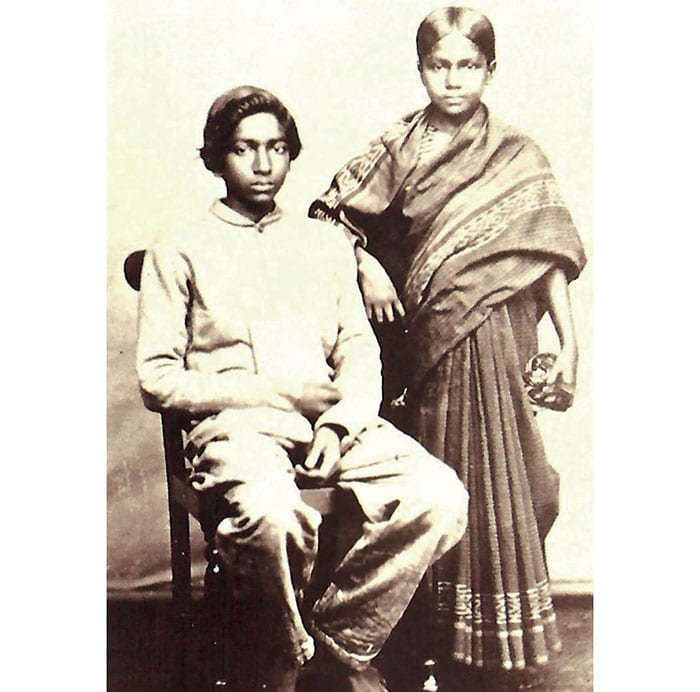
These three Germans were pioneers in promoting education in Coorg. However, their hope of making Kodavas embrace Christianity did not find favour beyond Somayya and his family. Reproduced is a rare photograph of Alamanda Somayya’s son Gabriel and daughter Hanna, taken by Rev. Richter in 1862.
About the author: C.P. Belliappa
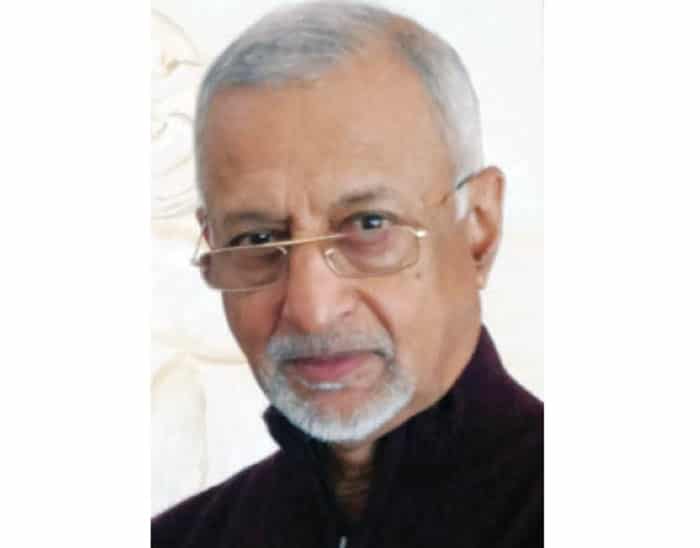
C. P. Belliappa, born in 1946, is a Chemical Engineer. He is currently settled in Coorg. He is known for his writings on issues pertaining to Coorg. Four of his books — Tale of A Tiger’s Tail & other Yarns from Coorg, Nuggets from Coorg History, Victoria Gowramma: The Lost Princess of Coorg, and Tongue of the Slip, have been published by Rupa Publications.
He currently serves as President, Coorg Institute of Technology, Ponnampet, South Kodagu.
source: http://www.starofmysore.com / Star of Mysore / Home> Feature Articles / by C.P. Belliappa / February 24th, 2019
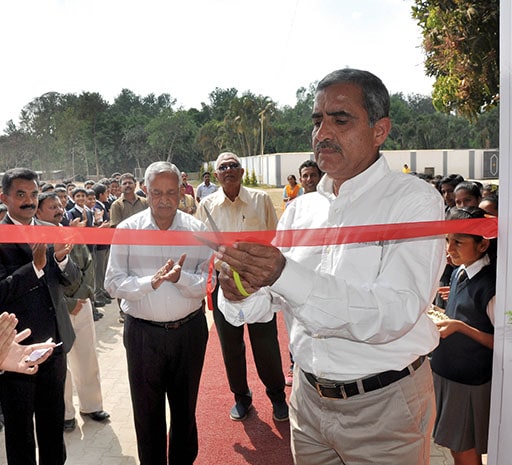
M.M. Thimmaiah, President of Kodagu Academy for Education and Culture (KAEC), inaugurated the Rifle Shooting Range at Coorg Public School (COPS) in Gonikoppal by cutting the ribbon.
School Trust Vice-President M.N. Belliappa, Secretary K.A. Poonacha and Treasurer K.A. Subbaiah were also present along with coach Dhirender Singh and COPS Principal Benny Kuriakose.
School Head Boy ChehulChinnappa welcomed the gathering. School Head Girl D.R. Gowri proposed a vote of thanks.
source: http://www.starofmysore.com / Star of Mysore / Home> Sports / February 24th, 2019
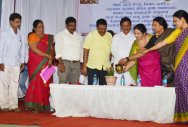
MLC Veena Acchaiah inaugurates the district-level youth fest organised by the Department of Youth Empowerment and Sports, at Kaveri Kalakshetra in Madikeri. MLA K G Bopaiah, MLA Appacchu Ranjan and Zilla Panchayat president B A Harish look on among others
The officials of the Department of Youth Empowerment and Sports should leave the district if they cannot provide proper facilities to budding sportspersons, said MLC Veena Acchaiah.
She was speaking during the district youth fest organised by the Department of Youth Empowerment and Sports, at Kaveri Kalakshetra in Madikeri.
Kodagu, which has contributed the maximum number of sportspersons to the nation is lacking encouragement for its sporting talents today. The Youth Empowerment and Sports Department has failed to provide necessary facilities to the budding sports talents, she said.
Lambasting the officials, the furious MLC asked the officials from the sports department to get out of Kodagu if they cannot do a good job.
The performance of the sports department officials in the district is not up to the mark, she noted.
Veena further said that the swimming pool maintained by the department is in a pathetic state.
MLA K G Bopaiah felt that there is a need to build a robust youth force and to channelise their talent for the development of the country. Youth should inculcate the value of patriotism, he said
“It is unfortunate that some forces within the country are supporting the extremist groups backed by Pakistan. Disciplinary actions should be initiated against those who deliver speeches which are not in the best interests of the solidarity and security of the nation,” he added.
MLA Appacchu Ranjan, Zilla Panchayat president B A Harish, CMC president Kaveramma Somanna, Taluk Panchayat president Tekkade Shobha Mohan, Zilla Yuva Okkoota president P P Sukumar, Nehru Yuva Kendra coordinating officer Jacinta D’Souza and Government First Grade College Madikeri professor Dr K C Dayanand were present.
Results
Dominos Kala Mattu Kreeda Yuvaka Sangha, Nelyahudikeri bagged the Best Youth Association Award.
Maldare Kala Mattu Kreeda Yuva Sangha, Dominos Kala Mattu Kreeda Yuvaka Sangha and Dr Babasaheb Ambedkar Yuva Sangha bagged the first, second and third prizes in Swacch Bharat competition.
H M Darshan, Flavia Anusha Martis and M K Harshit secured first, second and third prizes respectively in the district-level elocution.
source: http://www.deccanherald.com / Deccan Herald / Home> State> News / by Adithya K A / DH News Service, Madikeri / February 23rd, 2019
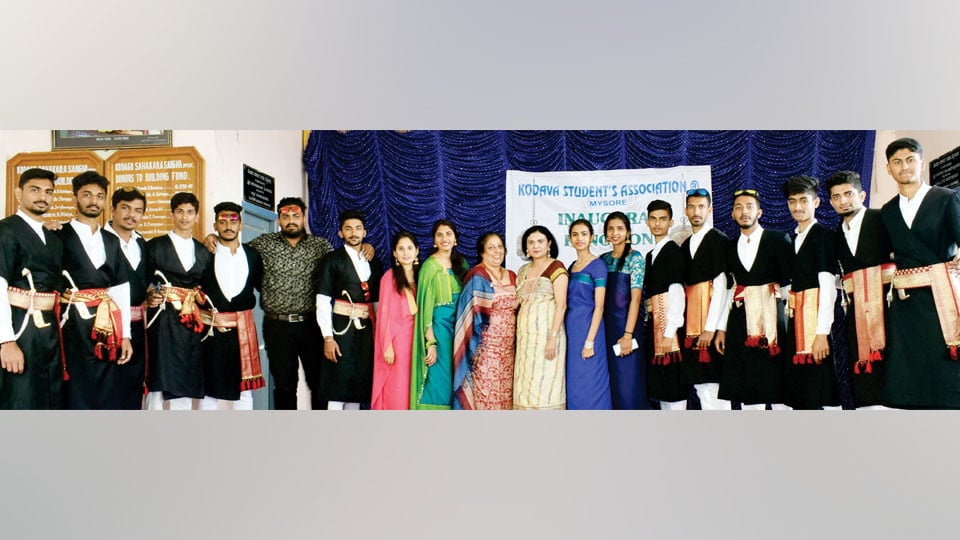
Kodava Students Association (KSA), Mysuru, for the year 2019 was inaugurated recently at a function held at Kodagu Sahakara Sangha in Jayalakshmipuram by Dr. Puliyanda Sujatha Bopanna (KSA President) and Puliyanda Nandita Mudappa (Vice-President) in the presence of Ajjamada Muddappa (Student President), Bachira Vaibhavi (Student Vice-President) and the new Committee Members.
Significant changes have been ushered in the rank and file of the district Congress party.
A week ago, the party high command had appointed Surayya Abrar as the president of the district Congress women’s wing. Now, K Manjunath has been appointed as the new president of the District Congress Committee.
Following the defeat of the Congress candidates in Madikeri and Virajpet constituencies during the 2018 Assembly elections, there had been a demand from the party workers to strengthen the party base in the district by reshuffling the top leadership. The demand was made in order to draw excellent results in the Parliamentary elections.
As Kodagu has been a strong base of the BJP, the Congress party high command has bowed before the demand and carried out major changes.
Replacement
District Congress Committee president Shivu Madappa has been replaced by K Manjunath. Shivu, a sitting members from the Kuttu seat in Kodagu Zilla Panchayat, had been appointed the District Congress Committee president before the Assembly elections were announced. Although his term as the DCC chief was set to end in 2020, Shivu has been forced to step down, sources said.
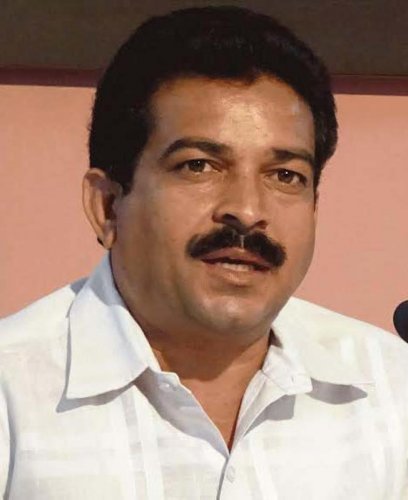
The newly appointed president K Manjunath hails from Kudluru village near Kushalnagar. He earlier served in the Education Department and in various capacities in the teachers’ association. He took voluntary retirement from government service in 2012 to join the Congress party, in which his family members had been actively involved for many years.
New president
Manjunath had also served as a personal assistant to former Zilla Panchayat president K P Chandrakala. Manjunath unsuccessfully contested the MLC elections twice from the teachers’ constituency. He also earlier contested as an independent candidate and later on Congress ticket in 2018.
In spite of a chequered career in politics, he has been selected by the Congress party high command as DCC president in appreciation of his active involvement in the party, sources in the Congress said.
Manjunath, when contacted, said that his immediate priority was to organise the party members from the booth-level. He would strive to ensure victory for the Congress candidate contesting the Parliamentary elections, Manjunath added.
source: http://www.deccanherald.com / Deccan Herald / Home> State> Mangaluru / by Adithya K A / DH News Service, Madikeri / February 14th, 2019
Most profound of tragedies are made when the valour of a soldier goes unnoticed and unawarded. While we have many heroes whose bravery encounters have gone down in the Indian armed forces’ annals of history, there must be some who remained unsung.
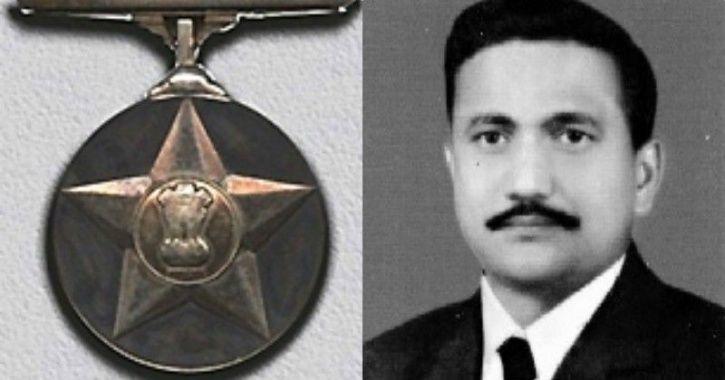
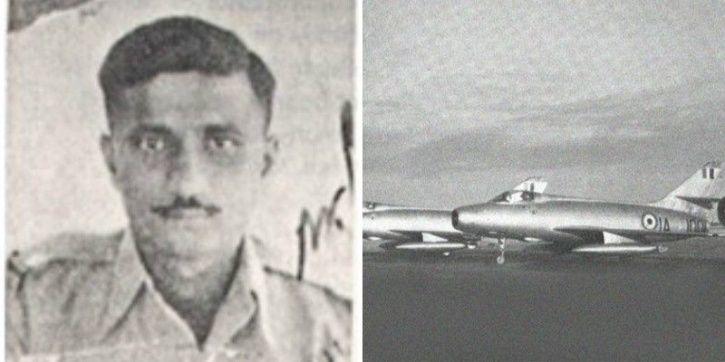
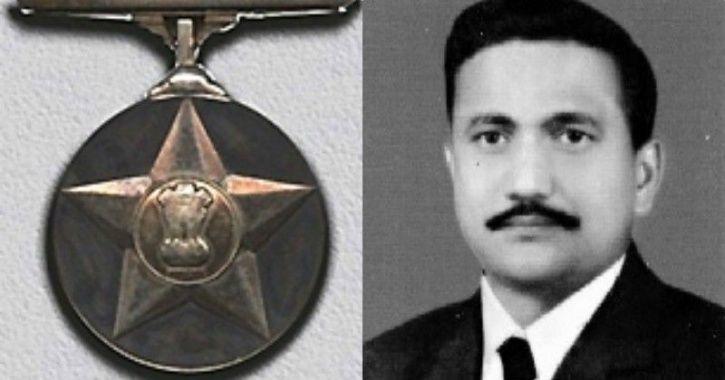
One such hero whose valour could have remained unsung was the Maha Vir Chakra (MVC) recipient Squadron Leader Ajjimada Bopayya Devayya who was awarded this honour 23 years after in 1988 for his sacrifice in an epic dog fight on September 7, 1965 war against Pakistan Air Force’s Supersonic F-104 Star-Fighter.
INDIA’S SECOND HIGHEST BATTLE HONOUR MAHA VIR CHAKRA/ SQN LDR AB DEVAYYA, PHOTO COURTESY: WIKIPEDIA
But whether it’s the destiny or the solace from the enemy that his valour and sacrifice was first recognised by Pakistan and then by Indian Air Force after which the second battle honour for him followed.
If it had not been Pakistani Flt Lt Amjad Hussain admission whose plane was destroyed by Sq Ldr Devayya and the book written by British writer John Flicker’s Book-Battle for Pakistan: The Air War of 1965, the valour of Sq Ldr Devayya would have gone unnoticed.
INDIAN ARMY FACEBOOK PAGE
Flt Lt Hussain survived the dog fight as he ejected in due time, but during one sortie in the same F-104 Star-Fighter to destroy Indian assets stationed at Amritsar air base in 1971 war, Flt Lt Hussain’s plane was hit and this time too, he ejected safety, only to be taken as Prisoner Of War (POW) by Indian forces.
A The Tribune report published in 2015 and a PIB documentary available on YouTube titled 1965 Indo-Pak Air War claims that Flt Lt Hussain told the story of a dog fight between his F-104 Star Fighter and Sq Ldr Devayya’s Mystere and how Sq Ldr Devayya despite being hit, destroyed Flt Lt Hussain’s plane before being martyred in the crash.
7th September 1965
The India-Pakistan war was in its thick and going gaga over the initial gains, Pakistan Air Force (PAF) was raiding Indian airbases on the western border. IAF was tasked to reply and attack the Pakistan airbases.
“Squadron Leader Ajjimada Bopayya Devayya flew in a Mystere Aircraft as a member of a strike formation that was assigned the task of attacking the heavily defended Sargodha airfield in Pakistan at 0555 hours on 7th September 1965. All members of the mission except Squadron Leader Devayya returned safely to base. As no other details were available at that time, Squadron Leader Devayya was listed as ‘Mission in Action,” reads the IAF Citation about Sq Ldr Devayya.
IAF/BHARAT RAKSHAK
The IAF had carried various strikes on Sargodha, Chota Sargodha and other bases of PAF and despite the difference having less advanced fighter jets- both in terms of speed and manoeuvrability, the IAF pilots gave their Pakistani counterparts befitting and scores of Pakistan highly advanced American F-86 Sabres and F-105 Star Fighter were destroyed.
When Sq Ldr Devayyas grit won over Flt Lt Hussain’s F-104
French Dassault Mystere was no match to F-104 Star Fighter as it was the first plane in the world which touched the Mach 2 Speed. Seeing the Mystere approaching the Sargoda airbase, F-104 intercepted Sq Ldr Devayya’s jet and dog fight which remained elusive and unsung resumed.
“The pilot of F-104 first fired an air-to-air Sidewinder missile, which Squadron Leader Devayya successfully evaded and the missile hit the ground. However, by virtue of its faster acceleration, the F-104 rapidly closed in on the Mystere and fired a burst of its 20 mm multibarrel cannon and succeeded in damaging Squadron Leader Devayya’s Mystere. The F-104 went ahead of the Mystere due to its higer speed,” reads the Citation.
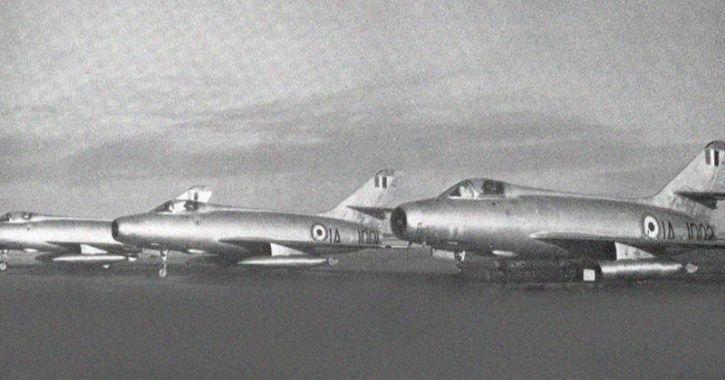
IAF MYSTERES, PHOTO COURTESY: BHARAT RAKSHAK
Flt Lt Devayya despite being hit, didn’t eject and decided to give a far superior plane, a fight for its life. He chased F-104 and rained the bullets on it from his Mystere’s power gun. The F-104 got hit and soon the flames enveloped it and Flt Lt Hussain had to eject.
“Undaunted and with utter disregard for his personal safety, Squadron Leadder Devayya flew his damaged Mystere in pursuit after the F-104. His decision was critical because the Mystere were operating at the extremity of their range and combat with an F-104 meant significantly lowering his chances of return to base.”
“Neither the Pakistani pilots flying skill nor the F-104 superior performance were apparently a match for Squadron Leader Devayya’s determination and single-minded purpose. Manoeuvring a damaged aircraft, he finally shot down the F-104. Thereafter, it is conjectured that Squadron Leader Devayya was unable to maintain control of his aircraft and was either killed in an unsuccessful low-level ejection or in a crash because of the damage that his aircraft had sustained.”
First taken as missing and then presumed dead
The then Wing Commander O.P. Taneja, who had led the first wave of attacks of which Sq Ldr Devayya was a part of, waited for him after returning to the base, but he didn’t come.
“I was told he must have gone to 32nd Squadron to return their aircraft and to change,” Taneja told IndiaToday years later during an interview published in 1988, “but when more than 40 minutes passed, I insisted on seeing him.”
As a customary, Flt Lt Devayya was presumed dead after a year.
The book
The PAF in later years commissioned a British writer, John Flicker to write about air war between two countries in 1965. Since he was commissioner by PAF, Flicker obviously painted PAF as superior air force which had caused harm to IAF in the air battle.
But the truth was a larger version of the dog fight between Sq Ldr Devayya’s Mystere and Flt Lt Hussain’s supersonic F-104 and the IAF had literally annihilated technically superior aircraft like F-84 Sabres with the relatively older and less advanced fleet of Mysteres, hunters and others.
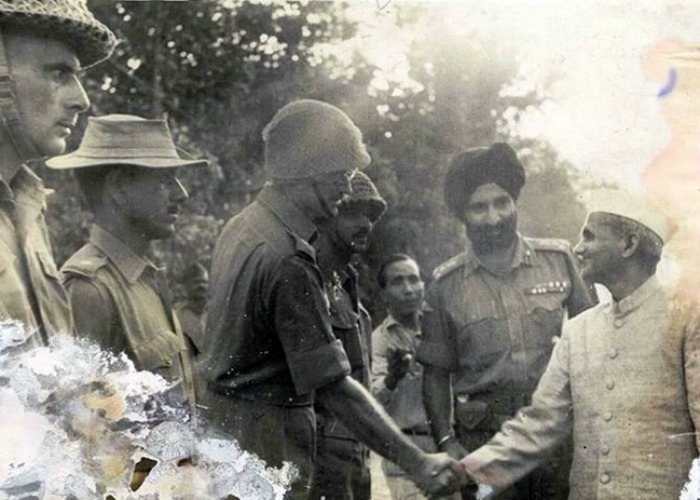
VICTORY IN 1965 WAR. PHOTO COURTESY: INDIAN ARMY FACEBOOK PAGE
But the book had an anecdote about this dog fight where it was admitted that a Mystere had destroyed F-104 before crashing with its pilot.
PAF’s retired Air Commador, Kaeser Tuffail has also written about it on his blog-Mystery of the Downed Mystère where he also talks about how locals gave Sq Ldr Devayya burial.
The struggle
The book left many surprised, especially the then Wing Commander O.P. Taneja who led the attack at Sargodha who said approached higher authorities with this as quoted by IndiaToday. “I moved higher authorities and told them it had to be Devayya.” Wing Commander Taneja was sure because that day only two were lost-one Sq Ldr Devayya in the morning and another Flt Lt Bahul Guha in the evening.
But none paid heed to his appeals.
But in 1987, the War Studies Division of the Ministry of Defence saw Fricker’s book and one of its members, the then Air Commodore Pritam Singh paid attention to an important anecdote. Singh had also seen action in 1965 as a young pilot. He told IndiaToday in 1988. “I knew all the pilots in the Mystere formation and began to trace them,” Singh said when he commanding the airbase in Jodhpur.
SAINIKSAMACHAR.NIC.IN
Singh put all his efforts to connect the dots and talked to all people concerned including Wing Commander Taneja apart from collecting evidence from Pakistani broadcast acknowledging the loss of an F-104 on September 7 morning. In November 1987, Singh presented all his findings to the high command and the pieces of evidence were compelling and convincing.
And finally, the Mahavir Chakra for the great air warrior
Finally, 1988, Sq Ldr AB Devayya was posthumously awarded the Maha Vir Chakra (MVC) for an act of unparallel courage and bravery. His 51-year-old wife Sundari Devayya who received the news that husband was missing at the age of 29, had spent 23 long years without the country recognising her husband’s sacrifice.
INDIA
She spent those years in bringing up the couple’s two daughters, Smitha, 24, and Preetha, 23 (then in 1988) her gallant husband had left. Preetha was just eight months old her father sacrificed himself for the country.
(With inputs from IAF website, IndiaToday, The Tribune, blog of Air Commodore Kaiser Tuffail and PIB Documentary)
source: http://www.indiatimes.com / IndiaTimes.com / Home> News> India / by Maninder Dabas / February 14th, 2019
WELCOME. If you like what you see "SUBSCRIBE via EMAIL" to receive FREE regular UPDATES.
Read More »