Category Archives: Leaders

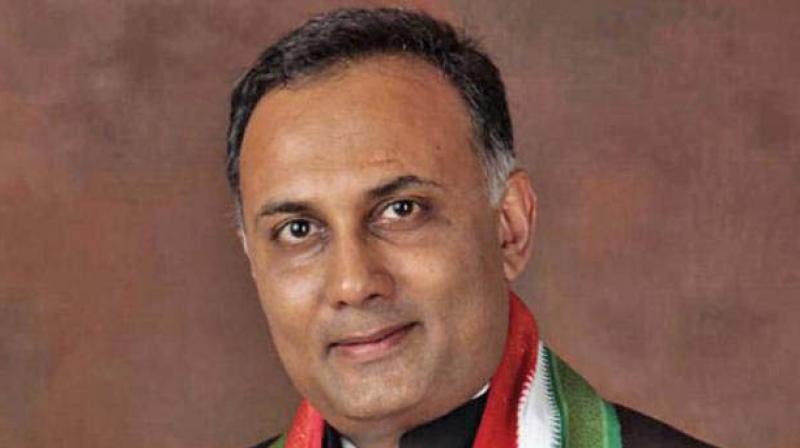
Dinesh Gundu Rao Becomes New Karnataka Congress Chief

Dinesh Gundu Rao replaces G Parameshwara, who has since become the deputy chief minister in the new coalition government.

New Delhi :

The Congress on Wednesday appointed Dinesh Gundu Rao as the chief of its Karnataka unit, replacing G Parameshwara, who has since become the deputy chief minister in the new coalition government in the state.
48-year-old Gundu Rao was earlier the working president of the Karnataka Congress under Parameshwara. The five-time MLA from the Gandhinagar constituency in Bengaluru was the food and civil supplies minister in the previous Congress government in the southern state.

Congress president Rahul Gandhi also appointed Easwar Khandre, an MLA, as the new working president of the party’s Karnataka unit.

All India Congress Committee (AICC) general secretary Ashok Gehlot made the announcements in a statement.

“The Congress party appreciates the hard work done by G Parameshwara, who successfully led the party for the last eight years and is stepping down from his responsibility,” the statement added.

The changes in the Karnataka Congress were in the offing after the Congress-JD(S) coalition government was formed in the state in May.

The changes are also part of Gandhi’s efforts to bring in a new team of young leaders to steer the party at the central and state levels.

source:http://www.ndtv.com / NDTV / Home> Sections> Karnataka / by Press Trust of India / July 04th, 2018

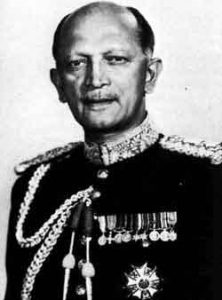
K M Cariappa – Father of Indian Army

CariappaKF24jun2018

Chennai:

Whoever goes through the military history of India, will never forget Field Marshal K M Cariappa.

Only two officers of the Indian Army have got the rank of a Field Marshal: one of them being Cariappa and the other being Field Marshal Sam Manekshaw.

But that isn’t the only thing that won him recognition – his achievements are no less worthy. While the alumni of Officers Training Academy unveil the statue of the noted Army officer who held five-star rank, News Today journeyed through his life and achievements.

His distinguished military career spanned almost three decades. He was the first Indian military officer to attend the Staff College, Quetta, the first Indian to command a battalion, and was also one of the first two Indians selected to undergo training at the Imperial Defence College, Camberley, UK.

Field Marshal Cariappa made his voice clear when Skeen Committee was set up in 1939 to examine the options of Indianisation of Indian Army’s ranks.

As Cariappa was one of the senior most Indian officers with about 19 years of service, the committee held several discussions with him. He expressed his displeasure at the treatment of Indian officers in the Army.

He decried the discrimination shown towards Indian officers in terms of appointments, promotions, benefits and allowances British officers were entitled to.

He is known for ‘Operation Kipper’, ‘Operation Easy’ and ‘Operation Bision’ done to capture Naushera, Jhangar, Poonch, Zoji la, Dras and Kargil areas in Kashmir during 1947 and 1948.

The operations aimed to drive out Pakistanis from Kashmir, but they were stopped by the intervention of the United States. While Army headquarters asked not to launch any operations, Cariappa protested against it and launched several strikes in the Ladakh region allowing India to assert control over the region.

Cariappa took over the reins of the Indian Army 15 January 1949, that was marked as official Army Day and celebrated annually.

As chief of the Army, Cariappa was instrumental in the formation of the Territorial Army in 1949. He extended support to the National Cadet Corps (NCC) during its formative years. These two complimentary branches of the Army later proved to be very helpful in the wars India fought in later years.

He also adopted the Indian National Army slogan ‘Jai Hind’: it became a phrase for the personnel to greet each other in the Army.

He turned down the proposal to reserve vacancies in the Army for Scheduled Castes and Scheduled Tribes as had been done in other government services. He stated that the proposal would degrade the Army’s standards and increase the risk of it being defeated if right talent was not recognised.

Cariappa took part in the reorganisation of the armed forces in many foreign countries. He was awarded the Legion of Merit in the degree of Chief Commander by American President Harry S. Truman.

As a mark of recognition for the commendable service rendered by him to the nation, the Government of India conferred the rank of Field Marshal on Cariappa 28 April 1986, at a special investiture ceremony at Rashtrapati Bhavan.

source: http://www.newstoday.net / News Today / Home> Chennai / by S. Vishnu Sharmaa / June 23rd, 2018
Karnataka: Gen Thimayya memorial to be ready soon

The entrance of the memorial will be dedicated to Kodava culture and will host various traditional artifacts including ‘peecha .kathi’, daggers and other arms

ThimmayyaKF14jun2018

Bengaluru :

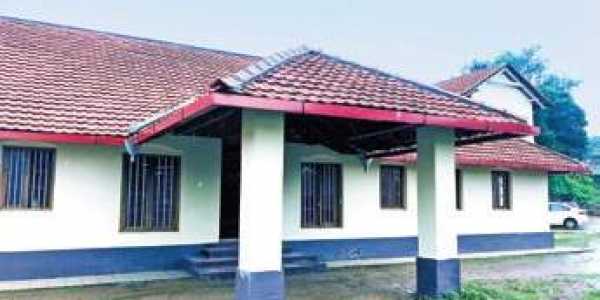
If you approach ‘Sunnyside’ in Madikeri town, you will be welcomed by a larger-than-life boot of a soldier and a battle tank at the door. “Sunnyside” was the residence of General K S Thimayya and had been waiting for a year for the renovations that have just kicked-off.

The house which previously housed the RTO office, is now being renovated and re-named as ‘General Thimayya Memorial’ with an aim to retell the story of the General, the hero of Kodagu and the nation and will depict each phase of his life.

The entrance of the memorial will be dedicated to Kodava culture and will host various traditional artifacts including ‘peecha kathi’, daggers and other arms. The other rooms of the house will depict the General’s childhood days, his lifestyle, and his days in the army. “The visitors will be welcomed into the memorial by an audio recording, dubbed by Belliappa, the grandson of General Thimayya, whose voice resembles his grandfather’s,” explains the memorial’s convener Major (retd) Nanjappa.

The project of renovating ‘Sunnyside’ has begun with work on the interiors currently in progress.

For the project, which will be completed in another six months, getting to this stage of renovation had not been smooth. Major Nanjappa, appointed as the convener a decade ago, has been constantly in touch with the authorities, that kept on changing over the years, to get the project moving forward.

Army General Bipin Rawat has promised to give two boffer weapons to the memorial.y

source: http://www.newindianexpress.com / The New Indian Express / Home> States> Karnataka / by Prajna GR, Express News Service / June 14th, 2018

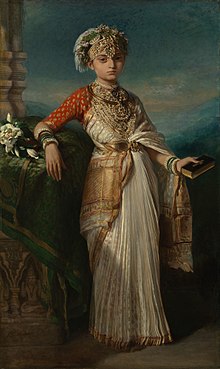
FRANZ XAVER WINTERHALTER (1805-73) Princess Gouramma (1841-1864) Signed and dated 1852

Princess Gouramma (1841-1864) Signed and dated 1852

Oil on canvas | 153.2 x 91.8 cm (support, canvas/panel/str external) | RCIN 403841

Durbar Corridor, Osborne House

PrincessGowrammaKF10jun2018

Description
Winterhalter was born in the Black Forest where he was encouraged to draw at school. In 1818 he went to Freiburg to study under Karl Ludwig Sch?ler and then moved to Munich in 1823, where he attended the Academy and studied under Josef Stieler, a fashionable portrait painter. Winterhalter was first brought to the attention of Queen Victoria by the Queen of the Belgians and subsequently painted numerous portraits at the English court from 1842 till his death.

Princess Gouramma (1841-64) was the daughter of the ex-Raja of Coorg. She was baptised in the Chapel at Buckingham Palace on 1 July 1852 and took the name ‘Victoria’, with Queen Victoria as her Sponsor. She had been considered a suitable bride for the Maharaja Duleep Singh whose portrait is also in the Royal Collection (RCIN 403843), but he declined to marry her. In 1860 she married Colonel John Campbell.

Here the Princess is depicted in Indian dress and rich jewellery, leaning on an Indian table. She is holding a Bible, an allusion to her conversion to Christianity.

Signed and dated: F Winterhalter / 1852.
Provenance
Painted for Queen Victoria

source: http://www.royalcollection.org.uk / Royal Collection Trust / Home> Collection> Explore The Collection

AGM Of Kodava Federation Held: Kodava Apex Body To Take Up Issues With Kodagu DC

AGMkf07jun2018

Madikeri:

The Federation of Kodava Samajas, Balagodu, Virajpet taluk, held its Annual General Body Meeting for the year 2017-18 on June 5, 2018 at its head office in Balagodu.

The meeting was attended by about 140 members. Federation President Kallichanda Vishnu Kariappa presided.

The President said that the membership drive in three categories namely, Kodava Samaja membership, Donor Membership and Kodava Okka (Family) Membership drive is pursued vigorously in order to strengthen the Federation.

The President said the Federation had received a letter dated 25.5.2018 from some members jointly requesting the Federation in its General Body of 2017-18 to discuss the issues mentioned in the letter and take appropriate decisions or pass resolutions. Among the issues mentioned in this letter were as follows:

1. To set up a Secretariat with an able Administrator to receive complaints and petitions from the members for solution with the guidance and help from the Federation. The Secretariat will interact with various Government Departments, if necessary, and report to the General Council or the President or the Secretary.
2. Federation to take up the cause of getting the Linguistic Minority status.
3. Make efforts to get Scheduled Tribe status for Kodavas.
4. Federation to ensure that no new places of worship are constructed near important temples of Kodavas like Sri Padi Igguthappa Temple at Kakkabe, Bhagandeshwara Temple at Bhagamandala, Mruthyunjaya Temple at Badaga etc. in order to protect the sanctity of these ancient temples.
5. Federation to take up the issue of Caste Certificate to be issued to Kodavas. At present, the Tahsildar is issuing the certificate saying ‘Kodagaru’ instead of ‘Kodava.’ This is causing problems wherever Caste Certificate is required to get benefits under Government schemes.
6. Federation to discuss with the concerned Government Department to complete the remaining 600 mts. road work from Pukola, Birunani, to Virajpet via Kotiyala, which will reduce the distance to Virajpet taluk headquarters by about 28 kms for the villagers.
7. Federation to discuss with the Government to withdraw cases filed against those who participated in the agitation against the high tension power lines going across South Kodagu to Kerala.

The President told the General Body that the Governing Council had discussed these issues at a special meeting inviting the representatives of all Kodava Samajas and would soon be meeting the Deputy Commissioner to discuss the matter and find solutions.

Raising the issue of the proposed Railway line criss-crossing Kodagu district, a senior member of the Federation expressed surprise that the massive protest march which was launched under the initiative of Mysuru Kodava Samaja, in association with some of the Kodava Samajas in Kodagu, should have been first discussed by the Federation which is the apex body of all Kodavas and led by the Federation. However, the President said that since it was done in a hurried manner the Federation could not take the leadership.

The Annual General Body Meeting concluded with a vote of thanks followed by a lunch.

source: http://www.starofmysore.com / Star of Mysore / Home> News / June 06th, 2018

Four-Day Personality Development Camp Begins In City

SpoorthiKF06jun2018

Mysuru:

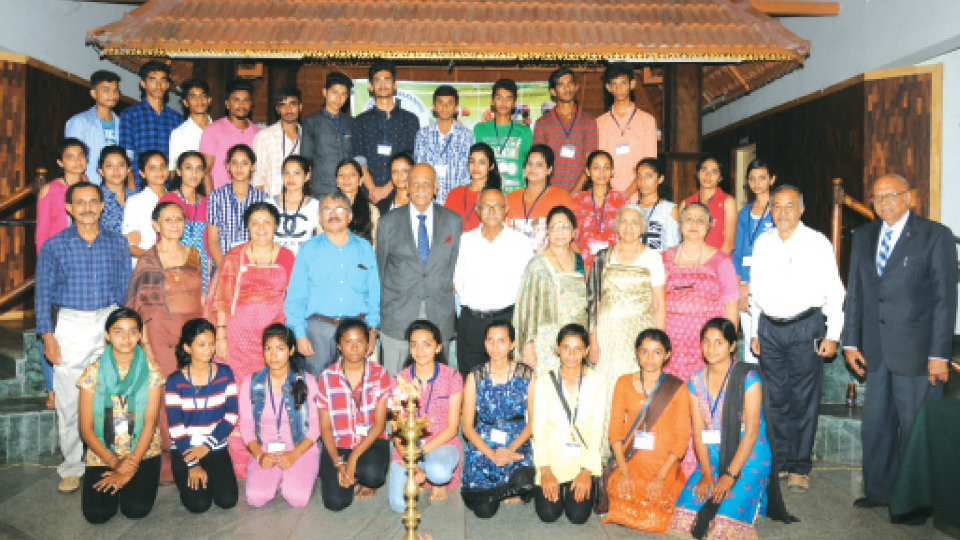
A four-day special Personality Development camp ‘Spoorthi 2018’ is being organised since yesterday for students who hail from Kodagu and pursuing their studies from PUC to Graduation. The camp is being organised by Kodava Deena Bandhu Charitable Trust at Kodava Samaja, Vijayanagar First Stage. The camp will conclude on June 5.

The camp was inaugurated last evening by Major General (Rtd.) Codanda K. Karumbaya and senior Orthodontist Dr. Adengada A. Kuttappa. Addressing the students, Karumbaya said that students must have grip over at least four to five languages so that they can pursue a career in any part of the world. Along with mother tongue and the medium of study, students must strive to learn dominant foreign languages, he said.

Giving an example of Indian Army, the retired officer said that people from various nook and corners of India serve in the Army. One common thread that unites them is Hindi. They all learn Hindi and protect the nation like one family, he said.

On the choice of careers, he said that students must have a proper aim and the courage to pursue their dreams. And it is important for them to periodically assess their capabilities and career path.

A step-by-step monitoring process where there is a room for improvement must be a part of a student’s activity, Karumbaya opined.

In his address, Dr. Kuttappa said that it is important for students to read and know about achievers. Almost all the achievers had a tough childhood where they fought against odds to study. “Even our Prime Minister Narendra Modi had a difficult childhood where he sold tea on Railway platforms to eke out a living. Our former President A.P.J. Abdul Kalam used to study under streetlight due to abject poverty,” he said.

Students must not discontinue studies at any cost and must strive to secure merit scholarships to pursue their education. Only those who realise the value of education and money at a young age will make good citizens and this in turn, will give rise to a good society, Dr. Kuttappa said.

Kodava Deena Bandhu Charitable Trust Honorary Secretary Pattada A. Jayakumar, Kattera A. Cariappa and Trustee Lieutenant Colonel (Rtd.) Chowrira A. Ganapathy were present.

During the special camp, achievers in various fields will address the students and guide them in academics and careers.

source: http://www.starofmysore.com / Star of Mysore / Home> News / June 02nd, 2018

Going the Parsi way

Parsis of the south: Scenes from the centenary celebrations of the Kodava Samaja Bangalore earlier this month. Photographs by Aniruddha Chowdhury/Mint.

Fair-skinned, educated and Westernized, they are the Parsis of the south. And their numbers too are declining— from 175,000 in 1992 to 125,000 in 2010 (Bureau of Economics and Statistics). Kodavas, or Coorgis, are concentrated in Coorg, Karnataka, which the British turned into a major district of coffee plantations. The land is also known for its mist-cloaked hills scented with honey, cardamom and oranges.

Kodavas are more numerous than India’s Parsis, Bahá’ís and Jews but that’s no solace. “We might vanish by 2030,” says Chepudira M. Thilak Subbaiah, president of the Kodava Samaja Bangalore that held its centenary celebrations in early November. “Young Kodavas are educated workaholics and don’t care about families. They don’t want more than one child.” According to Subbaiah, Bangalore has the largest population of Kodavas (35,000) after Coorg (70,000).

“The concern is not so much of losing at a numbers game,” says Sarita Mandanna, whose debut novel Tiger Hills was set in Coorg at the turn of the 20th century, “but the risk of losing an entire way of life, and the land as we once knew it.”

Kodavas are warrior-caste Hindus but their festivals and rituals are different. They have no priest, no holy fire and no dowry in weddings. They are great pork eaters. They worship Kaveri, the river that originates in Coorg. With a literacy rate estimated at 80%, their vocabulary is a mix of Persian, Sanskrit, Hindi, Kannada, Tamil and Telugu. Almost everyone has an estate—it could be 1 acre or 500 acres. Some say they migrated from the Kurd region in West Asia, others claim they are descendants of Alexander’s army. Traditionally a martial race, they have produced army icons like K.S. Thimayya and K.M. Cariappa. Other notable Kodavas are athlete Ashwini Nachappa and VJ Nikhil Chinappa.

Explaining the reason behind the dwindling numbers, the Bangalore-based author, Prof. P.S. Appaiah, says: “Until 1950, families had at least half a dozen children each. After the government introduced family planning, the Kodavas showed the most enthusiasm. General Cariappa himself would tell us not to go beyond two children. He said that we couldn’t afford to make India a jam-packed stadium.”

KodavathiJun052018

The Kodavas have been known for their well-knit joint families. “With better education and exposure, Kodavas are opting for smaller families, a trend that’s evident in most of educated India,” says Mandanna. “With land no longer jointly held within a family, but being parcelled into smaller acreages, it’s no longer viable to support a large brood of children.”

Young people are moving to cities like Bangalore, Mysore and Mumbai, where many have found their calling in the IT industry. “Many Kodavas are finding it hard to find suitable life partners within Kodavas, which forces them to marry non-Kodavas or stay as singles,” says Kishor Cariappa, moderator of KodaguCommunity.com, a site where people discuss topics ranging from marrying outside the community to Kodava cuisine.

A woman married to a Kodava is not considered a Kodavathi, but the children of the marriage are Kodavas. “Not so if a Kodava woman marries outside, in keeping with traditions observed in most of the country,” says Mandanna, whose sister married a Tamilian Brahmin. “Marrying within the community has its advantages in terms of a shared cultural background, but it is no guarantee of happiness, and I think a lot of the older Kodavas have come to recognize that.”

Despite the alarmists, there is no scare of extinction yet. “We are not going down like the Parsis,” says Mumbai-based art director Dipti Subramani, a Kodava who married outside her community. “I think we can maintain our present numbers.”

How can they be increased?

“We’re asking people to have more babies,” says Subbaiah. “Instead of criticizing young people marrying non-Kodavas, we must open our arms to people from other communities and not treat them as ‘outsiders’,” says Cariappa. However, some have other concerns. “If the Kodava population too goes up,” says Appaiah, “imagine what will be India’s fate.”

source: http://www.livemint.com / LiveMint / Home> Live / by Mayank Austen Soofi / November 25th, 2011

Codavas On A Mission To Nourish Cauvery Back To Health

Snapshot

Codavas are seeking living entity status for Cauvery – the lifeline of South Karnataka-Tamil Nadu.
______________________________________________________

As politicians try to gain political mileage out of the controversy over the sharing of Cauvery river water between Karnataka and Tamil Nadu, Codavas – the original inhabitants of Kodagu – have embarked on a novel journey. This could one day give Cauvery river, the lifeline of South Karnataka and Tamil Nadu, the ‘living entity status’ like Ganga, Yamuna and Narmada. It will be also on the lines of the special status that Whanganhi River of New Zealand, which is very dear to the original inhabitants Maori tribe, enjoys.

Called “Codavas separatists”, these inhabitants have been demanding a separate state since 1957. In fact, Kodagu enjoyed ‘C’ Grade statehood before Independence. Consecutive state governments in Karnataka have not protected the antiquity of Codavas and did nothing to give them special status despite being a miniscule minority in terms of population, allege the Codava National Council (CNC) activists.

Several times they had objected to the way river Cauvery is being abused and overexploited for socio-political and economic reasons. “We have been pointing out to the government that Cauvery river is not in her full health and we need to take corrective measures, but none of the governments did anything. Which is why we have organised a vehicular jatha, a convoy of vehicles with Codavas and Codavathis (women Codavas) from Talacauvery (birthplace) of Cauvery river to the last point of the river in Poompuhar in Tamil Nadu. This is an awareness campaign to let people know how the Cauvery is shrinking and how to nourish her back to her pristine beauty and girth,” said CNC president N U Nachappa.

River Cauvery is one among seven sacred (sapta nadi) rivers of the Vedic period and they are Ganga, Yamuna, Sindhu, Saraswati, Narmada, Godavari and Cauvery. Thankfully, other rivers are now under rejuvenation process with Prime Minister Narendra Modi pledging his full support to the rejuvenation and cleansing of Ganga. This has motivated the states like Haryana, Punjab, Gujarat, Andhra Pradesh, Goa and Maharashtra to take up rejuvenation of their rivers seriously.

However, Karnataka has not done anything to protect Cauvery river despite the river losing girth and inflow steadily. At many places, it is being polluted. “This apathy has hurt us, and after many failed appeals we have decided to kickstart a people’s movement to save Cauvery. She takes birth in our district and nourishes several lakhs of hectares of land and quenches the thirst of the crores of people. It becomes our responsibility to let the people know her condition. She nourishes our crops and has two southern rice bowls for India, one in Mandya in Karnataka another in Thanjavur, Tamil Nadu. She is the lifeline of the south,” says Nachappa.

There are already instances where the governments in Uttarakhand, Madhya Pradesh and even New Zealand are giving rivers a new lease of life by according “living entity” status. River Saraswati disappeared centuries ago and such a thing should not happen to Cauvery, say Codavas, who took part in the expedition.

The CNC has urged the governments of Karnataka and Tamil Nadu, the United Nations Organisation and the International Water Dispute Tribunal to accord special status to the Cauvery river. The five-day jatha to Poompuhar from Talacauvery also witnessed visits to temples of Tamil Nadu that are built along the course of the Cauvery river. “It was not just evoking the divine grace for the river’s welfare but we also talked and engaged with the local people on the importance at Salem, Rasipuram, Tiruchirapalli, Thanjavur and Myiladuthurai.”

As per the legends, great Sage Agastya had his seat of learning in Kodagu on the banks of Cauvery. Until 1956, Kodagu was politically a powerful C grade state of the Indian Union. Codavas consider the reorganisation of states under the State Re-organisation Act, 1956 a great geo-political catastrophe of the 20th century for them. Cauvery and Kodagu were synonymous with each other.

R Sridhar, a scholar on Cauvery in Bengaluru, analysed why Cauvery is losing girth. “In the name of development, we have reduced the value of our rivers, which is a general situation. In the Cauvery basin, we have killed many tributaries like Arkavathi and Kanva rivers. While Arkavathi was killed at its source in Bengaluru by drying the river and creating housing projects, Kanva river has been reduced to a rivulet, and most part of the year except in monsoons, it is dry. I remember the Tamil Nadu government making a case with the Supreme Court stating that the Cauvery river was contaminated with sewage and industrial effluents and chemicals. But I still think the Cauvery river gets an inflow of 740 thousand million cubic feet (TMC) water during a typical monsoon season. But the utilisation of river water has trebled in the last 20 years, which is why Cauvery has slendered down in girth. Check dams have been constructed in many districts along the Cauvery’s course in Karnataka and Tamil Nadu to store water, another reason for it to become slender. But it is never too late for taking up a drive like the CNC has taken up, which is laudable.”

However, things are presently fluid as the governments have demanded constitution of a Cauvery river water management board of which shape of things to come is not certain, Sridhar said.

President of the Delta Farmers Forum at Tiruchirapalli, Pandit Ramdas, hailed the expedition. “This is the first effort that has kindled hopes of better future for the river Cauvery and also to the users of her waters. I am sure the governments will take notice of it. Codavas are not only martial heroes but also die-hard conservationists of their heritage land, their efforts to conserve the river Cauvery was a heroic event just like their innumerable wars with invaders which they won”.

*Route Map of the Mission on Cauvery was Talacauvery in Kodagu – Mysore, Hogenakkal, Dharmapuri, Mettur Dam, Salem, Rasipuram, Namakkal, Paramathiveleur, Mohnaur, Tottiyam, Musiri, Mukkombu, Srirangam, Tiruchirapalli, Thanjavur, Ayyampettai, Papanasam, Kumbakonam, Mayiladuthurai, Sempanarkoil, Mudikandanallur, Melayur and Poomphar (Cauvery Pattinam) the final destination.

*Cauvery jatha as they called it was fascinated by the site where world’s first dam built over sand by the legendary Tamil emperor Karikala Cholan during 1st century AD. This grand Anekat, dam is built across river Cauvery Vennar at Kallanai and still stands.

*With this expedition the Codavas have begun a new people to people friendship with Tamil Nadu, while the politicos on both states choose to take the political route to the Cauvery water sharing and in the bargain foment and fuel inter-state unrest.

*What is living entity?

The concept of river being given the same rights and duties as a human being is new to India, the first to do was Equador in South America its constitution provided this right to many rivers within in its geographical area, recently New Zealand gave such rights to Whanganui River. The river will have all the rights and duties that a citizen has. The rivers endowed with such status will not be treated as property of the state or a nation but will have right to exist, persist, maintain and regenerate its vital cycles. The river will have its own identity and will get the same protection that the human beings get.

Raghuram hails from coastal Karnataka and writes on communal politics.

source: http://www.swarajyamag.com / Swarajya / Home> Ideas / by M Raghuram / June 03rd, 2018

Signature campaign against smoking zones begins

The Consortium for Tobacco Free Karnataka (CFTFK) launched the ‘One million signature campaign’ as part of the World No Tobacco Day on Thursday.

Bengaluru :

The Consortium for Tobacco-Free Karnataka (CFTFK) launched the ‘One million signature campaign’ as part of the World No Tobacco Day on Thursday. The campaign will demand strict regulation policy on the sale of tobacco products and removal of ‘smoking zones’ in restaurants and bars across the state to safeguard non-smoker’s health.

A memorandum with 10 lakh signatories will also be submitted to the state government demanding appropriate measures to protect children from easy access to tobacco products and exposure to tobacco advertisement and to protect the health of non-smokers.

International athlete and Arjuna awardee Arjun Devaiah launched the campaign which is likely to continue for next eight months.To spread more awareness about the risks associated with tobacco use, CFTFK also launched information kiosks at crowded public places.

source: http://www.newindianexpress.com / The New Indian Express / Home> States> Karnataka / May 31st, 2018

Vanishing Kodavas: Some Facts

KodavaSymbolsKF30may2018

NOTE: Here we reproduce the letter titled ‘Vanishing Kodavas: Some facts’ for the reading pleasure of ‘Star of Mysore’ readers. —Ed

It’s Kodavas all the way!

Sir,

Though Kodavas belong to ethnic minority tribes of Kodagu, they were quick enough to adapt themselves to civilisation under British influence, when Kodagu, then known as Coorg, was a ‘C’ Class State under British rule.

With literacy and civilisation, they soon entered the mainstream of our national life emerging as a martial race and went on to occupy important positions in armed forces, sports and other walks of life.

The first Indian to become Commander-in-Chief of Indian Army was Field Marshal K.M. Cariappa (a Kodava), who succeeded the last British Army Chief Butcher.

The first Chief Commissioner (CC) of the erstwhile Coorg State after the exit of the last British CC Gordon was Dewan Bahadur Ketolira Chengappa (Kodava).

When Coorg (Kodagu) was merged with Karnataka and became a district, the post of the Chief Commissioner was re-designated as Dy. Commissioner and the first DC of the newly-formed Kodagu District was I.C. Subbiah (a Kodava).

Will not these achievements bear ample testimony to the calibre of Kodavas, with their minority status notwithstanding?

– V.R. Srinivasa Murthy, Brindavan Extension, 4.10.2015

source: http://www.starofmysore.com / Star of Mysore / Home> Voice of the Reader / May 28th, 2017