Category Archives: Leaders

Mammoth Convention Of Ex-Servicemen Held At Gonikoppal In Kodagu

ConventionKF30ma2018

Gonikoppal (Kodagu) :

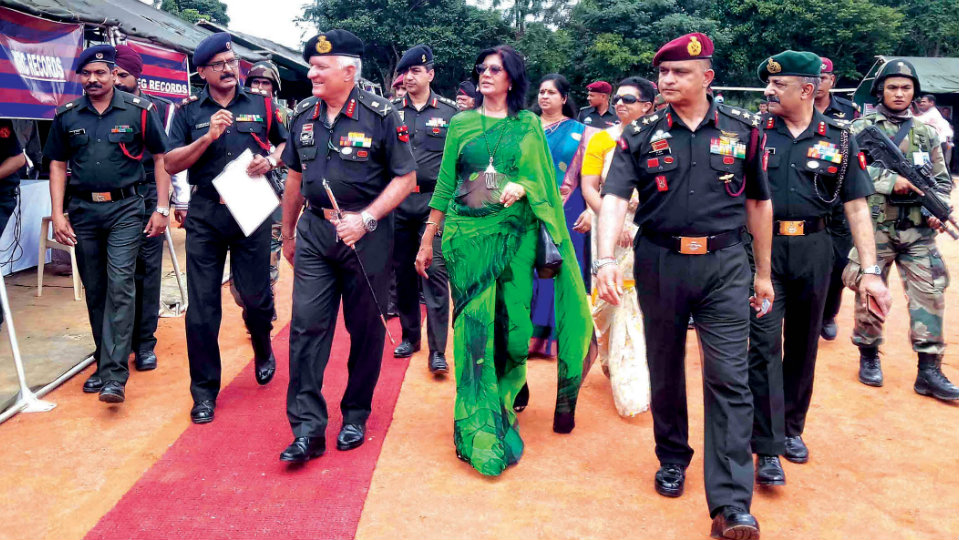
Lieutenant General Dewan Rabindranath Soni, the current General Officer Commanding-in-Chief (GOC-in-C), Southern Command of the Indian Army, has called upon Ex-servicemen to come forward to find employment under Prime Minister’s Skill Development Project.

He was addressing a massive rally of ex-servicemen of Indian Army’s Karnataka and Kerala Sub-Area Command at Cauvery College in Gonikoppal, South Kodagu yesterday.

Listing out various schemes introduced by the Union Government for re-settlement and welfare of ex-servicemen, Lt.Gen. Soni appealed ex-servicemen to encourage their wards to join the Army. Stressing on the need for ex-servicemen to maintain physical, mental fitness and health, he said that ex-servicemen should keep their knowledge updated on various Government schemes such as pension, land grant, reservation for children of ex-servicemen and the like.

He also highlighted that ex-servicemen will get cashless treatment at ECHS Hospitals across the country.

Maj.Gen. Sanjeev Narayan, in his address, said that ex-servicemen should properly utilise the pension scheme and other welfare schemes of the Government.
Lauding the contribution of Kodavas in armed forces, he called upon ex-servicemen to maintain values and discipline advocated by the Army. Emphasising on the need for ex-servicemen to have official ID cards issued by the Sainik Welfare Department, such cards will be crucial for getting benefits and facilities extended to them by the Government.

He called upon ex-servicemen and their dependents to visit Sainik Welfare Department at their respective district headquarters to get complete information on the whole range of Government facilities and benefits extended to them.

Sainik Welfare Department Joint Director Lt.Col. Geetha said that ex-servicemen and their dependents can apply online for availing various benefits and facilities, which include reservation for children in admission to educational Institutions, job reservation, student hostel admission in big towns, ECHS hospitals, land allotment, housing etc.,

Pointing out that more than 400 applications seeking land remained pending in the department’s district office, Lt. Col. Geetha said that these applications will be disposed off in stages in the days to come after consulting the concerned authorities.

Lt.Gen. D.R. Soni presented mementos to ex-servicemen and their dependents.

He was accompanied by his wife Colonel Suman Soni (retd.), who served in the Army as a gynaecologist for twenty-two years.

Field Marshal K.M. Subbaiah, Convenor Maj.B.A Nanjappa, Gonikoppal Cauvery College Secretary K.G. Uttappa, Principal Prof. Pattada Poovanna, Tahsildar Govindaraju and others were present.

source: http://www.starofmysore.com / Star of Mysore / Home> News / May 28th, 2018

District Assembly Training By Rotary Tomorrow

The District Secretariat, Rotary Mysore and Rotary International District 3181, India, have organised a function for the inauguration of Spoorthi, the District Assembly Training on May 26 (tomorrow) at 3 pm in Sri Kanteerava Narasimharaja Sports Club on Lalitha Mahal Road in city.

The programme will be inaugurated by Past Dist. Governor, RI District 3181 R. Vasudevamurthy. Past Dist. Governor, RI District 3020 Sam Movva will deliver the keynote address.

District Governor 2017-18, RI Dist. 3181 M.M. Suresh Chengappa will preside.

source: http://www.starofmysore.com / Star of Mysore / Home> In Briefs / May 25th, 2018

A ray of hope for special children

Swastha has rehabilitated many such children
There are 101 such children in Swastha
It has been training special children in various vocations since 2004

Madikeri:

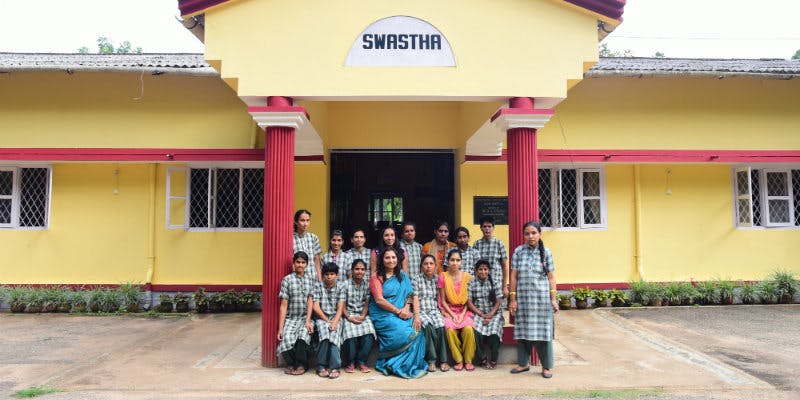
Swastha, a centre for rehabilitation of special children on Sunticoppa-Madapur road in Kodagu, is a “home sweet home” for 101 such children.

Swastha has been taking care of such children and training them in various vocations since 2004.

Ganga Changappa, project head of Swastha, told The Hindu that 19 children, who had been trained in bookbinding, folder-making, screen printing, manufacturing table mats, bags, mushroom cultivation and offset printing, had been shifted to Polibetta, where they were working now.

In Swastha, special children undergo training under the watchful eyes of specialists. As many as 18 children have found placements in Kodagu and elsewhere. Some have been self-employed. Tulasi, who joined Swastha in 1986 and trained there till 2003, is now employed in a garment factory in Bangalore. Manohar, who was admitted in Swastha with cerebral palsy, works as a helper at the KSRTC depot in Kushalnagar. Guruappa, who is partially visually challenged, works in the Bengaluru International Airport.

Three are working as instructors at Swastha itself. Mohini, who is physically challenged, is working as a tailoring instructor, according to Aarti, counsellor and psychologist at Swastha. Two mentally challenged girls got married some time ago. Besides, seven children had joined regular schools under inclusive education stream, she said.

Eighteen-year-old Gaurav from Somwarpet made news recently for a different reason. He is less than two feet in height. But he is unperturbed by this and is preparing for the SSLC examination.

Special skills are needed to handle such children, and the faculty at Swastha has them in abundance. The faculty deals with children with cerebral palsy, autism, mental retardation, and epilepsy.

There are six special educators, a rehabilitation teacher and a speech therapist, apart from the counsellor.

Ms. Aarti said Swastha had also brought the parents of the children under one roof. The parents had formed a self-help group. They would meet on the fifth of every month. The group was planning to buy sweaters for the special children this year.

The children get free vocational education, accommodation, uniforms, and medical care. There is free transport for day scholars. Swastha is funded by the JRD Tata Trust and Coorg Foundation, an initiative of Tata Coffee Limited, Polibetta.

Ms. Ganga Changappa said Swastha incurred an expenditure of Rs. 30 lakh every year. Two hundred children had applied for admission in Swastha, she added.

source: http://www.thehindu.com / The Hindu / Home> National> Karnataka / by Jeevan Changappa / August 17th, 2008

With The Coorg Foundation, Ganga Changappa aims to empower women and the differently abled

Ganga is the trustee and adviser to The Coorg Foundation, an independent social wing of Tata Coffee that has been working towards promotion of the welfare of the local community of Kodagu.

Ganga Chengappa
Ganga Chengappa

An organisation is not just known for the products it makes, but also the impact it has on the society at large.

Corporate social responsibility (CSR) is today every large organisation’s focus. As William Clay Ford Jr said, “Creating a strong business and building a better world are not conflicting goals – they are both essential ingredients for long-term success.”

Tata Coffee, too, goes by this way of doing business. One of the largest integrated coffee plantations in the world, it doesn’t only grow, curate, and market coffee but also plays a big role in community development with its independent social wing, The Coorg Foundation, established in 1994.

Its initiative is to empower thousands of women who are employed in the estates, who can earn their livelihood now and lead a financially independent life. Similarly, Swastha, an institution for the mentally and physically challenged children, helps them express their special creativity with vocational training in informal skills. The students also learn the intricacies involved in making envelopes, files, greeting cards, screen-printing and tailoring, which makes them economically independent.

In a conversation with YourStory, Ganga Changappa, trustee and adviser to The Coorg Foundation, Tata Coffee Ltd., talks about empowerment of women workers, skill development, Swastha and further plans for the development of the community.

YourStory: Can you tell us a little about yourself and your journey with The Coorg Foundation?

Ganga Changappa: I am a special educator with over 28 years’ experience in special education, and over 38 years in social work. In 2003, I set up an institution in Coorg called Swastha, a centre for special education. Today, we have two centres – one for special education and rehabilitation and another for training and rehabilitation for boys above 18 years. Initially, we started with 20 students and, in 14 years, the number has grown to 375. Currently, I manage the functioning of these centres.

After initiating the community-based rehabilitation programme that aims at bridging the gap between the differently abled and mainstream children, and to link them with the available services in the Somwarpet taluk, we also conducted several rehabilitation workshops. We succeeded in rehabilitating 150 children by imparting job-based skills. We have successfully trained children for Special Olympics and 10 children represented the country in Australia, the Netherlands and the US and won several prizes. We have also successfully conducted Go-Get in – a sports meet for abled and differently abled children every year.

SwasthaKF22may2018

YS: Can you tell us about the formation of The Coorg Foundation, its goals and its mission?

GC: In 1994, Darbari Seth, the Chairman of Tata Coffee, visited Kodagu district as part of his visit to the estates of the erstwhile Consolidated Coffee Limited. Rechristened as the Tata Coffee Pvt. Ltd in 2000, the company has 13 estates spread across the district of Kodagu. Although coffee estates dot the other districts of the Western Ghats also, the highest concentration can be found in Kodagu. The former Chairman of Tata Coffee felt the need for holistic development of the district. It was with this in mind that The Coorg Foundation was formed. The vision was based on the five pillars of Sports, Education, Environment, Healthcare and Culture.

YS: How have you worked towards women’s empowerment and in what sectors?

GC: My first stint towards women’s empowerment started even before my career with special education. As a newlywed in Munnar, Kerala, I believed women workers or the women of the district could be empowered with soft skills to help improve their livelihood. Self-help group or a ladies’ group was the catalyst that could bring about these changes.

As my husband was working with Tata Tea in Munnar, there was an opportunity within the agriculture sector. The company, being the major stakeholder in Munnar, I floated the idea of a special school with the managers’ wives on the estates. This, at once, empowered women like us and gave us an opportunity to make a difference. Starting a special school in Munnar came with its own challenges, but allowed us to further empower a whole host of women. Starting with the staff and support staff, the women of the district got new opportunities to work and augment their families’ income. This also changed the outlook of the local people, as earlier the only women working were in the tea fields, so this added a dash of inspiration for the rest of the ladies in the district.

The core of our mission, however, was to educate and empower the differently abled, given that there were limited resources for them in the district. The school was co-educational so gave equal opportunities to girls and boys. The crowning glory would be the vocational training and practical skills imparted, beyond basic education. This empowered differently abled girls of the district to stand on their own two feet, thereby becoming a boon to their families that otherwise would neglected them.

YS: How have lives of women changed through your empowerment programme?

GC: There are several examples of women who have transformed their lives through our empowerment programmes. There are two that stand out for me, especially.

Rekha was born with cerebral palsy and after two unsuccessful operations on her lower limbs, which were defective, she was left feeling frustrated and had little hope for her future. This was around the time that Swastha started and she applied for a seat for the skill development programme. She took courses at our vocational training centre and equipped herself with skills in screen printing and the making of different kinds of stationery. Once she completed her course, given her skill levels and interest, we were able to offer her the role of an instructor.

Suma was a quiet and shy 17-year-old when she first came to Swastha. Given the lack of opportunities for a hearing- and speech-impaired student, she sought a training course to give her practical education. The tailoring course gave her the skills and added to her confidence. She went on to teach some of our other hearing- and speech-impaired students who went on to complete Class X, an incredible feat in these parts.

Subsequently, she got married and moved to Mysuru, where she continued her tailoring. Currently, she is working as a tailor in Bengaluru with a premier garment manufacturer.

YS: What are your future plans?

GC: I have been working on this idea of taking special education and rehabilitation services to every individual and every community. By empowering communities to deal with the differently abled, we can create a society of tomorrow where we are respected for our differences and not judged on the same. My aim is to spend my life trying to bring this conversation to the public and to make society more inclusive for the differently abled. I hope I can make a small difference to the community of those with special needs and therefore the world at large. To this extent, I have been working on a ‘community-based rehabilitation programme’ in Kodagu district. My hope is to break the barriers of institutional solutions to the problem and rather have a community-based approach that can solve the problem at a grassroot level and that which can be replicated the world over

source: http://www.yourstory.com / YourStory.com / Home> Her Story / by Rekha Balakrishnan / May 21st, 2018

Who is KG Bopaiah? Karnataka’s new pro tem speaker

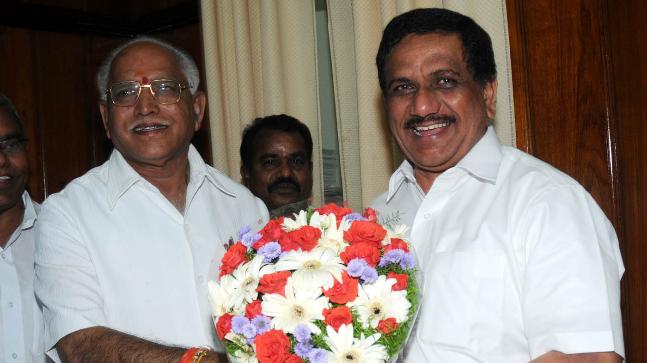
BS Yeddyurappa greeting KG Bopaiah (right) in 2010. (Photo: PTI)

Even as high tension and drama prevails, the Karnataka Governor Vajubhai Vala appointed KG Bopaiah, the BJP legislator from Virajpet as the pro tem speaker of the state’s legislative assembly.

The move came after the Supreme Court bench on Friday ordered that a floor test should take place in the Karnataka assembly at 4 pm tomorrow, where Chief Minister BS Yeddyurappa will need to prove majority support. Earlier, Yeddyurappa had been given 15 days to prove majority.

A pro tem speaker is a temporary speaker who administers the oath of office and secrecy to the newly-elected MLAs. According to the norms, the senior-most member of the House is chosen as a pro tem speaker. He/she decides if the trust vote should be held through a voice vote or ballot.

According to convention, 71-year-old Congress MLA Raghunath Vishvanath Deshpande was supposed to be appointed. But in a twist, the Governor invited Bopaiah to take oath as pro tem speaker this afternoon.

WHO IS KG BOPAIAH?

Full name: Kombarana Ganapathy Bopaiah

Born on October 17, 1955

KG Bopaiah was a former speaker in the Karnataka assembly in 2009.

Bopaiah was elected as MLA 4 times, thrice from Virajpet.

Bopaiah was also the former Deputy Speaker of the Legislative Assembly.

He has served as pro tem Speaker for four days after the BJP won the mandate in 2009.

He has been closely associated with the Sangh Parivar since his school days.

He was as an active BJP’s youth wing ABVP member during his college days.

He participated in the movement against the Kambadakada dam project in Kodagu proposed by the government in 1970.

After completing B.Sc., Bopaiah joined the BMS College in Bangalore for LLB course. He was arrested during the Emergency in Bangalore and jailed for some time.

After completing the LLB course as a gold medallist, Bopaiah returned to Madikeri in 1980 and started practising law.

He was appointed as general secretary of the Kodagu unit of the BJP and elevated as its president in the 90s.

He was chosen to contest from the Madikeri Assembly segment in 2004, which he won comfortably.

source: http://www.indiatoday.in / India Today / Home> News> Elections / May 18th, 2018

The Day War Was Declared On Coorg

CoorgWar01may112018

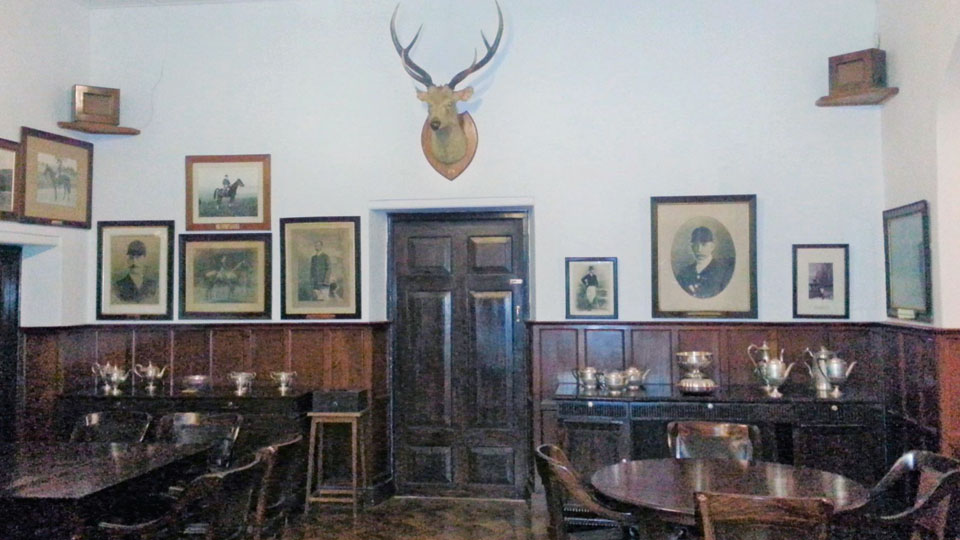
Courtesy our friends Pemmanda Jepu and Jemy Ganapathy, we spent four wonderful days at the Ooty Club, a place steeped in colonial history. The trophies, the silverware, the honour lists and the photographs of the ‘Masters of the Fox Hunt’ date back to early 1840s.

During our stay, I got an opportunity to read a well-documented book titled ‘Ootacamund – A History,’ written by Sir Frederick Price in 1908, which is otherwise kept in the safe locker. Only two copies of this book exist. I was particularly interested in the visit of Governor-General Lord Dalhousie to Ooty in 1856, few details of which I had gathered while writing about Victoria Gowramma. However, what I stumbled upon was even more interesting — Governor-General William Bentinck’s journey to Bangalore, Mysore and Ooty in 1834. This trip was primarily to coordinate the attack on the ‘problematic’ Raja of Coorg: Chikka Veerarajendra.

Chikka Veerarajendra and the East India Company were at loggerheads since 1830. Governor-General William Bentinck, who was more interested in reforming India than in annexing new territories, had to finally deal with the Raja of Coorg who had dared the British by keeping in custody one of their emissaries — Kullapalli Karunakaran Menon.

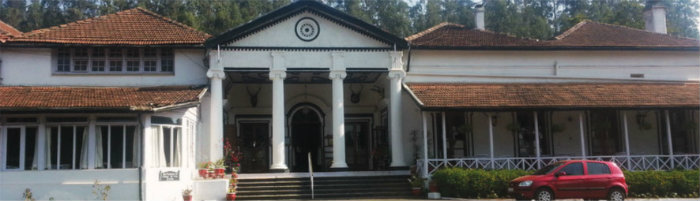
A frontal view of the Ooty Club, which was originally Sir William Rambold’s Large House.

Lord William Bentinck set out from Calcutta on 3rd February 1834 on board the Curacoa to Madras. Bentinck reached Madras on 15th February 1834 and journeyed to Bangalore via Vellore. Travel those days was by horse carriages, bullock carts, palanquins and on horseback, with frequent camping en route.

He wanted first-hand assessment of the situation in Coorg, and for this purpose, the Commander-in-Chief Sir Robert O’Callaghan was in attendance. Strategies on military action against Coorg were finalised in consultations with Sir Robert O’Callaghan while at Bangalore. The Governor-General also had administrative issues concerning Mysore to be discussed. The reason for him to visit Ooty for an extended stay was to improve his rather poor health.

Lord Bentinck stopped over in Mysore and was put-up at the precursor to the Rajendra Vilas Palace atop Chamundi Hill, which was originally built by Robert H. Cole who was the earlier British Resident at Mysore (1811-1827). Bentinck set out for Ooty and it was while camping at Gundlupet on 15th March 1834 that he officially declared war on Coorg. Col. James Stuart Fraser was in overall command. Coorg was encircled from three fronts. Chikka Veerarajendra surrendered on 10th April 1834 and Coorg was annexed by the East India Company. Incidentally, Coorg was the only province to be added to the John Company during William Bentinck’s tenure, for which he came under criticism back home in England.

Lord Bentinck’s entourage reached Ooty on 22nd March. At Ooty the only suitable accommodation for the Governor-General and his staff was ‘Sir William Rambold’s Large House.’ It was a grand hotel built in 1832 by an influential British entrepreneur named William Rambold. However, Rambold soon ran into financial difficulties. The hotel was frequently rented for extended periods of time by senior officers of the East India Company. It was in 1842 that ‘Rambold’s Large House’ became the Ootacamund Club, or the Ooty Club. During Lord Bentinck’s sojourn in Ooty, Lord Babington Macaulay arrived at the hill station on 25th June 1834. The Governor-General and Macaulay met each other for the first time at Rambold’s Large House. Macaulay chose a small cottage nearby where he lived for several months to draft the Indian Penal Code (IPC).

Governor-General Bentinck stayed on in Ooty till the end of September 1834. On his return journey he again passed through Mysore and reached Bangalore on 9th October. He sailed aboard the Curacao on 26th October from Madras and reached Calcutta on 14th November 1834.

Rajendra Vilas Palace atop Chamundi Hill, Mysore.

I checked on Lord Dalhousie’s sojourn in Ooty from 7th March 1855 to 29th October 1855. Dalhousie’s visit was also for health reasons, and he was due to retire soon. However, he was not too comfortable in Ooty, and shifted to Kotagiri.

During Dalhousie’s stay in Nilgiris, one of his ADCs took permission to visit Coorg, where the ADC’s brother was a coffee planter. It was in 1852 that Dalhousie had reluctantly given permission to the ‘rascally Raja of Coorg’ to travel to England along with his daughter Gowramma.

The ADC, on his return, narrated an amusing incident to his boss. Coorg being a rather remote province, news from the outside world took time to percolate. Very often, wild rumours floated amongst the small but growing community of British planters and officers. One such rumour was that the British and their allies had lost the Crimean War, and that Queen Victoria and her family had fled to India! However, Dalhousie who had had a temporary telegraph line installed at Nilgiris had already received the news that the British and their allies had in fact wrested Sevastopol from the Russians.

On his journey back to Calcutta, Dalhousie stopped over in Bangalore during early November 1855, and was the guest of Sir Mark Cubbon. Dalhousie narrated the ‘Coorg rumour’ to the British officers, much to their amusement. After inspecting the troops, he formally announced the British victory at Sevastopol. Fast forward, 2014: Vladimir Putin has Crimea back in the Russian fold.

About the author: C. P. Belliappa, born in 1946, is a Chemical Engineer. Currently settled in Coorg, he is known for his writings on issues pertaining to Kodagu. Four of his books — Tale of A Tiger’s Tail & other Yarns from Coorg, Nuggets from Coorg History, Victoria Gowramma: The Lost Princess of Coorg, and Tongue of the Slip, have been published by Rupa Publications.

source: http://www.starofmysore.com / Star of Mysore / Home> Feature Articles / by C.P.Belliappa / March 2018

Coorg Diary

They say Coorgis were descendents of Alexander’s Great Greek army. Is that true? Find out more about Coorg and its aromatic society in Coorg Diary
_____________________________________

Alexander’s Army

Coorg has always fascinated me. How come this tiny area with such a small population has produced so many outstanding soldiers? Among the best known are Field Marshal Cariappa—independent India’s first army chief and also the first King’s Commissioned Officer decorated with the Order of the British Empire for “exemplary service during World War 11—and General Thimayya, an army chief as well, who famously clashed with then Defence Minister V.K. Krishna Menon. Former ladies’ national tennis champion Dechu Appiah, her musician brother, Biddu Appiah (composer of the international hit, “Kung Fu Fighting”) and famed architect Brinda Sommaiya also come to mind. And what of the Coorgis’ complexion, which is a few shades lighter than that of the people from surrounding regions? And the brown or grey eyes? Another mystery: What explains their unique customs, far removed from Hinduism? They worship their ancestors, not any Hindu gods, and don’t believe in reincarnation. One rather far-fetched theory is that the Coorgis were descendants of Alexander the Great’s Greek army. That would explain their fair features and martial tradition. But, then, Alexander only came into a part of present-day north India, far away from Coorg (though he did leave a general behind to form a kingdom). How could any descendants of that Greek army have travelled such a long distance?
___________________________________

ILLUSTRATION BY SAJITH KUMAR

All My Sons

I finally made it to Coorg (its modern name is Kodagu, and Coorgis are now Kodavas). As it happened, my hosts were the legendary Cariappa’s son, Nanda, and his wife, Meena. They live on the vast Cariappa estate in the heart of the Coorg capital, Madikeri (earlier Mercara). A short walk from their house on a mound surrounded by artistically placed stones and wild flowers is a simple black stone slab with the following engraved on it: “Field Marshal Kodandera Madappa Cariappa, 28 January 1899-15 May 1993”. This is the Samadhi where he was cremated. It still attracts his admirers from all over, many of them simple villagers who come to pay homage to perhaps their greatest son of our time. Nanda, who retired as an Air Marshal, was a fighter pilot in the 1965 Indo-Pak war. He was shot down near Amritsar on the last day of that war and captured by the Pakistanis. Gen Ayub Khan was then the President of Pakistan. He had served under Gen Cariappa and when Ayub realised his former boss’s son was their prisoner, in a gesture of friendship he offered to send him back to India, and, meanwhile, to treat him well. This prompted Cariappa to send his famous reply to Ayub Khan: “They (the Indian prisoners) are all my sons. Treat him just like them.” Nanda says he was initially kept in solitary confinement for a month, but otherwise treated well. Those were the honourable days. Ayub Khan’s son, Gauhar, even visited Nanda and gave him a tin of Capstan cigarettes and a P.G. Wodehouse book!

British Arms

Fanciful theories of Greek descent apart, the Coorgis—or Kodavas, if you will—have simply been traditional hunters, fond of their weapons. Then, when their independence was threatened, first by Hyder Ali, and then by his son, Tipu Sultan (who defeated them), they turned into fierce warriors. Tipu was extremely brutal with the Coorgis, forcibly converting many of them and transporting over 70,000 to Serangapatnam, while moving a large number of Muslims into Coorg, this affecting a demographic change in the region, which persists to this day. When the British took on Tipu, the Coorgis naturally sided with the British, helping them defeat Tipu. In gratitude, the British bestowed various favours on their Coorg allies, including the right to bear arms without licences, the only Indian community with that right, which continues even now.

Dense Aroma Society

Coorg is also synonymous with coffee, a well known fact. Somehow, the climate—not too hot, not too cold—the altitude—3,000 to 4,000 feet—and plenty of rainfall, are just right for coffee as well as a variety of spices, especially pepper. Mercara is dotted with shops selling coffee and spices. It also has a modest, charming museum in what used be a church built in the Roman Gothic style. There, a variety of arms are displayed, testifying to Coorg’s martial tradition. Considering the strong British presence of pre-Independence days, there had to be a golf course! There are two of them, both of 18 holes, as picturesque and challenging as you can get—steep slopes and plunging valleys. The mighty Cauvery river has its source just a couple of hours drive from Mercara, at Talacauvery, where a much frequented Hindu temple has sprung up. Coorg was once heavily forested, teeming with wild life. However, the timber mafia has been at its worst here, as in so many other parts of India, denuding the land of its precious trees. In some ways the Coorgis remind me of the Parsees. Both are small in number—the Parsees around 100,000, the Coorgis 170,000. Both have high literacy rates. Both tend to marry late, hence have low fertility, with declining numbers. Finally, both had a kind of mutual admiration society with the British—and still do!

(The writer is a well-known journalist)

source: http://www.outlookindia.com / Outlook Magazine / Home> The Magazine> Last Page / by Rahul Singh / June 12th, 2017

Field Marshal Cariappa’s son rues fading of military lure in the ‘Land of Generals’

Air Marshal Cariappa in 1965 as a prisoner of war and today.

On 22 September 1965, a 26-year-old Indian Air Force squadron leader, in his Hawker Hunter fighter jet, ejected after a hail of Pakistani groundfire near Lahore ripped through his jet. Captured and taken as a prisoner of war, he would be repatriated four months later. But even in the fraternal landscape of the military, the young pilot was known for his illustrious lineage. He was “Nanda” Cariappa, son of a former Army chief who would go on to become India’s second Field Marshal, Kodandera Madappa Cariappa.

Now nearly 80, the Air Marshal lives a very quiet retired life in the hills of Karnataka’s Kodagu (formerly Coorg) at his famous father’s verdant hill abode, Roshanara, nestled between rolling hills and Madikeri town.

Cariappa Jr. and his wife Meena don’t have much time for politicians or politics, but couldn’t have been surprised when the Field Marshal’s name was invoked at a rally by Prime Minister Modi to shame the Congress, an attack that has erupted into an unsurprising controversy of its own given the errors that embellished the broadside.

For the Field Marshal’s son though, there are more urgent things to attend to than political quarrels in their state. Cariappa Jr. did, however, attempt to draw Prime Minister Modi’s attention last year, but it was to an issue that occupies the Cariappas above all else — the ecology and environment in Kodagu, the birthplace of the Cauvery, a river that local communities, including Cariappa’s own Kodavas, consider sacred.

‘Only God or you can save the Cauvery and the environment in Kodagu,’ the Air Marshal wrote in a letter to the Prime Minister in March 2017. He received a protocol reply inviting him to raise the issue with the Secretary of the Environment Ministry, and rues how the brief exchange could be indicative of a deep-rooted indifference to environmental emergencies in the country.

India Today found the Air Marshal has other concerns on his mind too, closer in keeping with his own life and career — the diminishing lure of the military upon youth in Kodagu, considered the ‘Land of Generals’, a district that has supplied generations of tough officers to the three armed forces, but primarily the Army. The Kodavas, native to Kodagu, were designated a martial race by the British in a list that included Sikhs, Marathas and Gorkhas.

“Unfortunately the lure of the armed forces has come down considerably. I’m aware of fewer young men and women who are keen on joining the army, navy or air force. It is certainly less than before,” Cariappa told India Today.

Serving on the Coorg Wildlife Society that fights an uphill battle to conserve the environment in the face of rampant tourism and commercial development, Cariappa’s eyes mist over when he’s asked what he’d like to say to the young generations of Kodagu, and indeed the rest of the country.

“All I would say to the young generation is that there is no finer profession than that of arms,” he said. “You have a sense of belonging. You live in a community where everyone cares for everybody else. Whether its at an air force base or on a ship or an army cantonment. In big cities, you may live in a ten story tower and never know your neighbours. You couldn’t care a damn. But here it’s all for one and one for all. Today the only binding force as I see it, is the integrity and loyalty engendered by the armed forces. There’s nothing else that compares.”

source: http://www.indiatoday.in / India Today / Home> News> India / by Shiv Aroor / Madikeri – May 04th, 2018

India’s maiden honour – Bhandari to chair ICO consultative board for a year

India, for the first time, will chair the board of International Coffee Organization (ICO) for a term of one year with Anil Kumar Bhandari, president of India Coffee Trust (ICT), getting elected as the chairman of Private Sector Consultative Board (PSCB) of ICO.

PSCB is an international coffee organisation body comprising 16 leading industry representatives from producing and consuming countries. The board’s main mission and objective is to increase the world coffee market in value and volume and also support various initiatives in the field of coffee and health.

Bhandari is the first representative from India to occupy the important position and his election is significant in the backdrop of World Coffee Conference (WCC) scheduled in Bengaluru, in April 2020.

Speaking about his election, Bhandari said, “My election as chairman, Private Sector Consultative Board of International Coffee Organization is an honour for India and India Coffee Trust. This is the first time that India has chaired the PSCB. I see this as the confidence reposed in India and ICT, going into the World Coffee Conference in 2020, which would be hosted by India and will be held for the first time in Asia. It also indicates the interest that the global coffee sector has in the Indian coffee industry and the Indian coffee market.”

The 121st Session of International Coffee Council (ICC) under ICO was held in Mexico City from April 9 to 13, 2018. ICO is an intergovernmental body of coffee buying & producing nations, having more than 72 member countries and India is one of the founding member.

It is the main intergovernmental organisation for coffee, bringing together exporting and importing governments to tackle the challenges facing the global sector through international cooperation. Its objective is to strengthen and promote its sustainable expansion in a market-based environment for the betterment of all participants in the coffee sector.

source: http://www.fnbnews.com / FnBnews.com / Home> TopNews / by FnB News Bureau, Bengaluru / April 30th, 2018

When Kodagu had its own Assembly and Chief Minister

Coorg Assembly was constituted in 1924 and the only election was held in 1951

Though reduced to two Assembly segments after the 2008 delimitation, the hilly district of Kodagu from where the Cauvery takes its birth has a royal pedigree and boasted of its own Legislative Assembly to frame law for the local region and the people.

What is more, Coorg (as the district was then called), which was merged with Mysore State in 1956, also had its own Chief Minister to govern the province from 1952 to 1956.

The Legislative Assembly of Coorg was constituted in 1924 and the first and only election was held in 1951. The members represented 18 constituencies, which had 24 seats as six of the constituencies had to elect two members each.

The constituencies were Sanivarasanthe (2 seats), Somwarpet north and south, Fraserpet, Sunticoppa (2 seats), Mercara town, Murnad, Mercaranad, Srimangalanad (2 seats), Hudikeri, Berriathnad, Ponnampetnad (2 seats), Virajpet town, Virajpetnad (2 seats), Ammathinad, Siddapur (2 seats), Napoklunad, and Bhagamangalanad, according to the Election Commission of India data.

Of the national parties, only the Indian National Congress and the Communist Party of India were represented and 15 seats were won by the INC and Independents won 9 seats. While the 15 councillors represented the prevailing majority view that Coorg should merge with Mysore, the 9 Independents were against the merger. There were 60 candidates in fray and the number of voters was 1,38,440 of whom 87,947 exercised their franchise (63.53%).

PoonachaKF30apr2018

According to the district gazetteer published by the State government, the Indian Constitution recognised Coorg as a Part C State and thus it was entitled to posses a responsible government. This came into vogue in 1952 and the post of Chief Commissioner also continued and C.M. Poonacha, who was elected to the Coorg Legislative Assembly from Berriathnad, was the first and only Chief Minister of Kodagu.

When the State Reorganisation Commission recommended the merger of Coorg with the new Mysore State, Coorg became one of the districts on November 1, 1956 and Poonacha became a Minister in the S. Nijalingappa Cabinet.

He later became a Rajya Sabha member (in 1964) and was elected as MP from Mangalore Lok Sabha seat in 1969 (Kodagu was then attached to the Mangalore Lok Sabha constituency) and went on to hold different portfolios, including that of Minister of Railways.

C.P. Muthanna, son of Poonacha, recalled that there were hundreds of administrative entities, including princely States, at the time of Independence and they wanted to merge them into larger States to create a more cohesive administrative unit. “Since my father was the Chief Minister of Coorg at that time, there were many — keen on maintaining Coorg’s distinct identity — who imagine it was my father responsible for merging Coorg with Mysuru State.”

source: http://www.thehindu.com / The Hindu / Home> News> States> Karnataka / by R. Krishna Kumar / Mysuru – April 29th, 2018